
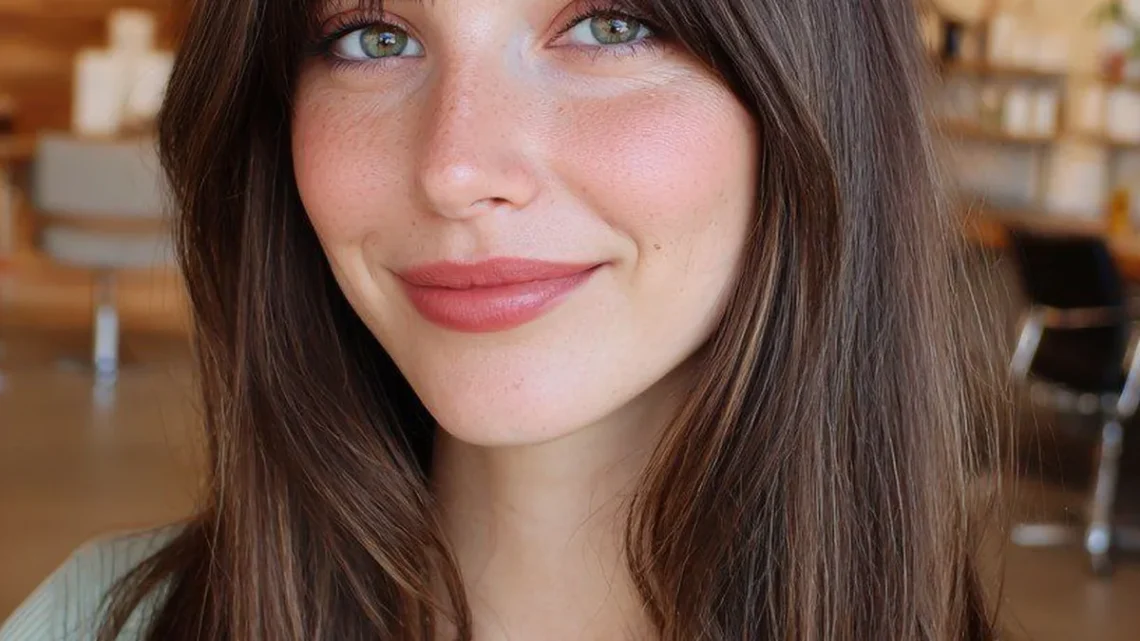
Shoulder length hair is the length that does everything. It is long enough to tie up on a busy morning, short enough to dry in minutes, and versatile enough to carry a blunt bob, a layered lob, soft curls or beachy waves without a single one of them looking like a compromise. It sits in the sweet spot between short and long — the length where a haircut stops being a statement and starts being a tool you can use every single day, for work, for weddings, for the gym, for a night out.
This guide brings together 36 shoulder length hairstyles for women, from the classic layered cut and the blunt lob to shags, curtain bangs, curls and colour — plus eight practical guides covering why this length is the most versatile cut you can get, how to grow a bob out to the shoulders, what happens when you cut long hair down to this length, which version suits your face shape and hair texture, how to style it in under ten minutes, exactly what to ask your stylist, and how to grow it past the shoulders when you are ready for long hair again. Every style notes who it suits, how to style it, and what to watch out for.
Why Shoulder Length Is the Most Versatile Cut You Can Get
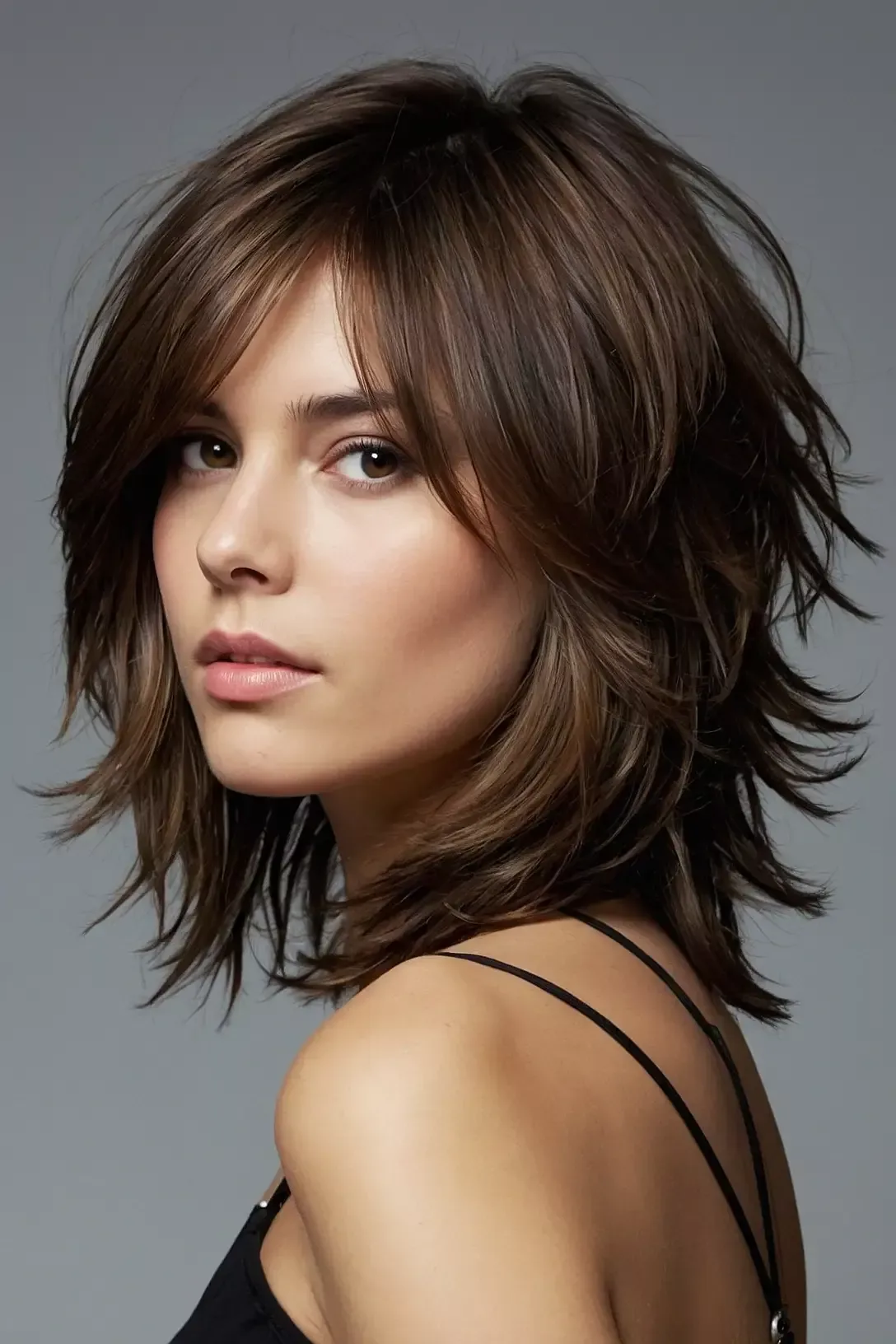
Ask any stylist what length they would choose if they could only cut one for the rest of their career, and most will say shoulder length — not because it is a compromise, but because it is the only length that genuinely does everything. It is long enough for a ponytail, a bun, a braid and a half-up style, and short enough that it dries fast, holds a shape, and does not pull itself flat under its own weight. A bob cannot be tied up; long hair takes forever to style. Shoulder length hair does both jobs.
It is also the most forgiving length to grow and to cut. A bad layered cut can be rescued at this length, a growing-out bob becomes a lob within weeks, and long hair cut to the shoulders instantly gains volume and movement it had lost to gravity. It suits nearly every face shape and hair texture, it works with bangs or without them, straight or curly, and it photographs well because the hair frames the face without hiding it. If you are unsure what to ask for at the salon, shoulder length is the safest place to start — and the hardest length to regret.
Growing Out a Bob to Shoulder Length (Without Looking Awkward)
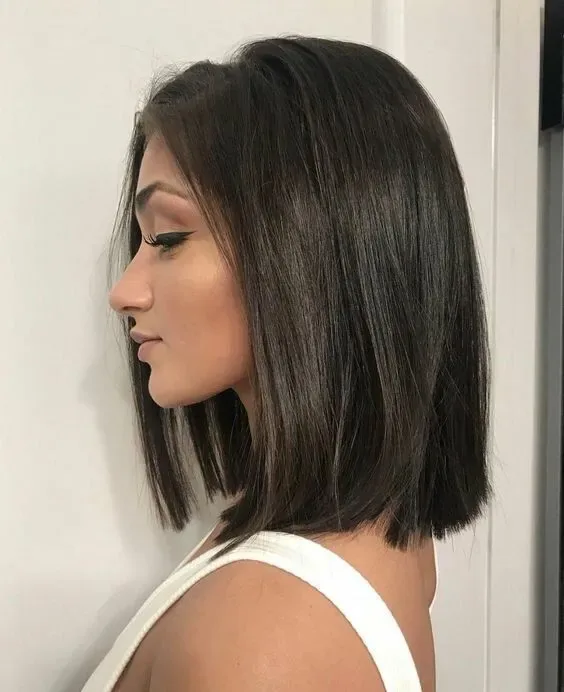
The grow-out from a bob to shoulder length is the easiest grow-out in hairdressing, because the in-between stages are all wearable. The trick is to stop cutting the back and let the nape catch up with the front: a bob’s front is usually longer than its back, so the first month is simply the back growing down to meet it, and during that time the cut reads as a longer bob, then a lob, then a true shoulder length cut.
A stylist can help by adding soft layers as the hair grows, which blends the old bob shape into the new length and stops the ends from flipping out in a triangle. Micro-trims every eight to ten weeks — a centimetre off the ends only — keep split ends from travelling up the hair without losing your progress. And while it grows, a middle part, a deep side part, or a few face-framing layers will disguise any unevenness. Most people reach shoulder length from a chin-length bob in about four to six months.
Cutting Long Hair to Shoulder Length: What Changes (and What to Expect)
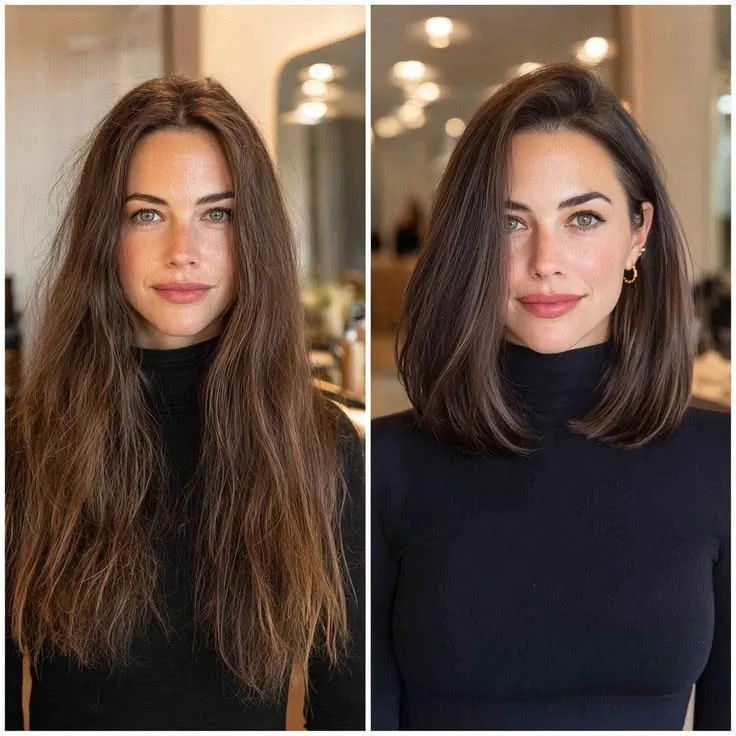
Cutting long hair to shoulder length is the haircut that changes everything at once — and the first surprise is how much lighter your head feels. Long hair pulls itself straight under its own weight, so cutting it to the shoulders usually reveals movement, wave and volume you had forgotten you had. Hair that looked flat at waist length can suddenly hold a curl, and a fringe that would not sit properly on long hair starts to behave.
The second surprise is the adjustment period. Your ponytail will sit higher, your hair will dry in half the time, and you will catch yourself reaching for lengths that are no longer there. Give it two weeks before you judge it: the cut settles, the ends relax, and your styling habits catch up. Bring a photo of the exact length you want — collarbone, shoulder, or just below — because ‘shoulder length’ means something slightly different to every stylist, and a photo removes the guesswork. If you are nervous, ask the stylist to cut it a little long first; you can always take more off.
Shoulder Length Hair by Face Shape: Which Version Suits You
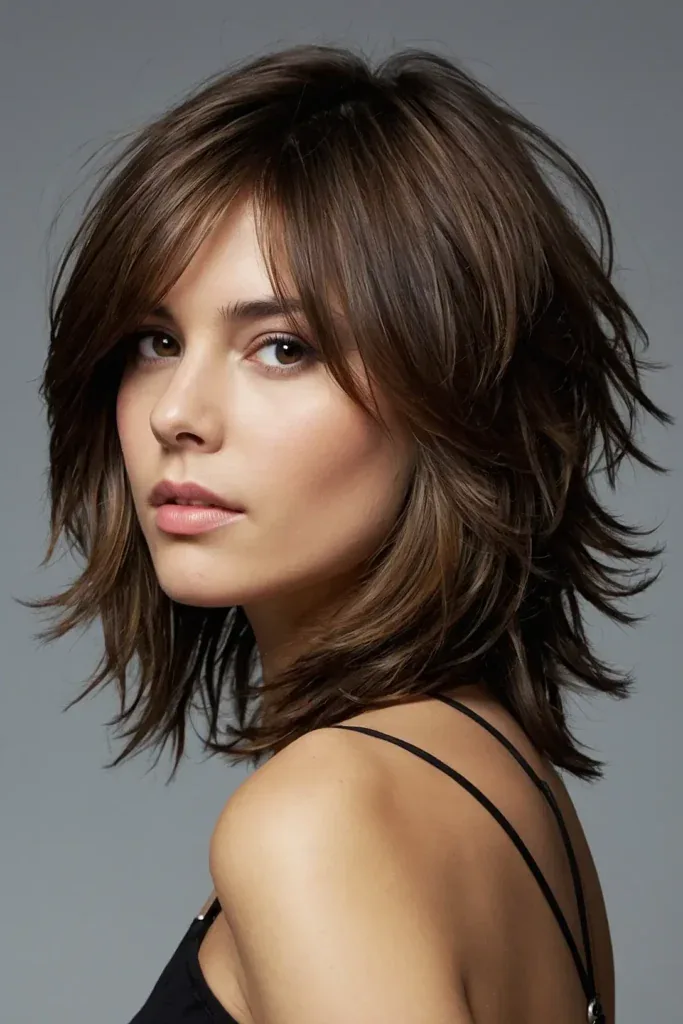
Shoulder length hair is unusually kind to every face shape, because the length itself does so much of the work: it ends right where the jaw and neck meet, framing the face without covering it. The details are where the fit is decided. Round faces do best with longer layers that fall past the chin and a middle or deep side part, which adds the illusion of length. Square faces suit soft, feathered ends and a side-swept fringe that breaks up the jawline.
Heart-shaped faces love a cut with volume around the jaw — gentle waves or flipped ends balance a wider forehead. Long faces benefit from width rather than length: layers that kick out at the ends, or a blunt cut that adds horizontal lines. Oval faces, the most forgiving shape, can wear any version, from blunt to layered to shaggy. The rule that covers all of them: the ends of the hair should end at a point that flatters your face, not at an arbitrary length — ask your stylist to cut the length to your face, not to a ruler.
Shoulder Length Hair by Texture: Fine, Thick, Curly, Wavy, Straight
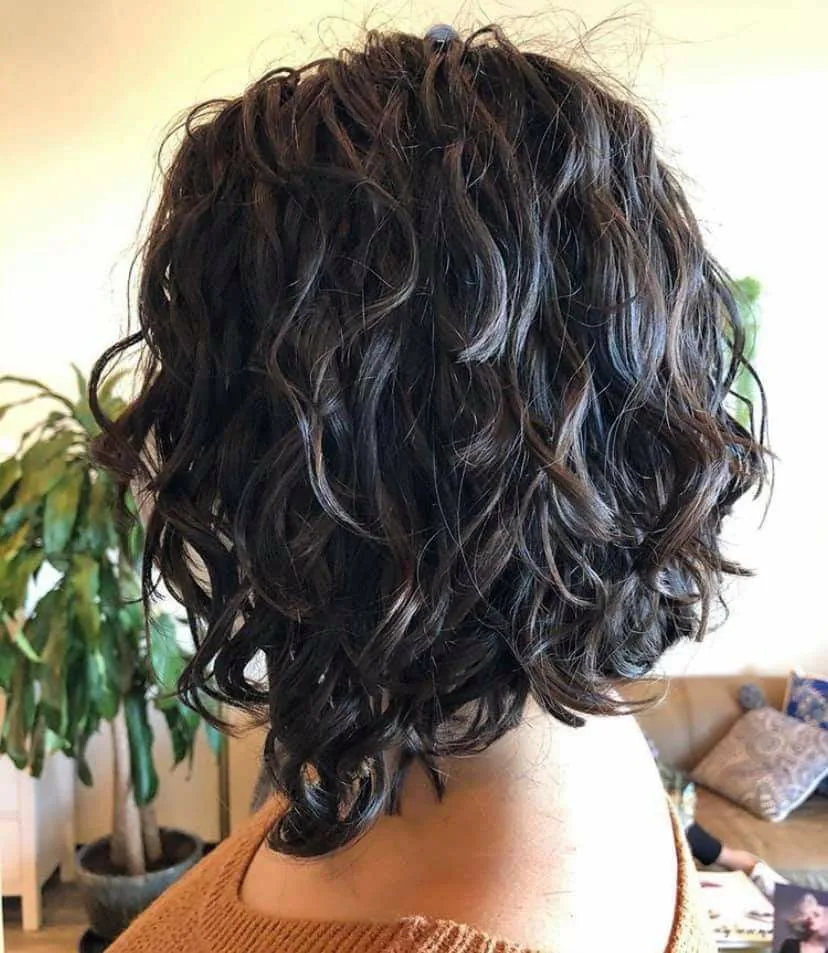
Fine hair gains the most from shoulder length, because shorter hair is lighter and holds volume better — layers at this length give fine hair a fullness that long hair cannot. The risk is over-layering, which thins the ends out; ask for long, soft layers instead of short choppy ones, and keep the ends blunt enough to look thick. Thick hair needs the opposite treatment: internal thinning and long layers to remove bulk, or the cut turns into a triangle.
Wavy hair is the natural partner of shoulder length — the wave has room to form, the ends flip softly, and the style needs almost no effort. Curly hair at shoulder length is bouncy and full, but it should be cut dry, curl by curl, because curls shrink as they dry and a wet cut will end up far shorter than planned. Straight hair shows the cut itself most clearly, so a blunt or softly layered shoulder length cut looks sharpest on it, and it benefits from a little texture at the ends so it does not look flat. In every case, the first wash at home — not the salon blow-dry — is the real test.
How to Style Shoulder Length Hair in Under 10 Minutes
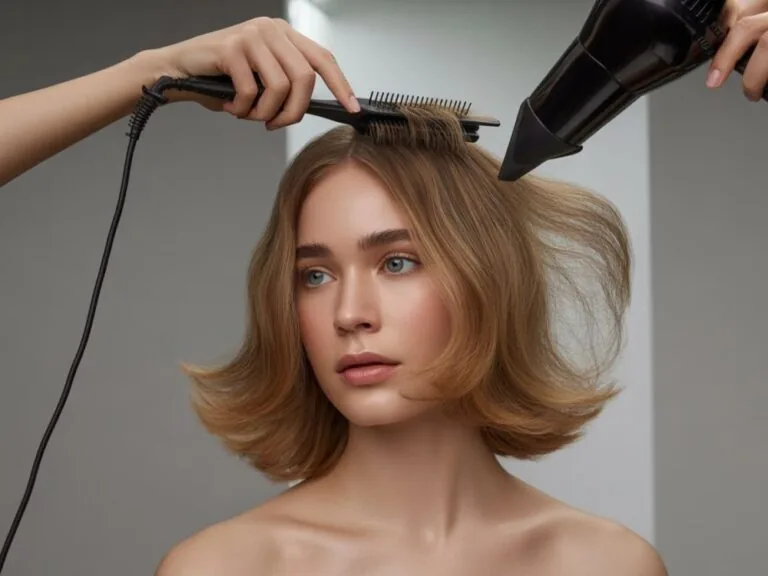
Shoulder length hair is the fastest length to style, because there is simply less of it — and a ten-minute routine is all most people need. Start with the front: blow-dry the face-framing pieces first with a round brush, because they set the shape of the whole style. Then work the rest in large sections, flipping the ends under for polish or out for a flick, and finish with a light texturising spray. The whole thing takes about seven minutes on damp hair.
On no-wash days, dry shampoo at the roots and a quick pass with a flat iron bent under at the ends revives the cut in three minutes. A curling iron through just the top layer and the front pieces — not the whole head — gives the illusion of a full style in five. And on the days when even ten minutes is too much, a low ponytail, a claw clip or a half-up twist takes under a minute and still looks deliberate, because the length itself does the framing. The secret is that shoulder length hair rarely needs to be perfect: its shape carries the style.
What to Ask Your Stylist for a Shoulder Length Cut
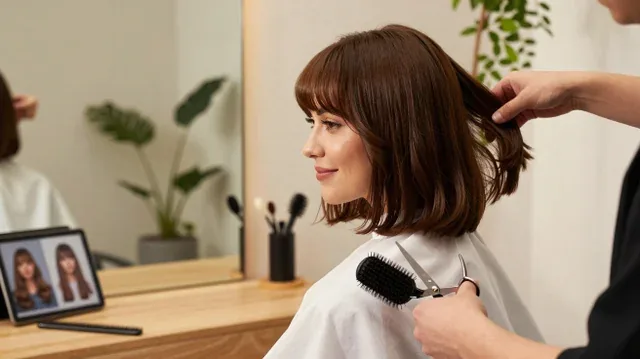
The most useful thing you can bring to the appointment is a photo of someone whose hair texture looks like yours, at the exact length you want. ‘Shoulder length’ can mean collarbone, shoulder, or just below, and a photo settles it instantly. Bring two or three photos — one you love, one showing the length, one showing how it looks tied up — and say the words out loud: where you want the length to sit, whether you want layers, and how you actually style your hair at home.
Then ask the questions that prevent regret. Ask how the cut will behave on your natural texture without a blow-dry, whether the layers will need regular thinning, and how the cut will grow out over the next two months. If you wear your hair up often, ask the stylist to check the length still ties back comfortably. Agree on the length before the scissors come out, and ask them to cut it a touch longer than you think you want — it is always easier to take more off than to grow it back.
Growing Shoulder Length Hair Past the Shoulders
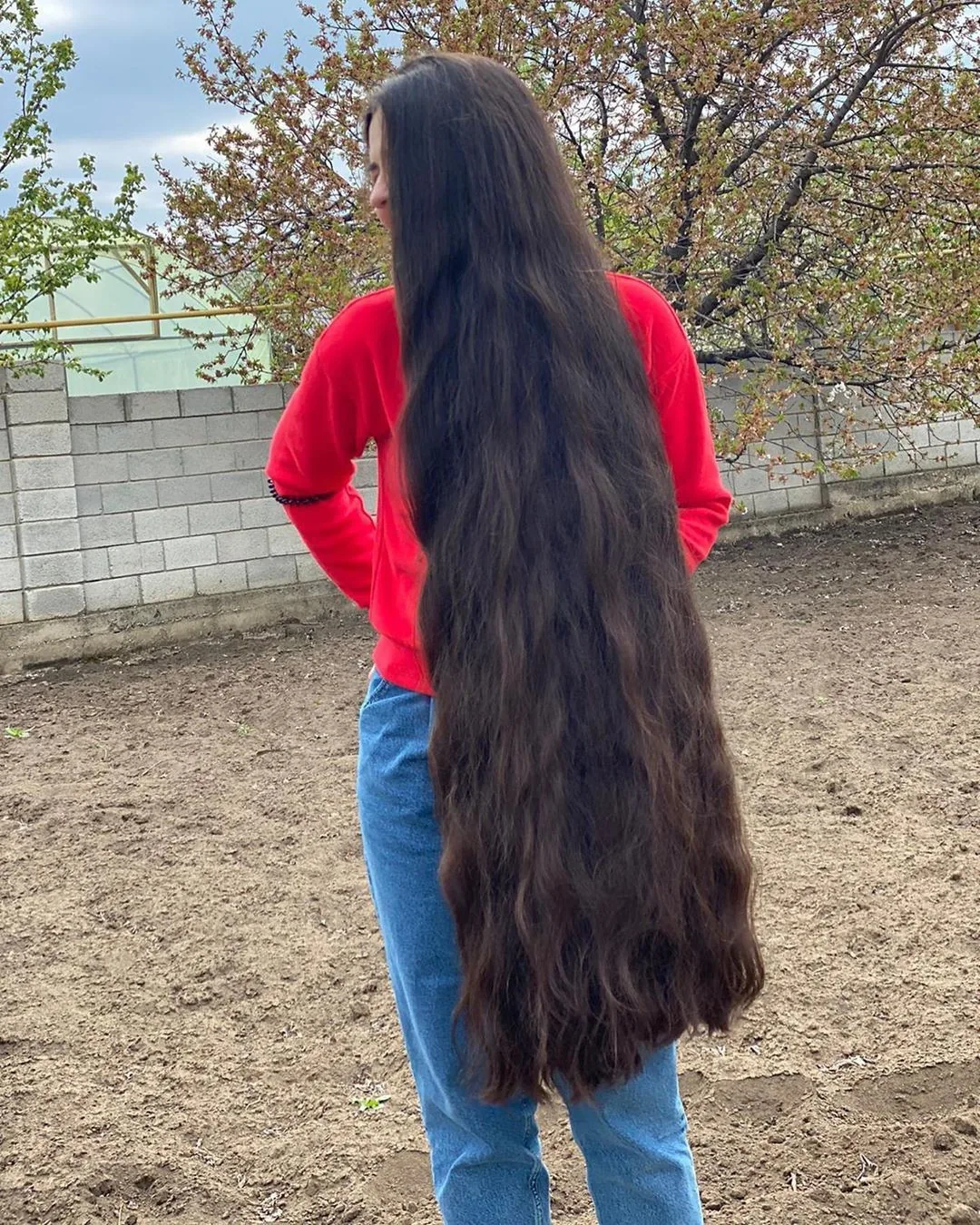
Shoulder length is also the best launchpad for long hair, because it is the length where growth stops feeling slow. The plan is simple: stop cutting the length and only trim the ends — a centimetre every ten to twelve weeks — to keep split ends from travelling up the hair. Layers help during the grow-out, because they blend the old shape into the new length and stop the ends from flipping out.
Protective styling does the rest: loose braids, low buns and silk pillowcases reduce breakage, and a regular conditioning mask keeps the ends strong enough to survive the extra months of growth. The awkward stage — when the hair is too long to be a bob and too short to feel long — lasts about two months, and a deep side part or a few face-framing layers will carry you through it. Most people reach a comfortable long length in six to nine months from the shoulders, and because the cut started strong, the long hair that arrives is healthier than hair grown from a neglected cut.
1. The Classic Shoulder Length Cut with Soft Layers
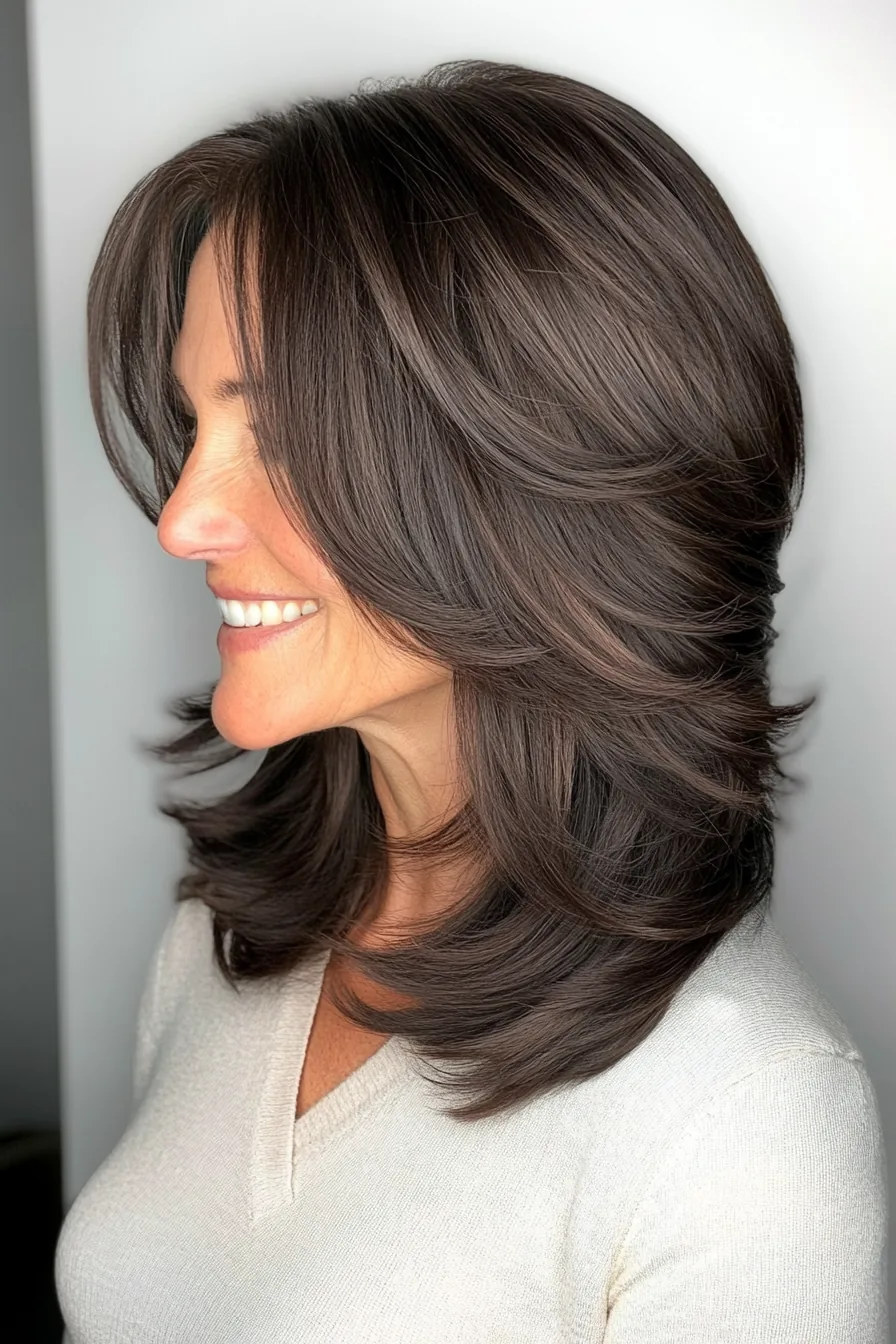
The classic shoulder length cut is long layers that start around the chin and fall in soft steps to the shoulders, with the ends feathered just enough to move. It is the version of this length that most people picture first, and the one that has never gone out of style: the layers give the hair shape without taking away its weight, and the length is short enough to style in minutes but long enough to tie back.
What it is: soft, long layers ending at the shoulders. Why it works: the layers carry movement through the whole cut, so the hair never hangs flat. Who it suits: every texture, every face shape, and anyone getting a shoulder length cut for the first time. How to style it: blow-dry with a round brush, flipping the ends under for polish, or let it air-dry for a softer finish. What to ask your stylist for: layers that start no higher than the chin, and ends that are point-cut rather than blunt.
2. The Layered Lob: Shoulder Length with Movement
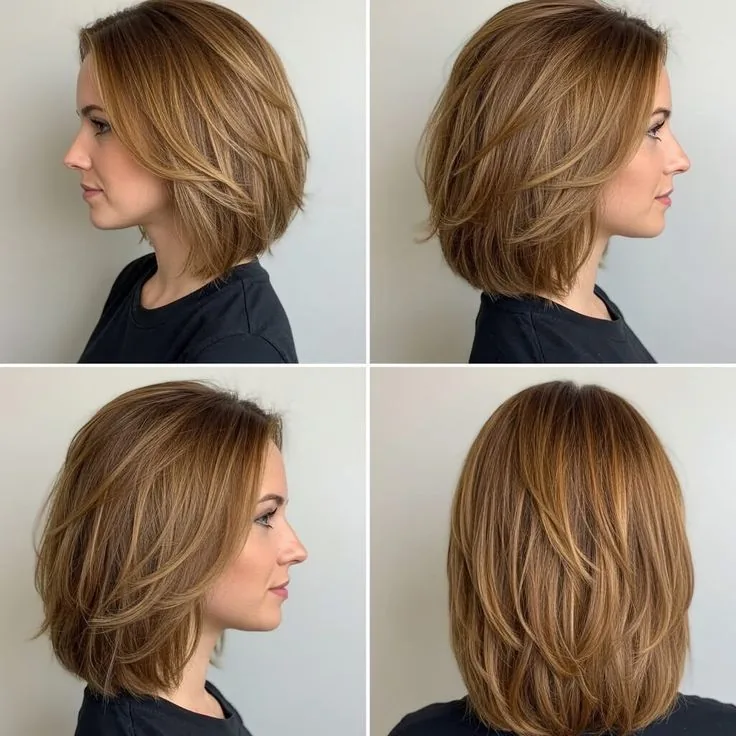
The layered lob is shoulder length hair with its volume turned up: layers cut through the whole head, not just the front, so the hair has lift at the crown and movement at the ends. It is the livelier cousin of the classic layered cut, and it suits people who find a plain shoulder length cut a little too quiet. The layers make the hair look fuller, which is why it is a favourite for fine hair.
Best for: fine to medium hair, oval and heart-shaped faces, and anyone who wants volume without a short cut. How to style: a round brush at the roots for lift, then a loose wave through the mid-lengths. Watch out for: over-layering — too many short layers can make the ends look thin, so ask for long layers that keep the ends full.
3. The Blunt Shoulder Length Cut
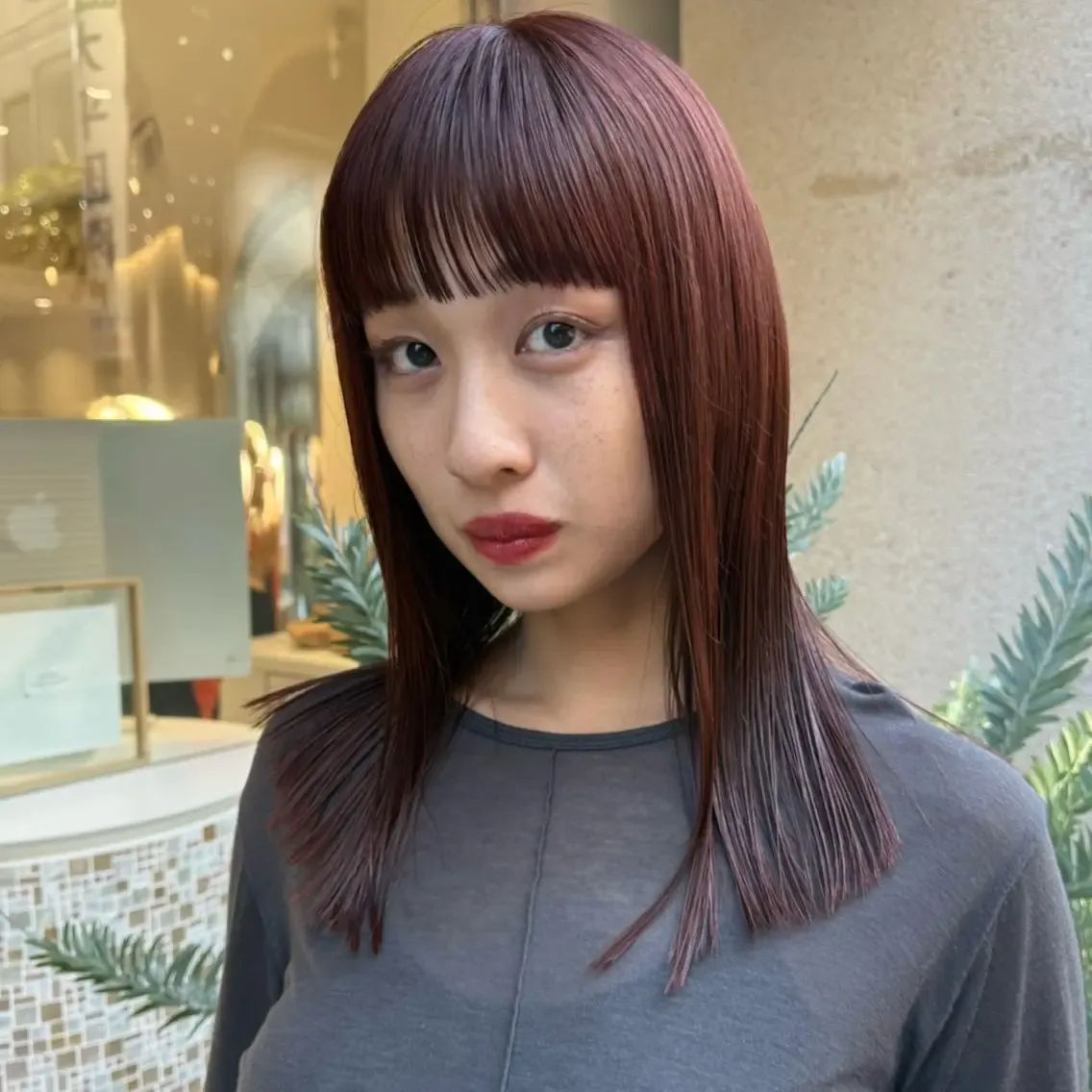
A blunt shoulder length cut is one clean line at the ends, no layers, no feathering — and it is the sharpest version of this length. The single-length ends make the hair look thicker and healthier than it is, which is why it is the best choice for fine hair, and the clean line gives the cut a polished, expensive feel that needs almost no styling to look finished.
Pros: makes fine hair look thick; looks polished with minimal styling; grows out evenly. Cons: shows every split end, so it needs regular trims; can feel heavy on very thick hair. Quick verdict: the most polished shoulder length cut you can get — choose it if you like a clean, graphic shape and do not mind a trim every six weeks.
4. The Shoulder Length Bob
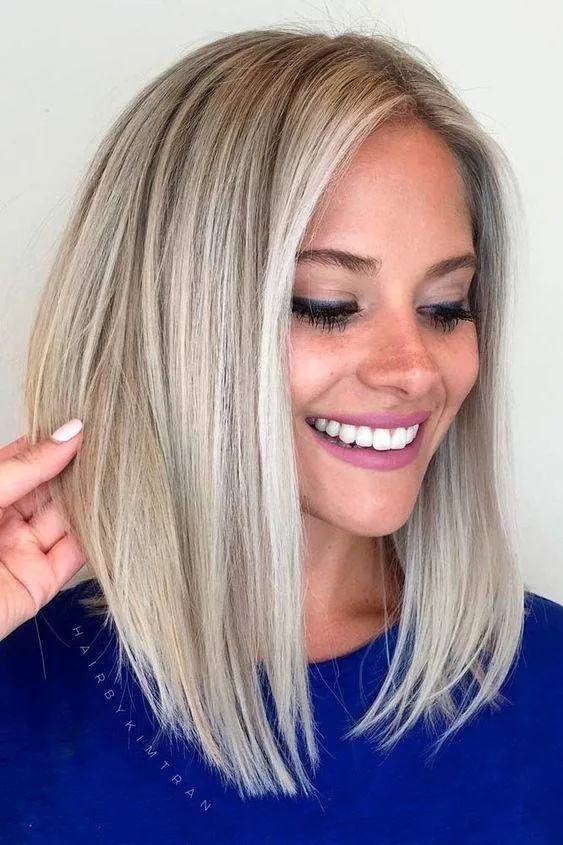
The shoulder length bob is a bob that grew up: the clean, structured shape of a bob, stretched just far enough to graze the shoulders. It keeps the bob’s polish and its strong outline, but the extra length makes it softer, easier to tie back, and more forgiving as it grows. It is the best of both worlds for anyone who loves a bob but wants a little more freedom.
The cut works best when the outline is kept clean — a bob that is too layered at this length loses its shape and becomes a lob instead. Style it with a round brush for a smooth finish, or tuck one side behind the ear for a little asymmetry. It suits straight and slightly wavy hair best, and it is one of the most office-friendly cuts in this guide: neat, deliberate, and finished-looking with almost no effort.
5. The A-Line Bob at Shoulder Length
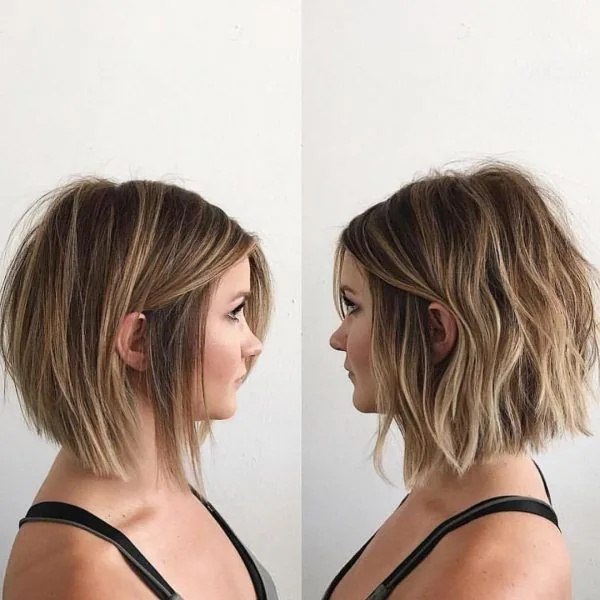
An A-line bob is shorter at the back and longer at the front, so the hair angles gently down toward the chin — and at shoulder length, that angle gives the cut a soft, face-framing slope that flatters almost everyone. The front pieces frame the face while the back stays light and easy, which makes the cut feel both structured and soft at the same time.
What it is: a bob with a longer front and a shorter back, ending at the shoulders. Why it works: the angle draws the eye down the face, adding length to round faces and softness to square ones. Who it suits: straight to wavy hair, and anyone who wants a bob with a little drama at the front. How to style it: blow-dry the front pieces forward and under, and keep the back smooth. Maintenance: the angle grows out faster than a straight cut, so book a trim every five to six weeks to keep the shape.
6. The Shoulder Length Shag
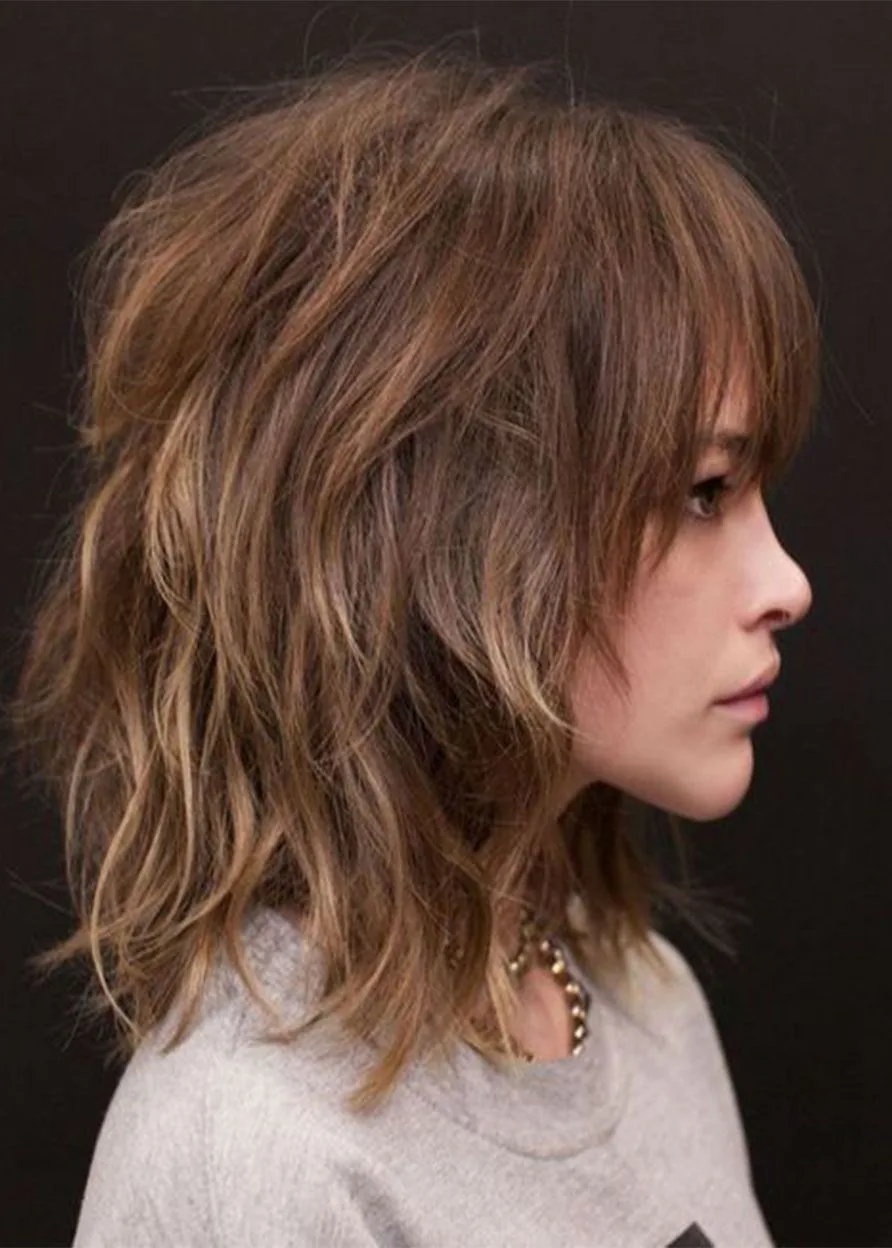
The shoulder length shag is all texture: choppy layers, volume at the crown, ends that flick out, and a fringe that blends straight into the layers. It is the most relaxed cut in this guide, designed to look slightly undone, which means a bad hair day barely registers — the layers and the texture are doing the work, not the styling.
Best for: wavy and straight hair, oval and long faces, and anyone who dislikes precise styling. How to style: texturising spray scrunched through damp hair, then air-dry. Watch out for: a shag that is cut too short at the crown — it can look spiky instead of soft, so ask for the shortest layer to sit no higher than the cheekbones.
7. Shoulder Length Hair with Curtain Bangs
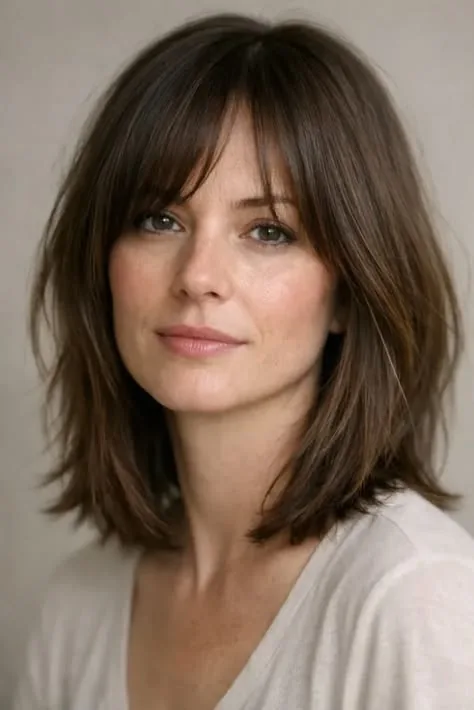
Curtain bangs part in the middle and sweep softly to each side, and on shoulder length hair they are the gentlest fringe you can choose. The centre is the shortest point, just skimming the brows, and the sides lengthen gradually into the face-framing layers, so the fringe opens up the face instead of covering it. It is the best first fringe for anyone nervous about bangs, because it blends into the hair so easily.
The part is everything here: a clean middle part makes the curtain symmetrical, while a slightly off-centre part gives a softer, more casual feel. Style the bangs by blow-drying each side away from the face with a round brush, or by wrapping the damp fringe around a large velcro roller for ten minutes while you do your makeup. They grow out beautifully, turning into long face-framing layers without an awkward phase.
8. Shoulder Length Hair with Side-Swept Bangs
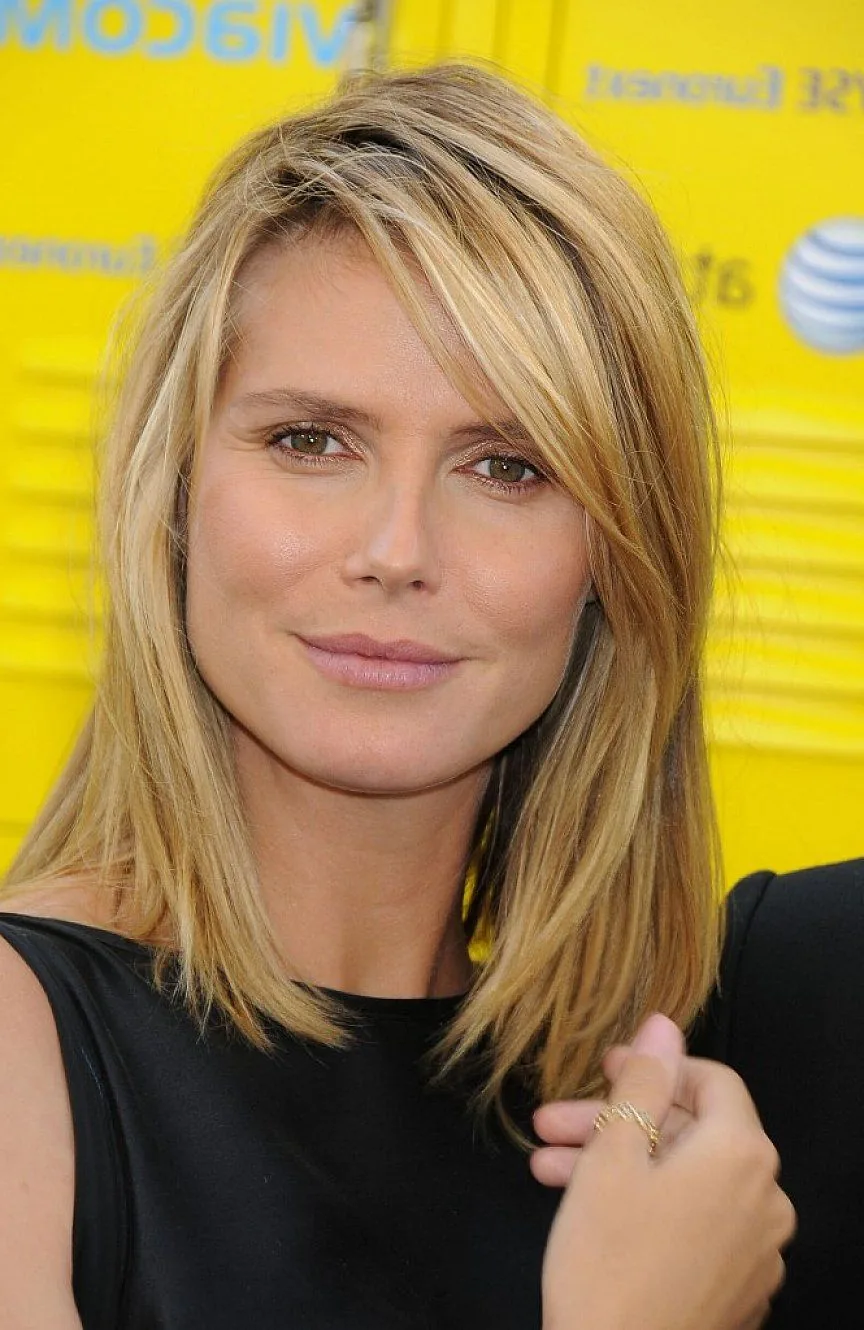
Side-swept bangs are the most forgiving fringe at shoulder length: the fringe sweeps diagonally across the forehead, the weight falls to one side, and any cowlick or uneven growth is disguised by the direction of the sweep. It is the best version for anyone whose bangs refuse to fall straight down, and it suits faces that want a little asymmetry — which is most of them.
Mistakes to avoid: cutting the fringe too short, which makes the sweep look severe instead of soft; parting it on the wrong side, against the hair’s natural fall, which fights the sweep all day; and over-styling it with heavy products, which weighs the fringe down. Part the hair deeply on one side while it is damp, blow-dry the fringe across the forehead, and let the ends flick slightly outward. The sweep softens a strong forehead and draws attention to the eyes.
9. Feathered Layers at Shoulder Length
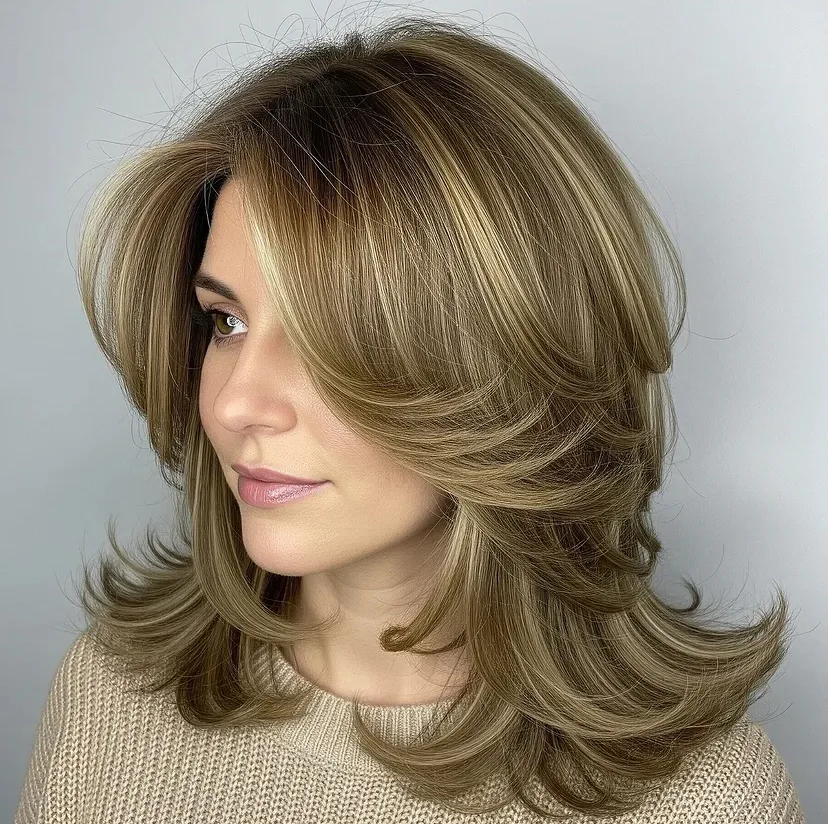
Feathered layers are cut so the ends taper and flick softly outward, like feathers — and at shoulder length they give the cut a light, airy movement that a blunt cut cannot match. The feathering starts around the cheekbones and continues to the ends, so the hair looks soft from every angle and never sits flat against the head.
Pros: light, airy movement; softens strong features; easy to style with a round brush. Cons: the feathered ends can look thin on very fine hair, and they need a trim every six weeks to keep their shape. Quick verdict: the softest version of shoulder length hair — choose it if you want movement and lightness over thickness and structure.
10. Shoulder Length Hair with Beach Waves
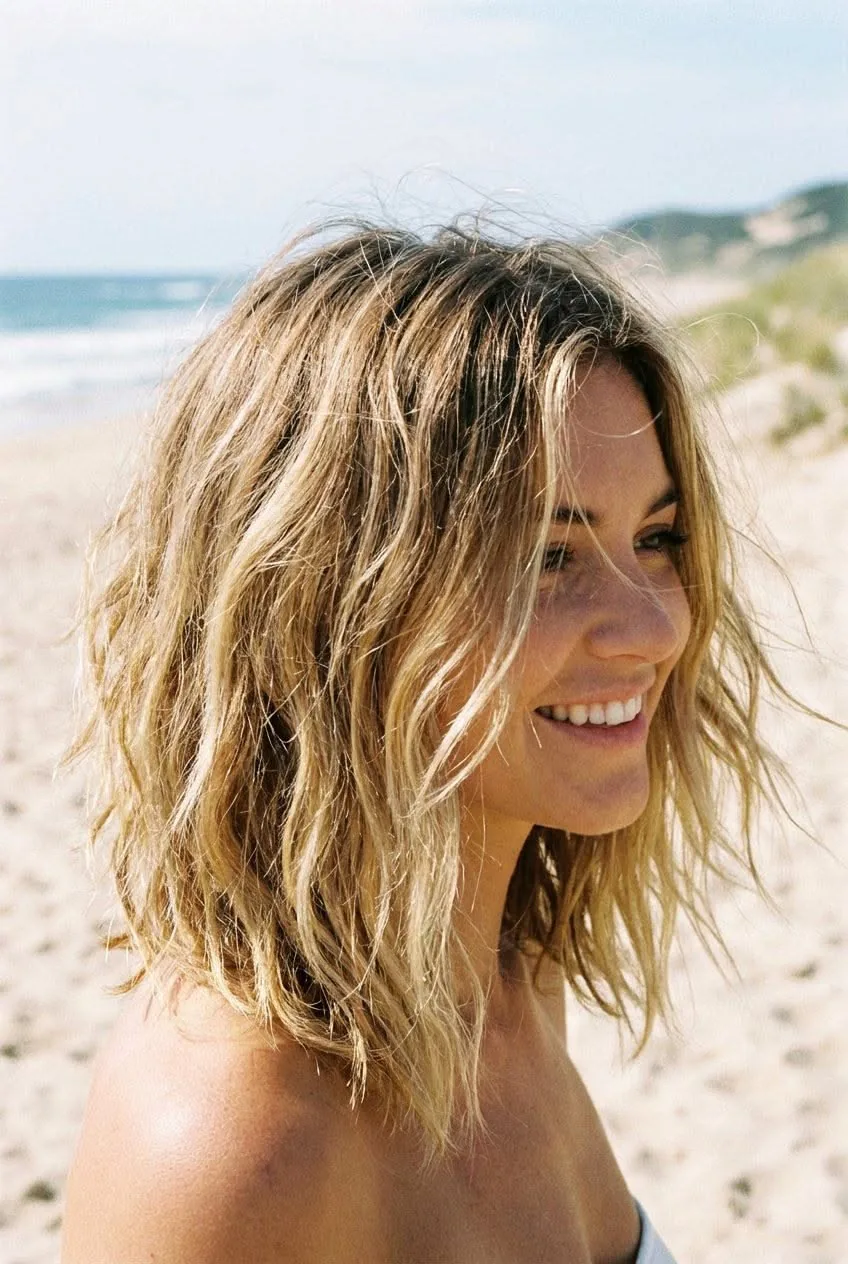
Beach waves and shoulder length hair are the ultimate relaxed pairing: tousled, textured lengths and ends that look like they dried in the sea air. Shoulder length is the ideal length for beach waves, because the hair is short enough for the waves to hold and long enough for them to show — longer hair pulls its own waves flat, and shorter hair cannot form them at all.
What it is: loose, textured waves with soft, separated ends. Why it works: the waves give the hair texture and volume without any precision. Who it suits: wavy and straight hair that holds a bend, and anyone who prefers air-drying. How to style it: curl the lengths in alternating directions with a large-barrel iron, shake out, and finish with texturising spray — and do not over-brush, since brushing turns waves into frizz.
11. Sleek Straight Shoulder Length Hair
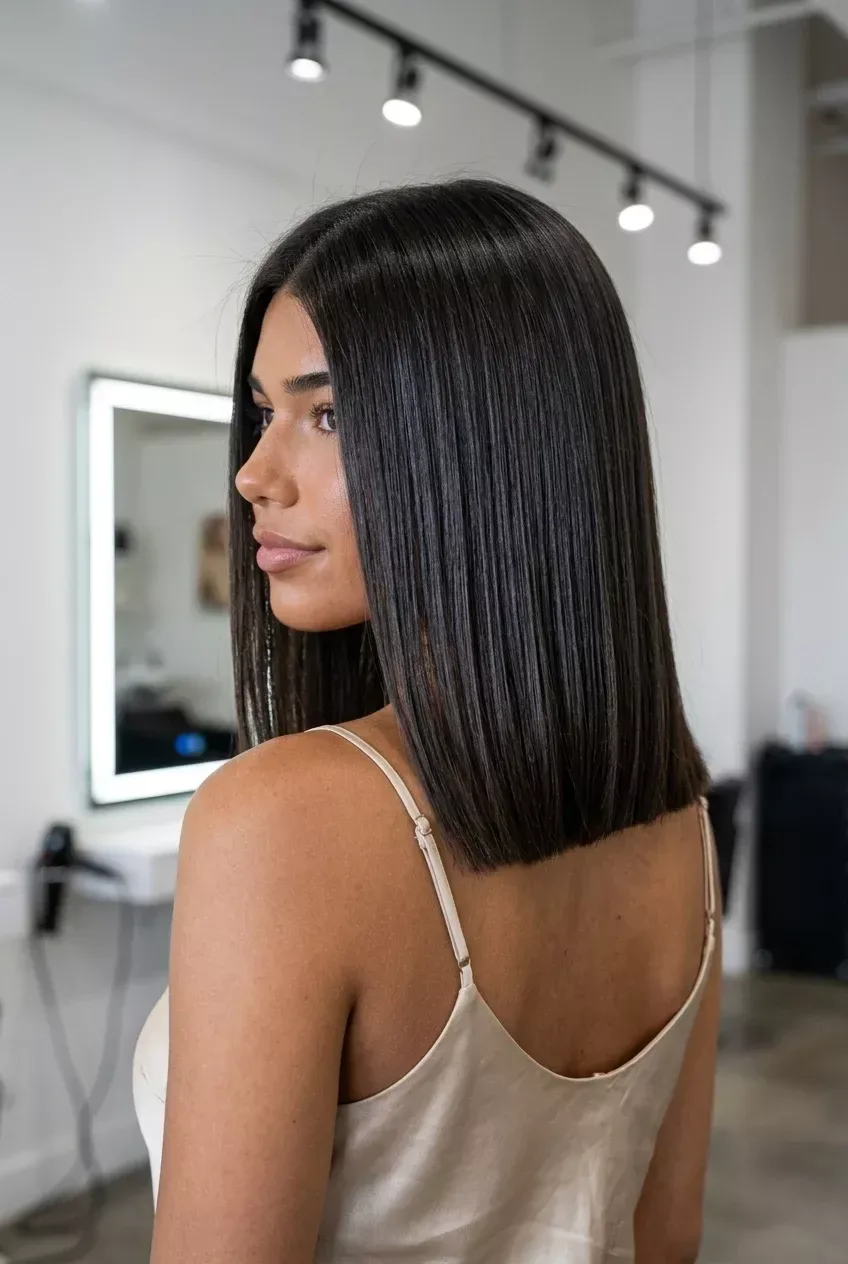
Sleek, straight shoulder length hair is a study in polish: smooth lengths, a clean outline, and a shine that makes the cut look expensive. At this length, straight hair looks intentional rather than flat, because the ends sit right at the shoulders where they catch the light. It is the most polished everyday look in this guide, and the one that needs the least styling once the cut is right.
Best for: naturally straight hair, oval faces, and polished occasions. How to style: flat iron in large sections, then a drop of shine serum on the ends only. Watch out for: humidity, which can make straight ends go wavy — a light anti-frizz serum, applied sparingly, keeps the shape without weighing it down.
12. Curly Shoulder Length Hair
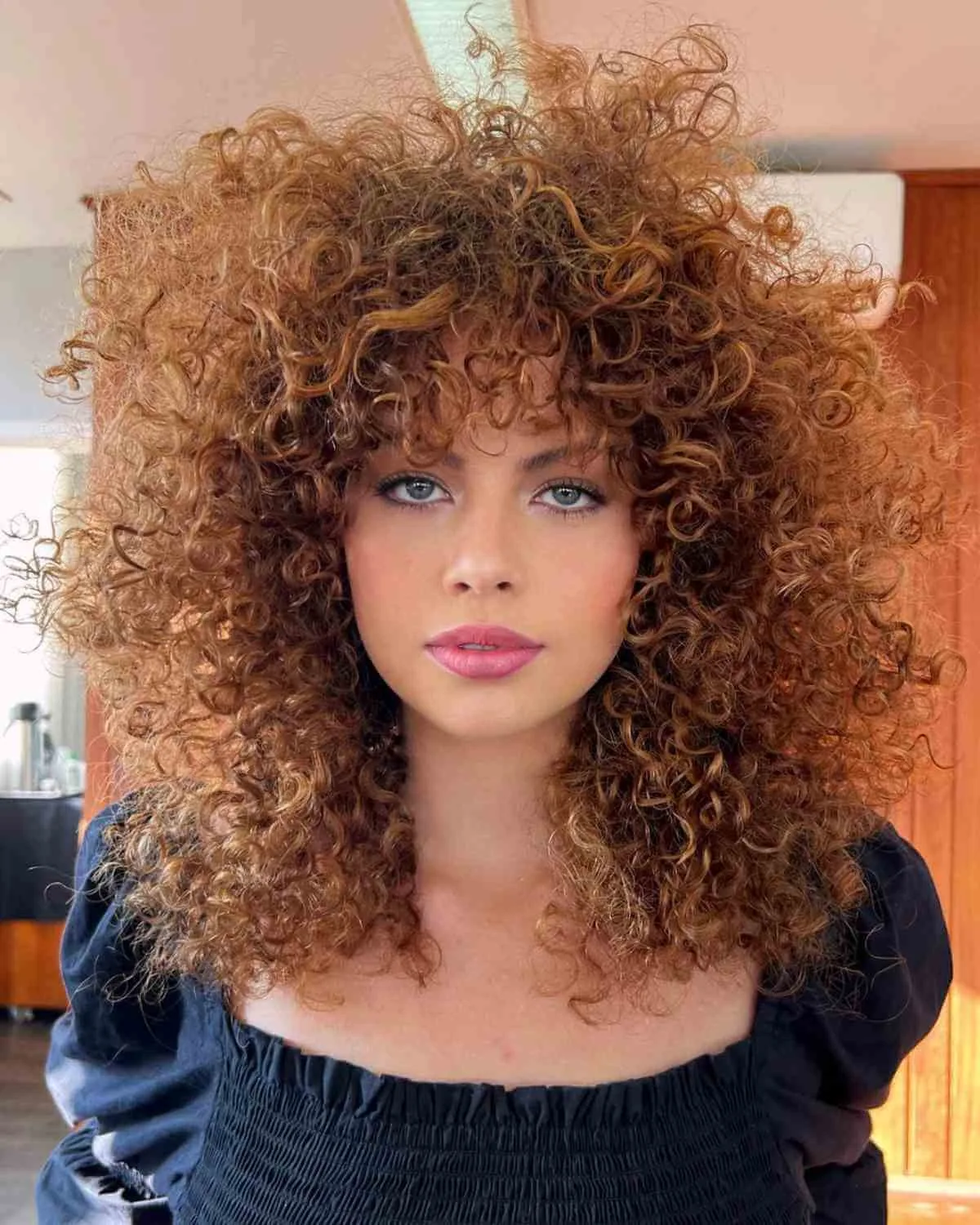
Curly shoulder length hair is bouncy, full and alive — the curls have room to form at this length without being pulled flat by weight, and the cut frames the face with natural volume. It is one of the most joyful versions of this length, and it suits anyone whose curls need a shape that shows them off rather than hiding them.
The cut must be done dry, curl by curl, because curly hair shrinks dramatically as it dries and a fringe or layer cut wet will end up far shorter than planned. Style it by scrunching curl cream through damp hair and letting it air-dry, or diffusing on low heat. Do not brush curly hair — brushing breaks the curl pattern into frizz. On refresh days, a light mist of water reactivates the curls. Maintenance: a trim every eight to ten weeks keeps the shape, and a deep conditioning mask once a week keeps the curls defined.
13. Wavy Shoulder Length Hair
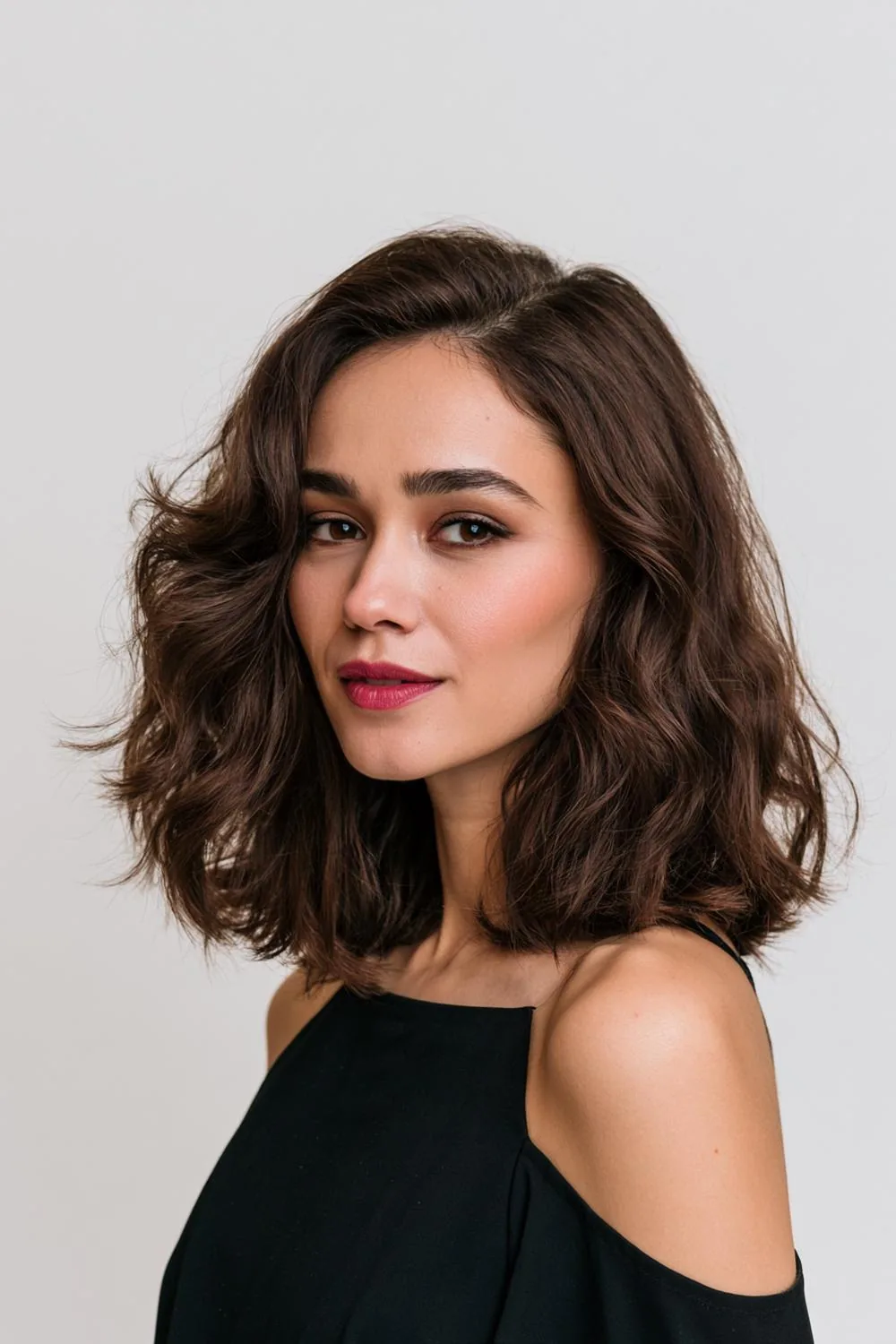
Wavy hair gives shoulder length cuts a natural, piecey texture for free — the wave creates the movement that straight hair needs products to achieve. The hair falls in soft S-bends, the ends flip gently, and the style blends into itself without any visible join. It is the lowest-effort version of this length, and often the prettiest.
Pros: natural texture with almost no styling; the wave does the work. Cons: waves can dry unevenly, with one side flatter than the other. Quick verdict: scrunch with a little mousse or sea-salt spray, air-dry, and twist the front pieces while damp so they fall one way — the easiest good-hair day in this guide.
14. Shoulder Length Hair for Fine Hair
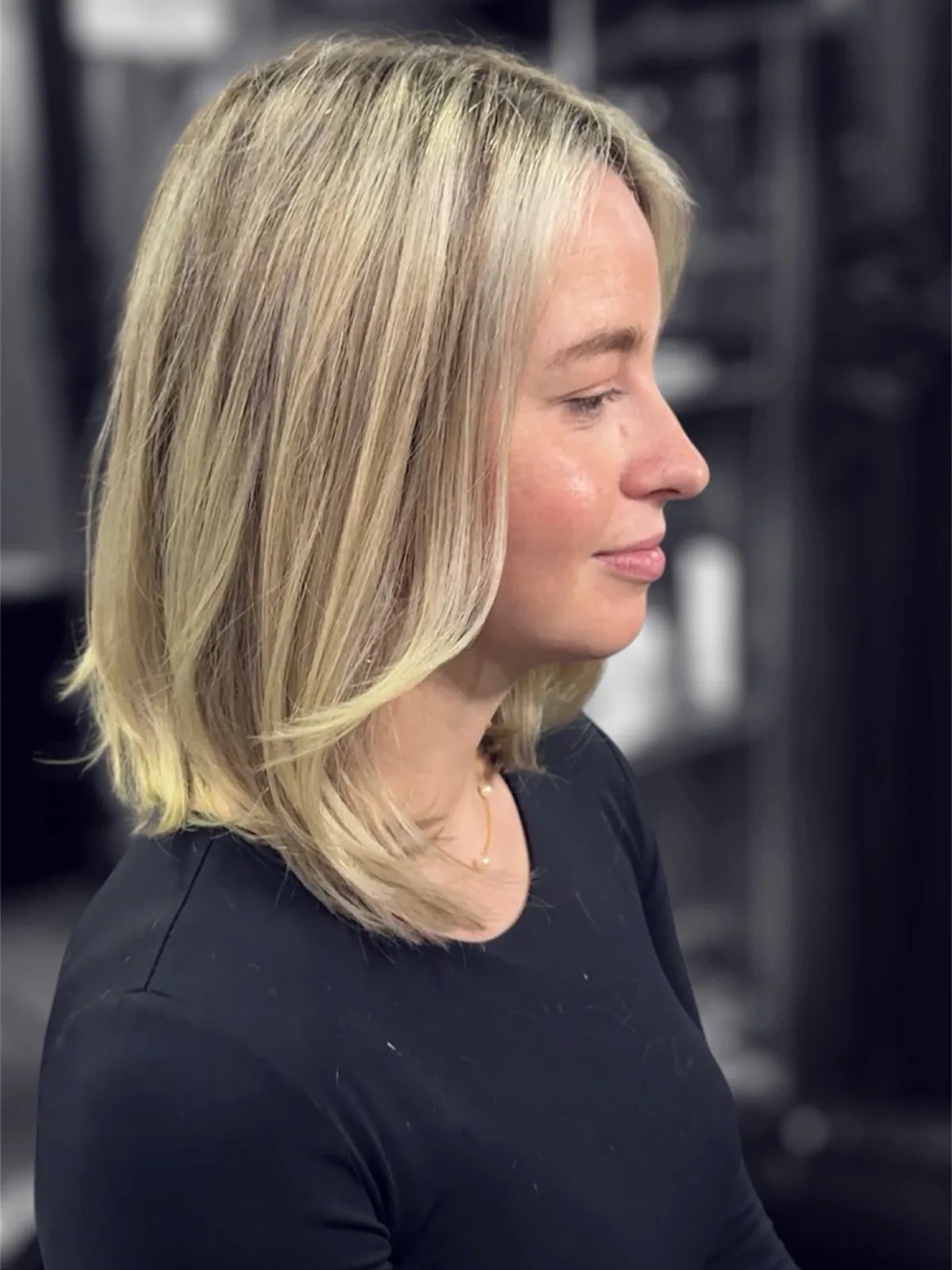
Fine hair gains the most from shoulder length, because shorter hair is lighter and holds volume better. A blunt or softly layered cut at the shoulders makes fine hair look thicker than it is, and the ends stay full instead of tapering away the way long fine hair does. It is the single best length for anyone whose hair goes flat by noon.
What it is: a blunt or long-layered cut that keeps the ends full. Why it helps: less weight means more lift at the roots. Who it suits: fine and thin hair, and anyone whose long hair looks stringy at the ends. How to style it: dry shampoo at the roots, a round brush for lift, and no heavy products. What to avoid: short choppy layers, which thin the ends out, and over-conditioning, which weighs fine hair flat.
15. Shoulder Length Hair for Thick Hair
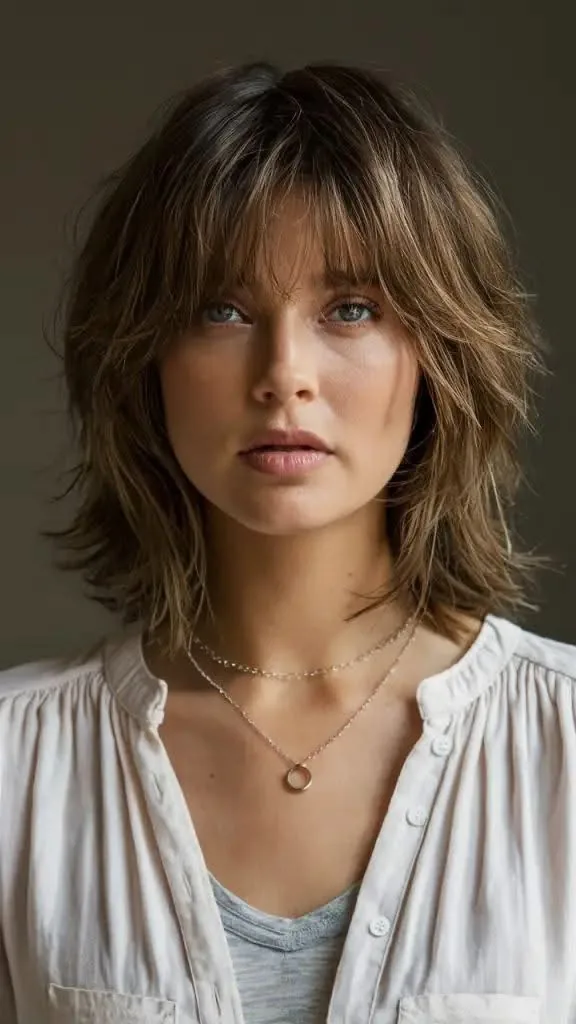
Thick hair at shoulder length can be glorious — full, bouncy, and full of movement — but only with serious thinning. Without it, the cut turns into a triangle: flat at the top, wide at the bottom. The stylist needs to remove bulk from the inside with thinning shears or long layers, while keeping the outline soft, so the hair moves and breathes instead of sitting heavy.
Best for: thick and coarse hair that needs weight removed. How to style: blow-dry in sections with a large round brush, or let it air-dry with a smoothing cream. Watch out for: a cut that is too blunt — on thick hair, blunt ends flare outward, so ask for soft, texturised ends that sit neatly.
16. Shoulder Length Hairstyles for Round Faces
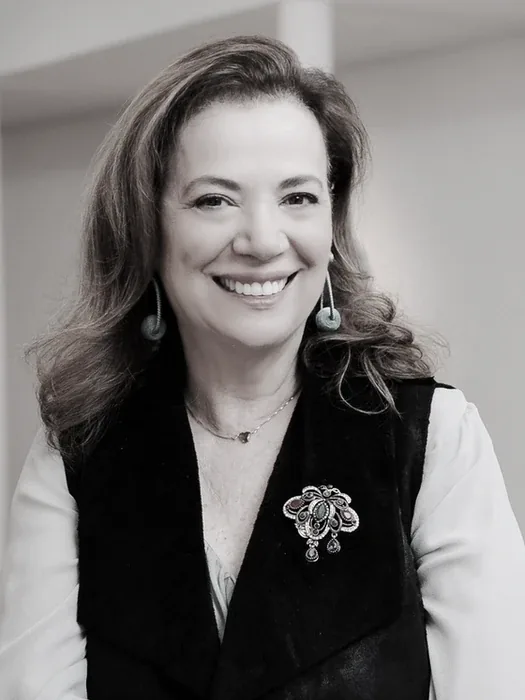
Round faces and shoulder length hair are a genuinely good match, as long as the cut adds length rather than width. Longer layers that fall past the chin draw the eye downward, a middle or deep side part adds the illusion of length, and the see-through texture of a soft fringe keeps the face from looking covered up. The length itself helps: hair that ends at the shoulders elongates the face instead of widening it.
Mistakes to avoid: a blunt cut that ends exactly at the chin, which adds width right where a round face does not want it; short, full bangs, which shorten the face; and too much volume at the sides, which widens the silhouette. Ask for layers that start below the chin, a part that is off-centre, and ends that fall past the jaw. The result is a face that looks longer, softer, and beautifully framed.
17. Shoulder Length Hairstyles for Oval Faces
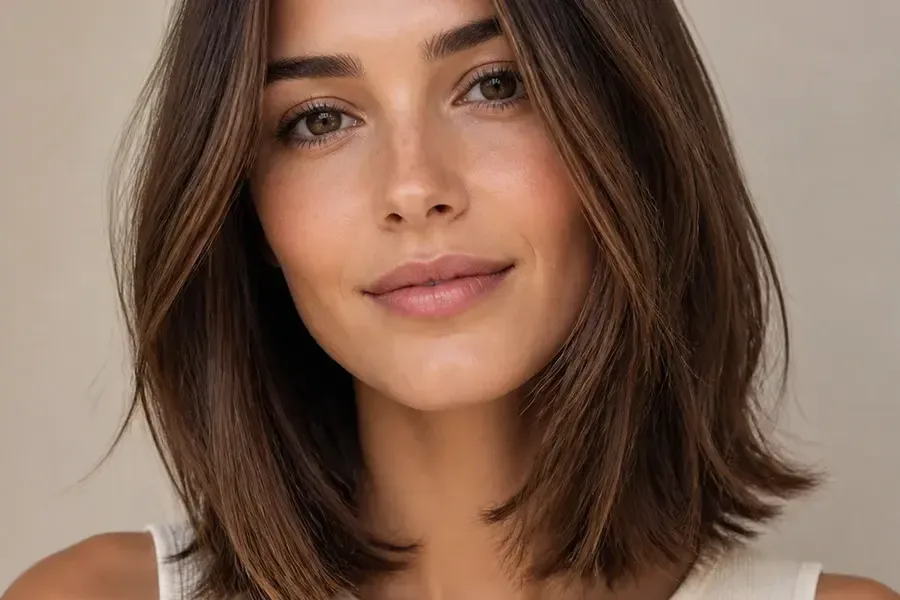
Oval faces can wear almost any shoulder length cut, which makes this length a playground rather than a puzzle: blunt, layered, shaggy, wavy, straight — they all work. The freedom is the point. With balanced proportions, the cut is a styling choice, not a correction, so you can choose the version that matches your mood and your hair texture rather than your face shape.
Because everything works, the best advice for oval faces is to choose by hair type instead. Fine hair suits a blunt cut for thickness; thick hair needs long layers; wavy hair loves a shag; straight hair looks sharpest blunt. Try the version you are most drawn to first — if you hate it, an oval face forgives a haircut experiment faster than any other shape, and shoulder length hair grows out gracefully.
18. Shoulder Length Hairstyles for Square Faces
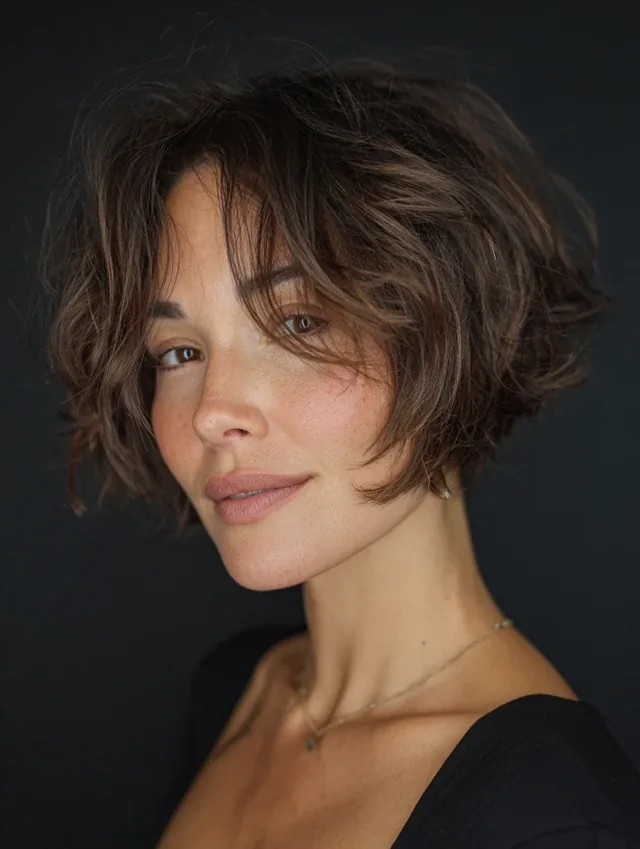
Square faces have strong, beautiful jawlines, and shoulder length hair softens them without hiding them. Soft, feathered ends and a side-swept fringe break up the angles of the forehead and jaw, while layers that fall past the chin draw the eye downward. The goal is softness and diagonal lines, not another horizontal line across the face.
What it is: soft layers with feathered ends and a side-swept fringe. Why it helps: diagonal lines soften a strong jaw. Who it suits: square and rectangular faces. How to style it: sweep the fringe to one side and let the side pieces fall past the jaw. What to avoid: a blunt cut that ends exactly at the jawline, which emphasises the squareness — ask for layers that fall a little below it.
19. Shoulder Length Hairstyles for Heart-Shaped Faces
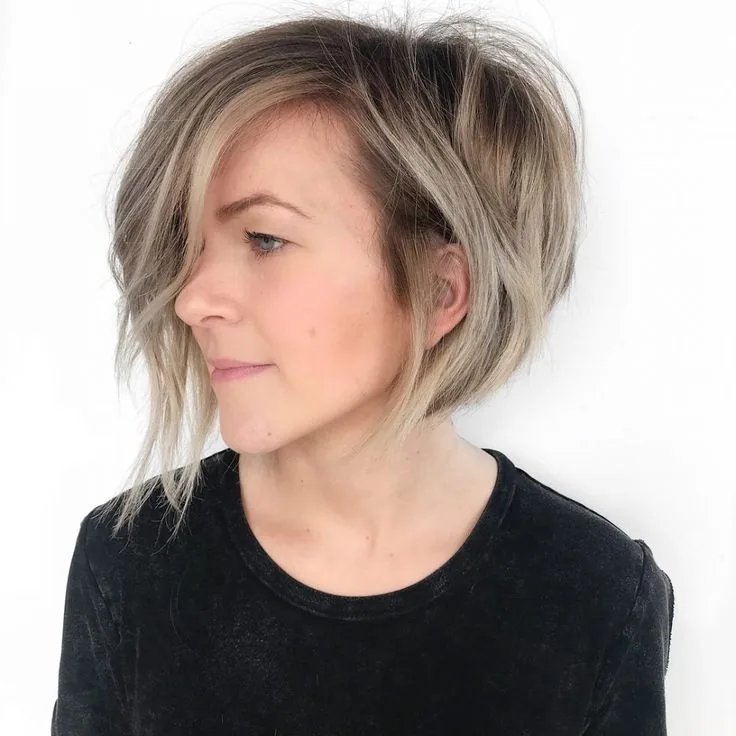
Heart-shaped faces — a wider forehead, a narrower chin — are one of the shapes shoulder length hair flatters most. The length balances the forehead, the layers add a little width around the jaw, and the overall effect is a face that looks beautifully proportioned. Gentle waves or flipped ends at the shoulders are especially flattering, because they add fullness exactly where a heart-shaped face is narrowest.
Best for: heart-shaped faces, anyone with a wider forehead and a narrower chin. How to style: soft waves through the lengths, with the ends flipped out slightly for width at the jaw. Watch out for: too much volume at the crown, which emphasises the forehead — keep the volume at the ends instead.
20. Shoulder Length Hairstyles for Long Faces
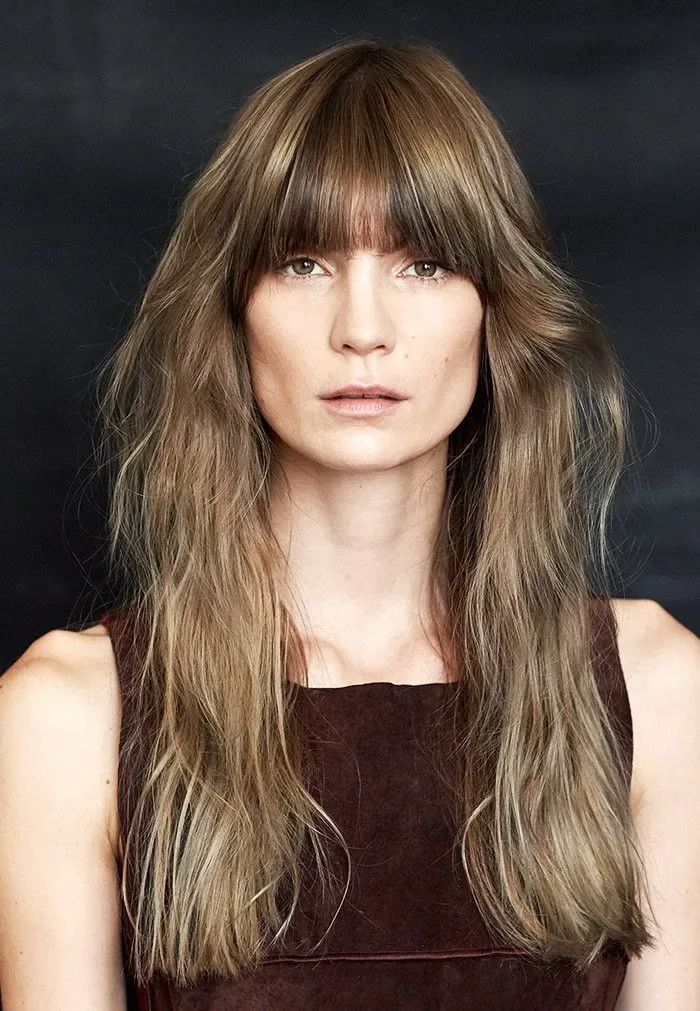
Long faces benefit from shoulder length hair more than almost any other shape, because this length adds width where a long face needs it. Layers that kick out at the ends, a blunt cut that adds horizontal lines, or a fringe that shortens the forehead visually — all three work, and all three are easier at shoulder length than at any other length.
Pros: adds width at the jaw; a fringe shortens the forehead; the length itself balances the face. Cons: very long, straight layers can lengthen the face further, so keep the layers soft and the ends flipped. Quick verdict: choose width over length — flipped ends, soft layers, or a brow-skimming fringe — and the face looks shorter and more balanced.
21. Shoulder Length Hair with Glasses

Shoulder length hair and glasses are a charming combination, because the hair frames the face at exactly the level the frames sit. The length does not compete with the frames the way long hair can, and it does not leave the face bare the way a very short cut can. A soft fringe works beautifully with glasses, as long as the length is chosen around the frames.
The negotiation is simple: bangs that end just above the frames, or just below them, work best, while bangs that end exactly at the frame line will catch, split and tangle with the glasses all day. A slightly side-swept fringe is the easiest version to live with. Keep the sides soft and the layers light, so the hair and the glasses share the face instead of fighting over it.
22. Shoulder Length Hair in a Low Ponytail
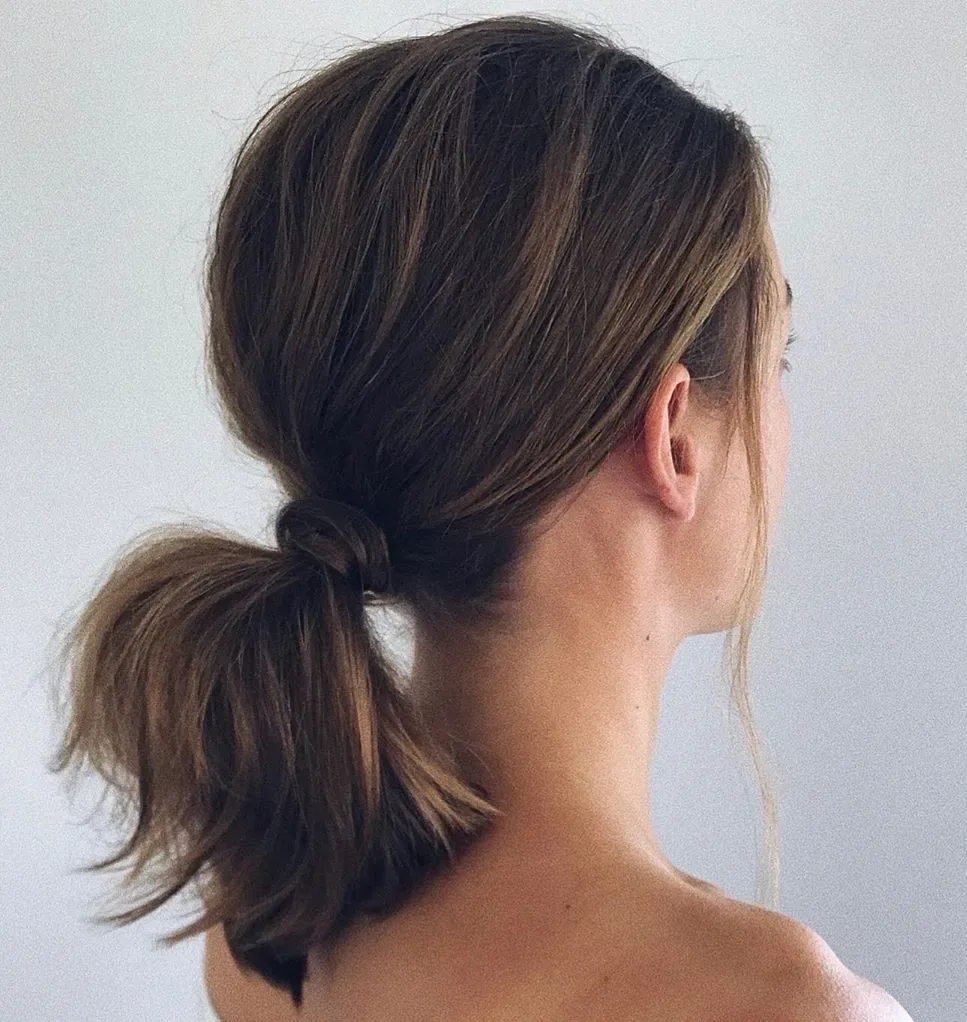
A low ponytail is the quiet, polished style that works everywhere — the office, a dinner, a school run, a wedding — and shoulder length hair is the shortest length that can still do it properly. The tail sits at the nape, the face-framing pieces soften the front, and a wrap of hair around the elastic hides the mechanics and makes the whole thing look considered.
The wrap is the detail that elevates it: take a small section from underneath the tail, wrap it around the elastic, and pin it underneath. Style the front pieces first, gather the hair low with a brush for smoothness, and pull a few pieces loose at the temples. For a softer version, leave the ponytail slightly loose at the front; for a sleeker version, smooth everything back and let the face-framing pieces be the only softness. It takes five minutes and looks like fifteen.
23. Shoulder Length Hair in a Half-Up Hairstyle
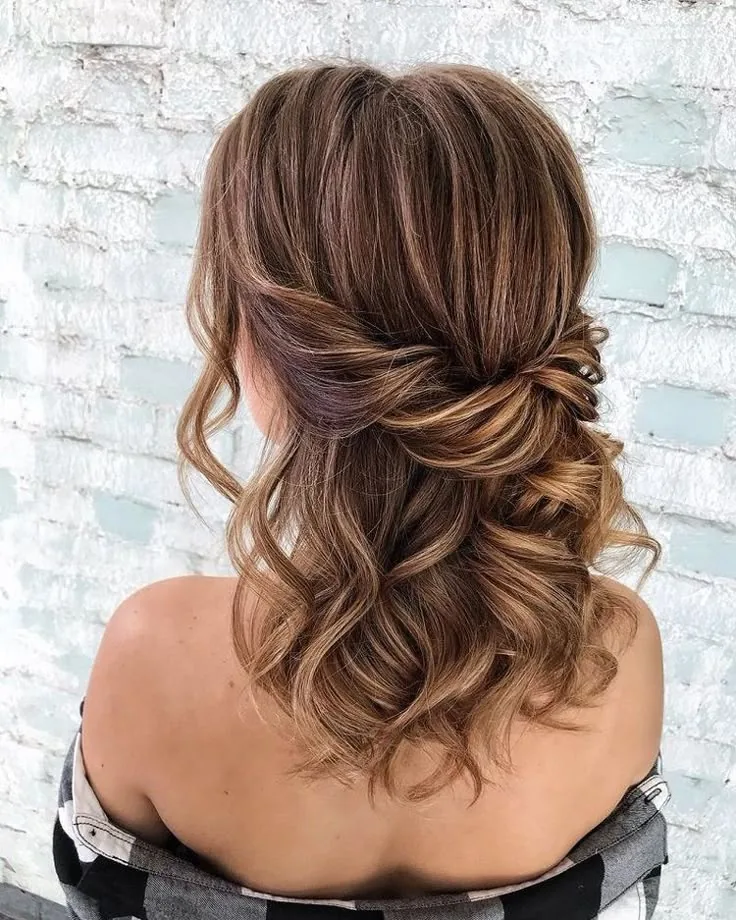
The half-up hairstyle lets you have it both ways — hair off the face, length still showing — and shoulder length hair does it better than any other length, because the top section is short enough to stay neat and the bottom is long enough to show. Gather the top section into a small bun, a twist or a clip, leave the rest down, and let the face-framing pieces fall loose at the sides.
What it is: the crown gathered up, the rest left down. Why it works: the length is short enough for the half-up section to hold, long enough for the rest to show. Who it suits: every face shape, every texture. How to style it: take a small section from the crown only, secure it with a small elastic hidden under a twist, and add a loose wave through the ends. If your hair is fine, backcomb the crown section lightly before securing it for a little lift.
24. Shoulder Length Hair in a Messy Bun
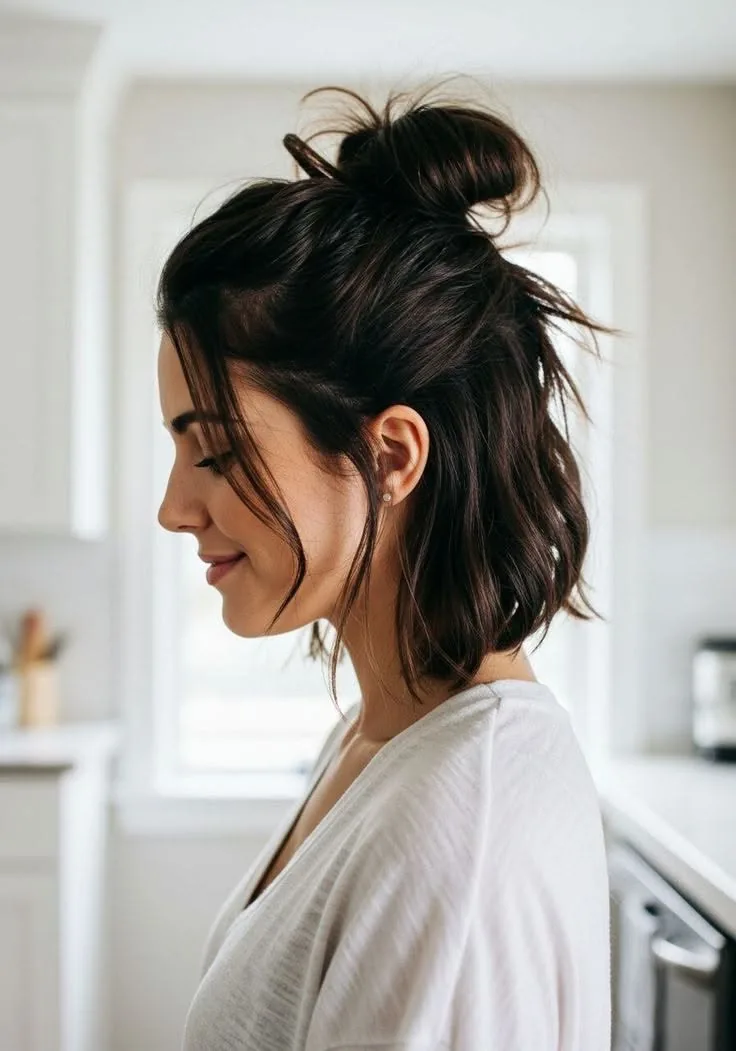
The messy bun is the hairstyle most people actually wear, and shoulder length hair makes it easier than any other length: there is just enough hair to twist into a bun, and the shorter pieces that escape around the face are the ones that make it look deliberate instead of accidental. The bun is loose and textured, the front pieces are soft, and the combination reads as effortless in about two minutes.
Pros: two minutes; hides unwashed hair; the escaping pieces make it look styled. Cons: a bun that is too messy can look unfinished, so keep the shape intentional. Quick verdict: twist, pin, pull a few pieces loose, and let the face-framing layers do the rest — the easiest good-hair day in this guide.
25. Shoulder Length Hair with a Claw Clip Updo
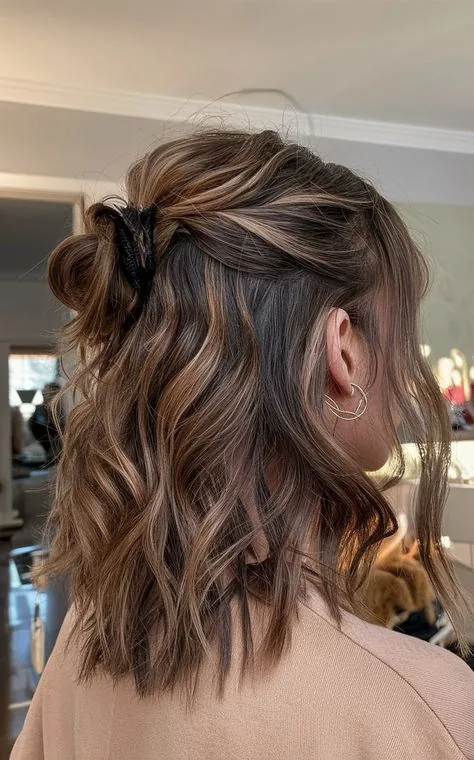
The claw clip updo is the two-minute hairstyle that defined a generation, and shoulder length hair is its perfect partner: the hair is long enough to twist and clip, short enough that the clip actually holds it, and the front pieces fall soft around the face. Twist the hair up, clip it, let the face-framing pieces fall — the result is relaxed, pretty and genuinely fast.
Choose a clip that matches your hair volume — a small clip on thick hair will pop open by lunchtime — and position it high for a lift or low for a softer look. Style the front pieces first, and finish by loosening the front of the twist slightly so the shape is soft rather than scraped back. It is the best friend of second-day hair, and it works on every length from a lob to a full shoulder length cut.
26. Shoulder Length Hair with a Braided Crown
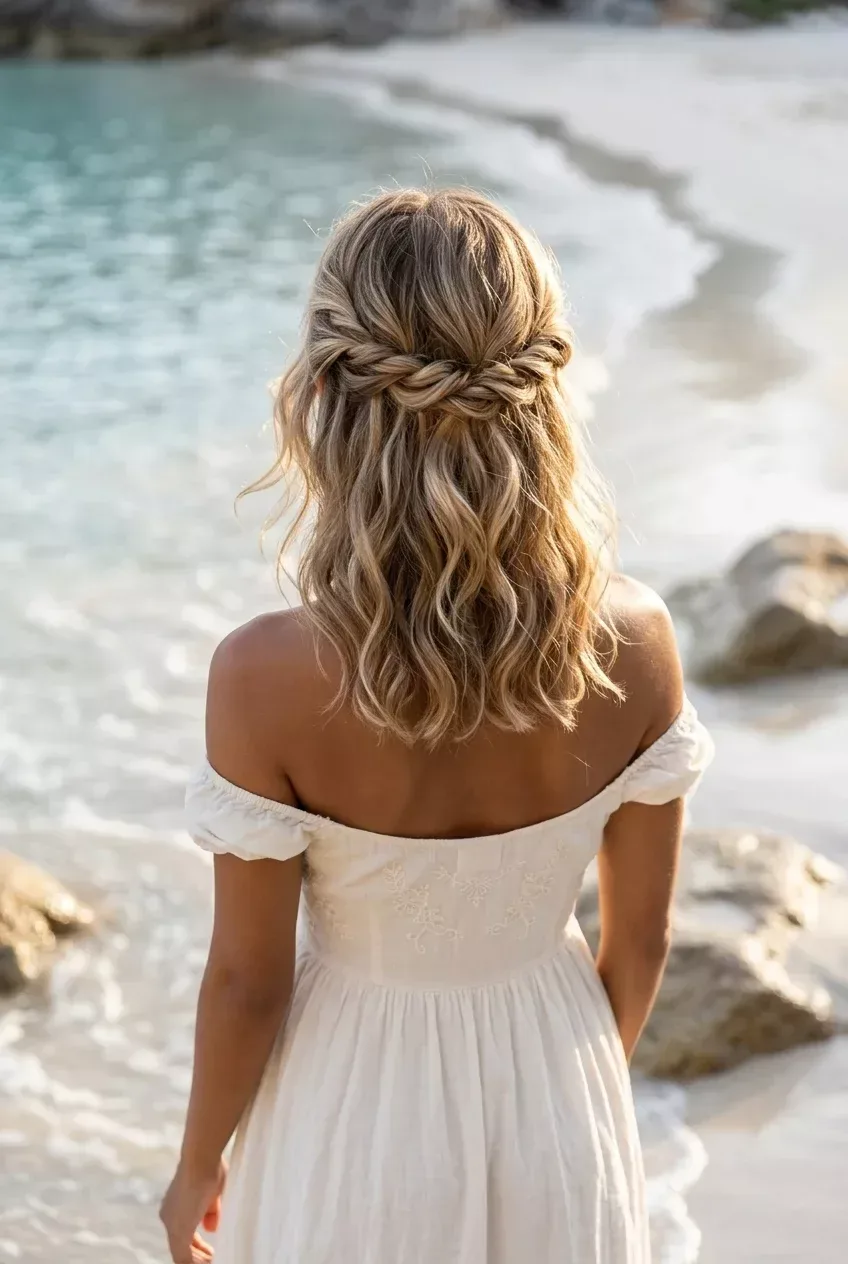
A braided crown with shoulder length hair is the romantic updo that still feels modern: two braids wrapped around the head like a halo, and soft face-framing pieces left loose so the look stays gentle instead of severe. The braids keep every strand contained, the hair frames the face, and the whole style holds for hours — a favourite for weddings, festivals and long summer evenings.
Braid loosely — a tight crown braid fights with soft face-framing pieces, while a loose, slightly pulled-apart braid matches them. Style the front pieces first, then braid from each temple toward the back, cross the braids over each other and pin. Pull a few wisps loose at the temples and nape for softness. If your hair is fine, pancake the braids by gently tugging the edges outward so they look fuller.
27. Shoulder Length Hair with a Side Part
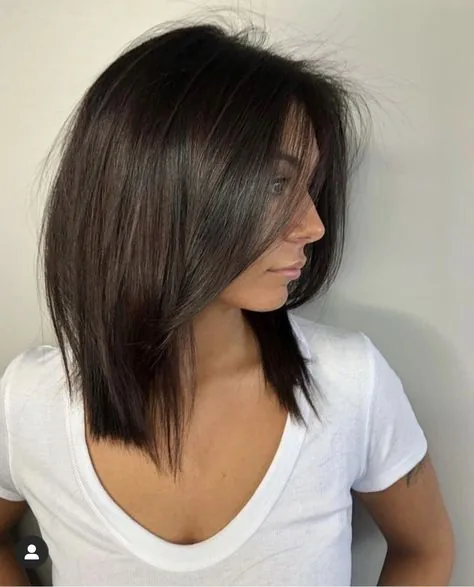
A side part turns a shoulder length cut into the most forgiving style of all: the hair sweeps diagonally, the weight falls to one side, and any cowlick or uneven growth is disguised by the direction of the sweep. It is the best version for anyone whose hair refuses to fall straight, and it suits faces that want a little asymmetry — which is most of them.
Part the hair deeply on one side while it is damp, blow-dry the front pieces across the forehead in the direction of the part, and let the ends flick slightly outward. The sweep softens a strong forehead and draws attention to the eyes, and it grows out more gracefully than a straight style, since side-swept hair is already halfway to being a layer. If your hair has a natural part, work with it rather than against it.
28. Shoulder Length Hair with a Middle Part
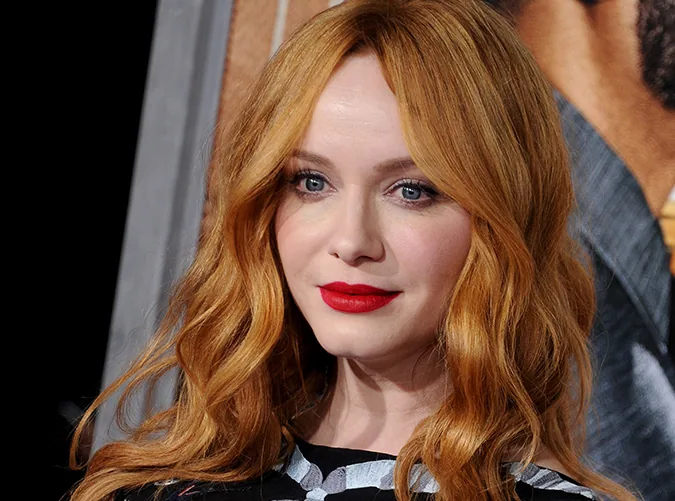
A middle part with shoulder length hair is the symmetrical, face-framing look that photographs beautifully: the centre falls evenly, the sides lengthen gradually, and the face is framed evenly on both sides. It suits oval, heart-shaped and long faces especially well, and it is the most polished way to wear this length.
Pros: symmetrical and flattering; grows out into long layers; suits most face shapes. Cons: a middle part shows unevenness, so the cut needs to be even, and a strong cowlick at the front hairline can fight it. Quick verdict: the most polished way to wear shoulder length hair — keep the part clean, the front pieces soft, and the ends even.
29. Shoulder Length Hair with Balayage
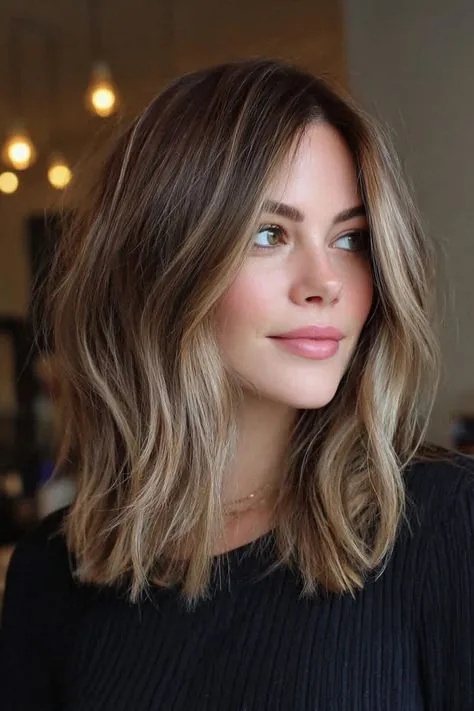
Balayage and shoulder length hair are a beautiful combination, because the hand-painted highlights catch the light exactly where the face is, and the soft grow-out of balayage means the colour never shows a harsh root line. At this length, the highlights have room to show their dimension without the upkeep that long balayage needs.
Ask your colourist to paint a few fine, face-framing pieces through the front — not just the lengths — so the front and the rest of the hair share the same light. Keep the highlights subtle at the front, since too much lightness there can look stripey. The upkeep is gentle: balayage grows out softly, and a purple shampoo once a week keeps blonde pieces from turning brassy. Maintenance: a toner every eight to ten weeks keeps the colour fresh.
30. Shoulder Length Hair with a Money Piece
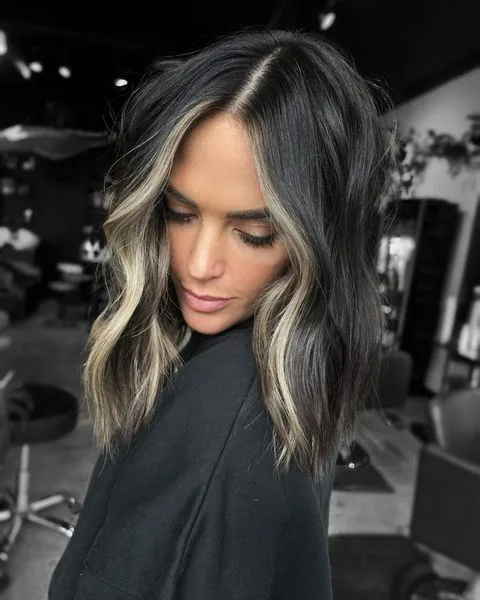
A money piece — the bright, face-framing highlight at the very front — turns a shoulder length cut into a statement. The lighter strands at the front catch the light, brighten the face, and make the eyes pop, while the rest of the hair can stay darker and lower-maintenance. It is a bold look, but because the cut is soft, the brightness feels fresh rather than stripey.
What it is: bright face-framing highlights at the front of a shoulder length cut. Why it works: the light falls exactly where the face is. Who it suits: anyone who wants brightness without colouring the whole head. How to ask for it: fine, blended pieces rather than a solid block of blonde, and a toner to keep the brightness clean. What to watch out for: the front pieces need toning every six to eight weeks to stay bright.
31. Shoulder Length Hair with Highlights
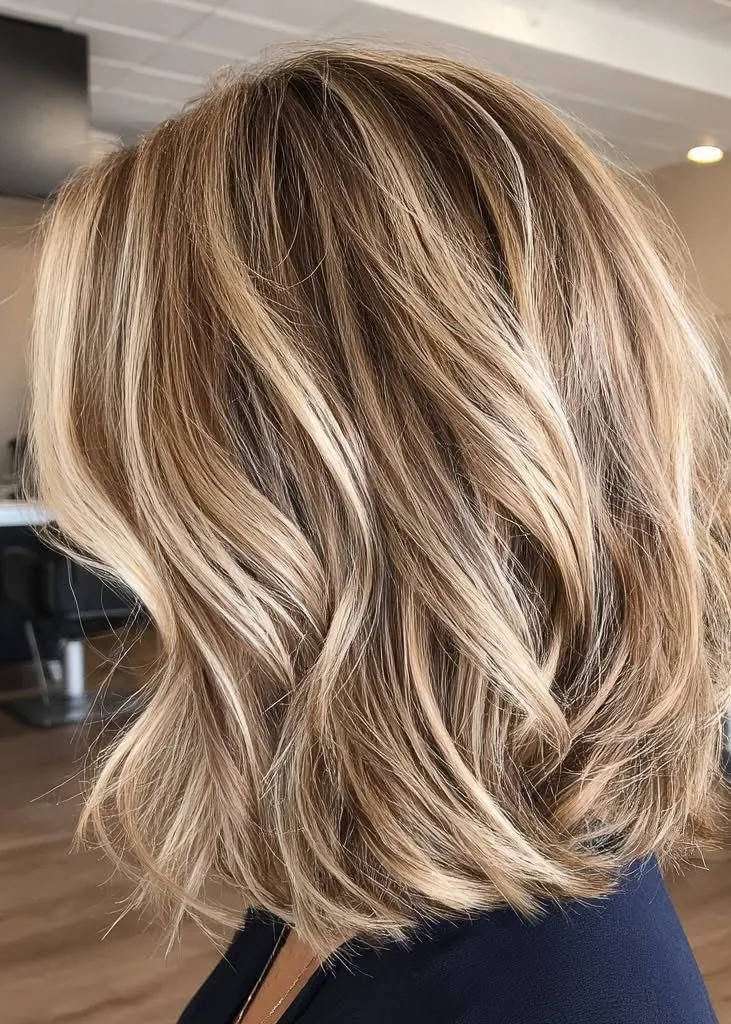
Highlights are the easiest way to add dimension to shoulder length hair: fine, woven pieces of lighter colour through the lengths catch the light, make the layers look deeper, and give the cut a movement it would not have in a single colour. At this length, highlights are at their most effective, because the hair is short enough for the colour to show clearly and long enough for the dimension to read.
Best for: anyone whose single-colour hair looks flat, and anyone who wants dimension without a full colour change. How to style: waves show highlights best, so a loose curl through the lengths makes the colour pop. Watch out for: highlights that are too chunky — fine, blended pieces look natural, while thick stripes look dated.
32. Shoulder Length Hair for a Wedding Guest
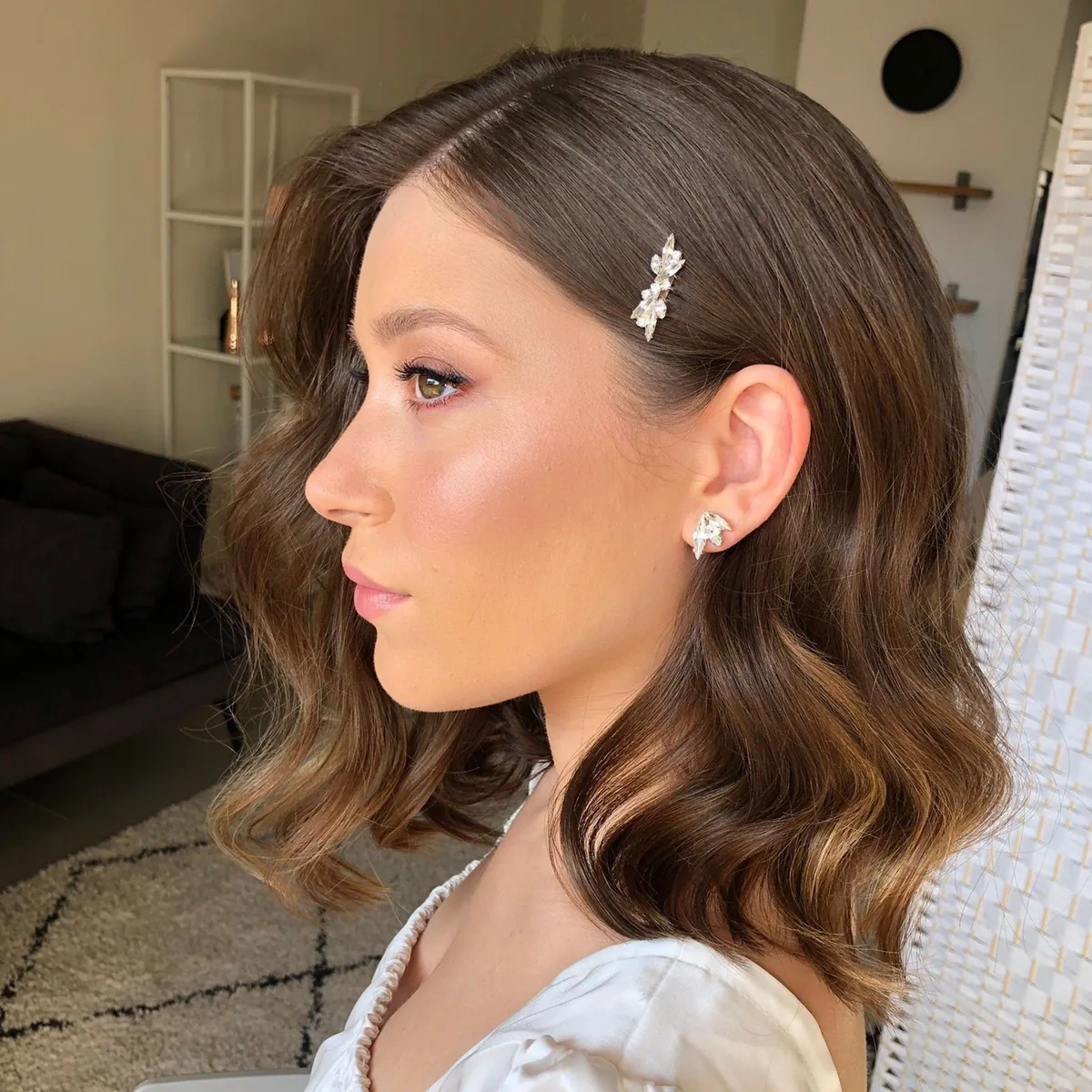
For a wedding guest, shoulder length hair is the detail that makes a simple hairstyle look occasion-ready. A soft low bun, loose waves or a half-up style all gain a romantic finish from face-framing pieces, and the length photographs beautifully — it frames the face in every photo without hiding it. The look is elegant without competing with the bride, which is exactly the brief.
Best for: weddings, formal dinners, and any occasion where photos matter. How to style: soft waves through the lengths, a low bun or half-up style, and front pieces blow-dried with a gentle under-curve. Watch out for: over-styling — on a formal day, the hair should look soft and touchable, not shellacked, so use a flexible-hold spray and keep your hands off it once it is set.
33. Shoulder Length Hair for the Office

Shoulder length hair is one of the most office-friendly lengths you can choose, because it is polished without being severe. A straight blow-dry looks professional and put-together, a low ponytail looks neat without looking scraped-back, and the length itself reads as a deliberate style choice rather than a trend. It works in conservative offices and creative ones alike, which is rare for a haircut.
The office version is all about neatness: keep the ends even, blow-dry them smooth, and avoid too much texture or pieceyness during work hours. A low bun or a sleek ponytail pairs best, and a quick midday refresh with dry shampoo keeps the hair from going flat at your desk. If your office is very formal, a slightly longer, side-swept front is the safest version — it reads as classic, not trendy.
34. The Low Maintenance Shoulder Length Cut
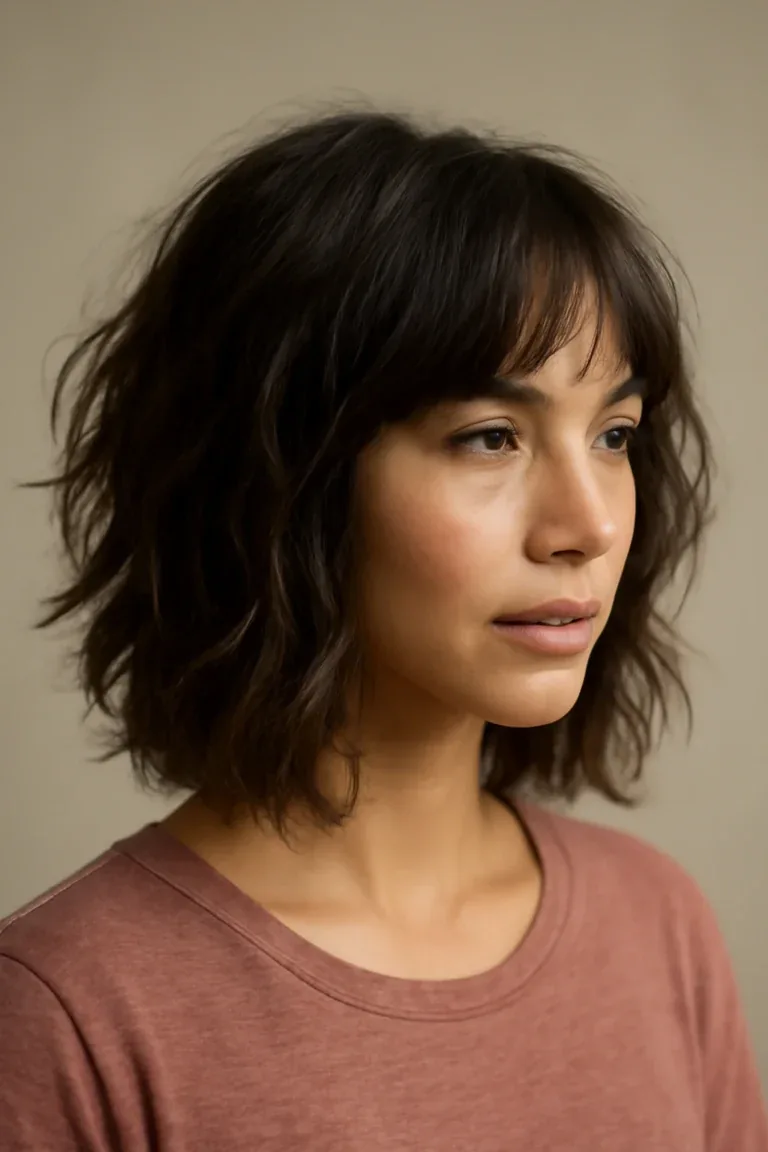
The low maintenance shoulder length cut is the one you can wash, shake, and walk out the door with: long layers, no fringe, ends that are soft rather than blunt, and a shape that looks good air-dried. It is the cut for people who do not want to think about their hair — and at this length, that is a realistic goal, because the cut itself does the styling.
Mistakes to avoid: a cut that is too blunt, which needs daily heat styling to look finished; layers that are too short, which stick out when the hair air-dries; and skipping trims, which lets the ends split and the shape collapse. The right version is a softly layered cut with the ends point-cut for movement, a trim every eight weeks, and a leave-in conditioner instead of a styling routine. Wash, scrunch, go.
35. Shoulder Length Hair as a Grow-Out Stage from a Bob
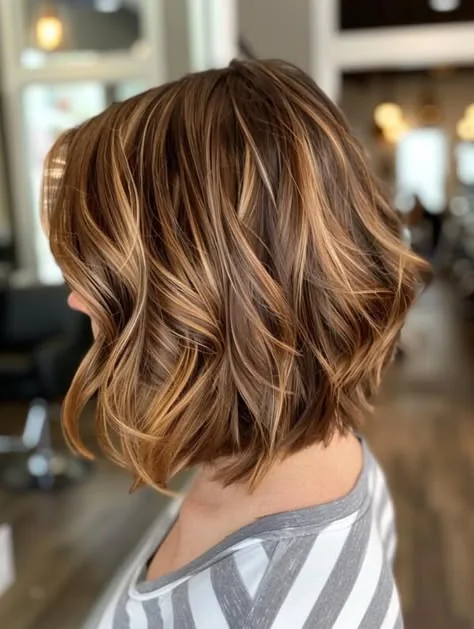
Shoulder length hair is not only a destination — it is also the most wearable stage of growing out a bob. The bob’s front is usually longer than its back, so the first month is simply the back catching up, and during that time the cut reads as a longer bob, then a lob, then a true shoulder length cut. Every stage is wearable, which is why this grow-out is the easiest one in hairdressing.
Pros: every stage looks intentional; the length ties back sooner than you expect. Cons: the ends can flip out while the back catches up — a round brush fixes it in a minute. Quick verdict: add soft layers as it grows, trim a centimetre every eight to ten weeks, and use a middle or deep side part to disguise any unevenness. Most people reach the shoulders from a chin-length bob in four to six months.
36. From Long to Shoulder Length: The Big Chop That Works
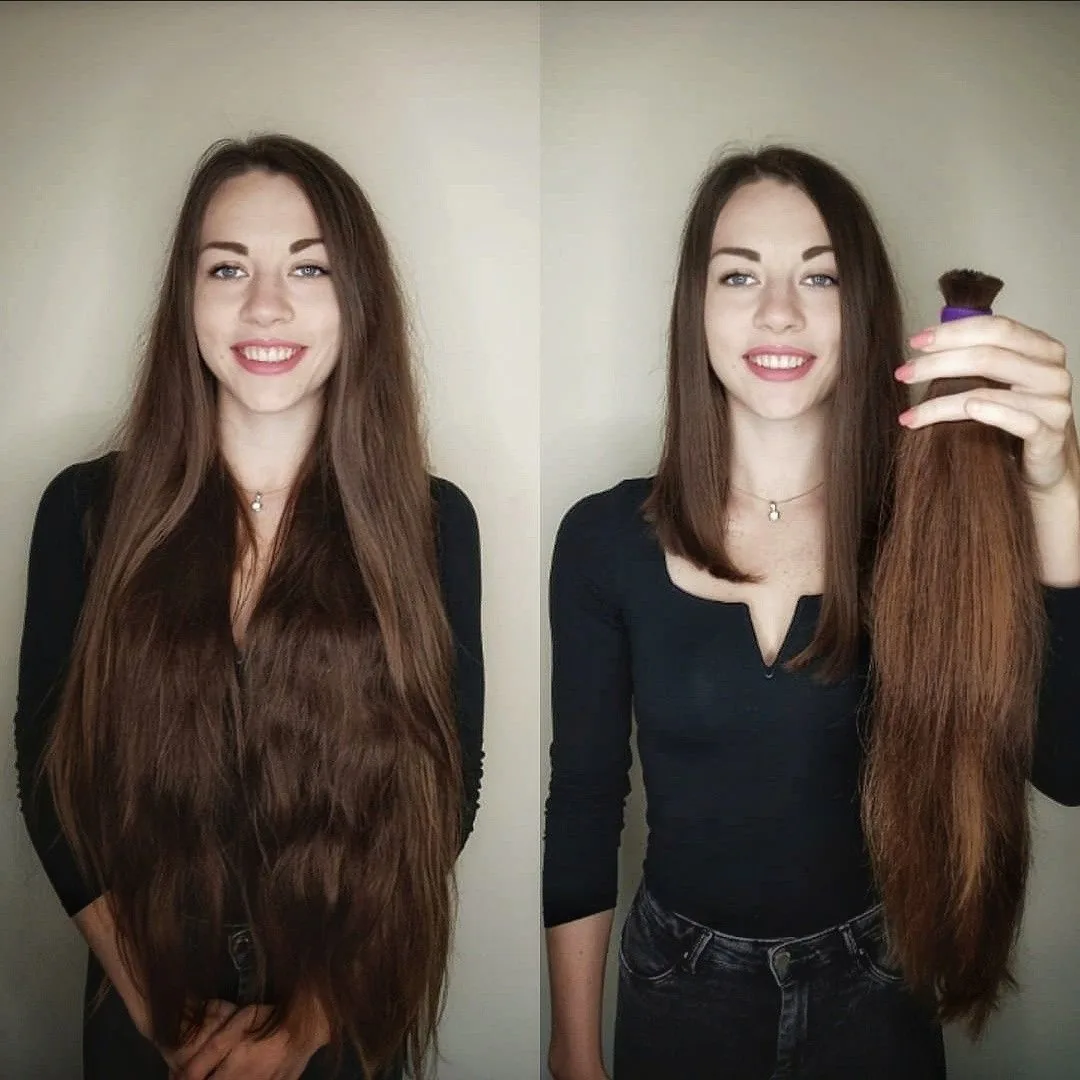
The big chop — long hair cut to the shoulders in one appointment — is the haircut that changes everything at once, and the first surprise is how much lighter your head feels. Long hair pulls itself straight under its own weight, so cutting it to the shoulders usually reveals movement, wave and volume you had forgotten you had. Hair that looked flat at waist length can suddenly hold a curl.
What it is: a single cut from long hair to the shoulders. Why it works: removing the weight reveals the hair’s natural movement. Who it suits: anyone whose long hair feels heavy, flat, or hard to style — and anyone ready for a change. How to prepare: bring a photo of the exact length, and ask the stylist to cut it a little long first, since you can always take more off. Give it two weeks before you judge it: the cut settles, the ends relax, and your styling habits catch up.
Is shoulder length hair good for women?
Yes — shoulder length hair is one of the most versatile cuts for women, because it is long enough to tie up, braid and style, and short enough to dry fast and hold volume. It suits nearly every face shape and hair texture, it works with bangs or without them, and it grows out gracefully, which is why stylists recommend it so often.
What is the most flattering shoulder length haircut?
The classic layered cut is the most universally flattering, because soft layers that start around the chin frame the face without hiding it. For fine hair, a blunt cut looks thicker; for thick hair, long layers remove bulk; for round faces, longer layers add the illusion of length. The most flattering version is the one adjusted to your face shape and texture, not copied from a photo.
How do I style shoulder length hair in under 10 minutes?
Blow-dry the face-framing pieces first with a round brush, then work the rest in large sections, flipping the ends under for polish or out for a flick, and finish with texturising spray. On no-wash days, dry shampoo at the roots and a quick pass with a flat iron bent under at the ends revives the cut in three minutes.
Can shoulder length hair be tied up?
Yes — shoulder length is the shortest length that can still be tied up properly. A low ponytail, a messy bun, a claw clip updo and a half-up style all work at this length. If your hair is layered, a few shorter pieces may escape around the face, which actually looks soft and deliberate rather than messy.
Does shoulder length hair suit round faces?
Yes, with the right cut — longer layers that fall past the chin, a middle or deep side part, and no blunt line ending exactly at the chin. Those details add the illusion of length and keep the face from looking wider. Avoid short, full bangs and too much volume at the sides, which widen the silhouette.
How often should shoulder length hair be trimmed?
Every six to eight weeks for most cuts, to keep the ends healthy and the shape intact. Blunt cuts need a trim every six weeks, because split ends show clearly on a clean line; layered cuts can stretch to eight or ten weeks. A centimetre off the ends is usually enough — the trim is about shape, not length.
Can I have shoulder length hair with curly hair?
Yes — curly shoulder length hair is bouncy, full and beautiful, but it must be cut dry, curl by curl, because curly hair shrinks as it dries and a cut done wet will end up much shorter than planned. Style it with curl cream and air-dry or diffuse, and never brush it, which breaks the curl pattern into frizz.
Is shoulder length hair low maintenance?
It is the lowest-maintenance length that still offers real styling options. It dries fast, holds a shape, needs only a trim every six to eight weeks, and can be washed, scrunched and left to air-dry. A softly layered cut with no fringe is the easiest version of all — it looks good with almost no effort.
How do I grow shoulder length hair longer?
Stop cutting the length and only trim the ends — a centimetre every ten to twelve weeks — to keep split ends from travelling up the hair. Layers help during the grow-out by blending the old shape into the new length, and protective styles like loose braids and low buns reduce breakage. Most people reach a comfortable long length in six to nine months.
What should I ask my stylist for a shoulder length cut?
Bring a photo of someone with your hair texture at the exact length you want, and say where you want the length to sit — collarbone, shoulder, or just below. Ask how the cut will behave on your natural texture without a blow-dry, whether the layers need regular thinning, and how it will grow out. Agree on the length before the scissors come out, and ask for it a touch longer than you think you want.
Conclusion: The Length That Does Everything Really Does
Shoulder length hair earns its reputation because it asks so little and gives so much: it ties up, it dries fast, it holds a curl, it frames the face, and it suits nearly every face shape and hair texture. From the classic layered cut and the blunt lob to the shag, the curtain bangs and the big chop from long hair, every style in this guide works because the length itself does the heavy lifting — the shape carries the style, even on the days you do nothing at all.
Start with the version that matches your hair and your life — the classic layers if you are trying this length for the first time, the blunt cut if your hair is fine, the shag if you want texture without effort, the layered lob if you want volume. Bring photos of your own hair texture to the stylist, agree on the length before the scissors come out, and give the cut two weeks to settle before you judge it. If you love it, keep it trimmed and enjoy the easiest good-hair days of your life. If you want it longer, it is the best launchpad for long hair there is.

