
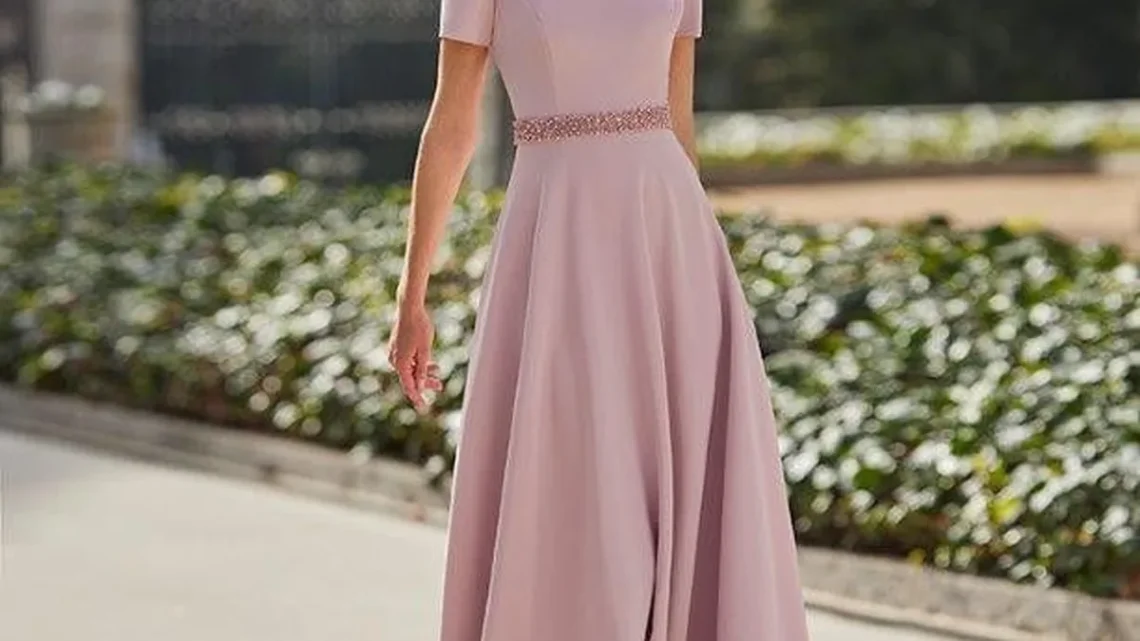
Getting dressed for a wedding should feel exciting, not stressful — yet most of us have stood in front of a wardrobe the night before a ceremony wondering whether a dress is too fancy, too casual, too white, or too close to what the bridesmaids are wearing. The invitation gives you a dress code, the venue gives you a setting, and the season gives you a temperature, and the outfit that works is the one that answers all three at once. A good wedding guest outfit is comfortable enough to sit through a long ceremony, polished enough for the photos, and easy enough to dance in at midnight.
Here are 40 wedding guest outfits for women, organised by dress code, season, venue, body type and budget — from floral midi dresses and satin slips to tailored jumpsuits, velvet gowns and smart trouser suits — plus eight guides that decode the dress code on the invitation, the colours to avoid, seasonal dressing, fabrics that survive a long day, shoes that last until the last dance, accessories, plus-size and modest options, and how to look expensive on a budget and rewear it all again. Every look notes what it is, why it works, who it suits, how to style it and where to wear it, so you can walk in confident instead of second-guessing.
Decoding the Dress Code on the Invitation
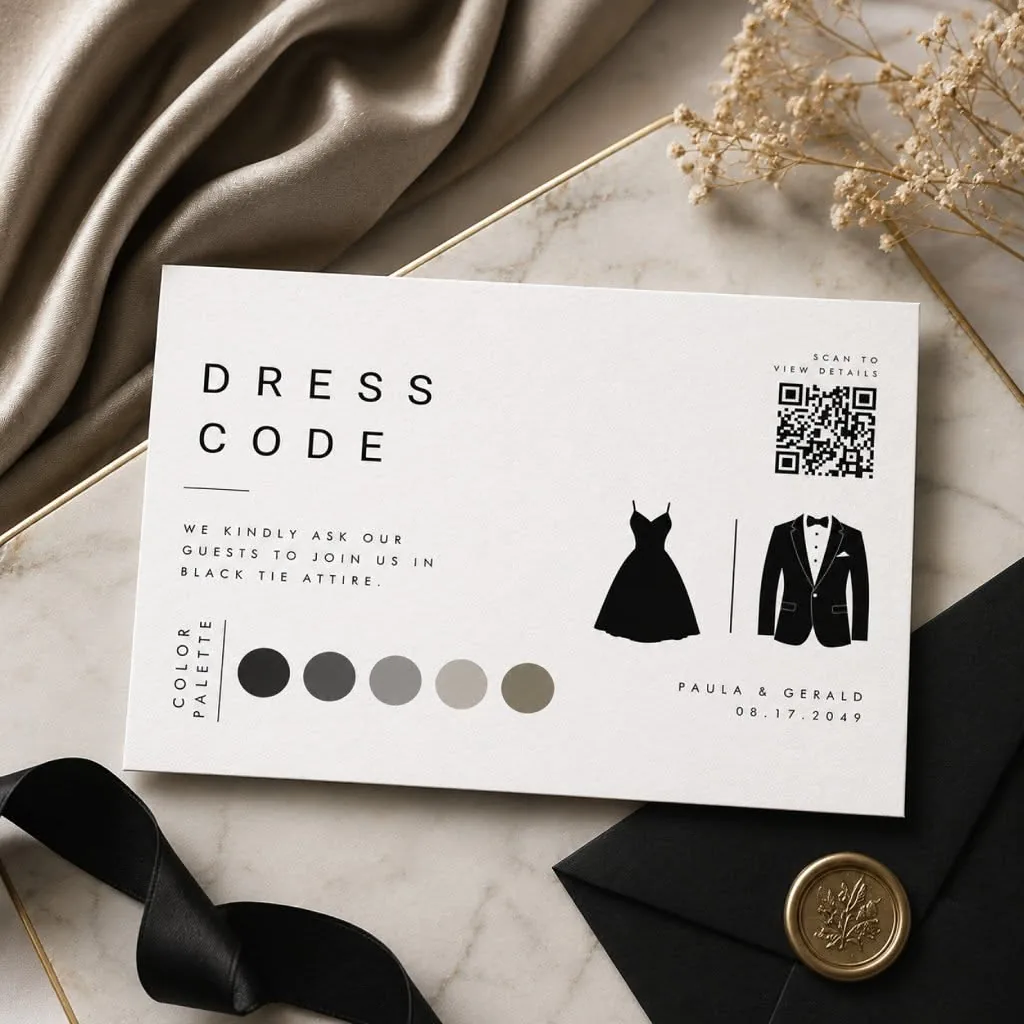
The dress code is the couple’s way of telling you how formal the day will be, and it is worth reading literally. Black tie means a floor-length gown or a very dressy cocktail dress; formal or black-tie optional means a long dress or an elegant midi, with a suit or jumpsuit as a polished alternative. Semi-formal or cocktail means a knee-length or midi dress, a smart jumpsuit or a tailored two-piece. Casual or garden party means a sundress, a linen suit or a pretty midi — still dressy, just relaxed. Beach formal usually means lightweight fabrics and flat or block-heeled shoes, because stilettos sink into sand.
When no dress code is printed, take your cue from the venue and the time. A church ceremony followed by a hotel ballroom reception leans formal; a barn, garden or backyard wedding leans relaxed. An evening wedding is dressier than a daytime one, and a Saturday ceremony is usually more formal than a Sunday lunch. If you are still unsure, ask the couple or a bridesmaid — a quick message beats a whole day of feeling under- or overdressed, and nobody minds being asked.
Colours to Avoid as a Wedding Guest (and What to Wear Instead)
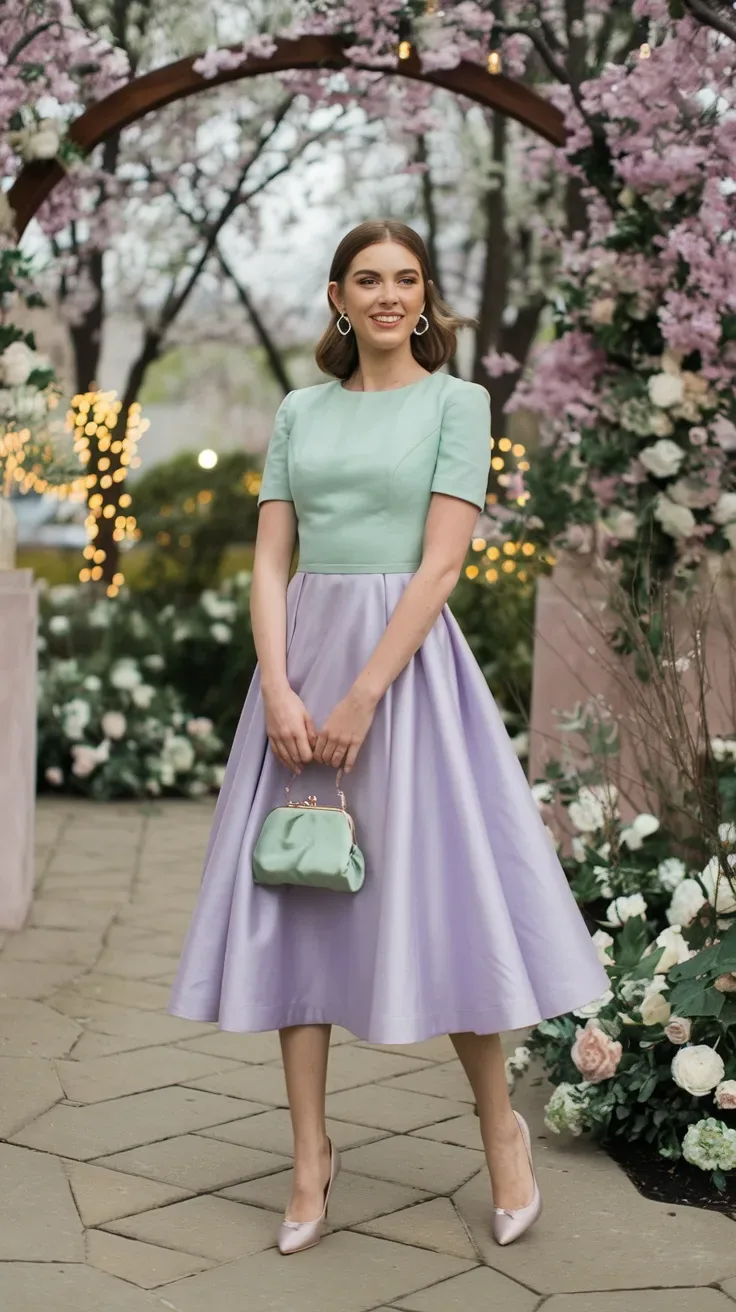
The one hard rule of wedding guest dressing is simple: do not wear white, ivory, cream or anything that could read as bridal in photos. That includes very pale champagne and blush tones that wash out to white in bright light. Avoid anything that matches the bridesmaids’ colour exactly — if you know the wedding party is in sage green, choose a different shade — and skip head-to-toe red at a very traditional ceremony, where it can read as trying to upstage the bride, although a red dress is perfectly fine at most modern weddings.
Everything else is open, and colour is where a guest outfit gets its personality. Jewel tones — emerald, sapphire, burgundy — photograph beautifully and suit evening weddings. Pastels and florals are made for spring and daytime ceremonies. Navy is the safest elegant choice when you are unsure, and black is now widely accepted at formal weddings, especially in the evening, as long as the outfit is clearly celebratory rather than funeral-like — a black dress with colour in the shoes, bag or jewellery reads festive, not sombre.
Seasonal Guest Dressing: Spring, Summer, Autumn and Winter
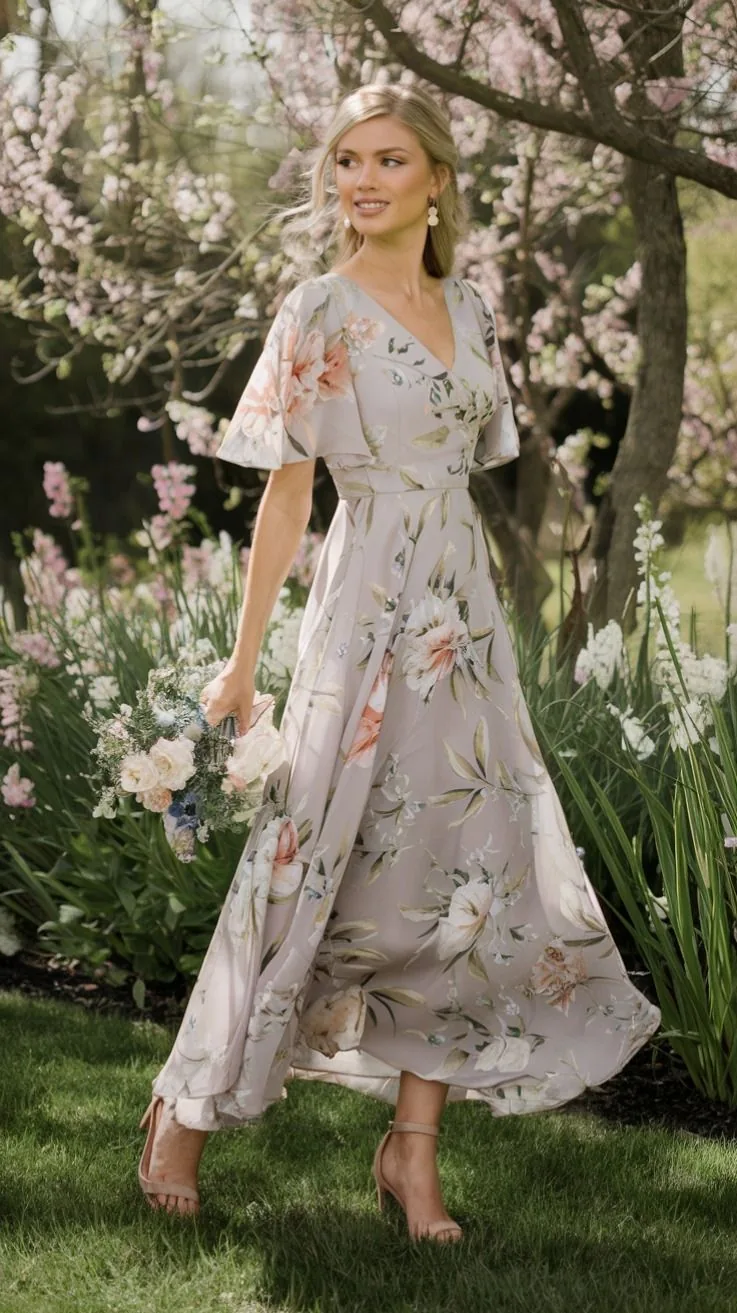
Each season changes the brief. In spring, think florals, pastels and light layers — a midi dress with a cropped jacket or a pashmina for a chilly church. In summer, choose breathable fabrics like linen, cotton and chiffon, and remember that outdoor ceremonies mean sun: a hat or a fascinator is both stylish and practical, and flat or block heels are safer on grass than stilettos. In autumn, jewel tones, long sleeves and heavier fabrics like crepe and velvet come into their own, and a tailored coat can be part of the outfit rather than an afterthought.
Winter weddings are the dressiest of all, and the cold is part of the planning, not an inconvenience to ignore. A long-sleeved gown or a velvet midi with opaque tights, closed-toe heels and a proper coat — wool, faux fur or a long tailored coat — keeps you warm between the ceremony and the reception. Choose fabrics that hold their shape in the cold and avoid anything too sheer, and carry your evening shoes in a tote if the walk from the car is long, swapping into heels once you are inside.
Fabric and Comfort for a Long Ceremony Day
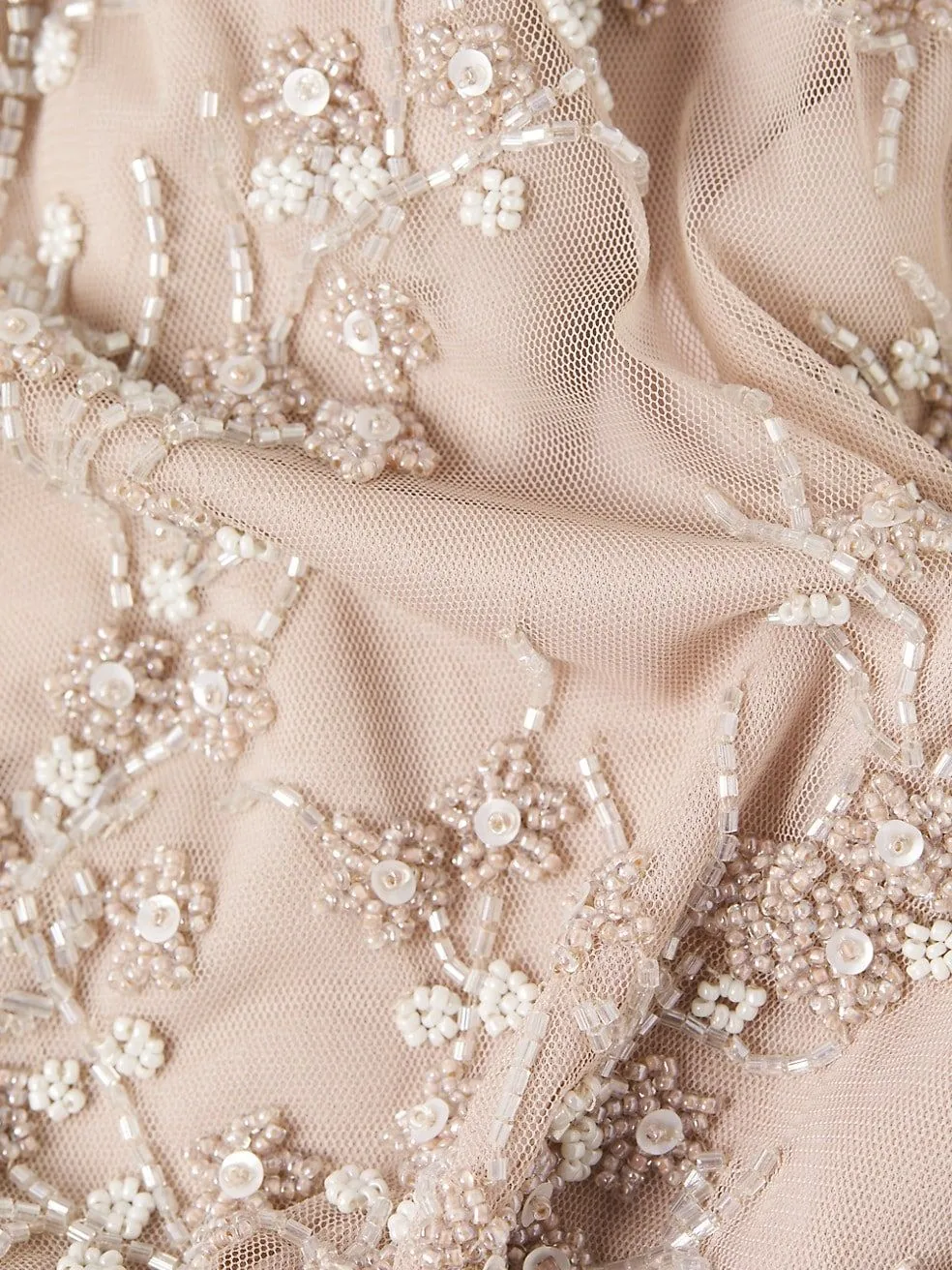
A wedding day is long — a ceremony, a drinks reception, a meal, speeches, and dancing — and the fabric you choose decides whether you are still comfortable at 11 p.m. Crepe and jersey drape well and resist creasing, which makes them ideal for a day spent sitting, standing and dancing. Chiffon and georgette float beautifully and breathe in warm weather, but need a lining to avoid clinging. Satin looks luxurious in photos but shows every crease and water mark, so it is best for shorter, indoor weddings. Linen breathes brilliantly but wrinkles within an hour, so save it for relaxed daytime weddings where that is part of the charm.
Before you commit, do the sit test: sit down in the dress for five minutes, stand up, and check the creases and the fit. Can you sit comfortably through a ceremony without adjusting a strap? Can you eat a three-course meal without the waistband digging in? Can you walk, dance and climb stairs in the shoes? If any answer is no, the outfit is a photo outfit, not a wedding outfit. A dress with a little stretch, a lining that does not ride up, and a fit that lets you breathe will always beat a prettier dress you spend the day fighting.
Shoes That Survive the Dancing (and the Grass)
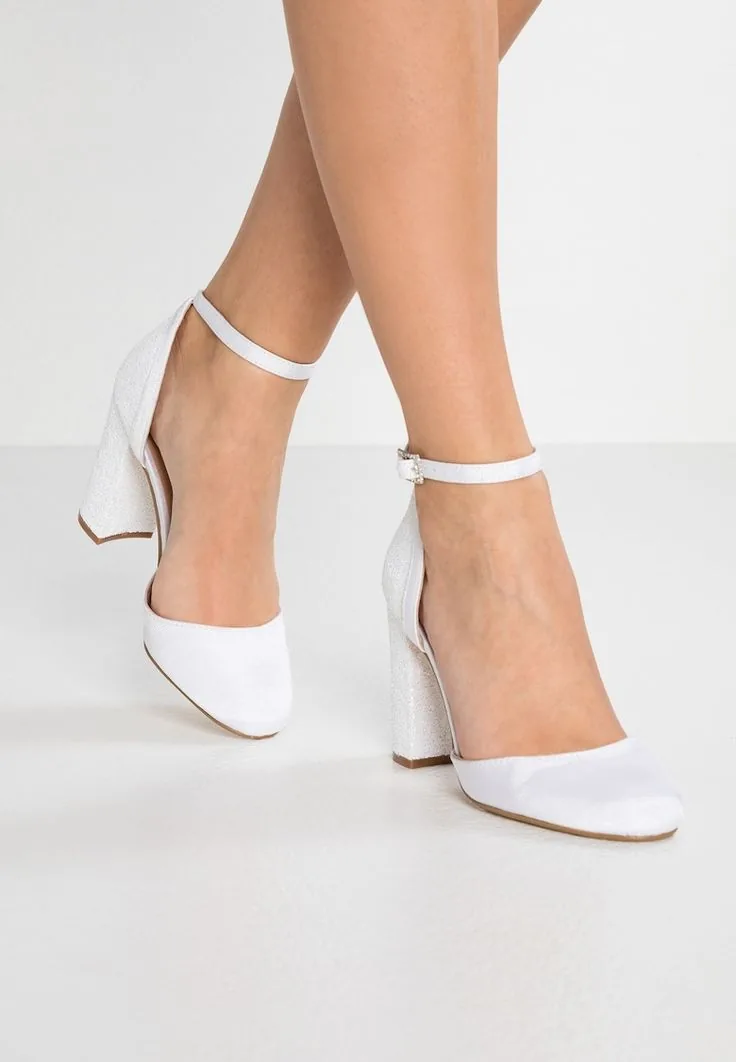
The right wedding guest shoe is a negotiation between height, comfort and terrain. Block heels are the guest’s best friend: they give height without the wobble of a stiletto, and they do not sink into grass or gravel the way a thin heel does. A mid-heel of 5 to 7 centimetres is the sweet spot for a long day — high enough to elongate the leg, low enough to dance in. Wedges work for garden and beach weddings, and an elegant flat — a pointed ballet flat, a embellished mule or a strappy sandal — is a perfectly stylish choice for a daytime or outdoor ceremony.
Break shoes in before the wedding, never on the day: wear them around the house for a few evenings with socks to soften them. Pack gel insoles and a couple of blister plasters in your clutch, and consider heel protectors — small caps that stop stilettos sinking into lawns — if the ceremony is outdoors. And if the reception has a dance floor, a pair of foldable flats in your bag is not giving up; it is the difference between dancing until midnight and sitting out the last hour with sore feet.
Accessories That Finish the Look (Without Overdoing It)
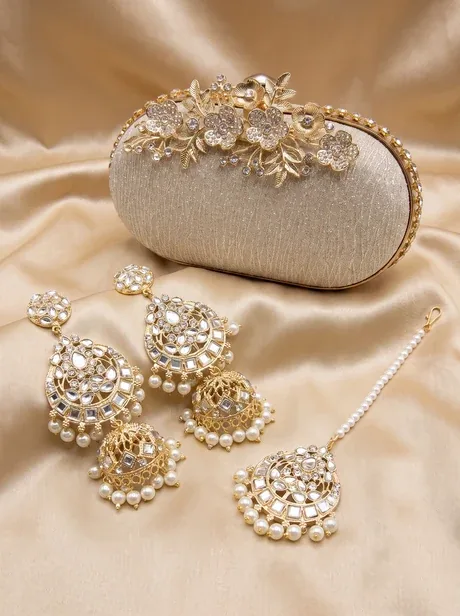
Accessories are what turn a dress into an outfit, and the rule is to let one piece lead. If the dress is plain, the accessories can be bolder — statement earrings, a coloured clutch, a metallic shoe. If the dress is printed, sequinned or heavily detailed, keep the accessories quiet: simple studs, a neutral clutch, a delicate bracelet. A hat or fascinator is expected at many formal and church weddings and adds instant occasion polish, but check the venue — a wide-brimmed hat at an indoor evening wedding can block the view of the person behind you.
The clutch is the practical heart of the outfit: it needs to hold your phone, keys, lipstick, tissues and blister plasters, so test it before the day. Jewellery should be comfortable enough to wear for twelve hours — heavy chandelier earrings look wonderful in photos and feel terrible by the speeches, so choose a lighter pair. And keep the metal tones consistent: gold with gold, silver with silver, across earrings, bracelet, clutch hardware and shoe buckles, so the whole look feels intentional rather than assembled at random.
Plus-Size and Modest Guest Options That Actually Flatter
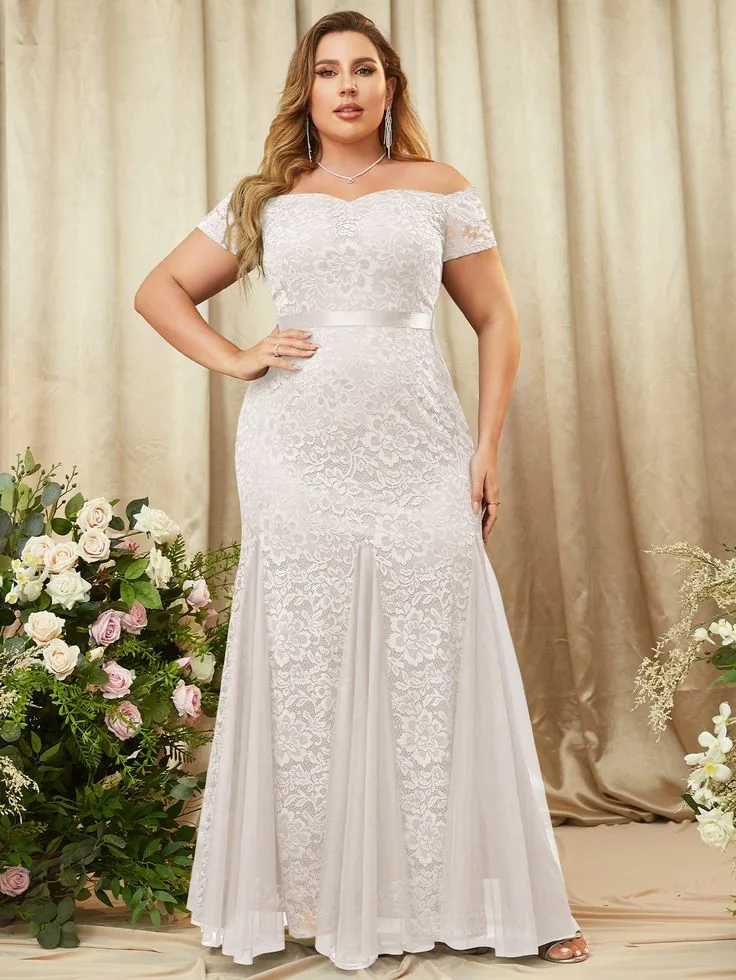
A great wedding guest outfit is about fit and fabric, not size, and the most flattering options share the same features: a defined waist, a fabric with structure, and a neckline that frames the face. Wrap dresses are the classic for a reason — the diagonal line defines the waist and the V-neck elongates the torso, and they work from size 8 to size 28. A-line midi dresses skim rather than cling, fit-and-flare shapes give a beautiful silhouette, and a tailored jumpsuit with a wide leg is one of the most elegant plus-size guest looks there is.
Modest guest dressing is just as varied: a long-sleeved midi or maxi with a high neckline, a dress with a matching jacket or kimono, or a wide-leg trouser suit with a silk blouse all read as occasion-ready without showing much skin. Look for dresses with lining, a bit of stretch and a proper fit at the shoulders — the most common fit mistake is buying to fit the bust and ignoring the waist, or vice versa, and a good tailor can fix that for less than the cost of a new dress. Whatever your size or coverage preference, the outfit that fits properly will always photograph better than the outfit that is a size too small.
Budget Guest Outfits and How to Rewear Them
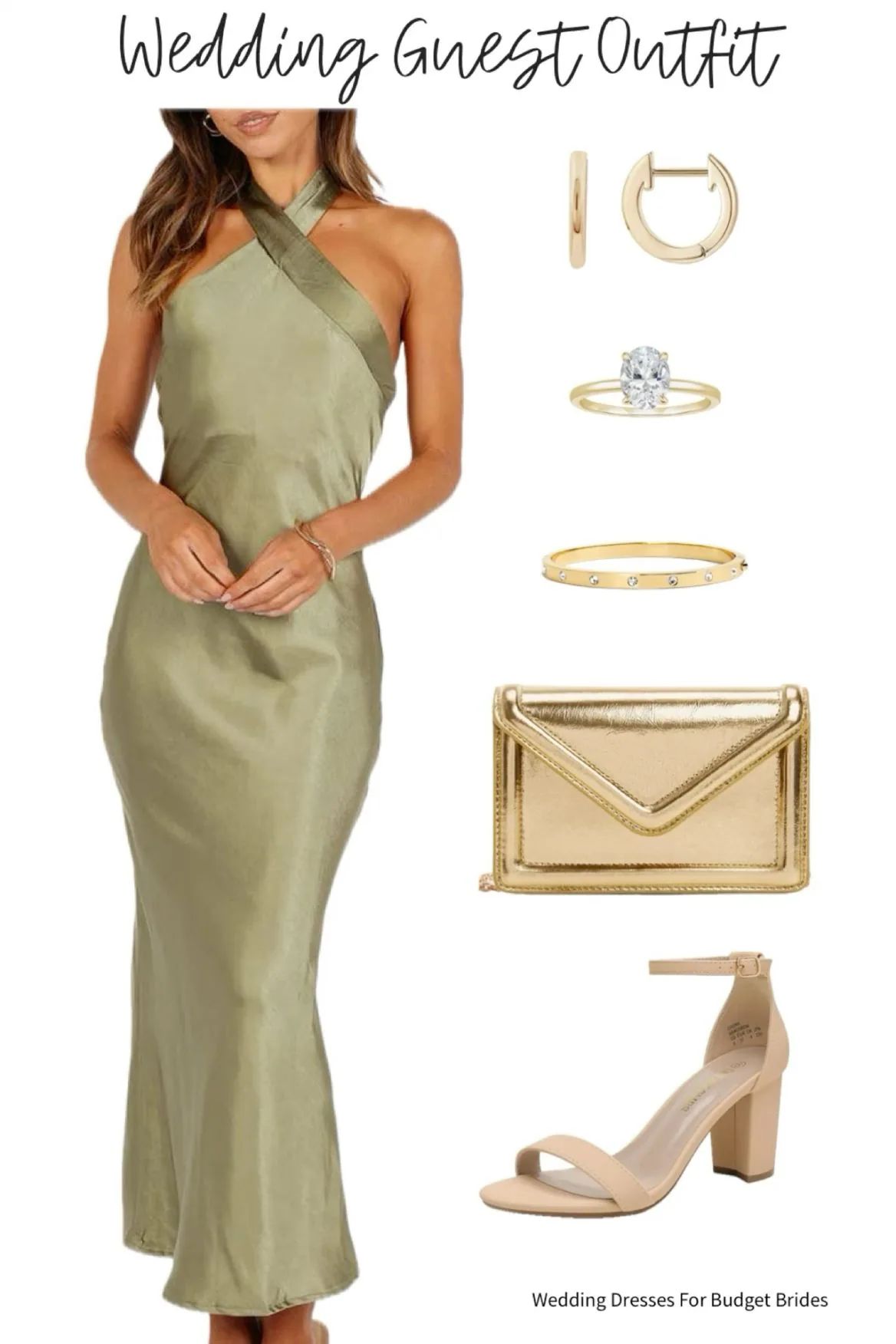
You do not need a designer budget to look like a polished wedding guest — you need a plan. High-street dresses in solid colours or classic prints, bought a size up and tailored to fit, often look more expensive than a designer dress worn straight off the rail. Renting is the smartest option for a black-tie or very formal wedding, where a gown you will wear once is a poor investment: rental platforms let you wear a designer dress for a fraction of its price, with dry cleaning included. And the second-hand market — pre-loved designer dresses, vintage shops, resale apps — is full of occasion dresses worn once and sold on.
Rewearing is where the real saving happens. A dress you can wear to three weddings looks different each time with a change of shoes, bag, jewellery and hair: the same navy midi with nude heels and a straw clutch for a summer wedding, black heels and a velvet clutch for a winter one, and a coloured jacket for a spring ceremony. Choose a dress in a colour you love and a shape that suits you, not a trend you will tire of, and keep a small note of which weddings you wore it to — not because anyone is counting, but because you will feel more confident knowing you styled it differently each time.
1. The Floral Midi Dress: The Guest Outfit That Never Fails
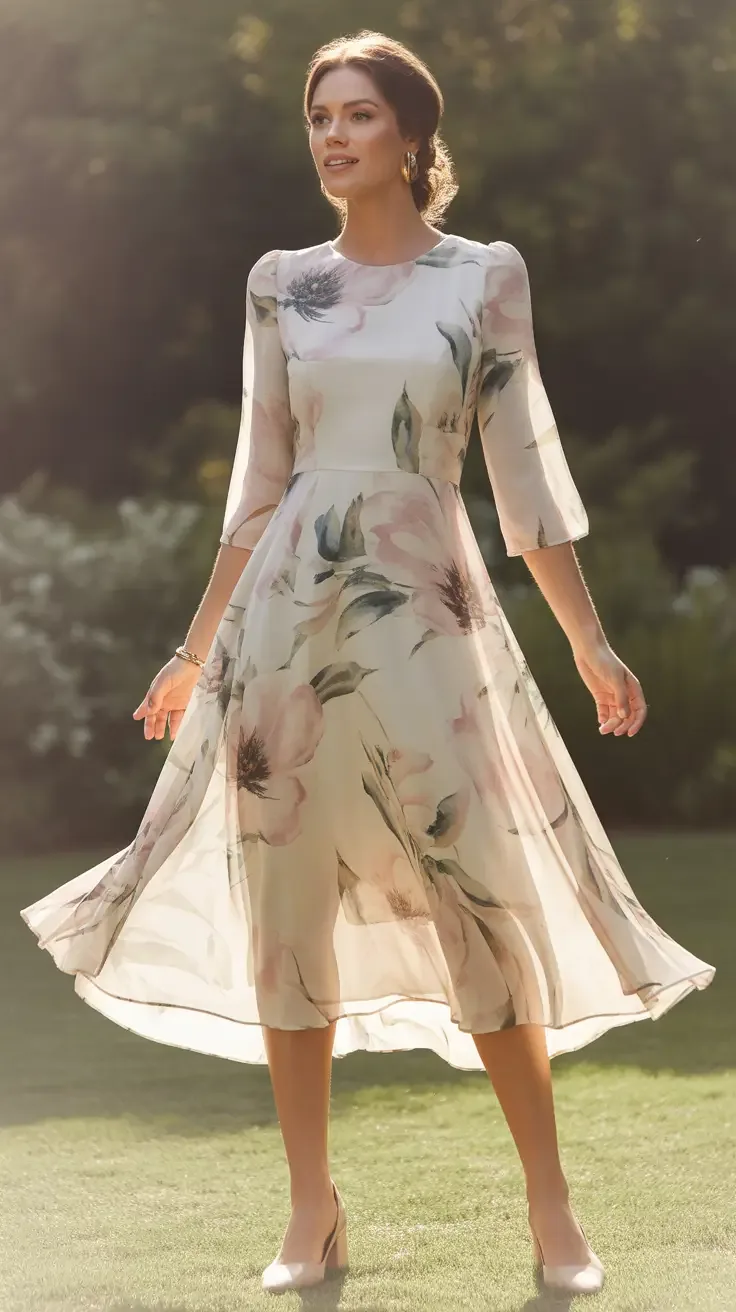
A floral midi dress is the safest, prettiest bet in wedding guest dressing: the print does the talking, the midi length is appropriate for almost every dress code, and the shape suits most body types. Choose a print with a darker background for evening weddings and a lighter one for daytime, and keep the scale of the flowers in proportion to your frame — small ditsy prints on petite frames, larger blooms on taller ones.
What it is: a knee-to-calf-length dress in a floral print, usually with short or three-quarter sleeves. Why it works: the print photographs beautifully and hides creases from a long day of sitting. Who it suits: everyone, with the neckline doing the real work — a V-neck for a longer torso, a square neck for broader shoulders. How to style it: nude or metallic block heels, a small clutch, and simple jewellery that lets the print lead. Where to wear it: garden, church and daytime weddings, and any semi-formal invitation.
2. The Satin Slip Dress: Minimal, Elegant, Evening-Ready
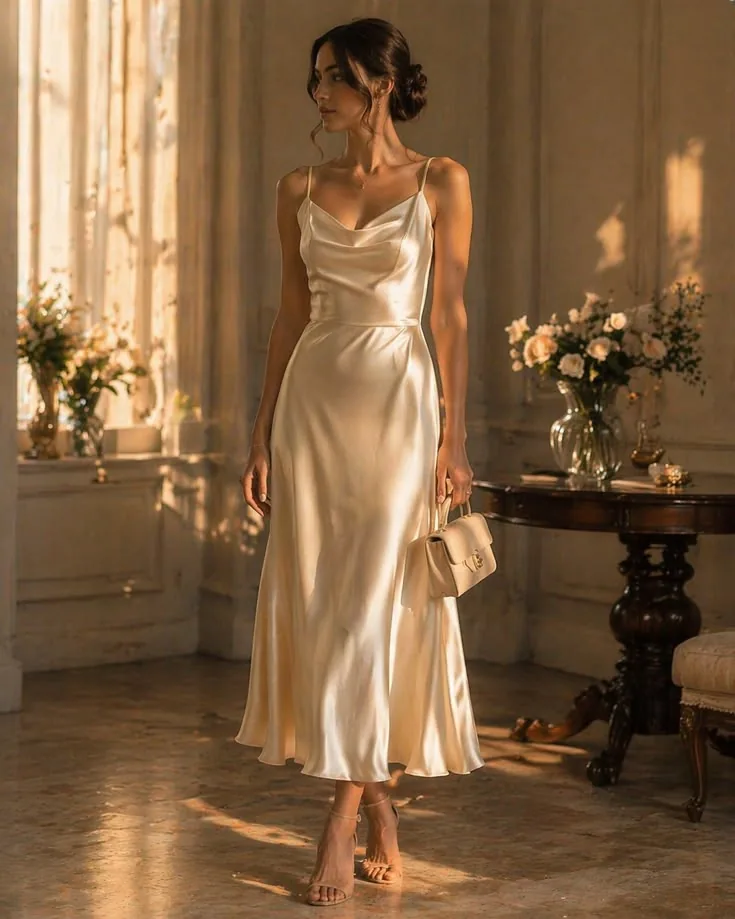
A satin slip dress is the quiet luxury option: clean lines, a bias cut that skims the body, and a sheen that catches candlelight beautifully. It is the dress for an evening wedding or a black-tie-optional invitation, and it works best in a jewel tone or a deep neutral — emerald, navy, burgundy or chocolate — rather than a pale shade that could read bridal in photos.
Best for: evening and formal weddings, straight and hourglass figures, and anyone who prefers simple elegance to prints. How to style: a tailored jacket or shawl for the ceremony, strappy heels, and one statement piece of jewellery — a bold earring or a cuff. Watch out for: satin shows water marks and creases, so sit carefully, avoid spilling drinks, and choose a lined slip with a little stretch rather than a flimsy unlined one.
3. The Tailored Jumpsuit: The Modern Guest’s Power Move
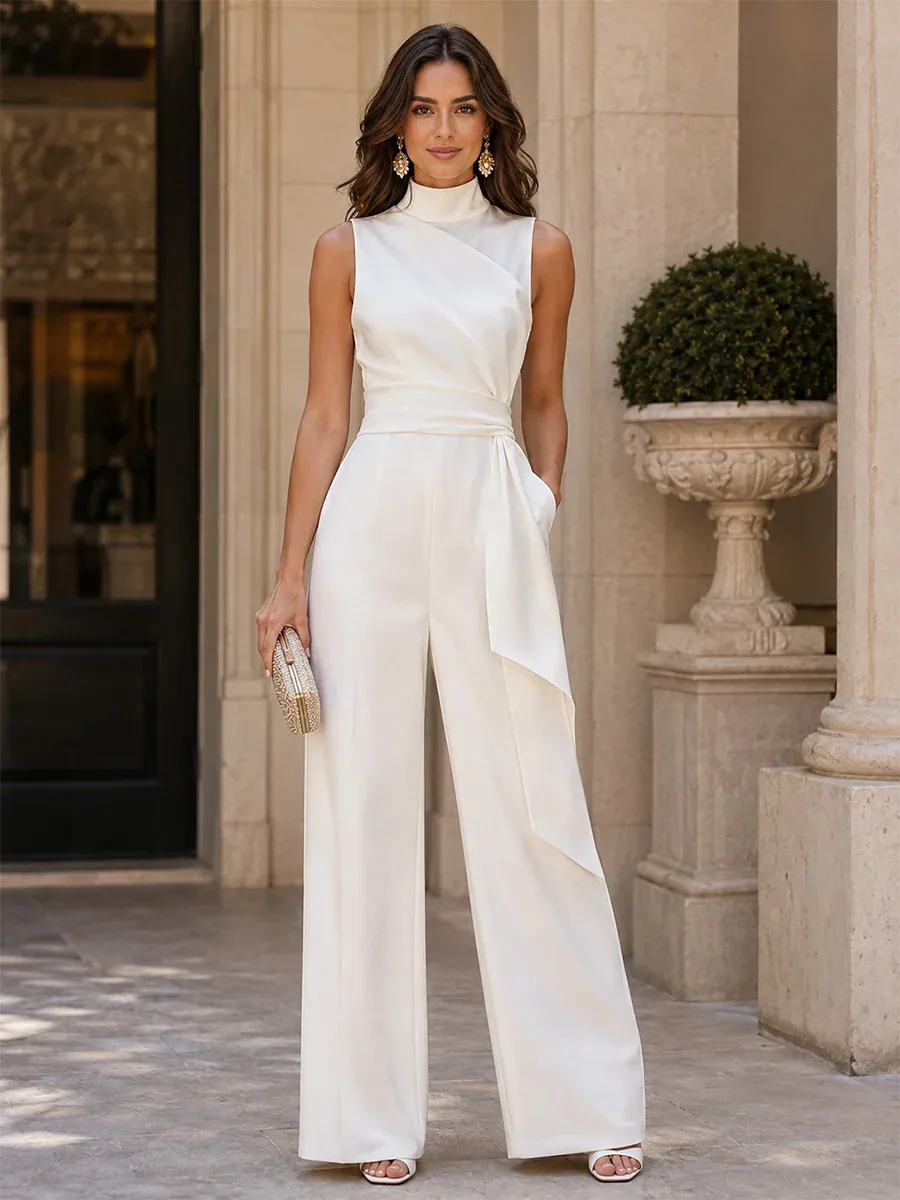
A tailored jumpsuit is the outfit for the guest who does not want to wear a dress — and it is every bit as formal as one when it is cut well. Look for a wide leg, a defined waist and a fabric with structure: crepe, satin-back crepe or a good quality jersey. A jumpsuit in navy, emerald or black with the right accessories reads as evening-ready, and it has one huge advantage over a dress: you can dance, sit cross-legged and chase a toddler without thinking about it.
Pros: comfortable all day; no hem worries on grass or stairs; looks instantly polished. Cons: bathroom trips are an operation, and a jumpsuit that is too long or too short in the torso will never sit right. Quick verdict: buy for torso length first and have the legs hemmed — and always try sitting down in it before you commit.
4. The Flowing Maxi Dress: Graceful for Formal and Outdoor Weddings
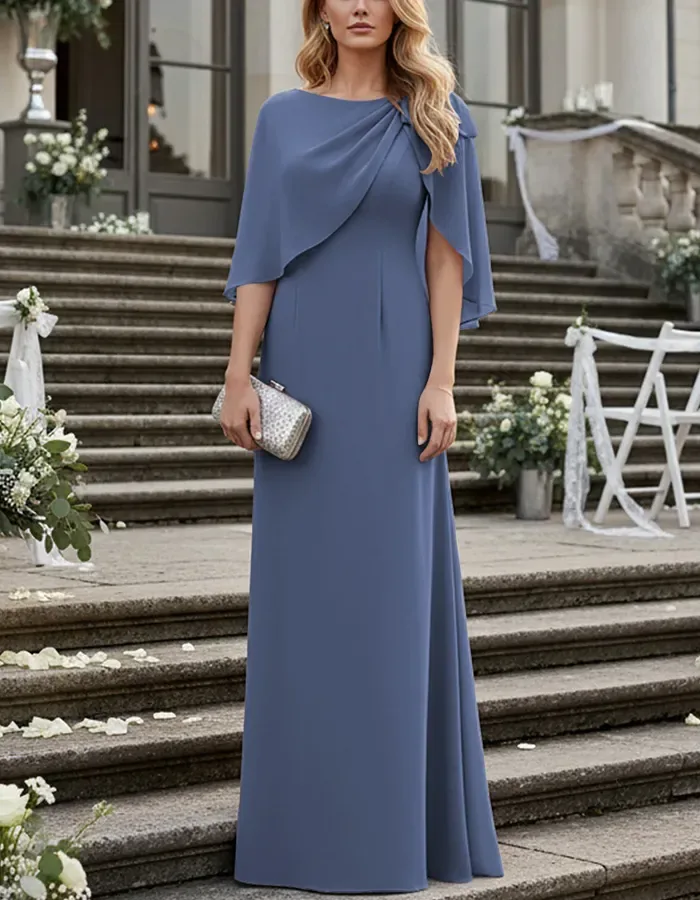
A maxi dress is the most graceful guest outfit there is, and it solves two problems at once: it is formal enough for a black-tie-optional wedding and forgiving enough for a long day. Chiffon maxis float beautifully in photos, pleated maxis add movement, and a maxi with a defined waist avoids the shapeless look that gives long dresses a bad name. Keep the hem just off the floor — long enough to look elegant, short enough not to trip on stairs or drag through grass.
What it is: a floor-length dress, usually in chiffon, crepe or pleated fabric. Why it works: the length reads formal instantly, and the flow hides a multitude of sins, from unshaved legs to shoes you swapped for flats at 9 p.m. Who it suits: tall and petite alike — petite guests should choose a defined waist and a heel, taller guests can wear a flat sandal. How to style it: a clutch, delicate jewellery, and a shawl or wrap for the ceremony. Where to wear it: formal, evening and destination weddings.
5. The Classic Cocktail Dress: Short, Smart, Always Appropriate
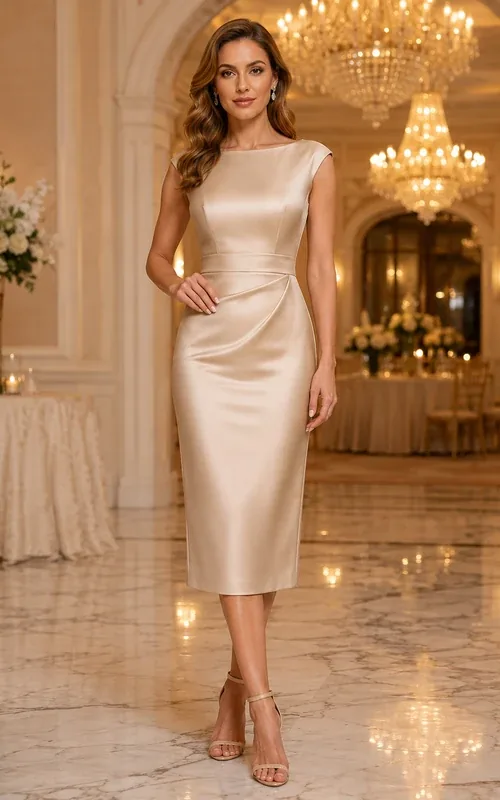
The cocktail dress is the original wedding guest outfit, and it still works: knee-length or just above, structured enough to hold its shape, and dressy enough for the photos. A fit-and-flare cocktail dress flatters almost every figure, a sheath is the most polished choice for a city wedding, and a dress with sleeves — cap, three-quarter or long — is the smartest pick for a church ceremony where bare shoulders feel out of place.
Best for: semi-formal and cocktail dress codes, city and hotel weddings, and guests who want one dress that works for almost any invitation. How to style: heels in a metallic or nude tone, a structured clutch, and a light jacket or wrap for the ceremony. Watch out for: a hem that rides up when you sit — test it in the shop — and a neckline that needs constant adjusting, which you will notice by the speeches.
6. The Two-Piece Co-ord: A Skirt and Top That Look Like a Dress
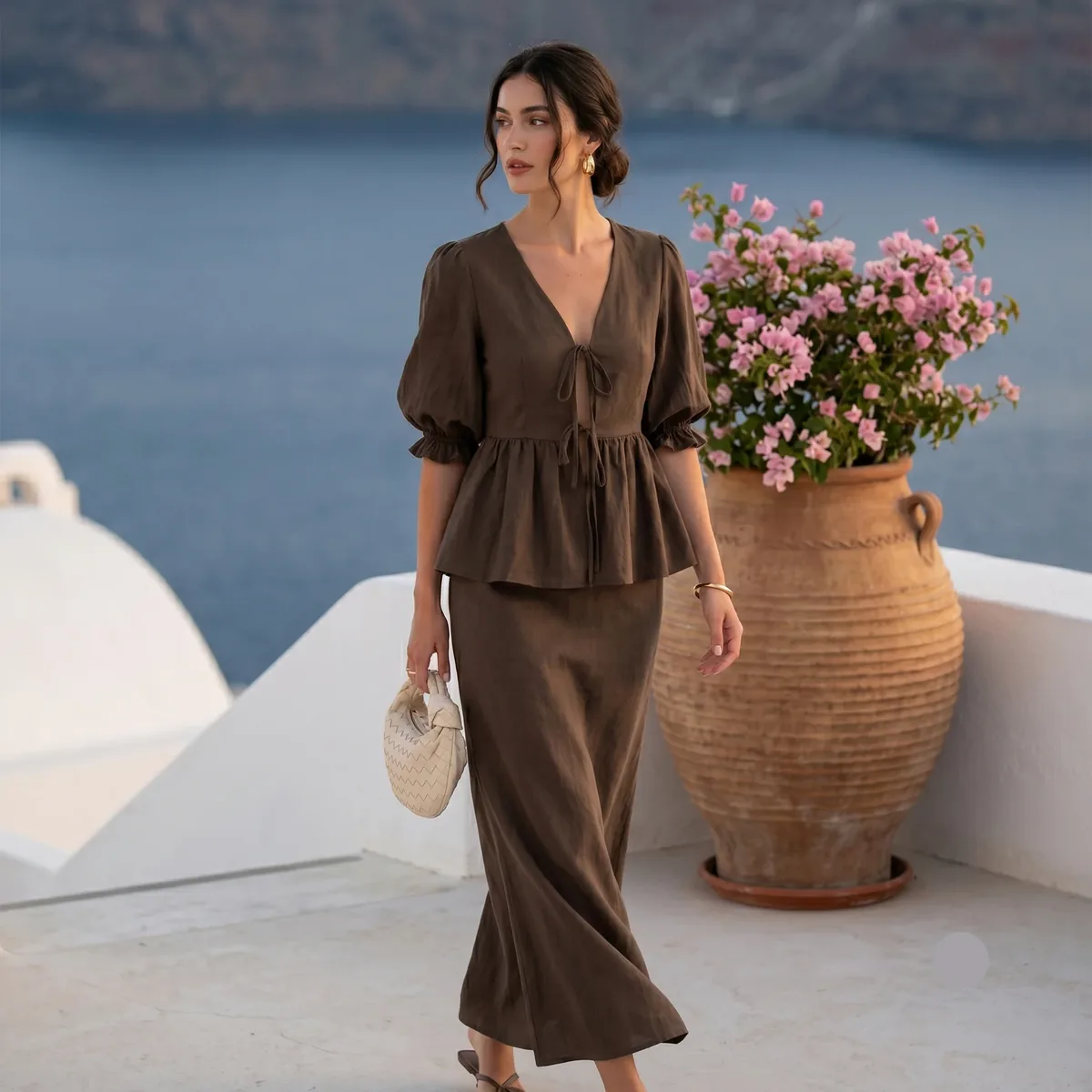
A two-piece co-ord — a matching skirt and top — looks like a dress but gives you twice the wardrobe, because the pieces work separately after the wedding. The most flattering combinations are a pleated midi skirt with a fitted top, a pencil skirt with a peplum blouse, or a wide-leg trouser with a matching jacket. Matching sets in crepe or satin read as occasion wear; mismatched separates in the same colour family read as intentional and modern.
Styling checklist: match the fabric weight of the two pieces so one does not look heavier than the other; tuck the top in to define the waist; keep the colour palette to two tones plus metallics; and choose a skirt length that lets you sit and dance comfortably. The co-ord’s secret advantage is fit: you can buy a different size for the top and the skirt, which a dress never allows.
7. The Wrap Dress: The Most Flattering Shape in Guest Dressing
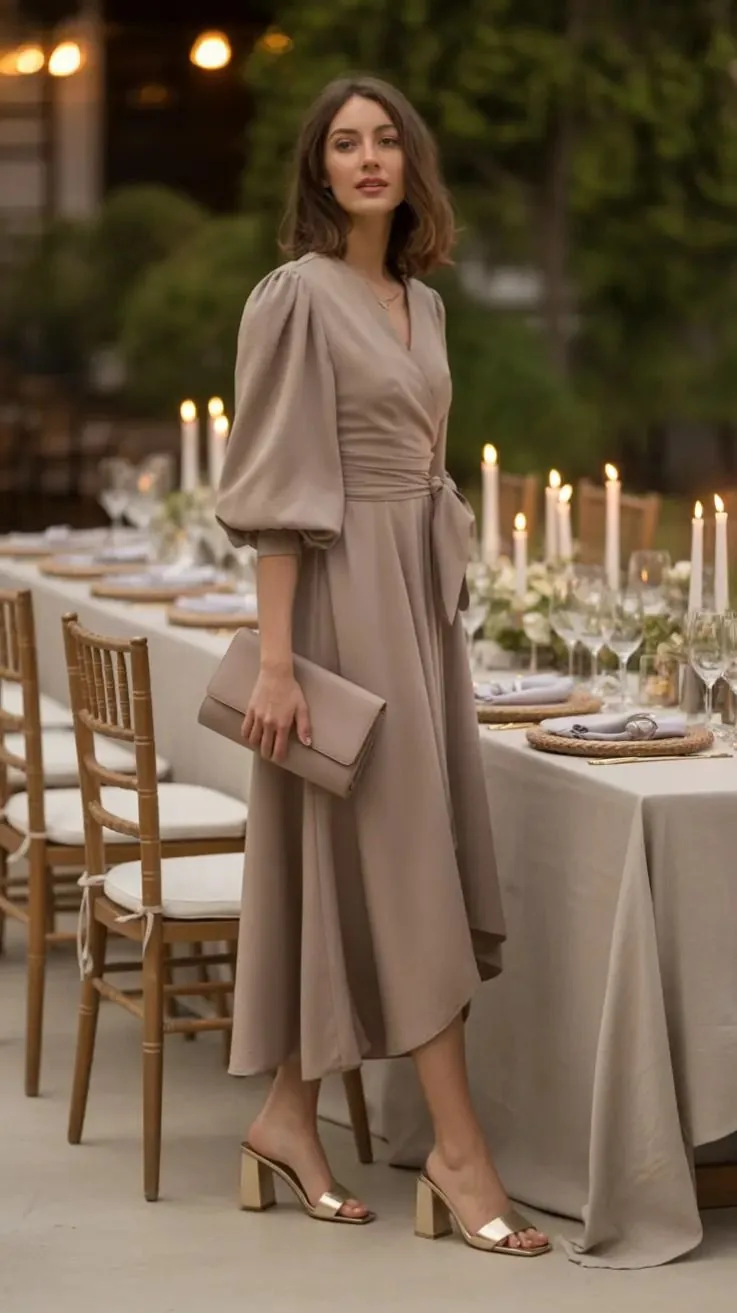
The wrap dress is the guest outfit that stylists recommend more than any other, and for good reason: the diagonal line across the body defines the waist, the V-neck elongates the torso, and the fit adjusts to your shape rather than fighting it. A wrap dress in a solid jewel tone is elegant for evening; a floral wrap is perfect for daytime; and a long-sleeved wrap in crepe is the answer to a cool-weather wedding.
What it is: a dress that wraps across the front and ties at the waist, with a V-neckline. Why it works: the diagonal line creates a waist on every body type, and the adjustable tie means the fit is forgiving if your weight fluctuates. Who it suits: genuinely everyone — it is the most size-inclusive silhouette in this guide. How to style it: block heels, a small clutch, and a jacket if the ceremony is in a church. Where to wear it: literally any wedding, from a garden party to a formal evening reception.
8. The Linen Suit: Relaxed, Breathable, Made for Summer Weddings
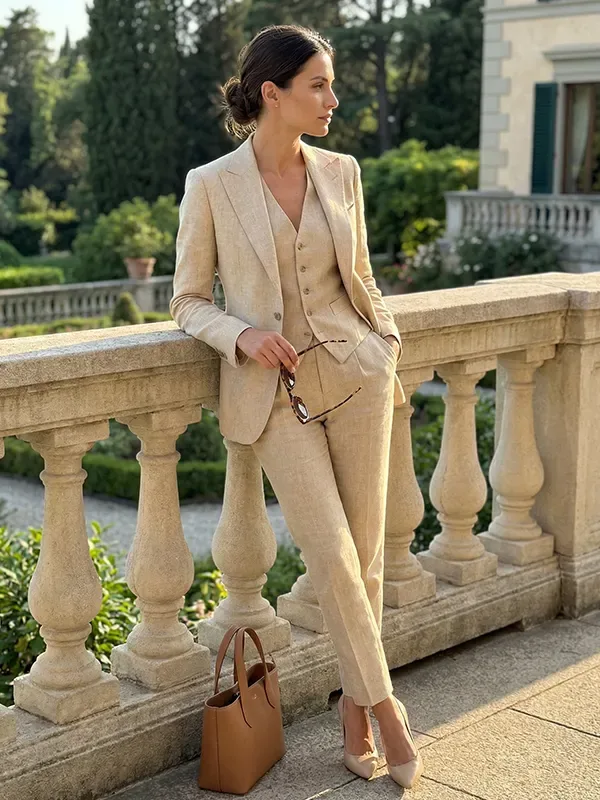
A linen suit — wide-leg trousers and a relaxed blazer, or a linen midi skirt with a matching jacket — is the smartest answer to a hot summer wedding. Linen breathes better than any other fabric, it looks intentionally relaxed rather than underdressed, and in a soft colour like sage, stone or sky blue it photographs beautifully against a garden or beach backdrop.
Best for: daytime, garden, beach and destination weddings, and guests who run hot. How to style: a silk camisole underneath, flat sandals or low block heels, and a straw or raffia clutch for a relaxed finish. Watch out for: linen wrinkles within an hour — embrace it as part of the look, hang the suit in a steamy bathroom before the ceremony, and avoid dark linen, which shows every crease.
9. The Black-Tie Gown: Floor-Length Drama Done Right
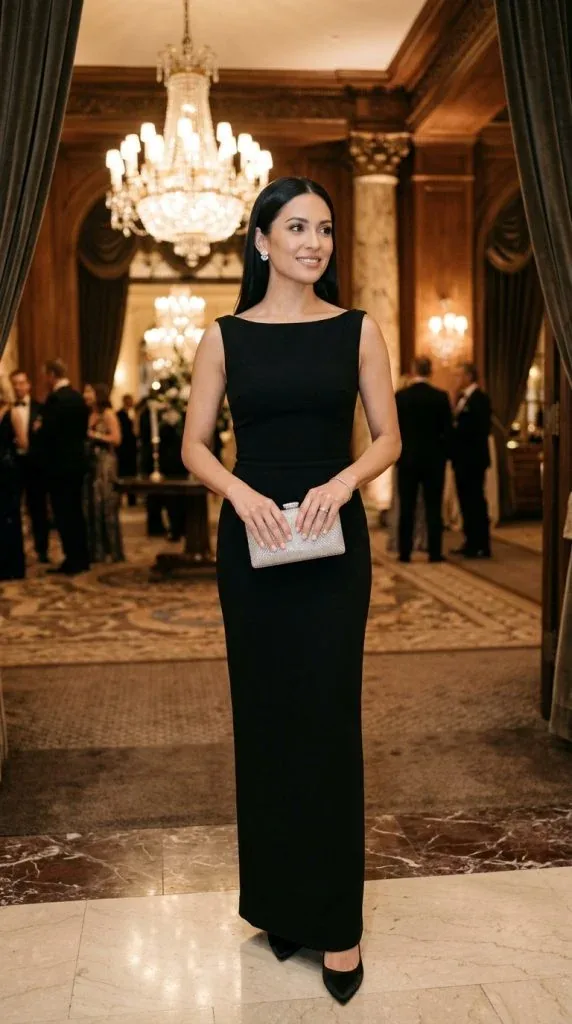
A black-tie wedding is the one occasion where a floor-length gown is not overdressed — it is the dress code. Choose a gown with a defined waist and a fabric that moves: velvet for winter, chiffon or crepe for summer, satin for a ballroom. A-line gowns suit almost everyone, fitted mermaid shapes suit confident hourglass figures, and a gown with sleeves or an off-shoulder neckline adds drama without showing too much skin.
Pros: unmistakably formal; photographs beautifully; one outfit, no decisions. Cons: expensive to buy, hard to rewear, and a long hem is a hazard on stairs and dance floors. Quick verdict: if you will wear it once, rent it — a rented designer gown looks better and costs less than a bought one you will never wear again.
10. The Garden Party Dress: Pretty, Light and Made for Daytime
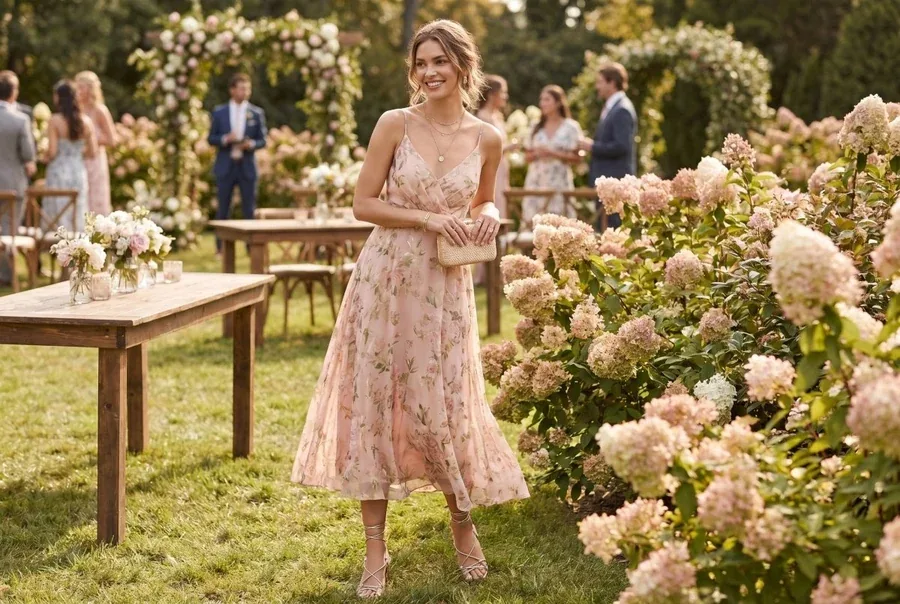
A garden party dress is the daytime wedding classic: light fabric, a pretty print or a soft pastel, and a shape that moves when you do. Think tea-length dresses, fit-and-flare shapes, and fabrics like cotton, chiffon and eyelet. The look is romantic without being fussy, and it is the outfit that works best with a hat or a fascinator, which many garden and church weddings expect.
Mistakes to avoid: a dress so light it blows up in the wind — choose a lined skirt with some weight; heels that sink into the lawn — block heels or wedges only; a white or cream print that photographs as bridal; and a hat so wide it blocks the view of the guest behind you during the ceremony. Get those four right and the garden party dress is the easiest good outfit in this guide.
11. The Beach Wedding Outfit: Light Fabrics, Flat Shoes, No Fuss
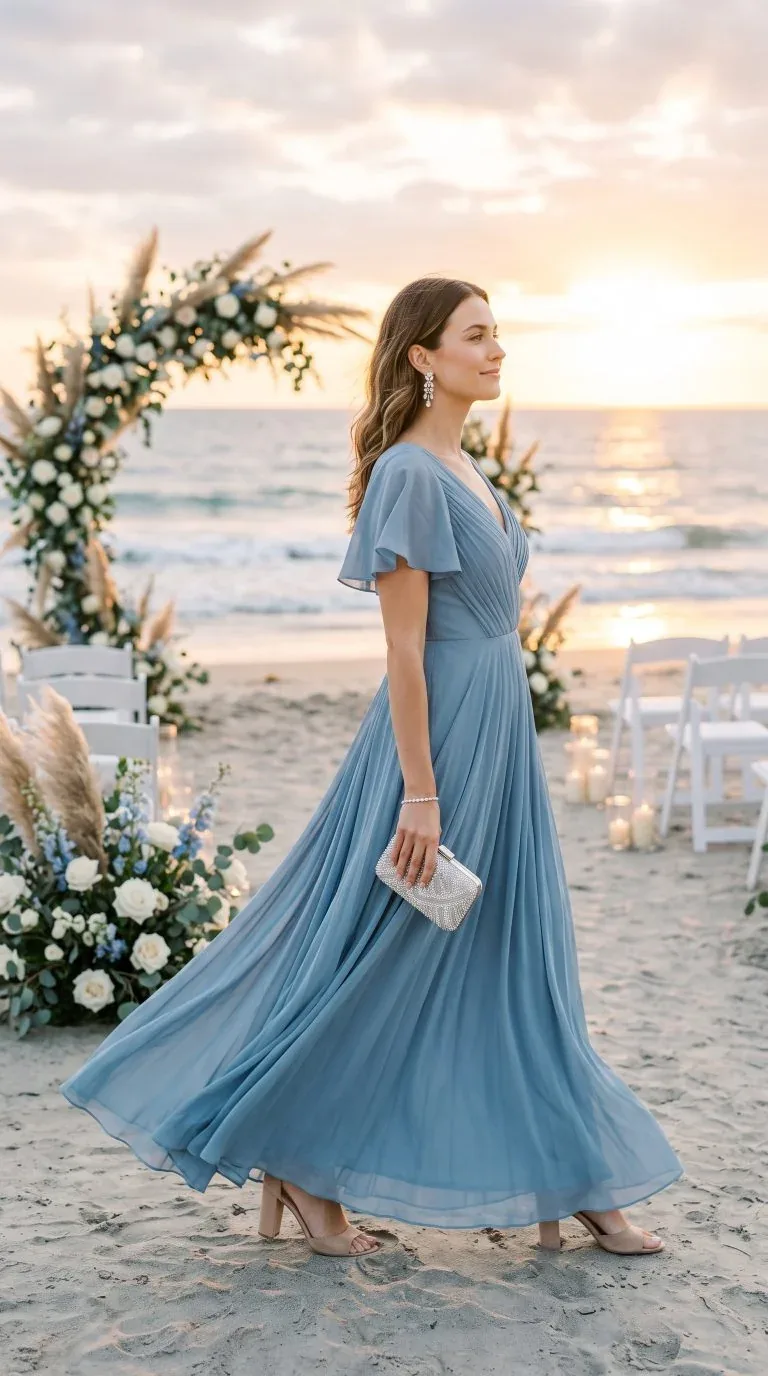
A beach wedding changes the rules: the ceremony is on sand, the wind is real, and the sun is part of the day. Choose a lightweight maxi or midi in chiffon, linen or cotton — something that moves in the breeze rather than fighting it — and skip anything heavy, structured or floor-length enough to drag through sand. A dress with a tie waist or a smocked bodice stays comfortable in the heat, and a bright colour or a bold print looks wonderful against the sea.
What it is: a light, breathable dress or co-ord, with flat or low shoes. Why it works: the fabric dries quickly, the shape moves with the wind, and you will not spend the ceremony sinking into sand. Who it suits: anyone, with petite guests choosing a shorter hem so the dress does not swamp them. How to style it: flat sandals or embellished slides, a straw clutch, sunglasses, and hair tied back or braided. Where to wear it: beach and coastal weddings, and any ceremony on sand or grass.
12. The Winter Velvet Dress: Warm, Rich and Made for the Season

Velvet is the winter wedding fabric: rich, warm, and so seasonally appropriate that it looks wrong in July and perfect in December. A velvet midi in emerald, burgundy or navy with long sleeves is the classic winter guest dress, and it needs almost no accessories — the fabric is the statement. Pair it with opaque tights, closed-toe heels and a proper coat, and you will be the warmest and best-dressed guest in the room.
Best for: winter and late-autumn weddings, evening ceremonies, and guests who feel the cold. How to style: metallic heels, a velvet or satin clutch, and simple gold jewellery. Watch out for: velvet crushes where you sit, so stand up and smooth it before photos; and avoid velvet in a pale colour, which can read as bridal in flash photography.
13. The Spring Pastel Dress: Soft Colour for the New Season
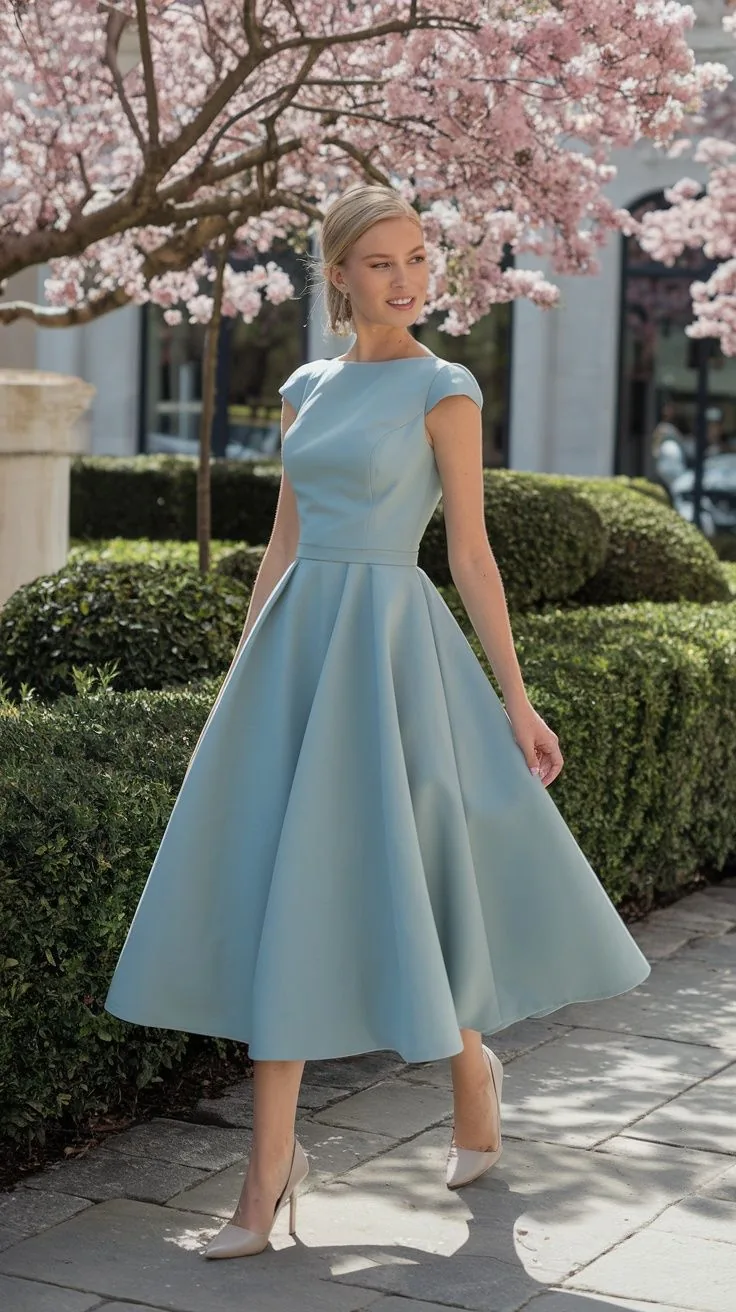
Spring weddings call for soft colour: blush, lilac, mint, butter yellow and sky blue all look fresh against new greenery, and a pastel dress photographs beautifully in the soft spring light. Choose a midi or tea-length dress in chiffon or crepe, and layer with a cropped jacket, a pashmina or a light coat, because a spring church can be cold even when the garden is warm.
Pros: fresh, photogenic, and easy to accessorise with metallics. Cons: pastels can wash out very fair skin, and a very pale blush can read as white in bright light. Quick verdict: hold the fabric up to your face in daylight before you buy — if it makes you look tired, go one shade deeper.
14. The Autumn Jewel-Tone Dress: Rich Colour for Crisp Days
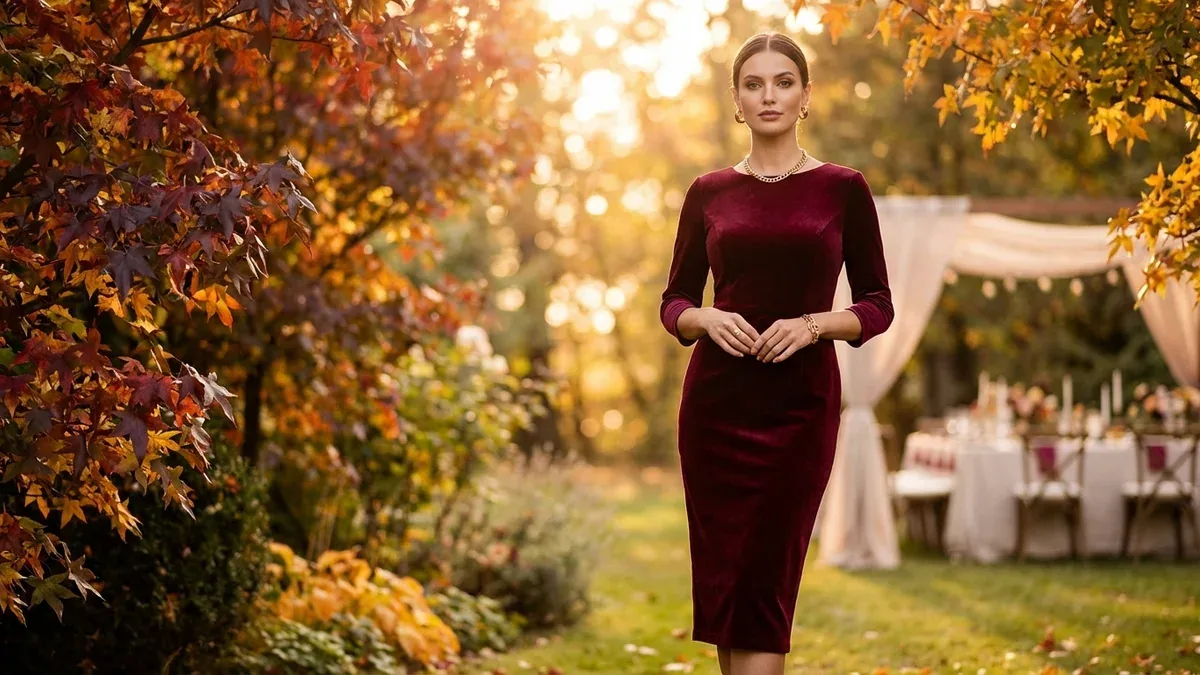
Autumn is jewel-tone season, and a dress in emerald, sapphire, ruby or plum is the most striking guest outfit of the year. The rich colours suit the season’s light, flatter most skin tones, and look wonderful in photographs against autumn leaves. A long-sleeved midi in crepe or velvet is the classic autumn shape, and a matching coat in a neutral tone finishes it.
Styling checklist: pick one jewel tone and let it lead; keep accessories in gold or warm metallics; add opaque tights if the ceremony is outdoors; choose closed-toe shoes for a cold day; and carry a wrap or jacket for the walk between venues. The jewel-tone dress is also one of the easiest to rewear — change the shoes and the bag and it works for a winter wedding too.
15. The Summer Linen Dress: Breezy, Breathable, Beautifully Relaxed
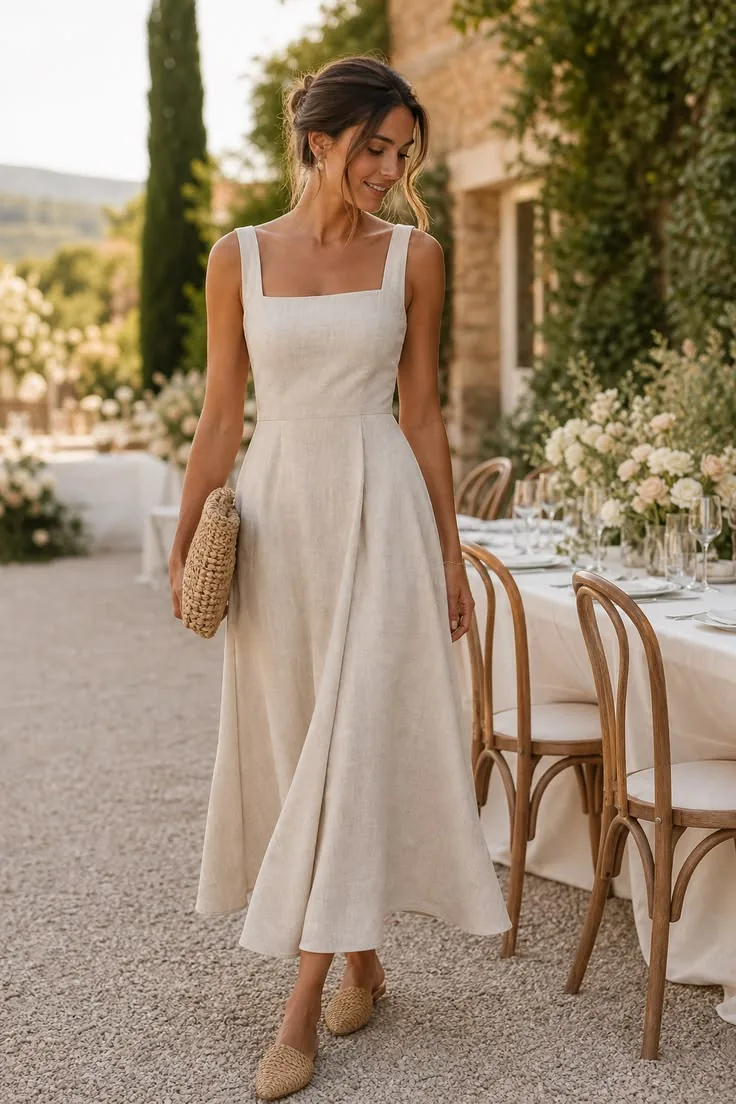
A linen dress is the answer to a hot summer wedding: it breathes, it moves, and it looks intentionally relaxed. Choose a midi or maxi in a soft colour — sage, terracotta, sky blue or a gentle print — and a shape with a defined waist so the linen does not hang shapelessly. A linen shirt dress with a belt is the most versatile version, working for a daytime garden wedding and, with the right accessories, an evening one too.
What it is: a dress in linen or a linen blend, usually midi length with a belted waist. Why it works: linen is the coolest natural fabric, and its texture reads as relaxed luxury. Who it suits: everyone, with taller guests able to carry a longer, looser shape. How to style it: flat sandals or low block heels, a straw bag, and minimal jewellery. Where to wear it: daytime, garden, beach and destination weddings.
16. The Church Ceremony Dress: Modest, Elegant and Respectful
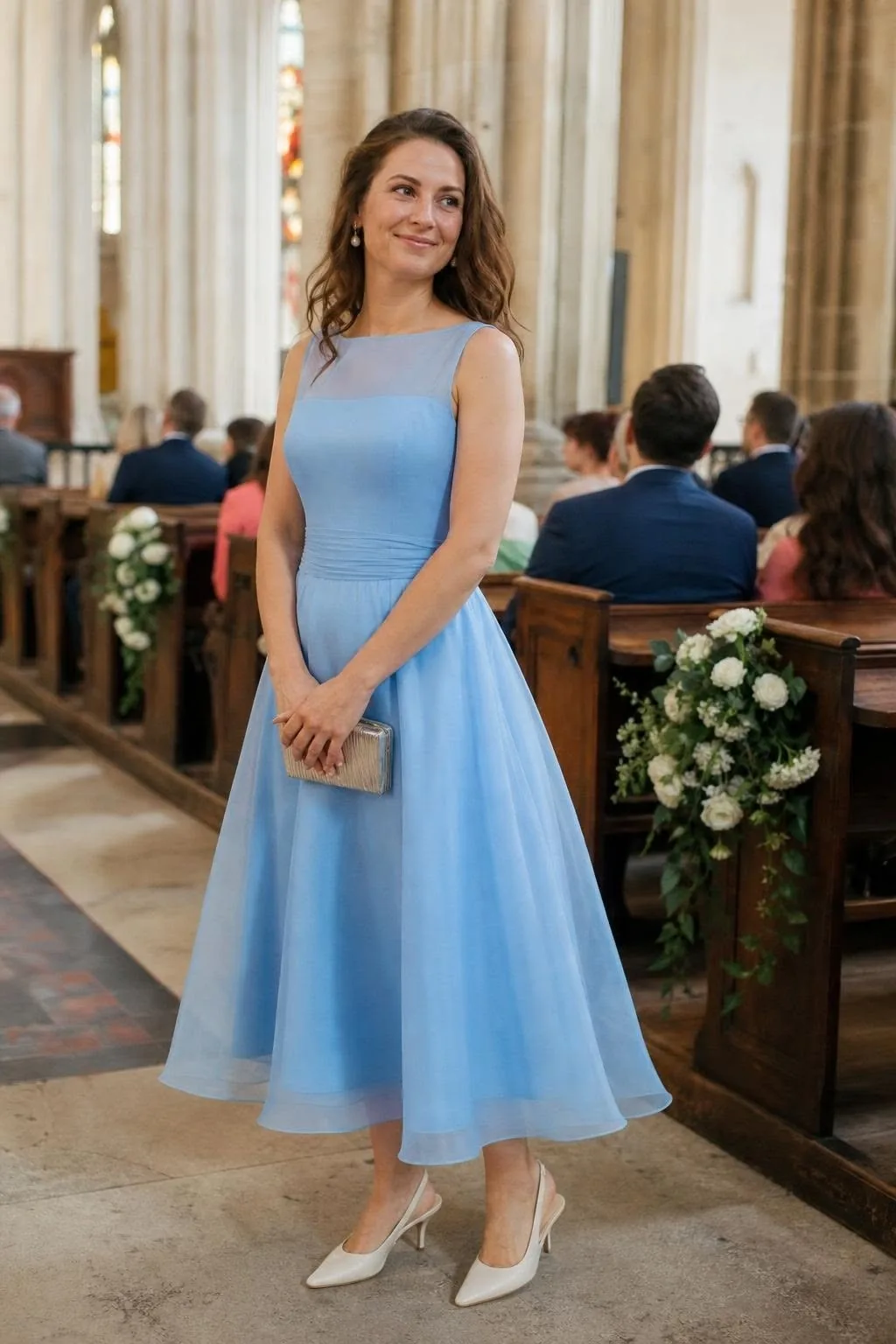
A church ceremony asks for a little more coverage, and the most elegant answer is a dress with sleeves and a knee-length or midi hem. A long-sleeved crepe midi, a dress with a matching jacket, or a high-neck dress with a shawl all read as respectful without looking dowdy. If your dress is sleeveless, a jacket, wrap or pashmina for the ceremony is the polite and practical fix — you can take it off at the reception.
Best for: church, cathedral and religious ceremonies, and formal daytime weddings. How to style: closed-toe heels, a small clutch, and a hat or fascinator if the wedding is formal. Watch out for: a neckline that is too low for a church, a hem that is too short when you sit in a pew, and a hat that blocks the view of the person behind you.
17. The Barn and Rustic Wedding Outfit: Pretty Without the Heels
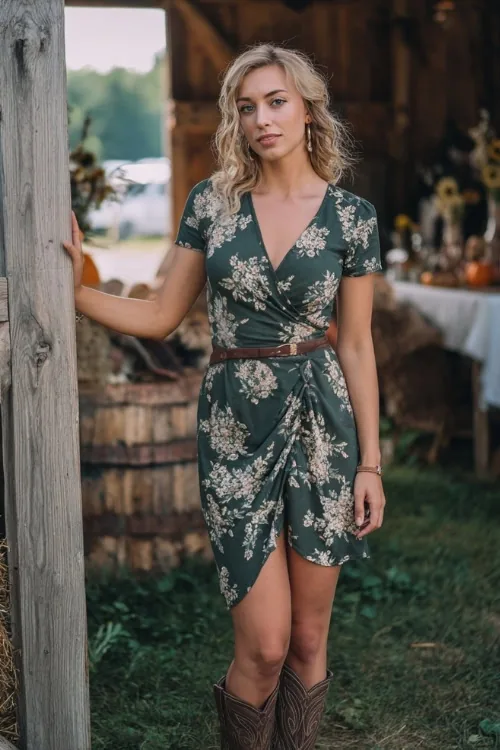
A barn wedding is relaxed, outdoorsy and often on uneven ground, which means the outfit should be pretty but practical. A floral midi dress, a linen co-ord or a prairie-style dress in a soft print all suit the setting, and the shoes matter more here than at any other wedding: block heels, wedges or elegant flats are essential, because stilettos sink into grass and gravel and a barn floor is rarely smooth.
Mistakes to avoid: a floor-length hem that drags through grass and mud; a stiletto heel; a dress so formal it looks like it belongs in a ballroom; and white or cream, which shows every mark from a day spent outdoors. The rustic wedding rewards texture — linen, cotton, eyelet, a knitted shawl — over shine, and a denim jacket over a floral dress at the evening reception is not underdressed, it is exactly right.
18. The City Hall Wedding Outfit: Smart, Simple and Chic
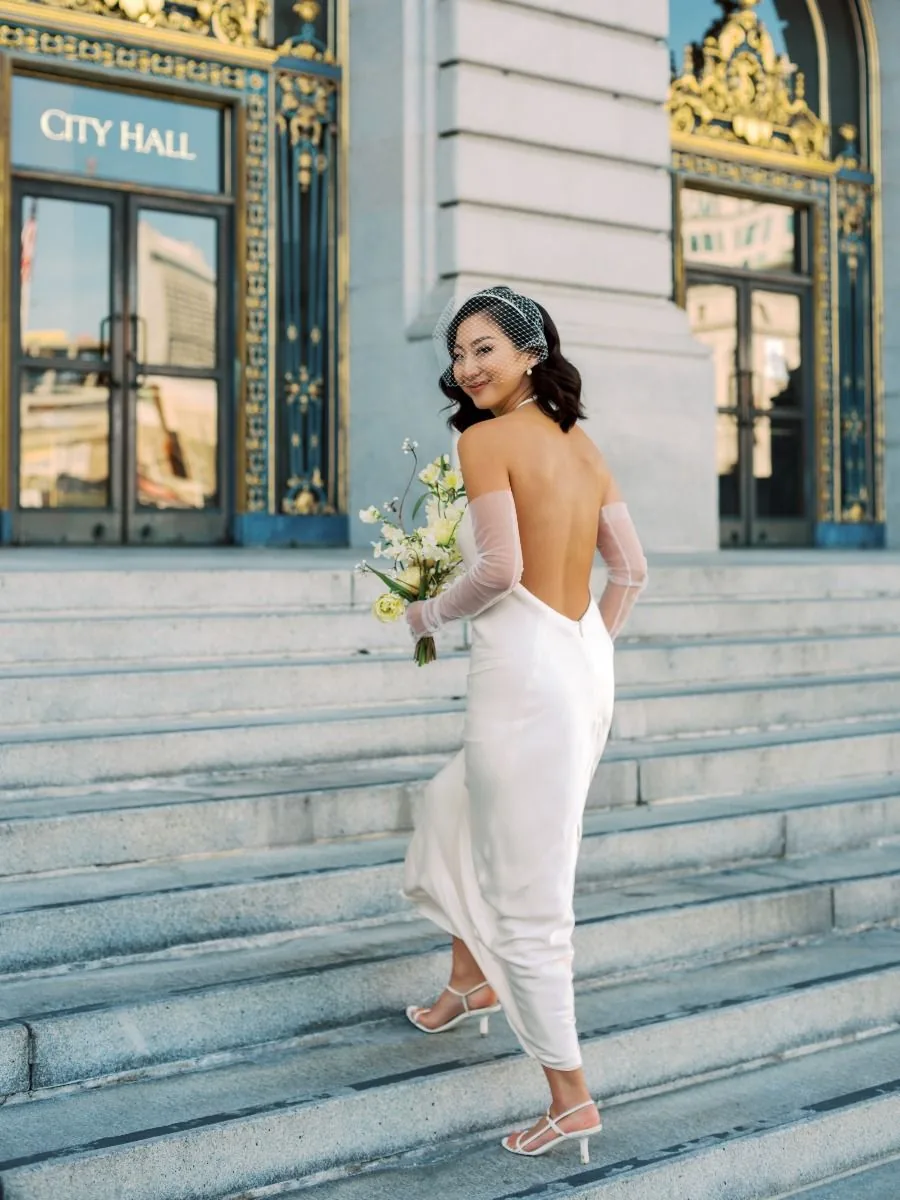
A city hall wedding is short, daytime and intimate, and the guest outfit should match: smart, simple and chic rather than grand. A tailored midi dress, a smart jumpsuit or a skirt and blouse combination in a solid colour is perfect, and the look is more about polish than drama — good shoes, a structured bag, and clean lines. It is also the wedding where a trouser suit looks most at home.
Pros: easy to get right; comfortable; works for a lunch afterwards. Cons: a very formal gown would look out of place, so resist the urge to overdress. Quick verdict: dress as you would for a smart lunch with the couple’s parents — polished, respectful, and a little bit special.
19. The Destination Wedding Outfit: Packable, Wrinkle-Free and Versatile
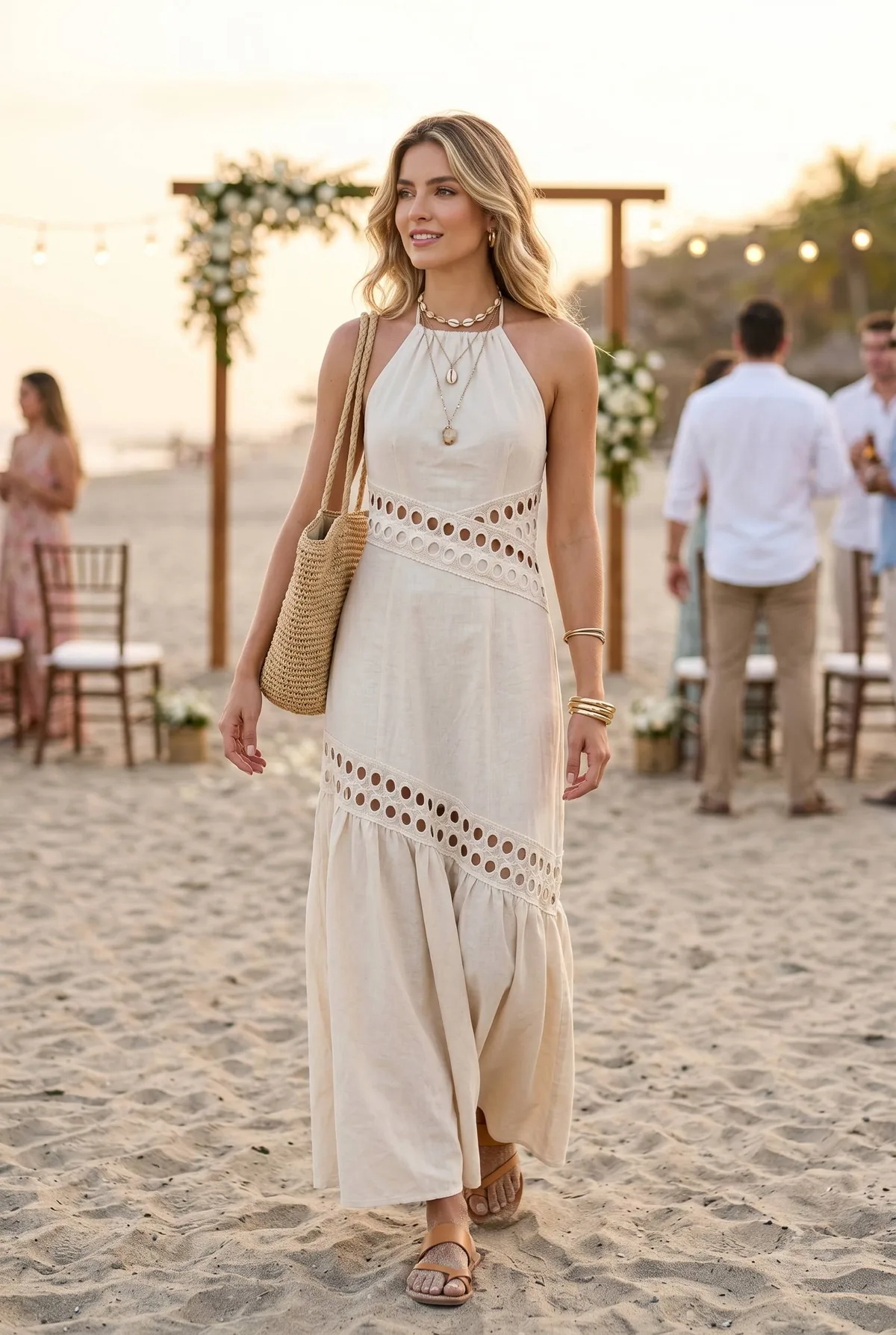
A destination wedding means your outfit has to survive a suitcase, a flight and a different climate, so packability matters as much as style. Choose a dress in a fabric that does not crease — jersey, crepe or a good quality polyester — and roll it rather than folding it. A maxi dress that works for the ceremony and the beach dinner afterwards saves a second outfit, and a wrap dress is the most versatile choice of all, because it adjusts to the heat and to a body that has spent a week eating well.
What it is: a crease-resistant dress or jumpsuit, packed with versatile accessories. Why it works: it looks fresh straight out of the suitcase and adapts to heat, humidity and an outdoor ceremony. Who it suits: anyone travelling for a wedding, especially to a hot climate. How to style it: flat sandals for the ceremony, heels for the evening, and a pashmina that doubles as a plane blanket. Where to wear it: destination, beach and overseas weddings.
20. The Plus-Size Wrap Dress: The Flattering Guest Outfit That Fits
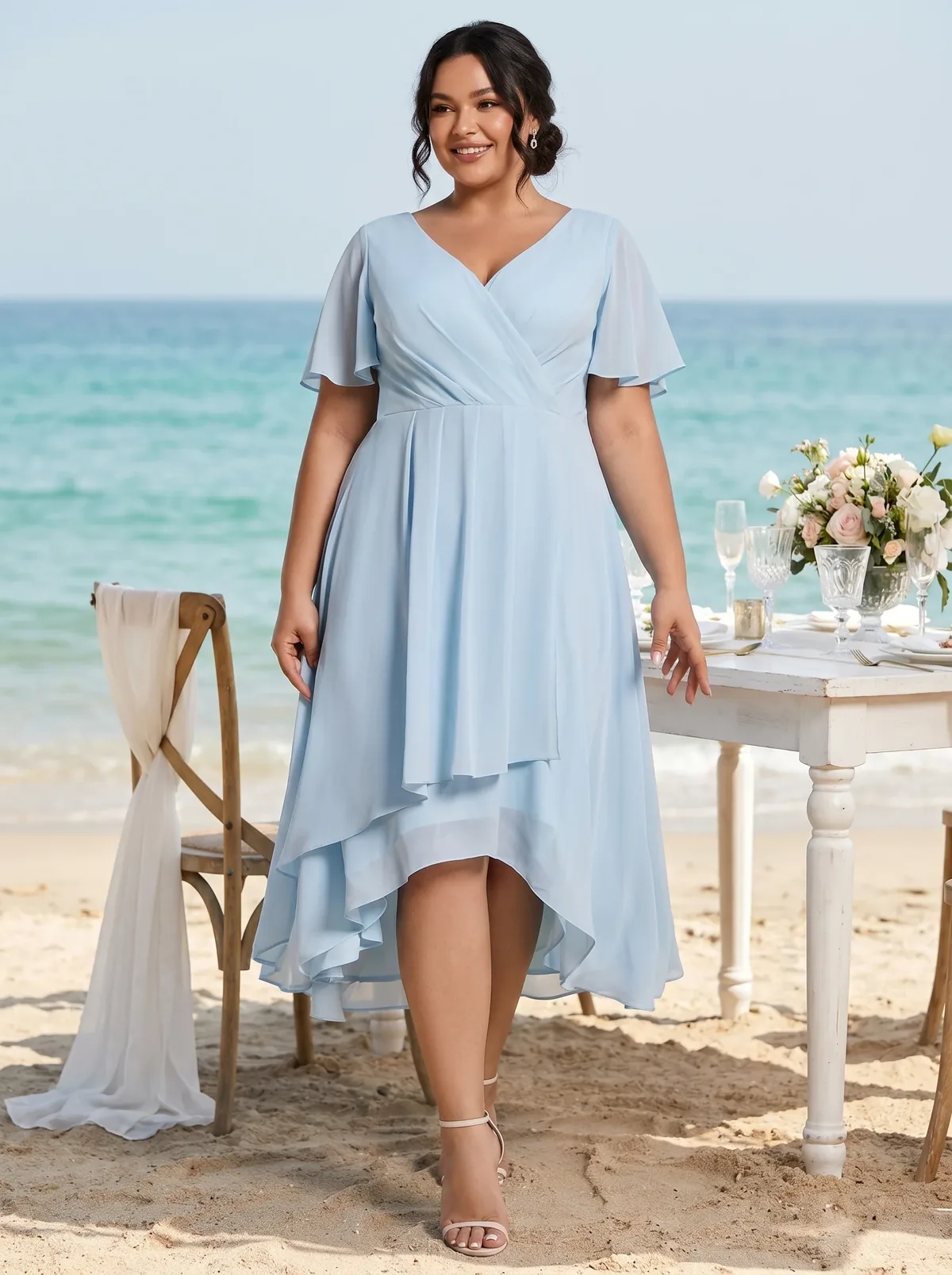
The wrap dress is the most recommended plus-size guest outfit for a reason: the diagonal line defines the waist, the V-neck elongates the torso, and the tie adjusts to your shape. Look for a wrap dress in a fabric with structure — crepe or a good jersey — with a lining, and a hem that ends at the knee or mid-calf. A solid jewel tone is elegant for evening; a floral print is perfect for daytime.
Best for: plus-size guests of every height, and anyone who wants a defined waist without shapewear. How to style: block heels for comfort, a structured clutch, and a jacket or wrap for the ceremony. Watch out for: a wrap that gaps at the bust — a small stitch, a camisole underneath or a wrap with a snap closure fixes it — and a tie that sits too high or too low on the waist.
21. The Petite Guest Outfit: Proportions That Elongate
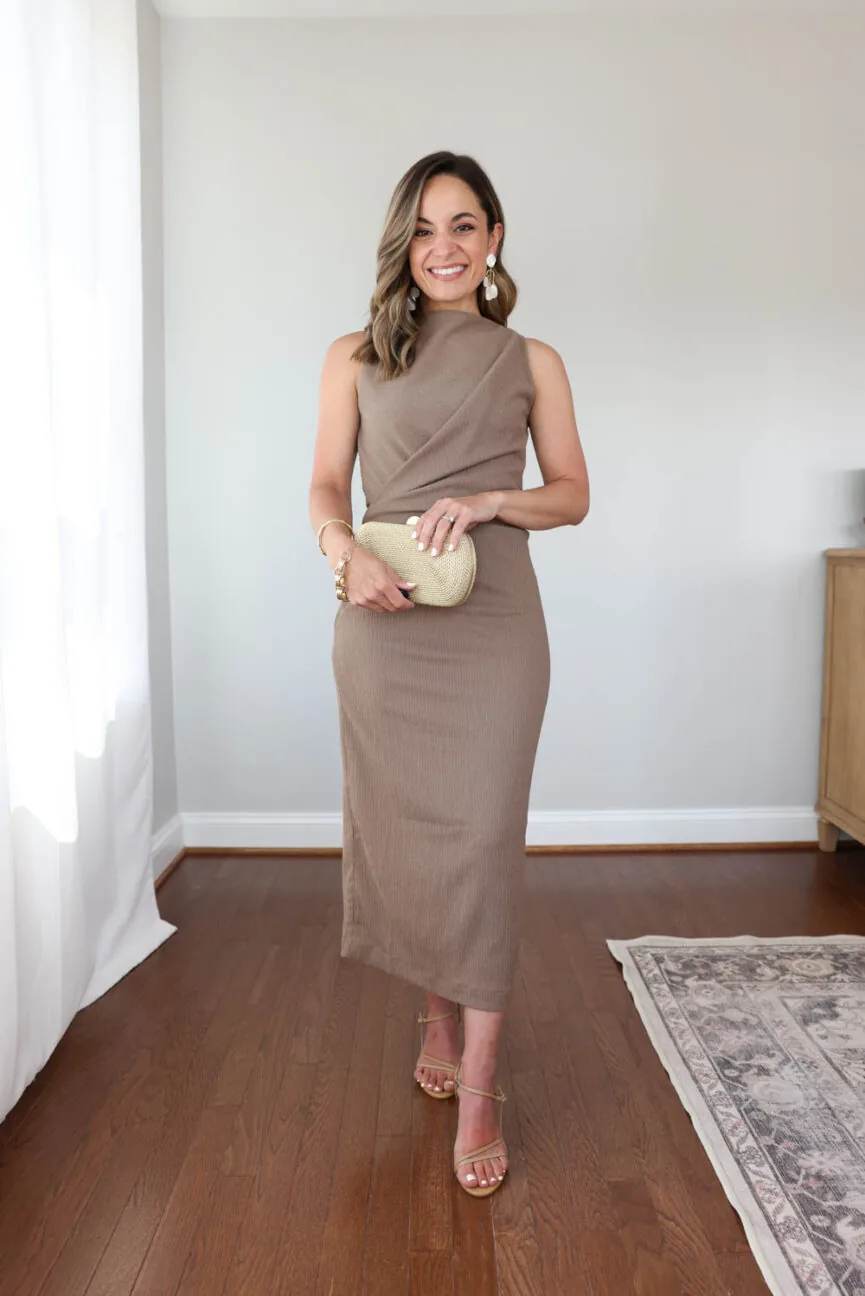
Petite guests need proportion more than anything: a dress that ends at the right place, a waist that sits at the natural waist, and a print that does not overwhelm a small frame. A knee-length or midi dress with a defined waist, a V-neck and a heel elongates the leg, while a small-scale print and a shorter jacket keep the outfit in scale. Avoid maxi dresses with a dropped waist and oversized prints, which can swamp a petite figure.
Styling checklist: choose a midi that ends at the slimmest part of the calf; wear a heel, even a low block heel, to lengthen the leg; keep the bag small — an oversized tote dwarfs a petite frame; and have the hem and the sleeves tailored, because off-the-rack lengths are rarely right for petite guests. A monochrome outfit in one colour from head to toe is the easiest elongating trick there is.
22. The Tall Guest Outfit: Length, Drama and the Right Hem
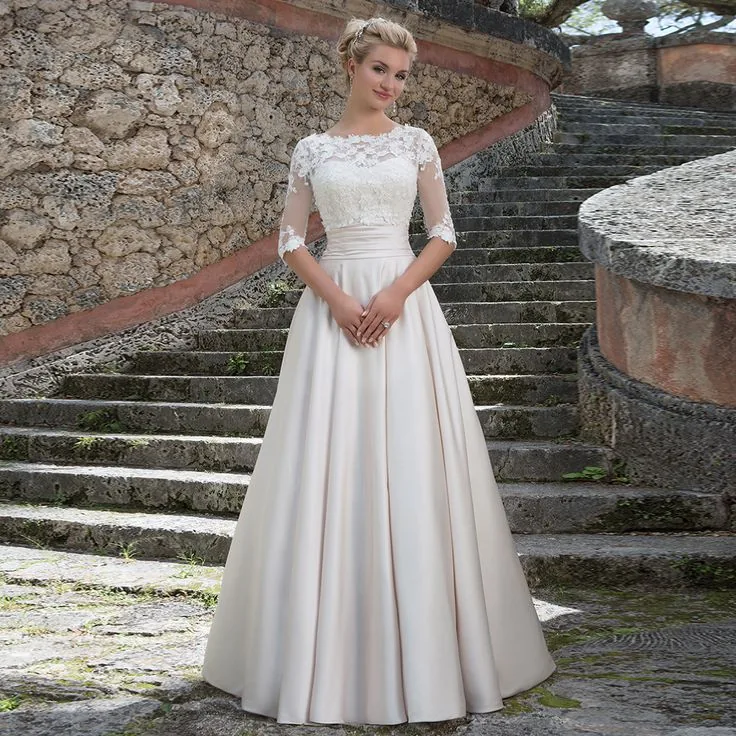
Tall guests can wear the shapes other guests cannot: a true maxi that reaches the floor, a wide-leg jumpsuit, a long-line jacket, and a bold large-scale print. The challenge is length — sleeves that are too short, a waist that sits too high, and a hem that ends at an awkward place. Buy for length first, and look for brands with tall ranges, or budget for tailoring: a dress that is the right length in the body is worth more than a dress that is the right size.
What it is: a long, well-proportioned outfit — maxi dress, wide-leg jumpsuit or long co-ord. Why it works: height carries drama, so a tall guest can wear a bold print or a long hem without it overwhelming her. Who it suits: tall guests, especially those who struggle with sleeve and hem length. How to style it: a low heel or a flat is perfectly fine — you do not need height — and a long necklace or a statement earring balances a long torso. Where to wear it: formal and evening weddings, where a full-length look shines.
23. The Maternity Guest Dress: Comfortable, Elegant and Bump-Friendly
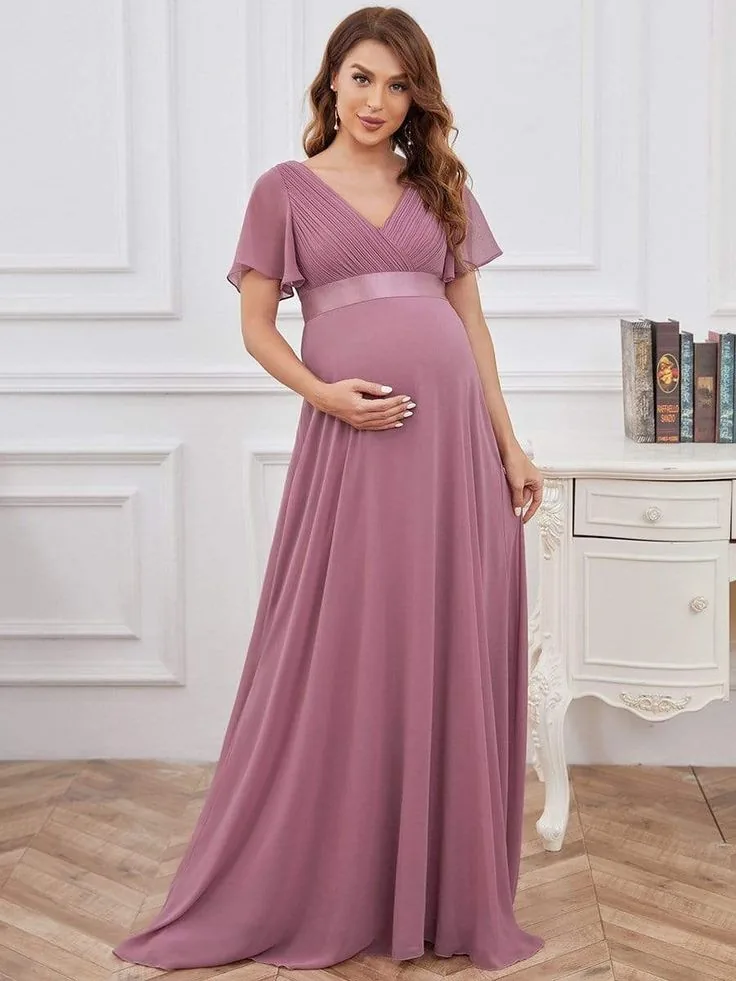
A maternity guest dress should be comfortable for twelve hours, elegant in photos, and easy to move in — and the best shapes are the ones that were designed for a bump rather than adapted to one. An empire-waist maxi, a wrap dress with an adjustable tie, or a smocked-bodice midi all give room where it is needed and define the shape above the bump. Choose a breathable fabric, a lining that does not cling, and a hem you can walk in without tripping.
Best for: pregnant guests at any stage, and anyone who wants comfort without sacrificing style. How to style: low block heels or elegant flats, a clutch you can hold in one hand, and a wrap for the ceremony. Watch out for: a dress that is tight across the bump — it will only get tighter as the day goes on — and shoes with no support, because your feet will swell by the evening.
24. The Modest Long-Sleeve Dress: Coverage That Still Looks Occasion-Ready
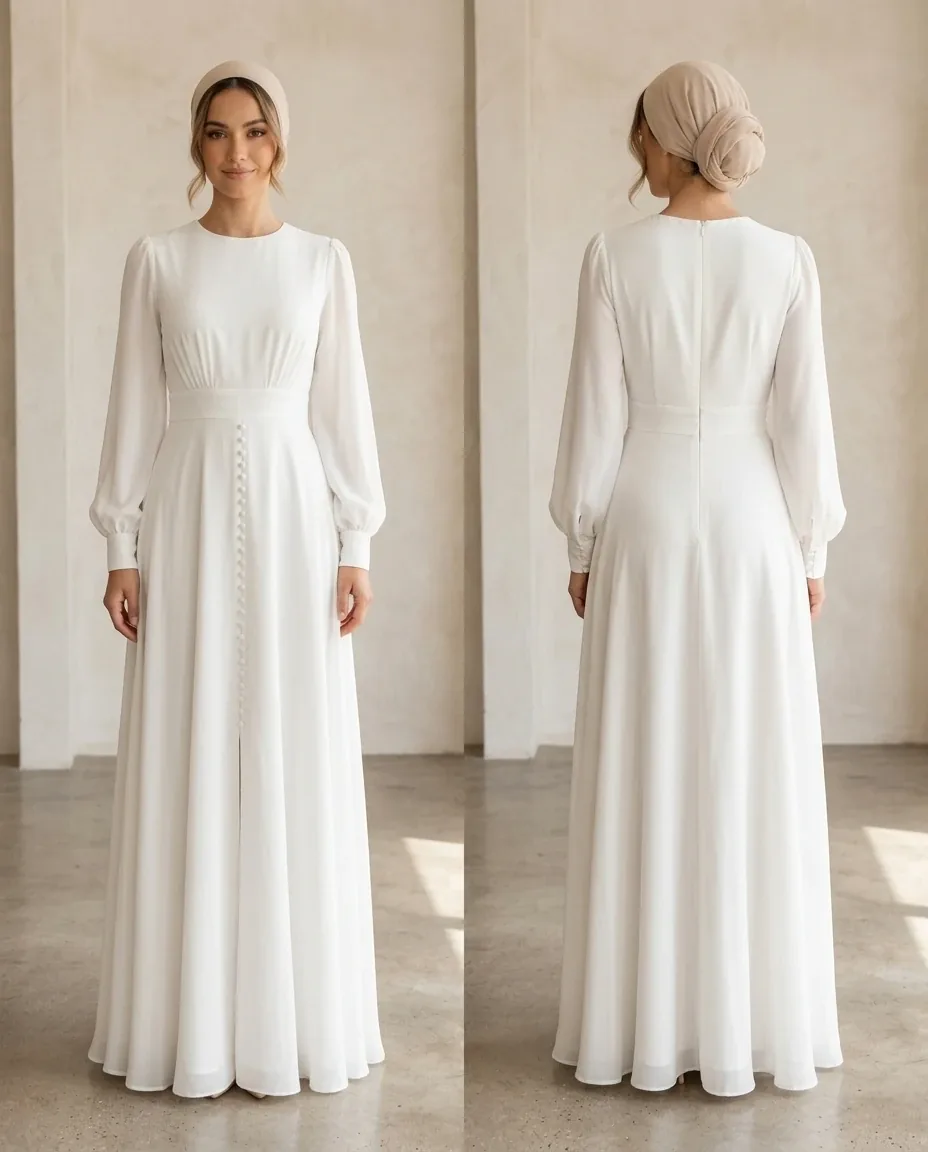
A modest guest outfit is not a compromise: a long-sleeved midi or maxi with a high neckline, a dress with a matching jacket, or a wide-leg trouser suit with a silk blouse all read as elegant and occasion-ready. The key is fabric and fit — a crepe or satin dress with a defined waist and a good lining looks expensive, while a shapeless, unlined dress looks like an afterthought, whatever its coverage.
Pros: appropriate for any religious or formal ceremony; comfortable in cool weather; easy to accessorise. Cons: long sleeves and high necklines can feel warm in summer, so choose a breathable fabric. Quick verdict: invest in the fit — a modest dress that fits perfectly at the shoulders and waist will always look better than a revealing dress that does not.
25. The Budget High-Street Dress: Looking Expensive for Under £50

A high-street dress can look like a designer one if you choose well: a solid colour in a good fabric, a classic shape, and a fit that has been tailored. The tricks are to buy a size up and have it taken in at the waist, to choose crepe or a good jersey over thin polyester, and to spend the money you saved on shoes and a bag — because cheap shoes give away a cheap outfit faster than a cheap dress does.
What it is: a high-street midi or cocktail dress, tailored to fit. Why it works: a classic shape in a solid colour looks expensive, and tailoring is the cheapest luxury there is. Who it suits: anyone on a budget, and anyone attending several weddings in one season. How to style it: metallic heels, a structured clutch, and one good piece of jewellery. Where to wear it: any wedding, with the accessories doing the work of making it look occasion-ready.
26. Rewearing a Guest Dress: Three Weddings, One Dress, Three Looks
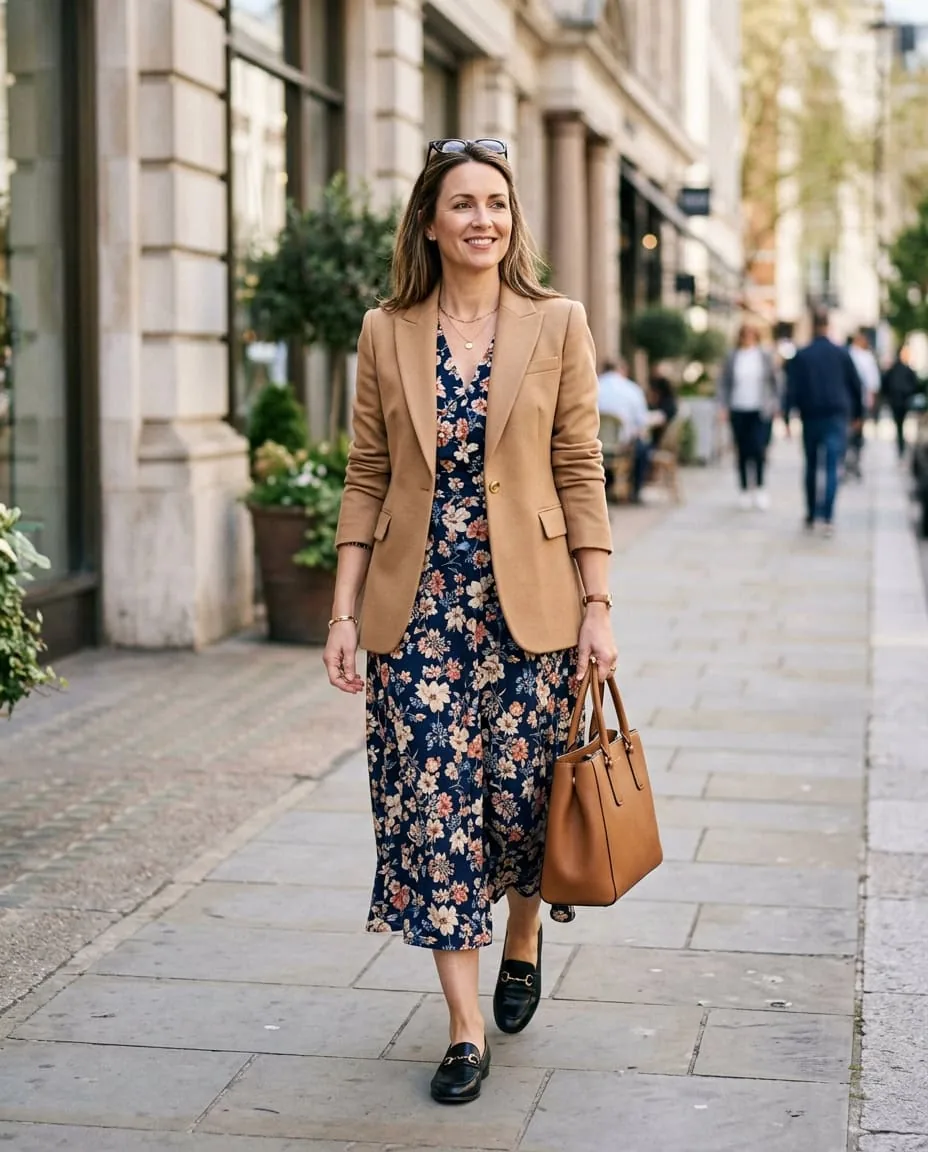
Rewearing a guest dress is not only sensible, it is the most stylish choice you can make — because a dress you have worn before is a dress you know fits, photographs well and feels comfortable. The trick is to change the styling so completely that nobody would guess it is the same dress: different shoes, a different bag, different jewellery, a different hairstyle, and a jacket or a wrap that changes the silhouette.
Styling checklist: wedding one — nude heels, a straw clutch, hair down; wedding two — black heels, a velvet clutch, hair up, and a statement earring; wedding three — a coloured jacket, metallic shoes, and a bold lip. Keep a note of which weddings you wore it to, and avoid wearing the same dress to two weddings with the same guest list in the same season. A good dress deserves to be worn more than once — that is what makes it worth buying.
27. Renting a Guest Outfit: Designer Style for a Fraction of the Price
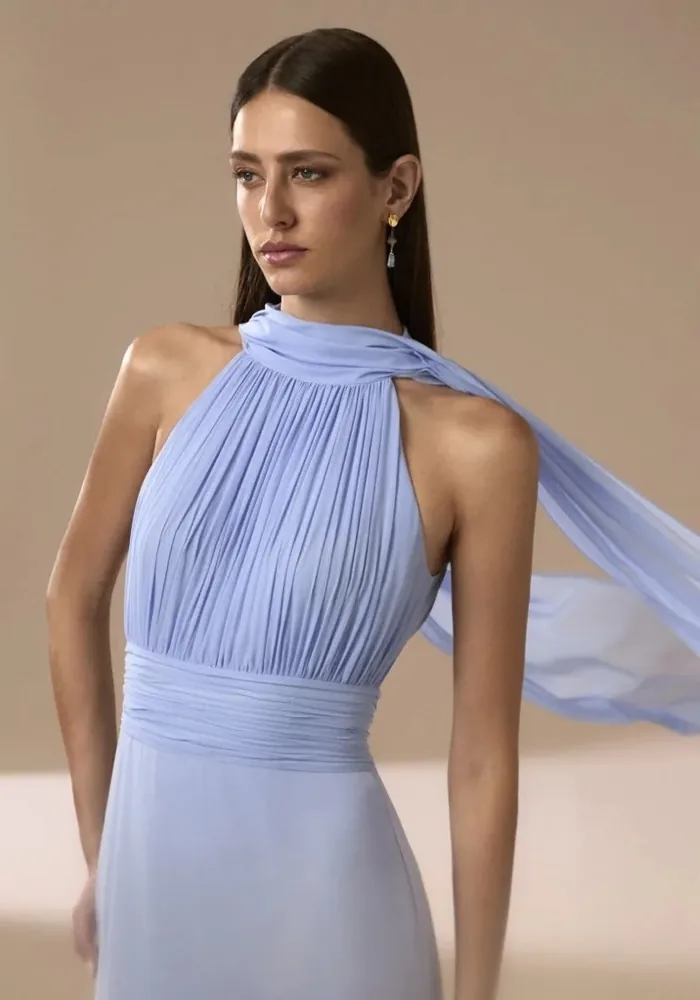
Renting is the smartest option for a formal or black-tie wedding, where a gown you will wear once is a poor investment. Rental platforms let you wear a designer dress for a fraction of its retail price, with dry cleaning and delivery included, and many offer a backup size so you are not stuck if the fit is wrong. It is also the most sustainable way to dress for a wedding — a dress that is worn twenty times by twenty guests is a better use of resources than twenty dresses worn once.
Best for: black-tie, formal and destination weddings, and guests who want a designer look without the designer price. How to style: treat it like a dress you own — the right shoes, the right bag, and a fit check when it arrives. Watch out for: order early, try it on as soon as it arrives, and check the return window and the damage policy before you commit.
28. The Monochrome Outfit: One Colour, Head to Toe, Maximum Polish
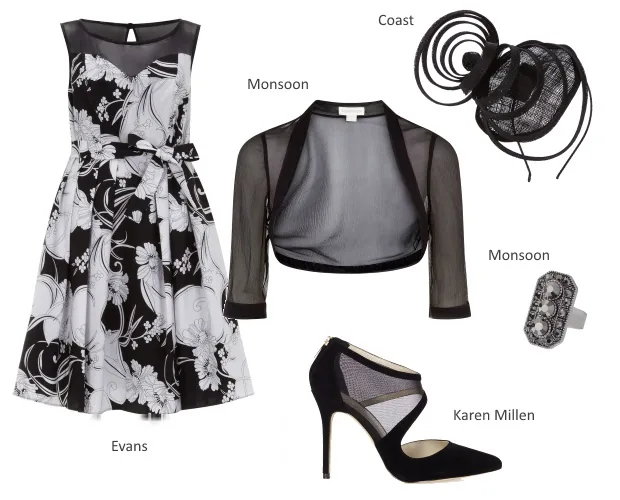
A monochrome outfit — one colour from the dress to the shoes — is the easiest way to look polished, because it creates a long, unbroken line that elongates the figure and reads as intentional. Navy, emerald, burgundy and chocolate all work beautifully as monochrome looks; black can work too, as long as the accessories add warmth. The trick is to vary the textures — a crepe dress, a suede shoe, a satin clutch — so the outfit does not look flat.
Mistakes to avoid: matching the shoes and the bag too exactly, which can look dated; choosing a colour that washes you out — hold the fabric to your face in daylight; and wearing white, cream or ivory head to toe, which is the one monochrome that breaks the guest rules. Get the colour right and the monochrome outfit is the most photogenic look in this guide.
29. The Polka Dot Dress: Playful, Photogenic and Surprisingly Formal
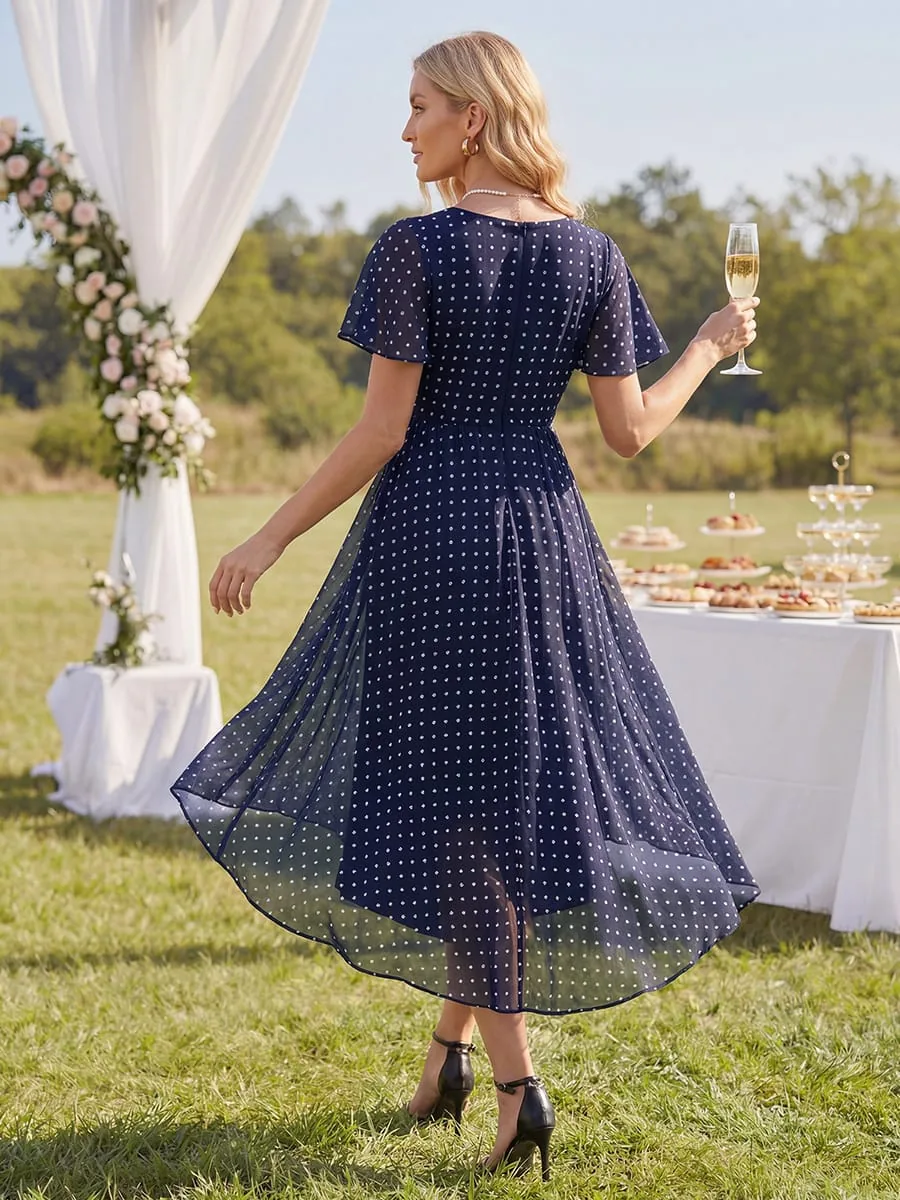
A polka dot dress is the playful guest outfit that still reads as formal when it is cut well: a fit-and-flare midi in navy with white dots, or a black dress with cream spots, looks vintage, photogenic and appropriate for almost any daytime wedding. The dots do the work of a print without the busyness of a floral, and the shape — a defined waist and a flared skirt — flatters nearly everyone.
What it is: a midi dress in a polka dot print, usually fit-and-flare. Why it works: the print is graphic and photogenic, and the classic shape is universally flattering. Who it suits: anyone who wants a vintage-inspired look without a full vintage outfit. How to style it: a solid-coloured heel, a small clutch, and simple jewellery — the dots are the statement. Where to wear it: daytime, garden and semi-formal weddings.
30. The Sequin Midi Dress: Sparkle That Knows Its Place
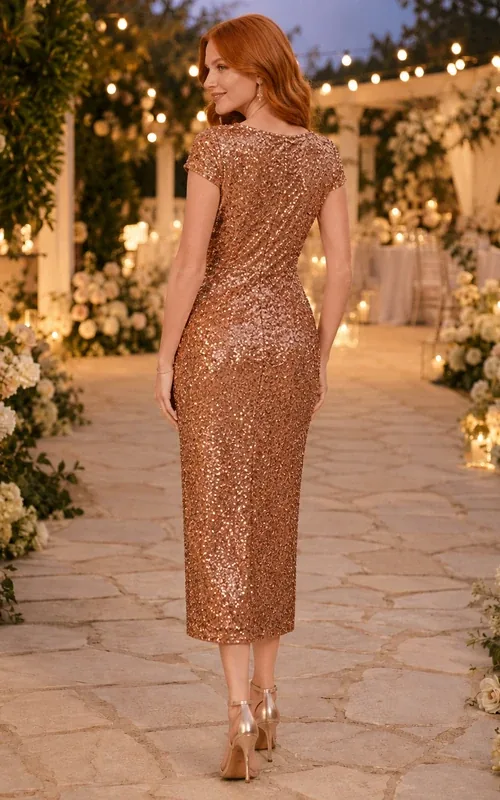
A sequin midi dress is the evening wedding outfit for the guest who loves sparkle — and it works, as long as the rest of the outfit stays quiet. Choose a midi length rather than a mini, a dark or jewel-tone sequin rather than silver or gold, and keep the accessories minimal: a plain clutch, simple heels, and one piece of jewellery. The sequins are the statement, and everything else should step back.
Best for: evening, black-tie-optional and New Year’s Eve weddings. How to style: a plain clutch, nude or black heels, and a simple updo so the dress is the focus. Watch out for: sequins that catch on everything — a shawl, a chair, a dance partner — and a dress that is too short or too tight, which turns sparkle into a costume.
31. The Trouser Suit: The Sharpest Guest Outfit in the Room
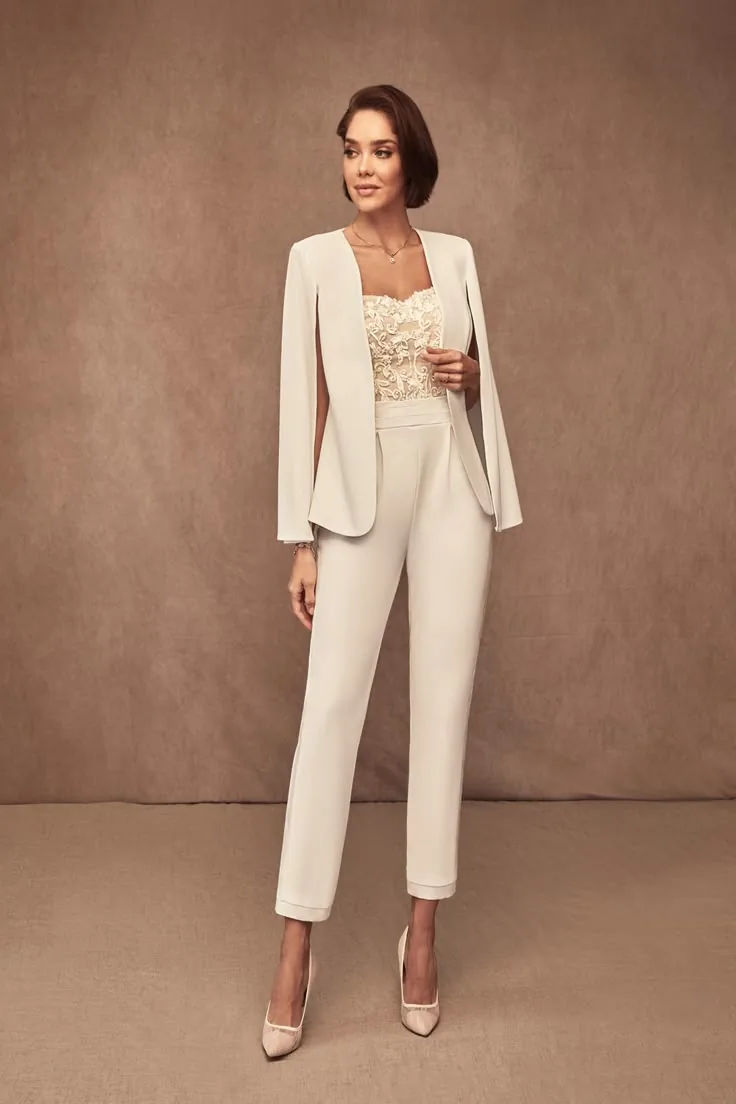
A trouser suit is the guest outfit for the woman who wants to look sharp, modern and completely comfortable — and at a wedding, it stands out precisely because most guests are in dresses. Choose a suit in a soft colour or a subtle print, with a wide leg and a tailored jacket, and wear it with a silk camisole or a lace top underneath. Navy, sage, blush and chocolate all work; black works too, as long as the top or the accessories add colour.
Pros: comfortable, practical, and endlessly rewearable as separates. Cons: a suit that is too masculine or too office-like will look underdressed for a wedding, so the fabric and the styling matter. Quick verdict: the jacket should be fitted, the trousers should be full-length, and the top underneath should be special — silk, lace or satin, never a plain T-shirt.
32. The Skirt and Blouse Combo: Soft, Feminine and Easy to Fit
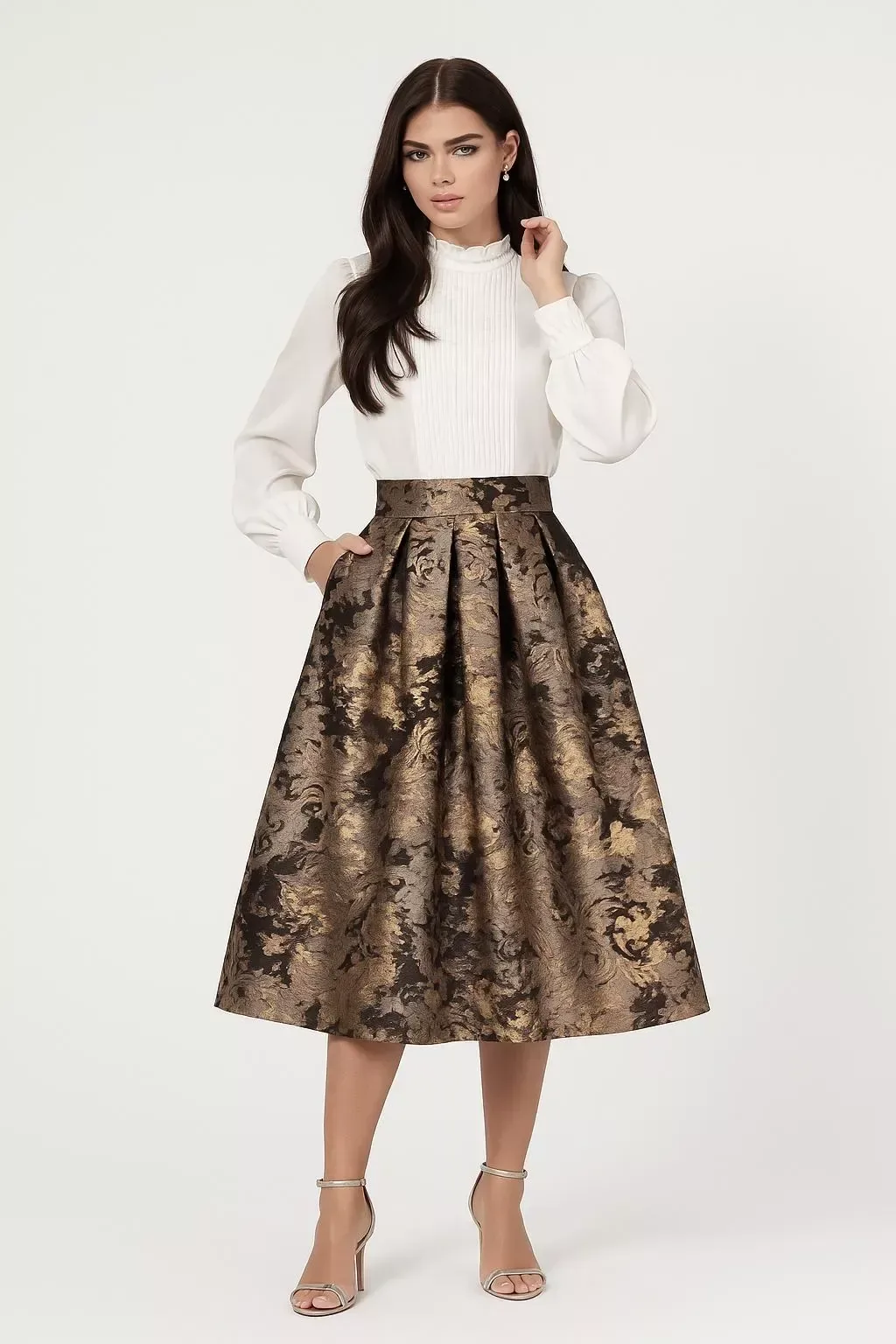
A skirt and blouse combination is the guest outfit that solves the fit problem: you can buy a different size for the top and the bottom, and the pieces work separately after the wedding. A pleated midi skirt with a silk blouse, a satin midi skirt with a fitted knit top, or a full skirt with a lace blouse all read as occasion wear, and the combination is softer and more feminine than a suit.
Styling checklist: tuck the blouse in to define the waist; match the fabric weights so one piece does not look heavier; keep the colour palette to two tones plus a metallic; and choose a skirt with a lining so it does not cling when you sit. The skirt-and-blouse combo is also the best option for a guest who is between sizes, because each piece can be fitted independently.
33. The Slip Skirt Outfit: Silky, Simple and Surprisingly Dressy
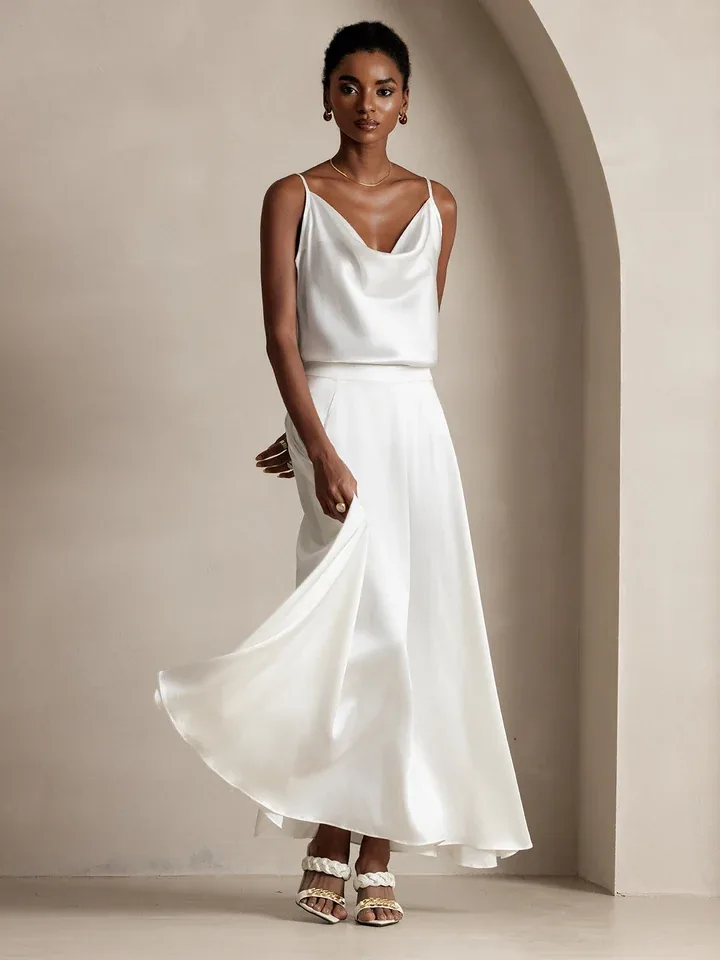
A slip skirt — a bias-cut satin or silk skirt that skims the body — is the simplest way to look dressy without wearing a dress. Pair it with a fitted knit top, a silk blouse or a lace camisole, and add heels and a clutch, and the outfit reads as occasion-ready. A satin slip skirt in a jewel tone or a soft neutral is the most versatile version, and it works for daytime and evening weddings alike.
What it is: a bias-cut midi skirt in satin or silk, styled with a dressy top. Why it works: the bias cut drapes beautifully and the sheen reads as formal. Who it suits: straight and hourglass figures, and anyone who prefers separates to dresses. How to style it: a heel to elongate the leg, a small clutch, and a top that is fitted enough to balance the skirt’s flow. Where to wear it: semi-formal, evening and city weddings.
34. The Bold Colour-Block Outfit: Confidence in Two Colours
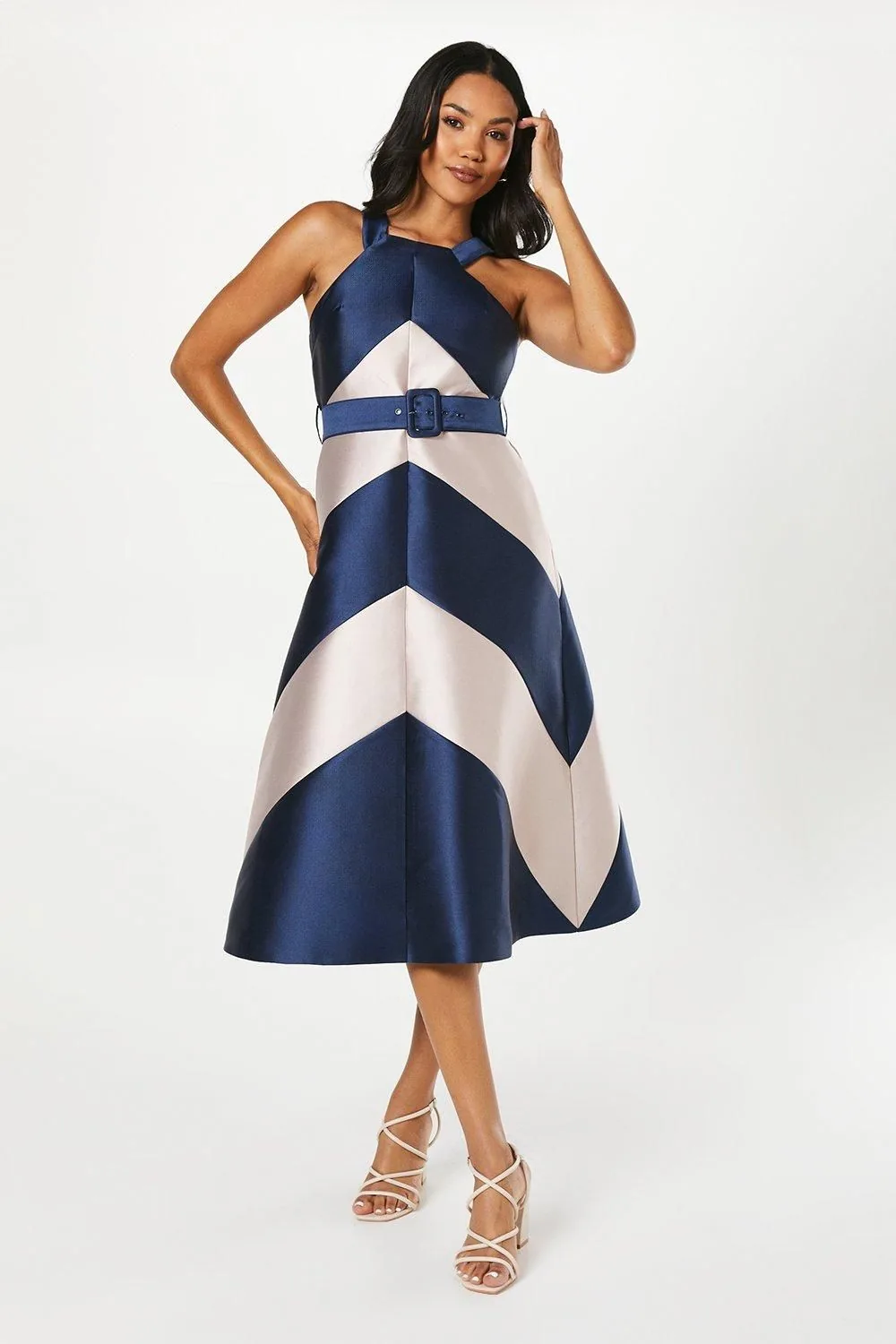
A colour-block outfit — two bold colours worn together, like emerald and fuchsia, or cobalt and coral — is the guest outfit for the woman who loves colour and is not afraid to be noticed. The trick is proportion: one colour should lead and the other should accent, usually as a 70/30 split, and the two colours should share a similar depth — two jewel tones, or two pastels — rather than one bright and one muted.
Best for: confident dressers, daytime and summer weddings, and guests who want to stand out in photos. How to style: keep the shoes and bag neutral so the colours can lead, and keep the jewellery simple. Watch out for: clashing undertones — a warm coral and a cool cobalt will fight each other — and a colour combination that matches the wedding’s theme colours too closely.
35. The Neutral Outfit: Understated, Elegant and Always Right
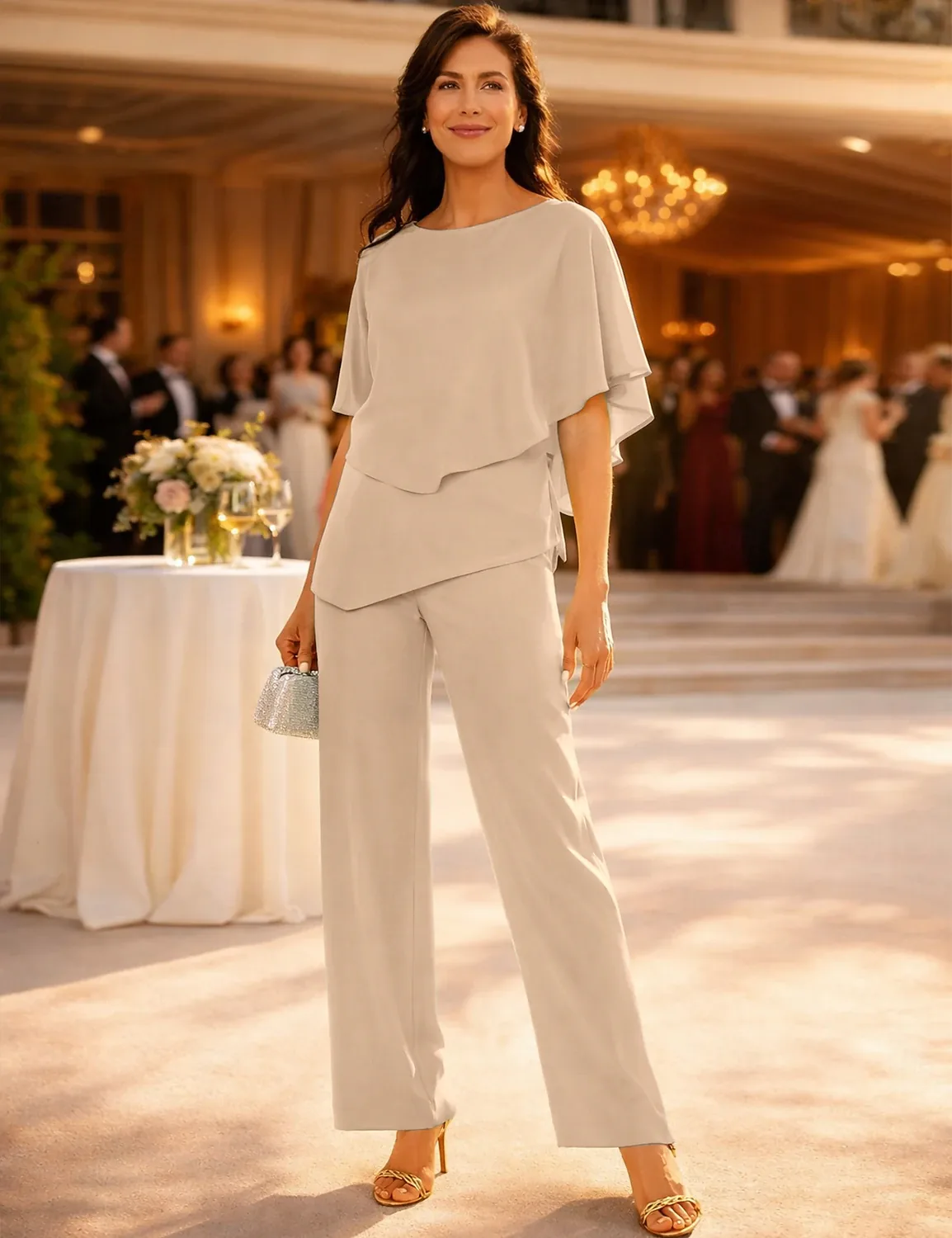
A neutral guest outfit — beige, stone, taupe, camel or soft grey — is the understated choice that always looks right, and it is the outfit that photographs best against any backdrop. The key is texture and tone: a crepe dress with a suede shoe, a linen suit with a silk top, or a knit dress with a leather clutch, so the outfit has depth rather than looking flat. Add one warm metallic — gold jewellery, a bronze clutch — to keep the neutrals from looking washed out.
Mistakes to avoid: a head-to-toe white or cream, which breaks the guest rules; a neutral that is too close to your skin tone, which can look like you are not wearing anything in photos; and a shapeless neutral dress, which reads as an afterthought. Get the fit and the texture right and the neutral outfit is the most elegant look at the wedding.
36. The Print Clash: Mixing Patterns Like a Stylist
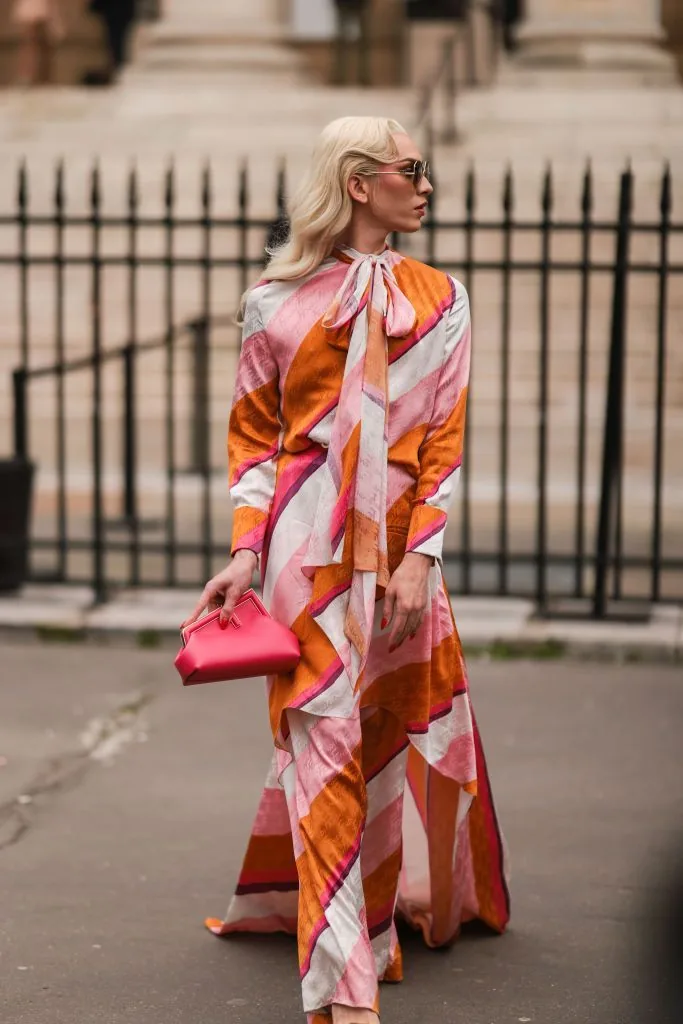
Mixing prints is the advanced guest outfit — a floral skirt with a striped top, or a polka dot dress with a floral jacket — and it works when the prints share a colour and differ in scale. The rule is simple: one large print and one small print, in the same colour family, with the rest of the outfit kept plain. A floral midi skirt with a small striped top, both in navy and white, is the classic combination that almost always works.
What it is: two different prints worn together, united by colour. Why it works: the shared colour makes the clash look intentional rather than accidental. Who it suits: confident dressers who love pattern. How to style it: keep the shoes, bag and jewellery plain and in one of the print’s colours. Where to wear it: daytime, garden and summer weddings, where a playful outfit fits the mood.
37. The Vintage-Inspired Dress: Timeless Shapes with a Modern Fit
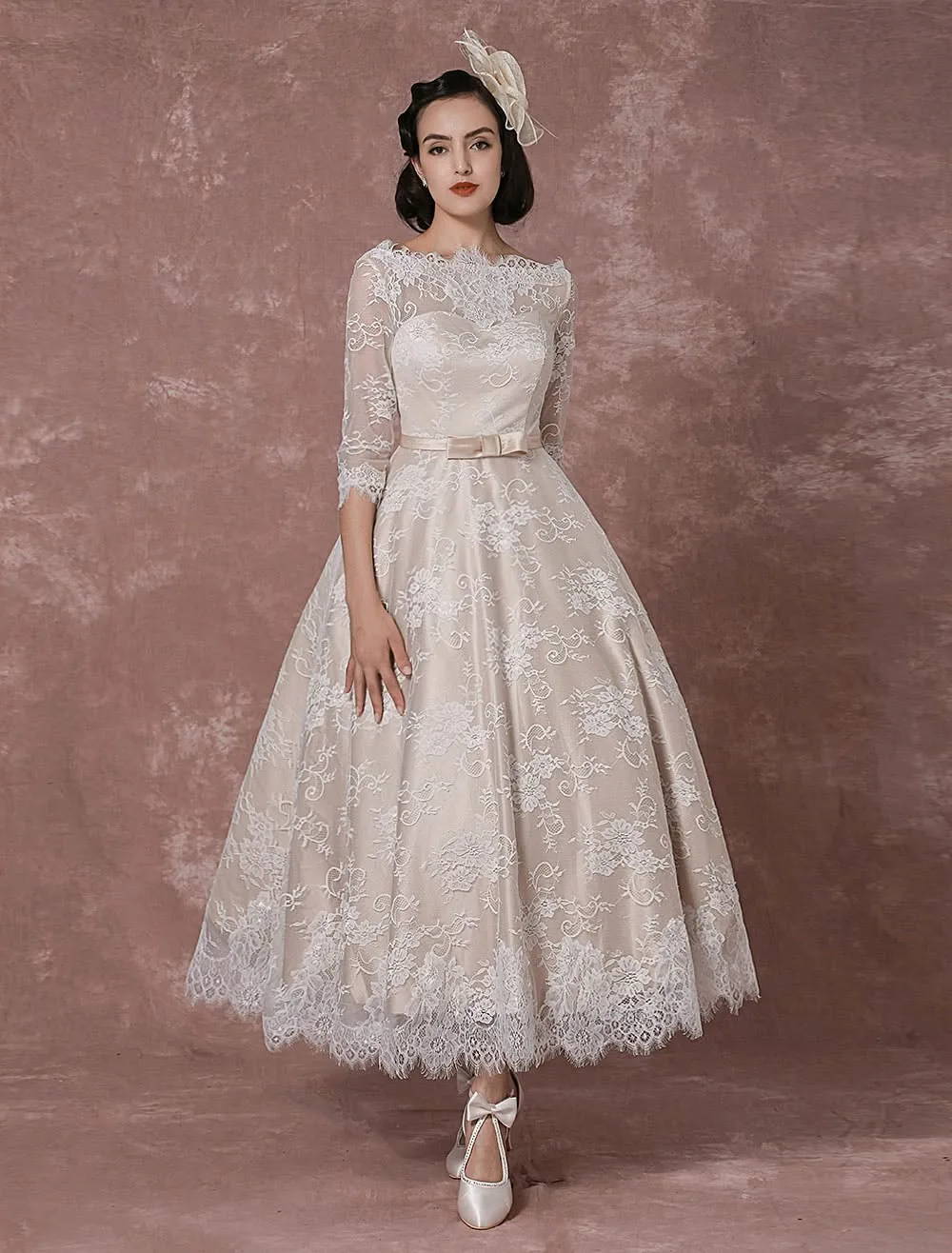
A vintage-inspired dress — a 1950s fit-and-flare, a 1970s wrap, or a 1920s-inspired beaded midi — is the guest outfit for the woman who loves timeless shapes. The key is modern fit: a vintage shape with a contemporary fabric and a proper lining looks elegant, while a genuine vintage dress can be fragile, hard to fit and difficult to clean. Choose a new dress in a vintage shape, and let the accessories — a small clutch, a pair of gloves for a very formal wedding, or a vintage brooch — add the period detail.
Best for: daytime and semi-formal weddings, and guests who love retro style. How to style: a small structured bag, a low heel, and a hairstyle that nods to the era — soft waves for the 1950s, a sleek bob for the 1920s. Watch out for: a full costume look, which can read as fancy dress; one vintage element is enough.
38. The Boho Maxi: Flowing, Romantic and Made for Outdoor Weddings
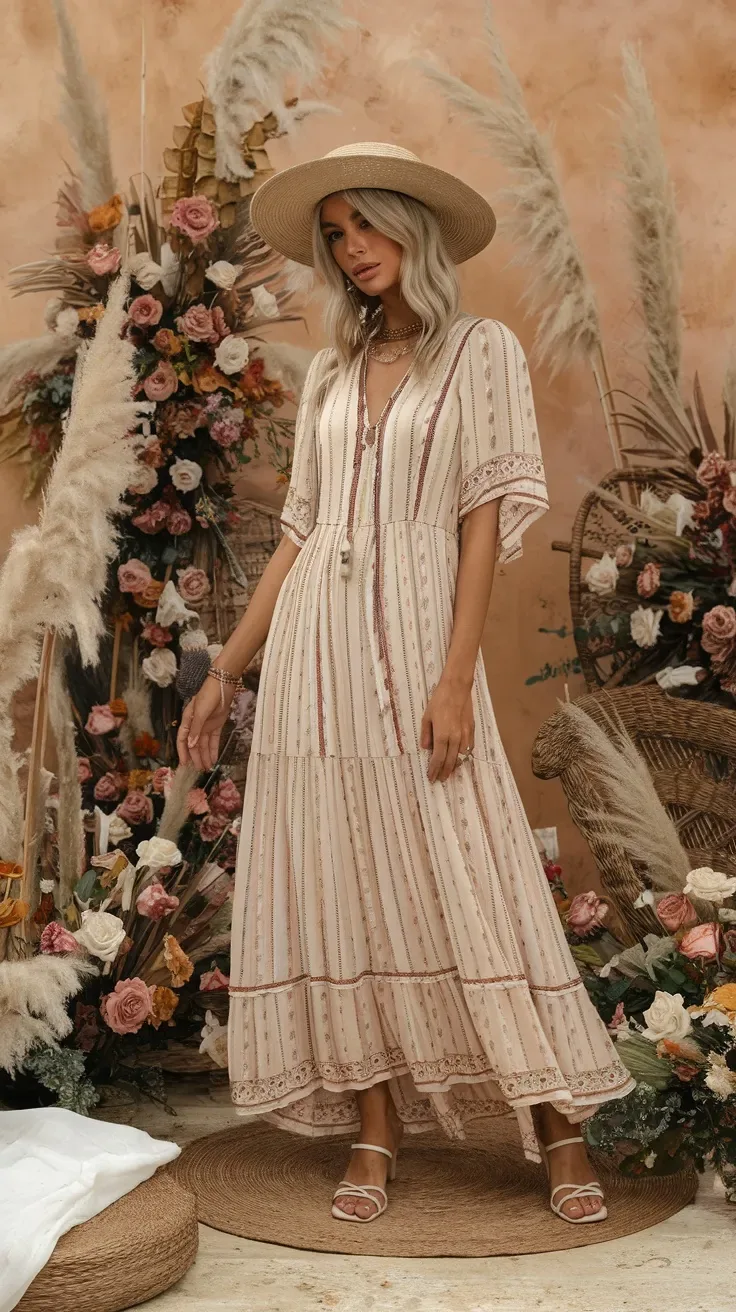
A boho maxi — flowing fabric, a tiered skirt, a smocked bodice, and a print that feels hand-drawn — is the romantic guest outfit for an outdoor or festival-style wedding. It moves beautifully, it is comfortable for a long day, and it looks wonderful in photographs taken in natural light. Choose a maxi with a defined waist and a lining, and keep the accessories natural: a straw bag, flat sandals, and a flower in the hair rather than a fascinator.
Pros: comfortable, photogenic, and perfect for outdoor ceremonies. Cons: a boho maxi can look too casual for a formal or church wedding, so check the dress code. Quick verdict: if the wedding is outdoors, in a field, a garden or a barn, the boho maxi is the outfit that fits the setting best.
39. The Daytime Wedding Outfit: Light, Bright and Ceremony-Ready
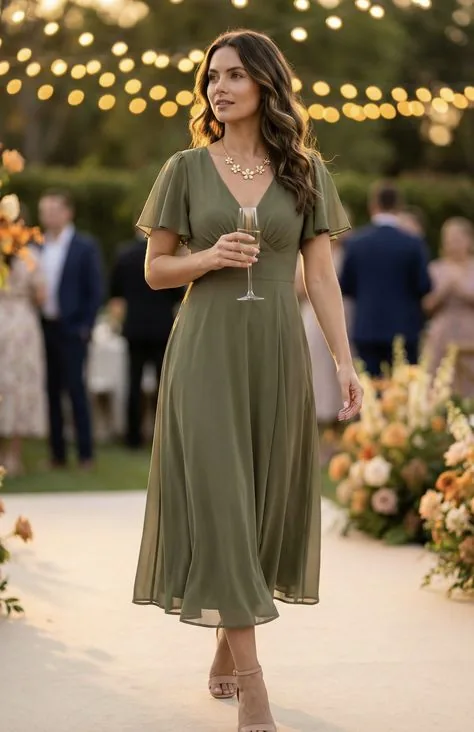
A daytime wedding calls for a lighter outfit than an evening one: a knee-length or midi dress in a soft colour or a cheerful print, flat or low-heeled shoes, and accessories that feel fresh rather than formal. A floral midi, a pastel suit or a linen co-ord all work, and the look should feel like a celebration in daylight — bright, relaxed and comfortable enough for a long lunch in the sun.
Styling checklist: choose a breathable fabric; wear a hat or sunglasses if the ceremony is outdoors; pick shoes that work on grass; keep the bag small and light; and bring a wrap for the church or for the shade. The daytime outfit’s biggest mistake is overdressing — a floor-length gown at a 1 p.m. garden wedding will feel as out of place as jeans at a black-tie ball.
40. The Evening Reception Outfit: When the Ceremony Ends and the Party Starts
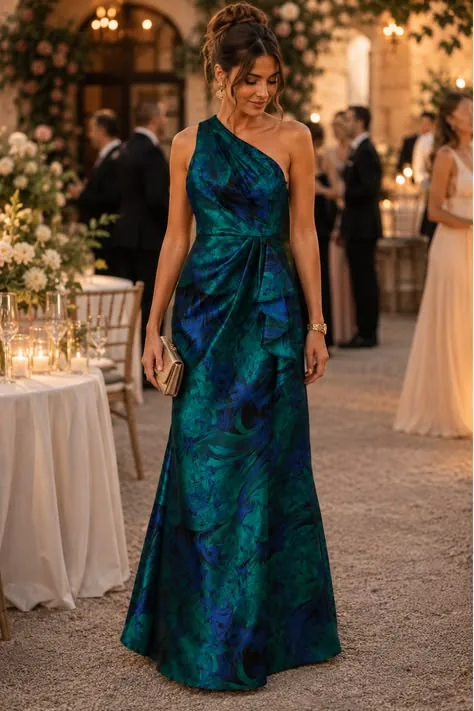
The evening reception is when the guest outfit gets to shine: the ceremony is over, the lights are low, and the dress code relaxes into dancing. A sequin midi, a satin slip dress, a velvet gown or a jumpsuit with a metallic finish all work for the evening, and this is the moment to change your shoes — swap the ceremony heels for dancing flats or a lower block heel — and to let your hair down, literally and figuratively.
What it is: a dressier, sparklier outfit for the evening part of the wedding. Why it works: the evening light flatters shine and rich colour, and the relaxed atmosphere suits a bolder look. Who it suits: anyone who wants to dance — choose a hem you can move in and shoes you can stand in for hours. How to style it: a metallic clutch, a bold lip, and a wrap for the walk home. Where to wear it: the reception, the after-party, and any evening wedding.
What should a woman wear to a wedding as a guest?
A midi or knee-length dress, a jumpsuit or a tailored suit in a colour that is not white, cream or ivory, chosen to match the dress code on the invitation. For a formal or black-tie wedding, choose a long gown or a very dressy midi; for a semi-formal wedding, a cocktail dress or a smart jumpsuit; for a casual or garden wedding, a sundress or a linen co-ord. Always check the venue and the time of day — an evening wedding is dressier than a daytime one.
Can I wear white to a wedding as a guest?
No — white, ivory and cream are reserved for the bride, and wearing them as a guest is the one rule almost every couple agrees on. The same applies to very pale champagne and blush tones that can read as white in photos. If your dress has a white background with a bold print, it is usually fine, but a mostly-white dress is not worth the risk.
Can I wear black to a wedding?
Yes — black is now widely accepted at weddings, especially formal and evening ones. The key is to make the outfit clearly celebratory rather than funeral-like: choose a dress with an interesting shape or fabric, and add colour through your shoes, bag, jewellery or a bold lip. Avoid an all-black outfit with no colour at all at a daytime or garden wedding, where it can look sombre.
What shoes should I wear to a wedding as a guest?
Block heels are the best all-round choice: they give height without the wobble of a stiletto and do not sink into grass. A mid-heel of 5 to 7 centimetres is the sweet spot for a long day. For outdoor, garden or beach weddings, choose wedges or elegant flats. Always break shoes in before the wedding, pack blister plasters, and consider foldable flats for dancing.
What does the wedding dress code actually mean?
Black tie means a floor-length gown or a very dressy cocktail dress. Formal or black-tie optional means a long dress or an elegant midi. Semi-formal or cocktail means a knee-length or midi dress, a jumpsuit or a tailored two-piece. Casual or garden party means a sundress, a linen suit or a pretty midi. Beach formal means lightweight fabrics and flat or block-heeled shoes. When no dress code is given, take your cue from the venue and the time of day.
Can I wear jeans to a wedding?
Almost never — jeans are too casual for a wedding, even a relaxed one, unless the invitation explicitly says so. If the wedding is very casual, a smart trouser suit or a linen co-ord is a better choice. The only exception is a wedding with a stated casual dress code where the couple themselves are wearing jeans, and even then, dark, well-fitting jeans with a dressy top are the minimum.
What bag should I take to a wedding?
A small clutch or a cross-body bag that holds your phone, keys, lipstick, tissues and blister plasters — and nothing more. Test it before the day to make sure everything fits. A structured clutch in a metallic or a colour that matches your shoes is the classic choice; a straw or raffia bag suits a daytime or beach wedding. Leave the large tote at home, or in the car for the journey.
Can I rewear a wedding guest dress?
Yes — rewearing a guest dress is sensible, sustainable and completely normal. Change the shoes, the bag, the jewellery and your hairstyle, and add a jacket or a wrap to change the silhouette, and the same dress will look different at each wedding. Avoid wearing the same dress to two weddings with the same guest list in the same season, and choose a classic shape and colour you will love for years.
What should a plus-size wedding guest wear?
A wrap dress, an A-line midi or a fit-and-flare dress in a fabric with structure, with a defined waist and a neckline that frames the face. A tailored wide-leg jumpsuit is also one of the most elegant plus-size guest looks. The most important thing is fit: buy for your largest measurement and have the rest tailored, and choose a dress with a lining and a little stretch so it stays comfortable all day.
What should I wear to a winter wedding?
A long-sleeved dress in a warm fabric like velvet or crepe, in a jewel tone, with opaque tights, closed-toe heels and a proper coat — wool, faux fur or a long tailored coat. Avoid sheer fabrics and anything too light, and carry your evening shoes in a tote if the walk from the car is long, swapping into heels once you are inside. A velvet midi with a coat is the classic winter guest outfit.
Conclusion: The Best Guest Outfit Is the One You Forget You Are Wearing
Forty outfits, eight guides and one simple truth: the best wedding guest outfit is the one that answers the invitation, suits the venue and the season, fits properly, and lets you forget about it from the ceremony to the last dance. A floral midi for a garden wedding, a velvet dress for a winter one, a tailored jumpsuit for the guest who does not wear dresses, a rented gown for a black-tie night — each one works because it was chosen for the day, not in spite of it. The dress code is not a test, it is a hint, and the colours to avoid are few while the colours to wear are many.
Start with the dress code, then the season, then the venue, and let those three answers narrow the choice down to a handful of outfits from this guide. Try the sit test, break in the shoes, pack the blister plasters, and choose the version you can dance in at midnight. If you feel comfortable, polished and like yourself, you will look it in every photo — and you will enjoy the wedding instead of spending it thinking about your outfit. That is the whole point of getting dressed for someone else’s big day.

