
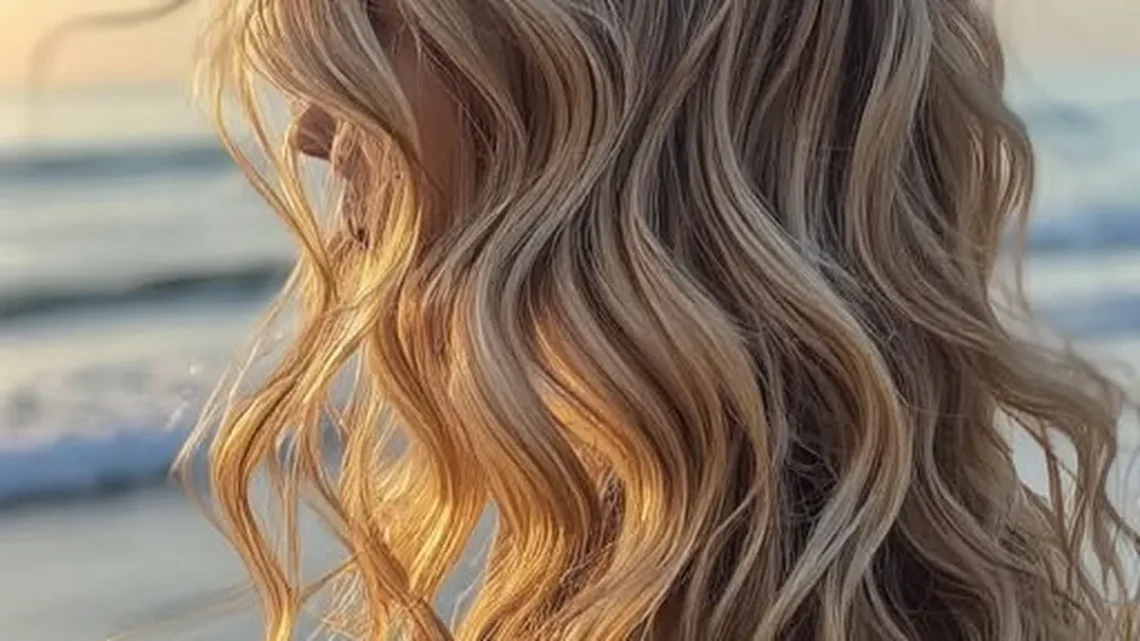
Beach hair has a reputation for being effortless, and that is exactly what makes it so hard to get right. The same salt air, sun and wind that give hair its tousled, sun-kissed texture will also tangle it into knots, frizz it beyond recognition and undo a careful style within twenty minutes of arriving at the shore. The difference between the women who look like they stepped out of a holiday photo and the women fighting a windblown nest is not luck — it is choosing a style built for the beach, not in spite of it.
Here are 33 beach hairstyles for women that are made for sand, salt and sea breeze — loose waves that improve as the day goes on, braids that stay put in the wind, buns that survive a swim, and quick styles that take five minutes and a single hair tie. Eight guides cover what salt water and sun actually do to your hair, how to make a style humidity-proof, after-sun repair, salt spray versus real sea salt, keeping styles secure in the wind, swimming-friendly options, what to pack in your beach bag, and how to rescue your hair after the day is done. Every style notes who it suits, how long it takes, and what to watch out for.
What Salt Water and Sun Actually Do to Your Hair
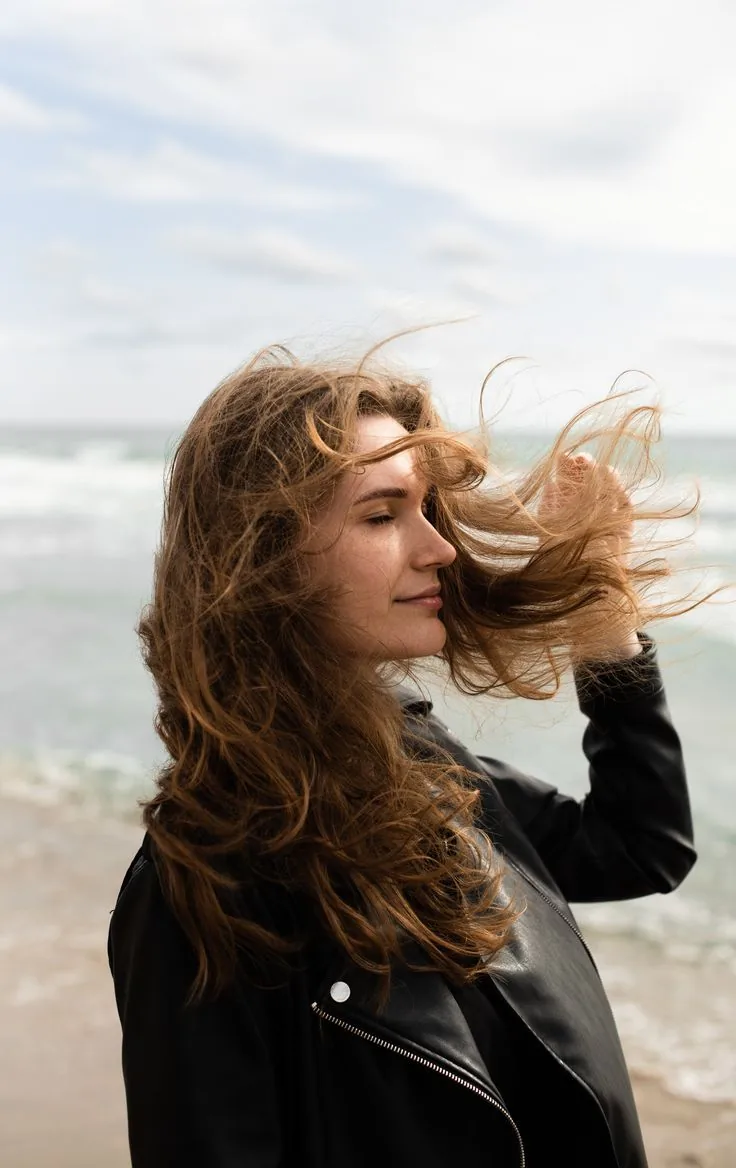
Salt water lifts the hair cuticle and draws moisture out of the strand, which is why beach hair feels rougher and looks more textured after a swim — the same effect that makes waves look great also leaves hair drier and more tangle-prone. Sun adds to the damage: UV rays break down the proteins in the hair shaft and fade colour, especially highlights and dyed hair, and the effect is stronger when hair is wet because water focuses the light. Together, a full day of swimming and sunbathing can leave hair noticeably drier, lighter and harder to brush.
None of that means you should stay out of the water. A little preparation goes a long way: wet your hair with fresh water before you swim, so it absorbs less salt water, and smooth a leave-in conditioner or a few drops of hair oil through the lengths. A hat or a scarf protects both your hair and your parting, which burns easily. And after the beach, rinse with fresh water as soon as you can — the longer salt sits on the hair, the drier it gets. Think of salt water as a styling product with a cost: enjoy the texture, then wash it out.
How to Make a Beach Style Humidity-Proof
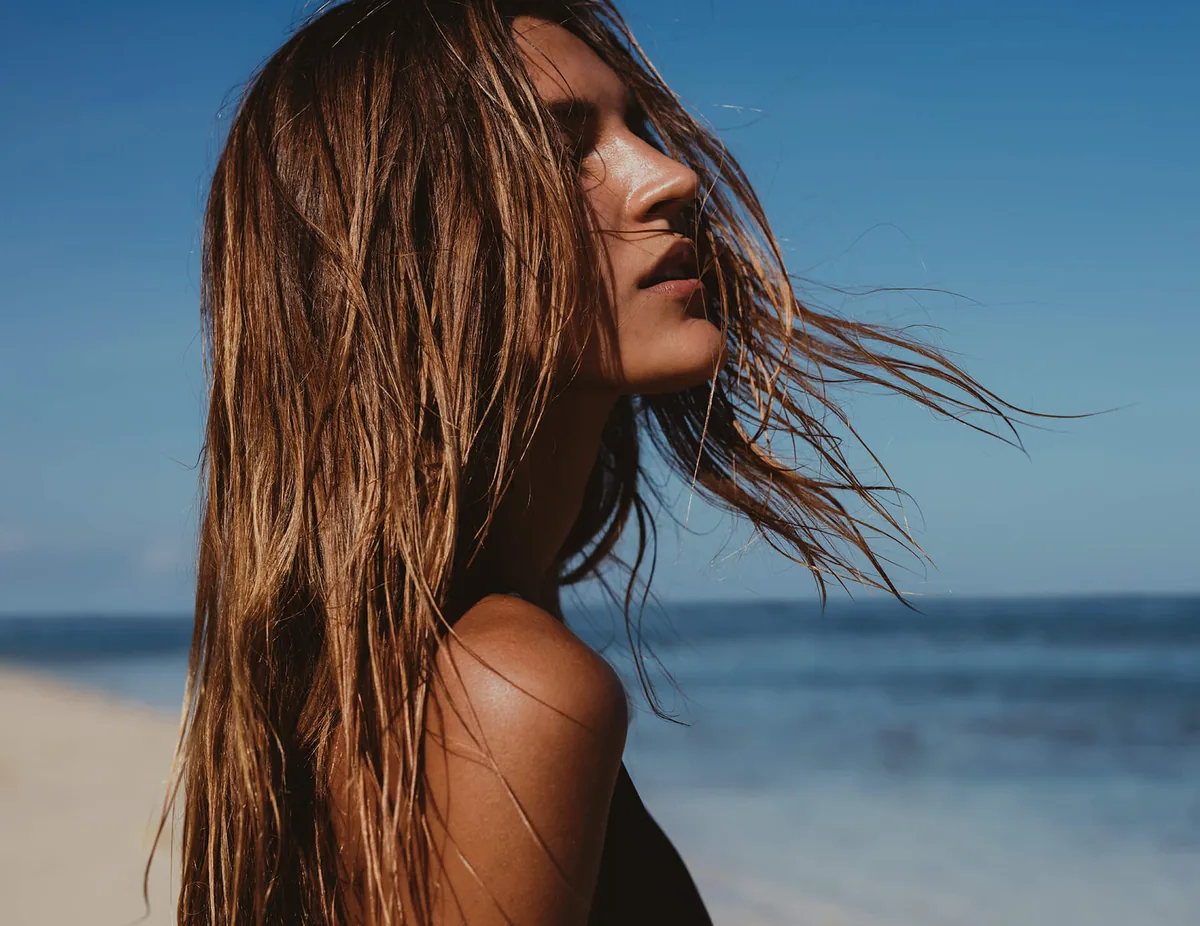
Humidity is the enemy of a neat hairstyle, because damp air makes hair swell, frizz and lose its shape — and the beach is humidity at its most extreme. The styles that survive are the ones that work with the texture humidity creates instead of fighting it: waves, braids, twists and buns all look better slightly undone, while a sleek blow-dry will fall apart within the hour. If your hair frizzes easily, choose a style with movement in it from the start.
Product helps, but only the right kind. A light anti-frizz serum or a leave-in cream smoothed over the surface of the hair seals the cuticle and stops the frizz before it starts — heavy oils and strong-hold sprays, on the other hand, turn beach hair into a sticky, crunchy mess in the heat. Apply product to damp hair before you leave the house, and carry a tiny bottle of serum in your beach bag for a midday touch-up. And accept a little frizz: at the beach, a few flyaways look natural, not messy.
Beach Hair Care: After-Sun Repair That Actually Works
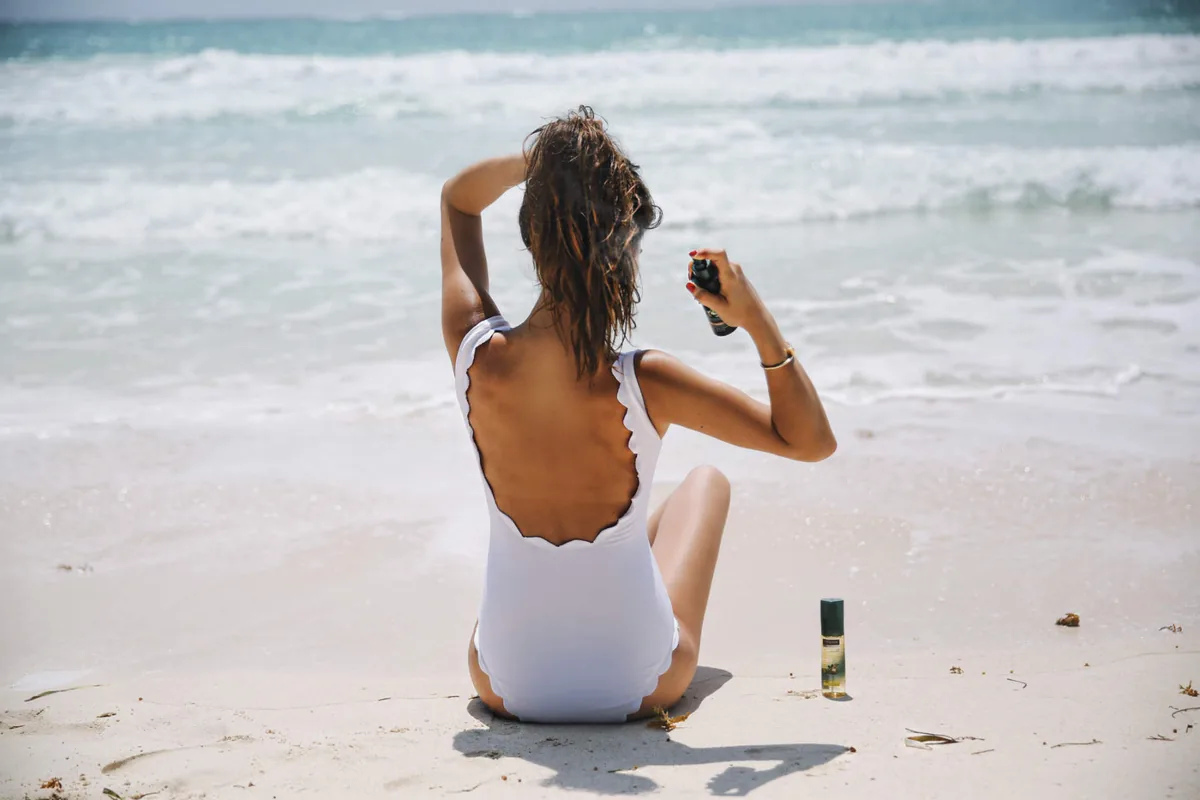
After a day at the beach, your hair needs the same kindness your skin gets after sun: a proper wash, moisture, and a break from heat. Start with a thorough rinse in fresh, lukewarm water to get the salt and sand out, then shampoo gently — a clarifying shampoo once a week is enough to remove salt and sunscreen build-up, but using it every day strips the hair further. Follow with a deep conditioner or a hair mask, left on for five to ten minutes while you shower.
For the rest of the week, go easy on the hair. Skip the flat iron and the curling iron for a day or two, let your hair air-dry, and use a leave-in conditioner on the ends. If your hair feels straw-like, an overnight oil treatment — coconut or argan oil on the lengths, washed out in the morning — restores softness surprisingly fast. And trim the ends every six to eight weeks during beach season: split ends travel up the strand, and sun-damaged ends are the first to split.
Salt Spray vs Real Sea Salt: Which Gives Better Beach Waves?
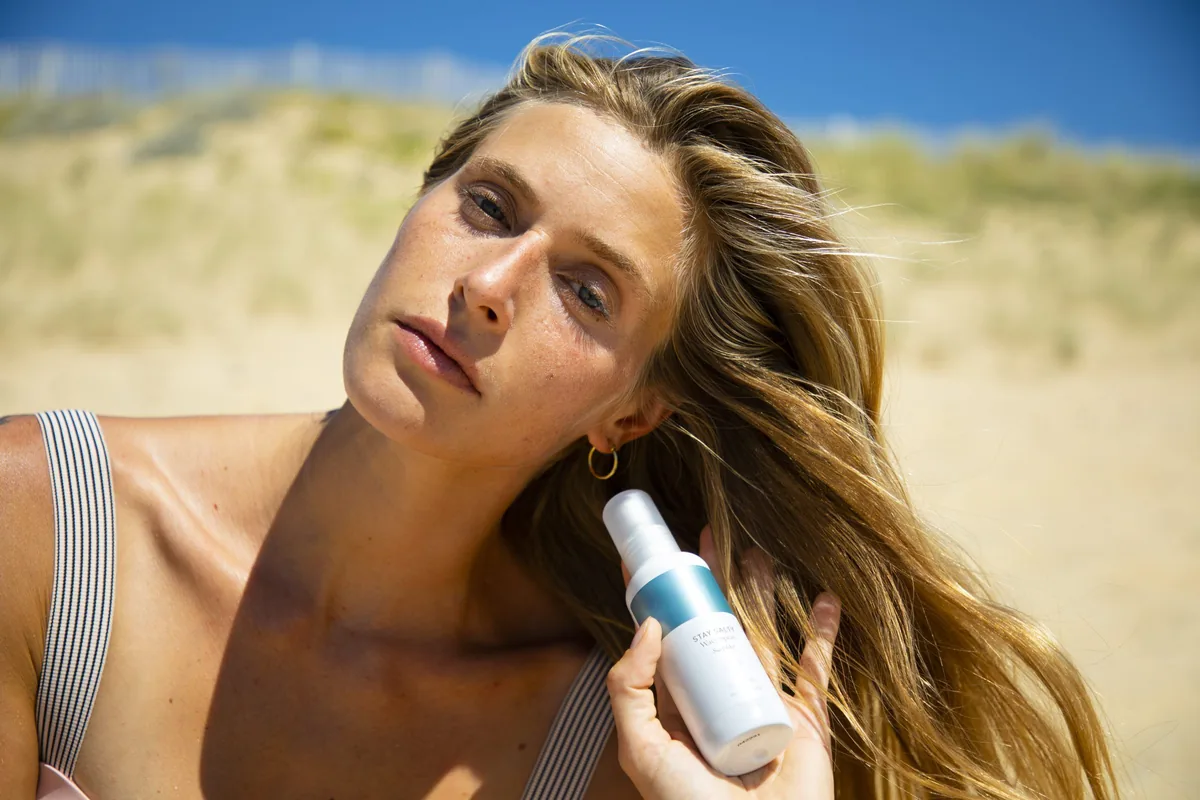
Salt spray is the bottle version of the sea: water, salt and usually a little oil or texturiser, designed to give hair that tousled, piecey beach texture without a trip to the coast. Real sea salt does the same thing, but without the conditioning ingredients — which is why hair feels drier and rougher after a real swim than after a salt spray. For a beach day, the spray is the safer bet: it gives you the texture and a little protection, and it washes out cleanly.
To use it well, spray it onto damp hair — not soaking wet, not dry — and scrunch the lengths upward with your hands, then let the hair air-dry. Spraying on dry hair just makes it crunchy. You can also make your own: a cup of warm water, a teaspoon of sea salt, a teaspoon of coconut oil and a few drops of leave-in conditioner, shaken in a spray bottle. Homemade spray works, but it has no preservative, so make a fresh batch every week or two and keep it out of the sun.
Keeping Your Style Secure in the Wind

Beach wind is relentless, and it is the reason so many beach styles fail: it pulls buns loose, unravels braids and turns loose hair into a tangled curtain across your face. The fix is mechanical, not magical — a style that is anchored in more than one place. Braids hold because the hair is woven together; a bun held with two pins and a tie holds because it has backup; a single elastic on loose hair has nothing to fall back on.
A few tricks make a real difference. Use spiral hair ties or a second elastic for thick hair, and always carry spare pins — bobby pins rust in salt water, so pack plastic or coated ones. A scarf or a wide headband is not just an accessory at the beach: it keeps the front of your hair out of your face in the wind, and it protects your parting from the sun. And if the wind is truly strong, choose a style that looks good messy — a braid or a low bun only improves as it loosens, while a sleek style only gets worse.
Swimming-Friendly Styles That Survive the Water
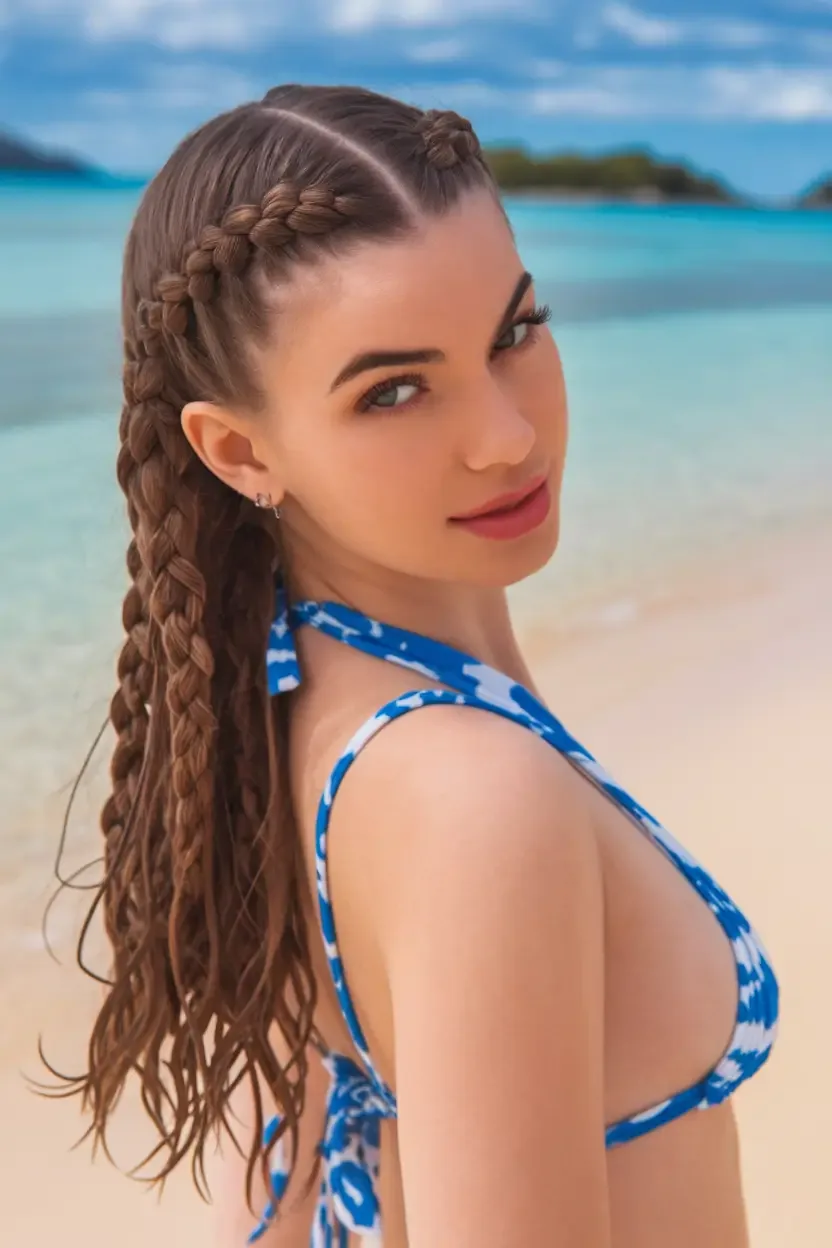
Not every hairstyle survives a swim, and the ones that do share one thing: the hair is contained. Loose hair in the sea becomes a tangled, knotted mass within minutes, and chlorine or salt water makes the knots worse. Braids, buns and twists keep the hair in one manageable piece, so you can swim, come out, and still have hair you can brush.
The best swim styles are the simplest. A French braid or two Dutch braids keep every strand secured from front to back, a low bun held with a spiral tie stays put underwater, and a high ponytail works if you braid the tail itself. Before you swim, wet your hair with fresh water and add a little leave-in conditioner — wet hair absorbs less salt water and chlorine. After swimming, rinse immediately and finger-comb the style out gently, working from the ends upward, before the salt dries and the knots set.
What to Pack in Your Beach Bag for Your Hair
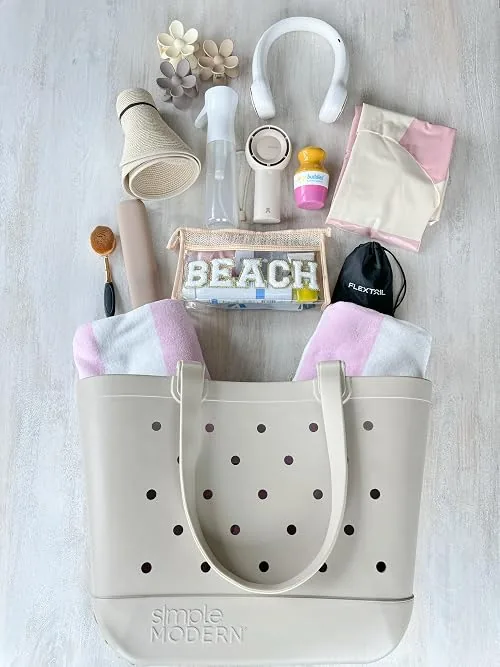
A good beach hair kit is small: a wide-tooth comb, two or three spiral hair ties, a handful of coated bobby pins, a small bottle of leave-in conditioner or hair oil, a travel salt spray, and a scarf or a hat. That is everything you need to restyle your hair after a swim, tame the frizz at midday, and protect it from the sun — and it all fits in a side pocket.
What not to pack matters too. Leave the flat iron and the curling iron at home: heat-styling sun-dried hair makes the damage worse, and the result will fall out in the humidity anyway. Skip the heavy hairspray, which turns crunchy in sea air, and skip metal bobby pins, which rust. A silk or satin scrunchie is gentler on wet hair than a tight elastic, and a microfibre towel or an old cotton T-shirt dries hair with far less frizz than a rough beach towel. Pack light, and your hair will thank you.
How to Fix Beach Hair After the Day Is Done
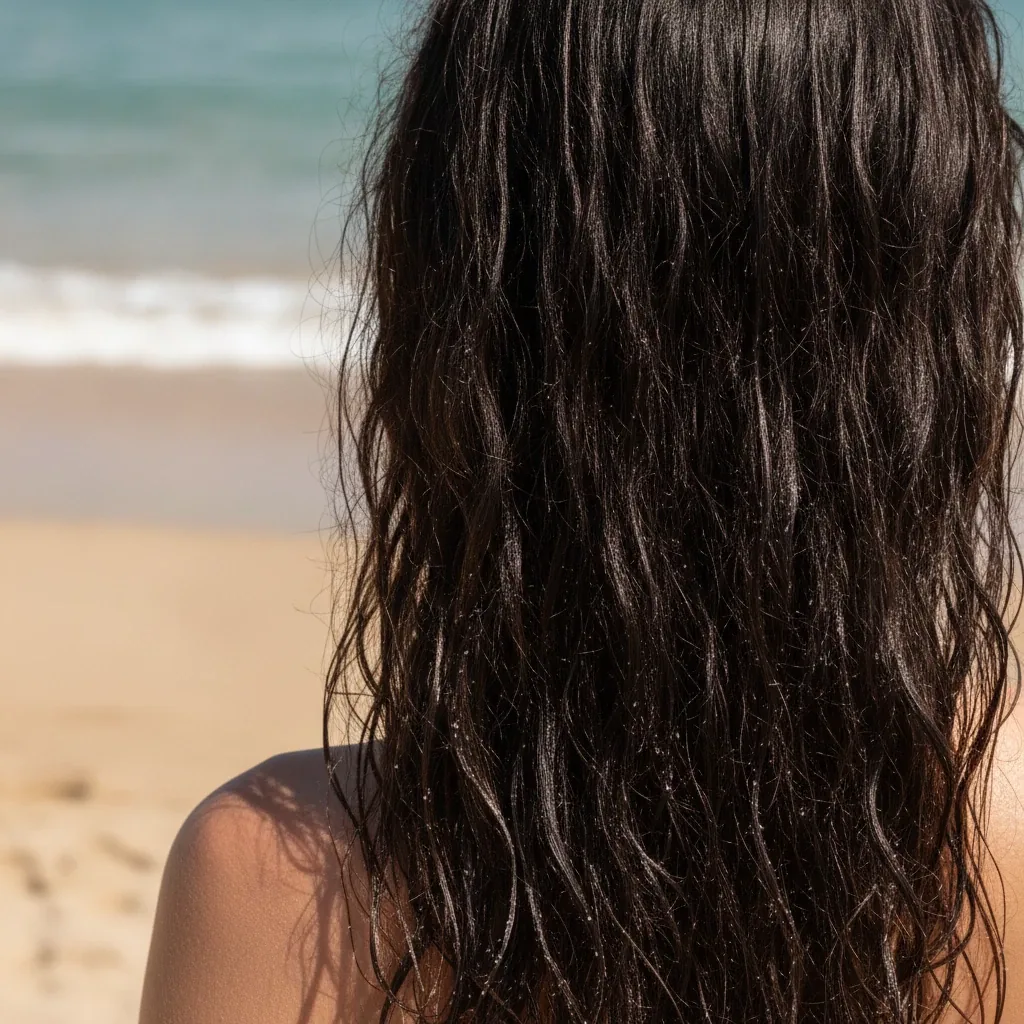
By the end of a beach day, most hair is salty, sandy, tangled and a little wild — and the fix is easier than it looks. Start by shaking the sand out and rinsing with fresh water, then finger-comb the hair from the ends upward before you touch a brush: brushing tangled, salty hair from the roots down just pushes the knots tighter. A wide-tooth comb is your best friend here, and a little leave-in conditioner on the ends helps the comb glide through.
Once the knots are out, you have two good options. If you are heading out for the evening, a quick restyle — a low bun, a loose braid, or a slicked-back look with a little oil — turns beach texture into an intentional evening style. If you are heading home, wash it properly, mask it, and let it air-dry: your hair will recover overnight, and the waves will still be there tomorrow, softer and cleaner. Either way, never go to bed with salty, sandy hair — it dries out the strands and leaves sand in your pillow.
1. The Classic Beach Waves Everyone Wants
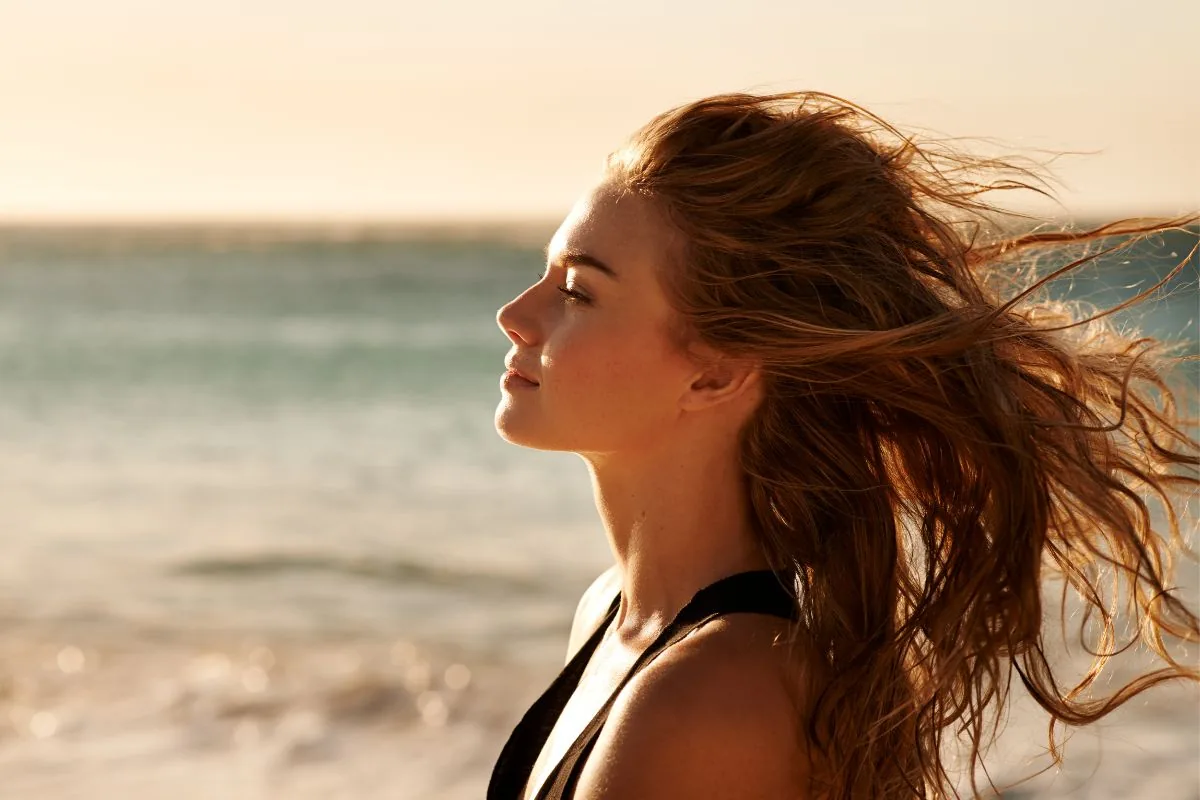
Classic beach waves are loose, tousled, slightly uneven waves that look like your hair dried in the sea air — because ideally, it did. The waves start around mid-length, the ends stay a little straighter, and the whole look is soft, textured and a touch undone. It is the defining beach hairstyle for a reason: it suits almost every face shape, works on long and medium hair, and actually looks better as the day goes on and the wind and salt add more texture.
What it is: loose, S-shaped waves with straight ends and a piecey texture. Why it works: the unevenness is the point — perfect waves look salon-made, while slightly messy waves look like you spent the day at the beach. Who it suits: medium to long hair, wavy or straight hair that holds a bend. How to style it: curl alternate sections in opposite directions with a large-barrel iron, leave the ends out, then shake it out and finish with salt spray.
2. A Tousled Lob That Loves the Sea Air
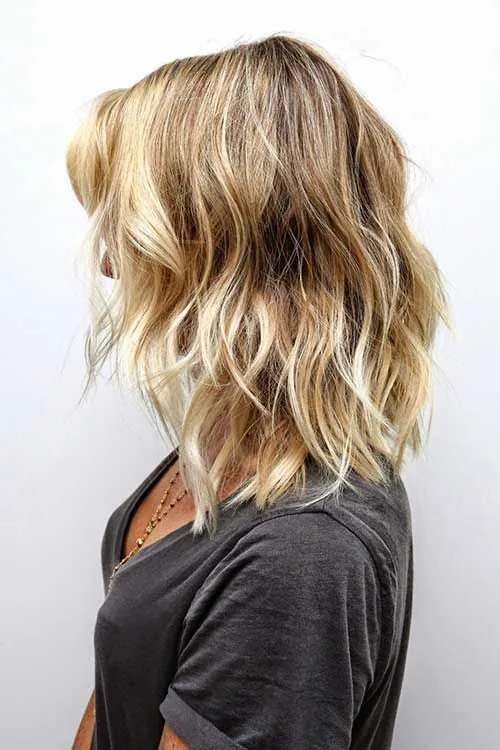
A lob — a long bob that sits around the collarbone — is one of the best beach lengths there is. It is short enough to dry quickly and stay out of the sand, long enough to braid or tie up, and the tousled texture that the beach gives it for free makes it look styled without any effort. The sea air adds exactly the volume and movement a lob needs, and a little salt spray finishes the job.
Best for: shoulder-length hair, fine hair that needs volume, and anyone who wants a beach style that doubles as a smart evening look. How to style: scrunch salt spray into damp hair and air-dry, or run a flat iron through the ends in alternating bends. Watch out for: the lob flipping outward in the wind — a little texturising cream on the ends keeps the shape from going wild.
3. The High Messy Bun That Takes Two Minutes

The high messy bun is the beach hairstyle most women actually wear, and it earns its place: it keeps hair completely off your neck in the heat, survives a swim better than loose hair, and takes about two minutes with a single hair tie. The trick is to make it look deliberate — a bun that is twisted loosely, with a few pieces pulled out around the face, reads as relaxed and pretty, while a bun scraped back tight reads as giving up.
Pros: two minutes; keeps you cool; survives swimming and wind. Cons: a very tight bun can pull at the hairline, and a bun that is too messy can look unfinished next to a neat outfit. Quick verdict: twist, tie, pull a few face-framing pieces loose, and let the beach texture do the rest — the easiest good-hair day at the shore.
4. A Fishtail Braid That Holds in the Wind
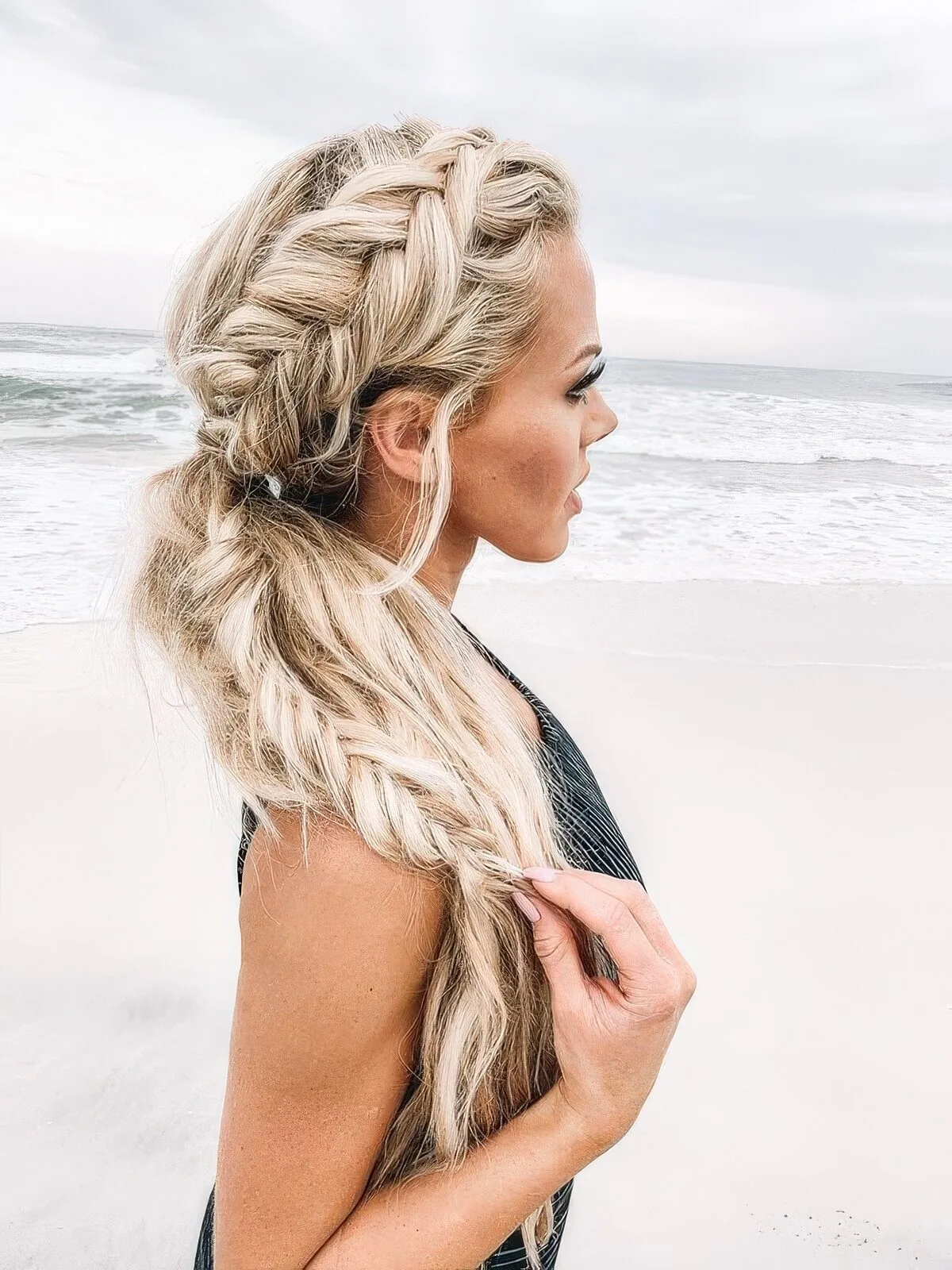
A fishtail braid looks intricate, but it is really just two sections of hair crossed over each other again and again — and once it is in, it is one of the most wind-proof styles you can wear to the beach. The weave locks the hair together so the wind cannot pull it apart, and as the braid loosens through the day it only looks softer and more romantic. It works best on longer hair, and it photographs beautifully against the sea.
The mistake to avoid is braiding it too tight: a fishtail that is pulled drum-tight looks severe and hurts by lunchtime, while a looser braid with the edges gently pulled apart — pancaked — looks fuller and more relaxed. Start the braid at the nape or over one shoulder, secure it with a spiral tie, and pull a few wisps loose at the front. Time needed: about five minutes once you know the pattern, and it holds all day.
5. A French Braid for Swimming and Sunbathing
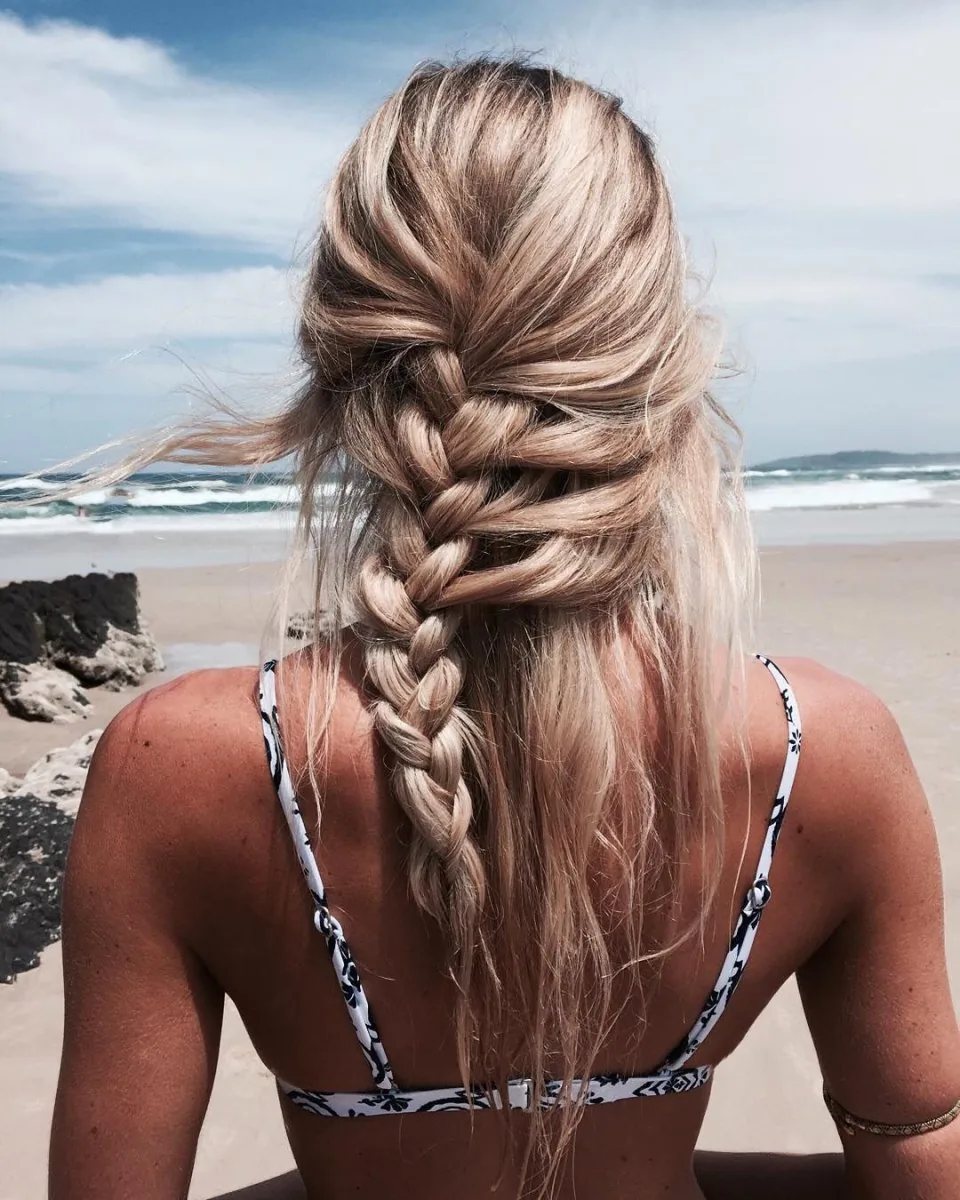
A French braid is the most practical beach hairstyle there is: it keeps every strand contained from the hairline to the nape, it survives swimming, wind and a full day in the sun, and it comes out at the end of the day as perfect beach waves. It is the style to choose when you actually plan to get in the water, and it is the one that needs the least attention once it is in.
What it is: a braid woven from the crown down, picking up hair as you go. Why it works: the hair is anchored at the scalp, so wind and water cannot pull it loose. Who it suits: medium to long hair, all textures, and anyone who swims. How to style it: braid on damp hair for a smoother finish, keep the tension even, and secure with a coated elastic. When you take it out in the evening, run your fingers through the waves and add a drop of oil to the ends.
6. Boxer Braids: Two Braids, Zero Fuss
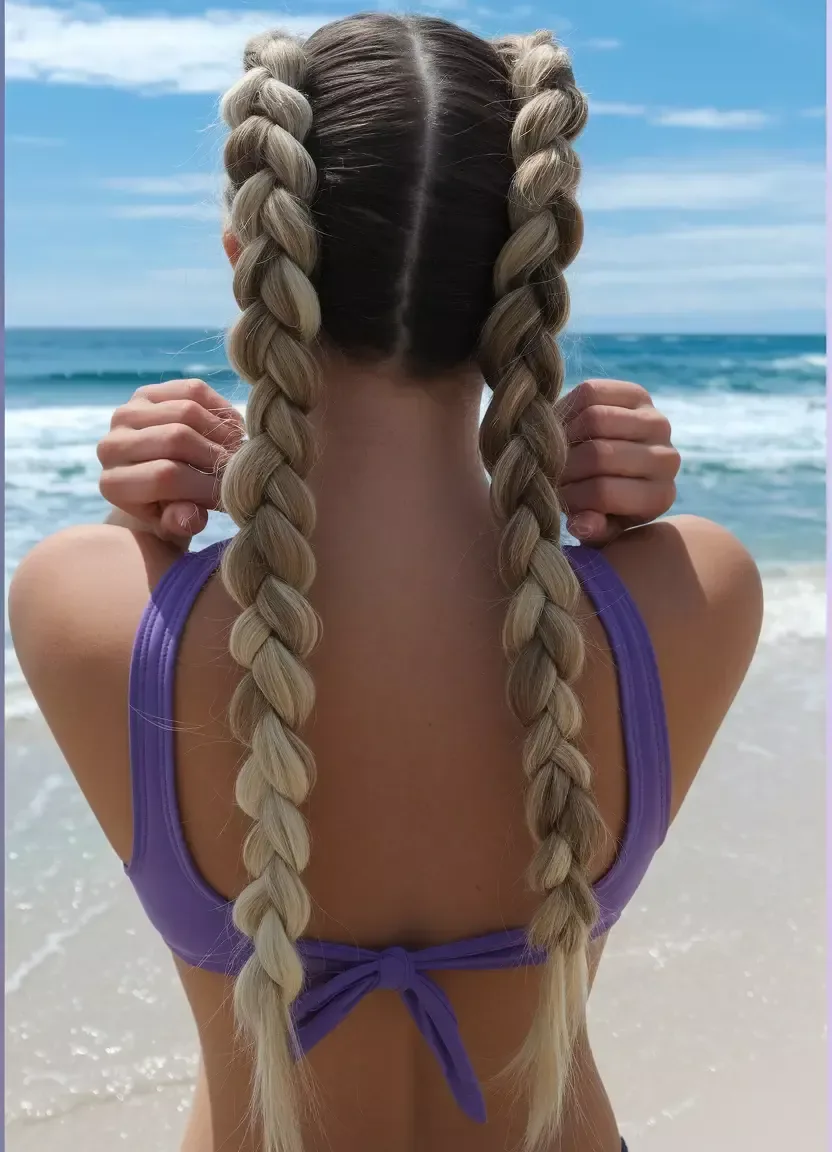
Boxer braids — two tight Dutch braids, one on each side — are the sporty beach style that refuses to budge. Because each braid is anchored to the scalp, they survive swimming, surfing, beach volleyball and the strongest sea wind without loosening, and they keep the hair completely out of your face. They are also the style that gives you the best waves when you take them out: two braids mean two sets of crimped, beachy waves.
Best for: active beach days, swimming, surfing, and thick hair that is hard to contain. How to style: part the hair down the middle, Dutch-braid each side from the hairline to the nape, then continue as a regular braid. Watch out for: braiding too tightly at the hairline — it can cause tension headaches, so keep the first few crosses a little looser.
7. A Bubble Braid Ponytail That Looks Like Effort
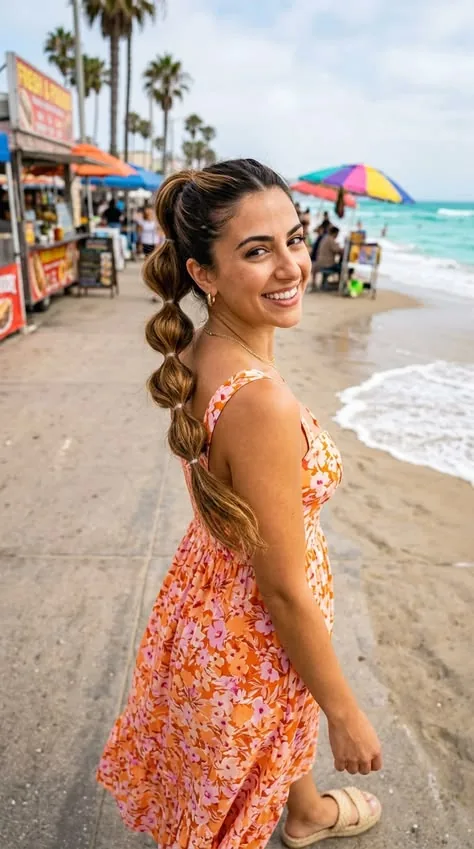
A bubble braid ponytail is the beach style that looks far harder than it is: gather the hair into a ponytail, add elastics every few inches down the tail, and puff out the sections between them into bubbles. It takes five minutes, it needs no braiding skill, and it holds up in wind and water far better than a plain ponytail because the elastics anchor the hair at several points.
The trick is in the puffing: after each elastic, gently tug the hair between the elastics outward until the section rounds into a bubble, working from the top down. Use clear or matching elastics so they disappear, and keep the bubbles even for a polished look or uneven for a playful one. It works on medium to long hair, and it is a brilliant choice for a beach party or a sunset photo — it looks styled, but it is genuinely practical.
8. A Low Loose Bun for Sunset Evenings
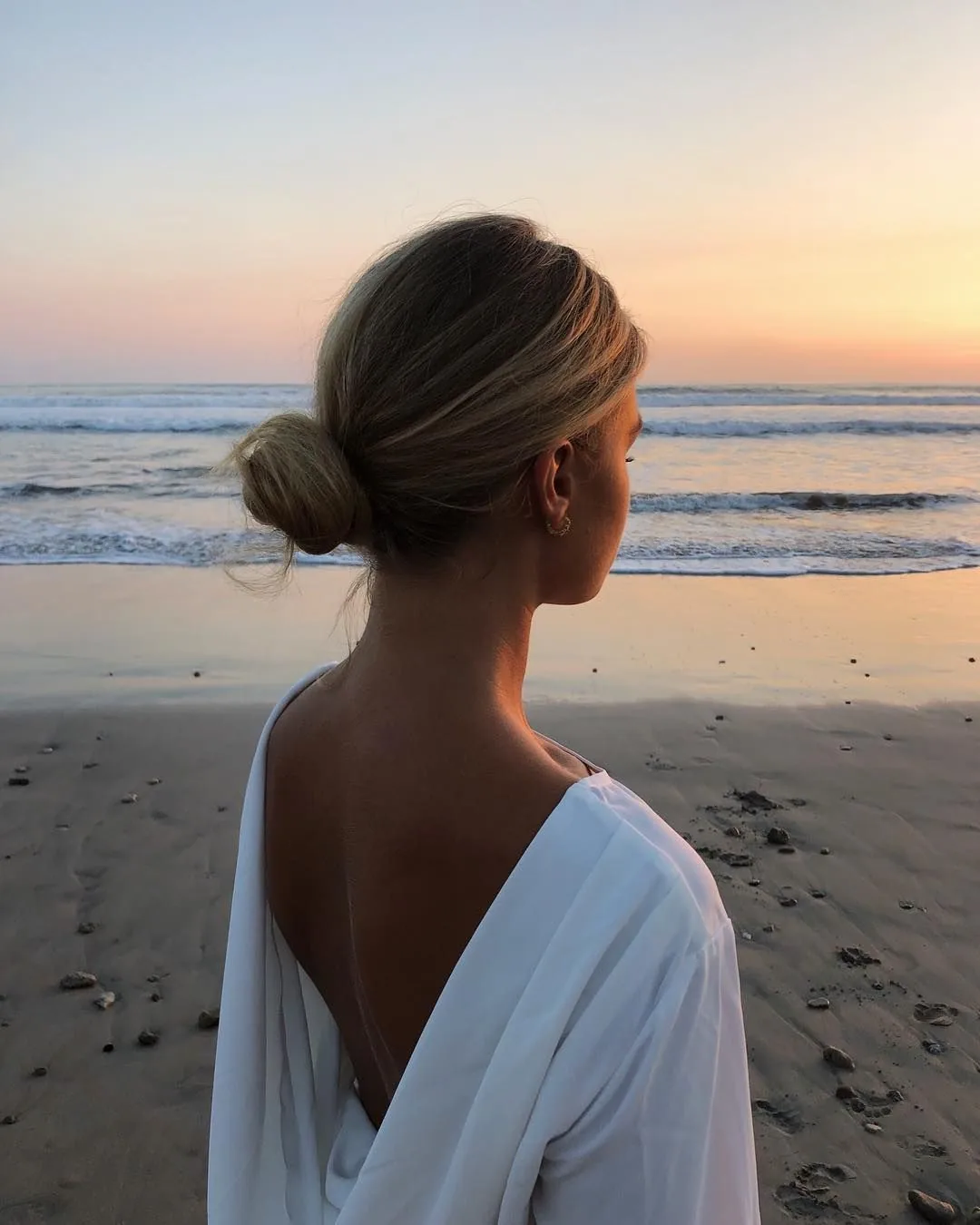
A low, loose bun is the beach style that transitions best from sand to dinner: it is soft, romantic and a little undone, and it looks intentional next to a sundress in a way a messy top knot does not. The bun sits at the nape, the front is left soft with a few pieces pulled loose, and the beach texture you built up during the day becomes the bun’s volume.
Time needed: about three minutes. Maintenance: almost none — if it loosens, it just looks softer. It suits medium to long hair and every face shape, and it pairs beautifully with earrings, because the low bun leaves the ears and neckline open. Secure it with a spiral tie and two pins, and finish with a light mist of salt spray on the loose front pieces so they keep their texture. If the bun starts to slip in the evening breeze, twist it a little tighter and re-pin — it takes ten seconds.
9. A Top Knot That Keeps You Cool
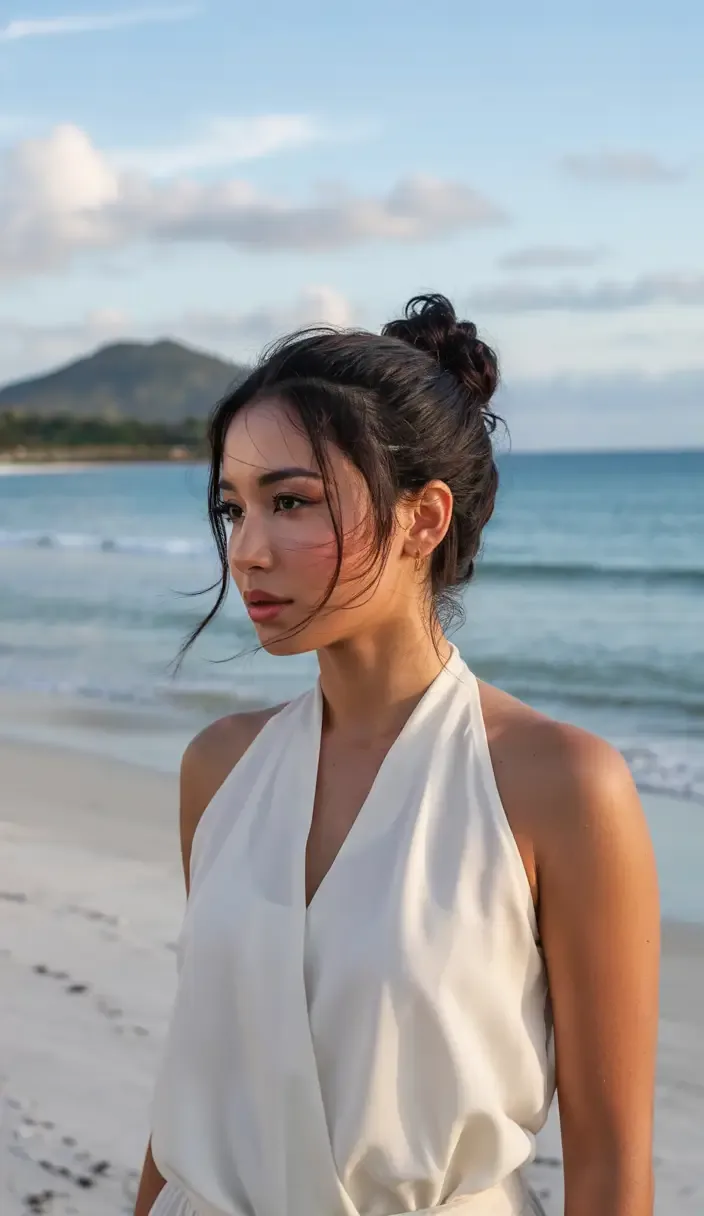
A top knot is the hottest-day beach style: all the hair swept up and off the neck, the face completely open, and nothing touching your shoulders. It is the style for the days when the sun is relentless and the sand is sticking to everything — and it looks polished, not panicked, as long as the knot is twisted loosely and the front is left soft.
Pros: the coolest style on a hot day; keeps hair out of the sand and the sea; takes two minutes. Cons: a knot that is too tight pulls at the hairline and gives you a headache, and very long hair can make the knot heavy. Quick verdict: the best choice for a scorching beach day — keep the knot loose, let a few wisps escape, and save the sleek version for the evening.
10. A Half-Up Claw Clip for Lazy Beach Days
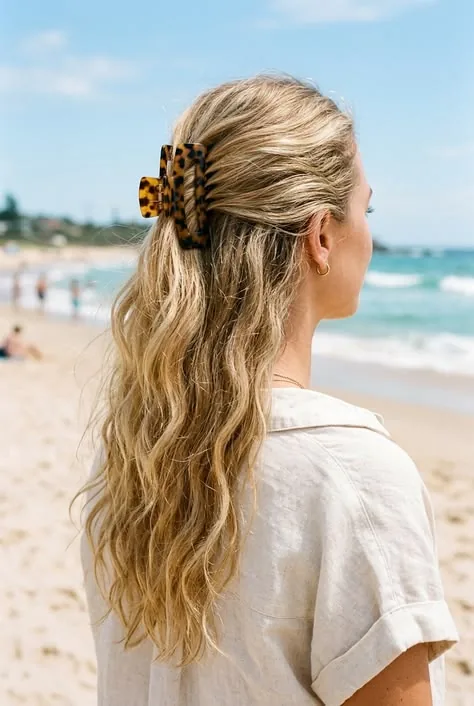
The half-up claw clip is the two-minute beach style that defined a generation: gather the top half of the hair, twist it up, clip it, and let the rest fall loose over your shoulders. It keeps the hair out of your face in the wind, shows off the length, and looks relaxed and pretty — and it is the easiest style to redo after a swim, because it takes seconds.
What it is: the top section twisted and clipped, the bottom left loose. Why it works: the clip holds the front back while the loose lengths get all the beach texture. Who it suits: medium to long hair, and anyone who wants their hair partly up and partly down. How to style it: twist the top section loosely so the clip has something to grip, and pull a few pieces loose at the temples. Choose a large, sturdy clip — a small one will pop open in the wind.
11. A Bandana or Scarf Wrap for Windy Days
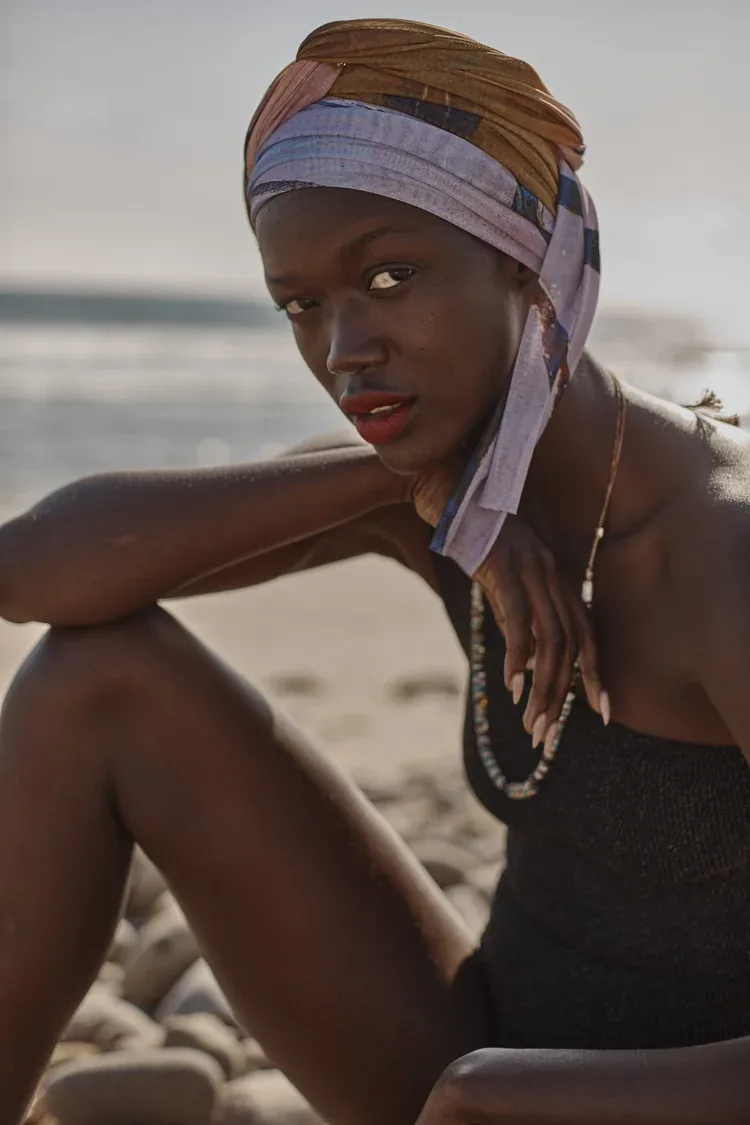
A bandana or a silk scarf is the beach accessory that is secretly a hairstyle: folded into a triangle and tied at the nape, it holds the front of the hair back in the wind, protects your parting and scalp from the sun, and turns a bad hair day into a deliberate look. It works over loose hair, a bun or a braid, and it is the fastest fix there is when the wind picks up.
The mistake to avoid is tying it too tight — a scarf pulled drum-tight across the forehead gives you a headache and a crease in your hair. Fold it wide, tie it loosely at the nape, and let the ends flutter. Choose a lightweight fabric that dries quickly if it gets wet, and pick a colour that suits your swimsuit or your sundress. It is also the kindest option for hair that is already sun-damaged, because it shades the strands from further UV.
12. Loose Waves Under a Wide-Brim Hat
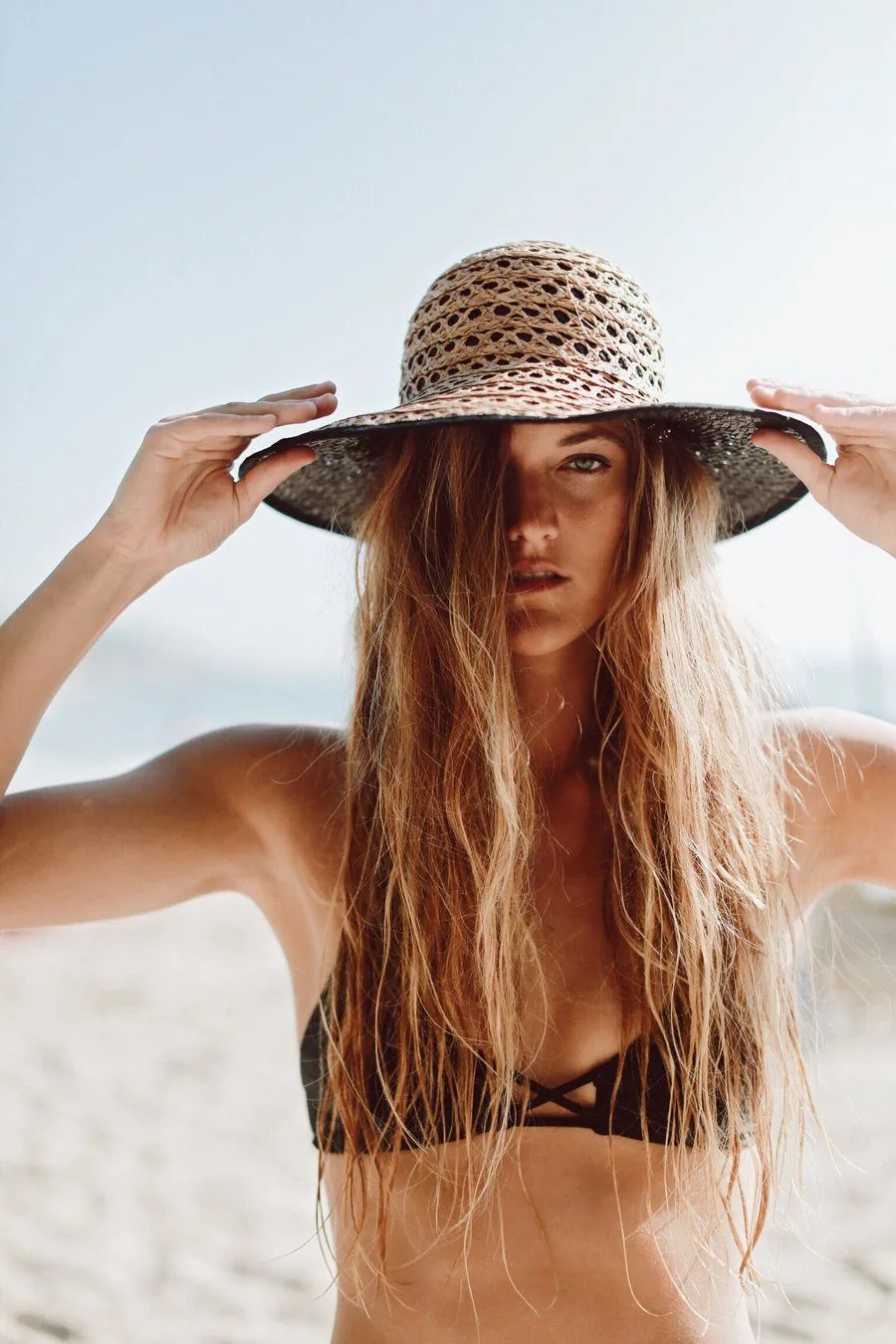
Loose waves under a wide-brim straw hat are the classic beach photo: the hat shades your face and your parting from the sun, the waves fall soft around your shoulders, and the whole look is effortless. The hat does real work here — it protects your hair from UV and keeps the top of your head cool — and it hides the fact that the waves underneath took about five minutes.
Best for: sunny days, fair skin, coloured hair that fades in the sun, and anyone who wants sun protection that looks good. How to style: waves first, hat second — put the hat on after styling, and let the front pieces fall in front of the brim. Watch out for: hat hair: a tight hat flattens the crown, so choose one that sits loosely and lift the roots with your fingers when you take it off.
13. The Wet-Look Slicked-Back Style
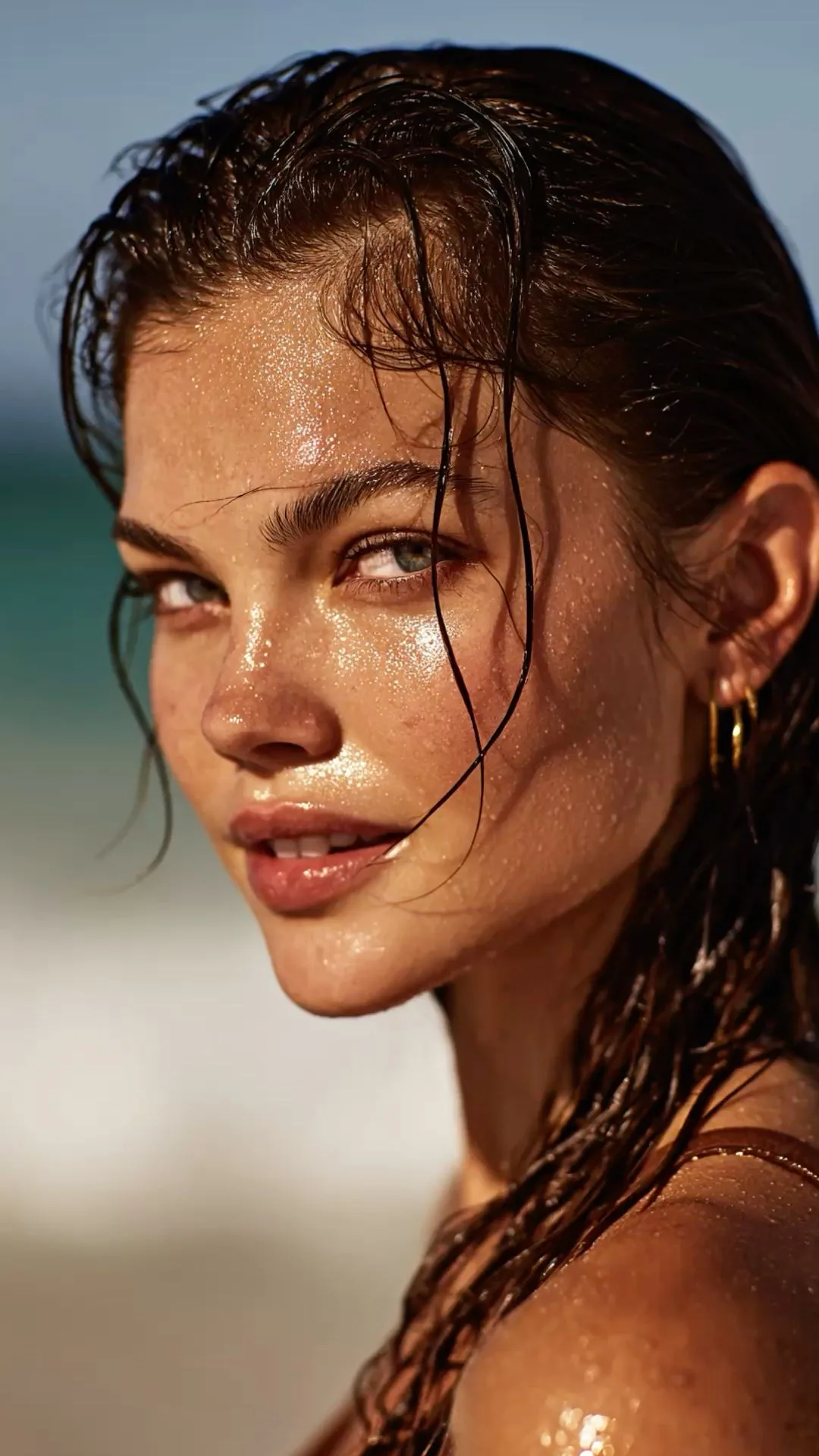
The wet-look slicked-back style is the beach look that turns a swim into a styling session: hair combed straight back from the face, glossy and smooth, with not a strand out of place. It looks expensive, it works on every length from a bob to long hair, and it is the easiest style to do straight out of the water — because your hair is already wet.
Time needed: one minute, with a comb and a little gel or oil. Maintenance: re-comb after swimming and add a drop more product if it dries out. It suits strong features and a confident mood, and it pairs beautifully with sunglasses and a swimsuit. The one thing to watch is product build-up: use a light gel or a hair oil, not a heavy wax, and wash it out properly at the end of the day, or the hair feels coated and heavy.
14. A Loose Side Braid for a Romantic Afternoon
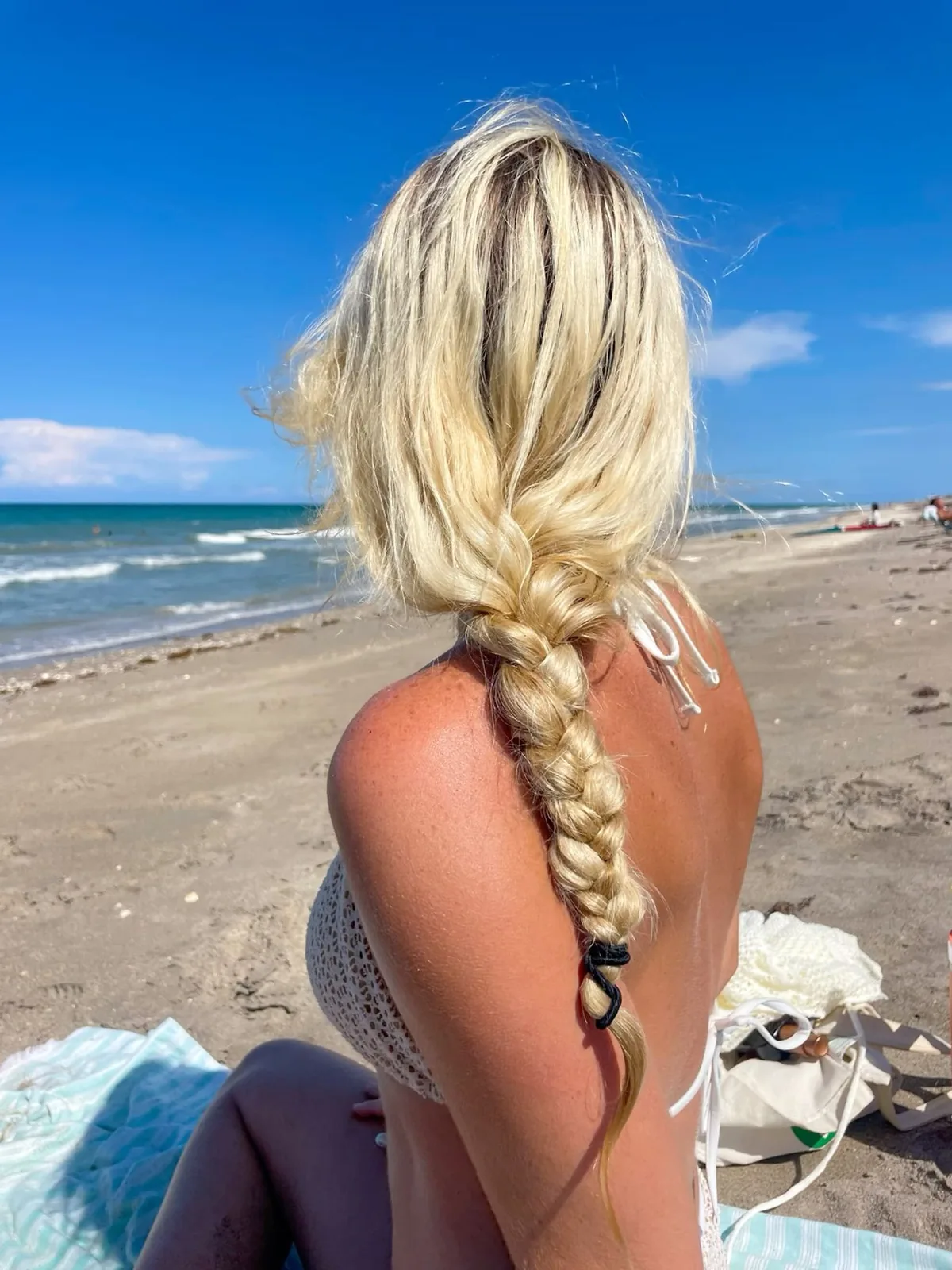
A loose side braid is the soft, romantic beach style: the braid falls over one shoulder, the front is left with a few loose pieces, and the whole look is gentle and a little undone. It is easier than a French braid, because you are just braiding a ponytail’s worth of hair to one side, and it suits the beach because it keeps the hair contained while still showing off the length.
Pros: five minutes; romantic and soft; keeps hair off the back in the heat. Cons: a side braid can slip over the shoulder in the wind, and it loosens faster than a braid anchored to the scalp. Quick verdict: the prettiest low-effort beach braid — sweep the hair to one side, braid loosely, pancake the edges for fullness, and tie with a ribbon or a spiral tie.
15. A Braided Crown for a Beach Wedding or Party
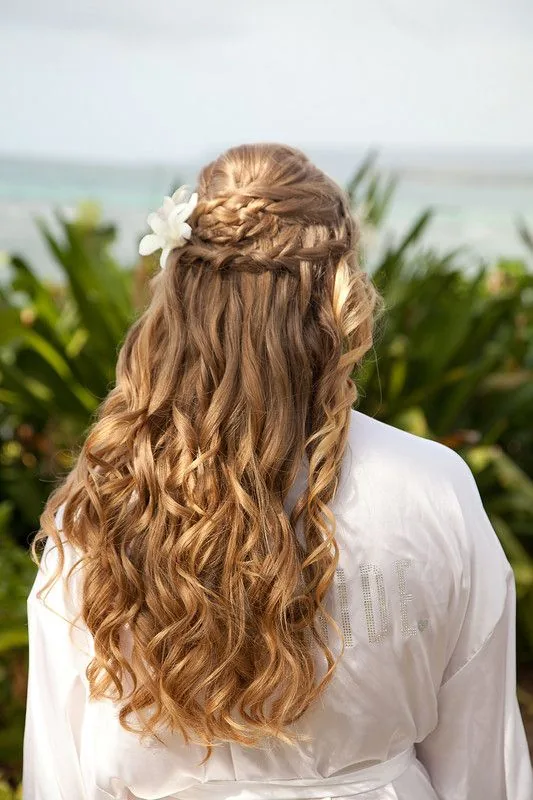
A braided crown — two braids wrapped around the head like a halo — is the romantic beach style for occasions: a beach wedding, a sunset party, a holiday dinner where you want to look special. The braids keep every strand contained in the wind, the front stays soft, and the style holds for hours, which is exactly what you need when the celebration runs long.
Braid loosely, because a tight crown braid fights with the soft, beachy mood, while a loose, slightly pulled-apart braid matches it. Style any fringe or front pieces first, then braid from each temple toward the back, cross the braids over each other and pin. Pull a few wisps loose at the temples and nape for softness. Time needed: about ten minutes, and it is worth every one of them for the photos.
16. Playful Space Buns for a Festival Beach Day
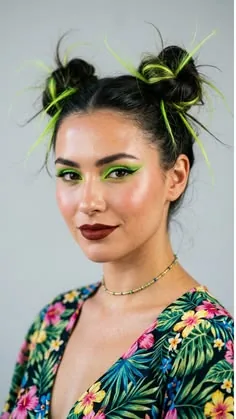
Space buns — two small buns, one on each side of the head — are the playful beach style for festival days, beach parties and anyone in a fun mood. They keep all the hair up and out of the way, they survive dancing and swimming, and they look deliberately cute rather than accidental. They work best on medium to long hair, and they are a brilliant way to wear beach waves: the buns hold the texture, and the loose pieces frame the face.
What it is: two twisted buns placed high on either side of the crown. Why it works: the hair is fully contained, so wind and water cannot undo it. Who it suits: younger looks, festivals, beach parties, and anyone with a playful streak. How to style it: part the hair down the middle, twist each side into a bun, secure with a tie and pins, and pull a few face-framing pieces loose. Keep the buns slightly loose for a soft look, or tight for a sharper one.
17. Pineapple Curls for Natural Curly Hair
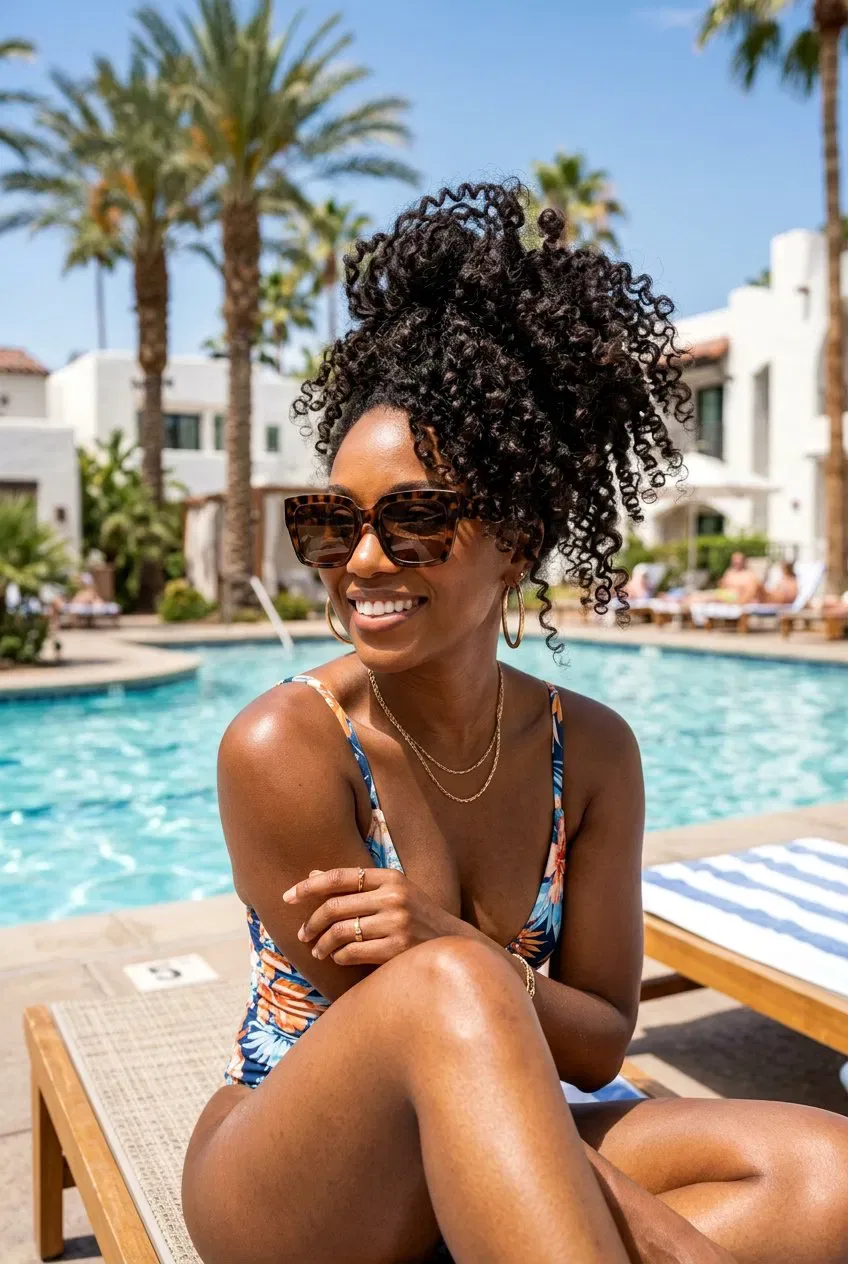
The pineapple is the curly-haired beach style that protects your curls and shows them off at the same time: all the hair gathered loosely on top of the head, like a pineapple, so the curls cascade down and the ends stay free. It keeps the curls off your neck in the heat, stops them tangling in the wind, and when you take it down, the curls fall back into place with their beach texture intact.
The mistake to avoid is tying it too tight — a tight pineapple stretches the curl pattern and leaves a dent, while a loose one held with a satin scrunchie preserves the curls. Gather the hair while it is still damp, pile it high, and secure it loosely. Before you swim, wet the curls with fresh water and add leave-in conditioner, and after swimming, scrunch the curls back into shape with a little curl cream rather than brushing them out.
18. Beach Waves for Fine Hair That Needs Volume
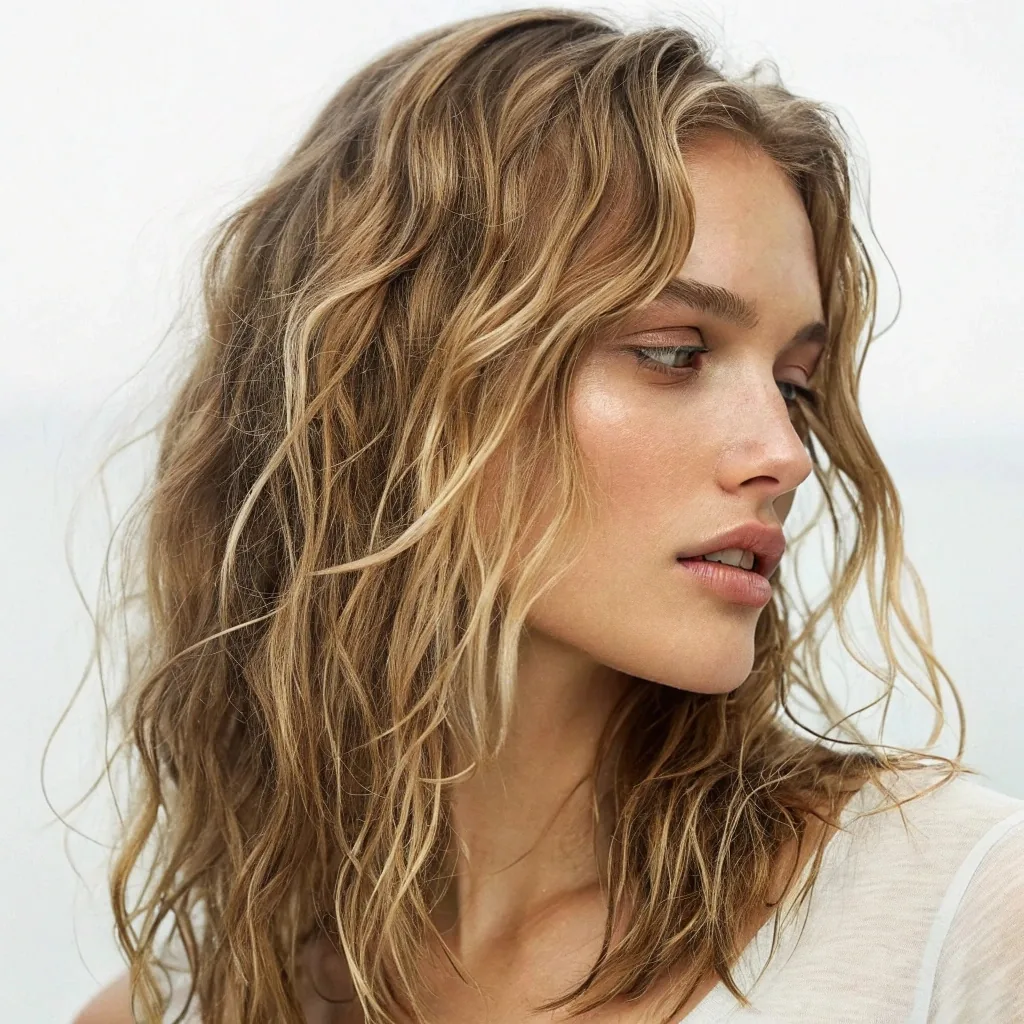
Fine hair and beach waves are a natural match, because the salt air gives thin hair the texture and volume it usually lacks — but only if you keep the products light. Heavy oils and creams weigh fine hair down and undo the volume in an hour, while a light salt spray or a volumising mousse at the roots gives the waves lift that lasts. The beach does half the work for you; the trick is not to undo it.
Best for: fine and thin hair, anyone whose waves fall flat by noon. How to style: spray salt spray on damp roots and lengths, scrunch upward, and air-dry — do not touch the hair while it dries, or the waves fall out. Watch out for: over-conditioning before the beach, which makes fine hair limp, and brushing the waves out, which turns them into frizz.
19. Beach Waves for Thick Hair That Needs Taming
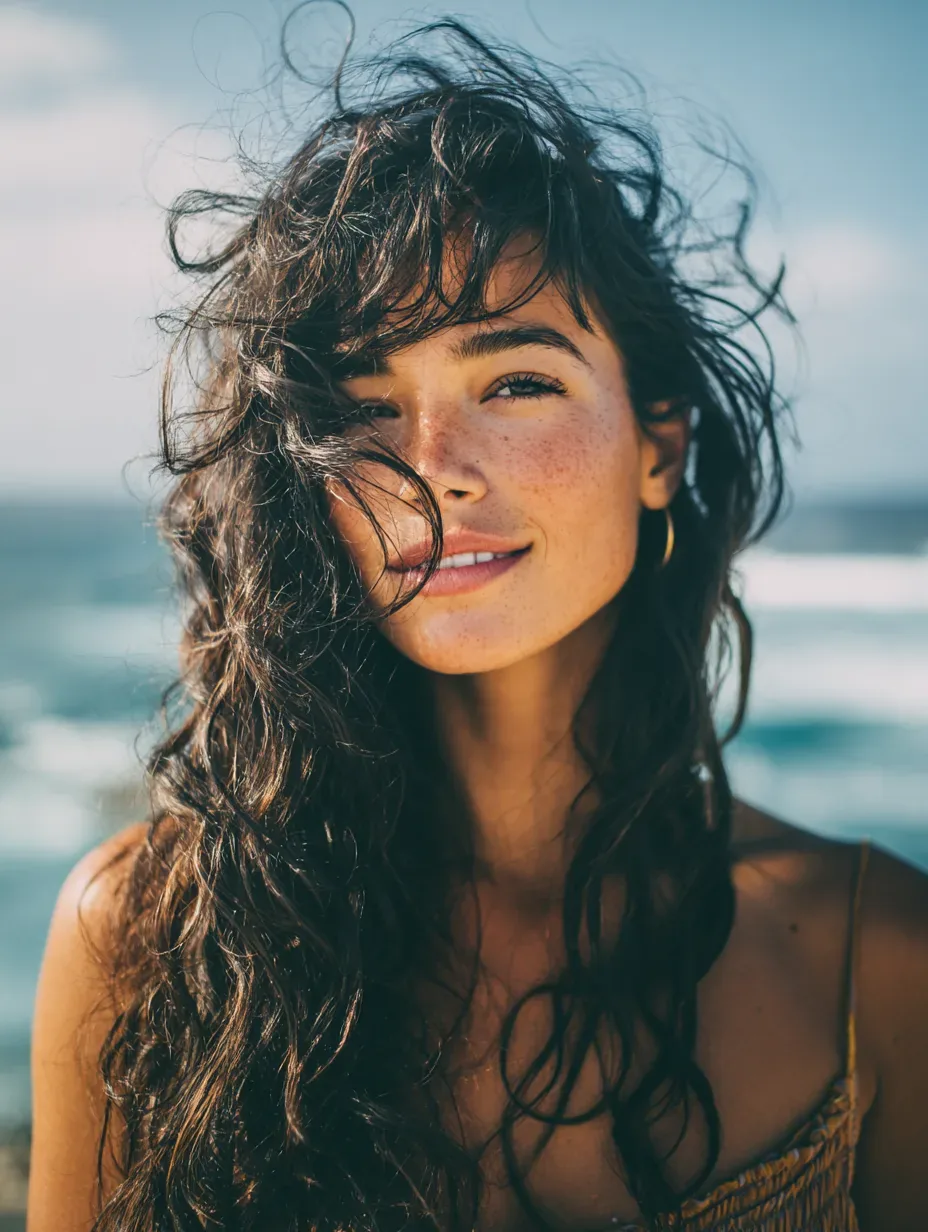
Thick hair makes the fullest, most dramatic beach waves — and it is also the hardest to keep under control at the beach, because the wind turns volume into a wild mane. The answer is weight and containment: waves that start lower down the hair, a little oil on the ends to add weight, and a style that keeps the bulk in check, like a loose braid or a half-up twist, when the wind picks up.
What it is: big, full waves with the bulk managed, not fought. Why it works: thick hair holds a wave for hours, and the beach texture makes the volume look intentional. Who it suits: thick, coarse or very long hair. How to style it: curl in larger sections with a wide-barrel iron, brush the curls out gently for soft waves, and finish with a drop of argan oil on the ends. What to watch out for: too much product — thick hair needs less than you think, and overloading it makes the waves heavy and flat.
20. Short Beach Hair with Texture and Attitude
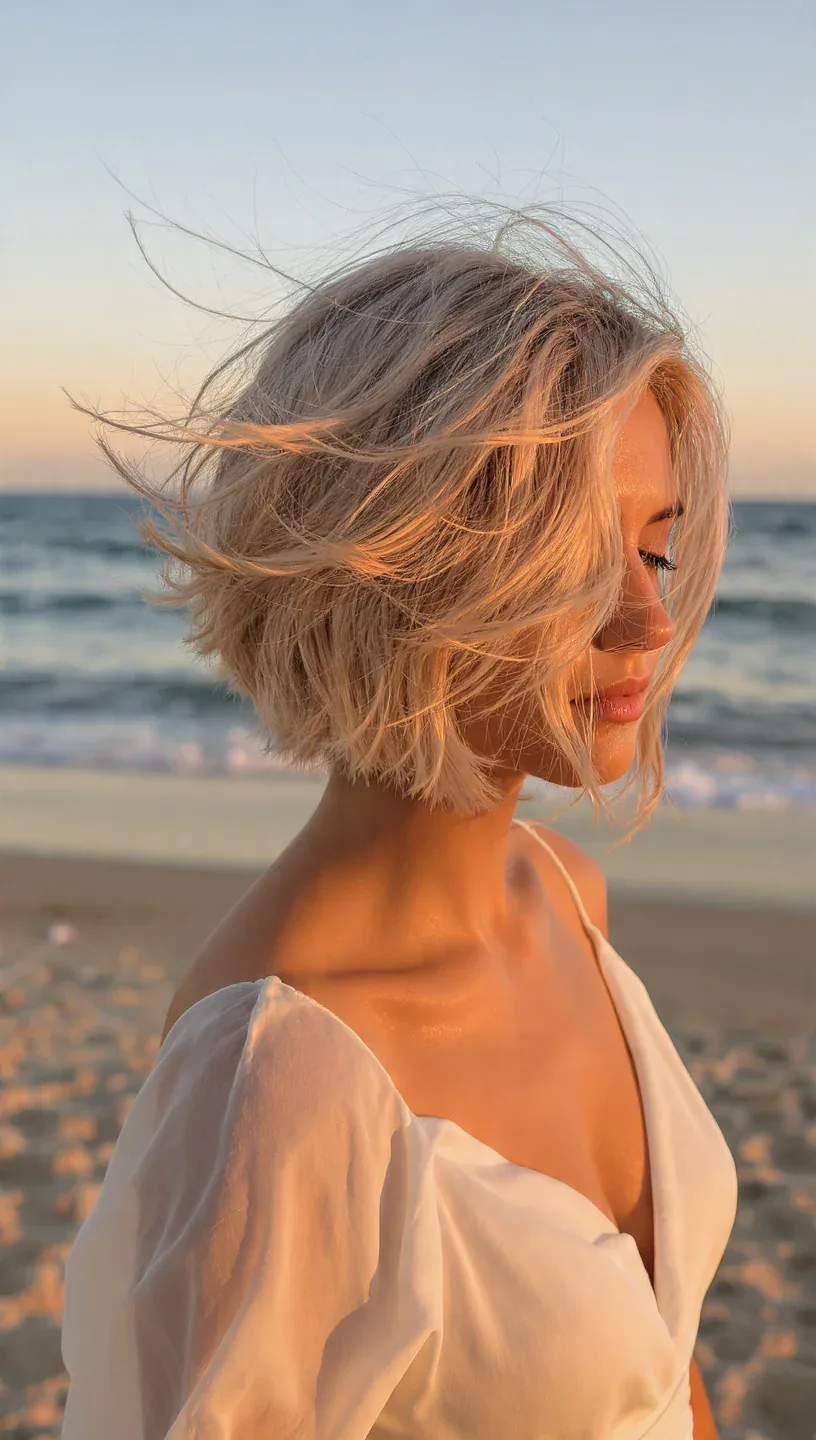
Short beach hair — a pixie, a bob or a short shag — is the easiest beach length of all: it dries in minutes, it never tangles, and the sea air gives it exactly the tousled texture that short cuts need to look their best. A little salt spray scrunched through a short cut is the whole styling routine, and the result looks modern, fresh and completely unbothered by the wind.
Pros: dries fast; never tangles; the beach texture is free. Cons: short hair cannot be tied up, so on the windiest days you need a scarf or a hat to keep it out of your face. Quick verdict: the lowest-maintenance beach hair there is — scrunch, go, and let the sea air do the styling.
21. Medium-Length Beach Layers That Move
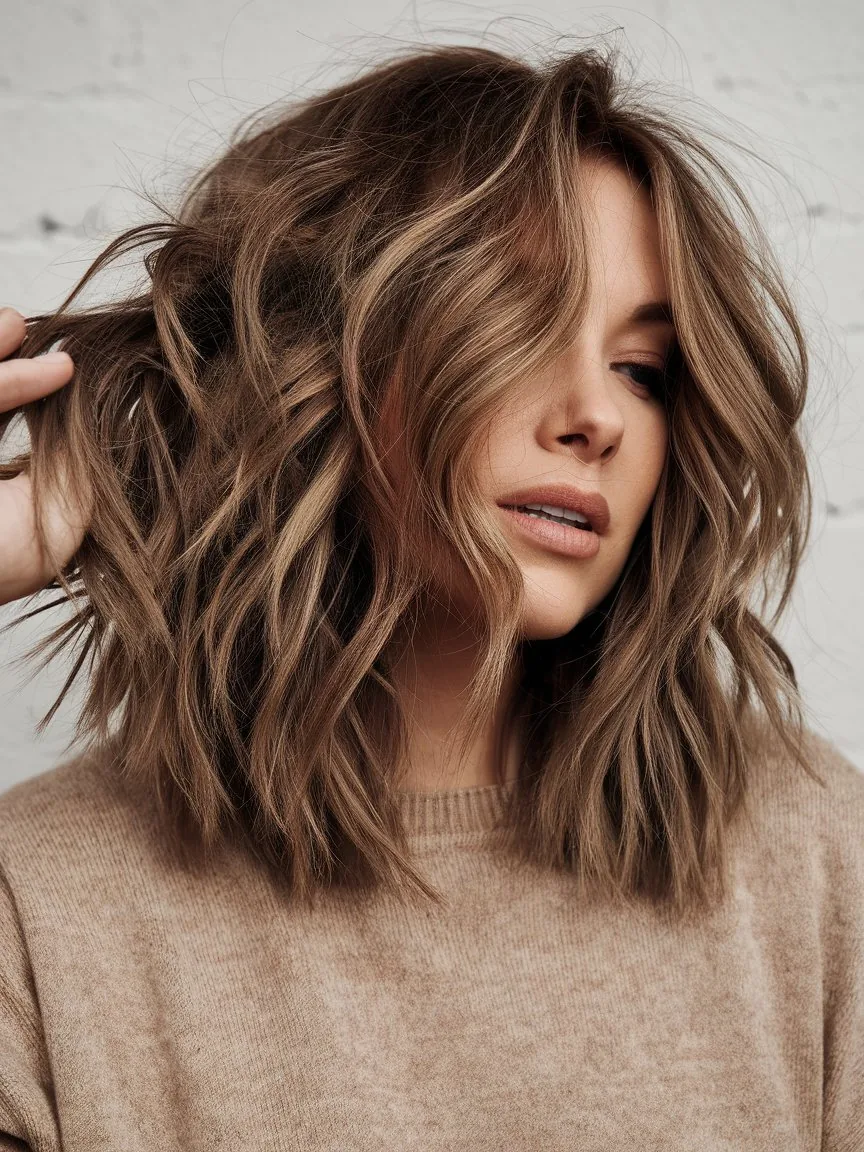
Medium-length hair with soft layers is the most versatile beach length: long enough to braid and tie up, short enough to dry quickly, and the layers give the beach waves movement that one-length hair cannot match. The layers catch the wind and the salt texture differently at each length, so the hair looks full and lively rather than flat.
Time needed: about five minutes with salt spray and a scrunch. Maintenance: almost none — if the waves fall out, re-scrunch with a little water and salt spray. It suits every face shape and every hair texture, and it is the best length for anyone who wants beach hair without committing to long hair. Ask your stylist for layers that start around the chin and lengthen gradually, so the waves have somewhere to go.
22. Long Beach Waves That Flow in the Breeze
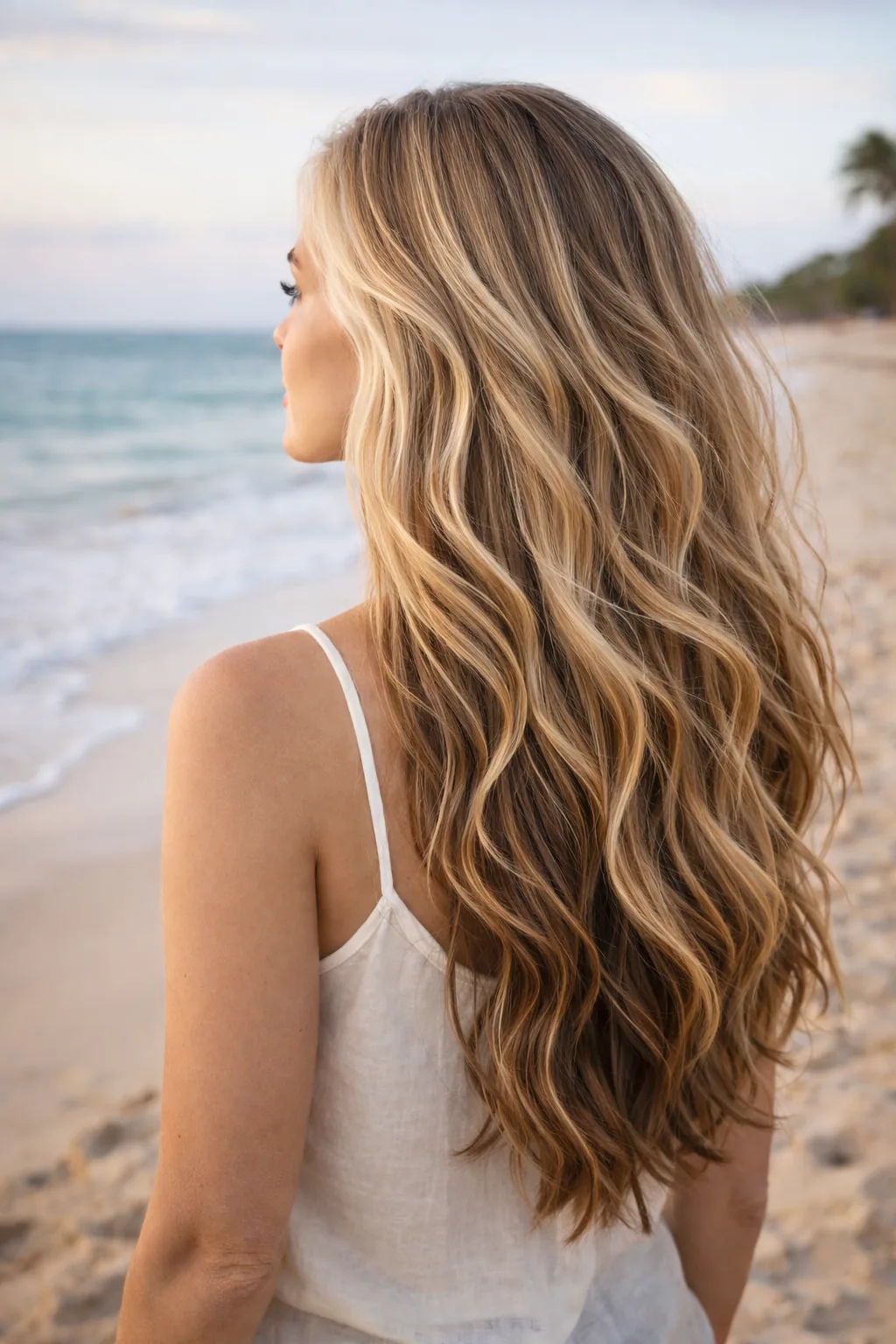
Long beach waves are the dream beach hairstyle — hair that falls past the shoulders in soft, sun-kissed waves, moving in the breeze. They are also the most work at the beach: long hair tangles, catches the wind, and takes the longest to dry. The secret is to embrace the movement rather than fight it, and to keep a braid or a bun as your backup plan for when the wind wins.
What it is: long, flowing waves with a soft, piecey texture. Why it works: the length shows off the wave pattern at its best. Who it suits: long hair, all textures, and anyone happy to spend five minutes detangling at the end of the day. How to style it: curl the lengths in large sections, shake them out, and finish with salt spray. What to watch out for: brushing dry, salty waves — always detangle with a wide-tooth comb on damp, conditioned hair.
23. A Beach Wedding Guest Hairstyle
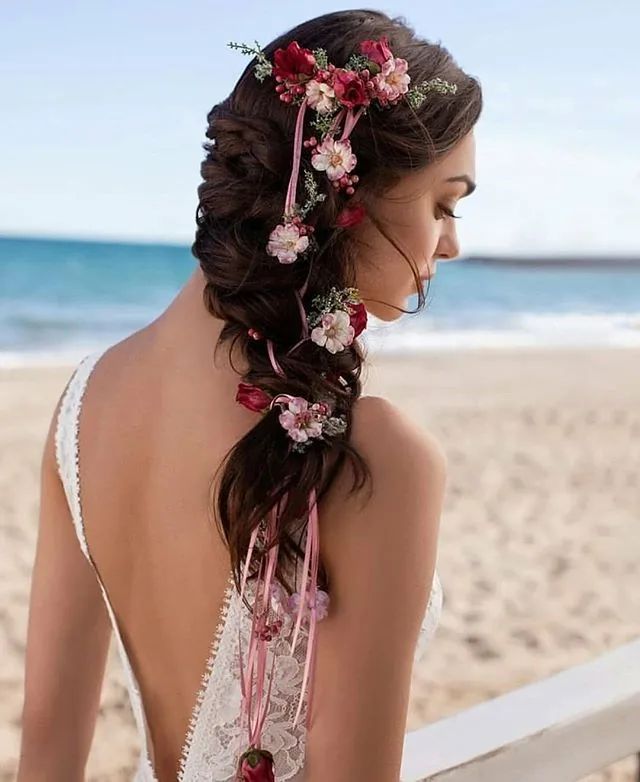
For a beach wedding, the hairstyle has to do three things at once: look elegant in photos, survive the wind, and not melt in the heat. A low bun with soft, face-framing pieces, or loose waves pinned back on one side with a decorative clip, both do the job — and both look better with a little beach texture in them, which is convenient, because the beach will provide it.
Best for: beach weddings, sunset ceremonies, and any formal occasion by the sea. How to style: soft waves through the lengths, a low bun or a half-up style, and a light mist of flexible-hold spray — never a stiff one, or the wind will make it look crunchy. Watch out for: over-styling: at a beach wedding, the hair should look soft and touchable, not shellacked, and a few loose pieces in the breeze look romantic, not messy.
24. Sunset Date-Night Beach Hair
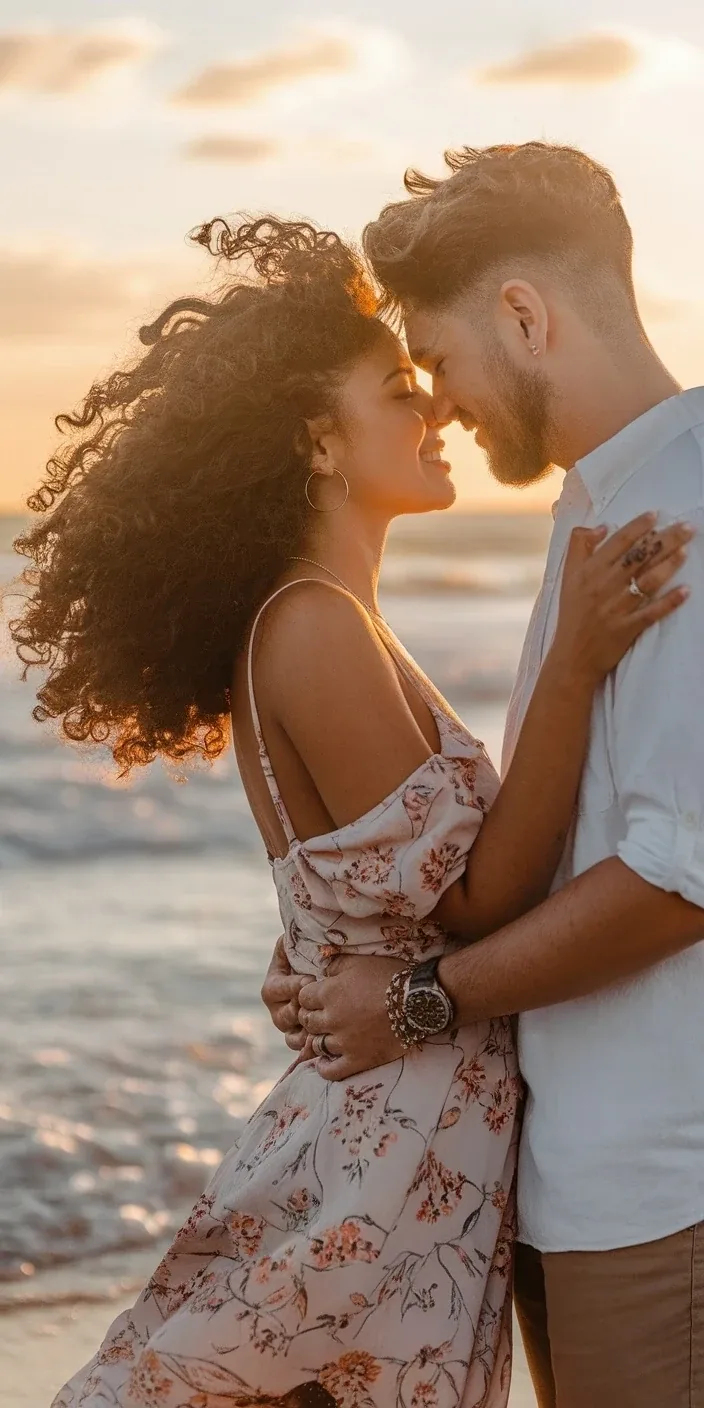
Sunset date-night beach hair is the style that takes you from the sand to a candlelit table without a full restyle: soft waves, a little volume at the crown, and a face-framing finish that looks polished in the golden light. The beach texture you built up during the day is the base — you just need to tidy it, add a little shine, and pin one side back so your face is open.
The trick is the refresh: finger-comb the waves, add a drop of hair oil to the ends for shine, and smooth the top with a little serum. A decorative pin or a small braid on one side turns the daytime waves into an evening look in two minutes. Time needed: five minutes, not counting the shower. It suits medium to long hair, and it is the style that photographs best in the golden hour — soft, warm and a little bit glowing.
25. A Swim-Proof Low Ponytail
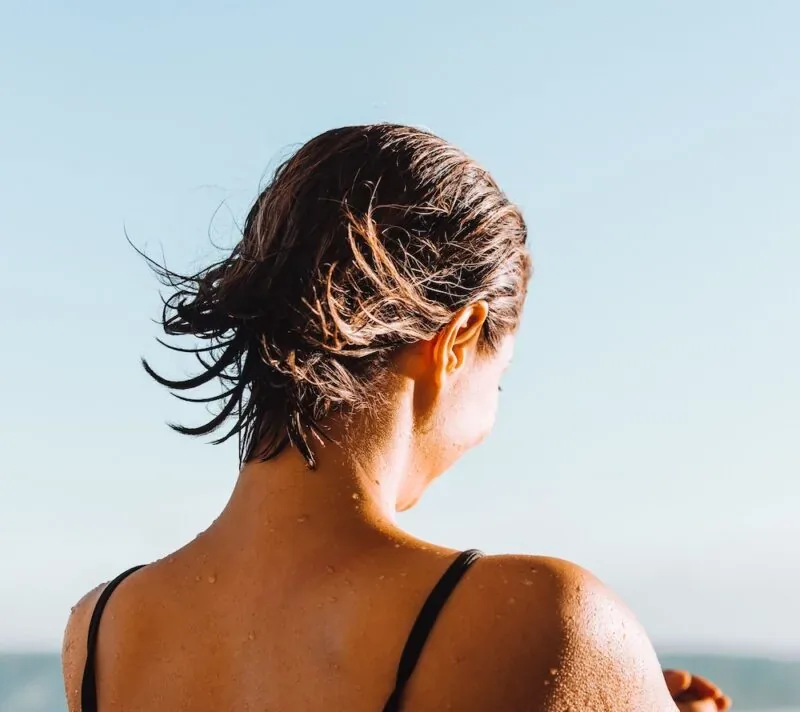
A low ponytail is the simplest swim-proof style there is: the hair gathered at the nape, secured with a spiral tie, and the tail itself braided so it does not tangle in the water. It is not glamorous, but it is the style that lets you swim properly — dive in, come out, and still have hair you can manage — and when you take it out, the braid gives you soft waves for the rest of the day.
Pros: genuinely swim-proof; two minutes; the braided tail doubles as a wave-maker. Cons: it is a plain look, and a tight ponytail can pull at the hairline. Quick verdict: the practical choice for a proper swim — braid the tail, use a spiral tie, and save the pretty styles for after you are dry.
26. A Twisted Half-Up for a Soft, Pretty Look
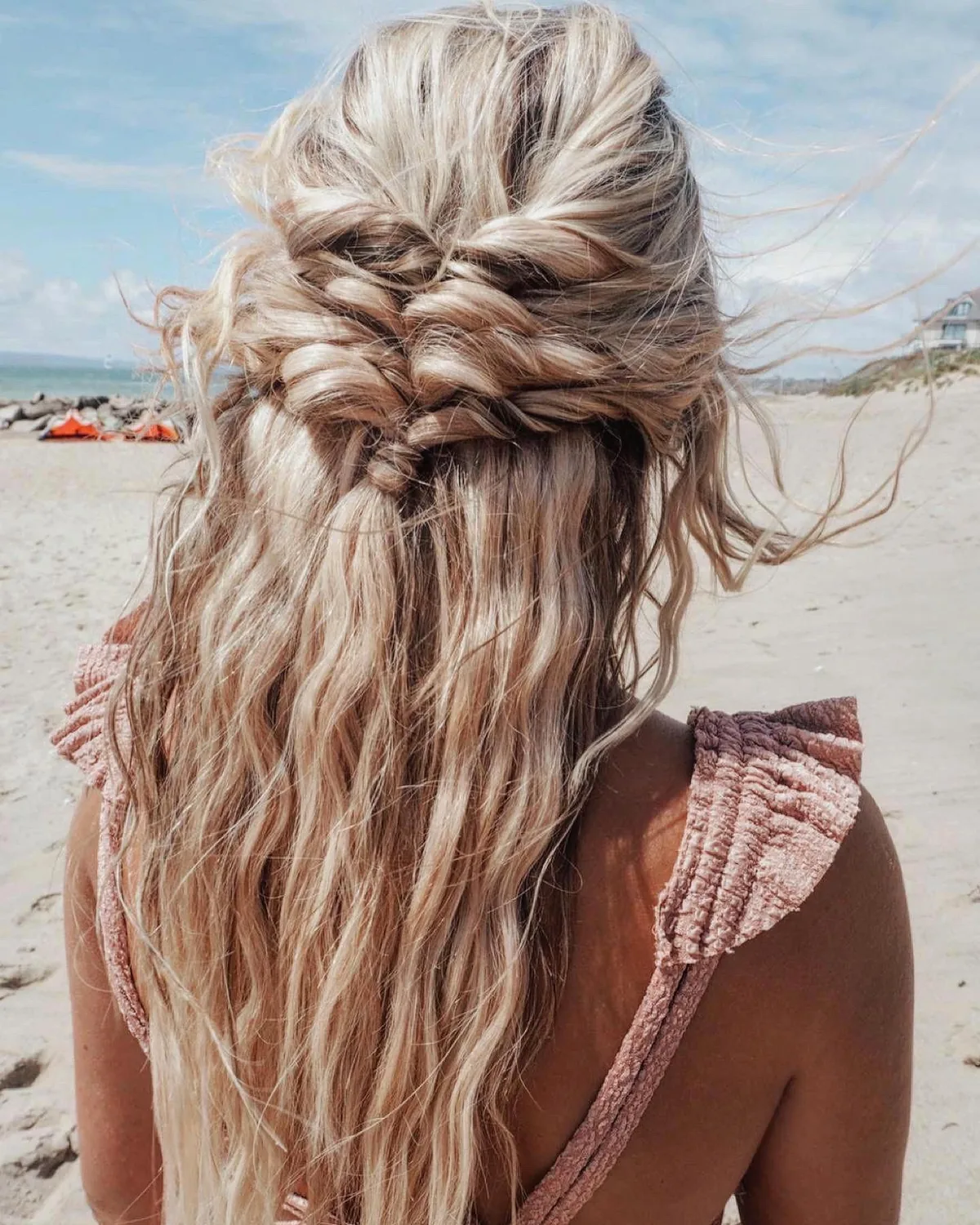
A twisted half-up is the softer cousin of the half-up clip: two small sections twisted back from the temples and pinned at the back of the head, leaving the rest of the hair loose. It keeps the front out of your face in the wind, shows off the length, and looks romantic and a little bit bohemian — and it holds better than a clip in a sea breeze, because the twists are pinned, not clipped.
What it is: two twists pinned at the back, the rest left loose. Why it works: the twists anchor the front while the lengths get all the beach texture. Who it suits: medium to long hair, wavy or straight, and anyone who finds clips slip out. How to style it: twist each front section away from the face, cross them at the back, and pin with two coated bobby pins. Pull a few pieces loose at the temples for softness.
27. A Rope Braid That Takes Three Minutes
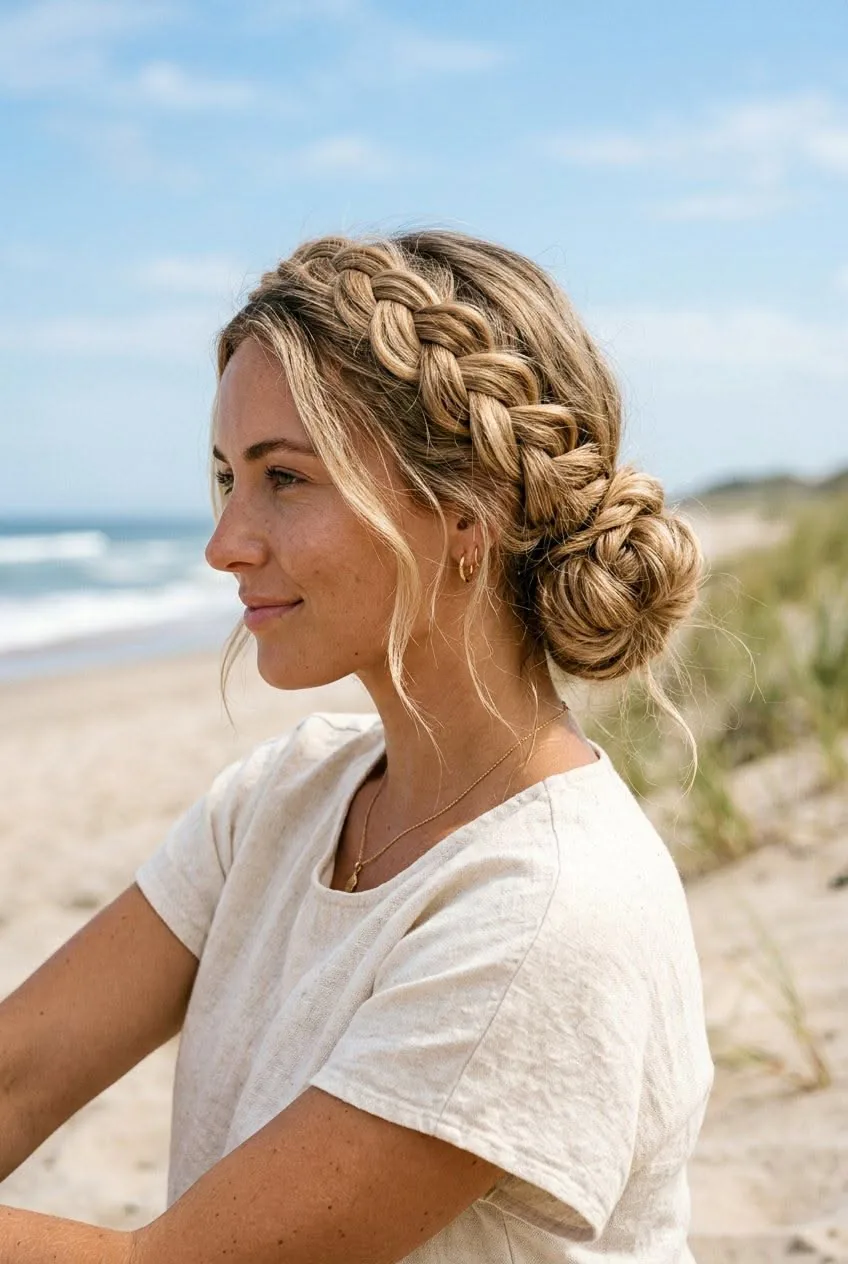
A rope braid is the easiest braid there is: split the hair into two sections, twist each one in the same direction, then twist the two together in the opposite direction. It takes three minutes, it needs no braiding skill, and it holds in the wind because the opposing twists lock each other in place. It is the braid to learn if you have never braided your own hair before.
The mistake to avoid is twisting both sections in the wrong directions — if the twists unravel, you twisted the sections and the rope the same way. Twist each section clockwise, then wrap them together anticlockwise, and the braid will hold itself together. Secure the end with a small elastic, pancake the rope gently for fullness, and wear it over one shoulder or down the back. It works on medium to long hair and looks lovely with a few loose pieces at the front.
28. Beach Curls with a Headband
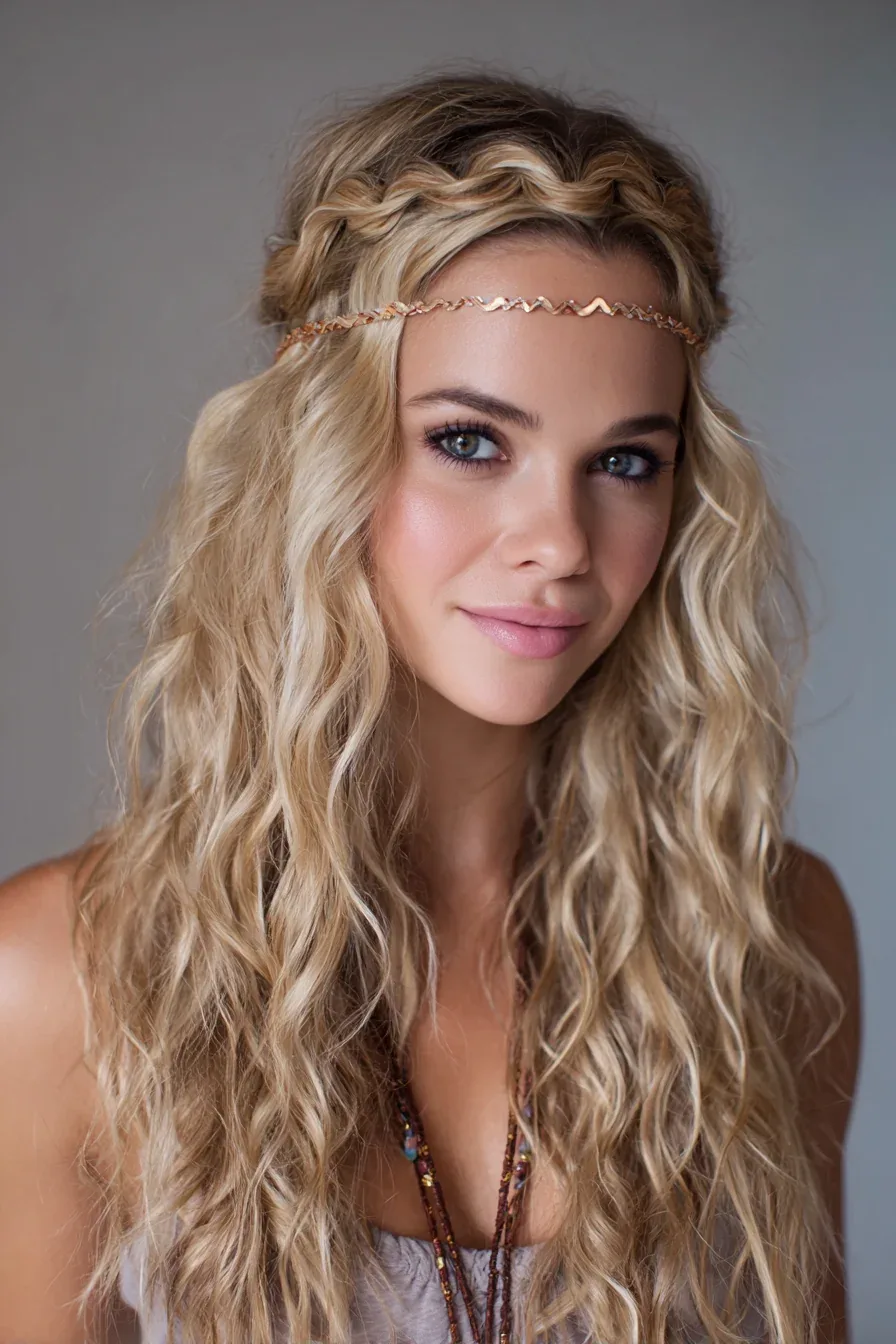
Beach curls with a headband are the style for the days when the wind will not leave your hair alone: the headband holds the front back, the curls fall soft behind it, and the whole look stays tidy without a single pin. A wide fabric headband works best at the beach — it absorbs sweat, it does not slip when it gets damp, and it doubles as sun protection for your hairline.
Time needed: about five minutes, most of it on the curls. Maintenance: reposition the headband once or twice a day, and that is it. It suits medium to long hair and every face shape, and it is a good choice for anyone growing out a fringe, because the headband holds the growing lengths back neatly. Choose a headband that matches your swimsuit or your sundress, and keep a spare in your beach bag.
29. Sleek Straight Hair at the Beach
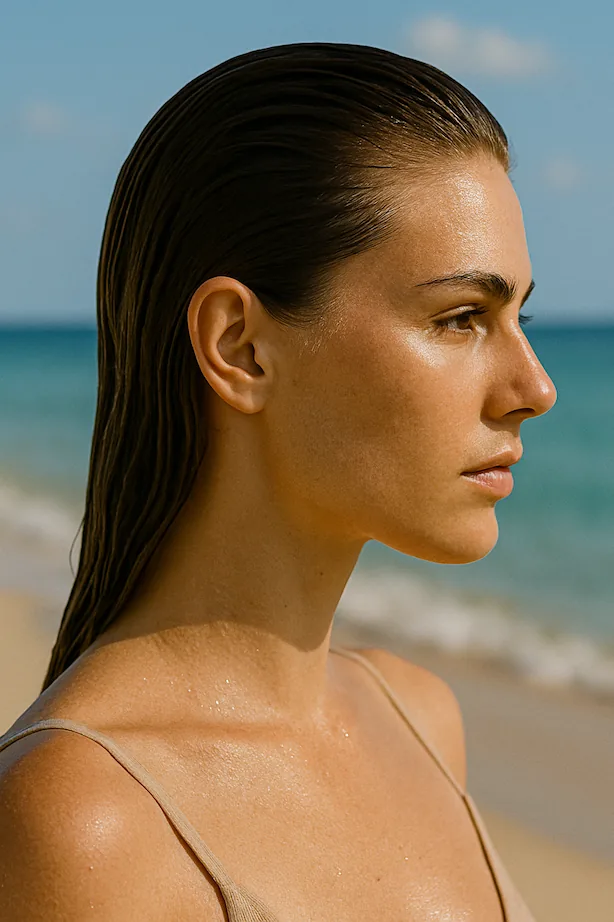
Sleek, straight hair at the beach is a bold choice, because the sea air wants to add texture to everything — but done right, it looks striking: smooth, glossy lengths against the sand and the sea, with the shine doing all the work. The key is to accept that it will not stay perfectly straight, and to let the ends pick up a little wave while the top stays smooth.
Best for: naturally straight hair, short to medium lengths, and a polished beach look. How to style: smooth the lengths with a flat iron before you leave, add a drop of anti-frizz serum, and carry the serum for touch-ups. Watch out for: humidity, which will add wave to the ends within an hour — treat that as texture, not failure, and smooth the top again with your hands and a little serum.
30. Boho Beach Braids with Shells and Beads
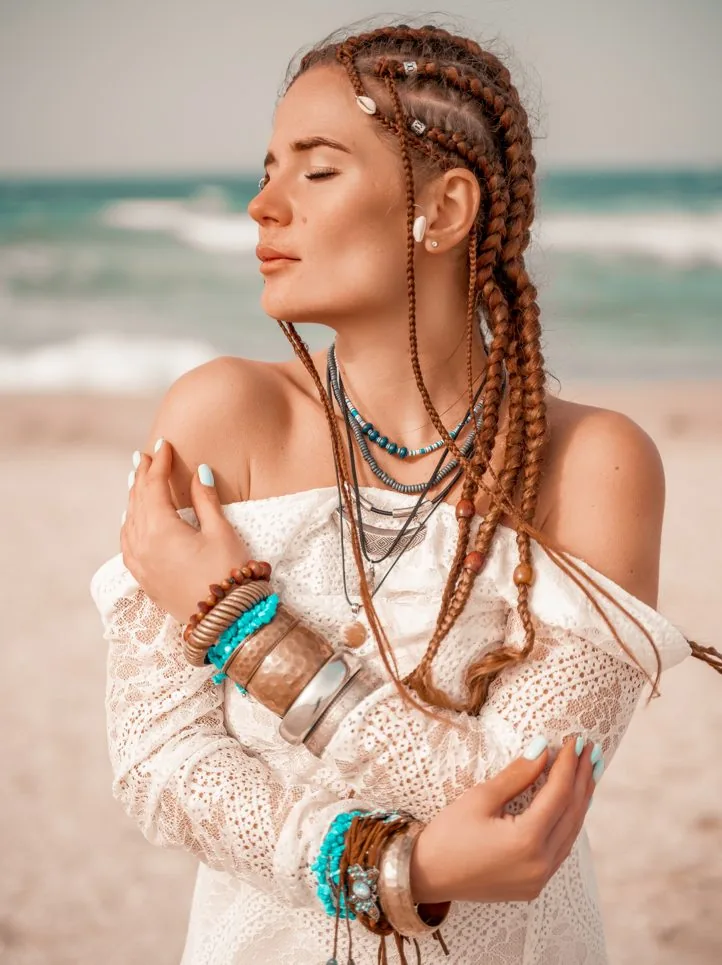
Boho braids with tiny shells, beads or cuffs woven in are the festival beach style: a few small braids scattered through loose waves, each one finished with a bead or a shell, catching the light as you move. They look intricate and holiday-ready, but each braid takes a minute, and the beads do the decorating for you. It is the style for a beach holiday, a festival, or a day when you want your hair to be part of the outfit.
What it is: small accent braids with beads or shells, worn with loose waves. Why it works: the braids add detail and keep sections of hair contained, while the waves do the rest. Who it suits: medium to long hair, and anyone with a bohemian streak. How to style it: braid three or four small sections, thread a bead or a shell onto the end, and secure with a tiny clear elastic. Keep the beads light — heavy ones pull the hair and hurt by the end of the day.
31. Five-Minute Beach Hair for Mornings in a Rush
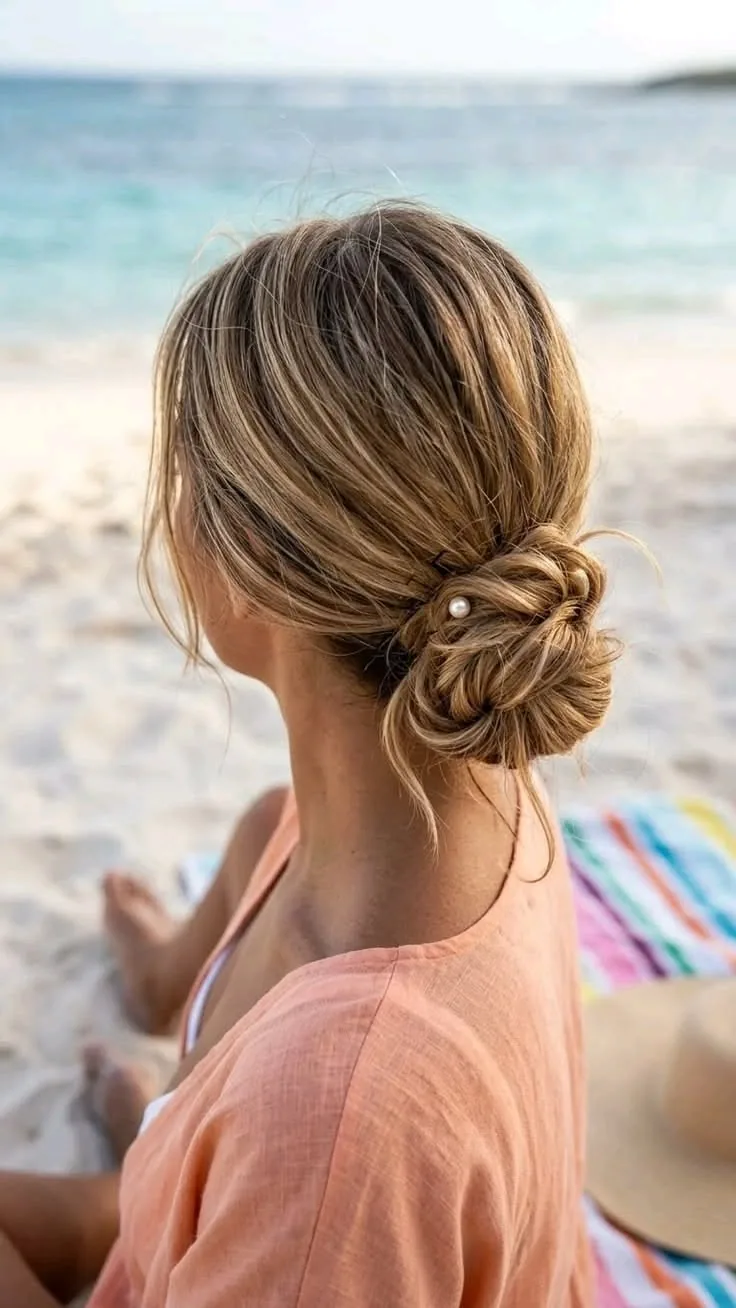
Some beach mornings do not allow for a styling session, and that is fine — five-minute beach hair is a real style, not a compromise. The formula is simple: dampen the hair, scrunch in salt spray, twist the front sections back and pin them, and go. The sea air will finish the styling for you within an hour, and the twists keep the front out of your face while it does.
The mistake to avoid is trying to do too much in those five minutes: a rushed curling iron session before the beach is wasted effort, because the humidity will undo it before you reach the sand. Spend the five minutes on the things that survive — the twists, the salt spray, the sun protection — and let the beach do the rest. Time needed: five minutes, including finding the pins. Maintenance: none, until you get home.
32. Natural Wavy Hair, Left to Do Its Thing
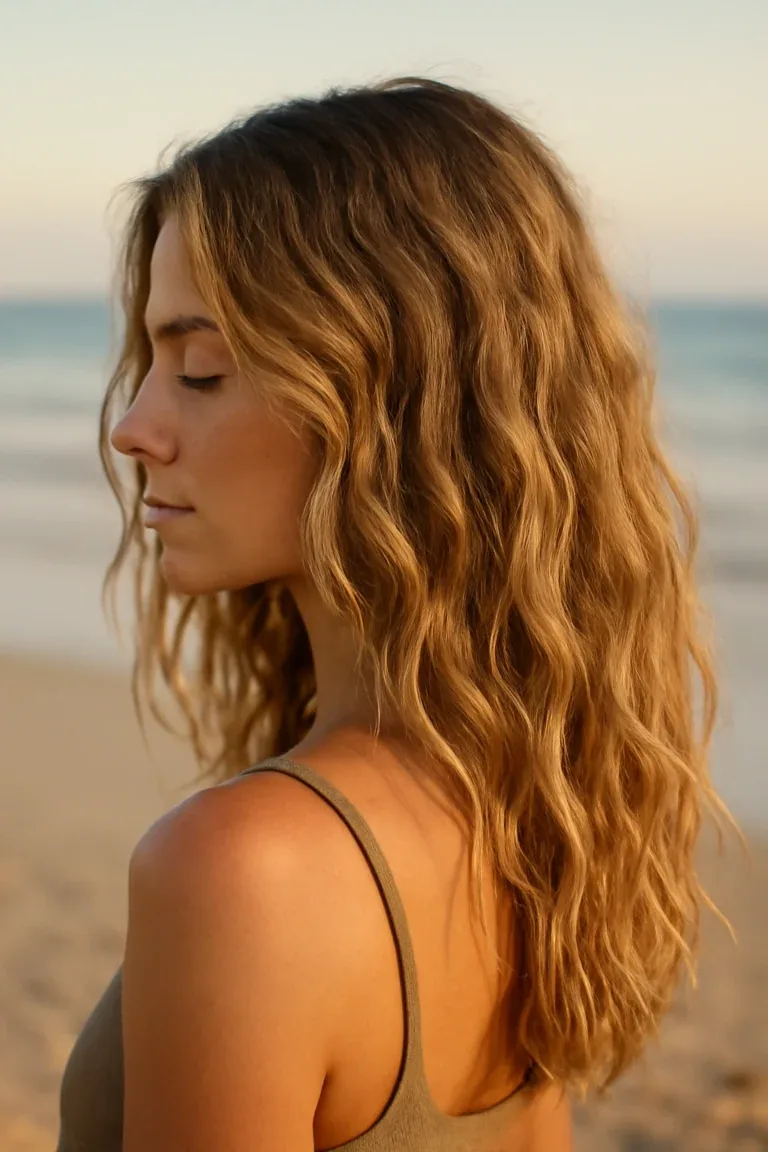
If your hair is naturally wavy, the beach is the one place where you can do almost nothing and look like you tried: the salt air enhances the wave you already have, the wind adds volume, and the sun lightens the ends. The best style for natural waves at the beach is often no style at all — just a little leave-in conditioner, a scrunch, and a headband or a clip for the front if the wind picks up.
Pros: zero effort; the beach improves your natural texture; no heat needed. Cons: wavy hair frizzes easily in humidity, and without any containment it can tangle in strong wind. Quick verdict: the easiest beach hair of all — scrunch in leave-in conditioner, let it air-dry, and only intervene with a clip or a braid if the wind demands it.
33. The Post-Swim Refresh: Beach Hair, Round Two
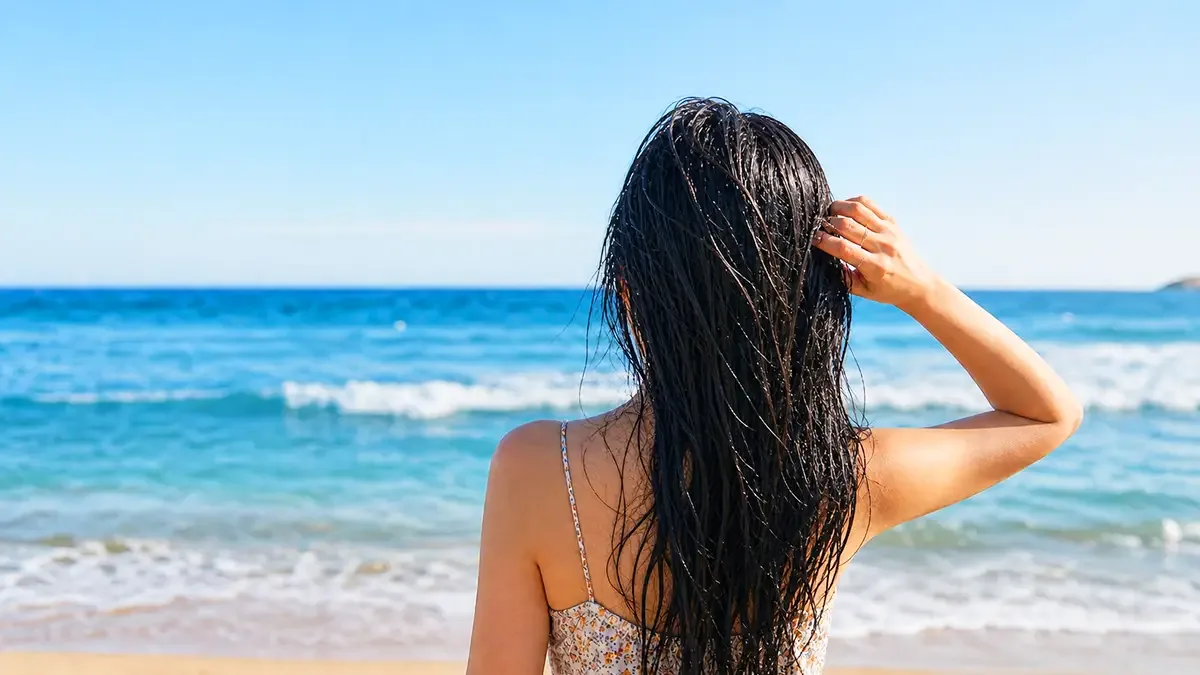
The post-swim refresh is the style for the second half of a beach day: you have swum, your hair is salty and damp, and you want to look good for the rest of the afternoon without a full wash. The answer is a low bun or a loose braid on damp hair, with a little leave-in conditioner worked through the ends — the dampness is an advantage, because it makes the bun smooth and the braid neat, and as it dries, the waves set beautifully.
What it is: a restyle on damp, post-swim hair. Why it works: damp hair is easier to smooth and shape, and the salt already in it adds texture as it dries. Who it suits: everyone, and especially anyone who swims more than once a day. How to style it: finger-comb the damp hair, work in leave-in conditioner, and twist it into a low bun or a loose braid. When you take it out in the evening, the waves will be soft, clean and beachy — round two, done right.
Does salt water damage your hair?
Salt water dries hair out by lifting the cuticle and drawing moisture from the strand, and sun adds to the damage by breaking down hair proteins and fading colour. The effect is real but manageable: wet your hair with fresh water before swimming, use a leave-in conditioner, rinse with fresh water afterwards, and deep-condition once a week during beach season.
How do I protect my hair before swimming in the sea?
Wet your hair with fresh water first, so it absorbs less salt water, then smooth a leave-in conditioner or a few drops of hair oil through the lengths. A swim cap works but is not very beach-friendly; a braid or a bun keeps the hair contained and easier to rinse afterwards. Rinse with fresh water as soon as you get out.
Is salt spray or real sea salt better for beach waves?
Salt spray is better for everyday styling: it gives you the same tousled texture as sea salt, but with conditioning ingredients that stop the hair drying out, and it washes out cleanly. Real sea salt gives a rougher, drier texture. Use salt spray on damp hair, scrunch, and let it air-dry for the best waves.
How do I stop my beach hair from tangling?
Keep the hair contained in a braid, a bun or a ponytail when you swim or when the wind is strong, and detangle with a wide-tooth comb on damp, conditioned hair, working from the ends upward. Never brush dry, salty hair — it pushes the knots tighter. A little leave-in conditioner or hair oil on the ends before you go out also helps the comb glide through.
What is the best beach hairstyle for swimming?
A French braid, two Dutch boxer braids, or a low bun with the tail braided — all three keep every strand contained, survive being underwater, and come out as soft waves afterwards. Loose hair tangles badly in the sea, so always contain it before you swim, and rinse with fresh water immediately afterwards.
How do I get beach waves without heat?
Spray salt spray onto damp hair, scrunch the lengths upward with your hands, and let it air-dry — that is the whole method. For more defined waves, braid damp hair into one or two loose braids and let it dry, then take the braids out and shake the waves loose. No heat is needed, and the waves last longer in beach humidity than heat-styled ones.
How do I stop frizz in beach humidity?
Smooth a light anti-frizz serum or leave-in cream over the surface of damp hair before you go out, and carry a small bottle for touch-ups. Choose styles with movement in them — waves, braids and buns — rather than sleek styles that humidity will undo. A little frizz is normal at the beach: a few flyaways look natural, not messy.
Should I wash my hair after the beach?
Yes — rinse with fresh water as soon as you can, and wash with a gentle shampoo to remove salt, sand and sunscreen. A clarifying shampoo once a week removes build-up, but do not use it every day. Follow with conditioner or a hair mask, and let your hair air-dry. Never go to bed with salty, sandy hair.
Can I wear a hat with beach hairstyles?
Yes — a wide-brim straw hat is one of the best beach hair accessories: it protects your hair and your parting from the sun, keeps the top of your head cool, and looks great over loose waves. Put the hat on after styling, choose one that sits loosely so it does not flatten your roots, and lift the crown with your fingers when you take it off.
How long do beach hairstyles last?
Braids and buns last all day, even through swimming and strong wind. Loose waves last a few hours before the wind and humidity reshape them — but at the beach, that reshaping usually makes them look better, not worse. With a salt spray refresh and a quick re-braid or re-twist, most beach styles can be revived in two minutes.
Conclusion: Let the Beach Do Half the Work
Beach hairstyles work best when they work with the beach, not against it. The salt air, the wind and the sun are going to change your hair whether you plan for it or not — so choose a style that gets better as it loosens, a braid that turns into waves when you take it out, a bun that only gets softer, and waves that the sea air finishes for you. That is the whole secret of beach hair: pick the style that the beach improves, and let it do half the work.
Start with the version that matches your day — a French braid or boxer braids if you plan to swim, a messy bun if you want to stay cool, loose waves under a hat if you want the classic photo, and a low bun if the day ends at a sunset dinner. Pack the small kit: a wide-tooth comb, a spiral tie, a few coated pins, a leave-in conditioner and a scarf. And when the day is done, rinse the salt out, mask your hair, and let it rest — the waves will still be there tomorrow, softer and cleaner, ready for round two.

