
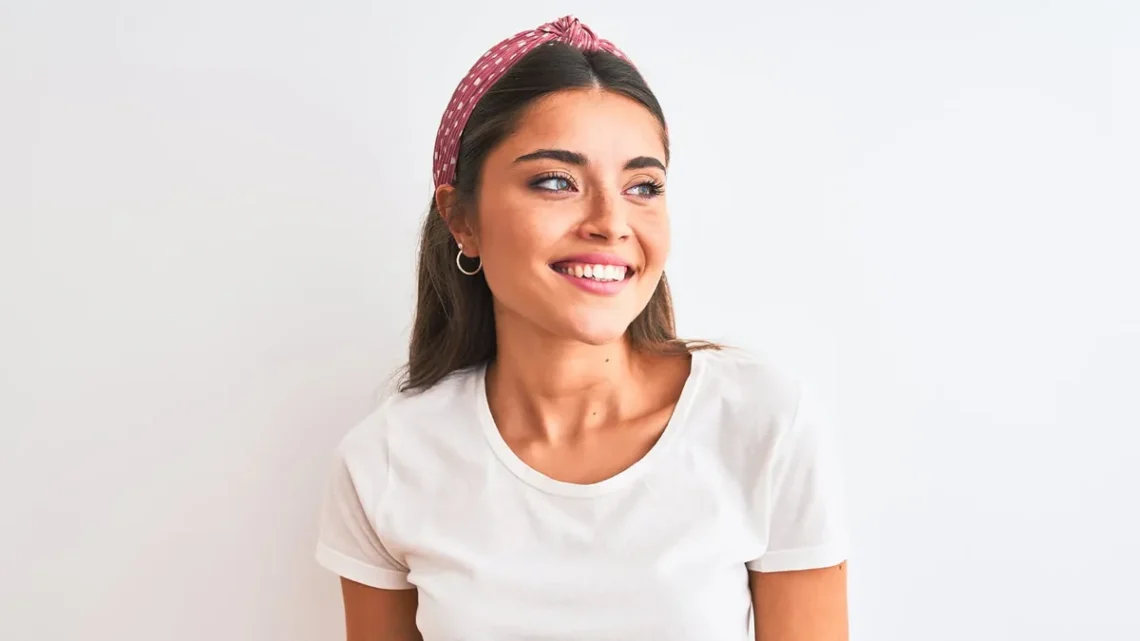
A headband is the smallest thing in your hair drawer and somehow the one that does the most work. On a morning when your hair will not cooperate, when second-day roots are showing, or when you simply want to look like you tried a little harder than you did, a headband steps in and finishes the look in seconds. That is why hairstyles with a headband never really go out of fashion: they are fast, they are forgiving, and they suit almost everyone, from a pixie cut to waist-length waves.
This guide starts with eight practical explainers — what headband hairstyles actually are, why they work so well, who they suit, how to choose the right band for your hair, how to style one step by step, how to keep it from slipping, what to ask your stylist, and the mistakes to avoid — then walks through 33 hairstyles with a headband, from loose waves and sleek ponytails to braids, buns, curls and wedding-guest looks. Every style notes who it suits best, how to do it, and how to keep it comfortable all day, so you can pick one tonight and wear it tomorrow morning.
What Headband Hairstyles Actually Are
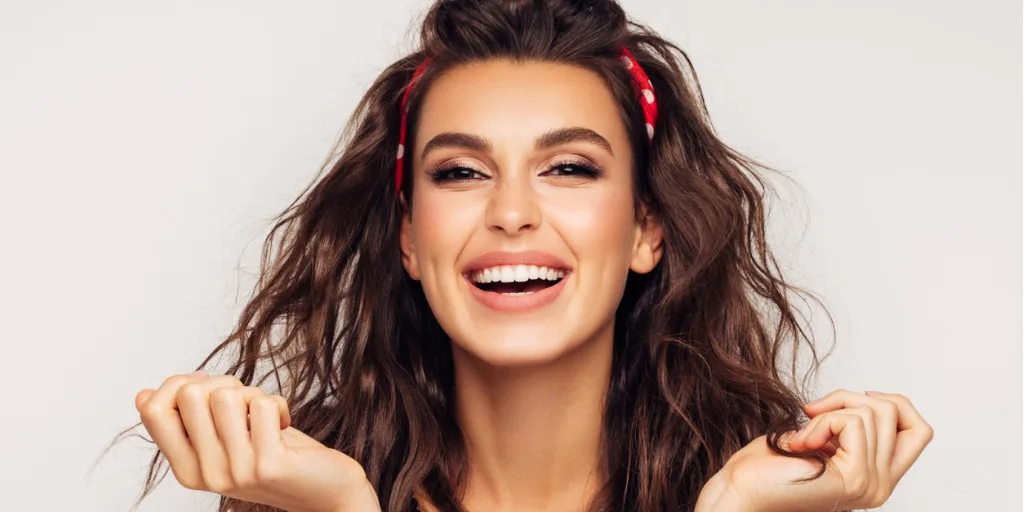
A headband hairstyle is simply any hairstyle that uses a band — fabric, velvet, metal, plastic, knotted, padded or beaded — as part of the finished look, rather than as a tool you take out before leaving the house. The band can sit on top of loose hair, hold back the front sections while the rest falls free, or frame a ponytail, bun or braid. It is both a styling tool and an accessory at the same time, which is why one small piece can change a whole outfit. Hairstyles with a headband range from a thin metal band over sleek straight hair to a wide velvet band with voluminous curls, and every version in between.
What it means: the headband is doing two jobs — keeping hair out of your face and adding colour, texture or shine to the look. Signs it is working: the style looks finished rather than thrown together, and the band feels like part of the hairstyle, not something sitting on top of it. What to avoid: treating the band as an afterthought — a band that clashes with the outfit or fights with the hair texture will always look accidental.
Why Headbands Work So Well
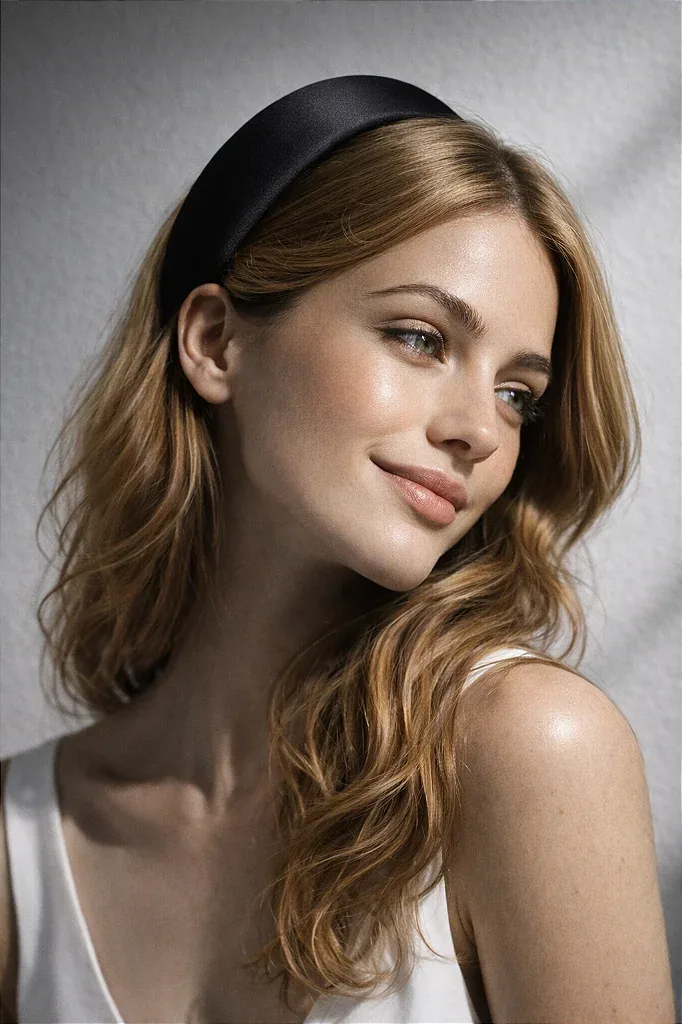
Headbands work because they solve the two problems most hairstyles have: the front pieces that fall into your face, and the gap between “I just washed my hair” and “I look polished”. A band pulls the front sections back neatly, adds instant structure to loose hair, and hides a multitude of sins — grown-out roots, a fringe that needs a trim, second-day texture, or a parting that will not sit straight. Unlike a full updo, a headband style takes about a minute, needs no heat, and can be undone just as fast. That speed is the real reason hairstyles with a headband are a staple for busy mornings, gym bags, school runs and last-minute plans.
Why it matters: a headband gives you a finished look with almost no skill and no styling tools, which makes it one of the most forgiving accessories you can own. How to use it: keep two or three bands in different widths and colours — a thin neutral one, a wide velvet one, and one with a little detail — and you can dress almost any outfit up or down. Quick verdict: if you own one hair accessory, make it a headband; nothing else does this much work for this little effort.
Who Headband Hairstyles Suit Best
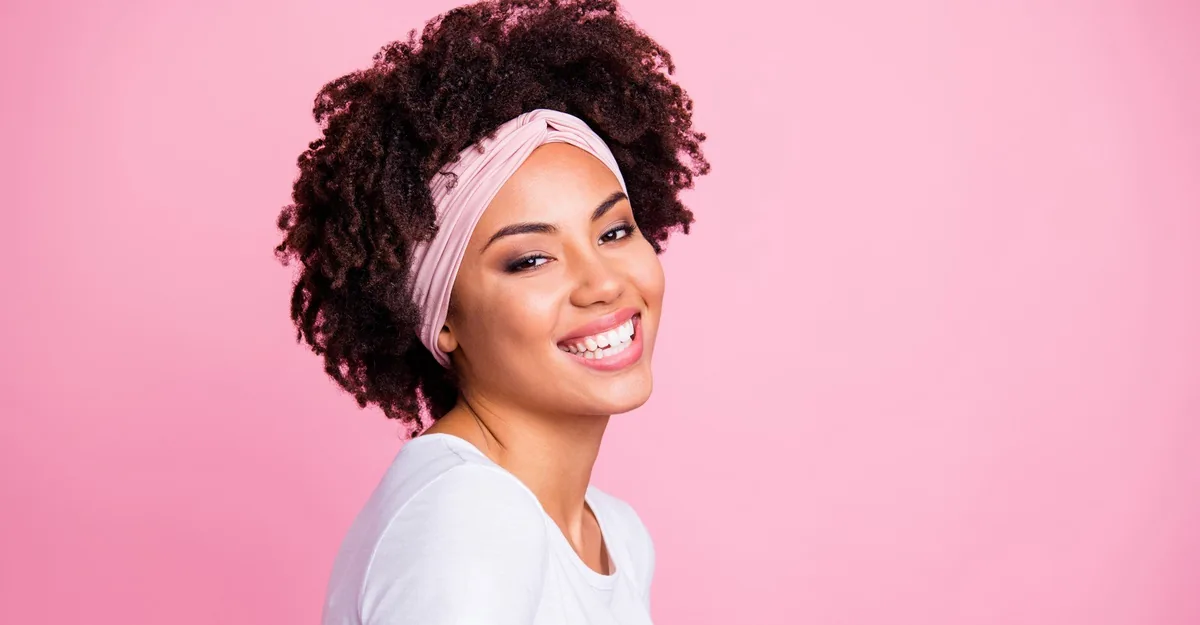
The honest answer is nearly everyone, but the details matter. Headband hairstyles suit oval and heart-shaped faces especially well, because the band frames the face without hiding it. They are a gift for people growing out a fringe, because the band sweeps the awkward length back while it grows. They work beautifully on curly and wavy hair, where the band controls the front without flattening the volume behind it, and on fine hair, where a padded band adds the illusion of fullness. They also suit short hair — a pixie or a bob with a band looks deliberate and styled rather than unfinished. The people who struggle most are those with very thick, heavy hair and a very tight band, where the pressure can cause a headache by midday.
Best for: growing out a fringe, second-day hair, curly or wavy textures, fine hair that needs volume, and anyone who wants a polished look in under two minutes. What to ask: if your face is round, ask your stylist to leave a little height at the crown when you wear a band, so the style lengthens rather than widens your face. What to avoid: a band that is too tight for your head size — comfort matters more than the style, because a band you keep adjusting all day is not working.
Choosing the Right Headband for Your Hair
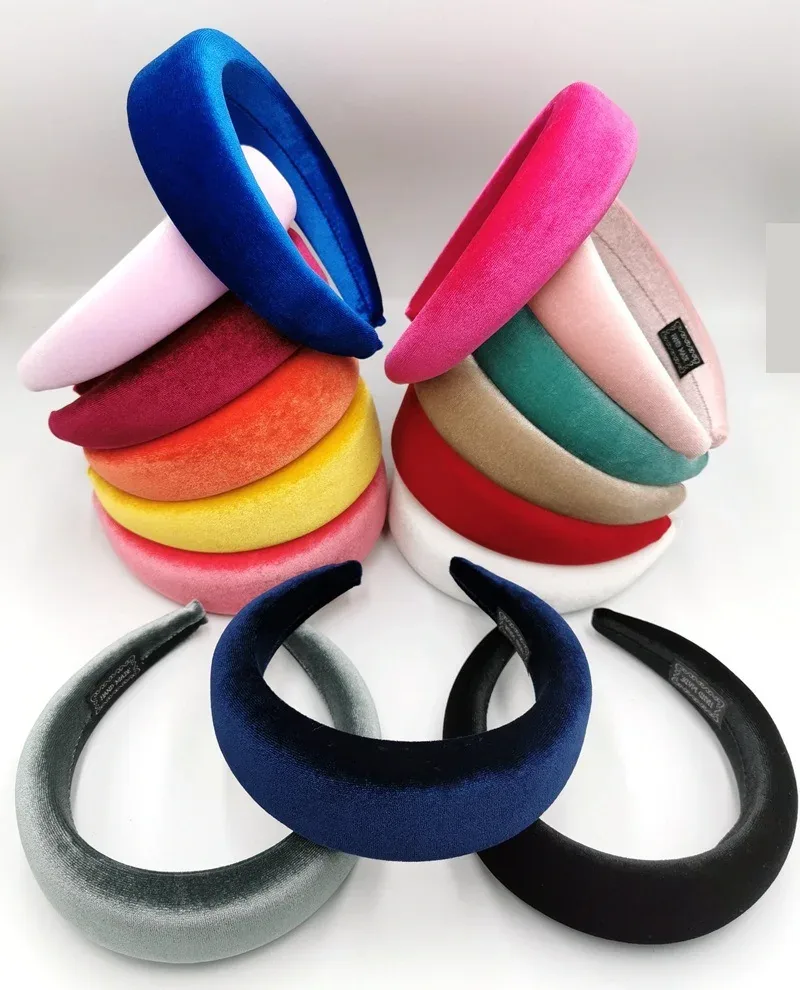
Choosing a headband starts with your hair, not with the prettiest band in the shop. Fine, slippery hair needs a band with grip — velvet, fabric-covered, or one with small teeth underneath — or it will slide off within the hour. Thick hair needs a wider, sturdier band that can hold its weight without bending. Curly hair does best with a soft, flexible fabric band that sits on top of the curls rather than crushing them. Short hair suits thinner bands that do not overwhelm the cut, while long hair can carry a wide padded band easily. Colour matters too: a band close to your hair colour looks subtle and polished, while a contrasting band becomes the statement piece of the outfit.
How to choose: match the width to your hair volume, the material to your hair texture, and the colour to your outfit or your hair — never all three at once, or the look gets busy. Pros and cons: velvet grips well but shows dust, metal lasts forever but can pinch, fabric is comfortable but can stretch out, and beaded bands look beautiful but catch on fine hair. Maintenance: wipe metal bands after use, hand-wash fabric bands, and store them flat so they keep their shape.
How to Style Hair with a Headband, Step by Step
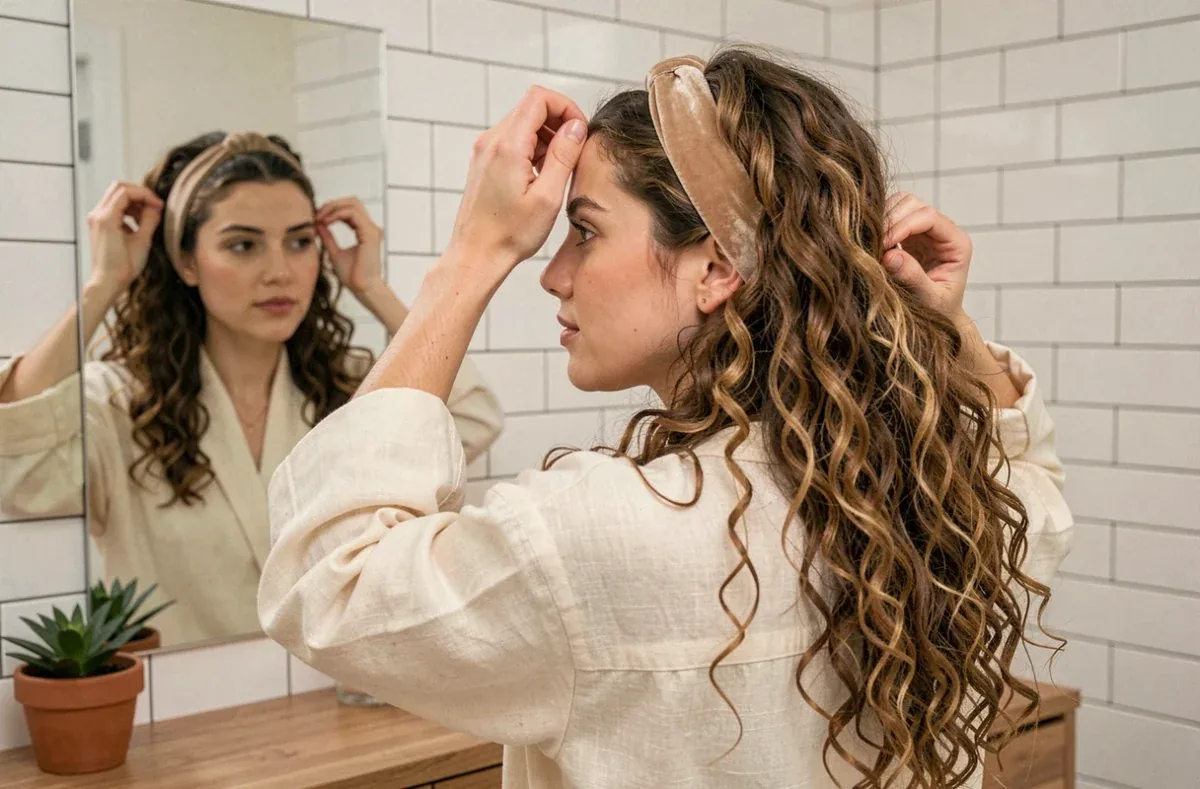
Styling hair with a headband is a five-minute job, and most of that time is deciding which band to wear. Start with dry hair — a band on wet hair will slip and leave a dent. Brush the hair through, decide on your parting, and place the band about two finger-widths back from your hairline, not right on your forehead. Then gently pull a little hair forward at the crown for softness, or leave the front pieces out for a relaxed frame around your face. If you are wearing the hair down, tuck the ends of the band behind your ears or let it sit on top of the hair at the sides. For a ponytail or bun, put the hair up first, then add the band, so the band sits neatly against the finished style.
Step by step: brush, part, place the band, adjust the crown, then check the back in a mirror — most headband mistakes are visible from behind, not from the front. How to style it: for a soft look, pull out two face-framing pieces after placing the band; for a sleek look, smooth the front with a little serum first. Time and cost: about two minutes once you have practised, and a good band costs less than a single salon blow-dry.
Keeping Your Headband in Place All Day
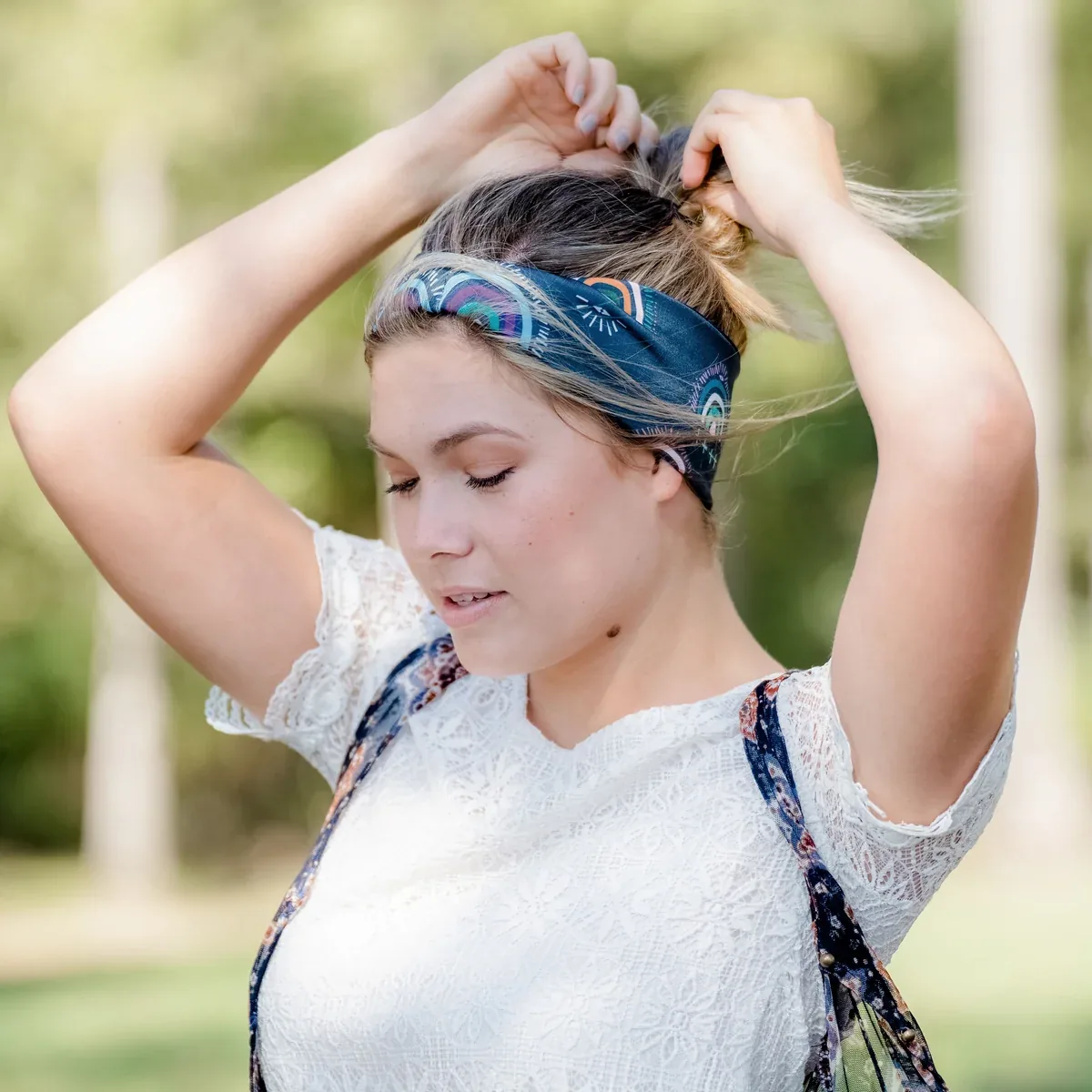
A headband that slips is the most common complaint, and it is almost always fixable. The band slips because the hair underneath is too smooth, the band is too loose, or the band is sitting on hair that is too clean and slippery. A little texture is your friend: a spritz of dry shampoo or texturising spray at the roots before you put the band on gives it something to grip. Bobby pins crossed in an X behind each ear anchor the band invisibly, and a band with a velvet or silicone lining grips far better than a smooth plastic one. If your hair is freshly washed, wait until it is fully dry, or add a little styling powder at the crown before placing the band.
How to do it: place the band, then slide two bobby pins up from underneath at each side, crossing them so they lock the band in place without showing. Signs it is working: you forget the band is there — if you are aware of it every ten minutes, it is too tight, too loose, or in the wrong spot. What to avoid: pulling the band too far forward onto your forehead, which is the position most likely to slip, and wearing a band over very oily roots, where nothing will grip.
What to Ask Your Stylist About Headband Styles
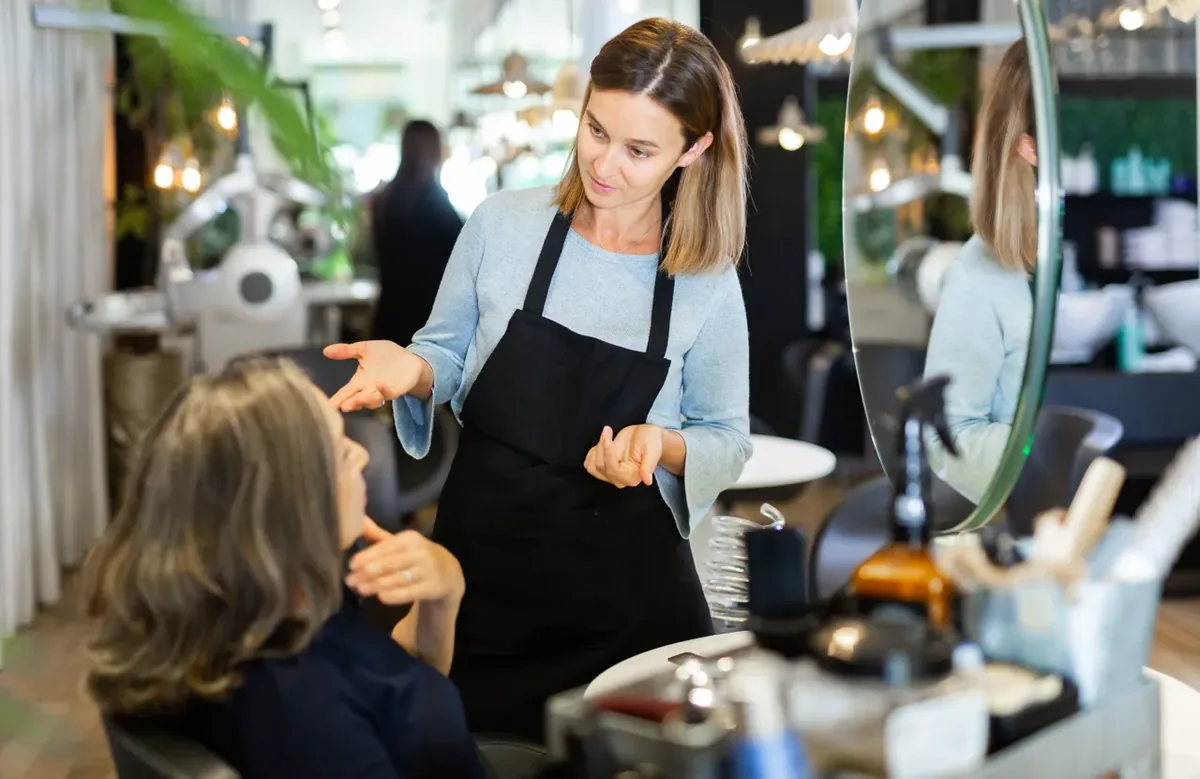
A good stylist can make headband styles look ten times better with two small changes: a cut that works with a band, and a lesson in placement. Ask whether your layers fall well when the front is pulled back, because layers that are too short at the front will poke out from under the band all day. Ask about face-framing pieces — a few longer strands left out around the face soften a band style enormously. If you wear bands often, mention it before the cut, so the stylist can leave enough length at the front and avoid a fringe that fights the band. And ask which band widths suit your head shape and hair density, because a stylist sees your hair from angles you never do.
What to ask: “Will my layers sit neatly under a headband?”, “How much face-framing length should I keep?”, and “Which band width suits my hair thickness?” When it is hard: if your hair is very thick or very fine, a stylist can thin or texturise the front sections so a band sits flat instead of perching on top. Quick verdict: a five-minute conversation before a cut saves months of fighting with a band that never sits right.
Common Headband Mistakes to Avoid
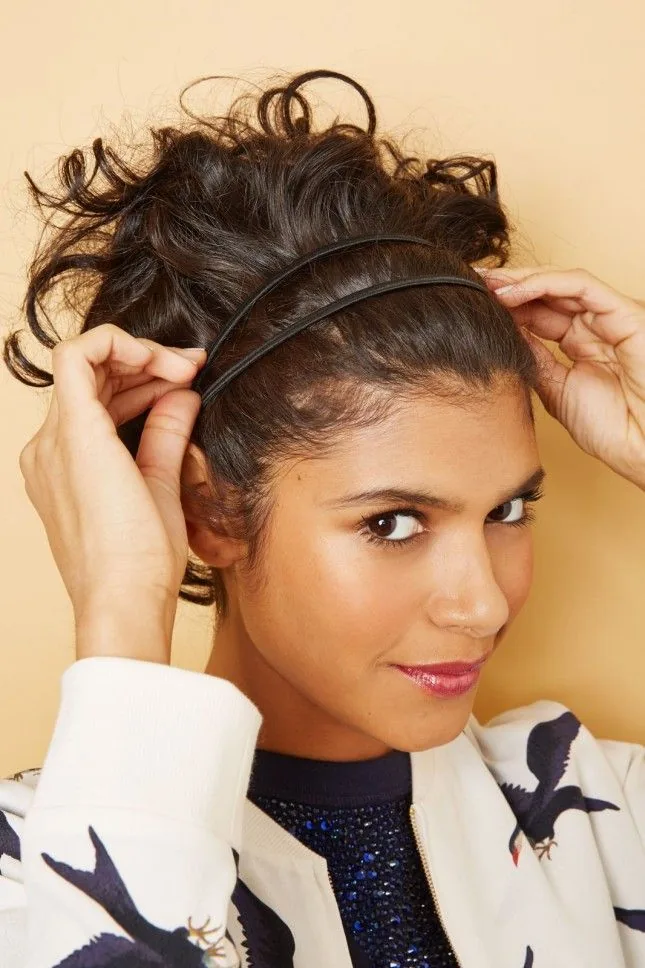
The most common headband mistake is wearing it too tight, which causes a headache, a red mark across the forehead, and hair that looks flattened at the sides. The second is placing it too far forward, so it slides down onto the forehead and needs constant pushing back. The third is pairing a very wide, statement band with a very busy outfit — one statement at a time is enough. Other mistakes are smaller but just as visible: a band over unbrushed hair, a band that matches nothing you are wearing, or a band worn every single day in the same spot, which can break hair at the pressure point over time. Rotate the position, vary the band, and take it out when you get home.
What to avoid: wearing the same band in the same spot every day, choosing a band that is too tight for comfort, and placing it so far forward that it slips. Maintenance: give your hair a break from bands at least a few days a week, and check the band’s underside for rough edges or broken teeth that can snag hair. Pros and cons: done well, a headband is the easiest style you own; done badly, it is the most obvious — so comfort and placement are worth the extra thirty seconds.
1. Classic Headband with Loose Waves
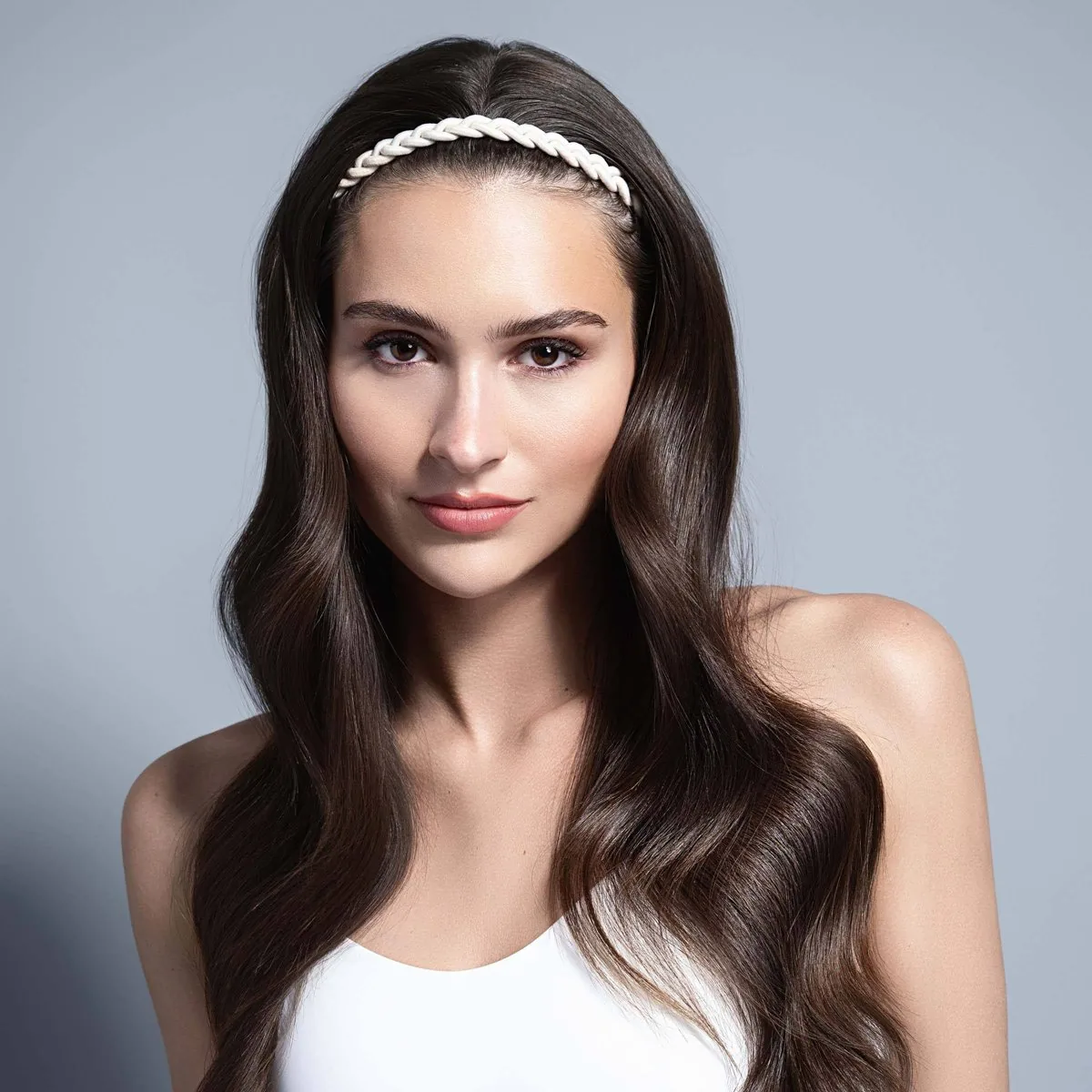
The classic loose-waves-and-headband combination is the one most people picture when they think of hairstyles with a headband, and it earns that place because it works on almost everyone. Soft waves give the hair movement and body, while the band pulls the front back neatly and adds a finished touch. It is the ideal style for a day when you want to look put together without spending half an hour with hot tools — waves from a curling wand, a braid left in overnight, or even your natural texture all work. The band does the polishing; the waves do the softening.
Best for: medium to long hair, natural waves, and anyone who wants a romantic, low-effort look. How to style it: wave the hair in large sections, brush through gently, place a medium-width band two finger-widths back from the hairline, and pull a little volume at the crown. Maintenance: a light-hold spray keeps the waves soft without stiffness, and the style lasts all day with one quick band adjustment at lunchtime.
2. Sleek Straight Hair with a Thin Headband
Sleek straight hair with a thin headband is the most polished version of this look, and it is perfect for work, interviews, and formal days. The thin band adds a single clean line across otherwise simple hair, which makes the whole style look deliberate rather than plain. It works best on hair that has been straightened smoothly, with the ends tucked neatly, because the band draws the eye to the shine and the clean lines. Choose a metal or tortoiseshell band for a classic finish, or a black velvet one for something softer.
Best for: straight or straightened hair, fine to medium textures, and professional settings. How to style it: straighten in sections, smooth the front with a little serum, and place the thin band just behind the hairline so it sits flat. What to ask: if your hair is very fine, ask your stylist for blunt ends — they make sleek styles look thicker and the band sit more neatly.
3. Headband with a Low Ponytail
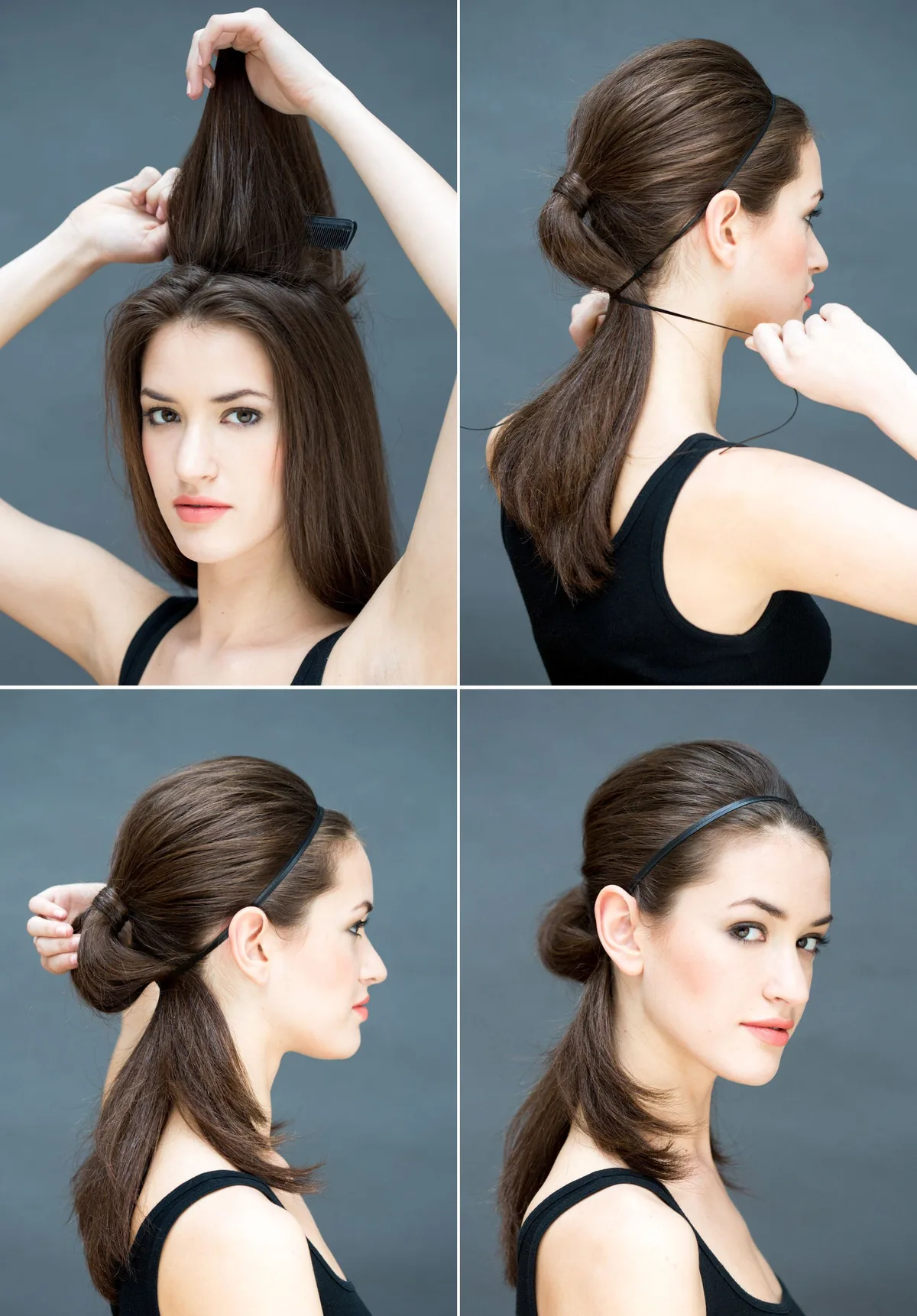
A low ponytail with a headband is the grown-up version of a school-day style, and it is far more elegant than it sounds. The ponytail sits at the nape, the band frames the face, and together they look neat, calm and intentional — the kind of style that works for the office, a dinner, or a long day of errands. It is also wonderfully practical: the band keeps the front tidy while the ponytail keeps the rest out of the way, so you never have to choose between looking good and being comfortable.
Best for: medium to long hair, busy days, and anyone who wants a neat style that survives a full day. How to style it: gather the hair low, secure it with a covered band, wrap a small strand around the tie to hide it, then place the headband behind the hairline. Time and cost: about three minutes, and it needs nothing but a hair tie and a band you already own.
4. High Ponytail with a Wide Headband
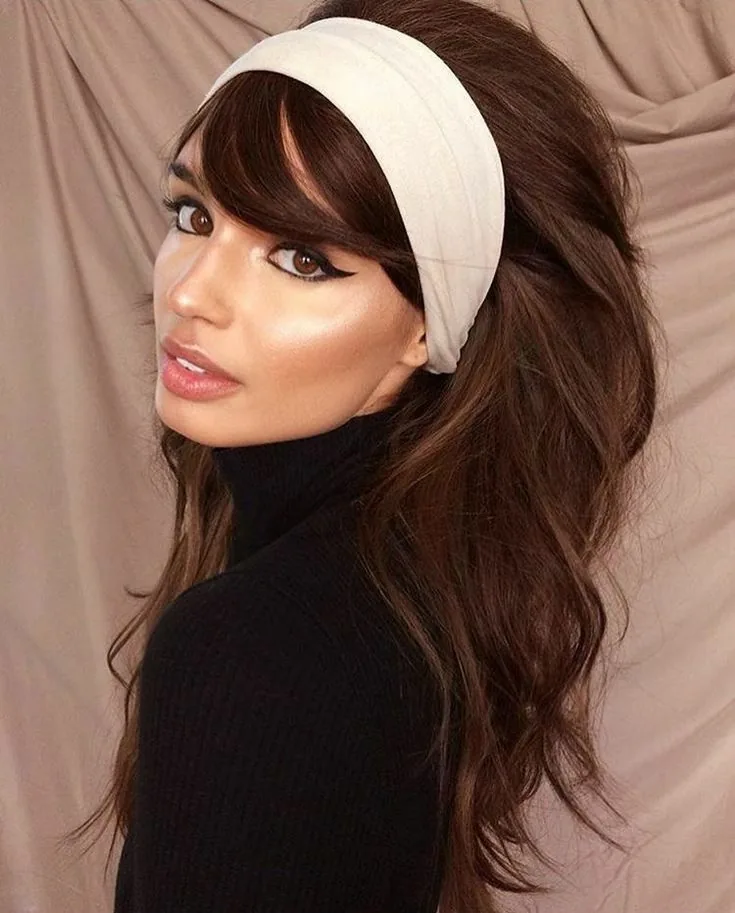
A high ponytail with a wide headband is bold, energetic and instantly youthful. The wide band adds drama at the front while the high ponytail lifts the whole face, which makes this a favourite for workouts, festivals, holidays and days when you want your hair to feel like part of the outfit. It works best with a padded or fabric band in a colour that contrasts with your hair, because the contrast is what makes the style pop. Keep the ponytail smooth at the front and let the length swing free behind.
Best for: long hair, thick hair, and occasions where you want a statement look. How to style it: brush the hair up high, secure it firmly, smooth the front with a brush, then place the wide band just behind the hairline. Pros and cons: it lifts the face beautifully, but a very tight high ponytail worn all day can ache — loosen it slightly at the roots once the band is on.
5. Headband with a Messy Bun
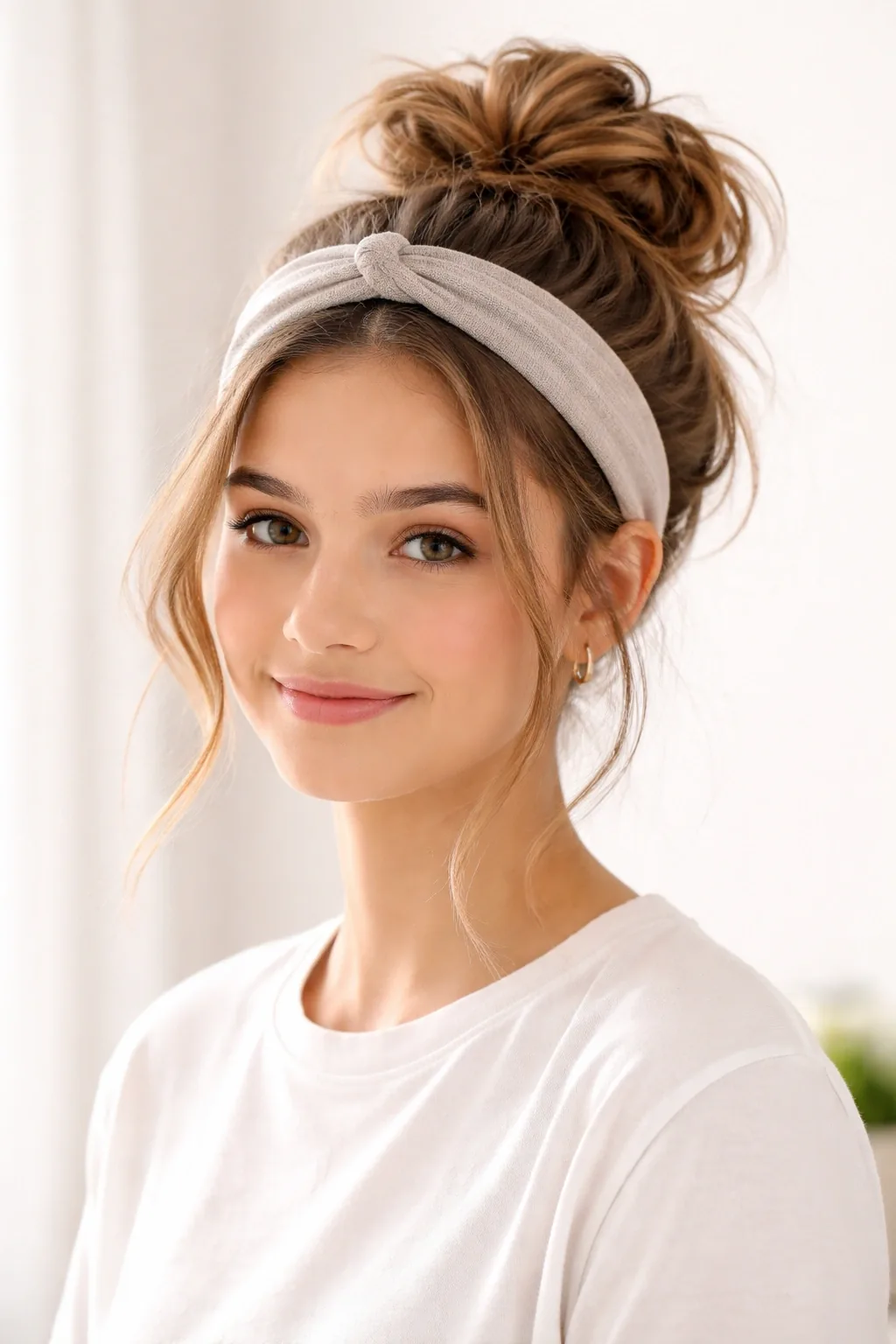
A messy bun with a headband is the ultimate off-duty look, and it is the style most people reach for on weekends, lazy mornings and work-from-home days. The bun takes care of the length, the band takes care of the front, and the slight messiness makes the whole thing look relaxed rather than unfinished. It is also one of the kindest styles for second-day hair, because the bun hides the texture at the back while the band hides the roots at the front. Add a soft fabric band and it looks like a deliberate choice, not a surrender.
Best for: second-day hair, casual days, and medium to long hair that goes up easily. How to style it: gather the hair loosely, twist it into a bun, pin it where it feels secure, then place the band and pull out a few face-framing strands. Maintenance: a little dry shampoo at the roots before you start keeps the style fresh, and the bun can be redone in seconds if it loosens.
6. Headband with a Low Bun
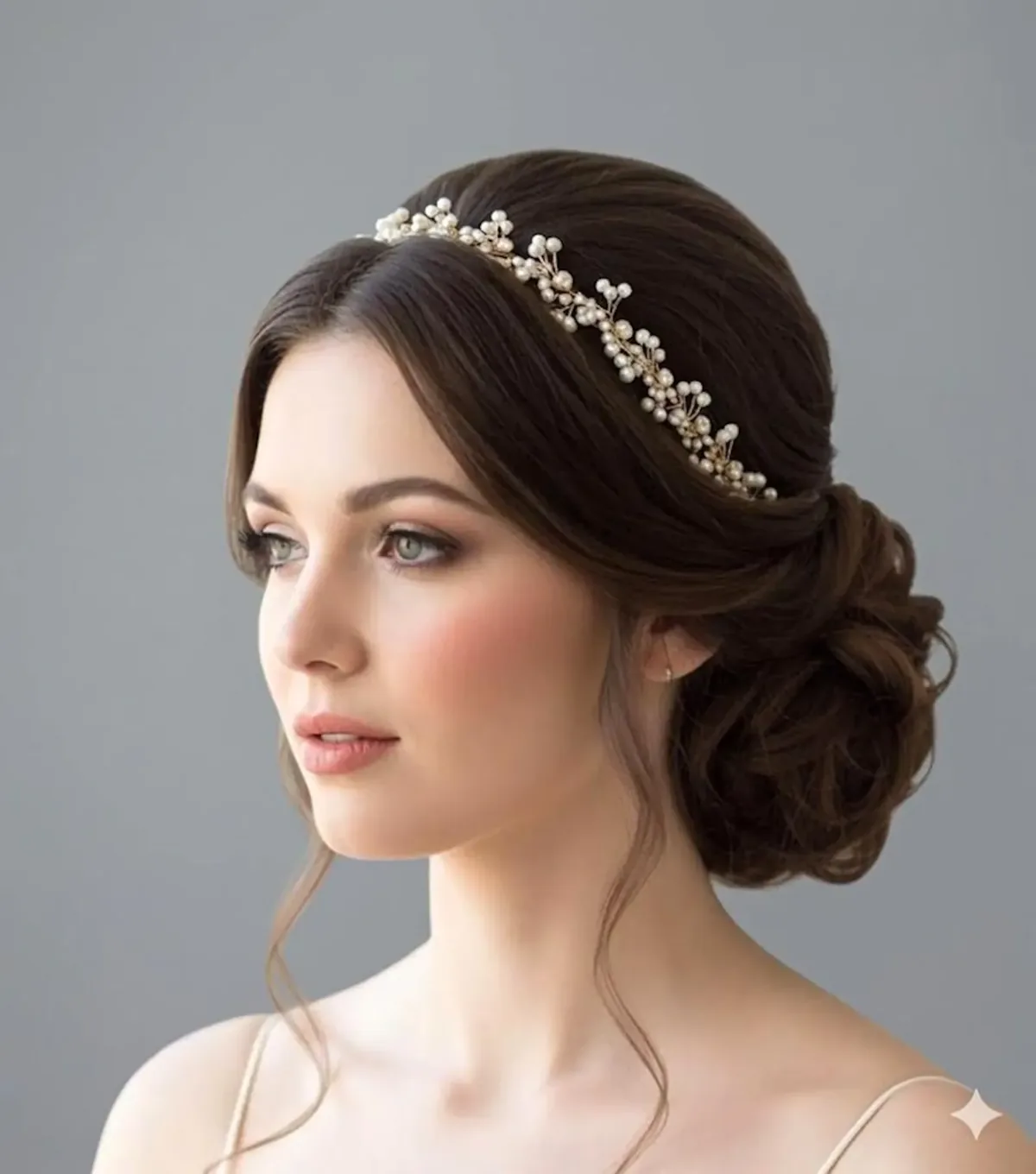
A low bun with a headband is quiet, elegant and surprisingly versatile — it works for a wedding, a job interview, or a smart dinner, and it takes only a few minutes. The bun sits at the nape, which keeps the silhouette soft, while the band adds a touch of polish at the front. It is one of the best hairstyles with a headband for formal occasions, because it looks intentional from every angle and stays in place for hours. A velvet or beaded band lifts it into evening territory; a plain fabric band keeps it daytime.
Best for: formal occasions, fine hair that needs a neat finish, and anyone who wants an updo without the fuss. How to style it: smooth the hair back, twist it into a low bun, pin it securely, then place the band and soften the front with a few pulled-out strands. What to ask: if your hair is slippery, ask your stylist for a low bun that uses pins rather than a tie alone — it holds far longer.
7. Half-Up Hairstyle with a Headband
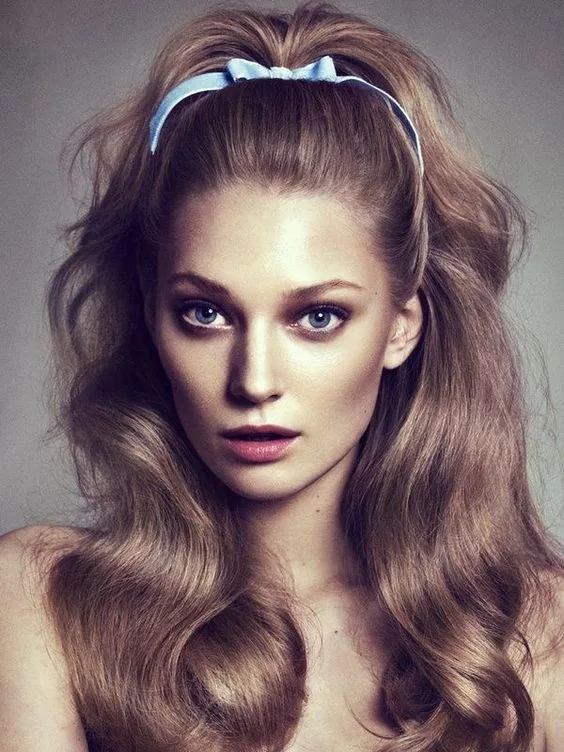
A half-up hairstyle with a headband gives you the best of both worlds: the face is open and tidy, and the length still falls free behind. The top section is pulled back — sometimes twisted, sometimes simply gathered — and the band sits just in front of it, adding a second layer of polish. It is a lovely choice for long hair that feels heavy when worn fully down, and for occasions where you want to look styled but still soft. The band also hides the join where the top section meets the rest, which is the part of a half-up style that usually gives it away.
Best for: long hair, thick hair, and occasions that call for soft and polished at the same time. How to style it: take the top section from temple to temple, secure it at the crown, place the band just in front of the join, and let the rest fall loose. Pros and cons: it keeps hair out of your face while showing off your length, but on very fine hair the top section can slip — a little backcombing at the crown fixes it.
8. Headband with Curtain Bangs
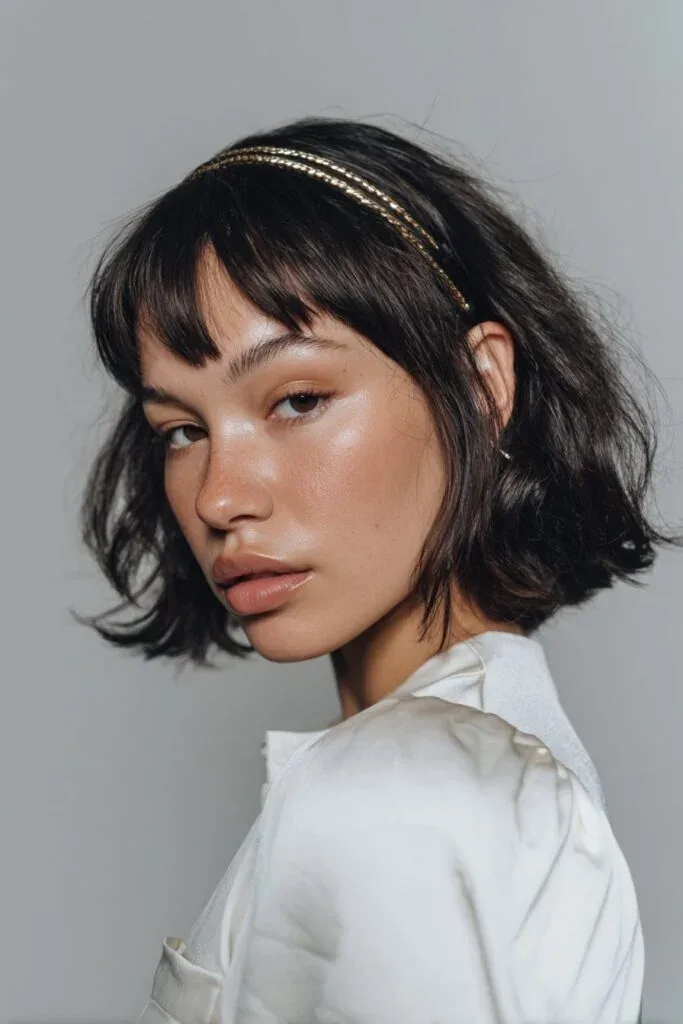
Curtain bangs and a headband are a natural pairing, because the bangs already frame the face and the band simply holds everything else back. The bangs fall softly on either side of the face while the band sits behind them, which creates a lovely layered frame that suits almost every face shape. It is a particularly good style for people growing out a fringe, because the curtain shape already sweeps to the sides and the band keeps the length from falling into the eyes. Blow-dry the bangs with a round brush, place the band, and the look is done.
Best for: curtain bangs, growing-out fringes, and oval or heart-shaped faces. How to style it: dry the bangs forward and to the sides, place the band behind the bang line, and let the bangs fall naturally in front of it. Maintenance: a quick blast with the hairdryer in the morning keeps the bangs sitting right, and a little dry shampoo stops them going flat by afternoon.
9. Headband with a Side Part
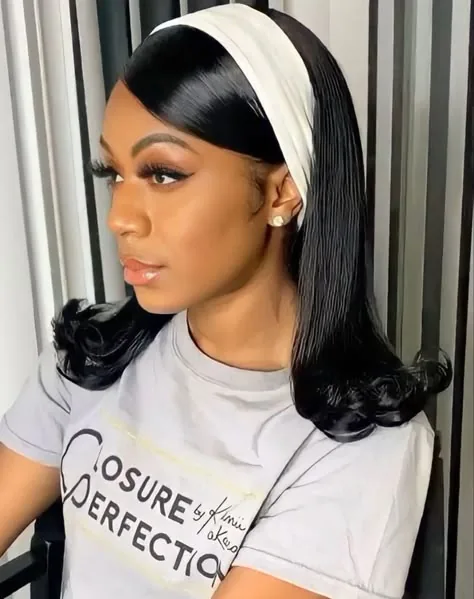
A side part with a headband is one of the simplest ways to make a headband style look different, because the parting changes the whole balance of the face. The hair sweeps across from one side, the band holds it in place, and the longer side falls in a soft curtain that frames one cheek. It is a classic, slightly vintage look that works beautifully with a thin metal band or a tortoiseshell one, and it suits straight and wavy hair equally well. If you always wear a centre part, switching to a side part with a band is the easiest refresh you can give your hair.
Best for: straight and wavy hair, and anyone who wants a classic, polished look. How to style it: part the hair deeply to one side, smooth the shorter side back, place the band so it follows the part, and let the longer side fall forward. What to ask: if your hair always falls back to a centre part, ask your stylist to cut a few shorter pieces at the front — they help a side part hold.
10. Headband and a French Braid
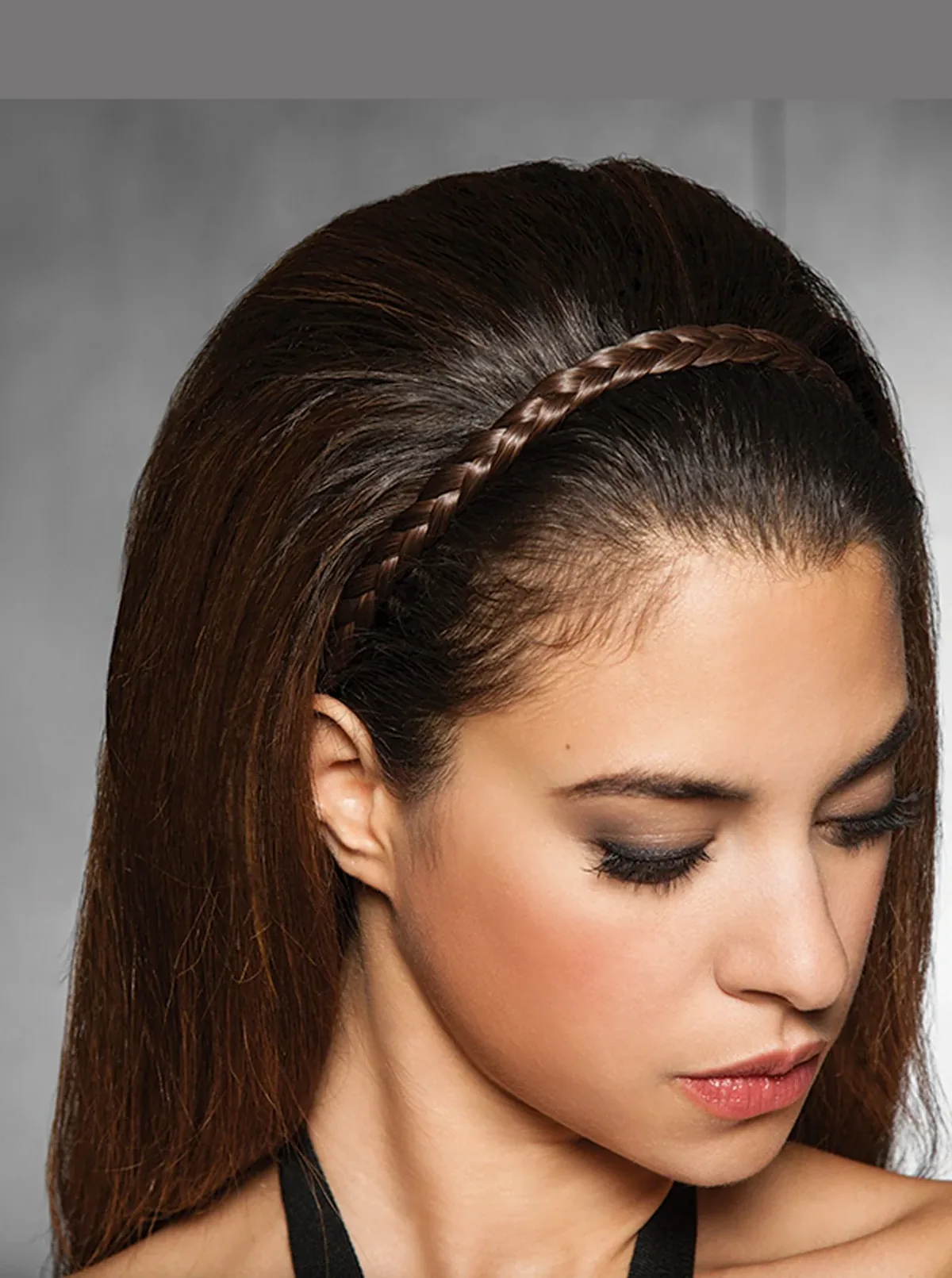
A French braid with a headband is a beautiful combination because the braid already does the work of keeping hair tidy, and the band adds a decorative finish at the front. The braid runs from the crown down the back, the band frames the face, and together they look intricate without being difficult — the braid is the skill, the band is the shortcut. It is a favourite for school, work, and long days, because a French braid holds for hours and the band stops the front pieces from escaping. Add a velvet band and it looks soft and romantic; add a thin metal one and it looks sharp and neat.
Best for: medium to long hair, active days, and anyone who can manage a basic French braid. How to style it: braid from the crown down, secure the end, then place the band behind the hairline and gently pull the braid wider for softness. Time and cost: about ten minutes if you can braid, and the style holds all day without a single touch-up.
11. Dutch Braid with a Headband
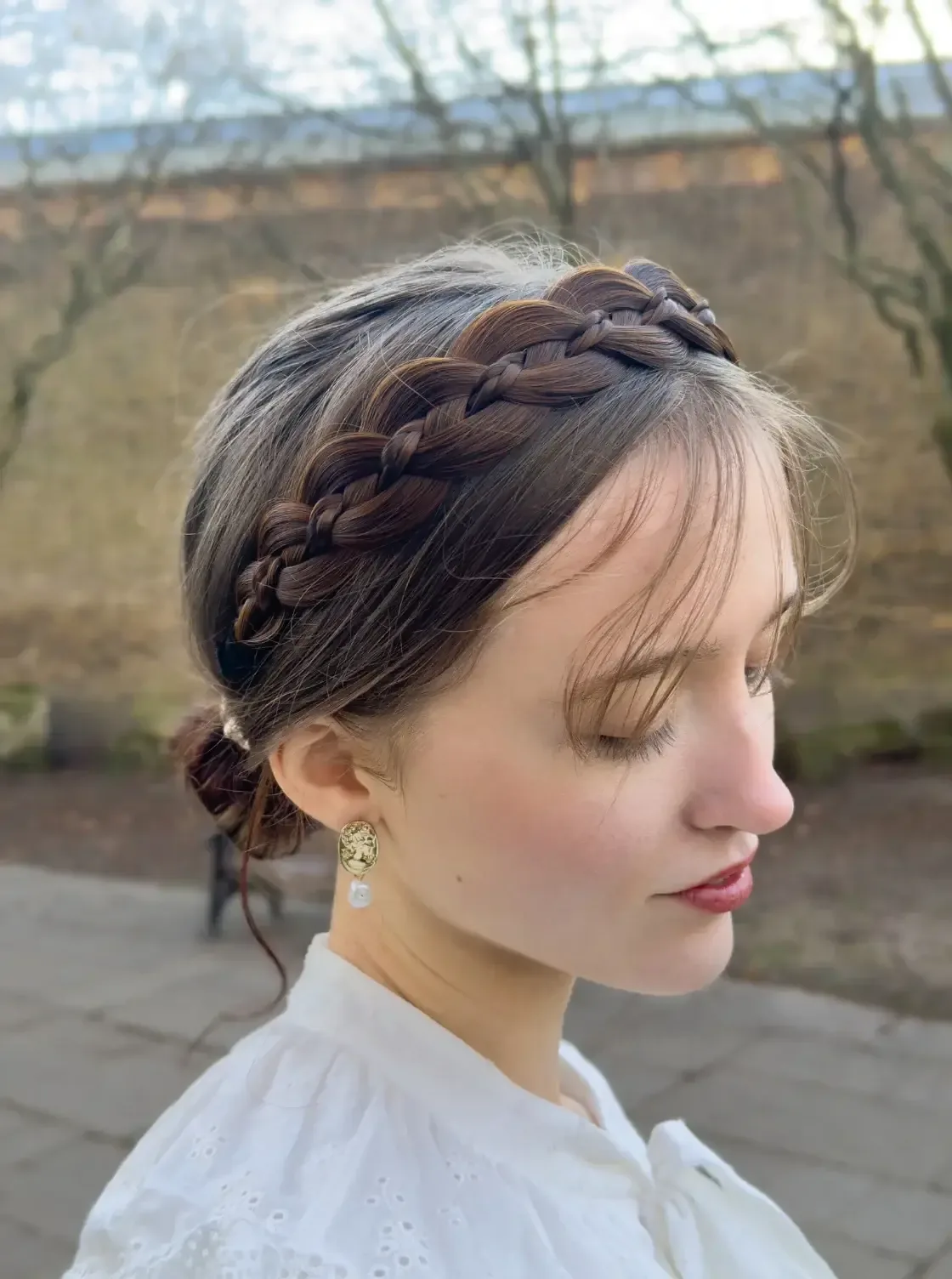
A Dutch braid with a headband looks more dramatic than a French braid, because the braid sits on top of the hair instead of woven inside it, which makes it stand out beautifully against the band. The raised braid catches the light and adds texture, while the headband keeps the front smooth and tidy. It is a strong choice for thick hair, because the braid can handle the volume, and for days when you want your hairstyle to be the feature of the outfit. A wide fabric band balances the bold braid best, while a thin band lets the braid take all the attention.
Best for: thick hair, long hair, and statement days. How to style it: Dutch-braid from the front hairline backwards, secure the end, place the band just behind the start of the braid, and pull the braid edges gently for fullness. Pros and cons: it looks impressive and holds for hours, but it takes practice — do it twice before an important day so your hands know the pattern.
12. Headband with a Fishtail Braid
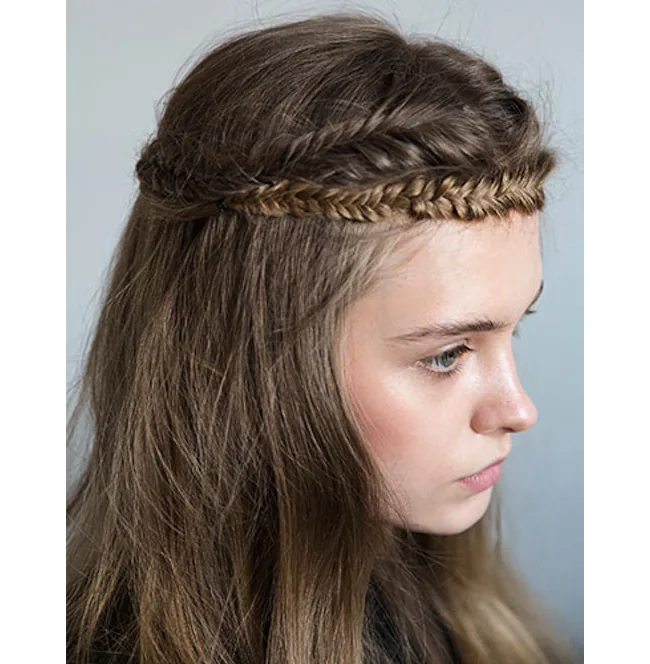
A fishtail braid with a headband is one of the prettiest hairstyles with a headband, because the fishtail’s fine, woven texture looks delicate next to a soft band. The braid falls over one shoulder or down the back, the band frames the face, and the whole look feels romantic without trying too hard. It works best on long hair, where the fishtail has enough length to show off its pattern, and it is a lovely choice for weddings, holidays and summer evenings. The band also solves the fishtail’s one weakness — the front pieces that escape — by holding them neatly back.
Best for: long hair, romantic occasions, and summer. How to style it: gather the hair to one side, fishtail-braid loosely, secure the end, place the band, then gently pull the braid apart for a fuller, softer finish. Maintenance: a light spray holds the fine fishtail strands in place, and the style looks even better slightly loosened than perfectly neat.
13. Bubble Braid with a Headband
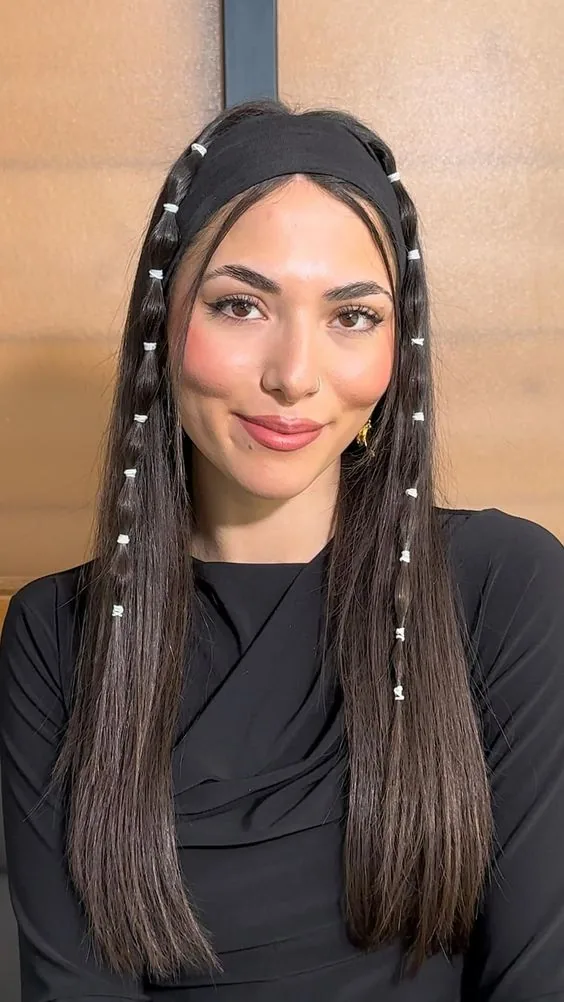
A bubble braid with a headband is playful, modern and surprisingly easy — it is made with hair ties, not braiding skill, which means anyone can do it. The hair is tied into a ponytail, then tied again at intervals down the length, with each section puffed out into a bubble. The headband sits at the front and turns a fun ponytail into a finished hairstyle, which is why it is popular for festivals, parties and days when you want your hair to feel like fun. It works best on long, thick hair, where the bubbles have enough volume to show.
Best for: long hair, thick hair, festivals and parties. How to style it: make a high or low ponytail, add ties every few inches, puff each section gently, then place the band at the front. Pros and cons: it needs no braiding skill and looks impressive, but it uses a lot of hair ties — keep spares in your bag for touch-ups.
14. Headband with Beach Waves
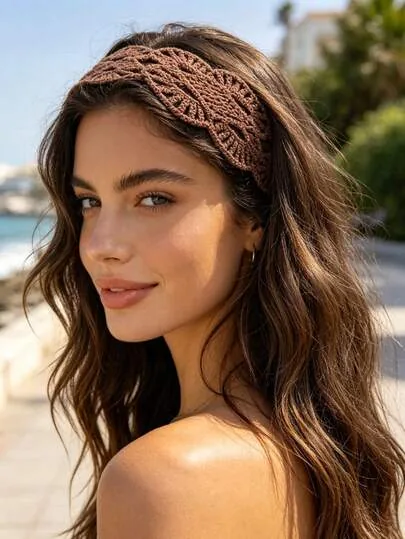
Beach waves with a headband are the definition of an easy summer look. The waves are loose, slightly messy and full of texture, and the band keeps the front out of your face while you are out in the sun, the sea breeze or a long lunch. It is a style that actually gets better as the day goes on, because the waves relax and the band keeps everything looking intentional. A fabric or knotted band in a bright colour adds a holiday feel, while a neutral band keeps it wearable for everyday summer days.
Best for: summer, holidays, and naturally wavy or textured hair. How to style it: scrunch in a little sea-salt spray, let the hair dry naturally or wave it loosely, place the band, and leave a few pieces free around the face. Time and cost: about five minutes, and it needs no heat at all if your hair has natural wave.
15. Curly Hair with a Headband
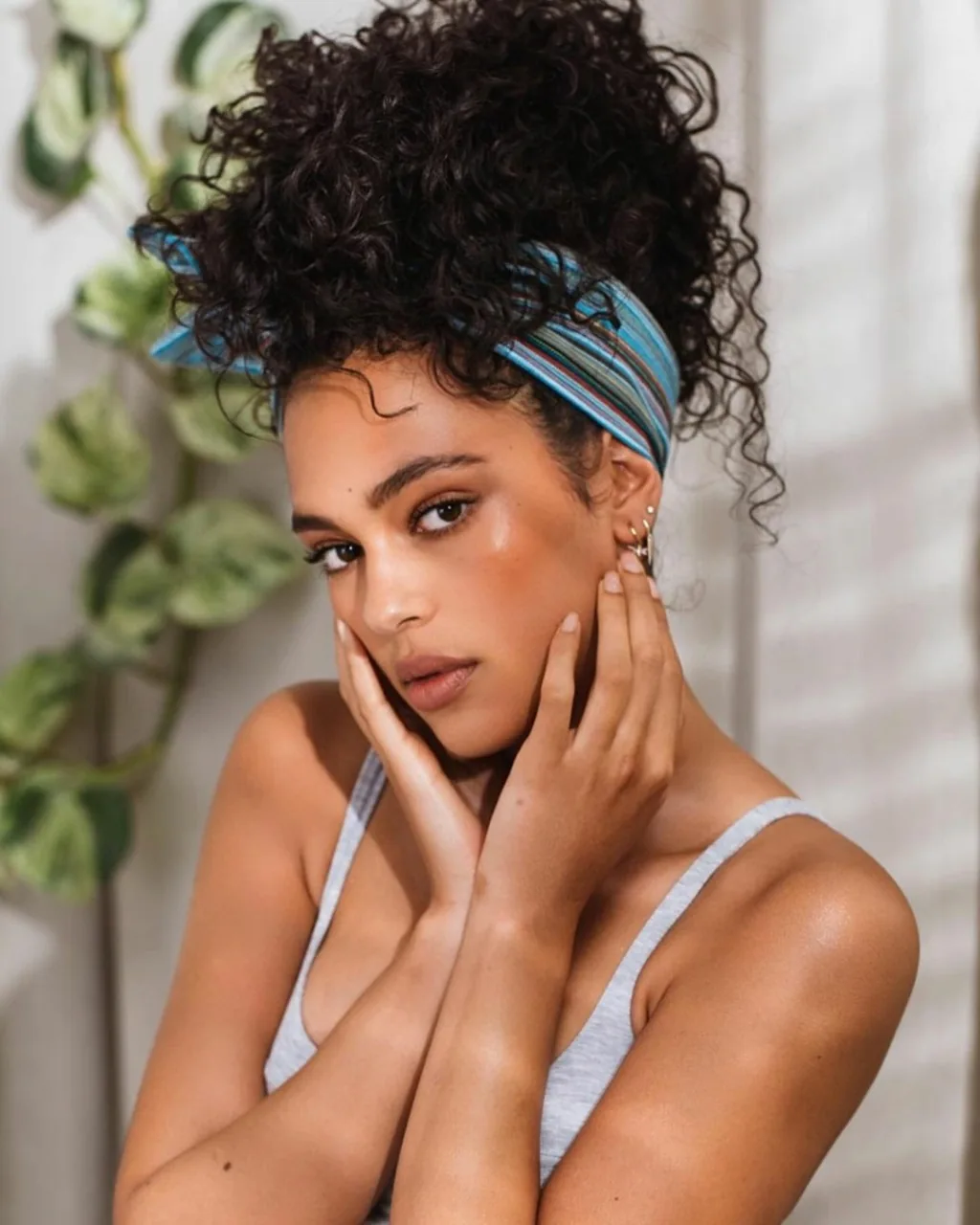
Curly hair with a headband is a match made in heaven, because the band does the one thing curly hair needs most: it controls the front without flattening the volume behind it. The curls stay big and free at the back and sides, while the band holds the front sections away from the face. The trick is to choose a soft, wide fabric band that sits on top of the curls rather than pressing them down, and to place it gently so it does not break the curl pattern. The result is a style that looks joyful, full and completely natural.
Best for: curly and coily hair, and anyone who wants volume with control. How to style it: style the curls as usual, let them dry fully, then place a soft fabric band on top and adjust it until the front curls sit where you want them. What to avoid: thin, hard bands that cut into the curls and leave a dent, and placing the band on wet curls, which flattens them as they dry.
16. Headband with a Top Knot

A top knot with a headband is the style for days when you want your hair completely out of the way but still want to look like you made an effort. The knot sits high on the crown, the band frames the face, and together they look neat, fresh and a little bit chic. It is a favourite for the gym, for hot weather, and for long days when loose hair would only get in the way. A wide band works best here, because it balances the height of the knot and stops the front from looking too severe.
Best for: hot days, workouts, and long hair that goes up easily. How to style it: gather the hair high, twist it into a knot, pin it securely, then place the band and soften the hairline with a few pulled-out strands. Pros and cons: it keeps you cool and tidy all day, but a very tight top knot can pull at the hairline — keep it secure, not strangled.
17. Headband and a Low Chignon
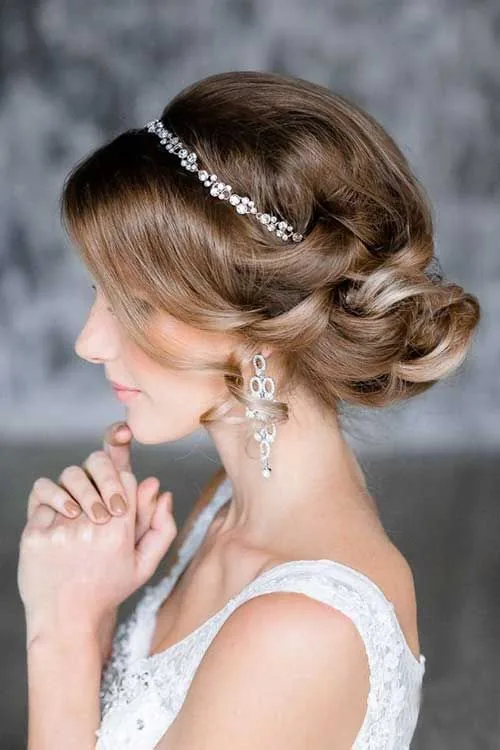
A low chignon with a headband is one of the most elegant hairstyles with a headband, and it is a classic choice for weddings, formal dinners and occasions where you want to look polished for hours. The chignon sits low and soft at the nape, the band adds a graceful line across the front, and the whole silhouette is calm and refined. It works beautifully with a beaded or velvet band, and it photographs wonderfully from every angle, which is why it is a favourite for bridesmaids and wedding guests alike.
Best for: weddings, formal events, and medium to long hair. How to style it: smooth the hair back, twist it into a low chignon, pin it in place, then add the band and leave two soft pieces at the front. What to ask: if you are a wedding guest, ask your stylist for a chignon that uses pins rather than a tie, so it survives dancing without loosening.
18. Headband with a Side-Swept Style
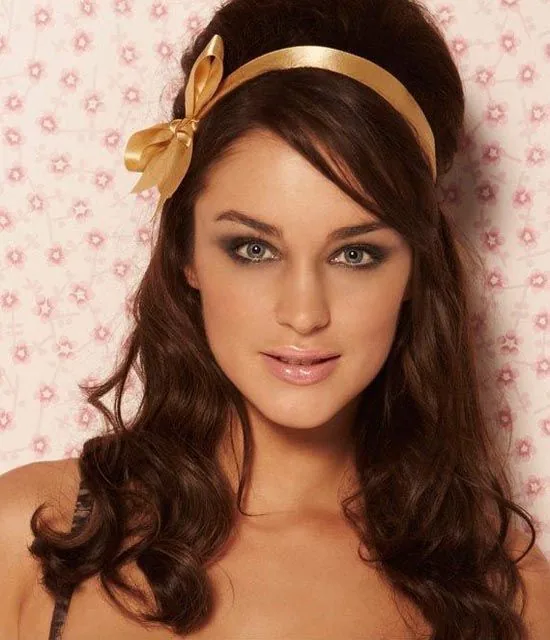
A side-swept style with a headband is glamorous without being fussy. All the hair is swept to one side — over one shoulder, in soft waves or a loose curl — and the band holds the sweep in place while adding a line of polish across the front. It is a lovely choice for evenings, parties and photographs, because the asymmetry is flattering and the band stops the sweep from falling back across the face. A sparkly or beaded band turns it into a party look; a plain one keeps it soft and daytime.
Best for: evenings, parties, and medium to long hair with wave or curl. How to style it: sweep the hair to one side, pin it discreetly at the back, place the band to hold the sweep, and let the ends fall over one shoulder. Maintenance: a few hidden pins at the nape keep the sweep in place all evening, and a light spray stops the ends from frizzing.
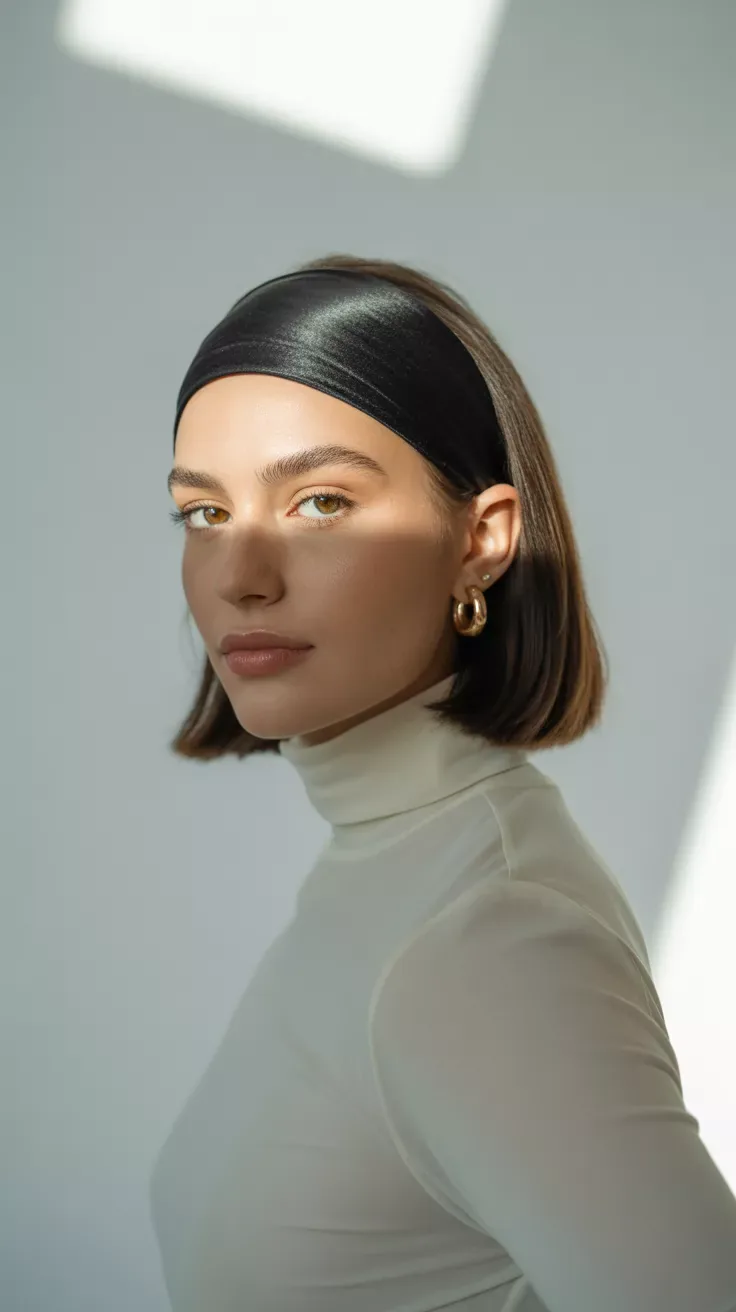
19. Headband with a Bob Haircut
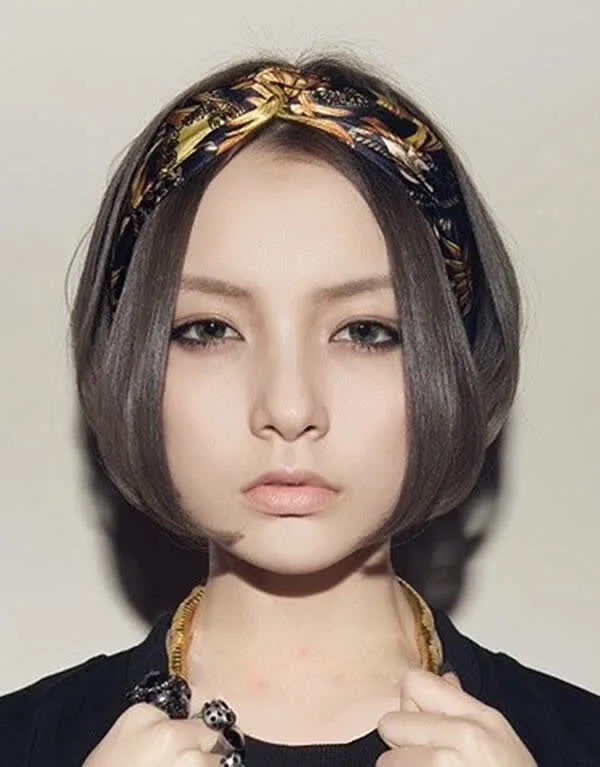
A bob with a headband is a perfect pairing, because the bob’s clean shape gives the band something neat to sit against. The band adds a touch of personality to a cut that can sometimes feel plain, and it is a wonderful way to change the look of a bob without changing the cut — swap the band and the whole style feels different. A thin band looks chic and minimal, a wide padded band looks bold and fashionable, and a patterned fabric band makes a bob feel playful. It is also a great way to grow out a bob, because the band hides the awkward in-between length.
Best for: bob and lob haircuts, and anyone who wants to refresh a short cut without a salon visit. How to style it: dry the bob smooth or with a slight bend at the ends, place the band behind the hairline, and tuck the sides behind your ears or leave them free. Pros and cons: it instantly updates a bob, but a very wide band can overwhelm a short bob — match the band width to the length of the cut.
20. Headband with a Pixie Cut
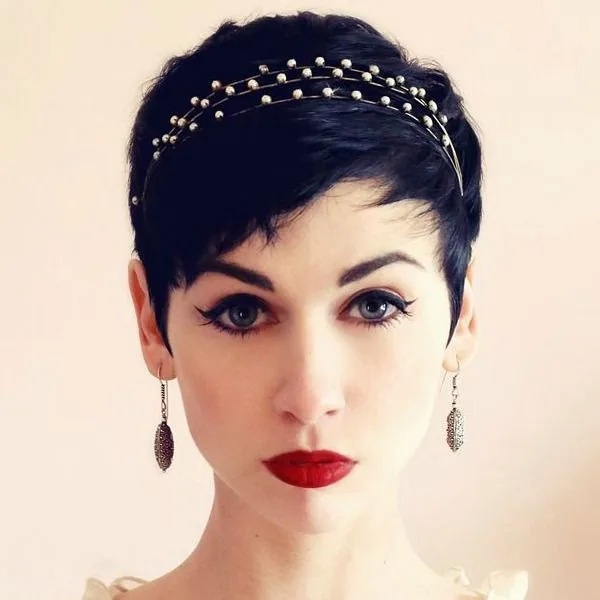
A pixie cut with a headband proves that short hair and headbands belong together. The band adds softness and femininity to a cut that can feel quite sharp, and it is a practical help too — it holds the front pieces back on days when the pixie is growing out or will not sit flat. A thin metal band looks sleek and modern on a pixie, while a soft fabric band looks gentle and romantic. Because a pixie shows the band so clearly, the band becomes the accessory, so choose one you love and let it be the feature.
Best for: pixie and very short cuts, and growing out a short style. How to style it: style the pixie as usual, place a thin band just behind the hairline, and let the texture on top show above it. What to avoid: a wide band that covers too much of a short cut — on a pixie, the band should frame the style, not hide it.
21. Headband with Long Layers
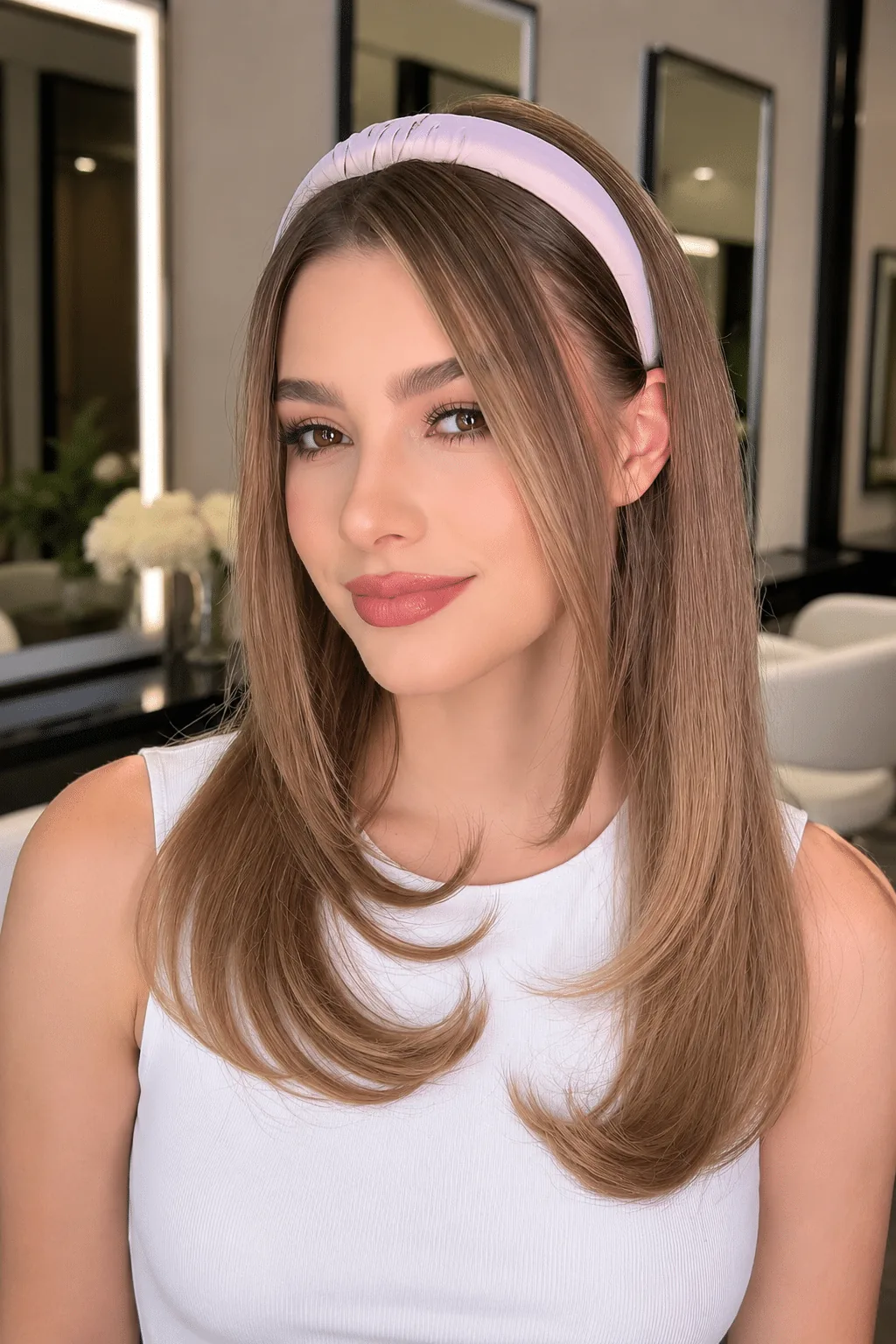
Long layered hair with a headband is a beautiful, flowing look, because the layers give the hair movement and the band gives it structure. The front layers fall softly around the face while the band holds the top section back, which stops long hair from looking heavy or shapeless. It is a wonderful everyday style for long hair, and it works just as well for a smart day as for a relaxed one. The key is a band that sits comfortably on top of the layers without flattening them — a medium-width fabric or velvet band is ideal.
Best for: long hair with layers, and anyone who wants structure without an updo. How to style it: blow-dry or wave the layers, place the band behind the hairline, and let the front layers fall naturally in front of it. Maintenance: a little serum on the ends keeps long layers looking healthy, and the style holds all day with no touch-ups.
22. Velvet Headband with Loose Curls
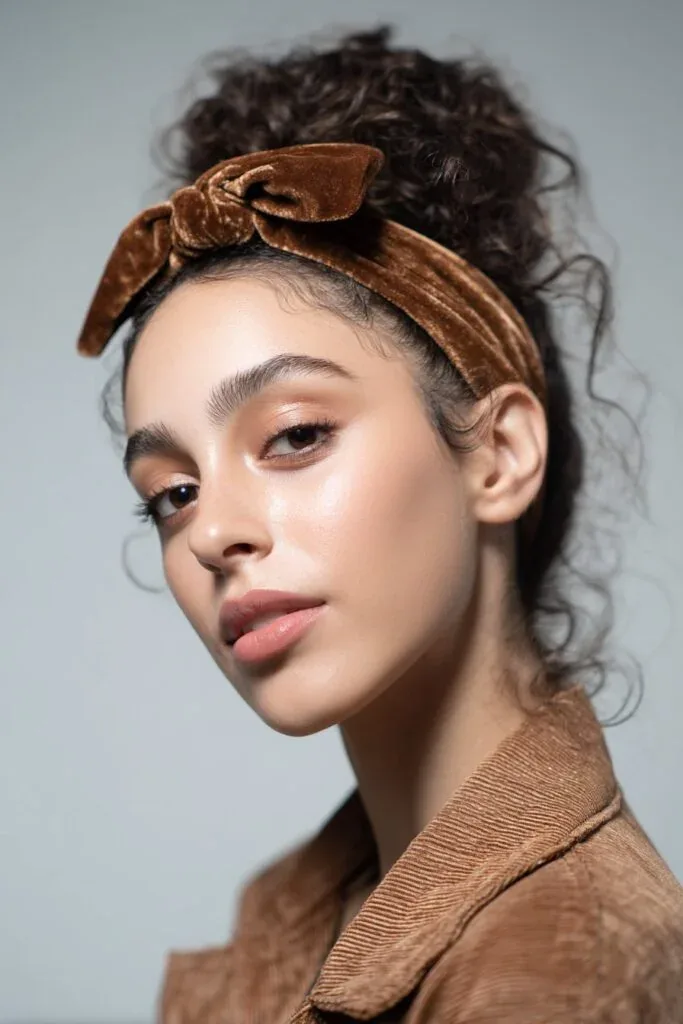
A velvet headband with loose curls is the cosiest, most luxurious version of this look. The velvet adds softness and depth, the curls add movement, and together they feel rich and romantic — perfect for autumn, winter, and evenings when you want to look warm and polished. Velvet also has a practical advantage: it grips the hair beautifully, so the band stays put far longer than a smooth one. Choose a deep colour — burgundy, forest green, navy or classic black — and let the band be the statement.
Best for: autumn and winter, loose curls, and anyone whose bands usually slip. How to style it: curl the hair in large sections, brush through for softness, place the velvet band behind the hairline, and pull a little volume at the crown. Time and cost: about fifteen minutes with a curling wand, and a good velvet band is one of the cheapest luxury accessories you can buy.
23. Knotted Headband with a Ponytail

A knotted headband with a ponytail is a fresh, modern twist on a classic, because the knot at the top of the band adds a little detail that a plain band does not have. The knot sits at the front like a small bow, the ponytail keeps the back neat, and the whole look feels playful without being childish. It is a favourite for spring and summer, for casual days, and for anyone who likes their accessories to do a little more than just hold hair back. The knot also helps the band grip, because it adds a little extra structure at the front.
Best for: casual days, spring and summer, and medium to long hair. How to style it: make a ponytail at whatever height suits you, place the knotted band so the knot sits at the front, and adjust the ponytail so it sits neatly behind the band. Pros and cons: the knot adds charm and grip, but on very fine hair a large knot can look top-heavy — choose a smaller knot for fine hair.
24. Headband with a Braided Crown
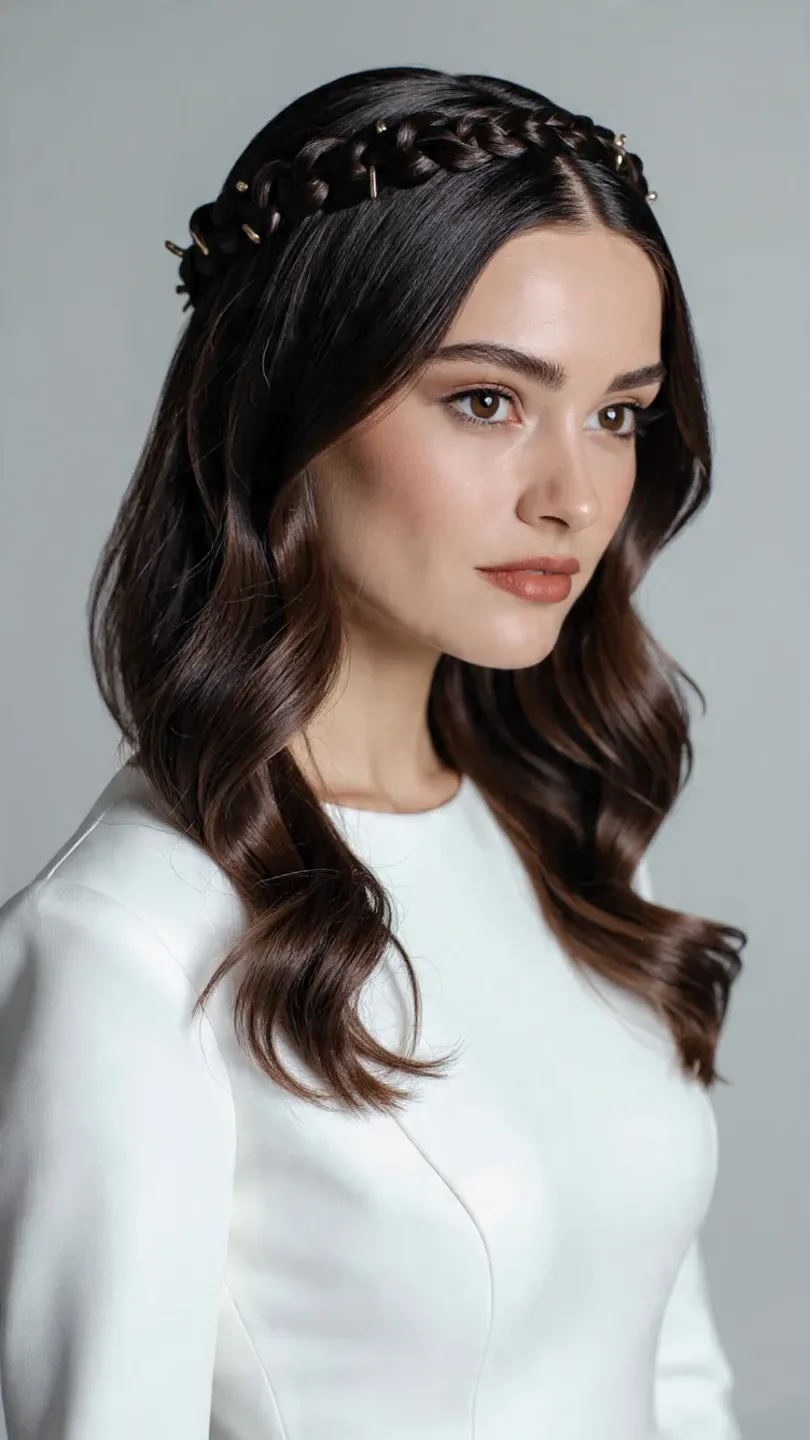
A braided crown with a headband is the most romantic style in this whole guide. The braid wraps around the head like a crown, the band sits just behind it, and together they create a soft halo effect that looks beautiful at weddings, festivals and summer parties. It takes a little practice, but the result is worth it — the braid holds the hair, the band adds polish, and the style stays in place for hours. It works best on long hair, where the braid has enough length to wrap around, and it looks lovely with a thin, delicate band that does not compete with the braid.
Best for: weddings, festivals, and long hair. How to style it: braid two sections from either side of the head, bring them around and pin them at the back, then place a thin band behind the braid line. Time and cost: about fifteen minutes once you have practised, and it holds all day with a few pins and a light spray.
25. Headband and a Sleek Low Ponytail for Work
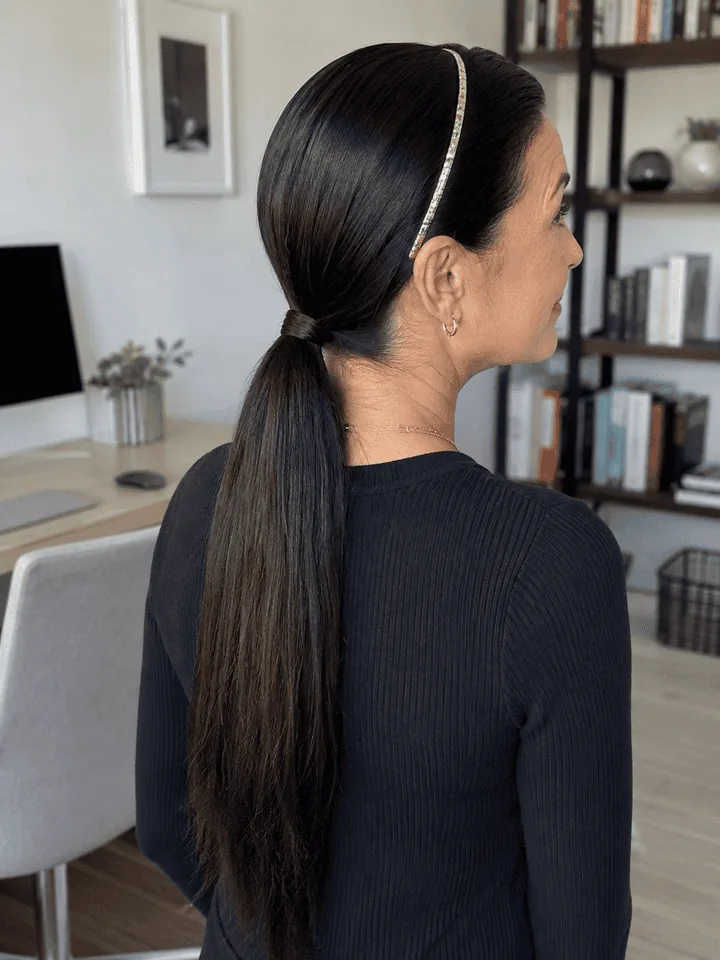
A sleek low ponytail with a headband is one of the smartest work hairstyles with a headband, because it looks polished, professional and completely put together. The hair is smooth at the front, the ponytail is neat at the nape, and the band adds a single clean detail that lifts the style from plain to deliberate. It is the kind of hairstyle that says you are organised and in control, and it survives a full working day, a commute and an after-work dinner without needing a touch-up. A black or tortoiseshell band keeps it office-appropriate.
Best for: work, interviews, and formal daytime occasions. How to style it: smooth the hair with a brush and a little serum, secure a low ponytail, wrap a strand around the tie, then place the band flat behind the hairline. What to ask: if your hair is prone to flyaways, ask your stylist for a smoothing serum recommendation — the sleek finish depends on it.
26. Headband with a Messy Top Knot for the Gym
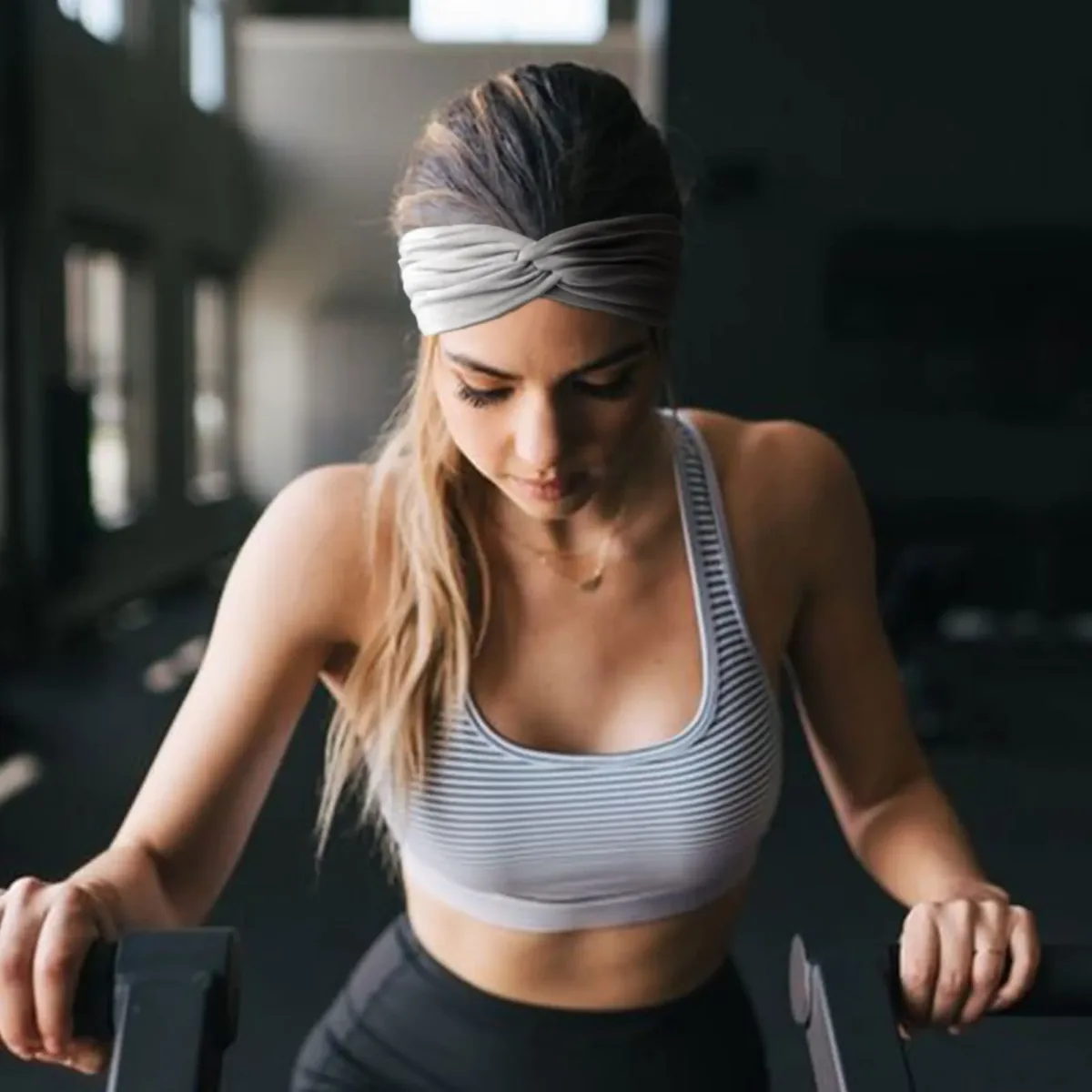
A messy top knot with a headband is the gym hairstyle that actually works, because the knot keeps the hair completely out of the way and the band stops the front pieces from falling into your face mid-workout. A fabric or sweat-wicking band is best here — it absorbs moisture, grips well, and stays comfortable through a full session. The style also doubles as a perfectly acceptable look for the school run or the supermarket afterwards, which is more than most gym hairstyles can say. Keep the knot loose enough to be comfortable and the band wide enough to catch the front layers.
Best for: workouts, hot weather, and active days. How to style it: gather the hair high, twist it into a loose knot, pin it, then place a wide fabric band at the front. Maintenance: wash fabric bands regularly if you wear them to the gym, and let the knot down as soon as you get home so the hair is not pulled all day.
27. Headband with a Half-Up Bun
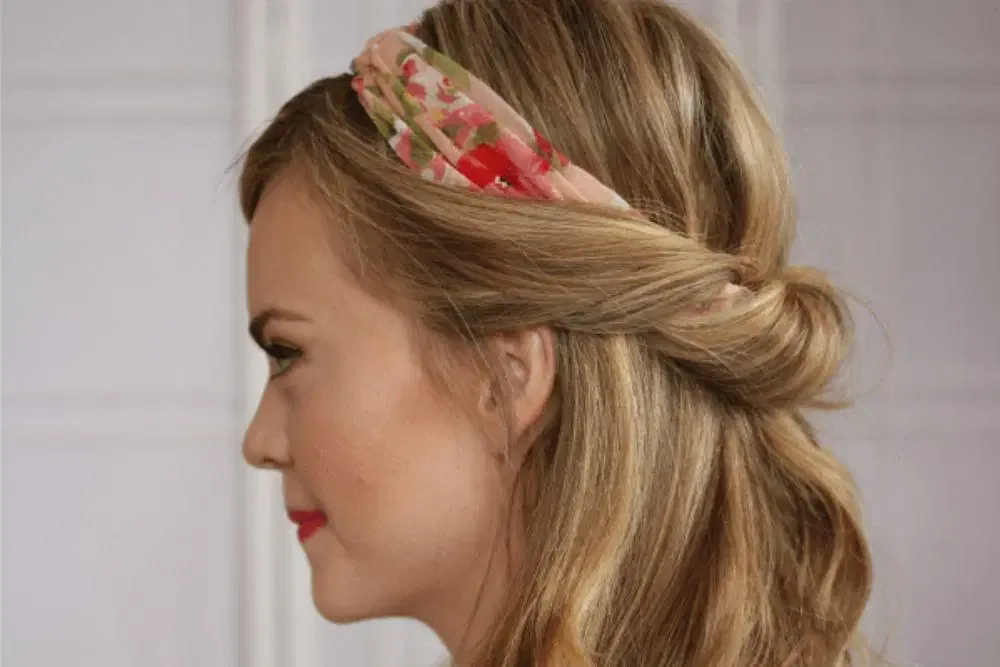
A half-up bun with a headband is the playful cousin of the half-up style, and it is a favourite for festivals, holidays and days when you want your hair to feel fun. The top section is twisted into a small bun at the crown, the rest falls loose, and the band sits in front of the bun to frame the face. It is a lovely way to show off long hair while keeping the front tidy, and it suits wavy and curly hair especially well, because the loose length keeps its natural texture. A patterned or colourful band makes it feel festive; a plain one keeps it everyday.
Best for: long hair, wavy or curly textures, and casual or festive days. How to style it: take the top section, twist it into a small bun, pin it, place the band in front of the bun, and let the rest fall free. Pros and cons: it is quick, fun and flattering, but on very thick hair the bun can feel heavy — keep the top section small.
28. Padded Headband with Voluminous Hair
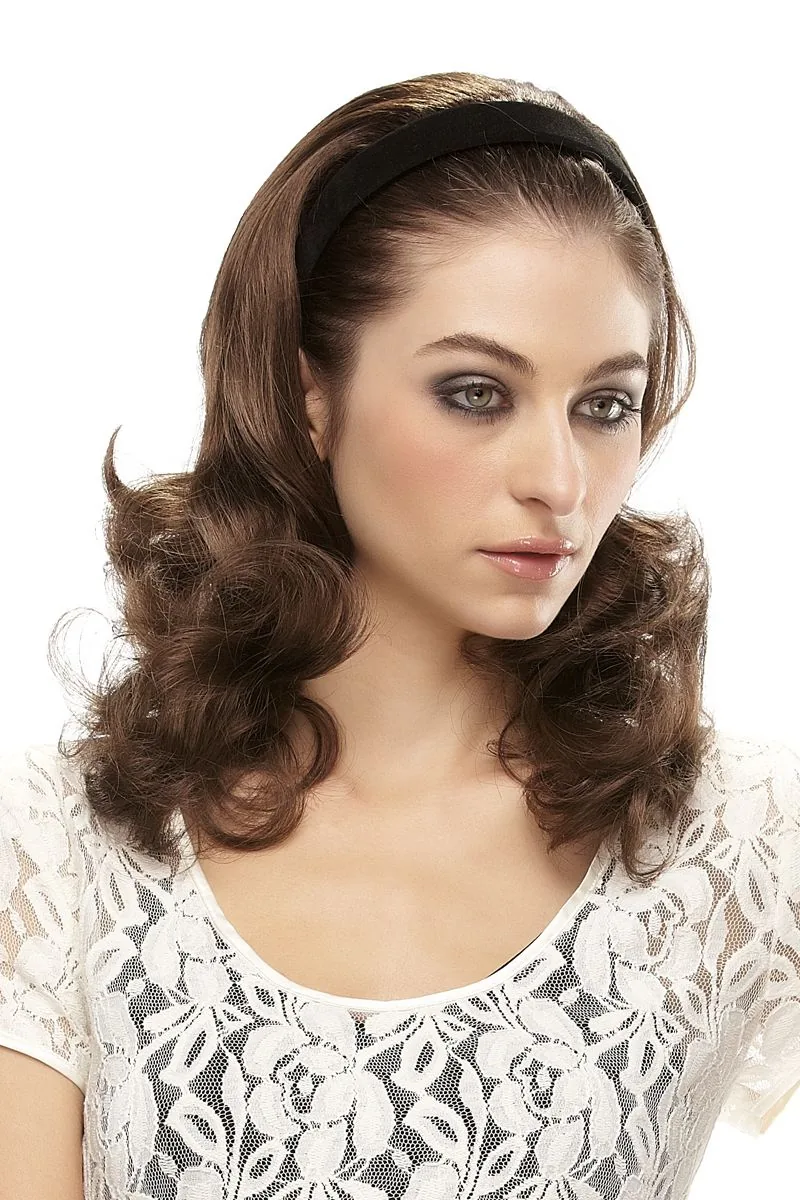
A padded headband with voluminous hair is a bold, fashionable look that has come back in a big way. The padded band adds height and drama at the front, while the voluminous hair behind it balances the shape, so the whole silhouette looks intentional and striking. It is a wonderful choice for parties, photographs and days when you want your hair to be the outfit’s feature. The trick is to build volume at the crown before you place the band — a little backcombing or a volumising spray at the roots — so the hair behind the band matches the band’s height.
Best for: parties, photographs, and medium to thick hair. How to style it: add volume at the crown, smooth the top layer, place the padded band behind the hairline, and let the hair fall full behind it. What to avoid: a padded band on very fine, flat hair without any volume at the crown — the band will look like it is sitting on top of the hair instead of part of it.
29. Headband with a Side Braid
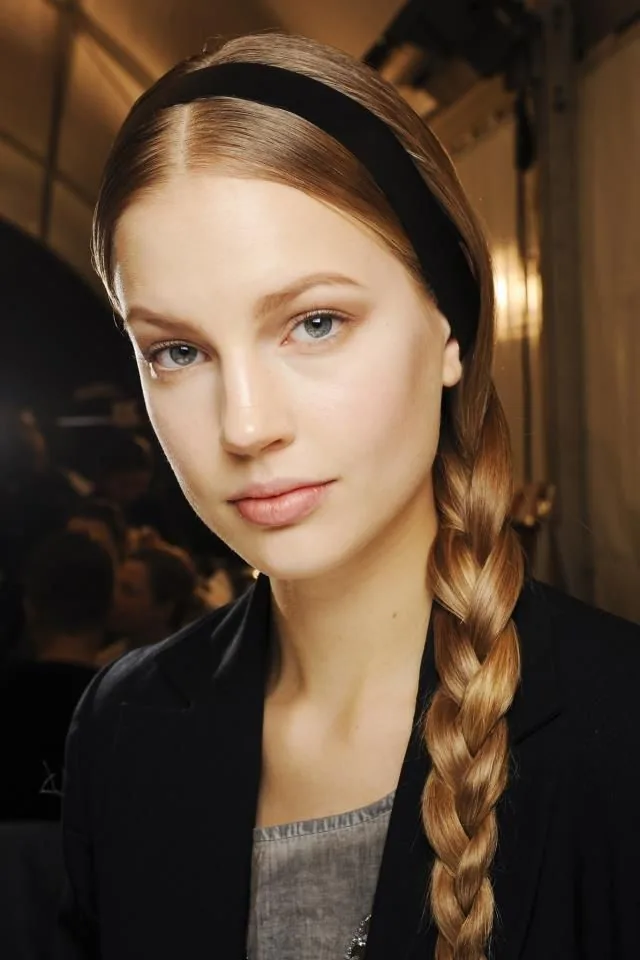
A side braid with a headband is soft, romantic and easy to wear. The braid falls over one shoulder, the band frames the face, and the asymmetry makes the whole look feel relaxed and pretty. It is a lovely choice for everyday wear, for dates, and for long days, because a side braid is comfortable to wear and easy to redo if it loosens. It also works beautifully on hair that is not quite long enough for a full braid down the back, because the side position needs less length. A thin band keeps it delicate; a wider band makes it bolder.
Best for: medium to long hair, everyday wear, and romantic occasions. How to style it: sweep the hair to one side, braid loosely, secure the end, place the band, and pull the braid gently for softness. Time and cost: about five minutes, and it holds well all day with a single hair tie.
30. Headband with a Twist-and-Pin Style
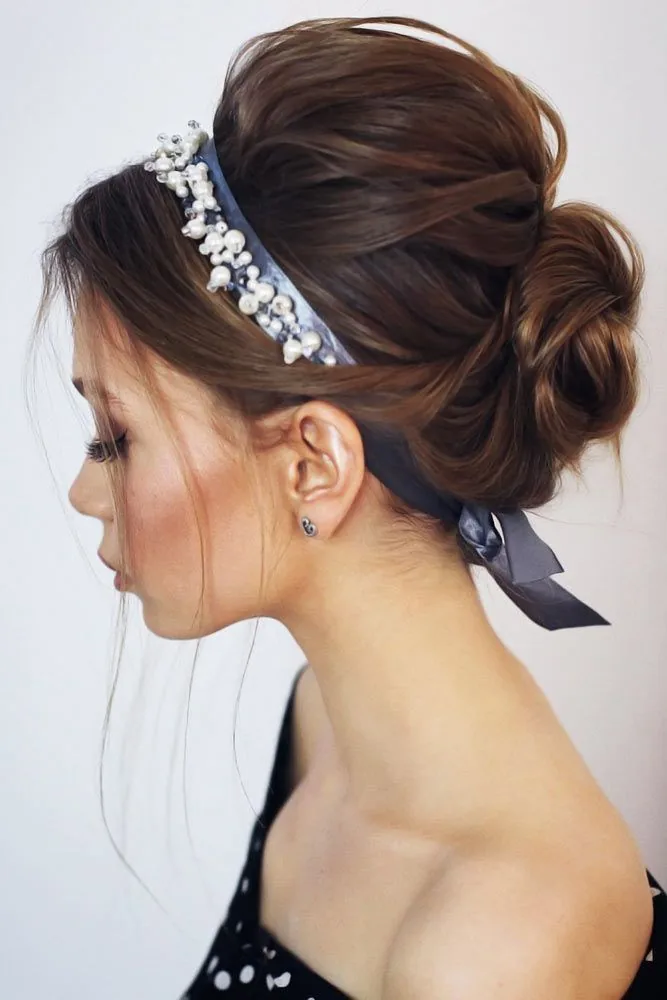
A twist-and-pin style with a headband is the elegant shortcut for people who cannot braid. Two front sections are twisted back from the face, pinned at the back, and the band sits over the join to hide the pins and add polish. The rest of the hair falls loose, which keeps the look soft, while the twists add just enough structure to make it feel like a real hairstyle. It is a wonderful choice for medium-length hair, for second-day hair, and for occasions where you want to look styled without spending more than five minutes on it.
Best for: medium-length hair, people who cannot braid, and quick elegant days. How to style it: twist a section from each temple backwards, pin them where they meet, place the band over the join, and let the rest fall loose. Maintenance: a couple of bobby pins and a light spray hold the twists all day, and the style can be redone in two minutes if it loosens.
31. Headband for a Wedding Guest Look

A headband is a wedding guest’s secret weapon, because it adds a formal touch to almost any hairstyle without needing a salon appointment. Soft waves with a beaded band, a low chignon with a velvet band, or a half-up style with a delicate metal band — all of them look like you made a real effort, and all of them take minutes. The key is to choose a band that matches the formality of the wedding: beaded or pearl for a formal evening, velvet or satin for a daytime celebration, and a colour that complements your outfit rather than matching it exactly.
Best for: wedding guests, formal daytime events, and anyone who wants a salon look at home. How to style it: style the hair in soft waves or a low updo first, then add the band last so it sits neatly against the finished style. What to ask: if you are unsure about the dress code, ask the couple or a friend — a beaded band suits a formal wedding, while a fabric band suits a relaxed one.
32. Headband with a Retro Flip
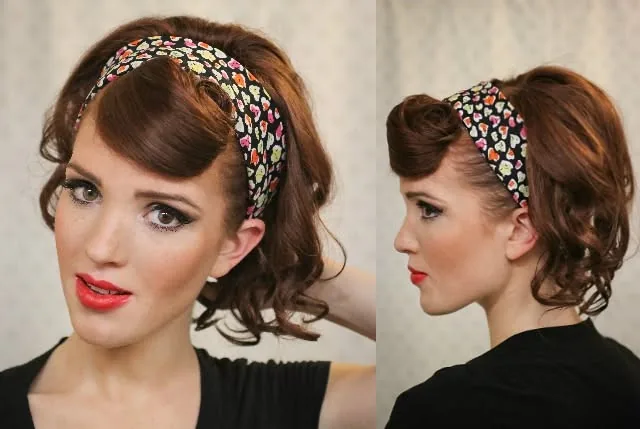
A retro flip with a headband is a joyful nod to the 1960s, and it is far easier than it looks. The ends of the hair are flipped outwards — with a round brush, a straightener, or rollers — the band sits neatly across the front, and the whole look feels bouncy, bright and a little bit glamorous. It works best on shoulder-length hair or a bob, where the flip has enough length to show, and it is a wonderful choice for parties, vintage-themed days, and anyone who likes their hair to have a bit of personality. A wide band in a bold colour completes the retro feel.
Best for: shoulder-length hair, bobs, parties and vintage looks. How to style it: blow-dry the ends outwards with a round brush, place the band behind the hairline, and finish with a light spray so the flip holds. Pros and cons: it looks wonderfully fun and distinctive, but the flip needs a little heat to hold — on very straight, heavy hair it may drop by afternoon.
33. Headband with a Short Shag Cut

A short shag with a headband is the coolest, most low-maintenance style in this guide. The shag’s choppy layers already have texture and movement, and the band simply holds the front back while letting the layers do their thing. It is a wonderful choice for people who love a lived-in, effortless look, and it is one of the easiest hairstyles with a headband to wear every day — the shag does the styling, the band does the tidying, and neither of them asks for much. A thin band keeps it understated; a patterned band makes it feel playful.
Best for: shag and choppy cuts, textured hair, and everyday wear. How to style it: scrunch in a little texture spray, let the layers fall naturally, place a thin band behind the hairline, and leave a few pieces free at the front. Maintenance: a shag grows out gracefully, and the band hides the awkward stages, so it is one of the lowest-maintenance combinations you can choose.
What hairstyles work best with a headband?
Hairstyles with a headband work best when the hair is either loose with texture — waves, curls or layers — or neatly tied back in a ponytail, bun or braid. Loose waves, a low ponytail, a messy bun, a French braid and curly hair are the most reliable choices, because the band has something to grip and the style looks finished. The simplest rule is this: if the hair has some texture or volume, almost any band will work.
Can I wear a headband with short hair?
Yes — headbands suit short hair beautifully, including pixie cuts, bobs and shags. A thin band works best on a pixie, because it frames the cut without hiding it, while a bob can carry a wider band easily. The band also helps when short hair is growing out, because it holds the awkward front pieces back. Choose a band width that matches the length of your cut, and place it just behind the hairline.
How do I stop my headband from slipping?
Stop a headband from slipping by adding texture before you place it — a little dry shampoo or texturising spray at the roots gives the band something to grip. Choose a band with a velvet or silicone lining, place it about two finger-widths back from your hairline, and anchor it with two bobby pins crossed in an X behind each ear. Avoid placing a band on freshly washed, very smooth hair, where nothing will grip.
Do headbands work on curly hair?
Headbands work wonderfully on curly hair, and they are one of the best ways to control the front without flattening the volume. Choose a soft, wide fabric band that sits on top of the curls rather than pressing them down, and place it only after the curls are fully dry, so the curl pattern is not broken. The band holds the front back while the curls stay big and free behind it.
Which headband is best for thick hair?
The best headband for thick hair is a wide, sturdy band — fabric-covered, padded or velvet — that can hold the weight of the hair without bending or sliding. Thin metal bands tend to disappear into thick hair and can pinch, while a wide band distributes the pressure and stays put. A band with a velvet lining grips thick hair best, and a few hidden bobby pins add extra hold on long, active days.
Can I wear a headband to a wedding?
Yes, a headband is a lovely choice for a wedding, whether you are a guest, a bridesmaid or the bride. Choose a beaded, pearl or velvet band for a formal wedding, and a fabric or satin band for a relaxed one, and style the hair first — soft waves, a low chignon or a half-up style — then add the band last. Match the band to the formality of the event rather than matching it exactly to your outfit.
How do I wear a headband without getting a headache?
Wear a headband without a headache by choosing a band that fits your head — it should sit snugly, not tightly — and by varying the position instead of wearing it in the same spot every day. Wide, soft fabric bands distribute pressure better than thin, hard ones, and taking the band out when you get home gives your hair a break. If a band leaves a red mark or aches within an hour, it is too tight for you, whatever the size label says.
Should a headband sit in front of or behind my ears?
A headband usually sits on top of the hair at the sides, with the ends tucked behind the ears or resting just above them — whichever feels more comfortable and looks neater. Tucking the ends behind the ears gives a sleeker finish and helps the band stay put, while leaving the hair over the ends looks softer and more relaxed. Try both and choose the one that suits your face shape and the style you are wearing.
Can headbands damage my hair?
Headbands can damage hair if they are worn too tightly, in the same spot every day, or if they have rough edges or broken teeth that snag the hair. Worn correctly, they are one of the gentlest accessories you can use — they need no heat and no pulling. Rotate the position, choose smooth, fabric-covered bands, take the band out at home, and give your hair a few band-free days each week to avoid breakage at the pressure point.
How do I style a headband with bangs?
Style a headband with bangs by placing the band behind the bang line, so the bangs fall in front of it and frame the face. Blow-dry the bangs with a round brush first, then place the band and let the bangs fall naturally. Curtain bangs work especially well, because they already sweep to the sides. Avoid placing the band over the bangs, which flattens them and pushes them into your eyes.
Conclusion: Hairstyles with a Headband Are the Easiest Style You Will Ever Own
Hairstyles with a headband prove that the simplest ideas are often the best ones. One small band, chosen well and placed properly, can rescue a bad hair day, polish a plain outfit, hold back a growing fringe, control curly hair, and turn a five-minute style into something that looks like you tried. The 33 styles in this guide all start from the same place — a band, a little texture, and two minutes — and they end in very different places, from a sleek work ponytail to a romantic braided crown. Pick the one that matches your hair, your day and your mood, keep a couple of bands in different widths, and let the easiest accessory in your drawer do the hardest work. Your hair will thank you, your mornings will get shorter, and you will wonder why you ever left the house without one.

