
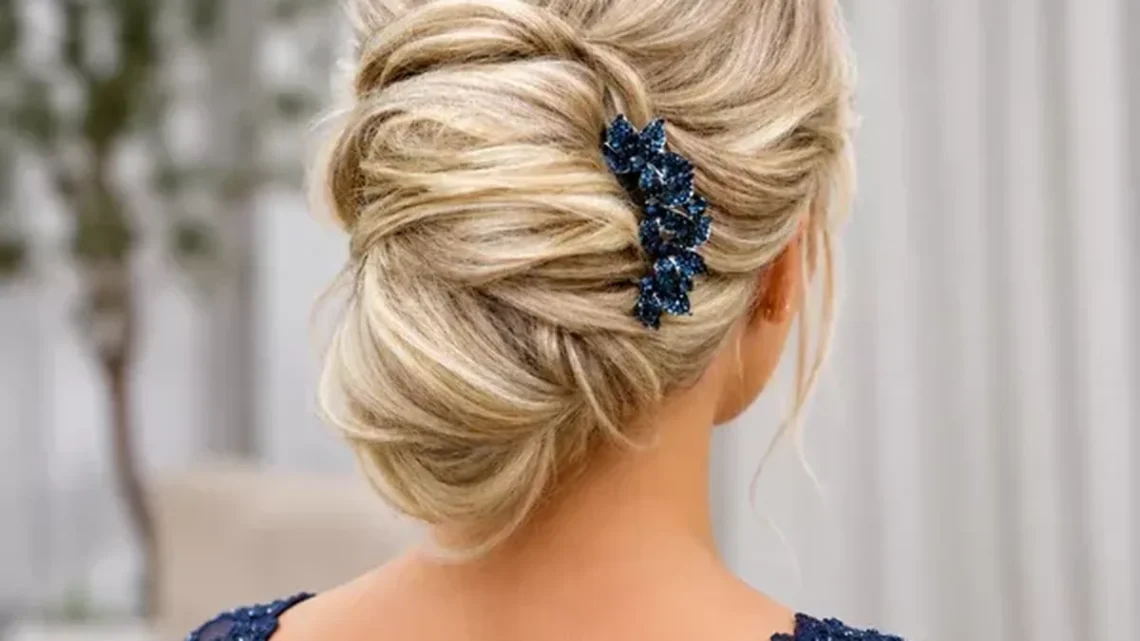
A formal event is one of the few times your hair gets as much attention as your dress. Under ballroom lights and camera flashes, every detail shows — a loose strand, a drooping curl, a bun that has started to slip by dessert. The best hairstyles for a formal event are not just pretty in the mirror at home; they are polished enough for a black-tie room, photogenic from every angle, and built to hold up through hours of dancing, dining and photographs.
This guide starts with eight practical explainers — what makes a hairstyle formal, how to match your hair to the dress code, how to choose by face shape and hair length, how to style an updo at home, what to ask a stylist, the pros and cons of wearing your hair up or down, the mistakes that ruin a formal look, and how long it takes and what it costs — then walks through 36 polished looks, from the classic low chignon and Hollywood waves to braided crowns, sleek buns and elegant styles for short, curly and fine hair. Every section notes who it suits, how to style it, what to ask for at the salon, and how to keep it looking fresh until the last dance.
What Makes a Hairstyle Formal?
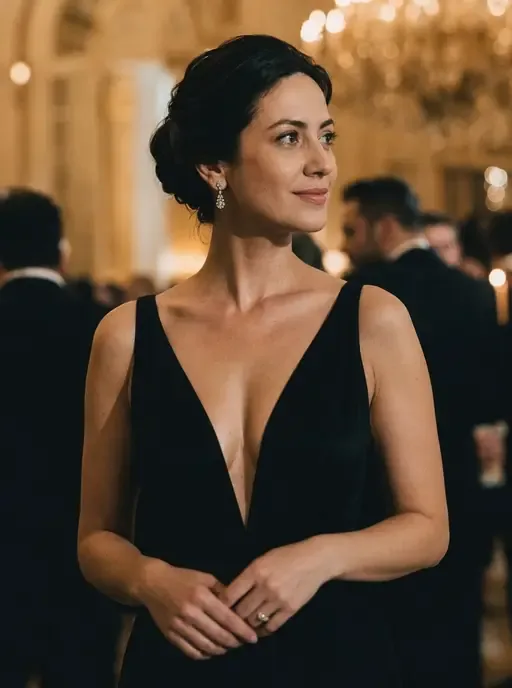
A formal hairstyle is defined less by one particular shape and more by its finish: smooth, deliberate and polished, with no stray frizz, no visible elastics and no just-rolled-out-of-bed texture. Where a casual style can be a little undone, a formal look is intentional from every angle — the parting is clean, the shine is even, and the silhouette holds its shape when you turn your head. That polish is what makes hairstyles for a formal event photograph so well, even under harsh flash.
What it means: formality comes from control and finish, not from complexity — a simple sleek bun can look more formal than a complicated braid that is coming apart. What to look for: a defined shape, a smooth surface, and a style that still looks the same from the back as it does from the front. Quick verdict: if you would wear it to the gym or the grocery store, it is not formal yet — add polish, structure and a finishing product.
Matching Your Hairstyle to the Dress Code: Black Tie, Cocktail and Semi-Formal
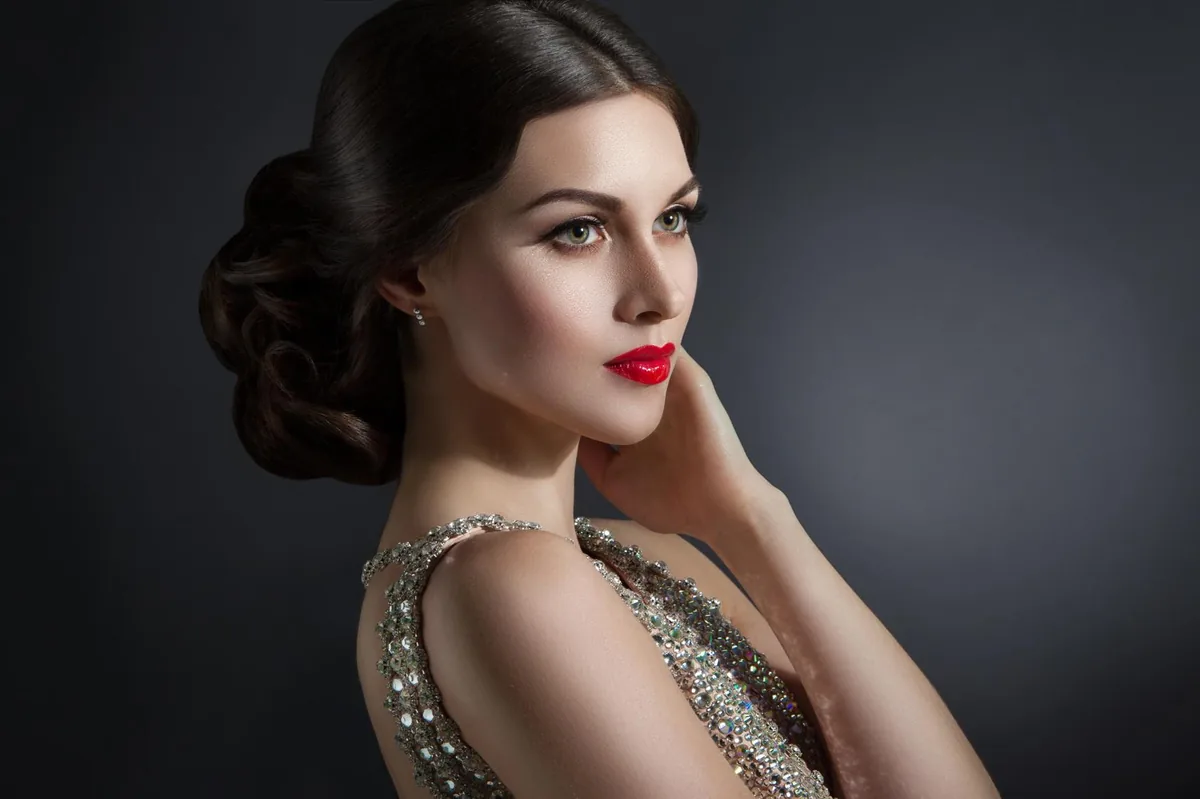
The dress code on the invitation is the single best clue to how formal your hair should be. Black tie calls for the most polished looks — a classic chignon, a French twist, a sleek bun or old Hollywood waves — because the room itself is at its most formal. Cocktail dress code is more relaxed, so soft waves, a half-up style or a low textured bun all work beautifully. Semi-formal is the most forgiving of all, and a polished blowout or a loose braid can be exactly right.
How to choose: match the hair to the dress, not just the invitation — a backless gown shows off an updo, while a high-neck dress pairs better with hair worn down or swept to one side. Common mistake: wearing the most dramatic updo to the most casual event on the calendar, which makes the hair look heavier than the outfit. Quick verdict: the more formal the dress code, the more structured and secure the hairstyle should be.
Choosing by Face Shape and Hair Length
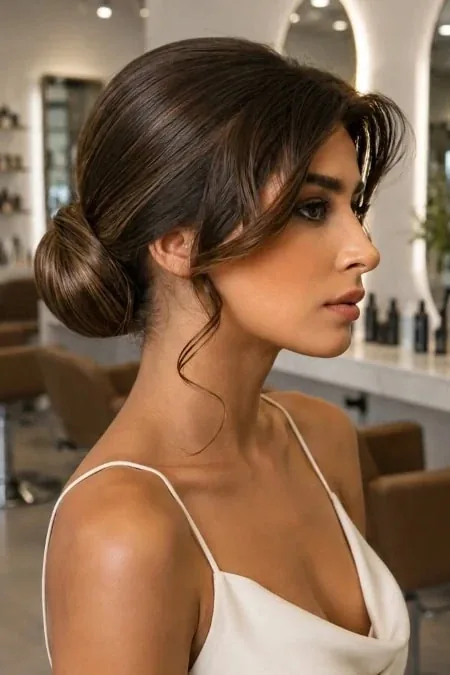
Face shape changes how a formal style looks more than almost anything else. A low chignon flatters nearly every face, but a high bun adds length to a round face, soft face-framing pieces soften a strong jaw, and volume at the crown balances a longer face. Hair length matters just as much: shoulder-length hair can manage a chignon with the help of pins, long hair can carry braids and twists, and short hair shines with polished waves, a deep side part or a well-placed accessory.
Who it suits: there is a formal style for every face shape and every length — the trick is choosing the silhouette, not copying a photo of someone with a different face. What to ask a stylist: bring photos of people with a similar face shape and hair length to yours, not just the style you love. What to avoid: a severe pulled-back look if your face is very angular, or a heavy style that swallows a petite frame — balance is what makes a formal hairstyle flattering.
How to Style a Formal Updo at Home, Step by Step
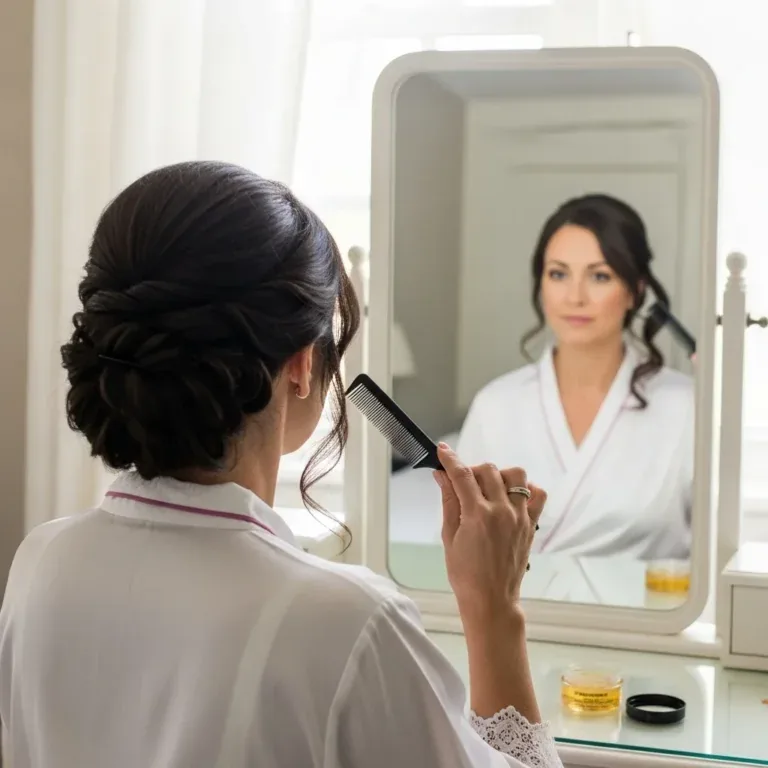
A formal updo at home is absolutely doable if you work in the right order: start with freshly washed, fully dry hair, add a little texture spray or mousse so the hair grips, and always do a rough practice run a few days before the event. Gather the hair where you want the bun or twist to sit, secure it with pins placed in an X shape so they lock each other in, smooth the surface with a light-hold hairspray, and finish with a shine spray on the outer layer only.
How long it takes: allow 30 to 45 minutes for a first attempt, and about 20 minutes once you have practised it. What you need: bobby pins in your hair colour, a clear elastic, a fine-tooth comb, a soft brush, texture spray and a flexible-hold hairspray. Common mistake: starting with hair that is too clean and slippery — day-old hair, or hair with a little dry shampoo in it, holds a formal updo far better than freshly washed, silky hair.
What to Ask Your Stylist Before a Formal Event
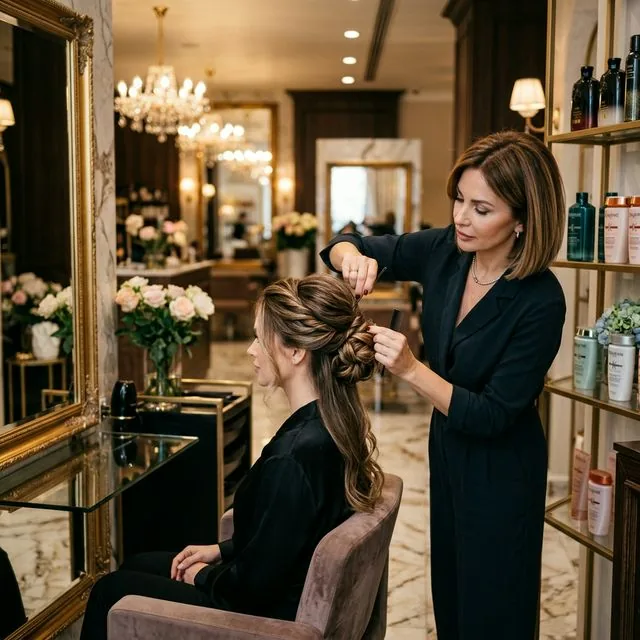
Walking into a salon with a photo is a good start, but the questions you ask matter just as much as the picture you show. Ask whether the style will hold for the full length of the event, whether it suits your dress and your hair texture, and what you should do with your hair the morning of the event. A good stylist will tell you honestly if a style needs extensions, padding or a trial run — and a trial run is the single best money you can spend before a wedding or a gala.
What to ask: how long will this style last, will it survive dancing, do I need a trial, and what products should I bring for touch-ups. How it helps: a trial run lets you see the style in daylight, test it with your dress, and fix anything that bothers you before the big night. What to avoid: booking the appointment for the first time on the day of the event, or choosing a style you have never worn before without testing it.
Updo vs Hair Down: The Pros and Cons for a Formal Night
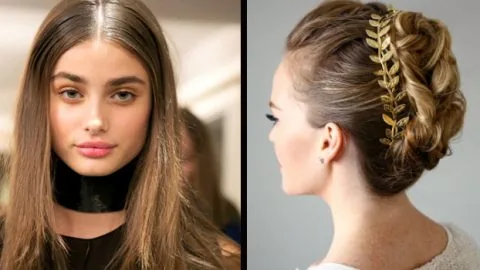
Choosing between an updo and wearing your hair down is the biggest decision in formal styling, and both have real advantages. An updo shows off your neckline, your earrings and the back of your dress, stays put through dancing, and photographs cleanly from every angle. Hair worn down looks softer and more romantic, frames the face beautifully, and suits people who feel most like themselves with their hair loose — but it can frizz in humidity, lose its curl by midnight, and hide the details of your dress.
Pros of an updo: secure, elegant, shows off jewellery and dress details, and lasts the whole night. Pros of hair down: softer, more natural, and more comfortable for people who hate the feeling of pinned-up hair. Quick verdict: if the event involves dancing, heat or a long night, lean towards an updo or a half-up style; if the evening is mostly dinner and photographs, polished waves worn down can be perfect.
Common Mistakes That Ruin a Formal Hairstyle
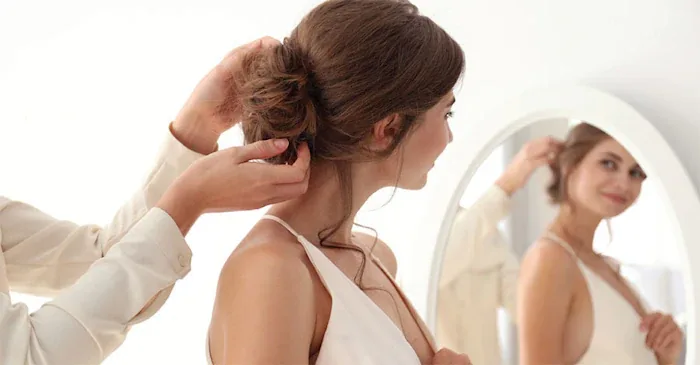
The most common formal-hair mistake is not the style itself but the preparation: too much product, which makes hair heavy and flat; too little hold, so the style collapses by the second hour; or a brand-new style tried for the first time on the night itself. Other classic errors include pinning an updo too tightly, which causes a headache by dinner, choosing a style that fights your natural texture instead of working with it, and forgetting to check the back of the style in a second mirror.
What to avoid: overloading hair with oil or serum before styling, using a brand-new product for the first time on event night, and skipping the trial run for an important event. Signs something is wrong: pins that hurt, a style that feels heavy, or curls that have dropped before you have even left the house. How to fix it: carry extra pins, a small hairspray and a couple of clear elastics in your clutch — most formal hairstyles can be rescued in two minutes in a restroom mirror.
How Long It Takes, What It Costs, and How to Make It Last All Night
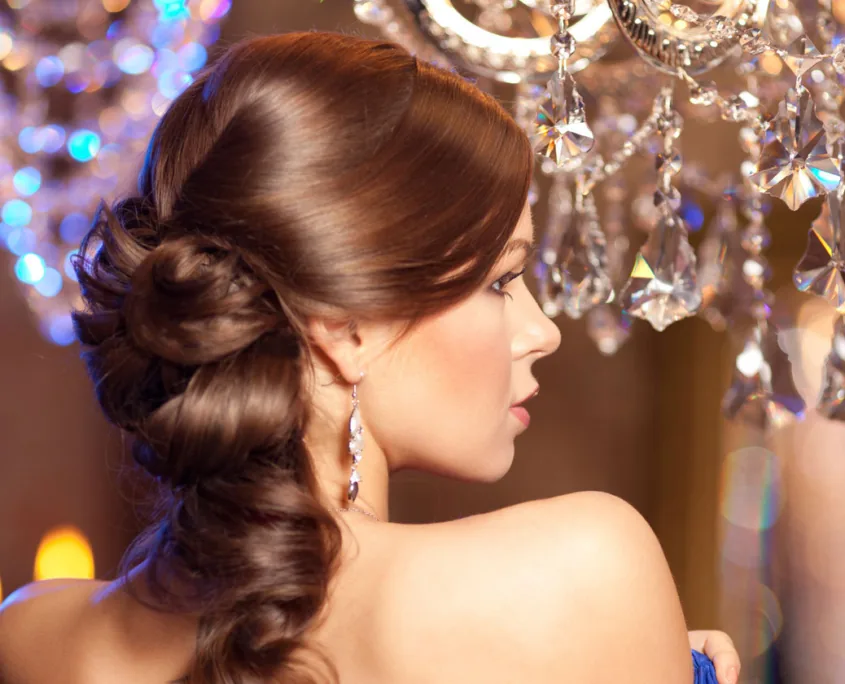
A salon updo for a formal event usually takes 30 to 60 minutes and costs anywhere from a modest blow-dry price to a premium styling fee, depending on the city, the salon and the complexity of the style. A trial run adds another appointment and another fee, but it is worth it for weddings, galas and award nights. At home, the same style takes longer the first time and gets faster with practice — and the cost is mostly the products you already own.
How to make it last: set the style with a flexible-hold spray, let it cool completely before you touch it, and avoid brushing through curls once they are set. Maintenance during the night: check the back once after the first hour, smooth any flyaways with a tiny amount of serum on your palms, and re-pin anything that has loosened before it falls. Who should book a stylist: anyone with very thick, very slippery or very short hair, or anyone whose event matters enough that a failed style would ruin the evening.
1. The Classic Low Chignon
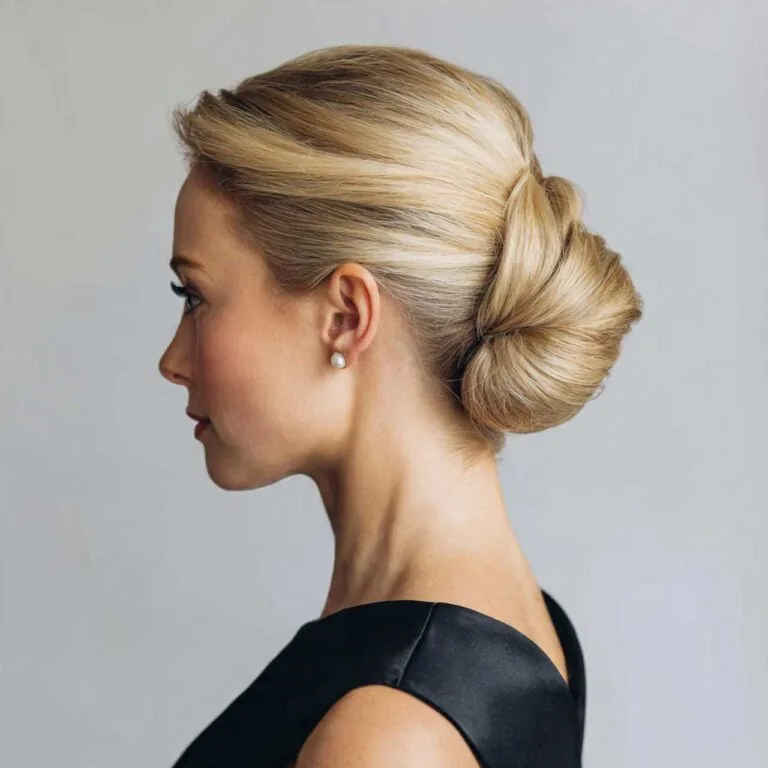
The low chignon is the most reliable of all hairstyles for a formal event, and it has been the first choice at black-tie dinners and award nights for decades. Hair is gathered low at the nape, twisted or folded into a neat roll, and pinned so the shape is smooth from every angle. It works with almost every dress neckline, shows off earrings and a backless gown, and it is one of the few formal styles that genuinely looks better as the night goes on.
Who it suits: nearly everyone, and especially people with medium to long hair who want a timeless, elegant look. How to style it: smooth the hair back with a brush, twist it into a low roll, pin in an X pattern, and finish with a light hairspray. What to ask a stylist: ask for a soft, slightly textured chignon rather than a severe one, so the finish looks romantic instead of strict.
2. The Sleek High Bun
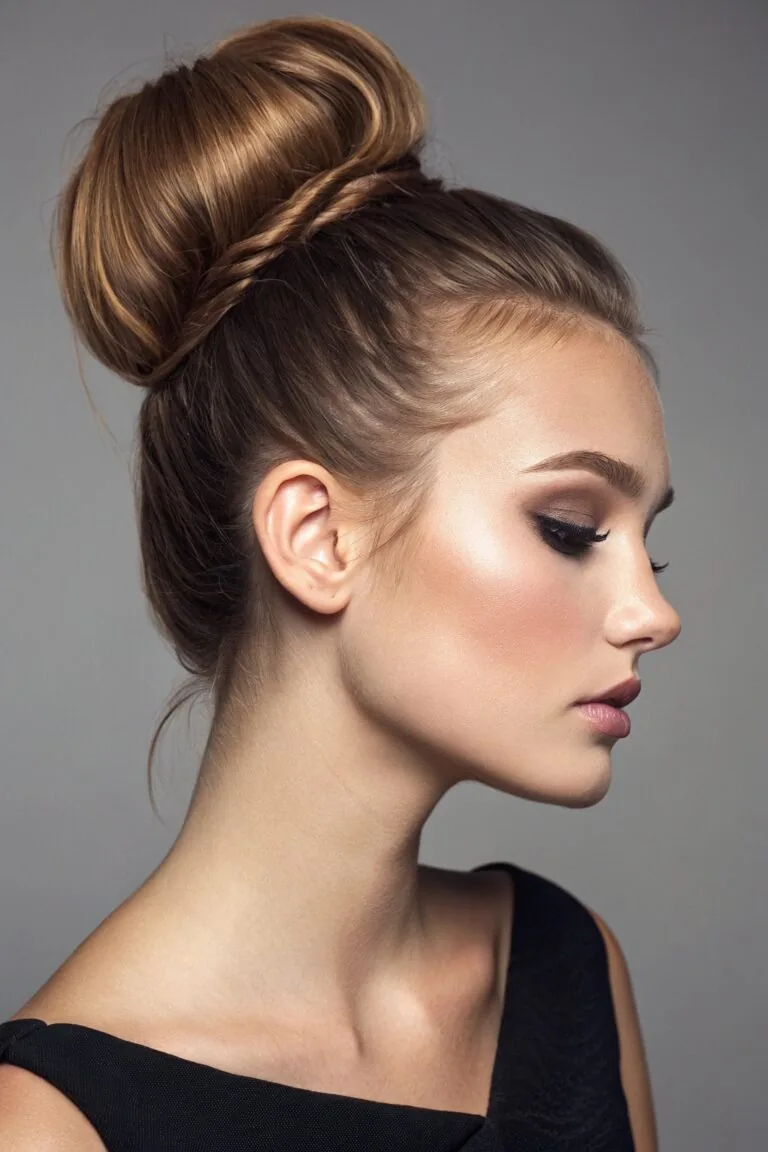
A sleek high bun is drama and discipline in one style: every strand pulled smooth, the bun sitting high on the crown, and not a single flyaway in sight. It lengthens the neck, lifts the whole face, and pairs beautifully with a bold lip and statement earrings, which is why it is a favourite on red carpets. The key is the preparation — hair must be brushed completely smooth and set with a strong-hold spray, or the sleekness will not survive the first hour.
Who it suits: oval and round faces, and anyone who wants a sharp, modern formal look. How to style it: brush the hair into a high ponytail, twist it around its base, pin securely, and smooth the surface with serum on your palms. What to avoid: a bun placed too far forward, which can look more casual than formal, and too much gel, which makes the hair look wet instead of polished.
3. Old Hollywood Waves

Old Hollywood waves are the most glamorous of all hairstyles for a formal event: deep, glossy, sculpted waves that fall over one shoulder, with a deep side part and a mirror shine. The look comes from curling large sections in the same direction, brushing them out into one smooth wave, and setting them with a flexible-hold spray. It is a style that photographs beautifully, because the waves catch the light in every picture.
Who it suits: medium to long hair, and anyone attending a gala, a premiere or a black-tie wedding. How to style it: curl with a large-barrel iron, let the curls cool pinned up, brush them into waves, and set with spray. Maintenance: carry a small brush and a travel hairspray, because humidity is the one thing that can soften these waves before midnight.
4. The French Twist

The French twist is the most elegant updo in the formal repertoire — a vertical roll of hair swept up the back of the head, pinned into a clean, sculpted line. It looks effortless and expensive at the same time, and it suits gowns with high necklines and long sleeves, where a softer style might disappear. Modern versions leave a few face-framing pieces loose at the front, which keeps the classic shape from looking too severe.
Who it suits: medium to long hair, and anyone who wants a truly classic black-tie look. How to style it: gather the hair to one side, twist it upward, tuck the ends in, and pin along the seam. What to ask a stylist: ask for a modern French twist with soft pieces at the front, and a trial run if you have never worn one before.
5. The Low Twisted Bun
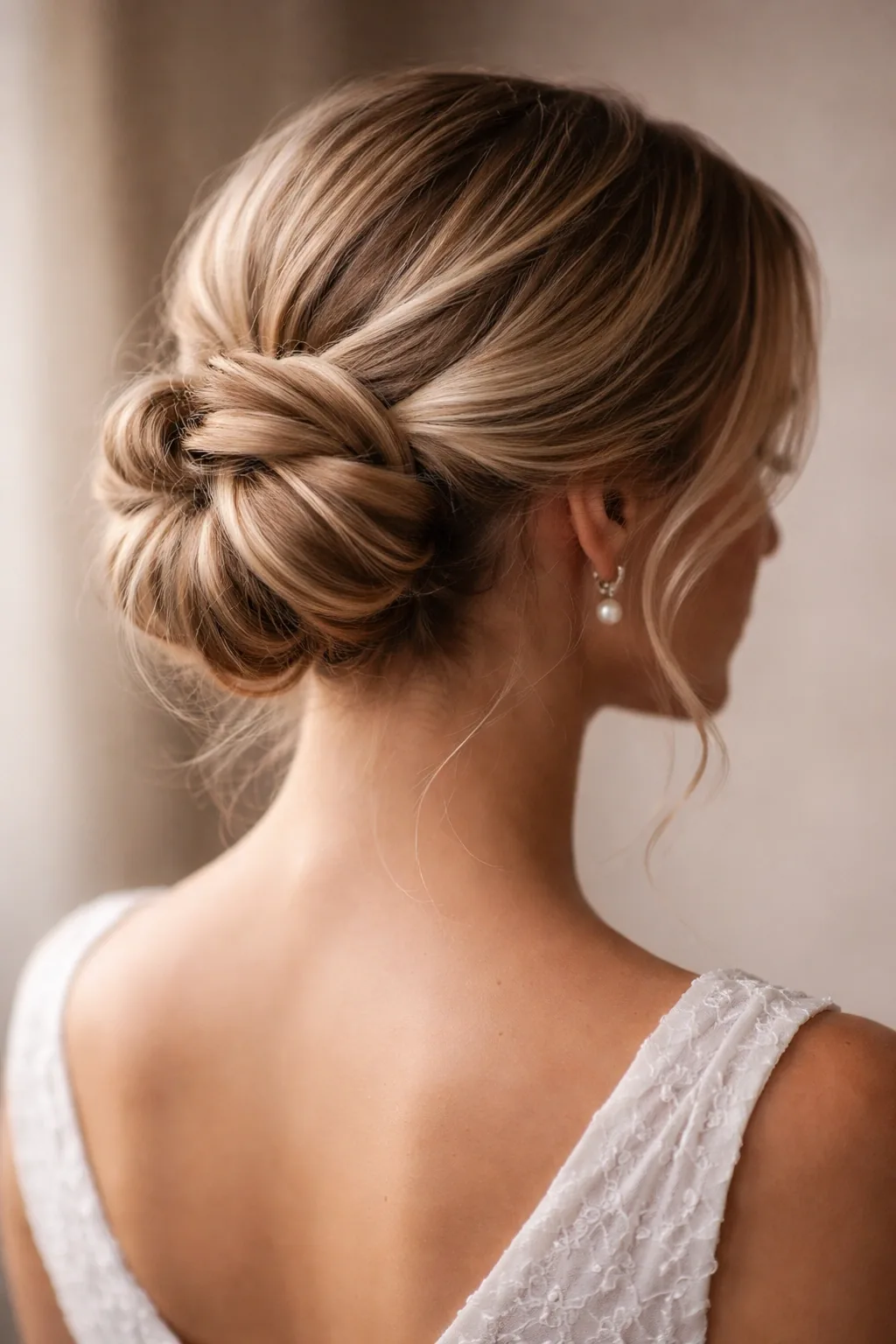
A low twisted bun takes the classic chignon and adds texture: the hair is divided into two or three sections, each one twisted, and then the twists are wound together into a low, softly textured bun. The result is romantic and a little less formal than a smooth chignon, which makes it perfect for cocktail events, wedding guests and evenings where you want to look polished without looking stiff. It also hides a multitude of sins, because the twists disguise any unevenness.
Who it suits: fine hair in particular, because the twisting adds volume and grip. How to style it: twist each section away from the face, coil them together at the nape, pin, and gently pull a few pieces loose at the front. What to avoid: twisting too tightly, which makes the bun look small and hard instead of soft and full.
6. Soft Side-Swept Curls
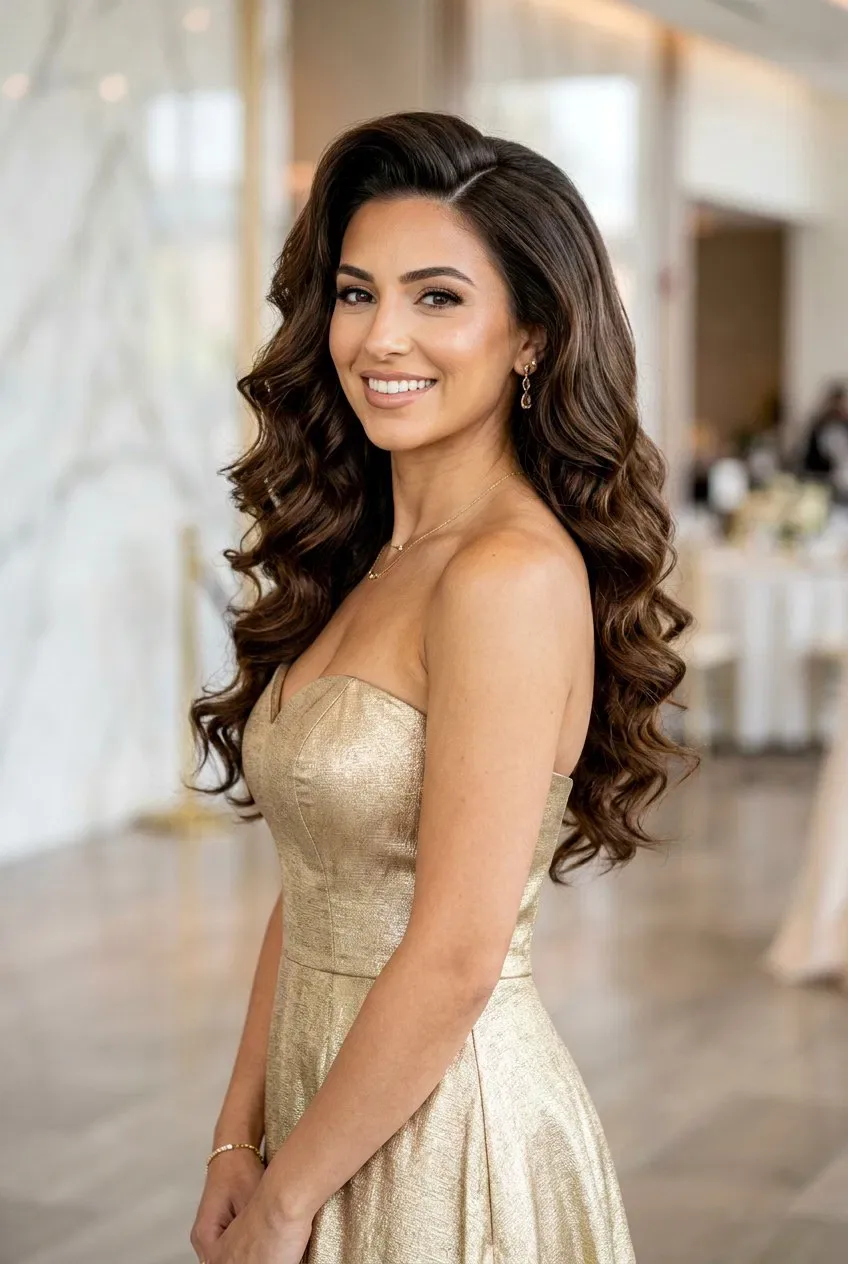
Soft side-swept curls are the romantic answer to a formal night: all the hair swept over one shoulder in loose, glossy curls, with the other side smooth and pinned back. The asymmetry shows off one earring and one shoulder beautifully, and the style works with strapless and one-shoulder gowns in particular. It is also one of the easiest formal styles to do at home, because the curls do not need to be perfect — they need to be soft, shiny and all falling in the same direction.
Who it suits: long hair, and anyone with a one-shoulder or strapless dress. How to style it: curl large sections away from the face, sweep everything to one side, pin the opposite side flat, and set with a light spray. What to ask a stylist: ask for curls that are brushed out and set, rather than tight ringlets, so the finish stays soft and expensive-looking.
7. The Polished Low Ponytail
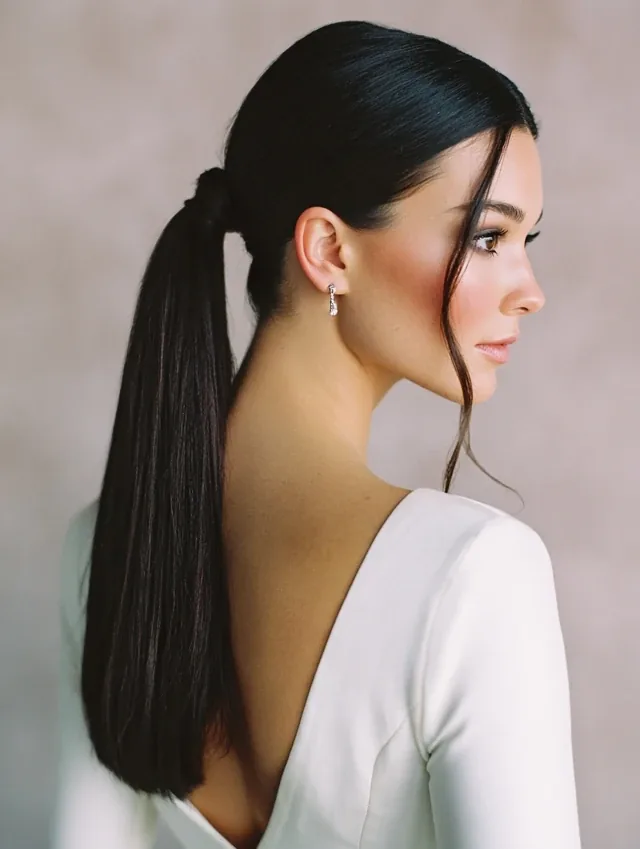
A polished low ponytail is proof that a formal hairstyle does not have to be complicated: hair pulled smooth and low, the elastic wrapped with a strand of hair, and the length left sleek or gently waved. It is modern, clean and confident, and it is the style of choice for women who find updos uncomfortable but still want to look properly dressed for a formal room. The secret is in the finish — the hair must be completely smooth at the crown, with no bumps and no stray strands.
Who it suits: straight or slightly wavy hair, and anyone who wants a minimalist formal look. How to style it: brush the hair back, secure it low with a clear elastic, wrap a strand around the base, and smooth flyaways with a toothbrush sprayed with hairspray. Common mistake: leaving the elastic visible, which instantly makes the style look unfinished.
8. The Braided Crown Updo
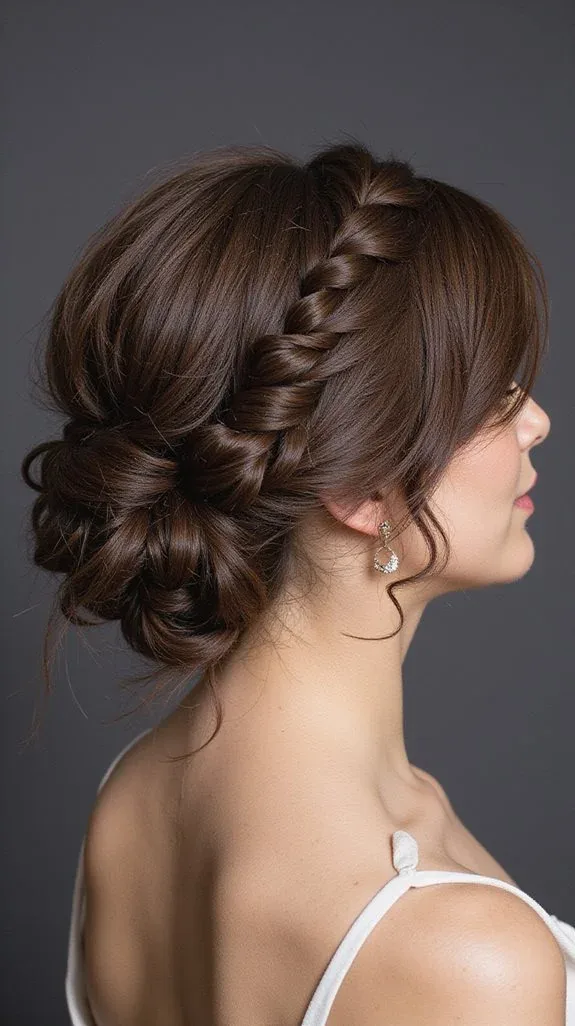
A braided crown wraps a braid around the head like a halo, with the rest of the hair pinned up beneath it, and it is one of the most romantic hairstyles for a formal event. It suits garden weddings, summer galas and evening receptions, and it has the practical advantage of holding extremely well — a braid pinned in a circle is not going anywhere, even after hours of dancing. Add small fresh flowers or pearl pins and the look becomes properly occasion-ready.
Who it suits: medium to long hair with enough length to braid around the head. How to style it: braid two sections from behind each ear, cross them over the crown, pin the ends underneath, and gather the remaining hair into a low bun. What to avoid: a braid pulled too tight, which can cause a headache, and braids that are too thin, which can look lost in the style.
9. The Half-Up Twisted Style
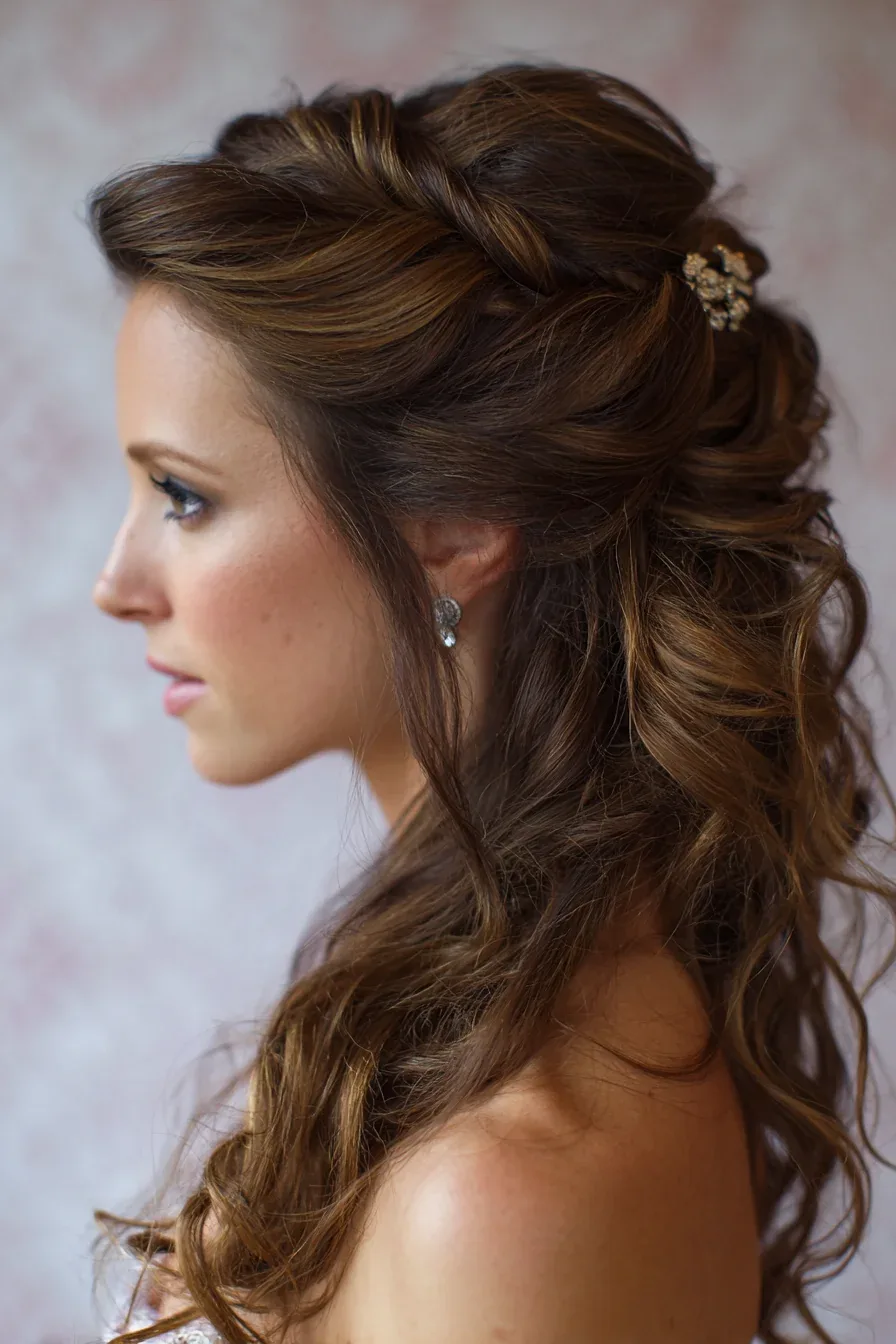
A half-up twisted style takes the top half of the hair, twists it back from both sides, and pins it at the back, leaving the rest of the length loose and flowing. It is the perfect middle ground for people who cannot decide between an updo and wearing their hair down: the face is open, the hair stays out of the way, and the loose length still shows off shine and movement. It works with curls, waves and straight hair alike, which is rare for a formal style.
Who it suits: almost every hair length from shoulder-length up, and anyone who wants a softer formal look. How to style it: twist two sections from the temples, cross them at the back, pin with decorative pins, and curl the loose length lightly. What to ask a stylist: ask for the twists to be pinned with hidden pins and finished with one decorative pin, so the style looks intentional rather than improvised.
10. Vintage Finger Waves
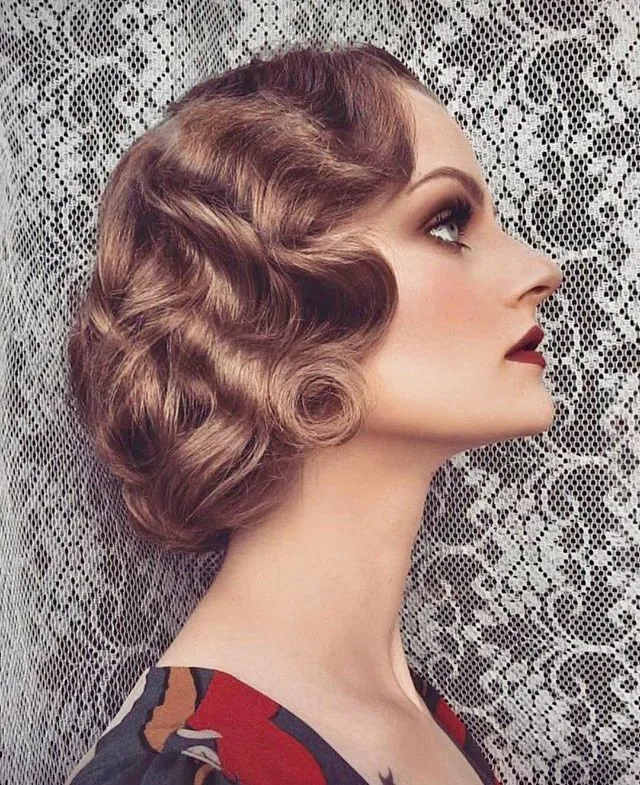
Vintage finger waves are the most theatrical of all formal hairstyles: sculpted S-shaped waves pressed close to the head, glossy and precise, straight out of a 1920s ballroom. The style is created with a comb and setting gel on damp hair, then dried and set, and it suits short to medium hair beautifully. It is a bold choice, but at a themed gala, a vintage party or a very formal winter ball, nothing else looks quite as striking.
Who it suits: short and medium hair, and confident dressers who love a vintage look. How to style it: work in sections with gel and a fine comb, shaping each wave with your fingers, and let it set completely before touching it. What to avoid: attempting finger waves for the first time on the night of the event — this is a style that needs a trial run and a steady hand.
11. The Elegant Top Knot
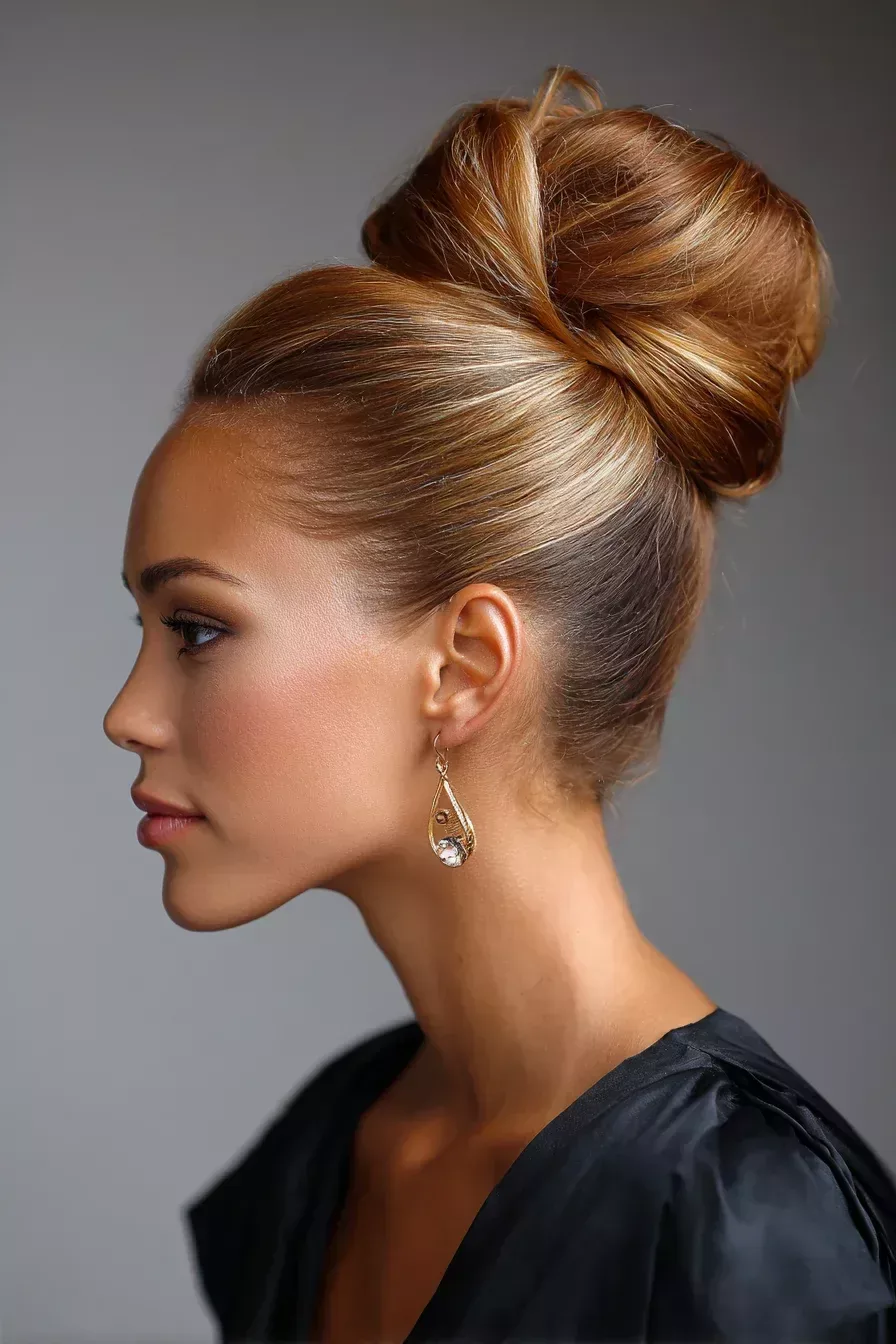
An elegant top knot is the ballerina bun grown up: hair pulled high and smooth, twisted into a neat knot, and finished so the silhouette is clean and sculptural. It is one of the most flattering hairstyles for a formal event when the dress has a high neckline or a dramatic back, because it keeps the neck completely clear and lets the dress do the talking. A top knot also photographs beautifully from the side, which is where most event photos are taken.
Who it suits: long necks, oval faces, and anyone wearing a high-neck or backless gown. How to style it: brush the hair into a high ponytail, twist it around a bun form for a perfect shape, pin, and smooth the crown with spray. Common mistake: a top knot that sits too far back on the head, which makes the face look longer instead of lifting it.
12. The Loose Romantic Updo

A loose romantic updo is the softer sister of the classic chignon: the hair is gathered up, but the pins are looser, a few curls escape at the nape and around the face, and the whole shape looks as though it might have happened naturally. It is the most popular choice for wedding guests, because it looks beautiful in photographs without looking overdone, and it is forgiving to style at home, since a little looseness is part of the design rather than a flaw.
Who it suits: wavy and curly hair in particular, because the natural texture does half the work. How to style it: curl the hair first, gather it loosely at the back, pin in sections, and pull a few face-framing pieces free. What to avoid: pulling too many pieces loose, which turns romantic into messy, and forgetting to pin the nape securely, which is where the style usually starts to fall.
13. Sleek Straight Hair With a Centre Part
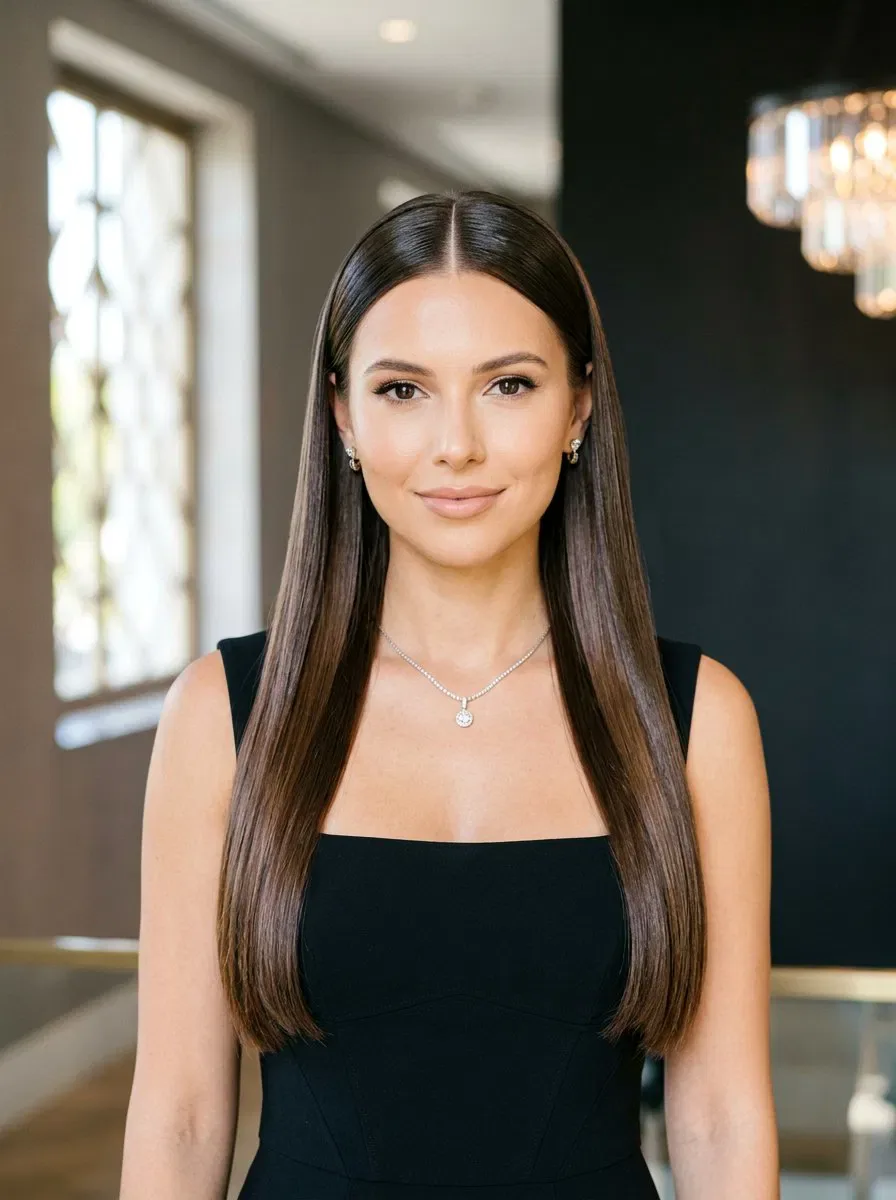
Sleek, straight hair with a sharp centre part is the minimalist’s formal style: no curls, no pins, no fuss, just glass-smooth hair that falls perfectly straight past the shoulders. It looks modern and expensive, especially with a tailored gown or a strong-shouldered dress, and it is one of the few formal styles that takes very little time once the hair is blow-dried straight. The finish depends entirely on the iron work and the shine product — any frizz or bend will show immediately.
Who it suits: naturally straight or easily straightened hair, and anyone who loves a clean, modern look. How to style it: blow-dry straight with a paddle brush, run a flat iron through in small sections, add a drop of shine serum to the ends, and set the part with a light spray. What to avoid: humidity without protection — a humidity-proof spray is essential, because one damp evening can turn sleek into wavy.
14. The Voluminous Blowout
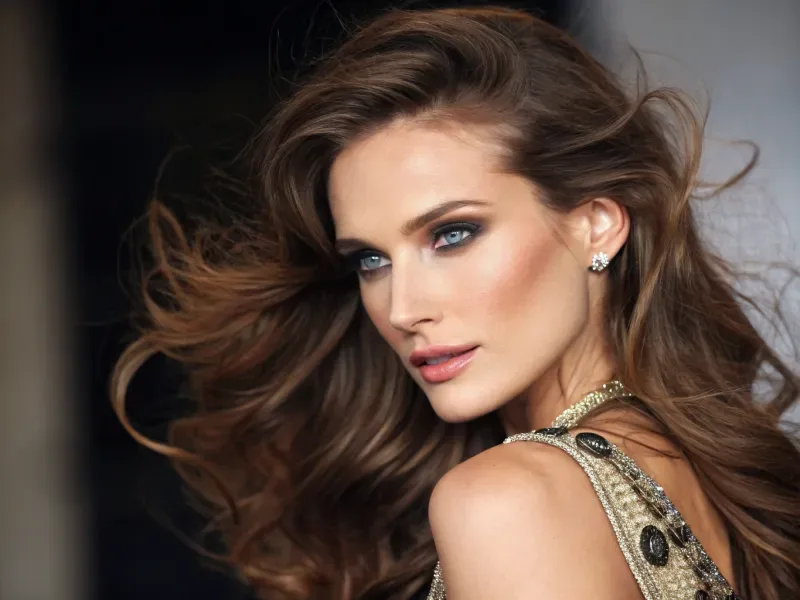
A voluminous blowout is the formal version of the salon blow-dry: big, bouncy, glossy hair with movement at the ends and lift at the roots, the kind of hair that looks like it belongs in a magazine. It suits cocktail events and dinners where the dress code is formal but the mood is relaxed, and it is the best choice for people who feel most confident with their hair down. The volume comes from round-brush work at the roots and large rollers set while the hair cools.
Who it suits: medium to long hair, and anyone who wants glamour without an updo. How to style it: blow-dry with a large round brush, set the top sections in rollers, let them cool completely, and brush out gently for bounce. Maintenance: a volumising spray at the roots before the event, and a quick flip of the head and a shake at the roots if the volume drops during the night.
15. The Textured Low Bun With Face-Framing Pieces

A textured low bun with face-framing pieces is the most forgiving of all formal updos: the bun itself is soft and slightly tousled, and two thin pieces of hair are left loose at the front to frame the face. The texture makes fine hair look fuller, the loose pieces soften the whole look, and the style is comfortable enough to wear for five hours without a headache. It is the updo that stylists reach for most often at weddings, because it suits almost everyone and photographs beautifully.
Who it suits: fine or thin hair, round faces, and anyone who finds severe updos unflattering. How to style it: add texture spray, gather the hair low, twist it into a loose bun, pin, and pull two thin pieces free at the front, curling them lightly. What to ask a stylist: ask for the pieces to be cut to frame your cheekbones, so they flatter your face rather than hanging in your eyes.
16. The Waterfall Braid
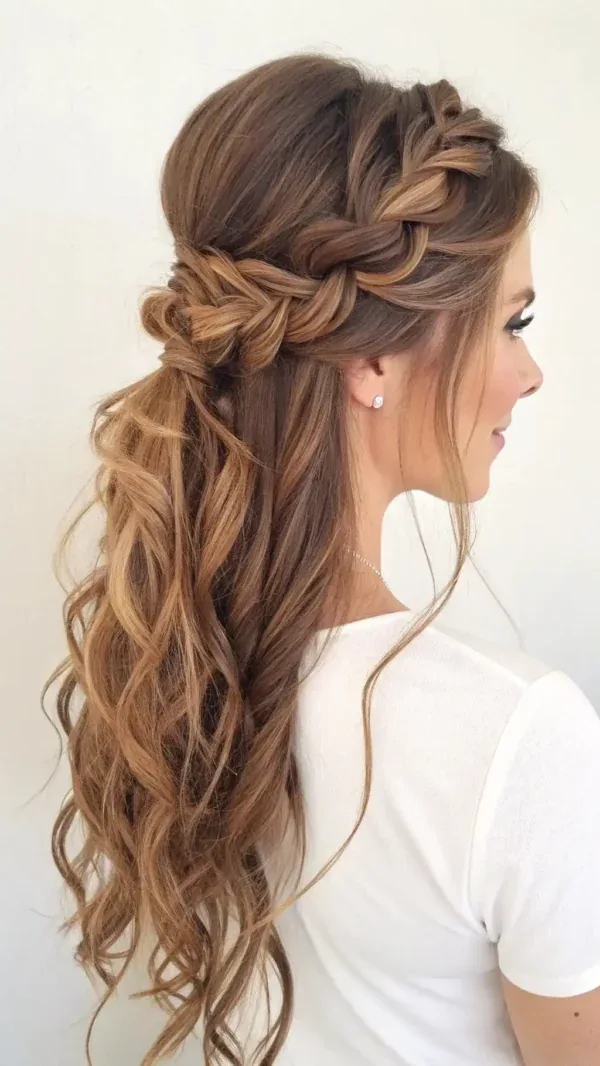
A waterfall braid is a half-up style with a beautiful trick: as the braid travels across the back of the head, strands are dropped out so they fall like a waterfall through the rest of the hair. It is one of the prettiest hairstyles for a formal event, especially when the loose hair is curled, because the braid adds detail at the back while the curls keep the look soft. It suits outdoor receptions and garden parties, where the romantic detail really shines.
Who it suits: long hair, and anyone who wants a detailed style that still shows off length. How to style it: start a French braid at one temple, drop the bottom strand at each step and pick up a new one, and secure it behind the opposite ear with hidden pins. What to avoid: a waterfall braid on very short hair, where there is not enough length for the dropped strands to show, and skipping the setting spray, which is what keeps the braid from loosening.
17. The Gibson Tuck
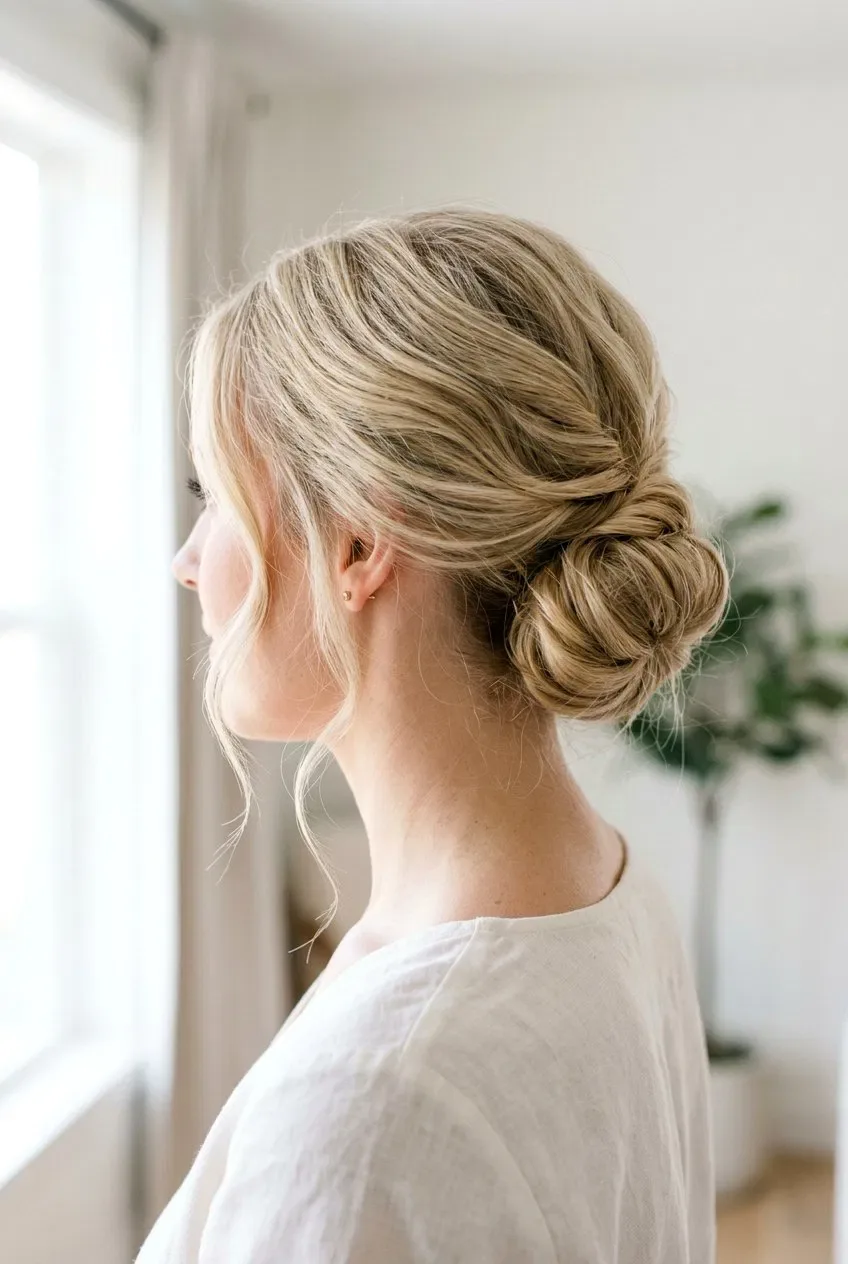
The Gibson tuck is a vintage updo that deserves a comeback: the hair is gathered into a low ponytail, looped and tucked into a roll at the nape, and pinned so it looks like an elegant folded bun. It is simple, quick and remarkably secure, which makes it a wonderful choice for anyone who wants a formal hairstyle without the fuss of a complicated updo. It also works beautifully on hair that is not quite long enough for a full chignon.
Who it suits: shoulder-length to long hair, and anyone who wants a vintage-inspired formal look. How to style it: make a low ponytail, create a pocket above the elastic, tuck the ponytail up and through, and pin the roll flat. Common mistake: tucking the hair too loosely, so the roll sags — the tuck should feel snug against the head before you pin it.
18. The Side Bun
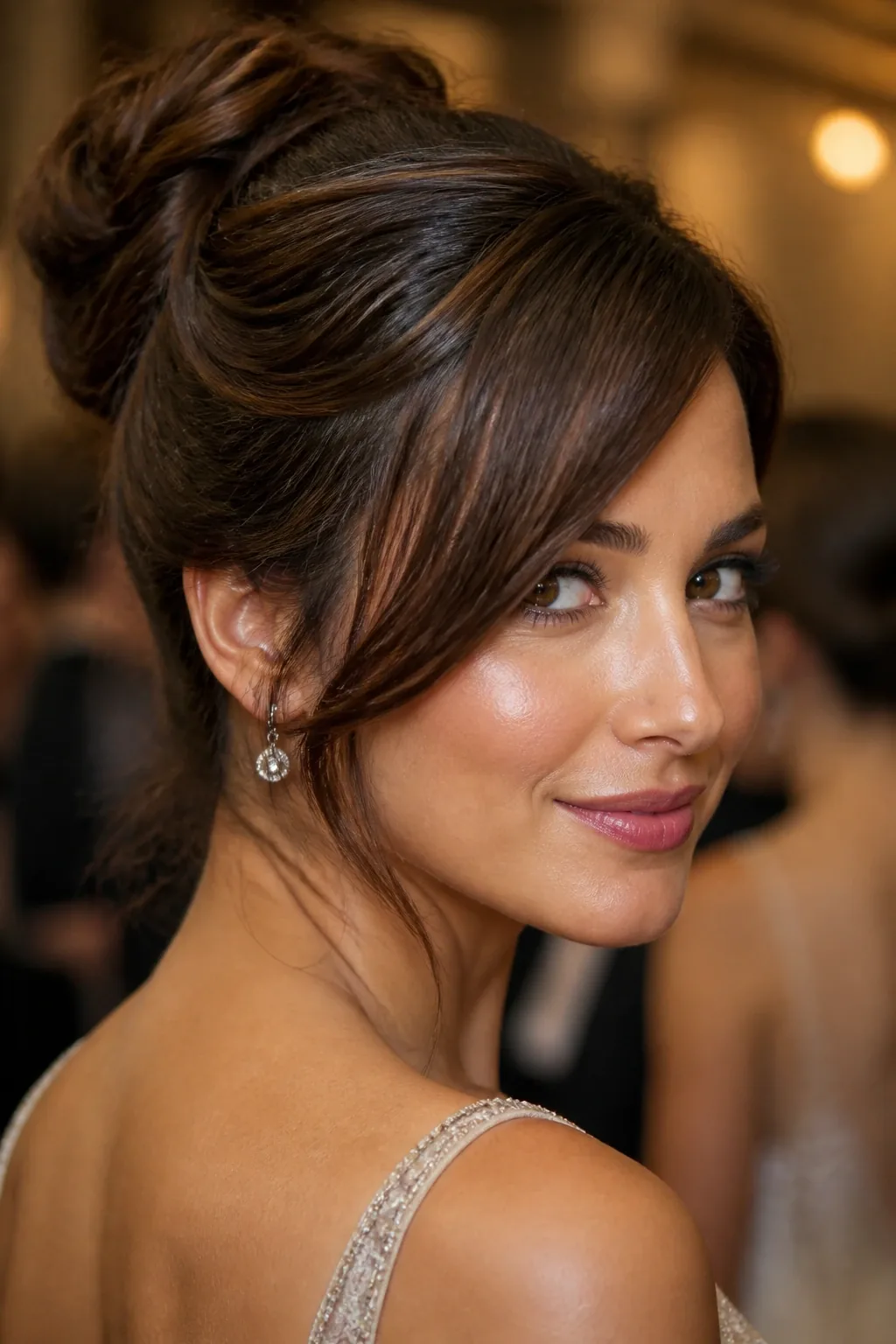
A side bun moves the classic chignon to one side of the neck, and that small change makes the whole style feel softer and more romantic. It shows beautifully in photographs taken from the side, pairs wonderfully with a one-shoulder gown, and lets you wear statement earrings on the opposite side without competition. The bun can be smooth and polished or soft and textured, depending on the dress code, which makes it one of the most versatile formal styles there is.
Who it suits: anyone with enough hair for a low bun, and especially people wearing asymmetrical dresses. How to style it: sweep the hair to one side, secure it low behind the ear, twist it into a bun, pin, and leave a few soft pieces at the front. What to ask a stylist: ask which side suits your parting and your dress, and test it with the dress on before the event.
19. The Retro Beehive
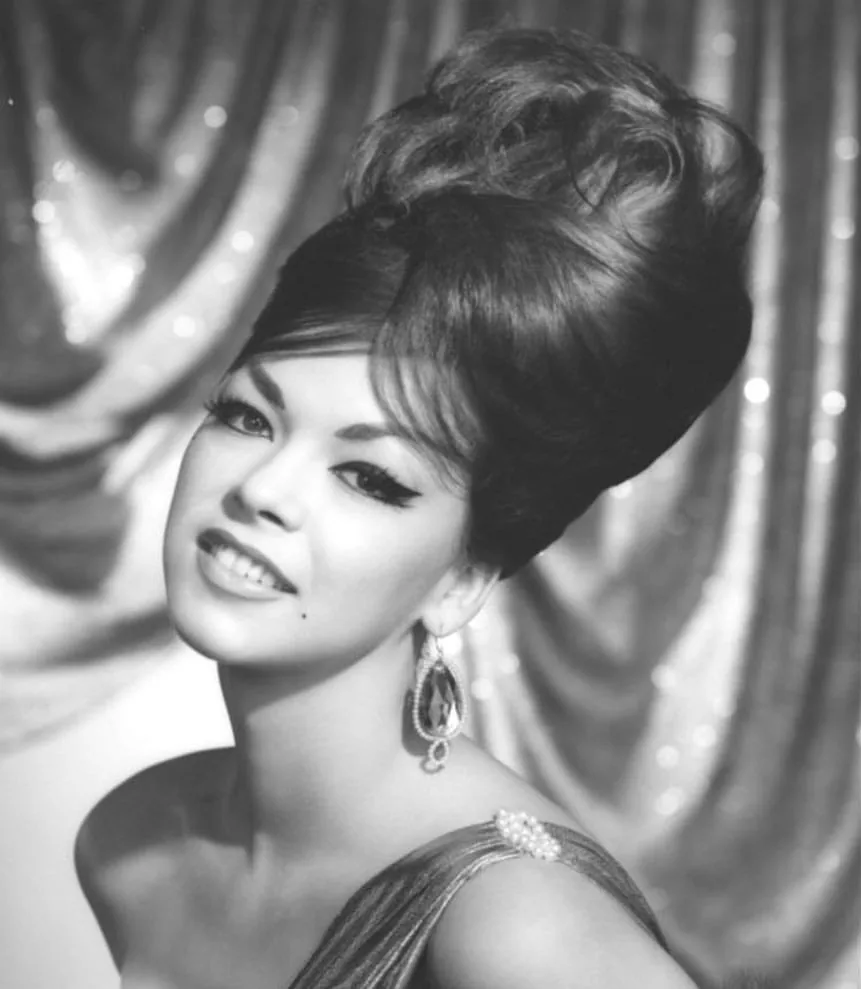
A retro beehive is the most dramatic silhouette in formal hair: height at the crown, smooth sides, and a sculpted shape that turns heads the moment you walk into the room. It is a bold choice, and it works best at themed parties, vintage balls and very formal winter events, where the drama of the hair matches the drama of the occasion. Modern beehives are softer than the 1960s original, with the height concentrated at the crown and the rest of the hair worn in a low bun or soft waves.
Who it suits: confident dressers, and anyone with medium to long hair who wants a statement look. How to style it: backcomb the crown section, smooth the top layer over it, pin the shape, and finish with a strong-hold spray. What to avoid: too much height for a small room or a daytime event, and backcombing without a good detangling spray for the morning after.
20. The Formal Bubble Ponytail

A bubble ponytail takes the humble ponytail and dresses it up for a formal night: the hair is pulled into a high or mid ponytail, and then divided into sections with small elastics, each section gently pulled out to form a soft bubble. The result is playful but polished, and it is a wonderful choice for a modern cocktail event or a fashion-forward party where a classic updo would feel too serious. Keep the bubbles small and neat, and the style stays elegant rather than cute.
Who it suits: long hair, and anyone attending a modern, fashionable formal event. How to style it: secure a smooth ponytail, add elastics every few inches, puff each section gently, and wrap the first elastic with a strand of hair. Common mistake: bubbles that are too big or too loose, which make the style look like a costume instead of a formal look.
21. The Fishtail Braid Updo
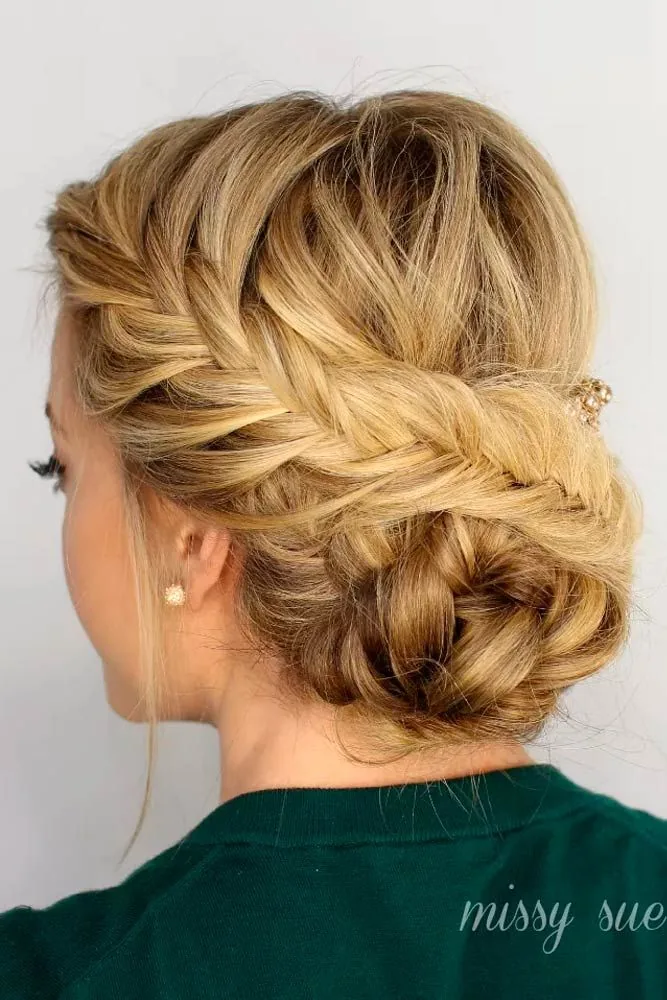
A fishtail braid updo is one of the most detailed and beautiful formal styles: a fishtail braid woven from the crown and coiled into a low bun, with the fine, intricate texture of the braid showing all the way around. It looks far more complicated than it is, and it holds exceptionally well, because the braid itself is the structure. It is a wonderful choice for a wedding guest or a summer gala, especially when the hair is long enough for the braid to show properly.
Who it suits: long hair, and anyone who loves detailed, textured styles. How to style it: fishtail braid the hair from the nape upward, coil the braid into a bun, pin, and gently pull the edges of the braid wider for fullness. What to avoid: rushing the braid — a fishtail needs patience, and a hurried one looks messy instead of intricate.
22. The Low Chignon With Pearl Pins
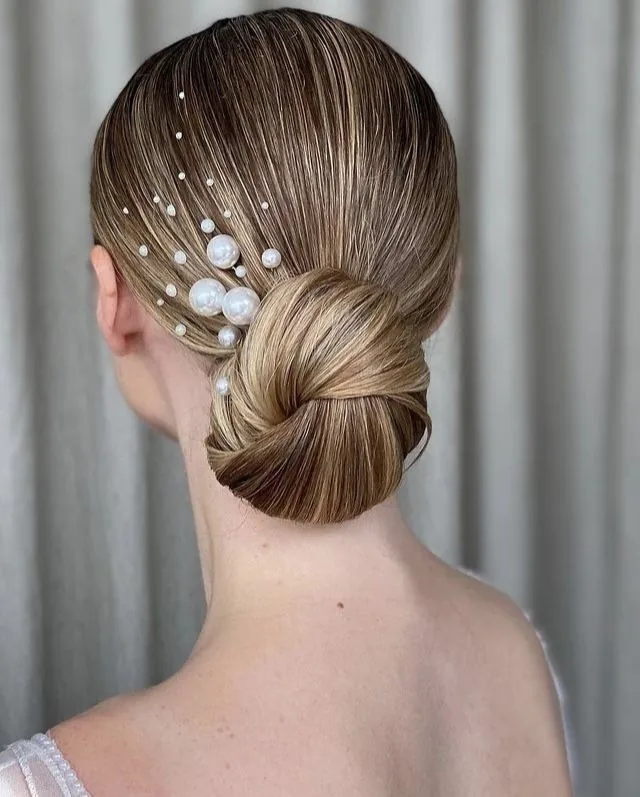
A low chignon with pearl pins is the classic chignon with jewellery: the same smooth, low bun, finished with two or three pearl pins placed just above it or scattered through it. The pearls catch the light and add a bridal, old-money elegance that suits weddings, christenings and formal dinners perfectly. It is the easiest way to elevate a simple updo without changing the style itself, and it is a favourite of stylists precisely because it is so simple and so effective.
Who it suits: anyone who loves the classic chignon but wants something a little more special. How to style it: build a smooth low chignon, then place pearl pins in a small cluster above the bun, angled slightly so they catch the light. What to ask a stylist: ask for pins that match your jewellery — pearls with pearls, gold with gold — so the hair and the jewellery tell the same story.
23. Bouncy Curled Bob for Short Hair
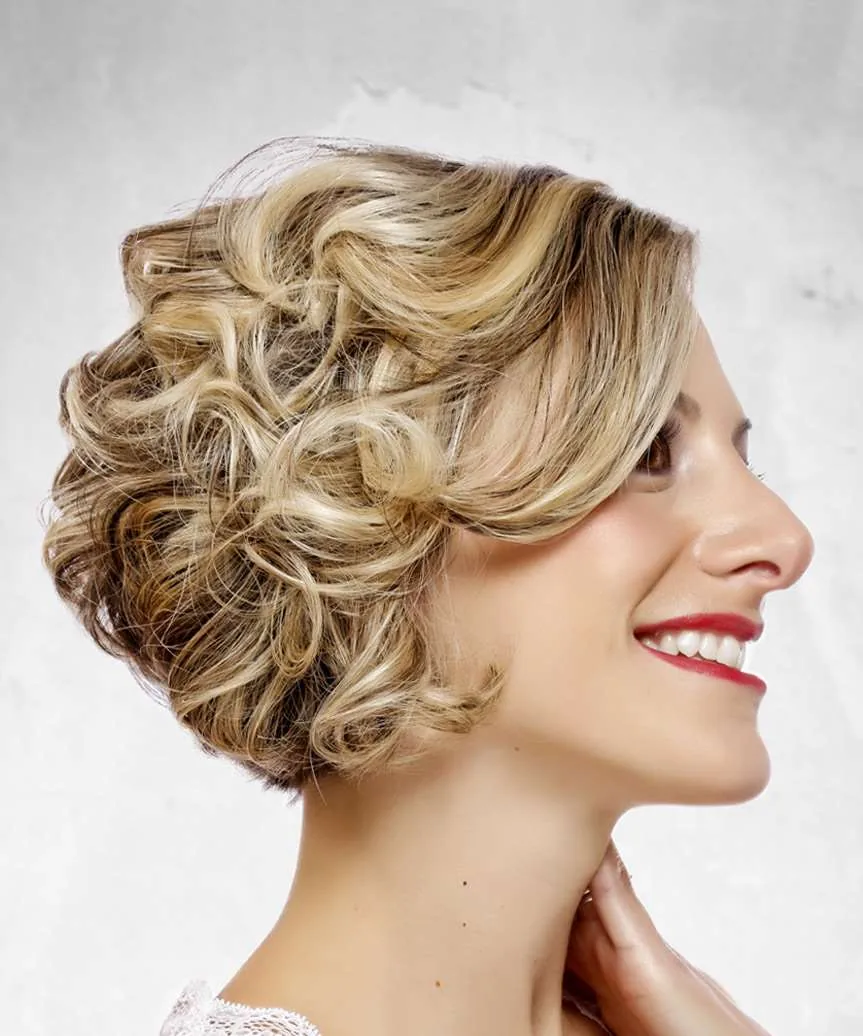
Short hair can be every bit as formal as long hair, and a bouncy curled bob proves it: the bob is curled under at the ends, given volume at the roots, and finished with a shine spray so it looks polished and deliberate. The style suits cocktail events and black-tie dinners alike, and it has the practical advantage of being quick — a curled bob takes a fraction of the time of a full updo, and it stays put all night with very little maintenance.
Who it suits: chin-length to shoulder-length hair, and anyone who wants a formal look without extensions or padding. How to style it: curl the ends under with a medium iron, add root volume with a round brush, and set with a light spray. What to avoid: curls that are too tight, which can make a bob look dated, and too much product, which weighs a short style down.
24. The Pixie With a Deep Side Sweep
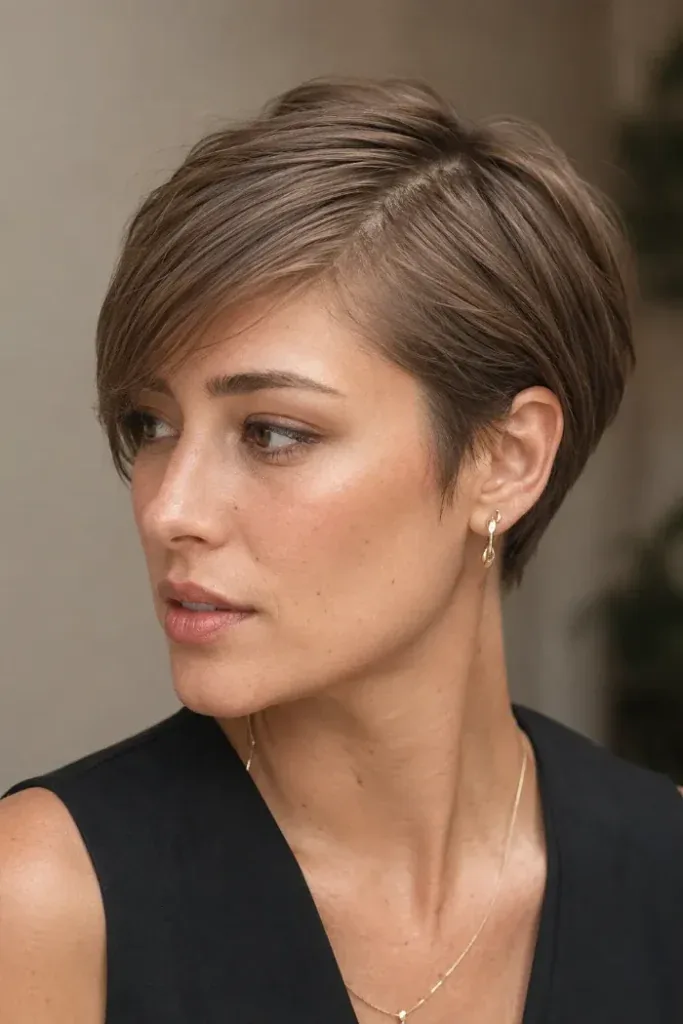
A pixie cut with a deep side sweep is the most striking short formal style: the hair is swept dramatically to one side, the sweep is smoothed and set with a little wax, and the exposed side shows off earrings beautifully. It is bold, modern and incredibly chic, and it suits women who love their short hair and have no interest in pretending it is long. A touch of shine product and one statement earring is all the accessorising this style needs.
Who it suits: pixie and short crop wearers, and anyone with strong features who wants a bold formal look. How to style it: blow-dry the top section to one side, smooth it with a small amount of wax, and pin the shorter side flat if needed. Common mistake: overloading a pixie with product, which makes it look greasy under camera flash — use half as much as you think you need.
25. The Curly Hair Updo
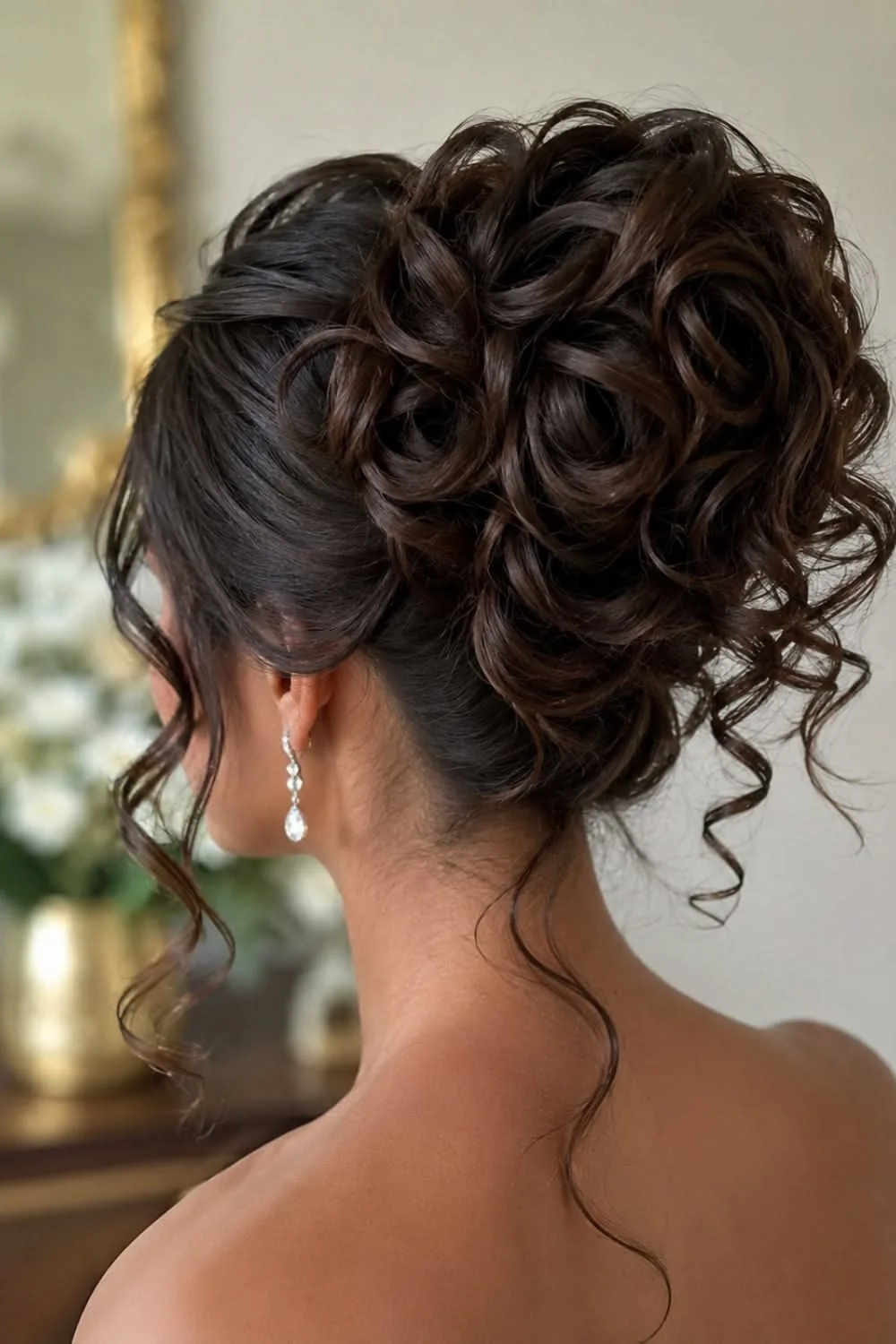
Curly hair makes one of the most beautiful formal updos of all, because the curls themselves provide the texture, volume and movement that straight hair has to be styled into. The key is to work with the curls, not against them: gather the hair loosely, pin it in sections so the curls keep their shape, and let a few curls fall naturally at the nape and around the face. A curly updo looks romantic and effortless, and it holds its shape well because curls grip pins better than straight hair does.
Who it suits: naturally curly and wavy hair of all lengths. How to style it: define the curls with a curl cream, gather the hair in sections, pin each section up loosely, and leave a few curls free at the front. What to avoid: brushing curly hair out before pinning it, which creates frizz, and pulling the updo too tight, which flattens the curls you want to show off.
26. The Sleek Wet-Look Style

A sleek wet-look style is the most fashion-forward of all hairstyles for a formal event: the hair is combed back or to one side with a glossy, just-out-of-the-water finish, held in place with gel and a shine spray. It looks extraordinary on a red carpet and at a modern gala, especially with a sculptural dress and bold makeup. The finish is everything — the hair must look deliberately wet and glossy, not accidentally greasy, so the product has to be applied evenly and in the right amount.
Who it suits: confident dressers, and anyone attending a fashion event or a modern party. How to style it: apply gel evenly through damp hair, comb it back or to the side, smooth the surface, and set with a gloss spray. What to avoid: too much gel, which drips and stains a dress, and a wet-look style at a long, hot event, where the finish can melt before midnight.
27. The Twisted Halo Braid
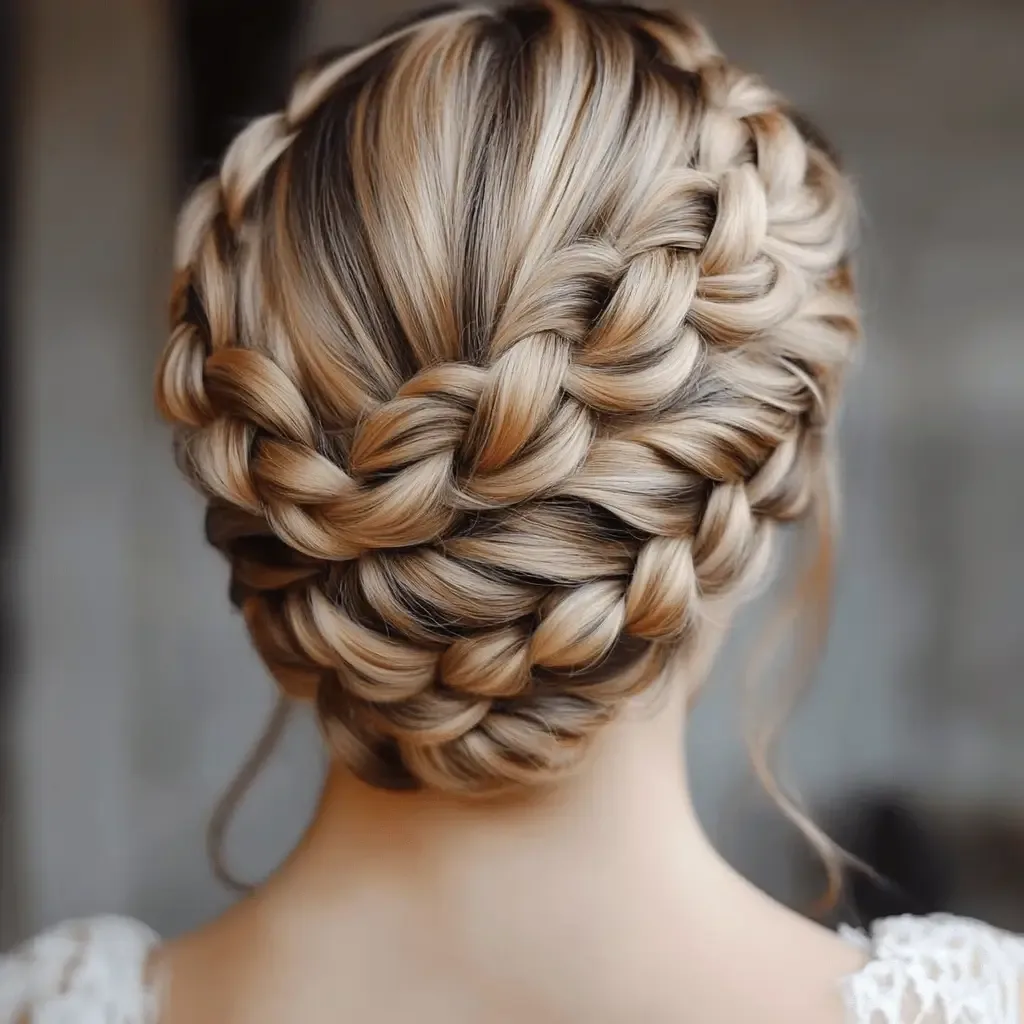
A twisted halo braid is the softer cousin of the braided crown: instead of a full braid, two sections of hair are twisted and wrapped around the head like a halo, with the rest of the hair left loose or pinned up underneath. It is romantic, a little bohemian, and perfect for a garden wedding or a summer formal event. The twists are quicker to do than a full braid, and they are more forgiving, because a twist that is slightly uneven still looks intentional.
Who it suits: medium to long hair, and anyone who wants a romantic formal look without a full updo. How to style it: twist a section from each temple, bring them around to the back, cross them over, pin the ends underneath, and curl the loose hair lightly. What to ask a stylist: ask for the twists to be pinned with hidden pins and finished with small flowers or pearl pins for a special occasion.
28. The Romantic Messy Bun, Polished
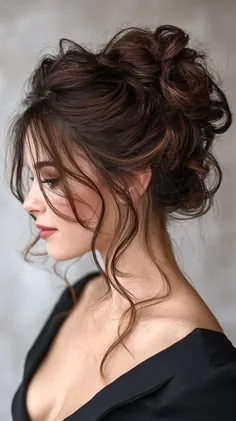
A romantic messy bun is the most relaxed formal style in this guide — but the word messy is misleading, because a good one is carefully constructed to look effortless. The bun is built loosely, with texture and volume, a few pieces pulled free at the face, and the whole shape secured with plenty of pins. It suits wedding guests, engagement parties and relaxed formal dinners, and it is the most comfortable updo to wear for a long evening, because nothing is pulled tight.
Who it suits: medium to long hair, and anyone who finds severe updos uncomfortable. How to style it: add texture spray, gather the hair loosely, twist it into a soft bun, pin, and pull a few pieces free at the front and nape. Common mistake: making the bun too messy, so it looks unfinished rather than romantic — the difference is in the pinning, which should be secure even if the shape is soft.
29. The Sock Bun, Done Properly
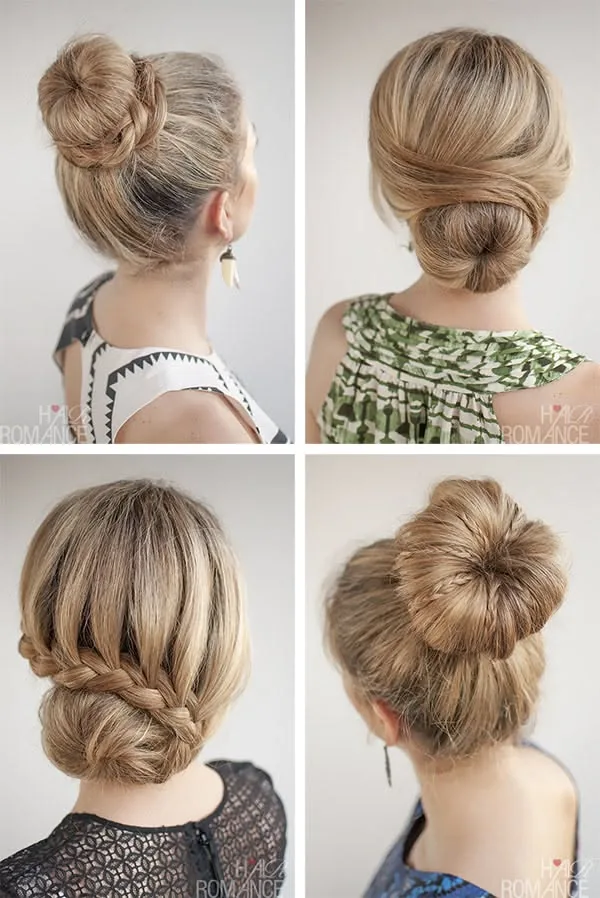
A sock bun — built around a donut-shaped hair form — gives the most perfectly round, full bun of any formal style, and it is the secret behind many red-carpet updos. The form adds volume and shape that even thick hair cannot always achieve on its own, and the finished bun looks sculpted and expensive. It is also one of the most secure formal styles, because the form gives the pins something solid to grip, which is why dancers and performers have used it for decades.
Who it suits: anyone who wants a full, perfectly shaped bun, including people with fine hair. How to style it: pull the hair into a ponytail, thread it through the form, spread the hair over the form, secure it with an elastic, and tuck the ends underneath. What to avoid: a form that is too big for your hair, which makes the bun look out of proportion, and a form in the wrong colour, which can show through thin hair.
30. The Elegant Braided Bun

An elegant braided bun combines two classic techniques — a braid and a bun — into one style that looks intricate from every angle. The hair is braided first, then the braid is coiled into a bun and pinned, so the texture of the braid shows all the way around the shape. It is a wonderful choice for a formal event because it is both beautiful and extremely secure: a braided bun will not budge through a whole evening of dancing, and it looks just as good from the back as from the front.
Who it suits: long hair with enough length to braid and coil. How to style it: braid the hair into one or two braids, coil them into a bun at the nape or crown, pin securely, and gently widen the braid edges for fullness. What to ask a stylist: ask for a Dutch or French braid base if you want the braid to stand out, or a simple three-strand braid if you want a softer finish.
31. Old Hollywood Side Part
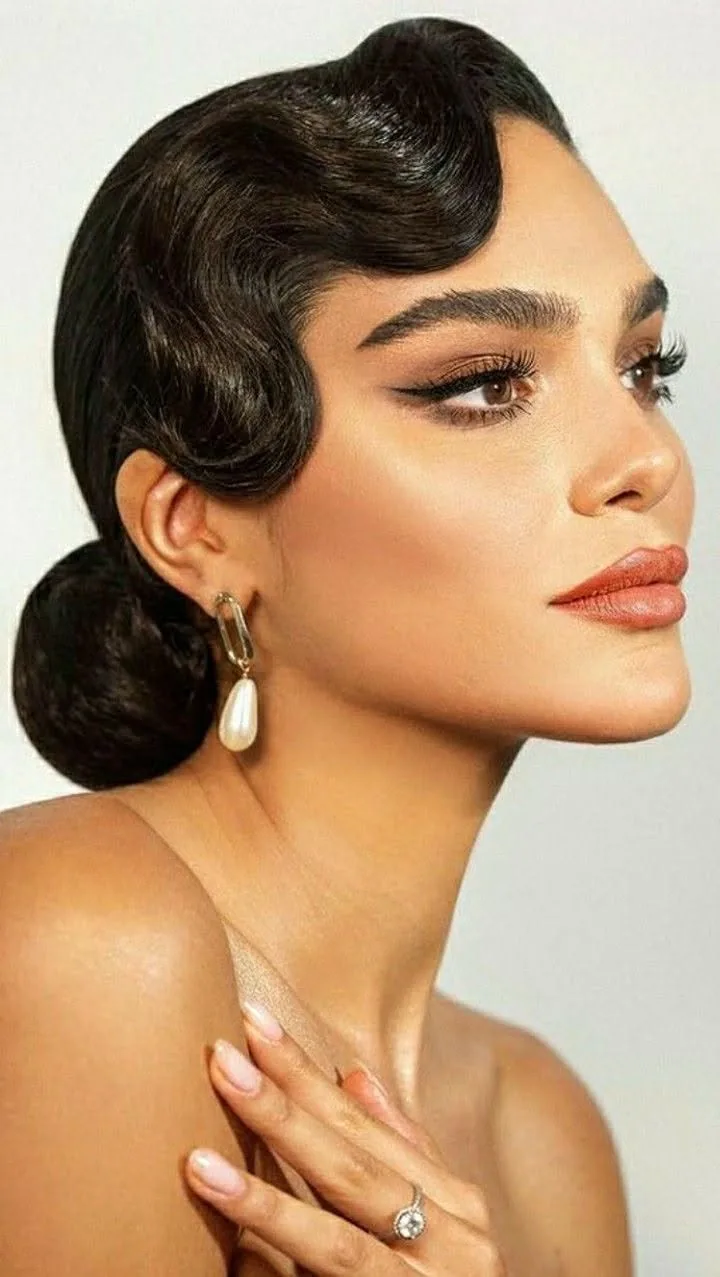
An old Hollywood side part is the quietest glamour in this guide: the hair is parted deeply to one side, smoothed flat at the crown, and left to fall in soft, glossy waves past the shoulders. There is no updo, no braid and no accessory — just a perfect parting and a mirror shine. It suits black-tie events, award nights and any occasion where the dress itself is the star and the hair should frame it rather than compete with it.
Who it suits: medium to long hair, and anyone who loves understated elegance. How to style it: create a deep side part, blow-dry the crown smooth, curl the lengths in large sections, brush out into soft waves, and set with a shine spray. Maintenance: a small comb and a travel spray in your clutch, because the parting is the whole style and it needs to stay sharp.
32. The Wedding-Guest Chignon

A wedding-guest chignon is a low, soft chignon designed to look beautiful without ever upstaging the bride: elegant and polished, but not bridal. The hair is gathered low, twisted into a soft roll, and finished with a few loose pieces at the front and a single decorative pin. It suits every kind of wedding, from a church ceremony to a garden reception, and it is comfortable enough to wear from the ceremony through to the last dance.
Who it suits: wedding guests of all ages, and anyone who wants a formal style that is elegant without being bridal. How to style it: build a soft low chignon, leave a few face-framing pieces loose, and finish with one pearl or crystal pin. What to avoid: a veil-style accessory, white flowers, or anything that could be mistaken for a bridal look — the guest’s job is to look lovely, not to look like the bride.
33. The Low Ponytail With a Wrapped Base
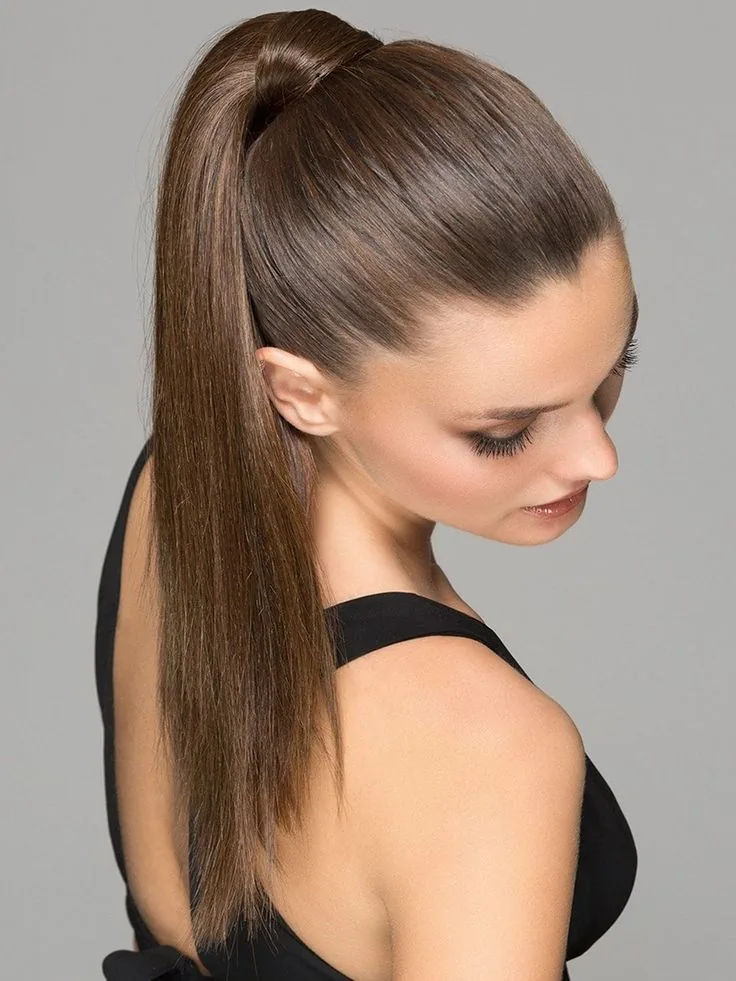
A low ponytail with a wrapped base is the polished low ponytail taken one step further: the elastic is completely hidden by a wrapped strand of hair, and the length is curled into soft, even waves. It is modern, minimal and very flattering, and it suits formal events where the dress has a dramatic back or a high neckline, because the hair stays neatly out of the way while still showing off length and shine. It is also one of the most comfortable formal styles to wear all night.
Who it suits: long hair, and anyone who wants a modern, minimalist formal look. How to style it: secure a low ponytail, wrap a strand around the base and pin it underneath, curl the length in large sections, and brush out for soft waves. Common mistake: wrapping the base too loosely, so the elastic shows by the end of the night — pin the wrapped strand firmly underneath.
34. The Half-Up Style With Volume at the Crown

A half-up style with volume at the crown is the glamorous middle ground between an updo and wearing the hair down: the top section is lifted and pinned back with height at the crown, while the rest of the hair falls in waves or curls. The height at the crown lengthens the face and adds drama, and the loose length keeps the look soft and romantic. It is a favourite for proms, engagement parties and formal dinners, and it works on almost every hair type.
Who it suits: round and square faces in particular, because the crown height balances the face shape. How to style it: backcomb the crown section lightly, smooth the top layer over it, pin the top half back, and curl the loose length. What to avoid: too much height for a daytime event, and pinning the top section too tightly, which flattens the volume you just created.
35. Long Soft Waves With Statement Clips
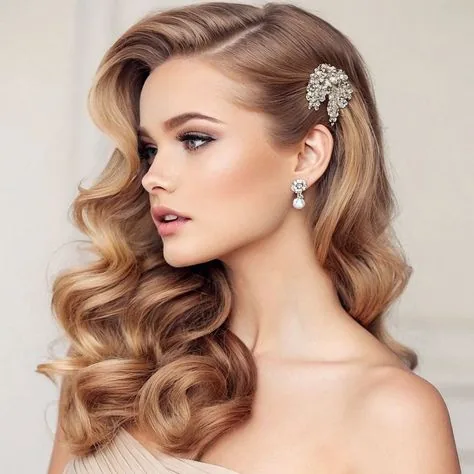
Long, soft waves with statement clips are the easiest formal style in this guide to achieve and one of the most effective: the hair is curled into large, soft waves, and one side is pinned back with a crystal, pearl or gold clip. The clip does the work of making the style look deliberate and occasion-ready, while the waves do the work of looking glamorous. It is perfect for cocktail events and formal dinners, and it takes a fraction of the time of a full updo.
Who it suits: long hair, and anyone who wants a formal look without an updo. How to style it: curl large sections, brush out into soft waves, pin one side back with a statement clip, and set with a light spray. What to ask a stylist: ask for waves that are brushed out and glossy rather than tight curls, and bring the clip you plan to wear so the stylist can place it perfectly.
36. The Formal Updo for Fine and Thin Hair
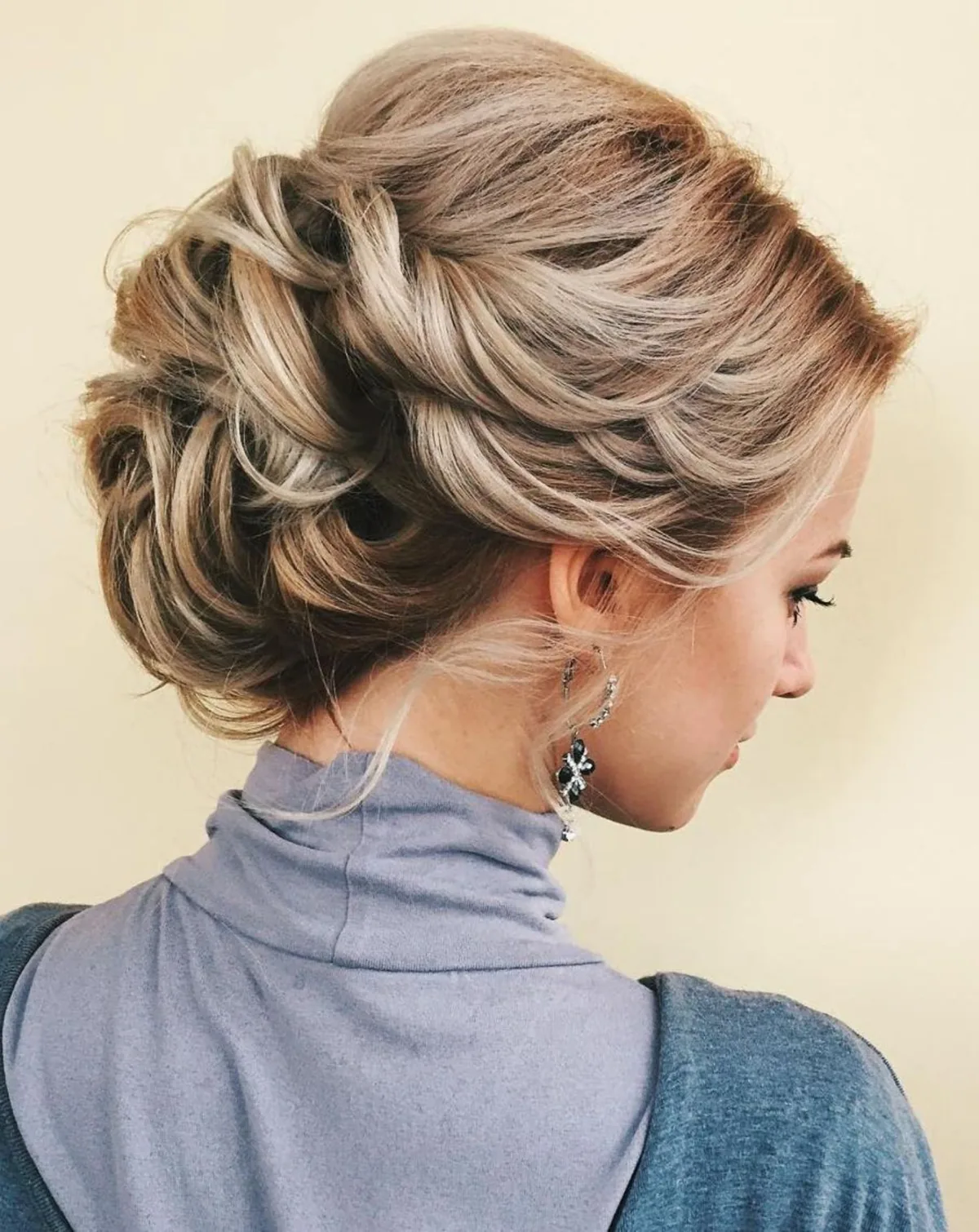
Fine and thin hair can be the hardest to style formally, because updos can look small and flat, and curls can drop within an hour. The answer is to build volume before you build the style: texture spray at the roots, a little backcombing at the crown, and a bun form or padding to give the updo its shape. A low, textured bun with a few pieces pulled loose at the front is the most flattering choice, because the texture makes the hair look fuller than it is.
Who it suits: fine, thin or sparse hair, and anyone whose updos usually look smaller than they hoped. How to style it: add texture spray and a little dry shampoo, backcomb the crown, gather the hair into a low bun over a small form, pin, and pull a few pieces loose. What to avoid: heavy products that weigh fine hair down, and a severe, slicked-back style, which shows every thin patch — texture and softness are your friends.
What is the best hairstyle for a black-tie event?
For a black-tie event, the safest and most elegant choices are a classic low chignon, a French twist, a sleek high bun or old Hollywood waves. These styles are polished, secure and photogenic, and they suit the formality of the room. Choose the one that flatters your face shape and your dress — an updo shows off a backless gown, while Hollywood waves suit a high-neck dress beautifully.
Should I wear my hair up or down to a formal event?
It depends on the event and on you. An updo is more secure, shows off your neckline and jewellery, and lasts the whole night, which makes it the better choice for dancing, heat or a long evening. Hair worn down looks softer and more romantic, and it suits quieter evenings of dinner and photographs. If you cannot decide, a half-up style gives you the best of both.
How do I make my formal hairstyle last all night?
Start with hair that has some grip — day-old hair or hair with dry shampoo holds better than freshly washed, silky hair. Use a flexible-hold hairspray, let the style cool completely before you touch it, and pin with bobby pins placed in an X shape so they lock each other in. Carry extra pins and a travel hairspray in your clutch, and check the back of your style once after the first hour.
Can I do a formal hairstyle at home?
Yes, many formal hairstyles work well at home, especially a low chignon, a polished low ponytail, a textured low bun and soft side-swept curls. The key is to practise the style a few days before the event, allow 30 to 45 minutes, and use the right tools — bobby pins in your hair colour, texture spray and a flexible-hold hairspray. For a wedding or a gala, a trial run with a stylist is still worth it.
What hairstyle suits a long formal dress?
A long formal dress pairs beautifully with an updo, because the updo balances the length of the gown and shows off the neckline. A low chignon, a side bun or a French twist all work well. If the dress has a dramatic back, choose an updo so the back is visible; if the dress has a high neckline, soft waves worn down or swept to one side will frame the dress rather than compete with it.
How far in advance should I book a stylist for a formal event?
Book your stylist at least two to three weeks before a formal event, and earlier for weddings and peak-season galas, when the best stylists fill up fast. If you want a trial run, book it for a week before the event, so you have time to change your mind. On the day, allow 45 to 60 minutes for the appointment, and arrive with clean, dry hair unless your stylist tells you otherwise.
What hairstyles work for short hair at a formal event?
Short hair has plenty of formal options: a bouncy curled bob, a pixie with a deep side sweep, vintage finger waves, or a sleek straight bob with a sharp parting. The finish matters more than the length — smooth, glossy and deliberate is what makes short hair look formal. A statement clip or a pair of bold earrings can add the finishing touch without needing any extra length.
How do I choose between an updo and loose waves?
Think about three things: the dress, the event and your comfort. An updo suits a backless or high-neck dress, a long night of dancing, and hot or humid weather. Loose waves suit a strapless or one-shoulder dress, a shorter evening, and anyone who feels most like themselves with their hair down. If you are still torn, try both at your trial run and photograph each one — the camera often decides what the mirror cannot.
What hair accessories work for formal events?
Pearl pins, crystal clips, gold hair combs and delicate headbands all work beautifully at formal events, as long as they match your jewellery and your dress. One statement piece is enough — a cluster of pearl pins above a chignon, or a single crystal clip holding back one side of soft waves. Avoid plastic accessories, anything too large, and more than one statement piece at a time, which can make the look feel busy.
How do I keep frizz away at a formal event?
Start with a humidity-proof spray or serum before you style, and finish with a light-hold hairspray that seals the surface. Avoid touching your hair once it is set, because hands transfer moisture and break the hold. If frizz appears during the night, smooth it with a tiny amount of serum rubbed between your palms, or use a clean toothbrush sprayed with hairspray to press flyaways flat — never add more product directly to the hair.
Conclusion: Choose Hairstyles for a Formal Event That Suit You, Your Dress and Your Night
The best hairstyles for a formal event are not the most complicated ones — they are the ones that suit your face, flatter your dress, and still look good at midnight. A classic low chignon, a sleek high bun, old Hollywood waves or a soft romantic updo will never let you down, and the right choice is the one you feel comfortable wearing for five hours, not just the one that looks best in a photograph.
So match the style to the dress code, practise it before the night, book a trial run if the event matters, and pack a few pins and a travel hairspray in your clutch. Formal hair is really about preparation: the polish, the hold and the small details that keep a style looking fresh. Get those right, and your hair will be the least of your worries all night — which is exactly how it should be.

