

There is a special kind of panic that only dancers know: you are halfway through a turn, your hair comes loose, and suddenly a strand is in your eyes, a pin is sliding down your neck, and the bun you spent twenty minutes on is unravelling in front of the whole class. The best hairstyles for a dance class are not the prettiest ones on a photo — they are the ones that survive spins, jumps, floor work and sweat, and still look neat when the teacher calls the class to attention at the end.
This guide starts with eight practical explainers — what makes a hairstyle truly dance-proof, why hair keeps falling out mid-class, which styles suit different hair lengths, textures and dance styles, how to build a secure style step by step, what to ask your stylist before a dance season, the mistakes that ruin a dance hairstyle, how much time and money it really takes, and a quick verdict on the best looks — then walks through 31 secure styles, from the classic ballet bun to space buns for hip-hop, from cornrows to a curly pineapple pinned up tight. Every section notes how it holds, who it suits, and how to keep it in place, so you can walk into class and forget about your hair completely.
What Makes a Hairstyle Dance-Class Proof?
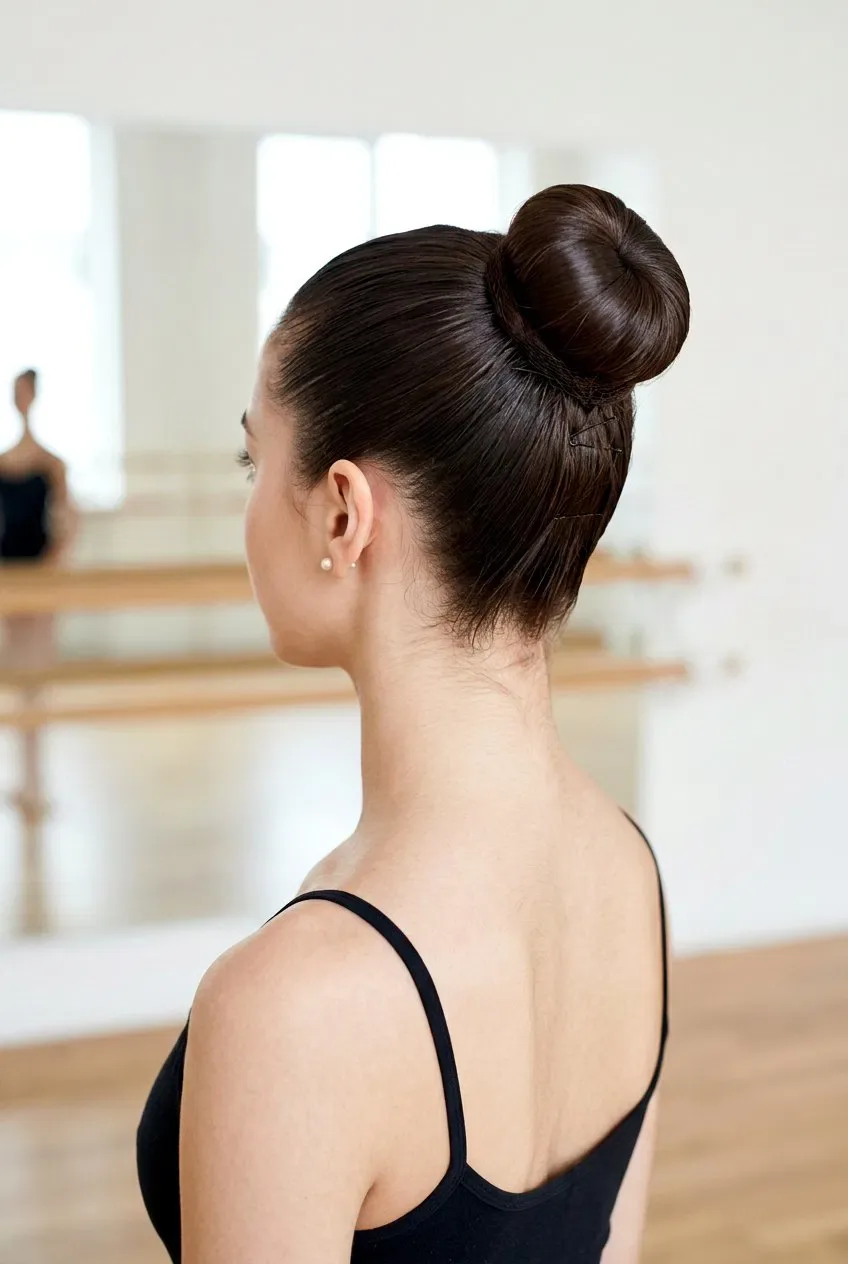
A dance-proof hairstyle has to pass three tests at once, and most everyday styles only pass one. First, it has to stay put through movement — turns, jumps, rolls and head flicks pull at hair from every direction, so a style needs anchor points in more than one place, not just a single hair tie. Second, it has to stay out of your face and off your neck, because loose strands are a distraction and a safety issue when you are spotting a turn or going upside down. Third, it has to survive sweat: a style that looks perfect in the mirror at home and collapses ten minutes into warm-up is not a dance hairstyle at all.
What it means: a dance-proof style is built, not just tied — pins, braids and a good base work together, and no single product does the whole job. What to look for: styles anchored close to the head, with hair tucked away in two or more places, and a finish that can be checked and re-pinned in seconds between exercises. Quick test: shake your head hard, jump three times and bend forward — if nothing moves, the style is ready for class.
Why Your Hair Keeps Falling Out Mid-Class — and What Actually Holds It

If your hair keeps falling out during dance class, the problem is rarely your hair — it is the foundation. A ponytail tied over slippery, freshly washed hair has nothing to grip, a bun pinned with two pins where it needs eight will always sag, and a style built on dry, flyaway hair will shed strands with every turn. Sweat makes it worse: it loosens gel, softens hairspray and lets pins slide, which is why a style that holds for a photo can fall apart halfway through a routine.
What actually holds: slightly unwashed or texturised hair grips far better than squeaky-clean hair, a braided base locks a bun in place, and pins pushed in from opposite directions cancel each other out instead of sliding the same way. What to avoid: relying on one elastic alone, using pins that are too small for your hair’s thickness, or spraying hairspray on top of a style that has no pins underneath it. What helps most: build the style on damp hair with a little mousse or gel, let it dry in place, and carry three spare pins in your dance bag for a thirty-second fix between exercises.
Who These Styles Suit — Hair Length, Texture and Dance Style

There is no single best hairstyle for a dance class, because the right choice depends on three things: how long your hair is, what texture it is, and what kind of dance you are doing. Ballet usually needs a neat bun — many schools require it — while hip-hop is happy with braids, space buns or a high ponytail, jazz wants sleek lines that show the neck, and contemporary often allows softer styles as long as nothing flies into your face. Short hair needs pins and gel rather than length, curly hair needs styles that work with the curl instead of fighting it, and thick hair needs more pins and stronger elastics than fine hair.
What it means: match the style to the class, not just to the mirror — a beautiful loose braid is wrong for ballet but perfect for contemporary. Who suits what: long hair suits buns and braided ponytails, medium hair suits low buns and French braids, short hair suits slicked styles with pins, and curly hair suits pineapples, braids and twisted updos. What to avoid: copying a style made for a different hair type without adjusting it — a bun that works on fine, straight hair will need twice the pins on thick, curly hair.
How to Build a Style That Survives a Full Class
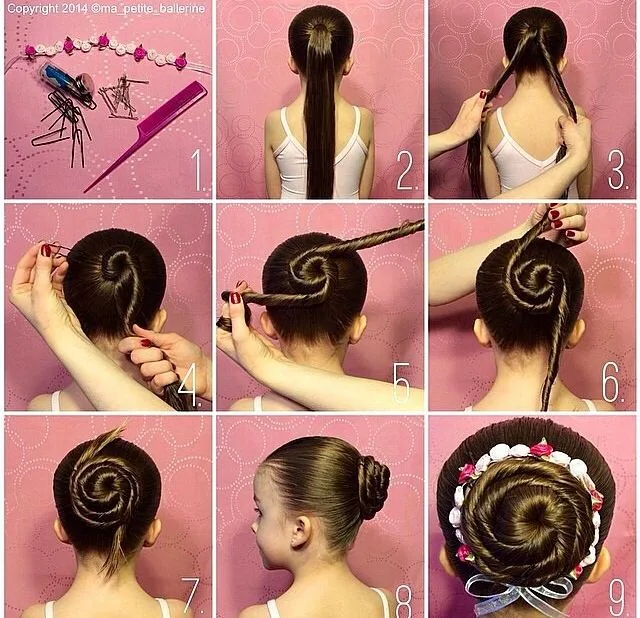
Building a secure dance style is a short routine, and doing it in the same order every time is what makes it reliable. Start with hair that is slightly damp or has a little product in it — clean, slippery hair is the enemy. Brush it smooth, then build a base: a braid, a twist or a tight ponytail that anchors everything else. Shape the style on top of that base, pin it from at least two directions, and finish with a light mist of hairspray, not a soaking — too much spray makes hair stiff and then brittle, and it flakes when you sweat.
Step by step: dampen and add product, brush smooth, build a braided or twisted base, shape the bun or ponytail, pin from opposite directions, and finish with spray. What to check: shake your head, jump, and bend forward before you leave the house — if a strand moves, pin it now, not in class. Time it takes: most of the styles in this guide take five to ten minutes once you have practised them twice, and the ballet bun takes about five minutes when you know the steps by heart.
What to Ask Your Stylist Before a Dance Season
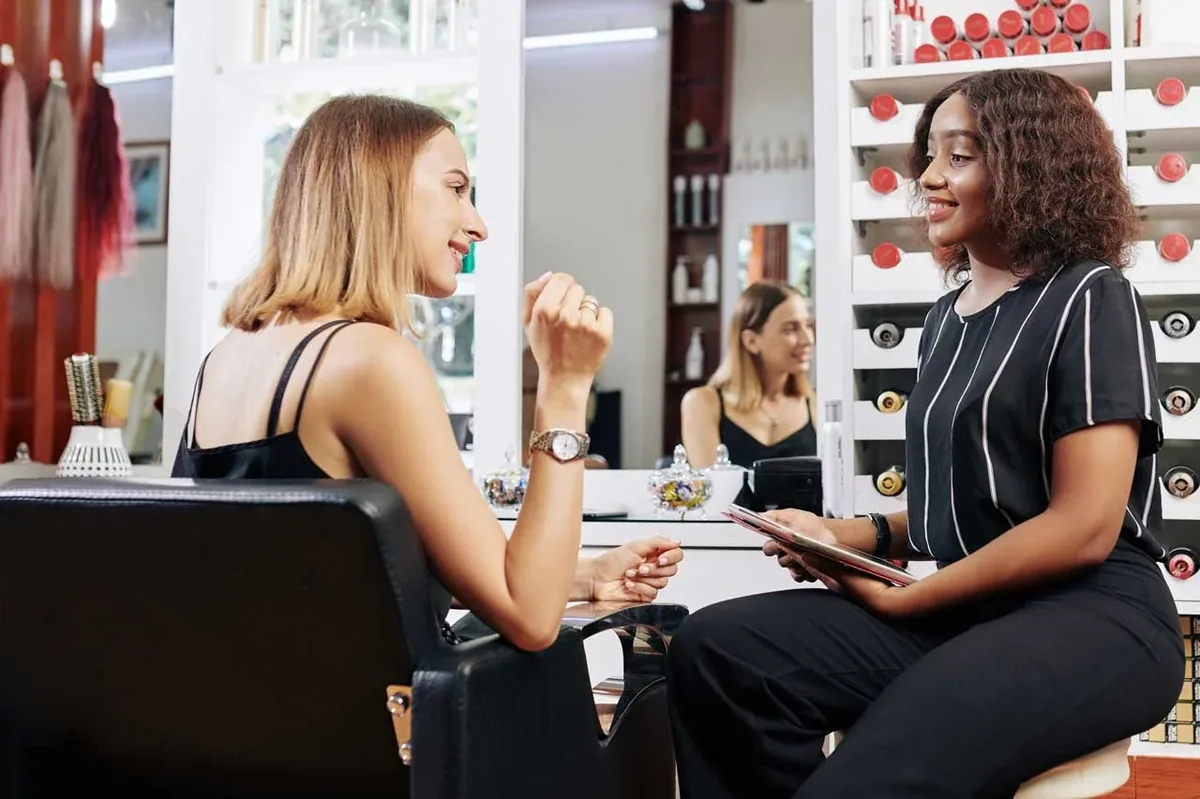
A good stylist can make dance class much easier, but only if you tell them what you actually need. Most stylists will give you a pretty updo if you ask for one — what you need is a cut and a style plan built for movement, sweat and weekly repetition. Before a dance season starts, book a consultation and bring photos of the styles you like, tell them which dance styles you do, how often you practise, and how much time you are willing to spend on your hair before class.
What to ask: ‘Which cut will make a bun easier for my hair type?’, ‘Can you show me how to pin this so it holds through a class?’, and ‘What products should I use that will not damage my hair with daily use?’ What it means: a stylist who understands dance hair will thin out bulk that makes buns sag, add layers that tuck away neatly, and teach you the pinning — not just do it once in the chair. What to avoid: a cut with lots of short face-framing layers if you dance ballet, because those strands are the first to escape, and a style you cannot recreate at home in under ten minutes.
Common Mistakes That Ruin a Dance Hairstyle
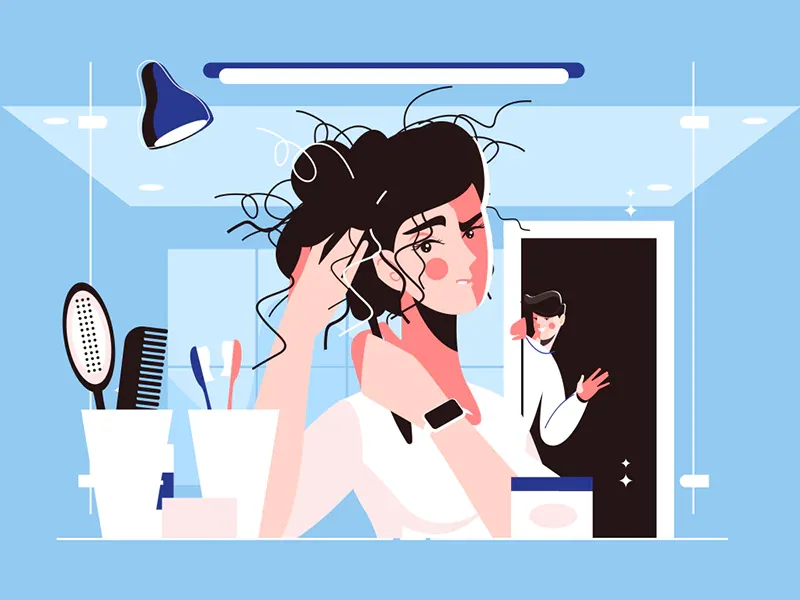
Most dance hairstyles do not fail because the style is wrong — they fail because of small mistakes made before class even starts. The most common is building the style on freshly washed, conditioner-heavy hair, which is so slippery that pins slide straight out. Next is using too few pins, or all of them pushed in the same direction, so the whole style leans one way and collapses. Then there is the elastic problem: a thin, stretched-out elastic that was fine for school will snap or sag under a jump, and a metal join on an elastic can snag and break hair.
Mistakes to avoid: washing your hair right before class, skipping the base braid or twist, using one pin where you need four, and finishing with heavy spray instead of pinning properly. What happens: each mistake on its own is fixable, but two together — slippery hair plus too few pins — will undo a bun before the warm-up ends. Quick fix: if a style starts to fall in class, do not keep pushing the same pin back in — take the section out, re-twist it, and pin it from the opposite direction; a thirty-second rebuild holds better than five minutes of patching.
How Much Time and Money a Dance Hairstyle Really Takes
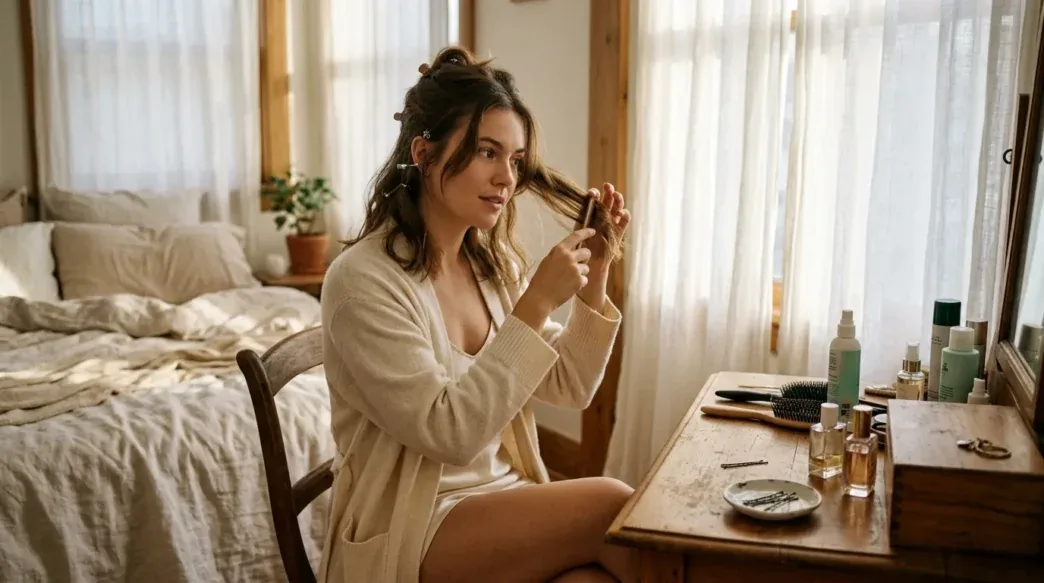
One of the best things about hairstyles for a dance class is how little they cost. Almost every style in this guide needs nothing more than a brush, a few strong elastics, a pack of bobby pins, and a bottle of hairspray or gel — a starter kit costs about the same as one dance class, and it lasts for months. The real cost is time, and even that is small once you have practised: most styles take five to ten minutes, a ballet bun takes about five, and a cornrow or braided style can take fifteen to twenty minutes the first few times, then much less.
What it costs: elastics, pins, a hair donut or two, and one good hairspray — no salon visit needed for most styles, though a stylist can teach you the technique in a single appointment. Time per style: buns and ponytails five to eight minutes, braided styles ten to fifteen, and intricate braids twenty minutes until your hands learn the pattern. What to avoid: buying expensive ‘dance hair’ kits or special pins — ordinary strong pins and snag-free elastics do the same job, and a cheap hair donut makes a perfect bun for a fraction of the price.
Quick Verdict: The Best Hairstyles for a Dance Class at a Glance
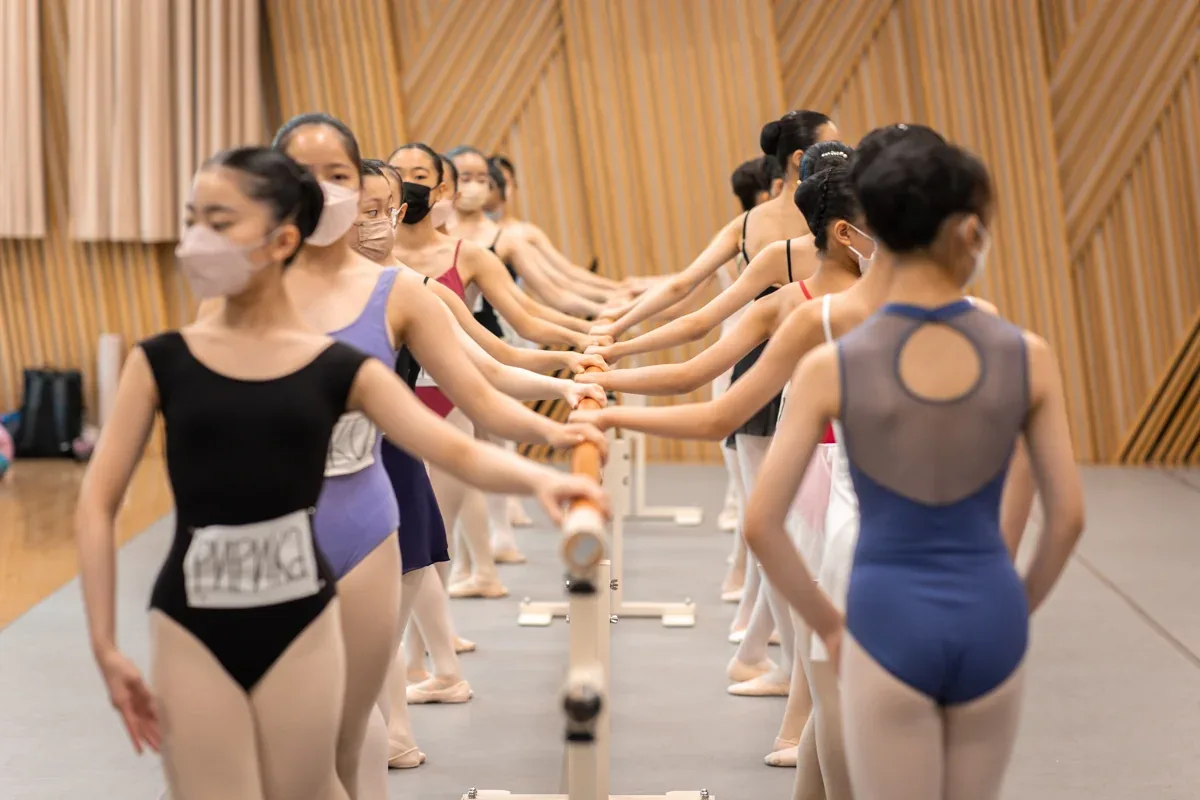
If you only remember one thing from this guide, remember this: the best hairstyle for a dance class is the one you can build in under ten minutes, that stays put through a full class, and that you can fix in thirty seconds if it slips. For ballet, that is the classic ballet bun — neat, required by most schools, and the most secure style there is. For hip-hop, it is double Dutch braids or space buns. For jazz, a slicked low bun or a braided ponytail. For contemporary, a side braid or a low chignon that moves with you instead of against you.
Who should avoid what: avoid loose styles, half-up looks with falling strands, and anything held by a single clip if you are doing turns or floor work — and avoid heavy, wet-look gel on fine hair, which goes limp with sweat. Our verdict: start with the classic ballet bun, learn one braided style, and keep a slicked low bun as your backup — between those three, you have a secure hairstyle for a dance class of almost any kind. What to do next: pick the style that matches your next class, practise it twice at home, and test it with the shake-and-jump check before you trust it in class.
1. The Classic Ballet Bun

The classic ballet bun is the gold standard of hairstyles for a dance class, and there is a reason almost every ballet school in the world requires it. It pulls every strand away from the face and neck, it shows the line of the neck and shoulders that ballet is judged on, and when it is built properly it does not move — not through pirouettes, not through jumps, not through an hour of barre work. It is also the style every other dance hairstyle is measured against, because if a bun can survive ballet, it can survive almost anything.
How it holds: a braided or twisted base, a hair donut for shape, and pins pushed in from opposite directions lock it down from every angle. Who it suits: medium to long hair, all textures, and every ballet class from beginner to advanced. What to avoid: building it too high or too loose — a bun that sits on top of the head like a topknot will wobble, and a loose bun will sag within ten minutes.
2. The Low Sleek Bun
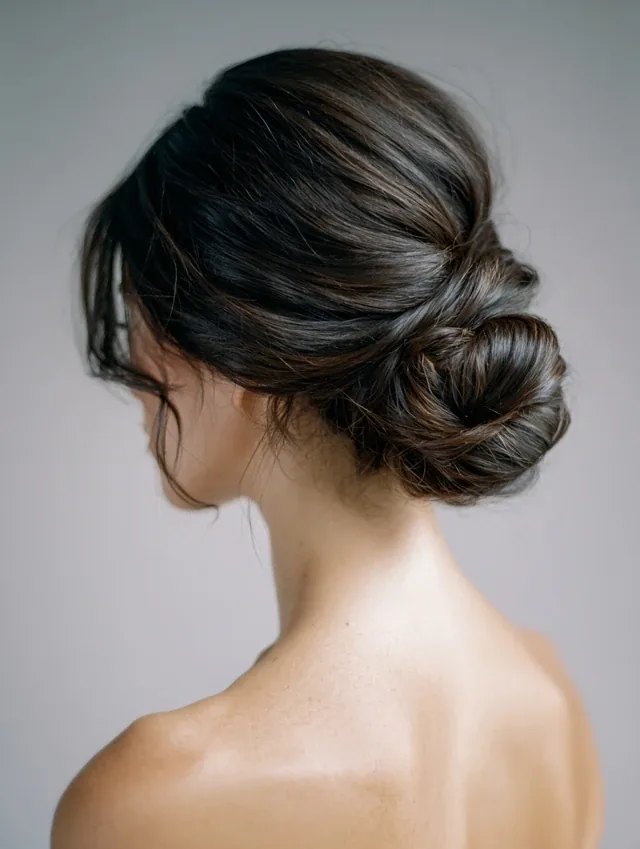
The low sleek bun sits at the nape of the neck, and it is the quiet, elegant cousin of the classic ballet bun. It is a favourite for jazz and contemporary classes, where a high bun can feel too severe, and it is also kinder to your neck — a heavy high bun can pull and ache over a long class, while a low bun spreads the weight evenly. Smoothed back with gel and pinned flat, it gives you the same clean lines as a ballet bun with a softer, more grown-up feel.
How it holds: gel-smoothed hair, a tight low ponytail as the base, and pins tucked underneath the bun where they cannot slip out. Who it suits: medium to long hair, especially thick hair that is too heavy for a high bun. What to avoid: leaving the nape loose — the short hairs at the back of the neck are the first to escape, so smooth them down with a toothbrush and a little gel before you pin.
3. The High Ballerina Bun
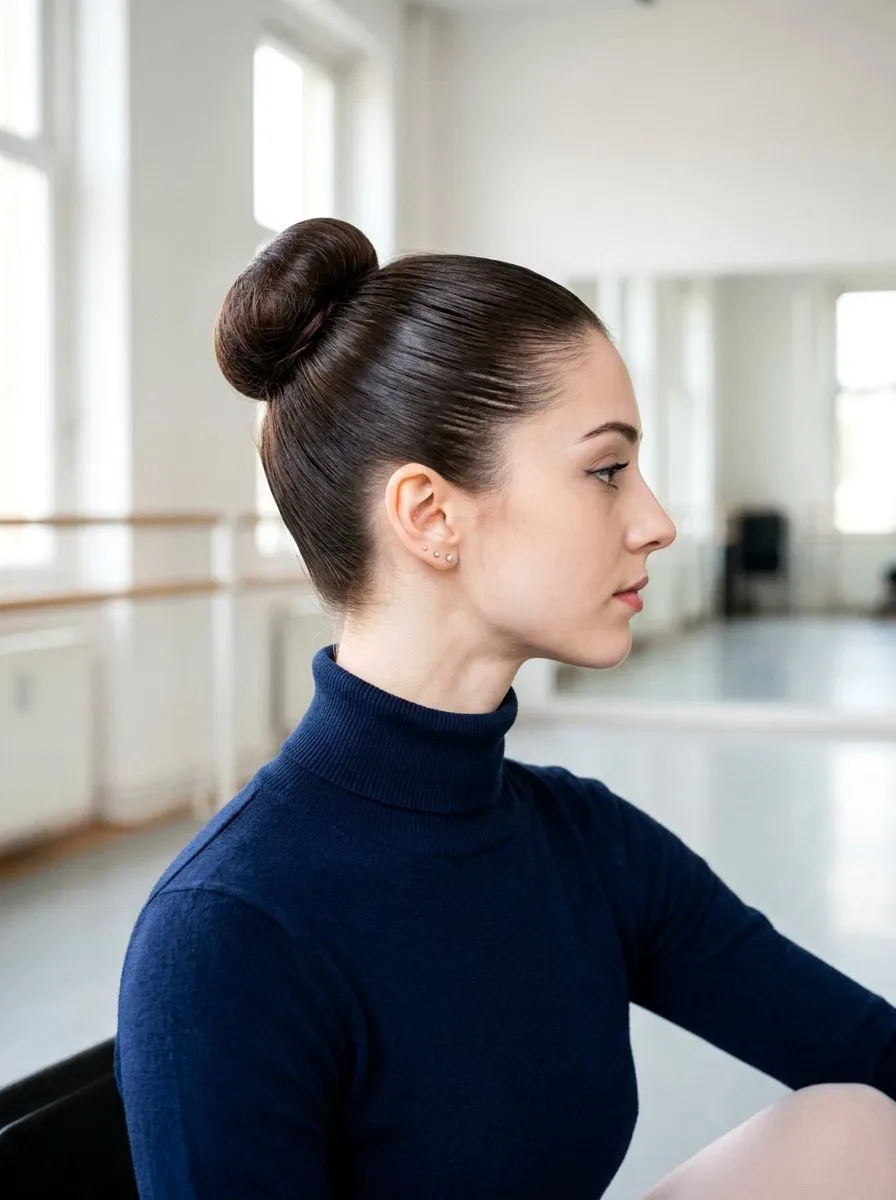
The high ballerina bun sits right on the crown of the head, and it is the most dramatic of the bun family — it lengthens the neck, lifts the whole silhouette, and photographs beautifully, which is why dancers love it for performances and class photos. In class it has a practical advantage too: with all the hair piled high, nothing touches your neck or shoulders when you sweat, and the bun is completely out of the way for floor work and rolls.
How it holds: a high, tight ponytail as the anchor, a donut for fullness, and at least six pins spread evenly around the base. Who it suits: long hair with enough length to wrap fully around a donut, and dancers who want a performance-ready look in class. What to avoid: making it too heavy — a very large bun on fine hair will pull and slide, so use a small donut and keep the bun compact.
4. The French Twist for Ballet
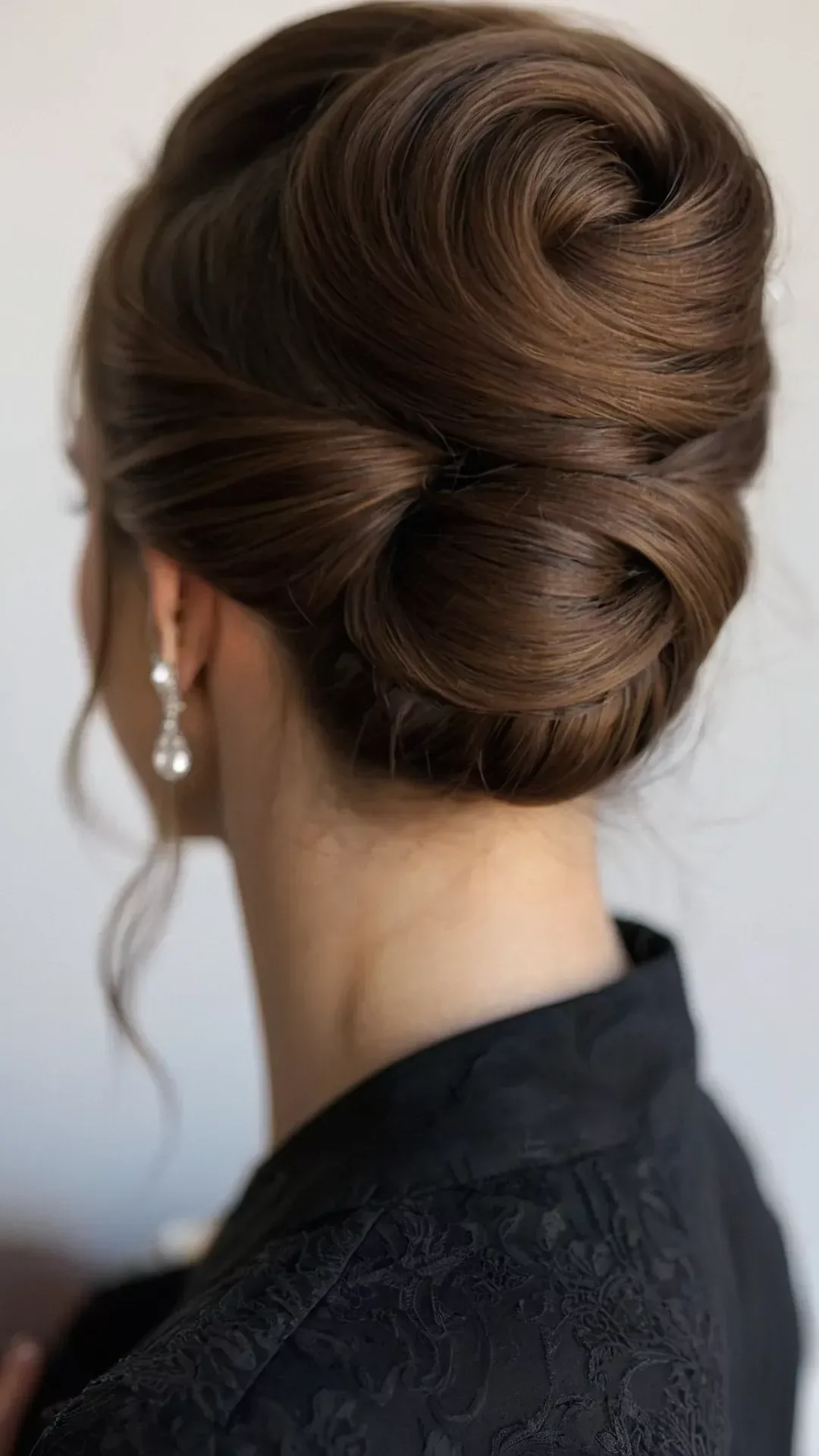
The French twist is the most elegant of all hairstyles for a dance class, and it has been a ballet-studio favourite for decades. Hair is swept up and folded into a vertical roll at the back of the head, pinned flat, and finished smooth — no ponytail, no bulk, just one clean line from the crown to the nape. It looks like it belongs in a theatre, and it holds like it was built for one, because the twist itself is the anchor: the more you move, the tighter it sits.
How it holds: the twist locks against itself, and long pins pushed vertically through the roll hold it from top to bottom. Who it suits: medium to long hair, and dancers who want a polished, classical look without a bun. What to avoid: attempting it on freshly washed hair — the twist needs grip, so build it on second-day hair or add texturising spray first.
5. The Braided Crown
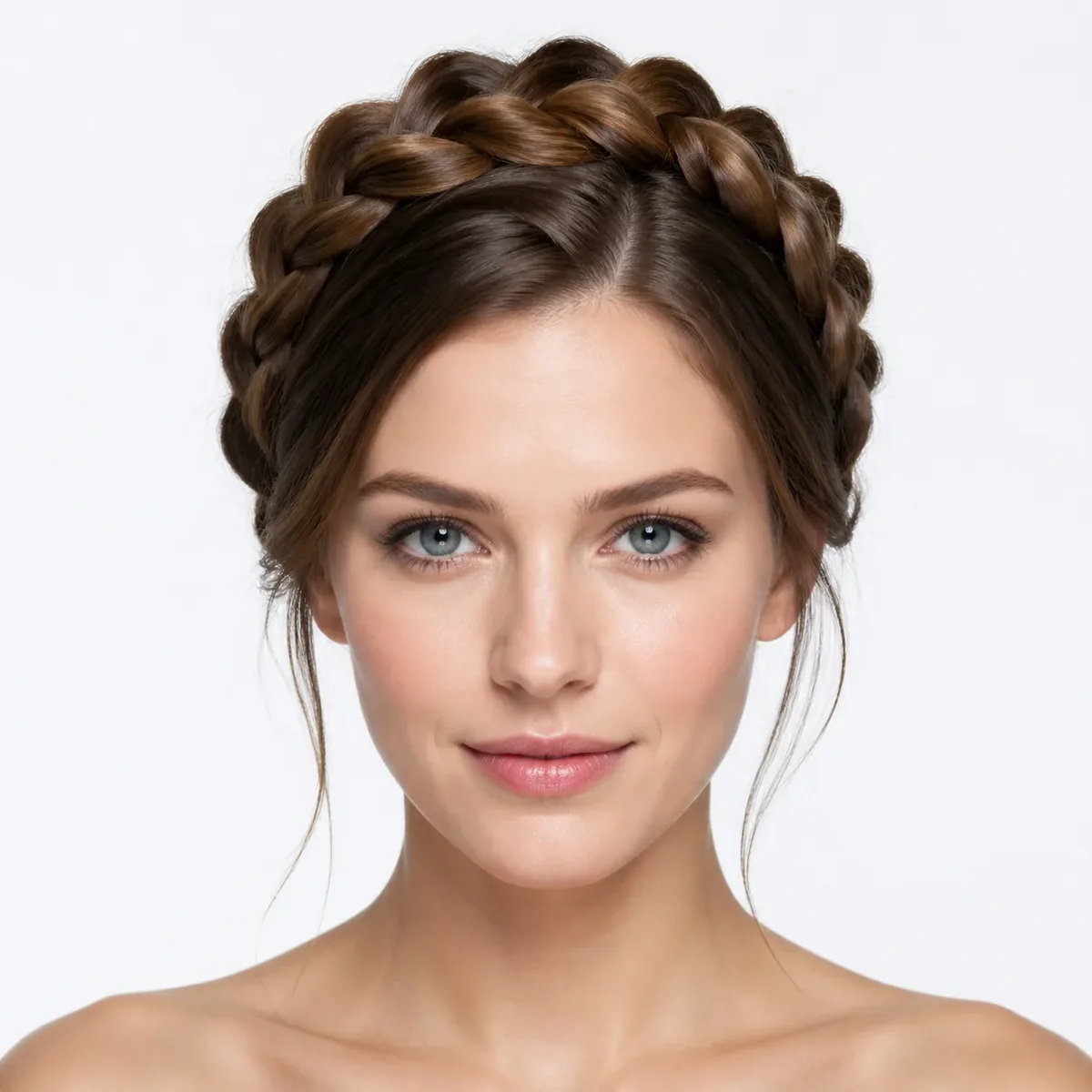
The braided crown wraps a braid around the head like a headband made of your own hair, and it is one of the prettiest secure styles you can wear to dance class. It keeps every strand off the face, it stays put through turns because the braid is anchored all the way around, and it works beautifully for folk dance, contemporary and jazz, where a little softness is welcome. It also hides growing-out layers better than almost any other style, because the braid gathers them in as it goes.
How it holds: a Dutch braid worked around the head, with the tail tucked and pinned underneath the start of the braid. Who it suits: medium to long hair, and dancers with layers or bangs that usually escape. What to avoid: braiding too loosely — a loose crown braid will slide down over your ears within minutes, so keep the tension even and pin the braid every few inches.
6. The Dutch Braid into a Bun
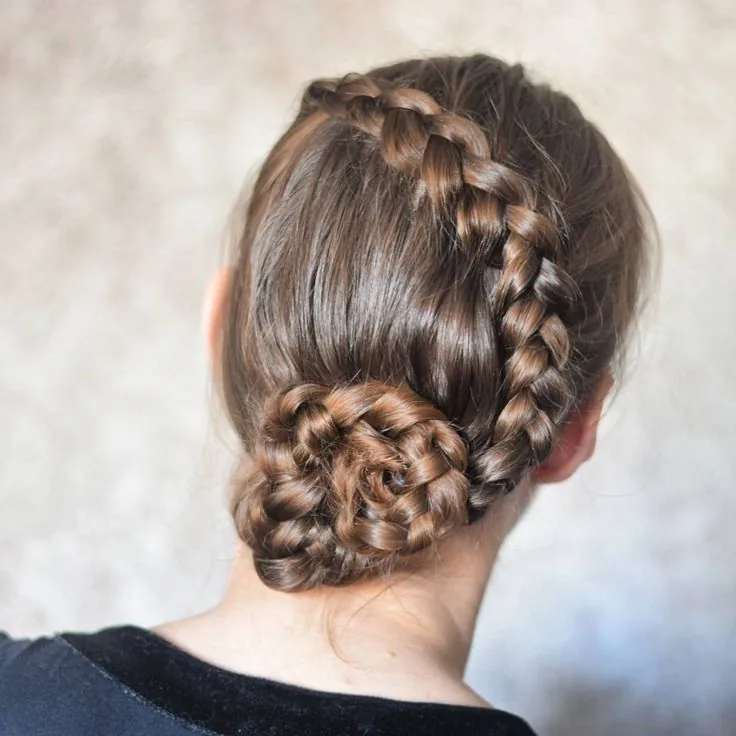
The Dutch braid into a bun is two styles in one: a braid that runs from the hairline to the crown, and a bun that finishes it off. It is one of the most secure hairstyles for a dance class you can build, because the braid acts like a seatbelt — it holds the front hair flat and locked down, and the bun at the end has a braided anchor instead of a slippery ponytail base. Dancers who have had buns fall out usually find this is the style that finally stays.
How it holds: the Dutch braid grips the scalp all the way back, and the bun is pinned through the braid, not just through loose hair. Who it suits: long hair, thick hair, and anyone whose buns usually sag by the middle of class. What to avoid: braiding only halfway — if the braid stops at the crown and the rest is loose, you lose the whole advantage, so carry the braid right into the bun.
7. French Braid Pigtails
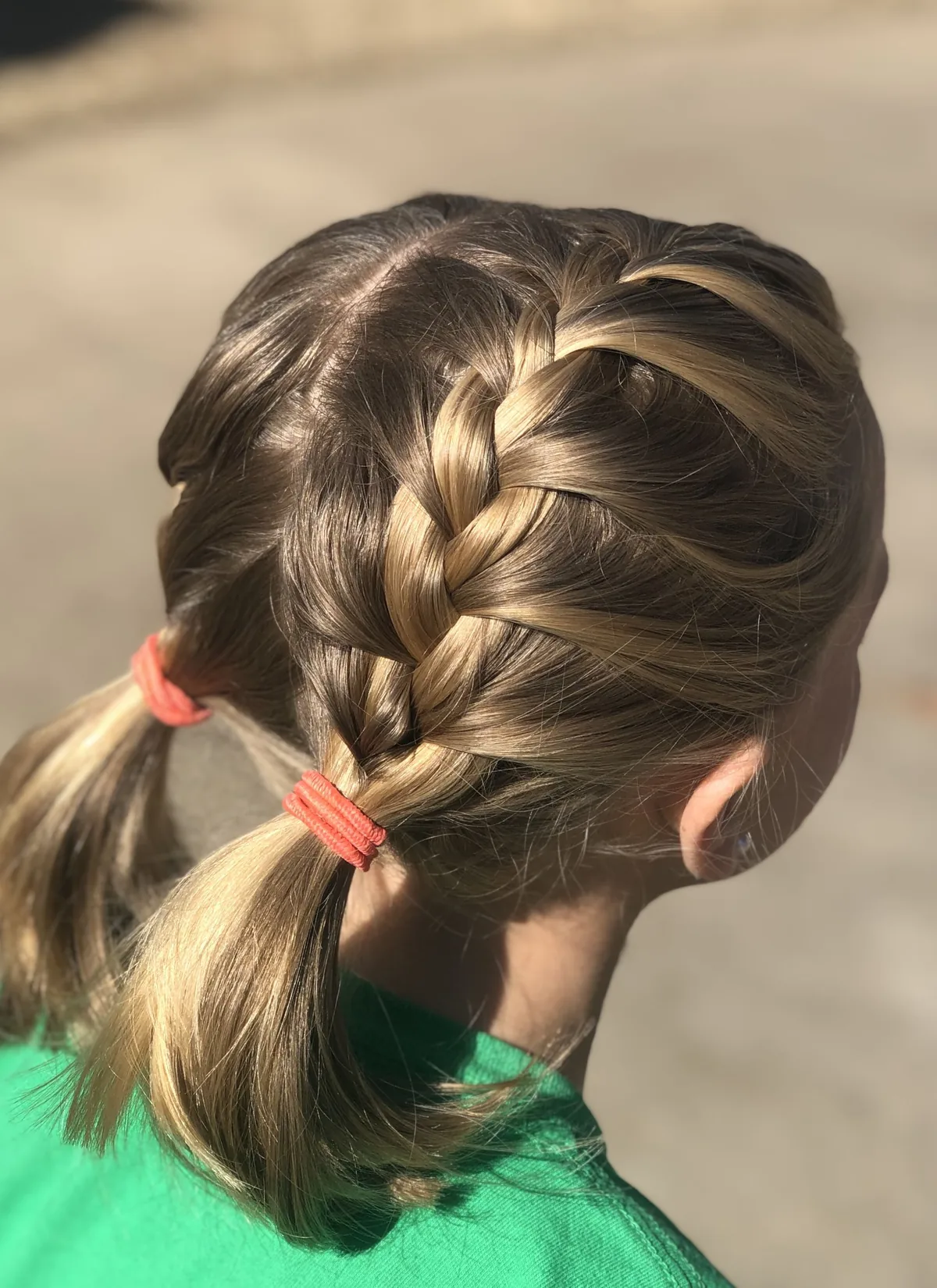
French braid pigtails are playful, practical and surprisingly secure — two braids, one on each side, that keep hair completely off the face and neck. They are a favourite for hip-hop and jazz classes, where a single bun can feel too formal, and they are brilliant for younger dancers, because the style is comfortable, it does not pull, and it survives an entire class of jumping and turning without a single strand escaping.
How it holds: each braid is anchored at the scalp from the hairline to the nape, so nothing can slide loose from the front. Who it suits: medium to long hair, younger dancers, and hip-hop or jazz classes. What to avoid: making the parting crooked — a wonky centre part shows immediately with two braids, so take an extra minute to part the hair cleanly before you start.
8. Double Dutch Braids
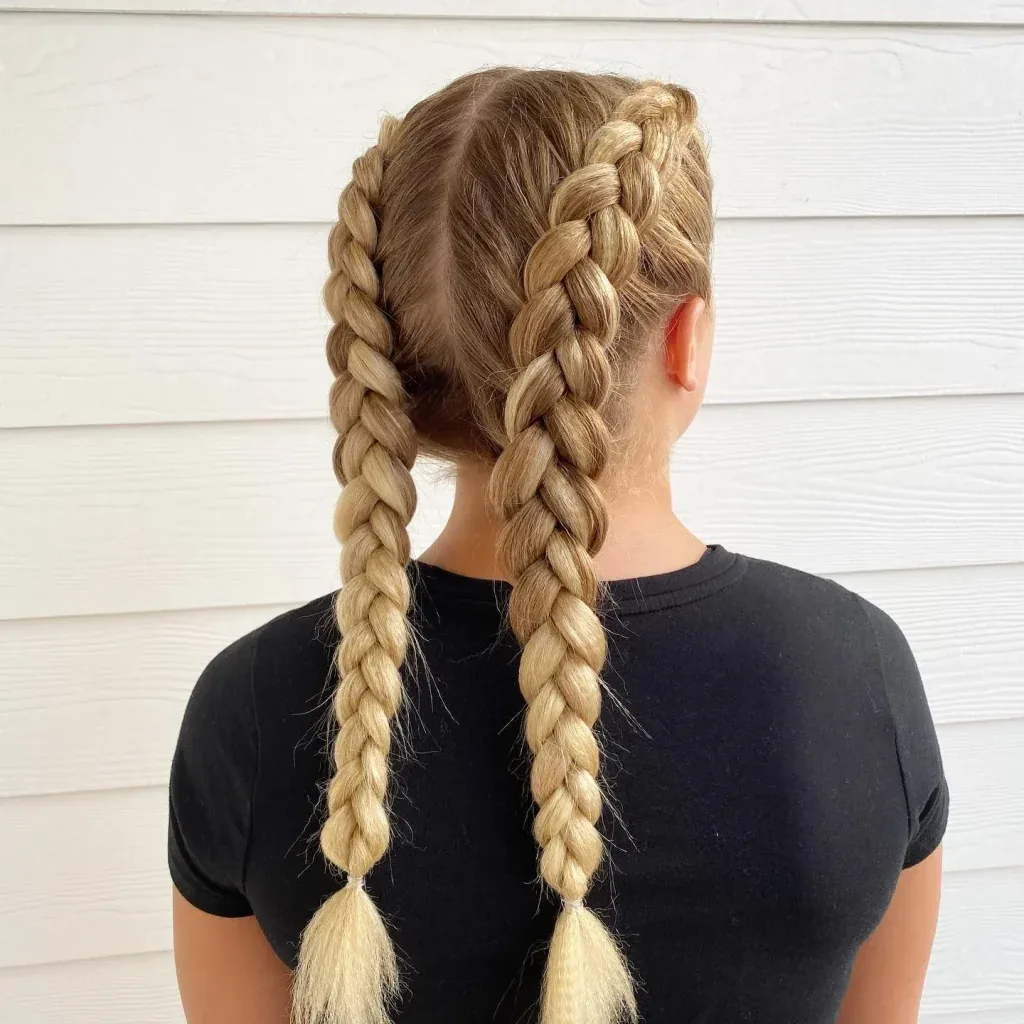
Double Dutch braids are the tougher, bolder version of French braid pigtails — the braids sit on top of the hair instead of tucked underneath, so they stand out, look thicker, and hold even more firmly. They are a hip-hop staple for a reason: they stay put through head spins, floor work and fast choreography, they look sharp with street-style outfits, and they keep working long after a ponytail would have come loose.
How it holds: the raised braid grips the scalp in a visible ridge, and the two braids balance each other so neither side pulls. Who it suits: medium to long hair, hip-hop and street dance classes, and dancers who want a bold look that lasts. What to avoid: braiding with uneven tension — if one braid is tighter than the other, the looser one will sag, so keep your hands even and check both sides in the mirror.
9. The Bubble Braid Ponytail

The bubble braid ponytail looks complicated and takes about three minutes: a high ponytail divided into sections by small elastics, each section gently pulled out to make a bubble. It is fun, it is eye-catching, and it is far more secure than a plain ponytail, because every elastic is another anchor point — if one section loosens, the others still hold. It is a great choice for jazz and hip-hop classes where you want movement in the hair without hair in your face.
How it holds: five or six elastics down the length of the ponytail share the weight, so no single point takes all the strain. Who it suits: long hair, and dancers who want a playful style that still stays put. What to avoid: pulling the bubbles out too far — over-puffed sections go flat with sweat and look messy by the end of class, so keep the bubbles modest.
10. The High Ponytail with a Wrap
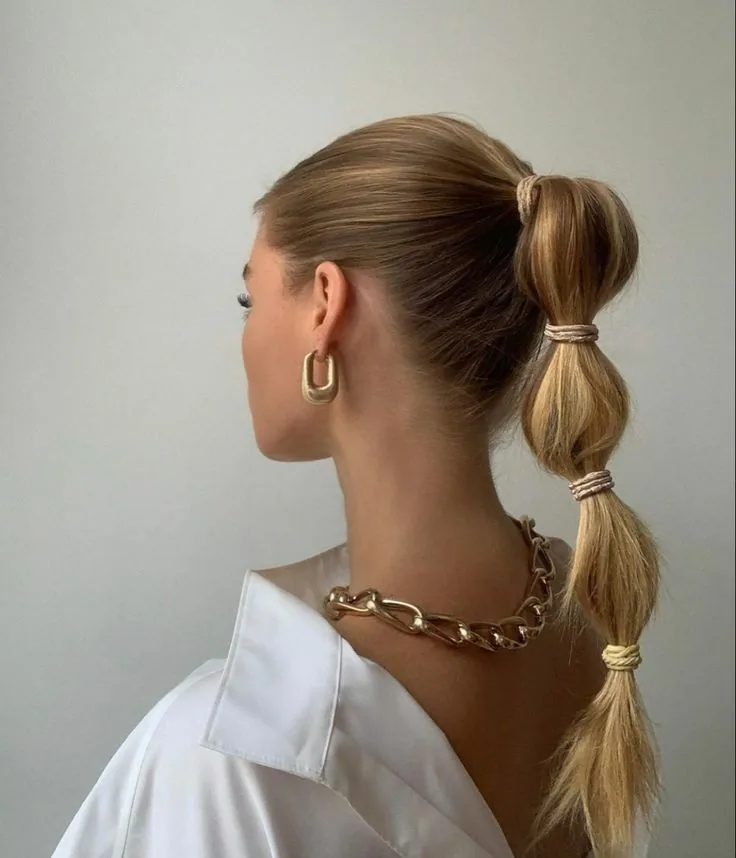
A high ponytail with a wrapped base is the simplest secure style in this guide, and it is the one most dancers reach for when they are in a hurry. The trick is the wrap: a strand of hair wound around the elastic and pinned underneath, which hides the elastic, stops it from sliding, and gives the ponytail a polished finish that looks deliberate instead of rushed. It works for jazz, hip-hop and contemporary, and it takes about two minutes.
How it holds: two elastics instead of one, a wrapped strand that locks the base, and a pin underneath that stops the wrap from unravelling. Who it suits: medium to long hair, and anyone who needs a reliable style in under three minutes. What to avoid: using a single thin elastic — it will stretch and sag, so use a thick, snag-free elastic and double it up for heavy hair.
11. The Low Ponytail with a Braid Base

The low ponytail with a braid base starts with a short French braid at the crown that feeds into a low ponytail, and that one braid changes everything. It stops the ponytail from sliding down, it keeps the front hair flat and smooth, and it turns an ordinary ponytail into a style that looks considered and stays put through turns. It is a quiet favourite for contemporary and modern dance, where a low ponytail moves beautifully with the body.
How it holds: the braid anchors the ponytail to the scalp, so the weight hangs from the braid instead of pulling on one elastic. Who it suits: medium to long hair, and contemporary or lyrical classes. What to avoid: letting the braid sit too high — a braid that starts at the very front hairline can pull and ache, so start it a little further back.
12. The Slicked-Back Low Bun for Jazz
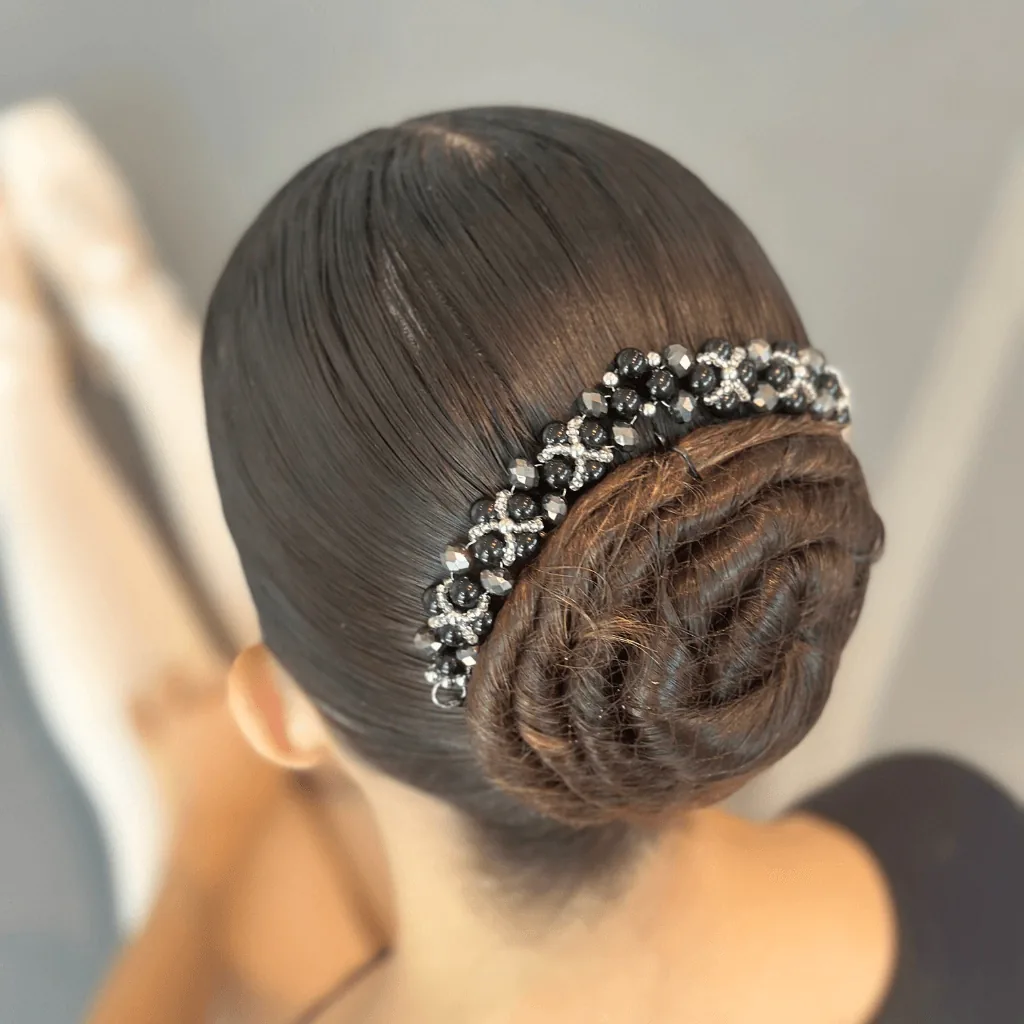
Jazz demands clean lines, and the slicked-back low bun delivers them: hair brushed back with gel until it shines, gathered low, and pinned into a compact bun that does not move when you kick, turn or isolate. There are no soft bits, no loose strands, no flyaways — just a smooth, sharp silhouette that lets the teacher see your neck, shoulders and posture clearly. It is the jazz dancer’s equivalent of the ballet bun, and it is just as strict about staying put.
How it holds: gel worked through damp hair, a fine-tooth comb for a perfectly smooth finish, and pins hidden underneath the bun. Who it suits: medium to long hair, and jazz or musical theatre classes. What to avoid: using too much gel — heavy gel goes sticky with sweat and flakes, so use a moderate amount and let it dry before you start moving.
13. The Messy-But-Secure Top Knot
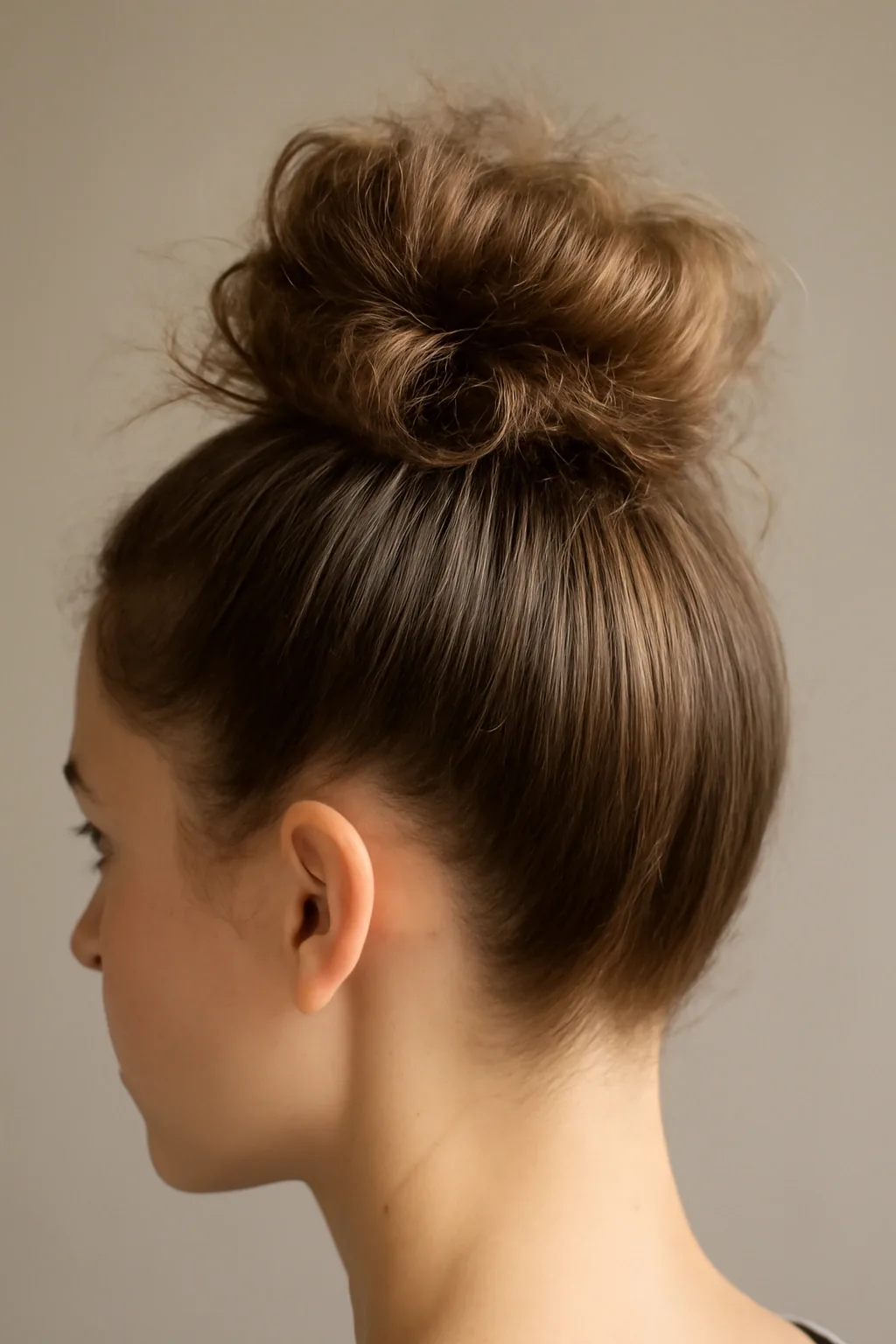
The messy-but-secure top knot is proof that a dance hairstyle can look relaxed and still stay put — the secret is that the mess is only on the surface. Underneath, the knot is anchored to a tight ponytail base and pinned from four directions, so the loose, textured finish is a style choice, not a style failure. It is a great option for contemporary and casual dance classes, where a perfect ballet bun would look overdressed.
How it holds: a tight base ponytail, pins from four directions, and texture spray instead of heavy gel, so the knot has grip without stiffness. Who it suits: medium to long hair, and contemporary or casual classes. What to avoid: confusing messy with loose — if the base is not tight, the whole knot will slide, so build the foundation first and add the messiness last.
14. Space Buns for Hip-Hop
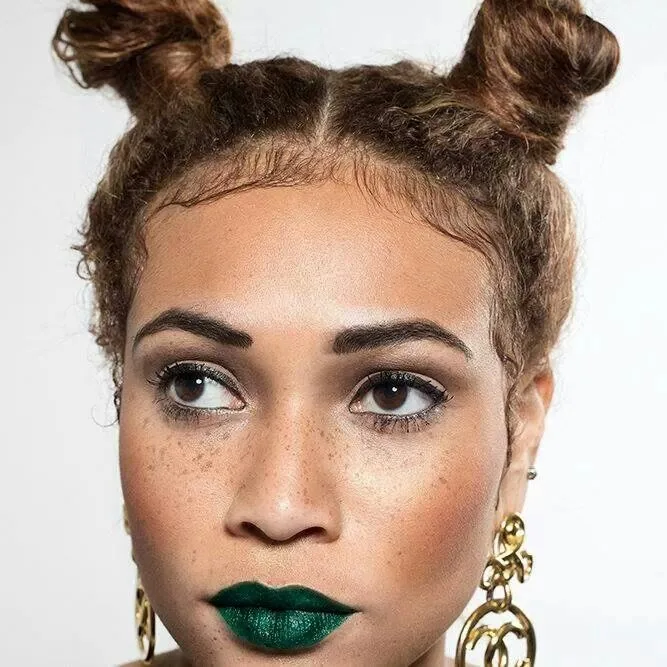
Space buns are two high buns, one on each side of the head, and they are one of the most fun hairstyles for a dance class — especially hip-hop, where the look is part of the energy. They are also genuinely practical: the weight is split evenly between two buns, so neither one pulls, and with the hair divided down the middle, there is nothing loose to fly into your face during fast choreography or head movements.
How it holds: two separate ponytail bases, each pinned independently, so if one loosens the other still holds. Who it suits: medium to long hair, hip-hop and street dance classes, and dancers who want a bold, playful look. What to avoid: placing the buns too far apart — buns that sit out near the ears look silly and pull unevenly, so keep them on the crown, roughly above the eyebrows.
15. Cornrows
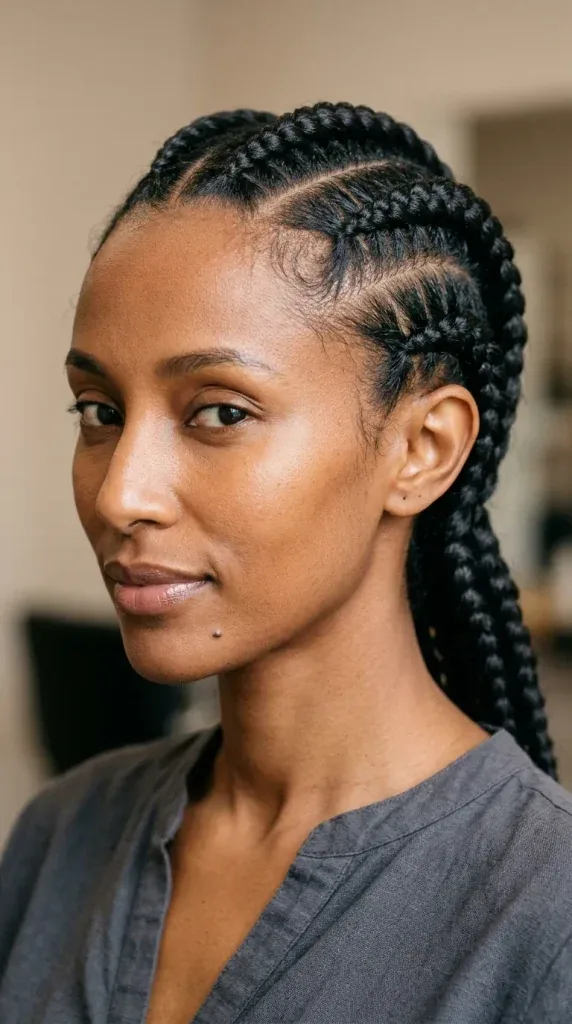
Cornrows are one of the oldest and most reliable dance hairstyles in the world: tight braids worked flat against the scalp, row by row, that stay put for days, not hours. For a dancer, that is a gift — you can go to class all week without rebuilding your hair, the style survives sweat, swimming and sleep, and it protects the hair underneath from the daily stress of brushing, tying and re-tying. They are a staple for hip-hop, African dance and street styles, and they look sharp with any outfit.
How it holds: the braids are anchored to the scalp along their whole length, so there is nothing to come loose. Who it suits: textured and curly hair, and dancers who want a long-lasting, low-maintenance style. What to avoid: braiding too tightly at the hairline — cornrows that pull can damage hair and hurt, so the braider should keep the tension firm but comfortable, and you should speak up if it hurts.
16. Box Braids Pulled Back
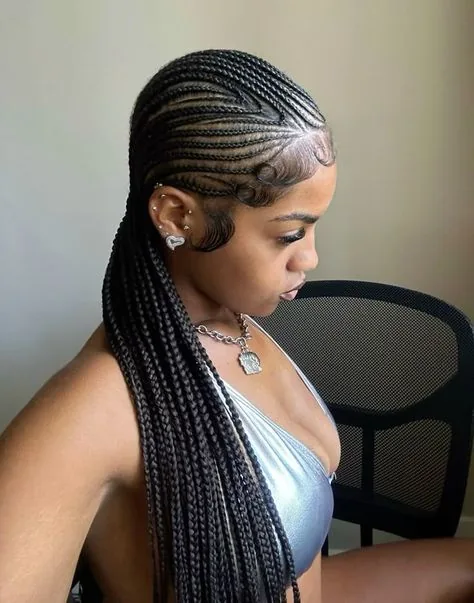
Box braids pulled back combine the protection of braids with the neatness of a dance hairstyle: the braids are gathered into a high ponytail or bun, so they are completely off the face and neck, and the weight is shared across the whole head instead of hanging loose. It is a beautiful, practical choice for hip-hop, jazz and contemporary classes, and it lasts for weeks, which means you can stop thinking about your hair and just dance.
How it holds: the braids are gathered with a strong elastic and a wrap, and the bun or ponytail sits high enough that the braids cannot swing into your face. Who it suits: long box braids, and dancers who want a protective style that is also class-ready. What to avoid: piling all the braids into one very high, very heavy bun — the weight can pull and cause a headache, so keep the ponytail at a comfortable height and use a wide, soft elastic.
17. The Twisted Halo Braid
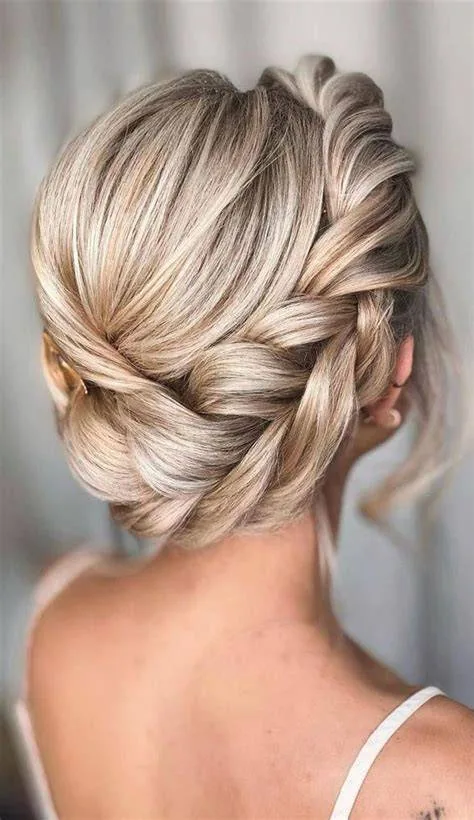
The twisted halo braid is the braided crown’s softer sister: instead of a three-strand braid, two sections of hair are twisted around each other and wrapped around the head, which is faster to do and gentler on the hair. It keeps everything off the face, it stays put through turns because the twist grips the scalp all the way around, and it has a romantic, soft finish that suits contemporary, lyrical and folk dance classes beautifully.
How it holds: the twist is pinned every few inches as it travels around the head, and the tail is tucked under the start. Who it suits: medium to long hair, and dancers who find braiding tricky but can manage a simple twist. What to avoid: twisting too loosely — a loose twist unravels with movement, so keep the tension firm and pin as you go, not just at the end.
18. The Rope Braid Bun
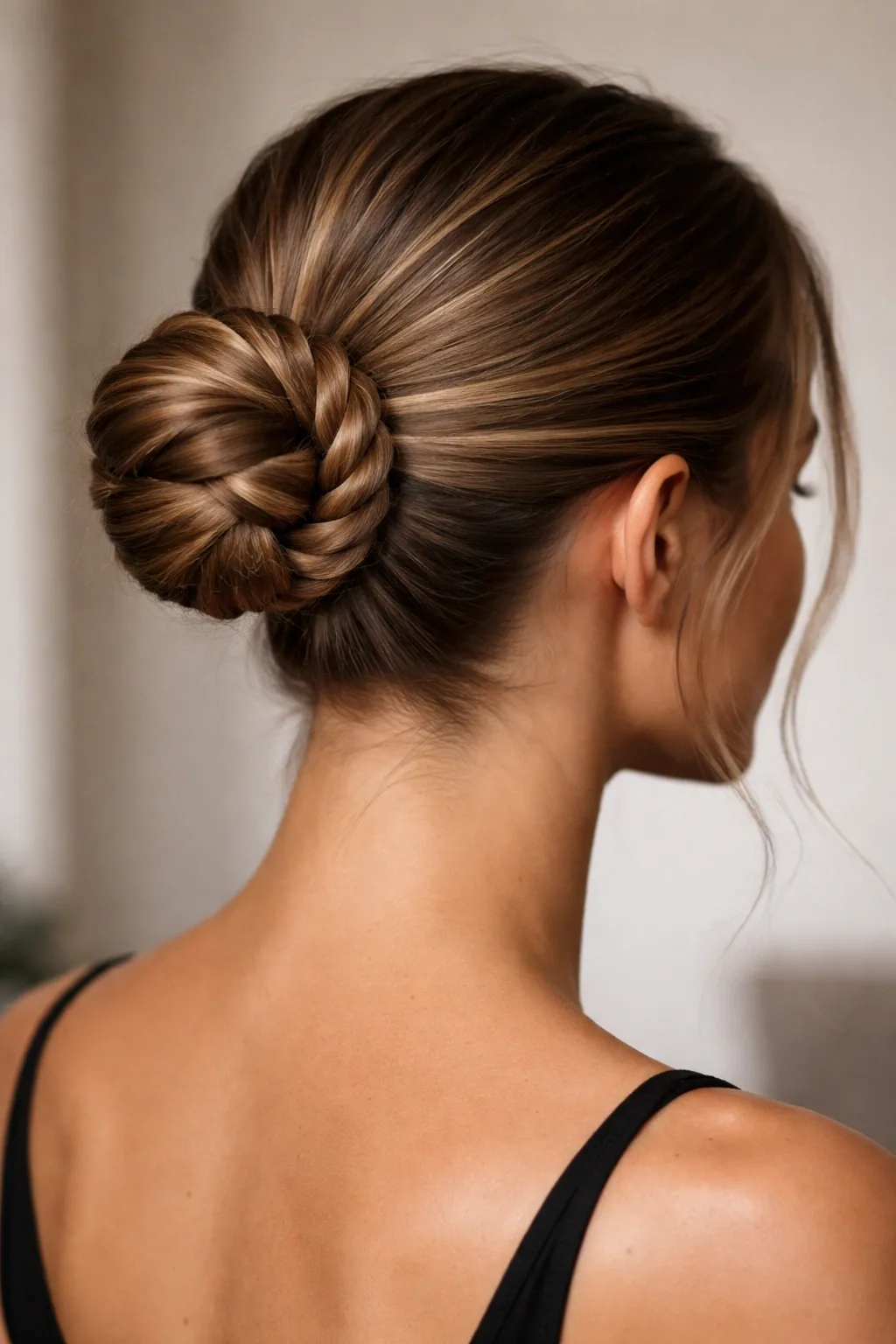
The rope braid bun starts as a ponytail, which is then divided into two sections and twisted into a rope braid, coiled into a bun and pinned. It sounds fancy, but it is one of the easiest secure buns to learn, because a rope braid only has two strands instead of three — there is nothing to lose track of. The result is a bun with a beautiful twisted texture that holds better than a plain bun, because the rope braid locks the hair together before it is even pinned.
How it holds: the rope braid itself is the anchor, and the coil is pinned through the braid at four points. Who it suits: medium to long hair, and dancers who struggle with ordinary braids. What to avoid: letting the two strands untwist while you coil — keep tension on both strands until the bun is pinned, or the rope will relax and loosen.
19. The Fishtail Braid
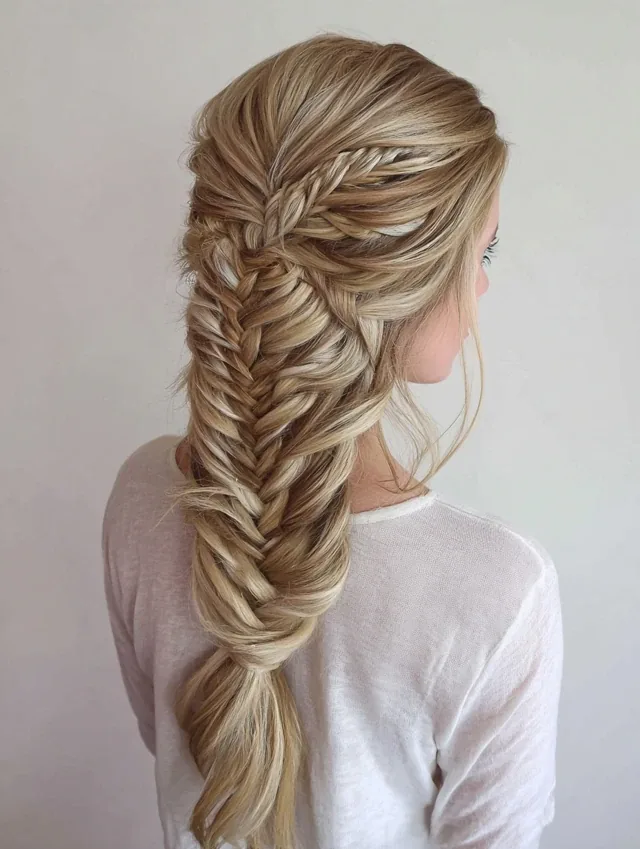
The fishtail braid looks intricate — a fine, herringbone pattern that seems to take forever — but it is just two sections of hair passed back and forth, and it is one of the most secure braids you can wear to dance class. Because the pieces are small and the braid is tight, it barely moves, it does not swing like a ponytail, and it keeps long hair completely under control through turns, jumps and floor work.
How it holds: small sections and tight tension mean the braid grips itself all the way down, with no loose spots. Who it suits: long hair, and contemporary or lyrical classes where a beautiful braid is part of the look. What to avoid: making it too loose for a soft, boho finish — a loose fishtail will fall apart in class, so keep it snug and save the loose version for after class.
20. The Side Braid for Contemporary

The side braid sweeps all the hair over one shoulder in a single braid, and it is a contemporary dancer’s favourite because it moves with the body instead of fighting it. Unlike a bun, which is fixed, a side braid flows when you turn and settles when you stop, and it keeps the hair off the face without the severity of a scraped-back style. It is softer, more expressive, and still secure enough for a full class — as long as it is braided tightly and pinned at the top.
How it holds: a deep side part, a braid that starts tight at the scalp, and a pin at the nape to stop the braid sliding forward. Who it suits: long hair, and contemporary, lyrical or modern dance classes. What to avoid: wearing it for ballet or for classes with lots of turns — a side braid can swing and hit your face during fast spins, so save it for slower, flowing styles.
21. The Half-Up Braided Crown
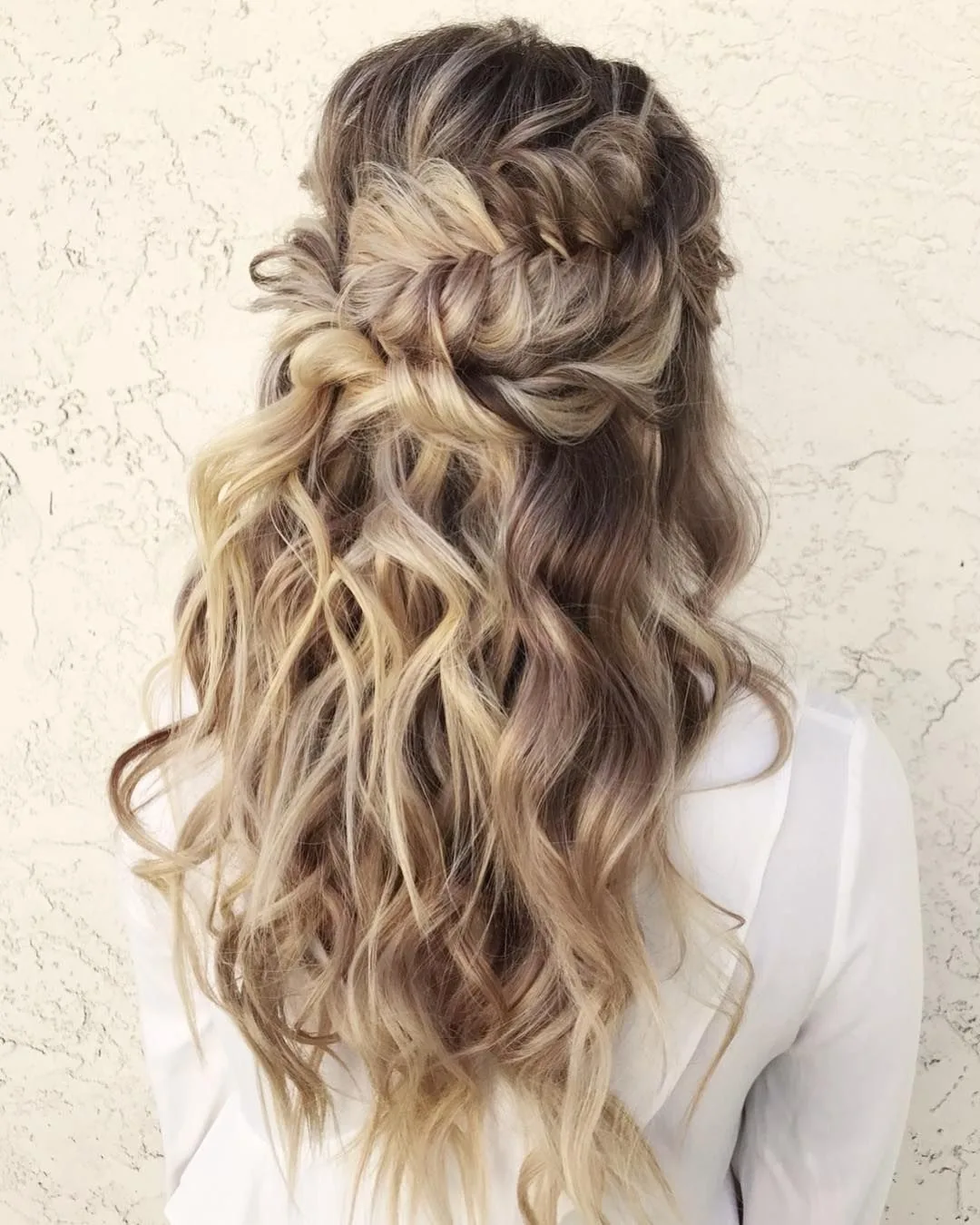
The half-up braided crown is a compromise that works: a braid wrapped around the head holds the top half of the hair back, while the rest falls loose below. It is not right for ballet, where all the hair must be up, but it is lovely for contemporary and casual dance classes, and it is a good choice for dancers with very thick hair, because putting all of it up can be heavy and uncomfortable. The braid does the security work, and the loose hair is the style.
How it holds: the braided crown anchors the front hair, and the loose hair is tied back loosely at the nape so it cannot fly forward. Who it suits: medium to long thick hair, and contemporary or casual classes. What to avoid: wearing it for any class with turns, jumps or floor work — loose hair becomes a distraction fast, so keep this one for slower, floor-based sessions.
22. Braided Bangs Pinned Back

Braided bangs pinned back solve the single most annoying dance-hair problem: the fringe that will not stay put. A small braid worked across the hairline gathers the bangs and the short front layers, pins them flat, and feeds into the rest of the style — a bun, a ponytail or a braid. It takes two minutes, it works on almost every other style in this guide, and it is the difference between a style that looks neat all class and one that slowly unravels from the front.
How it holds: the braid locks the short front hair into the main style, so there is no loose fringe to escape. Who it suits: anyone with bangs, curtain bangs or short front layers — and almost any dance style. What to avoid: braiding the bangs too tightly against the forehead, which pulls and gives you a headache; keep the tension comfortable and pin the braid flat.
23. The Sleek Low Chignon
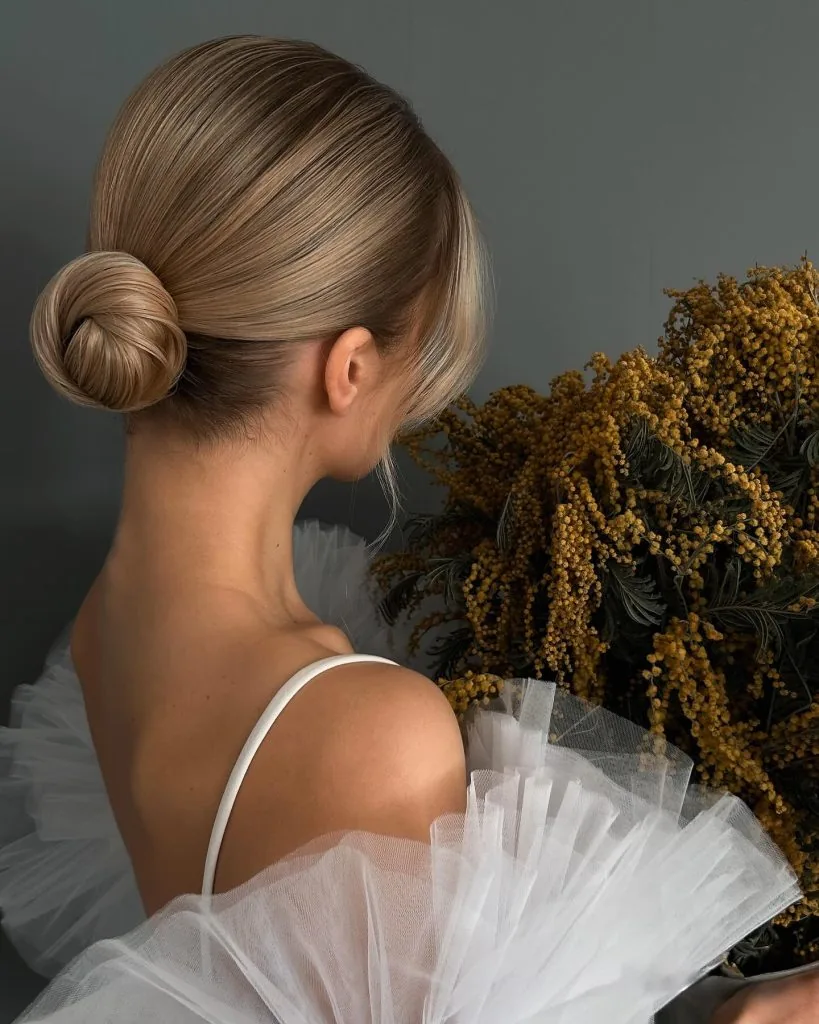
The sleek low chignon is a low bun with a French accent: hair smoothed back, twisted and folded into a compact roll at the nape, and pinned flat. It is elegant without being stiff, secure without being severe, and it suits contemporary, jazz and ballroom classes, where a softer line is welcome. It also photographs beautifully, which is why dancers choose it for showcases and exams as well as for class.
How it holds: the twist-and-fold shape locks the hair against itself, and pins pushed upward from underneath hold the roll in place. Who it suits: medium to long hair, and contemporary, jazz or ballroom classes. What to avoid: building it on slippery, freshly conditioned hair — the chignon needs grip, so use a little mousse or build it on second-day hair.
24. The Knotted Bun
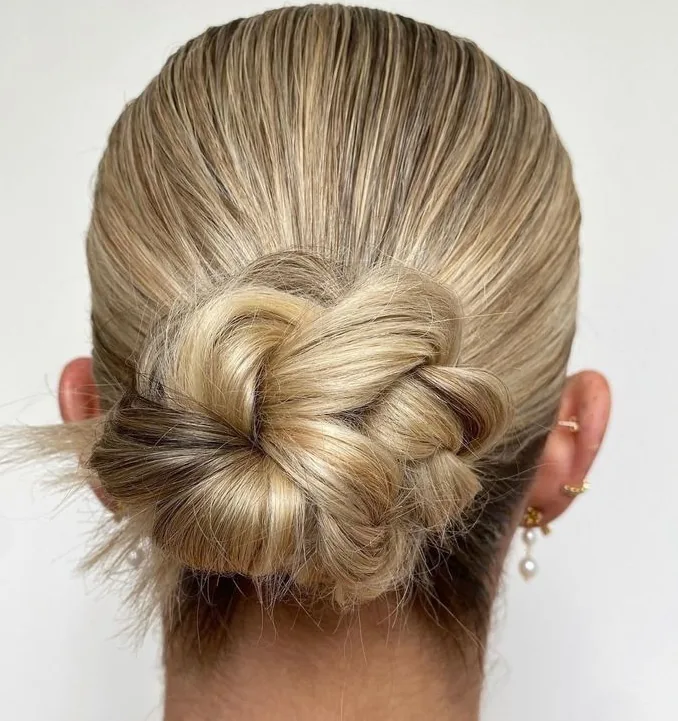
The knotted bun is exactly what it sounds like: a ponytail tied into a knot, then another knot, and pinned — a style that takes about a minute and holds like a bun that took ten. The knots lock the hair together, so the bun cannot unravel the way a wrapped bun can, and the finished shape has a lovely, sculptural texture. It is a great backup style for the days when you are running late for class and need something secure in seconds.
How it holds: each knot tightens the one before it, and two pins through the centre lock the whole shape. Who it suits: medium to long hair, and anyone who needs a fast, reliable style. What to avoid: making the knots too loose — a loose knot slides open, so pull each knot snug before you tie the next one.
25. The Pin-Curl-Inspired Pinned Updo
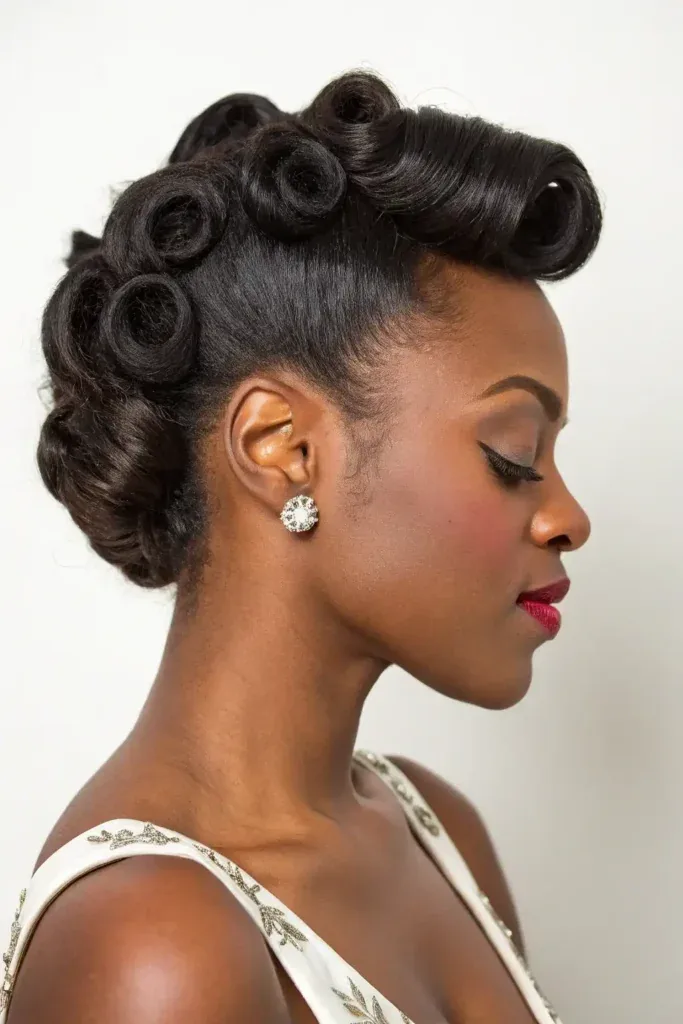
The pin-curl-inspired pinned updo borrows its shape from vintage dance halls: small sections of hair rolled and pinned flat against the head, building into a neat, sculpted updo that does not move. It is a beautiful choice for swing dance, ballroom and jazz classes, where the vintage look is part of the fun, and it is remarkably secure, because every section is pinned individually — there is no single point of failure.
How it holds: each rolled section is pinned flat, so the style is held in a dozen places at once. Who it suits: medium-length hair, and swing, ballroom or vintage-style classes. What to avoid: rushing it — this is the slowest style in this guide at fifteen to twenty minutes, so save it for performance days and use a quicker bun for everyday class.
26. The Scarf-Wrapped Bun
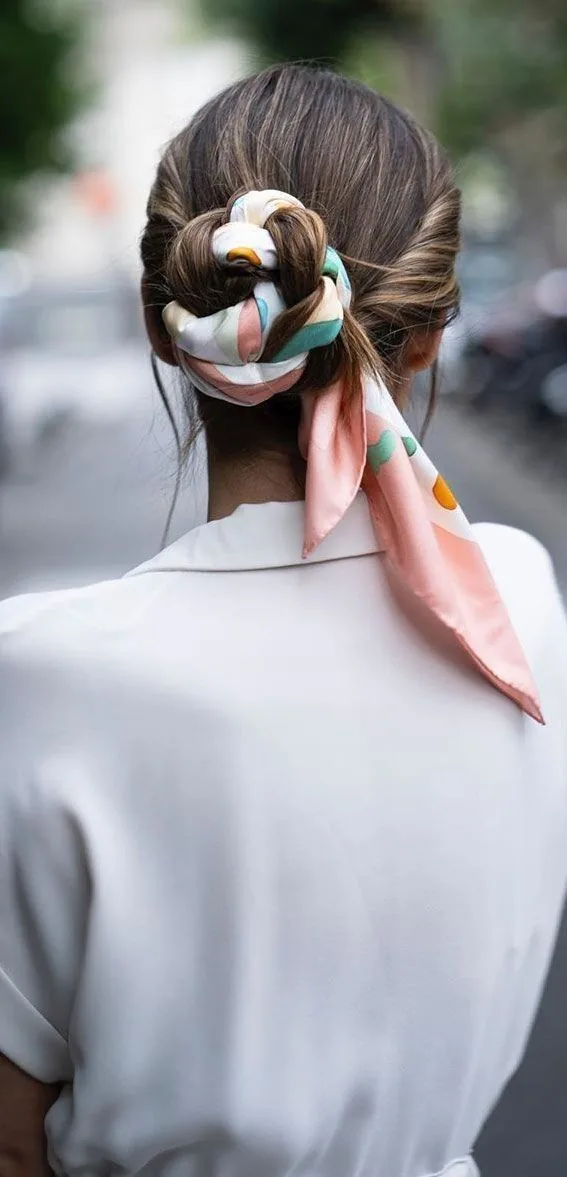
The scarf-wrapped bun adds a silk or cotton scarf to a classic bun, wrapping it around the base and tying it neatly — and the scarf is not just decoration. It grips the hair, stops flyaways from escaping, absorbs sweat at the hairline, and holds the bun’s shape through a whole class. It is a favourite for hip-hop, jazz and cultural dance classes, and it is also a kind option for dancers who are growing out their hair or protecting it from damage.
How it holds: the scarf acts as an extra band around the bun, and a knot tucked underneath stops it from sliding. Who it suits: all hair lengths that can make a bun, and dancers who want extra grip or a pop of colour. What to avoid: using a slippery silk scarf with no grip — choose a cotton or textured scarf, and pin the scarf itself in two places so it cannot work loose.
27. The Braided Ponytail for Jazz

The braided ponytail for jazz is a high ponytail with the length braided all the way down — sleek at the top, braided at the bottom, and completely under control. It has the energy and movement of a ponytail without the wild swinging, because the braid keeps the length together and stops it from whipping around during turns. It is sharp, it is fast to build, and it is one of the most popular hairstyles for a dance class in jazz and musical theatre.
How it holds: a tight high ponytail base, a braid that locks the length, and a pin at the nape to stop the ponytail sliding down. Who it suits: long hair, and jazz, hip-hop or musical theatre classes. What to avoid: braiding too loosely at the top — the first few inches of the braid take the most strain during turns, so keep them tight.
28. Double Buns with Braids
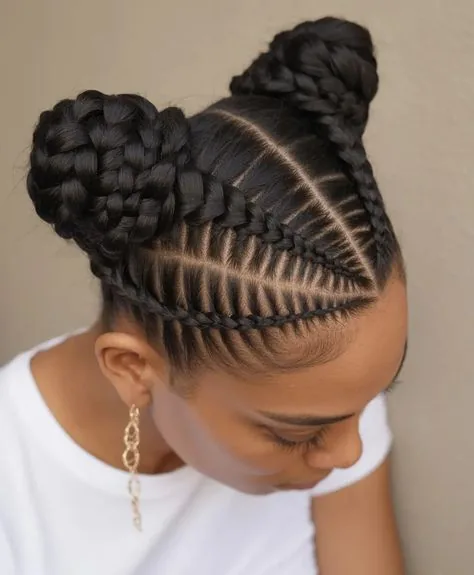
Double buns with braids combine two of the most secure ideas in this guide: a French or Dutch braid on each side, feeding into a bun on each side. It is the most locked-down playful style you can build — every strand is braided before it is bunned, so there is nothing loose anywhere, and the two sides balance each other perfectly. It is a favourite for hip-hop, jazz and festival-style dance classes, and it stays neat long after a single bun would have sagged.
How it holds: two braids anchor the front hair, and two buns share the weight evenly. Who it suits: medium to long hair, and hip-hop or jazz classes. What to avoid: making the braids uneven — check both sides in the mirror before you bun them, because a lopsided pair is very noticeable.
29. The Curly Pineapple Pinned Up
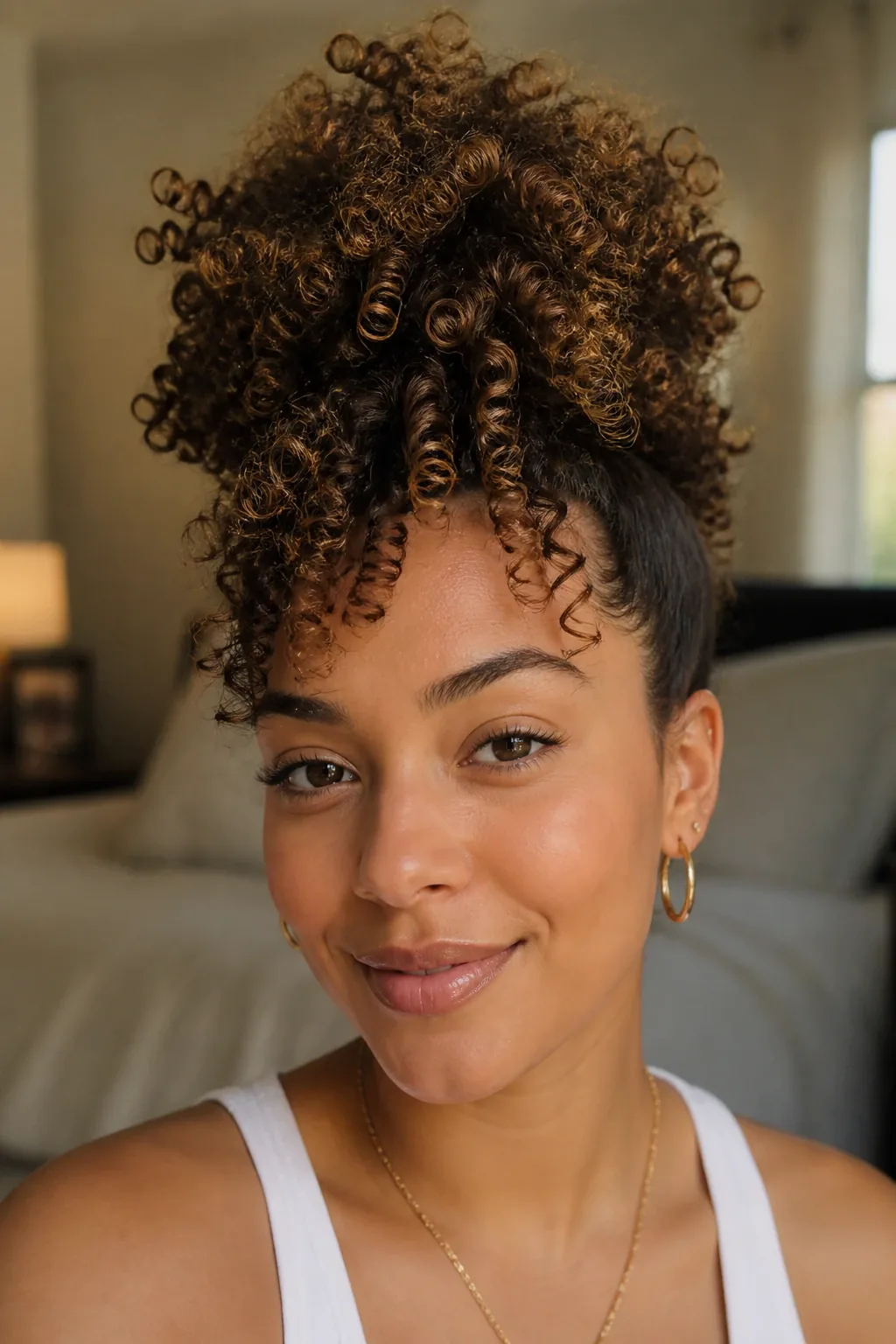
The curly pineapple pinned up is the curly dancer’s best friend: the curls are gathered high on the head and loosely secured, then pinned around the base so the curls sit up and out of the face instead of falling forward. It works with the curl instead of fighting it — no straightening, no heavy gel, just the natural volume held high and secure. It is perfect for contemporary, jazz and hip-hop classes, where curly hair can be celebrated rather than tamed.
How it holds: a soft scrunchie at the top, pins around the base to stop the curls sliding forward, and a light curl cream for definition. Who it suits: curly and coily hair of medium to long length. What to avoid: using a tight elastic, which flattens curls and causes breakage — a soft scrunchie and a few pins hold the style without crushing the curl pattern.
30. Short-Hair Slicked Pixie with Pins
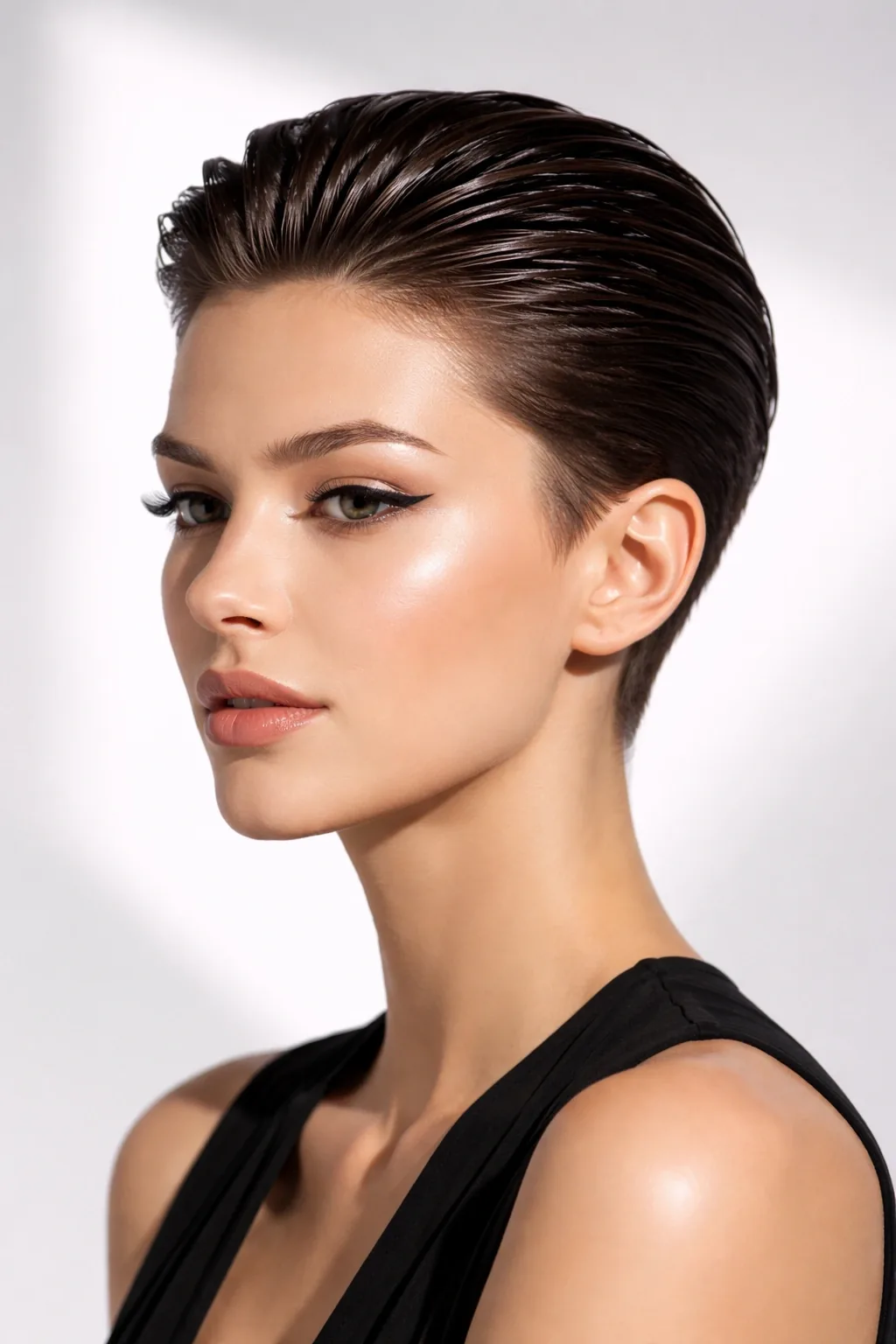
Short hair can be the easiest dance hair of all, once you know the trick: slick it back with gel, pin the sides flat, and let the top do what it wants. The short-hair slicked pixie keeps every strand off the face, it cannot come loose because there is nothing long enough to fall, and it takes about three minutes. It suits ballet, jazz and contemporary, and it looks sharp and confident — a style that says you are here to dance, not to fuss with your hair.
How it holds: gel worked through damp hair, and flat pins at the sides that disappear into the hair. Who it suits: short hair and pixie cuts, and any dance style. What to avoid: using hairspray alone on short hair — spray cannot hold a pixie by itself, so use gel for the hold and spray only as a light finish.
31. Two French Braids into a Low Bun
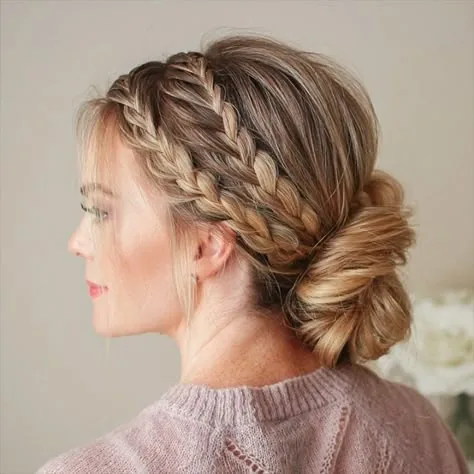
Two French braids into a low bun is the final style in this guide, and it is the one many dancers call their most reliable: two braids from the hairline to the nape, joined into a single low bun. It combines the grip of braids with the neatness of a bun, it works for ballet, jazz and contemporary, and it is the style to choose when you have an exam, a performance or a long class and you cannot afford a single strand out of place.
How it holds: two braids anchor the whole head, and the low bun is pinned through both braids at the nape. Who it suits: medium to long hair, and dancers who need maximum security for exams and performances. What to avoid: braiding the two sides at different heights — keep the braids level as they travel to the nape, or the bun will sit crooked.
What is the best hairstyle for a dance class?
The best hairstyle for a dance class is usually a classic ballet bun, because it is the most secure, keeps all hair off the face and neck, and is required by many ballet schools. For hip-hop, double Dutch braids or space buns work best, and for jazz, a slicked low bun or a braided ponytail is ideal. The best choice depends on your dance style, hair length and texture, but a bun or a braid is almost always safer than a ponytail or loose hair.
How do I keep my hair from falling out during dance class?
Build your style on slightly damp or second-day hair, which grips far better than freshly washed hair. Start with a braided or twisted base, use a strong snag-free elastic, and pin from at least two directions so the pins cancel each other out. Finish with a light mist of hairspray, carry three spare pins in your dance bag, and test the style with a shake-and-jump check before you leave the house.
Can I wear my hair down in a dance class?
No — most dance teachers will ask you to tie your hair up, and for good reason. Loose hair flies into your face during turns, blocks your vision, gets caught on other dancers, and can be a safety hazard during floor work and lifts. Even for contemporary classes that allow softer styles, your hair should be tied back or braided so it cannot cover your face. If you love wearing your hair down, save it for after class.
What hairstyle is best for ballet class?
The classic ballet bun is the best hairstyle for ballet class, and most ballet schools require it. It should sit at the crown or the centre of the back of the head, be completely smooth with no loose strands, and be secured with pins and a hairnet if needed. A low sleek bun or a French twist is also acceptable in many schools, but always check your teacher’s rules before class, because some schools are strict about the bun’s position.
How do I do a ballet bun that stays in place?
Start with slightly damp hair and brush it smooth into a high ponytail. Twist the ponytail, wrap it around its base, and pin it with at least six bobby pins pushed in from opposite directions. Use a hair donut for shape if your hair is fine, smooth the surface with a little gel, and finish with hairspray. Do the shake-and-jump test — shake your head hard, jump three times and bend forward — and add pins wherever anything moves.
What should I do with short hair for dance class?
Slick short hair back with gel and pin the sides flat with bobby pins that match your hair colour. A pixie cut can be slicked back in about three minutes, and a short bob can be pinned into a tiny low bun or a half-up twist. The key is gel rather than hairspray, because spray alone cannot hold short hair, and flat pins that sit close to the scalp so they do not show or slip out during turns.
Are braids good for hip-hop dance class?
Yes, braids are one of the best choices for hip-hop dance class. Double Dutch braids, cornrows, box braids and French braid pigtails all stay put through head spins, floor work and fast choreography, and they keep hair completely off the face and neck. Braids also last for days, so you can go to class all week without rebuilding your hair, which makes them a favourite with hip-hop dancers of all ages.
How do I stop my hair from getting sweaty and frizzy in dance class?
Start with your hair pulled tightly back so sweat cannot loosen the style, and use a light gel or mousse rather than heavy creams that go sticky. A scarf-wrapped bun or a headband can absorb sweat at the hairline, and braided styles handle sweat far better than loose buns because the braid locks the hair in place. After class, rinse with water or use dry shampoo at the roots, and let your hair dry fully before you tie it up again.
What hair products are safe for dance class?
The safest products for dance class are a light-hold gel or mousse, a flexible hairspray, strong snag-free elastics, and bobby pins that match your hair colour. Avoid heavy oils and leave-in creams before class, because they make hair slippery and cause pins to slide out, and avoid strong-hold sprays that flake when you sweat. If you dance every day, use a gentle shampoo and a weekly deep-conditioning treatment to keep your hair healthy.
Do I need bobby pins or hair ties for dance class?
Yes, you need both. Hair ties hold the base of the style, and bobby pins lock it in place — one without the other will not survive a full class. Carry at least six bobby pins and two strong elastics in your dance bag, plus a small brush or comb for quick fixes between exercises. Choose pins that match your hair colour so they disappear, and replace stretched-out elastics regularly, because a tired elastic is the most common reason a dance hairstyle falls apart.
Conclusion: Hairstyles for a Dance Class That Let You Forget About Your Hair
The best hairstyles for a dance class all share one quality: once they are in, you can forget about them completely and just dance. Whether you choose the classic ballet bun, double Dutch braids for hip-hop, a slicked low bun for jazz, or two French braids into a low bun for an exam, the rules are the same — build on hair with grip, anchor the style in more than one place, pin from opposite directions, and test it with a shake and a jump before you leave the house.
Start with the style that matches your next class, practise it twice at home, and keep a few spare pins in your dance bag for the days when a strand escapes anyway. Your hair is not the performance — your dancing is. So pick a secure style, pin it well, and walk into class knowing that your hair will still be exactly where you left it when the music stops.

