
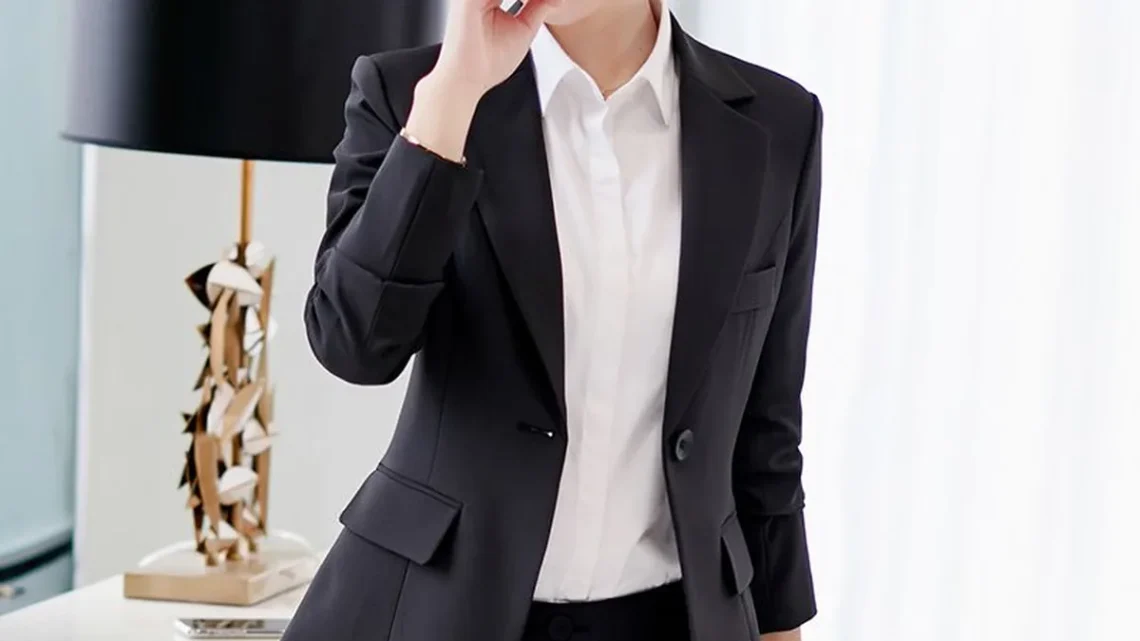
Getting dressed for work should not mean buying a whole new wardrobe every season — or standing in front of a full rail feeling like you have nothing to wear. The best work outfits for women are built from a small set of pieces that fit well, mix easily and look polished from the first meeting of the day to after-work plans, without feeling stiff or uncomfortable by three in the afternoon.
This guide starts with eight practical explainers — what a good work outfit really is, why polish matters, who each style suits, how to style it, where to wear it, what it costs per wear, the mistakes to avoid, and a five-minute morning formula — then walks through 41 complete looks, from the classic blazer and tailored trousers to a day-to-night dinner outfit. Every section notes how to wear it, what to pair it with, and who it flatters, so you can build a work wardrobe that works as hard as you do.
What a Good Work Outfit Really Is
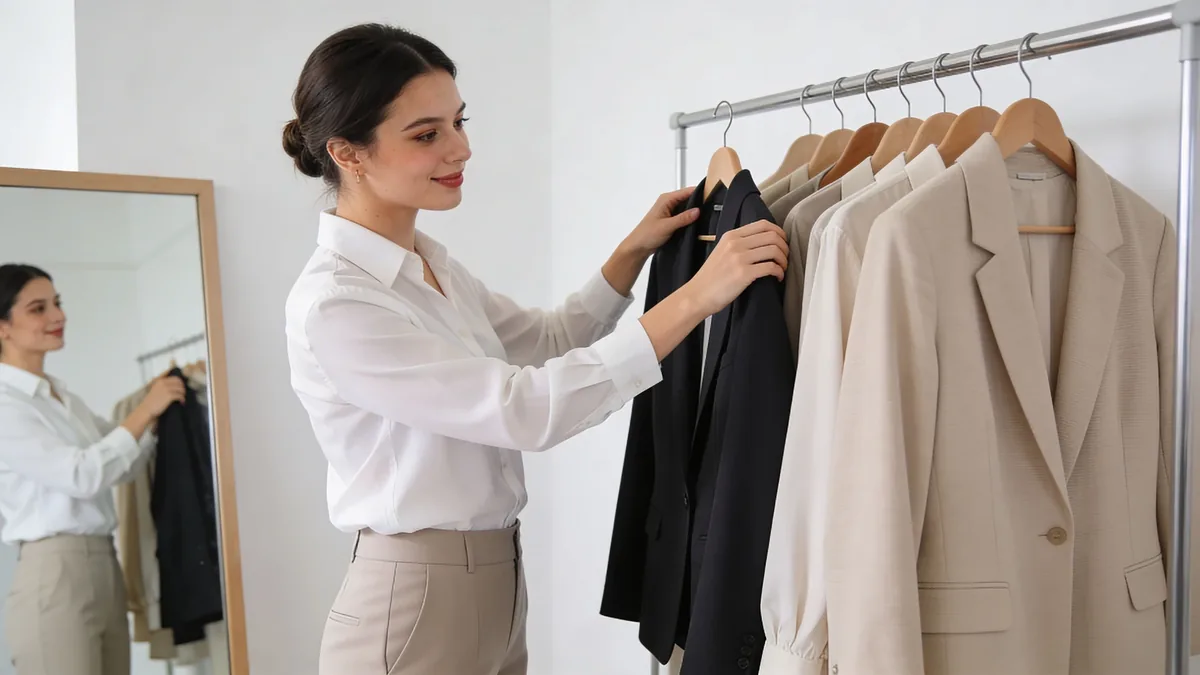
A good work outfit is not the most expensive one in the room, and it is not a costume. It is a combination of clothes that fit your body well, suit your workplace, and let you move, sit, present and walk comfortably for a full day. The pieces are usually simple — a well-cut blazer, a clean shirt, trousers that hold their shape, a dress that does not need constant adjusting — and the polish comes from the fit and the finish, not from a logo or a trend.
What it means: a work outfit works when you stop thinking about it. If you are tugging at a hem, pulling at a neckline or worrying about a gaping button, the outfit is working against you. What to look for: structured shoulders, a waist that is defined rather than squeezed, hems that sit where they should, and fabrics that resist creasing through a long day of sitting.
Why Looking Polished at Work Actually Matters

People form an impression in seconds, and at work that impression quietly shapes how seriously your ideas are taken, whether you are remembered after a meeting, and how confident you feel walking into the room. Looking polished is not about vanity — it is a form of communication. A neat, intentional outfit says you prepared, you care about the detail, and you take the work seriously, before you have said a word.
Why it matters: polish buys you ease. When you look put together, you stop spending mental energy on how you look and spend it on the work instead. The proof: notice how you carry yourself in an outfit you love — shoulders back, voice steadier, decisions quicker. That is not the clothes doing magic; it is the confidence of knowing you look the part.
Who These Work Outfits Suit — and How to Read Your Dress Code

There is no single work outfit that suits every woman, every body and every office, which is exactly why this guide covers 41 looks rather than one formula. Tall, petite, curvy, straight-shaped — each body has cuts that flatter it, and each workplace has a dress code that sets the boundaries. The trick is to read the code before you shop: a formal office expects tailoring and covered shoulders, a creative office welcomes colour and print, and a smart-casual office sits somewhere in between.
How to read it: look at what the people one level above you wear on a normal Tuesday, not at a party — that is your real dress code. What to avoid: copying a look that suits a colleague with a different shape or a different office. Take the idea — the colour, the silhouette, the layering — and translate it into a cut that fits you.
How to Style It: Building a Capsule That Mixes and Matches
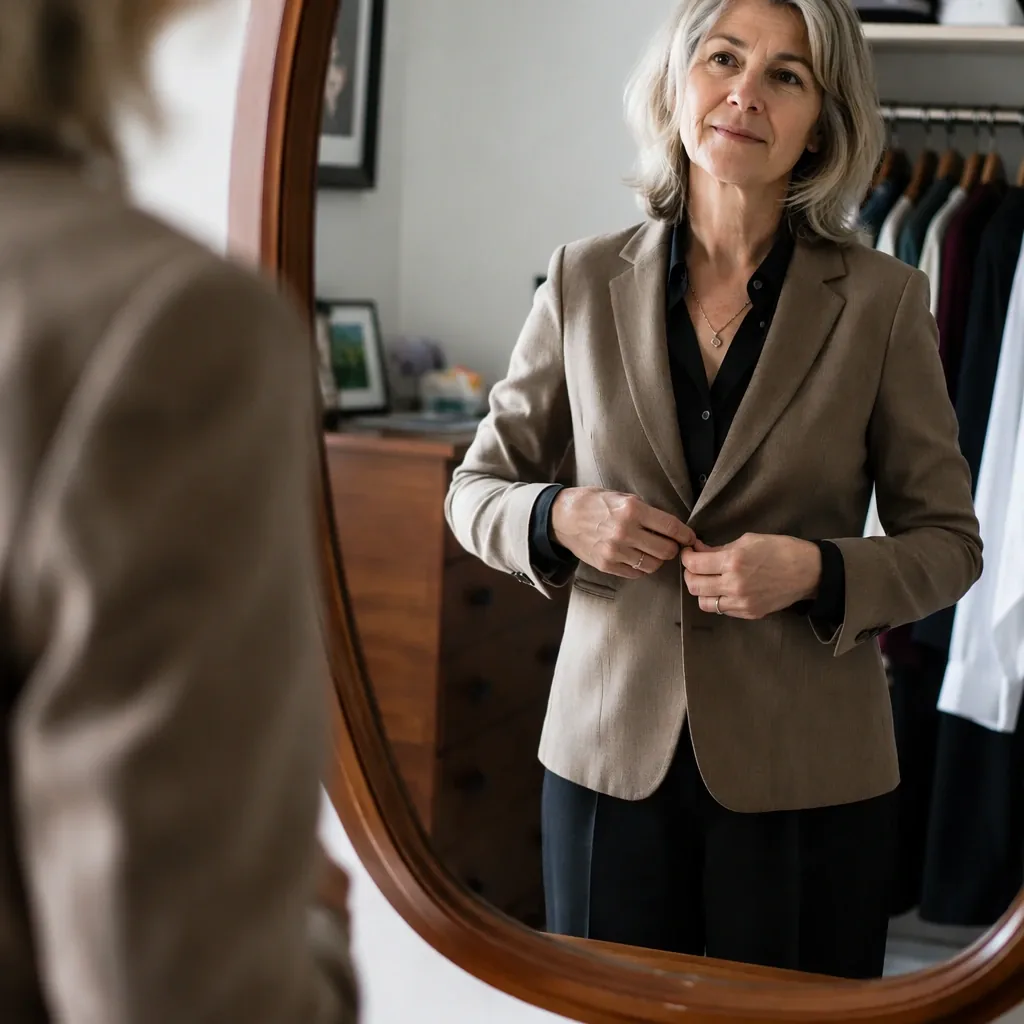
A capsule work wardrobe is a small set of pieces that all work with each other, so forty-one looks come from far fewer than forty-one separate outfits. Start with neutrals — black, navy, grey, cream and camel — then add two or three colours you love, and make sure every top goes with at least three bottoms and every jacket goes over at least three dresses or tops. When everything matches, getting dressed takes five minutes instead of twenty-five.
The formula: five bottoms, eight tops, three jackets, two dresses, three pairs of shoes and a handful of accessories will cover most working weeks. Styling tip: fit is the accessory that matters most — a blazer that fits your shoulders, trousers hemmed to your shoe, a belt that defines the waist. What to avoid: buying a piece that only works with one other thing in your wardrobe.
Where to Wear It: From the Office to the Client Lunch to After Work

One outfit rarely has to do just one job. A good work outfit should carry you from a morning meeting to a client lunch, from desk work to an after-work dinner, with at most one small swap — a jacket off, a shoe changed, a lipstick refreshed. That is why the looks in this guide are chosen for versatility: a wrap dress that is boardroom-neat at nine and dinner-ready at seven, a suit that reads formal with a shirt and relaxed with a tee.
Where it works: offices, interviews, presentations, conferences, client meetings and work dinners. How to adapt it: add a blazer for formality, remove it for warmth, swap heels for loafers for a long walking day, and keep a silk scarf or a bold earring in your bag for the evening switch. What to avoid: an outfit that only works in one room, at one temperature, for one hour.
Cost Per Wear: What Work Outfits Are Really Worth
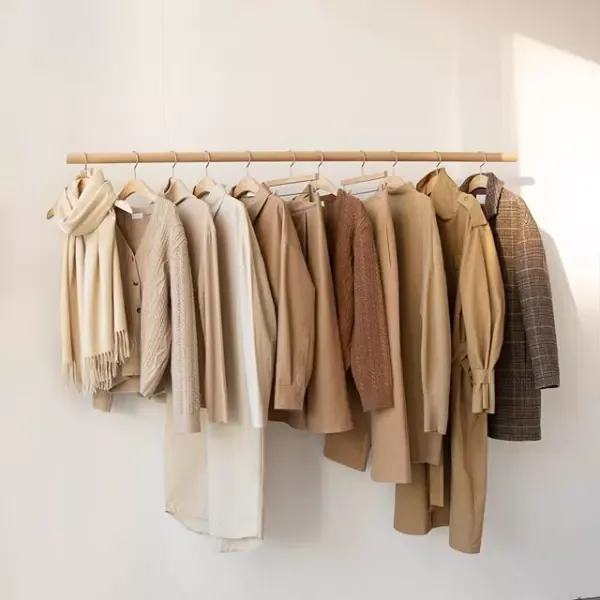
The price tag on a work outfit tells you almost nothing — the real cost is the price divided by the number of times you wear it. A £120 blazer worn forty times costs £3 a wear; a £30 top worn twice costs £15 a wear and was the expensive one. That is why the smartest work wardrobe spends more on the pieces you reach for every week — the blazer, the trousers, the shoes — and less on the trend piece you will tire of by spring.
Pros: spending on quality tailoring and shoes pays you back in comfort, durability and confidence. Cons: quality costs more upfront, and it stings if your size or your office changes. The rule: if you will wear it at least once a week for a year, buy the best you can afford; if you will wear it three times, buy the cheaper version — or borrow the idea from something you already own.
Common Mistakes That Make a Work Outfit Look Unfinished
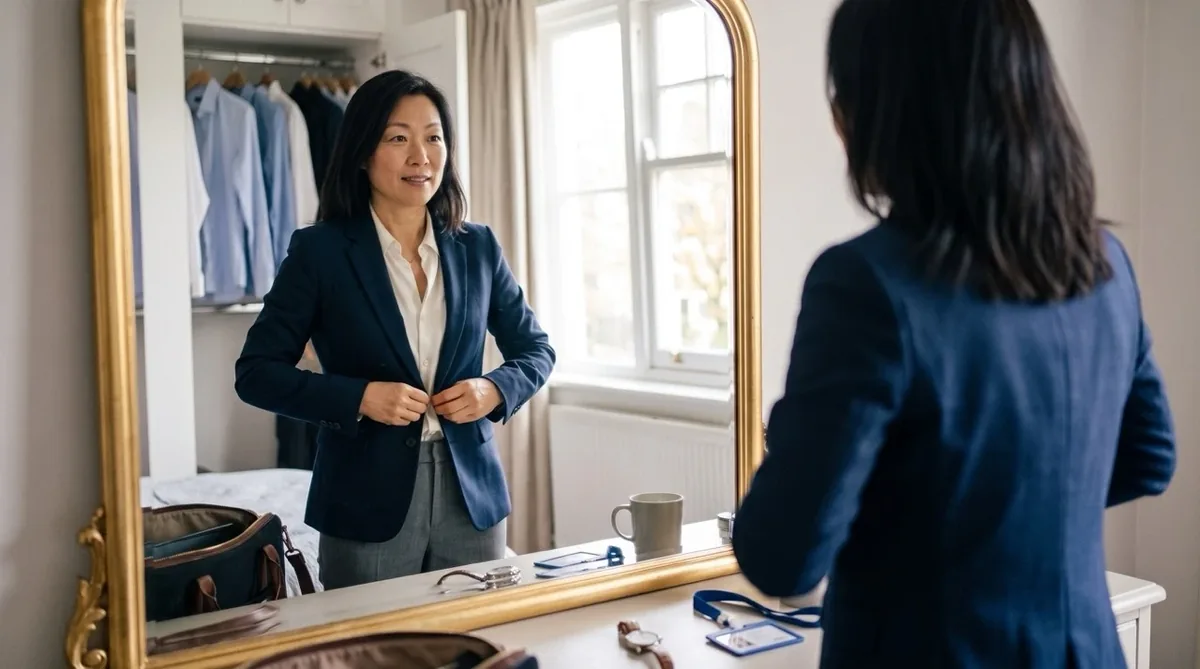
Most work outfits fail on small things, not big ones: a shirt that gaps at the bust, trousers that pool over the shoe, a hem that is half an inch too long, a bra strap on show, a creased jacket, or shoes that are scuffed. None of these is a fashion crime on its own, but together they quietly undo an otherwise lovely outfit, and they are all fixable in minutes — a tailor, a steam, a different shoe, a camisole underneath.
Mistakes to avoid: wearing something too tight because it is your old size, skipping the iron, choosing a sheer fabric without a lining, and buying a colour that washes you out because it was on sale. Quick fixes: keep a lint roller, a mini steamer and a spare pair of tights at your desk. What to remember: polish is mostly maintenance — clean shoes, pressed clothes, tidy hair — not money.
The Quick Verdict: A Five-Minute Morning Formula
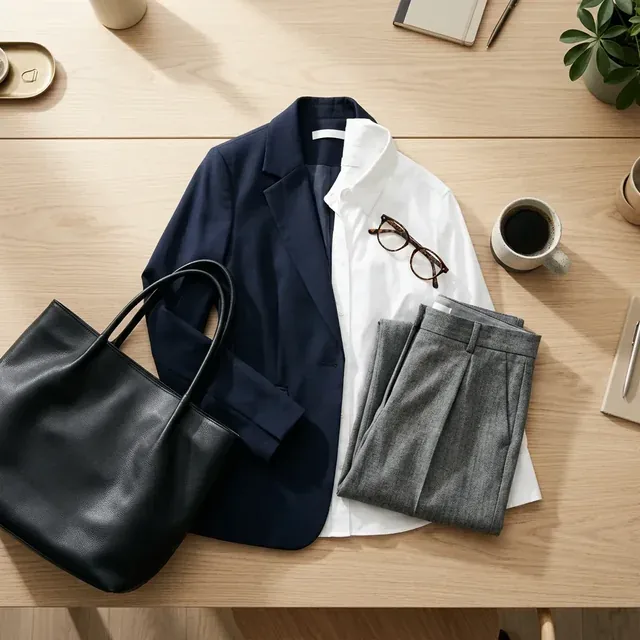
If you take one idea from this whole guide, take this: pick your bottom first, add a top that goes with it, add a third piece — a blazer, a cardigan or a jacket — and finish with one intentional accessory. Bottom, top, third piece, accessory. That four-step formula builds almost every look in this guide, and it is the fastest way to get dressed without thinking, because each step narrows the choice instead of widening it.
Why it works: the third piece is what makes an outfit look finished, and the accessory is what makes it look like yours. Seasonal swaps: in summer, the third piece is a light blazer or a scarf; in winter, it is a coat or a knit. Quick verdict: build the capsule, learn the formula, and let the 41 looks below be your menu — not a shopping list, but a set of combinations you can already make from what you own.
1. The Classic Blazer and Tailored Trousers
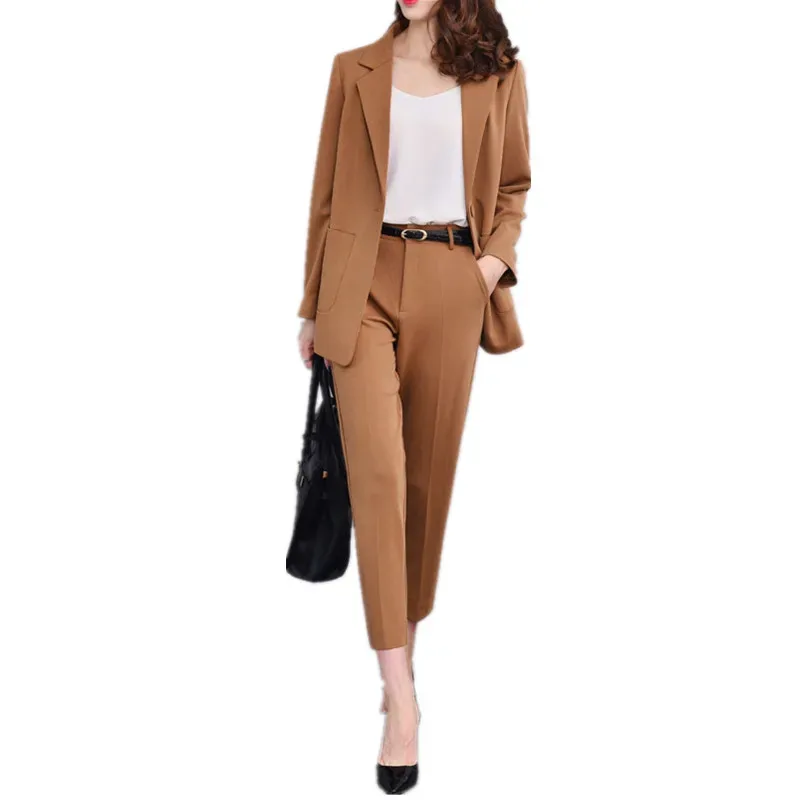
A blazer with tailored trousers is the work outfit everything else is measured against, and it earns that place because it works on almost everyone and in almost every office. Choose a blazer that fits your shoulders first — the seam should sit exactly on the shoulder bone — and trousers that skim the leg rather than clinging to it. Black, navy or charcoal keeps it formal; a soft cream or camel version makes the same outfit feel lighter and more modern.
How to wear it: a silk camisole or a fine-knit top underneath, loafers or low heels, and a structured bag. Who it suits: every shape — petite women should pick a shorter blazer that ends at the hip, taller women can carry a longer line. Styling tip: roll the sleeve a touch to show a shirt cuff or a watch, and the whole look relaxes without losing its polish.
2. A Crisp White Shirt and a Black Pencil Skirt
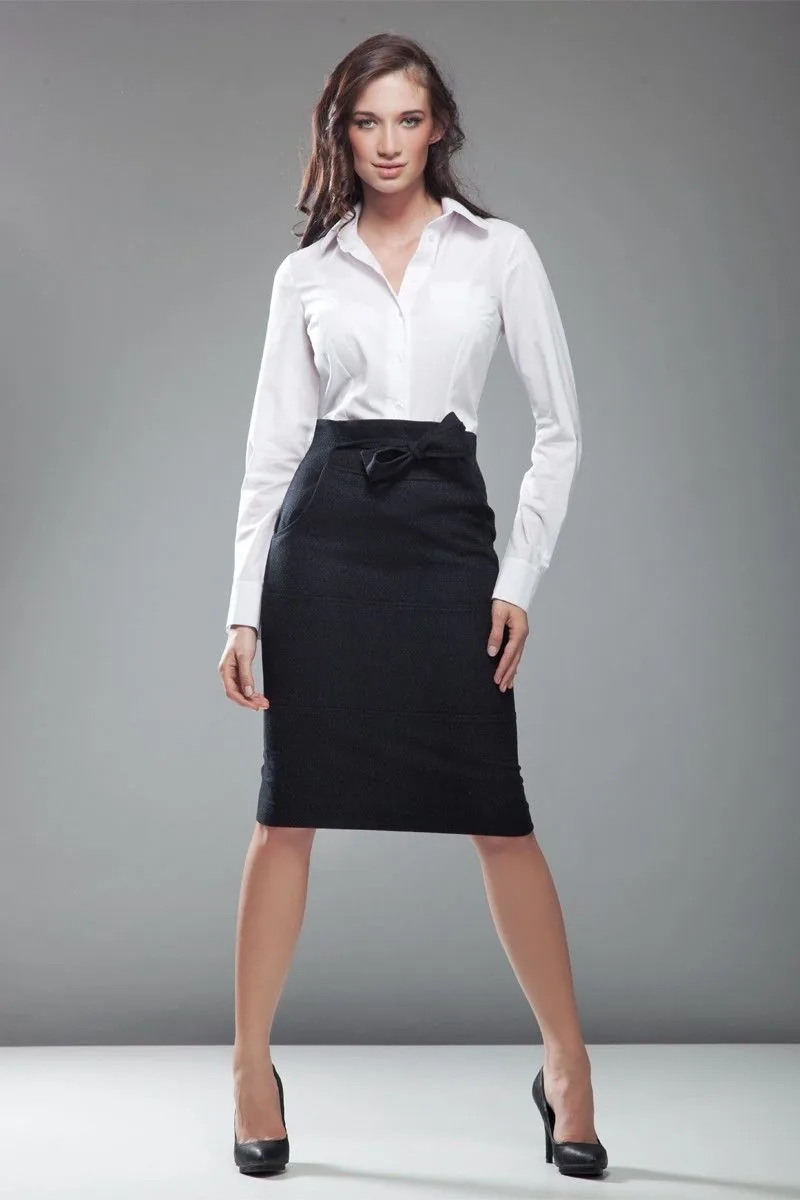
Few combinations look as instantly professional as a crisp white shirt tucked into a black pencil skirt — it is the outfit of the first day, the interview and the important presentation, and it never really goes out of fashion. The secret is in the shirt: a cotton-poplin shirt with a proper collar, no gaping at the bust, and sleeves that reach the wrist. The skirt should sit at the natural waist and end just at or above the knee, with enough stretch to sit in comfortably.
How to wear it: add a thin belt to define the waist, pointed flats or court shoes, and simple stud earrings. Who it suits: it lengthens a petite frame and balances broader shoulders beautifully. What to avoid: a shirt so sheer it needs a camisole you forgot, and a skirt so tight you cannot walk up the stairs — comfort is part of the look.
3. A Knit Midi Dress With a Belt
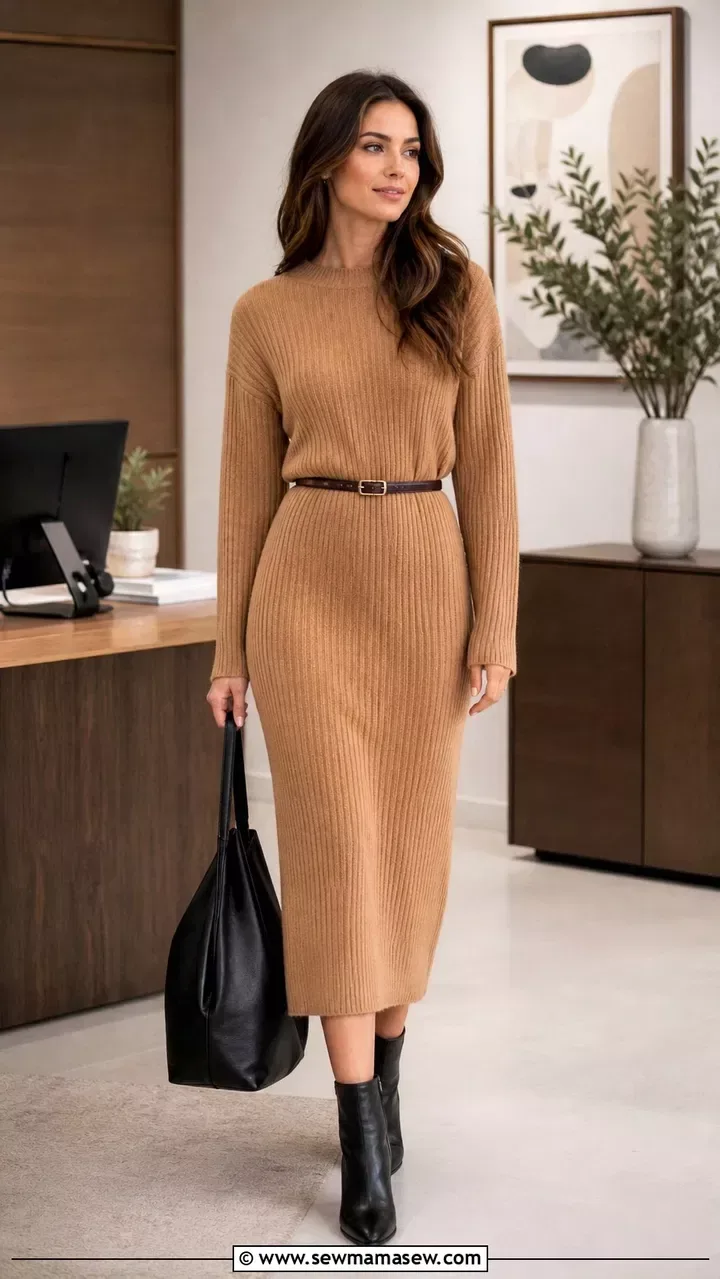
A knit midi dress is the closest thing workwear has to a cheat code: one piece, no matching, and it looks considered the moment you put it on. Pick a fine knit rather than a chunky one, in a solid colour like navy, burgundy or forest green, and add a slim leather belt to give the soft fabric some shape. The midi length keeps it office-appropriate, and the knit moves with you through a day of sitting, standing and walking between meetings.
How to wear it: knee-high boots in winter, loafers or block heels in spring, and a blazer over the top on cold mornings. Who it suits: it flatters curves beautifully and is kind to a straight shape when belted. Styling tip: a long necklace or a scarf at the neck breaks up a plain expanse of knit and adds the finished touch.
4. Wide-Leg Trousers and a Silk Blouse
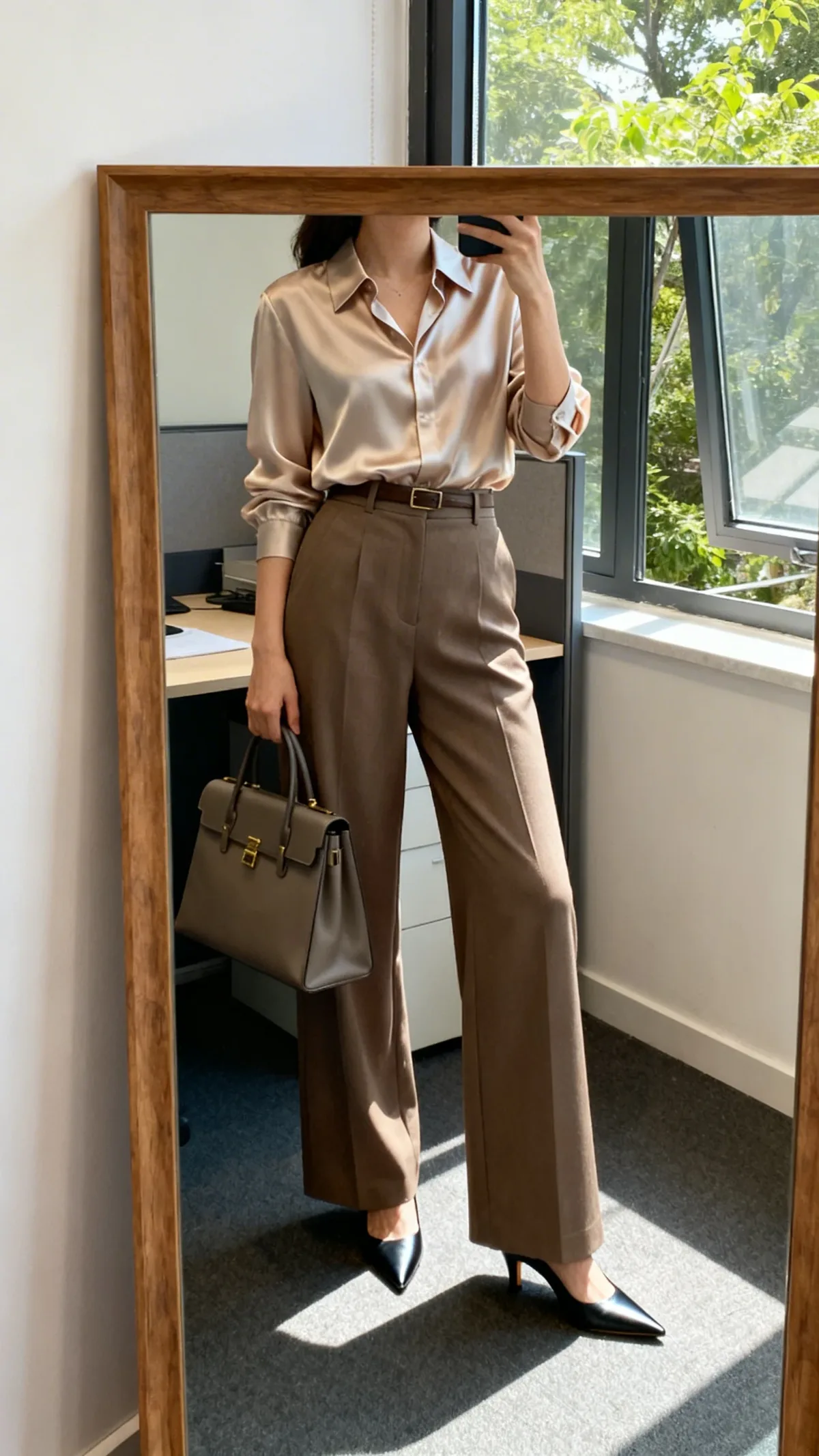
Wide-leg trousers have quietly become the modern office trouser, and paired with a silk blouse they are both more comfortable and more elegant than the slim trousers they replaced. The wide leg balances the shoulders and lengthens the leg, especially when the trouser is high-waisted and the blouse is tucked in. Choose a blouse in a soft print or a rich solid — ivory, blush, sage — and let the trousers stay the neutral anchor.
How to wear it: pointed shoes peeking from under the hem, a small shoulder bag, and minimal jewellery so the silk does the talking. Who it suits: wonderful on tall women, and on petite women when the trouser is hemmed to skim the floor over a heel. What to avoid: a blouse so voluminous it fights the wide leg — keep one half of the outfit slim.
5. The Black Sheath Dress
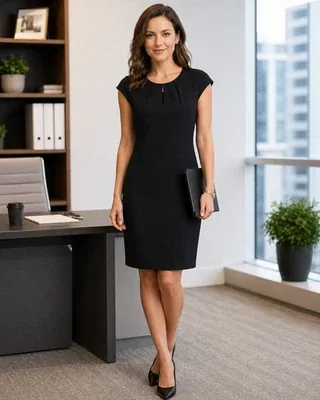
A black sheath dress is the workhorse of the office wardrobe: simple, slim, endlessly re-styleable, and always appropriate. The best ones are cut close to the body without being tight, with a neckline that needs no adjusting and sleeves that cover the upper arm if you want them to. It is the dress you reach for when you have a big day and no time to think — and then you change the whole look with the jacket and shoes you pair it with.
How to wear it: a blazer and courts for a formal day, a cardigan and loafers for a quiet one, a statement necklace for the evening. Who it suits: every body, with the waist seam doing the flattering work. Styling tip: keep one sheath dress in black and, if you love the shape, a second in navy or dark green for variety without a new decision.
6. A Tweed Jacket and Straight Trousers
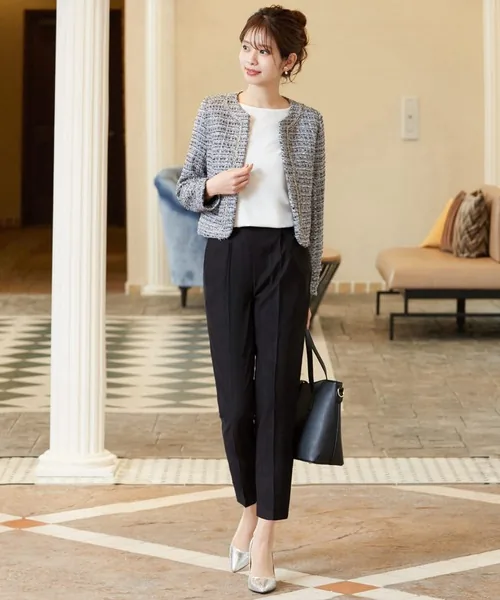
A tweed jacket brings texture and heritage to a work outfit, and it makes straight trousers look instantly more expensive than they are. The nubby weave, the braided trim, the slightly boxy cut — it all reads polished without trying too hard. Pair it with trousers in a matching neutral or a deep navy, keep the top underneath simple and smooth, and let the jacket be the star of the outfit.
How to wear it: a white or cream top, loafers, and a structured tote. Who it suits: it adds gentle structure to a soft, straight shape and softens a very angular one. What to avoid: pairing tweed with another heavy texture — keep the trousers smooth and the shoes clean-lined so the outfit stays balanced.
7. A Pleated Midi Skirt and a Fitted Knit
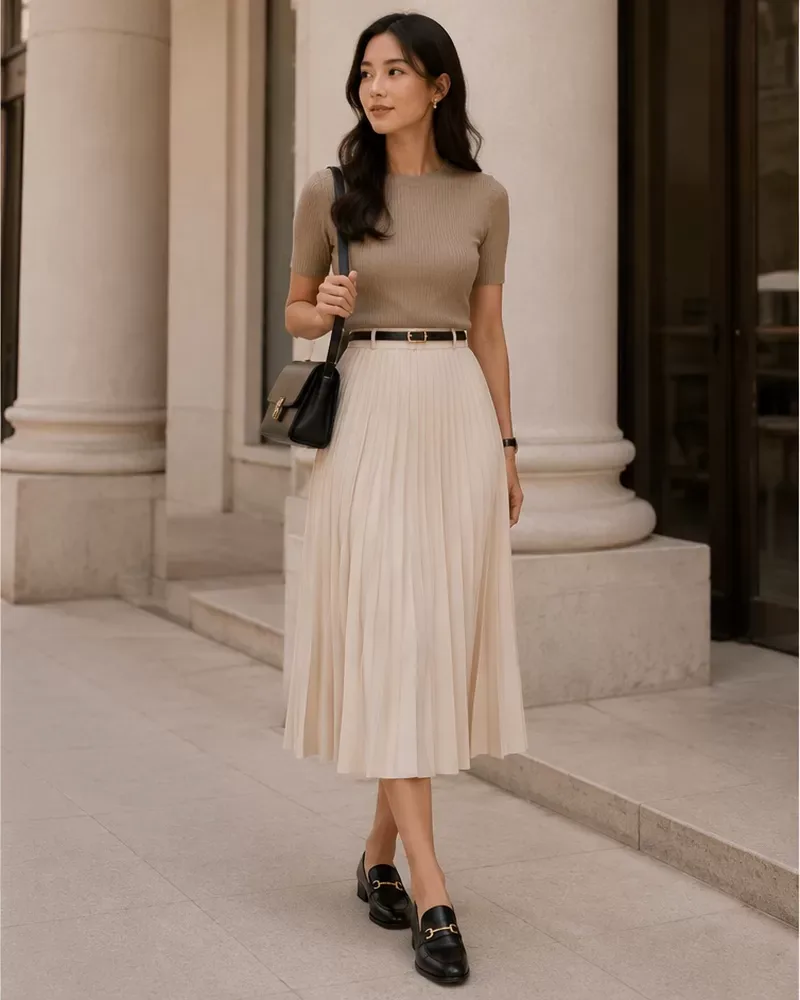
A pleated midi skirt moves when you do, and that movement is what makes it feel so alive in an office full of straight lines. Pair it with a fitted fine-knit top tucked in, so the waist stays defined and the pleats can fall cleanly from the hip. Metallic, navy or deep plum pleats look especially smart; a cream or grey knit keeps the whole outfit calm and wearable.
How to wear it: ankle boots or pointed flats, a slim belt if the knit needs it, and a blazer thrown over the shoulders on cooler days. Who it suits: the pleats skim the hips and flatter a curvy shape, and they add gentle volume to a straight one. Styling tip: keep the knit the same tone as the skirt for a long, unbroken line, or contrast it boldly for a more confident look.
8. A Navy Suit With a White Tee
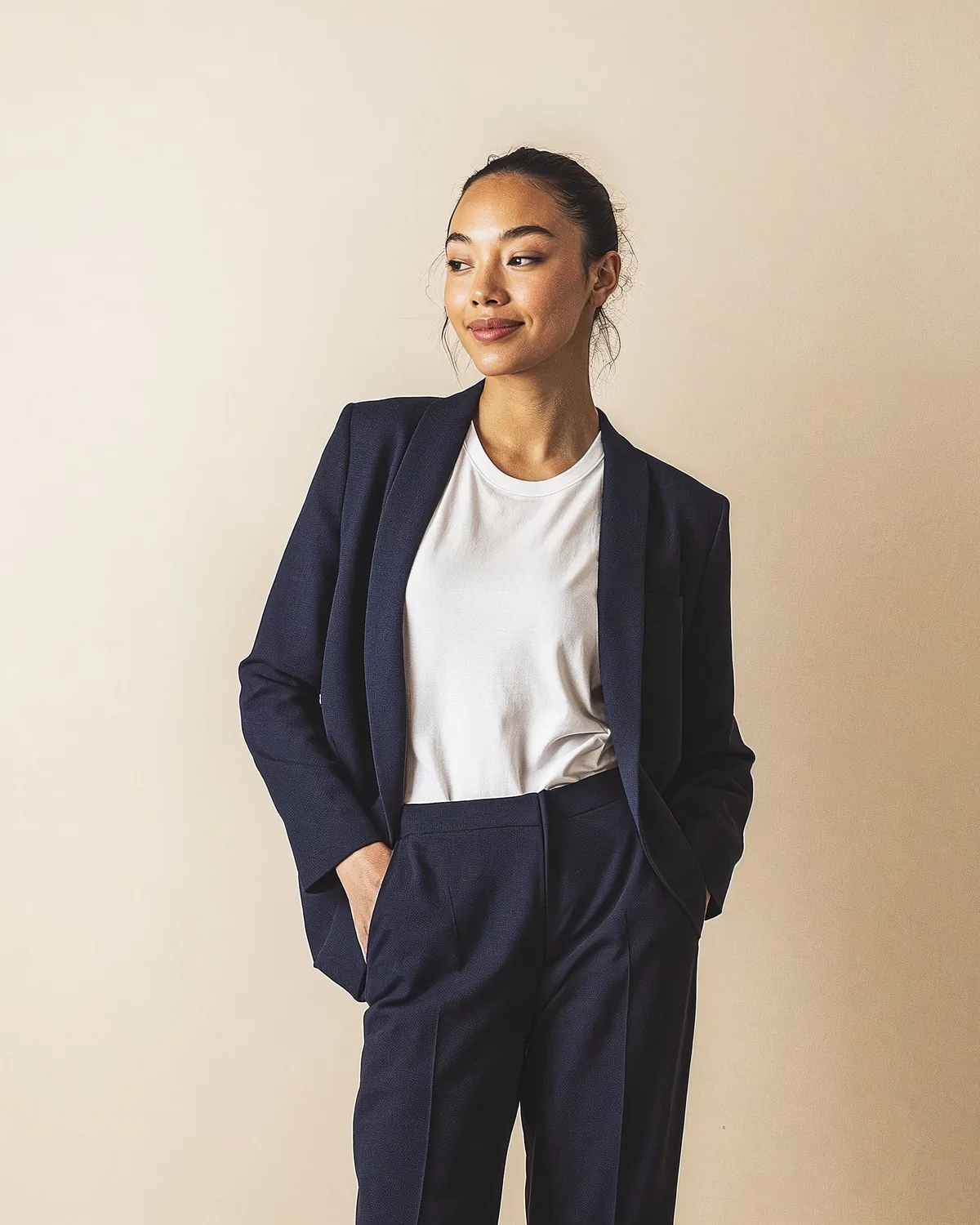
A navy suit worn with a plain white tee is the smart-casual office look that bridges the gap between formal and relaxed — tailored enough for a meeting, easy enough for a long desk day. The trick is the tee: it must be a good one, thick enough not to show through, clean at the neck, and tucked in so the suit keeps its shape. A slightly relaxed suit cut keeps the whole thing from feeling like a uniform.
How to wear it: white trainers for a creative office, loafers or low heels for a more formal one, and a leather tote. Who it suits: navy flatters almost every skin tone, and the tee softens the suit for women who find a shirt too stiff. What to avoid: a thin, greyed tee or a slogan print — the tee is the quiet part of this outfit, and it needs to look deliberate.
9. A Wrap Dress in a Solid Colour
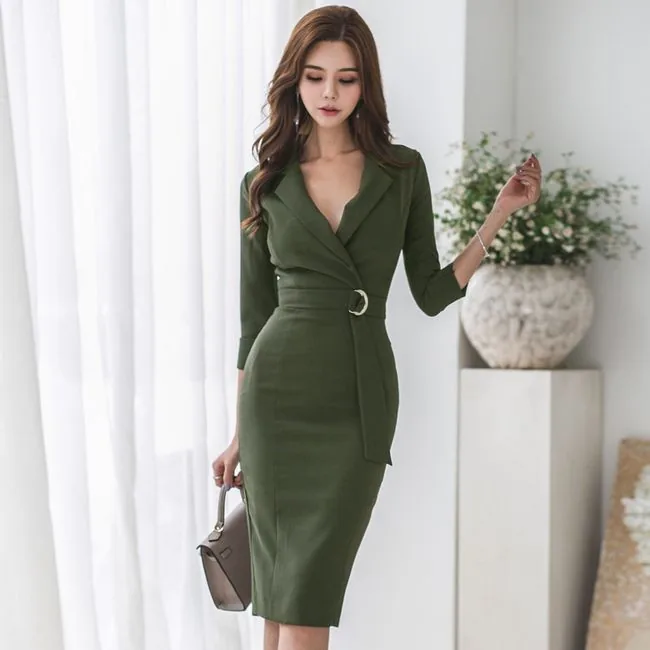
A wrap dress is one of the most forgiving shapes in workwear: the tie waist defines you exactly where you are, the V-neck flatters the face, and the skirt skims rather than clings. In a solid colour — navy, teal, burgundy or black — it reads as a serious office dress, not a weekend one, and it works from a morning presentation to an evening event without a single change.
How to wear it: block heels, a structured bag, and a blazer over the top when the office is cold. Who it suits: it is famously kind to curves and to a fuller bust, and the adjustable tie means it fits on days when other dresses do not. Styling tip: if the wrap gapes, a small snap or a camisole underneath fixes it in seconds.
10. A Camel Coat Over a Monochrome Base
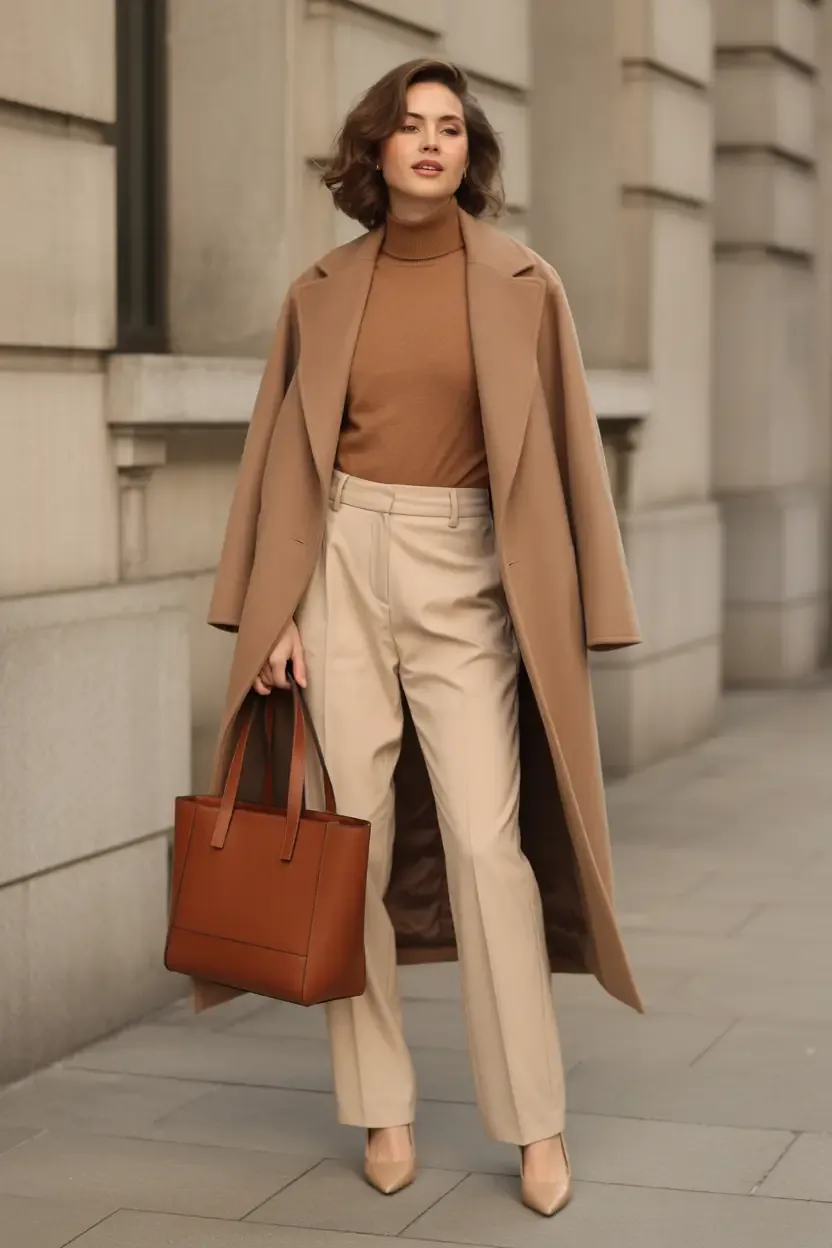
On cold mornings, the outfit is the coat — and a camel coat over an all-black or all-grey base is one of the most elegant combinations in workwear. The monochrome underneath keeps the look simple and slim, and the camel adds warmth, colour and a sense of intention. It is the outfit that looks expensive even when the pieces underneath are the simplest ones you own.
How to wear it: black trousers and a black knit, ankle boots, and a scarf in a soft neutral. Who it suits: camel flatters warm skin tones especially well, and the long line lengthens a petite frame. What to avoid: a coat that is too short for the dress or skirt underneath — the hem peeking out should look deliberate, not accidental.
11. A Checked Blazer and Dark Jeans for Smart Fridays
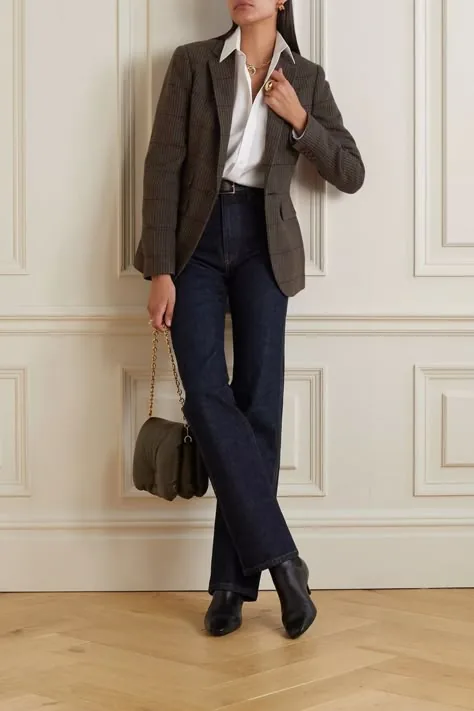
When the office allows smart-casual Fridays, a checked blazer over dark jeans is the look that gets it right — relaxed, but unmistakably work. The blazer does the smart work, so the jeans can be simple: dark indigo, straight-legged, no rips, no fading, hemmed to the shoe. The check adds pattern and personality without shouting, and the whole outfit says you know the rules and you know how to bend them.
How to wear it: a plain tee or a fine knit underneath, loafers or ankle boots, and a leather bag. Who it suits: anyone whose office has a casual Friday — and anyone who wants a Friday outfit that still looks ready for a surprise meeting. What to avoid: light-wash or distressed jeans, which tip the outfit from smart-casual into weekend.
12. A Satin Blouse and Culottes

Satin brings a quiet shine to workwear, and a satin blouse with wide culottes is an outfit that feels special without being fussy. The blouse should be cut cleanly — no ruffles fighting the fabric — and the culottes should fall to mid-calf, wide enough to move like a skirt. Together they look fluid and modern, and they are far more comfortable than a fitted skirt on a long day.
How to wear it: tuck the blouse in, add a slim belt, and finish with pointed flats or low heels. Who it suits: the wide culotte balances broader shoulders and flatters a curvy hip. Styling tip: keep the colours tonal — champagne with cream, navy with black — so the shine reads as elegance rather than evening wear.
13. A Pinafore Dress Over a Crisp Shirt
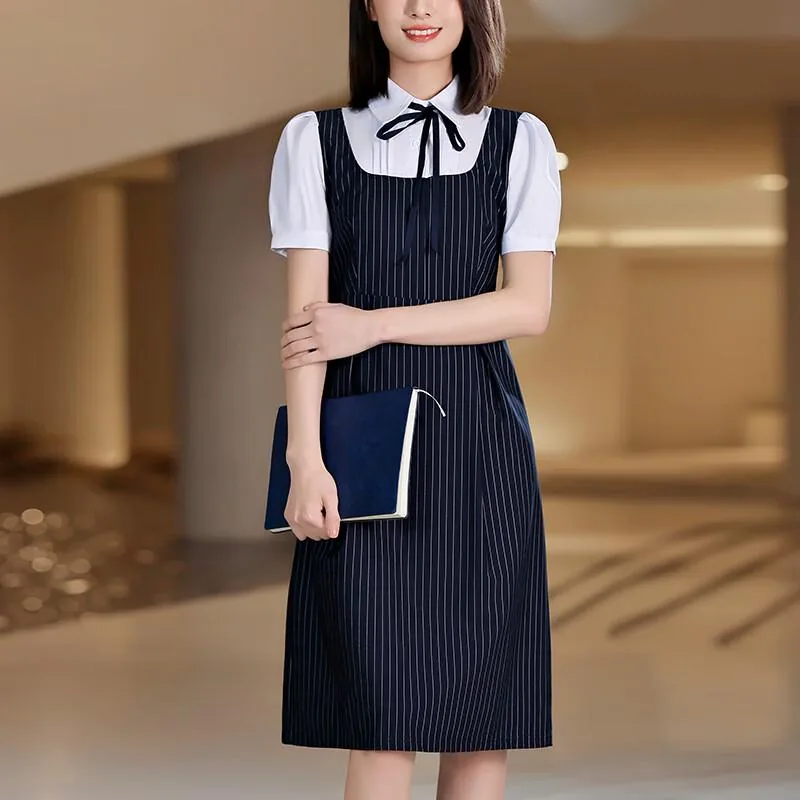
A pinafore dress layered over a crisp white shirt is a clever piece of workwear: it is a dress and a layering piece in one, and it looks thoughtful in a way a single dress rarely does. Choose a pinafore in navy, black or grey, with a clean A-line shape, and let the shirt collar and cuffs peek out. It is structured enough for a formal office and playful enough for a creative one.
How to wear it: tights and loafers in winter, bare legs and block heels in spring, and a thin belt if the shape needs defining. Who it suits: it is kind to a straight shape, adding gentle volume, and it flatters a petite frame when the hem ends above the knee. What to avoid: a shirt with a fussy collar that fights the clean lines of the pinafore.
14. A Linen Blazer and Summer Trousers
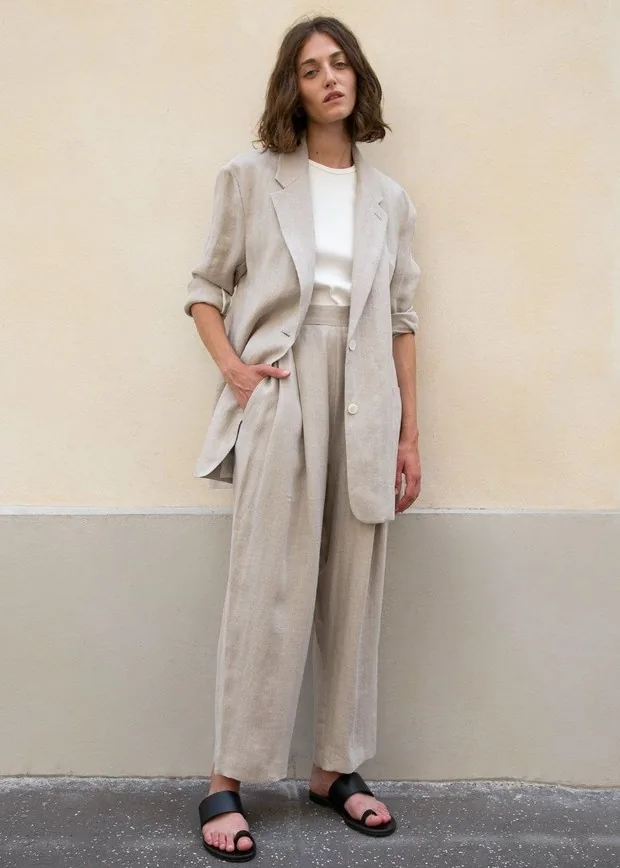
Summer workwear is a balance between looking polished and not overheating, and a linen blazer with light summer trousers gets that balance right. Linen breathes, so you stay cool, and the blazer keeps the outfit structured even when the temperature climbs. Choose a linen blend — it creases less than pure linen — in stone, sage or soft white, with trousers in the same tone for a long, calm line.
How to wear it: a sleeveless shell or a fine cotton top underneath, loafers or low sandals that are still office-appropriate, and minimal jewellery. Who it suits: the relaxed linen cut is forgiving on every shape, and the light colours flatter sun-warmed skin. What to avoid: pure linen in a dark colour, which shows every crease by midday.
15. A Sweater Dress and Knee-High Boots
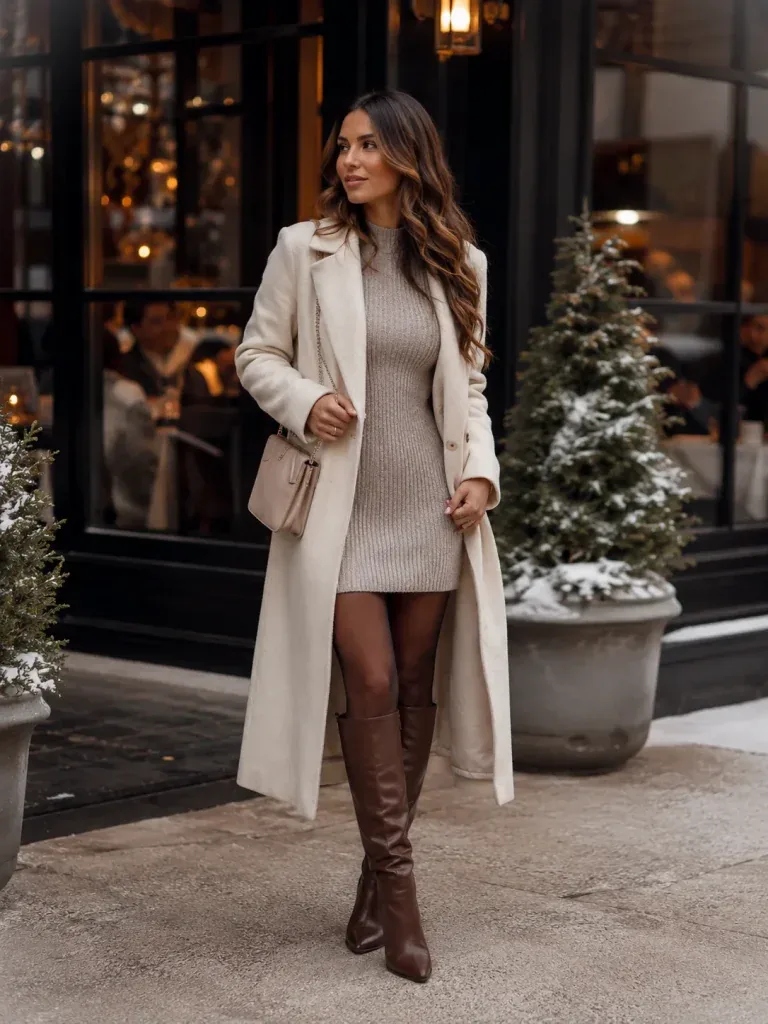
On the coldest workdays, a sweater dress with knee-high boots is warmth and polish in a single outfit. The dress should be fine-knit and knee-length, with a shape that skims rather than clings, and the boots should be flat or low-heeled so you can walk comfortably. Together they look intentional and cosy at once — the winter equivalent of the summer wrap dress.
How to wear it: thick tights underneath, a long coat over the top, and a structured bag. Who it suits: the long boot line lengthens the leg beautifully, and the knit is kind to curves. Styling tip: add a belt over the dress to define the waist, or leave it loose for a relaxed, comfortable day.
16. A Belted Shirt Dress
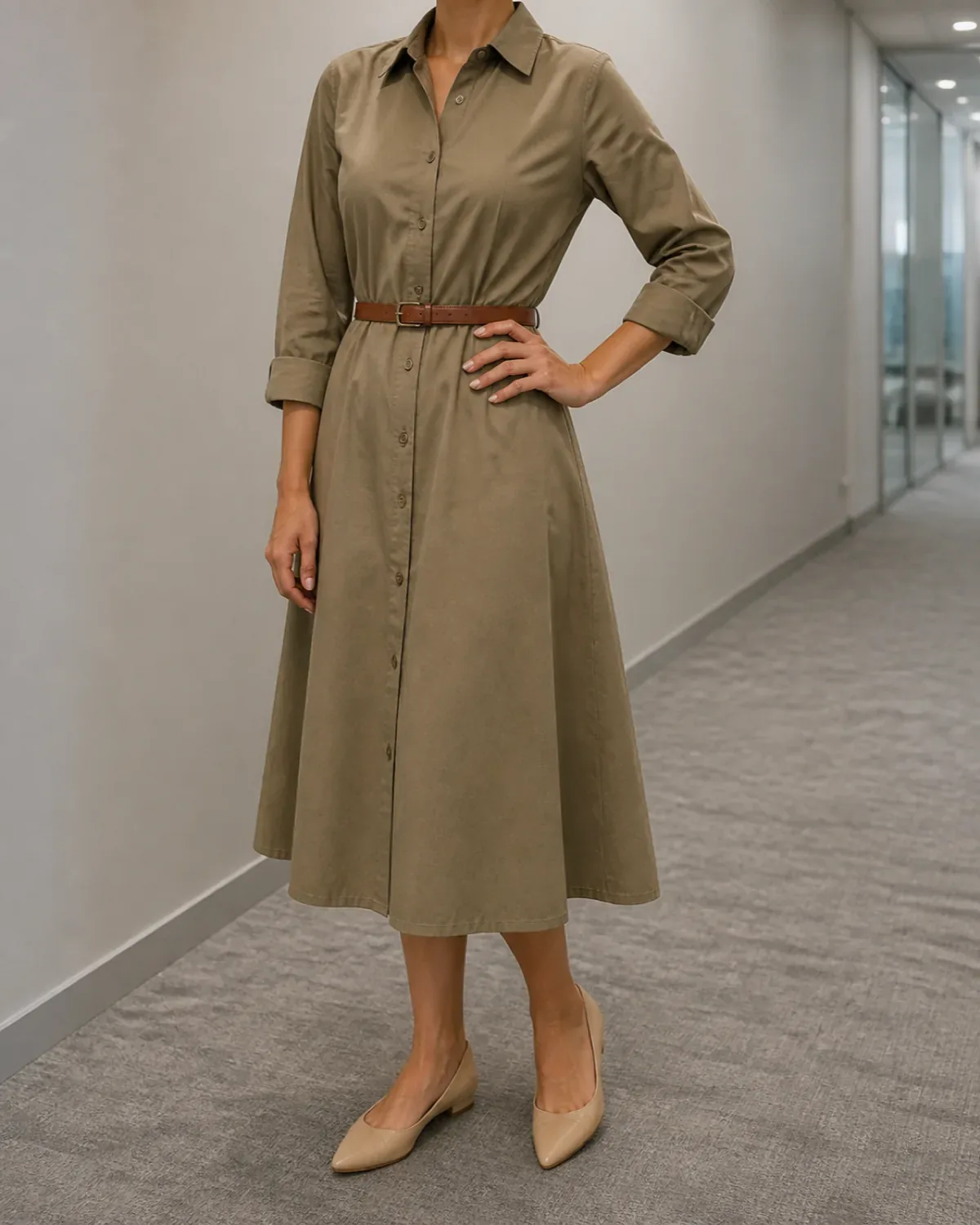
A shirt dress is a whole outfit in one piece, and belted at the waist it looks like you planned it for hours when you actually planned it for minutes. The collar gives it structure, the buttons give it detail, and the belt gives it shape. Choose a solid colour or a subtle stripe, in a fabric with a little weight so it falls cleanly, and keep the length at or just above the knee.
How to wear it: block heels or loafers, a structured tote, and a blazer over the top for a formal meeting. Who it suits: it suits a straight shape by creating a waist, and a curvy shape by following it. What to avoid: a shirt dress that gaps at the bust — size up and belt it, rather than fighting the buttons all day.
17. A Monochrome Cream Look
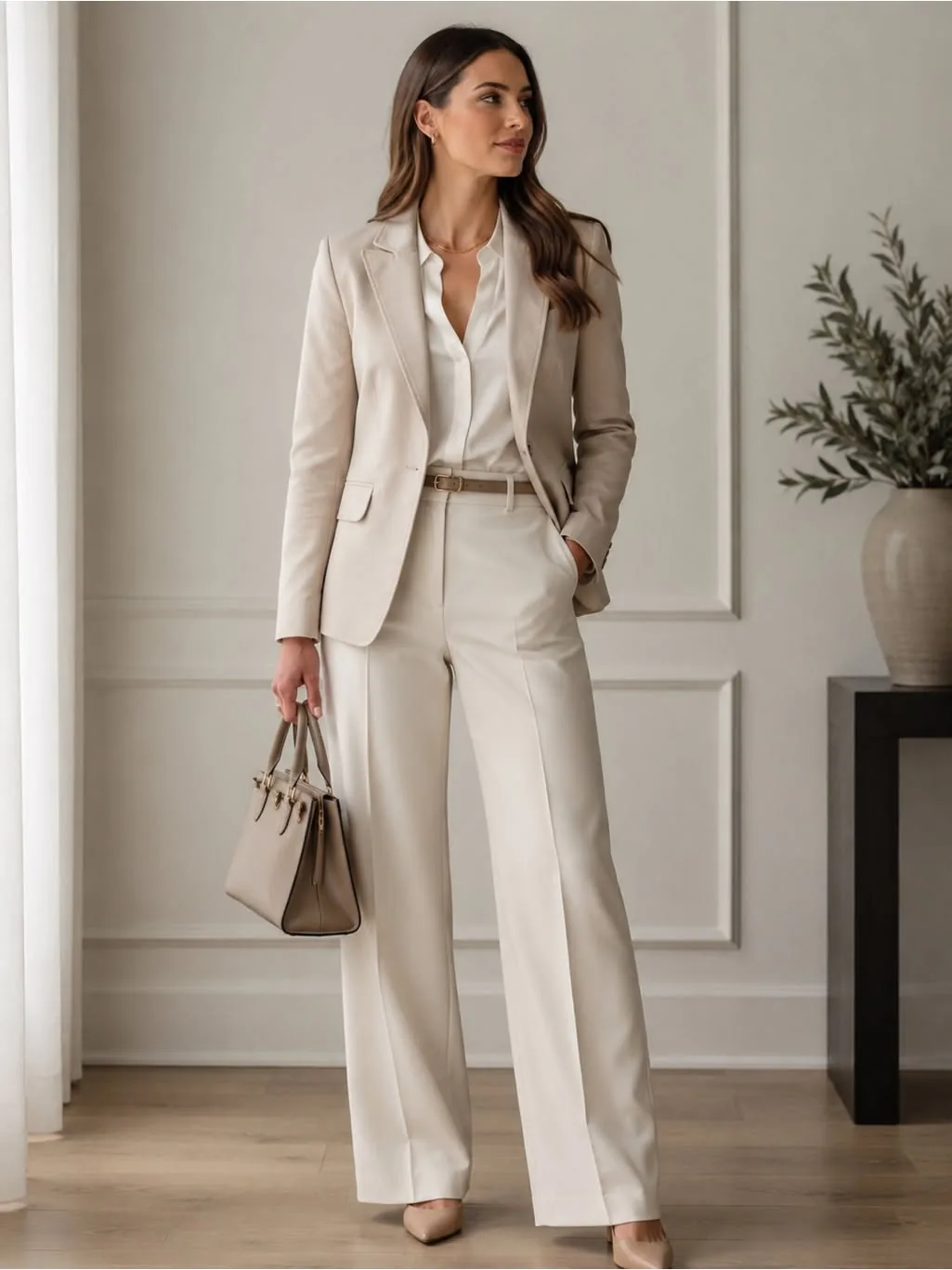
Wearing one colour from head to toe is one of the simplest ways to look expensive, and cream is the most elegant version of the trick. Cream trousers, a cream knit or blouse, and a cream coat or blazer — the tones do not need to match exactly, and in fact they look better when they do not. The result is soft, calm and quietly confident, and it stands out in an office full of black and navy.
How to wear it: tan or nude shoes to lengthen the line, gold jewellery, and a bag in a warm neutral. Who it suits: cream flatters warm and deep skin tones beautifully, and the single colour lengthens a petite frame. What to avoid: cream on a day you will be carrying coffee through a crowded office — save it for the days you can keep it clean.
18. A Printed Midi Skirt and a Plain Top
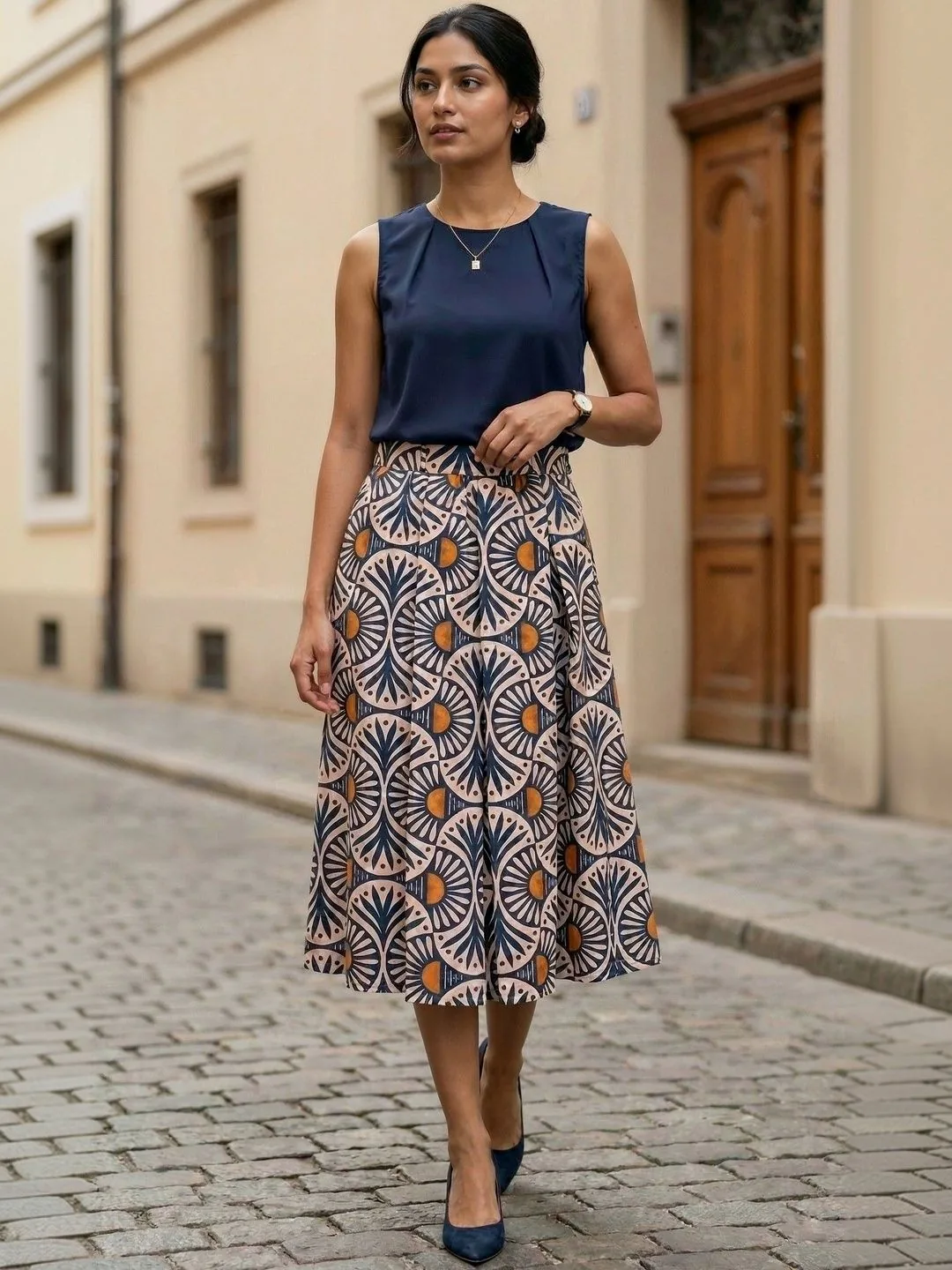
A printed midi skirt is the easiest way to bring personality into a work outfit without breaking the dress code. Floral, geometric or abstract — the print does the talking, so the rest of the outfit can stay quiet: a plain fitted top in one of the colours from the print, tucked in, with simple shoes. It is the outfit for the days you want to feel like yourself, not like a uniform.
How to wear it: pick the top colour from the skirt’s print so the outfit looks intentional, add loafers or block heels, and keep jewellery minimal. Who it suits: the A-line midi flatters most shapes, and the print draws the eye exactly where you want it. Styling tip: a blazer in a solid neutral over the top makes the same skirt formal enough for a client meeting.
19. A Sleeveless Shell and a Soft Cardigan
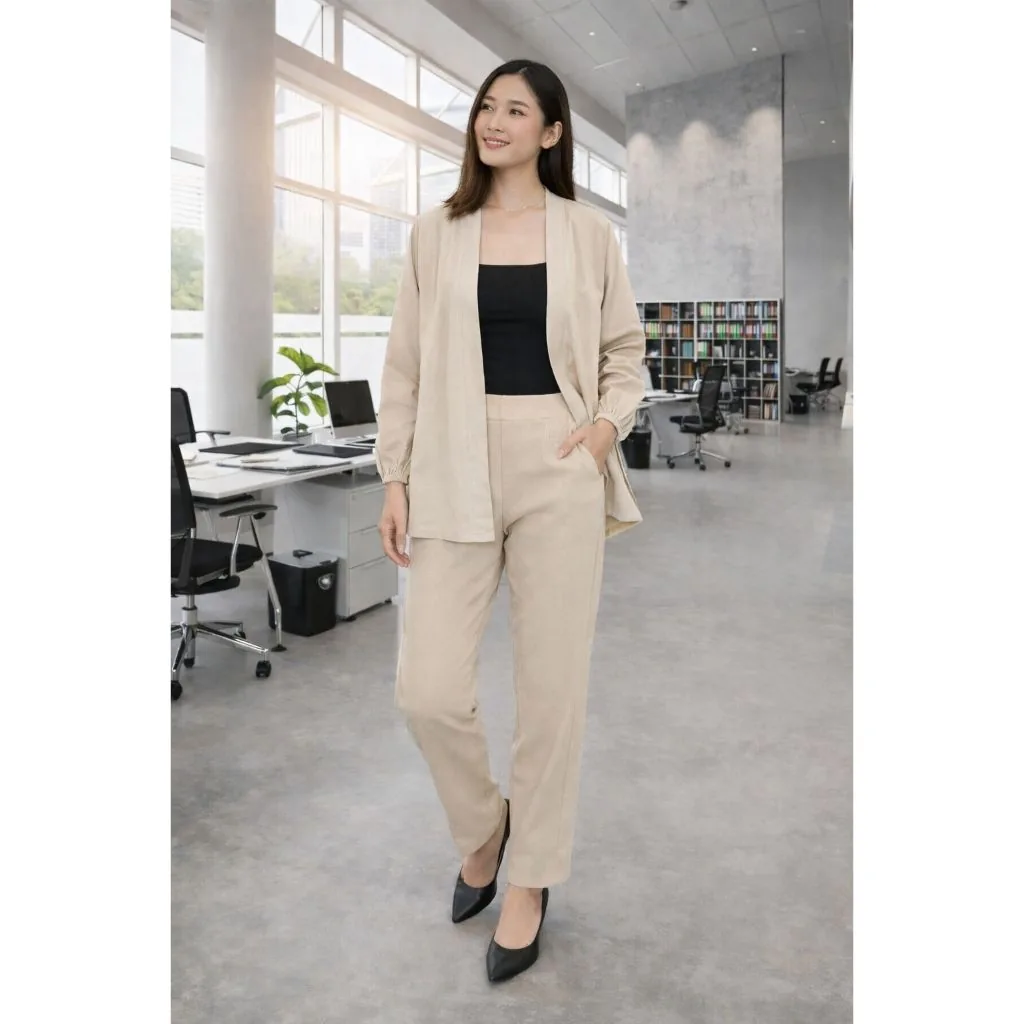
Some offices run cold, some run warm, and a sleeveless shell with a soft cardigan is the outfit built for both. The shell — a clean, sleeveless top in silk or crepe — looks neat on its own, and the cardigan adds warmth and a finished layer when you need it. Paired with straight trousers, it is comfortable, adaptable and quietly professional, and it layers beautifully under a blazer too.
How to wear it: trousers in a matching neutral, loafers, and a cardigan that ends at the hip. Who it suits: it is kind to broader shoulders when the cardigan is open, and it flatters a petite frame when the shell is tucked in. What to avoid: a cardigan that is too long or too bulky — it should skim, not swamp, the outfit underneath.
20. Leather-Look Trousers and a Soft Knit
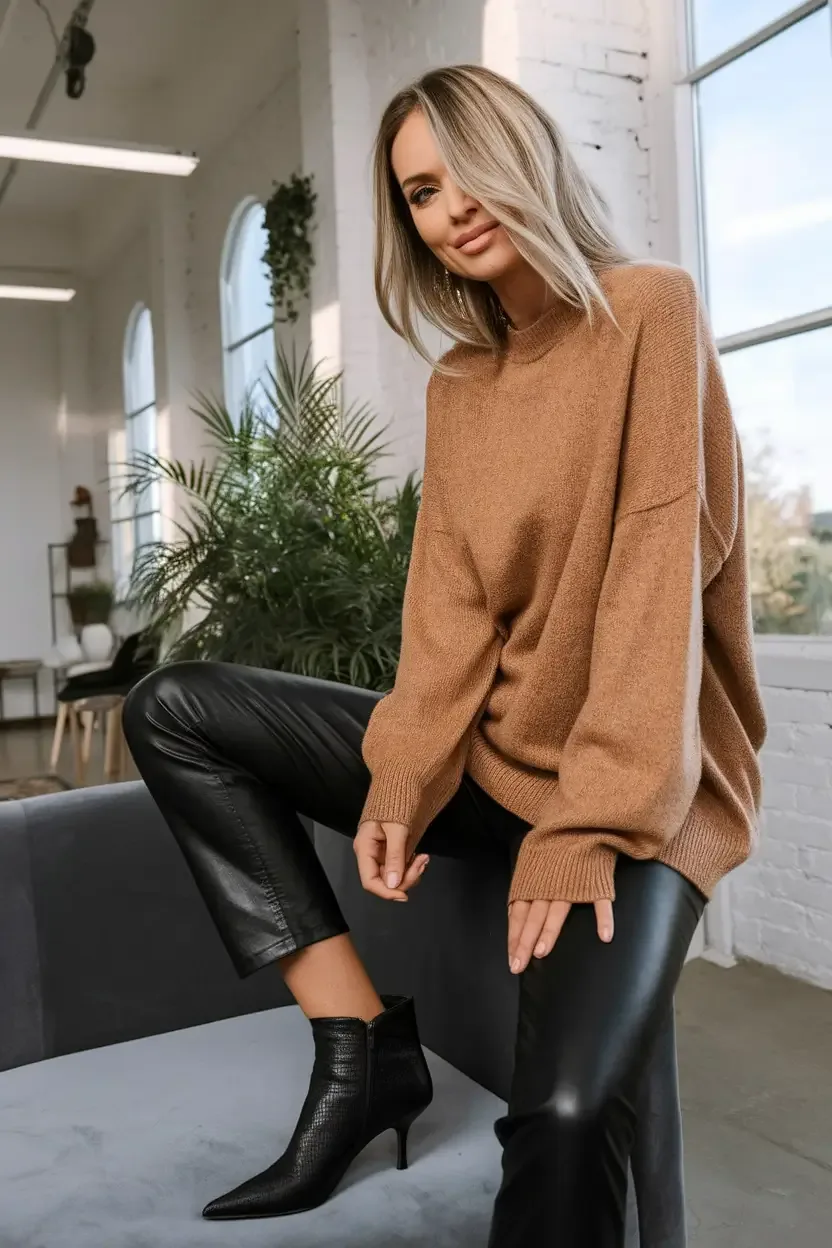
Leather-look trousers sound daring for the office, but in a matte finish with a soft knit on top they are simply a modern, polished alternative to plain black trousers. The key is the balance: the trousers bring edge, so the knit should bring softness — cream, camel or grey, fine-knit and slightly oversized, half-tucked at the front. The result is confident without being loud.
How to wear it: ankle boots or loafers, a structured bag, and minimal jewellery. Who it suits: the straight leg lengthens the leg, and the soft knit balances the sleek trouser. What to avoid: a shiny, tight leather trouser with a tight top — that is an evening look, not a work one, and the office version needs the softness on top.
21. A Grey Suit With a Soft Blouse
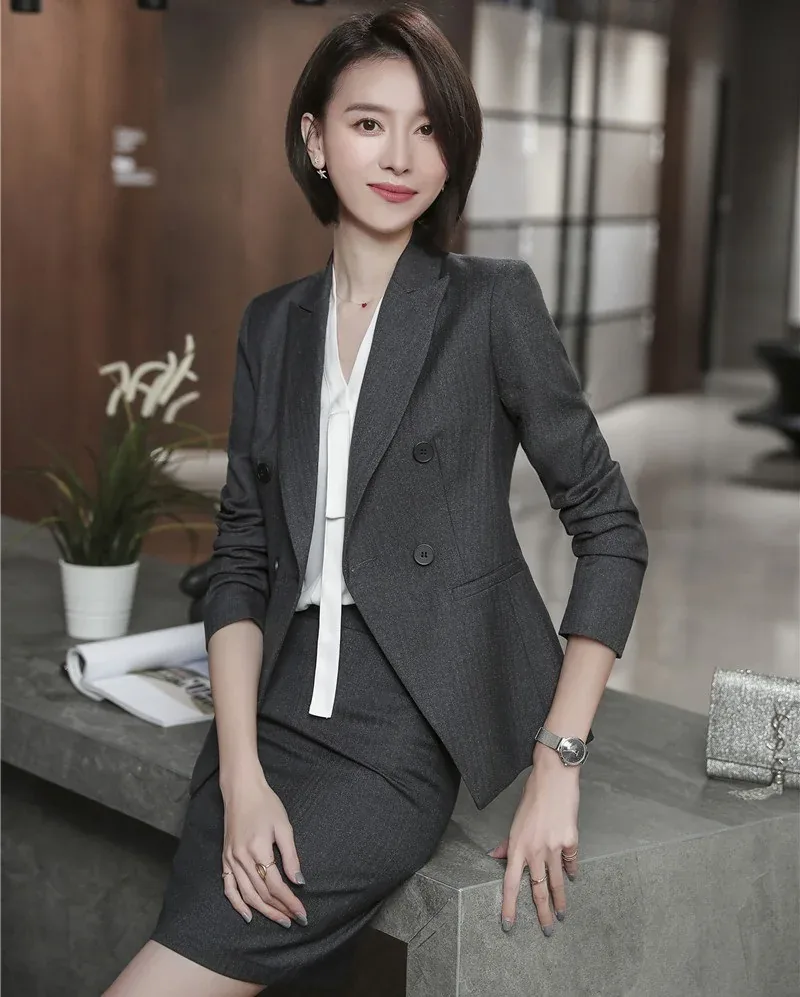
Grey is the quiet achiever of workwear — softer than black, easier than navy, and flattering on almost everyone. A grey suit with a soft blouse underneath, in blush, ivory or pale blue, looks calm and considered, and it photographs beautifully for the days you are presenting or on camera. Choose a suit with a modern cut — a slightly tapered trouser, a blazer that ends at the hip — and the whole outfit feels current rather than corporate.
How to wear it: pointed flats or low heels, a delicate necklace, and a structured bag in a matching neutral. Who it suits: grey flatters cool skin tones especially well, and the soft blouse warms the whole look. Styling tip: a grey suit is the best background for a bold lip or a bright scarf, because the neutral lets one accent shine.
22. An A-Line Skirt and a Fitted Blouse
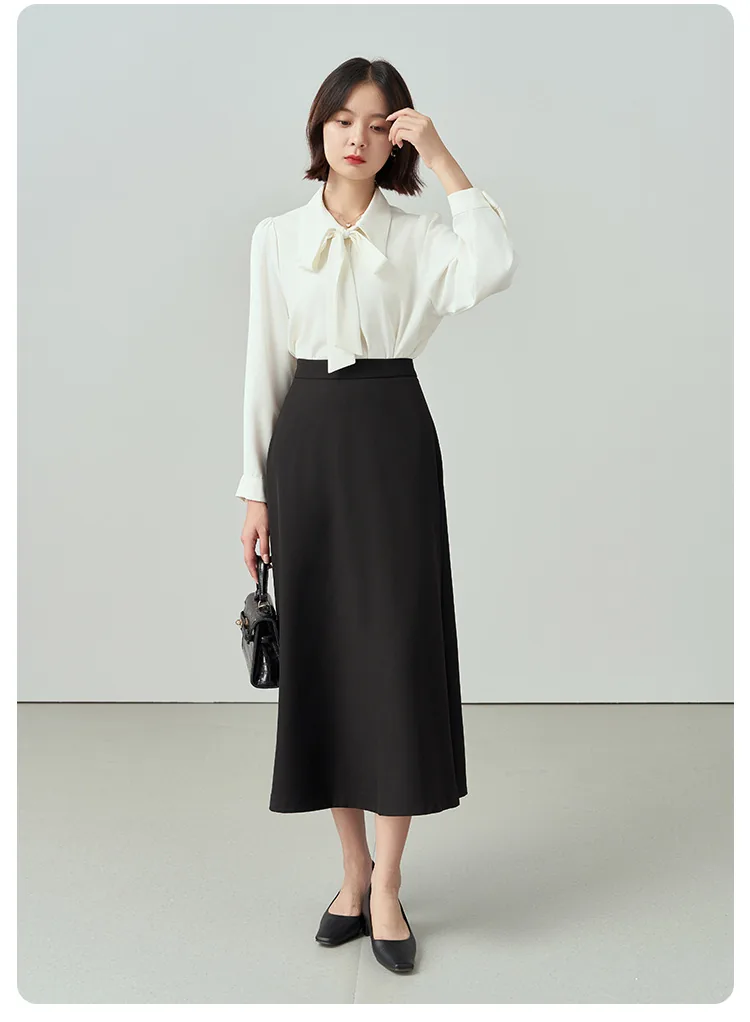
An A-line skirt is a classic for a reason: it nips at the waist and flares gently, flattering the hips without clinging, and it looks neat from the first hour to the last. Pair it with a fitted blouse tucked in — a soft cotton or a light silk — and you have an outfit that is feminine, professional and comfortable all at once. Navy, black or grey skirts are the most versatile; the blouse is where you add colour.
How to wear it: court shoes or block heels, a slim belt, and simple studs. Who it suits: it is famously flattering on a pear shape, and it gives a straight shape a gentle curve. What to avoid: a skirt so short it rides up when you sit, or a blouse so loose it hides the waist — the A-line needs the waist to be visible to work.
23. Dark Denim, Done Smart
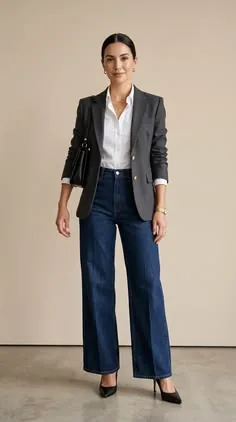
Dark denim has earned its place in many modern offices, but only when it is treated like tailoring rather than weekend wear. That means dark indigo, straight or slim, no fading, no rips, no fraying — and it means the rest of the outfit does the smart work: a blazer, a silk blouse, proper shoes. Done this way, denim looks intentional and modern; done carelessly, it looks like you forgot it was a workday.
How to wear it: a blazer and loafers, a tucked-in blouse, and a leather bag. Who it suits: anyone in a creative or smart-casual office — and anyone who walks a lot, because good denim is comfortable. What to avoid: skinny jeans with a casual tee, which reads as a day off, and light-wash denim, which rarely looks office-ready.
24. A Trench Coat Over a Work Dress
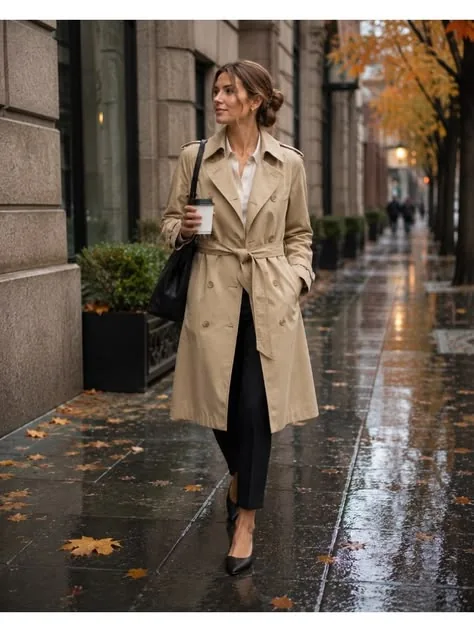
A trench coat is the outer layer that makes a simple work dress look like a complete outfit, and it is worth investing in because you will wear it for years. The classic stone trench, belted at the waist, over a navy or black dress, is the autumn and spring uniform of women who always look put together — and it works because the coat adds structure, length and a sense of occasion to whatever is underneath.
How to wear it: the dress underneath can be simple — a sheath, a shirt dress, a knit midi — with ankle boots and a structured bag. Who it suits: the belted waist flatters every shape, and the long line lengthens a petite frame. Styling tip: keep the trench open over the dress on mild days, and belt it closed on cold ones — it is two coats in one.
25. A Velvet Blazer for Evening Work Events
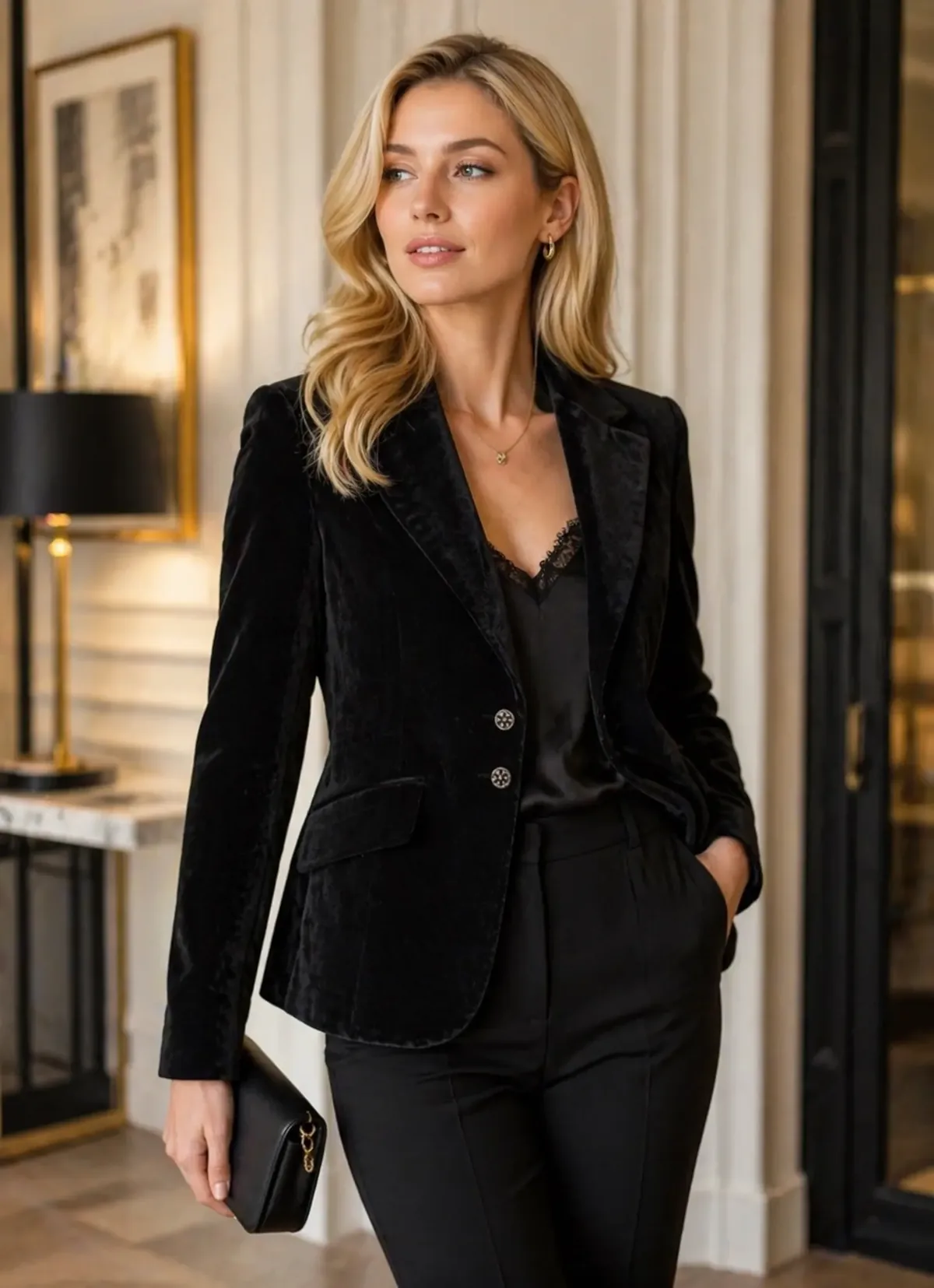
Work does not always end at five, and a velvet blazer is the piece that carries an outfit from the office into an evening event without a full change. The texture reads as evening, the tailoring reads as work, and together they are exactly right for a launch, a dinner or a drinks reception. Pair it with black trousers or a simple dress, keep the top underneath plain, and let the velvet do the work.
How to wear it: black trousers and a silk camisole, heeled boots, and one bold piece of jewellery. Who it suits: deep jewel tones — emerald, burgundy, navy velvet — flatter most skin tones and photograph beautifully. What to avoid: velvet in a bright daylight office, where it can look like evening wear in the wrong room — save it for the days with an event attached.
26. A Striped Shirt and Ankle Trousers
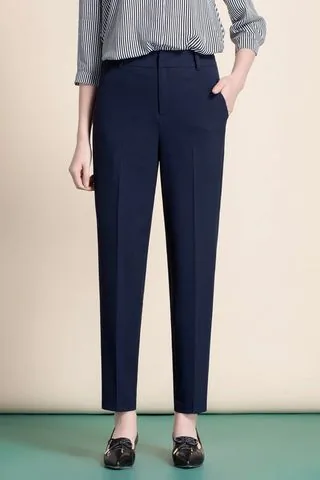
A striped shirt is the work shirt with the most personality: it is crisp, it is classic, and it adds pattern without any effort. Paired with ankle-length tailored trousers, it looks fresh and modern, and the ankle length shows off the shoe — which is half the point. Choose a fine stripe in blue and white for the most versatile version, or a bolder stripe when you want the shirt to be the statement.
How to wear it: tuck the shirt in, add loafers or pointed flats, and a leather tote. Who it suits: vertical stripes lengthen a petite frame, and the ankle trouser flatters a neat ankle. Styling tip: roll the sleeves to the elbow on warm days, and add a blazer over the top when the meeting is formal — the shirt works under both.
27. A Jumper Layered Over a Collared Shirt
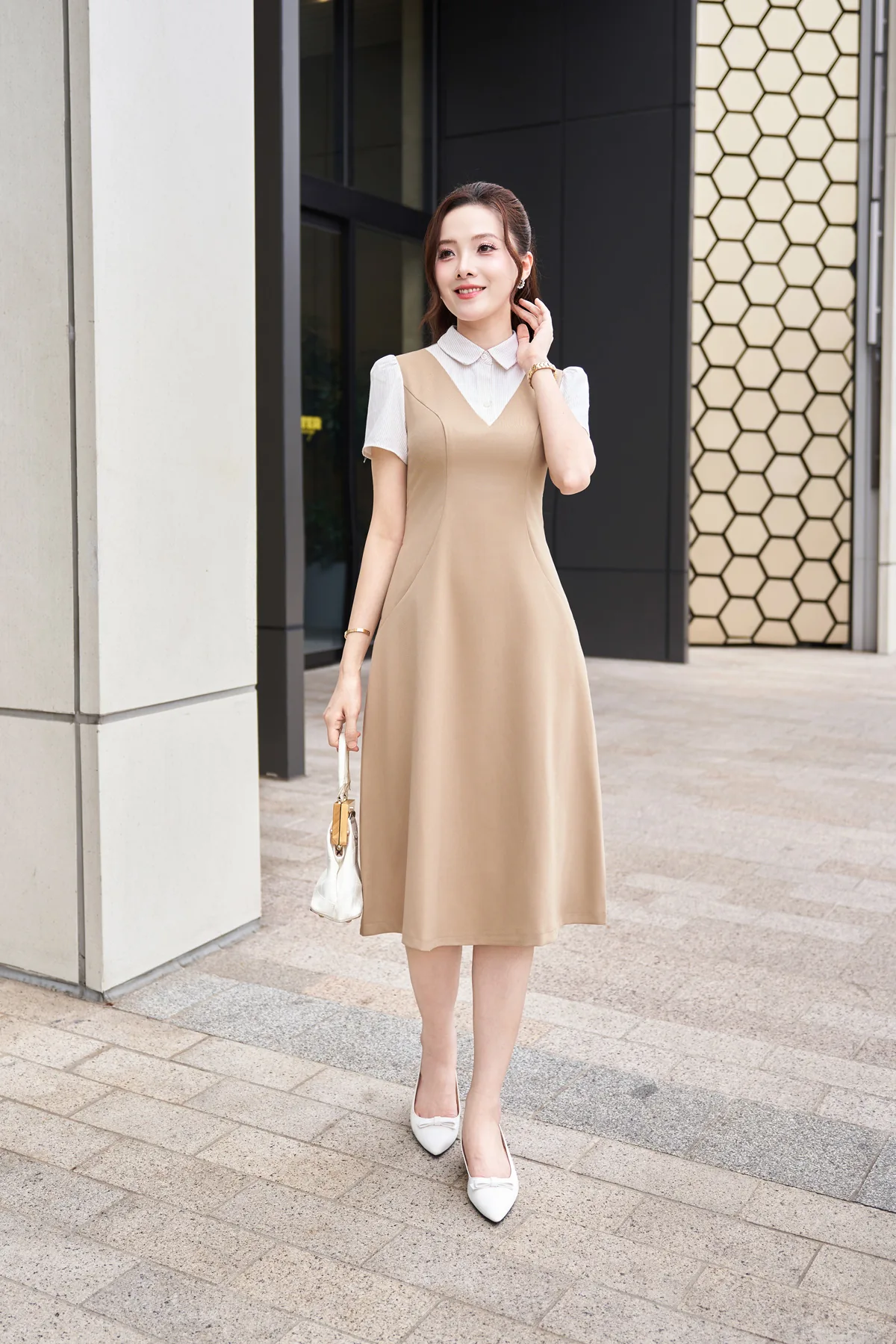
Layering a fine jumper over a collared shirt is the preppy, polished look that works beautifully in cooler months: the collar and cuffs peek out, the jumper adds warmth and colour, and the whole outfit looks considered without being complicated. Choose a crew-neck jumper in a solid colour — navy, burgundy, forest — and a white or blue shirt underneath, with the collar crisp and the cuffs showing just a touch.
How to wear it: straight trousers or a pencil skirt, loafers, and minimal jewellery. Who it suits: the layering adds gentle volume to a straight shape and softens a sharp shoulder line. What to avoid: a chunky jumper over a bulky shirt, which adds bulk where you do not want it — keep both layers fine and smooth.
28. A Matching Co-ord Set for Work
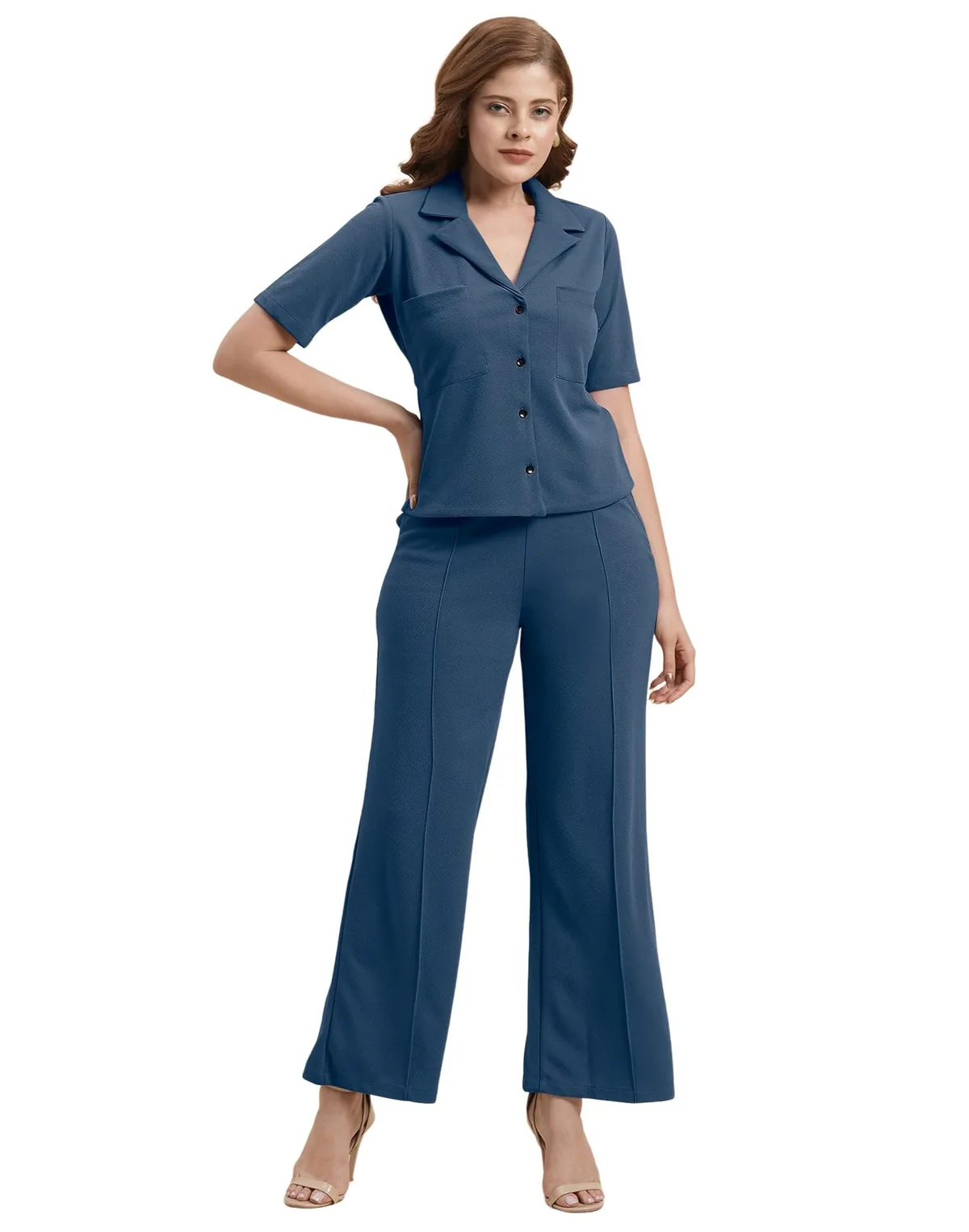
A matching co-ord set — a jacket and trousers, or a top and skirt in the same fabric — looks like a suit but feels like a shortcut, because the matching is already done for you. It is the easiest way to look coordinated on a busy morning, and it reads as intentional in a way separates rarely do. Choose a set in a neutral or a soft colour, with a clean cut and no fussy detail, and you have an outfit that works as a whole or as separates.
How to wear it: wear it together for a polished day, or split it up — the jacket over a dress, the trousers with a knit — for two more outfits. Who it suits: the single colour lengthens a petite frame, and the matching set flatters a tall one. Styling tip: break the match with a contrasting shoe or bag so the outfit looks styled, not uniform.
29. A Floral Blouse and Black Trousers
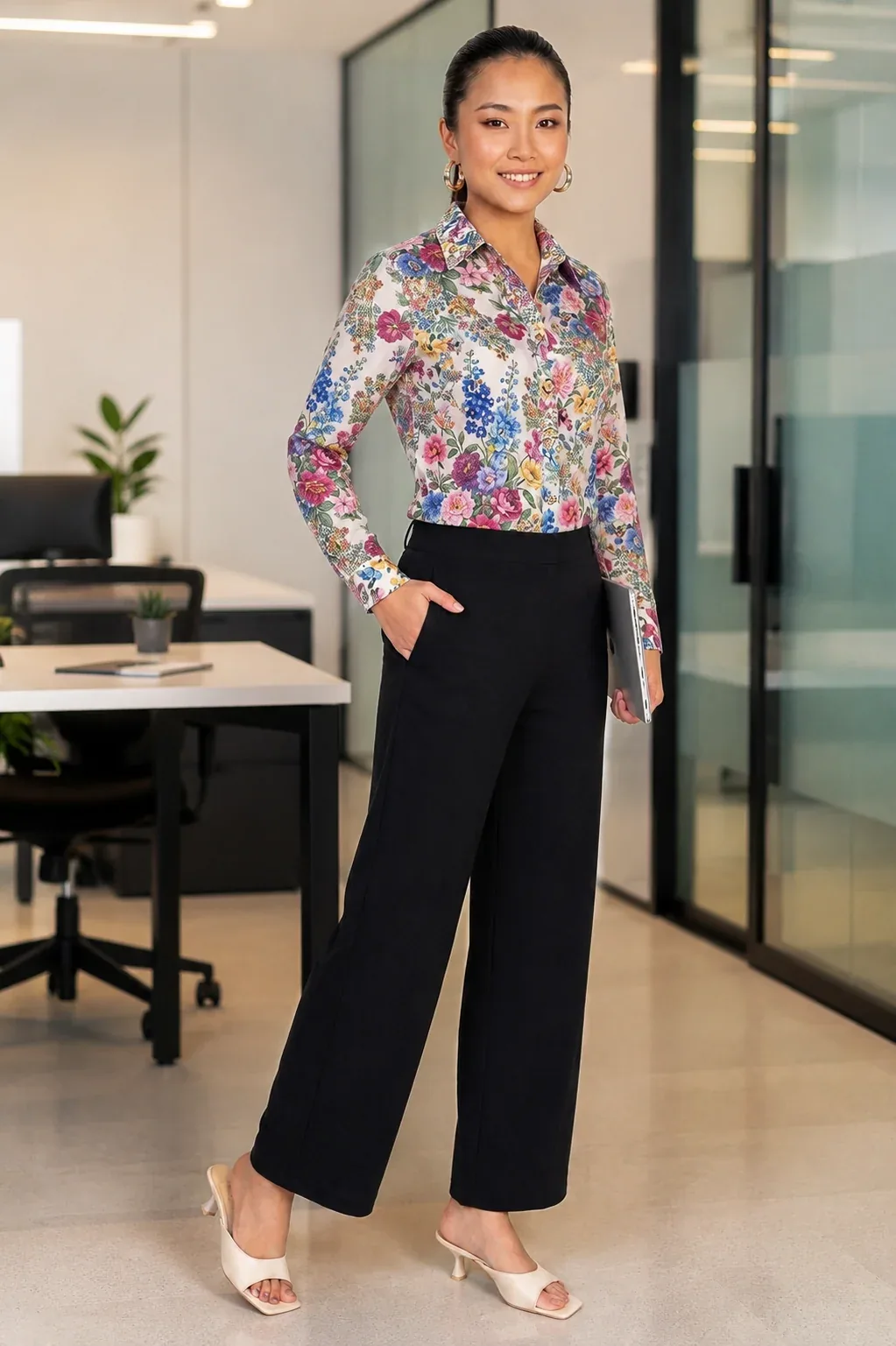
A floral blouse is the quickest way to bring softness and colour into a work outfit, and black trousers are the anchor that keeps it office-appropriate. The blouse should be the star — a small, neat floral rather than a large, loud one, in colours that suit your skin — and the trousers should be simple and well-cut. Together they are feminine, professional and far more interesting than a plain shirt.
How to wear it: tuck the blouse in, add loafers or low heels, and keep jewellery simple so the print is not competing. Who it suits: a small print flatters a petite frame, and a darker floral background is kind to every shape. What to avoid: a sheer floral blouse without a camisole, and a print so large it reads as a holiday top rather than a work one.
30. A Suede Jacket and a Midi Dress
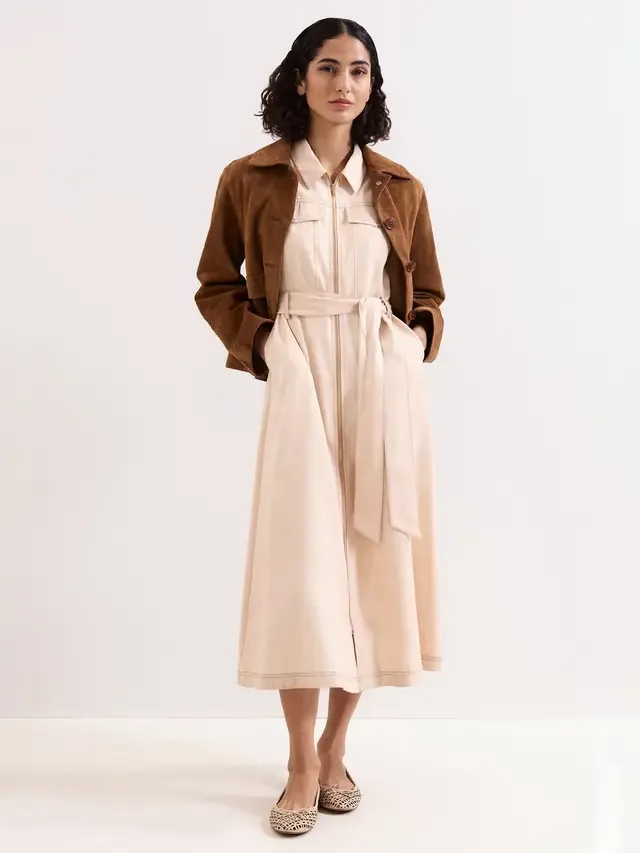
Suede brings a soft, autumnal texture to workwear, and a suede jacket over a midi dress is the outfit that makes an ordinary Tuesday feel like the best-dressed day of the week. The jacket should be a clean, simple cut — no fringing, no heavy detail — in tan, taupe or deep brown, and the dress underneath should be simple and solid, so the texture of the jacket is the story.
How to wear it: ankle boots, a structured bag, and a simple necklace. Who it suits: the soft suede flatters warm skin tones, and the midi length keeps the outfit office-appropriate. What to avoid: suede on a rainy day, and a suede jacket over a heavily printed dress — the two textures and patterns will fight each other.
31. Pinstripe Trousers With a Blazer
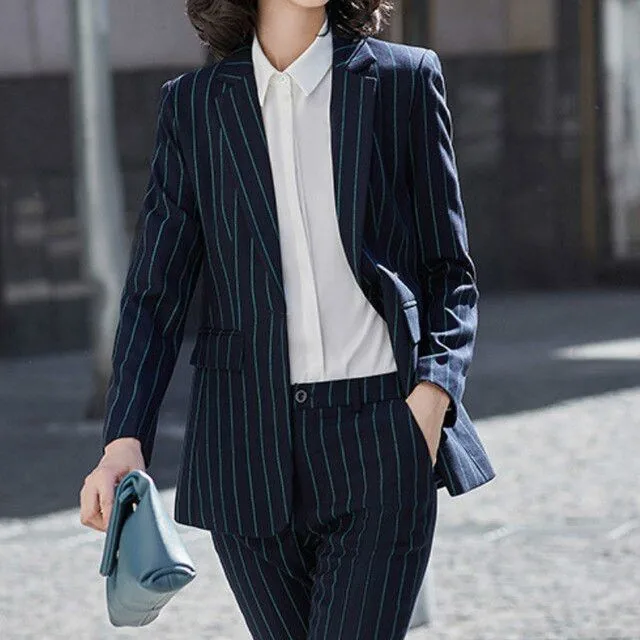
Pinstripes are the pattern of the boardroom, and pinstripe trousers with a matching or plain blazer are the suit that says you mean business — without looking like everyone else in a plain black suit. The fine stripe lengthens the leg and adds a subtle detail that rewards a closer look, and it works beautifully in navy, grey or charcoal. Keep the top underneath plain and let the stripe be the only pattern in the outfit.
How to wear it: a white or ivory shirt, pointed shoes, and a structured bag. Who it suits: the vertical stripe lengthens a petite frame and slims a curvy one. Styling tip: if the full pinstripe suit feels too much, wear the trousers with a plain blazer — you get the stripe’s elegance without the full boardroom uniform.
32. A Cashmere Jumper and a Pencil Skirt
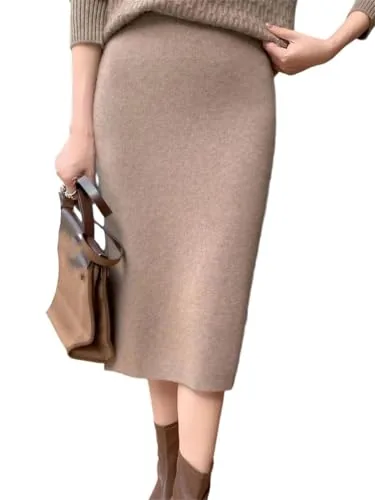
Cashmere is the luxury that earns its price in workwear, because a cashmere jumper is warm, soft and polished in a way no other knit quite manages. Paired with a pencil skirt, it is the winter work outfit that feels like a treat and looks like a decision: the softness of the knit against the structure of the skirt, the colour of the jumper — camel, grey, burgundy — against the neutral of the skirt.
How to wear it: tuck the jumper in or half-tuck it, add tights and knee-high boots in winter, loafers in spring. Who it suits: the soft knit flatters every shape, and the pencil skirt gives the outfit its structure. What to avoid: a cashmere jumper that pills after two wears — buy the best you can afford, and store it folded, not hung.
33. A Tailored Jumpsuit With a Blazer
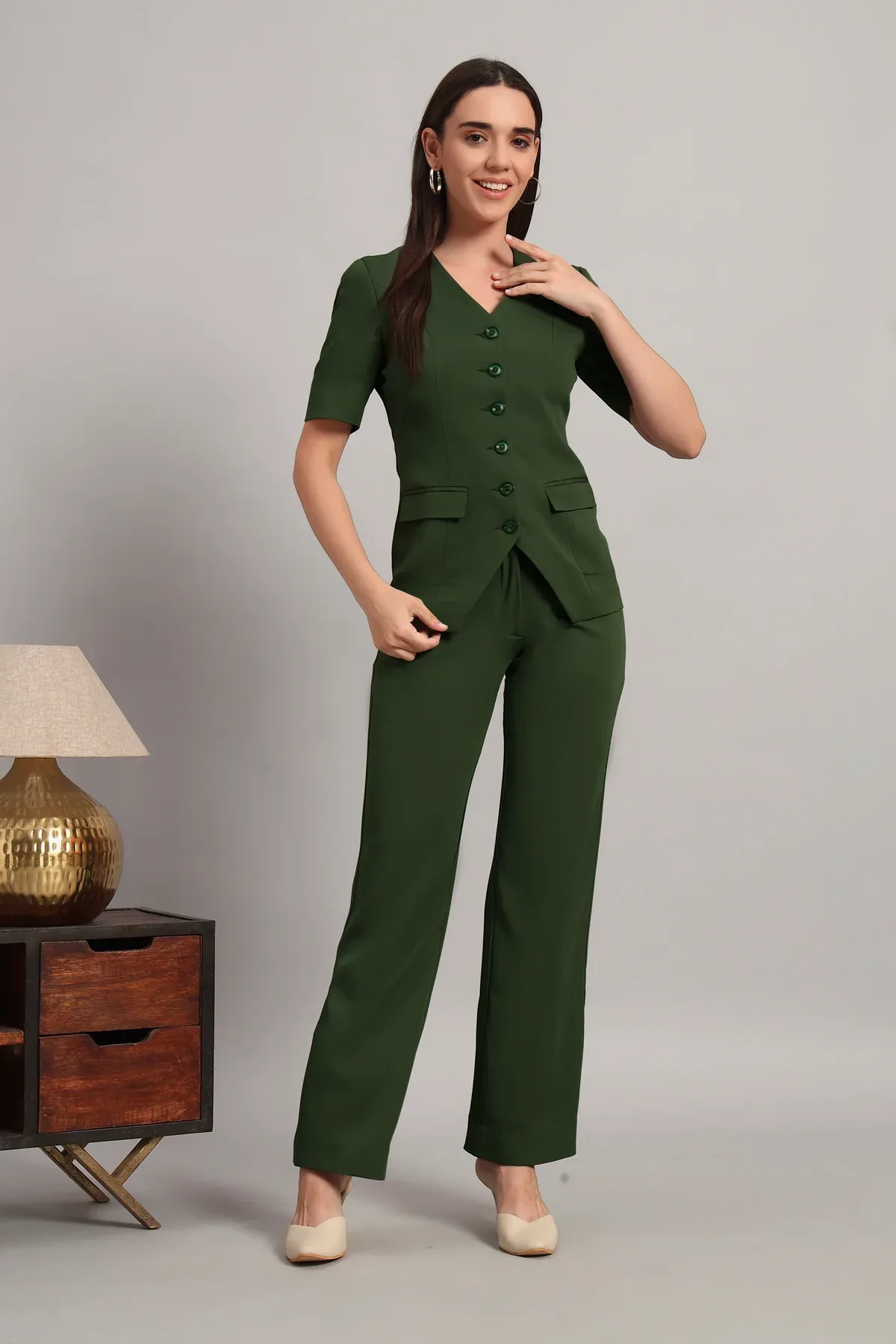
A tailored jumpsuit is the one-piece work outfit that surprises people with how professional it can look — provided it is truly tailored, with a defined waist, a clean leg and a fabric with some weight. Worn with a blazer over the top, it reads as a suit with a twist, and it is wonderfully comfortable through a long day of sitting and standing. Choose black, navy or deep green, and keep the neckline modest.
How to wear it: a blazer over the top for formal settings, heels or pointed flats, and a structured bag. Who it suits: the long, unbroken line lengthens a petite frame beautifully, and the defined waist flatters curves. What to avoid: a jersey jumpsuit, which reads as loungewear, and a wide-leg jumpsuit in a busy print — the office version needs tailoring and a solid colour.
34. White Trousers and a Navy Blazer in Spring
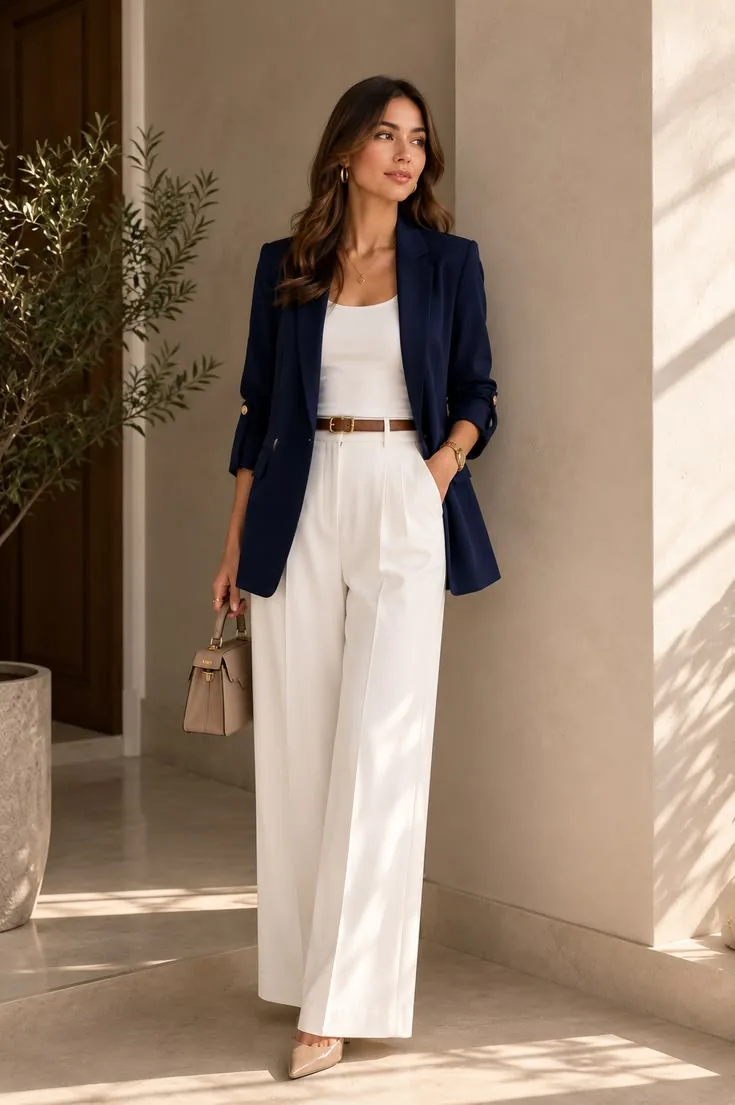
White trousers with a navy blazer is the spring work outfit that feels like a fresh start: crisp, bright and full of energy after a winter of dark colours. The navy blazer keeps the white trousers grounded and professional, and the contrast is one of the most flattering colour combinations in workwear. Choose white trousers in a thick, opaque fabric — never sheer — with a straight leg and a proper waistband.
How to wear it: a striped or plain top underneath, loafers or low heels, and a bag in tan leather. Who it suits: the navy-and-white contrast flatters most skin tones, and the straight leg lengthens the leg. What to avoid: white trousers on a day with a long commute in the rain, and a blazer that is too short for the trousers — the proportions need to balance.
35. A Scarf-Neck Blouse and a Skirt
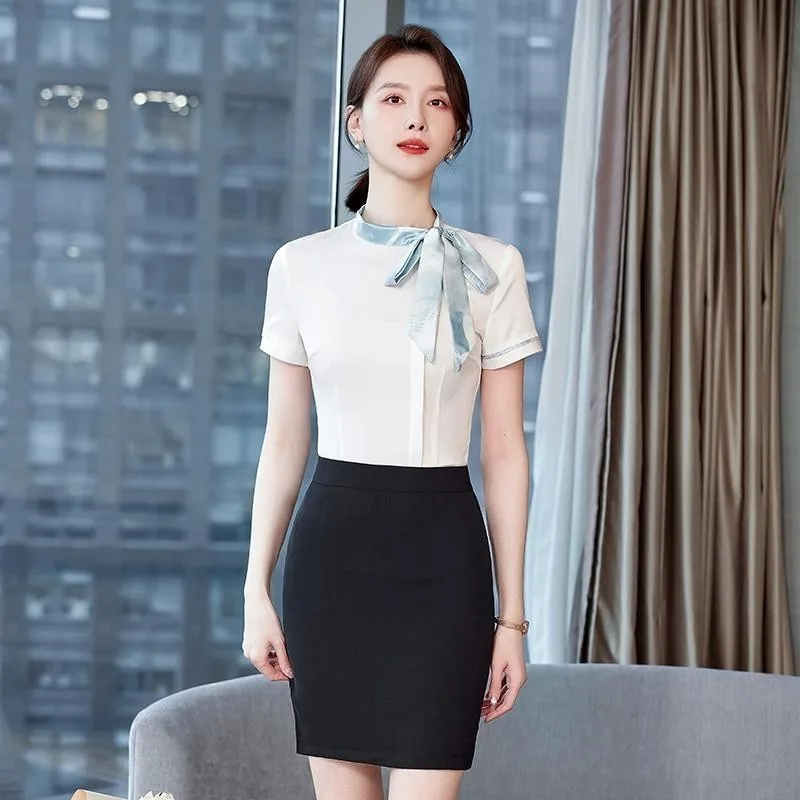
A scarf-neck blouse — a blouse with a soft tie at the neck — is the work top that needs no jewellery, because the tie is the jewellery. Paired with a pencil or A-line skirt, it looks elegant, a little vintage, and completely professional, and the tie can be worn in a bow, a knot or left loose depending on the day. Choose a blouse in a solid colour or a small print, and let the skirt stay simple.
How to wear it: tuck the blouse in, add court shoes, and keep earrings small so the neckline is the focus. Who it suits: the soft tie flatters the face and adds gentle volume to a straight shape. Styling tip: if the tie feels too much for a formal meeting, tuck it inside the blouse — the same top becomes a clean, simple shirt in seconds.
36. A Quilted Gilet Over a Knit in Winter
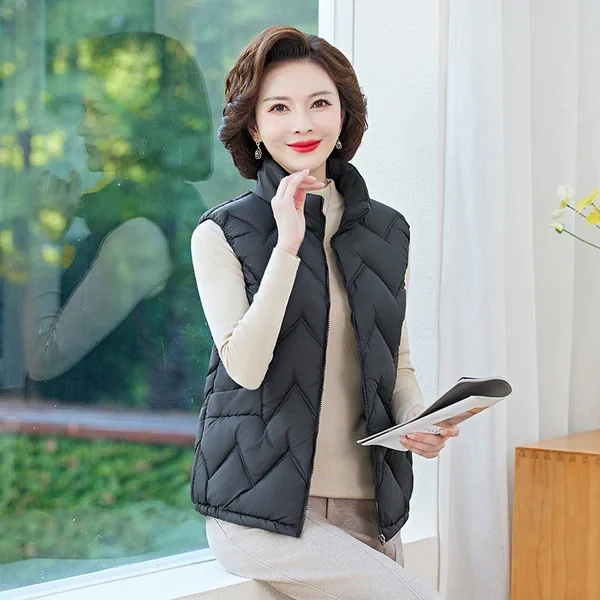
On cold days when a coat is too much indoors and a jumper is not enough, a quilted gilet over a fine knit is the layering answer. It adds warmth without bulk, it keeps your arms free, and it looks smart in a way a fleece never will. Choose a gilet in navy, black or olive, with a clean cut and a zip that sits flat, over a knit in a matching neutral and straight trousers.
How to wear it: ankle boots, a scarf, and a structured bag. Who it suits: the gilet adds gentle structure to a soft knit and flatters every shape when it ends at the hip. What to avoid: a shiny, puffy gilet, which reads as outdoor wear — the office version should be matte, slim and tailored.
37. A Short-Sleeve Blouse and Cropped Trousers in Summer
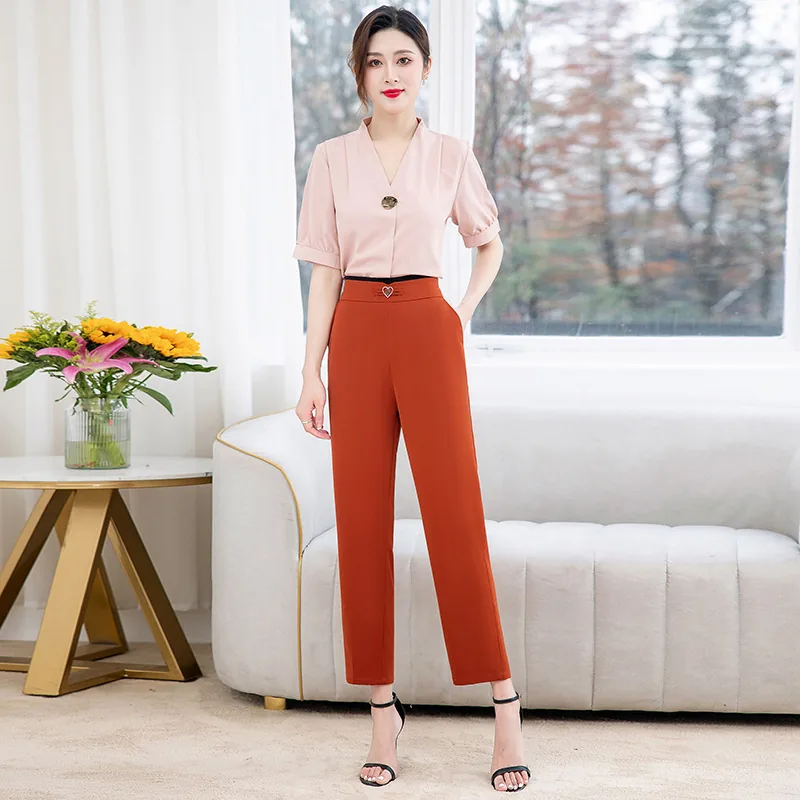
Summer workwear needs to breathe, and a short-sleeve blouse with cropped trousers is the outfit that does it without looking casual. The blouse should have a proper collar or a clean neckline — not a tee — and the trousers should be tailored, ending just above the ankle to show a neat shoe. Together they look light, neat and deliberate, and they keep you cool through the hottest part of the day.
How to wear it: loafers or low block heels, a structured bag, and minimal jewellery. Who it suits: the cropped trouser flatters a neat ankle and lengthens the leg when worn with a pointed shoe. What to avoid: a sleeveless top in a formal office, and trousers so cropped they read as shorts — the summer version still needs to look like work.
38. A Bold-Colour Suit for Confidence Days

Some days call for a bold-colour suit — emerald, cobalt, burgundy or fuchsia — and those are the days you have a presentation, a pitch or a moment you want to be remembered for. A bold suit is not loud when it is well-cut; it is confident, and it photographs beautifully. Keep everything underneath quiet — a white or black top, simple shoes — and let the colour be the single statement.
How to wear it: pointed shoes in a neutral, a simple bag, and minimal jewellery so the colour is not competing. Who it suits: choose the colour that suits your skin — warm tones for warm skin, cool tones for cool skin — and the suit will flatter you rather than wear you. What to avoid: a bold suit with a bold print underneath, which turns confidence into noise.
39. A Polka-Dot Dress for the Office
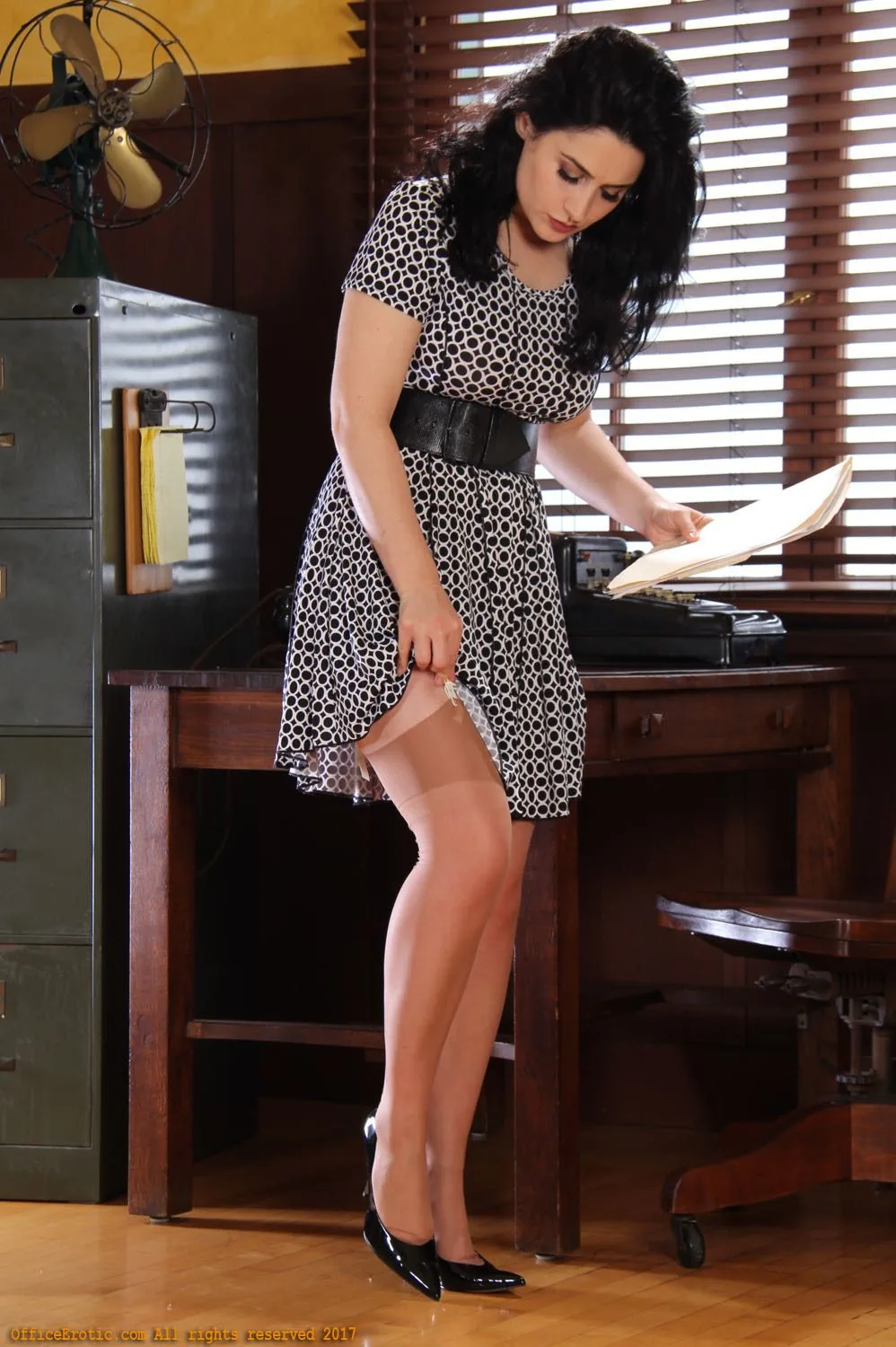
A polka-dot dress is the print that never really leaves workwear, because it is playful without being loud and vintage without being costume. In navy with white dots, or black with cream, it reads as a classic office dress, and it works with a blazer, a cardigan or on its own. Choose a small, neat dot and a simple cut — a shirt dress or a wrap shape — and the print stays elegant rather than busy.
How to wear it: block heels or loafers, a structured bag, and a blazer in a solid neutral for formal days. Who it suits: a small dot flatters a petite frame, and the wrap shape flatters curves. Styling tip: keep accessories plain — the dots are the pattern, and they do not need competition from a print bag or a busy scarf.
40. A Corduroy Blazer in Autumn
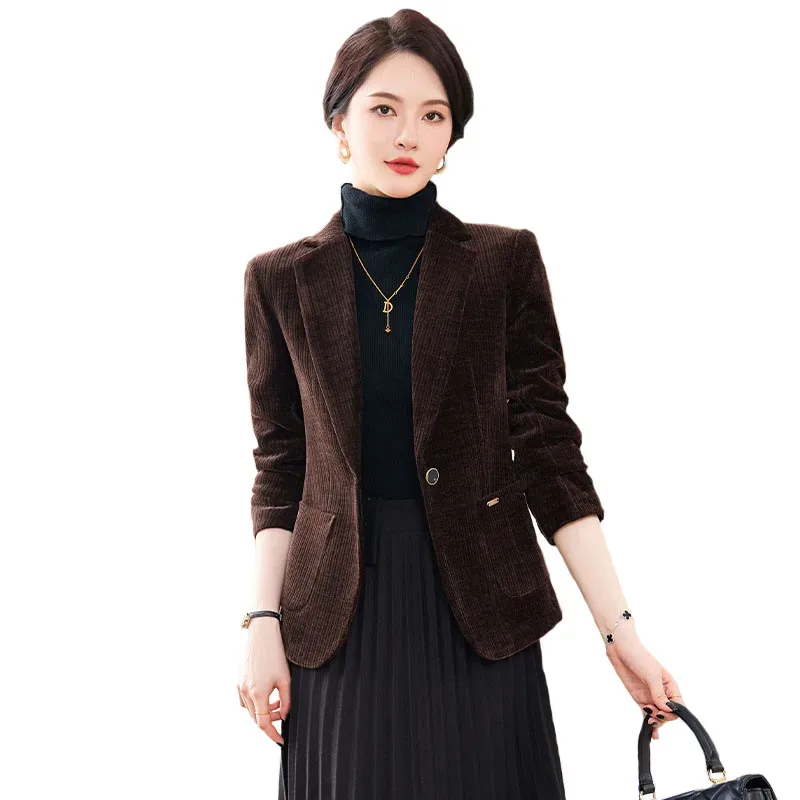
Corduroy is autumn’s fabric, and a corduroy blazer brings a soft, textured warmth to a work outfit that a smooth blazer cannot. Choose a fine-wale corduroy — the thin ridges look more polished than the wide ones — in rust, olive or chocolate, and pair it with straight trousers or a simple dress in a matching neutral. It is the blazer for the days when the light turns golden and the office feels a little softer.
How to wear it: a fine-knit top underneath, ankle boots, and a leather bag. Who it suits: the texture adds gentle volume to a straight shape and warmth to a cool skin tone. What to avoid: wide-wale corduroy in a bright colour, which can look casual, and a corduroy blazer over a corduroy trouser — one texture at a time.
41. The Day-to-Night Look for After-Work Dinner
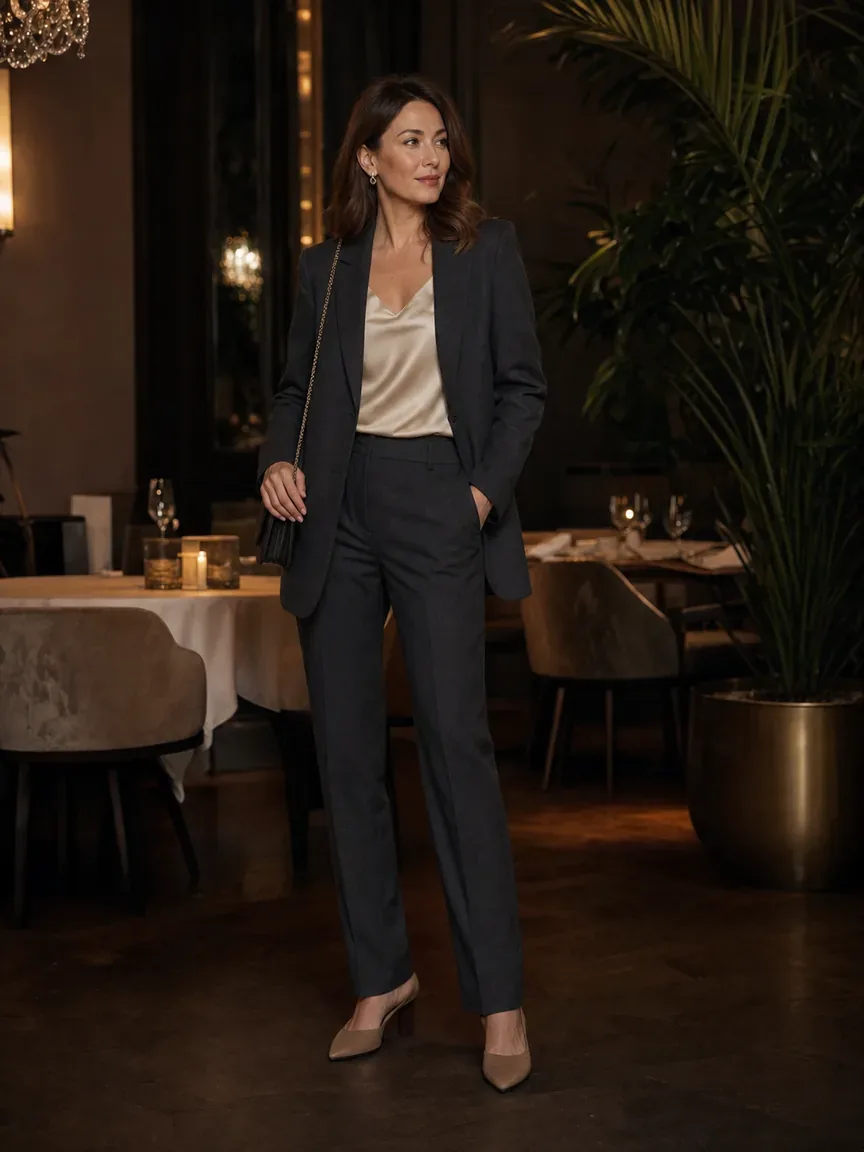
The best after-work outfit is the one you are already wearing — with one small change. Start the day in a polished base, like a black midi dress or tailored trousers with a silk blouse, and keep a small evening kit in your bag: a bold lipstick, a statement earring, a heel to swap for the flat. At five o’clock, change the shoes, add the jewellery, refresh the lip, and the same outfit that carried a meeting now carries a dinner.
How to wear it: a dress or a silk blouse as the base, heeled boots or courts in the bag, and a clutch instead of the work tote. Who it suits: anyone with plans after work — and anyone who wants one outfit to do two jobs. Styling tip: choose a base in black, navy or burgundy, because dark colours make the evening switch with the least effort and the most impact.
What are the best work outfits for women in a formal office?
For a formal office, the safest work outfits for women are a tailored suit, a blazer with straight trousers, a sheath or wrap dress with a blazer, and a crisp shirt with a pencil skirt. Stick to neutrals — black, navy, grey and charcoal — keep shoulders covered, hems at or below the knee, and shoes closed-toe. Add one polished accessory, like a structured bag or a simple watch, and the outfit is complete.
How many work outfits do I need for a week?
You need far fewer than you think. With five bottoms, eight tops, three jackets, two dresses and three pairs of shoes that all mix and match, you can build more than twenty different work outfits for women without repeating a combination in a week. The trick is a capsule where every top goes with at least three bottoms — then a small wardrobe feels like a large one.
Can I wear jeans to work?
Yes, in many modern offices — but only dark, well-fitting jeans with no rips, fading or fraying, worn with a blazer, a silk blouse and proper shoes. Light-wash, distressed or skinny jeans with a casual top read as a day off, not a workday. If you are unsure, check what the people one level above you wear on a casual Friday, and match that standard.
What should I wear to a job interview?
Wear a tailored suit or a blazer with trousers or a skirt, in navy, black or grey, with a plain shirt or blouse underneath and closed-toe shoes. Work outfits for women at interviews should look polished and intentional, not trendy — the interviewer should remember what you said, not what you wore. Keep jewellery minimal, hair tidy, and avoid strong perfume.
How do I build a work capsule wardrobe on a budget?
Start with the pieces you wear most: one good blazer, two pairs of tailored trousers, three plain tops, one dress and one pair of comfortable smart shoes, all in neutrals that mix. Buy the best quality you can afford for the blazer and shoes, because their cost per wear is the lowest, and add colour and print later with cheaper tops and accessories. Thrift shops and end-of-season sales are excellent for workwear basics.
What shoes go best with work outfits for women?
Loafers, block heels, pointed flats and court shoes cover almost every work outfit. Loafers are best for long walking days, block heels for presentations and events, pointed flats for comfort with polish, and courts for formal meetings. Choose shoes you can walk in comfortably for a full day — if a shoe hurts by lunchtime, it is the wrong shoe, however good it looks.
How can I make my work outfits look more expensive?
Fit and finish make work outfits look expensive: a blazer that fits the shoulders, trousers hemmed to the shoe, clothes pressed and clean, shoes polished, and a structured bag. Monochrome or tonal colours, quality fabrics like wool, silk and cashmere, and one simple piece of jewellery all add polish. Ironically, the most expensive-looking outfits are often the simplest ones, worn well.
What work outfits suit petite women?
Petite women suit high-waisted trousers, cropped jackets that end at the hip, midi lengths that do not swamp the frame, and monochrome outfits that create one long line. Avoid oversized blazers, very wide trousers and midi skirts that end at the widest part of the calf. Hemming is your best friend — a £10 hem can make a £40 trouser look made for you.
What work outfits suit plus-size women?
Plus-size women suit wrap dresses, A-line skirts, wide-leg trousers, structured blazers and V-neck tops — shapes that define the waist and skim rather than cling. Choose fabrics with some structure, avoid very thin jersey that shows every line, and wear a blazer open over a dress or top for a long, flattering line. The best work outfits for women of every size are the ones that fit well, not the ones that hide the body.
How do I take a work outfit from day to evening?
Start with a polished dark base — a black midi dress, tailored trousers with a silk blouse, or a simple suit — and keep an evening kit in your bag: a bold lipstick, statement earrings and a heeled shoe to swap for your flat. At the end of the day, change the shoes, add the jewellery, refresh your lipstick and swap the work tote for a clutch. The same work outfit that carried your meetings now carries your dinner, with no full change needed.
Conclusion: Work Outfits for Women That Work as Hard as You Do
The best work outfits for women are not the most expensive ones, and they are not the trendiest ones either. They are the outfits that fit well, mix easily, and carry you from the first meeting of the day to after-work plans without a second thought — a blazer that fits your shoulders, trousers hemmed to your shoe, a dress that needs no adjusting, and a capsule of pieces that all work together.
Start with the formula — bottom, top, third piece, accessory — build the capsule in neutrals with a few colours you love, and let these 41 looks be your menu rather than a shopping list. Buy less, choose better, keep it pressed and polished, and get dressed in five minutes instead of twenty-five. When your work outfits work this hard, you can spend your energy on the work itself — which is, after all, the point.
