
The best hairstyle of your day might be the one you wear to bed. While you sleep, your hair is perfectly still for six to eight hours — the ideal window for a braid to set a wave, a twist to shape a curl, or a silk wrap to smooth frizz away. Overnight hairstyles use that quiet time instead of a hot iron, which means no heat damage, no 6 a.m. rush, and a morning routine that starts with taking something down rather than building something up. If you have ever envied people who seem to wake up with good hair, this is usually their secret: they did the work the night before.
This guide gathers 34 overnight hairstyles, from the classic sleep-in braid and the viral heatless curling rod to sock curls, rag curls, bantu knots, silk bonnet routines and robe-belt waves. Each style notes how long it takes to put in, which hair type it suits, and how to take it down in the morning without undoing the result. Eight guides explain how overnight waves actually form, the silk-versus-cotton question, damp versus dry hair, braid tension, the morning take-down, and the mistakes that turn a promising set into a kinked mess. Pick one method, try it tonight, and let your pillow do the styling.
How Overnight Waves Actually Form While You Sleep
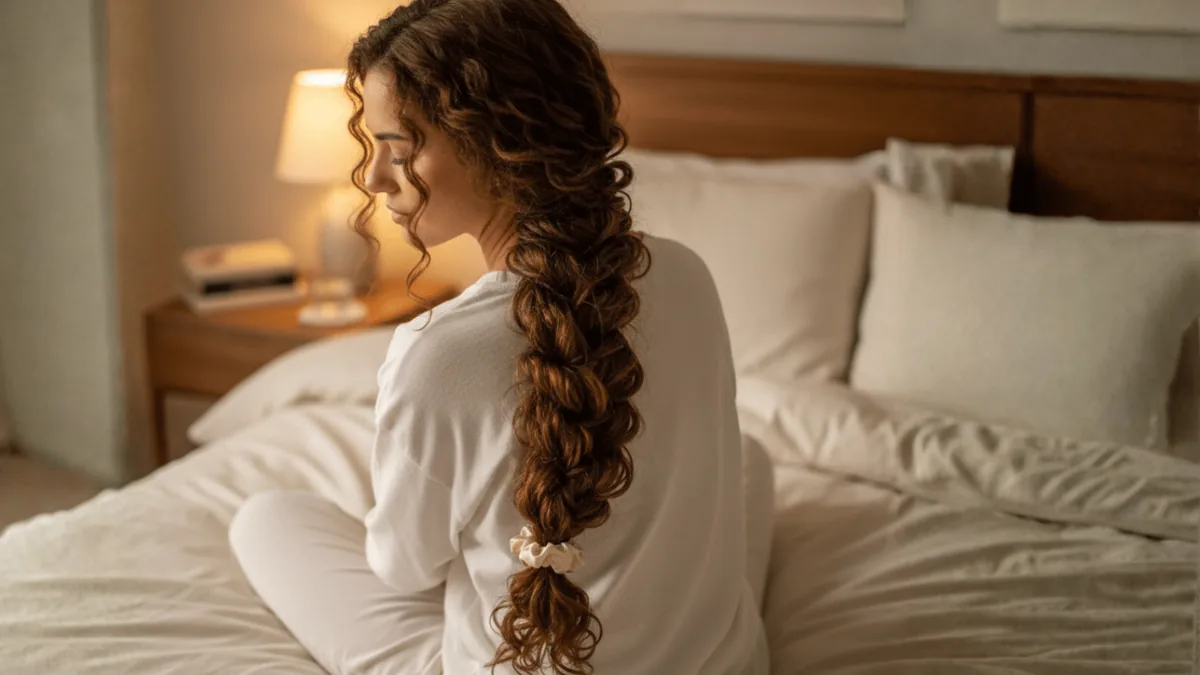
An overnight wave is not magic; it is memory. Hair is held in shape by hydrogen bonds inside each strand, and those bonds reset when hair dries in a new position. When you braid or twist damp hair and let it dry slowly overnight, the bonds reform around the curve of the braid, so the wave holds when you undo it in the morning. That is why damp hair waves far better than bone-dry hair, and why a braid taken down while still damp falls flat within an hour. The eight hours of sleep are doing real work: slow, even drying in a fixed shape, which is gentler and longer-lasting than ten minutes with a hot iron.
The shape of the wave follows the shape of the set. A single loose braid makes one wide, soft S-wave; two braids make more defined, narrower waves; a rope twist makes a spiral; a bun makes volume at the roots with bend at the ends. Tighter sets make tighter waves, but only up to a point — a braid pulled drum-tight creates kinks at the elastic and a sharp bend at the parting, not better curls. The sweet spot is a firm, even set with no single point under extreme tension. Think of it as persuading your hair, not forcing it: a shape it can relax into for eight hours is a shape it will remember.
Silk vs Cotton: What Your Pillowcase Does While You Sleep

Your pillowcase is part of your hairstyle, whether you planned it or not. Cotton is absorbent and rough at a microscopic level: it drinks moisture out of your hair overnight and creates friction every time you turn your head, which roughs up the cuticle and produces the frizz and flattened patches that ruin a morning take-down. Silk and satin are smooth and far less absorbent, so hair slides instead of snagging, keeps more of its moisture, and holds the shape of a braid or twist far better through the night. The difference is most obvious on curly and fine hair, where a single night on cotton can undo a whole evening of careful setting.
You do not need a full silk bedding set to get most of the benefit. A silk or satin pillowcase costs far less than a silk sheet set and does the same job where it matters, at your head. A silk bonnet or a silk scarf wrap is the next step up, because it protects the hair from every angle rather than just the side it rests on. If silk is out of budget, a satin pillowcase is a close second at a fraction of the price, and even wrapping your set in a satin scarf beats sleeping on bare cotton. Whichever you choose, wash it regularly — a greasy pillowcase transfers oil back into clean hair and flattens the roots by morning.
Damp, Dry, or Second-Day? Starting Hair for Overnight Styles
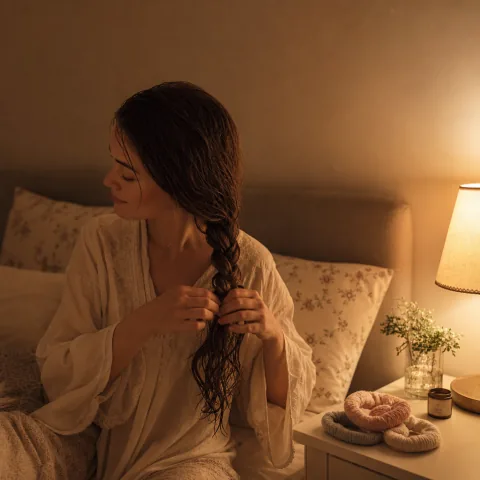
The single most important decision in overnight styling is how wet your hair is when you set it. Damp hair — about 70 to 80 percent dry, cool to the touch but not dripping — is the gold standard for most methods, because it has enough moisture to reset its shape as it dries, but not so much that it is still wet at dawn. Hair that is soaking wet when you braid it will still be damp inside the braid in the morning, and the wave will drop out before lunch. Hair that is completely dry will hold a braid’s shape only weakly, and the result will be more bend than wave, fading within an hour or two.
Second-day hair is the exception, and a useful one. Hair that has a little natural oil and product in it already grips better, holds a set longer, and rarely needs washing before bed. On second-day hair, a light mist of water or a leave-in spray is enough to wake the hair up for setting — you do not need to re-wet it fully. The practical routine is simple: wash in the early evening, let your hair air-dry most of the way while you wind down, then set it when it reaches that cool, slightly damp stage. If your hair is still wet at bedtime, a few minutes with a diffuser on cool, or simply waiting twenty minutes, is worth it — a set that dries fully overnight is a set that lasts all day.
Braid Tension: Tight Enough to Hold, Loose Enough to Sleep On
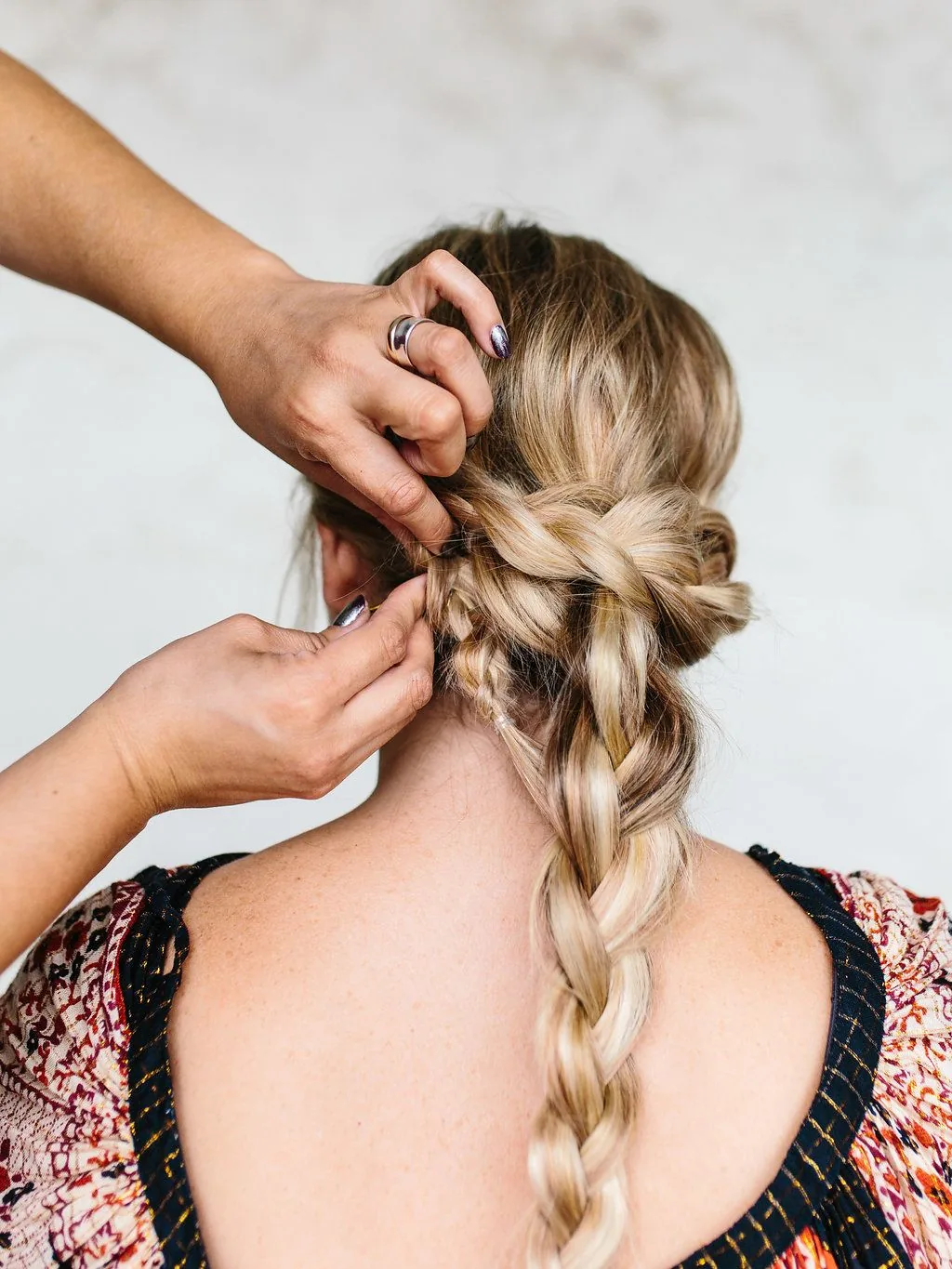
Braid tension is where overnight styling succeeds or fails, and the right tension is lower than most people think. A braid that is comfortable to sleep on will still set a beautiful wave, because eight hours is a long time for hair to learn a shape — it does not need to be pulled hard to remember it. A braid that hurts, pulls at the hairline, or leaves dents and kinks at the scalp is too tight, and it will also be too uncomfortable to sleep through, which defeats the whole point. The test is simple: once the braid is in, press your head back against a pillow. If you can feel the braid pressing into your scalp, loosen it.
There is one place where tension does matter: the ends. A braid that is loose at the ends will unravel overnight and leave straight, wispy tips under wavy lengths — the classic overnight fail. Secure the ends firmly with a snag-free elastic, and fold the last inch up and tuck it into the elastic if the ends are very fine. Keep the tension even along the whole braid rather than tight at the top and loose at the bottom, because uneven tension makes uneven waves. And vary the anchor point from night to night: braiding from the same spot every night puts repeated stress on the same follicles, which over months can thin the hairline.
Rollers, Rods, and Socks: Choosing Your Overnight Tool
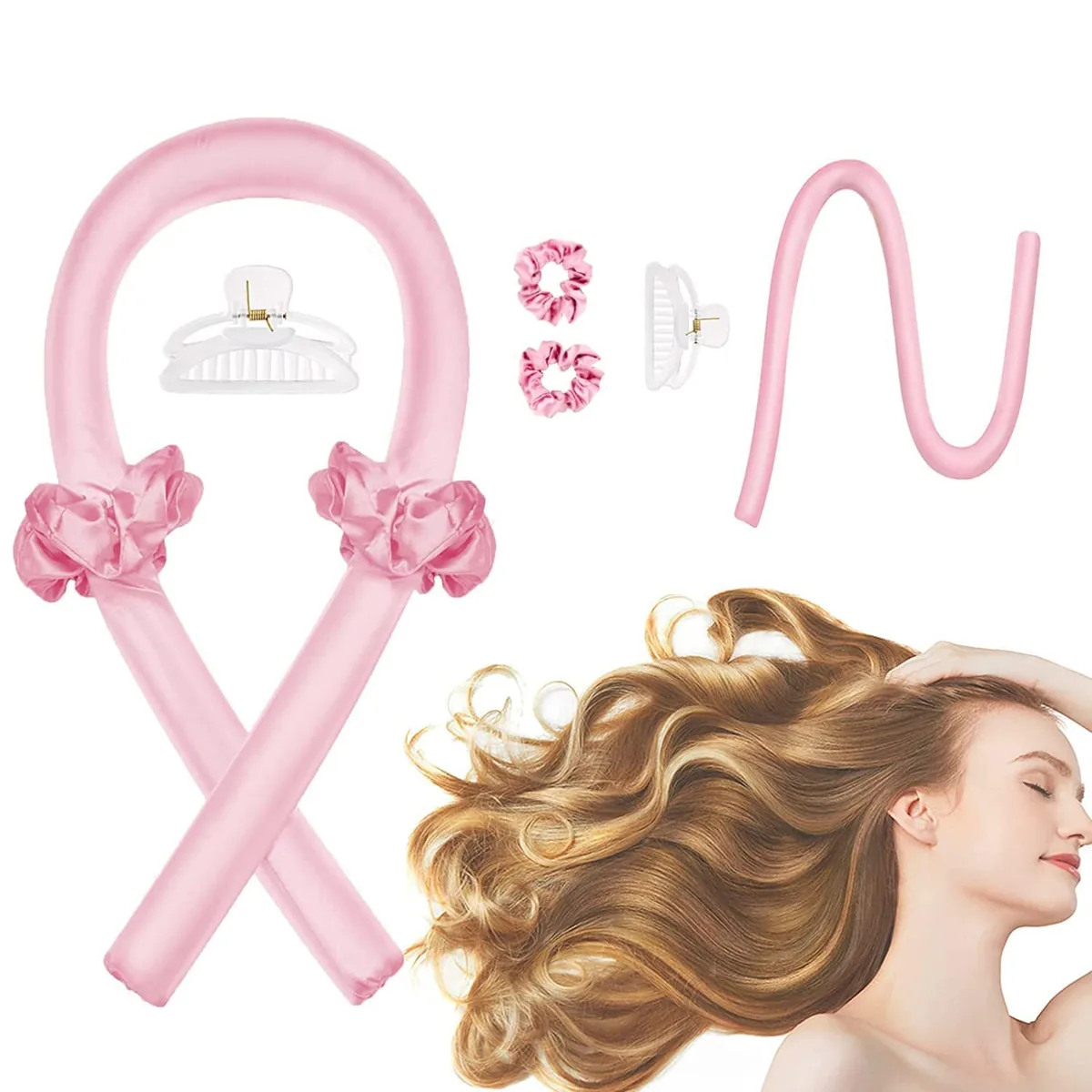
Overnight tools fall into three families, and each makes a different curl. Rollers — foam, flexi, or velcro — wrap hair around a cylinder, which gives a classic rounded curl with volume at the root; they are the most traditional choice and the most predictable. Rods and ribbons — the silk heatless rod, a robe belt, a pair of leggings — wrap hair along a long flexible core, which gives long, loose, flowing waves; they are the easiest to sleep on because they lie flat against the head. Socks, rags, and scarves wrap hair around a soft fabric strip, which gives a soft, vintage-style curl with almost no bulk; they are the cheapest option and the gentlest on the scalp.
Comfort decides which tool you will actually use twice. Foam rollers are soft but bulky, and side sleepers often wake up with sore spots where a roller pressed in. Flexi rods are slimmer and bend to the shape of your head, which makes them the most sleepable roller. A silk rod or a robe belt lies almost flat and is the easiest option for side sleepers. Socks and rags are the softest of all — essentially nothing hard against the head — which is why they are the best first tool for anyone who has never slept in a set before. Start with the softest tool that makes the wave you want, and only move to a firmer tool if the waves are too loose.
The Morning Take-Down: How to Unravel Without the Frizz

The take-down matters as much as the set, and rushing it is the fastest way to turn overnight waves into frizz. Undo the style slowly, in reverse order: remove elastics and pins first, then unroll or unbraid one section at a time, letting each piece fall naturally instead of pulling it straight. Never brush a fresh take-down — a brush breaks the wave pattern into a cloud of frizz. Instead, separate the waves gently with your fingers, shaking each section out from underneath so the curls fall into place. A drop of hair oil rubbed between your palms and smoothed over the surface tames flyaways without weighing the waves down.
- Wait for fully dry hair: if any section still feels cool or damp, give it ten more minutes before separating — damp waves collapse the moment they are touched.
- Finger-comb only: a wide-tooth comb is the most you should use, and only if the waves are too tight; a brush is for restyling, not take-down.
- Finish with a light hold: a mist of flexible-hold spray or a little texturising spray keeps the waves alive past midday without stiffness.
- Do not re-wet: water resets the shape your hair just spent eight hours learning, so fix problems with oil and fingers, not a spray bottle.
Which Overnight Method Suits Your Hair Type
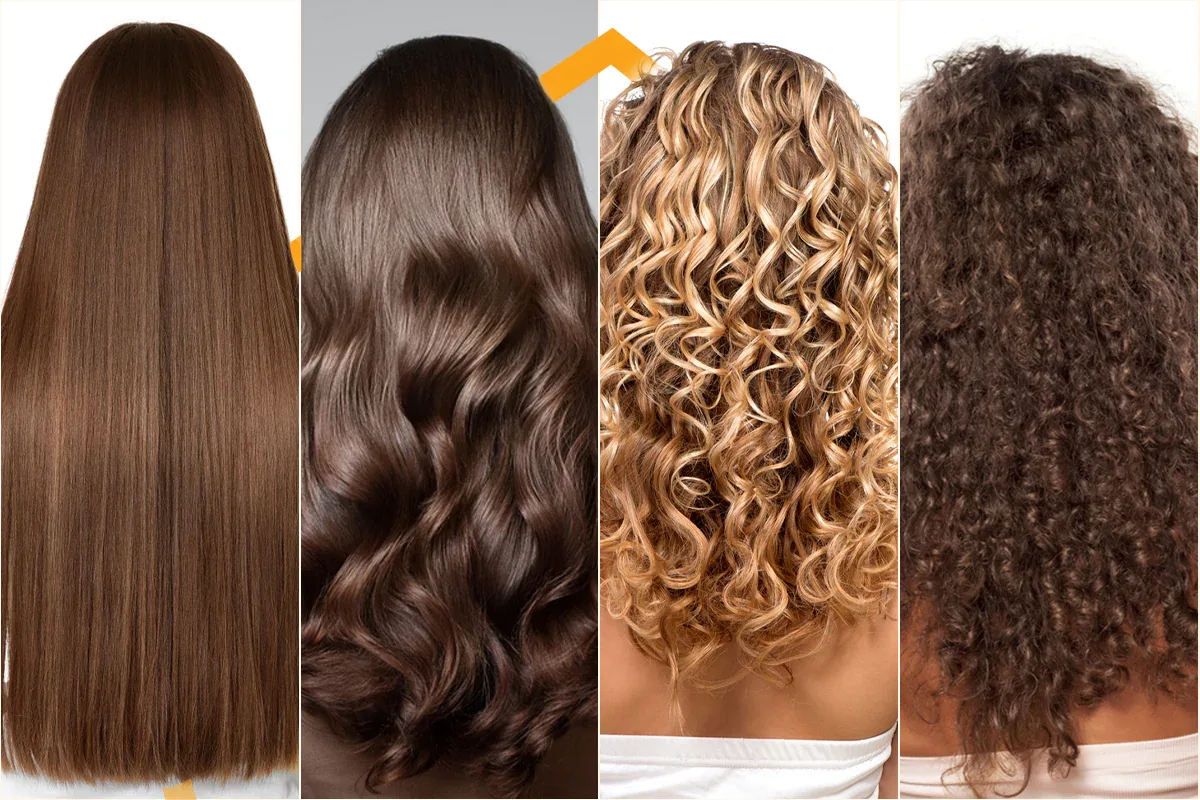
Fine hair and thick hair want opposite things overnight. Fine hair needs grip and structure: it slips out of loose sets, so braids, twists and rods wrapped firmly, a little mousse or texturising spray before setting, and a silk pillowcase to stop the set sliding apart. Thick hair needs sectioning: one big braid will be damp inside at dawn, so split it into two or four smaller sets that dry fully, and use stronger elastics that can hold the weight. Straight hair needs dampness and time — it resists shape more than any other type, so set it damper than you think, use smaller sections, and expect the first attempt to be looser than you hoped; it improves as your hair learns the pattern.
Curly and coily hair has a different goal overnight: protection, not creation. The curls already exist, so the overnight job is to keep them intact — a pineapple pony, a silk bonnet, flat twists, or bantu knots that preserve the pattern instead of fighting it. Wavy hair is the easiest overnight candidate of all, since a braid simply amplifies what is already there, and even a loose single braid produces a visible result. Short hair is not excluded, but it needs smaller tools: braided pigtails, pin curls, and rag curls work where a robe belt cannot, because there is not enough length to wrap. Match the method to the hair, not the trend, and the results follow.
Overnight Mistakes That Leave You With Kinks, Not Curls

Most overnight disasters come from the same few errors, and all of them are avoidable. Setting soaking-wet hair is the first: it cannot dry inside a braid overnight, so you wake up to damp hair that drops flat by breakfast. Braiding too tightly is the second: it leaves sharp kinks at the parting and a headache, not better waves. Sleeping on a cotton pillowcase without any protection is the third: friction roughs up the cuticle and frizzes the surface of an otherwise perfect set. And taking the style down with a brush is the fourth — the fastest way to destroy eight hours of work in thirty seconds.
Two subtler mistakes catch people who have the basics right. The first is using the wrong elastic: thin rubber bands and metal-jointed elastics leave dents and snap hairs, while snag-free fabric elastics and silk scrunchies leave no mark at all. The second is setting the hair at the wrong time: setting it an hour before bed gives it time to start drying in shape before you lie on it, while setting it and immediately flopping onto the pillow crushes one side flat. Set your hair, let it settle for twenty minutes, then sleep. Your morning self will notice the difference before you even reach the mirror.
1. The Classic Overnight Braid
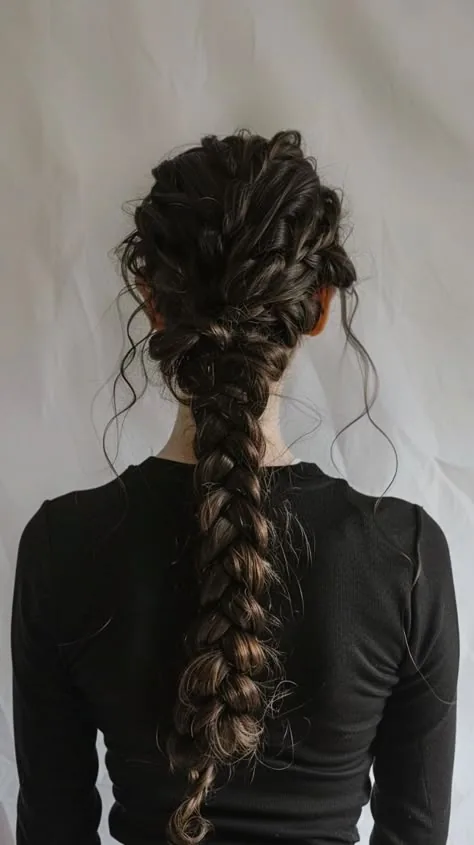
The classic overnight braid is the simplest heatless style ever invented: one three-strand braid, worn to bed, undone in the morning. Gather the hair low at the nape, braid loosely to the ends, and secure with a snag-free elastic. Overnight, the braid teaches the hair a single wide, soft wave that looks effortless and natural, and because the braid lies flat down your back, it is the most comfortable overnight style for back sleepers. It works on almost any length past the shoulders and any texture, and it needs no tools, no products and no skill beyond a basic braid.
Time to set: 2–3 minutes. Best for: beginners, back sleepers, medium to long hair, wavy and straight hair. Morning result: one soft, beachy S-wave with straight ends. Watch out for: braiding too high — a braid started at the crown creates a kink at the parting, while a low nape braid keeps the roots smooth and the wave starting where it looks natural.
2. Double French Braids for Morning Waves
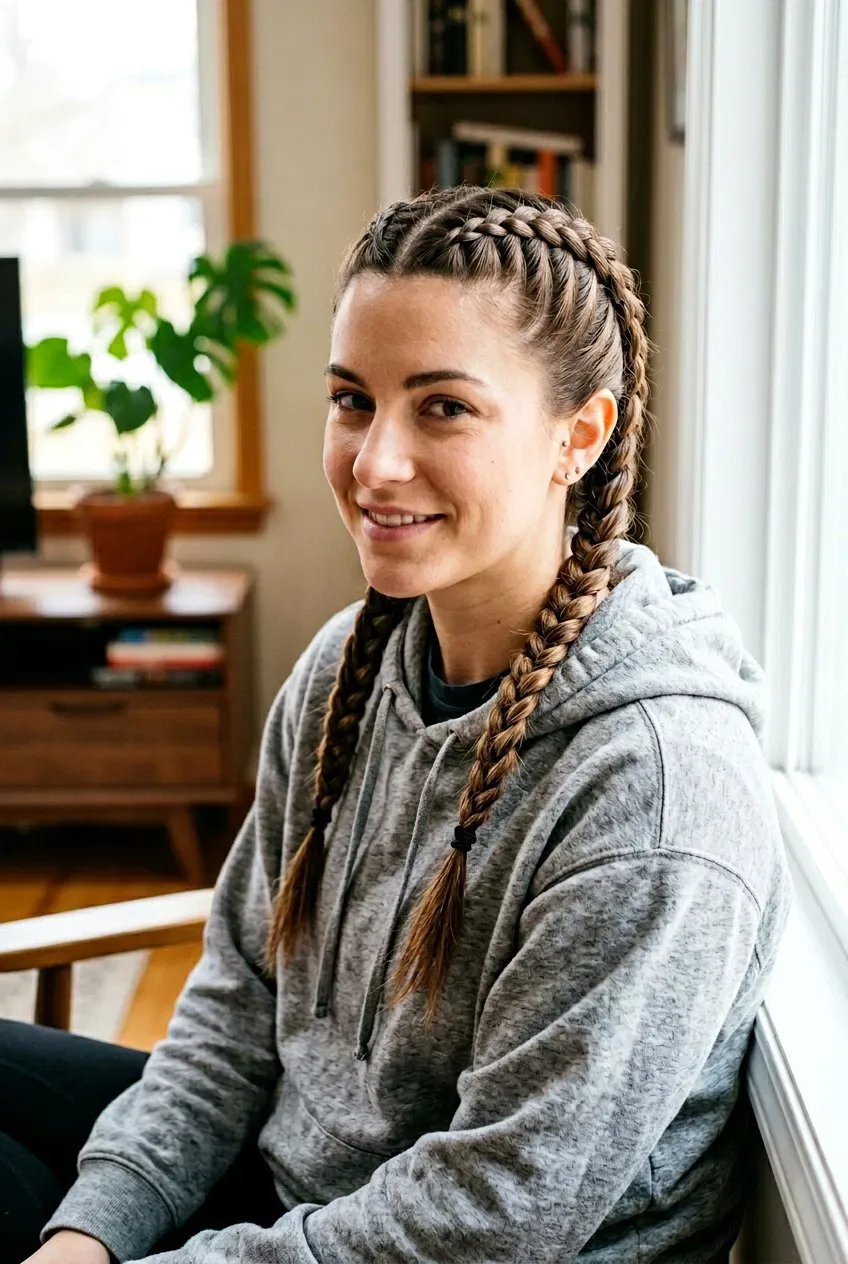
Two French braids worn overnight give you the most defined braid waves of any method here, because the braids start at the hairline and shape the hair from root to tip. Part the hair down the middle, French-braid each side from the front to the nape, and secure both ends. The result in the morning is even, flowing waves with volume at the roots and movement through the lengths — the classic “I woke up like this” look that actually took five minutes the night before. The two braids also split the hair’s weight in half, which makes them more comfortable to sleep on than one heavy braid.
- Pros: defined waves from root to tip; even on both sides; comfortable to sleep on.
- Cons: needs basic French-braiding skill; takes longer to set than a single braid.
- Morning tip: separate the waves with your fingers and a drop of oil, never a brush, to keep the definition.
3. Dutch Braid Waves
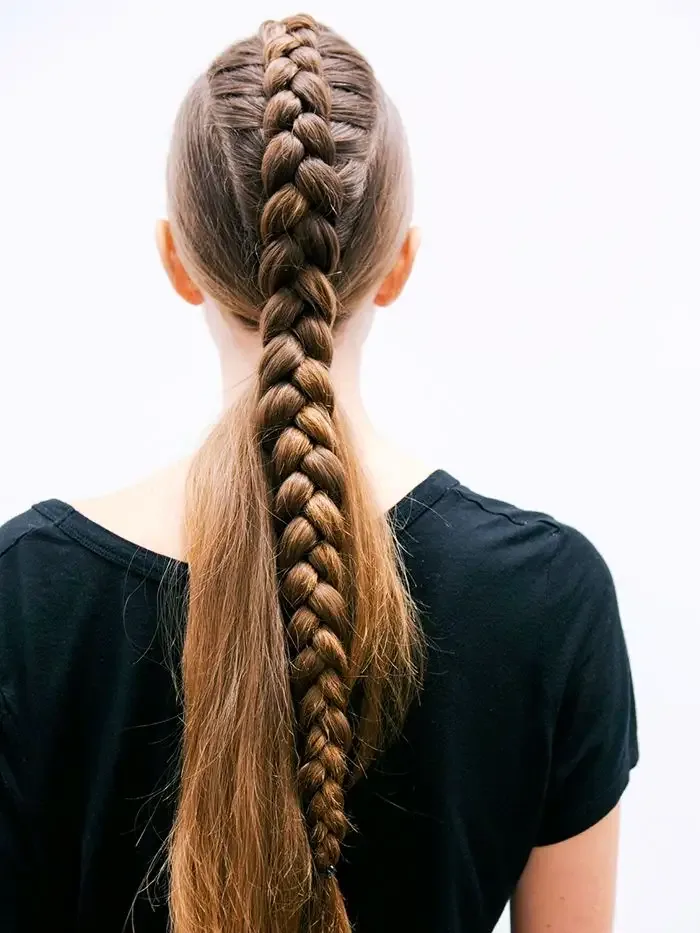
A Dutch braid — the inside-out braid, with sections passing under instead of over — makes a slightly tighter, more sculpted wave than a French braid, because the raised plait holds the hair in a firmer curve all night. Braid from the crown to the nape in the Dutch style, secure the ends, and sleep on it. In the morning the waves have more bounce and definition, with a little extra volume at the roots where the raised braid lifted the hair. It suits anyone who finds French-braid waves too soft, and it is particularly good on fine hair, where the underhand technique creates the illusion of thickness.
Time to set: 5–7 minutes. Best for: fine to medium hair, anyone who wants more defined waves, wavy hair that needs shaping. Watch out for: the raised braid adds a little height at the back of the head, so side sleepers should keep the braid low and loose, or switch to two smaller Dutch braids that lie flatter.
4. The Fishtail Braid Overnight
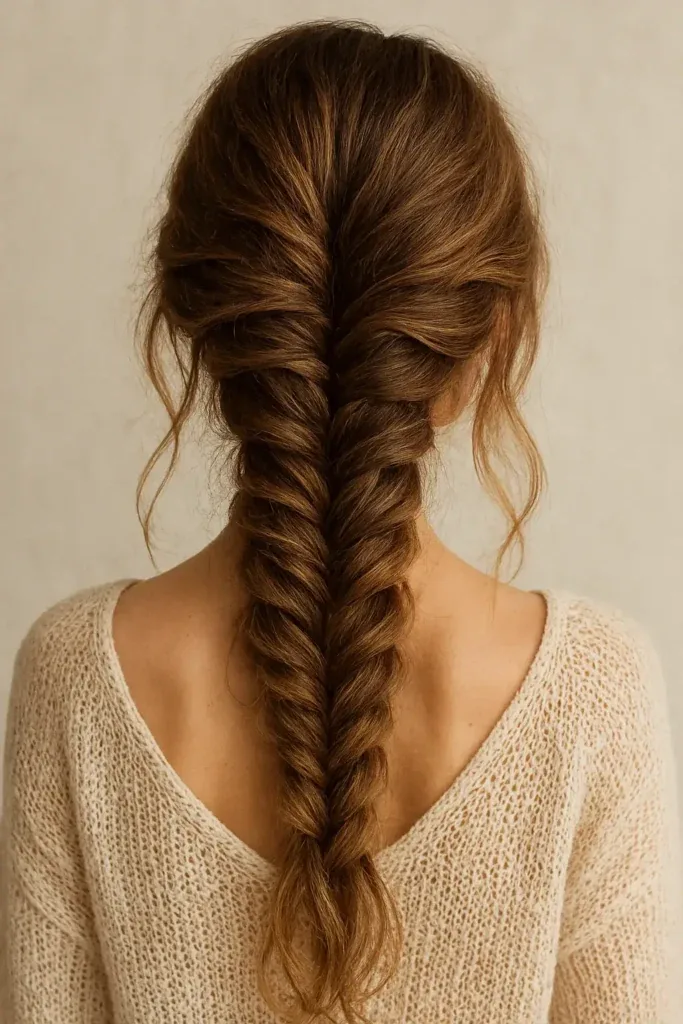
The fishtail braid, built from two sections with small pieces crossed over, creates a dense, flat plait that sets a finer, more textured wave than a three-strand braid. Start with a low ponytail to make the fishtail easier to build on your own head, then braid to the ends and secure. The flat profile lies comfortably against a pillow, and the many small crossings shape the hair into a crimped, mermaid-like texture in the morning rather than one smooth wave. It takes a little longer to build, but the result is the most distinctive braid wave in this guide — intricate, textured, and unmistakably deliberate.
How to set it: low ponytail first, then fishtail to the ends, secure firmly. Best for: long hair, silky hair that slips out of ordinary braids, anyone who wants a textured rather than smooth wave. Skip it if: you are short on time — a classic braid is faster and nearly as effective for a first overnight attempt.
5. Rope Twist Braids
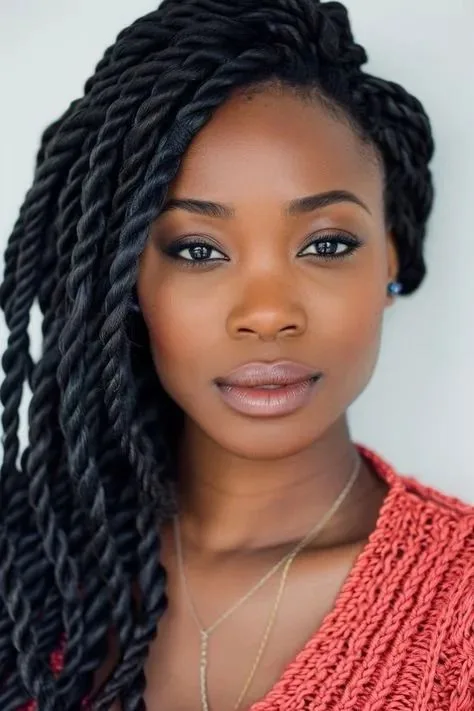
Rope twists are the easiest overnight set of all: split a section into two strands, twist each strand in the same direction, then wind them around each other in the opposite direction and secure. The twist holds itself together with almost no skill, and overnight it sets a springy spiral wave that is looser and more natural than a braid wave. Two rope twists — one on each side — are the fastest way to wake up with beachy texture, and because the twists are round rather than flat, they press less into the scalp and are very comfortable to sleep on. They are also the best overnight option for layered hair, since the twisting motion catches short layers that slip out of braids.
- Pros: no braiding skill needed; sets a springy spiral wave; comfortable to sleep on; catches short layers.
- Cons: the wave is looser than a braid wave and fades faster on straight hair.
- Morning tip: a little texturising spray brings the spiral back to life if it has softened by midday.
6. The Milkmaid Braid Crown
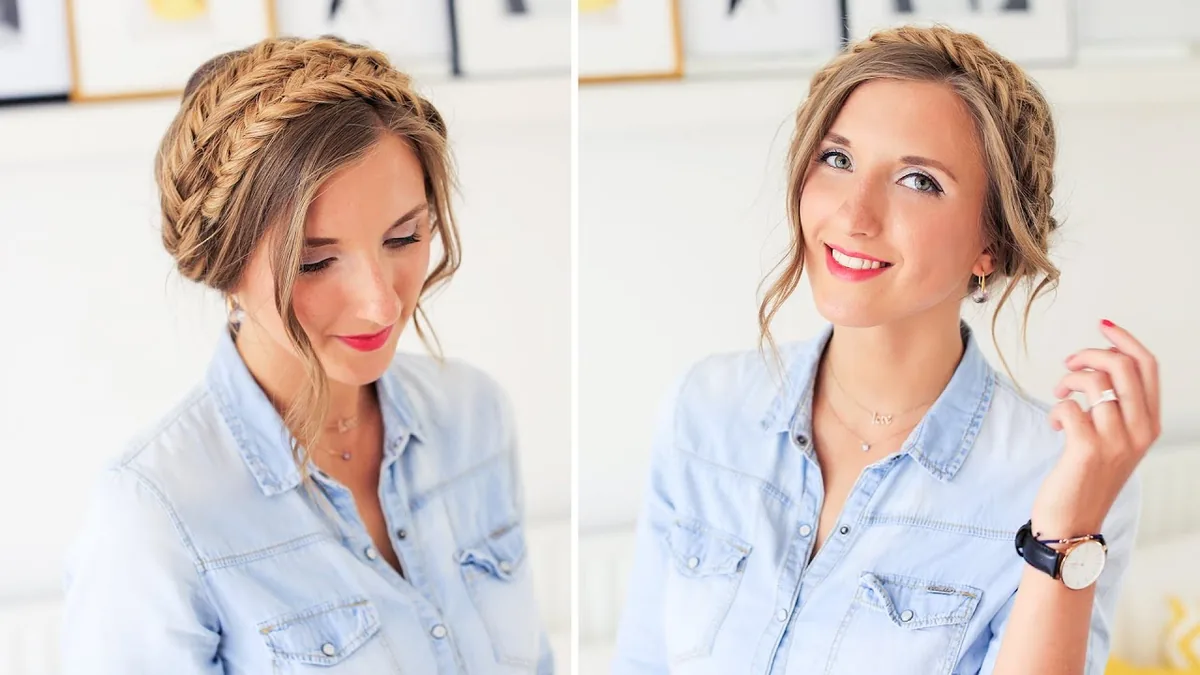
The milkmaid braid does two jobs in one night: you sleep in a beautiful crown braid, and you wake up to soft, face-framing waves. Braid two low pigtail braids, bring each one up and across the top of the head, and pin them in place. The braids sit flat against the skull, so there is nothing bulky to sleep on, and the hair is fully contained, which protects it from friction all night. In the morning, take the pins out and undo the braids for loose waves that start high at the crown — a more voluminous result than a low braid, with a pretty halo of texture around the face.
Time to set: 6–8 minutes. Best for: long hair, anyone who wants root volume from an overnight set, special mornings. Watch out for: pinning through the braid itself, not just around it, so the crown cannot shift while you sleep; and keep the pins flat, with no sharp ends pressing into the scalp.
7. The Halo Braid Overnight
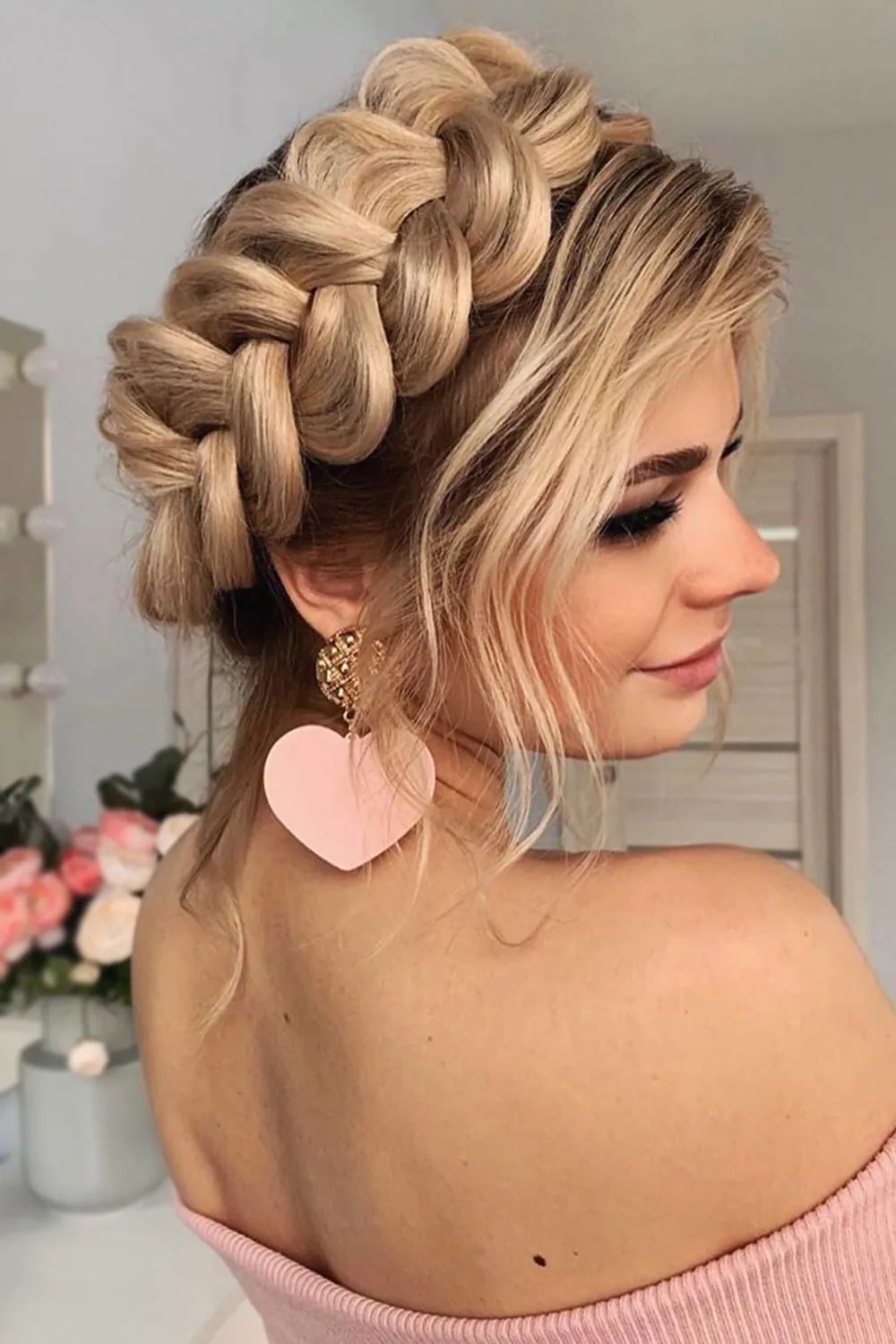
A halo braid circles the whole head, and as an overnight style it shapes the hair from every direction at once. Braid around the hairline, adding sections as you go, and pin the tail underneath where the braid began. The continuous circle means no part of the hair escapes the set, so the morning waves are even all over, including the front pieces that a low braid never reaches. It is also one of the most secure overnight styles: the braid is anchored to the head at every point, so it cannot slide or unravel while you turn in your sleep.
Time to set: 8–10 minutes once practised. Best for: medium to long hair, even waves all over, sleepers who toss and turn. Skip it if: you are still learning to braid — the milkmaid crown above gives a similar result with far less skill, and the double French braids give the same even waves with an easier technique.
8. Sock Bun Curls
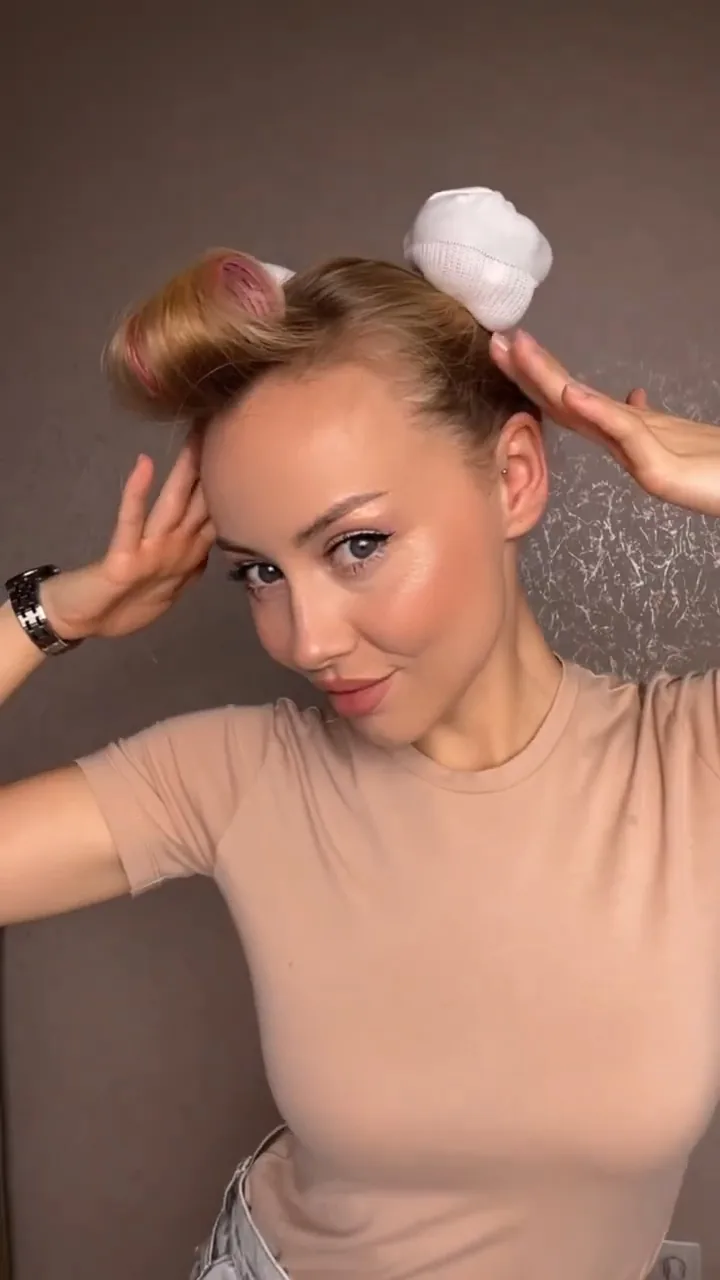
Sock curls are the original heatless method, older than any viral trend: wrap damp hair around a rolled sock, tie it off, and sleep on it. Pull the hair into a high ponytail, place the sock at the ends, and roll it up toward the head, spreading the hair evenly as you go, then tie the sock’s ends together. Overnight the hair dries in a smooth spiral around the sock, and the morning result is bouncy, rounded curls with volume at the roots. A foam donut works the same way and is easier to find, but a real sock is softer and free — and the curls are genuinely beautiful.
Time to set: 5 minutes. Best for: medium to long hair, bouncy curls with root volume, anyone who wants a tool-free method. Watch out for: rolling too tightly, which makes the curls too tight and hard to separate in the morning; and use a clean sock, since the fabric sits against your hair all night.
9. Heatless Curling Rod Curls
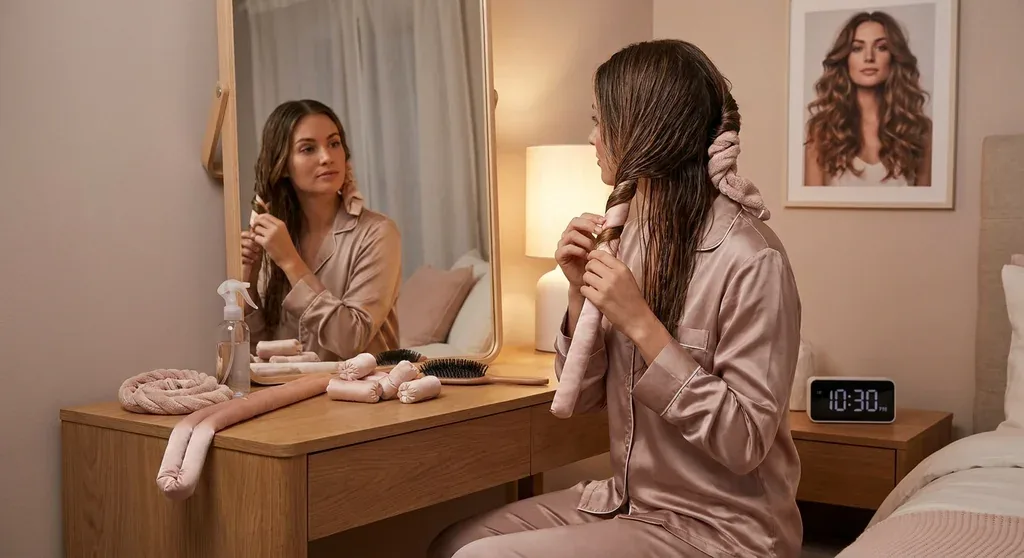
The silk heatless curling rod is the method that made overnight styling go viral, and it earned the attention. Place the soft rod across the top of your head like a headband, wrap damp sections of hair around it from front to back, and secure the ends with scrunchies. The rod lies flat and soft, so it is genuinely comfortable to sleep on — the easiest overnight tool for side sleepers — and in the morning you unwrap long, flowing, salon-looking waves that hold all day. It works best on medium to long hair with enough length to wrap, and the waves are the most polished of any overnight method, closer to a blowout than a braid wave.
- Pros: most polished overnight waves; very comfortable to sleep on; no heat, no skill needed.
- Cons: needs hair long enough to wrap; the rod can slide if it is not secured at the ends.
- Morning tip: unwrap from the bottom up, finger-comb once, and the waves fall into place by themselves.
10. Flexi Rod Curls
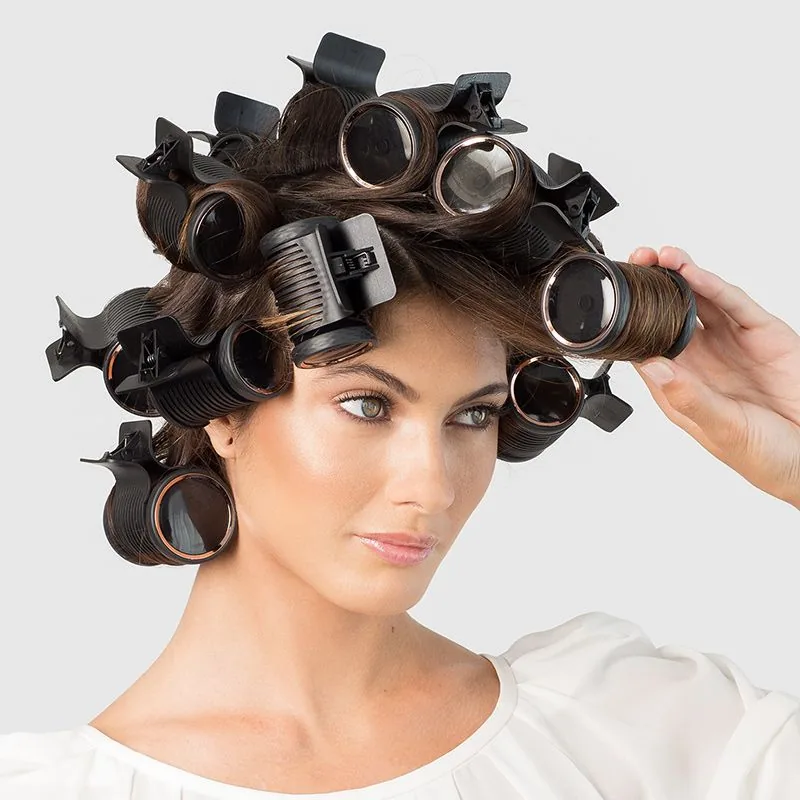
Flexi rods are long, bendable foam cylinders that you wrap hair around and then bend into a loop to secure — no pins, no clips, no elastic needed. Wrap each damp section around a rod, bend the ends to lock it, and sleep. The rods are soft enough to sleep on and slim enough that side sleepers can manage them, and the curl size is entirely yours to choose: thin rods make tight curls, thick rods make loose waves. In the morning, unbend and unroll each rod for defined, bouncy curls with real staying power, especially on hair that usually drops its curl by noon.
Time to set: 10–15 minutes. Best for: defined curls, thick hair, anyone whose waves usually fall flat. Watch out for: wrapping the ends neatly around the rod — loose ends dry straight and stick out of the curl in the morning, so tuck them in before bending the rod closed.
11. The Foam Roller Set
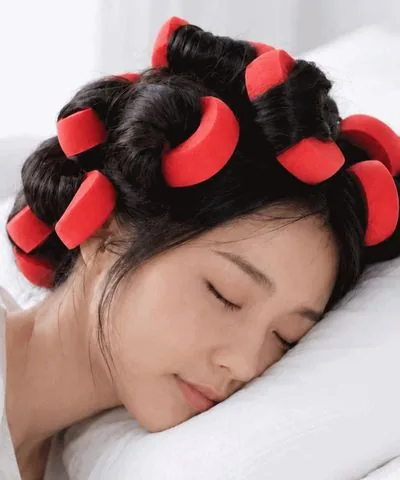
Foam rollers are the softest traditional roller, and the most forgiving overnight set for beginners. Roll damp sections up onto the foam cylinders and secure each one with its clip or by folding the foam. The soft foam is comfortable enough to sleep on for back sleepers, and the rollers give a classic, rounded curl with volume at the root — the old-Hollywood shape that never really goes out of style. Use larger rollers for loose waves and smaller ones for tighter curls, and roll the front sections away from the face so the morning curls frame it instead of falling into it.
Time to set: 10–15 minutes. Best for: classic rounded curls, root volume, beginners who want a predictable result. Watch out for: side sleeping, which can press the rollers into the scalp; if you sleep on your side, use fewer, larger rollers placed higher on the head, or switch to a flatter method like the heatless rod.
12. The Velcro Roller Overnight Set
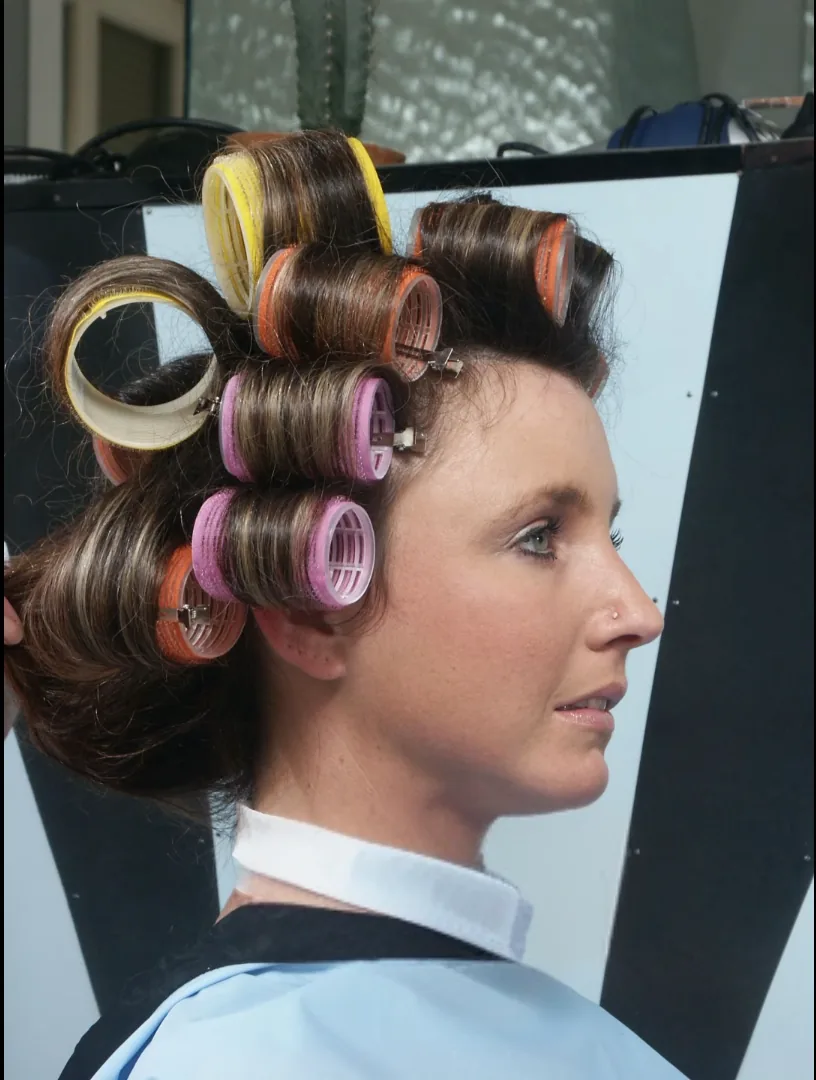
Velcro rollers grip the hair by themselves, with no clips or pins at all, which makes them the fastest roller set to put in. Roll damp sections up, press the roller against the head, and the velcro holds it — that is the whole technique. Overnight they give soft, bouncy volume with a gentle bend rather than a tight curl, which makes them ideal for anyone who wants movement and body rather than defined ringlets. They are best used with a silk bonnet or a scarf over the top, which stops the rollers shifting while you sleep and protects the hair from the velcro’s grip.
- Pros: fastest roller set; no pins or clips; great root volume and soft bend.
- Cons: the velcro can tangle in fine hair; not the best choice for tight curls.
- Morning tip: unroll slowly and downward, never yank, to avoid pulling hairs out with the velcro.
13. Bantu Knots for Defined Curls
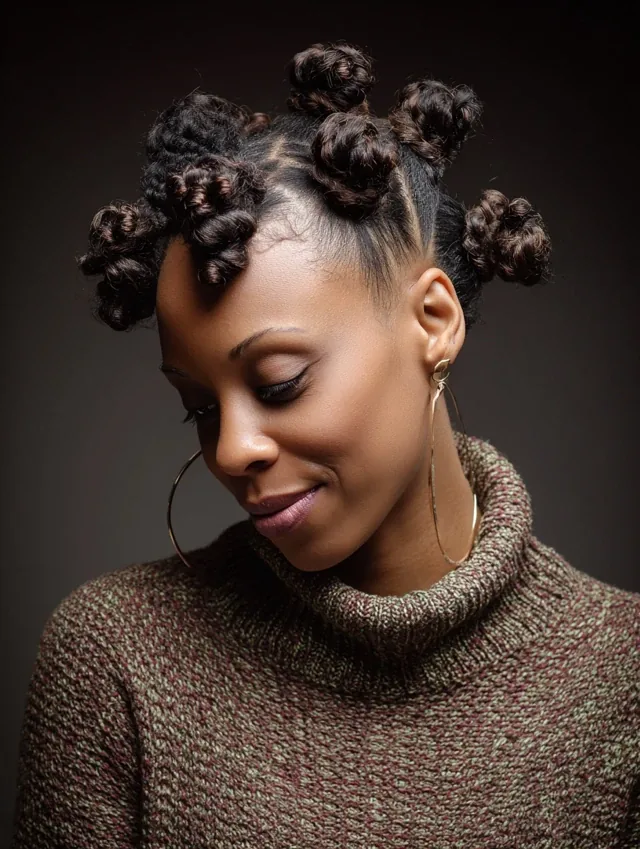
Bantu knots are small coiled buns twisted tight against the scalp, and they are one of the best overnight methods for curly and coily hair. Section the damp hair, twist each section into a tight coil, and wrap it into a small knot at the scalp, securing with a pin or a small elastic. Overnight each knot sets a tight, springy curl, and in the morning the take-down reveals a head of defined, uniform curls with incredible volume — the classic bantu knot-out. The knots are flat enough to sleep on comfortably, and the method protects the hair while it sets, which is why it has been a staple of natural hair care for generations.
Time to set: 15–20 minutes. Best for: curly, coily and natural hair, defined curls, maximum volume. Watch out for: twisting too tightly at the scalp, which causes tension and discomfort; the knots should feel firm, never painful, and smaller sections make tighter curls.
14. The Pineapple Pony for Curly Hair
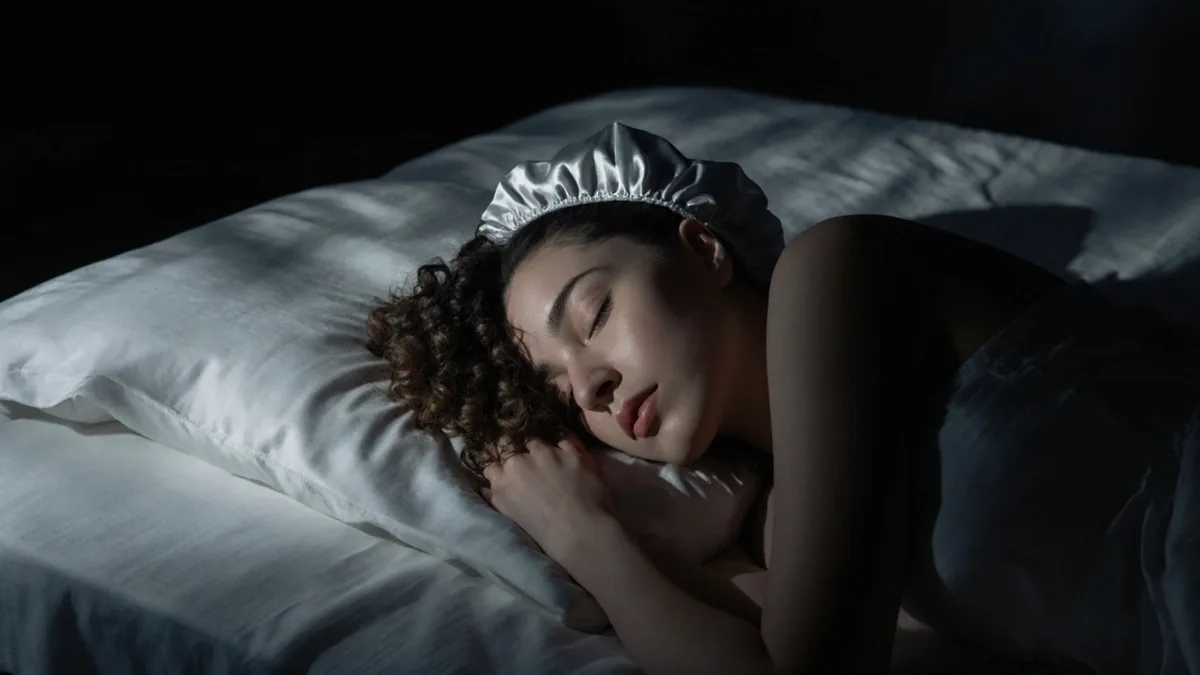
The pineapple is not a styling method but a preservation method, and for curly hair it is the most important overnight style in this guide. Gather the curls loosely at the very top of the head with a silk scrunchie, letting them fall forward like a pineapple top. The loose, high gather keeps the curls from being crushed flat against the pillow, preserves the curl pattern, and stops the frizz that comes from eight hours of friction. In the morning, take the scrunchie out, shake the curls gently, and the pattern is still there — often better than the night before, since the curls have had hours to settle.
Time to set: 1 minute. Best for: curly and wavy hair, curl-pattern preservation, second-day curls. Watch out for: ordinary elastics, which snag and break curls; use a silk scrunchie, a satin band or a spiral tie, and keep the gather loose — the elastic should hold the hair, not compress it.
15. The Two-Strand Twist-Out
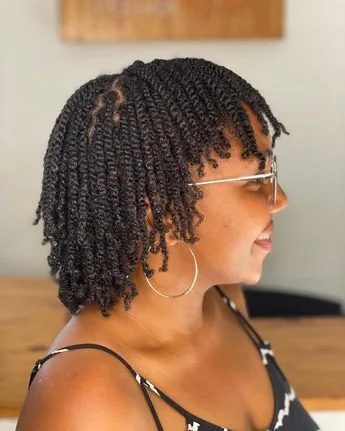
The twist-out is the natural-hair classic: two-strand twists worn overnight, undone in the morning for defined, stretched curls. Apply a leave-in conditioner or a light styling cream to damp hair, split it into sections, and twist each section from root to tip. The twists stretch the curl pattern while they set it, so the morning result is longer, looser, more defined curls with far less shrinkage than a wash-and-go. Larger twists make looser waves; smaller twists make tighter curls. It is a gentle, heat-free method that also protects the hair while you sleep, since every strand is contained in a twist.
- Pros: defined, stretched curls; protects hair overnight; works on all curl patterns.
- Cons: takes 15–25 minutes to install; needs a styling product for hold.
- Morning tip: separate each twist with oiled fingers, never a comb, to keep the definition and avoid frizz.
16. Flat Twists Overnight
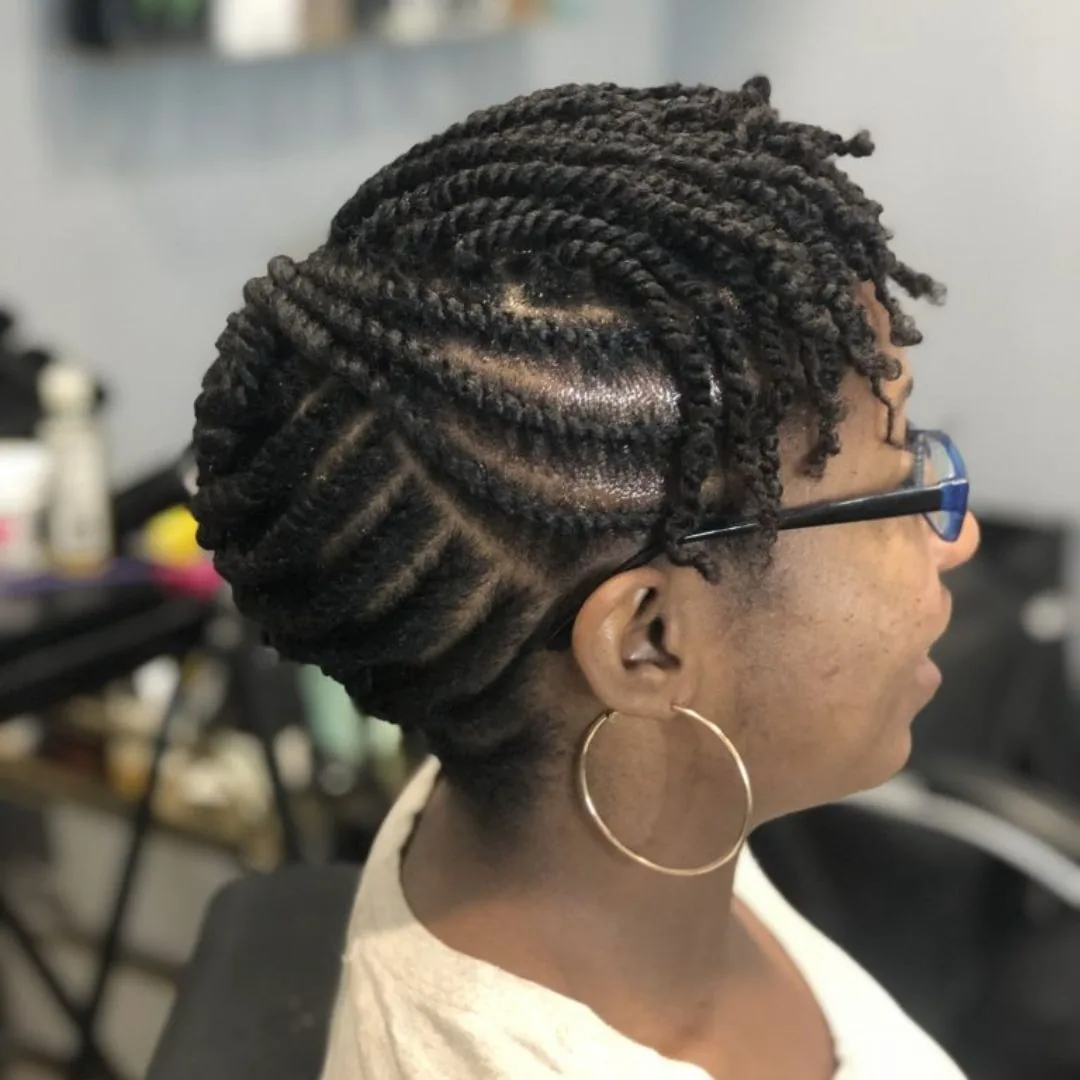
Flat twists are the two-strand equivalent of cornrows: sections twisted flat against the scalp, following the curve of the head. They lie completely flat, which makes them the most comfortable overnight set for side sleepers, and they shape the hair from the root, so the morning waves have volume and direction from the scalp outward. Four to six flat twists across the head is enough for a full overnight set; more twists give a more intricate wave pattern but take longer to install. In the morning, undo them for soft, defined waves with a natural part and movement that a braid cannot quite match.
Time to set: 10–15 minutes. Best for: natural and textured hair, side sleepers, root volume. Watch out for: twisting too tightly at the hairline, which causes tension; keep the twists firm but comfortable, and apply a little edge control at the hairline for a neat finish.
17. The Silk Scarf Wrap
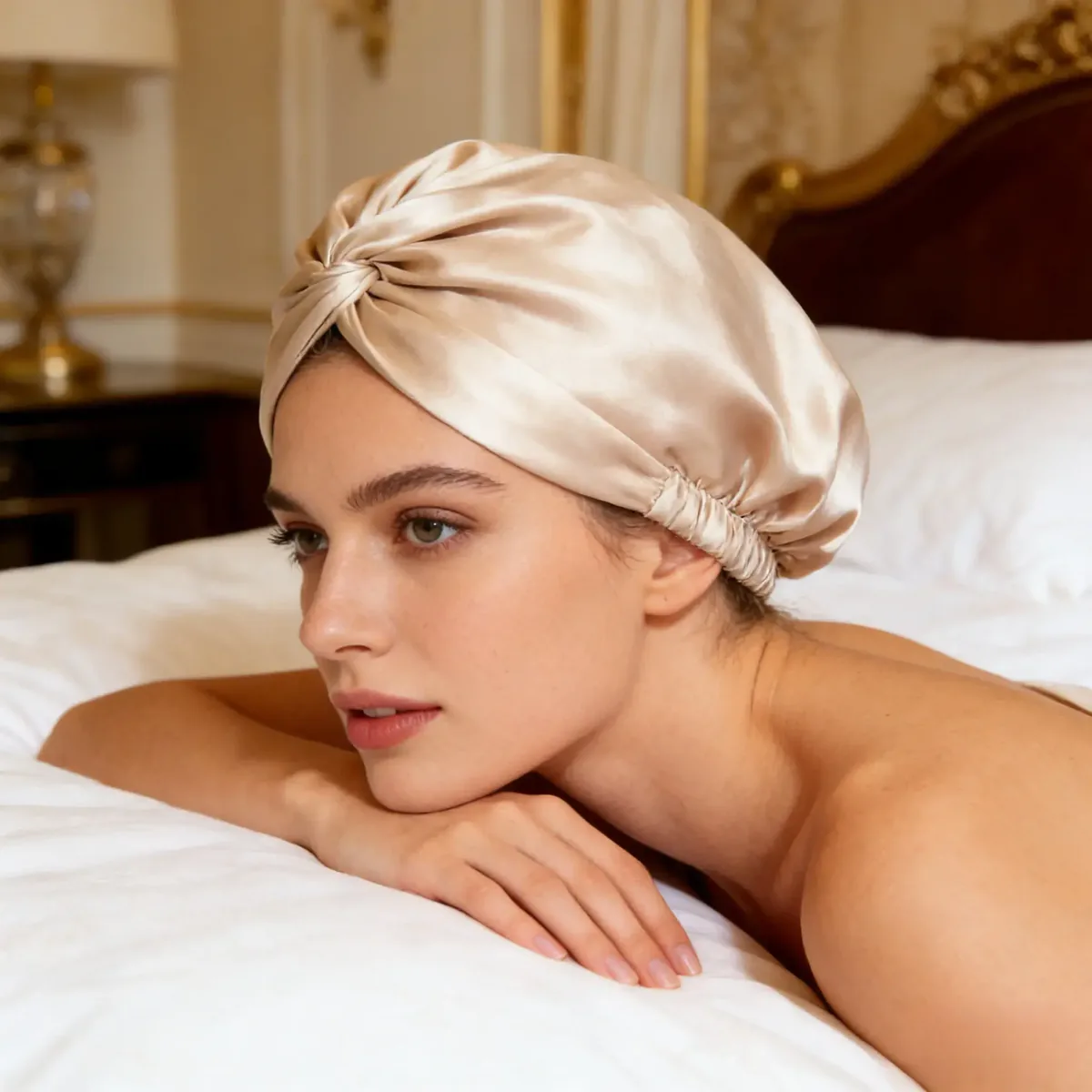
A silk scarf wrap is the simplest overnight protection there is: fold a square silk scarf into a triangle, place it over the hair, and tie it at the nape or the forehead. It covers the hair from every angle, stops friction against the pillow, locks in moisture, and keeps any set underneath — a braid, twists, or rollers — exactly where you left it. It also keeps the edges and the hairline smooth, which is why it is a staple for natural hair and for anyone growing out a fringe. A scarf is cheaper than a bonnet, easier to wash, and doubles as a daytime accessory, so it earns its place in the drawer twice over.
Time to set: 1–2 minutes. Best for: protecting any overnight set, natural hair, edge control, frizz prevention. Watch out for: tying too tightly, which leaves a line across the forehead and pulls at the hairline; the scarf should sit snugly, not strangle, and a knot at the nape is more comfortable to sleep on than a knot at the forehead.
18. The Silk Bonnet Routine
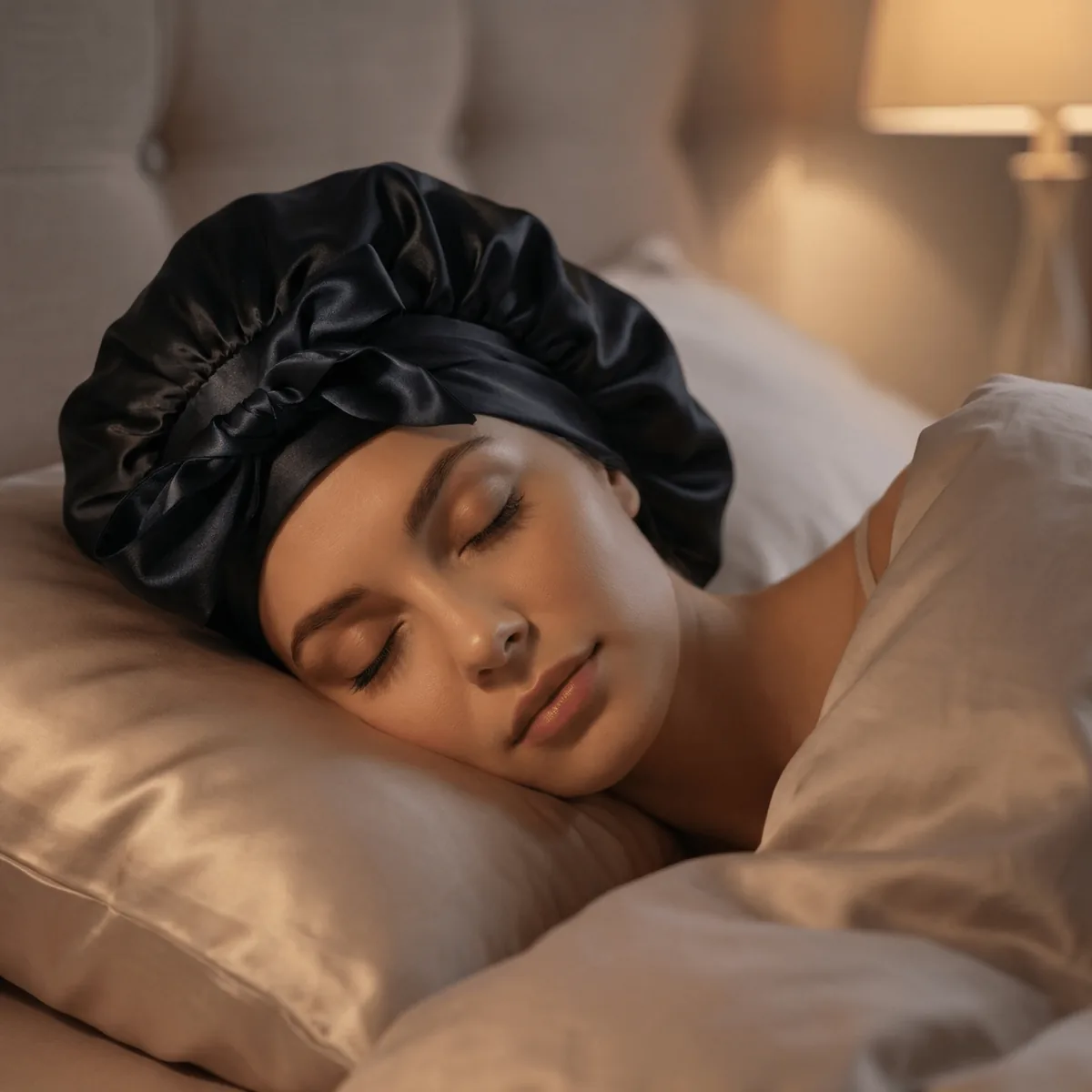
A silk bonnet is the overnight routine in its purest form: no set, no braid, no rollers — just hair, protected. Put your hair up loosely, slip the bonnet on, and let the silk do the work. Inside the bonnet, the hair is shielded from friction, moisture stays in, and the curl or wave pattern you went to bed with is the pattern you wake up with. It is the single most effective thing a curly-haired person can do overnight, and it is just as useful for straight hair on the nights between washes, when the goal is simply to keep the hair clean, smooth and tangle-free until morning.
- Pros: best frizz prevention of any method; preserves any style; zero effort to put on.
- Cons: it can slip off during the night; it does not create waves, only preserves them.
- Morning tip: if the bonnet slipped off, a quick refresh with a little water and leave-in on the flattened side is usually enough.
19. The Braided Bun Overnight
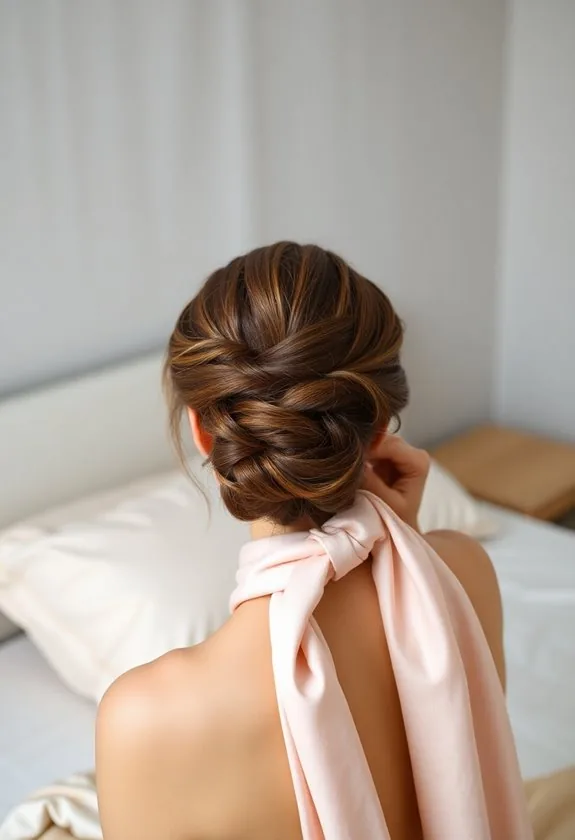
Braid the hair first, then coil the braid into a low bun, and you get two results from one night’s sleep: the braid sets a wave, and the bun sets volume at the roots. Gather into a low ponytail, braid to the ends, coil the braid flat against the head, and pin it. The braided bun is very comfortable to sleep on because it sits low and flat at the nape, and the braid’s structure stops the bun from rotating or loosening overnight. In the morning, unpin and unbraid for waves with more body and lift than a plain braid gives, plus a root volume that survives the whole day.
Time to set: 5–6 minutes. Best for: long and thick hair, root volume, twelve-hour staying power. Watch out for: pinning through the braid itself, not just around it, so the bun cannot shift; and use a silk scrunchie at the base, since a tight elastic under a bun leaves a dent that shows in the morning waves.
20. The Bubble Braid Overnight
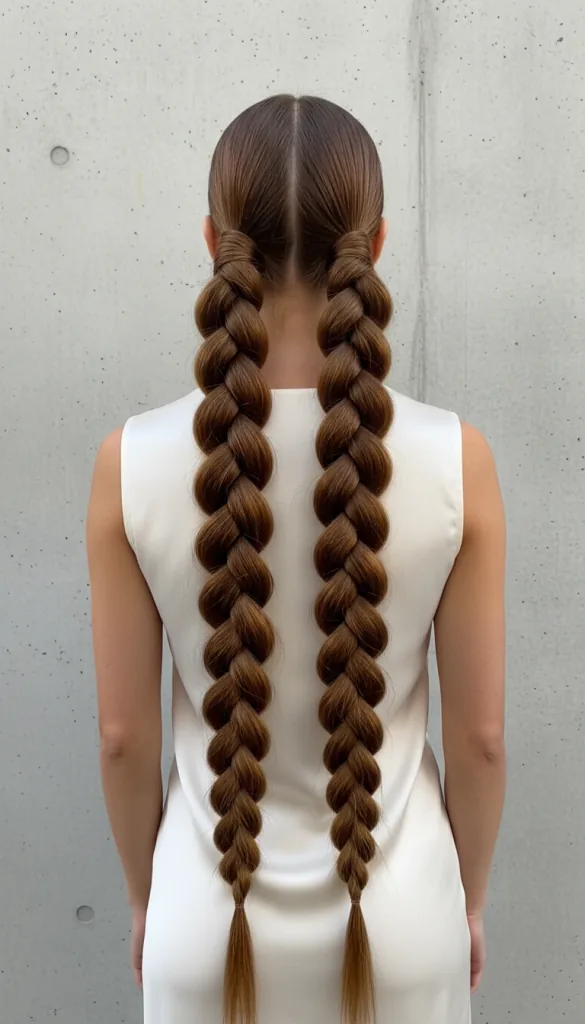
The bubble braid turns a ponytail into a segmented style: secure a low ponytail, then add small elastics at intervals down the tail, puffing each section gently between them. Worn overnight, each bubble sets its own soft bend, and the morning result is a series of gentle waves down the length, with more texture and movement than a single braid gives. The segments also stop the tail from tangling while you sleep, which is the real overnight benefit — you wake up to hair that is already detangled and shaped, instead of a matted ponytail that needs ten minutes of combing.
Time to set: 4–5 minutes. Best for: medium to long hair, layered cuts, anyone who wakes up to tangles. Watch out for: using too many elastics on fine hair — three or four segments is plenty, and each elastic should be snag-free so it leaves no dents in the morning waves.
21. The Crown Twist Overnight
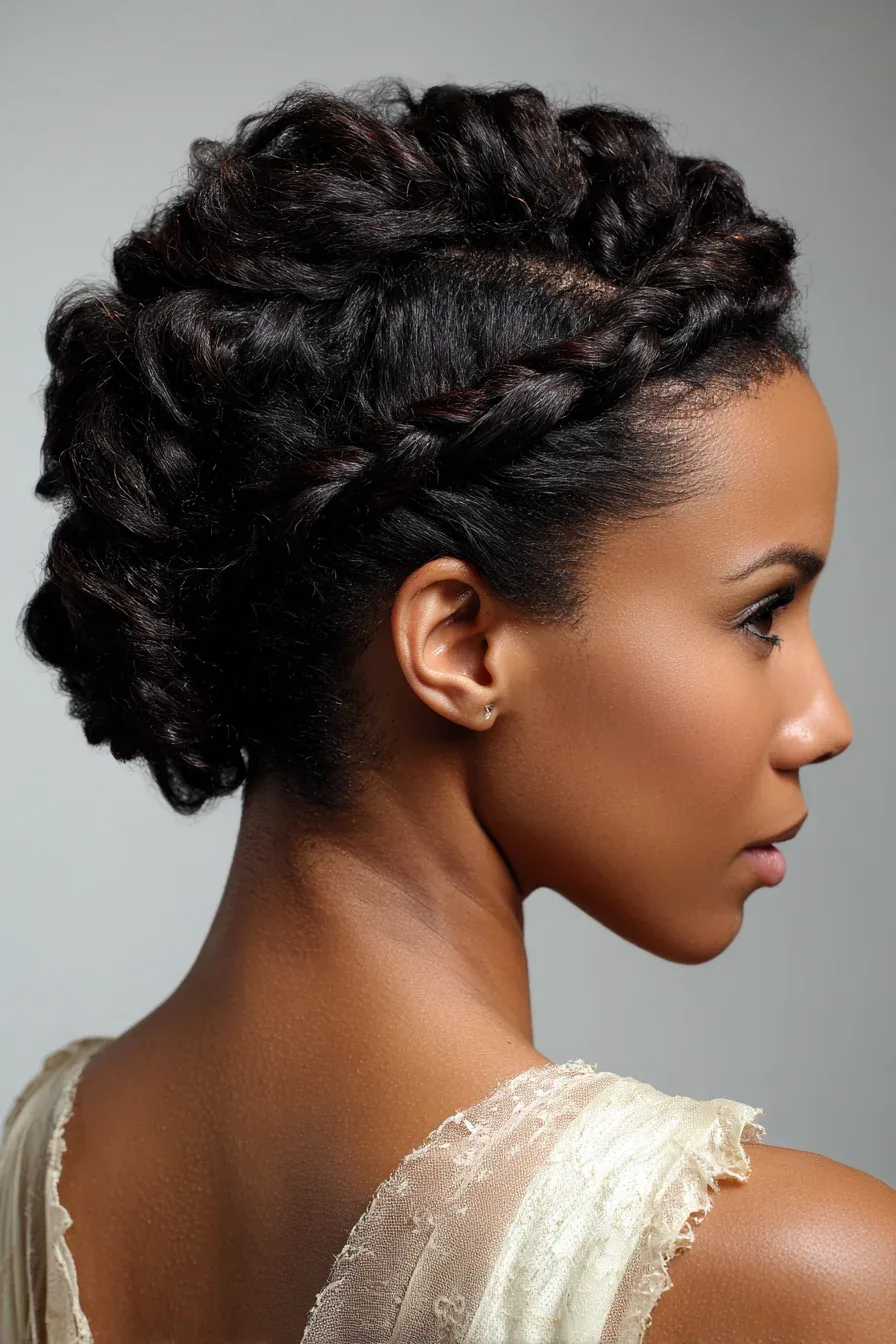
The crown twist is the no-braid halo: two rope twists, one from each side, wrapped around the head and pinned into a crown. Twist, wrap, pin, tuck — that is the whole technique, and it needs no braiding skill at all. The twists sit flat and contain the entire hairline, so nothing escapes or frizzes overnight, and the two twists brace each other where they meet, so the crown cannot shift while you sleep. In the morning, undo the twists for soft, face-framing waves that start high at the crown, with a natural lift that flatters nearly every face shape.
Time to set: 5–7 minutes. Best for: medium to long hair, all textures, anyone who wants a halo style without braiding. Watch out for: twists that are too loose, which unravel overnight; a firm twist holds its shape, a loose one does not, so twist each section until it feels springy and tight before wrapping.
22. The French Twist Sleep Bun
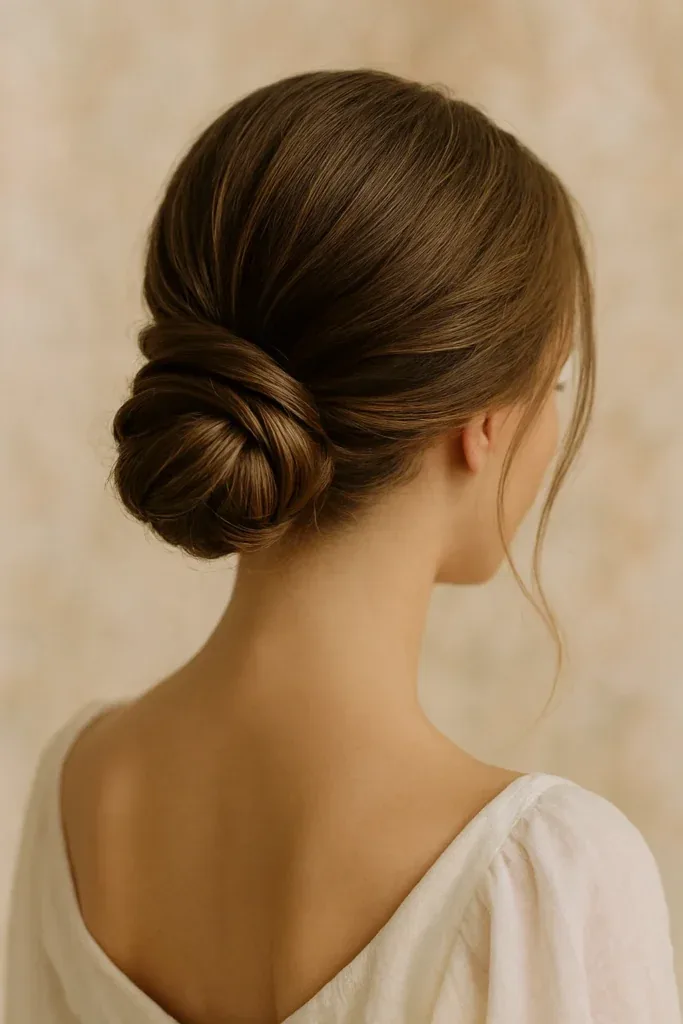
The French twist sleep bun is the overnight version of the classic updo: gather the hair to one side, twist it upward into a vertical roll, tuck the ends inside, and pin along the seam — then sleep on it. The twist is the structure, so it holds its shape for eight hours without an elastic, and the roll lies flat against the skull, which makes it comfortable for back sleepers. In the morning, take the pins out and the hair falls into a soft, elegant wave with a natural sweep to one side — a polished look that needs no styling at all, just a finger-comb and a little oil on the ends.
Time to set: 4–6 minutes once learned. Best for: medium to long hair, elegant morning waves, back sleepers. Skip it if: you need something you can build half-asleep — the braided bun above is the easier overnight cousin, and the twist-and-pin chignon is simpler still.
23. The Loose Top Bun for Volume
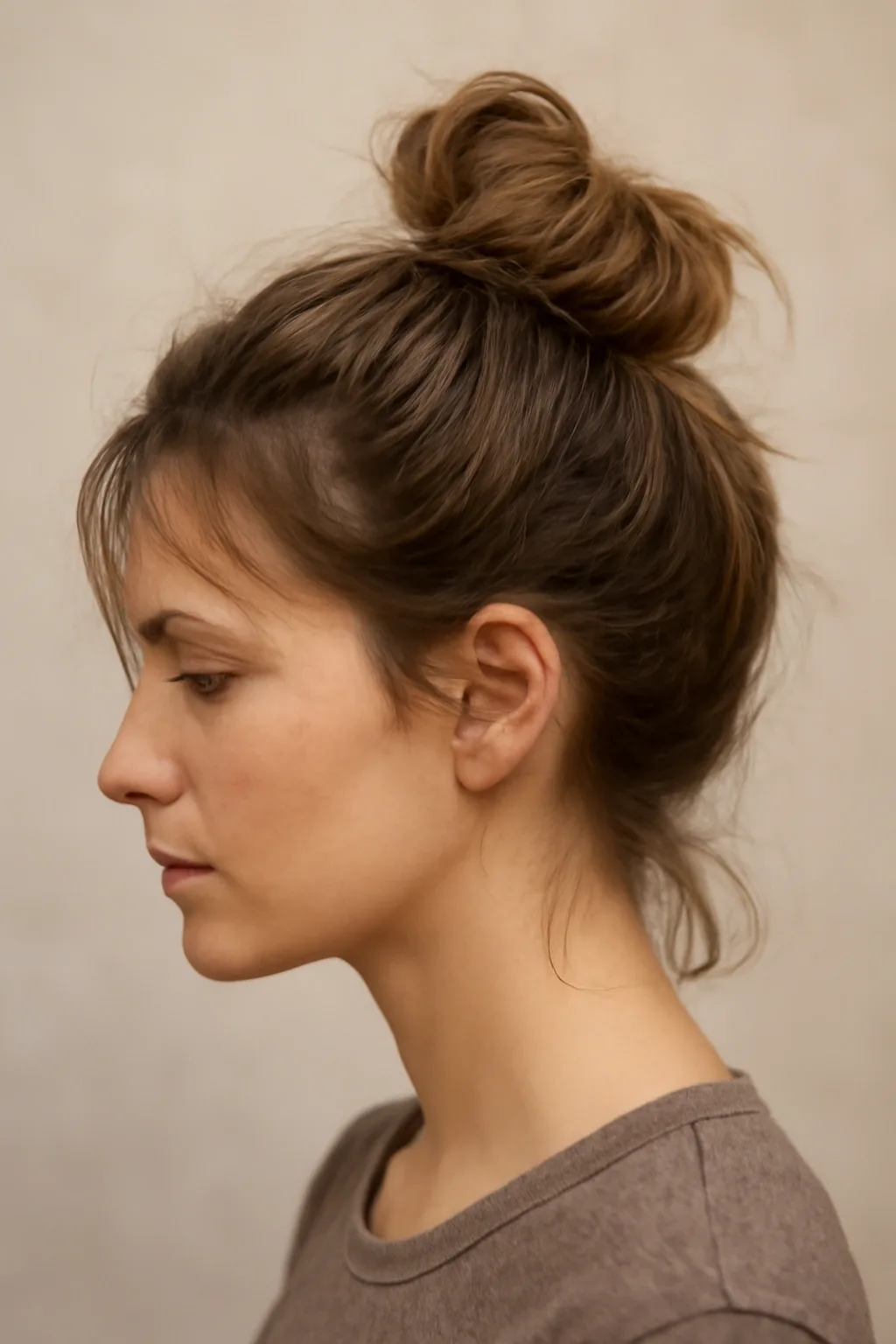
A loose top bun is the overnight shortcut to morning volume. Gather the hair loosely at the crown, twist it once, and secure it with a silk scrunchie — deliberately loose, deliberately high. Overnight, the roots are held up and away from the scalp, so they dry with lift instead of lying flat, and the lengths take a soft bend from the twist. In the morning, take it down and the hair has body, bounce and movement at the roots, with a gentle wave through the ends. It is the best overnight style for fine, flat hair, which needs root lift more than anything else.
- Pros: maximum root volume; two-minute set; very comfortable to sleep on.
- Cons: the wave is loose and soft, not defined; the bun can slide if the scrunchie is too loose.
- Morning tip: flip the head upside down and shake the roots out for extra lift before you leave.
24. Braided Pigtails for Short Hair
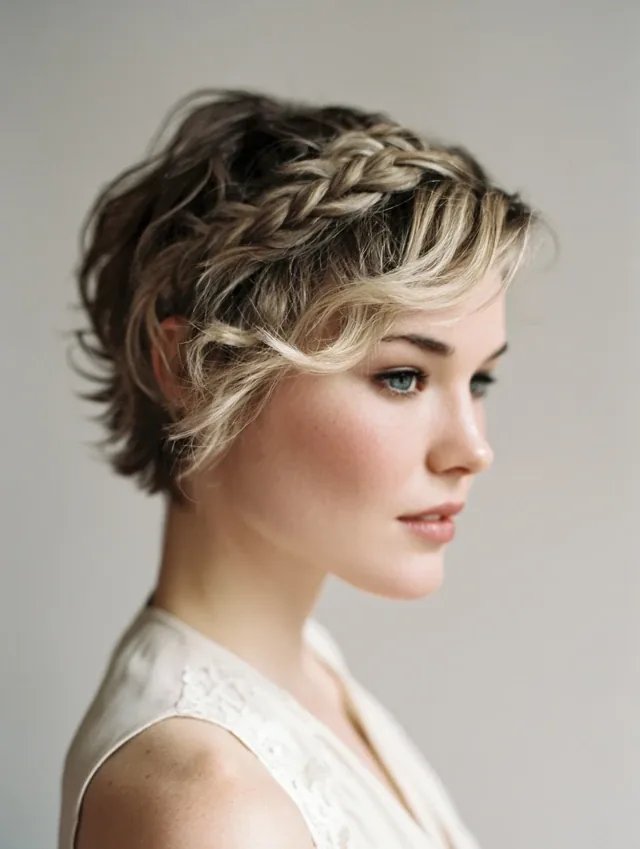
Short hair is not excluded from overnight styling — it just needs smaller sets. Two small braids, one on each side, are the short-hair answer: part the hair down the middle, braid each side from the hairline to the ends, and secure with tiny elastics. The braids are short enough to lie flat and comfortable against a pillow, and they shape the hair from the root, which is exactly what short hair needs, since there is not enough length for a low braid to work on. In the morning, undo both braids for soft, textured waves with movement at the ends — a lived-in look that suits bobs, lobs and growing-out cuts.
Time to set: 4–5 minutes. Best for: short to shoulder-length hair, bobs and lobs, textured waves. Watch out for: the ends escaping — short braids unravel easily, so fold the last inch up and tuck it into the elastic, and use the smallest snag-free elastics you can find.
25. Headband Wrap Curls

Headband curls are the gentlest overnight wave method ever invented: put a soft fabric headband on like a crown, then wrap damp sections of hair up and around it, tucking each one under the band. There are no pins, no elastics, no tools — just a headband and your hair. The wraps sit flat around the head, so it is one of the most comfortable overnight sets for any sleeping position, and in the morning you slide the band off and unwrap for soft, romantic waves with a natural fall. It works on medium to long hair, and it is the best first overnight method for anyone nervous about sleeping in rollers or rods.
Time to set: 5–8 minutes. Best for: beginners, side sleepers, soft romantic waves, medium to long hair. Watch out for: the headband sliding up overnight — choose a band with a little grip, or secure it with two flat pins at the temples, and wrap the sections snugly so they cannot loosen.
26. Leggings Curls
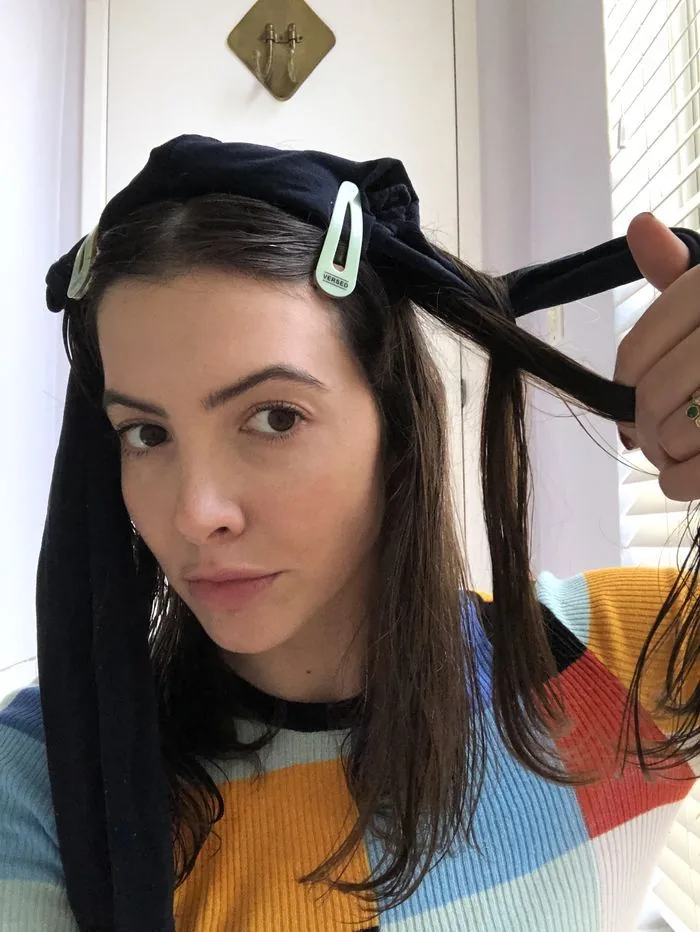
Leggings curls are the viral trick that sounds like a joke and works like a charm: take a pair of soft leggings, lay the waistband across the top of your head, and wrap damp sections of hair around each leg, securing the ends with scrunchies. The long, soft legs are the perfect wrapping core — long enough for very long hair, soft enough to sleep on, and free, since you already own them. In the morning, unwrap for long, flowing waves with a natural, bouncy movement that rivals the silk rod, at a cost of exactly zero. It is the best overnight method for very long hair, which often runs out of wrapping length on shorter tools.
- Pros: free; very comfortable; perfect for very long hair; surprisingly defined waves.
- Cons: looks ridiculous while you wear it; the legs can slide if not secured.
- Morning tip: unwrap one leg at a time and let the waves fall before separating them with your fingers.
27. Robe Belt Curls
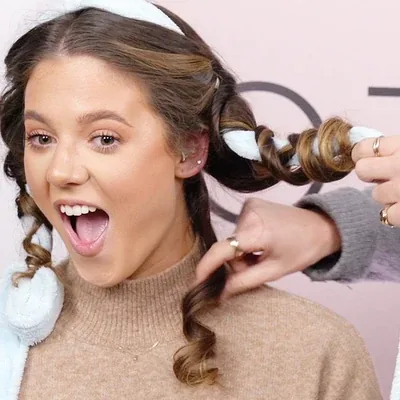
Robe belt curls are the original heatless rod method, from before the silk rod existed: take the belt of a bathrobe, place it across the top of your head, and wrap damp sections of hair around it from front to back, securing the ends with scrunchies. The belt is soft, flat and long enough for most hair lengths, and it lies comfortably against the head all night. In the morning, unwrap for long, loose, blowout-style waves with movement and shine — the same result as the silk rod, using something you already own. It is the best no-buy overnight method for anyone who wants to try heatless curls before investing in a rod.
Time to set: 5–8 minutes. Best for: medium to long hair, blowout-style waves, anyone who wants to try heatless curls for free. Watch out for: a belt that is too thin, which makes tighter curls than expected; a wide, soft belt gives the loosest, most natural waves, and a terry-cloth belt should be avoided, since the texture frizzes the hair.
28. Silk Scarf Curls
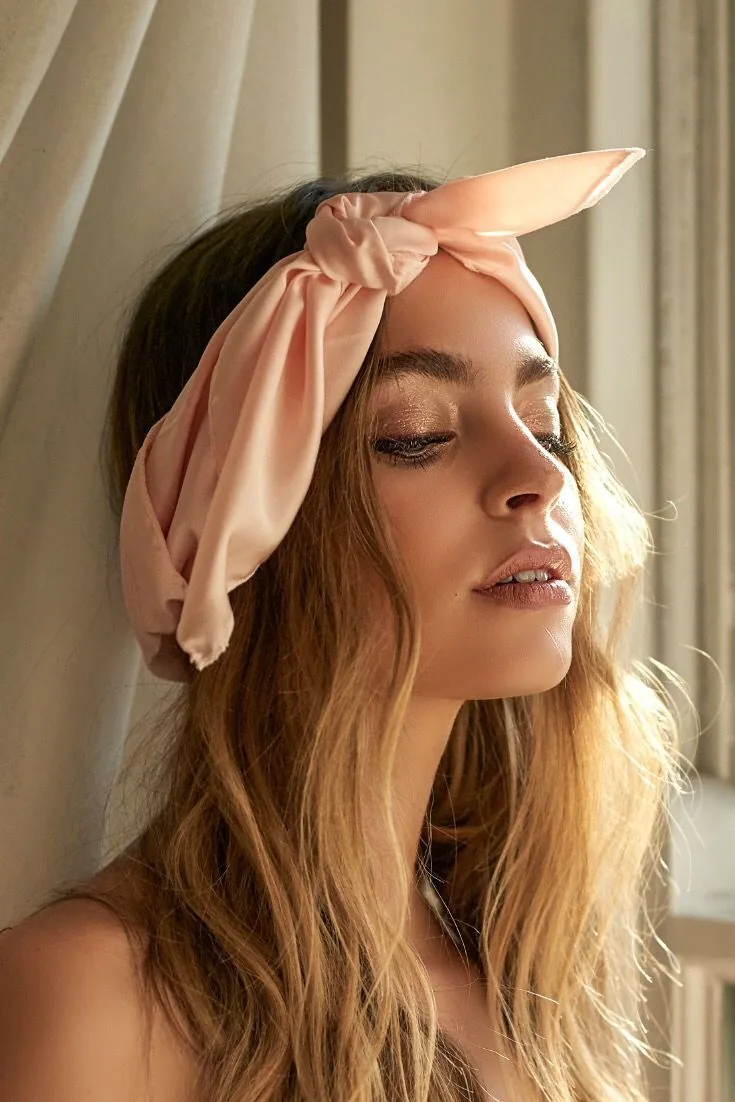
Silk scarf curls wrap the hair around a long silk scarf instead of a rod, which gives you the heatless curl result plus the frizz protection of silk in a single step. Fold the scarf lengthwise, place it across the head, and wrap damp sections around it, securing the ends. The silk is smooth and gentle, so the hair slides into place without snagging, and the scarf protects the set from pillow friction all night. In the morning, unwrap for soft, shiny waves with noticeably less frizz than a cotton-based method — the silk does double duty as both the tool and the protection.
- Pros: curls plus frizz protection in one step; very gentle on hair; comfortable to sleep on.
- Cons: the scarf can slide if it is too slippery; needs a little practice to wrap evenly.
- Morning tip: a drop of hair oil on the ends finishes the shine the silk started.
29. Pin Curls Overnight
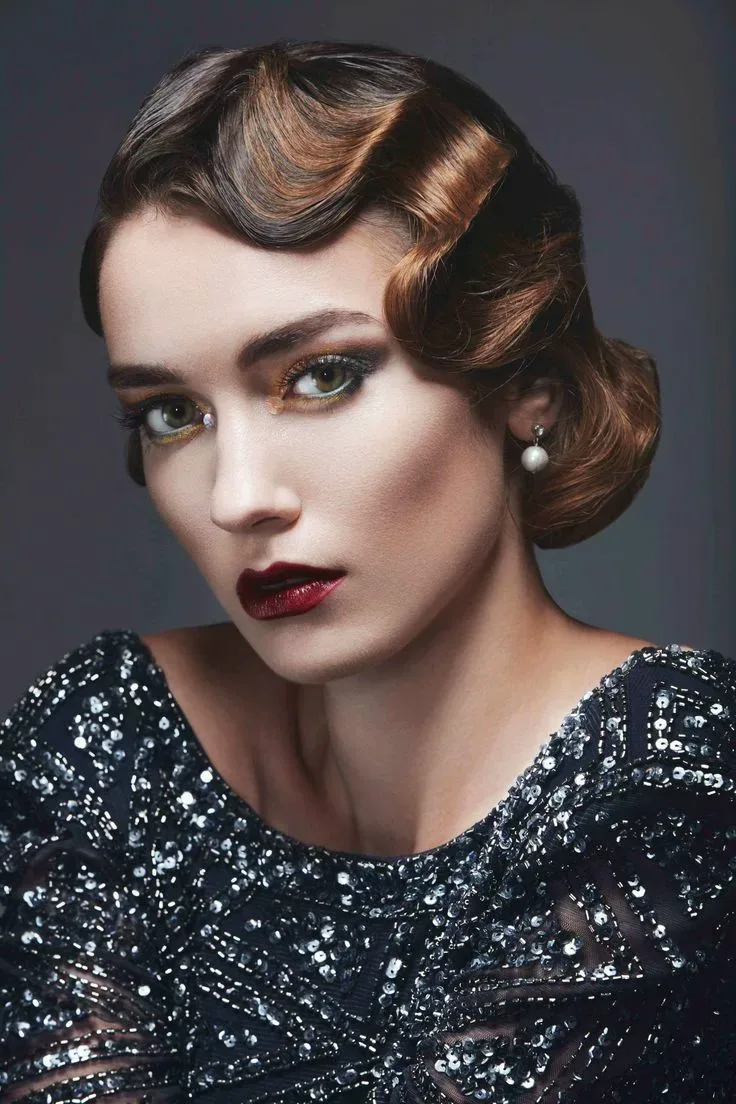
Pin curls are the vintage method that built Hollywood waves, and they still work beautifully overnight. Roll a small damp section around your finger into a flat curl, press it against the scalp, and pin it with a flat bobby pin or a pin-curl clip. Repeat across the head, then cover with a silk scarf. The flat curls lie completely flat against the head, so they are comfortable to sleep on in any position, and in the morning you unpin for tight, defined, vintage-style curls with incredible staying power. Brush them out gently with your fingers for soft waves, or leave them defined for a retro look.
Time to set: 15–20 minutes. Best for: vintage curls, defined waves, special occasions, short to medium hair. Watch out for: using too few pins, which lets the curls unroll overnight; pin through the centre of each curl, and use flat pins that cannot dig into the scalp.
30. Rag Curls
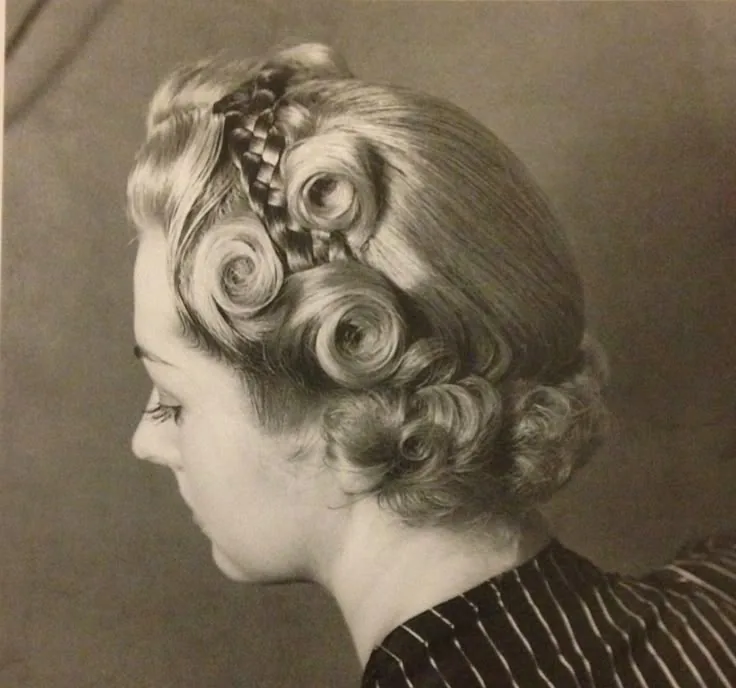
Rag curls are the oldest heatless method of all: wrap damp sections of hair around strips of soft fabric, tie the strips, and sleep on them. Cut an old T-shirt or a soft cotton cloth into strips, wrap each damp section around a strip from ends to roots, and tie it off. The fabric is completely soft, so there is nothing hard against the head, and the curls it makes are soft, natural and bouncy, with a vintage feel. It costs nothing, it works on any hair length, and it is the gentlest overnight set there is — the best choice for anyone with a sensitive scalp or hair that breaks easily.
Time to set: 10–15 minutes. Best for: sensitive scalps, fine or fragile hair, soft natural curls, any hair length. Watch out for: strips that are too short, which cannot hold long sections; each strip should be at least twice as long as the section it wraps, and tie the knot snugly so it cannot loosen overnight.
31. The Braided Headband Overnight
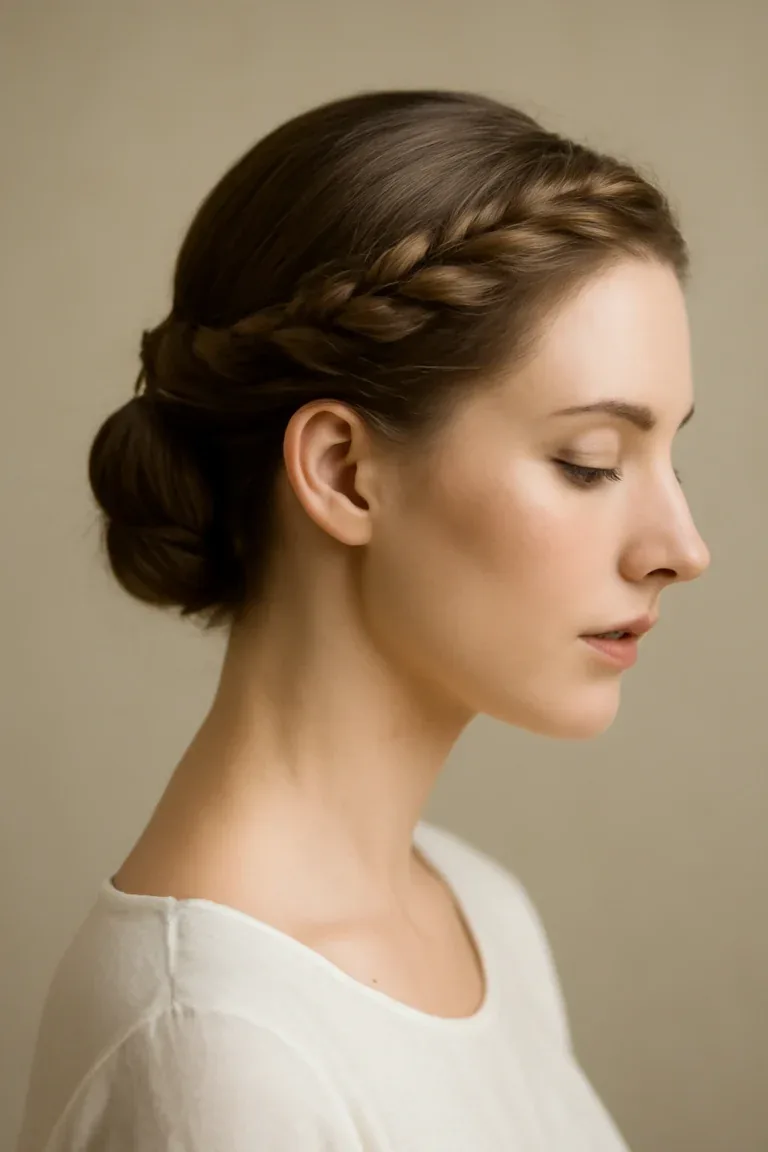
The braided headband overnight style shapes the front of the hair, which is the part most overnight methods miss. Braid a small section from behind one ear, bring it across the front hairline like a headband, and pin it behind the other ear, then gather the rest of the hair into a loose low braid. Overnight, the headband braid sets a wave in the front pieces that frames the face, while the low braid shapes the lengths. In the morning, undo both for waves that start at the face and flow through the whole head — a complete look with no flat front pieces and no need for a morning touch-up.
Time to set: 6–8 minutes. Best for: face-framing waves, bangs and curtain bangs, anyone whose front pieces always fall flat. Watch out for: braiding the headband too tightly, which pulls the hairline and leaves a kink; it should lie flat and comfortable, not tight.
32. The Overnight Top Knot for Waves
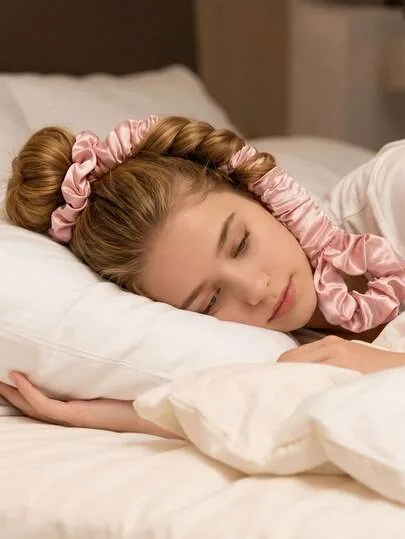
The overnight top knot is the difference between a bun for volume and a bun for waves: gather the hair high, twist it into a firm knot, and secure it with a silk scrunchie, keeping the twist even and snug rather than loose. The tighter twist sets a more defined wave through the lengths, while the high position keeps the roots lifted. In the morning, undo the knot and the hair falls into loose, tousled waves with volume at the crown — the easiest “second-day” look there is, made on purpose. It is the fastest overnight wave method after the classic braid, and the best one for busy nights when you have three minutes and no patience.
- Pros: three-minute set; defined waves plus root volume; very easy.
- Cons: the wave starts lower than a braid wave; can leave a bend at the scrunchie line.
- Morning tip: if there is a scrunchie dent, smooth it with a drop of oil and a quick finger-twist, not water.
33. The Silk Scrunchie Ponytail Waves
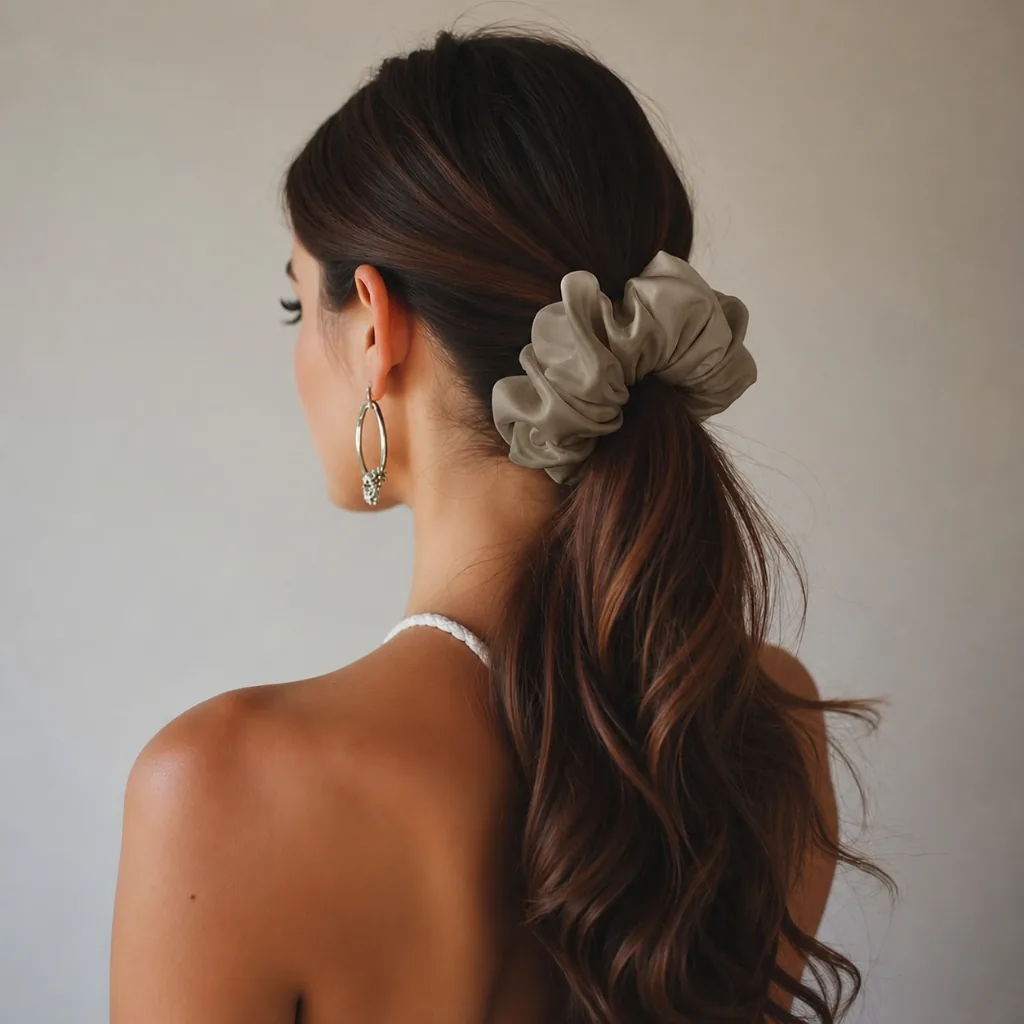
A silk scrunchie ponytail is the overnight style for nights when you cannot be bothered with any of the others — and it still works. Gather the hair into a high, loose ponytail with a silk scrunchie, then braid the tail loosely or twist it once and secure the end. The silk scrunchie holds the hair without leaving a dent or snagging, the braid shapes the lengths, and the high position keeps the roots lifted. In the morning, take it down for soft waves with volume at the crown and no elastic mark — the laziest overnight style in this guide, and one of the most reliable.
Time to set: 2 minutes. Best for: lazy nights, fine hair that dents easily, second-day hair. Watch out for: a ponytail pulled too tight, which causes tension and a headache; the gather should be loose enough that you can slide a finger under the scrunchie, and the braid should hang free rather than being pinned up.
34. The Loose Beach Wave Braid
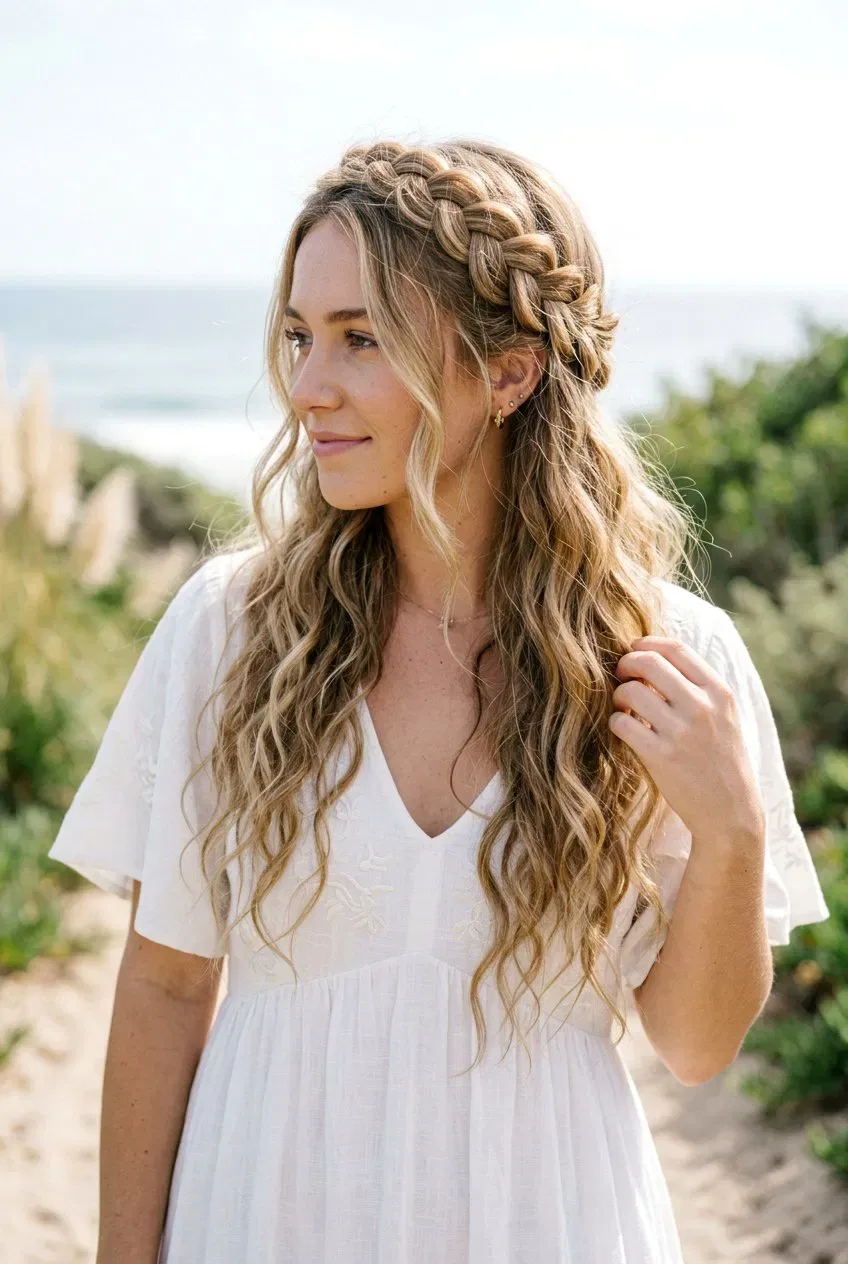
The loose beach wave braid is the final style in this guide and the most relaxed of them all: one very loose, very low braid, started at the nape and braided with wide, soft sections, with the ends left slightly undone. The looseness is the point — it makes a single wide, undulating wave instead of a defined plait pattern, the kind of wave that looks like a day at the beach rather than a night in a braid. It is the most comfortable overnight style here, since there is almost no tension anywhere, and the most forgiving: even a messy, uneven braid makes a beautiful beach wave, because the looseness hides every imperfection.
Time to set: 2–3 minutes. Best for: relaxed beach waves, very long hair, anyone who finds tight braids uncomfortable. Morning tip: a spritz of sea-salt spray and a quick scrunch brings the beach texture to life, and the waves look better the second day than the first — so this is the style to choose when tomorrow is the important day, not today.
Do overnight hairstyles really work without heat?
Yes. Hair holds its shape through hydrogen bonds that reset as it dries, so damp hair braided, twisted or wrapped overnight dries into that shape and keeps it in the morning. The key is starting with damp — not soaking wet — hair, and letting it dry fully before you take the style down. Dry hair will hold a weak bend, and soaking-wet hair will still be damp inside the braid at dawn.
How damp should hair be for overnight styles?
About 70 to 80 percent dry — cool to the touch, but not dripping. Wash in the early evening and let your hair air-dry most of the way before setting it. If it is still wet at bedtime, wait twenty minutes or use a diffuser on cool. Hair that is still damp inside the set in the morning will drop its wave within an hour.
Can I sleep in braids every night?
Yes, as long as the braids are loose and comfortable, and you vary the anchor point from night to night. Tight braids worn every night in the same spot can cause tension headaches and, over months, thinning at the hairline. Use snag-free elastics, keep the tension moderate, and give your hair a free night now and then with just a silk bonnet.
Which overnight hairstyle is best for fine hair?
Double French braids or a heatless curling rod, set on damp hair with a little mousse or texturising spray for grip. Fine hair slips out of loose sets, so it needs firmer wrapping and a product that gives the hair something to hold. Avoid very loose braids, which fine hair sheds overnight, and always finish with a light-hold spray in the morning.
Which overnight hairstyle is best for thick hair?
Split thick hair into two or four smaller sets rather than one big one — two braids, four twists, or several flexi rods — so every section dries fully overnight. One big braid stays damp inside at dawn and the wave drops out. Stronger elastics and a silk pillowcase help, since thick hair is heavy and pulls a set apart while you sleep.
How do I stop overnight curls from going frizzy?
Sleep on silk or satin, or wear a silk bonnet or scarf over the set, to cut the friction that causes frizz. In the morning, undo the style slowly, separate the waves with your fingers — never a brush — and smooth a drop of hair oil over the surface. Do not re-wet the hair, since water resets the shape it spent the night learning.
Are heatless curling rods comfortable to sleep on?
Yes, for most people. A silk rod or a robe belt lies almost flat against the head and is the easiest overnight tool for side sleepers. Foam rollers and flexi rods are softer but bulkier, so side sleepers may prefer fewer, larger rollers placed higher on the head. Socks, rags and scarves are the softest options of all, with nothing hard against the head.
Can short hair do overnight hairstyles?
Yes. Braided pigtails, pin curls and rag curls all work on short hair, because they use small sections and small tools. A robe belt or a heatless rod needs more length to wrap, so short hair should stick to braids, twists and pin curls. Even a chin-length bob can take a set of pin curls overnight and wake up to soft vintage waves.
How long do overnight waves last?
Usually a full day, and often into a second day if you protect them at night with a silk bonnet or a loose pineapple pony. Waves set on damp hair with a little product last longer than waves set on dry hair, and braid waves generally outlast rod waves because the set is firmer. A light mist of flexible-hold spray in the morning adds several hours.
Should I use products before setting my hair overnight?
A little, not a lot. A leave-in conditioner or a pea-sized amount of styling cream on damp hair helps the set hold and keeps the hair soft; mousse or texturising spray adds grip for fine or straight hair that resists shape. Avoid heavy oils or thick creams before bed, since they weigh the waves down and can transfer to the pillow. Finish in the morning with oil on the ends and a light-hold spray.
Conclusion: Let the Night Do the Styling
Overnight hairstyles ask for almost nothing — a few minutes before bed, a braid or a twist, a silk pillowcase if you have one — and give back a whole morning. No heat, no rush, no 6 a.m. battle with a curling iron; just a style you take down instead of one you build up. Start with the simplest method, the classic overnight braid, and try it tonight. If the waves are too loose, set the hair damper next time or split it into two braids; if they are too tight, loosen the set and let the night do more of the work. Your hair learns the pattern a little better each time, and within a week you will know exactly which method gives you the morning you want. Sleep on it — literally — and wake up already styled.

