

There is a reason wispy bangs keep showing up on every feed, every red carpet and every salon request list: they soften a face without committing to it. Unlike a heavy blunt fringe that announces itself the moment you walk in, wispy bangs are light, airy and a little see-through, with fine strands that feather across the forehead and blend into the rest of the hair. They frame the eyes, blur a strong hairline, and make even a simple ponytail look like it was styled on purpose. And because they are cut thin and piecey, they grow out gracefully instead of turning into a curtain you have to pin back for months.
Here are 36 wispy bangs hairstyles, from the classic long-layered look and the soft lob to curtain bangs, shags, pixies and wolf cuts — plus the face-shape guidance, hair-type advice and styling routines that make the difference between bangs you love and bangs you hide under a headband. Eight guides cover what wispy bangs actually are, which face shapes they suit best, how they behave on fine, thick, curly and wavy hair, what to ask your stylist, how to trim them safely at home, the five-minute morning routine, the mistakes that make them look stringy, and how to grow them out without the awkward stage. Every style notes who it suits, how to style it, and what to watch out for.
What Wispy Bangs Actually Are (and What They Are Not)
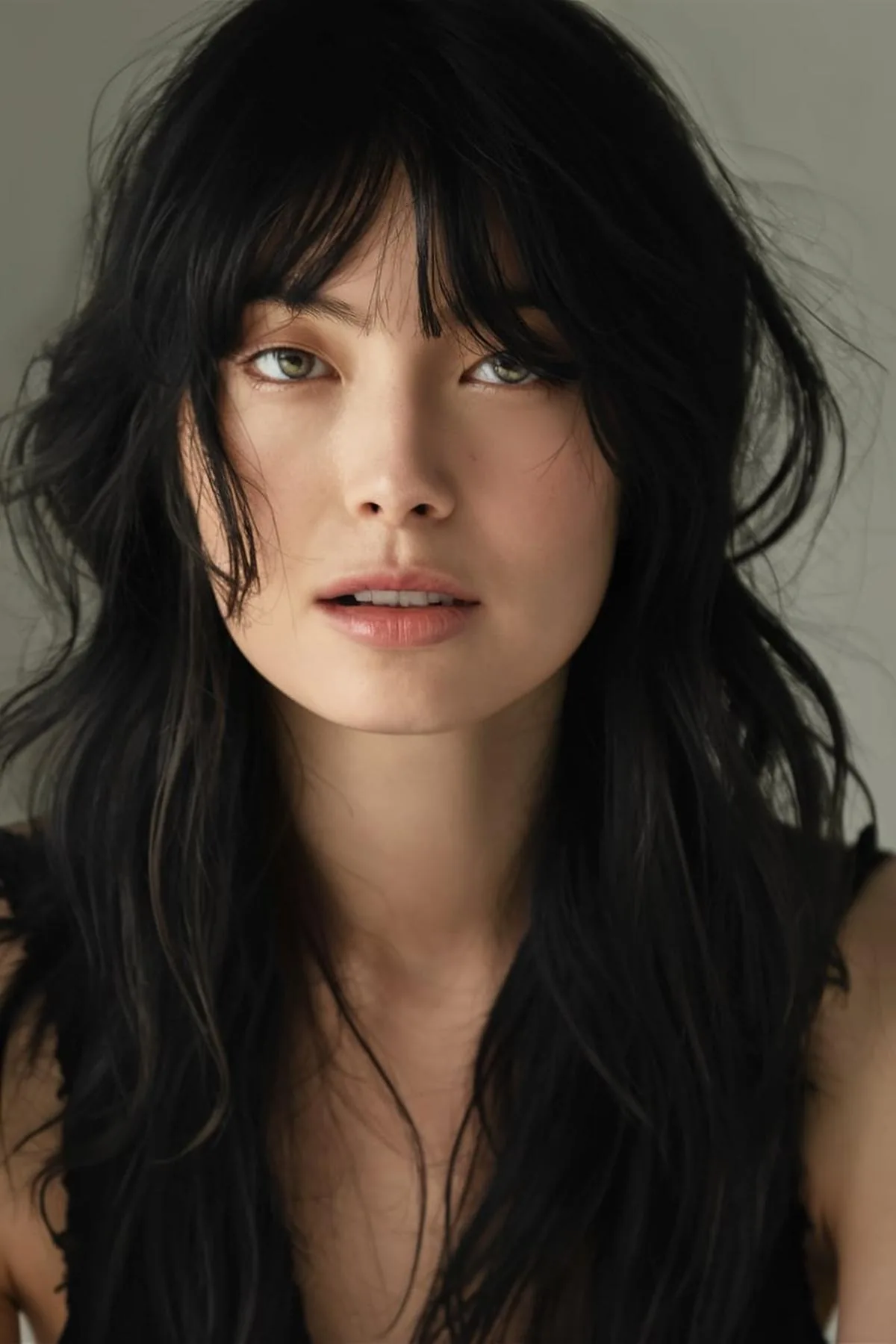
Wispy bangs are a fringe cut with deliberately thin, separated strands that let the forehead show through in places. The hair is point-cut or slide-cut so the ends taper instead of forming a straight line, and the fringe is usually lighter at the temples, blending into face-framing layers. The effect is softness: the bangs read as a suggestion of a fringe rather than a solid block of hair, which is why they flatter so many face shapes and hair types.
What they are not matters just as much. They are not blunt bangs, which are cut straight across at one length and sit heavy on the forehead. They are not curtain bangs, although the two overlap — curtain bangs part in the middle and sweep to the sides, while wispy bangs can fall straight down, parted, or swept to one side. And they are not baby bangs, which are much shorter. If your stylist shows you a photo of a thick, straight-across fringe, that is a different cut with different upkeep, however pretty it looks.
Which Face Shape Suits Wispy Bangs Best
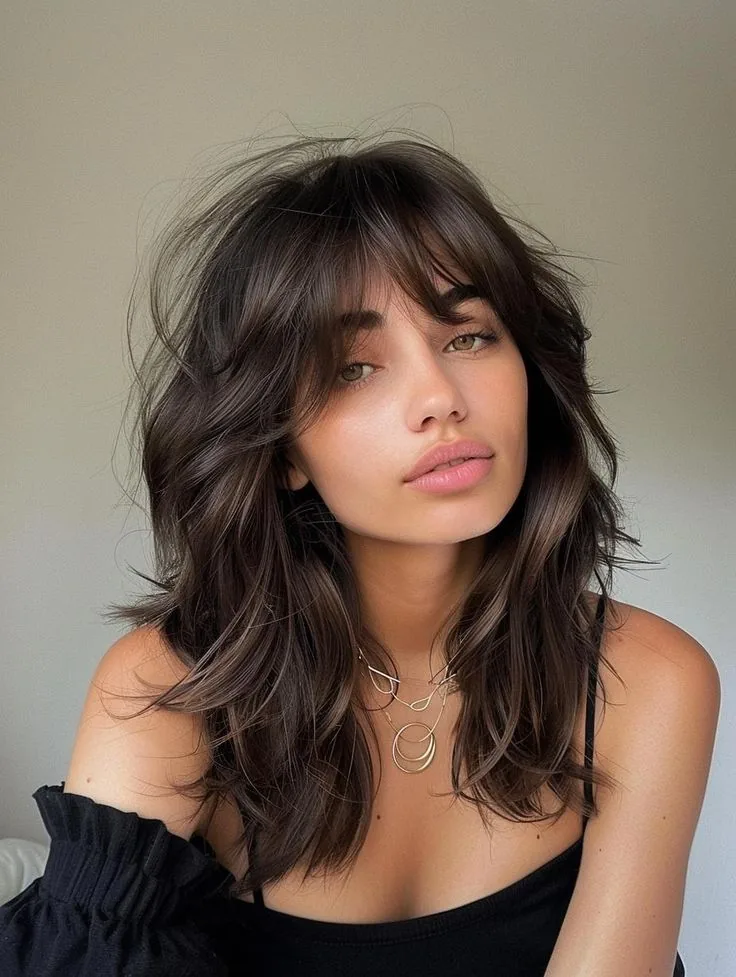
The short answer is nearly all of them — and that is exactly why wispy bangs are so popular. Because the fringe is light and uneven, it softens angles without hiding the face, so it works on round faces by adding length, on square faces by softening the jaw, on heart-shaped faces by balancing a wider forehead, and on long faces by shortening the forehead visually. Oval faces, the most forgiving shape, can wear them at almost any length.
The details are where the fit is decided. Round faces do best with longer wispy bangs that end around the cheekbones and longer side pieces, which draw the eye downward. Square faces suit a slightly longer, side-swept wisp that breaks up the jawline. Heart-shaped faces love a fringe that is fuller at the centre and shorter at the edges, which balances a narrower chin. Long faces should keep the bangs a touch shorter and fuller across the forehead. A good stylist will adjust the density and the length to your face, not copy a photo of someone else’s.
Wispy Bangs by Hair Type: Fine, Thick, Curly, Wavy
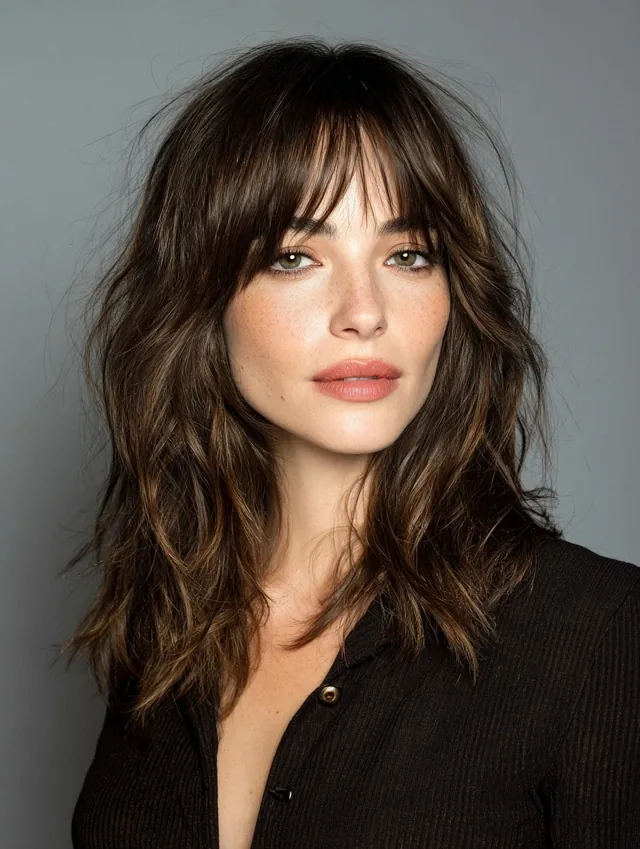
Fine hair and wispy bangs are a natural match, because the fringe is meant to be light — thin hair falls into soft pieces on its own, and a little dry shampoo at the roots is usually enough to keep it from going flat. The risk with fine hair is a fringe that looks sparse rather than wispy, so ask for the bangs to be cut from a slightly deeper section, taking hair from a little further back on the crown, which gives the fringe more body without making it heavy.
Thick hair needs thinning, not just cutting: without it, wispy bangs turn into a heavy curtain within a week. Ask for the fringe to be texturised with thinning shears or a razor, and keep the ends tapered. Wavy hair gives wispy bangs a lovely natural texture, but the fringe will shrink as it dries, so it should be cut a little longer than the target length. Curly hair can absolutely wear wispy bangs — cut them dry, curl by curl, and expect them to sit shorter and bouncier than straight bangs. In every case, the first wash at home is the real test, not the salon blow-dry.
How to Ask Your Stylist for Wispy Bangs (and What to Show Them)

The single most useful thing you can bring to the appointment is a photo of someone whose hair texture looks like yours. A photo of wispy bangs on thick, wavy hair will not translate to fine, straight hair, and a stylist working from the wrong reference will cut the wrong fringe. Bring two or three photos — one you love, one showing the length you want, one showing how the bangs look grown out — and say the words out loud: light, piecey, see-through at the ends, blended at the sides.
Then ask the questions that prevent regret. Ask how the bangs will behave on your natural texture without a blow-dry, how often they will need trimming, and whether your hairline has a cowlick that will fight the fringe — cowlicks at the front hairline are the most common reason wispy bangs misbehave, and a good stylist will either work around yours or tell you honestly that a side-swept version is the safer choice. Agree on the length before the scissors come out, and ask the stylist to cut them a touch longer than you think you want; bangs are always easier to shorten than to grow.
Cutting Wispy Bangs at Home: A Careful Step-by-Step
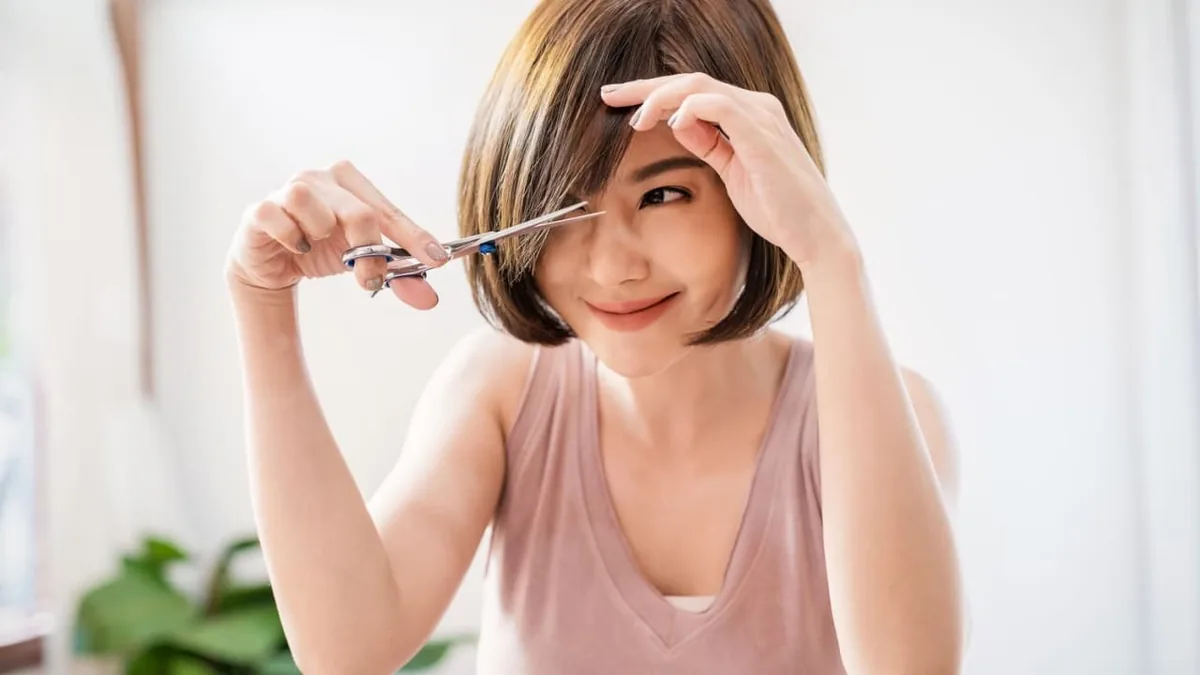
Trimming wispy bangs at home is doable, but only if you respect one rule: cut less than you think, and cut dry. Wet hair shrinks as it dries, which is how home fringe cuts end up two centimetres too short. Start with clean, dry, styled hair, section a small triangle from the front hairline — no wider than the outer corners of your eyebrows — and clip the rest back. Twist the section gently, hold the scissors vertically, and snip upward into the ends in tiny cuts, a millimetre or two at a time.
Work in passes, not one big cut: snip, shake the fringe out, look, and snip again only where it still feels heavy. Feather the sides longer than the centre so the bangs blend into your face-framing layers, and stop while it still looks slightly too long — it will settle shorter once it relaxes. Never cut across horizontally with the blades flat, never cut while the hair is wet, and never take a big section at once. If the fringe has a cowlick or you want a major change in length or shape, that is a salon job, not a bathroom one.
The 5-Minute Morning Styling Routine
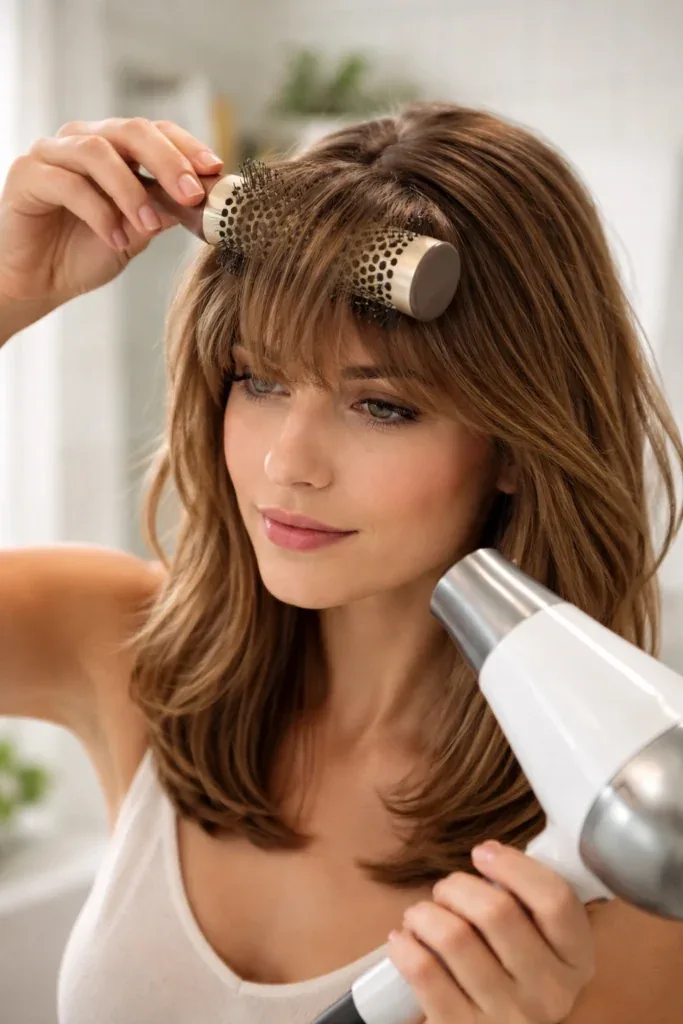
Wispy bangs earn their reputation for being low-maintenance only if you style them first, before the rest of your hair. Dampen the fringe with a spray bottle or a quick splash of water — even if the rest of your hair is dry — because bangs set their shape while they dry, and sleeping on them gives them a shape you did not choose. Blow-dry the bangs downward and side to side with a small round brush or just your fingers, rolling them under slightly at the ends for softness.
On no-wash days, a pinch of dry shampoo at the roots lifts the fringe and absorbs the oil that makes bangs look stringy by lunchtime, and a pea-sized drop of light styling cream smoothed over the ends keeps flyaways in check without weighing the wisps down. Skip heavy oils and strong-hold sprays, which turn airy strands into clumps. The whole routine takes about five minutes, and it is the difference between bangs that look intentional and bangs that look like they happened to you overnight.
Mistakes That Make Wispy Bangs Look Stringy or Heavy

The most common mistake is over-conditioning the fringe. Conditioner and heavy masks are made for the lengths, not the forehead — when they coat the bangs, the wisps clump together, go flat, and look greasy by midday. Keep conditioner off the fringe entirely, or rinse it so thoroughly that no residue remains. The second mistake is cutting the bangs too wide: a fringe that stretches past the outer corners of the eyebrows stops looking wispy and starts looking like a full fringe that ran out of hair.
Other mistakes are easy to fix once you spot them. Styling the bangs with the same heavy products as the rest of your hair weighs them down; using a flat iron on high heat makes them stick straight to the forehead; and skipping trims lets the wisps grow into a heavy curtain that loses its airiness. Touching the fringe all day transfers oil from your hands and separates it into stringy pieces — a habit worth breaking. And if the bangs keep splitting down the middle, that is usually a cowlick, not a styling failure, and a side part or a slightly longer centre will solve it.
Growing Out Wispy Bangs Without the Awkward Stage
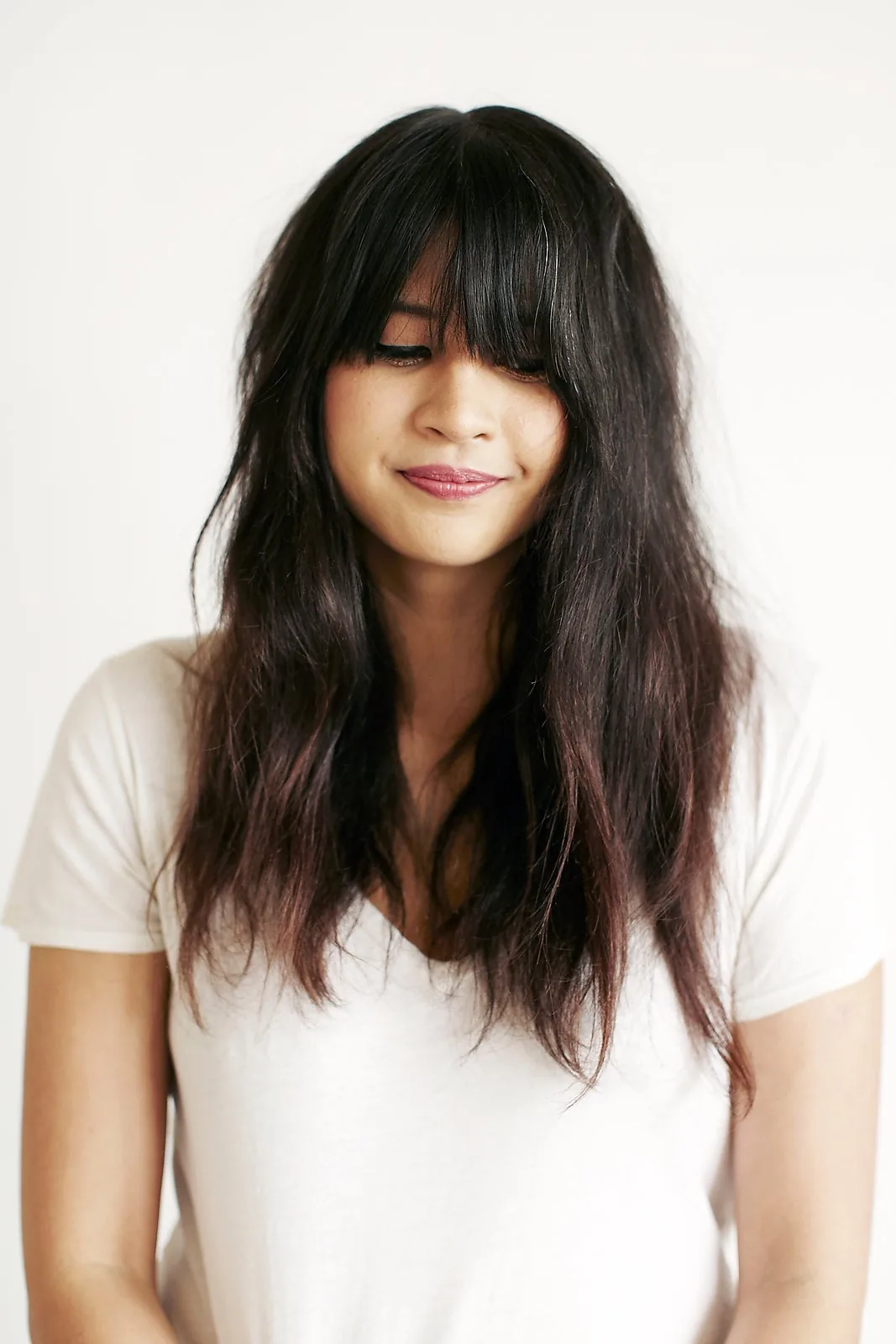
Wispy bangs are the easiest fringe to grow out, because they are already light and uneven — but they still need a plan, or they spend two months falling into your eyes. The first step is to stop trimming the centre and let the fringe reach the eyebrows, then the cheekbones, blending it into face-framing layers as it grows. A stylist can thin the ends and taper the sides during this phase so the growing fringe reads as intentional layers rather than an abandoned haircut.
While it grows, styling does the heavy lifting. A middle part turns a growing fringe into curtain bangs, a deep side part sweeps it into the rest of the hair, and a small braid or twist pinned at the temple hides the in-between length completely. Bobby pins, flat clips and a narrow headband are your best friends for the first six weeks; after that, the fringe is usually long enough to tuck behind the ears. Most people reach a comfortable layer length in about three months, and the whole grow-out is far less painful than growing out a blunt fringe.
1. Classic Wispy Bangs with Long Layers
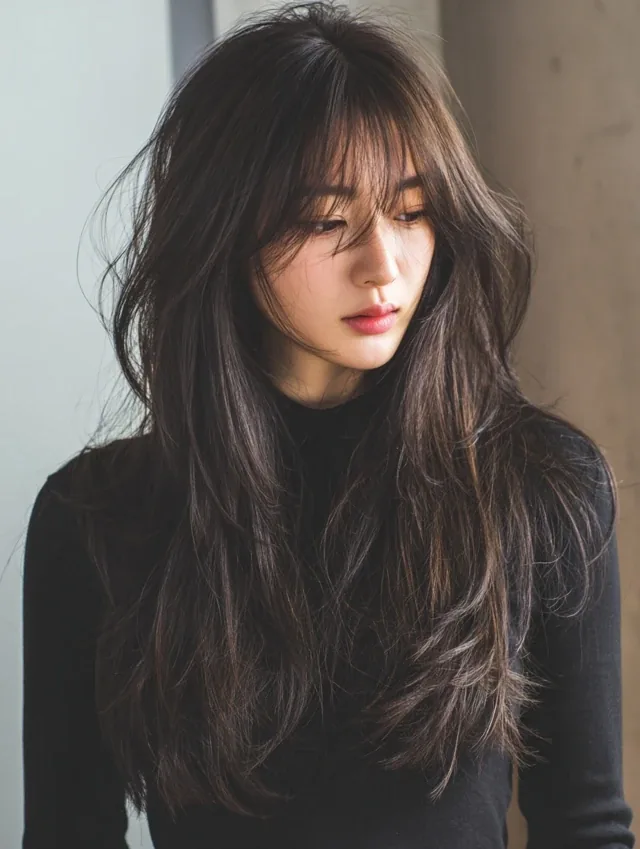
The classic wispy bangs look is long hair with soft, face-framing layers and a feather-light fringe that ends just at or below the eyebrows. The layers start around the chin and fall in soft steps, so the bangs melt into the rest of the hair instead of sitting on top of it. It is the most versatile version of the style — it works straight, wavy or loosely curled, dressed up or tied back, and it flatters almost every face shape because nothing about it is harsh.
What it is: a light, tapered fringe blended into long layers. Why it works: the layers carry the softness of the bangs through the whole cut, so the fringe never looks pasted on. Who it suits: long hair of any texture, and anyone trying wispy bangs for the first time. How to style it: blow-dry the bangs forward with a round brush, then run a large-barrel curling iron through the layers for a soft bend. What to ask your stylist for: a fringe cut from a shallow section, point-cut ends, and layers that start no higher than the chin.
2. Wispy Bangs with a Long Bob (Lob)
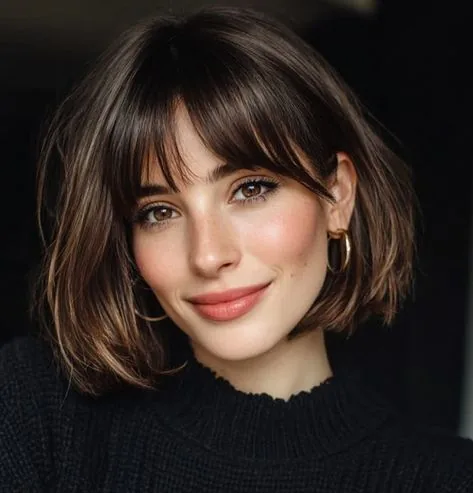
A lob with wispy bangs is the polished, grown-up version of the fringe — shoulder-length hair, a soft feathered fringe, and a shape that looks finished with almost no effort. The fringe lightens the front of the cut, which stops a blunt lob from feeling heavy, and the length is short enough to style in minutes but long enough to tie back on busy days. It is a favourite for work, for weddings, and for anyone who wants a change that still feels safe.
Best for: straight to wavy hair, oval and heart-shaped faces, and anyone who wants a low-effort polished look. How to style: a round brush through the fringe and a quick pass of a flat iron bent under at the ends. Watch out for: a lob that is cut too blunt at the ends — it can make the wispy fringe look disconnected, so ask for soft, textured ends.
3. Wispy Curtain Bangs
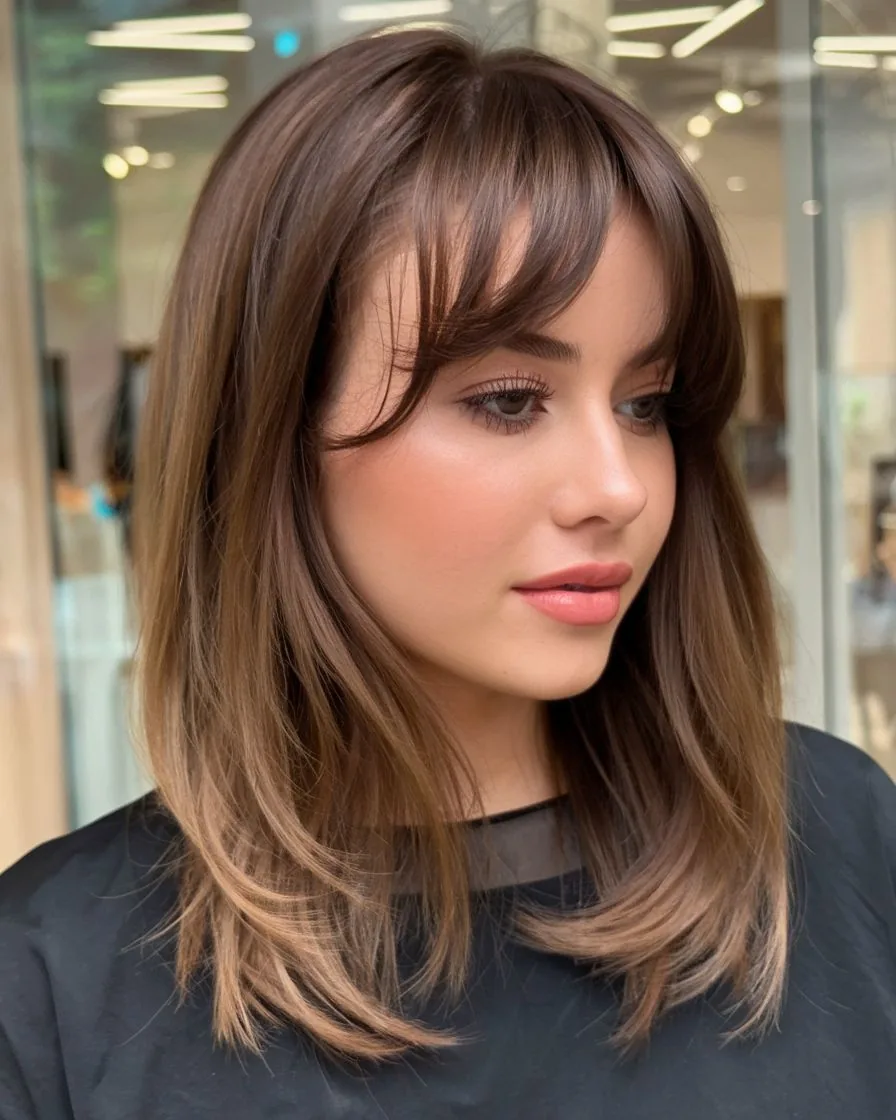
Wispy curtain bangs part in the middle and sweep softly to each side, framing the face like a curtain — and when they are cut wispy, they are the gentlest version of the look. The centre is the shortest point, just skimming the brows, and the sides lengthen gradually into the face-framing layers, so the fringe opens up the face instead of covering it. They are the best first fringe for anyone nervous about bangs, because they blend into the hair so easily.
The part is everything here: a clean middle part makes the curtain symmetrical, while a slightly off-centre part gives a softer, more casual feel. Style them by blow-drying each side away from the face with a round brush, or by wrapping the damp fringe around a large velcro roller for ten minutes while you do your makeup. They grow out beautifully, turning into long face-framing layers without an awkward phase, which is another reason they are the most forgiving fringe you can choose.
4. Wispy Bangs with a High Ponytail
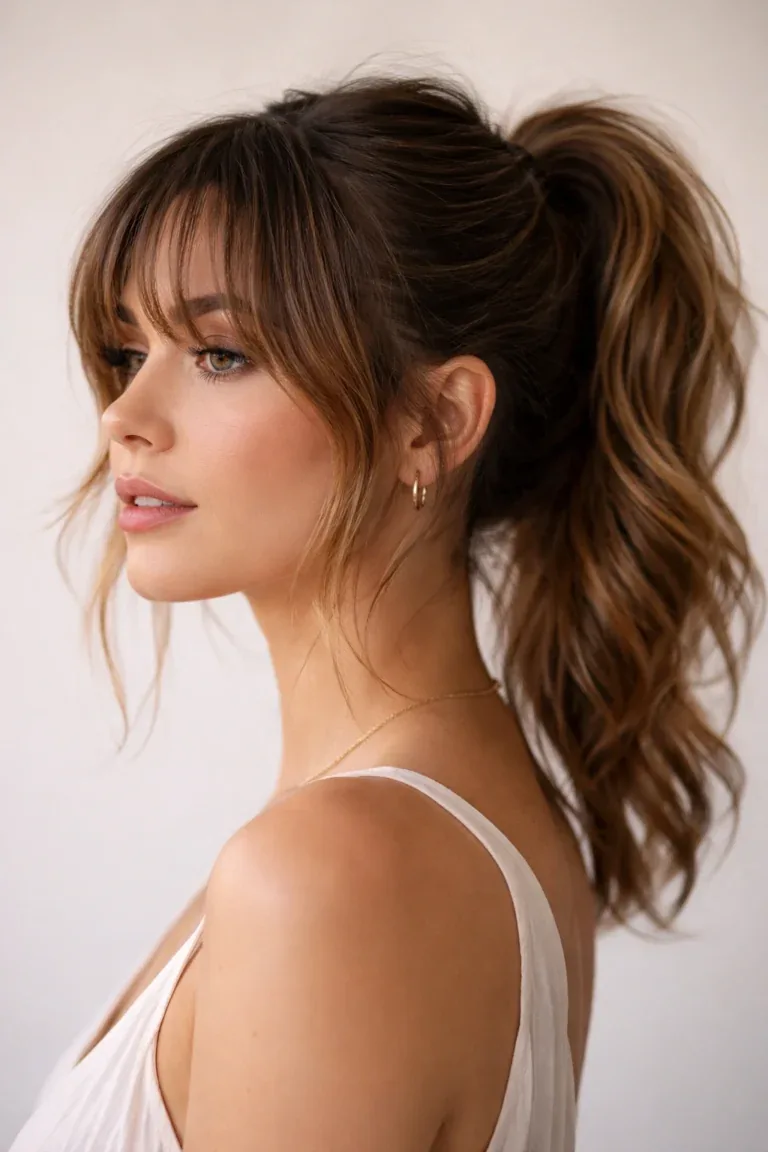
A high ponytail with wispy bangs is the quickest way to look put-together: the fringe softens the front, the ponytail lifts the face, and the whole look takes three minutes. The bangs are what save it from looking severe — without them, a scraped-back ponytail can feel harsh, but a few feathered strands across the forehead keep the look friendly and finished. It works for the gym, for work, and for a night out, depending on how sleek or messy you make the tail.
Pros: three-minute styling; lifts the face; the fringe hides a high hairline. Cons: a very tight ponytail can pull at the hairline, and the bangs need their own two minutes of styling or they look flat. Quick verdict: the best everyday pairing for wispy bangs — keep the ponytail slightly loose at the front and let a few wisps escape around the temples.
5. Wispy Bangs with a Low Bun
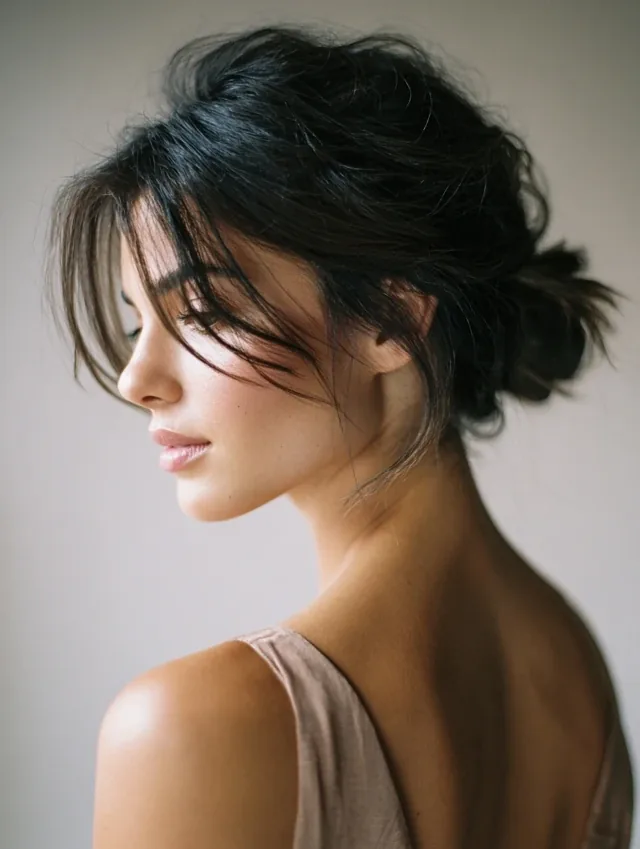
A low bun with wispy bangs is quietly elegant — the kind of style that works for a wedding guest, a job interview or a dinner where you want to look polished without looking overdone. The bun sits at the nape, the fringe stays soft across the forehead, and a couple of face-framing pieces pulled loose at the temples keep it from looking severe. It is also one of the most forgiving updos, because the bangs do the framing work that a bare forehead would leave to the bun alone.
Build it by gathering the hair low and twisting it into a bun, then loosening the front slightly with your fingertips so the shape is soft, not scraped. Style the bangs first, as always, so they hold their shape while you work on the bun, and finish with a light mist of flexible-hold spray. If the occasion is formal, add a small decorative pin at the side of the bun; if it is everyday, leave it plain and let the fringe carry the look.
6. Wispy Bangs with a Shag Cut
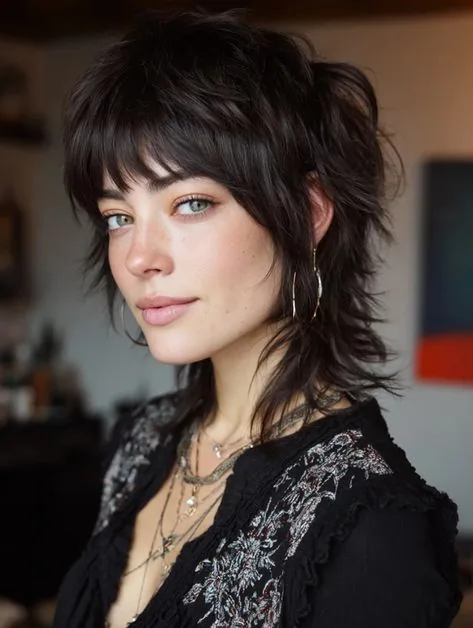
The shag and wispy bangs were made for each other. A shag is all texture — choppy layers, volume at the crown, ends that flick out — and a feathered fringe is the natural finish at the front. Together they create a relaxed, lived-in look that suits wavy and straight hair alike and needs very little styling: the layers and the bangs are designed to look slightly undone, so a bad hair day barely registers. It is the most low-maintenance way to wear a fringe.
What it is: a layered shag with a textured, piecey fringe. Why it helps: the fringe blends into the shag’s layers, so there is no hard line anywhere in the cut. Who it suits: wavy and straight hair, oval and long faces, and anyone who dislikes precise styling. How to style it: a little texturising spray scrunched through damp hair, then air-dry. What to ask your stylist for: a fringe cut with a razor or point-cutting, and layers that connect to the bangs at the temples.
7. Wispy Bangs with a Pixie Cut
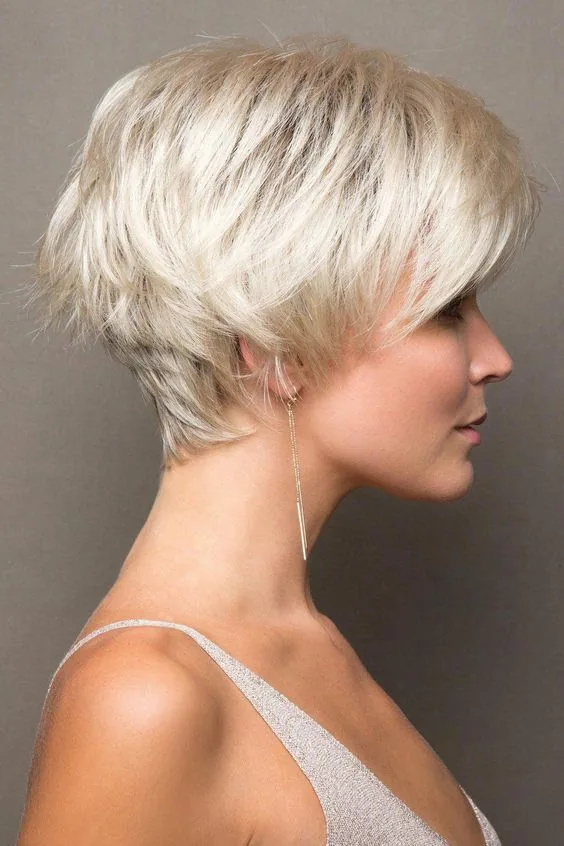
Wispy bangs on a pixie cut change the whole character of the style — instead of a sharp, boyish crop, the feathered fringe softens the forehead and gives the cut a feminine, face-framing finish. The bangs are usually left a little longer than the rest of the pixie, falling just over the brows with tapered ends, and they can be worn straight down, swept to the side, or pushed up with texture for a piecey look. It is a brilliant choice for anyone growing out a pixie, too, since the fringe disguises the in-between lengths.
Best for: fine to medium hair, oval and heart-shaped faces, and anyone who wants a short cut that still feels soft. How to style: a pea-sized amount of styling cream worked through the fringe with your fingers. Watch out for: cutting the fringe too short — on a pixie, a fringe that is too short can look severe, so keep it at brow length or below.
8. Wispy Bangs with a Bob
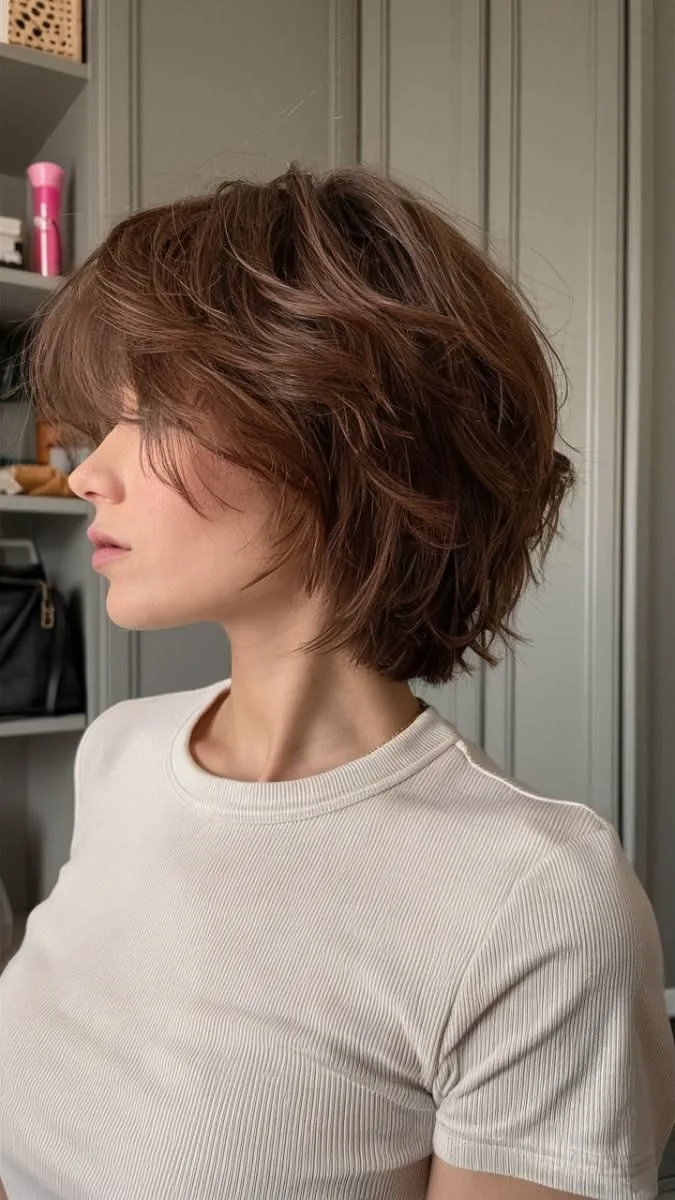
A bob with wispy bangs is a classic for a reason: the clean line of the bob gets a soft, airy counterpoint at the front, and the result is fresh without being fussy. The fringe keeps the bob from looking heavy or helmet-like, especially on thick hair, and it draws attention to the eyes. Chin-length bobs suit a slightly shorter, fuller wisp; longer bobs pair beautifully with a longer fringe that blends into the front layers.
The cut works best when the fringe and the bob are cut to talk to each other — the bangs should be texturised to match the ends of the bob, not cut blunt while the bob is layered, or vice versa. Style the fringe with a round brush, then tuck the bob behind one ear on one side for a little asymmetry. It is a low-effort, high-polish combination that suits the office, a night out, and everything in between, and it grows out gracefully into a lob.
9. Wispy Bangs with Curtain Layers
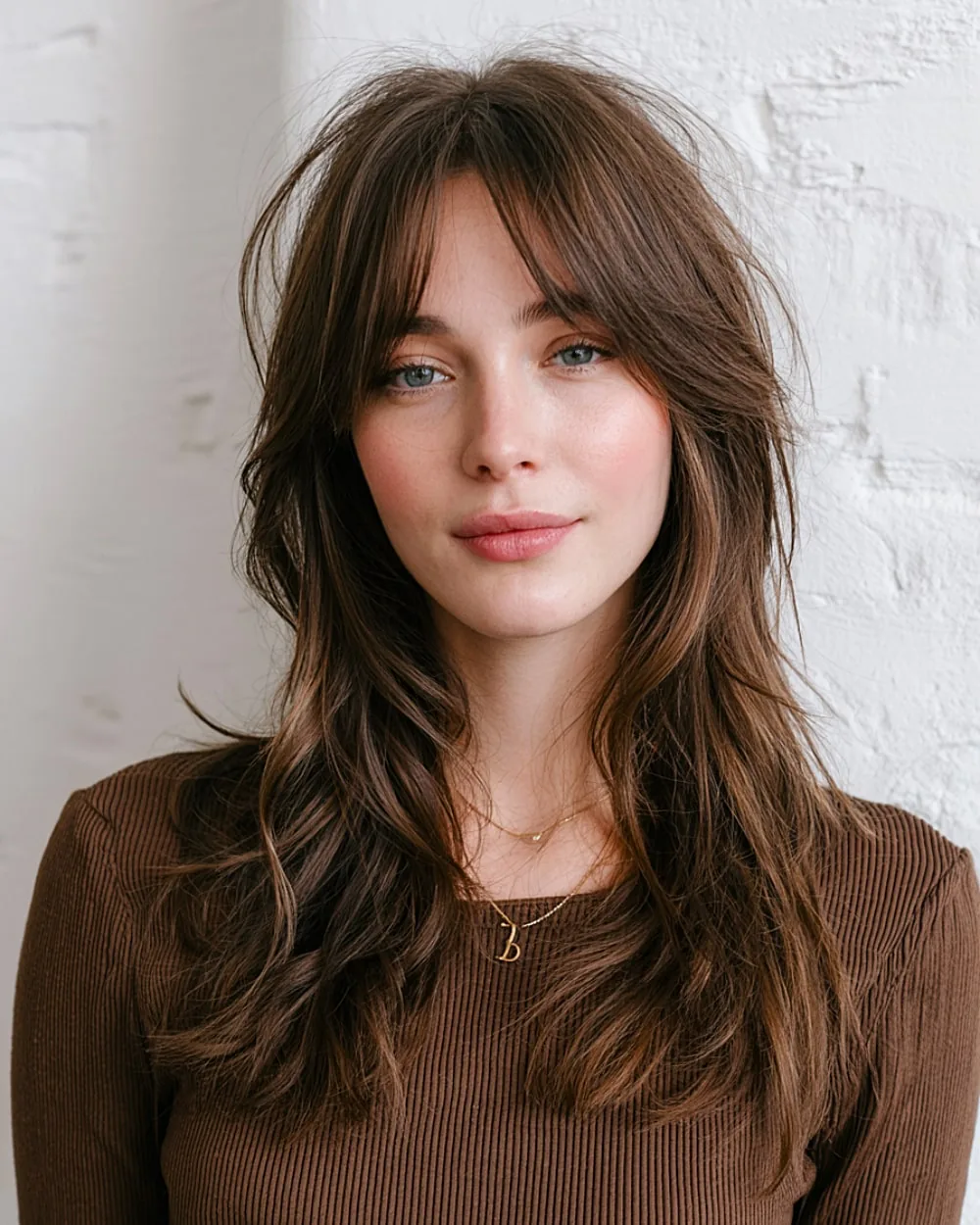
Curtain layers are long, face-framing layers that open away from the face, and when they start with wispy bangs, the whole front of the hair becomes one soft, continuous frame. The fringe is the shortest point, the layers lengthen gradually past the cheekbones and jaw, and the effect is a face that looks gently sculpted without any harsh lines. It is one of the most flattering cuts for long hair, and one of the most requested in salons right now.
Pros: universally flattering; grows out seamlessly; works with a middle or side part. Cons: the layers need a round-brush blow-dry to look their best, and fine hair can fall flat without a little root lift. Quick verdict: if you only try one wispy-bangs style from this guide, make it this one — it is the most forgiving and the easiest to live with.
10. Wispy Bangs with a Half-Up Hairstyle
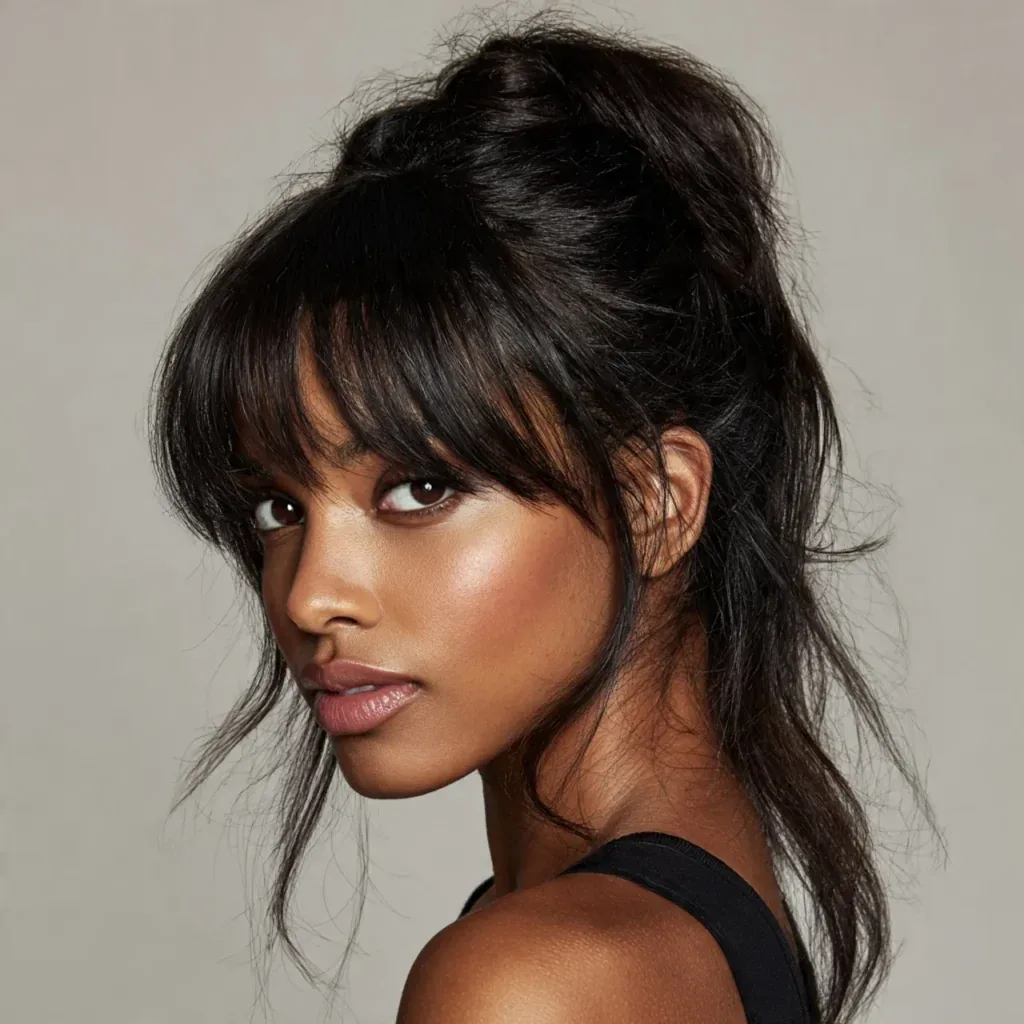
The half-up hairstyle lets you have it both ways — hair off the face, length still showing — and wispy bangs are the finishing touch that keeps the front soft. Gather the top section into a small bun, a twist or a clip, leave the rest down, and let the fringe fall across the forehead with a few face-framing pieces loose at the sides. It is romantic without being fussy, and it works for a wedding, a date, or a workday when you want your hair out of your eyes.
The trick is proportion: the half-up section should be small, taken from the crown only, so the style stays light and the bangs stay the focus. Secure it with a small elastic hidden under a twist, or a claw clip for a softer hold. Style the bangs first, then the half-up section, then the lengths — a loose wave through the ends ties the whole look together. If your hair is fine, backcomb the crown section lightly before securing it for a little lift.
11. Wispy Bangs with Beach Waves
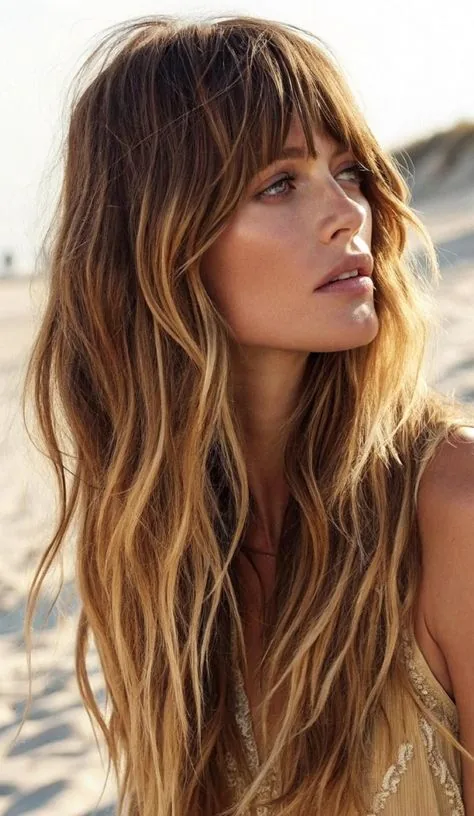
Beach waves and wispy bangs are the ultimate relaxed pairing: tousled, textured lengths and a fringe that looks like it dried in the sea air. The waves give the bangs a natural piecey texture, and the bangs give the waves a face-framing finish, so the whole look feels effortless even though it takes about ten minutes with a curling iron or a salt spray. It is the holiday look, the weekend look, and the look that photographs beautifully in natural light.
What it is: loose, textured waves with a soft, separated fringe. Why it works: the fringe picks up the same texture as the waves, so nothing looks over-styled. Who it suits: wavy and straight hair that holds a bend, and anyone who prefers air-drying. How to style it: curl the lengths in alternating directions with a large-barrel iron, then shake out and finish with texturising spray — and leave the bangs alone once they are dry, since over-touching makes them stringy.
12. Wispy Bangs with Straight Sleek Hair
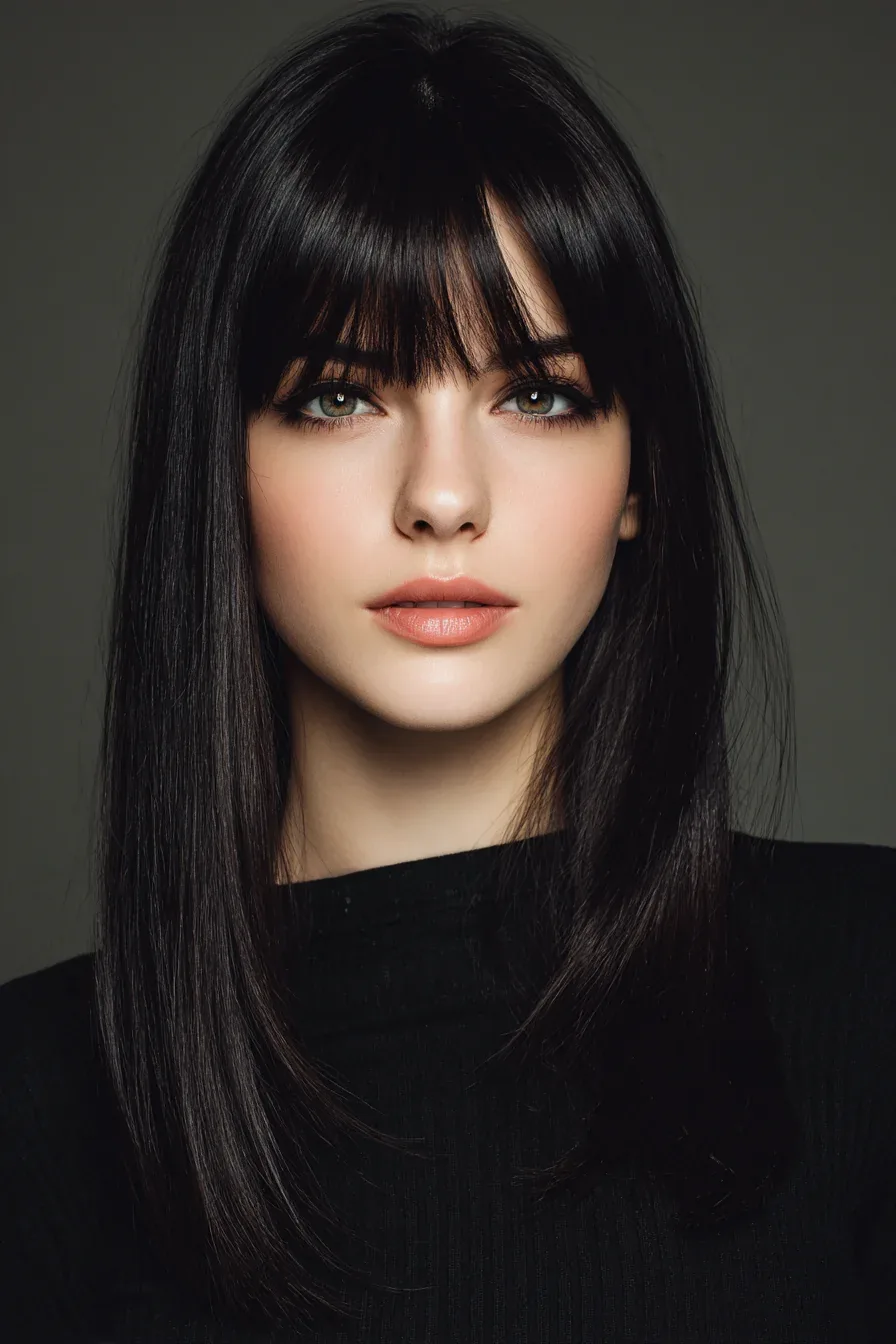
Sleek, straight hair with wispy bangs is a study in contrast: the lengths are smooth and polished, the fringe is light and feathery, and the combination looks expensive. The key is keeping the bangs soft — if the fringe is ironed as flat as the lengths, it sticks to the forehead and loses its airiness. Blow-dry the bangs with a slight under-curve instead, so they float just off the skin, and the contrast between sleek lengths and a soft fringe does all the work.
Best for: straight hair, oval faces, and polished occasions. How to style: flat iron the lengths, round-brush the bangs. Watch out for: humidity, which can make a sleek fringe go wavy — a light anti-frizz serum on the bangs only, applied sparingly, keeps them smooth without weighing them down.
13. Wispy Bangs with a Braided Crown

A braided crown with wispy bangs is the romantic updo that still feels modern: two braids wrapped around the head like a halo, and a soft fringe left loose across the forehead so the look stays gentle instead of severe. The braids keep every strand contained, the bangs frame the face, and the whole style holds for hours, which makes it a favourite for weddings, festivals and long summer evenings.
Braid loosely — a tight crown braid fights with a soft fringe, while a loose, slightly pulled-apart braid matches it. Style the bangs first, then braid from each temple toward the back, cross the braids over each other and pin. Pull a few wisps loose at the temples and nape for softness. If your hair is fine, pancake the braids by gently tugging the edges outward so they look fuller.
14. Wispy Bangs with a Messy Bun
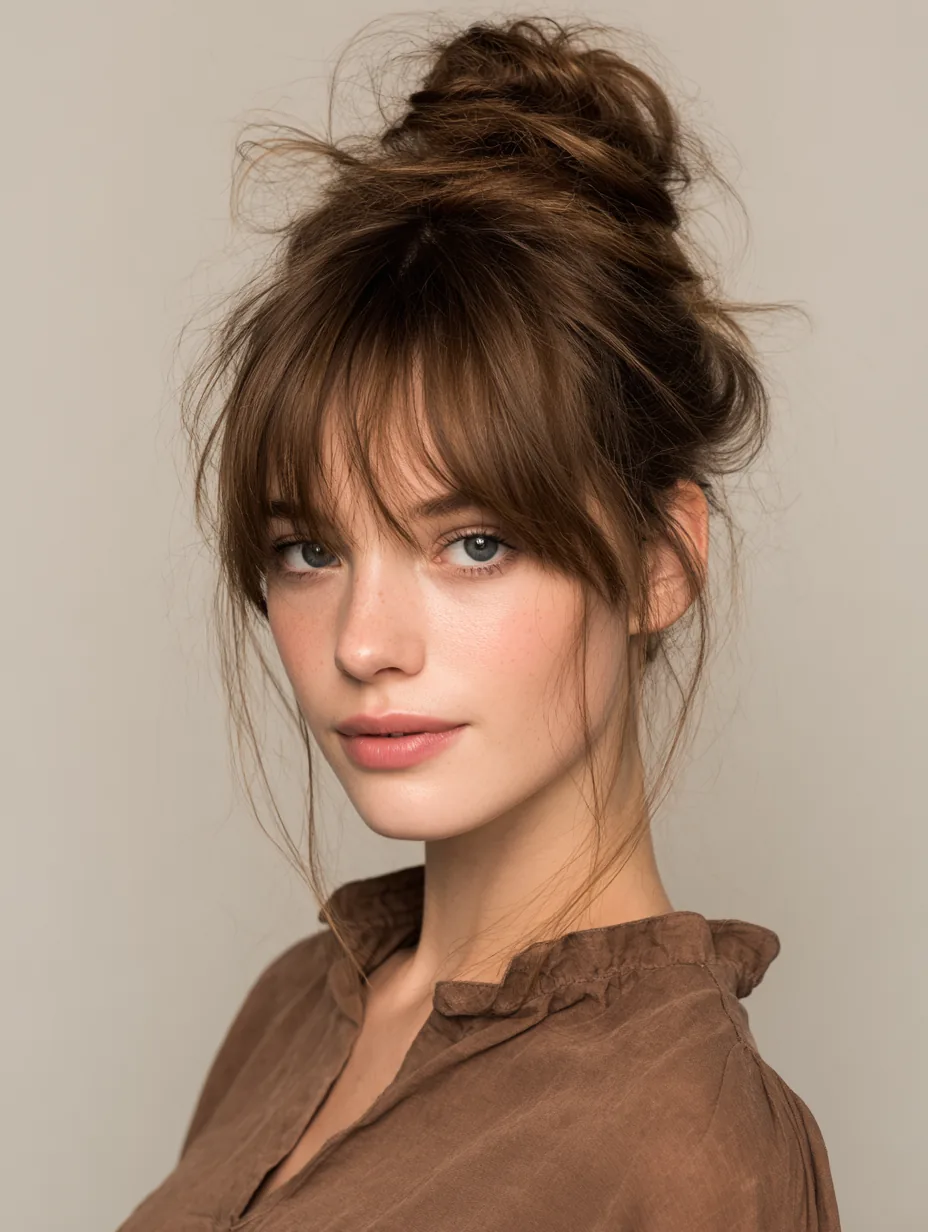
The messy bun is the hairstyle most people actually wear, and wispy bangs are what make it look deliberate instead of accidental. The bun is loose and textured, the fringe is soft across the forehead, and a few pieces escape around the face — the combination reads as effortless, and it takes about two minutes. It is the weekend uniform, the work-from-home look, and the style that saves a third-day hair wash.
Pros: two minutes; hides unwashed hair; the fringe makes it look styled. Cons: a bun that is too messy can look unfinished next to a neat fringe, so keep the bun’s shape intentional. Quick verdict: twist, pin, pull a few pieces loose, and let the bangs do the rest — the easiest good-hair day in this guide.
15. Wispy Bangs for Round Faces

Round faces and wispy bangs are a genuinely good match, as long as the fringe is cut long. A fringe that ends at the cheekbones or below draws the eye downward and adds the illusion of length, while the see-through texture keeps the face from looking covered up. The mistake to avoid is a short, full fringe, which shortens the face and emphasises its roundness — length is your friend here.
What it is: a longer, lighter fringe with longer side pieces. Why it helps: vertical lines lengthen a round face, and the airy texture avoids adding width. Who it suits: round and full faces, especially with longer hair. How to style it: a middle or slightly off-centre part, with the sides blow-dried to fall past the cheekbones. What to ask your stylist for: bangs that end at the cheekbones, sides blended into layers, and no blunt horizontal line.
16. Wispy Bangs for Oval Faces
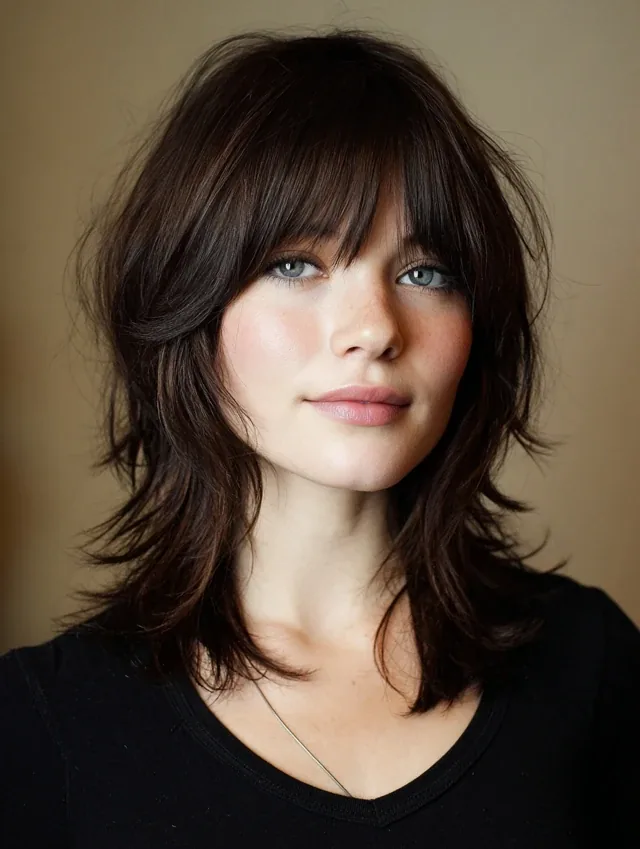
Oval faces can wear almost any fringe, which makes wispy bangs a playground rather than a puzzle: short and piecey, long and curtain-like, side-swept or straight down, they all work. The freedom is the point — with balanced proportions, the fringe is a styling choice, not a correction, so you can choose the version that matches your mood and your hair texture rather than your face shape.
Because everything works, the best advice for oval faces is to choose by hair type instead. Fine hair suits a slightly deeper, fuller wisp for body; thick hair needs a well-thinned fringe; wavy hair loves a longer, curtain-style wisp. Try the length you are most drawn to first — if you hate it, an oval face forgives a fringe experiment faster than any other shape, and the grow-out is gentle.
17. Wispy Bangs for Square Faces
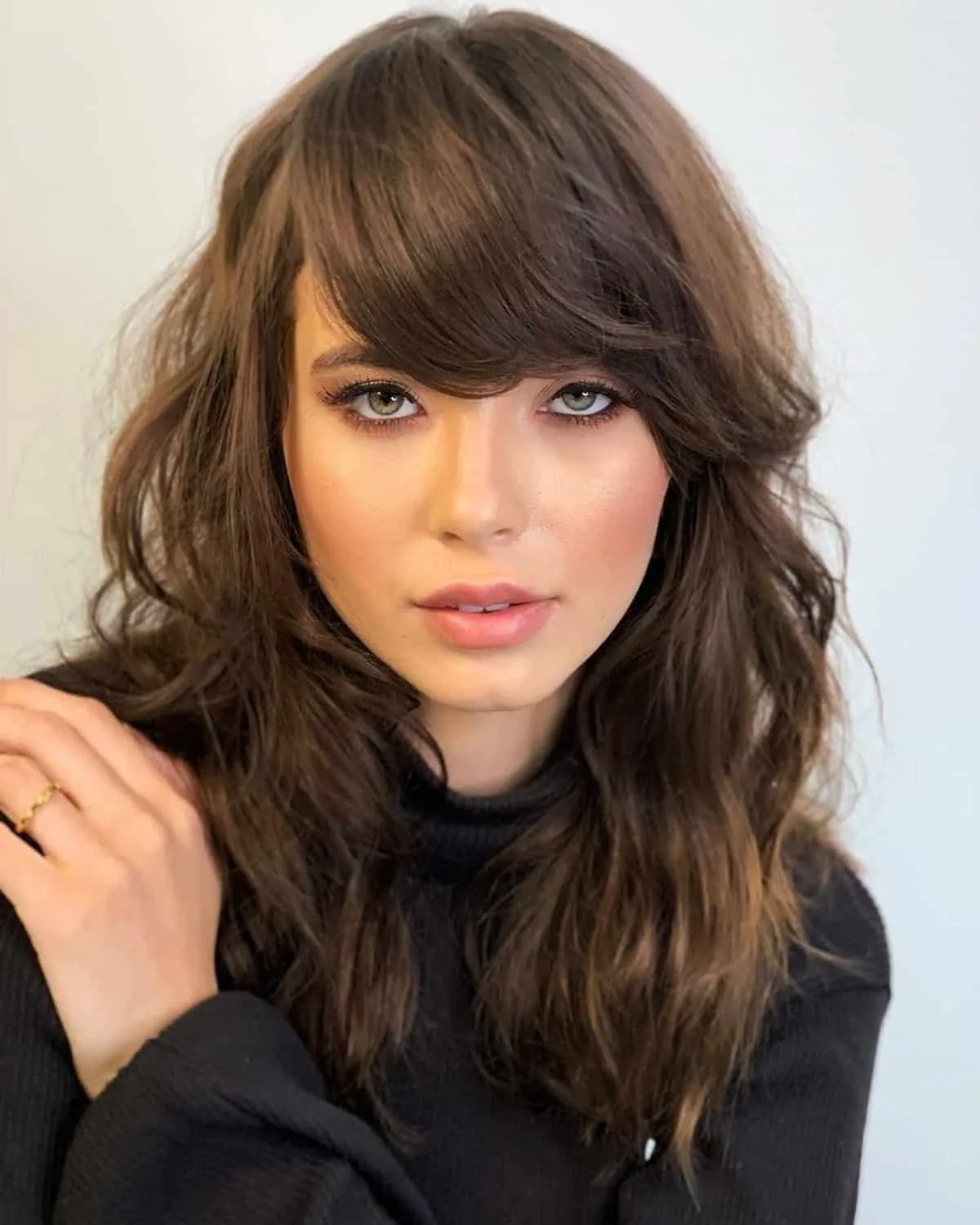
Square faces have strong, beautiful jawlines, and wispy bangs soften them without hiding them. A fringe that is longer at the sides and slightly side-swept breaks up the angles of the forehead and jaw, while the see-through texture keeps the face open. Avoid a short, straight-across fringe, which can emphasise the squareness — the goal is softness and diagonal lines, not another horizontal line across the face.
Best for: square and rectangular faces, strong jawlines. How to style: sweep the fringe gently to one side and let the side pieces fall past the jaw. Watch out for: a fringe cut too wide — keep it narrower than your cheekbones so the sides of the face stay open and the jaw is softened, not boxed in.
18. Wispy Bangs for Heart-Shaped Faces
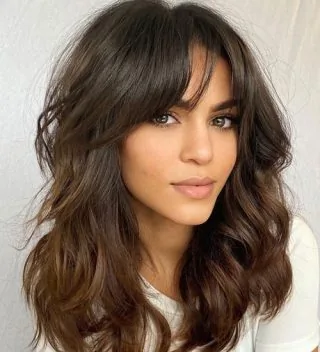
Heart-shaped faces — a wider forehead, a narrower chin — are one of the shapes wispy bangs flatter most. The fringe balances the forehead, drawing the eye to the middle of the face, and the soft texture stops the look from feeling heavy. A fringe that is fuller in the centre and shorter at the edges works beautifully, as does a longer curtain-style wisp that frames the cheekbones.
The balance is the whole point: the bangs take visual weight off the forehead, which makes the chin look less narrow by comparison. Pair them with layers that add a little width around the jaw — soft waves or a gentle flip at the ends — and the face looks beautifully balanced. Keep the fringe light rather than dense, since a heavy fringe on a heart-shaped face can overwhelm the lower half of the face.
19. Wispy Bangs for Long Faces
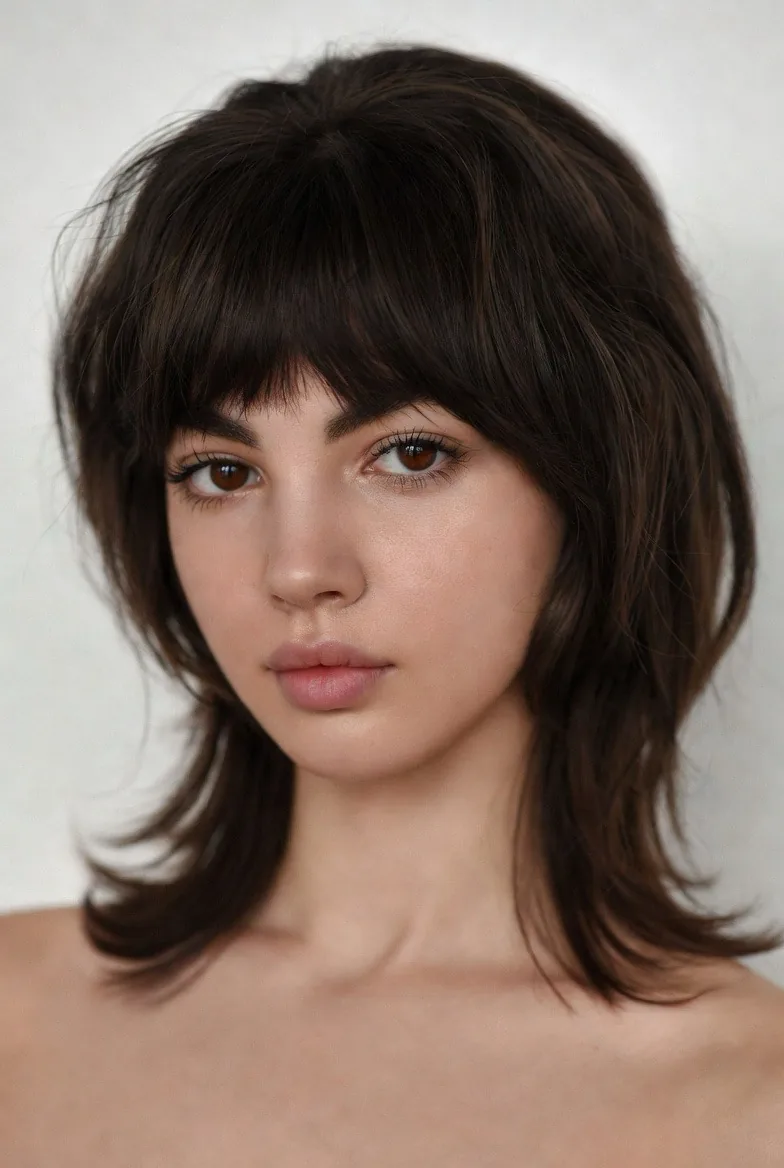
Long faces benefit from wispy bangs more than almost any other shape, because a fringe is the simplest way to shorten the forehead visually. A slightly fuller, brow-skimming wisp breaks up the length of the face, and the soft texture keeps it from looking like a heavy block. The ideal length ends right at the eyebrows, with the sides blending into layers that add width around the cheeks.
What it is: a brow-length, slightly fuller wisp. Why it helps: the fringe cuts the forehead’s visual length in half. Who it suits: long and oblong faces. How to style it: blow-dry straight down with a round brush for a soft under-curve. What to avoid: a very long, thin fringe that hangs past the eyes — it lengthens the face instead of shortening it, which defeats the purpose.
20. Wispy Bangs with Glasses

Wispy bangs and glasses are a charming combination, but they need a little negotiation: the fringe sits right where the frames do, and the two can compete for the same space. The solution is length — bangs that end just above the frames, or just below them, work best, while bangs that end exactly at the frame line will catch, split and tangle with the glasses all day. A slightly side-swept wisp is the easiest version to live with.
Pros: the fringe softens the frames; the combination looks intelligent and stylish. Cons: the bangs can catch on the frames and need more frequent styling. Quick verdict: choose your length around your frames, keep the fringe light so it does not fight the glasses, and carry a small comb — a quick sweep through the bangs after taking your glasses off fixes everything.
21. Wispy Bangs with Curly Hair
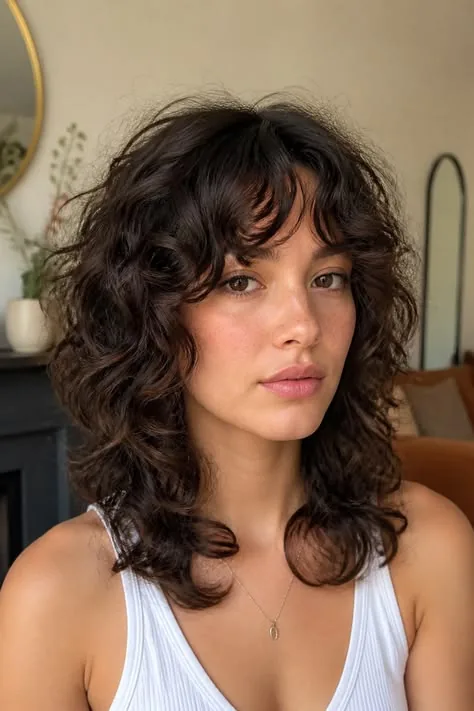
Curly wispy bangs are softer, bouncier and more alive than straight ones — each curl forms its own little wisp, and the fringe moves with the rest of the hair instead of sitting still. The secret is cutting them dry, curl by curl, because curly hair shrinks dramatically as it dries and a fringe cut wet will end up far shorter than planned. A good curl specialist will cut the fringe in its natural state and let the curls decide the shape.
Style them by scrunching a little curl cream through the damp fringe and letting it air-dry, or diffusing on low heat. Do not brush curly bangs — brushing breaks the curl pattern into frizz. On refresh days, a light mist of water reactivates the curls. The result is a fringe that looks effortless and a little wild, which is exactly the point, and it pairs beautifully with a curly shag or long layers.
22. Wispy Bangs with Wavy Hair
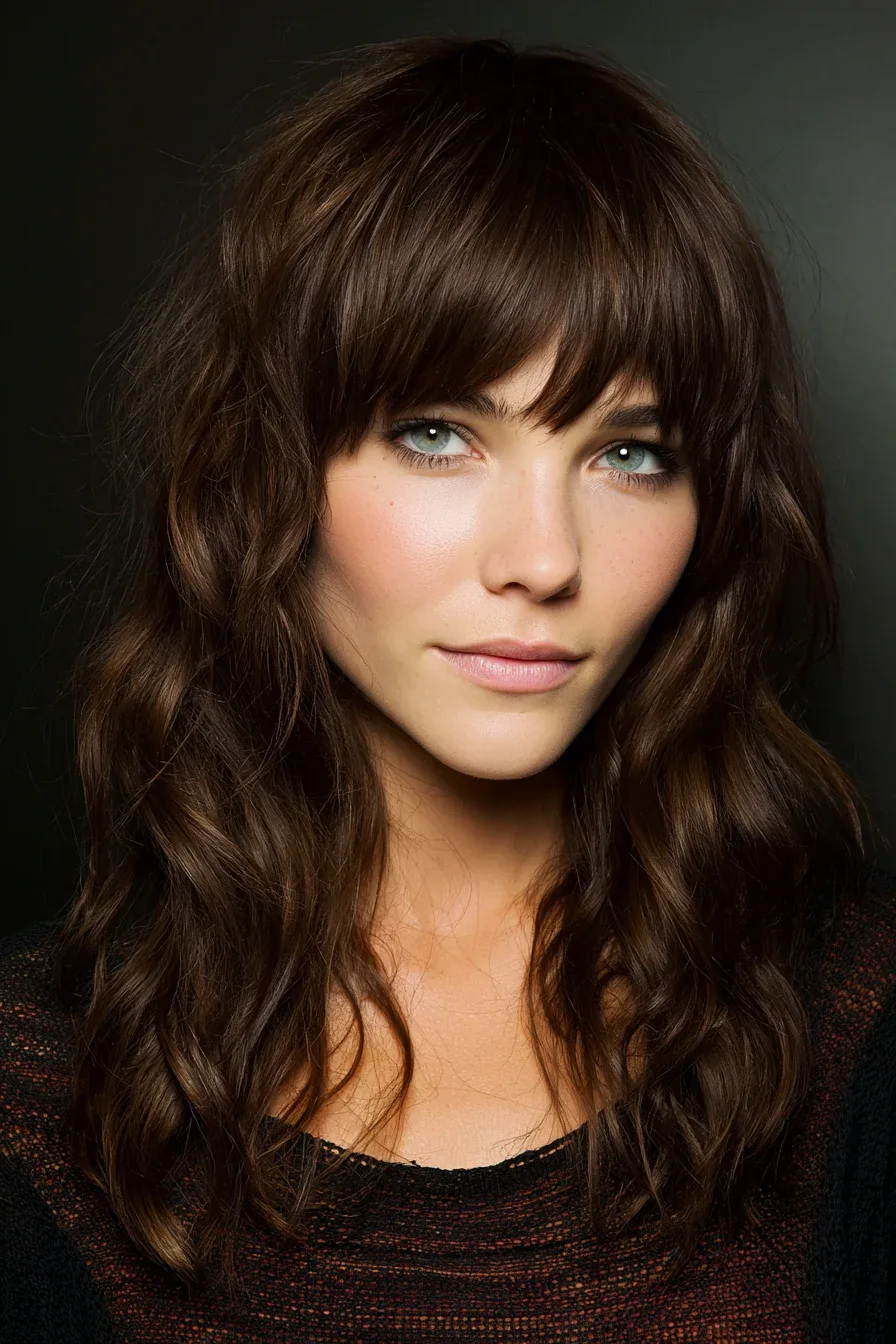
Wavy hair gives wispy bangs a natural, piecey texture for free — the wave creates the separation between strands that straight hair needs products to achieve. The fringe will have a gentle bend rather than falling straight, which looks relaxed and modern, and it blends into wavy layers without any visible join. The main thing to know is shrinkage: wavy bangs dry shorter than they look wet, so they should be cut a touch longer than the target length.
What it is: a fringe that follows your natural wave. Why it works: the wave does the texturising for you. Who it suits: natural waves, from loose bends to defined S-waves. How to style it: scrunch with a little mousse or sea-salt spray and air-dry, or twist the damp fringe and let it dry for a soft bend. What to watch out for: the fringe drying in two different directions — a quick finger-twist while damp trains it to fall one way.
23. Wispy Bangs with Fine Hair
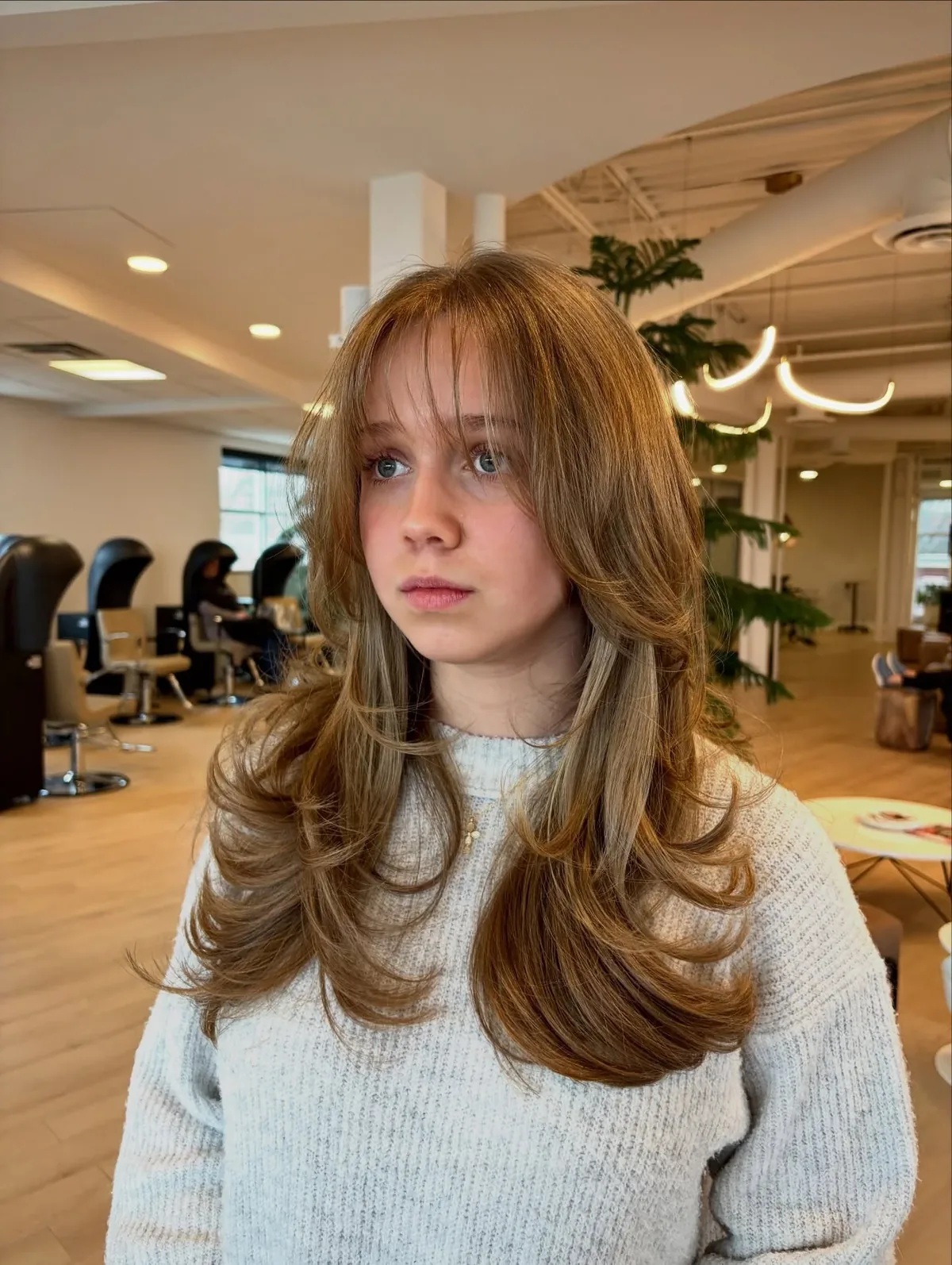
Fine hair and wispy bangs are a natural pairing, because the fringe is supposed to be light — thin hair falls into soft, separate pieces on its own, and the airy texture that other hair types need texturising to achieve comes naturally. The risk is a fringe that looks sparse rather than wispy, so the fix is to cut the bangs from a slightly deeper section, taking hair from a little further back on the crown, which gives the fringe more substance without making it heavy.
Best for: fine and thin hair, anyone whose fringe goes flat by noon. How to style: dry shampoo at the roots, a round brush for lift, and no heavy products. Watch out for: over-conditioning the fringe and over-touching it — both turn fine wisps into stringy pieces. A light volumising mousse at the roots, applied before blow-drying, is the one product worth using.
24. Wispy Bangs with Thick Hair
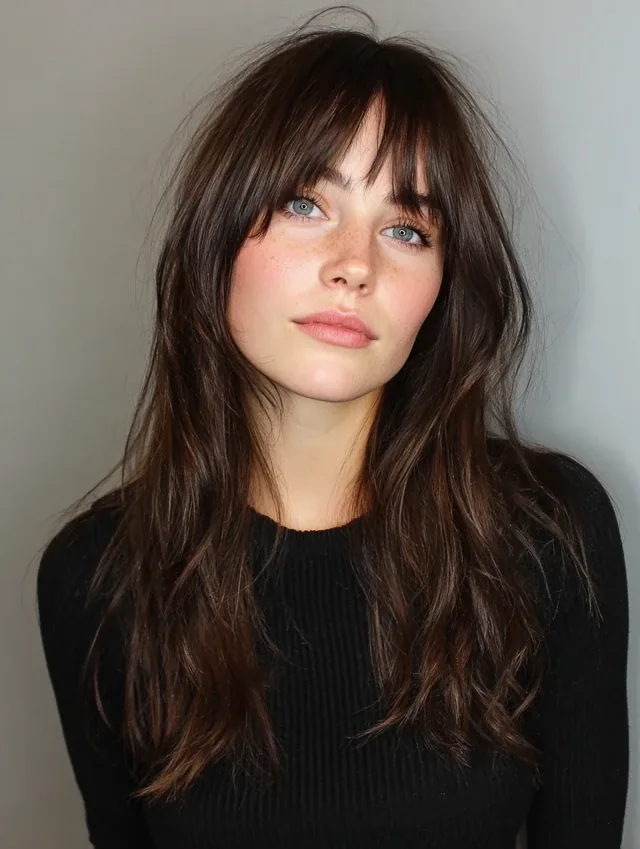
Thick hair can wear wispy bangs beautifully, but only with serious thinning — without it, the fringe is a heavy curtain within a week. The stylist needs to texturise the fringe with thinning shears or a razor, removing bulk from the inside while keeping the tapered ends, and the bangs should be cut from a shallow section so there is simply less hair in the fringe to begin with. Done right, the result is a fringe that moves, breathes and stays light.
The upkeep is the trade-off: thick-haired bangs grow out faster and need trimming every three to four weeks to keep their lightness. Between trims, a little dry shampoo keeps the roots from clumping, and a round brush keeps the ends feathered rather than bulky. If your fringe keeps turning into a solid block, ask your stylist to thin it more aggressively next time — a wispy fringe on thick hair should feel like it has air in it.
25. Wispy Bangs with a Side Part

A side part turns wispy bangs into the most forgiving fringe of all: the fringe sweeps diagonally across the forehead, the weight falls to one side, and any cowlick or uneven growth is disguised by the direction of the sweep. It is the best version for anyone whose bangs refuse to fall straight down, and it suits faces that want a little asymmetry — which is most of them.
Part the hair deeply on one side while it is damp, blow-dry the fringe across the forehead in the direction of the part, and let the ends flick slightly outward. The sweep softens a strong forehead and draws attention to the eyes, and it grows out more gracefully than a straight fringe, since a side-swept fringe is already halfway to being a layer. If your hair has a natural part, work with it rather than against it — a side part that follows the hair’s own fall needs almost no styling.
26. Wispy Bangs with a Middle Part
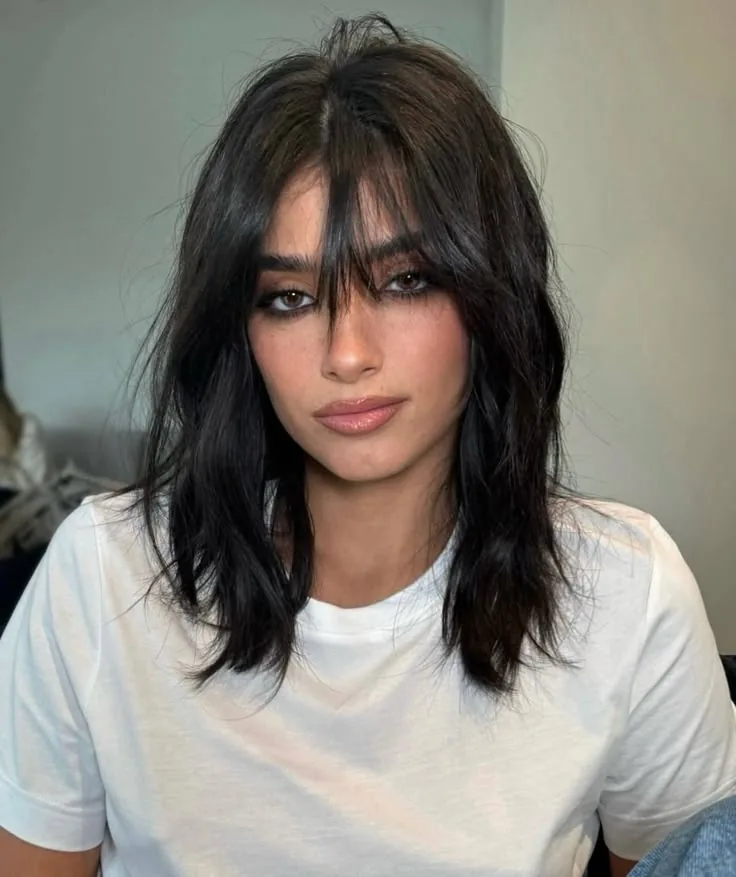
A middle part with wispy bangs is the symmetrical, face-framing look that curtain bangs made famous — and when the fringe is cut wispy, it is softer and easier than the full curtain version. The centre falls just over the brows, the sides lengthen gradually, and the face is framed evenly on both sides. It suits oval, heart-shaped and long faces especially well, and it photographs beautifully because of its symmetry.
Pros: symmetrical and flattering; grows out into curtain layers; suits most face shapes. Cons: a middle part shows unevenness, so the fringe needs to be cut carefully, and a strong cowlick at the front hairline can fight it. Quick verdict: the most polished way to wear wispy bangs — keep the part clean, the centre short, and the sides long.
27. Wispy Bangs with a Claw Clip Updo
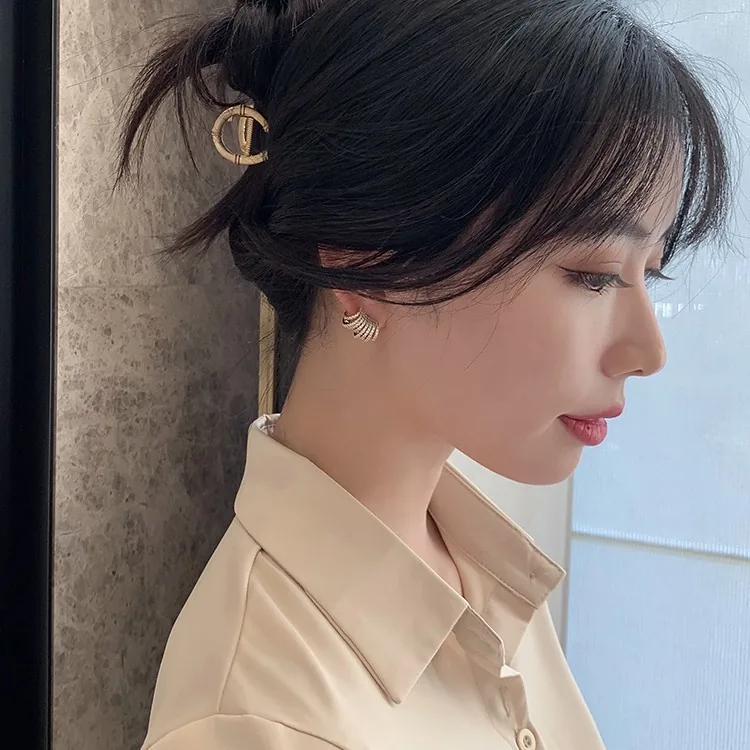
The claw clip updo is the two-minute hairstyle that defined a generation, and wispy bangs are what keep it from looking like you gave up. Twist the hair up, clip it, let the fringe fall soft across the forehead, and pull a few pieces loose at the temples — the result is relaxed, pretty and genuinely fast. It is the best friend of second-day hair, and it works on every length from a lob to long hair.
The clip does the holding and the bangs do the styling, which is why the combination works so well. Choose a clip that matches your hair volume — a small clip on thick hair will pop open by lunchtime — and position it high for a lift or low for a softer look. Style the bangs first, as always, and finish by loosening the front of the twist slightly so the shape is soft rather than scraped back.
28. Wispy Bangs with a French Braid
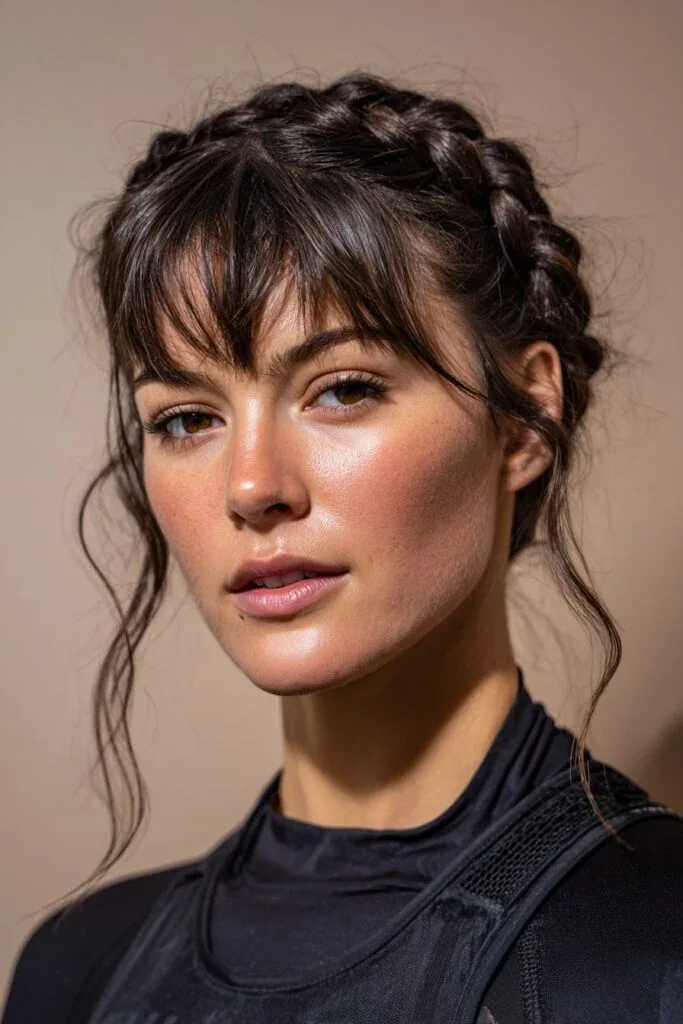
A French braid with wispy bangs is the pretty, practical style that keeps hair completely contained while the fringe keeps the face soft. The braid runs from the crown to the nape, the bangs fall across the forehead, and nothing escapes — which makes it perfect for workouts, windy days, and long days when you do not want to think about your hair. It also looks far more polished than a plain braid, because the fringe frames the face.
Braid loosely for a softer look, and pancake the braid by tugging its edges outward once it is secured. Style the bangs first, then braid, and pull a few wisps loose at the temples for softness. A single French braid is the classic, but two French braids with wispy bangs are just as charming and even more secure. Either way, the fringe is what stops the style from looking severe.
29. Wispy Bangs with a Top Knot
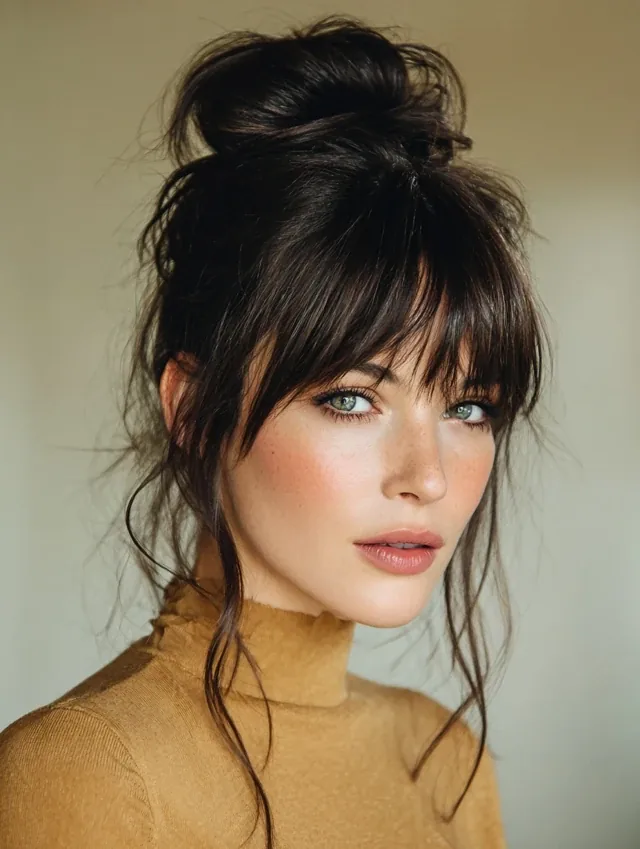
A top knot with wispy bangs is the high, polished bun that looks intentional instead of severe — the knot lifts the face and shows off the cheekbones, while the fringe softens the forehead and keeps the look friendly. It works for a night out, a wedding, or a day when you want your hair completely out of the way but still want to look finished. The contrast between the sleek knot and the soft fringe is the whole appeal.
What it is: a high bun with a feathered fringe. Why it works: the knot adds height and polish, the bangs add softness. Who it suits: oval and heart-shaped faces, medium to long hair. How to style it: smooth the hair up with a brush, secure the knot, then style the bangs with a round brush. What to watch out for: a knot that is too tight — it pulls at the hairline, so keep the front slightly loose.
30. Wispy Bangs for a Wedding Guest Look
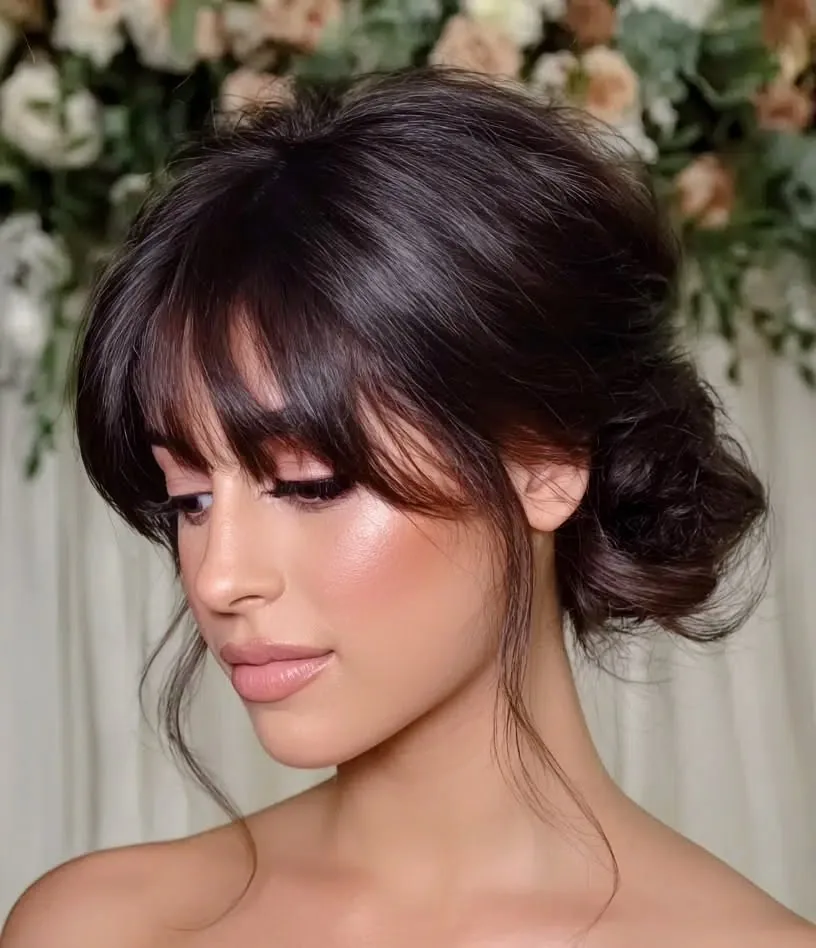
For a wedding guest, wispy bangs are the detail that makes a simple hairstyle look occasion-ready. A soft low bun, loose waves or a half-up style all gain a romantic finish from a feathered fringe, and the bangs photograph beautifully — they frame the face in every photo without hiding it. The look is elegant without competing with the bride, which is exactly the brief.
Best for: weddings, formal dinners, and any occasion where photos matter. How to style: soft waves through the lengths, a low bun or half-up style, and bangs blow-dried with a gentle under-curve. Watch out for: over-styling the fringe — on a formal day, the bangs should look soft and touchable, not shellacked, so use a flexible-hold spray and keep your hands off them once they are set.
31. Wispy Bangs for the Office

Wispy bangs are one of the most office-friendly fringes you can choose, because they are polished without being severe. A straight blow-dry with a soft fringe looks professional and put-together, a low ponytail with wispy bangs looks neat without looking scraped-back, and the fringe itself reads as a deliberate style choice rather than a trend. They work in conservative offices and creative ones alike, which is rare for a fringe.
The office version is all about neatness: keep the bangs at brow length, blow-dry them smooth, and avoid too much texture or pieceyness during work hours. A low bun or a sleek ponytail pairs best, and a quick midday refresh with dry shampoo keeps the fringe from going flat at your desk. If your office is very formal, a slightly longer, side-swept wisp is the safest version — it reads as classic, not trendy.
32. Wispy Bangs with Balayage Highlights
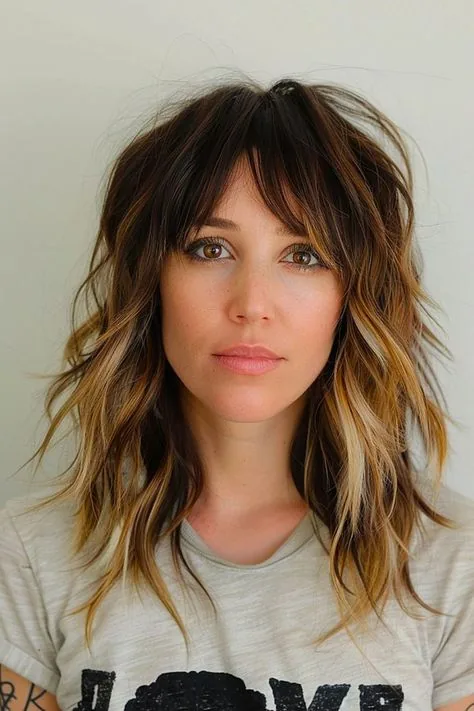
Balayage and wispy bangs are a beautiful combination, because the hand-painted highlights catch the light in the fringe exactly where the face is. Lighter pieces through the bangs add dimension and make the wisps look even airier, while the soft grow-out of balayage means the fringe never shows a harsh root line. It is the most dimensional way to wear a fringe, and it suits every base colour from dark brown to blonde.
Ask your colourist to paint a few fine, face-framing pieces through the bangs themselves — not just the lengths — so the fringe and the rest of the hair share the same light. Keep the highlights subtle in the fringe, since too much lightness there can look stripey. The upkeep is gentle: balayage grows out softly, and a purple shampoo once a week keeps blonde pieces from turning brassy.
33. Wispy Bangs with a Money Piece
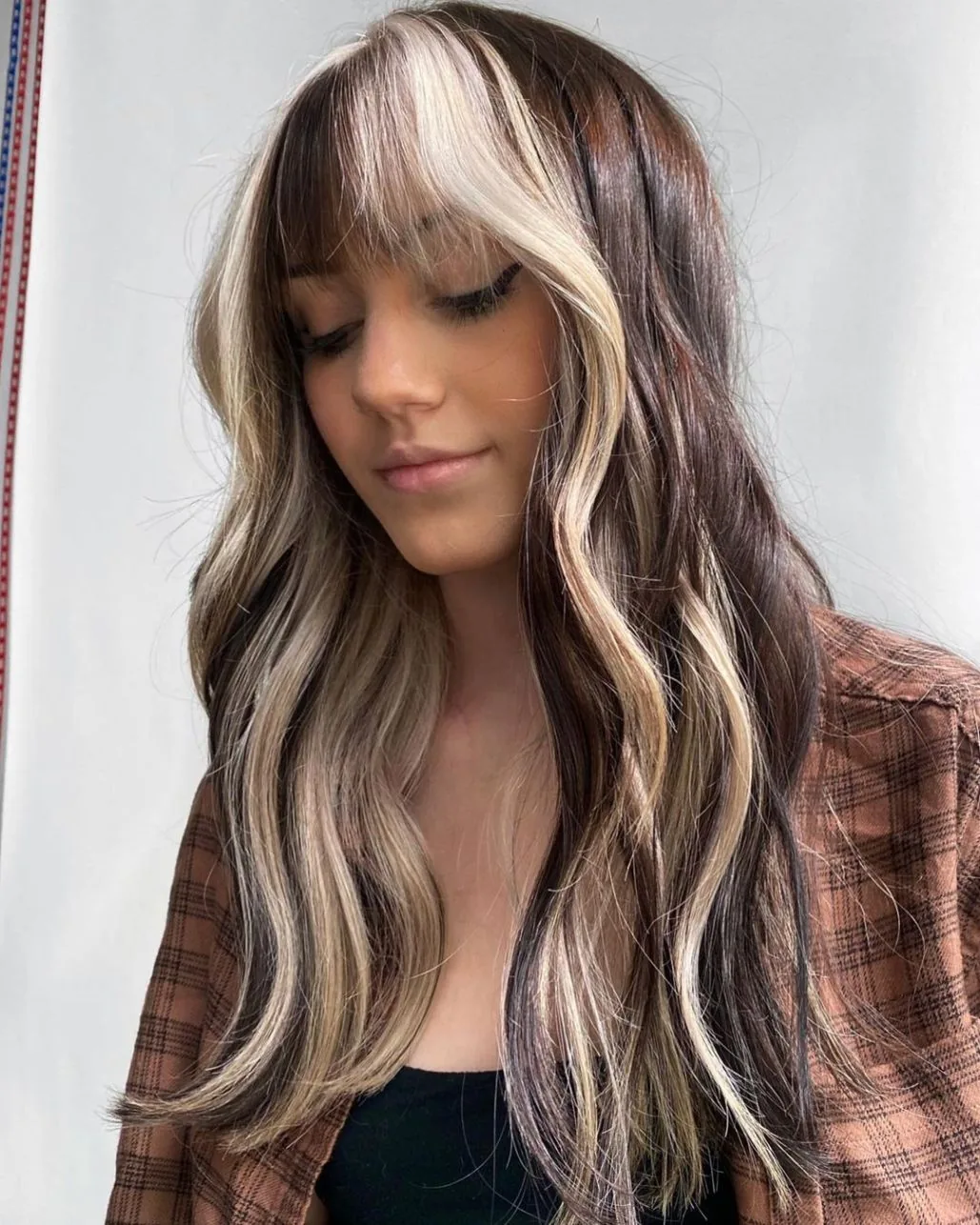
A money piece — the bright, face-framing highlight at the very front — turns wispy bangs into a statement. The lighter strands in the fringe catch the light, brighten the face, and make the eyes pop, while the rest of the hair can stay darker and lower-maintenance. It is a bold look, but because the fringe is wispy, the brightness feels soft rather than stripey.
Pros: brightens the face instantly; makes the eyes stand out; low maintenance on the rest of the hair. Cons: the front pieces need toning to stay bright, and the contrast is high, so it is a commitment. Quick verdict: the best way to make wispy bangs feel like a statement — ask for fine, blended pieces rather than a solid block of blonde, and keep the rest of the fringe soft.
34. Wispy Bangs on Short Hair
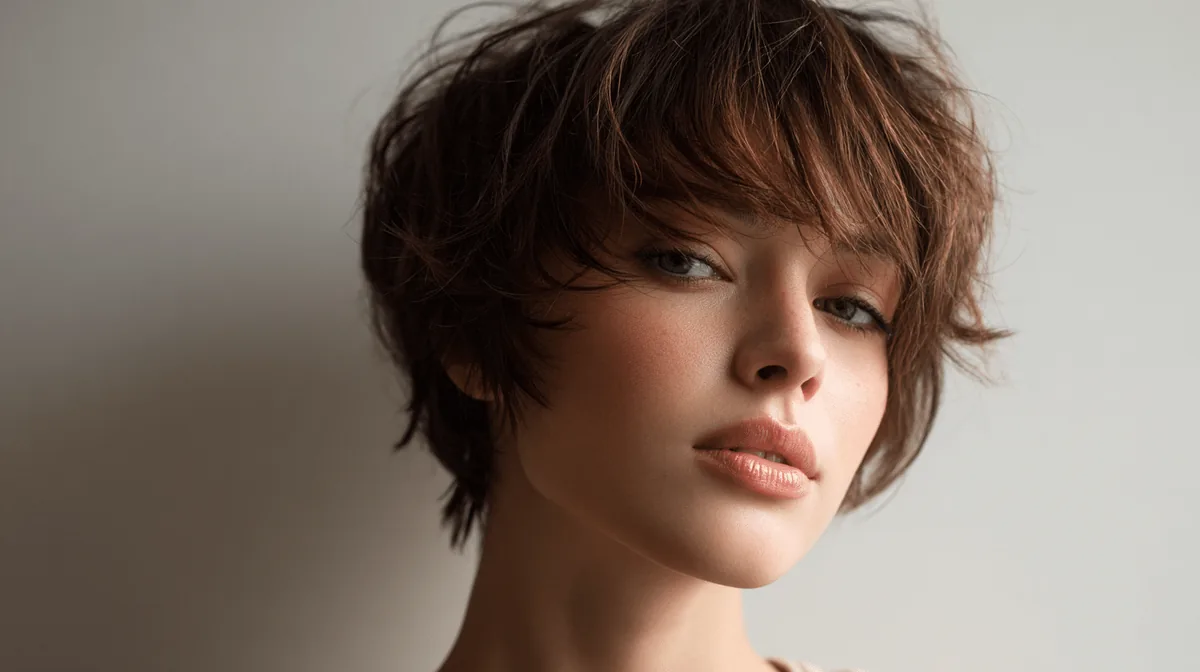
Short hair with wispy bangs is fresh, modern and surprisingly versatile: the fringe softens a short cut, adds movement at the front, and gives a bob or a short shag a face-framing finish that a bare forehead cannot. It works on chin-length bobs, short lobs and even longer pixies, and it is one of the easiest fringes to maintain on short hair, because there is less hair to style and the fringe is always within reach of a brush.
What it is: a light fringe on a short cut. Why it helps: it softens the front and adds movement. Who it suits: short bobs, lobs and grown-out pixies. How to style it: a round brush through the fringe and a little texture cream on the ends. What to ask your stylist for: a fringe that connects to the front layers of the cut, so there is no gap between the bangs and the rest of the hair.
35. Wispy Bangs with a Wolf Cut
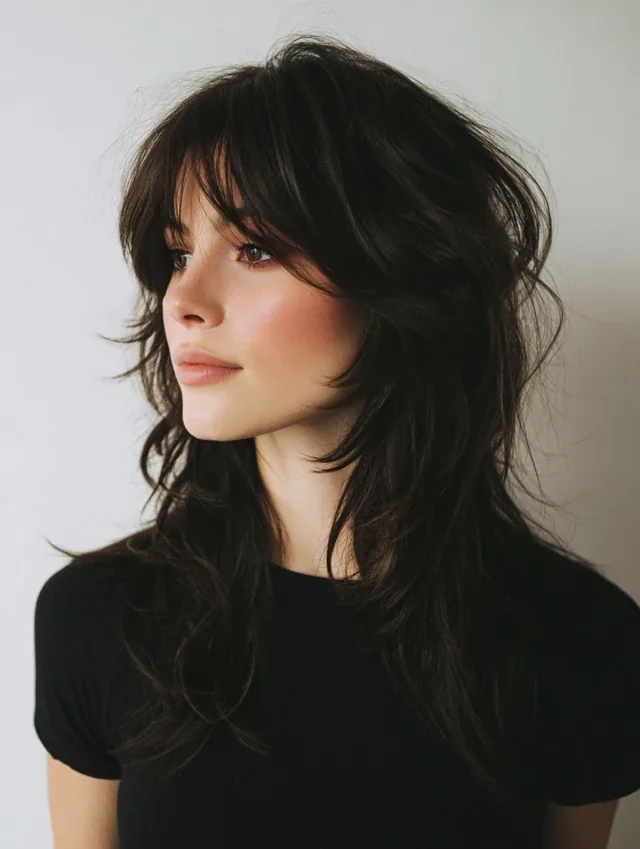
The wolf cut — part shag, part mullet, all texture — needs a fringe, and wispy bangs are the perfect one. The cut is wild at the back and choppy through the layers, and a feathered fringe at the front ties the whole shape together, giving the eyes a frame inside all that texture. It is the boldest look in this guide, and the one that gets the most compliments, because it looks like a choice rather than an accident.
Style it with texture, not polish: a little texturising spray, a scrunch, and air-dry, and let the bangs fall where they fall. The wolf cut is designed to look undone, so a perfect fringe would fight it — the wisps should be piecey, uneven and a little wild. If your hair is straight, a curling iron through a few pieces adds the movement the cut needs; if it is wavy, you barely need to do anything.
36. Wispy Bangs with a Low Ponytail
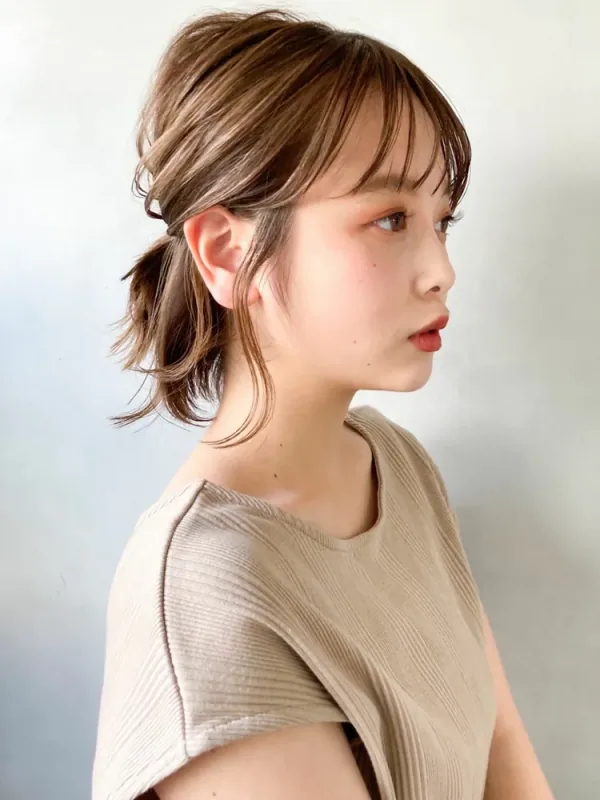
A low ponytail with wispy bangs is the quiet, polished style that works everywhere — the office, a dinner, a school run, a wedding. The tail sits at the nape, the fringe softens the front, and a wrap of hair around the elastic hides the mechanics and makes the whole thing look considered. It is the hairstyle equivalent of a good white shirt: simple, flattering, and impossible to get wrong.
The wrap is the detail that elevates it: take a small section from underneath the tail, wrap it around the elastic, and pin it underneath. Style the bangs first, gather the hair low with a brush for smoothness, and pull a few face-framing pieces loose at the temples. For a softer version, leave the ponytail slightly loose at the front; for a sleeker version, smooth everything back and let the fringe be the only softness. Either way, it takes five minutes and looks like fifteen.
Do wispy bangs suit everyone?
Almost everyone — because the fringe is light and see-through, it softens the face without hiding it, so it works on round, square, heart-shaped, long and oval faces. The cut is adjusted to the face: longer for round faces, slightly fuller for long faces, side-swept for square faces. The main exceptions are a very strong front cowlick, which can fight a straight fringe, and extremely curly hair, which needs the fringe cut dry and curl by curl.
How do I style wispy bangs in the morning?
Dampen the fringe, then blow-dry it first — before the rest of your hair — moving the dryer side to side with a small round brush or your fingers, and roll the ends under slightly. On no-wash days, use dry shampoo at the roots. The whole routine takes about five minutes, and styling the bangs while they are damp is the key, since they set their shape as they dry.
How often do wispy bangs need trimming?
Every three to five weeks, depending on how fast your hair grows and how precise you want the length. Because the fringe is light, a trim is quick — many salons offer a free or low-cost fringe trim between appointments. You can also trim them at home with the dry, vertical-snip method in the guide above, cutting a millimetre at a time.
Are wispy bangs high maintenance?
Less than a blunt fringe, but more than no fringe at all. They need a few minutes of styling most mornings and a trim every month, but they grow out gracefully, they work on most hair types, and they do not need daily heat styling. If you already wash and style your hair most days, wispy bangs add about five minutes to the routine.
Can I have wispy bangs with curly hair?
Yes — curly wispy bangs are soft, bouncy and beautiful, but they must be cut dry, curl by curl, because curly hair shrinks as it dries and a fringe cut wet will end up much shorter than planned. Style them with curl cream and air-dry or diffuse, and never brush them, which breaks the curl pattern into frizz.
What is the difference between wispy bangs and curtain bangs?
Curtain bangs part in the middle and sweep to the sides, framing the face like a curtain. Wispy bangs describe the texture — thin, separated, see-through strands — and they can fall straight down, parted in the middle, or swept to the side. The two overlap: you can have wispy curtain bangs, which are curtain bangs cut with a light, feathered texture.
Do wispy bangs work with glasses?
Yes, with the right length. Bangs that end just above or just below your frames work best; bangs that end exactly at the frame line catch and split on the glasses. A slightly side-swept wisp is the easiest version to live with, and a quick comb-through after taking your glasses off fixes any disturbance.
How do I grow out wispy bangs?
Stop trimming the centre and let the fringe reach the eyebrows, then the cheekbones, blending it into face-framing layers as it grows. A middle part turns the growing fringe into curtain bangs, a deep side part sweeps it into the rest of the hair, and bobby pins or a small braid at the temple hide the in-between length. Most people reach a comfortable layer length in about three months.
Will wispy bangs make my forehead look smaller?
Yes — a fringe is the simplest way to shorten the forehead visually, which is why wispy bangs flatter long faces so well. A brow-skimming wisp breaks up the forehead’s length, and the see-through texture keeps the effect soft rather than heavy. For the strongest effect, keep the fringe slightly fuller across the centre.
Can I cut wispy bangs at home?
You can trim them at home, but only dry, in tiny vertical snips, a millimetre or two at a time, working in passes and stopping while the fringe still looks slightly too long. Never cut wet hair, never cut straight across, and never take a big section at once. A major change in length or shape, or a fringe with a strong cowlick, is a salon job.
Conclusion: The Softest Fringe Is the Easiest to Love
Wispy bangs work because they ask so little and give so much: a few feathered strands across the forehead soften the face, frame the eyes, and make every hairstyle in this guide — from a high ponytail to a low bun, a shag to a wolf cut — look like it was styled on purpose. They suit nearly every face shape and hair type, they grow out gracefully, and they need only five minutes a morning and a trim a month. The secret is in the cut: light, piecey, blended at the sides, and adjusted to your face and texture rather than copied from a photo of someone else’s hair.
Start with the version that matches your hair and your life — the classic long layers if you are trying bangs for the first time, the curtain layers if you want the most forgiving grow-out, the side-swept wisp if you wear glasses or have a cowlick. Bring photos of your own hair texture to the stylist, agree on the length before the scissors come out, and give the fringe a week to settle before you judge it. If you love it, keep it trimmed and enjoy the easiest good-hair days of your life. If you do not, it will grow out in three months — and you will have learned exactly what your hair likes.

