

Vitamin C serum has a reputation problem. Ask any skincare group and you will hear two opposite stories: one person swears it gave them the brightest skin of their life, and the next says it stung, turned their face red, and went straight in the bin. Both stories are true, and the difference between them is rarely the product — it is how the product was chosen and introduced. Start with the wrong strength, use it every day from day one, or layer it over a strong acid, and even a good serum will fight back. Start gently, and the same ingredient becomes one of the easiest wins in skincare.
This guide is built for the true beginner: someone who has never used vitamin C, or tried it once and gave up after the tingle. It covers the 36 things that actually matter — the gentlest forms to start with, the strength that suits your skin, where the serum fits in a morning routine, which ingredients it loves and which it clashes with, and how to tell normal adjustment from real irritation. Seven guides explain what vitamin C does, how the different forms compare, how to choose by skin type, and what results to honestly expect. No brand is endorsed here, and no single product is presented as the answer — the goal is to teach you how to pick and use any vitamin C serum with confidence.
What Vitamin C Actually Does for Your Skin

Vitamin C is an antioxidant, which means its main job is defending skin against the daily damage that dulls it. Sunlight, pollution and even normal metabolism create unstable molecules called free radicals, and vitamin C neutralises them before they can break down collagen — the protein that keeps skin firm and smooth. It also plays a direct role in making new collagen, and it interferes with excess melanin production, which is why it fades dark spots and evens out patchy tone over time. The result is not an overnight transformation but a slow, steady brightening that most people notice first as skin looking less tired in the morning.
What vitamin C does not do matters just as much. It is not a moisturiser, so it will not fix dryness on its own. It is not an exfoliant, so it will not clear clogged pores. And it is not sunscreen — in fact, it works best alongside sunscreen, because the two protect skin in different ways. Think of vitamin C as the morning shield and sunscreen as the wall: one neutralises the damage that gets through, the other blocks most of it from arriving. Used together every morning, they are the most researched anti-ageing combination in skincare, and they are the reason dermatologists recommend vitamin C in the morning rather than at night.
The Forms of Vitamin C, Compared in Plain English
The word “vitamin C” on a bottle can mean several different ingredients, and they are not interchangeable. Pure L-ascorbic acid is the most studied and the most potent, but it is also the most unstable and the most likely to irritate, because it only works in a very acidic formula. Derivatives — sodium ascorbyl phosphate, magnesium ascorbyl phosphate, ascorbyl glucoside, tetrahexyldecyl ascorbate and ethylated ascorbic acid — are vitamin C molecules modified to be gentler and more stable. They convert to active vitamin C once they reach the skin, so they work more slowly, but for a beginner that slower pace is exactly the point.
A useful rule: if your skin is normal or oily and has tolerated acids before, pure L-ascorbic acid at 10% is a reasonable starting point. If your skin is sensitive, reactive, or you have never used an active ingredient, start with a derivative — sodium ascorbyl phosphate or ascorbyl glucoside are the friendliest — and only consider pure ascorbic acid later. Price is a poor guide here: an expensive unstable serum that oxidises in a month is worse than a cheap stable derivative that stays fresh. Check the form on the ingredient list before you check the price tag.
Choosing Vitamin C by Your Skin Type

Skin type decides almost everything about your first serum: which form, which strength, and which texture. Sensitive skin should start with a derivative at a low percentage in a water-light or milky texture, and should avoid pure L-ascorbic acid above 10% until tolerance is proven. Oily and acne-prone skin usually tolerates pure ascorbic acid better, and often prefers a thin water-based serum that layers without grease; sodium ascorbyl phosphate is also a good match here because it has some evidence for calming breakouts. Dry skin can handle most forms but benefits from an oil-soluble derivative like tetrahexyldecyl ascorbate, or a serum layered under a rich moisturiser so the active does not leave skin feeling tight.
Combination skin is the easiest case: pick for the most reactive area of your face, not the most resilient. If your cheeks flush easily but your forehead is oily, buy for the cheeks. And if you have a diagnosed skin condition — rosacea, eczema, or dermatitis that flares — ask a dermatologist before starting any active, because even gentle derivatives can trigger a flare during a bad week. The right serum for your skin type is the one you can use three times a week for a month without thinking about it, not the strongest one you can survive for a week.
How to Use Vitamin C in a Morning Routine

Vitamin C belongs in the morning, on clean, dry skin, before moisturiser and sunscreen. The order is simple: cleanse, apply vitamin C, wait about a minute, apply moisturiser, then sunscreen. Three to four drops is enough for the whole face — press them in with your palms rather than rubbing, and include the neck, which shows sun damage just as clearly as the face. If you use a hydrating toner or essence, it goes before the serum; if you use a face oil, it goes after the serum, never before, because oil can block the serum from reaching the skin.
Two habits make or break the routine. First, keep the bottle out of the bathroom if you can: heat, light and humidity speed up oxidation, and a serum that turns dark orange has lost much of its power. Second, never skip sunscreen on a vitamin C morning. Vitamin C makes skin slightly more sensitive to sun in the short term while it works, and the whole point of using it is to defend against sun damage — using it without SPF is like locking the front door and leaving the windows open. A simple SPF 30 or higher, applied last, completes the routine.
Layering Vitamin C With Other Actives

Vitamin C plays well with some ingredients and badly with others, and the difference is worth learning before you stack products. Its best friends are hyaluronic acid, which hydrates and cushions any dryness; vitamin E and ferulic acid, which stabilise vitamin C and make it work harder; and peptides, which are gentle enough to use in the same routine. Niacinamide is also fine with modern vitamin C formulas, despite an old myth that the two cancel each other out — that myth came from 1960s research on unstable formulas that no longer applies.
The clashes are retinol and strong exfoliating acids. Retinol and vitamin C can both irritate on their own, and together they often overwhelm beginner skin; the easy fix is to use vitamin C in the morning and retinol at night, never in the same routine. AHAs like glycolic acid and BHAs like salicylic acid lower the skin’s pH and can make vitamin C sting, so either alternate them on different days or wait at least ten minutes between layers. When in doubt, the safest rule for a beginner is one active per routine, and never add two new actives in the same week.
Beginner Mistakes That Waste a Good Serum

The most common beginner mistake is starting too strong, too fast: a 20% pure ascorbic acid serum used every morning from day one is the fastest route to redness, peeling and giving up. The second is using too much — a full dropper is not better than four drops, it just wastes product and increases the chance of irritation. The third is judging the serum after three days. Vitamin C works on melanin and collagen, which change over weeks, not days, so a serum abandoned in the first week was never really tested.
Other mistakes are quieter but just as costly. Storing the bottle on a sunny windowsill or in a steamy bathroom oxidises it within weeks. Mixing vitamin C into your moisturiser dilutes it unpredictably and makes the dose impossible to judge. And skipping the patch test means that if your skin does react, you will not know whether the culprit is the vitamin C, the fragrance, or another ingredient in the formula. Almost every bad first experience with vitamin C traces back to one of these six mistakes, and all six are avoidable with a slower start.
A Realistic Results Timeline

Week one to two: expect nothing visible, and that is normal. A mild tingle for a few seconds after application is common with pure ascorbic acid; it should fade within a minute. Weeks three to four: skin often looks a little brighter and less dull in the morning, especially if you were not using any antioxidant before. Weeks six to eight: this is when dark spots start to fade measurably and overall tone looks more even, provided you have been consistent and wearing sunscreen daily. After three months: fine lines look softer because collagen support is a slow process, and the glow people describe is usually visible by now.
What the timeline does not include is a miracle. Vitamin C will not erase deep wrinkles, remove a scar, or fix melasma on its own — those need stronger treatments or professional help. It also will not work if it is used sporadically: three mornings a week, every week, beats seven mornings one week and none the next. Judge your serum at the eight-week mark, with photos taken in the same light, and only then decide whether to step up the strength, switch the form, or keep exactly what is working.
1. What a Vitamin C Serum Actually Is
A vitamin C serum is a concentrated, leave-on liquid designed to deliver vitamin C to the skin in a form it can use. Unlike a vitamin C moisturiser, which spreads a small amount of the ingredient through a large amount of cream, a serum carries a high dose in a thin base that absorbs quickly and reaches deeper layers. That concentration is the whole point — and also the reason beginners should treat a serum with more respect than a cream. A few drops contain more active ingredient than a whole jar of vitamin C day cream.
What to look for: a clear ingredient list that names the form of vitamin C, a percentage you can read, and packaging that protects the formula — a dark or opaque bottle, a dropper or pump, and a small size you can finish in two to three months. Quick verdict: if a product says “vitamin C” on the front but hides the form and percentage on the back, treat it as a marketing product, not a treatment product, and keep shopping.
2. L-Ascorbic Acid: The Pure, Potent Form
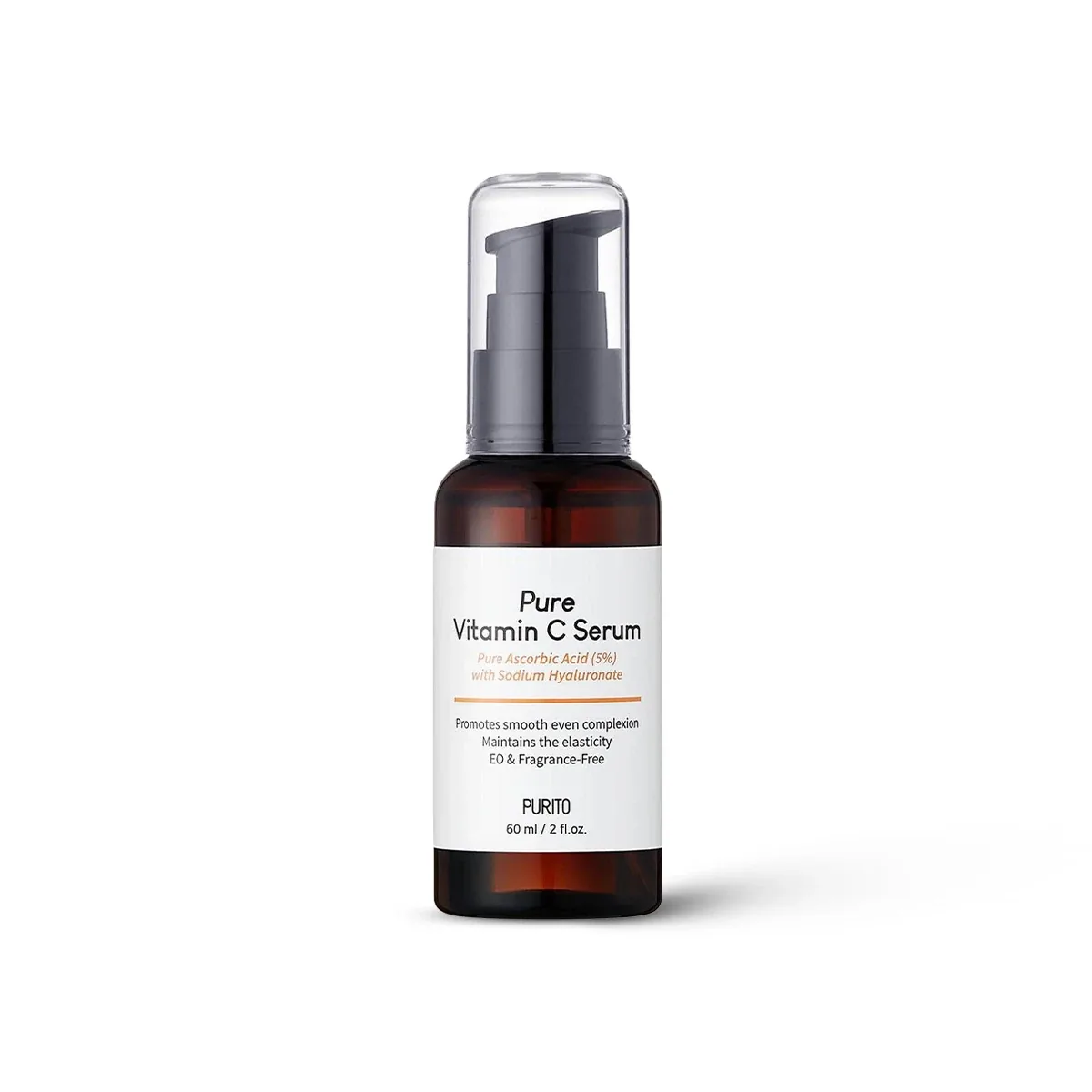
L-ascorbic acid is vitamin C in its pure, original form, and it is the ingredient behind almost every major clinical study on the subject. It is the fastest-acting form, the best researched, and the one dermatologists usually mean when they say “vitamin C works.” The catch is its personality: it is unstable, it oxidises quickly when exposed to air and light, and it only works well in a formula with a low pH of around 3.5 or below — which is exactly why it stings on sensitive skin.
Pros: strongest evidence, fastest visible brightening, pairs brilliantly with vitamin E and ferulic acid. Cons: most likely to irritate, shortest shelf life once opened, needs careful storage. Best for: normal to oily skin that has used actives before. Skip it if: your skin is sensitive or you have never used an active ingredient — start with a derivative instead and graduate to this later if you want to.
3. Sodium Ascorbyl Phosphate: The Gentle Starter

If L-ascorbic acid is the strong coffee of vitamin C, sodium ascorbyl phosphate — SAP for short — is the milky tea. It is a stable, water-soluble derivative that converts to active vitamin C slowly inside the skin, so it brightens gradually without the sting. It also works at a skin-friendly pH, which means it rarely causes redness, and there is early evidence that it can help calm acne-causing bacteria, making it a smart pick for breakout-prone beginners.
Why beginners love it: almost no irritation, stable in the bottle for months, and easy to layer with other products. Trade-off: results arrive more slowly — expect eight to twelve weeks before dark spots visibly fade, rather than six. Cost: usually affordable, because SAP is cheaper to formulate than pure ascorbic acid. Quick verdict: the safest first vitamin C for sensitive, reactive, or acne-prone skin, and the form most dermatologists suggest when someone has been burned by a strong serum before.
4. Magnesium Ascorbyl Phosphate: The Hydrating Derivative
Magnesium ascorbyl phosphate, or MAP, is another water-soluble derivative, and it is the one most often found in creams and lotions because it plays nicely with moisturising bases. It is gentle, stable, and mildly hydrating, which makes it a good fit for dry or dehydrated skin that needs brightening without any drying effect. It converts to vitamin C more slowly than SAP, so it is not the fastest brightener, but it is one of the least likely to cause any reaction at all.
Best for: dry, mature or easily irritated skin, and anyone who prefers a cream texture over a watery serum. What to watch: MAP is often used at low percentages in moisturisers, so check the label — a cream that lists it near the end of the ingredient list may not contain enough to brighten. Quick verdict: a quiet, reliable workhorse rather than a star performer, and a fine first step if your main goal is gentle, everyday brightness rather than fast spot-fading.
5. Ascorbyl Glucoside: The Slow and Steady Brightener
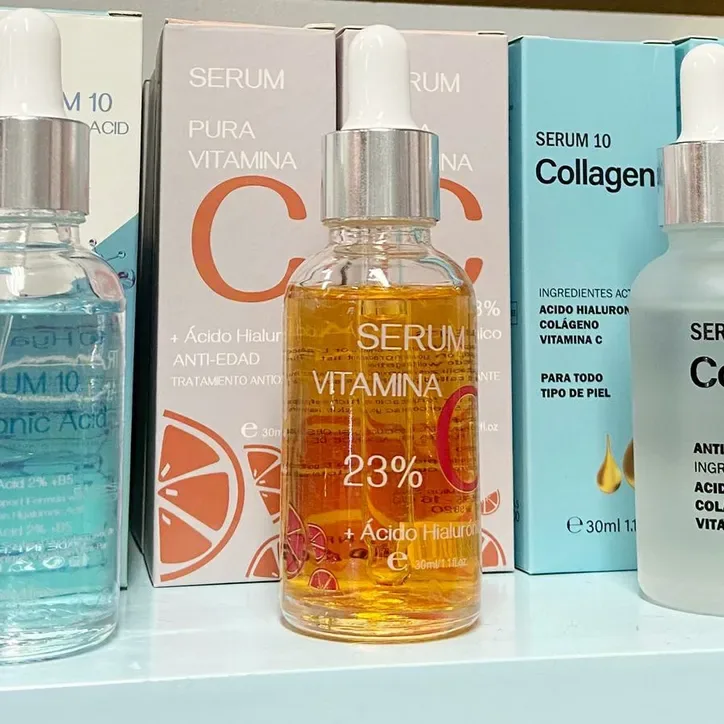
Ascorbyl glucoside is vitamin C bound to glucose, a sugar molecule that keeps it stable until skin enzymes release the active form. It is one of the gentlest derivatives available, it stays stable in clear bottles and water-based formulas, and it is widely used in East Asian skincare, where gentle daily brightening is the norm. Because the release is slow, it is very unlikely to sting, even on skin that has reacted to other forms.
Pros: extremely gentle, very stable, works well in lightweight daily formulas. Cons: the slowest of the common forms — visible fading of dark spots can take ten to twelve weeks. Best for: very sensitive skin, beginners who want a zero-risk start, and anyone using vitamin C mainly to maintain brightness rather than correct strong pigmentation. Quick verdict: if your fear of irritation is the only thing stopping you from trying vitamin C, this is the form that removes the fear.
6. Tetrahexyldecyl Ascorbate: The Oil-Soluble Option
Tetrahexyldecyl ascorbate — THD for short — is the oil-soluble member of the family, which gives it two unusual advantages. First, it penetrates skin more easily than water-soluble forms, because skin’s outer layer is itself oily. Second, it is very stable and rarely irritates, even at higher percentages. It usually appears in oil serums, balms and rich creams, and it feels more like a facial oil than a classic watery vitamin C serum.
Best for: dry, dehydrated and mature skin, and anyone who dislikes watery serums or finds them drying. What to avoid: very oily or acne-prone skin may find oil-based formulas heavy, and THD products tend to cost more because the ingredient itself is expensive. Quick verdict: the premium-feeling derivative — worth it if your skin runs dry and you want vitamin C without any tightness, but not necessary if a cheaper water-based derivative already works for you.
7. Ethylated L-Ascorbic Acid: The Modern Middle Ground
Ethylated L-ascorbic acid, often listed as 3-O-ethyl ascorbic acid, is one of the newer derivatives, and it has quickly become a favourite of formulators. It is stable, it works at a near-neutral pH so it rarely stings, and unlike some derivatives it converts to active vitamin C efficiently, so its results sit closer to pure ascorbic acid than to the gentlest derivatives. Many mid-range serums now use it as their headline ingredient for exactly that balance.
Why it suits beginners: near the performance of pure ascorbic acid with a fraction of the irritation risk, and a long shelf life. What to check: it is often used at 10 to 15%, and at those levels it is genuinely effective — but a product listing it at 1% is mostly borrowing the name. Quick verdict: if you want one form that works for almost every skin type, this is the best all-rounder on the market today, and a strong choice for a second serum after a gentler first one.
8. Ascorbyl Palmitate: The One to Skip as a Serum
Ascorbyl palmitate is the oldest and cheapest vitamin C derivative, and it appears in countless creams and sunscreens — but it is a poor choice as the active ingredient in a serum. It is fat-soluble and stable, which sounds good, but it converts to active vitamin C very inefficiently, and there is little evidence that meaningful amounts reach the deeper layers of skin. It works fine as an antioxidant preservative that keeps a cream fresh, which is why brands use it, but that is not the same as brightening your skin.
The honest take: if ascorbyl palmitate is the only form of vitamin C in a product that calls itself a vitamin C serum, the product is unlikely to deliver the brightening results you are buying it for. What to do instead: look for SAP, MAP, ascorbyl glucoside, ethylated ascorbic acid or THD on the label. Quick verdict: fine in a moisturiser, weak in a serum — and a useful sign that a brand is cutting corners when it is the headline ingredient.
9. 5% Concentration: The True Beginner Dose
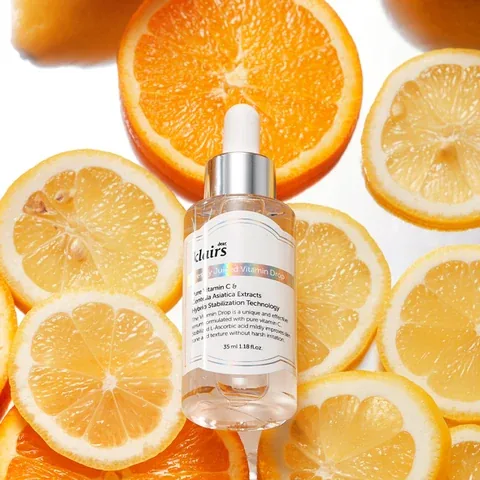
Five percent is where a genuine beginner should start, especially with pure L-ascorbic acid. At this level the serum is strong enough to deliver real antioxidant protection and gentle brightening, but weak enough that most skin tolerates it without drama. Studies show that even low percentages provide meaningful free-radical protection, so starting at 5% is not wasting your time — it is building your skin’s tolerance while still getting benefits.
Who should start here: sensitive skin, first-time active users, and anyone who reacted to a stronger serum before. How long to stay: at least four weeks, and longer if your skin is happy — there is no rule that says you must increase. What to avoid: assuming 5% is “too weak to work” and jumping to 15% in week two. Quick verdict: the dose that lets you learn how your skin responds to vitamin C without paying for the lesson in redness.
10. 10% Concentration: The Sweet Spot
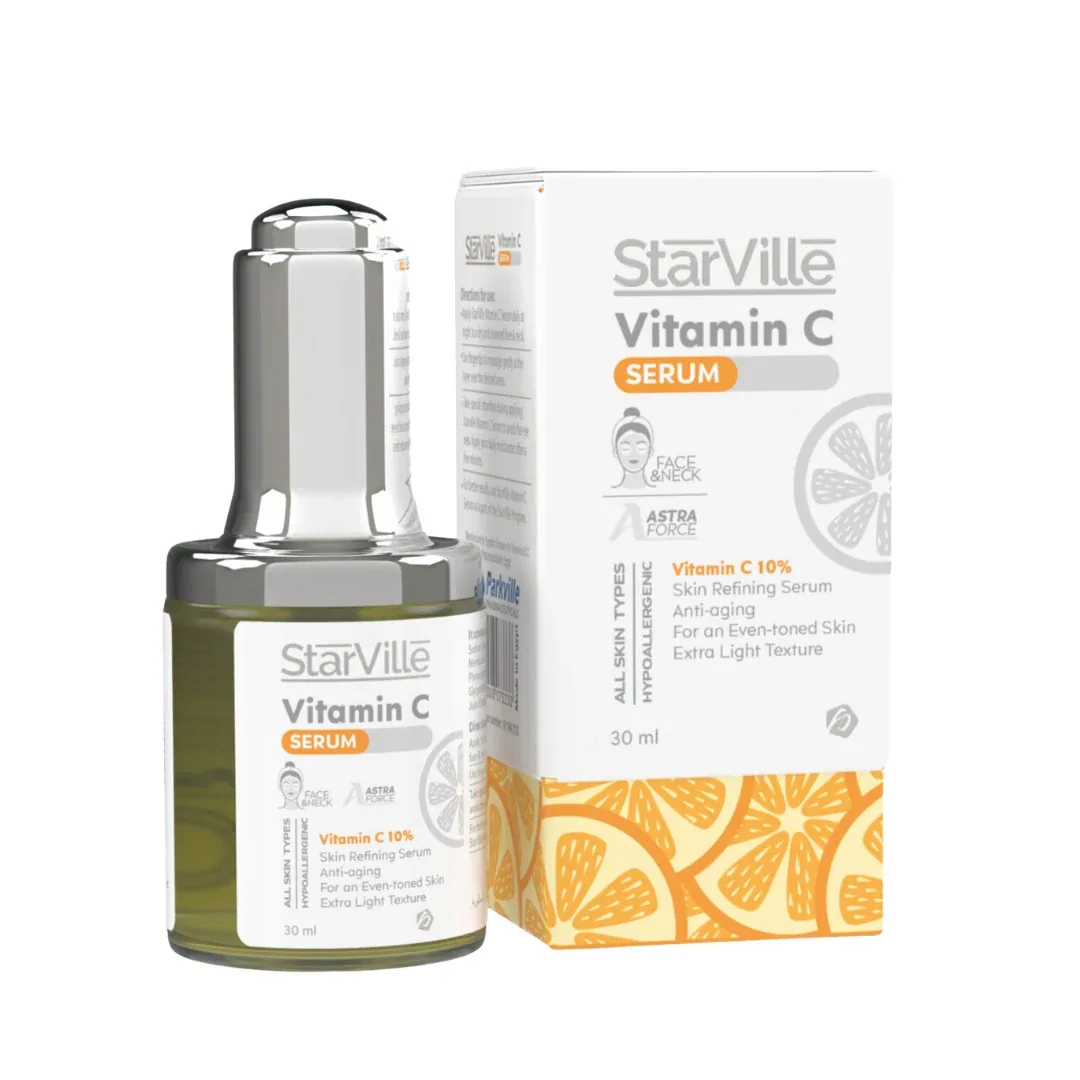
Ten percent is the concentration most dermatologists call the sweet spot, and for good reason. Research suggests that absorption of vitamin C plateaus around 20%, and the jump from 5% to 10% delivers a meaningful increase in brightening while the jump from 10% to 20% delivers much less extra benefit for noticeably more irritation risk. Ten percent pure ascorbic acid is strong enough to fade dark spots over eight weeks, yet gentle enough that most non-sensitive skin can use it daily once tolerance is built.
Best for: normal, combination and oily skin that has already tolerated a lower strength, or as a first serum for resilient skin. How to get there: start at 5% or with a derivative, use it for a month, then step up to 10% — do not start here on day one if you have never used an active. Cost note: 10% serums are widely available at every price point, so there is no need to pay a premium for this strength. Quick verdict: the level most beginners end up settling at for the long term.
11. 15% and 20%: When to Step Up — and When Not To
High-strength serums of 15% and 20% exist for a reason, but that reason is rarely a beginner. They suit experienced users with resilient, oily skin who have used 10% daily for months and want faster fading of stubborn pigmentation. Beyond 20%, absorption does not meaningfully increase, so the extra strength mostly buys extra irritation — and the famous 15% vitamin C plus vitamin E plus ferulic acid combination works because of the formula, not because 15% alone is magic.
Signs you are ready: you have used 10% daily for at least two months with no redness, and your dark spots have stopped improving. Signs you are not: you have been using vitamin C for less than a month, your skin stings when you apply it, or you are mainly buying the high number because it sounds more powerful. Quick verdict: a strength to earn, not a strength to start with — and many people never need to go beyond 10% at all.
12. Water-Based vs Oil-Based Serums
The base of a serum decides how it feels, how it layers, and who it suits. Water-based serums are thin, absorb in seconds, and layer easily under moisturiser and makeup, which is why they dominate the market. They are the best choice for oily and combination skin, and for anyone who wears makeup in the morning. Oil-based serums feel richer, take longer to sink in, and double as a light facial oil — better for dry skin, and better for people who like a dewy finish.
Pros of water-based: lightweight, fast-absorbing, easy to layer. Cons: pure ascorbic acid in water oxidises faster, so the bottle must be used up quickly. Pros of oil-based: more stable, more nourishing, less likely to sting. Cons: can feel heavy under makeup and may not suit acne-prone skin. Quick verdict: choose the base for your skin type and your morning routine, not for the vitamin C — the form inside matters more than the texture outside.
13. Serum vs Cream vs Powder: Which Format Fits a Beginner
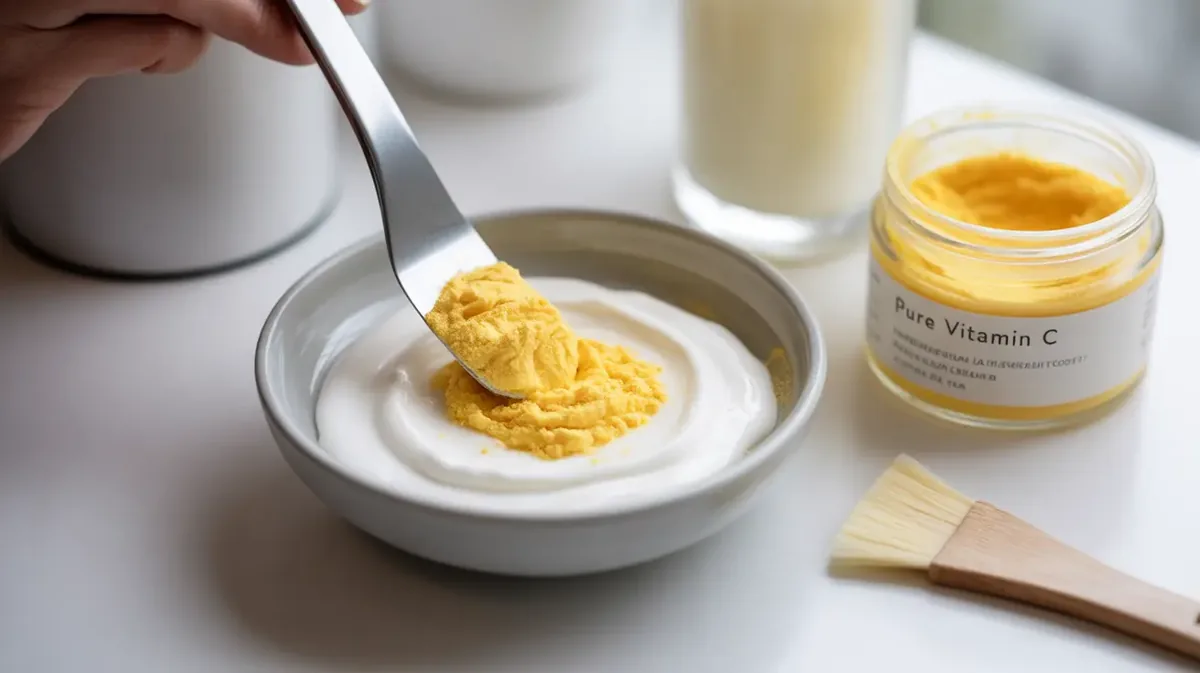
Vitamin C comes in three formats, and they are not equal for a beginner. Serums are the standard: precise dosing, fast absorption, and the most choice on the market. Creams are gentler and easier, because the vitamin C is diluted in a moisturising base, but the dose is lower and harder to judge — fine for maintenance, weak for correcting dark spots. Powders are pure L-ascorbic acid in dry form, mixed into a moisturiser or serum at home; they are the freshest possible option, because the vitamin C only activates when mixed, but the dose is guesswork and mixing it wrong can irritate skin badly.
Best first format: a ready-made serum, because the dose is fixed and the formula is tested. Creams are worth it if: your skin is very dry or sensitive and you want the gentlest possible introduction. Powders are worth it if: you are experienced, you like control, and you accept the risk of an uneven mix. Quick verdict: start with a serum, consider a cream if your skin is reactive, and leave powders until you know exactly how your skin responds to vitamin C.
14. The Morning Routine: Where Vitamin C Goes

Order matters in skincare, and vitamin C has a specific slot. The full beginner morning routine is: gentle cleanser, optional hydrating toner, vitamin C serum, moisturiser, sunscreen. That is it — five steps at most, and the serum is the only active in the routine. Applying vitamin C before moisturiser lets it reach clean skin directly; applying it after moisturiser would leave most of it sitting on top of the cream instead of absorbing.
Timing: apply to dry skin, not damp — water can dilute a pure ascorbic acid formula and change its pH. Wait time: about one minute before the next step, just long enough for the serum to sink in; you do not need the ten-minute waits that older guides recommend. What to skip: a morning exfoliant, a morning retinol, and any second active in the same routine. Quick verdict: a short, fixed routine beats a long, complicated one, because the routine you actually repeat every morning is the one that works.
15. The Patch Test, Done Properly

A patch test takes two minutes and saves weeks of guessing, yet most beginners skip it. Apply a small amount of the serum to the inside of your forearm or behind your ear — somewhere the skin is thin but hidden — once a day for three days. If there is no redness, itching, swelling or rash after three days, the product is very likely safe for your face. If there is a reaction, you have learned it on your arm, not on your face, and you can return or swap the product before any real damage is done.
Why three days, not one: some reactions are delayed, and a single application can miss them. What counts as a fail: persistent redness, raised bumps, itching that lasts more than an hour, or swelling. What does not count: a brief tingle that fades in under a minute — that is normal with pure ascorbic acid, not an allergy. Quick verdict: the cheapest insurance in skincare, and the step that separates a careful beginner from a lucky one.
16. Start Slow: The Three-Times-a-Week Ramp

The single best piece of advice for a vitamin C beginner is to start three times a week, not seven. Use the serum on Monday, Wednesday and Friday mornings for the first two weeks, and watch how your skin responds on the days between. If there is no redness, dryness or stinging by the end of week two, move to every other day for two more weeks, and only then to daily use. This slow ramp gives your skin time to build tolerance, and it gives you time to notice a problem while it is still small.
Why it works: skin barrier cells turn over slowly, and tolerance is built gradually, not by force. What to do if you react: drop back to the previous frequency for another two weeks instead of stopping entirely — a mild reaction often means the pace was too fast, not that the ingredient is wrong for you. Quick verdict: four weeks to daily use feels slow, but it is the difference between a serum you use for a year and a serum you abandon in a week.
17. How Much to Use: Three to Four Drops
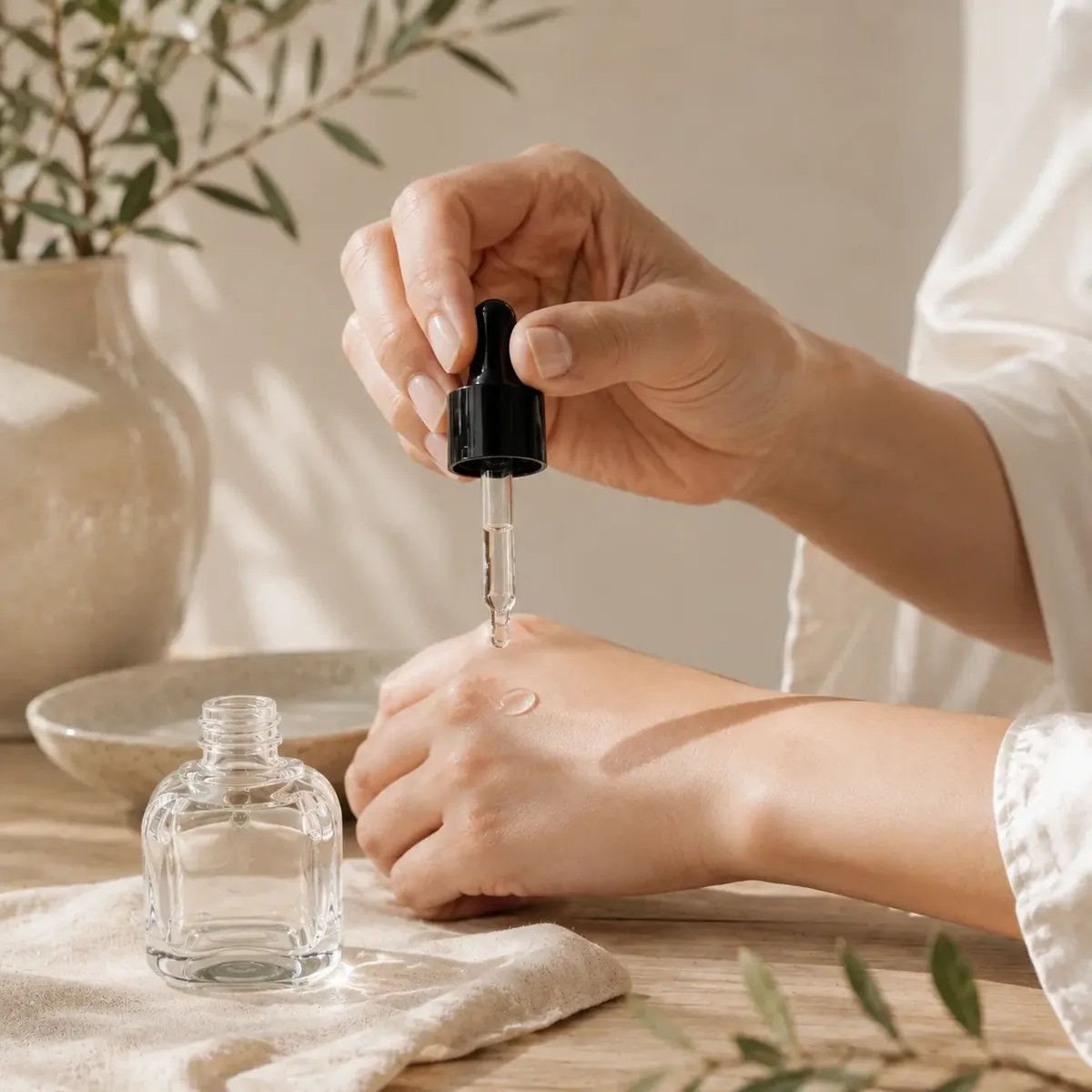
More serum is not more results. Three to four drops cover the whole face and neck, because a serum is designed to spread thin and absorb. A full dropper — the amount most people squeeze out by habit — is roughly three times the needed dose, and the excess either sits on the skin and pills under moisturiser, or increases the chance of irritation for no extra benefit. If your face still feels dry after four drops, the answer is more moisturiser, not more serum.
How to apply: drop the serum onto your fingertips or directly onto the cheeks and forehead, then press it in with your palms — do not rub it in circles, which wastes product on your hands. Include the neck: the neck shows sun damage and ageing just as clearly as the face, and it is the area most people forget. Cost note: at four drops a day, a 30 ml bottle lasts about three months, which makes even a mid-priced serum cost less than a pound or a dollar a week. Quick verdict: the pea-sized rule of skincare — a little, applied well, beats a lot, applied carelessly.
18. Wait Time Before Moisturiser

Old skincare guides told beginners to wait ten or twenty minutes after vitamin C before applying anything else, and many people still believe it. Modern formulas do not need it. A wait of about one minute — long enough for the serum to sink in and stop feeling wet — is enough for the vitamin C to reach the skin. Waiting longer does not improve absorption in any meaningful way, and it makes the routine so slow that most people quietly stop doing it.
The exception: if you are layering vitamin C under a strong acid or a retinol in the same routine — which beginners should not do anyway — a longer gap helps. What to watch: if your moisturiser pills or rolls off after the serum, you waited too little, or you used too much serum; one minute and four drops usually fixes both. Quick verdict: one minute is the honest number, and a routine that takes five minutes total is a routine you will still be doing in six months.
19. Sunscreen: The Non-Negotiable Partner

Vitamin C and sunscreen are a package, not a choice. Vitamin C defends against the free-radical damage that sunlight causes, and sunscreen blocks the sunlight itself — together they protect skin far better than either one alone, and studies show the combination reduces sun damage more than sunscreen on its own. Just as importantly, vitamin C works by fading the dark spots that sun creates, so using it while skipping sunscreen is trying to empty a bath with the tap still running.
What to use: a broad-spectrum SPF 30 or higher, applied as the last step of your morning routine, in a proper amount — about two finger-lengths of product for the face and neck. Reapply: every two hours outdoors, and after sweating or swimming. What to avoid: assuming a moisturiser with SPF 15 is enough; it is better than nothing, but it is not a substitute for a dedicated sunscreen. Quick verdict: if you will only ever buy two skincare products, make them a vitamin C serum and a sunscreen.
20. Pairing With Hyaluronic Acid
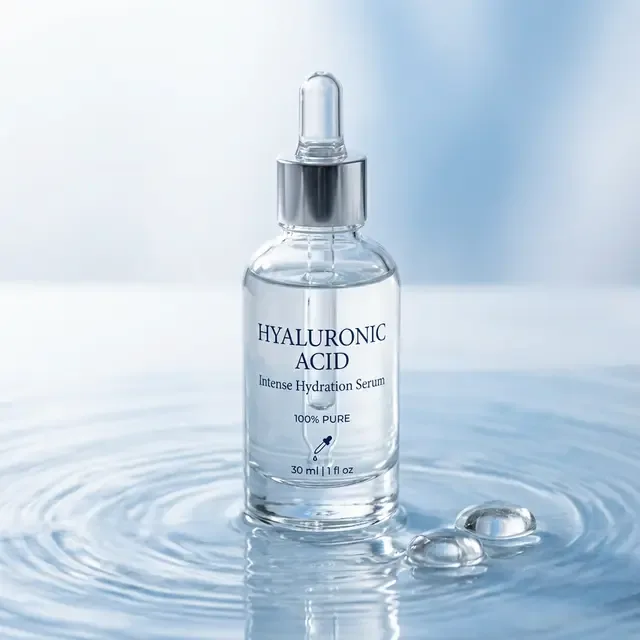
Hyaluronic acid is vitamin C’s easiest and safest partner, and the pairing to try first if you want to add anything to your routine. It is a humectant — it pulls water into the skin and holds it there — so it hydrates and plumps, while vitamin C brightens and protects. The two do not interfere with each other at all, and hyaluronic acid actually cushions the skin against any dryness or tightness that a pure ascorbic acid serum can cause.
How to layer: hyaluronic acid first on slightly damp skin, then vitamin C once the skin is dry, then moisturiser to seal it in — or simply use a moisturiser that already contains hyaluronic acid after the serum. Best for: dry, dehydrated and sensitive skin, and anyone whose serum leaves their face feeling tight. Quick verdict: the one pairing a beginner can add on day one without any extra risk, and the reason many vitamin C serums already include hyaluronic acid in the formula.
21. Pairing With Vitamin E and Ferulic Acid
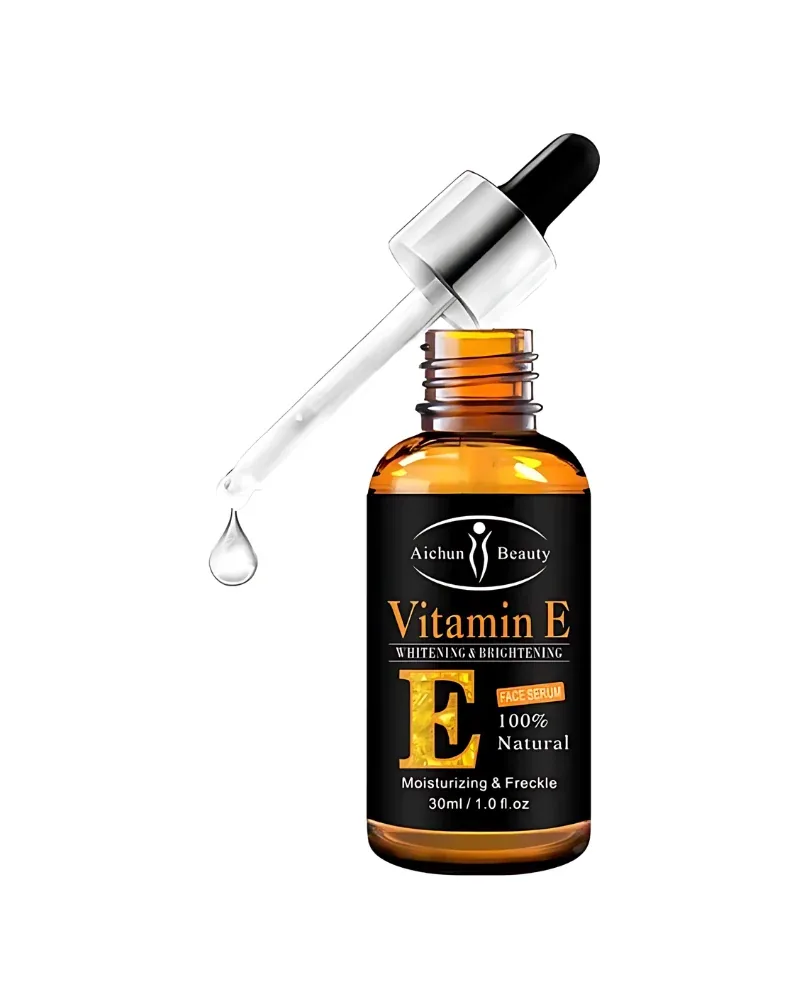
Vitamin E and ferulic acid are the classic companions of pure L-ascorbic acid, and the combination is the most studied in all of skincare. Ferulic acid stabilises vitamin C so it stays active longer in the bottle and on the skin, and vitamin E doubles the antioxidant protection — together, the trio protects against sun damage far better than vitamin C alone. That is why the famous 15% vitamin C, 1% vitamin E and 0.5% ferulic acid formula has been copied by almost every brand in the industry.
Pros: stronger protection, longer shelf life, better results from the same dose of vitamin C. Cons: the combination is usually built around pure ascorbic acid, so it can sting sensitive skin, and these formulas tend to cost more. Best for: beginners who have already tolerated a gentler derivative and want to step up. Quick verdict: look for this trio on the label when you graduate from your first gentle serum — it is the upgrade that actually earns its price.
22. Vitamin C and Niacinamide: The Old Myth
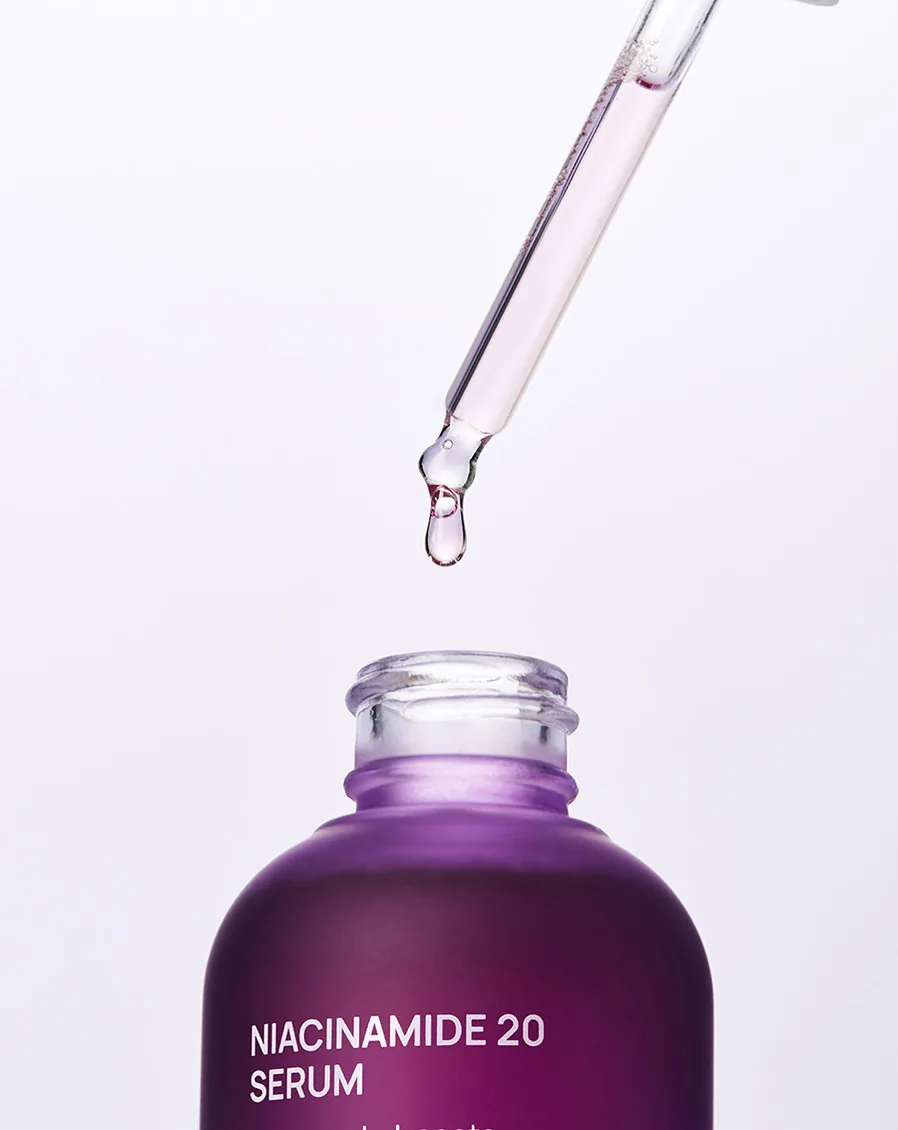
For years, skincare advice warned that vitamin C and niacinamide cancel each other out, or worse, create a compound that irritates skin. The warning came from research in the 1960s, when scientists mixed pure niacinamide with pure ascorbic acid at high temperatures and got a reaction that turned the mixture yellow and produced nicotinic acid, which can flush the skin. Modern formulas do not work that way: they are stable, they are used at room temperature on skin, and the two ingredients coexist perfectly well in dozens of products sold today.
What the evidence says now: dermatologists routinely recommend using both, and many serums and moisturisers contain the two together. How to use them: either in the same routine — vitamin C first, niacinamide after — or split across the day, vitamin C in the morning and niacinamide at night. What to watch: if your skin flushes when you layer them, separate them by routine, but do not blame the combination — the likely cause is the strength of one of the two products. Quick verdict: a myth worth retiring; these two are teammates, not rivals.
23. Vitamin C and Retinol: Keep Them Apart
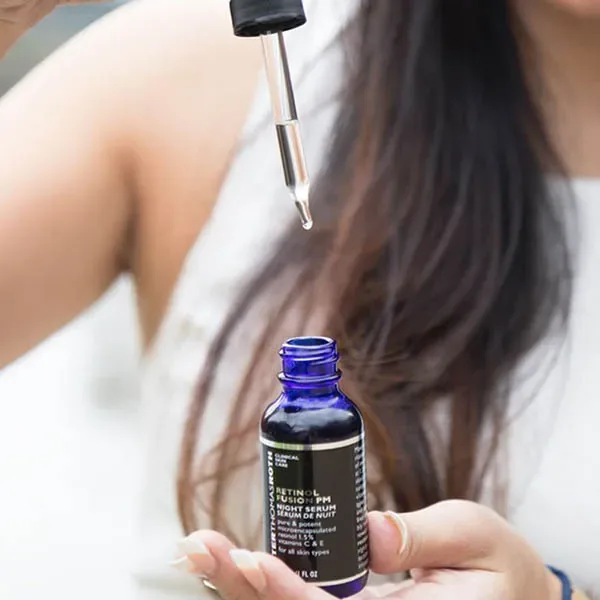
Retinol and vitamin C are the two most effective anti-ageing ingredients available without a prescription, and the temptation to use them together is strong. Resist it — at least at first. Both are active ingredients that can irritate on their own, and used in the same routine they frequently overwhelm the skin barrier, causing redness, peeling and breakouts that people then blame on one product or the other. The combination is not impossible, but it is an advanced move, not a beginner one.
The simple split: vitamin C in the morning, retinol at night. This gives you the benefits of both without ever asking your skin to handle them at the same time, and it matches how each ingredient works best — vitamin C defending during the day, retinol repairing overnight. When to try combining: only after you have used both separately for at least two months each with no irritation. Quick verdict: two great ingredients, two different routines — that separation is what lets you keep both.
24. Vitamin C and AHAs/BHAs: Proceed With Care
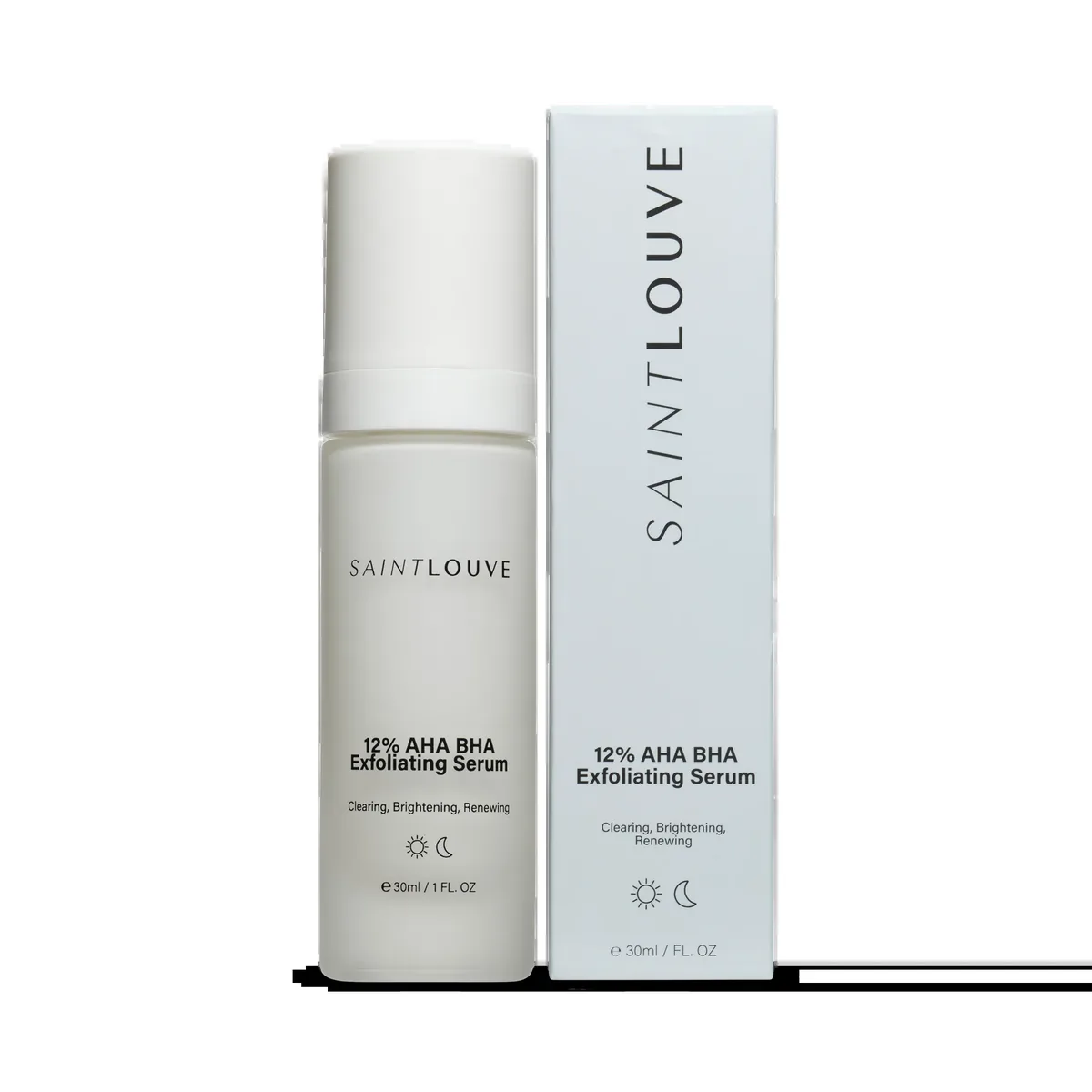
AHAs like glycolic and lactic acid and BHAs like salicylic acid exfoliate the skin, and vitamin C layered straight over them can sting, because both lower the skin’s pH and both ask the barrier to do work at the same time. The risk is not that they cancel each other out — it is that together they are too much, too fast, for skin that is still learning to tolerate one active. Sensitive and dry skin feels this clash first, usually as redness that lasts for hours.
The safe way to use both: alternate days — vitamin C on Monday, Wednesday and Friday, exfoliating acid on Tuesday and Saturday, for example. Or separate them by time: acid at night, vitamin C in the morning. What to avoid: a strong glycolic peel followed immediately by a 15% ascorbic acid serum; that is the combination most likely to leave skin raw. Quick verdict: exfoliation and vitamin C are both valuable, but they take turns — they do not share a routine.
25. The Sensitive Skin Starter Routine
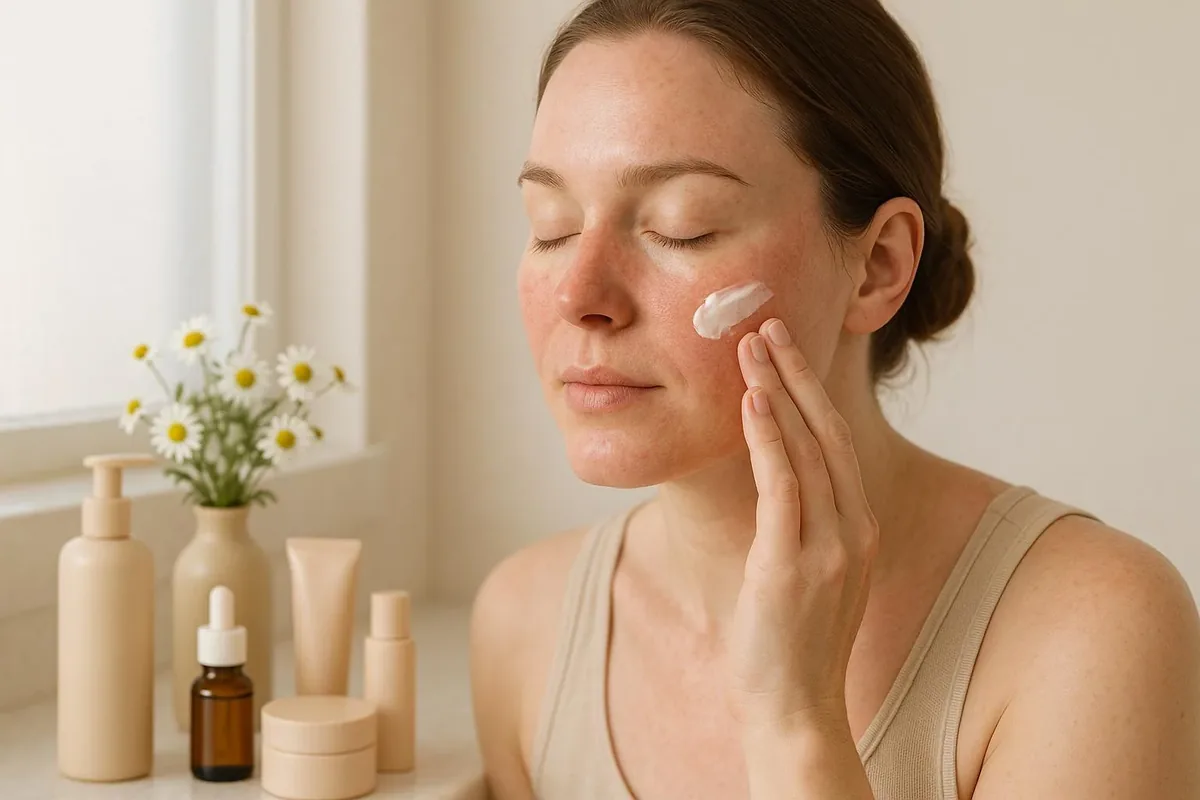
Sensitive skin can use vitamin C — it just needs the gentlest possible version of it. The routine is: a fragrance-free gentle cleanser, a derivative serum such as sodium ascorbyl phosphate or ascorbyl glucoside at a low percentage, a plain moisturiser with ceramides, and a mineral sunscreen. No fragrance, no essential oils, no exfoliating acids in the same routine, and no pure ascorbic acid until the derivative has been tolerated for at least a month.
Frequency: twice a week for the first two weeks, then three times a week, and daily only after a month with no reaction. Warning signs to respect: redness that lasts more than an hour, a burning feeling rather than a brief tingle, or new tiny bumps. What helps: applying moisturiser first as a buffer on the most reactive areas, and choosing a serum with soothing ingredients like panthenol or allantoin. Quick verdict: sensitive skin does not need to avoid vitamin C — it needs a slower introduction and a formula chosen for gentleness, not strength.
26. The Oily and Acne-Prone Skin Approach

Oily and acne-prone skin is usually the most tolerant of vitamin C, which is good news, because it also benefits the most. Vitamin C helps fade the dark marks that acne leaves behind, it supports the skin’s healing, and sodium ascorbyl phosphate has some evidence for reducing acne-causing bacteria. A thin, water-based serum is the right texture — it layers without adding grease, and it will not clog pores the way a heavy oil-based formula can.
Routine: gentle foaming or gel cleanser, vitamin C serum, light gel moisturiser, oil-free sunscreen. What to avoid: heavy oil-based vitamin C serums, and combining vitamin C with a strong salicylic acid treatment in the same routine — alternate days instead. What to expect: post-acne marks fade faster than with moisturiser alone, usually within six to eight weeks. Quick verdict: the skin type that can move fastest through the strengths, but it should still start at 10% or below and build up.
27. The Dry Skin Approach
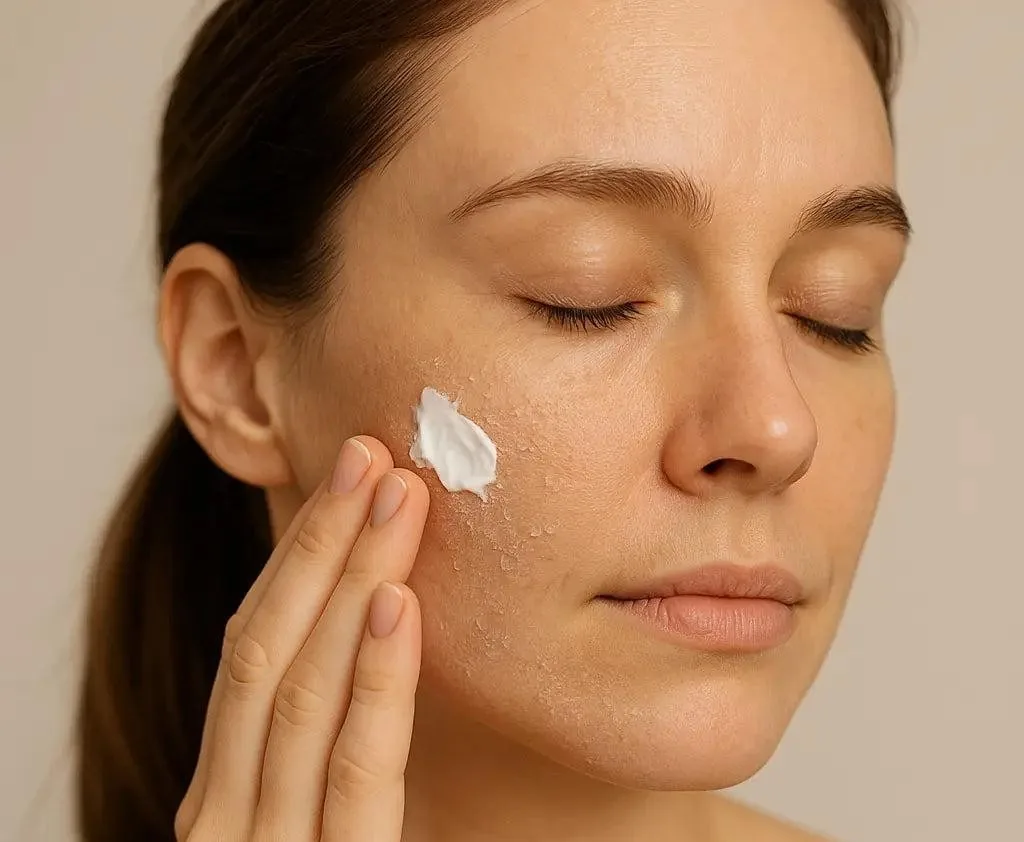
Dry skin’s main problem with vitamin C is not irritation but tightness: water-based ascorbic acid serums can leave dry skin feeling stripped, especially in winter. The fix is to choose a form and a base that add moisture rather than taking it away — an oil-soluble derivative like tetrahexyldecyl ascorbate, or a serum that includes hyaluronic acid and glycerin, layered under a rich cream moisturiser. Applying the serum to slightly damp skin and sealing it quickly with cream also helps.
Routine: creamy gentle cleanser, vitamin C serum, hyaluronic acid or a hydrating essence, rich moisturiser, sunscreen. What to avoid: pure ascorbic acid in a water-only base with no hydrating ingredients, and using vitamin C twice a day — dry skin rarely needs the second dose. Quick verdict: dry skin should shop for vitamin C the way it shops for everything else: moisture first, active second, and a good cream doing the heavy lifting after the serum.
28. The Dark Spots and Hyperpigmentation Plan

Dark spots — sun spots, post-acne marks and melasma patches — are the reason most people buy vitamin C, and it is genuinely good at fading them. Vitamin C slows the enzyme that makes melanin, so existing spots fade gradually while new ones form more slowly. But it works on the surface of the problem, and it works slowly: expect visible fading in six to eight weeks, and significant fading in three months, with daily use and daily sunscreen. Without sunscreen, the sun simply remakes the spots as fast as the serum fades them.
The plan: a 10% serum, used every morning, plus SPF 30 or higher reapplied outdoors, plus patience. What speeds it up: adding niacinamide at night, which also slows melanin, and gentle exfoliation twice a week on alternate days. What to know: melasma is hormonal and deeper than sun spots, so it responds more slowly and often needs professional treatment alongside vitamin C. Quick verdict: vitamin C is the best first step for dark spots, but it is a marathon step, not a sprint.
29. The Dull Skin and Glow Routine

Dull skin is usually tired skin: a slow cell turnover, a little dehydration, and a year’s worth of sun exposure dulling the surface. Vitamin C helps on all three fronts — it brightens tone, it supports collagen, and its antioxidant effect makes skin look less grey and fatigued. The glow people describe is not shine or oil; it is light reflecting evenly off a smooth, hydrated surface, and vitamin C builds that surface over weeks.
Routine: gentle cleanser, vitamin C serum, hyaluronic acid, moisturiser, sunscreen — and one gentle exfoliation a week on a different day to remove the dull surface layer. What helps most: consistency, sleep, and water intake matter as much as the serum; no product glows on dehydrated, exhausted skin. What to avoid: chasing glow with daily exfoliation, which strips the skin and makes dullness worse. Quick verdict: the fastest visible win in this guide — most people see the brightness change before the dark spots fade.
30. Fine Lines: What Vitamin C Can and Cannot Do
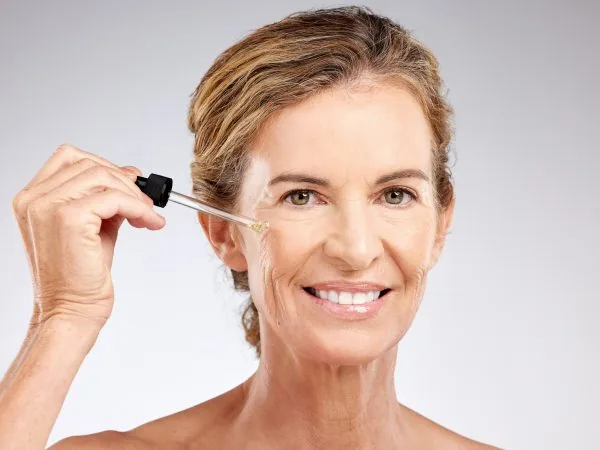
Vitamin C helps with fine lines, but the mechanism is slow and the results are modest, and an honest guide should say so plainly. It supports collagen production, which over months makes skin slightly firmer and makes fine lines look softer, especially around the eyes and mouth. What it cannot do is erase deep wrinkles, lift sagging skin, or replace retinol or professional treatments for established lines. Anyone promising that from a serum is selling a fantasy.
Realistic expectations: after three months of daily use, fine lines look softer and skin looks firmer, but the change is visible in photos, not in the mirror day to day. What works better alongside it: retinol at night, which is the stronger collagen builder, and sunscreen every day, which prevents the lines from deepening. Cost note: do not pay a premium price for a vitamin C serum sold mainly as an anti-wrinkle treatment — its real strength is brightening and protection, and retinol does the wrinkle work better for less money. Quick verdict: buy vitamin C for brightness, let firmer skin be the bonus, not the promise.
31. Signs of Irritation and When to Stop
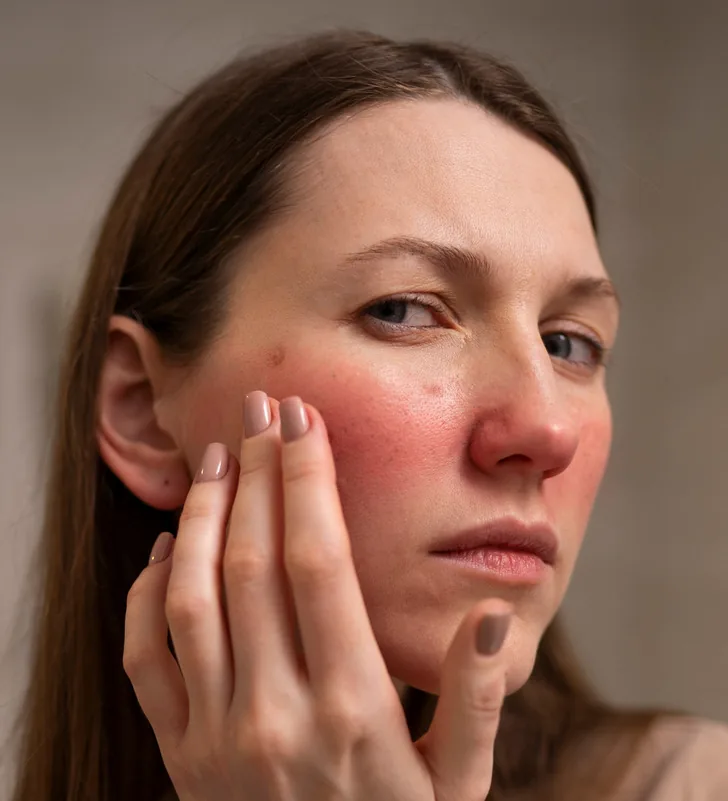
A brief tingle for a few seconds is normal with pure ascorbic acid. Anything beyond that is a signal, and knowing the difference saves your skin barrier. Stop and reassess if you notice redness that lasts more than an hour, a burning or stinging feeling that does not fade, new flaking or peeling, tiny red bumps, or skin that suddenly feels tight and raw. These are signs the barrier is overwhelmed, not signs the product is “working” — the old idea that skincare must hurt to help is wrong, and pushing through irritation usually makes the recovery longer.
What to do: stop the serum for a week, return to a plain cleanser and moisturiser, and let the skin calm down completely. When to restart: after a full week with no symptoms, at a lower frequency — once or twice a week — and with a gentler form if the reaction was strong. When to see a dermatologist: swelling, blistering, a rash that spreads, or any reaction that does not settle within a few days of stopping. Quick verdict: irritation is information, not failure — it tells you the pace or the form was wrong, and the fix is usually slower, not stronger.
32. Purging vs Irritation: Telling Them Apart

Skin purging and skin irritation look similar at first glance, but they are different things, and confusing them leads to bad decisions. Purging is a temporary increase in breakouts in places where you normally break out, caused by an ingredient that speeds up cell turnover — and vitamin C is a weak purger at most, so true purging from vitamin C is uncommon. Irritation is redness, burning, flaking or bumps in new places, including places where you never break out, and it means the product is too strong or too frequent for your skin.
How to tell: purging appears where you usually get spots, lasts two to four weeks, and then improves; irritation appears anywhere, often with redness and stinging, and gets worse the longer you continue. What to do: if it looks like purging, wait it out for three weeks; if it looks like irritation, stop the product. Quick verdict: most bad reactions to vitamin C are irritation, not purging — and if you are unsure, treat it as irritation and slow down, because slowing down is safe either way.
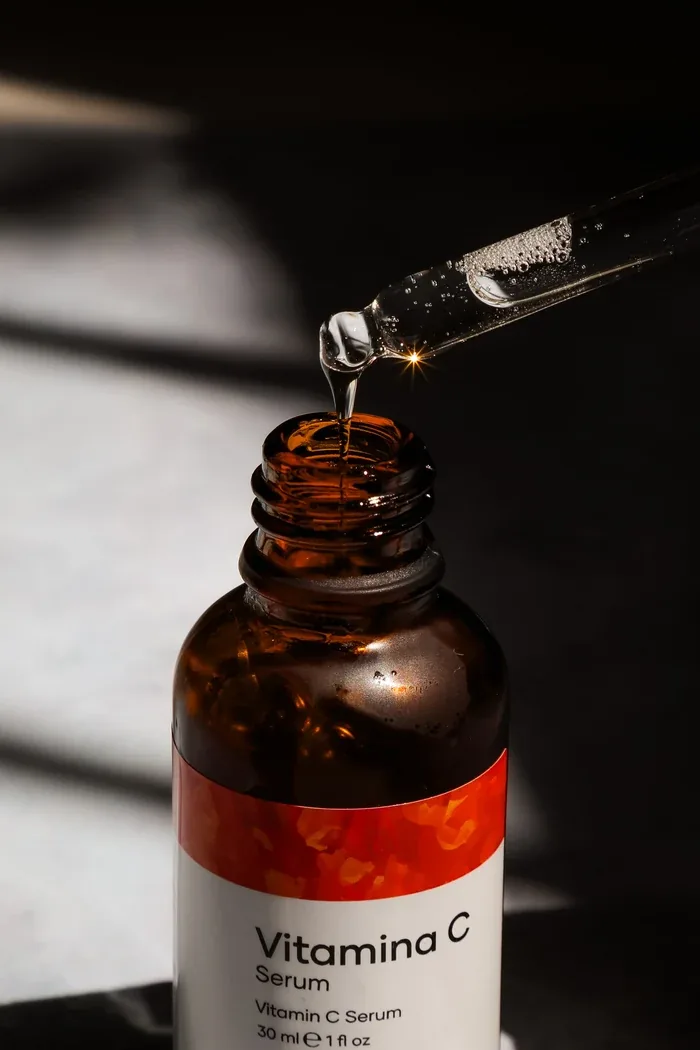
33. Storage: Keeping Your Serum From Turning Orange
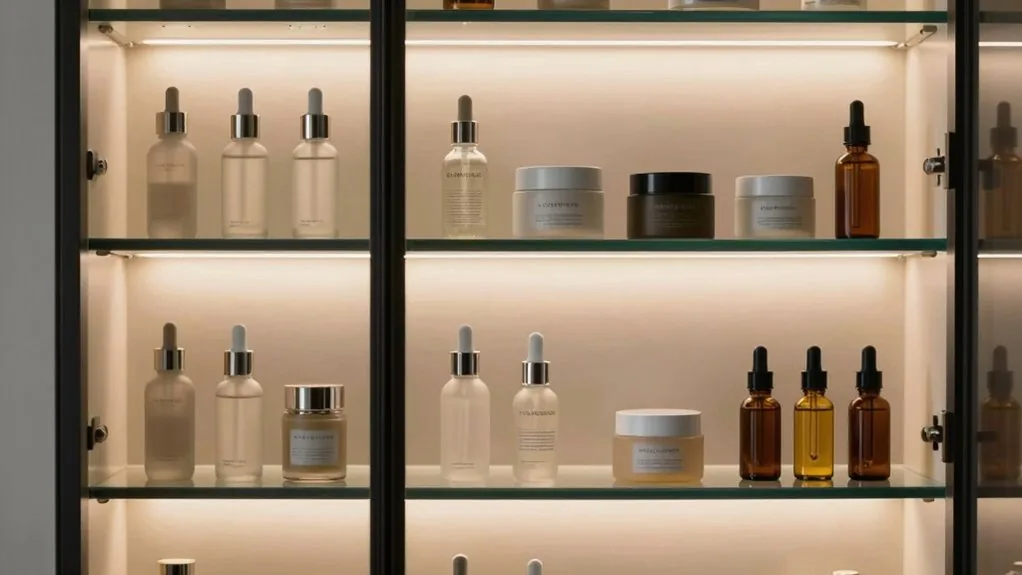
Vitamin C’s biggest weakness is its love of oxygen, light and heat, and a serum left in the wrong place can oxidise in weeks. Oxidation is visible: a clear or pale yellow serum turns orange, then brown, and as the colour deepens the active vitamin C content falls. An oxidised serum is not dangerous, but it is much less effective, and at the brown stage it can stain the skin slightly and irritate sensitive skin.
How to store it: in a cool, dark place — a bedroom drawer or a cupboard, not a sunny bathroom shelf. Keep the cap on tight, do not leave the dropper out, and buy the smallest bottle you will finish in two to three months. Refrigeration: it helps for pure ascorbic acid serums and does no harm to derivatives, so if you have the space, the fridge is a good home. Quick verdict: a serum stored well lasts three months; a serum stored badly lasts three weeks — and the difference is a drawer, not a purchase.
34. Expiry and Oxidation: When to Throw It Out
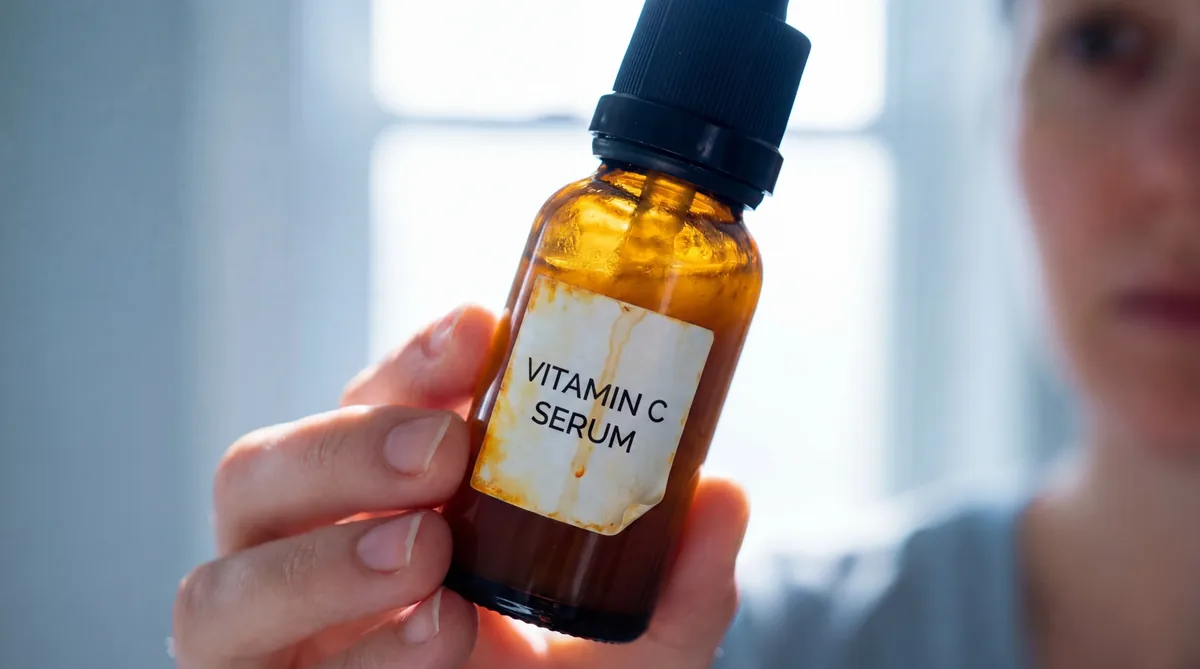
Every vitamin C serum has a clock on it, and the clock starts when the bottle is opened, not when you buy it. Most serums are best used within two to three months of opening, and pure ascorbic acid formulas can lose potency even faster. A pale yellow tint is normal for many formulas and does not mean the serum is ruined, but a deep orange or brown colour, a strange metallic smell, or a change in texture all mean the vitamin C has largely oxidised and the serum should be replaced.
The simple test: hold the bottle against white paper. Pale yellow is fine, amber means use it up quickly, dark brown means throw it out. Cost note: this is why small bottles are smarter than large ones for a beginner — a 15 ml bottle you finish is better value than a 30 ml bottle you throw away half-used. What to avoid: buying a large bottle on sale and keeping it for a year; by the time you reach the bottom, you are applying coloured water. Quick verdict: fresh and finished beats big and half-oxidised, every time.
35. Budget vs Splurge: What the Price Actually Buys
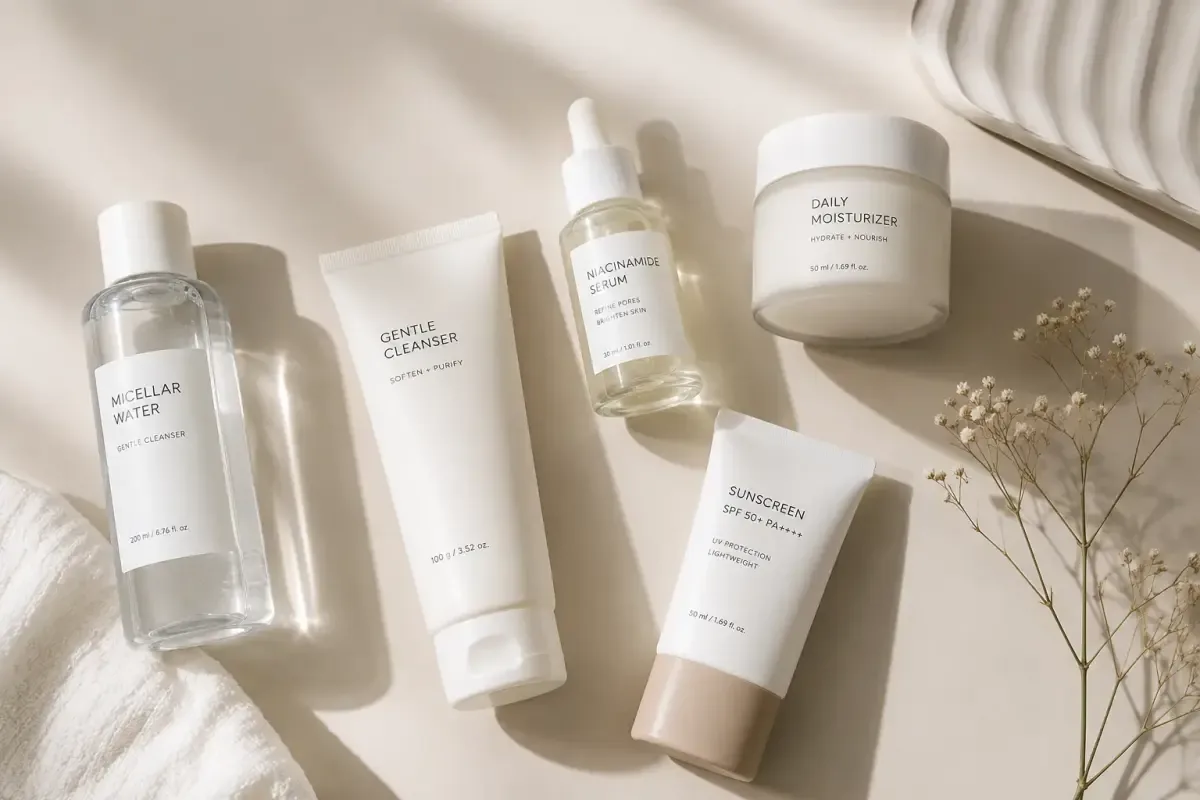
Vitamin C serums range from under ten dollars to over a hundred, and the price difference buys three things: the form of vitamin C, the stability of the formula, and the packaging. A cheap serum with a stable derivative in a dark bottle can outperform an expensive pure ascorbic acid serum in a clear bottle that oxidises in a month. The famous expensive formulas earn their price through the vitamin E and ferulic acid combination and through careful stabilisation — but many mid-priced serums now copy that formula closely, and the results are close too.
What to pay for: a named form and percentage on the label, a dark or opaque bottle, and a stabilising combination if you want pure ascorbic acid. What not to pay for: a luxury brand name, a fancy box, or a celebrity endorsement — none of those brighten skin. Quick verdict: a beginner should spend modestly on a first serum, learn what their skin likes, and only then decide whether a premium formula is worth it — the most expensive serum in the world is the one you cannot tolerate.
36. The Eight-Week Beginner Plan, Week by Week

Here is the whole guide in one plan. Weeks one and two: patch test, then use a gentle derivative or 5% serum three mornings a week, with sunscreen every day. Weeks three and four: move to every other day, and take a photo in the same light so you have a baseline. Weeks five and six: if your skin is calm, move to daily use; if there is any redness, stay at every other day for another two weeks. Weeks seven and eight: judge the results against your photo, and decide whether to stay at this strength, step up to 10%, or switch to a form that suits your goals better.
What to track: brightness, dark spots, any redness, and how your skin feels after application — four notes a week in your phone are enough. What not to change: do not add a second active during these eight weeks, or you will not know which product caused which result. Quick verdict: eight weeks, one serum, one routine, one photo comparison — that is the whole beginner plan, and it is enough to know whether vitamin C is for you.
What strength of vitamin C serum should a beginner start with?
Start with 5% pure L-ascorbic acid, or a gentle derivative such as sodium ascorbyl phosphate or ascorbyl glucoside at any standard percentage. Use it three times a week for two weeks, then build up gradually. Most people settle at 10% for the long term, and there is rarely a need to go beyond it.
Can I use vitamin C serum every day as a beginner?
Not from day one. Start three times a week for two weeks, then every other day for two weeks, and only then daily — and only if your skin shows no redness or stinging. Daily use is the goal, but the ramp-up is what makes daily use possible without irritation.
Should I use vitamin C serum in the morning or at night?
In the morning. Vitamin C is an antioxidant that defends skin against the sun and pollution you meet during the day, and it works best alongside sunscreen. It can be used at night too, but the morning slot gives you the most protection for the effort.
Does vitamin C serum sting, and is that normal?
A brief tingle for a few seconds is normal with pure L-ascorbic acid, especially at 10% or higher, and it should fade within a minute. Burning, stinging that lasts, or redness that stays for an hour is not normal — it means the strength is too high or you are using it too often, and you should slow down or switch to a gentler derivative.
Can I use vitamin C serum with retinol?
Yes, but not in the same routine. Use vitamin C in the morning and retinol at night. Used together in one routine they frequently overwhelm beginner skin and cause redness and peeling. Only consider layering them together after you have tolerated both separately for at least two months.
Can I use vitamin C serum with niacinamide?
Yes. The old warning that the two cancel each other out came from 1960s research on unstable formulas and does not apply to modern products. You can layer them in the same routine — vitamin C first, niacinamide after — or use vitamin C in the morning and niacinamide at night.
How long does vitamin C serum take to work?
Expect brighter-looking skin in three to four weeks, visible fading of dark spots in six to eight weeks, and softer-looking fine lines after about three months. Results depend on consistency and daily sunscreen; without sunscreen, new sun damage replaces the spots as fast as the serum fades them.
Why did my vitamin C serum turn orange?
It oxidised. Exposure to air, light and heat breaks vitamin C down, and the serum darkens from pale yellow to orange to brown as it loses potency. A pale yellow tint is normal, but a deep orange or brown serum should be replaced. Store the bottle in a cool, dark place with the cap on tight, and finish it within two to three months of opening.
Can sensitive skin use vitamin C serum?
Yes, with the gentlest form. Start with a derivative such as sodium ascorbyl phosphate or ascorbyl glucoside, use it twice a week at first, and choose a fragrance-free formula. Avoid pure L-ascorbic acid above 10% until you have tolerated a derivative for at least a month. If you have rosacea or eczema that flares, ask a dermatologist first.
Do I still need sunscreen if I use vitamin C serum?
Yes — more than ever. Vitamin C is not sunscreen and does not replace it. The two work as a pair: sunscreen blocks most UV, and vitamin C neutralises the damage from what gets through. Use a broad-spectrum SPF 30 or higher every morning as the last step of your routine, and reapply outdoors.
Conclusion: Start Gentle, Stay Consistent, Let It Work
The best first vitamin C serum is not the strongest one, the most expensive one, or the one with the prettiest bottle. It is the one your skin tolerates happily three times a week, then every other day, then every morning — a gentle form at a modest strength, stored in a dark drawer, used with sunscreen, and judged at eight weeks, not eight days. Start with a derivative or a 5% serum, follow the slow ramp, keep your routine short, and let the brightening arrive on its own schedule. Your skin does not need to be shocked into glowing; it needs to be given the right ingredient, gently, every morning. Pick your form, patch test it, take your before photo, and start this week — eight weeks from now, your morning mirror will show you why it was worth the patience.

