

There is a moment many women recognise somewhere in their forties: the long hair that once felt effortless starts to feel heavy, flat, or simply like someone else’s style. It catches on coat collars, takes forever to dry, and no longer frames the face the way it used to. Cutting it short is not giving up — it is one of the quickest ways to get lift at the roots, light around the face, and a shape that actually works with your hair as it is now, not as it was at twenty-five.
Here are 32 short hairstyles for women over 40, from the classic pixie and the French bob to textured crops, shags, bixies and silver pixies, each one chosen because it flatters a mature face, works with real hair — fine, thick, curly, thinning or grey — and is genuinely wearable day to day. Every style notes who it suits best, how to style it, what to ask your stylist for, and how much upkeep it needs. Eight guides cover why short hair works so well after 40, face shapes, thinning hair, grey and colour, talking to your stylist, five-minute styling, hair types, and the maintenance schedule that keeps a short cut looking sharp. No style here needs an hour with hot tools, and most take five minutes or less in the morning.
Why Short Hair Works So Well After 40
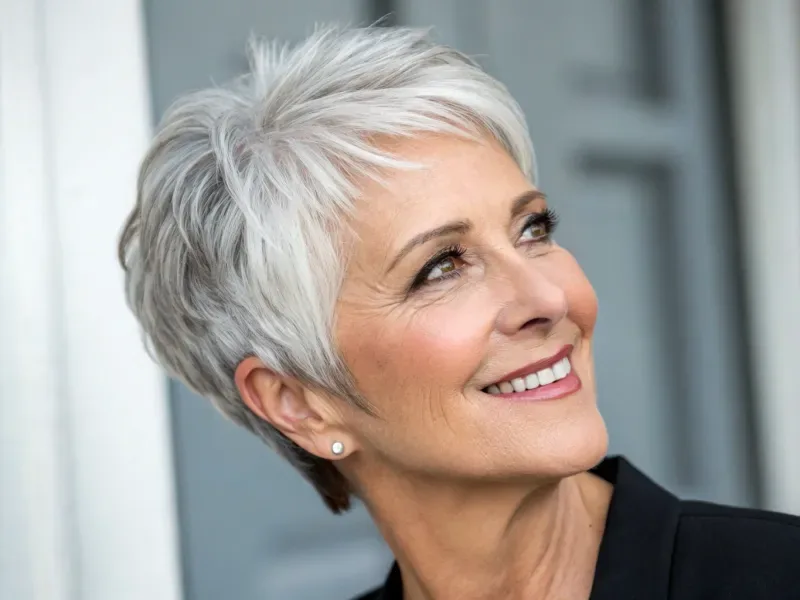
Short hair works after 40 for a simple physical reason: removing weight creates lift. Long hair pulls down on the roots, which flattens the crown and drags the eye downward — the opposite of what most women want as faces naturally lose a little fullness. A cut that ends at the chin or above lets the roots spring up, adds visible volume at the crown, and puts the focus back on the eyes and cheekbones. It also makes the hair you have look thicker, because the ends are all at one healthy length instead of tapering away into thin, wispy ends.
There is a practical side too. Hair often changes in your forties: it can get finer, drier, greyer, or thinner at the temples and parting, and a long style shows every one of those changes. A short cut hides them — or turns them into a feature, as with a silver pixie or a textured crop that makes fine hair look deliberately piecey rather than sparse. Short hair dries in minutes, needs less product, and survives a busy morning far better than a long style that needs heat to look finished. The honest test is the mirror test: if your current length is making you look tired rather than polished, length is not doing you any favours.
How to Pick the Right Short Cut for Your Face Shape
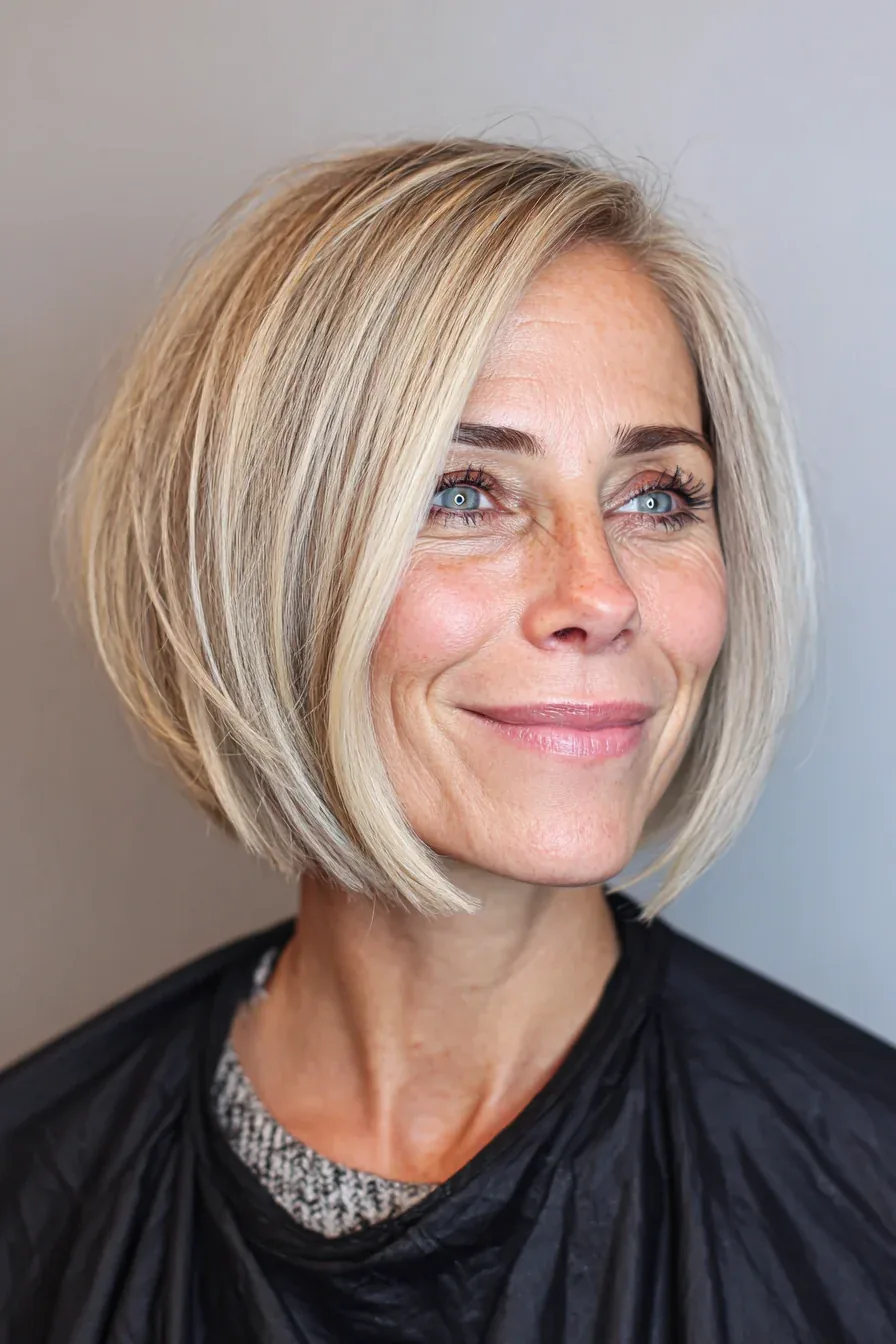
Face shape is the single most useful guide when choosing a short cut, because the same bob can lengthen one face and widen another. The goal is balance, not a rulebook. A round face benefits from height on top and length around the sides — a pixie with volume at the crown, or a bob that ends below the chin, both stretch the face visually. A long face needs the opposite: width at the sides and a fringe or side-swept bangs to shorten the forehead. Square faces soften with layers and texture around the jawline, while oval faces can wear almost anything, which is why they are the easiest to cut for — the job is simply picking the style you like best.
Do not let face-shape advice overrule the rest of you. Your hair’s texture matters just as much: a blunt bob behaves beautifully on straight, fine hair and can look heavy on thick, wavy hair, while a shag flatters waves and curls but can look messy on very fine hair without texture. Your lifestyle matters too — a wash-and-go crop suits a woman who never wants to pick up a dryer, while a sleek bob suits someone happy to spend five minutes smoothing it. Bring two or three photos to your stylist, including one you do not like, and say what you dislike about it; that tells them as much as the one you love.
Short Hair and Thinning Hair: What Actually Helps
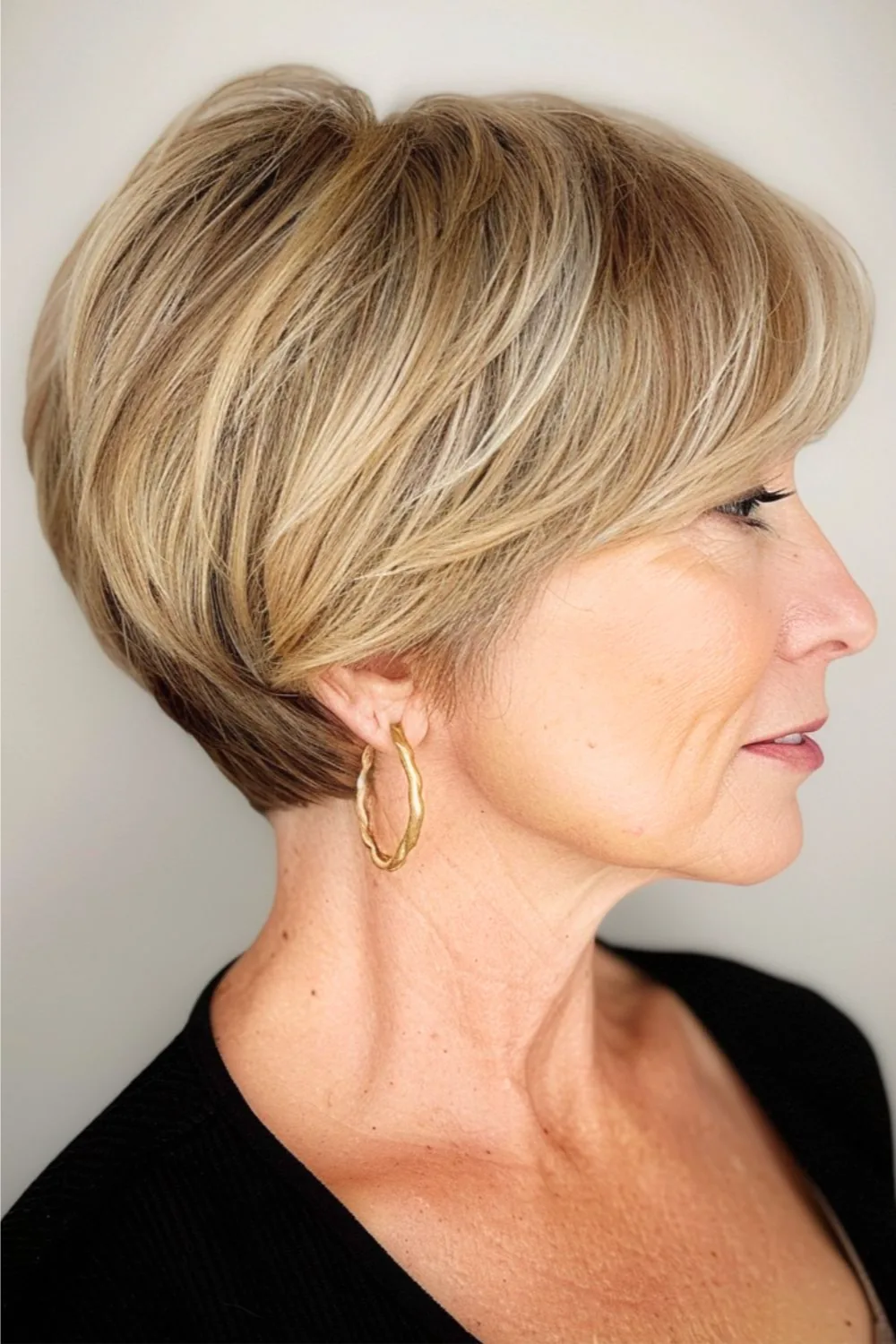
Thinning hair is one of the most common reasons women over 40 go short, and it is also where a good cut makes the biggest difference. The key principle is that short, layered hair looks fuller than long, one-length hair, because the ends are thick and the layers create movement that reads as volume. A textured pixie, a stacked bob, or a layered crop all use this trick: the shortest layers sit at the crown, where they lift the roots, and the perimeter stays blunt so the ends look dense rather than wispy. Avoid cuts that are thinned out too aggressively with thinning shears — removing bulk from already-fine hair makes it look thinner, not lighter.
- Root lift first: blow-dry the crown upward with a small round brush, or use a root-lifting spray on damp hair before drying.
- Texture over sleekness: a little texturising spray or dry shampoo adds grip and separation, which makes fine hair look like there is more of it.
- Side parting: a deep side part covers a widening centre parting and adds instant volume on the heavier side.
- Colour helps: subtle lowlights or a slightly darker root create depth, and depth reads as thickness.
- What to avoid: very long layers, centre partings on a wide part, and heavy oils that flatten the roots.
Grey, Colour and Highlights After 40
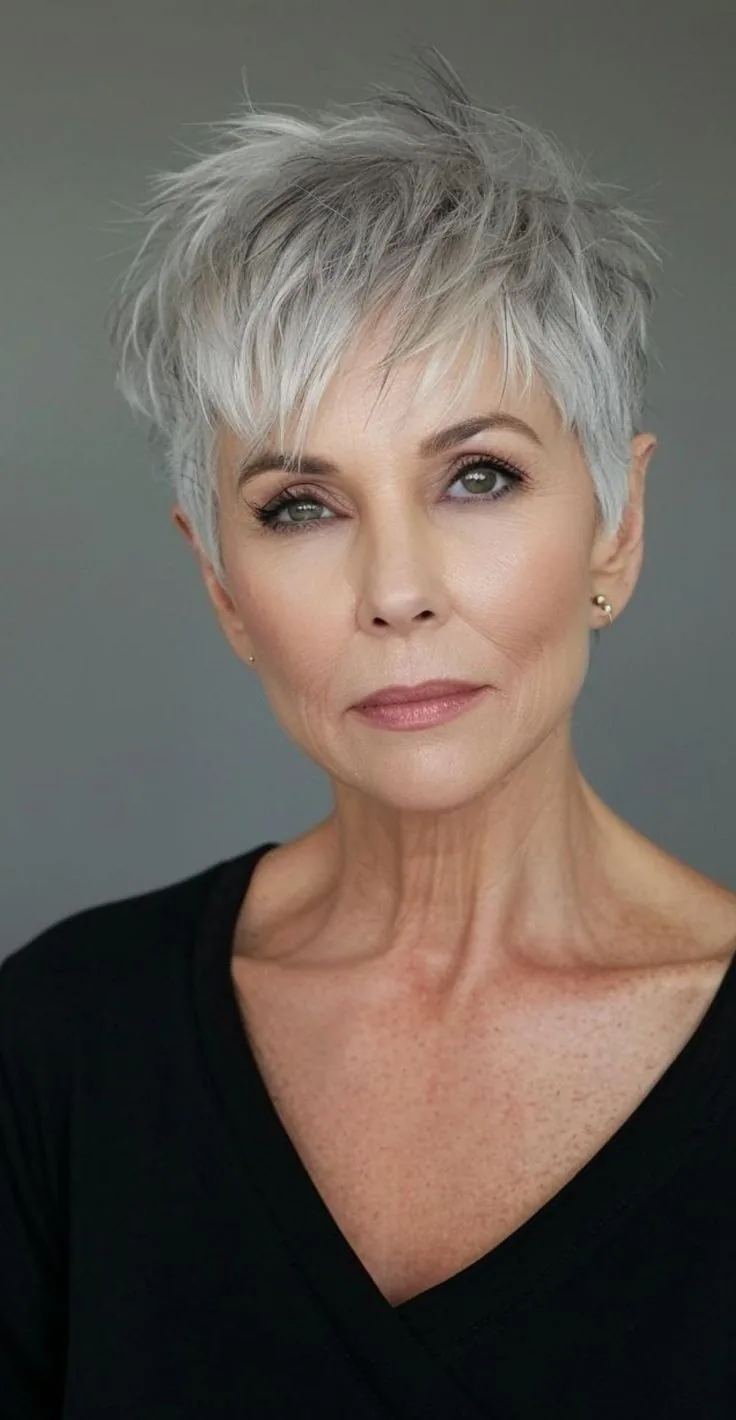
Short hair and colour are a natural pair after 40, because a short cut makes every colour decision cheaper, quicker and easier to change. Growing out grey is far less painful at pixie length than at shoulder length — a few months of short cuts and the old colour is gone. If you would rather keep colouring, short hair means a root touch-up takes twenty minutes instead of an hour, and you use far less product. And if you want to soften the contrast between coloured hair and grey roots, lowlights, a root shadow, or a shade one tone lighter than your old colour all buy you extra weeks between appointments.
Going silver is a genuine style choice now, not a surrender, and it suits short cuts particularly well: a silver pixie or a grey bob looks deliberate and polished in a way that long grey hair sometimes does not. The maintenance is different rather than absent — silver hair can turn yellow from sun, heat and hard water, so a purple shampoo once a week keeps it bright, and a gloss treatment adds shine. If you are not ready for full silver, babylights or fine highlights around the face brighten the complexion and blend the first greys so softly that nobody can tell where the colour ends and the grey begins.
How to Talk to Your Stylist (and What to Ask For)
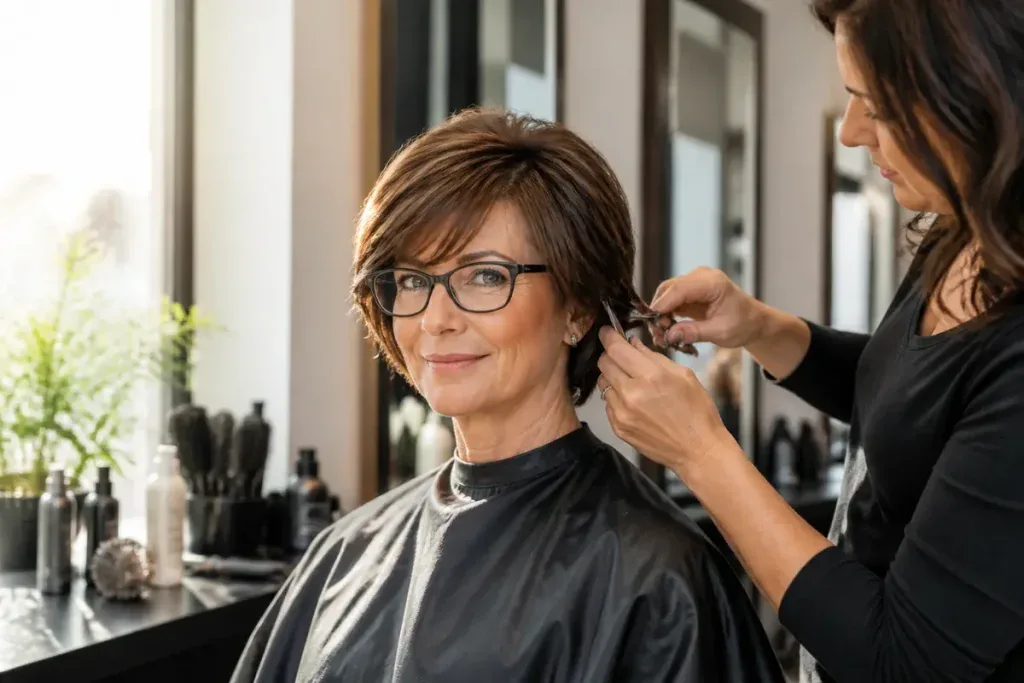
The difference between a short cut you love and one you regret is usually the consultation, not the scissors. Before the appointment, save three photos of the cut you want — from the front, the side, and the back — and be honest about your morning routine: how many minutes you will really spend on your hair, whether you own a round brush, and whether you ever use heat tools. A stylist who knows you want wash-and-go will cut differently from one who knows you will blow-dry every morning, and telling them the truth saves you both from a style that only looks good in the salon chair.
Ask these questions before the first cut: how will this grow out, and when will I need to come back? Where should the length sit for my face shape? How much texture will you add, and will you use thinning shears? What product should I use, and how much? And ask them to show you how to style it — watch where they place the dryer, how much product they use, and which direction they push the hair. A good stylist will teach you the style in three minutes; if they cannot, the cut may be too complicated for everyday life. Take a photo of the finished cut from the back, so you can show it next time.
Styling Short Hair in Five Minutes
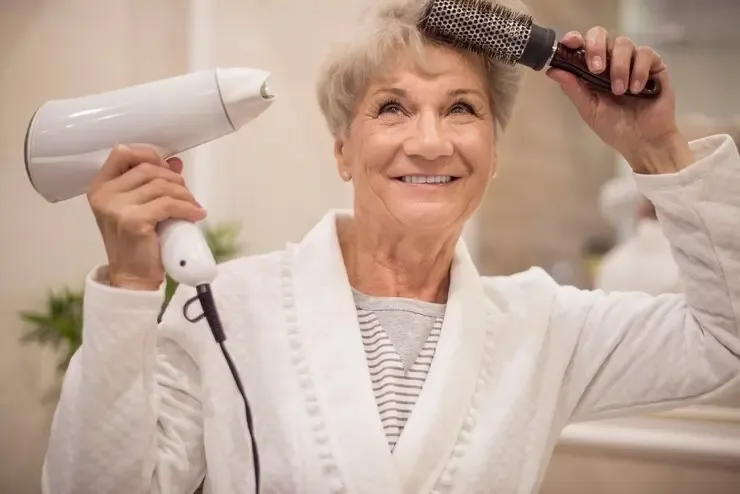
Short hair’s greatest selling point is the morning: most of these cuts take five minutes or less, and the routine is the same almost every day. Start with damp hair and a pea-sized amount of product — mousse for volume, cream for smoothness, or a salt spray for texture — worked through the roots and lengths. Blow-dry with your fingers first, lifting the crown upward and pushing the fringe in the direction you want it to fall. Finish with a small round brush only where you need polish, usually the fringe and the ends, and add a tiny amount of wax or pomade to define the pieces around the face.
On second-day hair, skip the wash entirely. A spritz of dry shampoo at the roots, a quick blast with the dryer, and a finger-comb is enough for most short cuts — this is where pixies and textured crops earn their keep, because they look better slightly lived-in than freshly perfect. Keep your kit small: one styling product, one finishing product, a dryer, and a small round brush. If a style needs more than that every morning, it is the wrong style for your routine, and you should tell your stylist so they can simplify the cut next time.
Short Hair by Hair Type: Fine, Thick, Curly and Wavy
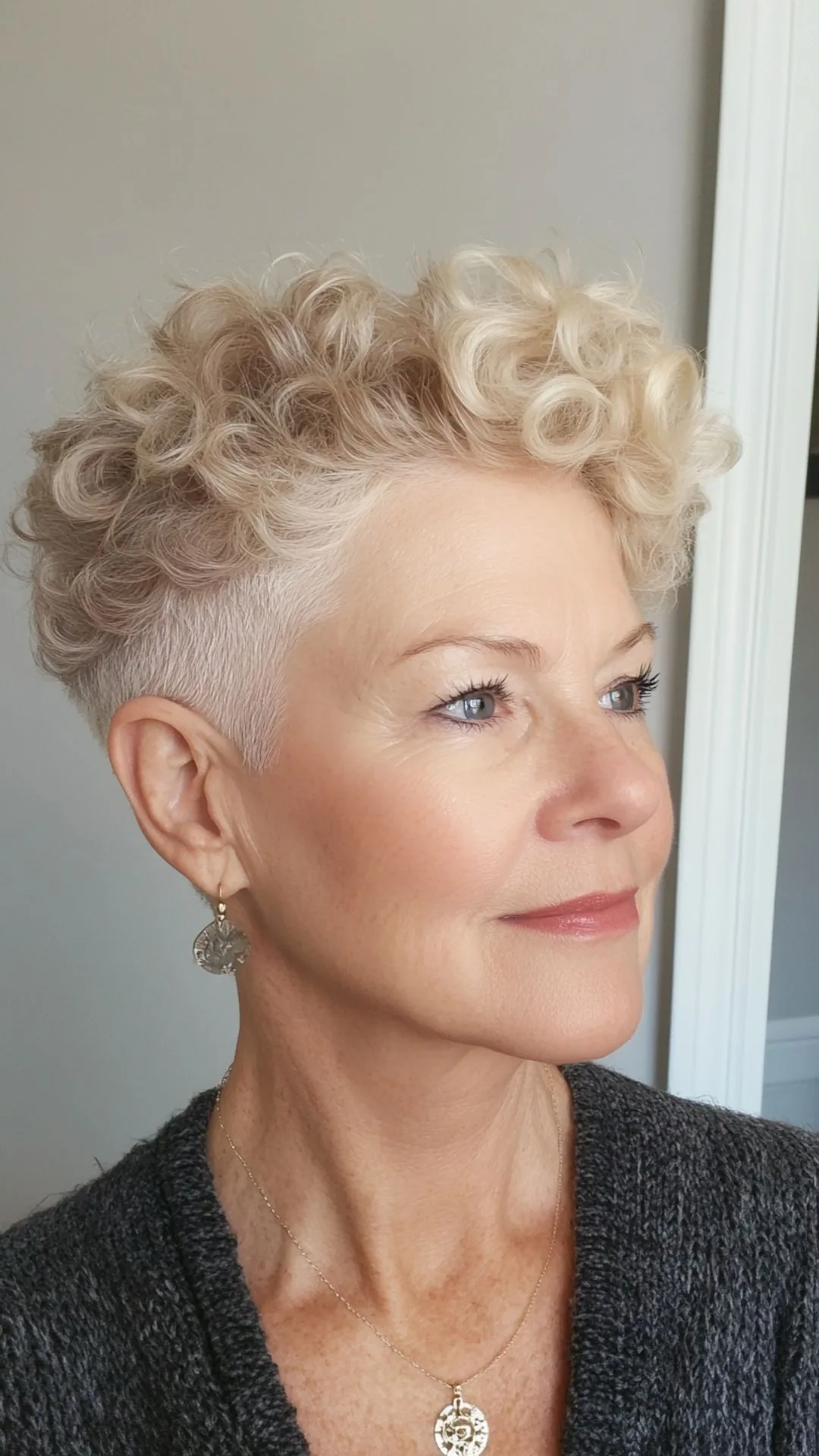
There is no single best short cut after 40 — there is a best cut for your hair type. Fine hair needs blunt ends and short layers: a classic pixie, a blunt bob, or a stacked bob all make fine hair look denser, while long layers and heavy thinning make it disappear. Thick hair needs the opposite: internal layers, texturising, and sometimes a tapered nape to remove bulk, so a shag, a layered bob, or a tapered pixie keeps it from turning into a triangle. Wavy hair is the easiest to cut short, because the natural wave does the styling for you — a French bob or a wavy shag just needs a little cream and air-drying.
Curly hair needs a stylist who cuts curls dry or understands curl pattern, because curls spring up several centimetres shorter than they look when wet. A curly pixie or a tapered natural cut works beautifully at short lengths, but the shape must be built around the curl, not against it — ask for layers that follow the curl pattern, and avoid a straight-across fringe unless your stylist is confident with curls. Whatever your type, the rule is the same: the cut should work with what your hair does naturally, because a cut that fights your hair will fight you every morning.
Growing Out, Maintenance and the Salon Schedule
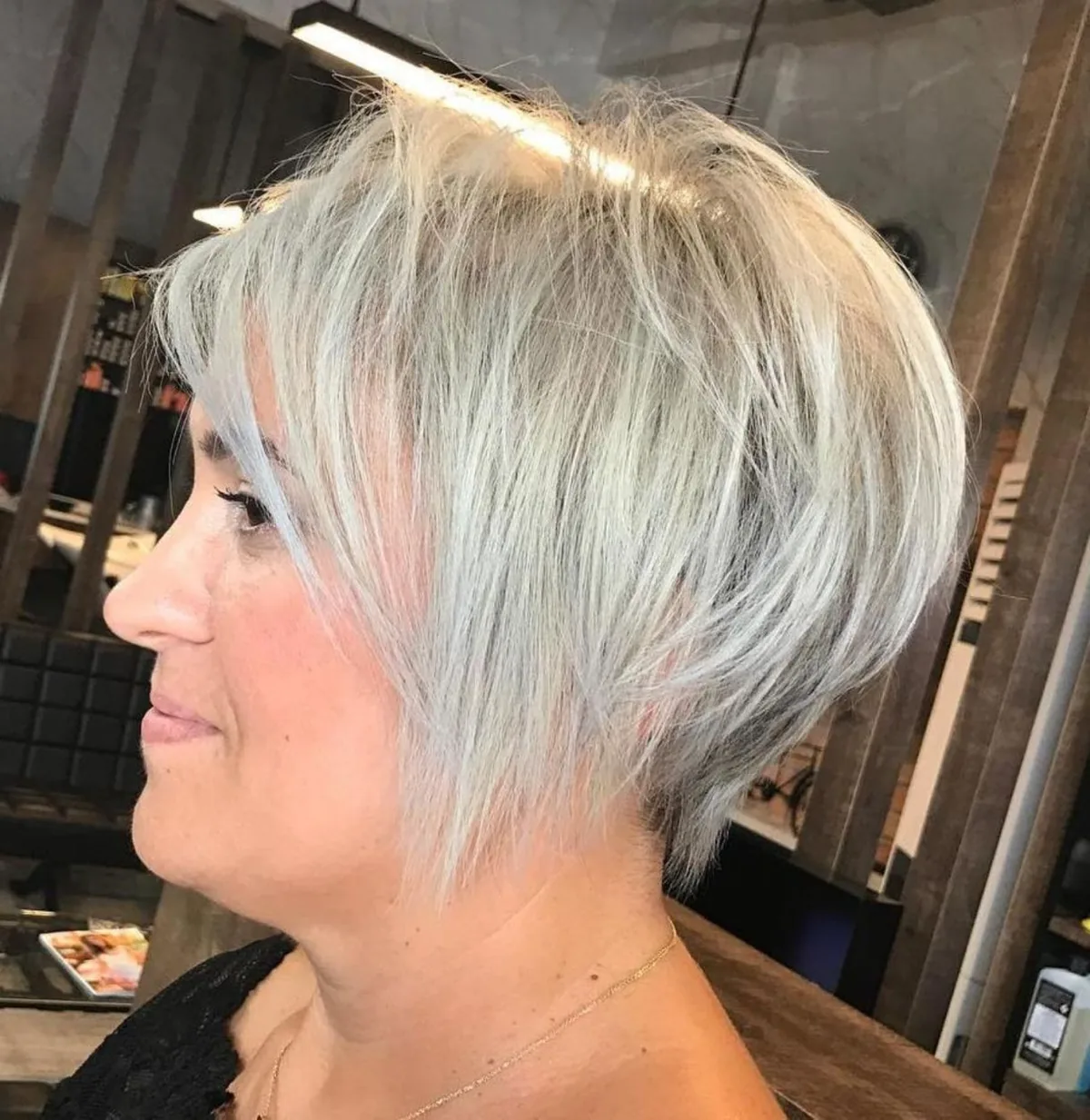
Short hair’s one real cost is frequency: a pixie needs a trim every four to six weeks, a bob every six to eight, and the grow-out phase in between can be awkward if you are not prepared for it. The good news is that short cuts are usually cheaper per visit, use less colour, and the appointment itself is shorter. Book your next appointment before you leave the salon — it keeps the shape from sliding into that in-between stage where the cut looks neither short nor long, and it stops you putting off the trim until the style has lost its shape entirely.
If you are growing a pixie into a bob, the trick is to let the top grow while keeping the nape trimmed, so the shape stays intentional instead of shaggy. Ask your stylist for a grow-out plan at the appointment where you decide to grow it out, and expect two or three awkward months before the new shape arrives. Between visits, keep the cut fresh with a weekly deep-conditioning treatment — short hair shows damage faster because there is nowhere for dry ends to hide — and protect it from heat with a spray if you use a dryer or straighteners. A short cut rewards regular care with very little effort, which is exactly the trade most women over 40 are happy to make.
1. The Classic Pixie Cut
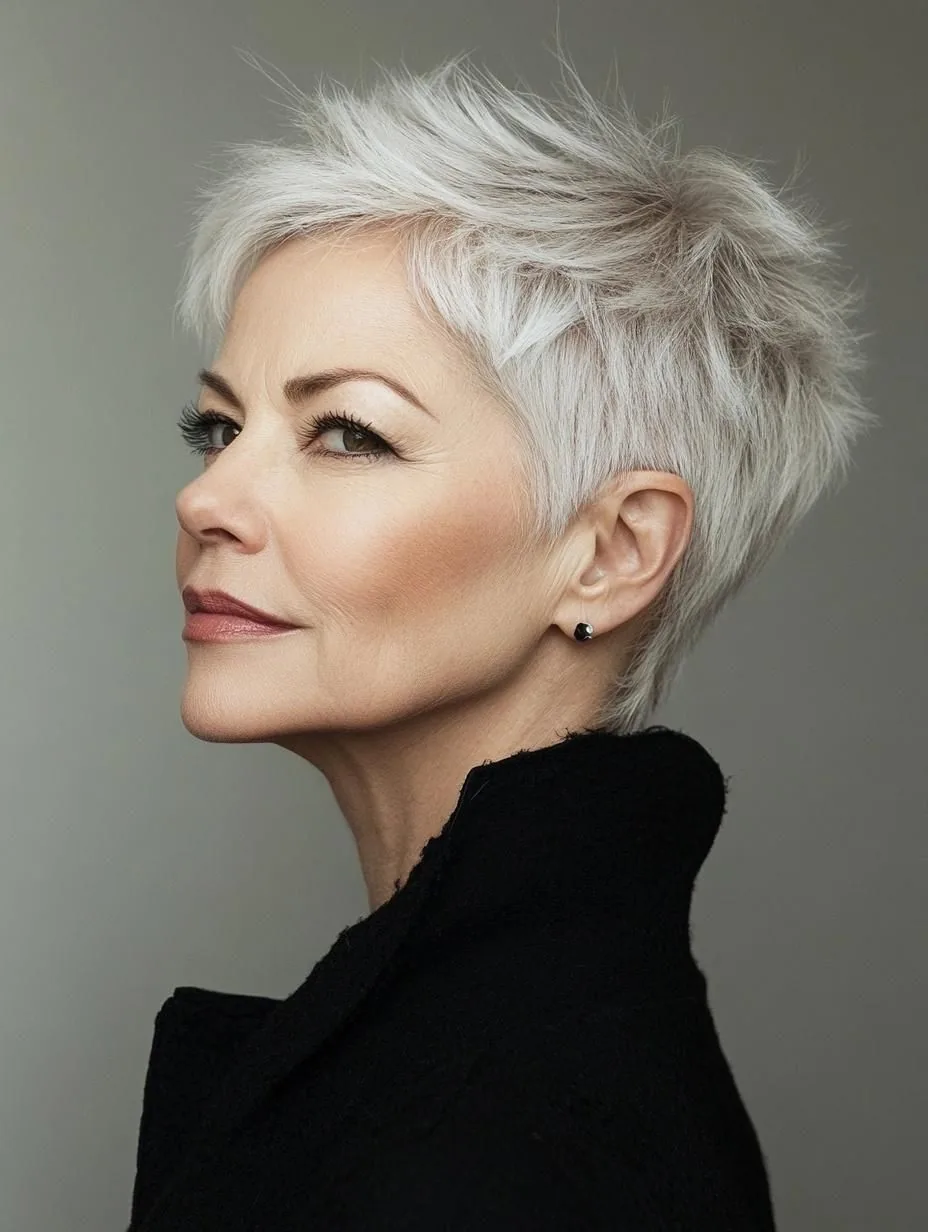
The classic pixie is the cut every other short style is measured against: short at the back and sides, slightly longer on top, with a soft fringe that can be swept to the side or worn forward. It opens up the face completely, shows off the cheekbones and jawline, and puts the eyes at the centre of the whole look. After 40 it works especially well because it removes every strand that could drag the face down, and the short length makes even fine hair look thick and deliberate.
Who it suits: oval, heart and square faces; fine to medium hair. How to style: a pea-sized amount of pomade worked through damp hair, then finger-dry, pushing the top forward or to the side. What to ask for: soft, textured ends rather than a hard, blunt edge, and a fringe long enough to sweep. Upkeep: a trim every 4–5 weeks. Quick verdict: the safest, chicest short cut there is — if you have ever wanted to go short, start here.
2. The Pixie with a Long Fringe
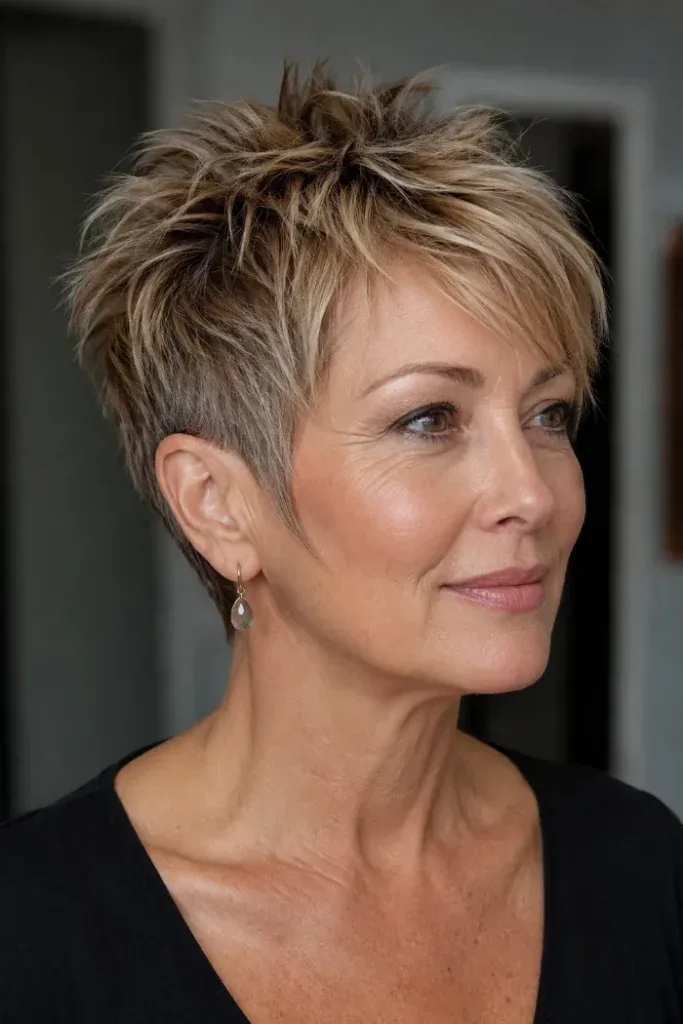
If a full pixie feels like too big a leap, the pixie with a long fringe is the gentlest way in. The back and sides stay short, but the top and fringe are left long enough to sweep across the forehead, tuck behind one ear, or be pushed back entirely. That longer fringe is doing real work: it softens the forehead, covers fine lines, and gives you styling options a short pixie does not — sleek one day, piecey the next, swept up for an evening out.
Why it works after 40: the long fringe frames the eyes and draws attention away from the forehead, while the short back keeps the silhouette light. Best for: women who want short hair without losing all their styling options, and round or square faces that benefit from the diagonal line of a side-swept fringe. Maintenance: low — the fringe grows out gracefully and can be trimmed between full cuts. Watch out for: a fringe cut too short, which loses the softness that makes this style work.
3. The Textured Crop
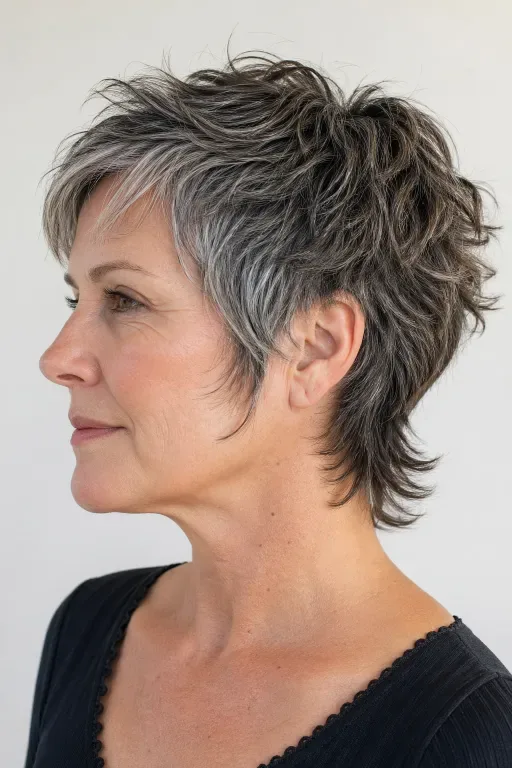
The textured crop is the modern, lived-in cousin of the classic pixie: short all over, but cut with choppy, piecey layers that create movement and separation instead of a smooth, polished surface. It looks deliberately undone, which is exactly why it suits women over 40 so well — the texture reads as youthful and effortless, and it makes fine or thinning hair look like there is far more of it than there is. It is also the most forgiving short cut there is: a bad hair day just looks like texture.
How to style: work a little texturising cream or wax through damp hair, scrunch the crown upward, and let it air-dry or give it a thirty-second blast with the dryer. Who it suits: fine hair most of all, but also straight and wavy hair that needs movement. What to ask for: point-cut ends and short, choppy layers on top, with the nape kept neat. Cost and time: one of the cheapest styles to maintain — it grows out softly and needs a trim only every 5–6 weeks.
4. The French Bob

The French bob ends at the cheekbone or just below the ear, usually with a soft fringe, and it is the most elegant short cut on this list. It has a Parisian insouciance that no other bob quite manages: slightly undone, never over-styled, and flattering on almost everyone. After 40 it is a brilliant choice because the length sits exactly where it frames the cheekbones, and the fringe softens the forehead — the two features that define the face.
Why it works after 40: the cheekbone length lifts the eye upward and the fringe hides forehead lines, while the short length adds volume at the crown. Who should avoid it: very thick, very wavy hair can make the French bob puff out unless the stylist removes internal bulk. How to style: air-dry with a little cream, then tuck one side behind the ear. Quick verdict: if you want to look like you have effortless French style, this is the cut.
5. The Chin-Length Bob with a Side Part
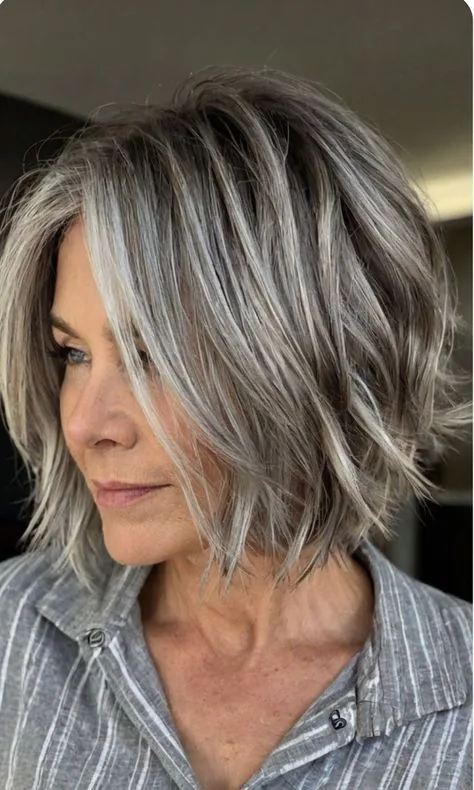
The chin-length bob with a deep side part is the workhorse of short hairstyles after 40: polished enough for the office, soft enough for the weekend, and flattering on nearly every face shape. The side part does the heavy lifting — it adds instant volume on the heavier side, covers a widening centre parting, and creates a diagonal line that lengthens a round face. The chin length frames the jawline without hiding it, which keeps the whole look defined rather than shapeless.
- What it is: a one-length or lightly layered bob ending at the chin, parted deeply to one side.
- Who it suits: round, oval and heart faces; fine to medium hair that needs the appearance of fullness.
- How to style: blow-dry the fringe and crown in the direction of the part, then smooth the ends under with a round brush.
- Maintenance: a trim every 6–7 weeks to keep the ends sharp.
6. The Blunt Bob
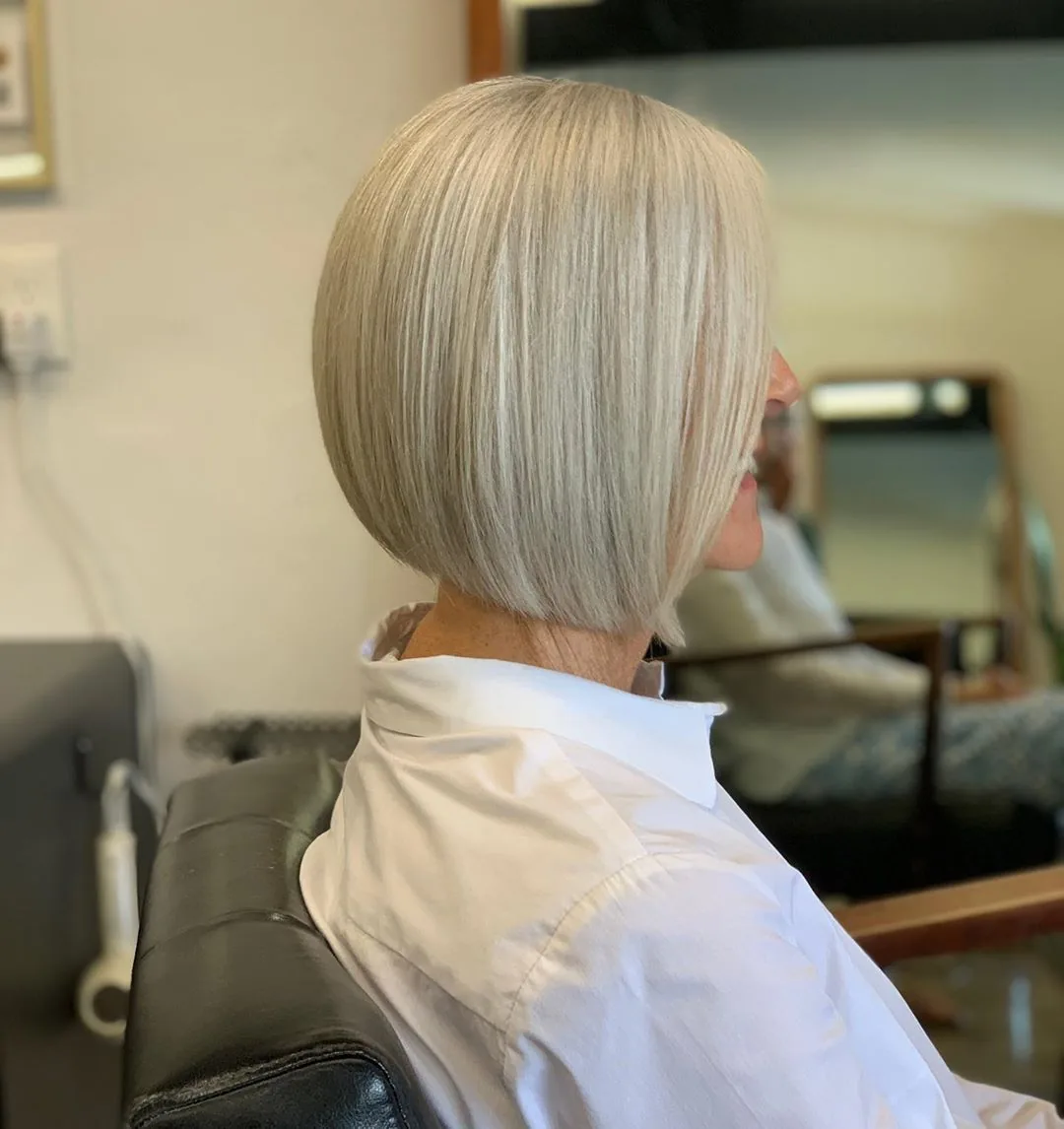
The blunt bob is cut to one clean, straight line all the way around, with no layers at all — and that single line is what makes fine hair look dramatically thicker. Every strand ends at the same place, so the perimeter looks dense and the hair looks like there is more of it. After 40, when hair often thins at the ends, a blunt bob is the fastest way to get the appearance of full, healthy hair without extensions or colour tricks. It also looks sharp and intentional, which suits women who like a polished, put-together look.
Best for: straight, fine to medium hair. How to style: blow-dry smooth with a round brush, or straighten the ends lightly for a glass-like finish. Who should avoid it: very thick or very curly hair, which can make a blunt bob look heavy or triangular. What to ask for: a razor-sharp perimeter and no thinning shears at the ends. Quick verdict: the best cut in this list for making fine hair look thick.
7. The Layered Bob
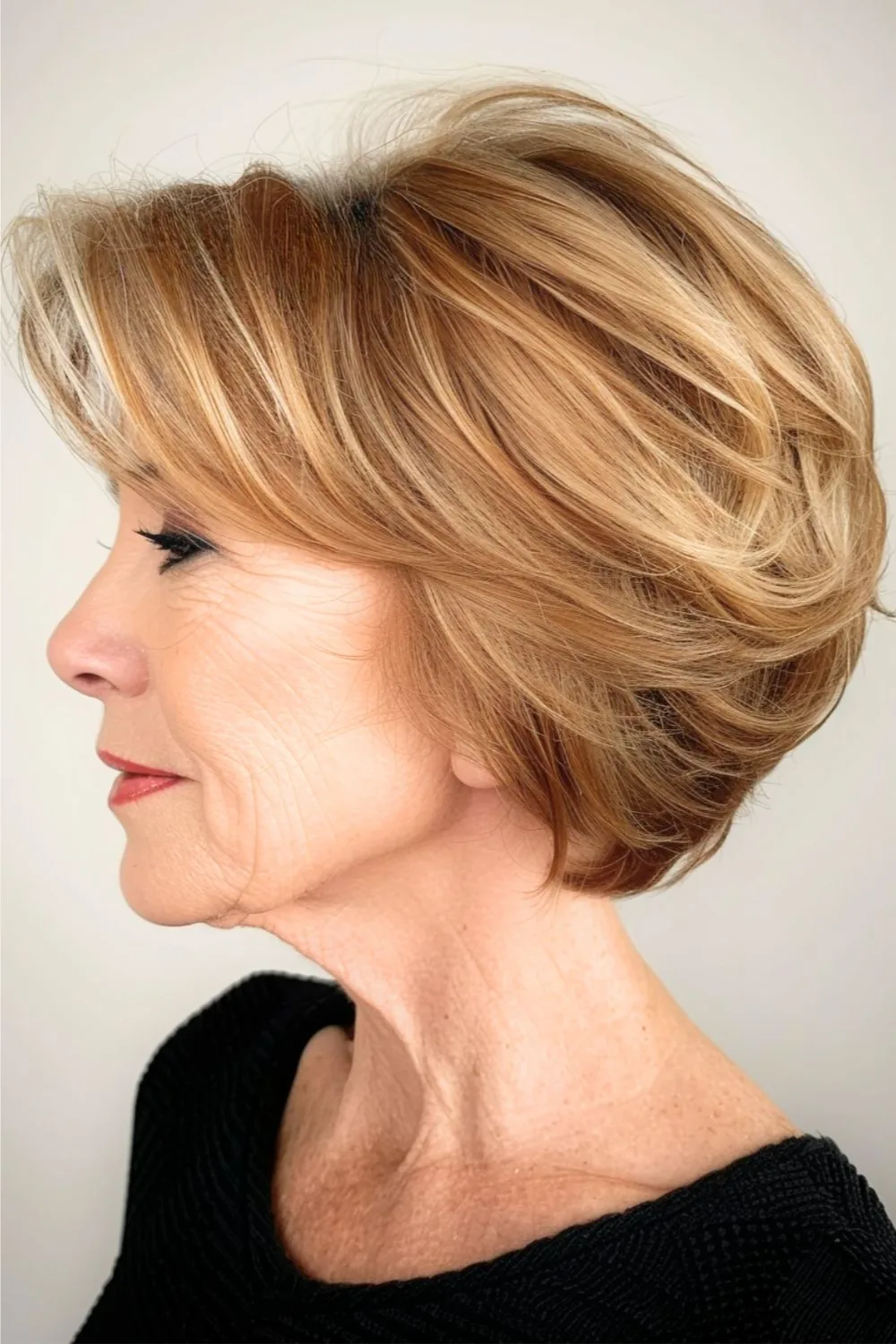
The layered bob is the blunt bob’s softer sister: the same chin-to-shoulder length, but with layers cut through the interior that create movement, volume and shape. Where the blunt bob is a straight line, the layered bob is a curve — the layers lift the crown, lighten the ends, and stop the cut from looking heavy or helmet-like. It is the most versatile bob after 40, because the layers can be adjusted to suit almost any hair type: shorter layers for volume on fine hair, longer layers to remove bulk from thick hair.
Why it works after 40: the layers create the crown lift that long hair loses, and the movement reads as youthful without trying too hard. How to style: blow-dry with a round brush, flicking the layers outward or under — either direction works. Maintenance: a trim every 6–8 weeks; the layers grow out more gracefully than a blunt cut. Watch out for: too many layers, which can make fine hair look thin at the ends instead of full.
8. The A-Line Bob
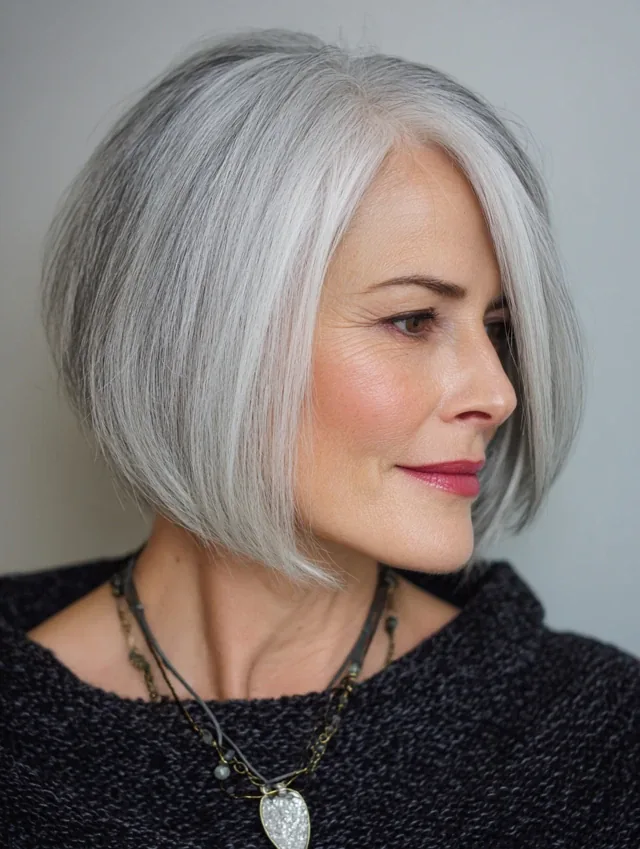
The A-line bob is shorter at the back and longer at the front, so the silhouette angles down toward the face like the letter A. That diagonal line is flattering on almost everyone: it lengthens a round face, defines the jawline, and gives the cut a sense of movement even when it is worn completely straight. After 40 it is a smart choice for women who want the polish of a bob with a little more drama than a one-length cut, and it works particularly well with a side part, which emphasises the angle.
Who it suits: round and square faces especially, plus anyone who wants a bob with a defined shape. What to ask for: a clear angle — the front should sit at least an inch longer than the back — and a stacked or slightly graduated back for volume. How to style: smooth the front pieces forward with a flat brush so the angle shows. Upkeep: a trim every 6 weeks, because the angle blurs quickly as it grows.
9. The Graduated Bob
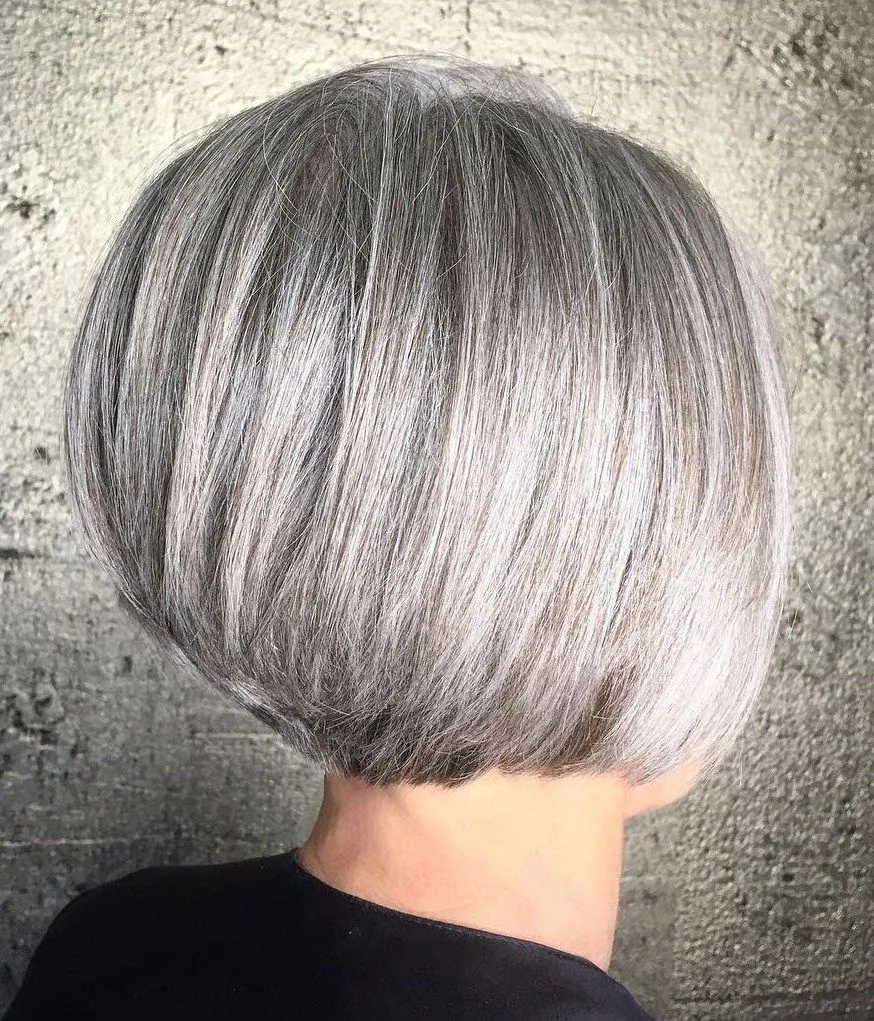
The graduated bob — also called the stacked bob at the back — is built up in layers at the nape so the hair curves under and creates volume where most bobs go flat. It is the cut to choose if the back of your hair is your problem area: the graduation gives the crown a rounded, full shape that a one-length bob simply cannot, and it looks polished from every angle, not just the front. The front can be left long and face-framing, which keeps the style soft despite the structured back.
Best for: fine hair that needs volume at the back, and women who wear their hair tucked or pinned. How to style: blow-dry the back with a round brush, rolling the ends under to emphasise the curve. Maintenance: a trim every 5–6 weeks — graduation grows out faster than a one-length cut. What to ask for: a graduated nape with a clean, rounded shape and longer front pieces. Quick verdict: the most flattering bob from behind.
10. The Asymmetrical Bob

The asymmetrical bob is deliberately uneven — longer on one side than the other — and that imbalance is its whole appeal. It is bold, modern, and instantly noticeable, which makes it a great choice for a woman over 40 who wants her haircut to say something. The longer side frames the face and creates a striking diagonal line, while the shorter side keeps the cut light and easy to wear. It also works as a clever disguise: the asymmetry draws the eye, so nobody notices a thinning crown or an uneven hairline.
- What it is: a bob with one side cut noticeably longer than the other, usually by 2–5 cm.
- Who it suits: confident dressers, oval and heart faces, straight or wavy hair that shows the line cleanly.
- How to style: smooth the longer side forward and tuck the shorter side behind the ear.
- Watch out for: it needs regular trims to keep the asymmetry deliberate rather than accidental.
11. The Curly Pixie
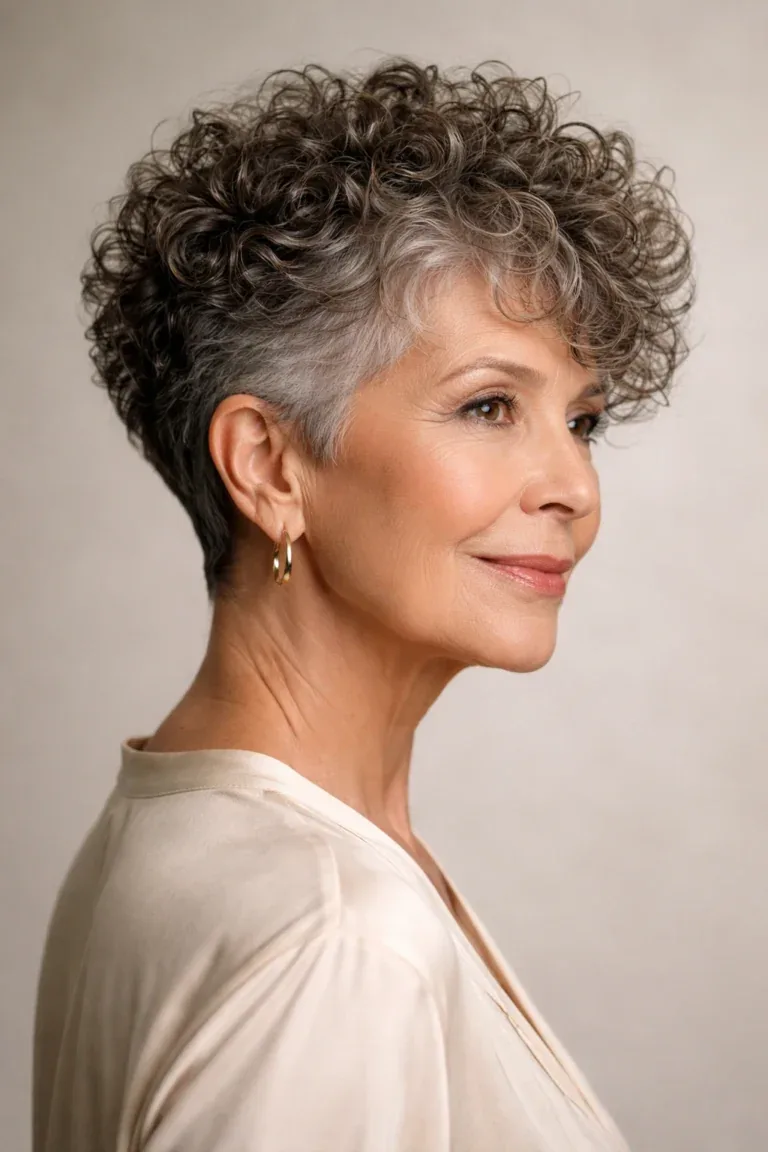
The curly pixie lets the curls do the styling. Cut short with layers that follow the curl pattern, it has natural volume, natural texture, and a shape that looks intentional without any heat at all. After 40 it is a liberation for curly-haired women who have spent years fighting their hair into long, straight styles — at pixie length the curls spring up, the face opens up, and the morning routine shrinks to a handful of product and a scrunch. The key is a stylist who cuts curls dry, so the shape is built around how the curls actually fall.
How to style: apply curl cream to damp hair, scrunch upward, and air-dry or diffuse on low heat. Who it suits: naturally curly or wavy hair of any density. What to ask for: a dry cut, layers that follow the curl pattern, and no straight-across fringe. Maintenance: a trim every 6–8 weeks; curly hair grows out more forgivingly than straight hair. Quick verdict: the lowest-effort short cut for curly hair, and one of the most joyful.
12. The Wavy Short Shag
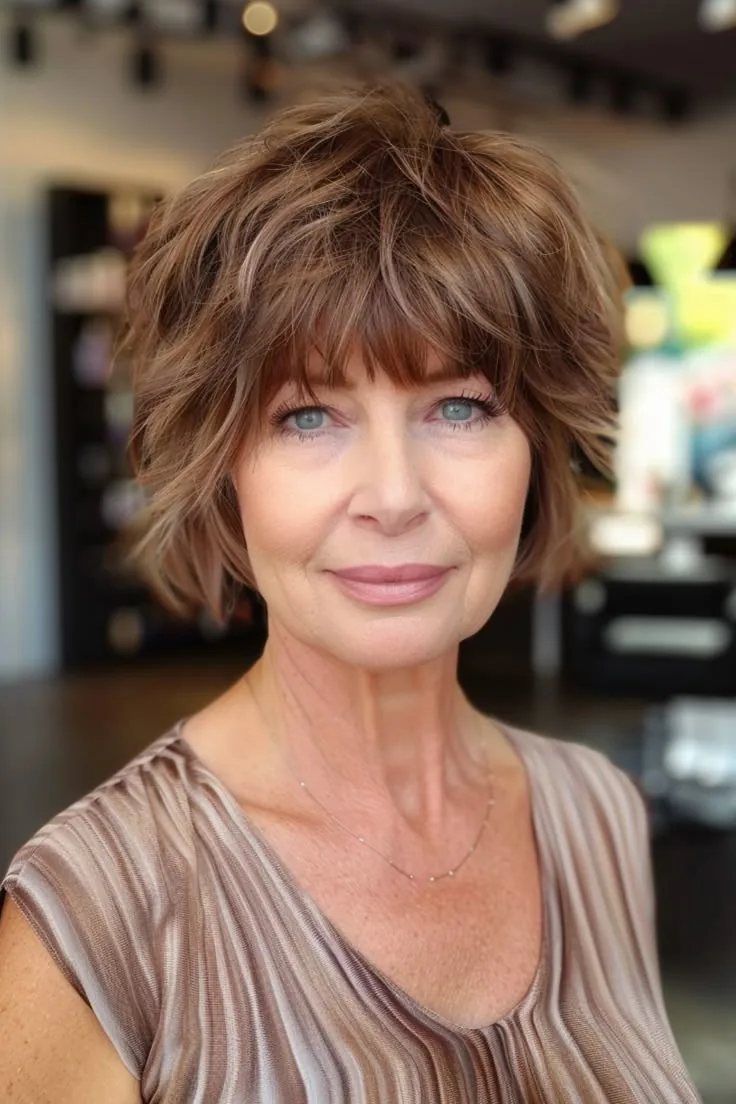
The wavy short shag is all about movement: choppy layers, a textured fringe, and ends that flick out in every direction. It is the rock-and-roll option on this list, and it suits women over 40 who want their hair to look alive rather than arranged. The layers create volume at the crown and width at the sides, which flatters long faces, and the natural wave means the style looks better the less you do to it — a rare quality in a haircut.
Why it works after 40: the texture and movement read as youthful and effortless, and the shaggy layers hide thinning better than any smooth style. Best for: wavy and thick hair; fine hair needs a lighter version with fewer layers. How to style: salt spray on damp hair, scrunch, air-dry. Upkeep: low — the shag grows out gracefully and looks good slightly overgrown.
13. The Short Shag with Curtain Bangs
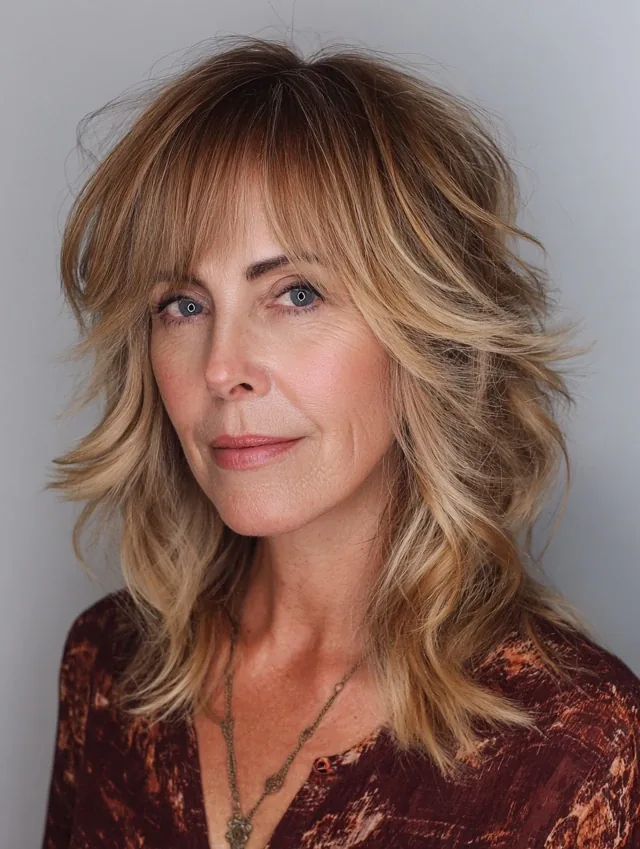
Curtain bangs — parted in the middle and swept to either side like curtains — are the softest way to wear a fringe after 40, and paired with a short shag they are a complete look. The bangs frame the eyes and cheekbones, soften the forehead, and grow out more gracefully than a straight fringe, while the shaggy layers underneath give the whole cut movement and volume. It is a style that looks styled even when you have done nothing to it, which is the best kind of style.
Who it suits: oval, long and heart faces; wavy or straight hair with natural texture. How to style: blow-dry the bangs forward and then sweep them to the sides with a round brush, or simply let them fall where they want. What to ask for: bangs that start at the cheekbone and blend into the layers, not a blunt, heavy fringe. Maintenance: a fringe trim every 3–4 weeks, or let the bangs grow into face-framing layers.
14. The Pixie Bob (Bixie)
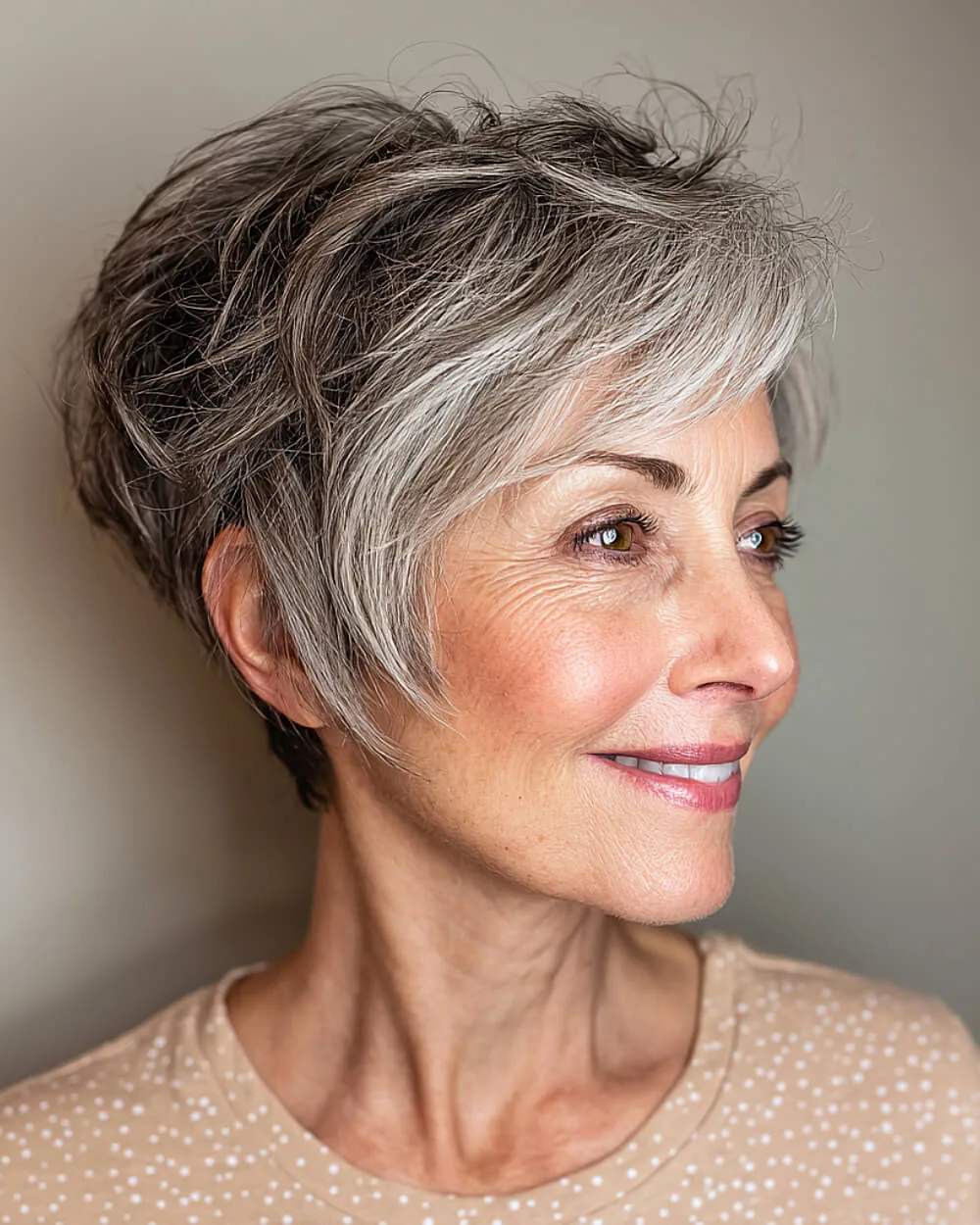
The bixie — half pixie, half bob — is the compromise cut for women who cannot decide between the two. It has the short, tapered back of a pixie and the longer, face-framing front of a bob, so it feels short without feeling severe. After 40 it is a brilliant middle ground: you get the lift and lightness of a pixie with the softness and styling options of a bob, including the ability to tuck it behind the ears or sweep it to the side. It is also one of the most flattering cuts for fine hair, because the pixie back creates volume while the bob front creates the illusion of length.
- What it is: a pixie at the back and nape, a bob at the front and sides, usually ending around the ear or jaw.
- Who it suits: almost everyone — it is the most universally flattering cut in this list.
- How to style: a little mousse at the roots, finger-dry, then define the front pieces with wax.
- Maintenance: a trim every 5–6 weeks to keep the pixie back neat.
15. The Tapered Pixie
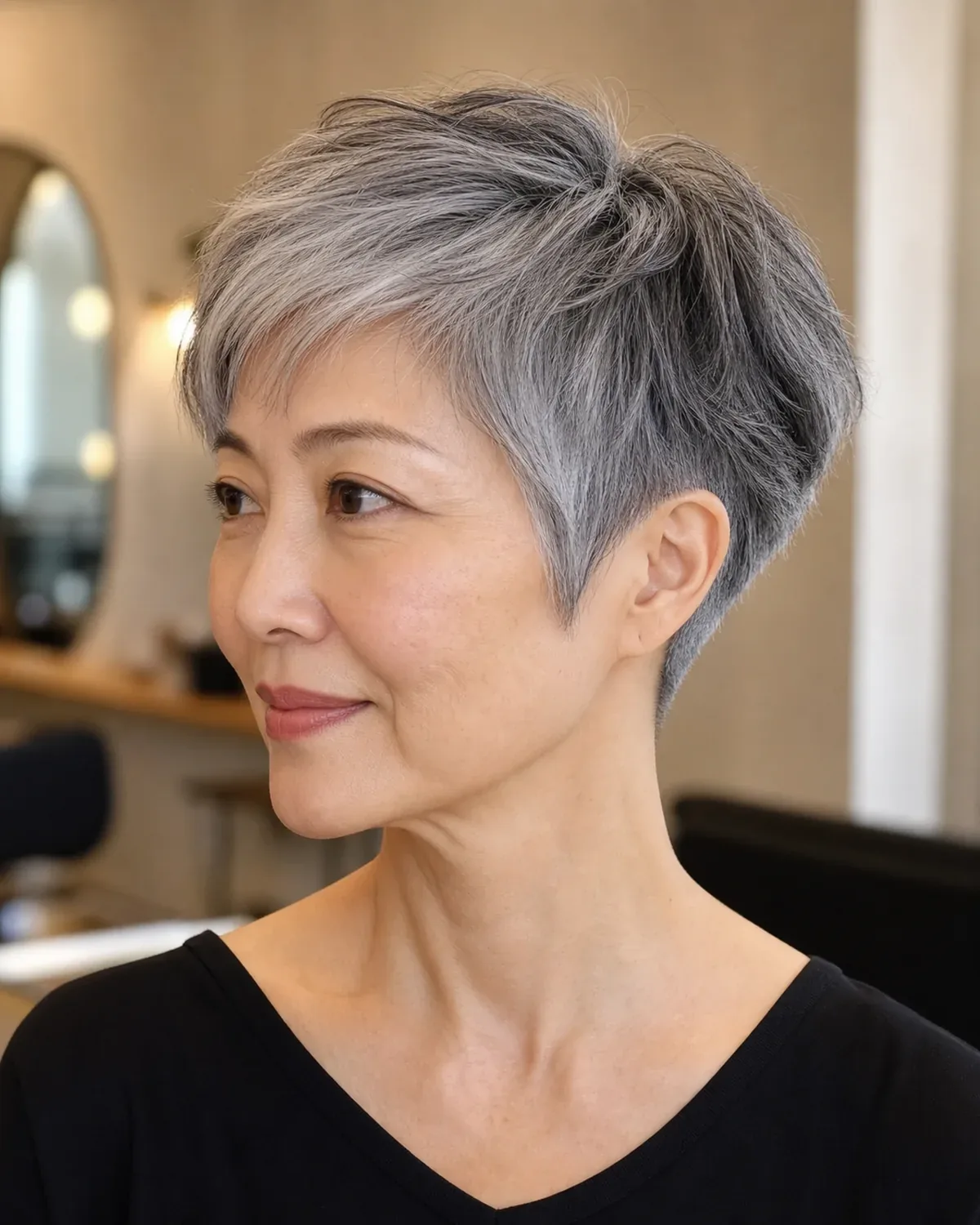
The tapered pixie is the neatest, most tailored short cut there is: the hair graduates smoothly from longer on top to very short at the nape and around the ears, with no bulk anywhere. It is the cut to choose if you like a clean, sculpted silhouette and you are happy to keep it trimmed, because the taper is what makes it look expensive. After 40 it works beautifully on thick hair, where the taper removes weight, and on women who want a short cut that still looks polished in a professional setting.
Best for: thick hair, oval and heart faces, and anyone who likes a neat, tailored look. How to style: a small amount of pomade smoothed over the top, then finger-combed into place. Who should avoid it: very fine hair can look too flat with a close taper — ask for a softer, longer taper instead. Upkeep: the highest of the pixies, a trim every 3–4 weeks to keep the taper crisp. Quick verdict: the sharpest short cut on this list.
16. The Short Bob with Bangs
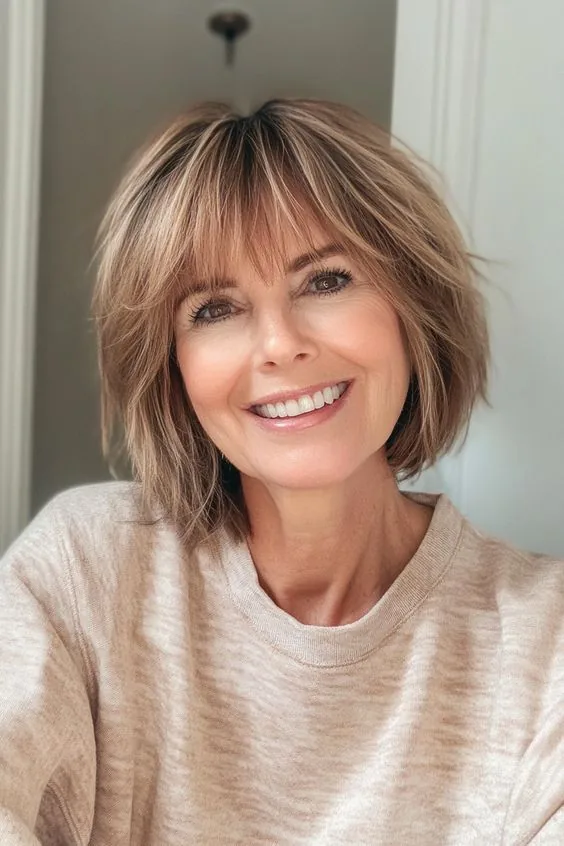
A short bob with a full fringe is a classic for a reason: the fringe frames the eyes, hides forehead lines, and gives the whole cut a youthful, put-together finish. The key after 40 is softness — a fringe that is slightly feathered at the ends and cut to brow length, rather than a heavy, blunt wall of hair. Paired with a chin-length bob, it creates a strong, graphic shape that looks deliberate and chic, and it suits women who like their hair to look styled rather than undone.
Why it works after 40: the fringe covers the forehead while the bob frames the jaw, so the whole face looks lifted and defined. Who it suits: oval and long faces, straight or slightly wavy hair. How to style: blow-dry the fringe forward with a round brush, then smooth the bob under. Maintenance: a fringe trim every 3–4 weeks between full cuts. Watch out for: a fringe cut too heavy, which can overwhelm a small face.
17. The Wispy Bangs Bob
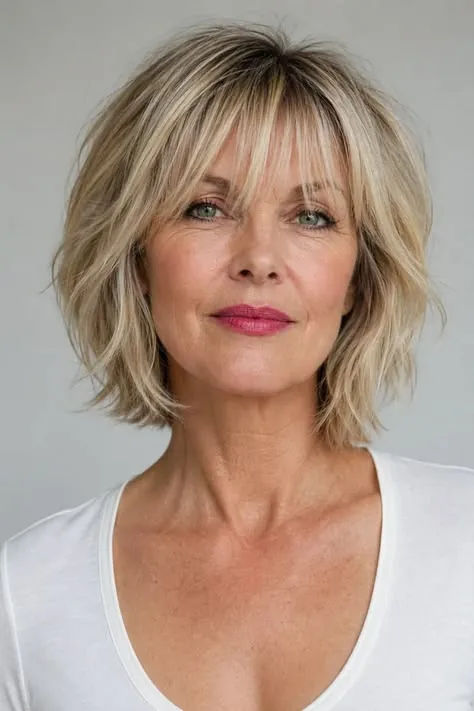
If a full fringe feels too much, wispy bangs are the lighter alternative: thin, feathery strands across the forehead that soften the face without hiding it. They are the most forgiving fringe after 40, because they do not need to be perfect — a few strands out of place just look like texture — and they grow out so gently that you barely notice. Paired with a soft, layered bob, they create a look that is youthful without being try-hard, and they work on fine hair that could never support a heavy fringe.
Best for: fine hair, round faces, and women trying bangs for the first time. How to style: blow-dry forward with your fingers, then separate the strands with a tiny amount of wax. What to ask for: bangs cut with a razor or point-cutting so the ends are feathered, not blunt. Maintenance: very low — wispy bangs can go 5–6 weeks between trims. Quick verdict: bangs without the commitment.
18. The Face-Framing Layered Bob
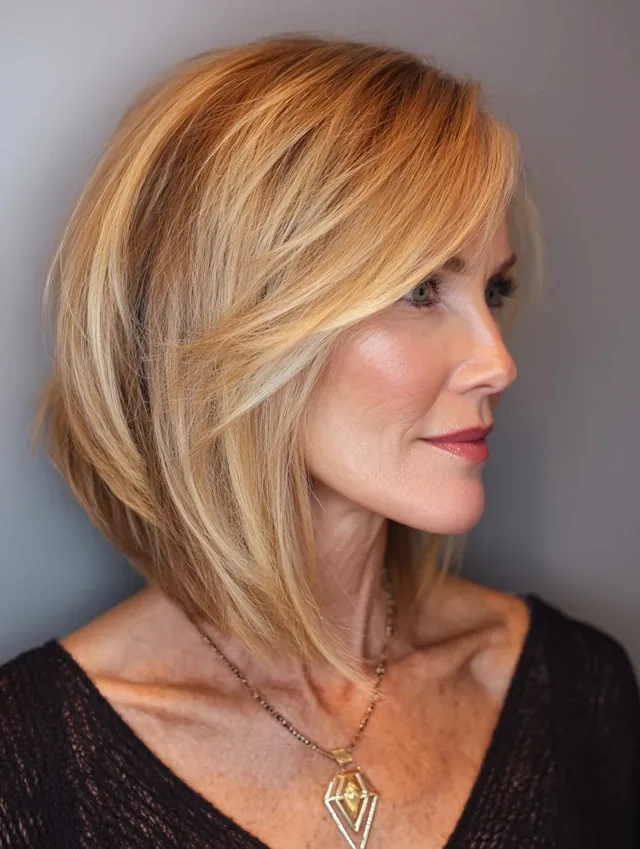
Face-framing layers are the quiet trick behind many of the best haircuts after 40: shorter pieces around the face that start at the cheekbone and blend down into the length, creating a soft frame that draws the eye to the eyes and cheekbones. In a bob, they stop the cut from looking like a solid block of hair and give it shape and movement. They also grow out beautifully, because the layers simply get longer and softer rather than losing their shape.
Why it works after 40: the layers lift the face visually and soften the jawline, while the bob length keeps the look polished. Who it suits: every face shape — the layers are adjusted to the face, not the other way round. How to style: blow-dry the front pieces forward and slightly under, so they curve toward the face. What to ask for: layers that start at the cheekbone, not at the chin, and blend smoothly into the rest of the cut.
19. The Stacked Bob
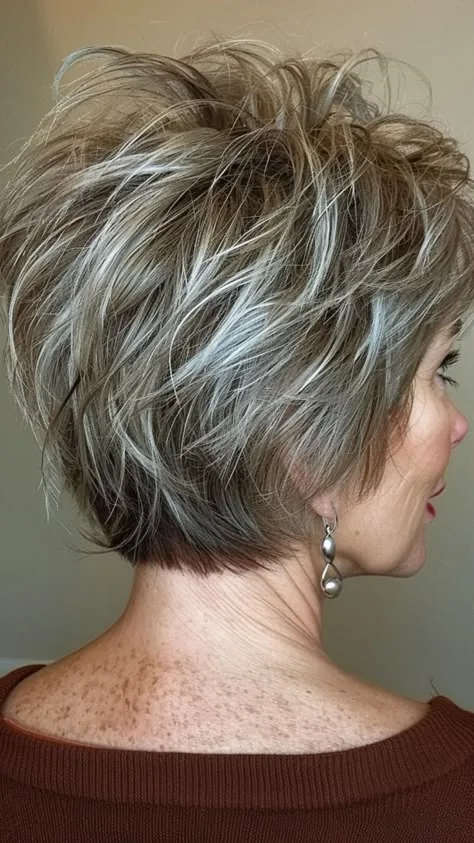
The stacked bob builds volume at the back by cutting short, graduated layers at the nape that stack on top of each other, creating a rounded, full shape. It is the cut for women who want their hair to look thick and voluminous from every angle, and it is particularly good for fine hair, where the stacking creates the illusion of density that a one-length cut cannot. The front stays longer and sleeker, so the style reads as a bob from the front and a voluminous shape from the back.
- What it is: a bob with short, stacked layers at the nape and longer pieces at the front.
- Who it suits: fine to medium hair that needs volume, and women who like a rounded silhouette.
- How to style: blow-dry the back upward with a round brush to emphasise the stack.
- Maintenance: a trim every 5–6 weeks, as the stack loses its shape quickly.
- Watch out for: too much stacking, which can look dated — ask for a soft, modern stack.
20. The Tapered Natural Short Cut
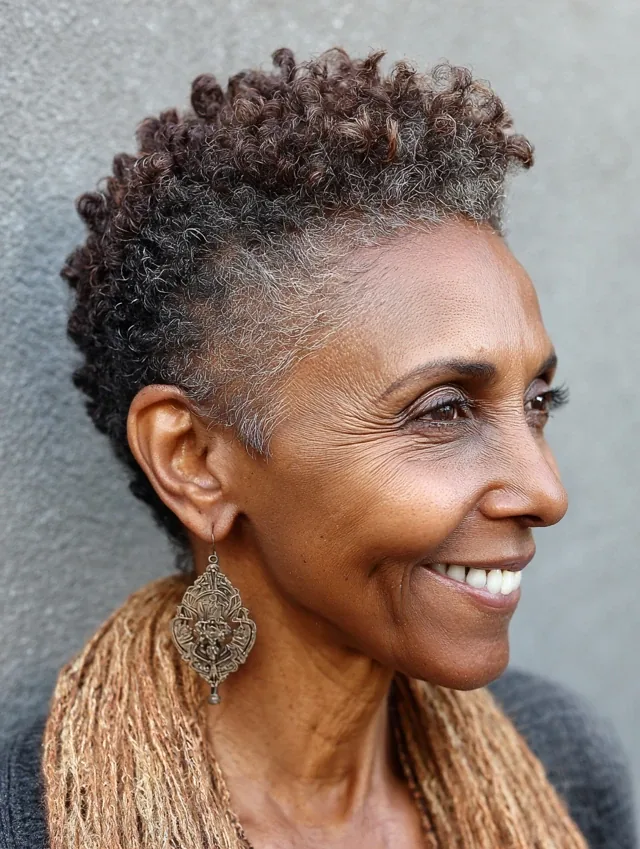
The tapered natural cut — short at the sides and nape, with more length and curl on top — is one of the most elegant short styles for natural hair after 40. It celebrates the curl pattern instead of fighting it, keeps the silhouette neat and sculpted, and puts the focus on the face. The taper keeps the sides from growing wide, which is the usual problem with short natural hair, while the length on top gives you styling options: a twist-out, a defined curl, or a soft, picked-out shape.
How to style: apply leave-in conditioner and curl cream to damp hair, define the top curls with your fingers, and let it air-dry. Who it suits: coily and curly natural hair of any density. What to ask for: a taper that follows your head shape, with the top left long enough to show the curl pattern. Maintenance: a trim every 6–8 weeks to keep the taper clean, plus regular deep conditioning. Quick verdict: a cut that works with your hair, not against it.
21. The Short Lob (Long Bob)

The short lob sits just at or above the shoulders — the longest cut on this list, and the safest choice for a woman who is not quite ready to go properly short. It keeps enough length to tie back on a bad day, but it is short enough to give you the lift, volume and easy drying that long hair cannot. After 40 it is a smart compromise: the ends are thick and healthy because the damaged length is gone, and the shape still frames the face beautifully. Add a few face-framing layers and it is one of the most flattering cuts there is.
Best for: first-time short cutters, thick hair that needs the weight removed, and women who still want a ponytail option. How to style: blow-dry smooth with a round brush, or air-dry with a little cream for a soft wave. Maintenance: a trim every 7–8 weeks — the most forgiving schedule on this list. What to ask for: a lob that ends above the shoulders, with the front slightly longer than the back.
22. The Feathered Pixie
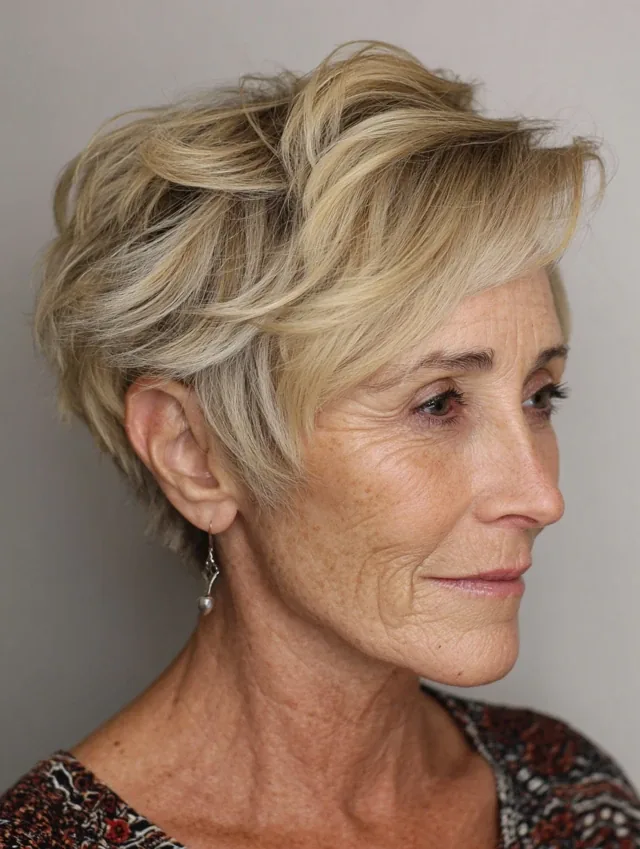
The feathered pixie is cut with soft, wispy layers that flick outward at the ends, like feathers — a style that was huge in the seventies and has come back because it is so flattering on mature faces. The feathering softens every edge of the cut, which makes it kind to the jawline and the neck, and it gives fine hair a lightness and movement that a blunt pixie cannot. It is a gentle, feminine short cut, and it suits women who find a classic pixie too severe.
Why it works after 40: the feathered ends soften the face and the layers create movement that reads as youthful. Who it suits: fine to medium straight hair, oval and heart faces. How to style: blow-dry with a small round brush, flicking the ends outward, and finish with a light wax. Upkeep: a trim every 4–5 weeks to keep the feathering fresh. Watch out for: too much feathering, which can make the cut look thin rather than soft.
23. The Spiky Pixie
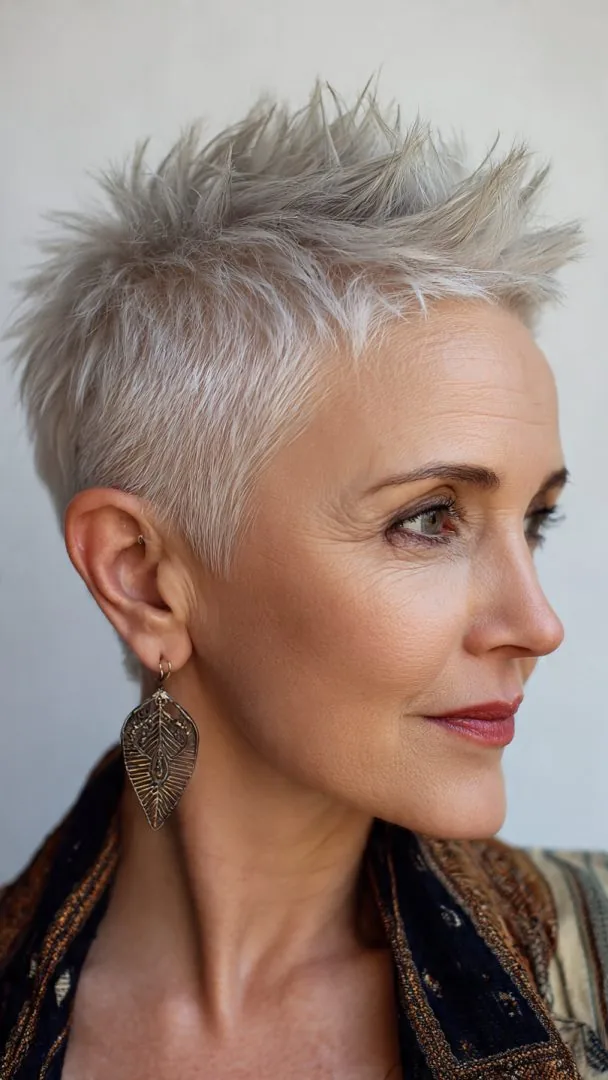
The spiky pixie is the boldest cut on this list: short, textured, and styled upward into piecey spikes that give the whole head height and attitude. It is not for everyone, and that is the point — it suits women over 40 who have a strong sense of style and want their hair to match it. The spikes create instant volume at the crown, which lengthens a round face, and the short sides keep the silhouette sharp. It is also one of the easiest cuts to style once you know the trick, which is a strong-hold wax and a willingness to mess it up a little.
- What it is: a short pixie with textured, spiky pieces on top, styled upward and outward.
- Who it suits: confident dressers, round and oval faces, straight or slightly wavy hair.
- How to style: work wax through damp hair, then pinch and push the top pieces upward.
- Maintenance: a trim every 4 weeks to keep the spikes defined.
- Who should avoid it: very fine, limp hair that will not hold a spike without heavy product.
24. The Side-Swept Bangs Short Cut
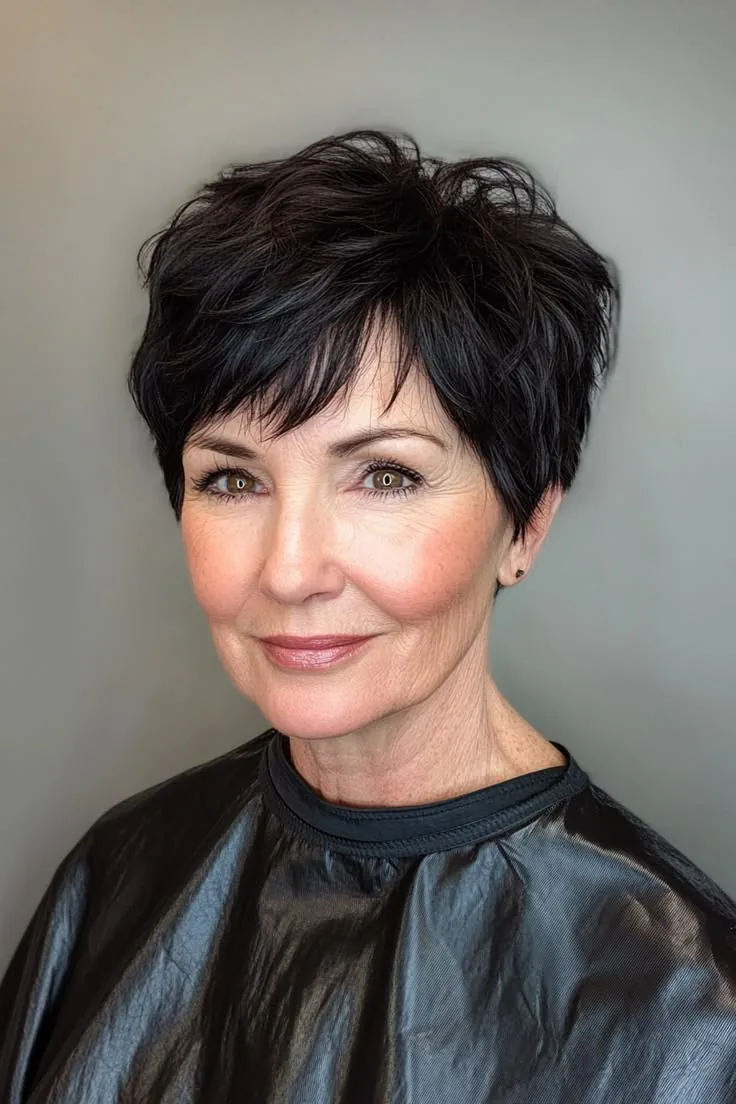
Side-swept bangs are the most versatile fringe there is: they can be long or short, heavy or wispy, worn sleek or piecey, and they suit almost every face shape. On a short cut they do something a straight fringe cannot — they create a diagonal line across the forehead that lengthens a round face, softens a square jaw, and draws the eye to the eyes. They are also the easiest fringe to grow out, because they simply blend into the rest of the cut, which makes them a low-risk way to try bangs after 40.
Why it works after 40: the diagonal line is flattering on every face shape, and the fringe softens the forehead without hiding the face. Best for: round and square faces especially, and anyone who wants bangs without the upkeep of a straight fringe. How to style: blow-dry the bangs to one side with a round brush, then finish with a little cream. What to ask for: bangs long enough to reach the cheekbone, cut on a diagonal.
25. The Voluminous Crown Bob
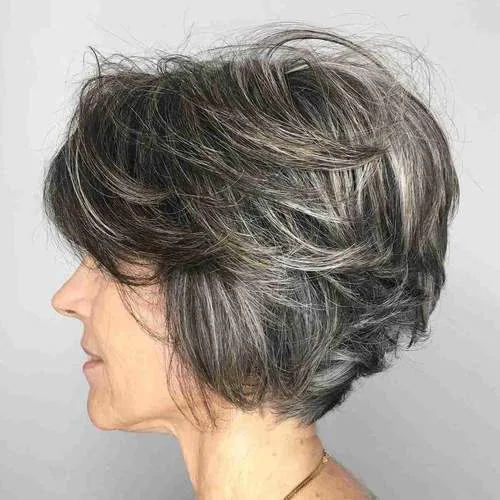
The voluminous crown bob is built around one idea: height at the top. Short layers at the crown are cut to lift the roots, the sides are kept smooth, and the result is a bob with a rounded, full silhouette that makes the face look lifted and the hair look thick. It is the cut to choose if your main complaint is flat hair — no amount of product can do what these layers do, because the volume is built into the cut itself. It also photographs beautifully, which is why it is a favourite for weddings, parties and portraits.
Best for: fine hair that goes flat, and women who want maximum volume without teasing. How to style: blow-dry the crown upward with a round brush, or use a root-lifting spray on damp hair. Maintenance: a trim every 6 weeks to keep the crown layers short enough to lift. Watch out for: over-teasing the crown, which damages fine hair — let the cut do the work instead.
26. The Short Cut for Fine Hair
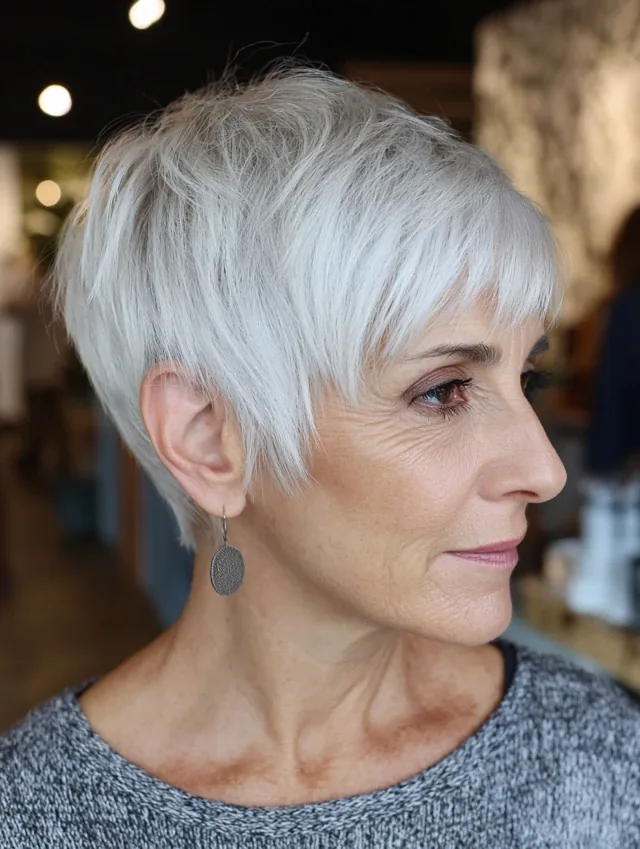
Fine hair after 40 needs a cut that creates the illusion of density, and the rules are simple: keep it short, keep the ends blunt, and keep the layers short and high. A pixie with a blunt perimeter, a stacked bob, or a textured crop with short crown layers all work, because they concentrate the hair you have into a small, dense shape instead of spreading it thin over a long length. What fine hair does not need is length, long layers, or heavy thinning — all three make it look thinner.
- Cut: short, blunt ends with short layers at the crown for lift.
- Colour: a slightly darker root or lowlights add depth, and depth reads as thickness.
- Styling: mousse at the roots, blow-dry upward, and a little dry shampoo on day two for grip.
- Avoid: heavy oils, silicone serums and over-conditioning, which flatten fine hair.
- Quick verdict: short and blunt beats long and layered for fine hair, every time.
27. The Short Cut for Thick Hair
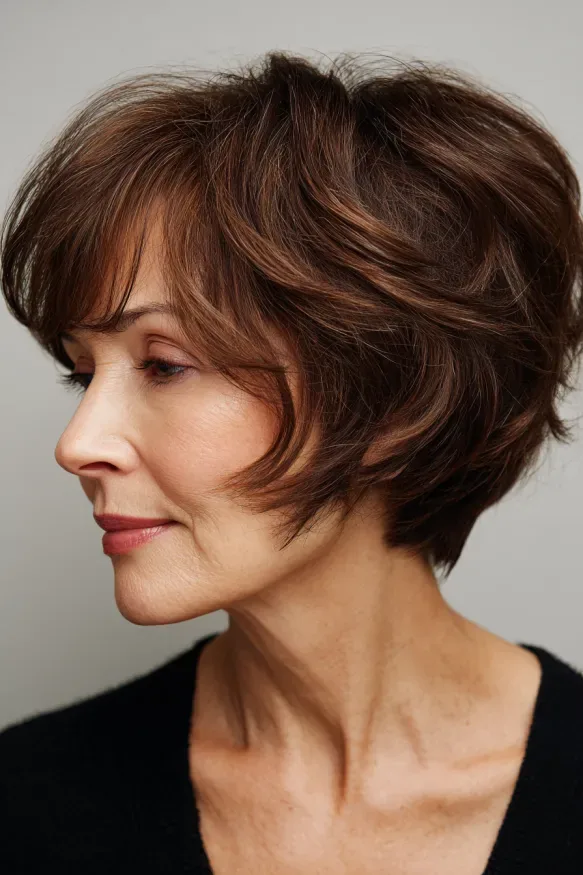
Thick hair has the opposite problem to fine hair: there is too much of it, and a short cut can turn into a triangle if the bulk is not managed. The answer is internal layers, texturising, and a tapered nape — techniques that remove weight from inside the cut without shortening the outside shape. A layered bob, a shag, or a tapered pixie all work well, because they let thick hair move instead of sitting in a solid block. The stylist’s skill matters more here than with any other hair type, so choose someone experienced with thick hair.
Why it works after 40: removing bulk makes thick hair lighter, faster to dry, and easier to style — and it stops the cut from widening as it grows. What to ask for: internal layers and texturising, not just shorter length, and a tapered nape. How to style: a smoothing cream on damp hair, then blow-dry with a round brush. Maintenance: a trim every 6 weeks, because thick hair grows out into bulk quickly. Watch out for: a blunt one-length cut, which is the fastest route to the triangle shape.
28. The Silver Grey Pixie
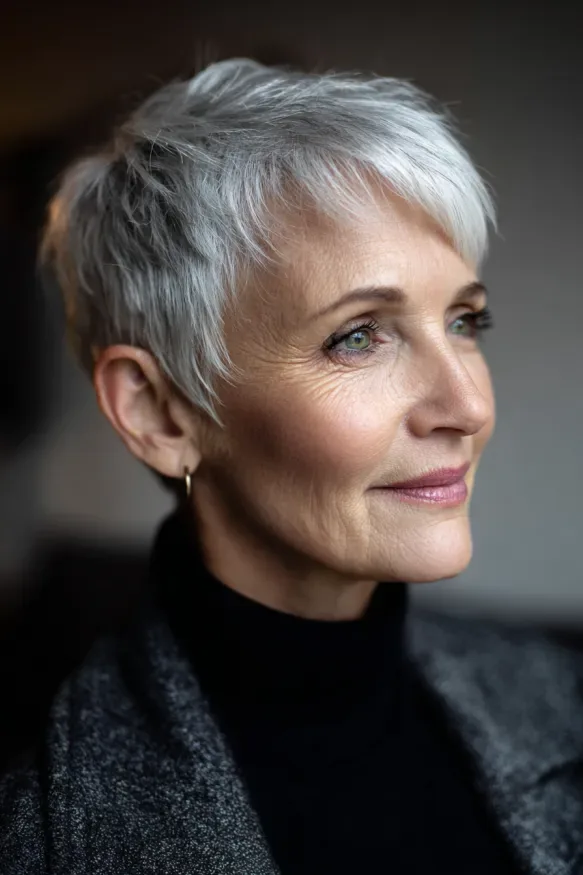
The silver pixie is a statement: natural grey, worn short, cut with confidence, and it looks magnificent. Grey hair at pixie length has a shine and a clarity that long grey hair often lacks, and the short cut makes the silver look deliberate — a style choice, not something that happened by accident. After 40 it is also the most practical way to go grey, because the old colour grows out in weeks rather than years, and the maintenance shifts from root touch-ups to keeping the silver bright.
How to keep it bright: a purple shampoo once a week, a gloss treatment every few months, and protection from sun and heat, which can yellow silver hair. Who it suits: anyone whose grey is coming in evenly, and anyone who is ready to stop colouring. What to ask for: a pixie with soft texture, so the silver catches the light. Quick verdict: the most confident cut on this list — and the one that gets the most compliments.
29. The Short Bob for a Round Face
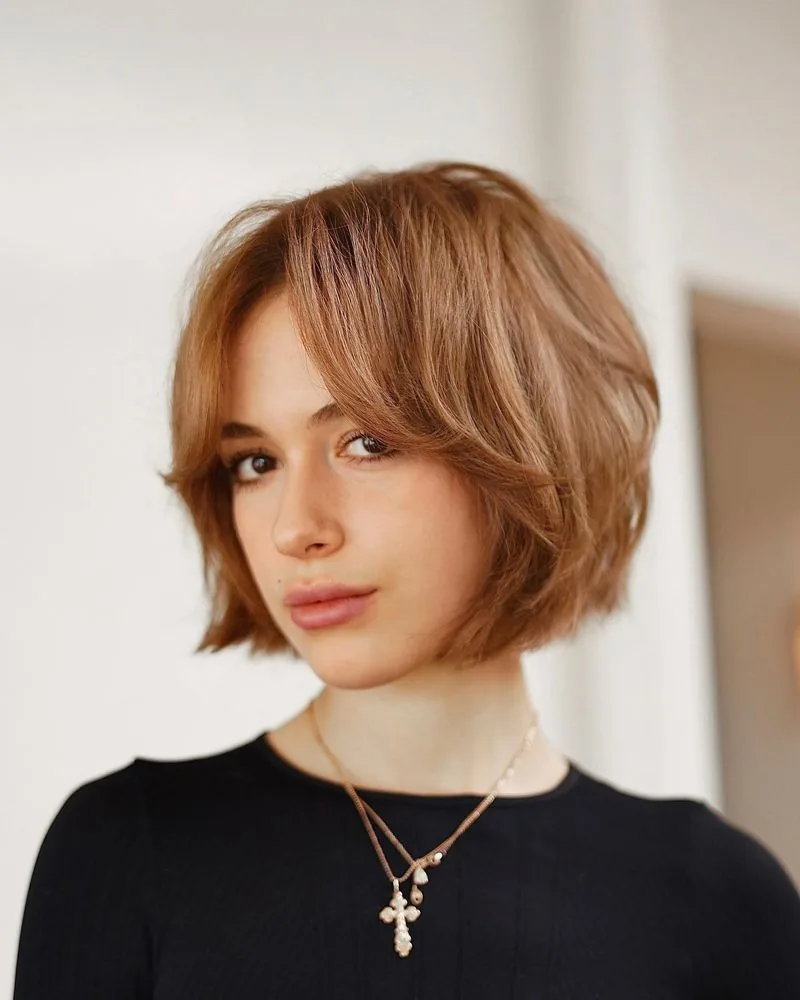
A round face needs a short cut that adds length, not width — and the bob for a round face is designed around exactly that. The rules are: length that ends below the chin, height at the crown, and a side part or side-swept fringe to create a diagonal line. A chin-length bob with a deep side part, a long-front A-line, or a pixie with volume on top all stretch the face visually, while a bob that ends at the cheekbone with a centre part does the opposite and should be avoided.
- Do: height at the crown, a side part, length below the chin, and face-framing layers.
- Do not: a blunt cheekbone-length bob, a centre part, or width at the sides.
- Best cuts: the A-line bob, the chin-length bob with a side part, and the long-fringe pixie.
- Styling: blow-dry the crown upward and smooth the sides close to the face.
30. The Face-Framing Pixie for an Oval Face
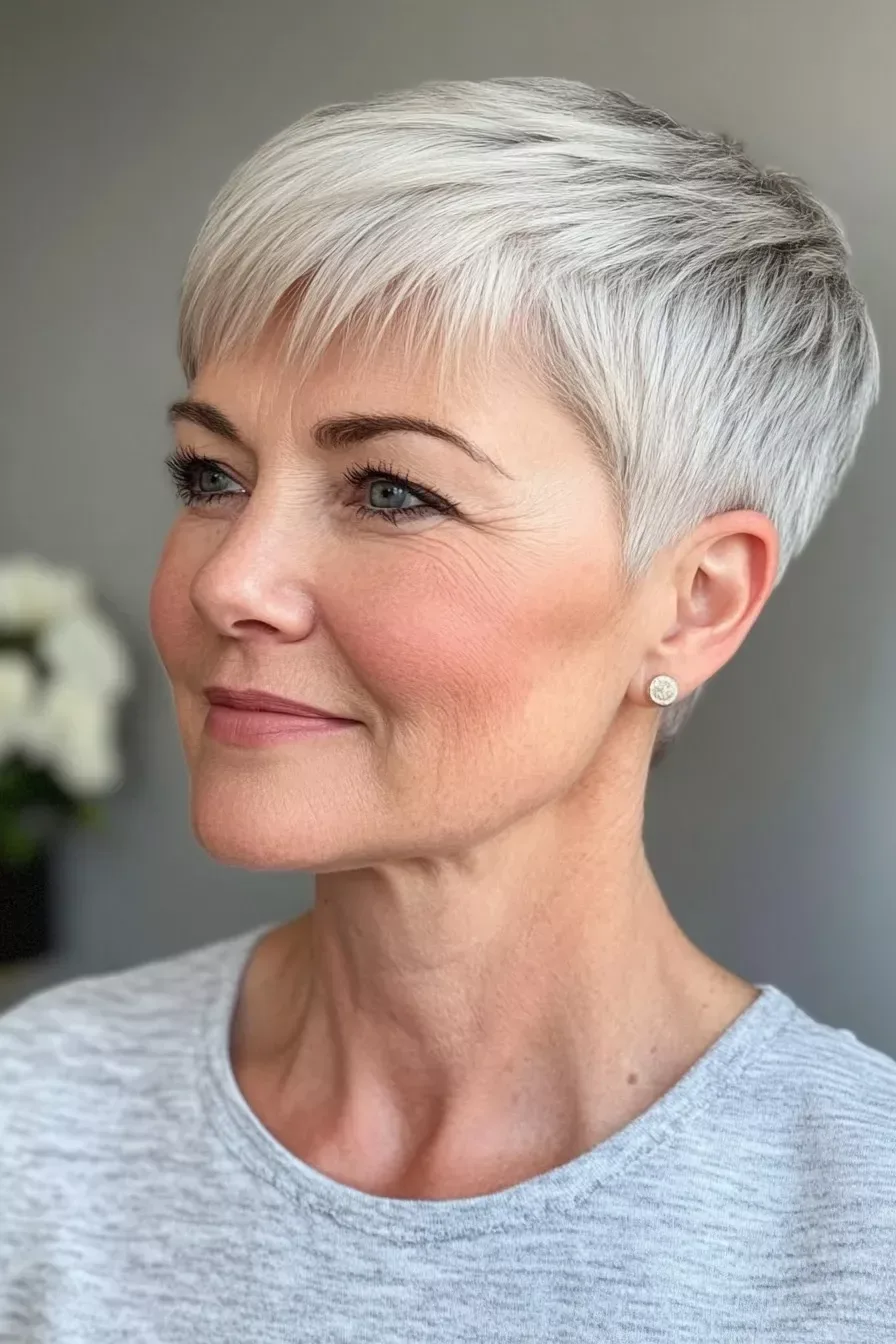
An oval face can wear almost any short cut, so the job is not finding a flattering shape — it is choosing the one you like best. The face-framing pixie is a good place to start: short at the back, with longer pieces at the front that frame the cheekbones and soften the hairline. It shows off the balanced proportions of an oval face without hiding them, and the longer front pieces give you styling options a very short pixie does not — sweep them forward, tuck them back, or push them to the side.
Why it works after 40: the longer front pieces soften the face while the short back keeps the look light and modern. Who it suits: oval faces most of all, but also heart faces that want softness around the jaw. How to style: a little wax on the front pieces, pushed in the direction you want. Maintenance: a trim every 4–5 weeks. Quick verdict: if you have an oval face and you are going short, you cannot go wrong here.
31. The Wash-and-Go Short Cut
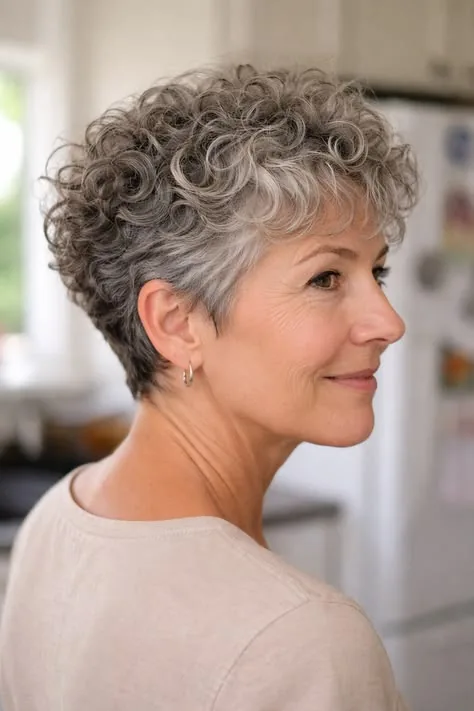
The wash-and-go short cut is the cut for women who want to spend zero minutes on their hair in the morning — and it is a real thing, not a fantasy, if the cut is built around your natural texture. A textured crop, a curly pixie, or a soft shag all qualify: wash, add a little product, and let it dry. The stylist’s job is to cut the shape so it falls correctly on its own, with no blow-drying required, and your job is to be honest about the fact that you will never pick up a dryer.
Best for: wavy and curly hair, and anyone whose mornings are too busy for styling. What to ask for: a cut that works with your natural texture, air-dried, with no reliance on heat. How to style: a pea-sized amount of cream or curl cream on damp hair, then leave it alone. Maintenance: a trim every 5–6 weeks. Watch out for: a cut that only looks good blow-dried — ask your stylist to show you the air-dried result before you leave.
32. The Short Hairstyle with Soft Curls
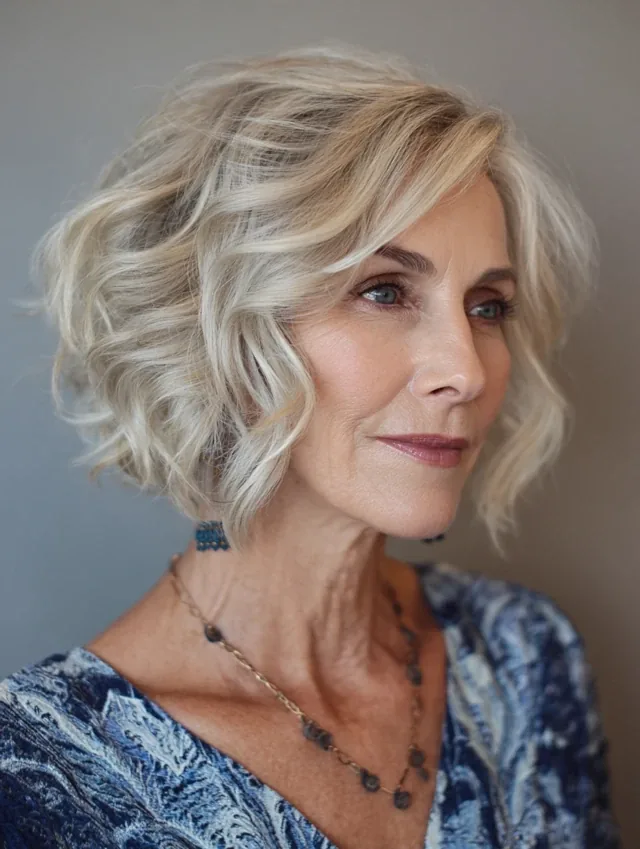
Soft curls on a short cut are the most romantic style on this list: gentle, bouncy curls that add volume, movement and a softness that straight short cuts cannot match. They can be your natural curls, enhanced with a little cream and a diffuser, or curls created with a small curling iron or rollers on straight hair. Either way, the effect after 40 is the same — the curls lift the hair away from the face, add fullness at the sides, and give the whole look a youthful, joyful energy.
How to style: on natural curls, use curl cream and diffuse; on straight hair, curl small sections with a 25mm iron, then brush through gently for soft waves. Who it suits: naturally curly or wavy hair, and straight hair that holds a curl. What to ask for: layers that support the curl pattern, and a length that lets the curls spring — usually chin length or shorter. Maintenance: a trim every 6–8 weeks, plus a weekly deep-conditioning treatment to keep the curls soft. Quick verdict: the softest, most joyful short style after 40.
What is the best short hairstyle for a woman over 40?
The classic pixie and the chin-length bob are the two safest choices, because they flatter almost every face shape and hair type. If you want volume and low maintenance, choose the pixie; if you want softness and styling options, choose the bob. The best cut for you specifically depends on your face shape, hair texture and how much time you will spend styling it — a good stylist will weigh all three before cutting.
Does short hair make you look younger after 40?
Yes, in most cases. Short hair lifts the face visually, adds volume at the crown, and removes the long, dragging length that can make a face look tired. The effect is strongest with cuts that add height on top and frame the cheekbones, like a textured pixie or a layered bob. The key is choosing a cut that suits your face shape — a badly chosen short cut can age you, which is why the consultation matters.
Which short cut suits a round face over 40?
A cut with height at the crown, a side part, and length that ends below the chin — such as an A-line bob, a chin-length bob with a deep side part, or a pixie with volume on top. Avoid bobs that end at the cheekbone, centre partings, and width at the sides, all of which make a round face look rounder.
Is a pixie cut good after 40?
Yes — the pixie is one of the best cuts after 40. It opens up the face, shows off the cheekbones, makes fine hair look thicker, and takes minutes to style. The most flattering versions have soft, textured ends and a fringe long enough to sweep, rather than a severe, blunt finish. If a full pixie feels too bold, start with a pixie with a long fringe or a bixie.
How do I add volume to short thinning hair after 40?
Choose a short, layered cut with a blunt perimeter — a stacked bob, a textured crop or a layered pixie — and style it with mousse at the roots, blow-dried upward. A deep side part, a little dry shampoo, and subtle lowlights all add the appearance of thickness. Avoid long layers, heavy oils and over-thinning, which make fine hair look thinner.
Should women over 40 go grey or keep colouring short hair?
Either choice works well at short lengths, and short hair makes both easier. Going grey is quicker at pixie length, since the old colour grows out in weeks, and a silver pixie looks deliberate and chic. Keeping colour is cheaper and faster too, with root touch-ups taking twenty minutes. If you are undecided, try lowlights or a root shadow to blend the grey gradually before committing.
How often should I get a short haircut trimmed?
A pixie needs a trim every 4–6 weeks, a bob every 6–8 weeks, and a fringe every 3–4 weeks if you wear one. Short cuts lose their shape faster than long ones, so booking your next appointment before you leave the salon keeps the style looking sharp and stops it sliding into an awkward in-between length.
Can I wear bangs after 40?
Yes — bangs are one of the most flattering choices after 40, because they soften the forehead and frame the eyes. The most forgiving options are side-swept bangs, curtain bangs and wispy bangs, which grow out gracefully and do not need to be perfect. A heavy, blunt fringe can work too, but it needs more frequent trims and suits oval and long faces best.
What short hairstyle is easiest to maintain after 40?
The wash-and-go textured crop or curly pixie, for women with wavy or curly hair — wash, add a little product, and let it air-dry. For straight hair, the chin-length bob is the lowest-maintenance option, since it grows out gracefully and needs a trim only every 6–8 weeks. The highest-maintenance cuts are the tapered pixie and the asymmetrical bob, which need trims every 4 weeks to keep their shape.
Will short hair suit me if I have curly hair?
Yes — curly hair often looks better short than long, because the curls spring up, the face opens up, and the cut has natural volume without any styling. The key is a stylist who cuts curls dry or understands curl pattern, so the shape is built around how your curls actually fall. A curly pixie or a tapered natural cut are the best starting points.
Conclusion: Short, Striking and Entirely Yours
The best short hairstyle after 40 is not the trendiest one — it is the one that fits your face, your hair, and your mornings. A pixie that takes three minutes, a bob that dries itself, a shag that looks better slightly undone: any of these will do more for your look than another year of long hair that needs an hour of heat to behave. Start with the cut that matches your hair type and your routine, bring photos to your stylist, and be honest about how much time you will really spend styling it. Then enjoy the part nobody tells you about going short — the lightness, the lift, and the moment you catch your reflection and realise the haircut did exactly what you hoped it would. Pick a style from this guide, book the appointment, and let your haircut do the work.

