

There is a moment after trust breaks when the whole relationship feels like a different place. The person sitting across from you is the same person you chose, and yet suddenly you are checking their tone, re-reading their messages, and wondering what else you do not know. The other side of that moment is no easier: the person who broke the trust may be sorry, genuinely sorry, and still have no idea what to do next — because “I’m sorry” was supposed to fix it, and it did not.
Here is the honest answer to the question in the title: yes, trust can come back, but it does not come back the way it left. It does not return in one grand gesture, one perfect apology, or one tearful night of promises. It comes back in small, boring, repeatable pieces — a promise kept on a Tuesday, a question answered without hesitation, a hard conversation handled kindly instead of avoided. This guide walks through 33 steps for how to rebuild trust in a relationship, whether the break came from lying, cheating, broken promises, money secrets, or a slow drift into emotional distance. Eight guides cover what trust is actually made of, the first 30 days, how to apologise properly, transparency without policing, safe conversation rules, different kinds of betrayal, therapy, and what real progress looks like month by month. There is no judgment here, and no false promise that every relationship should be saved — only a clear, practical path for couples who both want to try.
What Trust Is Made Of (the Building Blocks)

Trust feels like one thing, but it is really four things working together. First, honesty: you believe what your partner tells you is true. Second, reliability: you believe they will do what they said they would do. Third, safety: you believe you can tell them hard things without being punished for it. And fourth, care: you believe they will consider your feelings before they act, even when it costs them something. When trust breaks, it is usually because one or more of these blocks cracked — and rebuilding means repairing the specific block that broke, not just being generally nicer.
That is why generic advice like “just be honest from now on” often falls flat. If the break was about reliability — promises made and quietly dropped — then honesty alone will not heal it; only kept promises will. If the break was about safety — a partner who was mocked or punished for admitting something — then the repair is about how you react to hard truths, not about how many truths get told. Before you start fixing, name which block cracked. Ask each other, plainly: was it the lie, the broken promise, the feeling of not being safe, or the feeling of not being cared for? The answer tells you where the real work is.
The First 30 Days After the Break

The first month after trust breaks is the hardest, and also the most important — not because everything must be fixed in thirty days, but because the habits you form now become the pattern. In the first week, the priority is honesty and calm: tell the full truth, answer questions directly, and do not rush the hurt partner into feeling better. In the second week, agree on a simple daily check-in — ten minutes, same time, no phones — so the hard conversations have a container instead of erupting at midnight. By weeks three and four, you should have one or two small routines running: a kept promise a day, a shared meal, a walk. Nothing grand. Just proof, repeated.
What the first 30 days are not for: big decisions. Do not decide in week one whether to stay together forever, move out, or tell the whole family. Those decisions made in the heat of the break are almost always regretted. They are also not for testing each other — setting traps, checking phones in secret, or staging a situation to see if your partner fails. Tests do not rebuild trust; they rebuild suspicion. The first month is for telling the truth, showing up, and giving the relationship a calm, honest stretch of days to stand on.
How to Apologise in Five Parts

A real apology has five parts, and most apologies only contain one or two. First, name what you did, specifically: “I lied about where I was on Friday.” Second, say why it was wrong, in terms of its effect: “That left you wondering what else I was hiding, and that is not fair.” Third, take responsibility without a “but” — no “I’m sorry, but you were distant too.” Fourth, say what you will do differently, concretely. And fifth, ask what your partner needs from you now, and listen to the answer. An apology missing any of these parts feels hollow, even when the person saying it means well.
The most common apology mistake is rushing to part four — the fix — before parts one to three have landed. “I’ll never do it again, I promise, let’s move on” skips the naming, the understanding, and the responsibility, which is exactly why it does not work. The hurt partner needs to hear that you actually understand what happened before they can believe your plan to change it. Slow the apology down. Say the specific thing. Sit with the discomfort of it for a moment instead of sprinting past it. That pause is what makes an apology feel real.
Transparency Without Policing Each Other

After trust breaks, the hurt partner often wants access — to the phone, the location, the messages — and the partner who broke trust often offers it, hoping it will prove something. A short period of voluntary openness can genuinely help: sharing your whereabouts, keeping your phone unlocked, answering “who was that?” without a sigh. The problem starts when openness turns into surveillance — when one partner becomes a full-time investigator and the other becomes a suspect on parole. Surveillance does not rebuild trust; it replaces trust with monitoring, and the moment the monitoring stops, the fear comes straight back.
The healthy version has three features: it is voluntary, it is time-limited, and it has an exit plan. Voluntary means offered freely, not demanded under threat. Time-limited means you agree on a period — say, three months — after which you review whether it is still needed. And the exit plan means you both know what “enough” looks like: which behaviours, sustained over time, will let the checking fade away. Transparency is a bridge, not a permanent address. Build it, walk across it together, and then — gradually, deliberately — stop needing it.
The Conversation Rules That Keep Fights Safe

Rebuilding trust requires talking about the worst thing that has happened between you, repeatedly, without destroying each other in the process. That takes rules — not cold rules, but agreed ones. Rule one: no name-calling, no bringing up unrelated old wounds, no threats to leave mid-argument. Rule two: one topic at a time; if the conversation drifts to three other grievances, pause and return to the first. Rule three: either person can call a 20-minute pause when voices rise, and the pause is a promise to return, not a way to walk out. Rule four: speak about what you felt and what you need, not about who your partner “always” is.
These rules work because they protect the one thing you are trying to rebuild: safety. A person who is shouted at, cornered, or threatened will not open up, and a person who feels ambushed will not listen. When a conversation breaks the rules, name it gently — “we agreed not to do this part” — and reset. Couples who can fight safely can talk about anything, including betrayal. Couples who cannot fight safely will avoid the very conversations that could heal them, and the silence will do the damage instead.
Rebuilding After Different Kinds of Betrayal

Not every betrayal is the same, and the repair is not the same either. A lie about something small needs honesty going forward and a clear reason the lie happened. Cheating needs a full, honest account, an end to the affair with no contact, and a long period of consistent, checkable behaviour. A financial betrayal — hidden debt, secret spending — needs the numbers on the table and a shared, visible plan for the money. Emotional distance needs presence: time together, real attention, and the willingness to say the uncomfortable things out loud instead of withdrawing. Treating every betrayal the same way is why so many repair attempts feel wrong to the hurt partner.
What every kind of betrayal shares is this: the hurt partner needs to know it will not happen again, and that belief can only come from changed behaviour, not changed words. The specific behaviour that proves it is different in each case — for cheating, it is transparency and boundaries with the other person gone; for money, it is open accounts and joint decisions; for distance, it is showing up, daily, even when it is awkward. Find the proof that fits your break, and then deliver it steadily. That is the whole job.
How to Know If Therapy Is Right for You

Couples therapy is not a sign of failure; it is a sign that the problem is bigger than two people can untangle alone, and that both of them care enough to get help. It is especially useful when the same fight repeats without resolution, when one partner cannot talk about the betrayal without shutting down or exploding, when there are secrets still unspoken, or when the hurt partner cannot stop checking and the other cannot stop feeling watched. A good therapist does not take sides — they slow the conversation down, keep it safe, and teach you both the skills this guide describes, with a referee in the room.
Therapy is not the right move in every situation. If one partner is being forced into it as a condition for staying, it rarely works — willingness matters more than attendance. And if there is abuse, coercion, or fear in the relationship, individual safety comes first, before any joint work. When you do look for a therapist, look for one experienced with infidelity or trust repair specifically, not just general couples work, and give it at least six sessions before deciding whether it helps. The first two sessions are usually history-taking; the real work starts after that.
The Slow Calendar: What Progress Looks Like Month by Month

Trust rebuilds on a slow calendar, and knowing roughly what to expect keeps couples from panicking at normal setbacks. In months one to three, expect rawness: frequent hard conversations, triggers, and good days followed by bad ones. That is not failure; that is the wound being cleaned. In months three to six, the conversations should get shorter and less frequent, and the hurt partner should start going hours, then days, without checking. In months six to twelve, new memories start to outweigh the old one — the relationship begins to have a present again, not just a past. After a year, most couples who make it report that trust feels different from before: less innocent, more deliberate, and in some ways stronger, because it was chosen rather than assumed.
Two warnings about this calendar. First, it is a guide, not a deadline: some couples need longer, especially after a long affair or repeated lies, and that is not a sign of failure. Second, progress is not a straight line. A trigger at month eight does not erase seven good months, any more than a bad week at month three erases the honest work of the first two. Judge the direction, not the day. If the hard days are getting rarer and the recovery from them is getting faster, the calendar is working.
1. What Rebuilding Trust Really Means

What it means: rebuilding trust is not going back to how things were before. The old trust was built on assumption — you trusted your partner because you had never been given a reason not to. The new trust, if it comes, is built on evidence: things seen, promises kept, hard moments handled well. That makes it slower, but it also makes it sturdier. Many couples say the trust they rebuilt feels more real than the trust they started with, precisely because it was tested.
Why it matters: if you aim for “back to normal,” you will always feel short of the target, because normal is gone. If you aim for “a new, honest version of us,” every kept promise is progress you can see. Rebuilding trust means accepting that the relationship has changed, grieving the innocent version of it, and then building something deliberate in its place. It is not a repair job on an old house; it is a new house on the same ground.
2. Name What Broke, Honestly

You cannot fix what you will not name. “We had a rough patch” hides a lie; “I messed up” hides a betrayal. The naming has to be specific enough that both people are talking about the same event: what happened, when, how long it went on, and who else was involved. Vague language protects the person who broke trust from the full weight of what they did, and it leaves the hurt partner filling in the blanks with their worst fears — which are almost always worse than the truth.
How to do it: sit down, without phones, and let the partner who broke trust tell the story in full, in their own words, without minimising. The hurt partner’s job in this conversation is to listen and ask questions, not to punish — the punishment phase, if it comes, is not this conversation. The story will be painful to hear and painful to tell. Tell it anyway. Couples who name the break clearly are the ones who can later say, with confidence, “that is over.” Couples who never name it are still arguing about it a year later, because neither of them is sure what “it” was.
3. The Apology That Actually Works

A working apology is not a performance of guilt; it is a demonstration of understanding. It says: I know exactly what I did, I know what it cost you, I am not making excuses, and here is what I will do differently. The words matter less than the completeness — a short apology that names the act and its effect will do more than a long, tearful one that never actually says what happened. If your partner says “that doesn’t feel like a real apology,” they are usually telling you a part is missing. Ask which part.
- Name it: the specific act, not “everything” or “what happened.”
- Own the effect: what it did to your partner, in their terms, not yours.
- No “but”: one “but” erases everything before it.
- A concrete change: what you will do differently, starting when.
- An open question: “What do you need from me now?” — and then listen.
What to avoid: apologising for your partner’s reaction (“I’m sorry you feel that way”), apologising for being caught (“I’m sorry this came out”), or apologising once and then treating the subject as closed. An apology is the beginning of the repair, not the repair itself. Expect to apologise more than once, in different words, as your partner’s understanding of what happened deepens. That is not punishment; it is the natural shape of a wound healing in layers.
4. Taking Full Responsibility (No “But”)

Responsibility sounds simple — “it was my fault” — but most people say it while quietly holding on to a reason it was not entirely their fault. “I lied, but you never listen.” “I cheated, but the marriage was already dead.” Every “but” hands half the blame back to the person who was hurt, and the hurt partner hears it instantly, even when it is dressed up as context. Full responsibility means owning your choice as a choice, even if the relationship had problems. Problems explain context; they do not excuse a betrayal.
How to handle it: practise the sentence without the second half. “I chose to lie. That was my decision, and it was wrong.” Say it out loud before the conversation if you need to. If there are real problems in the relationship — distance, resentment, unmet needs — those are real, and they deserve their own conversation, on a different day, where both of you own your part. But they are not part of the apology. Keeping the two conversations separate is what makes both of them honest.
5. Listening Without Defending Yourself

When your partner tells you how much you hurt them, every instinct will tell you to explain, correct, or soften what they are saying. “It wasn’t that bad.” “You’re remembering it wrong.” “I didn’t mean it like that.” Each of those sentences, however true they feel to you, lands as: your pain is not real. Listening without defending means letting your partner’s version exist, fully, without editing it — even when it stings, even when it is partly unfair, even when you are sure they have a detail wrong.
Signs you are doing it right: you are asking questions instead of making statements; you are repeating back what you heard (“So what hurt most was finding out from someone else”); you can sit in silence after they finish instead of rushing to fix it. Signs you are defending: you have said “but” more than once; you are explaining your intentions instead of hearing their experience; you feel the urge to bring up something they did wrong. When you catch yourself defending, pause and say so: “Sorry, I was about to defend myself. Please keep going.” That sentence alone can change the whole conversation.
6. Transparency, Not Surveillance

Transparency is volunteering information before you are asked. Surveillance is having information extracted from you. The difference matters more than the information itself. A partner who tells you, unprompted, “I’m having lunch with Sara from work today, home by six,” is building trust. A partner who only answers when interrogated, and resents every question, is not — even if the answers are true. After a break, the partner who broke trust needs to become a generous volunteer of information: whereabouts, plans, feelings, temptations, all offered freely, without being asked.
What to avoid: turning transparency into a performance — narrating every minute of your day in a way that feels like a report to a supervisor. That breeds resentment on both sides. The goal is natural openness: share what a trustworthy partner would share anyway, a little more than usual, and do it without sighing. And for the hurt partner: use the information to reassure yourself, not to build a case. If you find yourself screenshotting messages for evidence, the arrangement has tipped from transparency into surveillance, and it is time to talk about that directly.
7. Small Promises, Kept Every Time

Big promises — “I will never lie again,” “I will change completely” — are almost useless for rebuilding trust, because they cannot be proven until a long time has passed, and they are easy to say. Small promises are the opposite: “I will be home by six.” “I will call the therapist today.” “I will do the school run on Thursday.” Each one is checkable within hours, and each one kept is a small, visible piece of evidence. A hundred small promises kept will rebuild more trust than one grand vow ever could.
The rule is simple and strict: only promise what you are certain you can do, and then do it. If you are not sure you can be home by six, say seven. If you might not call today, say you will call tomorrow. Under-promising and over-delivering is the fastest honest way to rebuild a reputation for reliability. And when — not if, when — you slip on a small promise, name it immediately, apologise, and fix it the same day. A broken small promise handled well does less damage than a broken small promise hidden. The hurt partner is watching the pattern, not the single event.
8. Consistency: The Only Currency That Counts

Trust is not rebuilt by intensity; it is rebuilt by consistency. A week of grand romantic gestures followed by a return to old habits proves nothing except that you can perform remorse for a week. What proves something is the ordinary Tuesday: the check-in happened, the promise was kept, the question was answered, the temper was held — again. Consistency is boring, and that is exactly why it works. The hurt partner’s nervous system is not listening to your words; it is counting your repetitions.
Quick verdict: if you can only be trustworthy when you are being watched, you are not rebuilding trust — you are auditioning for it. Real consistency shows up when nobody is checking: the honest answer when a lie would have been easier, the kept promise nobody would have noticed you breaking. Aim for a streak, not a spectacle. Three months of steady, unremarkable reliability will do more for your relationship than any single dramatic gesture, and it is the only kind of proof a hurt partner can actually believe.
9. Rebuilding After a Lie

Lying breaks trust in a specific way: it does not just damage the thing lied about, it damages the partner’s faith in everything else you have said. “If you lied about that, what else?” is the question that follows every discovered lie, and it is a reasonable question. Rebuilding after a lie therefore means more than telling the truth from now on — it means actively inviting verification, volunteering the uncomfortable details, and accepting that your word alone will not be enough for a while.
- Find the reason: most lies are not about cruelty; they are about avoiding conflict, shame, or disappointment. Name the reason honestly — to yourself first.
- Close the gap: if you lied to avoid a hard conversation, have that conversation now, properly.
- Expect a long audit: your partner may re-examine old stories. Answer patiently; defensiveness reads as more hiding.
- Build a new habit: practise saying small uncomfortable truths daily, so honesty becomes your default, not your effort.
What to avoid: the “white lie” defence. Small lies told to keep the peace are still lies, and after a big lie is discovered, your partner will not grade your lies by size. For a long while, any lie — even a kind one — will feel like the same wound reopening. Be radically honest, even when it is awkward, and let your partner decide what to do with the truth. That is their right now.
10. Rebuilding After Cheating

Cheating is the hardest break to repair, and it is honest to say so. The hurt is not only about the act; it is about the secret life, the comparison, the feeling of having been replaced, and the months of wondering what was real. Rebuilding after cheating requires three non-negotiable foundations: the affair must be fully over, with no contact; the full truth must be told, including the parts that are embarrassing to admit; and the cheating partner must accept that healing will take a long time and cannot be rushed, managed, or scheduled.
How to handle it: end all contact with the affair partner visibly and completely — blocked, deleted, and, where work makes that impossible, with clear boundaries your partner can see. Answer questions about the affair honestly, even when the answers are painful; trickle-truth, where new details emerge months later, is one of the main reasons couples fail to recover. And accept the triggers: places, songs, dates, and anniversaries will hurt for a long time. Your job is not to be annoyed by the triggers, but to be present when they come. Couples do recover from infidelity — many do — but only when both people treat the repair as a long, serious project rather than a bad week to get past.
11. Rebuilding After Broken Promises

Broken promises are the slow leak of trust: no single dramatic betrayal, just a long series of “I’ll do it tomorrow” that never happened, plans cancelled, commitments forgotten. The damage is real even though nothing scandalous occurred, because the hurt partner has learned, over years, that your word does not hold. Repairing this kind of break means understanding that your partner is not overreacting to one missed promise — they are reacting to the pattern.
What it means in practice: stop making promises casually. For the next few months, treat every promise like a contract: write it down, set a reminder, and do it on time or renegotiate it before the deadline, not after. When you renegotiate early — “I said I’d fix the car Saturday, but work ran over; can we do Sunday?” — you are demonstrating reliability, not failure. The pattern your partner needs to see is not perfection; it is a person whose word now means something. Start with the smallest promises and keep them perfectly. The big ones will follow.
12. Rebuilding After a Financial Betrayal

Hidden debt, secret spending, a gambling habit, a loan taken out in both names without discussion — financial betrayal cuts twice, because it breaks trust and it threatens security at the same time. The hurt partner is not only upset about the secret; they are afraid about the rent, the savings, the future. That fear needs to be addressed directly, with numbers, not just with apologies. Put everything on the table: every account, every debt, every subscription, every loan. Total honesty about money is the only foundation a financial repair can stand on.
How to handle it: agree on a shared, visible money system — joint access to accounts, a weekly money check-in of fifteen minutes, and a rule that any spending above an agreed amount gets discussed first. If debt is involved, make a written repayment plan together, with dates, so progress is visible. And look honestly at the cause: was it shame about spending, a habit that needs professional help, or a feeling of having no say in the household money? The cause decides the fix. A spending problem and a control problem look the same on a bank statement, but they need very different repairs.
13. Rebuilding After Emotional Distance

Emotional distance is the quietest betrayal: nobody lied, nobody cheated, but somewhere along the way two people stopped turning toward each other. Conversations became logistics. Evenings became parallel scrolling. One or both partners stopped sharing what they actually felt, and the other stopped asking. The trust that breaks here is the trust that your partner is still interested in your inner life — and rebuilding it means proving, daily, that you are.
Signs it is happening: you tell your friends things before you tell your partner; you eat dinner in silence and call it relaxing; you cannot remember the last time you asked each other a real question. How to reverse it: start small and regular — ten minutes a day with no phones, one real question each (“What was the hardest part of today?”), and one shared activity a week that is not a chore. Emotional closeness is rebuilt the same way trust is: in small, repeated, voluntary moments of attention. Do not wait for a big romantic gesture to fix distance; the distance was built by a thousand small absences, and it is undone by a thousand small presences.
14. Boundaries That Protect Both of You
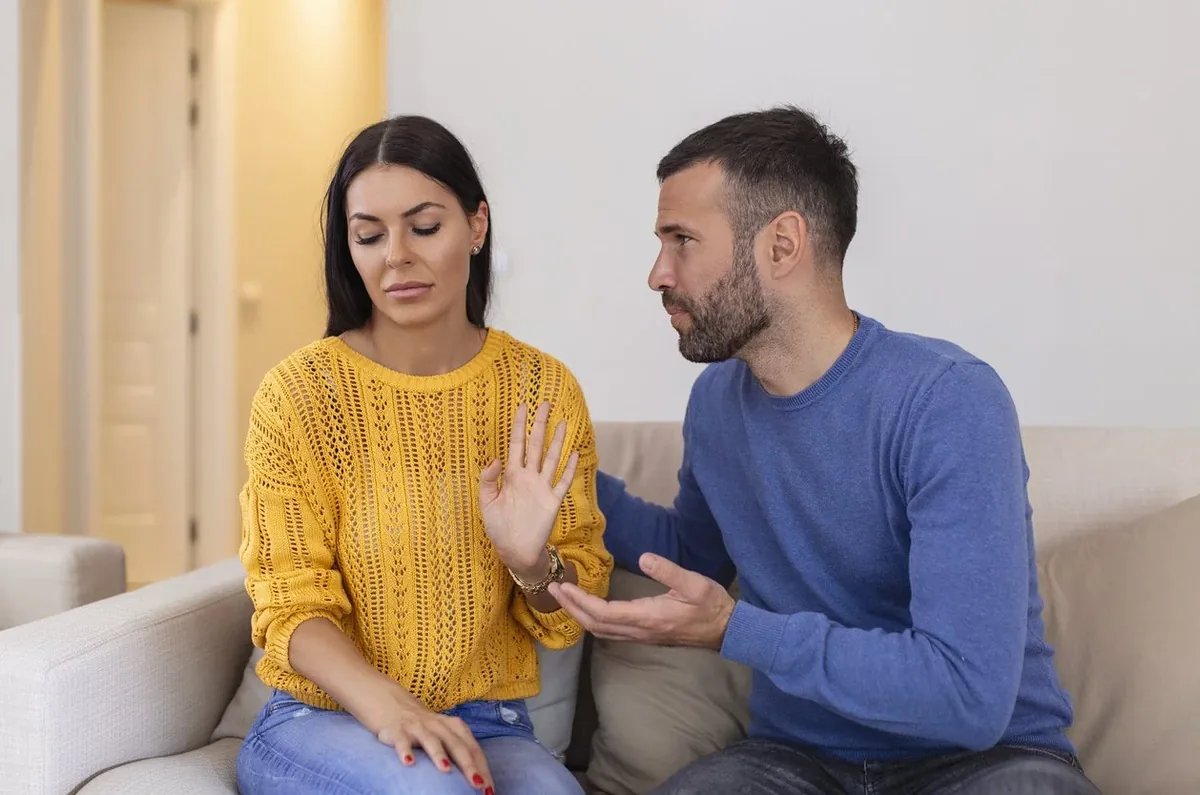
After trust breaks, both partners need boundaries — and boundaries are not punishments, they are the fences that make the garden safe to walk in again. For the hurt partner, a boundary might be: “I need to know where you are in the evenings for the next few months.” For the partner who broke trust, a boundary might be: “I will answer your questions, but not the same question for the fifth time in one night.” Both are legitimate. Boundaries work when they are specific, time-limited, and agreed together, rather than imposed in anger.
- Make them concrete: “no phones at dinner” beats “respect me more.”
- Give them an end date: review every boundary monthly and loosen the ones that have done their job.
- Keep them mutual: if one partner gives up privacy, the other gives up something too — secrecy is not a one-way tax.
- Enforce them kindly: a boundary broken without consequence is just a wish.
What to avoid: boundaries that are actually punishments in disguise — no friends, no hobbies, no alone time, indefinitely. Those do not protect the relationship; they shrink it until there is nothing left to trust. A good boundary protects the repair. A bad one punishes the person. If you cannot tell which one you have written, ask: would I still want this rule in six months? If the answer is no, it is a punishment, and it needs an expiry date.
15. The Daily Check-In Habit

The single most useful habit for rebuilding trust is also the simplest: ten minutes a day, at the same time, with no phones, where you ask each other three questions. What was hard today? What do you need from me? Is there anything you have not told me? Ten minutes sounds too small to matter, and that is the point — it is small enough to actually happen every day, and it is the daily repetition that rebuilds the feeling of being known and safe.
Why it matters: most trust breaks grow in silence. The lie was not told in a single moment; it was protected by weeks of not asking and not telling. A daily check-in closes that gap before it can open again. It also gives hard conversations a home: instead of the betrayal coming up at midnight, in the car, or in front of the children, it has a time and a place, and both partners know when it is coming. Keep the check-in short, keep it daily, and keep it even on good days — especially on good days, because that is when it becomes a habit rather than a crisis meeting.
16. How to Talk About It Without Reopening the Wound Every Day

Here is the hardest balance in trust repair: the hurt partner needs to talk about what happened, and the relationship also needs days when it does not come up. Talk about it too little and the wound festers in silence; talk about it constantly and the relationship becomes nothing but the wound. The answer is not a rule about frequency — it is a structure. Agree that the betrayal can be discussed in the daily check-in, or in a longer weekly conversation, and that outside those times you both practise living the ordinary day: cooking, laughing, watching a show, being a couple rather than a case study.
How to handle it: when the urge to bring it up strikes outside the agreed time, write it down instead — a note, a phone memo — and bring it to the next check-in. This respects the feeling without letting it hijack every hour. And when your partner does bring it up, even for the twentieth time, remember that repetition is not punishment; it is how a hurt person processes something too big to absorb in one conversation. Answer with patience, not with “we’ve already talked about this.” You have talked about it. You will talk about it again. That is the work.
17. Giving Space Without Giving Up

Sometimes the hurt partner needs space — a few days apart, a separate room, time alone to think — and the partner who broke trust hears that as the beginning of the end. Space is not the same as leaving. It is often the only way a hurt person can hear their own thoughts without the other person’s anxiety, apologies, or explanations filling every silence. Giving space well means agreeing on what it is: how long, how you will stay in contact, and when you will talk again.
What it means in practice: agree the terms before the space starts — “three days, one message a day, dinner together on Sunday to talk.” Keep the agreed contact; silence beyond what was agreed feels like abandonment. And use the space honestly: the hurt partner uses it to think, not to gather evidence or rehearse a leaving speech; the other partner uses it to reflect, not to panic-text every hour. Space given with a plan is a gift. Space taken without one is just distance, and distance is what got you here.
18. Rebuilding Intimacy Slowly

After trust breaks, physical intimacy often becomes complicated. For the hurt partner, closeness can feel wrong — as if their body is being asked to forgive before their mind has. For the other partner, the loss of closeness can feel like a second punishment. Both feelings are valid, and neither is a verdict on the relationship. Intimacy rebuilds the same way trust does: slowly, in small steps, with consent and without pressure.
Start with non-sexual closeness: holding hands, sitting close, a hand on a shoulder, sleeping in the same bed without expectation. Let the hurt partner set the pace, and let them change their mind without it becoming a fight. Talk about it directly — awkward as that feels — because guessing at each other’s comfort is how people get hurt twice. And remember that intimacy is not only physical: sharing a fear, asking for help, and letting your partner see you cry are all forms of closeness, and they often return before the physical kind does. When they do return, they tend to feel more honest than before.
19. When the Hurt Partner Needs Reassurance

Reassurance is not weakness, and asking for it is not clinginess. After a betrayal, the hurt partner’s brain is doing a reasonable job: it learned that something bad happened without warning, so now it scans for danger constantly. Reassurance — “I love you, I’m here, I’m not going anywhere, I’m telling you the truth” — is the steady signal that calms that scanning. It needs to be given freely, without eye-rolling, and it needs to be given more than once. The tenth time your partner asks is not the time to say “I’ve already told you.”
Signs reassurance is working: the questions get less frequent, the checking gets lighter, and the hurt partner starts to catch themselves mid-worry and settle without asking. Signs it is not enough on its own: the questions never change, no answer ever satisfies, and the asking itself has become a daily ritual of distress. In that case, reassurance needs a partner: therapy, a support group, or a structured way of working through the anxiety, because no one person’s words can carry that weight alone. Give reassurance generously, and also help your partner find support beyond you.
20. When the One Who Broke Trust Feels Shame

Guilt says “I did something bad.” Shame says “I am bad.” Guilt can motivate repair; shame usually blocks it. A partner drowning in shame will avoid the conversations that could heal the relationship, because every conversation reminds them of what they are. They may get defensive, withdraw, or overcompensate with grand gestures — all of which look, to the hurt partner, like not caring. Understanding this does not excuse the betrayal, but it explains why the person who caused the hurt sometimes seems the least able to face it.
How to handle it: if you are the one who broke trust, find somewhere to process your shame that is not your partner — a therapist, a trusted friend, a journal. Your partner is not your therapist for this; asking them to comfort you about the pain you caused them is unfair, however real your pain is. If you are the hurt partner, you do not need to manage their shame for them — but it helps to know that withdrawal is often shame, not indifference. The repair needs both people: one facing what they did without collapsing into shame, and the other allowed to be angry without being asked to soothe the person who hurt them.
21. Forgiveness Is Not the Same as Reconciliation

Forgiveness and reconciliation are two different decisions, and confusing them causes a great deal of unnecessary pain. Forgiveness is personal: it is the hurt partner deciding, for their own peace, to stop carrying the betrayal as a daily weight. It can happen whether or not the relationship continues. Reconciliation is shared: it is both partners deciding to rebuild a relationship together. You can forgive someone and still leave. You can stay together while forgiveness is still a work in progress. Neither decision is a betrayal of the other.
Why it matters: the partner who broke trust often hears “I forgive you” as “we are fine now,” and then feels confused when the hard conversations continue. And the hurt partner often feels guilty for not forgiving quickly enough, as if slow forgiveness means they are failing at love. Both are wrong. Forgiveness has no deadline, and it cannot be demanded, scheduled, or performed on cue. What can be asked for — reasonably, and soon — is the behaviour that makes forgiveness possible: honesty, responsibility, and consistency. Forgiveness, when it comes, will come on its own time.
22. Self-Trust: Trusting Yourself Again

One of the least talked-about wounds of betrayal is the damage to self-trust. “How did I not see it?” “Why did I ignore the signs?” “Can I even trust my own judgment?” The hurt partner often blames themselves for missing what, in hindsight, looks obvious — forgetting that hindsight is not a fair judge, and that trusting a partner is not a failure of intelligence but an act of love. Rebuilding self-trust means separating two questions: “Was I foolish to trust?” and “Did someone choose to betray that trust?” The answer to the first is almost always no. The second is where the responsibility belongs.
- Stop the replay: re-reading old messages for clues you missed is not detective work; it is self-punishment. Set a limit and keep it.
- Trust your body: your instincts were probably picking up signals before your mind named them. Listen to them now, without letting them run the whole show.
- Make small promises to yourself: and keep them. Self-trust rebuilds the same way relationship trust does — in small, kept promises.
- Get outside perspective: a friend or therapist can tell you plainly when you are being unfair to yourself.
Quick verdict: you did not cause the betrayal by trusting. A person who betrays trust is responsible for that choice, full stop. Your judgment was not broken; it was used against you. That is a very different thing, and remembering the difference is the first step back to trusting yourself.
23. Couples Therapy: When It Helps and When to Go

Couples therapy helps most when the two of you are stuck in a loop: the same fight, the same shutdown, the same apology that does not land. A therapist breaks the loop by slowing the conversation down, naming what is actually happening between you, and teaching you the skills — listening without defending, fighting safely, asking for what you need — in real time, with a referee present. It is also the right call when there are secrets still untold, when one partner cannot talk about the betrayal at all, or when the hurt partner’s anxiety has not eased after several months of honest effort.
When to go: sooner than you think. Couples usually wait years before seeking help, by which time the patterns are set hard. Going early is not an admission of failure; it is the opposite. What to look for: a therapist experienced in trust repair or infidelity recovery, not just general relationship counselling, and a style you both find fair — if one partner feels the therapist has taken sides, the work will stall. Give it at least six sessions. And remember that therapy is not a place where the therapist fixes your relationship while you watch; it is a gym where you both practise, and the work happens between sessions, in the daily check-ins and kept promises.
24. What to Do When Old Triggers Flare Up

A trigger is an ordinary moment — a song, a street, a name, a time of night — that suddenly drops the hurt partner back into the worst day of the relationship. Triggers are not a choice, and they are not a sign that healing has failed. They are how memory works after a shock: the brain files the danger alongside everything that was nearby, and it rings the alarm when it sees those things again. Expecting triggers to vanish in a few months is unrealistic; expecting them to get weaker, shorter, and further apart is reasonable.
How to handle it: when a trigger hits, the hurt partner can say so plainly — “That song just took me back” — instead of going silent or starting a fight about something else. The other partner’s job is to stay, listen, and not take the trigger personally: it is not an accusation, it is a wound speaking. Over time, couples build a small shared language for triggers — a word, a hand squeeze, a pause — that lets them move through the moment together instead of apart. A trigger survived together, kindly, is itself a piece of trust rebuilt.
25. Social Media, Phones and Privacy After Betrayal

Few things cause as many fights during trust repair as phones. The hurt partner wants access; the other partner wants privacy; both feel reasonable and both feel attacked. The way through is to agree on rules together, rather than letting one partner set them by force. Common agreements that work: phones stay unlocked and face-up at home for a while; no secret accounts or deleted message threads; location sharing turned on voluntarily for an agreed period; and no contacting exes or affair partners, with that boundary stated clearly and kept.
What to avoid: secret phone checks. If you feel you need to check your partner’s phone in secret, say so — the secrecy is itself a sign the arrangement is not working. And for the partner being checked: if you find yourself deleting messages that are innocent, ask yourself why. Innocent messages do not need deleting, and deleting them creates exactly the suspicion you are trying to avoid. The goal is a phone that holds nothing either of you would mind the other seeing — not because you are being watched, but because there is nothing left to hide.
26. Rebuilding Trust With Family and Friends Watching

When family or friends know about the betrayal, the couple gains an audience — and an audience makes repair harder. Well-meaning relatives take sides, ask probing questions at gatherings, and offer verdicts the couple did not ask for. The couple’s job is to decide, together, what is shared and with whom. A good rule: the hurt partner decides who knows, because it is their story to tell; the partner who broke trust does not get to manage the narrative by telling a softer version first.
How to handle it: agree on a short, shared line for awkward moments — “We’re working through something difficult, and we appreciate your support” — and use it consistently. Do not relitigate the betrayal at family dinners, and do not ask relatives to act as referees. If someone keeps pressing, the hurt partner can say, plainly, “I know you care, and I need you to trust me to handle this.” Repair is hard enough with two people in the room. Keeping the circle small, and the story yours, protects the space the relationship needs to heal.
27. How Long Does It Really Take?

The question everyone asks, and the answer nobody wants: it takes as long as it takes, and usually longer than the partner who broke trust hopes. Therapists who work with infidelity often say that real recovery takes one to two years — not because couples are slow, but because trust is rebuilt in repetitions, and repetitions need calendar time. A single lie might heal in months; a long affair, or repeated lies, will usually need a year or more before the hurt partner stops scanning for danger. That is not a punishment; it is the honest timescale of a nervous system learning to feel safe again.
Why it matters: putting a deadline on healing — “you should be over this by Christmas” — is one of the most damaging things the partner who broke trust can do. It turns a wound into a failure to heal fast enough, and it teaches the hurt partner to hide their pain instead of sharing it. The useful question is not “how long?” but “are we moving in the right direction?” If the hard days are getting rarer, the conversations shorter, and the good days more frequent, the timeline is working — whatever the calendar says.
28. Signs Trust Is Quietly Returning

Trust does not return with a fanfare. It returns quietly, in moments you might miss if you are looking for a grand announcement. The hurt partner realises they have not checked their partner’s phone in a week, and did not notice until now. A joke lands again. A plan is made for next month without a voice saying “but what if we’re not together then?” A hard conversation ends with both people still in the room, still kind. Sleep gets easier. The body relaxes first, before the mind gives it permission.
- Less checking: the urge to verify fades on its own, not by force.
- More ordinary joy: laughter, plans, and small pleasures return without guilt.
- Shorter recoveries: a trigger still hurts, but the recovery takes minutes, not days.
- New memories: the relationship starts to have a present that is not only about the past.
- Honest ease: hard truths are shared quickly, because hiding them now feels worse than telling them.
Quick verdict: if you can spot three of these signs, trust is returning — slowly, genuinely, and on its own schedule. Name them out loud when you notice them. Couples in repair spend so much time watching for failure that they miss the evidence of success sitting right in front of them. Noticing progress is part of building it.
29. Red Flags It Is Not Working

Honesty requires naming this too: sometimes, despite real effort, trust does not come back — and sometimes one partner is not actually doing the work. The clearest red flags are not dramatic; they are quiet. The partner who broke trust is still minimising, still blaming, still hiding small things months later. The same lie is told twice. The affair contact was never really ended. Promises are made in therapy and dropped at home. The hurt partner is told, again and again, that they are “too sensitive” or “living in the past” for still hurting.
What to do: name the pattern directly, once, clearly, and ask for a specific change with a specific timeframe — “I need full honesty about the messages, starting now, and I need to see it sustained for three months.” If the pattern continues, that is information, not failure. It tells you that this relationship, as it currently is, cannot give you the safety you need. That is a painful conclusion, but it is far better than spending years waiting for a change that is not coming. A red flag is not a verdict on your worth; it is a fact about the situation, and facts are what let you make a free decision.
30. What to Do When One Partner Has Checked Out

Trust cannot be rebuilt by one person alone. If one partner has checked out — present in the house but absent from the relationship, answering in single words, refusing therapy, refusing the hard conversations — then the repair has stalled, whatever the other partner does. Checking out is often not a decision but a slow surrender: exhaustion, hopelessness, or the quiet belief that it is already over. Naming it, kindly and directly, is the first step back: “I feel like you’ve left already. Is that true?”
How to handle it: give the checked-out partner a real, low-pressure invitation back — one specific thing, like a single therapy session or a weekly walk — rather than a demand for total commitment. Sometimes a person needs to be asked, plainly, whether they still want the relationship, and to be given a week to answer honestly. And if the answer is no, or if there is no answer at all, believe that. You cannot rebuild trust with someone who has stopped showing up. The kindest thing, for both of you, is to stop performing a repair that only one person is doing, and to make decisions based on what is actually happening, not what you wish were happening.
31. Rebuilding Trust in a Long-Distance Relationship

Distance makes trust repair harder in one specific way: there is less evidence available. You cannot see your partner’s day, meet their colleagues, or notice the small consistencies that rebuild trust in person. That means long-distance repair has to be more deliberate: scheduled video calls that actually happen, shared calendars, photos of ordinary moments, and honest answers about who you are spending time with. The distance also means misunderstandings grow faster — a delayed reply becomes a whole story in an anxious mind — so communication has to be more explicit than it would be face to face.
What works: a fixed daily call, even a short one; a shared plan for the next visit, with dates, so the relationship has a horizon; and an agreement about response times that is realistic, not anxious. What to avoid: constant location-sharing as a substitute for trust — it will calm the fear for a week and then become the new normal, with the fear intact underneath. Distance is a real obstacle, not an excuse, and couples who repair across distance often say the habits they built — the daily calls, the explicit honesty — made them stronger than couples who never had to be deliberate. Plan the visits. Keep the calls. Say the hard things on video, not only in text.
32. Starting Over vs Starting Again: A Fresh Agreement

At some point, couples who are healing often feel the need to mark the turn — not to pretend the betrayal never happened, but to agree, explicitly, on what the relationship is now. A fresh agreement is not a legal document; it is a conversation where you both say, out loud, what you are committing to from here: how you will handle honesty, how you will fight, what you will do when temptation or old patterns appear, and what each of you needs to feel safe. Writing it down helps. It turns vague good intentions into something you can both point to.
How to do it: pick a calm evening, not the day after a fight, and each write down three commitments and three needs. Read them to each other. Keep the ones you both agree on, negotiate the ones you do not, and write the final list somewhere you will both see it. Revisit it in three months and revise it. The power of a fresh agreement is not in the paper; it is in the act of choosing each other again, with open eyes, knowing exactly what happened and deciding anyway. That choice, made deliberately, is worth more than the innocent trust you started with — because this time, it is informed.
33. A Trust You Can Both Live In

The final step is not a technique; it is a question to live with: can we build a trust that both of us can actually live inside? A trust built only on monitoring will suffocate the partner who broke trust. A trust built only on forgetting will suffocate the hurt partner. A trust both can live in has room for honesty and room for privacy, room for reassurance and room for independence, room for the past to be remembered and room for the future to be planned. It is not the old trust, and it is not a fragile truce. It is something new, built deliberately, by two people who know what it cost.
Quick verdict: if you have worked through these steps honestly — named the break, apologised properly, kept small promises, stayed consistent, talked safely, and watched for real signs of return — then you have done the work, whatever the outcome. Some couples will find their way back to a stronger relationship. Some will discover, with clarity and kindness, that they cannot. Both outcomes are honest. Trust rebuilt is a gift. Trust honestly examined, even when it cannot be rebuilt, is still a kind of freedom. Either way, you will know you did not look away.
Can trust be rebuilt after cheating?
Yes, it can — but only when the affair is fully over with no contact, the whole truth has been told, and the partner who cheated commits to a long period of consistent, checkable behaviour. Many couples do recover from infidelity, and some say their relationship becomes stronger because the repair forced honest conversations they had avoided for years. It usually takes one to two years, and it requires both partners to do the work: one to be transparent and patient, the other to keep talking about the hurt instead of burying it. If the affair is ongoing, or the truth is still coming out in pieces, recovery cannot properly start.
How long does it take to rebuild trust?
There is no fixed timeline, but a realistic guide is months for a single lie or broken promise, and one to two years after cheating or a long deception. The first three months are the rawest, with frequent hard conversations and triggers; by six months the conversations should be shorter and less frequent; after a year, new memories should start to outweigh the old one. Progress is not a straight line, and putting a deadline on healing usually does more harm than good. Judge the direction, not the day.
Should I check my partner’s phone to rebuild trust?
A short period of voluntary openness — phone unlocked, whereabouts shared, questions answered freely — can help in the early months, especially when it is offered rather than demanded. But phone-checking should be time-limited, agreed together, and given an exit plan, because surveillance does not rebuild trust; it replaces trust with monitoring. If you feel you need to check in secret, say so — the secrecy is a sign the arrangement needs renegotiating. The goal is a phone that holds nothing either of you would mind the other seeing.
What if my partner keeps bringing up the past?
Repetition is usually not punishment; it is how a hurt person processes something too big to absorb in one conversation. The betrayal will come up again and again, in smaller doses, as the hurt partner’s understanding deepens. Give the conversations a container — a daily check-in or a weekly talk — so they do not hijack every hour, and answer with patience rather than “we’ve already talked about this.” If the same conversation is repeating word for word with no change after many months, that is a sign to get help from a therapist, not a sign to shut the conversation down.
Can a relationship be stronger after trust is broken?
It can, and many couples say it is — but not because the betrayal was a good thing. It becomes stronger when the repair forces both partners to be more honest, more deliberate, and more skilled at handling hard conversations than they ever were before. The trust that returns is different from the original: less innocent, more chosen, built on evidence rather than assumption. That said, not every relationship should be saved, and strength after betrayal is never a reason to excuse the betrayal itself.
How do I forgive if I can’t forget?
Forgiveness is not forgetting, and forgetting is not required. Forgiveness is deciding, for your own peace, to stop carrying the betrayal as a daily weight — and it can take a long time, often longer than reconciliation itself. You can forgive someone and still remember what happened; you can remember clearly and still choose to stay. Do not rush it or perform it. Focus on the behaviour that makes forgiveness possible — honesty, responsibility, consistency — and let forgiveness arrive on its own schedule.
What if only one person is trying to rebuild trust?
Trust cannot be rebuilt by one person alone. If only one partner is doing the work — apologising, showing up, keeping promises — while the other has checked out, refused therapy, or keeps minimising what happened, the repair has stalled. Name that directly, ask for one specific change, and give it a timeframe. If nothing changes, that is information about the relationship, not a failure on your part. You deserve a partner who is willing to do the work with you, not one you have to carry through it.
When should we seek couples therapy?
Seek therapy sooner than you think — when the same fight repeats without resolution, when one partner cannot talk about the betrayal without shutting down or exploding, when secrets are still unspoken, or when checking and reassurance have not eased after several months. Look for a therapist experienced in infidelity or trust repair specifically, and give it at least six sessions before judging whether it helps. If there is abuse, coercion, or fear in the relationship, individual safety comes first, before any joint work.
Is it normal to still feel insecure months later?
Yes, completely normal. Triggers — a song, a place, a late reply — can flare up many months after the betrayal, and feeling insecure again after a good stretch does not mean you have gone backwards. Healing moves in waves, not in a straight line. What should change over time is the frequency and the recovery: the hard moments get rarer, and you bounce back faster. If insecurity is not easing at all after six to twelve months of honest effort, consider individual therapy or a support group for extra help.
When is it time to walk away?
It may be time to walk away if the betrayal is ongoing, if your partner keeps lying or minimising months later, if the same promise is broken repeatedly, if you are being blamed for still hurting, or if you feel unsafe — physically or emotionally — in the relationship. It is also time to consider leaving if only one person is doing the repair work and the other has checked out. Walking away is not a failure; it is an honest decision based on what is actually happening. A therapist can help you think this through clearly, without pressure in either direction.
Conclusion: Trust, Rebuilt One Kept Promise at a Time
Trust does not come back in a single moment of forgiveness, and it does not come back because someone says the right words once, beautifully. It comes back the slow way: a truth told when a lie would have been easier, a small promise kept on an ordinary Tuesday, a hard conversation handled kindly, a trigger met with patience instead of defensiveness. That is the whole secret, and it is not a secret at all — it is just work, repeated until the repetition becomes the proof.
If you are the one who broke trust, start today with one small, keepable promise, and keep it. Then keep another tomorrow. If you are the one who was hurt, keep talking — in the check-in, in therapy, with someone you trust — and watch for the quiet signs that things are changing, because they will be quiet. And if you are both still here, still trying, still choosing each other with open eyes, that is already more than many couples manage. Whether the road ends in a stronger relationship or in an honest goodbye, you will know you did not look away. Start with one honest conversation tonight — and then another tomorrow.

