

If your skin stings, flushes, or feels tight after washing, you are not imagining it — and you are certainly not alone. Sensitive skin reacts quickly to fragrance, harsh cleansers, hot water, and too many new products at once, so the answer is rarely a stronger product. A good skincare routine for sensitive skin is built the other way around: fewer steps, gentler formulas, and a steady rhythm your skin can learn to trust.
This guide starts with the basics — what sensitive skin really is, how to patch-test, and which ingredients to avoid — and then walks through 33 practical sections, from a gentle cream cleanser to a silk pillowcase. Each one explains what it is, why it helps, who it suits, and the small mistakes that can undo the good it does. Nothing here is presented as medical treatment, and whenever you try something new, patch-test it first and stop if your skin protests.
You do not need a ten-step routine or a shelf full of expensive jars. Most calm skin comes from three quiet habits: a gentle cleanse, a barrier-supporting moisturiser, and daily sunscreen. Start there, add one new step at a time, and give each change two to three weeks before you judge it. Your skin will tell you what works — usually by simply staying calm.
First, Understand What Sensitive Skin Really Means

Sensitive skin is not a single skin type. It is a tendency to react — with redness, stinging, itching, dryness, or a tight feeling — to things that other skin tolerates easily. Some people are born with a more reactive barrier, while others develop sensitivity after over-exfoliating, using strong actives, or spending too much time in sun, wind, or dry indoor air. Knowing which kind you have matters, because the fix for a weakened barrier is different from the fix for an allergy.
Pay attention to patterns rather than single bad days. Does your skin flush after hot showers, sting when you apply a fragranced cream, or feel rough in winter? Those clues point to triggers you can actually remove. A short diary of products, weather, and reactions often reveals more than a drawer full of new purchases, and it stops you from blaming the wrong product.
The most useful mindset is to treat sensitive skin as skin that needs protection first and treatment second. A calm barrier keeps moisture in and irritants out, so almost everything in this guide returns to the same idea: be gentle, keep the barrier fed, and change only one thing at a time. When your skin is calm, you can slowly test whether it tolerates a little more — but calm comes first, always.
Patch-Test Every New Product Before Your Face Meets It

Patch-testing sounds fussy until the first time it saves your face from a week of redness. The idea is simple: try a new product on a small, hidden patch of skin — the inside of your arm or behind your ear — before you put it anywhere near your cheeks. Apply a small amount once or twice a day for three to five days and watch for redness, bumps, itching, or burning.
If nothing happens, the product is probably safe to try on your face, starting every other day. If the patch turns red or itchy, you have learned something valuable for the price of a small spot on your arm instead of a full-face flare. Keep the test honest: do not test three new products at once, or you will never know which one caused the reaction.
This habit is worth keeping even for products labelled gentle or hypoallergenic, because those words are not guarantees. Everyone’s triggers are different, and a single ingredient — a fragrance, a preservative, or an essential oil — can be the one your skin dislikes. A few days of patience at the start saves weeks of repair later, and it is the single best habit in any sensitive-skin routine.
Gentle Cleansing: The Foundation of a Calm Routine

Cleansing is where most sensitive-skin routines go wrong, because it is the step people overdo first. A good cleanser removes sunscreen, sweat, and the day’s dirt without stripping the natural oils that hold your barrier together. If your skin feels squeaky, tight, or dry after washing, the cleanser is too strong for you — clean skin should feel comfortable, not stripped.
Look for a low-foaming cream, milk, or gel cleanser that is fragrance-free and leaves no residue. Use lukewarm water, massage with your fingertips for about thirty seconds, and rinse well. There is no need to scrub, use a harsh brush, or wash three times a day; twice is enough for most people, and once in the morning is fine if your skin is very dry.
The common mistake is treating cleansing as the step that should fix everything — reaching for a strong acne wash or a brightening scrub when skin is already irritated. Cleansing should be the quietest step in your routine, not the loudest. Get it right and every product that follows works better, because it lands on calm, intact skin instead of a raw surface.
Moisturiser and the Skin Barrier: Why Repair Comes First
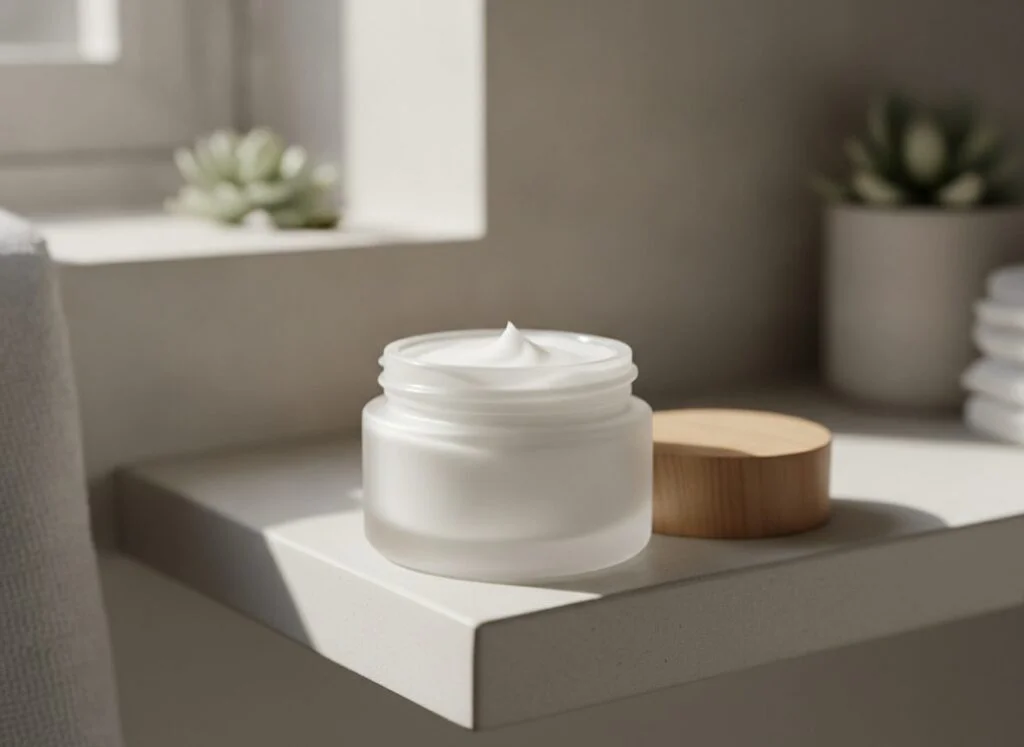
Your skin barrier is a thin wall of skin cells held together by lipids — ceramides, cholesterol, and fatty acids — that keeps water in and irritants out. When that wall is damaged, water escapes, skin feels dry and tight, and everyday things start to sting. Moisturiser is not just comfort; it is repair material for that wall, and for sensitive skin it is often the most important product you own.
A good barrier moisturiser usually contains humectants such as glycerin or hyaluronic acid to draw in water, emollients such as squalane to soften, and occlusives or ceramides to seal it all in. You do not need all three in one jar, but a cream that feels rich without fragrance or essential oils is a good place to start. Apply it to slightly damp skin so it can lock in the water already there.
Use moisturiser twice a day, even when your skin feels fine, because barrier repair is maintenance, not a rescue. The mistake is skipping it on good days and reaching for it only during a flare, when the barrier is already struggling. Steady, daily moisture keeps the wall strong so that fewer things get through to irritate you in the first place.
Sunscreen for Sensitive Skin Without the Sting

Sunlight is one of the biggest triggers for sensitive skin, and it is also one of the easiest to protect against. The problem is that many chemical sunscreens sting reactive skin, so people skip sunscreen altogether — and then wonder why their redness never settles. Mineral sunscreens, which use zinc oxide or titanium dioxide, usually sit more kindly on sensitive skin because they form a shield on the surface instead of absorbing into it.
Choose a broad-spectrum SPF 30 or higher that is fragrance-free and labelled for sensitive skin, and apply a generous amount as the last step of your morning routine. A slight white cast is normal with mineral formulas and usually fades as it settles; tinted versions can help if the cast bothers you. Reapply every two hours outdoors, and after sweating or swimming.
Do not let one bad sunscreen experience put you off the whole category. If a formula stings, try a different mineral option, patch-test it first, and give your skin a day to settle. Sunscreen is the step that protects all the other work you are doing — without it, redness, pigmentation, and barrier damage keep coming back faster than your routine can repair them.
Ingredients to Avoid When Your Skin Reacts Easily

Reading an ingredient label can feel like homework, but for sensitive skin a few names are worth learning. Added fragrance and perfuming essential oils are the most common irritants, followed by drying alcohols, strong acids, and high-strength actives used too often. None of these are bad for everyone, but they are the usual suspects when a product that promises glow delivers a sting instead.
A practical approach is to keep your core routine — cleanser, moisturiser, sunscreen — as plain as possible, and only then experiment with one active at a time, at a low strength, a few times a week. If a product lists fragrance near the top, or contains several essential oils, put it back and choose the plainer version. Your skin does not need a scented experience; it needs a calm one.
Be careful with the word natural, too. Plant extracts and essential oils are natural and can still irritate reactive skin, sometimes more than a simple synthetic formula. The question is not whether an ingredient is natural or synthetic, but whether your skin tolerates it. Patch-testing, short ingredient lists, and fragrance-free formulas are a safer guide than any marketing word on the front of the bottle.
How to Build a Simple Morning Routine
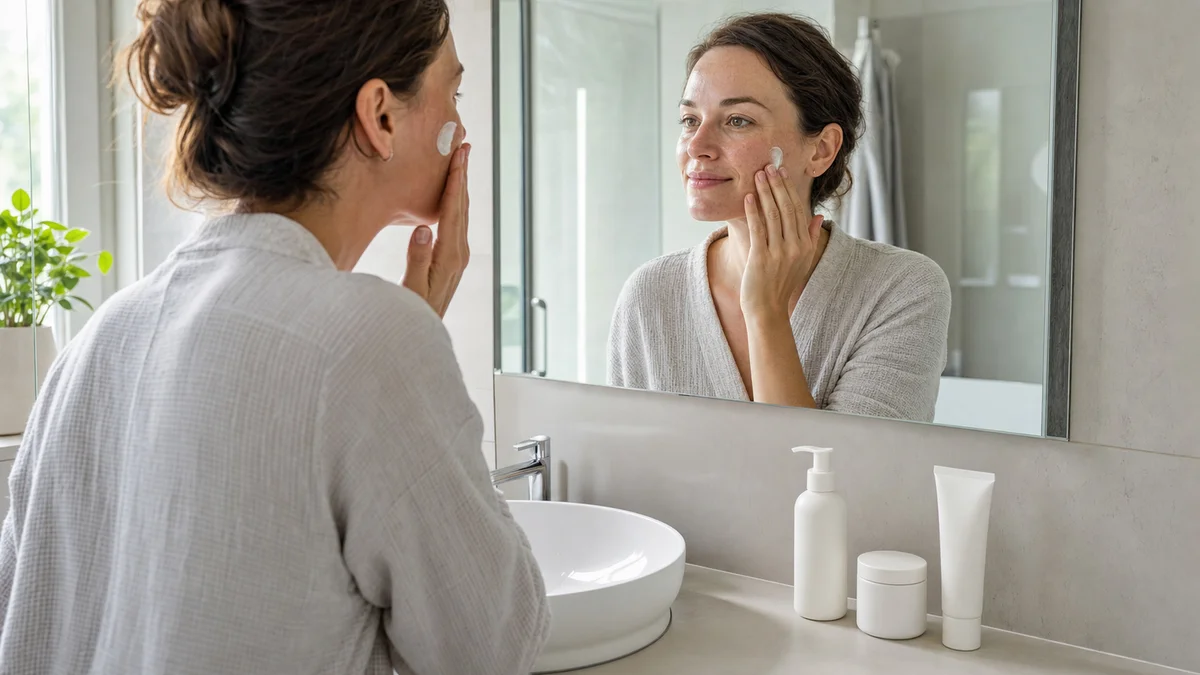
A morning routine for sensitive skin can be as short as three steps: rinse or cleanse gently, moisturise, and apply sunscreen. That is the whole job. A hydrating serum or a calming toner can be added in the middle if your skin likes it, but nothing else is required, and adding more steps in the morning usually adds more chances to irritate your skin before the day has even begun.
Order matters more than quantity. Start with the lightest products and finish with the heaviest: cleanser, then a watery serum or toner, then moisturiser, then sunscreen last. Wait a minute between layers so each one can settle, and use a pea-sized amount of each product rather than a generous handful. Sensitive skin responds better to a little, applied calmly, than to a lot, applied in a rush.
Keep your morning routine the same for at least three weeks before you change anything. Skin needs time to show you whether a step is helping, and changing products every few days creates noise that hides the real signal. If a step stings, remove it and go back to the simple three-step core — that core, done consistently, is already a complete routine.
How to Build a Simple Evening Routine

Evening is when your skin does its repair work, so your night routine can be slightly richer than your morning one — but only slightly. Start by removing sunscreen and makeup with a gentle cleanser or a mild cleansing balm, then apply a calming serum or treatment if you use one, and finish with a comfortable moisturiser or a thin layer of a barrier cream. No sunscreen is needed at night.
This is the best time to use any treatment your skin tolerates, because you are not layering sunscreen over it and you are not heading out into sun or wind. Keep it to one treatment at a time, a few nights a week, and watch how your skin responds over two or three weeks. If you wake up red or flaky, use the treatment less often rather than adding another product to fix it.
The evening routine is also a good moment to slow down. Warm water, a soft towel, and a minute of gentle massage with your moisturiser can turn a chore into a small ritual — and that calm matters, because stress itself can make sensitive skin flare. Keep the steps few, the products gentle, and the pace unhurried, and your skin will get the overnight rest it needs to repair.
§01 Gentle Cream Cleanser That Does Not Strip Your Skin
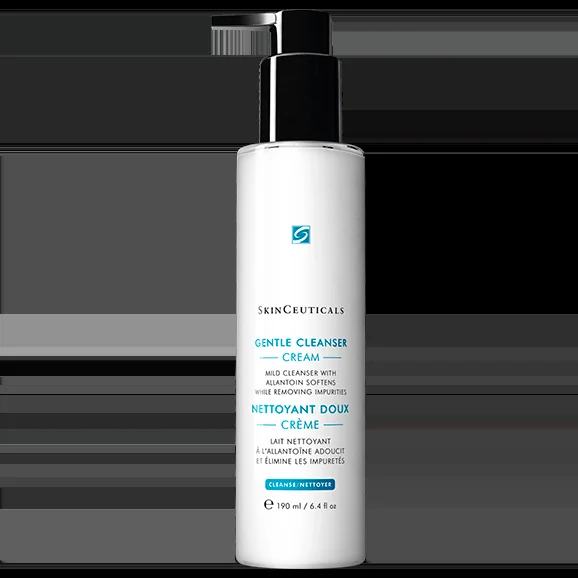
A gentle cream cleanser is the kindest way to start and end your day. Unlike foaming washes that can leave skin squeaky and tight, a cream cleanser lifts away sunscreen, sweat, and light makeup while leaving your skin’s natural oils mostly where they belong. For sensitive skin, that difference is everything: the barrier stays intact, so the rest of your routine lands on calm skin instead of a raw surface.
How to use: Wet your face with lukewarm water, massage a coin-sized amount over your skin with your fingertips for about thirty seconds, and rinse well. There is no need to scrub or to wash twice unless you wore heavy sunscreen or makeup. Best for: dry, tight, or easily flushed skin, and for winter mornings when your skin already feels fragile.
Common mistake: Choosing a cleanser because it foams impressively or smells fresh — both are signs it may be too strong for you. Quick verdict: If your skin feels soft and comfortable after washing, you have found your cleanser. Keep it, and spend your money on the steps that follow instead of chasing a fancier wash.
§02 Lukewarm Water: The Rinse Your Skin Prefers

Water temperature sounds too small to matter, but for sensitive skin it is one of the most common hidden triggers. Hot water strips the oils that protect your barrier and widens blood vessels, which is why cheeks flush in a hot shower. Lukewarm water cleans just as well without that shock, and your skin stays calmer for hours afterwards.
How to use: Turn the tap down until the water feels barely warm on the inside of your wrist, and use that for every rinse — morning, evening, and after a workout. The same rule applies to showers: keep them short and warm rather than long and hot, and let your face miss the hottest part of the spray. Best for: anyone whose skin turns red after washing or showering.
Common mistake: Splashing your face with very cold water to close pores — pores do not open and close that way, and icy water can be just as shocking as hot. Quick verdict: This step costs nothing and takes no extra time, yet it removes a daily irritant most people never notice. It is one of the easiest wins in this whole guide.
§03 Fragrance-Free Moisturiser for Daily Comfort
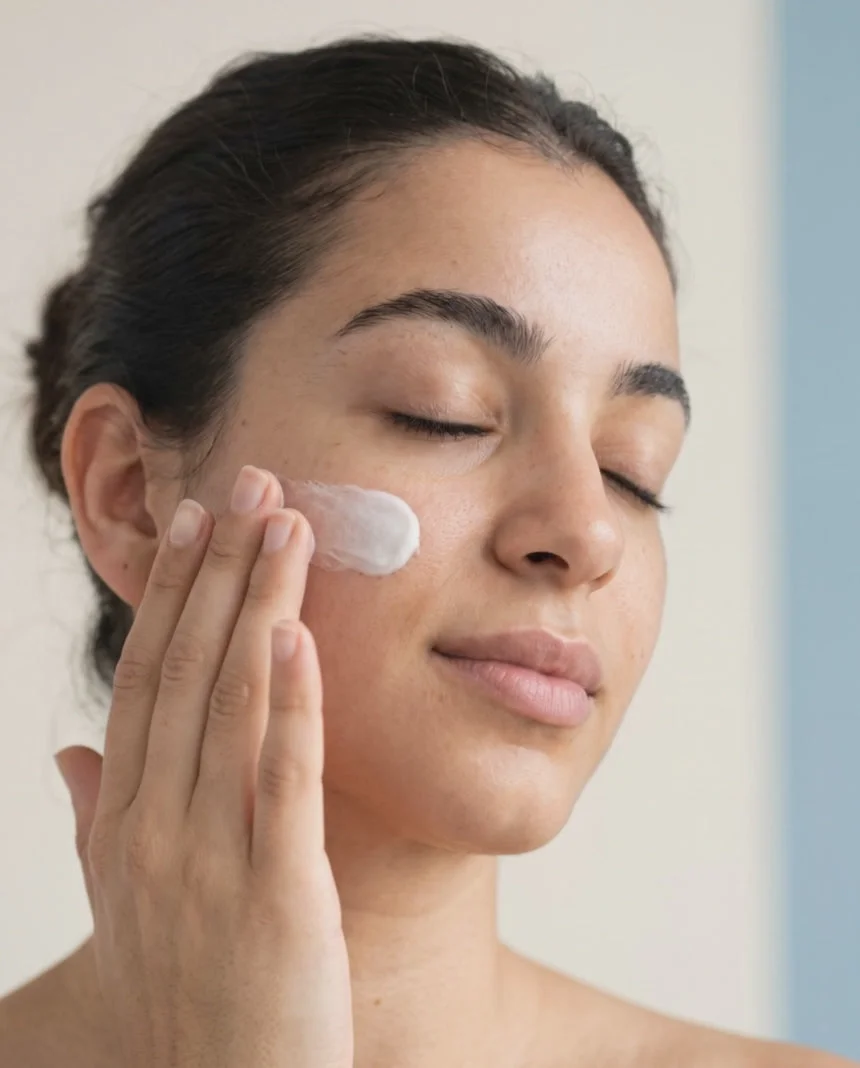
A fragrance-free moisturiser is the quiet workhorse of a sensitive-skin routine. Fragrance is one of the most frequent causes of stinging and redness, and it adds nothing your skin actually needs, so removing it from your daily cream removes a daily risk. What is left is the part that matters: humectants that draw in water and emollients that keep it there.
How to use: Apply a generous layer to slightly damp skin morning and evening, and again over any serum so the moisture is sealed in. In winter, or on very dry days, a second thin layer over the driest patches works better than switching to a heavier product. Best for: daily use on all sensitive skin types, including skin that reacts to scented creams.
What to avoid: Products labelled unscented that still contain masking fragrances — check the ingredient list for parfum or essential oils. Cost and time: A plain fragrance-free cream is often cheaper than a scented luxury one, and it takes the same thirty seconds to apply. Choose the boring jar; your skin will thank you for it.
§04 Ceramide Barrier Cream for a Stronger Skin Barrier
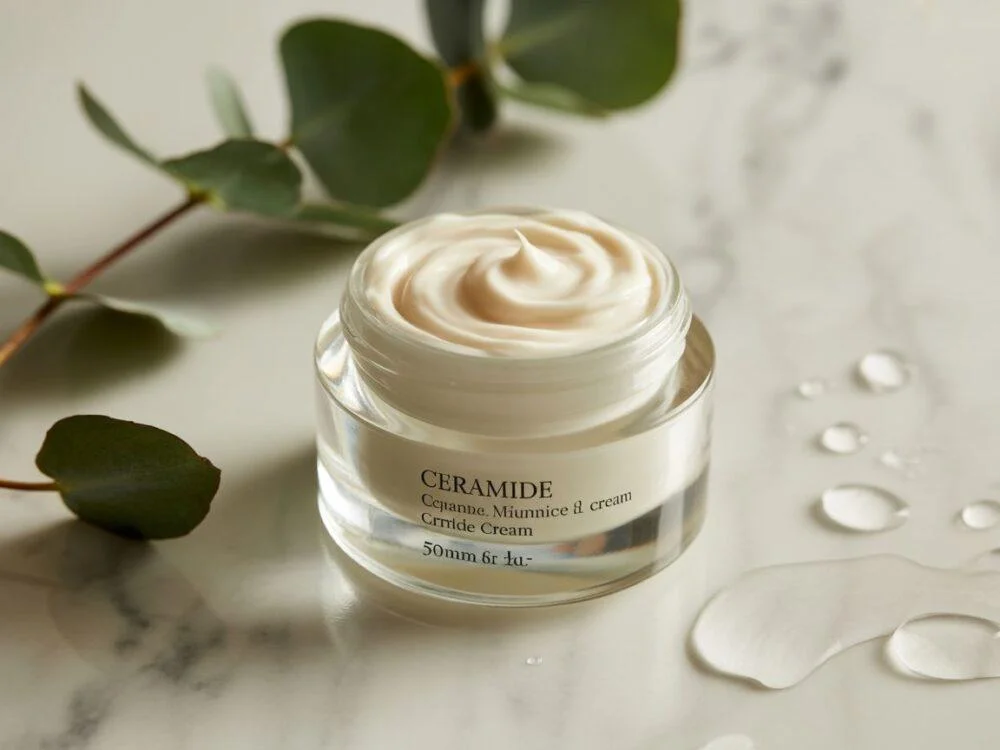
Ceramides are the fats that hold your skin barrier together, like the mortar between bricks. When sensitive skin loses ceramides — through over-washing, harsh products, or cold weather — the barrier leaks moisture and lets irritants in. A ceramide cream replaces some of that lost mortar, so skin holds water better and reacts less to the world around it.
How to use: Use it as your evening moisturiser, or as a thicker layer over your usual cream on the driest areas. A pea-sized amount is enough for the whole face; press it in gently rather than rubbing hard. Best for: skin that feels rough, flaky, or tight, and for the first weeks after a flare when the barrier needs rebuilding.
Pros and cons: The main advantage is real barrier support with very little irritation risk. The only downside is texture — ceramide creams can feel rich, so oily skin may prefer them only at night. Quick verdict: If you buy one repair product for sensitive skin, make it this one. It is the closest thing to giving your barrier its building blocks back.
§05 Hyaluronic Acid Serum for Light, Calm Hydration

Hyaluronic acid is a humectant that holds many times its weight in water, and it is one of the gentlest hydrators you can add to a sensitive-skin routine. It does not exfoliate, sting, or change how your skin behaves — it simply pulls moisture into the upper layers so skin looks plumper and feels less tight. For skin that is dehydrated as well as sensitive, that light layer of water can be a real relief.
How to use: Apply two or three drops to damp skin after cleansing, then seal it in with moisturiser straight away. Without a cream on top, the serum can actually draw moisture out of your skin in dry air, so the moisturiser step is not optional. Best for: dehydrated, tight-feeling skin in any season, and for layering under makeup without pilling.
Common mistake: Using it on dry skin and skipping moisturiser, then wondering why skin feels drier. Who should skip it: Almost no one needs to skip it, but if your skin is already well hydrated, you may not notice much difference — and that is fine. It is a quiet helper, not a dramatic treatment.
§06 Niacinamide Serum at a Low, Gentle Strength
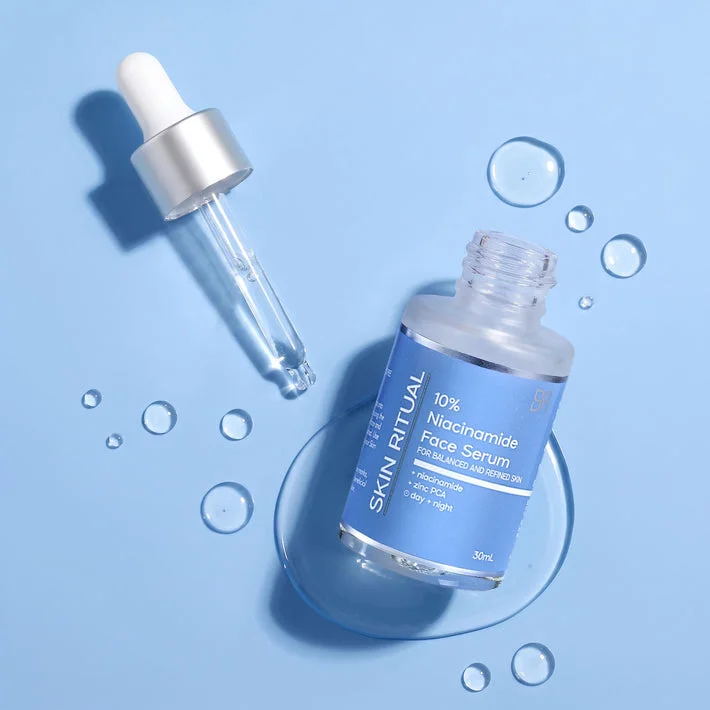
Niacinamide, a form of vitamin B3, is one of the few active ingredients that sensitive skin usually tolerates well. At low strengths it supports the barrier, calms the look of redness, and helps skin hold moisture — all without the sting that stronger actives can cause. It is a good first active for people who have been afraid to try anything beyond a plain moisturiser.
How to use: Start with a 2 to 5 percent formula, once a day, and only increase how often you use it if your skin stays calm for two weeks. Apply it after cleansing and before moisturiser, and keep the rest of your routine unchanged so you can tell whether it is helping. Best for: uneven tone, mild redness, and skin that needs a little more than a basic cream.
What to avoid: Jumping straight to a 10 percent serum, which can cause flushing and breakouts in reactive skin. More is not better here; the gentle strength does the real work. Quick verdict: Low and steady wins. If your skin likes it after a month, you have found a keeper for the long term.
§07 Squalane Facial Oil for Softness Without Grease
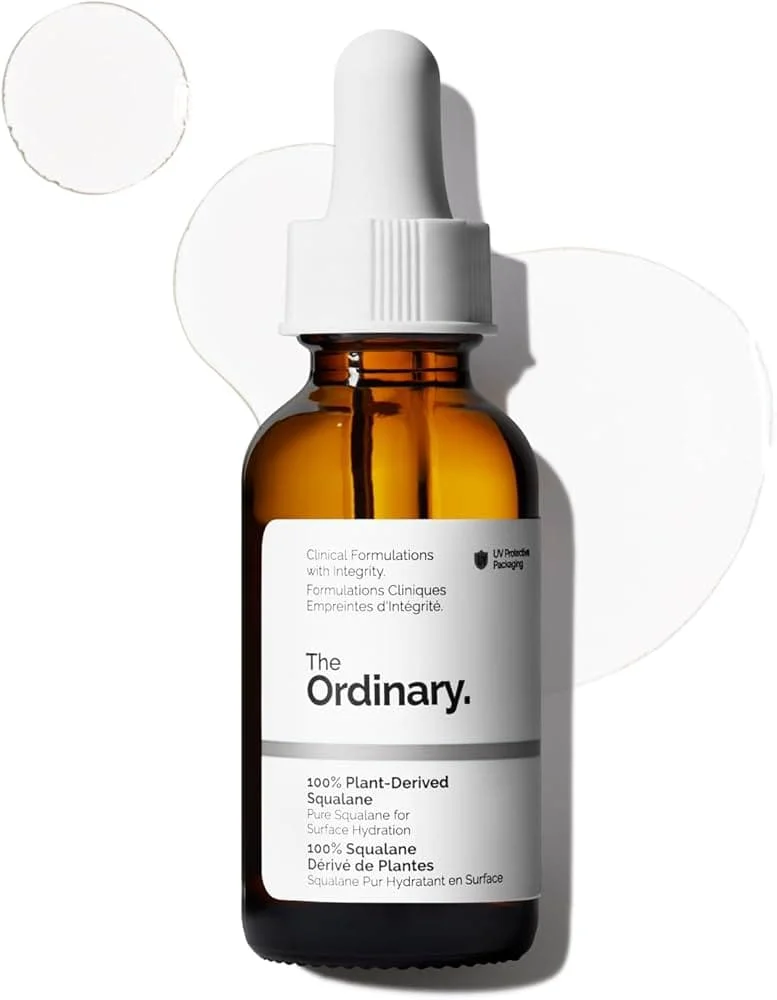
Squalane is a lightweight oil that mimics one of your skin’s own natural lipids, which is why it usually feels so comfortable on sensitive skin. It softens rough patches, reduces the feeling of tightness, and adds a gentle glow without the heavy, greasy finish that puts many people off facial oils. It does not clog pores for most people, and it plays well with almost every other product.
How to use: Warm two or three drops between your palms and press them over your moisturiser, or mix a drop into your night cream on very dry evenings. Use it at night first, so you can see how your skin responds before wearing it under sunscreen and makeup. Best for: dry, flaky, or winter-stressed skin, and for sealing in moisture on cold, windy days.
Pros and cons: The softness is immediate and the irritation risk is low. The trade-off is that oil alone does not hydrate — it seals in water, so it works best over a damp, moisturised base. Quick verdict: A small bottle lasts months, and for dry sensitive skin it is one of the most forgiving extras you can own.
§08 Mineral Sunscreen for Sensitive Skin Days Outdoors
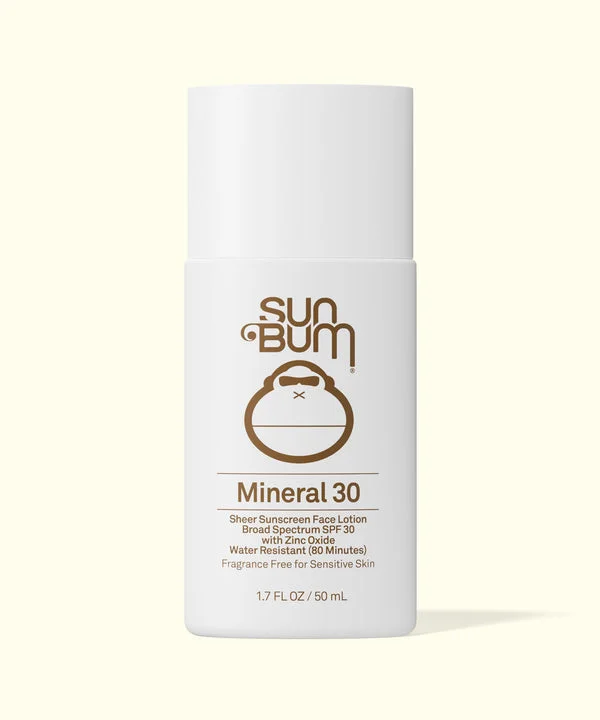
Mineral sunscreen is the safest daily choice for most sensitive skin, because zinc oxide and titanium dioxide sit on the surface and reflect sunlight instead of absorbing into the skin. That simple difference is why mineral formulas sting far less than chemical ones, and why dermatologists so often recommend them for reactive, rosacea-prone, or post-treatment skin.
How to use: Apply a full finger-length of product to your face and neck as the last morning step, and reapply every two hours when you are outside. Let it settle for a few minutes before makeup, and do not rub it away when you blot sweat — pat instead. Best for: daily wear, children and adults with reactive skin, and anyone who has ever felt a sunscreen burn.
Common mistake: Using too little to avoid the white cast, which leaves you with far less protection than the SPF number promises. Quick verdict: A tinted mineral formula solves the cast problem for many people. Find one your skin tolerates and wear it every single day — it is the step that protects everything else in this guide.
§09 Oatmeal Soothing Mask for Red, Uncomfortable Skin
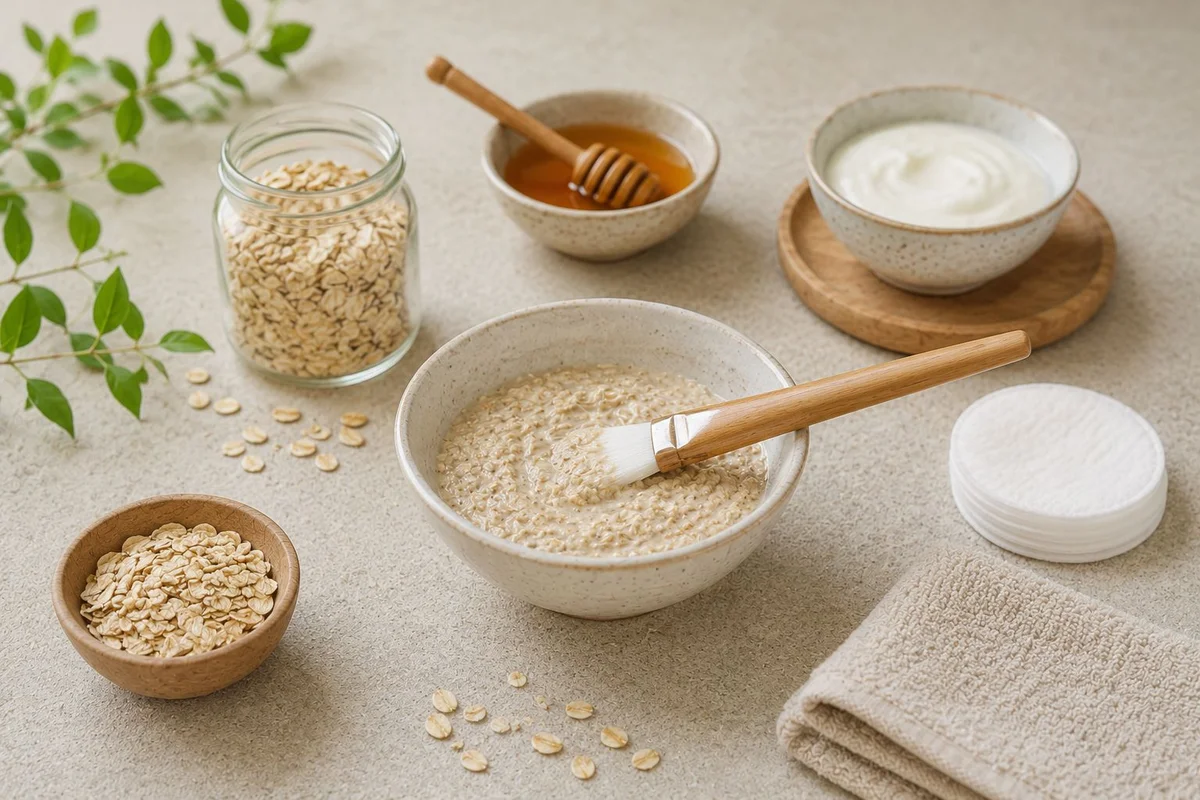
Oatmeal has been used to calm irritated skin for generations, and there is real sense behind the tradition. Colloidal oatmeal forms a gentle, protective layer that eases itching and redness, and a simple oatmeal mask is one of the mildest ways to comfort a flare without adding fragrance, acids, or anything your skin has to work to tolerate.
How to use: Mix finely ground oatmeal with lukewarm water or plain yoghurt into a soft paste, spread a thin layer over clean skin, and leave it for ten minutes before rinsing with lukewarm water. Use it once a week, or on a bad-skin day when everything else feels like too much. Best for: itchy, red, or wind-chapped skin that needs comfort rather than treatment.
What to avoid: Adding lemon juice, vinegar, or essential oils to the mask — they turn a gentle remedy into an irritant. Cost and time: Almost nothing, and ten quiet minutes. Keep the recipe plain, patch-test it first if your skin is very reactive, and enjoy the simplest mask in this guide.
§10 Aloe Vera Gel for Cool, Lightweight Relief
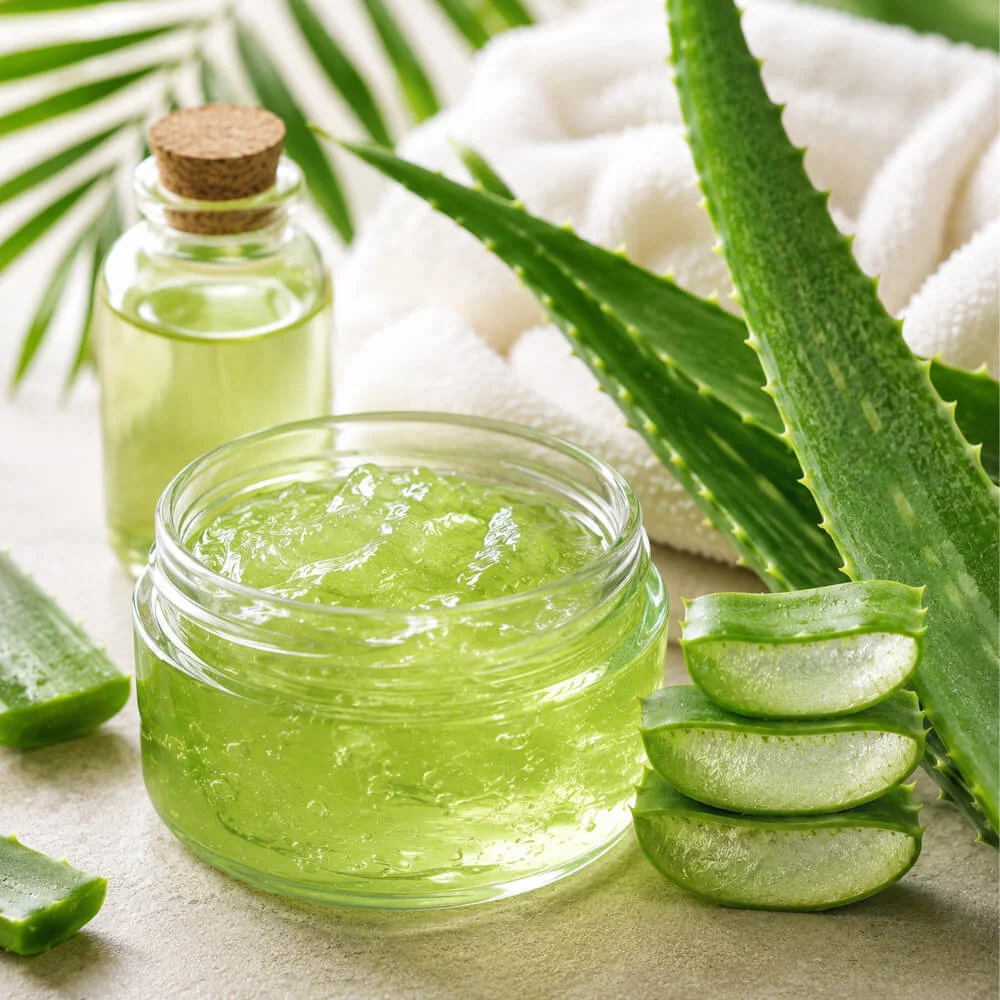
Aloe vera gel feels cool the moment it touches the skin, which is why it is such a comfort after sun, wind, or a long day outdoors. It is mostly water held in a light gel, so it hydrates without weight and rarely causes a reaction — a useful combination when your skin is too irritated for a rich cream but still needs moisture.
How to use: Smooth a thin layer over clean skin and let it sink in before your moisturiser, or keep the bottle in the fridge for extra coolness on hot days. Use it as a light layer under your usual cream rather than as a replacement for it, because gel alone does not seal in moisture for long. Best for: sun-warmed skin, mild redness, and hot, humid weather when heavy creams feel too much.
What to avoid: Gels loaded with fragrance, alcohol, or green dye — look for a short ingredient list with aloe near the top. Quick verdict: It will not rebuild your barrier on its own, but as a cool, calm layer in a routine it earns its place, especially in summer.
§11 Micellar Water for a Gentle, No-Rinse Cleanse

Micellar water is made of tiny cleansing molecules suspended in water, and it lifts away light makeup, sunscreen, and dirt with a cotton pad — no rubbing, no rinsing, and no foam. For sensitive skin, that low-friction cleanse can be a relief on mornings when even a wash feels like too much, and it is a useful option when you are travelling or unwell.
How to use: Soak a soft cotton pad, sweep it gently over your face, and repeat with a fresh pad until it comes away clean. Follow with a rinse or a light moisturiser, because even a gentle micellar water leaves a thin residue. Best for: mornings, light-makeup days, and skin that feels raw after too much washing.
Common mistake: Scrubbing hard with the pad, or using micellar water as your only cleanse after heavy sunscreen — it is not strong enough for that job. Quick verdict: Keep a bottle for the days your skin needs a break, but keep your cream cleanser for the days it needs a proper wash.
§12 Soft Cloth Exfoliation Without Scrubs or Sting

Sensitive skin still sheds dead cells, but it does not need a gritty scrub to do it. A soft, damp washcloth used with the lightest touch removes dull surface cells and helps your other products absorb, without the micro-tears and redness that scrubs and strong acids can cause. It is exfoliation at the gentlest possible setting — and for many reactive skins, it is enough.
How to use: After cleansing, press a warm, damp cloth to your face for a few seconds, then glide it once over each area with almost no pressure. Once a week is plenty to start; if your skin stays calm, twice a week is the most most people need. Best for: dull, flaky skin that cannot tolerate chemical exfoliants or grainy scrubs.
What to avoid: Rough towels, hot water, and pressing hard enough to leave your skin pink — pink means you have gone too far. Wash the cloth after every use so bacteria do not build up. Quick verdict: If scrubs have always hurt, this is your exfoliation. It costs nothing and it respects your barrier.
§13 Peptide Moisturiser for Calm, Supported Skin

Peptides are small chains of amino acids that signal skin to behave a little more like healthy skin — supporting firmness and helping the barrier hold together. They are not exfoliants and they do not sting, which makes a peptide moisturiser a gentle way to add a treatment step without adding irritation. For sensitive skin, that combination is rare and worth noticing.
How to use: Use it in place of your usual moisturiser, morning or evening, and give it at least a month before you judge it — peptides work slowly and quietly. Keep the rest of your routine steady so you can see what it is actually doing. Best for: mature sensitive skin, and anyone who wants a treatment step that does not feel like a treatment.
Pros and cons: The advantage is a calm, well-tolerated active with no downtime. The downside is price and patience: good peptide creams cost more, and the results are subtle rather than dramatic. Quick verdict: Think of it as a long-term investment in your barrier, not a quick fix — and a pleasant one to use every day.
§14 Calming Toner That Prepares Skin Without Drying It
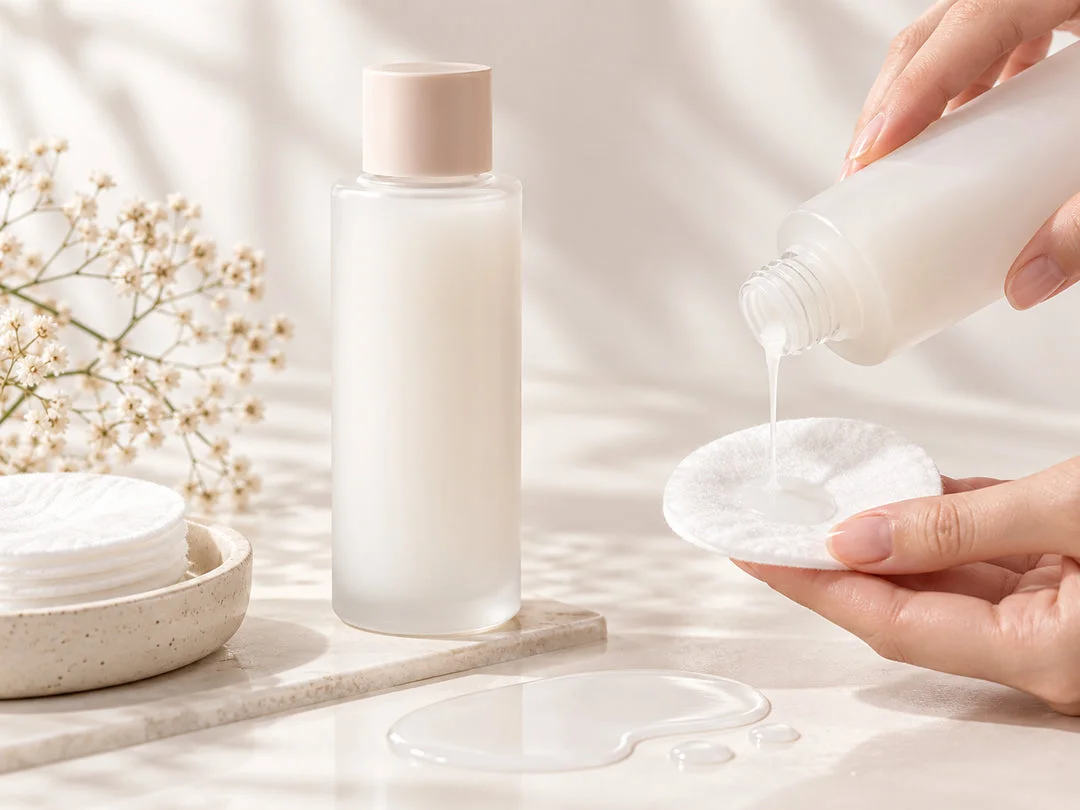
A calming toner is not the astringent splash of old-fashioned skincare. Modern gentle toners are watery layers of glycerin, panthenol, or centella that add a little moisture and help the next product spread evenly, without alcohol or fragrance. For sensitive skin, that extra layer of water can be the difference between a moisturiser that sits on top and one that sinks in comfortably.
How to use: Pour a little into your palms and press it over damp skin after cleansing, or sweep it on with a soft cotton pad if you prefer. One layer is enough; you can add a second on very dry days. Best for: dehydrated skin, and for anyone whose moisturiser seems to disappear too quickly.
Common mistake: Choosing a toner with witch hazel, alcohol, or a strong scent because it feels refreshing — that tingle is irritation, not cleansing. Quick verdict: A toner is optional, not essential, but a truly gentle one is a pleasant, low-risk way to add hydration to a simple routine.
§15 Hydrating Sheet Mask for a Weekly Moisture Boost

A hydrating sheet mask is a sheet of soft material soaked in serum, laid over the face for ten or fifteen minutes. The sheet stops the serum from evaporating, so your skin gets a long, slow drink of moisture — and for sensitive skin, a sheet mask with a simple, fragrance-free formula can be one of the most soothing treats in a routine, especially before an event or after a long flight.
How to use: Apply it to clean skin, smooth out air bubbles, and relax for ten to fifteen minutes — never let it dry out completely on your face, or it will start pulling moisture back out. Remove it, pat in the leftover serum, and finish with moisturiser. Best for: a weekly moisture boost, dry winter skin, and the evening before a day when you want your skin to look rested.
What to avoid: Masks loaded with fragrance, alcohol, or a long list of botanical extracts, and leaving any mask on for far longer than the packet says. Patch-test a new brand first, because a full-face sheet is a lot of product at once. Cost and time: A few minutes and a small price per mask — a reasonable weekly treat, not a daily need.
§16 Gentle Eye Cream for the Delicate Eye Area

The skin around your eyes is thinner than the rest of your face, so it dries out faster and reacts sooner. A gentle eye cream — usually a fragrance-free formula with a little hyaluronic acid, peptides, or ceramides — gives that delicate area its own layer of moisture without the sting that a strong face cream can cause there.
How to use: Dot a rice-sized amount around the orbital bone with your ring finger, using the lightest tapping motion, morning and evening. Never pull or rub the area, and keep the cream away from the lash line where it can migrate into your eyes. Best for: dryness, fine lines from dehydration, and mornings when the eye area looks tired.
Who should skip it: If your regular moisturiser is gentle and fragrance-free, you can use that around your eyes instead — a separate eye cream is a comfort, not a requirement. Quick verdict: Buy it if your eye area is the first place to feel dry or sting. Otherwise, spend the money on your barrier cream and use that everywhere.
§17 Sensitive Lip Balm for Dry, Easily Irritated Lips
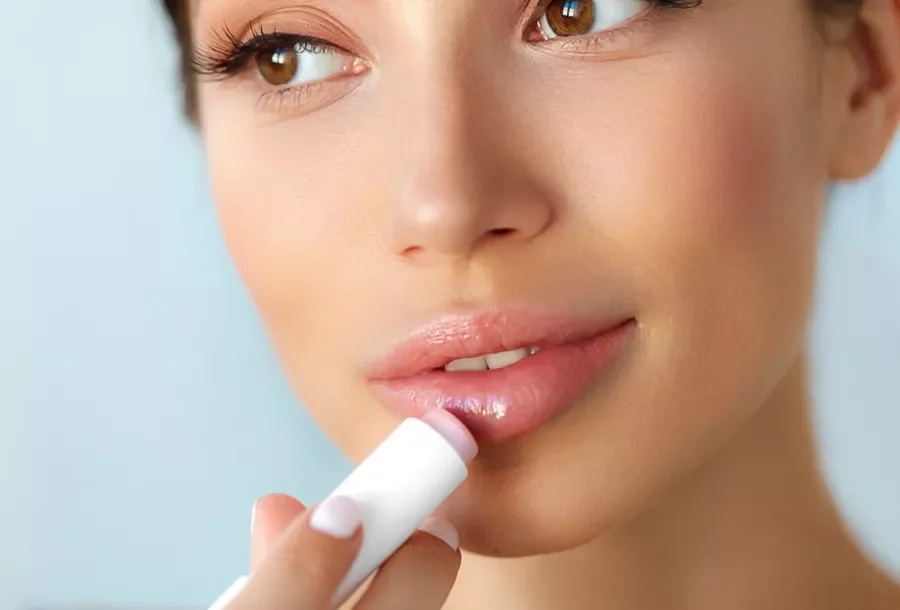
Lips have almost no oil glands of their own, so they dry out quickly — and sensitive lips can sting, crack, and peel from fragranced balms, minty flavours, and lipsticks that other people wear without a thought. A plain, fragrance-free balm with petrolatum, shea butter, or ceramides protects the lip barrier and lets it heal, without adding another irritant on top.
How to use: Apply it morning and night, before lipstick, and whenever your lips feel dry. Carry one in your bag and one by your bed so you are never tempted to lick dry lips, which only makes them drier. Best for: cracked, peeling, or stinging lips, cold weather, and anyone whose lips react to flavoured products.
What to avoid: Balms with menthol, camphor, cinnamon, or strong flavourings — the tingle they give is irritation, not healing. Quick verdict: This is the smallest, cheapest product in the guide, and one of the most used. A plain balm, used often, beats a fancy one used rarely.
§18 Barrier Sleeping Mask for Overnight Comfort

A sleeping mask is a richer cream or gel that you leave on overnight, sealing in everything underneath it while you sleep. For sensitive skin, a barrier-focused sleeping mask — ceramides, squalane, and a little occlusive to lock moisture in — can turn a dry, tight morning into a soft, comfortable one, especially in winter or after a long day in dry air.
How to use: Apply a thin layer as the last step of your evening routine, two or three nights a week, and sleep on a clean pillowcase. In the morning, rinse gently and follow your usual routine. Best for: very dry skin, cold seasons, and recovery nights after your skin has felt stressed or overworked.
Common mistake: Applying a thick layer every night and then wondering why pores feel clogged — a thin layer, a few nights a week, is the right dose. Quick verdict: Think of it as a blanket for your barrier on the nights your skin needs extra help, not as a nightly requirement.
§19 Rosewater Face Mist for a Light, Refreshing Layer
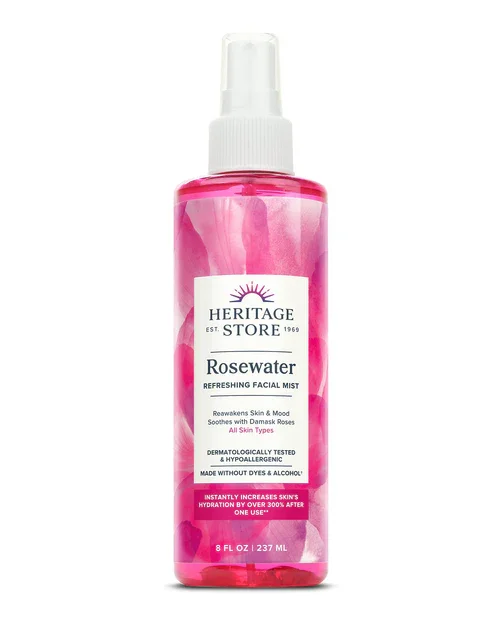
A rosewater mist is a light spray of rose distillate and water that refreshes the skin and adds a little moisture between steps. Used well, it is a gentle way to dampen the skin before a serum or moisturiser, and a pleasant pick-me-up on a hot afternoon. The key is choosing a simple formula — pure rosewater with no added fragrance, alcohol, or dye.
How to use: Mist it over your face from a short distance after cleansing, then apply your serum or moisturiser while the skin is still slightly damp. You can also use it over makeup to refresh the look, though the effect is light and short-lived. Best for: hot days, dry offices, and anyone who likes a refreshing step in their routine.
What to avoid: Mists that are mostly alcohol or added perfume — they dry the skin they claim to refresh. Patch-test first if your skin is very reactive, because even natural rose can irritate some people. Quick verdict: A nice extra, not an essential. If you love the ritual, keep it; if you do not, your moisturiser already does the real work.
§20 Cucumber for Eyes: A Cool, Soothing Pause

Cucumber slices over the eyes are a classic for a reason: they are cool, mostly water, and they give you a reason to lie still for ten minutes. The coolness calms puffiness and the moisture soothes the thin skin around the eyes, while the forced pause is good for the rest of you as well. It is not a treatment, but it is a genuinely pleasant ritual for tired, sensitive eyes.
How to use: Chill a cucumber, cut two thick slices, and lie back with them over closed eyes for about ten minutes. Rinse or pat the skin dry afterwards, and follow with your usual eye cream if you use one. Best for: puffy mornings, long screen days, and the evenings when your eyes feel as tired as you do.
Common mistake: Rubbing the slices over your face like a scrub, which wastes the point and can irritate the skin. Cost and time: A few slices from a cucumber you already own, and ten quiet minutes. Simple, cheap, and honestly relaxing — which is half the benefit.
§21 Cool Compress for Moments When Skin Feels Hot

When sensitive skin flares — hot, red, and uncomfortable — a cool compress is the fastest, gentlest way to calm it down. Cold constricts the blood vessels near the surface, which eases the flushed feeling, and the damp cloth adds a little moisture at the same time. It is first aid for a flare, not a cure, but it can make the next hour far more bearable.
How to use: Soak a clean, soft cloth in cool water, wring it out, and lay it over the uncomfortable area for five to ten minutes. Repeat if it warms up. Never use ice directly on your skin, and never use a hot cloth to open pores first — cool is the whole point. Best for: sudden flushing, post-sun warmth, and the moments after a product has stung.
What to avoid: Reaching for a strong cream or a new active in the middle of a flare — that is the worst time to experiment. Cool the skin, wait, and return to your plainest moisturiser. Quick verdict: Keep a clean cloth in your drawer for bad-skin moments. It is free, it is fast, and it never makes things worse.
§22 Silk Pillowcase for a Kinder Night’s Sleep

A silk pillowcase is a small luxury with a practical point for sensitive skin. Cotton can absorb moisture from your skin and create friction as you move in your sleep; silk is smoother, so your face slides rather than drags, and it takes less moisture with it. Over weeks, that means less morning redness and fewer sleep creases pressed into your cheeks.
How to use: Swap your usual pillowcase for silk or satin, and wash it weekly with a fragrance-free detergent. Keep your night cream on before bed, because the pillowcase helps it stay on your face rather than on the fabric. Best for: people who wake up with red marks, dry patches, or hair that tangles overnight — the hair benefits too.
Pros and cons: The comfort is real and the care is easy, but a good silk pillowcase costs more than cotton and needs gentle washing. Quick verdict: It will not fix your skin on its own, but as part of a calm night routine it is a pleasant, low-risk upgrade that you will notice every morning.
§23 Bedroom Humidifier for Drier Air and Drier Skin

Indoor air in winter, or in an air-conditioned room, can be far drier than the air outside — and dry air pulls water straight out of your skin while you sleep. A bedroom humidifier adds moisture back into that air, so your skin loses less water overnight and your barrier has less repair work to do in the morning. It is an environmental fix, not a cosmetic one, which is why it works so quietly.
How to use: Run a clean humidifier in your bedroom overnight, aiming for indoor humidity around 40 to 60 percent. Clean it every few days exactly as the manual says, because a dirty humidifier can spread bacteria and mould — the opposite of what your skin needs. Best for: winter months, dry climates, and anyone who wakes up with tight, flaky skin.
Common mistake: Setting the humidity too high, which invites mould and dust mites. More is not better; the middle range is the target. Cost and time: A small humidifier is a modest one-off cost and a few minutes of cleaning a week. For very dry skin, it can matter as much as any cream.
§24 Soft Towel Patting Instead of Rubbing Dry

How you dry your face matters almost as much as how you wash it. Rubbing with a rough towel drags across skin that is already soft from water, causing micro-irritation and redness that you then blame on your products. Patting with a soft, clean towel removes the water just as well and leaves the barrier undisturbed — a tiny change with a visible payoff.
How to use: After washing, press a soft towel gently against your face in sections, and leave the skin very slightly damp before you apply your serum or moisturiser. That leftover dampness is useful: your products lock it in instead of fighting dry skin. Best for: everyone with sensitive skin, and especially for skin that is red or flaky after washing.
What to avoid: Sharing a rough bath towel with the rest of the household, or using the same face towel for a week without washing it. Keep a small, soft towel just for your face and wash it every few days. Quick verdict: Free, instant, and easy to forget — until you notice how much calmer your skin looks after washing.
§25 Sun Hat and Shade as Your Second Sunscreen

Sunscreen is essential, but it is not the only way to protect sensitive skin from the sun. A wide-brimmed hat, sunglasses, and a little shade do work that no cream can: they block sunlight before it ever reaches your skin, with no risk of stinging at all. For skin that flushes in the sun, that physical barrier is often more reliable than any formula.
How to use: Wear a hat with a brim of at least three inches when you are outside for more than a few minutes, and sit in the shade during the middle of the day when the sun is strongest. Keep sunscreen underneath as well — a hat protects the top of your face, but reflected light still reaches your cheeks and chin. Best for: holidays, school runs, gardening, and any long day outdoors.
Pros and cons: The protection is free of chemicals and cannot irritate your skin. The only downside is remembering to wear it — and that a hat can flatten your hair. Quick verdict: A hat plus sunscreen is better than either one alone, and for very reactive skin it is the combination that finally makes summer comfortable.
§26 Gentle Cleansing Balm for Makeup Days
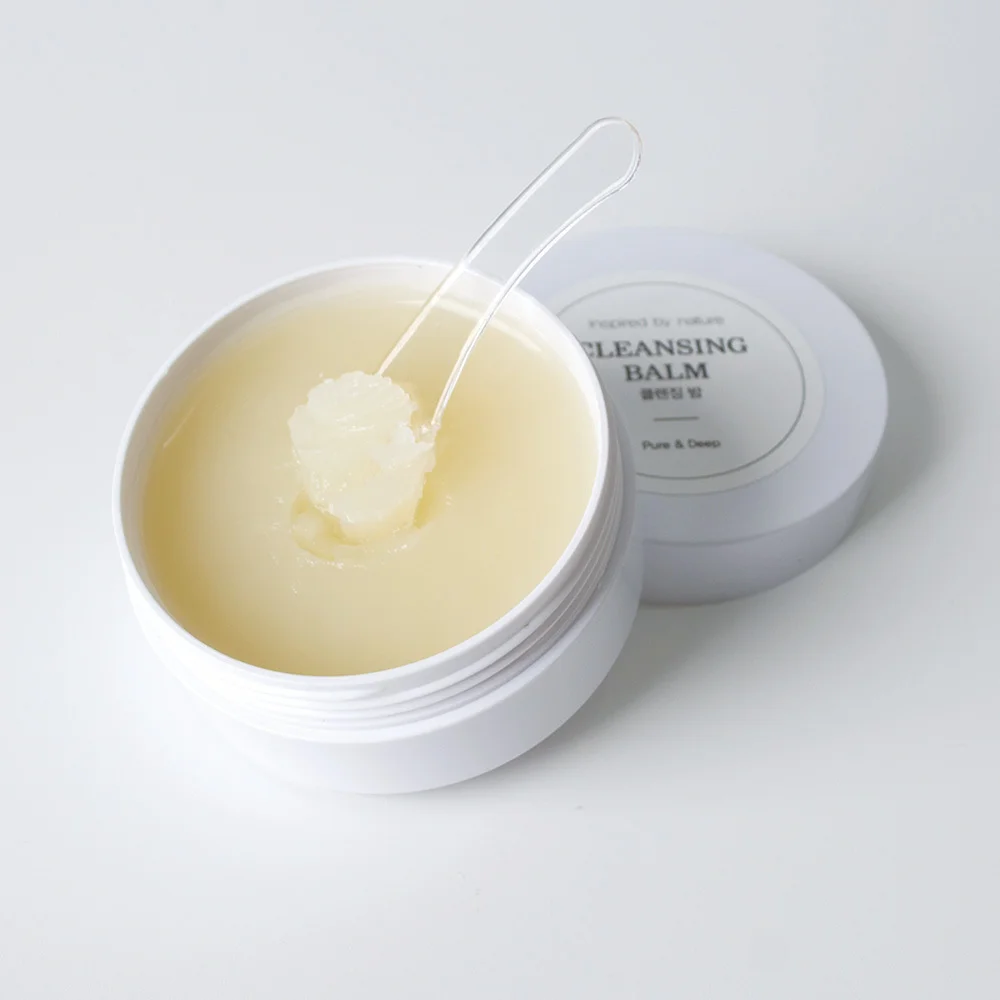
A cleansing balm is a solid, buttery product that melts into an oil on contact with skin, dissolving makeup and sunscreen without the scrubbing that a washcloth or a wipe demands. For sensitive skin, that matters: makeup removal is often the roughest part of the day, and a balm lets you take everything off with your fingertips and a rinse, instead of dragging a pad across your face.
How to use: Massage a small scoop over dry skin, including over closed eyes, until the makeup has dissolved, then add a little water to turn it milky and rinse well. Follow with your gentle cream cleanser for a full clean. Best for: makeup days, waterproof sunscreen, and evenings when a single wash does not feel like enough.
What to avoid: Balms loaded with fragrance or essential oils, which can sting the eye area, and leaving the balm on without rinsing — it is a cleanser, not a moisturiser. Quick verdict: If makeup removal usually leaves you red, a plain balm is one of the kindest upgrades you can make to your evening routine.
§27 Vitamin E Facial Oil for Extra Dry Patches
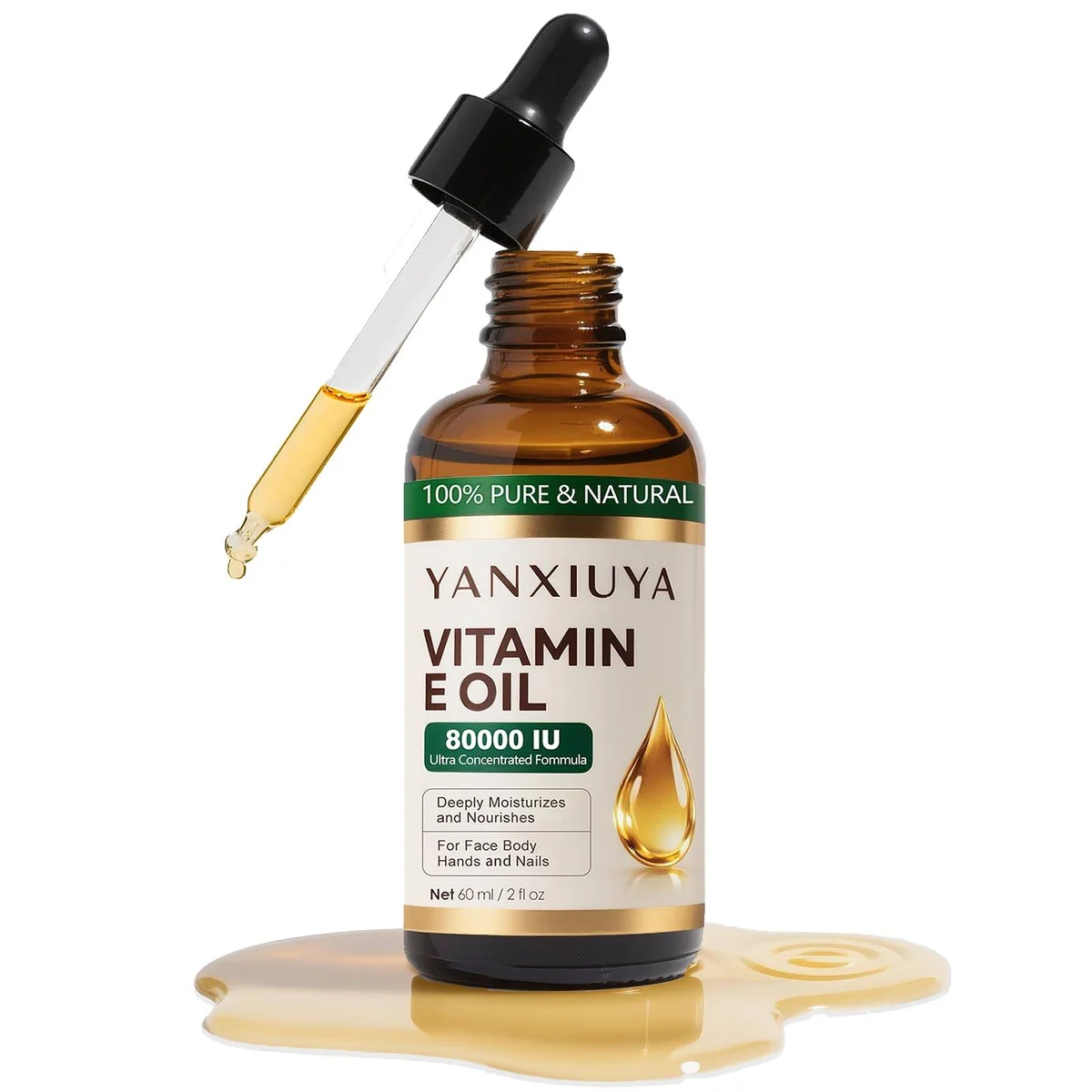
Vitamin E oil is a rich, golden oil that is often used on very dry patches — the corners of the nose, flaky cheeks, or lips that will not heal. It is an antioxidant, but its real job for sensitive skin is simpler: it forms a soft, protective layer over dry areas and keeps moisture in while the skin underneath repairs itself.
How to use: Use it sparingly — one drop, warmed between your fingers and pressed onto the driest patch, is enough. It is best at night, because it is too rich to wear comfortably under makeup. Patch-test first, as a few people are sensitive to vitamin E itself. Best for: small, stubborn dry patches rather than the whole face.
Common mistake: Applying it all over the face every night, which can feel heavy and clog pores. A little, on the right spot, is the whole idea. Quick verdict: A useful rescue product for dry patches, kept in a drawer for the days you need it — not a daily essential for everyone.
§28 Chamomile for a Calming Cup and a Calmer Routine

Chamomile is known for its calming properties, and it earns its place here in two ways. As a tea, it is a warm, caffeine-free pause at the end of the day, which helps the stress that so often shows up on sensitive skin. As a skincare ingredient, chamomile extract is one of the gentler botanicals, used in creams and toners to soothe the look of redness.
How to use: Make a cup of chamomile tea in the evening as part of your wind-down, and if you like chamomile in skincare, choose a fragrance-free cream or toner that lists it among the ingredients — then patch-test it like any new product. Best for: evenings when stress and skin are both wound up, and for people who prefer a gentle botanical to a strong active.
What to avoid: Assuming that natural always means safe: people with ragweed or daisy allergies can react to chamomile, so test it first. Quick verdict: The tea is a ritual worth keeping; the skincare is a pleasant option if your skin likes it, and easy to skip if it does not.
§29 Clean Makeup Brushes for Fewer Breakouts and Less Irritation

Dirty makeup brushes collect old foundation, skin oils, and bacteria, and then press all of it back into your skin every morning. For sensitive skin, that daily dose of bacteria and residue is a quiet trigger for breakouts and irritation — and it is one of the easiest triggers to remove, because it has nothing to do with buying a new product.
How to use: Wash your brushes once a week with a gentle, fragrance-free soap or a dedicated brush cleanser, rinse well, and lay them flat to dry. Sponges need washing even more often. If a brush smells or feels stiff, it is overdue. Best for: anyone who wears makeup and has breakouts that never quite clear up.
Common mistake: Cleaning brushes with a harsh detergent or a scented soap, which leaves its own residue behind. Use the gentlest soap you have. Cost and time: A few minutes a week and a little soap. It is the least glamorous step in this guide, and one of the most effective for keeping reactive skin calm.
§30 Water and Hydration Habits That Support Your Skin

Drinking water will not fix sensitive skin on its own, but being dehydrated makes everything worse: skin looks duller, feels tighter, and recovers more slowly from irritation. A steady habit of drinking water through the day supports the moisture your creams are working to keep in, and it costs nothing at all.
How to use: Keep a glass or bottle of water near you and sip through the day rather than drinking a large amount at once. Eat water-rich foods — cucumber, melon, oranges, and soups — alongside it, because hydration from food counts too. Best for: everyone, and especially for people who spend long days in heated or air-conditioned rooms.
What to avoid: Treating water as a replacement for moisturiser or sunscreen. Hydration from the inside helps, but your barrier still needs care from the outside. Quick verdict: It is a supporting habit, not a cure — but it is a free, healthy one, and sensitive skin does better when the whole body is looked after, not just the face.
§31 Beauty Sleep: Rest as Part of Your Routine

Your skin repairs itself while you sleep, producing the collagen and lipids that keep the barrier strong. Short or broken sleep raises stress hormones, which can trigger flushing, breakouts, and slower healing — so a good night’s sleep is not a luxury extra in a skincare routine. It is one of the steps, as real as any cream.
How to use: Aim for seven to nine hours, keep your bedroom cool and dark, and finish your evening routine at least half an hour before bed so the products have time to settle. Put your phone away and let your skin — and your mind — switch off. Best for: anyone whose skin looks worse after a late night, which is almost everyone.
Common mistake: Buying a new night cream to fix what a regular bedtime would solve. A rich cream helps, but it cannot replace rest. Quick verdict: The cheapest and most effective overnight treatment is sleep itself. Protect it like you protect your barrier, because in a way, you are.
§32 Skin Diary: Track What Your Skin Likes

A skin diary is a simple notebook — paper or phone — where you record what you used, what the weather was like, and how your skin felt. Over a few weeks, patterns appear that memory alone would miss: the cream that always precedes a red day, the week your skin was calmest, the ingredient that quietly causes trouble. For sensitive skin, that information is worth more than another new product.
How to use: Spend one minute a day noting the products you used and a quick score for redness, dryness, and comfort. Add notes about sleep, stress, food, and weather when something changes. Review it every two weeks and look for repeats, not single days. Best for: anyone who has tried many products and no longer knows which one helped or hurt.
Pros and cons: The advantage is clarity — you stop guessing and start seeing. The only cost is a minute a day and a little honesty. Quick verdict: It is the least exciting tool in this guide and one of the most useful. Your future self, choosing a product with confidence, will be grateful.
§33 Keep It Simple and Stay Consistent
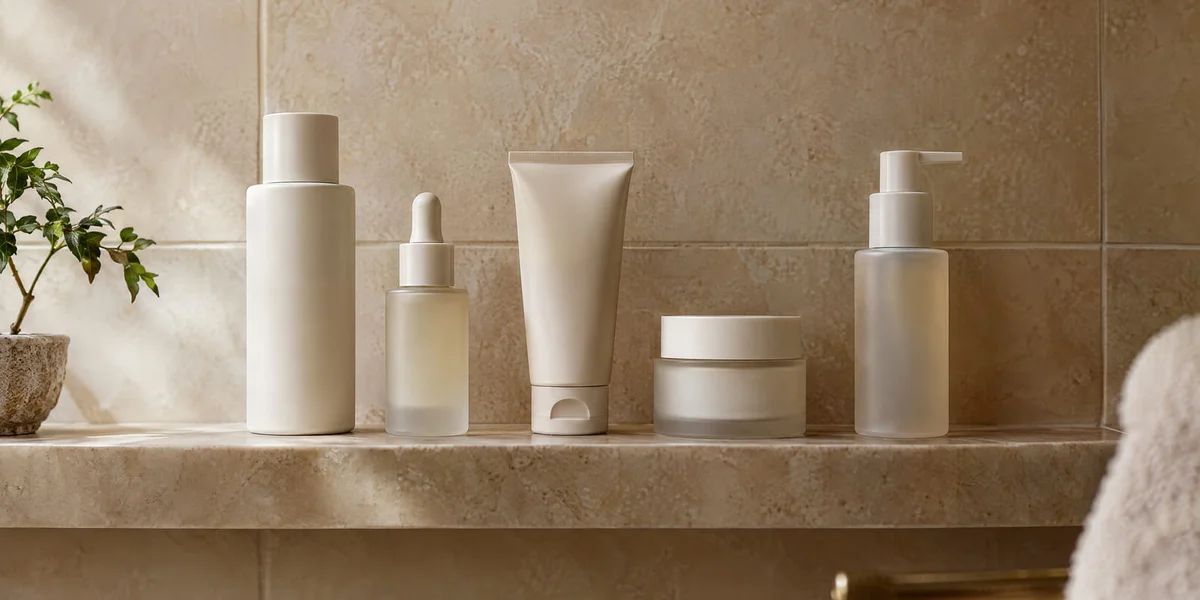
The final section is the most important one, because it is the rule that makes all the others work: keep your routine simple and stay consistent. Sensitive skin does not need ten steps; it needs three or four good ones, done every day, for weeks at a time. Every extra product is another chance for irritation, another variable to track, and another reason to change something before the last change has had time to work.
How to use: Build your core routine — gentle cleanser, moisturiser, sunscreen — and live with it for a month. Add one new step at a time, patch-test it, and keep it only if your skin stays calm for two weeks. Remove anything that stings, and do not add two things at once. Best for: everyone with sensitive skin, and especially for anyone who has ever owned a shelf full of half-used jars.
Quick verdict: Calm skin is a habit, not a purchase. Choose a few gentle products, use them patiently, and let consistency do what no single miracle product can. Your skin will reward you — quietly, and then all at once.
How often should I wash sensitive skin each day?
Twice a day is enough for most people with sensitive skin — once in the morning and once at night. If your skin is very dry, a lukewarm rinse in the morning and a gentle cleanse at night can be enough. Washing more often strips the barrier and usually makes redness and tightness worse, not better.
Can sensitive skin use vitamin C or retinol?
It can, but only with care. Choose a low-strength formula, use it two or three nights a week to start, and stop if your skin stings or flakes. Many people with sensitive skin do better with gentler options such as niacinamide or peptides, and there is no rule that says a routine must include vitamin C or retinol to work well.
What should I do if a product stings my skin?
Rinse it off with lukewarm water, pat your skin dry, and apply your plainest moisturiser. Do not add another active product to fix the sting. If the redness settles within a day, the product was probably too strong for you; if it spreads, blisters, or does not settle, stop using the product and consider speaking to a dermatologist.
Is fragrance-free always better for sensitive skin?
For most people with reactive skin, fragrance-free is the safer choice, because fragrance is one of the most common causes of stinging and redness. A product can still irritate without fragrance, so always patch-test, but removing fragrance from your core routine takes away one of the biggest daily risks.
How long before I know a new routine is working?
Give a new routine at least three to four weeks before you judge it. Skin renews itself slowly, and early redness or dryness can be a reaction rather than a result. Take a photo in the same light once a week so you can compare honestly, and change only one product at a time.
Do I need sunscreen if I stay indoors most of the day?
You still need it if you sit near windows or spend time outside at all, because UVA rays pass through glass and cause the slow damage that keeps sensitive skin reactive. A light mineral sunscreen in the morning is a good habit even on indoor days, and it costs you only a minute.
Can I exfoliate sensitive skin at all?
You can, but very gently and rarely. A soft damp cloth once a week is enough for many people with sensitive skin. If you want a chemical exfoliant, choose a very low-strength formula, use it once a week, and stop at the first sign of stinging or flaking — and never exfoliate on the same day you use another strong active.
What is the best order for a sensitive skin routine?
Apply products from lightest to heaviest: cleanser first, then a watery serum or toner, then moisturiser, and sunscreen last in the morning. At night, follow the same order without sunscreen, and add any treatment step before your moisturiser so it is sealed in. Waiting a minute between layers helps each one settle.
Why does my skin feel tight after washing?
Tightness after washing usually means your cleanser is too strong or your water is too hot. Both strip the oils that keep your barrier comfortable. Switch to a gentle cream cleanser, use lukewarm water, and apply moisturiser to slightly damp skin — if the tightness disappears, you have found the problem.
When should I see a dermatologist about sensitive skin?
See a dermatologist if your skin stays red, itchy, or painful for more than a few weeks, if products keep causing reactions, or if you have blistering, swelling, or signs of infection. A dermatologist can check for conditions such as eczema or rosacea and help you build a routine that is safe for your skin.
Conclusion: A Calmer Skincare Routine for Sensitive Skin Starts Small
A calm skincare routine for sensitive skin is not built in a day, and it is not bought in a single shopping trip. It is built slowly, from a gentle cleanser, a barrier-supporting moisturiser, and a sunscreen your skin tolerates — plus the patience to patch-test, to change one thing at a time, and to listen when your skin says no.
Start with the simple core, add the steps from this guide that suit your skin, and keep a small diary of what works. Some days your skin will still flare, and that is normal; what matters is that you have a calm routine to return to, and the habit of giving it time. Keep it gentle, keep it simple, and keep going — your skin will thank you for it, one calm morning at a time.

