

36 Flattering Hairstyles for a Wide Forehead That Add Balance and Confidence
A wide forehead is a beautiful feature, and the right hairstyle simply helps it sit in balance with the rest of your face. The secret is not hiding your forehead, it is choosing shapes that soften its edges, add width where the face is narrower, and draw the eye toward your eyes, cheekbones and smile. That is exactly what the best hairstyles for a wide forehead do, and this guide brings together 36 of them, from curtain bangs and soft fringes to layered lobs, bobs, curls and clever updos.
Before you choose, it helps to know that there is no single right answer. A fringe is the most direct route, because bangs cover the upper part of the forehead straight away, but a deep side part, face-framing layers or volume at the sides can balance your features just as well, with no fringe at all. Your hair texture, your face shape and how much styling time you enjoy all matter, so the guide below starts with the basics, then walks through every style with honest notes on who it suits, how to style it and what to ask your stylist.
Whatever you choose, keep the tone kind. Your forehead is not a flaw to fix, it is one part of a face that deserves a hairstyle you love. The styles below are chosen to flatter, not to hide, and most of them are easy to grow out or adapt if you change your mind. Read the guide sections first, pick two or three favourites, and take this page to your next hair appointment.
g01: How to Tell If You Have a Wide Forehead

A wide forehead usually means the distance from your hairline to your brows is noticeably larger than the distance from your brows to your nose, or from your nose to your chin. Stand in front of a mirror with your hair pulled back and look at those three sections of your face. If the top section is clearly the longest, you likely have a wide, or high, forehead. Another simple check is the width of your hand: place four fingers horizontally across your forehead, and if they fit with room to spare, your forehead is on the wider side.
None of this is a test you can fail. Forehead size is simply one part of your proportions, and it changes with your hairline, your hair thickness and even how you part your hair. Some people have a high hairline from birth, others notice their forehead looks wider as their hair thins at the temples. Either way, the styling ideas in this guide work the same way: they soften the upper face and add balance lower down. If you are unsure, ask your stylist to look at your proportions with your hair pulled back, and talk about which features you would most like to highlight.
g02: Why Bangs Work So Well for a Wide Forehead
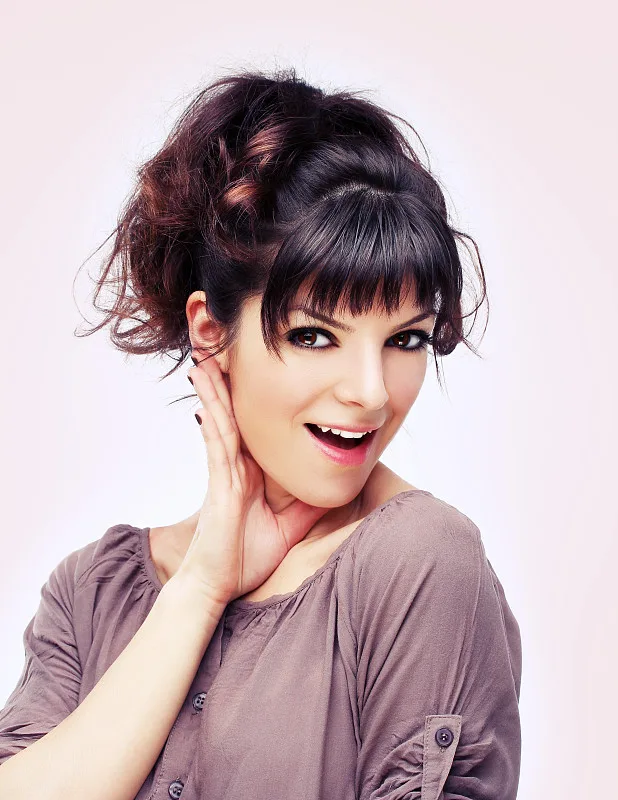
Bangs work so well for a wide forehead because they do the simplest possible thing: they cover part of it. A fringe shortens the visible height of the forehead, which makes the whole face look more balanced, and it creates a frame for the eyes and brows that draws attention to the middle of the face. Curtain bangs, wispy bangs and side-swept bangs all do this gently, while a full blunt fringe does it boldly. The effect is instant, and it works on almost every hair type.
The other reason bangs flatter a wide forehead is texture. A smooth, bare forehead can look broad because there is nothing to break up the surface, while a fringe adds softness, movement and shadow. Even a sheer, see-through fringe changes how the forehead reads, because the eye meets hair before it meets skin. If you have never had bangs, start with a longer, softer fringe that you can sweep to the side, and remember that bangs grow quickly, so the commitment is smaller than it feels.
g03: Choosing the Right Part for a Wide Forehead
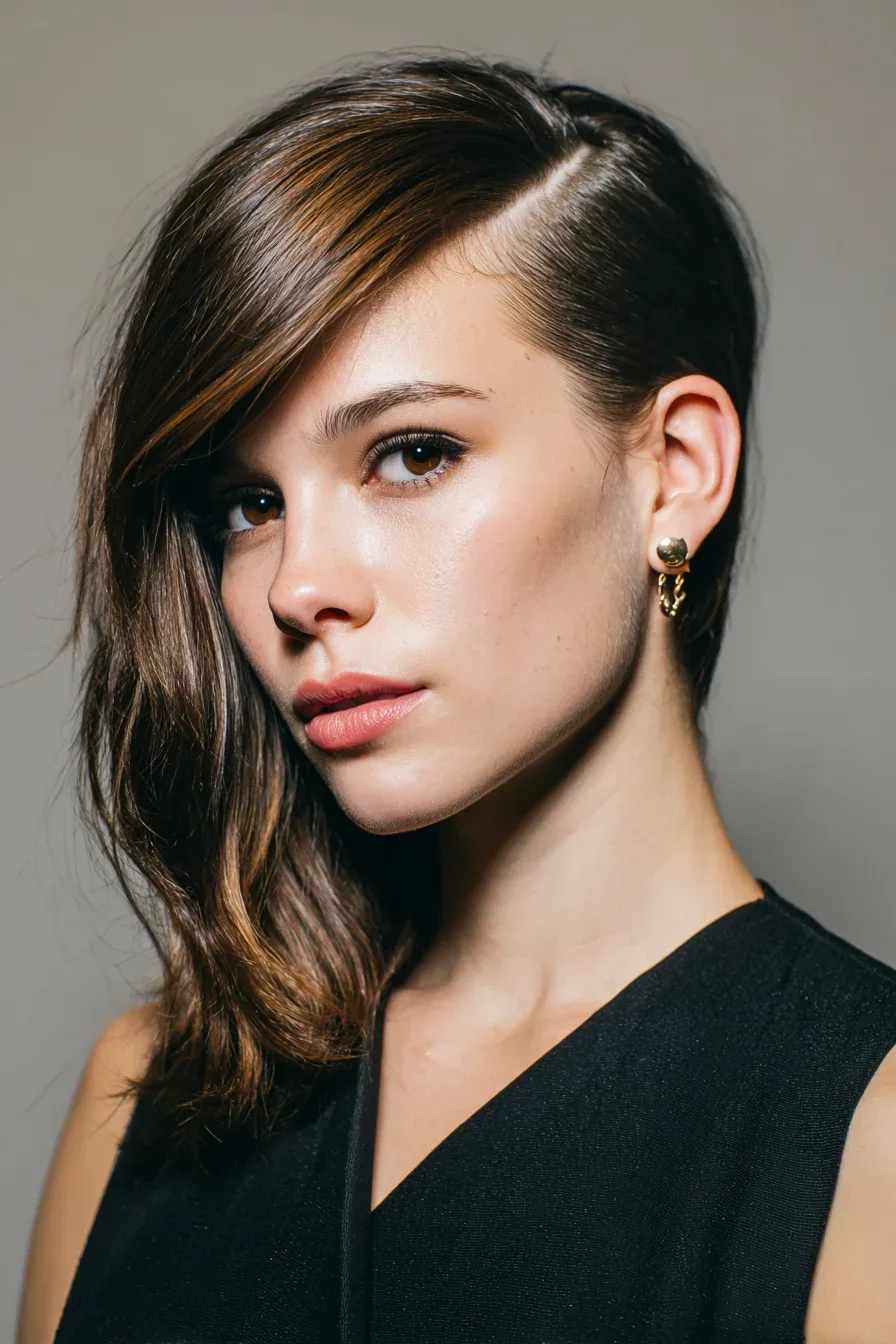
Your parting is one of the easiest tools for balancing a wide forehead, and it costs nothing to change. A deep side part sends a sweep of hair across the upper forehead, covering one corner and creating a diagonal line that makes the forehead look smaller. A centre part with curtain bangs frames the face symmetrically and softens both corners at once. A straight centre part with no fringe, on the other hand, can make a wide forehead look wider, because it opens the whole face up at the top.
To find your best part, try each one in the mirror with your hair freshly washed and see which feels most balanced. A side part suits most people, and it adds instant volume at the crown, which is a bonus for fine hair. A centre part works best when it is paired with curtain bangs or face-framing layers. Whichever you choose, keep it flexible: a part is not a permanent decision, and switching it up can refresh your whole look in seconds.
g04: Volume and Balance: Where to Add Fullness
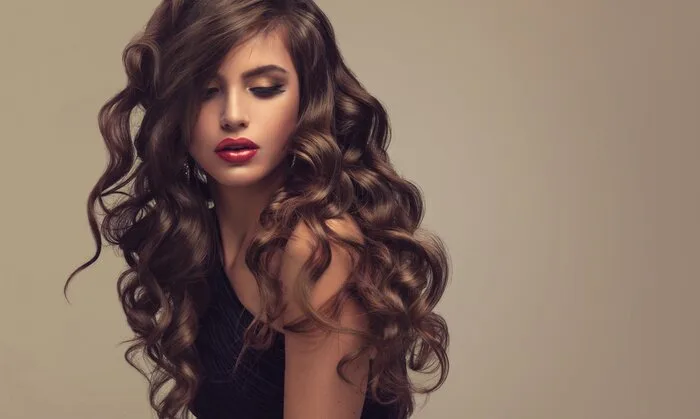
Balancing a wide forehead is really about proportions, and volume is the tool that does it. When the top of the face is broad, adding fullness at the sides, around the cheeks and jaw, makes the whole face look more even. Layers that flick outward, waves that widen through the mid-lengths, and curls that sit at cheekbone level all add width exactly where it is needed. Flat hair pulled straight back does the opposite, so it is the one thing to avoid if your forehead bothers you.
Think of your face as a picture frame: the fringe or side sweep softens the top, and the volume at the sides completes the frame. A round brush, a little mousse at the roots and layers cut to encourage movement are all you need. If your hair is fine, focus the volume at the roots and through the mid-lengths rather than at the very ends, which can look thin. If your hair is thick, let the layers do the work and keep the ends light so the shape stays bouncy.
g05: What to Ask Your Stylist

A good consultation makes all the difference when you are choosing hairstyles for a wide forehead, so arrive with a clear idea of what you want. Bring two or three photos of styles you love, and be honest about how much time you spend on your hair each morning. Tell your stylist whether you want a fringe, whether you are happy with regular trims, and whether you like to wear your hair up. The more they know, the better the cut will fit your real life, not just the salon chair.
Ask your stylist to show you how to style the cut at home before you leave, especially if it involves bangs. Useful questions include how often the fringe will need trimming, whether your hair texture suits the style, and how the cut will grow out. If you are nervous about a fringe, ask for a longer version first, because a stylist can always take more off, but they cannot put it back. A good stylist will welcome the conversation, and you will leave feeling confident instead of uncertain.
g06: Styling Bangs at Home

Styling bangs at home is much easier than most people expect, once you know the trick: style them first, while they are still damp. Bangs dry faster than the rest of your hair, so if you leave them until last, they will already have set in whatever direction they fell. Blow-dry the fringe forward with your fingers or a small round brush, then split curtain bangs in the middle and sweep each side outward. A flat iron can smooth the ends, and a tiny amount of styling cream keeps the pieces separated.
On non-wash days, a quick refresh is all you need. A spritz of dry shampoo at the roots lifts the fringe and absorbs oil, and a damp brush followed by a few seconds with the hairdryer resets the shape. Avoid heavy products, which weigh a fringe down and make it separate into strands. Keep your fringe away from heavy moisturiser and sunscreen on your forehead, since skincare products are a common reason bangs go limp by lunchtime.
g07: Growing Out Bangs Gracefully
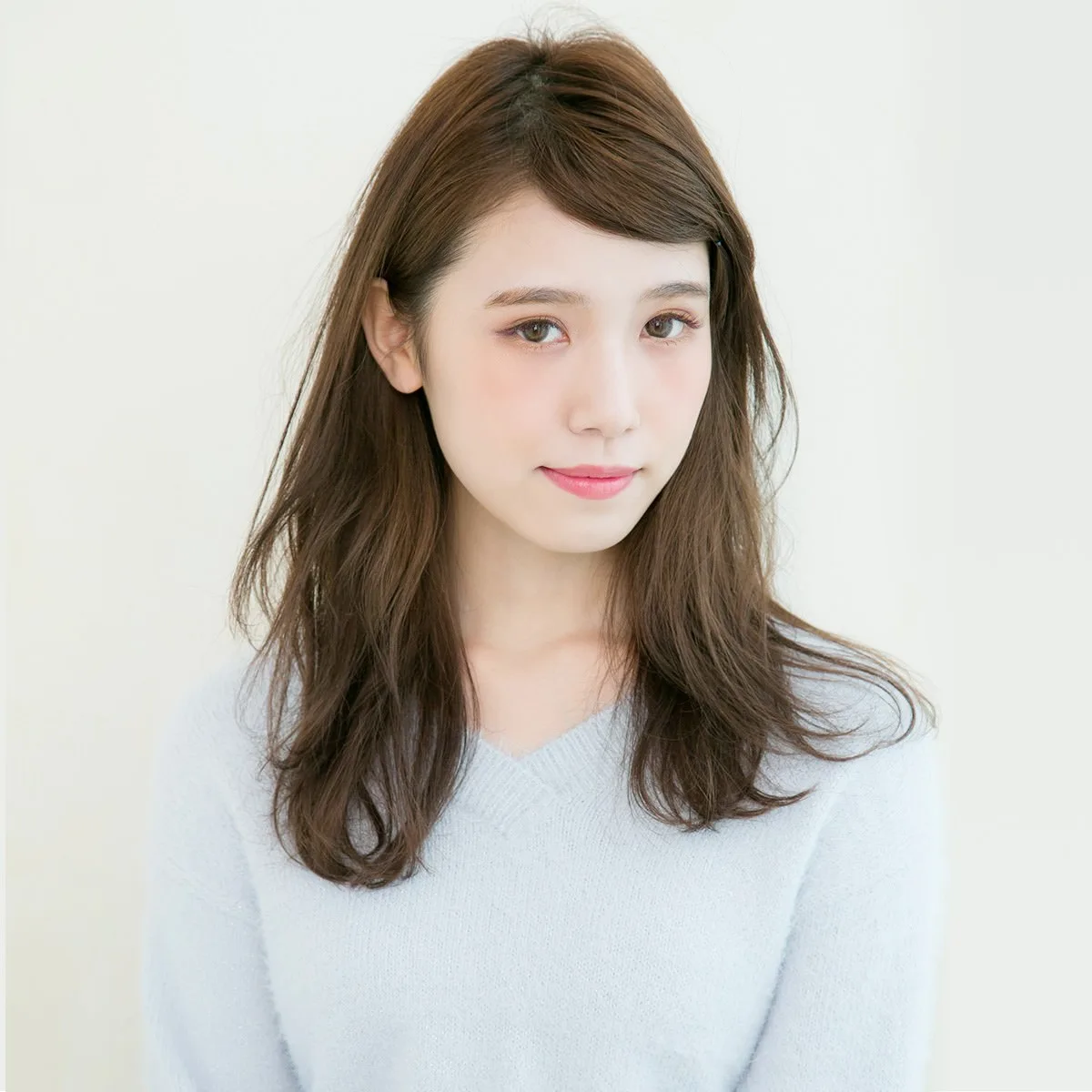
Growing out bangs does not have to mean an awkward in-between stage, because the styles in this guide are designed to grow out gracefully. Curtain bangs become face-framing layers, side-swept bangs become a deep side part, and a blunt fringe can be blended into layers with a few clever trims. The key is to keep trimming the shape every few weeks, rather than letting it grow wild, so the fringe always looks intentional.
While your bangs grow, lean on the styles that hide the transition: side parts, half-up hairstyles, braids and clips all keep a growing fringe out of your eyes and looking deliberate. A little styling cream and a bobby pin can hold the fringe to the side on days when it will not behave. Be patient with the process, because a fringe usually takes three to four months to reach cheekbone length, and at that point it becomes a beautiful face-framing layer in its own right.
g08: Maintenance, Trims and Hair Care
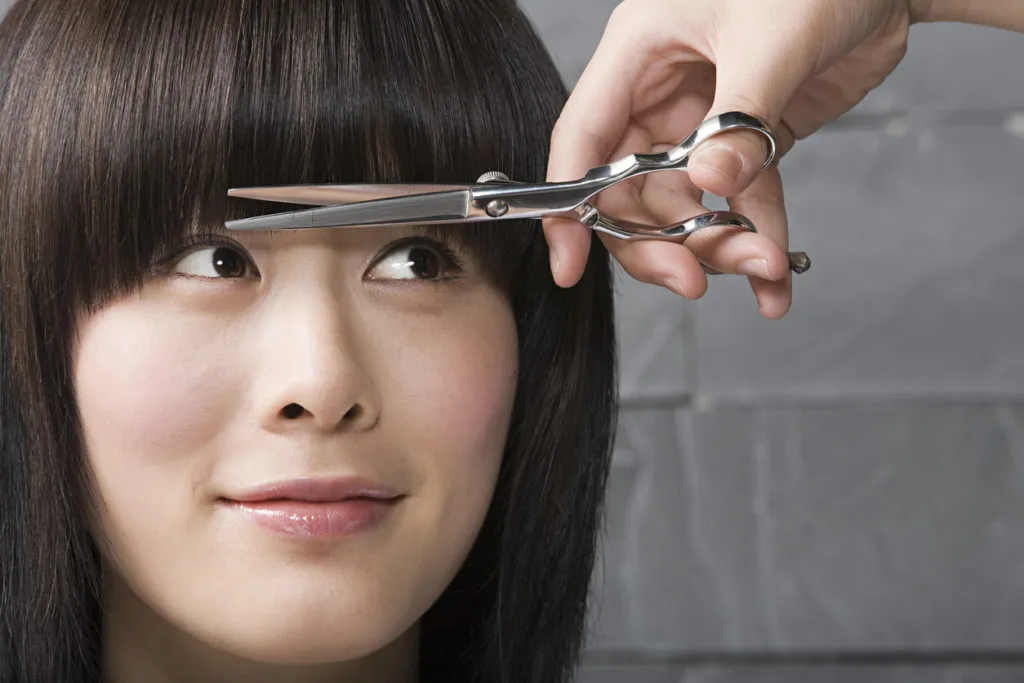
Bangs need more frequent trims than the rest of your hair, because even a centimetre of growth changes how a fringe sits. Most fringes need a trim every three to six weeks, depending on the style, and many salons offer free fringe trims between full appointments, so it is worth asking. Between trims, keep the fringe clean and light: wash it separately if needed, use lightweight products, and protect it from heat with a spray before blow-drying or straightening.
Healthy hair makes any of these styles look better, so treat your hair kindly. Use a gentle shampoo, condition the lengths, and avoid over-washing, which can make a fringe oily and flat. A silk pillowcase reduces frizz overnight, and a weekly hair mask keeps the lengths soft and shiny. If your fringe gets greasy quickly, the culprit is often skincare on the forehead, so let moisturiser and sunscreen sink in before you style your bangs.
§01 Curtain Bangs
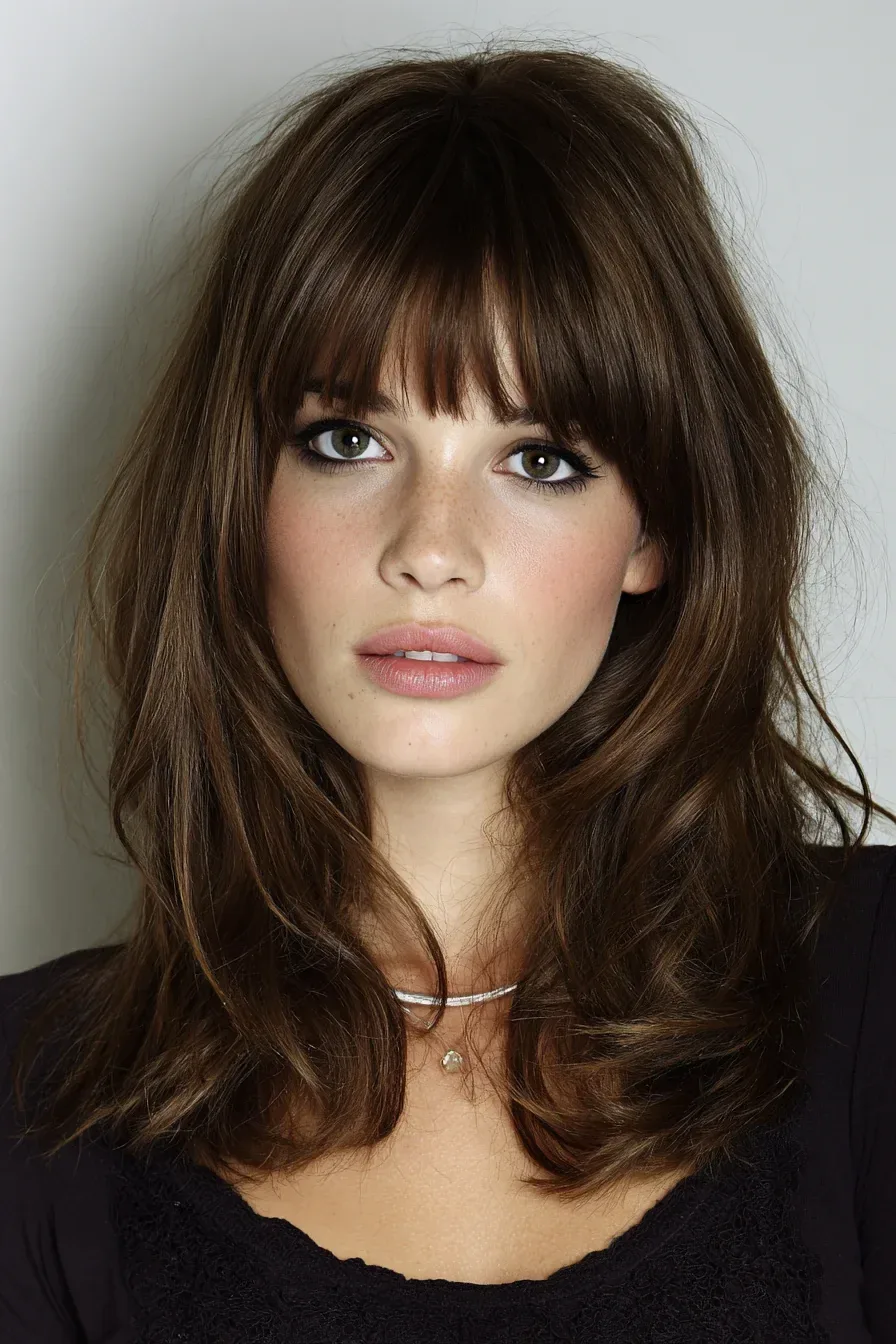
Curtain bangs are the classic answer to a wide forehead, and they earn that reputation for good reason. The fringe parts softly in the middle and sweeps to each side, so it covers the upper corners of the forehead while leaving the centre gently open. That shape draws the eye sideways, toward the cheekbones and eyes, instead of letting it travel straight up to the hairline. The result feels light and modern rather than heavy, which is exactly why curtain bangs suit so many face shapes and hair types.
This style works beautifully on straight, wavy and lightly curly hair, and it flatters oval, round and heart-shaped faces in particular. If your hair is fine, ask for soft, feathered ends so the fringe moves instead of sitting in a flat sheet. Thicker hair can carry a fuller curtain fringe with longer pieces that blend into face-framing layers. Best for: anyone who wants forehead coverage without committing to a full, straight-across fringe. How to style: blow-dry the fringe forward with a round brush, then split it in the middle and sweep each side outward with a little bend at the ends.
What to ask a stylist: request a centre part, longer pieces at the cheekbones, and ends that blend into your layers. A common mistake is cutting curtain bangs too short, which makes them flip up and expose the forehead you wanted to soften. Maintenance is easy, with a quick trim every four to six weeks and a two-minute blow-dry on wash days. Quick verdict: the most forgiving, most versatile fringe for a wide forehead, and the easiest one to grow out if you change your mind.
§02 Wispy See-Through Bangs
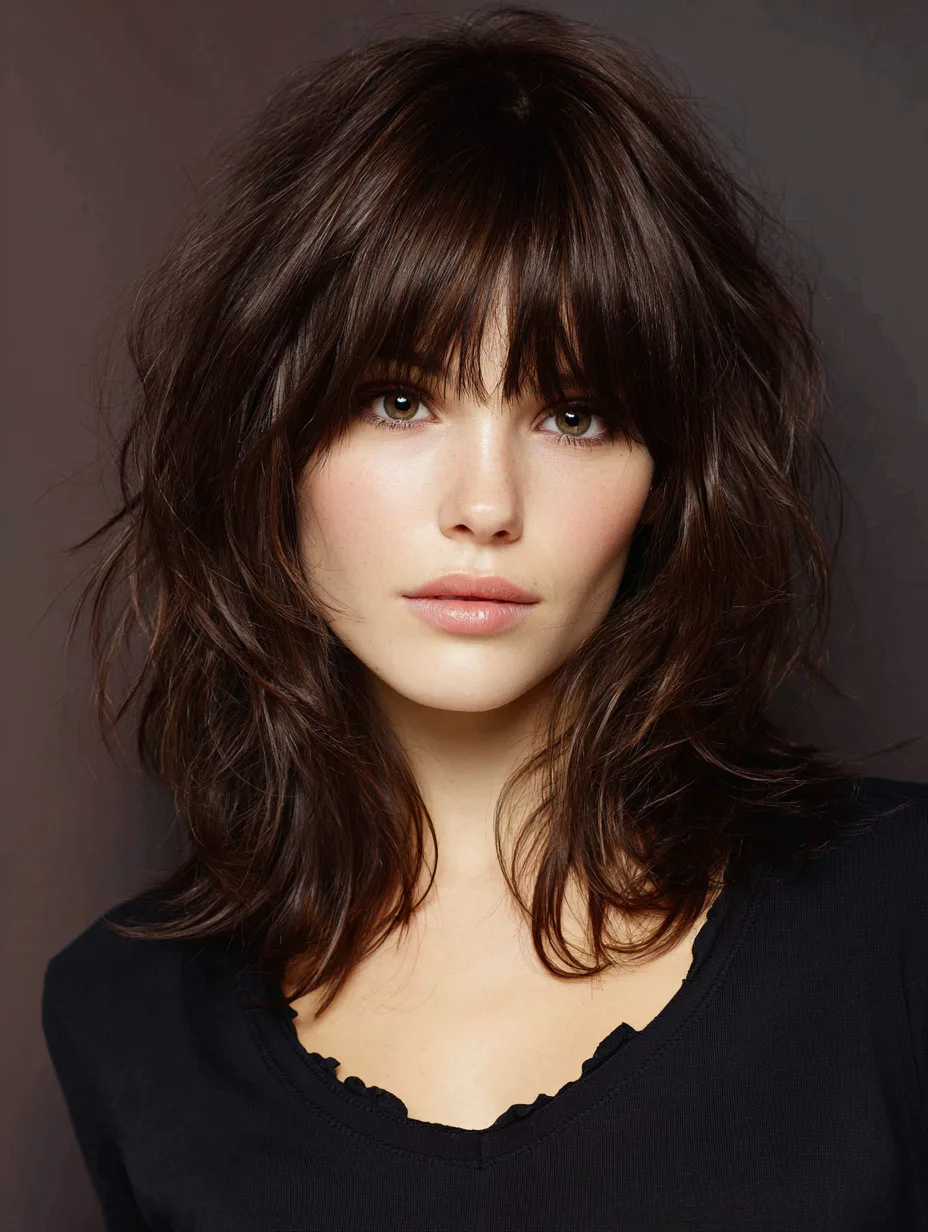
Wispy, see-through bangs soften a wide forehead without hiding it completely, which makes them a lovely choice if you like a light, airy look. Because the fringe is sheer, a little skin still shows through, so the forehead reads as smaller and less dominant while your face keeps its natural brightness. The fine strands break up the broad, flat expanse of skin above the brows and add gentle texture right where the eye first lands. It is a subtle trick, but it changes the whole balance of the face.
This fringe suits fine to medium hair best, since very thick hair can overwhelm the delicate effect unless it is thinned carefully. It pairs wonderfully with long layers, a soft lob or a shoulder-length cut, and it flatters younger-looking and mature faces alike because it never feels severe. Best for: anyone nervous about full bangs, or anyone with fine hair that goes flat under a heavy fringe. How to style: blow-dry forward with your fingers, then use a flat iron to add the slightest bend, and finish with a pea-sized amount of lightweight cream.
What to ask a stylist: ask for a sheer, piecey fringe cut with a razor or point-cutting, kept just at or slightly below the brows. The mistake to avoid is cutting the fringe too thick, which turns a wispy look into a blunt one overnight. Trims every three to four weeks keep the shape, and dry shampoo at the roots stops the fine strands from separating into clumps. Quick verdict: soft, romantic and low-commitment, with a gentle softening effect that never looks like you are hiding.
§03 Side-Swept Bangs
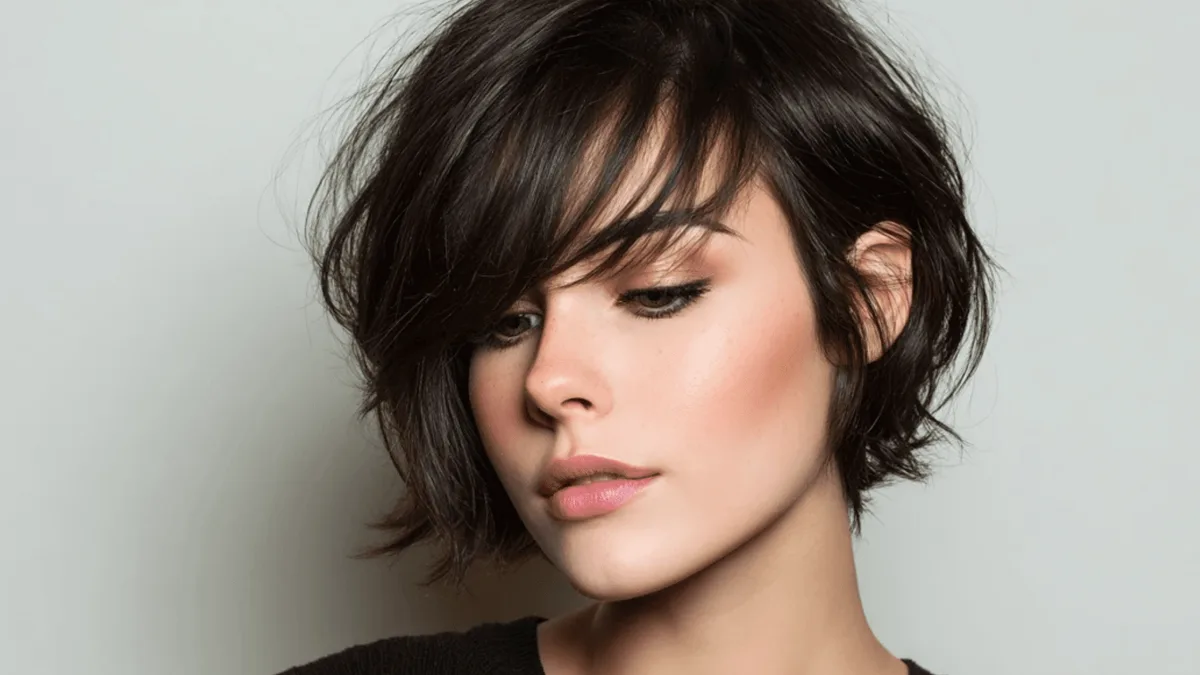
Side-swept bangs are one of the most flattering ways to balance a wide forehead, because the diagonal line they create breaks the forehead into a smaller, softer shape. Instead of a straight horizontal line across the face, the fringe sweeps from one side to the other, guiding the eye along a gentle slope. That movement adds asymmetry, which is naturally slimming and interesting, and it covers one upper corner of the forehead completely while softening the other. It is a grown-up, polished look that works from the office to a night out.
This style suits almost every hair type, from pin-straight to wavy, and it is especially kind to round and square faces because the diagonal softens strong lines. Longer side-swept bangs that reach the cheekbone blend beautifully into layers, while a shorter version that ends at the brow feels fresh and playful. Best for: anyone who wants coverage with movement, and anyone growing out a fringe. How to style: blow-dry the fringe across the forehead in the direction you want it to fall, using a round brush to build a soft bend at the ends.
What to ask a stylist: ask for a deep side sweep that starts near the opposite temple, with the longest pieces reaching the cheekbone. Pros: it grows out gracefully, works with updos, and needs little daily effort. Cons: on very windy days it can blow out of place, so keep a light-hold spray handy. Maintenance is light, with trims every five to six weeks. Quick verdict: elegant, easy and endlessly adaptable, and a safe first fringe if you have never had bangs before.
§04 Blunt Full Bangs with Feathered Ends
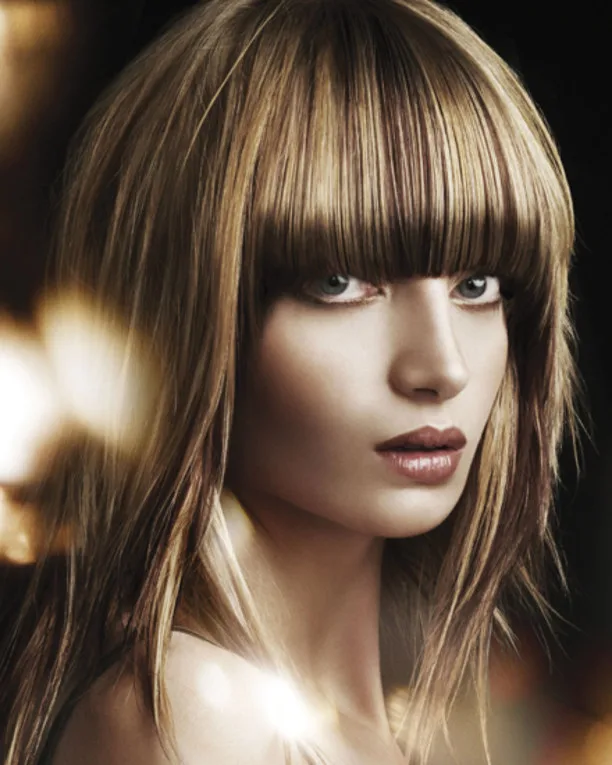
A full, blunt fringe is the boldest way to shorten the look of a wide forehead, because it simply covers the upper third of the face in one clean line. When the ends are feathered or point-cut, the line stays soft instead of severe, so the look reads as chic rather than heavy. The fringe creates a strong horizontal frame for the eyes and brows, which pulls attention down to the middle of the face. If you love a statement look and do not mind regular trims, this is the most direct route to a balanced forehead.
This fringe suits straight and slightly wavy hair best, and it looks wonderful on oval and long faces, where it shortens the overall length of the face as well. Very curly hair can work too, but the fringe will need extra length to allow for shrinkage as it dries. Best for: anyone who wants maximum coverage and a striking, fashion-forward finish. How to style: blow-dry straight down with a paddle brush, then smooth the ends with a flat iron and a drop of serum for shine.
What to ask a stylist: ask for a blunt fringe that sits just below the brows, with feathered, point-cut ends and slightly longer pieces at the outer corners. A common mistake is cutting the fringe too wide, past the outer corners of the eyes, which can make the face look narrower than it is. Cost and time: expect a trim every three weeks, though many salons offer free fringe trims between cuts. Quick verdict: dramatic, polished and very effective, best for confident bang-wearers who enjoy upkeep.
§05 Bottleneck Bangs
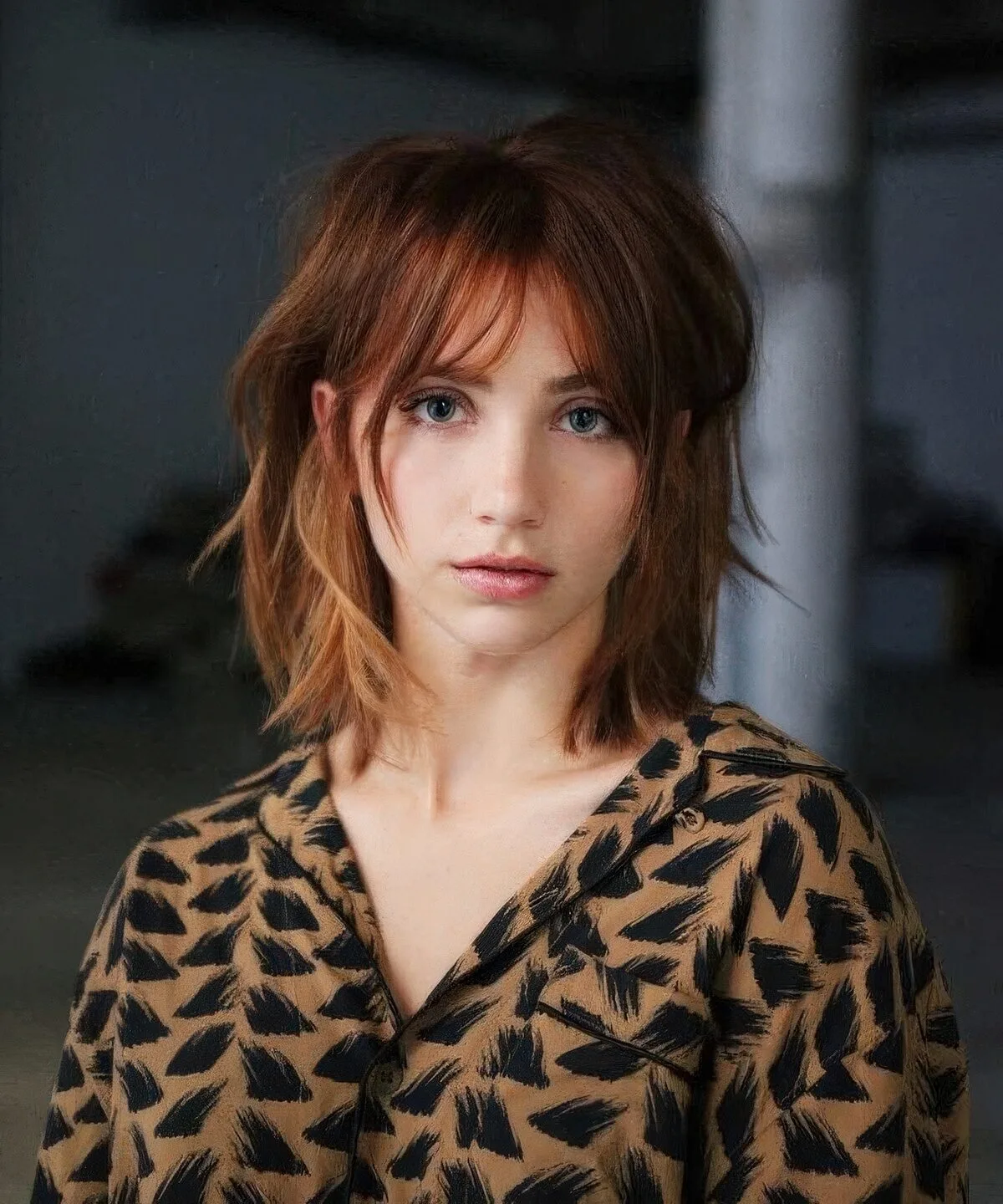
Bottleneck bangs get their name from their shape: narrow and short in the middle, then widening and lengthening toward the sides, like the neck of a bottle. That clever shape covers the centre of a wide forehead while the longer side pieces melt into face-framing layers, so the coverage feels built-in rather than added on. The fringe opens up the face at the cheekbones, which keeps the look soft and balanced instead of closed-in. It is a modern, French-inspired style that feels both relaxed and deliberate.
This fringe flatters most face shapes and works on straight, wavy and curly hair, because the graduated lengths adapt to your texture. It is especially lovely on heart-shaped and oval faces, and it pairs beautifully with a shag, a lob or long layers. Best for: anyone who wants the coverage of a full fringe with the softness of curtain bangs. How to style: blow-dry the centre pieces down and the side pieces outward with a round brush, or simply let them air-dry with a little styling cream for a lived-in finish.
What to ask a stylist: ask for short centre pieces that hit between the brows, with lengths that graduate down to the cheekbones at the sides. Who should avoid it: if your hair is very fine and flat, the shape may need extra texturising to hold. Maintenance is moderate, with trims every four to five weeks. Quick verdict: the best of both worlds, a fringe that covers, frames and blends all at once, and one of the most wearable bang styles of the moment.
§06 Choppy Textured Bangs
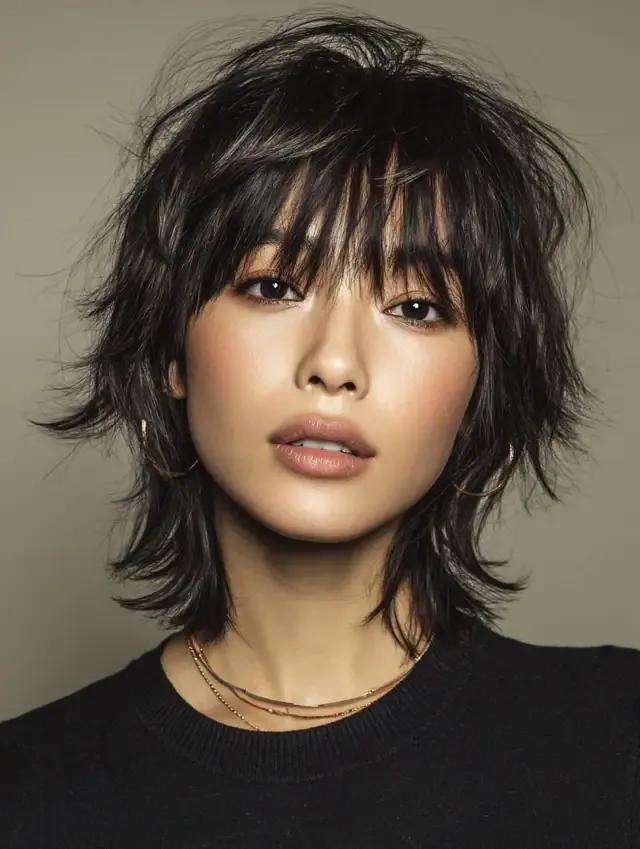
Choppy, textured bangs break a wide forehead into smaller pieces with their uneven, piecey ends, which is exactly what makes them so flattering. Instead of one smooth line, the eye meets lots of little points and gaps, so the forehead no longer reads as one broad surface. The texture adds edge and personality, and it keeps the fringe from looking too neat or too serious. This is the fringe to choose if you like a cool, effortless, slightly undone finish.
This style works best on straight to wavy hair with some natural body, and it suits oval, round and square faces because the irregular edge softens strong jawlines too. It pairs naturally with a shag, a textured bob or tousled long layers. Best for: anyone who loves a modern, lived-in look and dislikes fussy styling. How to style: scrunch a little texturising spray into the damp fringe, blow-dry roughly with your fingers, and separate the pieces with a tiny amount of pomade.
What to ask a stylist: ask for a choppy fringe cut with a razor or deep point-cutting, with varied lengths rather than one even line. A common mistake is over-thinning, which can leave the fringe looking sparse instead of textured. Pros: very forgiving as it grows out, and it hides cowlicks well. Cons: it needs product to keep its definition. Quick verdict: playful, modern and low-maintenance, with a softening effect that feels completely natural.
§07 Long Side Part with Face-Framing Layers
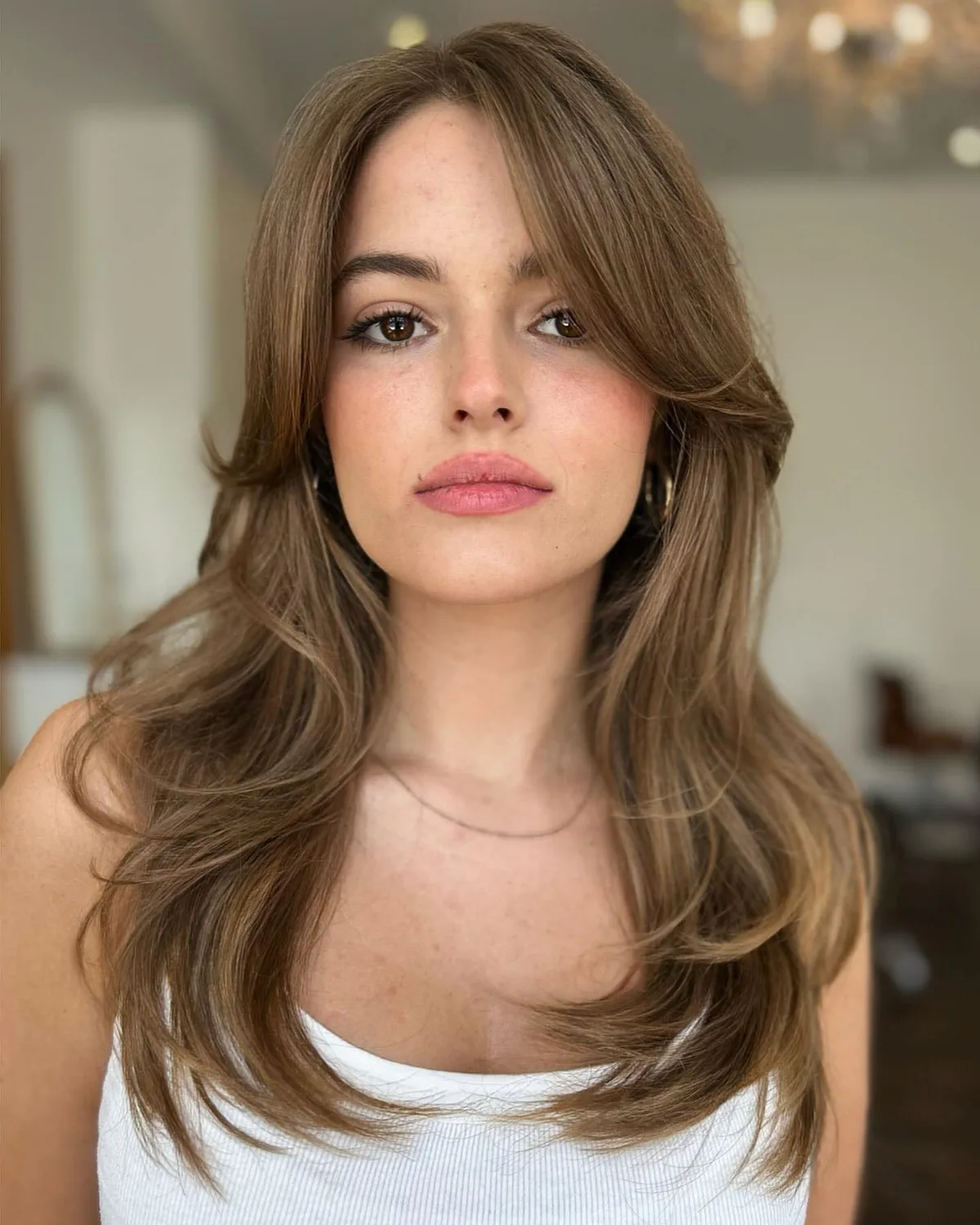
If bangs feel like too much of a commitment, a long side part with face-framing layers is a beautiful no-fringe way to soften a wide forehead. The deep side part sends a sweep of hair across the upper forehead, covering one corner, while the face-framing layers start at the cheekbones and add width at the sides of the face. That side volume balances the forehead beautifully, because the eye reads the whole face as wider lower down. The look stays long, flowing and feminine while quietly doing the balancing work.
This style suits long and medium hair of almost any texture, and it is especially flattering on oval and long faces. Fine hair benefits from long layers that add movement without removing too much weight, while thick hair can carry shorter, bouncier face-framing pieces. Best for: anyone who wants forehead balance without any fringe at all. How to style: part deeply to one side, blow-dry the front section forward and over with a round brush, and add a soft bend to the layers with a large-barrel curling iron.
What to ask a stylist: ask for a deep side part and face-framing layers that begin at the cheekbones and graduate down to the collarbone. Maintenance is wonderfully low, with trims every eight to ten weeks and no fringe to manage. Who should avoid it: if your hair is very short, the layers will not have enough length to sweep across. Quick verdict: the most low-effort balancing style in this list, elegant and easy to live with every day.
§08 Deep Side Part Bob

A deep side part bob is a short, chic way to make a wide forehead look smaller, because the heavy sweep of hair across the forehead does the same job as a fringe. The part sits far to one side, so a generous section of hair falls diagonally across the upper face, covering one corner and softening the hairline. The bob itself ends near the jaw or chin, adding width exactly where the face needs it, which balances the forehead from below. It is polished, confident and surprisingly easy to wear.
This cut suits straight and wavy hair best, and it flatters oval, round and heart-shaped faces. Fine hair looks fuller in a bob with a deep part, because the sweep adds volume at the crown, while thick hair can be thinned slightly at the ends for movement. Best for: anyone who loves short hair but still wants forehead coverage. How to style: blow-dry with a round brush, directing the front section across the forehead, and tuck the shorter side behind the ear for a sleek, asymmetrical finish.
What to ask a stylist: ask for a bob that ends at the jaw, a deep side part, and subtle layers through the back for lift. Pros: quick to style, grows out neatly, and looks smart with almost any outfit. Cons: the sweep can fall into the eyes on windy days. Maintenance is simple, with a reshape every six weeks. Quick verdict: short, sharp and very flattering, proof that you do not need a fringe to balance a wide forehead.
§09 Layered Lob with Curtain Fringe
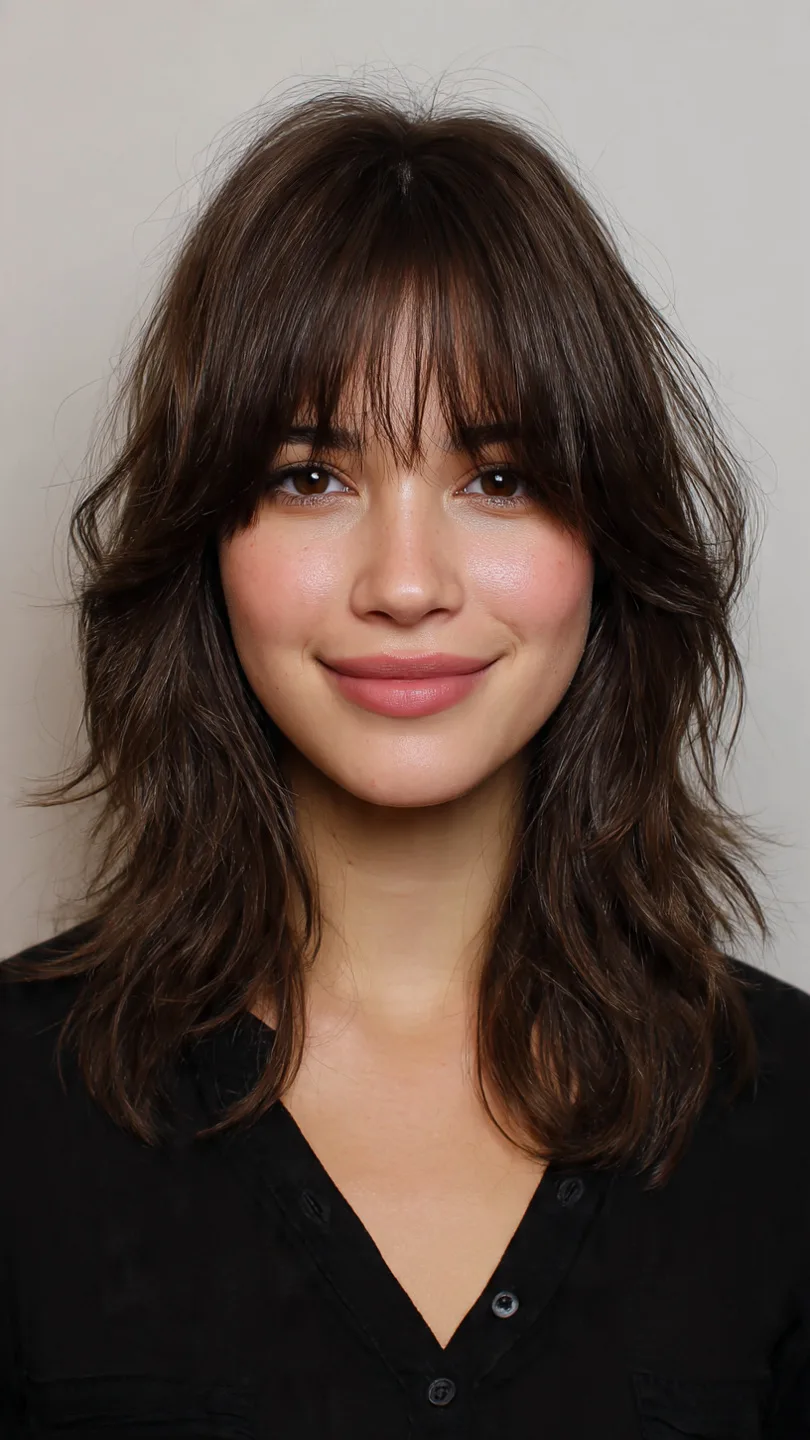
The layered lob with a curtain fringe is one of the most popular hairstyles of recent years, and it is a natural match for a wide forehead. The fringe softens the upper face, the layers add width at the sides, and the collarbone length keeps everything light and swingy. Because the lob sits between a bob and long hair, it gives you styling freedom without the weight of very long hair pulling the fringe flat. It is the kind of cut that looks good on almost everyone, in almost every photo.
This style works on straight, wavy and curly hair, and it flatters oval, round, square and heart-shaped faces alike. Fine hair gains the illusion of thickness from the layers, while thick hair looks lighter and more mobile. Best for: anyone who wants a modern, medium-length cut with built-in forehead coverage. How to style: blow-dry with a round brush for a smooth finish, or add loose waves with a flat iron for a relaxed, tousled look, always bending the fringe outward at the sides.
What to ask a stylist: ask for a lob that ends at the collarbone, long layers through the mid-lengths, and a curtain fringe that blends into the shortest layers. Cost and time: a cut every six to eight weeks, and about ten minutes of styling a day. A common mistake is cutting the layers too short at the top, which can make the crown look puffy. Quick verdict: fresh, versatile and flattering from every angle, a true everyday hero for a wide forehead.
§10 Shoulder-Length Layers with Volume at the Sides
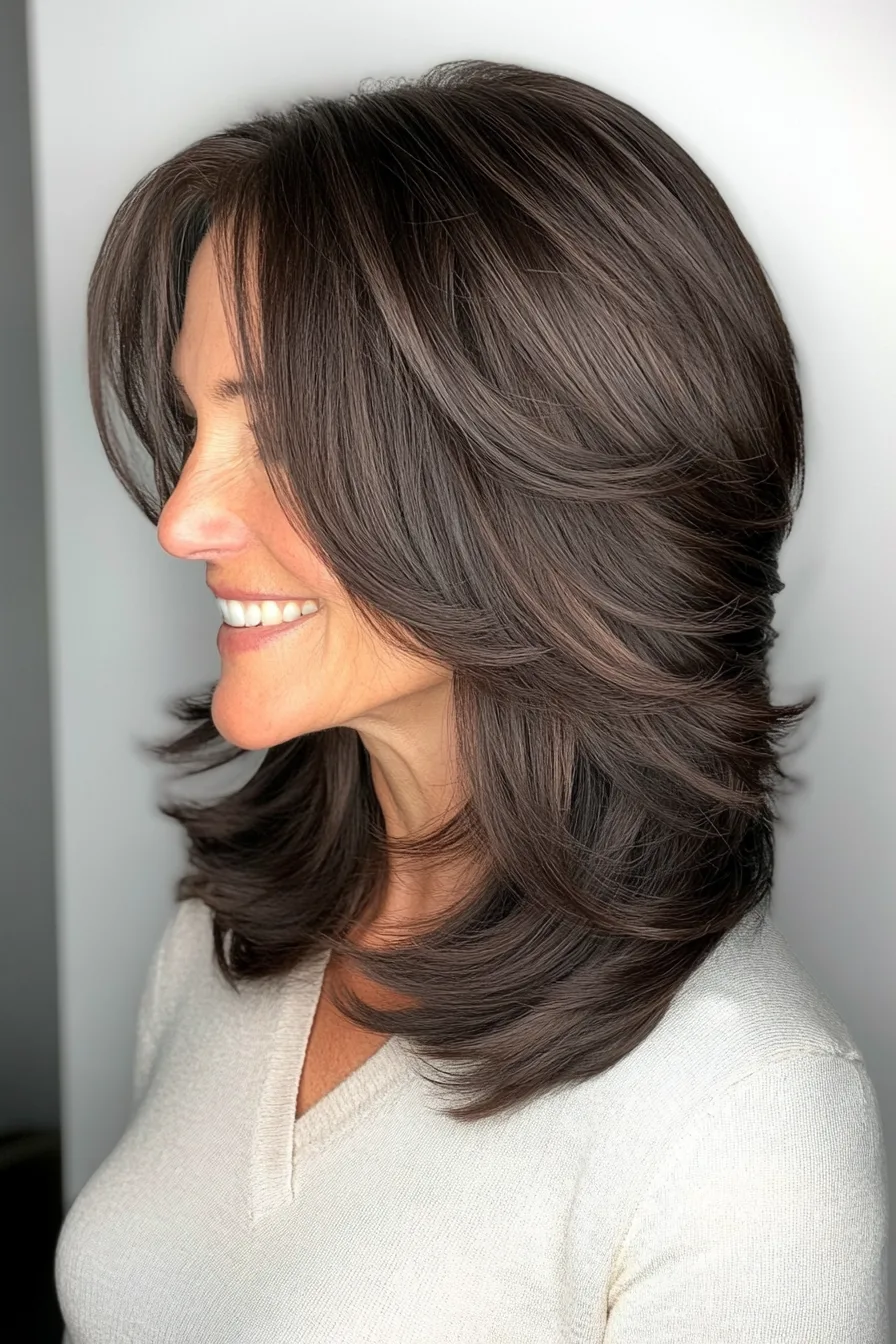
Shoulder-length layers with volume at the sides balance a wide forehead by adding width exactly where the face is narrowest, around the cheeks and jaw. The layers flick outward or curl under at the ends, creating a gentle fullness that makes the forehead look proportionate by comparison. There is no fringe needed here, because the side volume does the visual work, drawing the eye down and outward. The length is practical too: long enough to tie back, short enough to style in minutes.
This cut suits medium and thick hair best, since the layers need some body to hold their shape, though fine hair can work with the right volumising products. It flatters round, oval and long faces, and it is a wonderful choice if you are growing out a bob or a fringe. Best for: anyone who wants balance without bangs and a cut that behaves on busy mornings. How to style: blow-dry with a large round brush, lifting the roots and flicking the ends outward, then set with a light mist of flexible hairspray.
What to ask a stylist: ask for long layers that start at the chin, with the fullest point at cheekbone level and softly tapered ends. Pros: grows out beautifully, suits most textures, and works with a centre or side part. Cons: very fine hair may need mousse or root lift to keep the volume. Maintenance is low, with trims every eight weeks. Quick verdict: a quiet, clever balancer that looks effortless and feels even easier.
§11 Long Layers with Face-Framing Pieces
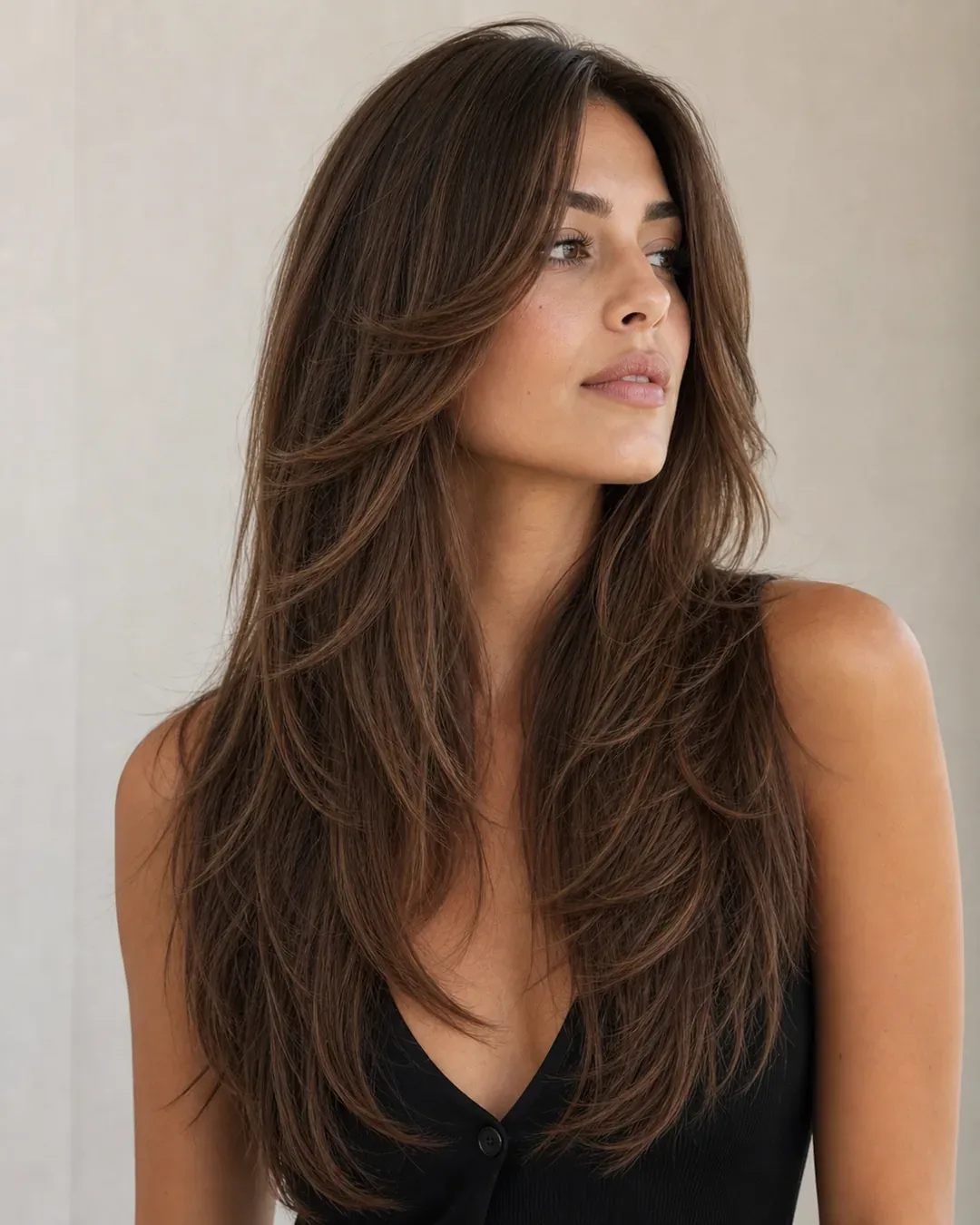
Long layers with face-framing pieces are a gentle, romantic way to soften a wide forehead while keeping the length you love. The shortest pieces begin at the cheekbones and curve inward, creating a soft frame that narrows the upper face, while the longer layers add movement and bounce through the lengths. Because the face-framing pieces sit in front of the forehead’s corners, they visually tuck the widest part of the forehead away. The overall effect is soft, feminine and very natural.
This style suits long hair of any texture, from straight to wavy to curly, and it flatters oval, round and long faces. Fine hair looks fuller with face-framing layers, because they add shape without removing length, while thick hair feels lighter and more manageable. Best for: anyone who loves long hair and wants subtle, fringe-free balance. How to style: blow-dry the front pieces forward with a round brush, curving them toward the face, then add loose waves through the lengths with a large curling iron.
What to ask a stylist: ask for face-framing layers that start at the cheekbones, with the shortest piece no higher than the nose. A common mistake is cutting the front pieces too short, which makes them flip out instead of framing the face. Maintenance is easy, with a trim every ten weeks and no daily fringe styling. Quick verdict: the softest way to balance a wide forehead without cutting a fringe, and a style that grows out gracefully.
§12 Textured Pixie with Long Side Bangs
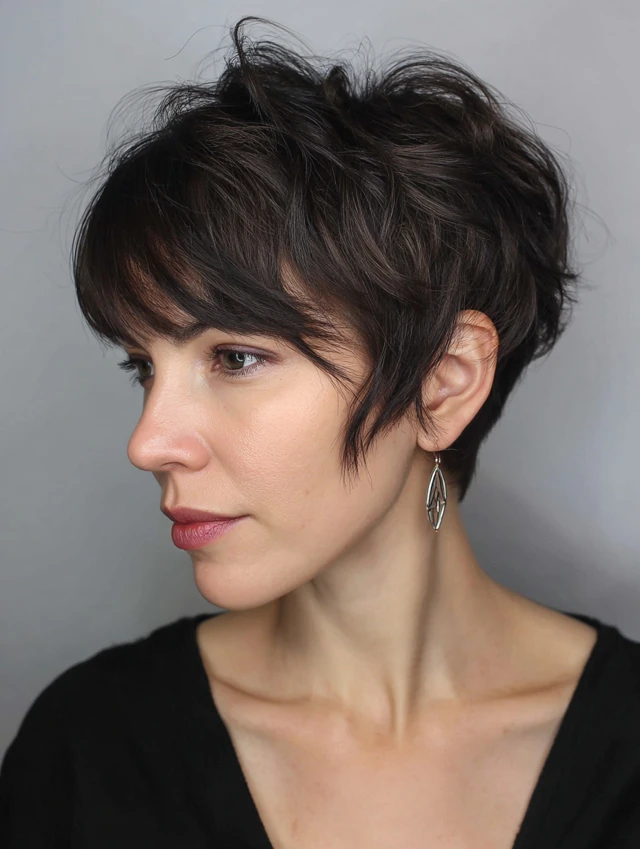
A textured pixie with long side bangs proves that short hair can flatter a wide forehead just as well as long hair. The long fringe sweeps across the forehead, covering one corner and softening the hairline, while the textured top adds height and movement that draws the eye upward in a flattering way. The short back and sides keep the cut fresh and modern, and the contrast between the longer fringe and the cropped nape feels bold and confident. It is a wonderful choice if you love short hair and want to show off your cheekbones.
This cut suits straight and wavy hair best, and it flatters oval, heart-shaped and square faces, where the soft fringe balances strong features. Fine hair looks thicker with texture and a little styling product, while thick hair can be thinned for a lighter feel. Best for: anyone ready for a short, statement cut with built-in forehead coverage. How to style: work a small amount of texturising paste through the damp fringe, blow-dry it across the forehead, and pinch the ends for definition.
What to ask a stylist: ask for a textured pixie with a long side fringe that reaches the cheekbone, and a soft, tapered nape. Pros: dries in minutes, grows out with character, and shows off earrings and necklines beautifully. Cons: it needs a reshape every four to five weeks to keep its shape. Who should avoid it: if you dislike daily styling, a longer cut may suit you better. Quick verdict: daring, chic and surprisingly soft, with the fringe doing the balancing work.
§13 French Bob with Bangs
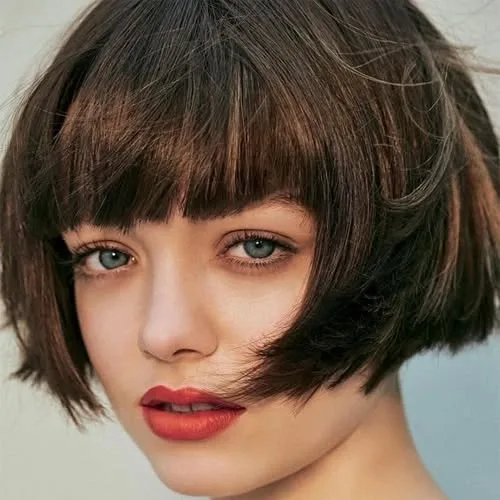
The French bob with bangs is pure Parisian charm, and it is tailor-made for a wide forehead. The fringe covers the upper face, the bob ends at the jaw, and the whole shape creates a neat, balanced frame that makes the forehead look perfectly proportionate. The cut is short enough to feel light and playful, yet the fringe gives it softness, so the overall impression is elegant rather than severe. Add a slight wave and the look becomes effortlessly chic, the kind of style that turns heads without trying.
This cut suits straight and wavy hair, and it flatters oval, heart-shaped and long faces especially well. Fine hair looks chic and full in a French bob, while thick hair can be texturised at the ends for movement. Best for: anyone who loves a classic, polished short cut with a touch of romance. How to style: air-dry with a little styling cream for a natural wave, or blow-dry smooth with a round brush and tuck one side behind the ear.
What to ask a stylist: ask for a jaw-length bob with a full, brow-skimming fringe and slightly longer pieces at the corners. A common mistake is cutting the bob too long, which loses the French, chin-skimming effect. Maintenance is moderate, with a trim every five to six weeks. Quick verdict: timeless, elegant and wonderfully flattering, a short cut that makes a wide forehead look like a feature, not a flaw.
§14 Wavy Bob with Side-Swept Fringe
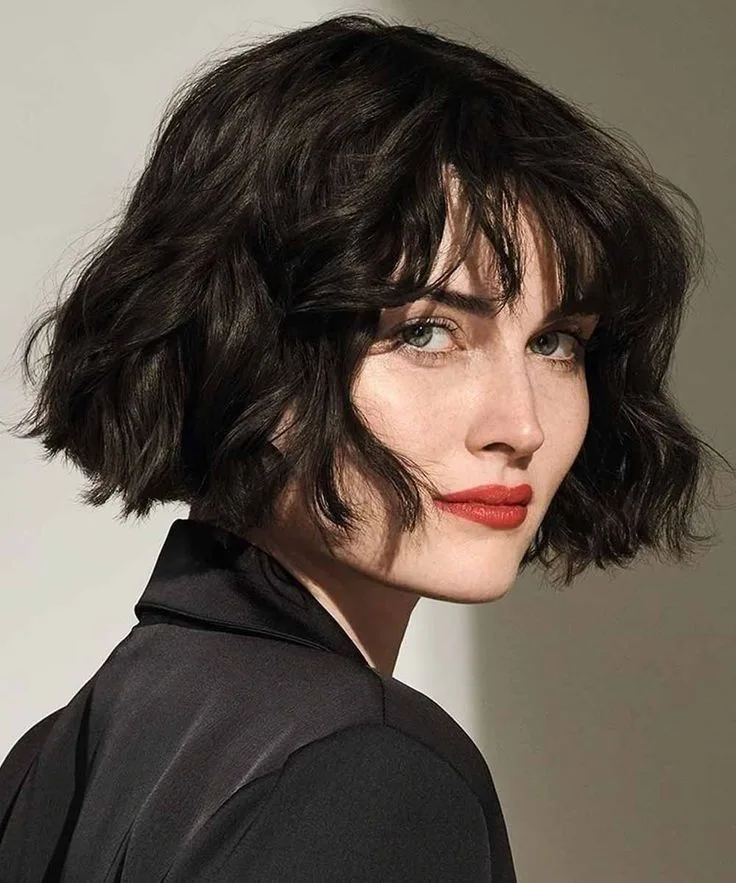
A wavy bob with a side-swept fringe softens a wide forehead twice over: the fringe covers the upper face, and the waves add width at the sides. The movement of the waves stops the eye from resting on any one part of the face, and the side sweep creates a flattering diagonal across the forehead. The bob length keeps the look fresh and modern, while the texture makes it feel relaxed rather than stiff. It is a wonderful everyday cut that looks just as good air-dried as it does blow-dried.
This style suits naturally wavy hair best, though straight hair can be waved with a curling iron or flat iron. It flatters oval, round and square faces, because the waves soften strong lines and the fringe shortens the forehead. Best for: anyone with natural wave who wants a low-effort, high-impact cut. How to style: scrunch sea-salt spray into damp hair, let it air-dry, then sweep the fringe to one side and pinch the waves into place with your fingers.
What to ask a stylist: ask for a chin-length bob with soft, invisible layers and a side-swept fringe that reaches the cheekbone. Pros: minimal styling, great texture, and it grows out nicely. Cons: very fine hair may need volumising mousse to hold the wave. Maintenance is easy, with trims every six to seven weeks. Quick verdict: breezy, modern and kind to a wide forehead, with movement that flatters from every angle.
§15 Curly Bangs
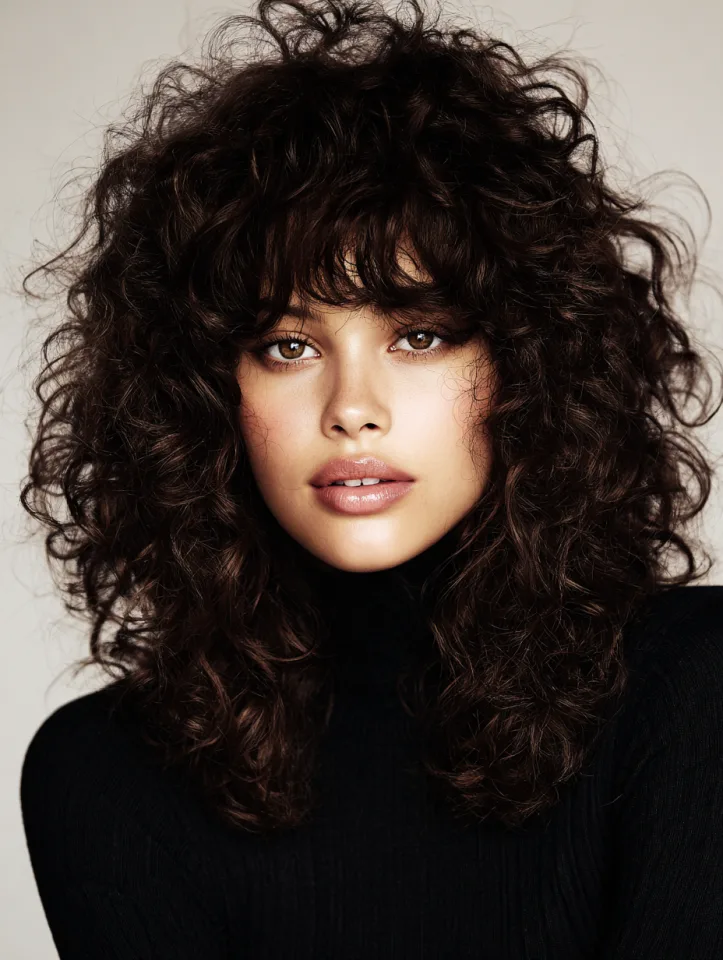
Curly bangs are a joyful, natural way to soften a wide forehead, because the curls themselves break the forehead into a soft, textured edge. Instead of a straight line, the fringe falls in springy ringlets that move and bounce, drawing the eye to the texture rather than to the size of the forehead. The volume of curly bangs also adds fullness at the top of the face, which balances the proportions beautifully. If you have natural curls, this is one of the most flattering ways to wear them.
This style suits naturally curly and coily hair, and it flatters oval, round and heart-shaped faces. The key is cutting the fringe dry, curl by curl, so the stylist can see exactly where each curl will fall. Best for: anyone with natural curls who wants a fringe that works with their texture instead of fighting it. How to style: apply curl cream to damp hair, scrunch the fringe gently, and let it air-dry or diffuse on low heat, then shake the curls out with your fingers.
What to ask a stylist: ask for a dry cut, with the fringe left longer than you think, because curls spring up as they dry. A common mistake is cutting curly bangs wet, which leaves them far shorter than expected once dry. Maintenance is gentle, with trims every eight weeks and plenty of moisture. Quick verdict: fun, full and full of personality, a fringe that celebrates your curls while softening your forehead.
§16 Shaggy Cut with Curtain Bangs
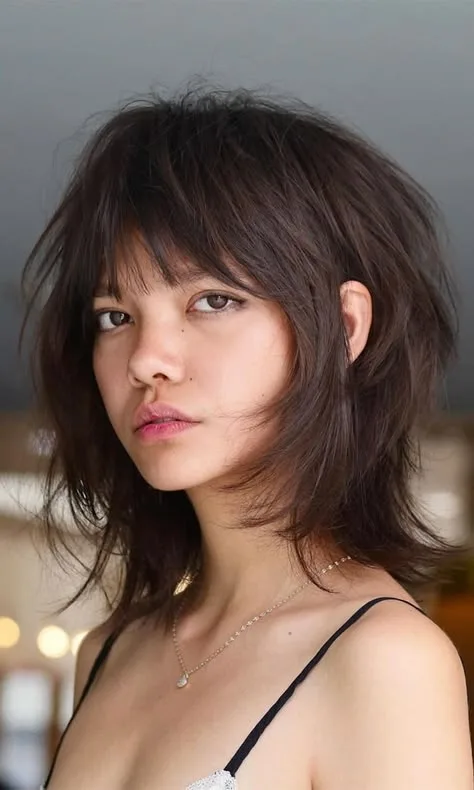
A shaggy cut with curtain bangs is the ultimate cool-girl answer to a wide forehead. The curtain fringe covers the upper corners, the shaggy layers add width and texture at the sides, and the choppy ends keep the whole look feeling relaxed and modern. The layers break up the face into interesting shapes, so the forehead never dominates, and the movement of the cut draws the eye all around the face. It is a style with plenty of personality and very little fuss.
This cut suits straight, wavy and curly hair, and it flatters oval, round and square faces. Fine hair gains volume and texture from the layers, while thick hair feels lighter and more mobile. Best for: anyone who loves a lived-in, rock-chic look and dislikes neat, polished styles. How to style: scrunch texturising spray into damp hair, blow-dry roughly with your fingers, and finish by separating the layers with a little wax or pomade.
What to ask a stylist: ask for a shag with lots of internal layers, a curtain fringe that blends into the shortest layers, and choppy, textured ends. Pros: grows out beautifully, hides cowlicks, and looks good messy. Cons: it can look untidy if the layers are cut too short at the crown. Maintenance is low, with trims every eight weeks. Quick verdict: effortlessly cool, wonderfully flattering, and one of the most forgiving cuts for a wide forehead.
§17 Wolf Cut with Wispy Fringe
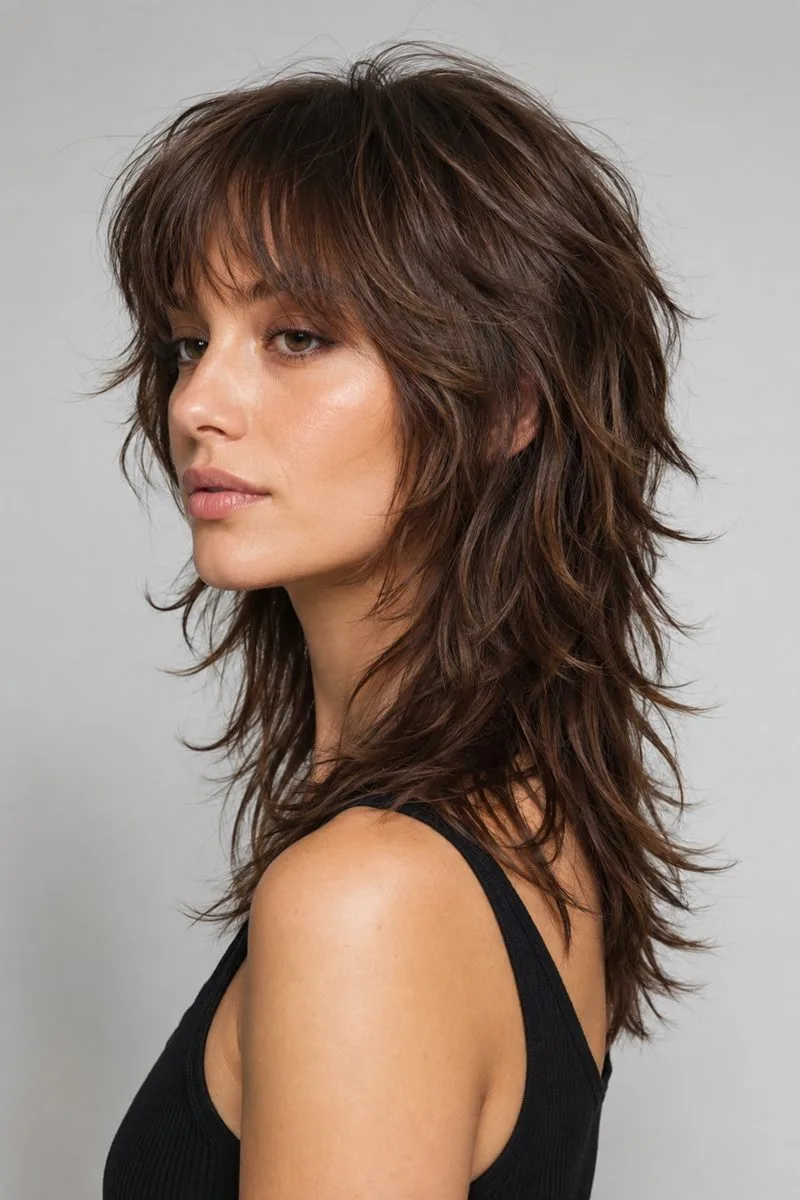
The wolf cut with a wispy fringe is a bold, modern style that balances a wide forehead with texture and volume in all the right places. The wispy fringe softens the upper face, while the layered, shaggy lengths add fullness at the sides and through the mid-lengths. The contrast between the shorter top layers and the longer bottom lengths creates a striking shape that pulls the eye down and outward, away from the forehead. It is a confident, fashion-forward choice for anyone who likes to stand out.
This cut suits wavy and curly hair best, since the texture brings the layers to life, though straight hair can work with styling product. It flatters oval, heart-shaped and long faces, and it looks especially good on younger faces and anyone with a strong sense of style. Best for: trend-lovers who want a dramatic, textured cut with built-in forehead coverage. How to style: apply mousse to damp hair, diffuse or air-dry, and use a little texturising spray to separate the layers and the fringe.
What to ask a stylist: ask for a wolf cut with a wispy fringe, short layers at the crown, and longer lengths at the back. Who should avoid it: if you prefer neat, polished hair, the wolf cut may feel too wild. Maintenance is moderate, with a reshape every six to eight weeks. Quick verdict: edgy, voluminous and very flattering, a statement cut that makes a wide forehead part of a striking whole.
§18 Medium Length with Blended Bangs
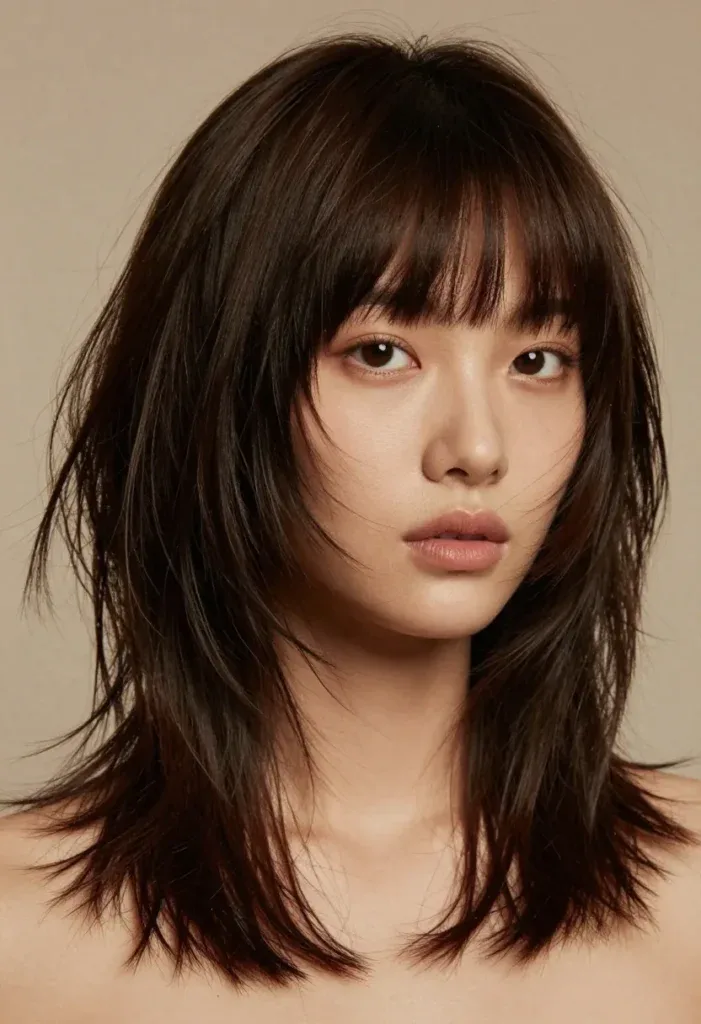
Medium-length hair with blended bangs is a gentle, versatile way to soften a wide forehead without a dramatic change. The bangs are cut to melt into the layers at the sides, so there is no harsh line where the fringe ends and the rest of the hair begins. That seamless blend makes the coverage look natural, as if the hair simply falls that way, and the medium length adds width at the cheeks and jaw. It is a calm, classic style that works for almost any occasion.
This style suits straight, wavy and lightly curly hair, and it flatters oval, round and long faces. Fine hair looks fuller with blended layers, while thick hair feels lighter and more manageable. Best for: anyone who wants a soft, natural fringe that does not scream bangs. How to style: blow-dry the fringe forward and the layers outward with a round brush, then add a soft bend to the ends with a flat iron for a polished finish.
What to ask a stylist: ask for bangs that blend into face-framing layers, with no visible step between the fringe and the sides. A common mistake is cutting the fringe too blunt, which breaks the blend. Maintenance is easy, with trims every five to six weeks. Pros: grows out seamlessly, suits most textures, and works with updos. Quick verdict: soft, seamless and quietly flattering, the fringe for people who do not think they like fringes.
§19 Sleek Straight Hair with Curtain Bangs

Sleek, straight hair with curtain bangs is a polished, modern way to balance a wide forehead. The smooth lengths create a clean frame for the face, while the curtain fringe breaks up the forehead and adds a soft, face-framing shape at the top. The contrast between the sleek lengths and the gently parted fringe keeps the look interesting, and the shine of healthy, straight hair draws the eye down the lengths rather than up to the hairline. It is a style that looks expensive and put-together with very little effort.
This style suits naturally straight and slightly wavy hair best, and it flatters oval, long and heart-shaped faces. Fine hair looks glossy and neat, while thick hair can be smoothed with a flat iron for a glass-like finish. Best for: anyone who loves a sleek, polished look and has mostly straight hair. How to style: blow-dry smooth with a paddle brush, run a flat iron through the lengths, and bend the curtain fringe outward at the sides with a round brush.
What to ask a stylist: ask for a centre-parted curtain fringe with long, face-framing pieces and blunt, healthy ends. Maintenance is moderate, with trims every six to eight weeks and regular heat protection. A common mistake is skipping serum, which leaves straight hair looking dull instead of glossy. Quick verdict: sleek, sophisticated and beautifully balanced, a modern classic for a wide forehead.
§20 Voluminous Blowout with Side Part
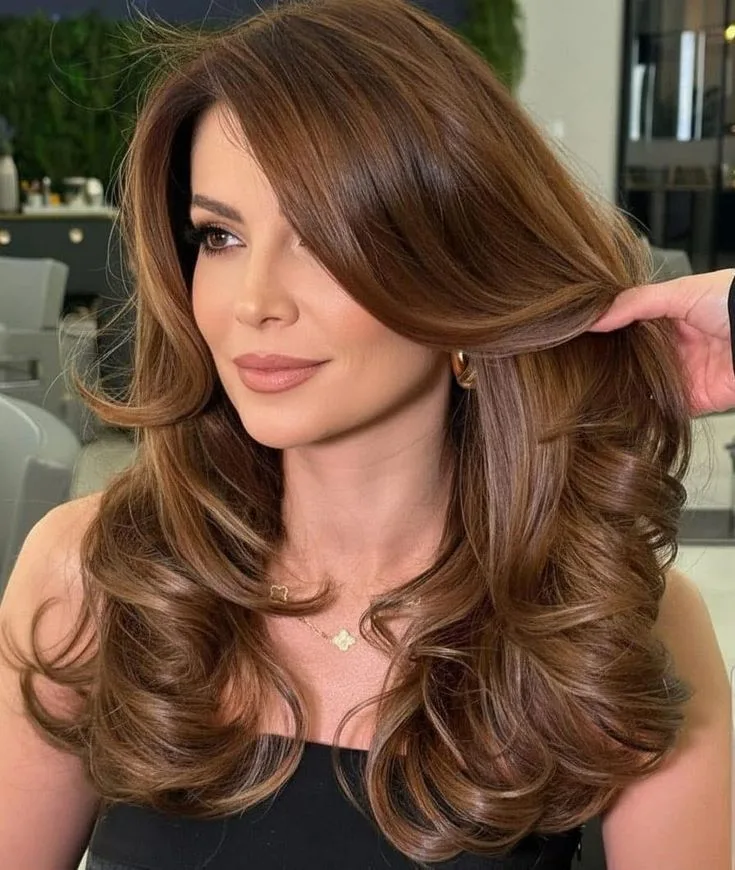
A voluminous blowout with a side part is a glamorous, no-fringe way to make a wide forehead look smaller. The deep side part sweeps a generous section of hair across the forehead, while the big, bouncy volume at the sides and crown makes the face look wider lower down. That extra width balances the forehead perfectly, and the movement of the blowout keeps the eye travelling around the face. It is a red-carpet look that works just as well for a special occasion as for a confidence-boosting everyday style.
This style suits medium to long hair with some natural body, and it flatters oval, round and long faces. Fine hair can achieve the volume with mousse and a round brush, while thick hair holds a blowout beautifully. Best for: special occasions, or anyone who loves big, bouncy hair. How to style: apply volumising mousse to damp hair, blow-dry in sections with a large round brush, lifting at the roots, and finish with a cool shot and a light mist of hairspray.
What to ask a stylist: ask for long layers that support volume, and a side part that suits your face. Cost and time: a salon blowout takes about forty-five minutes, while a home blowout takes twenty to thirty minutes with practice. Pros: instant glamour, great for photos. Cons: the volume can drop in humidity. Quick verdict: big, bouncy and beautifully balancing, the blowout that makes a wide forehead disappear into the glamour.
§21 Loose Waves with Centre Part and Curtain Bangs
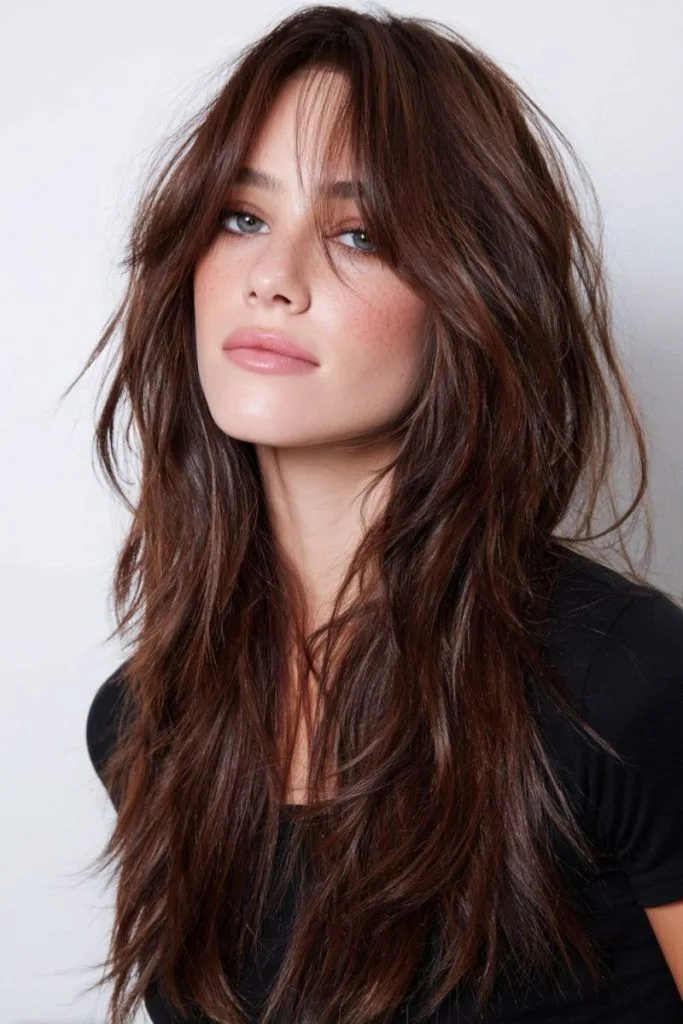
Loose waves with a centre part and curtain bangs are a soft, romantic combination that flatters a wide forehead from every angle. The curtain fringe covers the upper corners, the centre part keeps the face symmetrical, and the loose waves add gentle width at the sides. The waves stop the hair from lying flat against the face, which is important, because flat hair can make a wide forehead look even wider. The overall effect is relaxed, feminine and effortlessly pretty.
This style suits medium to long hair, and it works on straight hair that holds a wave as well as naturally wavy hair. It flatters oval, round and heart-shaped faces, and it is a wonderful choice for weddings, dates and everyday wear alike. Best for: anyone who wants a soft, romantic look with gentle forehead coverage. How to style: curl the lengths with a large-barrel iron, leaving the ends straight for a modern finish, then brush the waves out gently and sweep the curtain fringe to each side.
What to ask a stylist: ask for a curtain fringe that blends into long layers, and a cut that holds a wave. A common mistake is curling the fringe itself, which can make it look too neat; the fringe should stay soft and straight-ish. Maintenance is easy, with trims every eight weeks. Quick verdict: soft, wavy and wonderfully flattering, a style that feels like a gentle hug for your face.
§22 Beach Waves with Face-Framing Layers
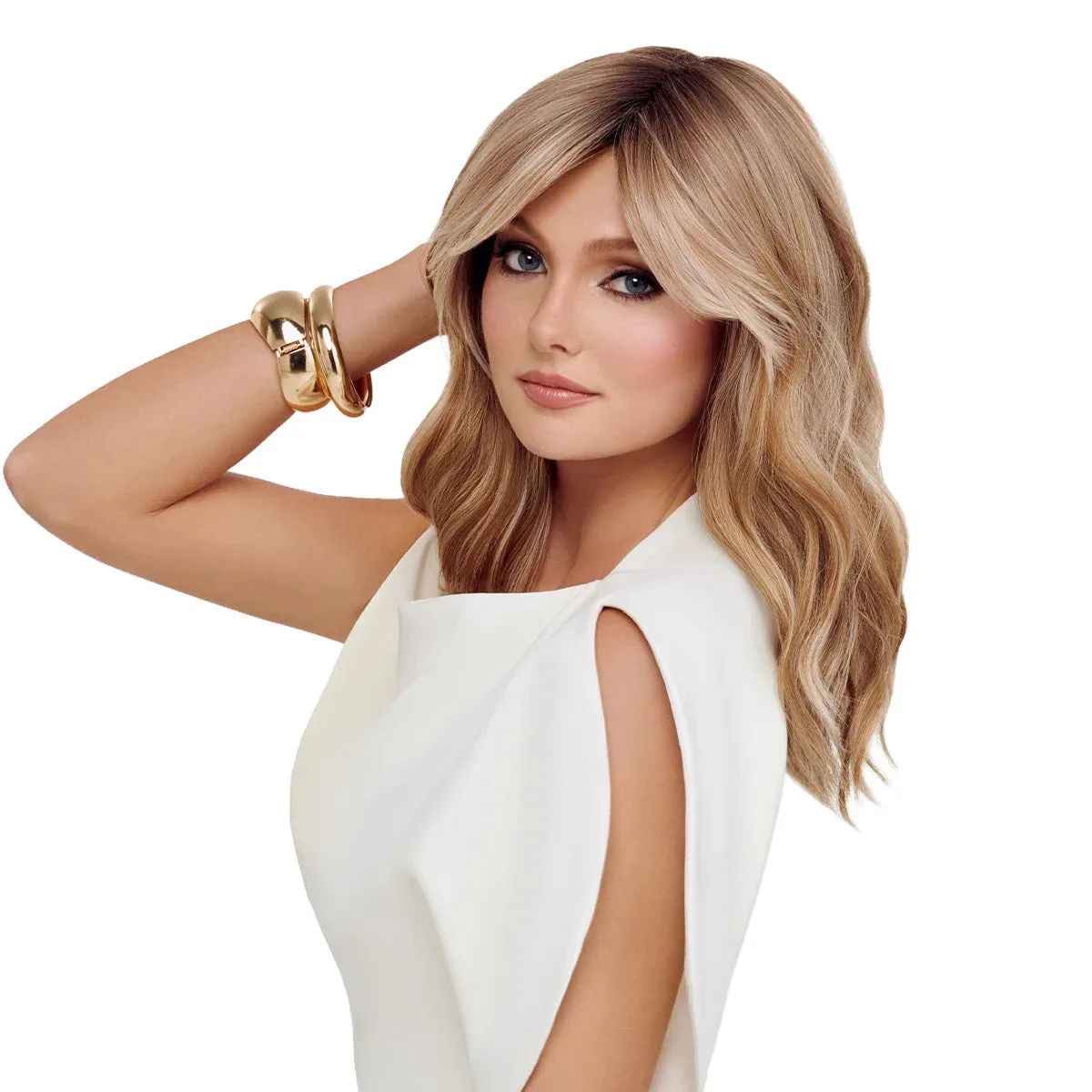
Beach waves with face-framing layers are a carefree, sun-kissed way to soften a wide forehead. The tousled waves add width and texture at the sides of the face, while the face-framing pieces curve inward around the forehead’s corners, tucking them gently out of sight. The casual, undone texture stops the eye from focusing on any single feature, and the overall look feels fresh, youthful and relaxed. It is the kind of style that looks good with a sundress, jeans or a swimsuit.
This style suits medium to long hair with natural wave or texture, and it flatters oval, round and long faces. Fine hair can hold beach waves with salt spray and a little scrunching, while thick hair looks wonderfully full and tousled. Best for: anyone who loves a relaxed, holiday feel and dislikes precise styling. How to style: spray sea-salt spray onto damp hair, scrunch and air-dry, or twist sections around a curling wand and shake them out for a lived-in wave.
What to ask a stylist: ask for long, face-framing layers and texturised ends that encourage a wave. Pros: very low maintenance, grows out beautifully, and looks better slightly messy. Cons: the waves can fall flat in very humid weather. Maintenance is minimal, with trims every ten weeks. Quick verdict: breezy, effortless and kind to a wide forehead, the beach look that flatters without trying.
§23 Half-Up Hairstyle with Face-Framing Strands
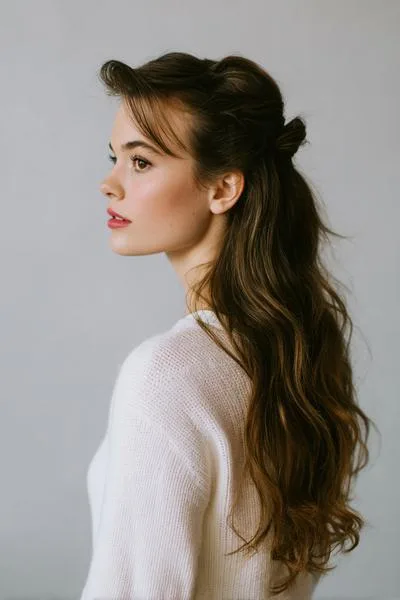
A half-up hairstyle with face-framing strands is a pretty, practical way to wear your hair up without exposing a wide forehead. The top section is pulled back, which lifts the face and shows off the cheekbones, while the loose strands at the front soften the hairline and cover the forehead’s corners. The lengths left down add width at the sides, so the whole face stays balanced. It is a lovely choice for weddings, parties and everyday wear, and it takes only a few minutes to create.
This style suits medium to long hair of any texture, and it flatters oval, round and heart-shaped faces. Fine hair looks fuller with a little backcombing at the crown, while thick hair holds the half-up section beautifully. Best for: anyone who wants an updo feel without a fully exposed forehead. How to style: pull the top section back and secure it with a clip or elastic, then pull out two soft strands at the front and curl them gently around your face.
What to ask a stylist: ask for face-framing layers that fall naturally when the hair is half-up, so you do not have to fight the cut. A common mistake is pulling the half-up section too tight, which exposes the forehead and looks severe. Maintenance is nil, since this is a styling choice rather than a cut. Quick verdict: sweet, simple and very flattering, the updo that still protects your forehead.
§24 Low Messy Bun with Loose Bangs
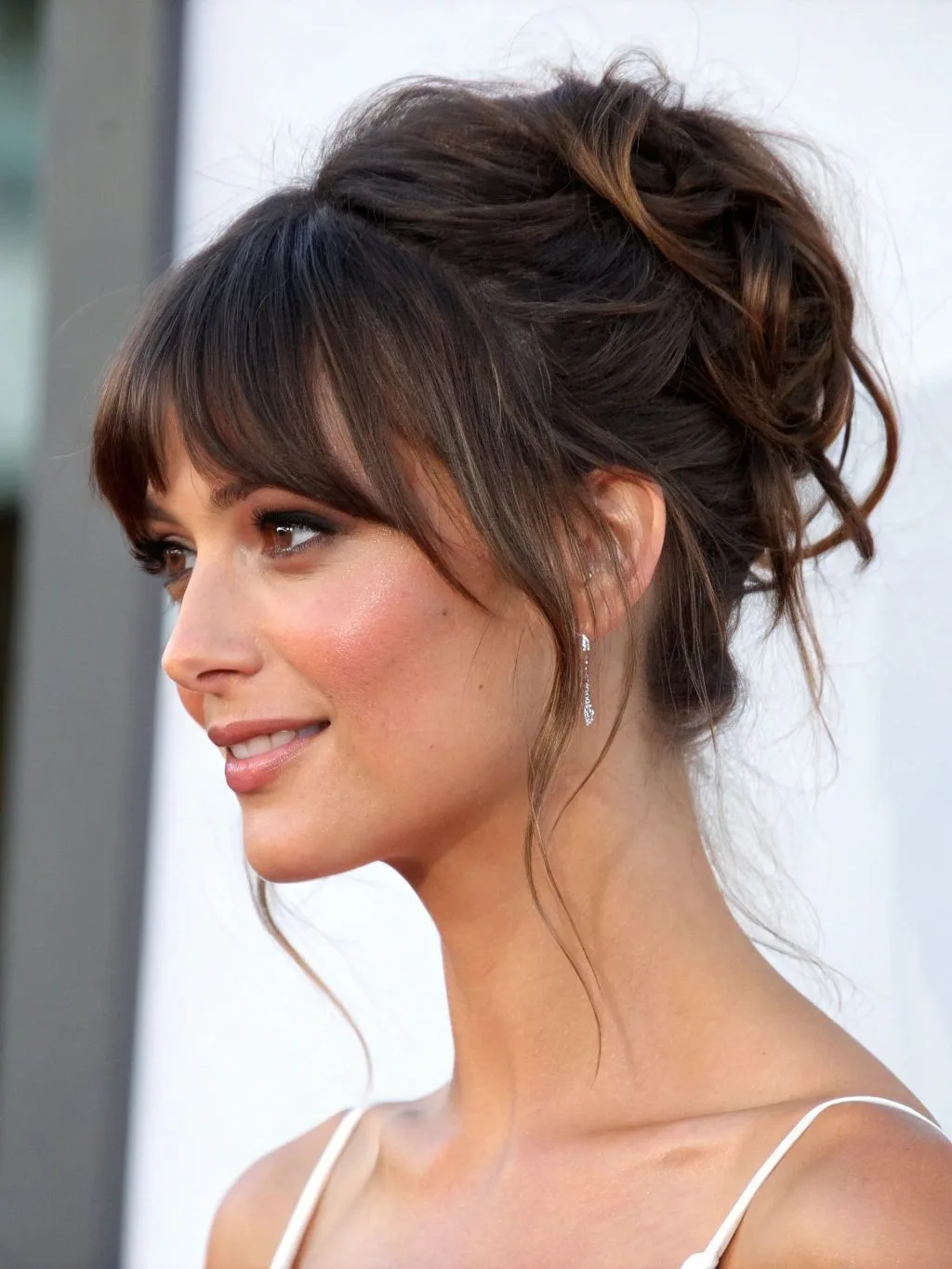
A low messy bun with loose bangs is the relaxed, elegant answer to a wide forehead on days when you want your hair up. The bun sits low at the nape, which keeps the look soft rather than severe, and the loose bangs cover the forehead while a few wispy strands escape around the face. The messiness is the point: the soft, undone texture stops the style from looking pulled-back and tight, which is what usually makes a wide forehead stand out. It is a five-minute style that looks like you tried much harder.
This style suits medium to long hair, and it flatters oval, round and long faces. It works on straight, wavy and curly hair, and it is a lifesaver on second-day hair. Best for: busy mornings, weddings and anyone who loves a soft updo. How to style: gather the hair low, twist it into a loose bun and pin it, then pull out the bangs and a few face-framing strands, and finish with a light mist of texturising spray.
What to ask a stylist: ask for a fringe that works loose as well as styled, and layers that fall softly around the face. Pros: quick, elegant and forgiving. Cons: very fine hair may need pins and spray to hold the bun. Maintenance is nil beyond the fringe trims. Quick verdict: soft, simple and effortlessly chic, the bun that never leaves your forehead on show.
§25 High Ponytail with Curtain Bangs
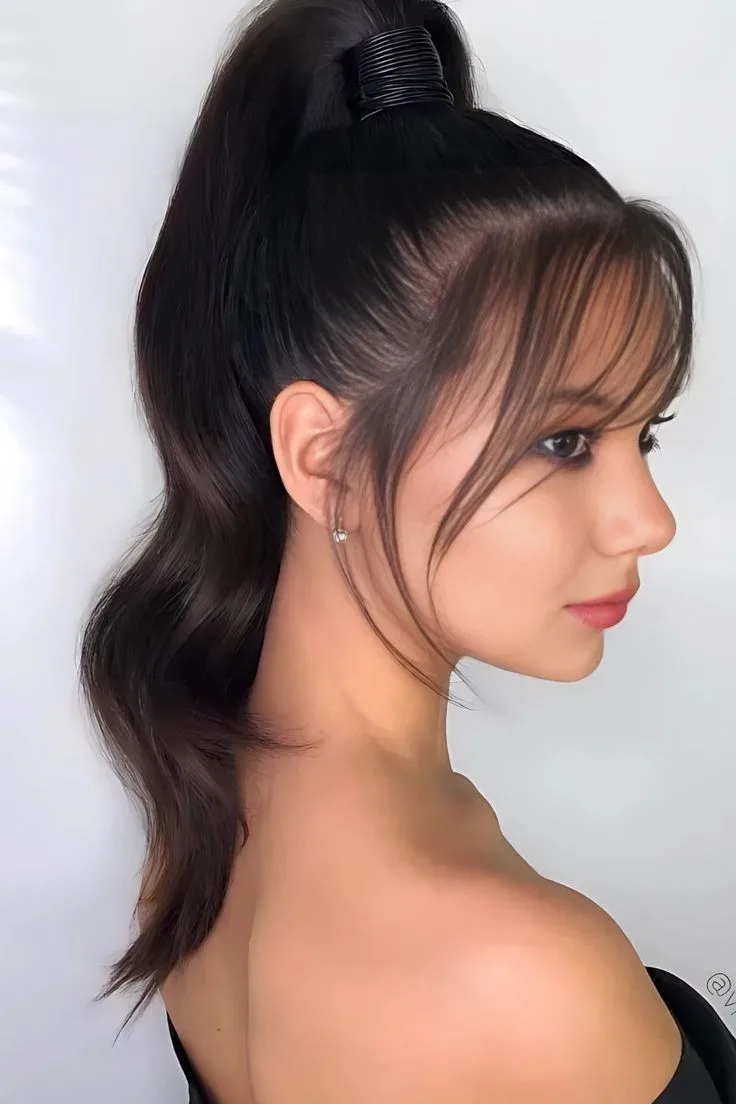
A high ponytail with curtain bangs is a fresh, youthful style that keeps a wide forehead covered while showing off the face. The ponytail lifts everything upward, which gives the face a gentle lift, and the curtain bangs frame the forehead so it never looks bare or exposed. The contrast between the sleek, pulled-back hair and the soft fringe is what makes the style work: the fringe adds softness where the ponytail adds structure. It is sporty, chic and surprisingly elegant all at once.
This style suits medium to long hair, and it flatters oval, round and heart-shaped faces. It works on straight and wavy hair, and it is a great choice for the gym, a night out or a polished daytime look. Best for: anyone who loves ponytails but worries about a bare forehead. How to style: smooth the hair back with a brush, secure the ponytail high at the crown, then sweep the curtain bangs to each side and add a soft wave to the ponytail ends.
What to ask a stylist: ask for a curtain fringe that sits well with the hair pulled back, with no short pieces that stick out awkwardly. A common mistake is pulling the ponytail too tight, which can cause tension and expose the hairline. Maintenance is low, with fringe trims every four to six weeks. Quick verdict: lifted, lively and lovely, the ponytail that flatters a wide forehead instead of exposing it.
§26 Braided Crown with Soft Fringe

A braided crown with a soft fringe is a romantic, fairy-tale style that flatters a wide forehead beautifully. The braid wraps around the head like a halo, adding width and interest at the sides, while the soft fringe covers the forehead and keeps the look gentle. The braid itself draws the eye around the face rather than up to the hairline, and the soft, loose texture stops the style from looking too neat or severe. It is a wonderful choice for weddings, festivals and special occasions.
This style suits medium to long hair, and it flatters oval, round and heart-shaped faces. It works on straight, wavy and curly hair, and it holds well on second-day hair with a little texture spray. Best for: special occasions and anyone who loves a romantic, bohemian look. How to style: braid two sections from each side, cross them over the crown and pin them, then soften the fringe and pull out a few wispy strands around the face.
What to ask a stylist: ask for a fringe that falls softly over the forehead and layers that braid easily without too many short pieces escaping. Cost and time: about fifteen minutes at home with practice, or a quick salon style for a special event. Pros: stays put all day, looks beautiful from every angle. Quick verdict: dreamy, romantic and wonderfully flattering, a crown that frames the whole face.
§27 Side Braid with Face-Framing Layers
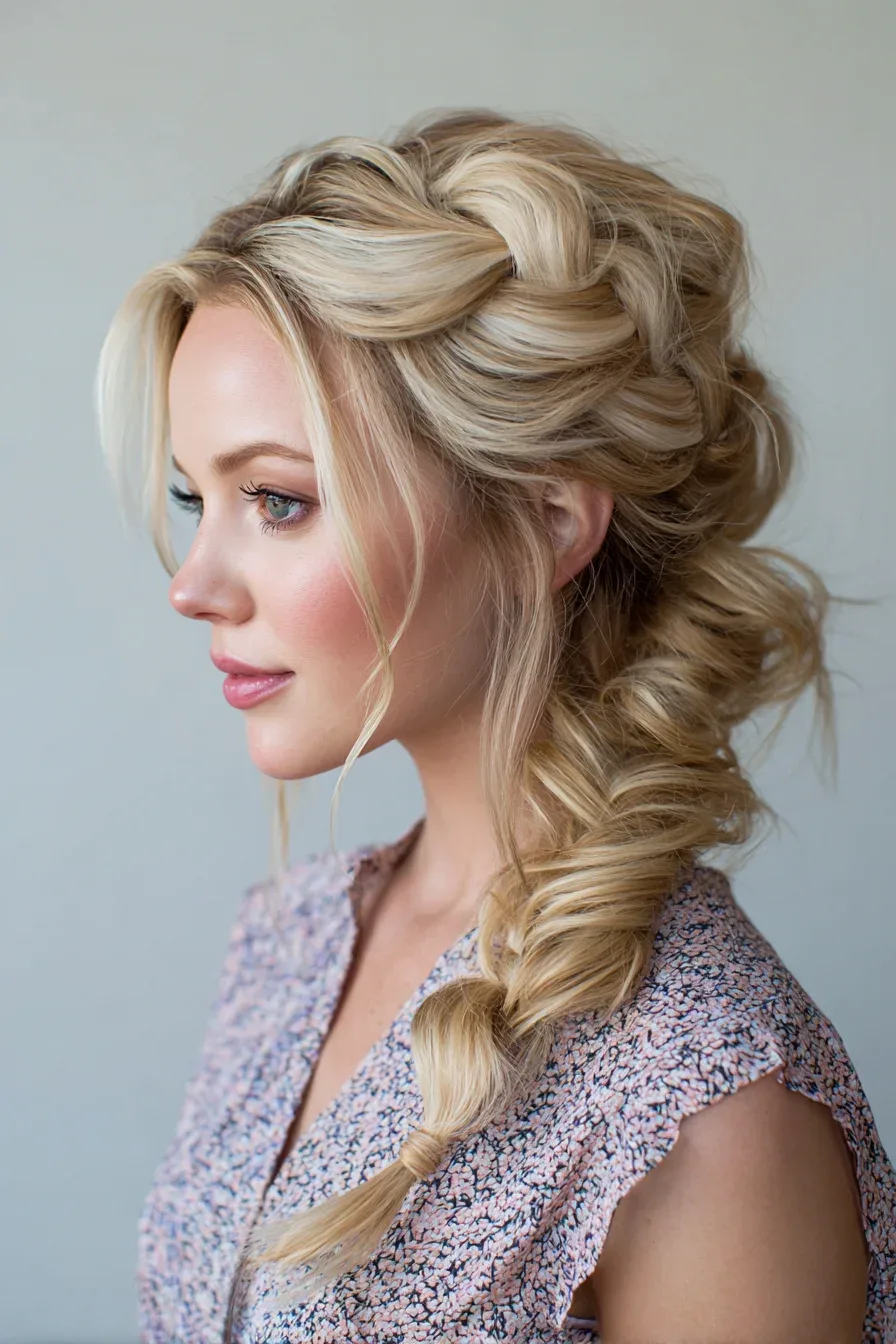
A side braid with face-framing layers is a sweet, relaxed way to wear long hair while keeping a wide forehead softly covered. The braid falls over one shoulder, adding width and weight to one side of the face, while the face-framing layers curve around the forehead and cheeks. The asymmetry of the braid is naturally flattering, because it breaks the face into interesting shapes instead of one broad surface. It is a style that looks pretty on a walk, at a picnic or at a casual wedding.
This style suits long hair of any texture, and it flatters oval, round and long faces. Fine hair looks fuller with a gently pulled-apart, pancaked braid, while thick hair makes a beautifully full plait. Best for: anyone who loves braids and wants a soft, feminine look. How to style: sweep the hair to one side, braid loosely from the nape, secure the end, then gently pull the braid apart for fullness and curl the face-framing layers around the face.
What to ask a stylist: ask for face-framing layers that fall naturally beside a side braid, starting at the cheekbones. A common mistake is braiding too tightly, which pulls the face-framing pieces back and exposes the forehead. Maintenance is nil, since this is a styling choice. Quick verdict: soft, pretty and easy, the braid that frames your face instead of pulling it back.
§28 Textured Updo with Wispy Pieces
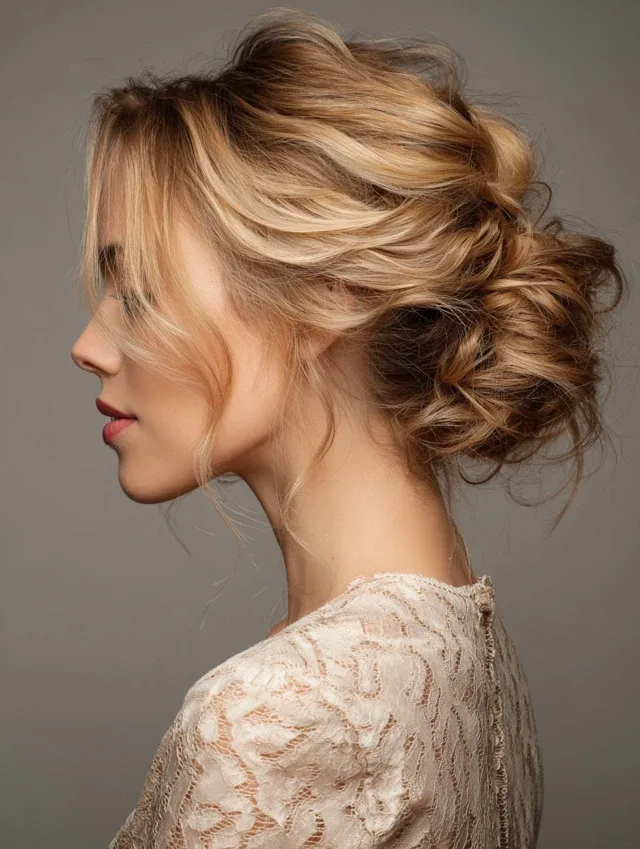
A textured updo with wispy pieces is an elegant, forgiving way to wear your hair up with a wide forehead. The updo itself adds height and volume, which lengthens the face in a flattering way, while the wispy pieces that escape around the forehead soften the hairline and cover the corners. The texture stops the style from looking stiff or severe, and the soft pieces keep the face looking gentle even when the hair is swept up. It is a beautiful choice for weddings, proms and formal evenings.
This style suits medium to long hair, and it flatters oval, round and long faces. It works on straight, wavy and curly hair, and it holds best on hair with a little texture or second-day grip. Best for: formal occasions and anyone who wants an updo without a bare forehead. How to style: curl the hair loosely, pin it up in soft, textured sections, then pull out wispy pieces at the front and around the ears, and set with flexible hairspray.
What to ask a stylist: ask for layers that fall softly when the hair is up, and a fringe or face-framing pieces that can be left loose. Cost and time: a salon updo takes about thirty to forty-five minutes. Pros: elegant, secure and photogenic. Cons: it needs pins and spray to last all evening. Quick verdict: graceful, soft and wonderfully flattering, the formal updo that never exposes your forehead.
§29 Layered Pixie Bob
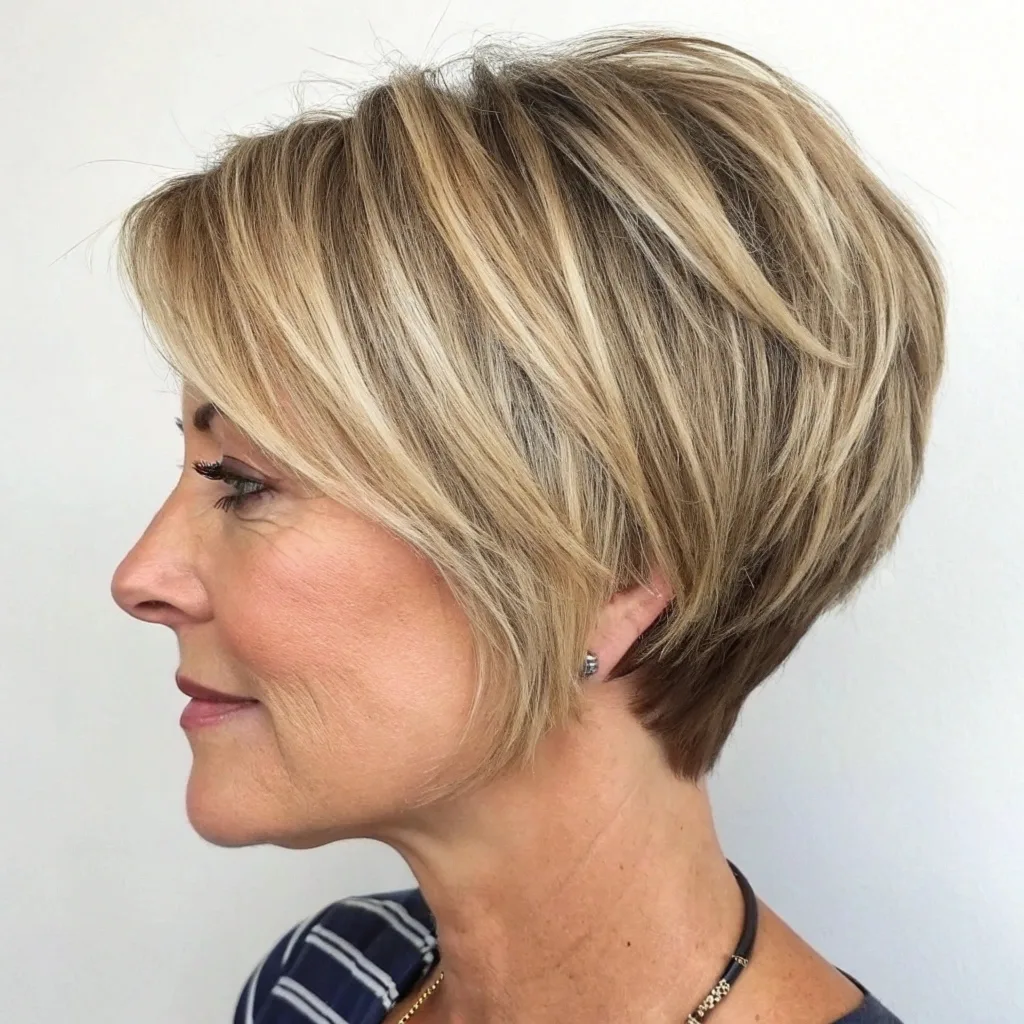
A layered pixie bob sits between a pixie and a bob, and it is a fresh, modern way to balance a wide forehead. The layers add volume and movement at the sides, the longer front pieces sweep across the forehead, and the short back keeps the cut light and easy. The shape is soft and swingy rather than sharp, so the face looks framed rather than exposed. It is a confident cut that feels both playful and polished, and it shows off the cheekbones beautifully.
This cut suits straight and wavy hair best, and it flatters oval, heart-shaped and square faces. Fine hair looks fuller with layers and texture, while thick hair can be thinned for a lighter, airier feel. Best for: anyone who wants short hair with softness and movement. How to style: blow-dry with a round brush for a smooth finish, or scrunch texturising spray into damp hair for a tousled look, always sweeping the front pieces across the forehead.
What to ask a stylist: ask for a pixie bob with long front pieces that reach the cheekbone and soft layers through the crown. Maintenance is moderate, with a reshape every five to six weeks. Pros: quick to style, light to wear, and very flattering. Cons: it needs regular trims to keep its shape. Quick verdict: short, sweet and surprisingly soft, a modern cut that balances a wide forehead with ease.
§30 A-Line Bob with Side-Swept Bangs
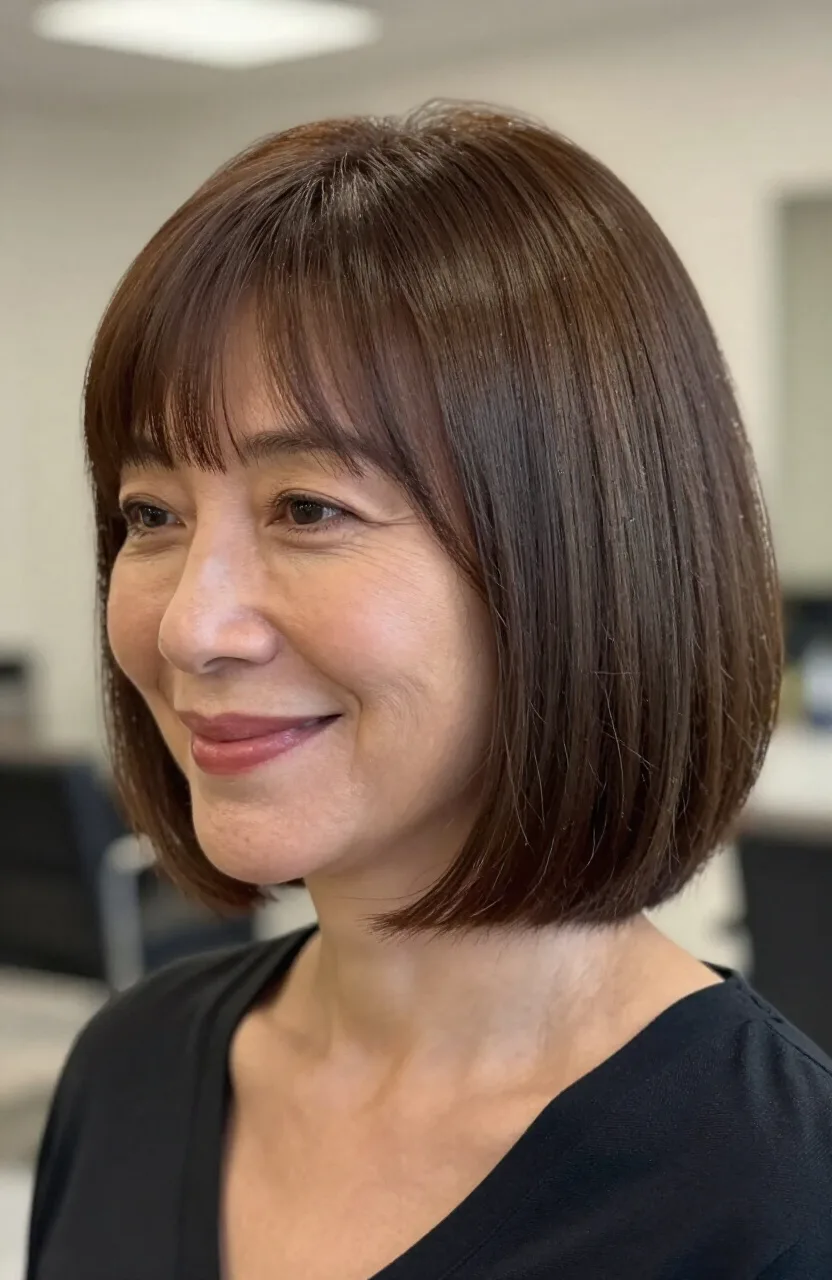
An A-line bob with side-swept bangs is a sleek, geometric style that flatters a wide forehead with clean, clever lines. The bob is shorter at the back and longer at the front, which creates a flattering diagonal that draws the eye down toward the chin. The side-swept bangs cross the forehead on a matching diagonal, covering one corner and softening the hairline. Together, the two diagonals make the face look longer and more balanced, and the whole cut feels sharp, modern and confident.
This cut suits straight and slightly wavy hair best, and it flatters oval, round and square faces. Fine hair looks thicker in an A-line bob, because the shape adds weight at the front, while thick hair can be texturised for movement. Best for: anyone who loves a sharp, polished bob with built-in forehead coverage. How to style: blow-dry smooth with a round brush, bending the front pieces under, and sweep the fringe across the forehead in the same direction as the longer side.
What to ask a stylist: ask for an A-line shape with the front pieces reaching the chin and a side-swept fringe that blends into the longer side. A common mistake is cutting the back too short, which can make the shape look severe. Maintenance is moderate, with a trim every six weeks. Quick verdict: sharp, sleek and very flattering, a bob that uses angles to balance a wide forehead.
§31 Long Bob with Feathered Bangs
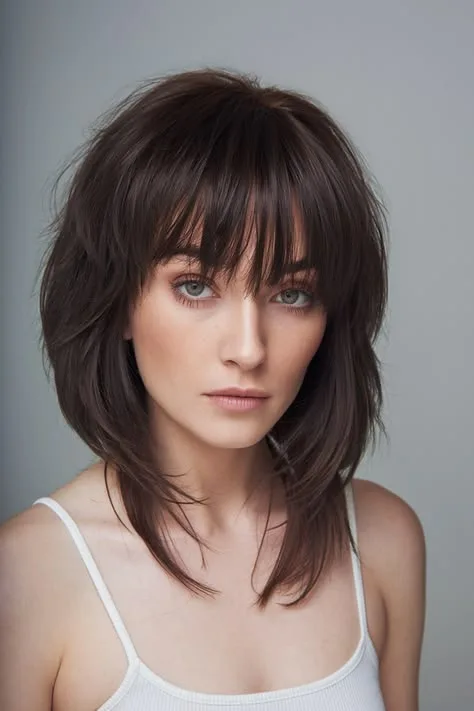
A long bob with feathered bangs is a soft, wearable style that balances a wide forehead without any drama. The feathered fringe falls lightly across the forehead, with airy, separated pieces that let a little skin show through, so the coverage feels gentle rather than heavy. The long bob ends near the collarbone, adding width at the jaw and shoulders, which balances the forehead from below. It is a relaxed, modern cut that works for work, weekends and everything in between.
This style suits straight, wavy and lightly curly hair, and it flatters oval, round and long faces. Fine hair looks fuller with feathered layers, while thick hair feels lighter and more mobile. Best for: anyone who wants a medium-length cut with a soft, airy fringe. How to style: blow-dry the fringe forward with a round brush, feathering the ends outward, then add loose waves or leave the lengths smooth for a polished finish.
What to ask a stylist: ask for feathered bangs with point-cut ends and a long bob that ends at the collarbone. Pros: grows out gracefully, suits most textures, and needs little daily effort. Cons: the feathered fringe can separate in humidity, so keep a light cream handy. Maintenance is easy, with trims every six weeks. Quick verdict: light, airy and lovely, the lob that softens a wide forehead with a feather touch.
§32 Wavy Lob with Side Volume
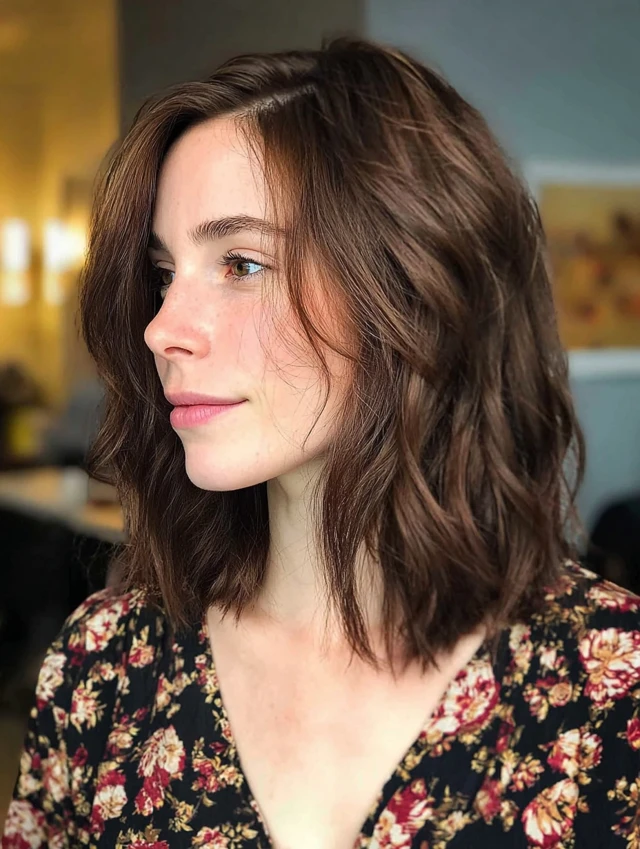
A wavy lob with side volume balances a wide forehead by adding fullness exactly where the face needs it, around the cheeks and jaw. The waves create a soft, wide shape through the mid-lengths, which makes the forehead look proportionate by comparison, and the movement of the waves keeps the eye travelling around the face. There is no fringe needed, because the side volume and the soft, face-framing waves do the balancing work. The lob length is practical, stylish and easy to live with.
This style suits naturally wavy hair best, though straight hair can be waved with a curling iron. It flatters oval, round and long faces, and it is a wonderful choice if you are growing out a shorter cut. Best for: anyone with natural wave who wants balance without bangs. How to style: apply mousse to damp hair, blow-dry with a diffuser or air-dry, then define the waves with a curling wand where needed and shake them out with your fingers.
What to ask a stylist: ask for a lob with long layers that encourage volume at the sides and softly textured ends. A common mistake is cutting the layers too short, which can make the shape look triangular. Maintenance is low, with trims every eight weeks. Quick verdict: wavy, full and wonderfully balanced, a lob that lets volume do the flattering.
§33 Curly Shag with Bangs
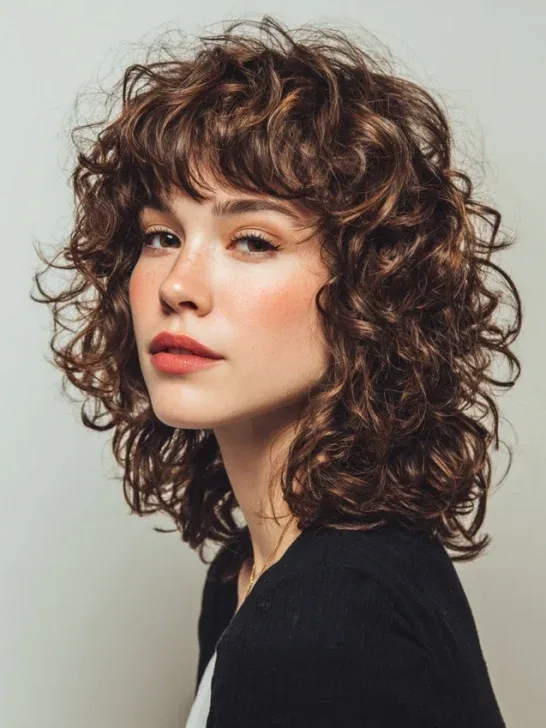
A curly shag with bangs is a joyful, textured style that makes a wide forehead look like part of a beautiful, balanced whole. The curly fringe softens the upper face with springy, moving texture, while the shaggy layers add width and volume at the sides. The curls break the face into lively shapes, so no single feature dominates, and the overall look is full of personality and bounce. If you have natural curls and love texture, this cut lets them shine.
This style suits naturally curly and wavy hair, and it flatters oval, round and heart-shaped faces. The key is a dry cut that respects each curl’s natural pattern, so the shape holds as the hair dries. Best for: anyone with natural curls who wants a fun, textured cut with built-in forehead coverage. How to style: apply curl cream to damp hair, scrunch and diffuse on low heat, then shake the curls out and let the fringe fall naturally across the forehead.
What to ask a stylist: ask for a dry, curl-by-curl cut with a curly fringe left long enough to spring up as it dries. Who should avoid it: if you straighten your hair every day, a shag will lose its shape. Maintenance is gentle, with trims every eight to ten weeks and plenty of moisture. Quick verdict: curly, cool and full of life, a shag that celebrates texture while softening the forehead.
§34 Straight Hair with Side-Swept Layers
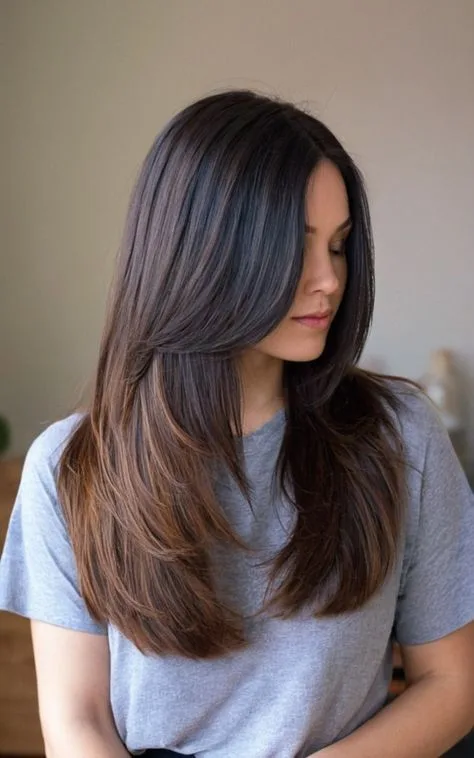
Straight hair with side-swept layers is a clean, elegant way to soften a wide forehead without adding a fringe. The long, side-swept front layers fall diagonally across the forehead, covering one corner and creating a soft, sloping line that breaks up the broad surface. The sleek lengths frame the face neatly, and the layers add just enough movement to stop the style from looking flat. It is a polished, professional look that works beautifully for work and formal occasions.
This style suits naturally straight and slightly wavy hair, and it flatters oval, long and heart-shaped faces. Fine hair looks glossy and neat with side-swept layers, while thick hair can be smoothed for a sleek finish. Best for: anyone with straight hair who wants balance without bangs. How to style: blow-dry smooth with a paddle brush, directing the front layers across the forehead, then run a flat iron through the lengths and finish with a drop of serum for shine.
What to ask a stylist: ask for long, side-swept layers that start at the cheekbones and blend into the lengths. A common mistake is cutting the front layers too short, which makes them stick out instead of sweeping across. Maintenance is easy, with trims every eight weeks. Quick verdict: sleek, simple and quietly flattering, the straight style that balances a wide forehead with a single sweep.
§35 Soft Curls with Deep Side Part
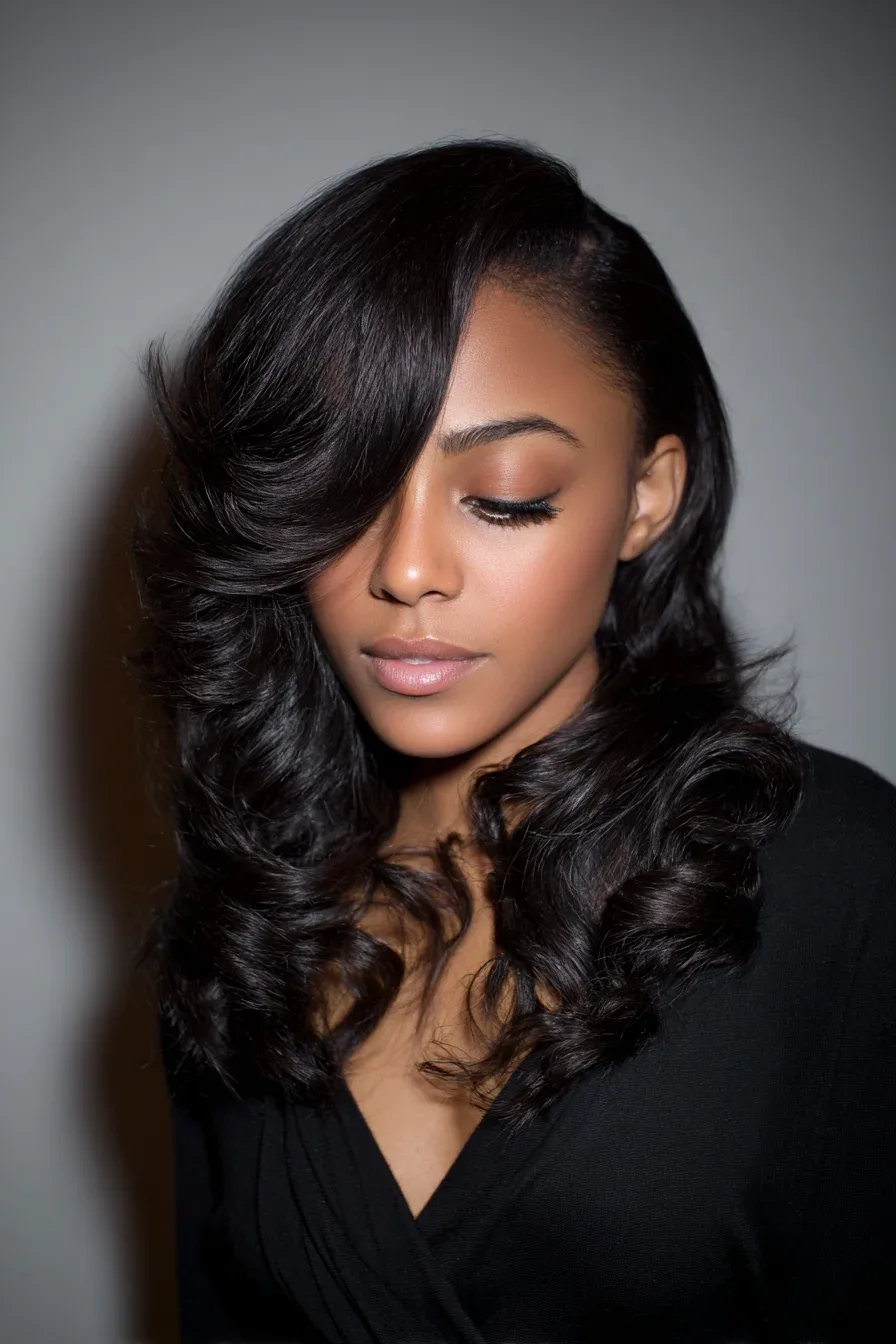
Soft curls with a deep side part are a glamorous, romantic way to balance a wide forehead. The deep part sweeps a generous section of curls across the forehead, covering one corner, while the soft curls add width and volume at the sides. The curls catch the light and create movement, which draws the eye around the face instead of letting it rest on the forehead. It is a beautiful choice for evenings, weddings and any moment when you want to feel a little extra special.
This style suits medium to long hair that holds a curl, and it flatters oval, round and heart-shaped faces. Fine hair can hold soft curls with mousse and a curling iron, while thick hair looks wonderfully full and bouncy. Best for: special occasions and anyone who loves romantic, voluminous hair. How to style: curl the hair in large sections with a wide-barrel iron, brush the curls out gently for softness, then sweep the front section across the forehead from a deep side part.
What to ask a stylist: ask for long layers that support soft curls and a side part that suits your face. Cost and time: about twenty minutes at home with a curling iron, or a salon blowout for a special event. Pros: glamorous, photogenic and full of movement. Cons: curls can drop in humidity. Quick verdict: soft, romantic and beautifully balanced, the curls that make a wide forehead part of the glamour.
§36 Rounded Bob with Full Fringe
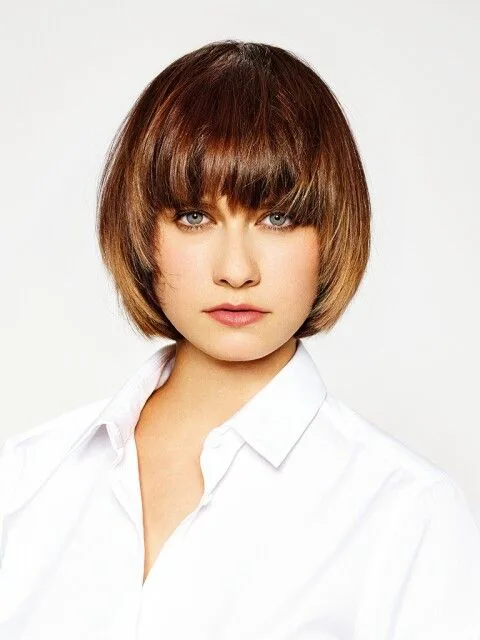
A rounded bob with a full fringe is a chic, vintage-inspired style that frames a wide forehead in the most flattering way. The fringe covers the upper face in a soft, curved line, while the rounded bob hugs the jaw and adds width at the sides, creating a neat, balanced silhouette. The curve of the bob mirrors the curve of the fringe, so the whole shape feels harmonious and intentional. It is a polished, confident look that works beautifully with both casual and dressed-up outfits.
This style suits straight and slightly wavy hair best, and it flatters oval, heart-shaped and long faces. Fine hair looks full and neat in a rounded bob, while thick hair can be texturised at the ends for a softer shape. Best for: anyone who loves a classic, rounded silhouette with full forehead coverage. How to style: blow-dry with a round brush, curving the ends under and the fringe down, then smooth with a flat iron and finish with shine spray.
What to ask a stylist: ask for a rounded bob that ends at the jaw, with a full fringe that follows the curve of the brows. A common mistake is cutting the fringe too straight, which breaks the rounded shape. Maintenance is moderate, with a trim every five weeks. Quick verdict: rounded, refined and wonderfully flattering, a classic that makes a wide forehead look perfectly framed.
What hairstyle suits a wide forehead best?
Curtain bangs are the most popular choice, because they soften the upper corners of the forehead while blending into face-framing layers. Side-swept bangs, bottleneck bangs and a deep side part with layers work beautifully too. The best style depends on your hair texture and how much upkeep you enjoy, so pick the one that fits your daily routine as well as your face.
Do bangs really make a forehead look smaller?
Bangs make a forehead look smaller by covering its upper part and creating a frame for the eyes, which draws attention to the middle of the face. Even a sheer, wispy fringe changes the proportions noticeably. A full blunt fringe gives the strongest effect, while curtain bangs give a softer version of the same result.
Which part is best for a wide forehead?
A deep side part is usually the most flattering choice, because it sweeps hair across one corner of the forehead and creates a slimming diagonal line. A centre part works well when it is paired with curtain bangs or face-framing layers. A centre part with no fringe at all tends to make a wide forehead look wider, so it is best avoided on its own.
Can I wear my hair up if I have a wide forehead?
Hair can be worn up with a wide forehead, as long as a fringe or face-framing strands are left loose at the front. A low messy bun with loose bangs, a half-up style with soft strands and a high ponytail with curtain bangs all keep the forehead covered. The styles to avoid are very tight, scraped-back looks with no softness at the hairline.
What bangs suit curly hair and a wide forehead?
Curly bangs suit a wide forehead beautifully, because the curls create a soft, textured edge instead of a straight line across the face. Ask for a dry cut, curl by curl, and leave the fringe longer than you think, since curls spring up as they dry. A curly shag with bangs is another wonderful option for natural curls.
How often should bangs be trimmed?
Most bangs need a trim every three to six weeks, depending on the style. Blunt fringes need the most frequent trims, about every three weeks, while curtain bangs and side-swept bangs can go five to six weeks. Many salons offer free fringe trims between full haircuts, so ask your stylist about this when you book.
Will bangs suit a round face with a wide forehead?
Bangs suit a round face with a wide forehead very well, especially side-swept bangs, curtain bangs and bottleneck bangs. The diagonal or parted shape of these fringes adds length and asymmetry, which balances a round face. A very short, straight-across fringe can make a round face look shorter, so a longer, softer fringe is usually the better choice.
What hairstyles should I avoid with a wide forehead?
Very tight, scraped-back hairstyles with no fringe or face-framing pieces tend to make a wide forehead stand out, because they expose the whole hairline. Super-slick centre parts with flat hair and very short crops with no fringe can have the same effect. The fix is simple: leave a few soft strands loose, add a side part, or choose a style with volume at the sides.
Can short hair flatter a wide forehead?
Short hair flatters a wide forehead as long as the cut includes a fringe or a sweeping front section. A French bob with bangs, a deep side part bob, a textured pixie with long side bangs and a rounded bob with a full fringe all balance the forehead beautifully. The key is the front of the cut, not the length of the hair.
How do I grow out my bangs without an awkward stage?
Bangs grow out gracefully if you trim the shape every few weeks and lean on side parts, half-up styles, braids and clips during the transition. Curtain bangs grow into face-framing layers, and side-swept bangs grow into a deep side part. The fringe usually reaches cheekbone length in about three to four months, at which point it becomes a lovely layer in its own right.
Conclusion: Find the Hairstyle That Makes You Feel Like You
Your forehead is part of what makes your face yours, and the best hairstyles for a wide forehead are the ones that work with it, not against it. Whether you choose the soft sweep of curtain bangs, the polish of a side-swept fringe, the romance of loose waves or the confidence of a French bob, the goal is the same: balance, softness and a style you genuinely enjoy wearing. Start with the guide sections, pick the two or three styles that feel most like you, and show them to your stylist at your next appointment.
Remember that hair grows, fringes can be swept aside, and layers can always be adjusted, so there is very little risk in trying something new. The styles in this guide are chosen to be forgiving, wearable and easy to live with, and most of them look even better a little bit messy. Trust your own taste, keep the styling simple, and enjoy the confidence that comes from a haircut that truly flatters you.

