

Glasses are not something to hide behind your hair. They are part of your face, part of your style, and when the cut works with them instead of against them, the whole look comes together. The right hairstyle keeps your frames visible, stops hair from sliding over your lenses, and balances the lines of your face so neither the glasses nor the hair has to shout to be noticed.
This guide gathers the best hairstyles for women with glasses, from sharp bobs and soft pixies to long layers, curls, buns and braids. Every style here was chosen because it genuinely works with eyewear: the hair sits clear of the temples, the length flatters the frame shape, and the finish looks polished without an hour of effort each morning.
Whether you wear bold black frames, delicate wire rims or colourful acetate, you will find a cut below that suits your face shape, your hair texture and your routine. Start with the short guides to learn how frames and hair work together, then pick a style that feels like you.
g01 — How Glasses Change What a Hairstyle Should Do
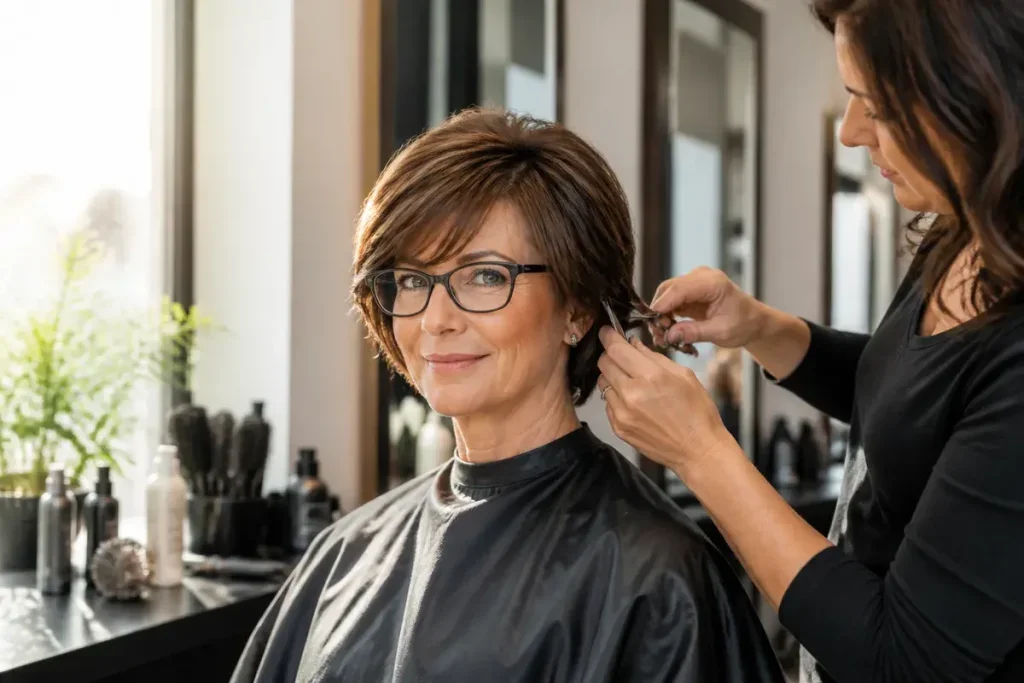
Glasses add a strong horizontal line across your face, so a hairstyle that works with them needs to respect that line rather than fight it. Hair that falls straight across the lenses hides your frames and smudges them, while hair that is pulled too tightly back can make the frames look heavy. The sweet spot is a cut with a little movement around the temples and enough shape to echo the frames without copying them exactly.
Think about where your frames sit before you think about length. Thick frames pair beautifully with simple, clean cuts, because the hair does not compete for attention. Fine wire frames can handle more texture, volume and layering, since the glasses themselves are quiet. If your frames are oversized, keep some hair near the face so the proportions stay balanced; if they are small and neat, a sleek style will look sharp rather than severe.
It also helps to photograph yourself from the front and the side while wearing your usual frames, because the camera shows proportions your mirror can hide. Notice where the hair crosses the frame line and where it clears it, and take those photos to your next appointment. A stylist who can see the problem clearly can fix it in a single cut, and you will spend far less time pushing hair out of the way for the next two months.
g02 — Choosing Frames and Hair Together
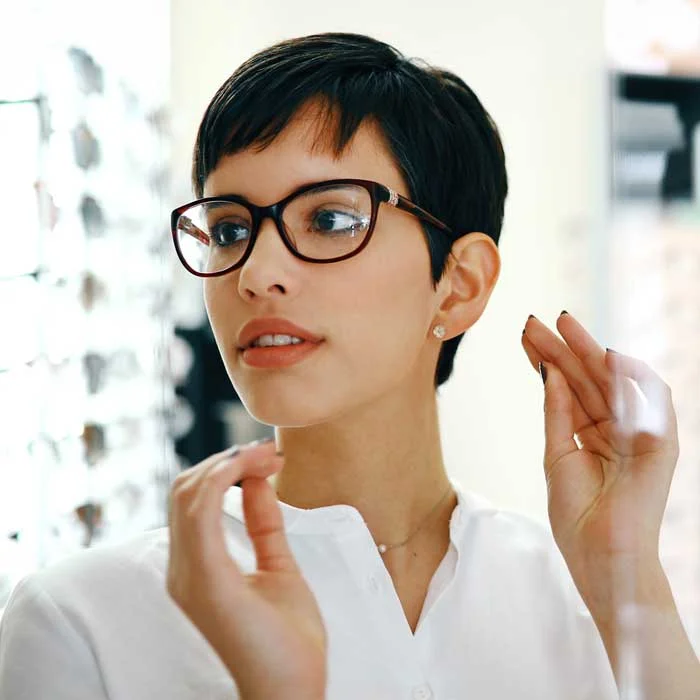
The best-looking combinations treat frames and hair as one decision, not two separate ones. Round frames soften an angular bob, while square frames give structure to soft waves. If you love a bold frame colour, keep the hair colour fairly natural so the frames stay the star; if your frames are neutral black or tortoiseshell, a warm balayage or a rich brunette can add the colour instead.
When you try on new frames, wear your hair the way you usually wear it, not scraped back. A frame that looks perfect with a ponytail can disappear under a fringe, and a frame that feels too big with loose hair can look just right with a bun. Bring photos of the styles in this guide to your optician as well as to your stylist, because the two choices shape each other more than most people realise.
One more thing worth checking is the width of your frames against the width of your hair at the sides. Hair that is much wider than the frames can make the glasses look small, while hair pulled flat against the head can make large frames look oversized. A little volume at the sides, or a soft wave that starts at cheek level, usually brings the two into balance without any extra styling effort at all.
g03 — Face Shape, Glasses and Hair Working as a Team
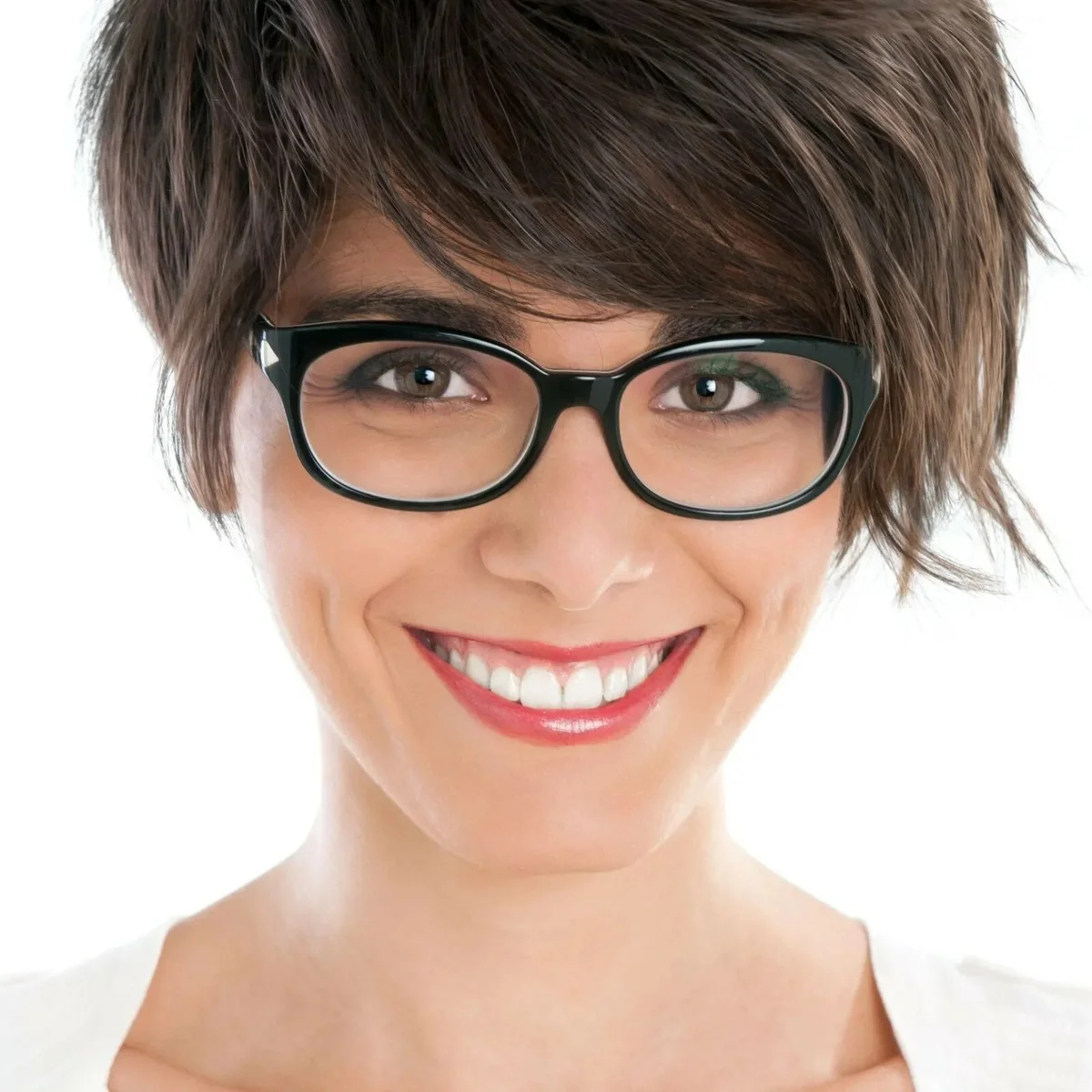
Your face shape decides which lengths flatter you, and your frames decide where the eye stops. Round faces gain definition from longer layers, a side part or a bob that ends below the chin, especially with angular frames. Square faces soften with waves, curtain bangs or a lob that breaks up the jawline, while rectangular frames add width in the right place.
Oval faces can wear almost anything, which is why the choice should come down to your frames and your lifestyle rather than rules. Heart-shaped faces look lovely with chin-length bobs and side-swept fringe that balance a wider forehead, and long faces benefit from bangs or volume at the sides, which stop the face from looking stretched. The trick is to check the whole picture in the mirror with your glasses on, because a cut judged without them is only half judged.
For longer hair, a loose plait or a low ponytail on the days you are in a rush will protect your lenses far better than leaving the hair down and hoping for the best. If you wear your hair down most days, choose a cut with the front layers ending above the frames or well below them, and keep a small claw clip in your bag for windy days when the hair will not stay put.
g04 — Keeping Hair Off Your Glasses

Few things are more annoying than a strand of hair catching on a temple arm every time you take your glasses off. The fix is mostly in the cut: ask for the hair around the ears to be thinned slightly or tucked behind the ear, and keep the shortest layers above the top of the frame. A side part helps too, because it sweeps the front sections away from the lenses instead of across them.
On busy days, a few practical habits make all the difference. A light-hold spray keeps flyaways down without stiffness, and a slim clip or a single bobby pin can hold a front section back while keeping the style looking intentional. Avoid heavy oils near the temples, since they travel onto the lenses, and clean your glasses at the end of the day if your hair products have been anywhere near the frames.
Whatever length you choose, the area around the temples deserves the most attention, because that is where hair and glasses actually meet. Ask your stylist to check the cut with your glasses on, and to thin or shape the hair just above the ear so the temple arms sit flat. A cut that looks perfect without glasses can still catch and tug once the frames are in place, and that small check is what separates a good glasses haircut from a great one.
g05 — A Length Guide for Glasses Wearers
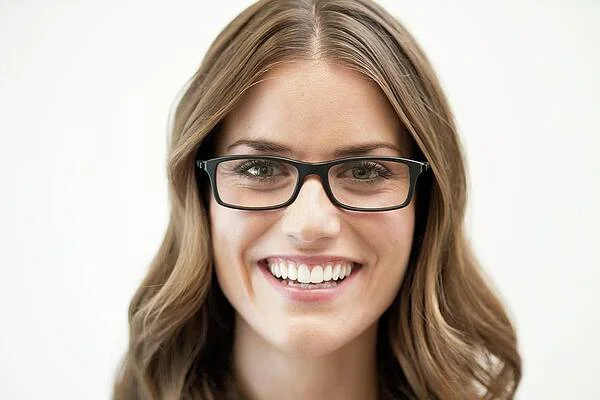
Short hair is the easiest partner for glasses, because there is nothing to fall across the lenses and the frames stay fully visible. A pixie or a chin-length bob shows off bold frames beautifully and takes minutes to style. The trade-off is frequency: short cuts need a trim every four to six weeks to keep their shape, so they suit women who do not mind regular salon visits.
Medium lengths, from the collarbone to the shoulders, are the most forgiving of all. A lob or a layered shoulder cut can be worn loose, half up or tied back, and it frames the face without hiding the glasses. Long hair works too, provided the front layers start below the chin and the hair is kept off the temples; the reward is the most styling choice of any length, from waves to braids to a low bun.
Texture makes a difference too. Straight, blunt bangs sit heavily against thick frames, while the same fringe cut with soft, feathered ends feels much lighter. If your hair is wavy, ask for the bangs to be cut slightly longer, since they will spring up as they dry. And keep a small pair of scissors out of reach: trimming your own fringe between appointments usually ends with bangs that are shorter than planned and frames that suddenly look too big.
g06 — Bangs and Glasses Without the Clash
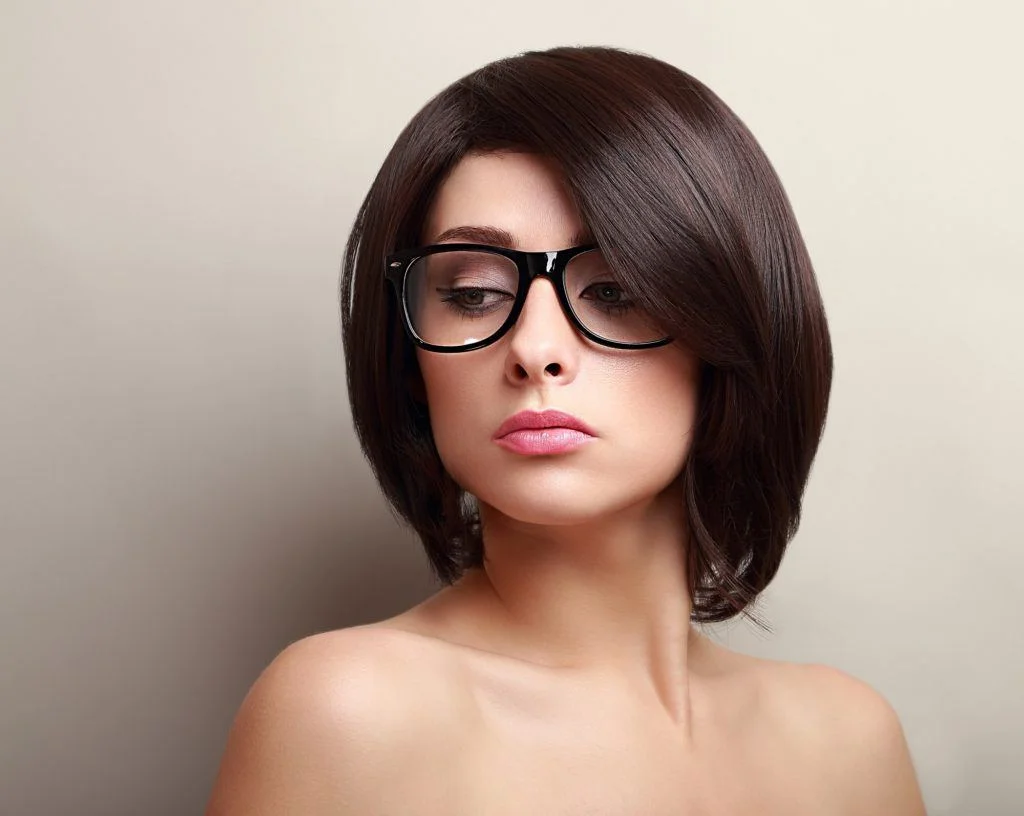
Bangs and glasses can be a wonderful pair, but only when the fringe is cut to the right length. The golden rule is simple: bangs should end either well above the top of your frames or just at the brow, never sitting directly on the lenses. Curtain bangs and wispy bangs are the safest choices, because they part around the frames and leave the lenses clear.
Blunt, heavy bangs can work with thin, delicate frames, but with thick frames the combination can feel crowded, so ask your stylist to soften the edges. A common mistake is cutting bangs while the glasses are off and then discovering they sit differently once the frames are on, so always do the final check wearing your glasses. A quick blast with the dryer and a round brush each morning keeps the fringe sitting where it belongs.
One practical tip is to match the warmth of your hair colour to the warmth of your frames. Golden and copper tones sit happily beside tortoiseshell and amber frames, while ash blonde and cool brown work well with black, grey and silver. When the tones agree, the hair and the glasses look like they were chosen together, and the whole face appears more harmonious without any extra effort.
g07 — Colour, Texture and Volume Around Frames
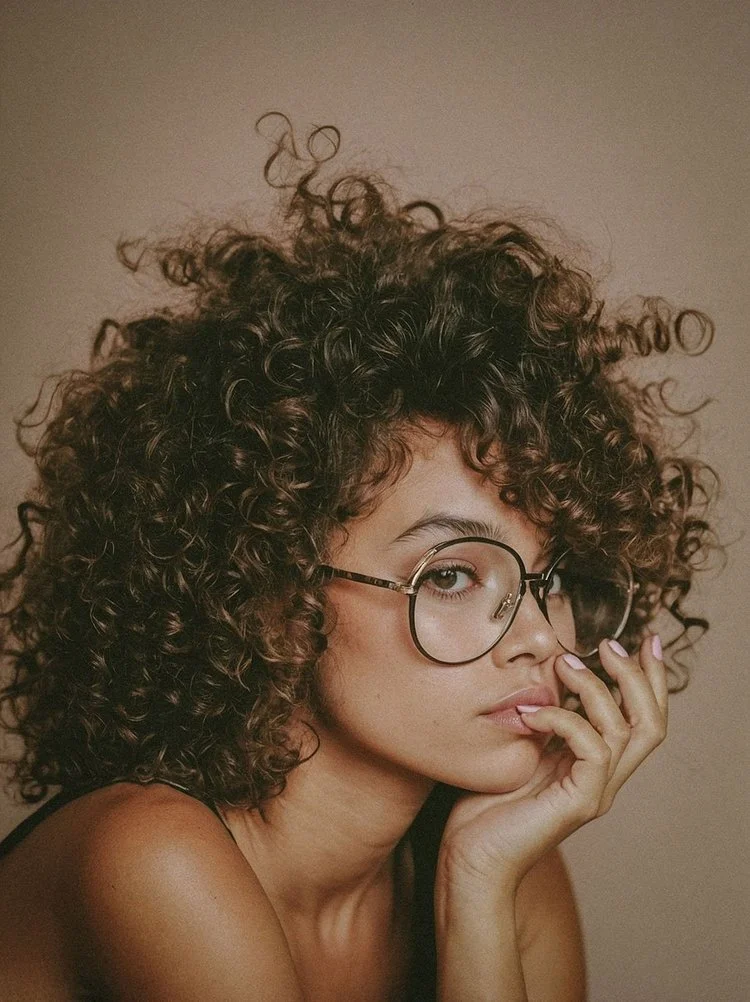
Volume around the frames changes how big your glasses look. Big, wide curls can swallow small frames, while flat, sleek hair can make large frames dominate the face. The aim is balance: if your frames are bold, keep the volume controlled near the face and let it build lower down; if your frames are fine, a little extra lift at the crown stops the look from going flat.
Colour works the same way. Dark hair makes light frames stand out, and light hair makes dark frames pop, so think about contrast before you book a colour appointment. Warm tones like honey and copper flatter tortoiseshell frames, while cool ash and silver tones look striking with black or grey frames. A few face-framing highlights can also draw the eye to your features rather than letting the frames do all the work.
The other habit worth building is a weekly check of your glasses themselves. Loose screws and bent temple arms change how the frames sit, which changes how the hair falls around them, so a quick tighten at the optician every few months keeps everything in place. When the frames sit correctly, the haircut you chose for them keeps working exactly as it was designed to.
g08 — An Everyday Styling Routine That Actually Fits Real Life
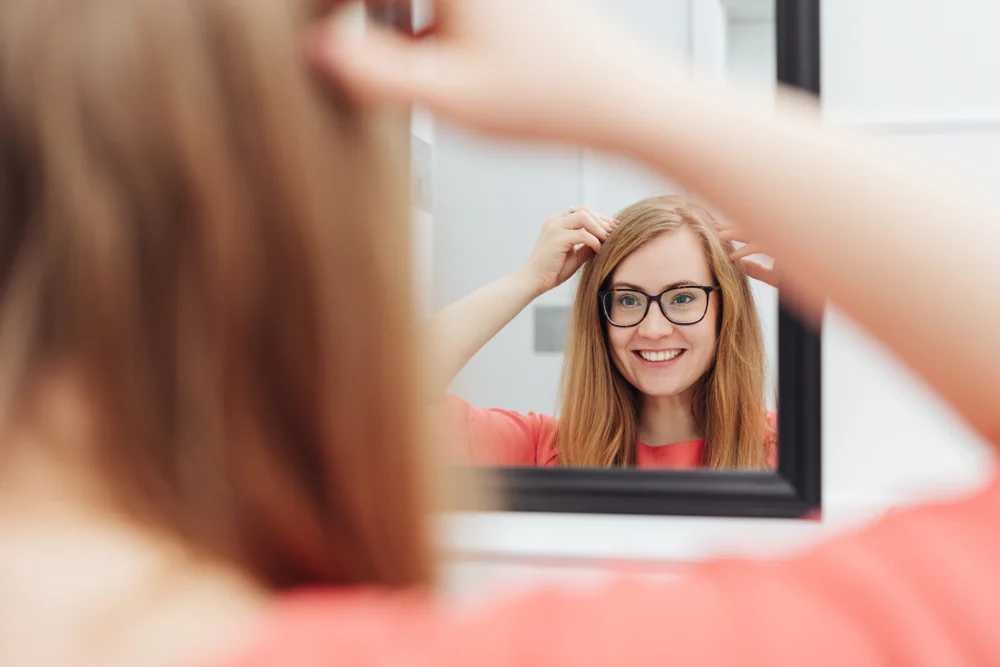
A good glasses-friendly routine is short enough to survive a busy morning. Start by putting your glasses on before you style, so you can see exactly where the hair meets the frames. Dry the front sections first, directing them away from the lenses, and only then move on to the back. Two minutes of attention at the front saves ten minutes of fixing smudged lenses later.
Keep three tools within reach: a small round brush for the front, a light-hold spray for flyaways, and a couple of bobby pins for the days when the hair will not behave. Wash your glasses each evening, because styling products build up on the lenses faster than you expect. And when you book a cut, tell your stylist you wear glasses every day; a good stylist will shape the cut around the frames rather than treating them as an afterthought.
Finally, remember that this cut is easy to dress up as well as down. Add a little volume at the crown for an evening out, or tuck one side behind the ear to show off a statement earring. The bob is a classic for a reason, and with glasses it becomes even more flattering, because the clean shape gives the frames a beautiful, uncluttered setting to shine in.
§01 — Classic Bob with a Side Part
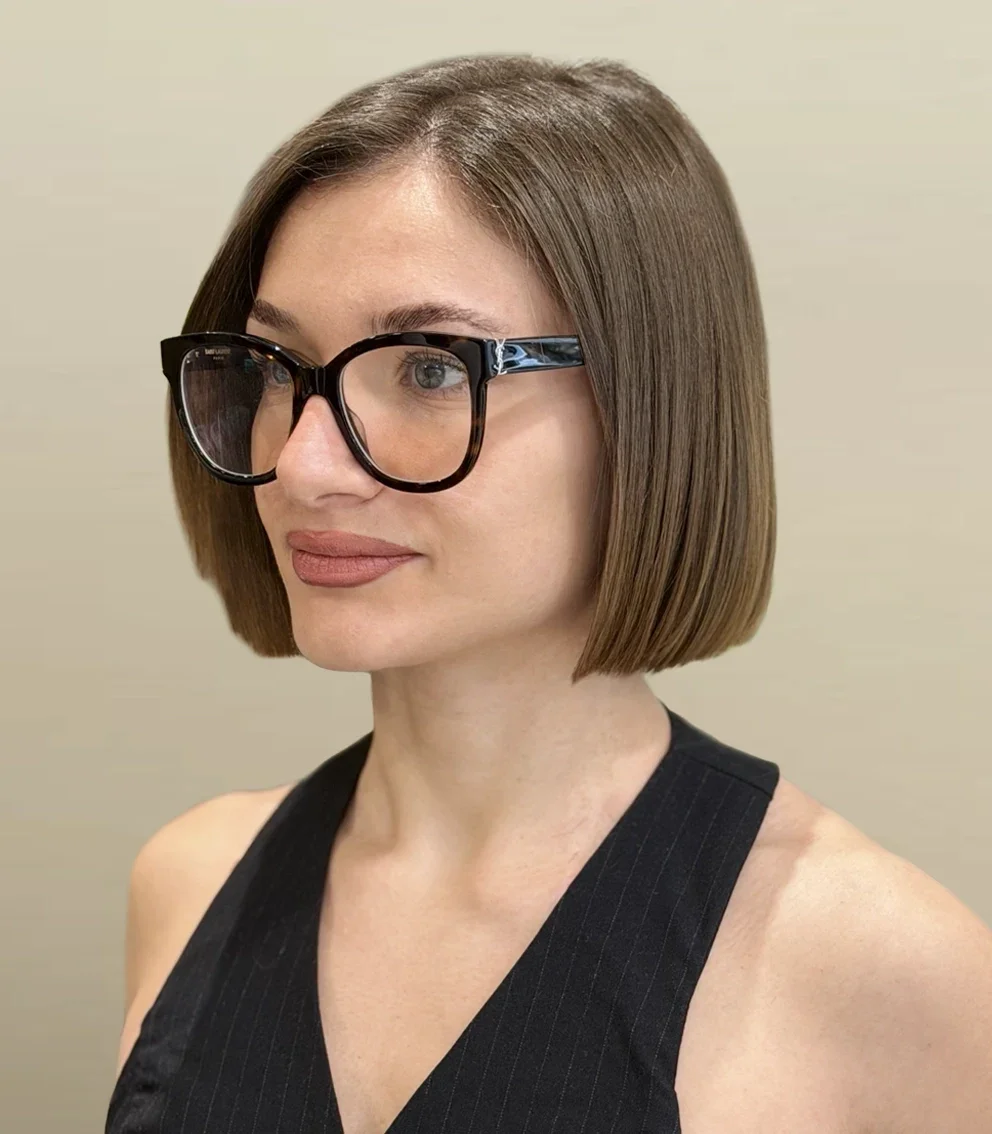
The classic bob with a side part is the most reliable of all hairstyles for women with glasses, because it does everything right with almost no effort. The side part sweeps the front section away from the lenses, the chin-length ends frame the jaw without touching the frames, and the clean line of the cut makes even simple black frames look deliberate and polished.
Best for: straight to slightly wavy hair, oval and round faces, and anyone who wants a smart everyday look. How to style: blow-dry with a round brush, turning the ends under slightly, and finish with a drop of serum on the mid-lengths only. The whole routine takes about ten minutes, and on second-day hair a quick pass with a straightener is enough.
What to ask your stylist: a bob that ends right at the chin, with the part cut in rather than left to chance. Common mistake: letting the front pieces grow past the chin, where they start to brush the lenses. A trim every six weeks keeps the shape sharp, and the cost is simply a standard bob cut with no extra colour or treatment needed.
§02 — Layered Lob
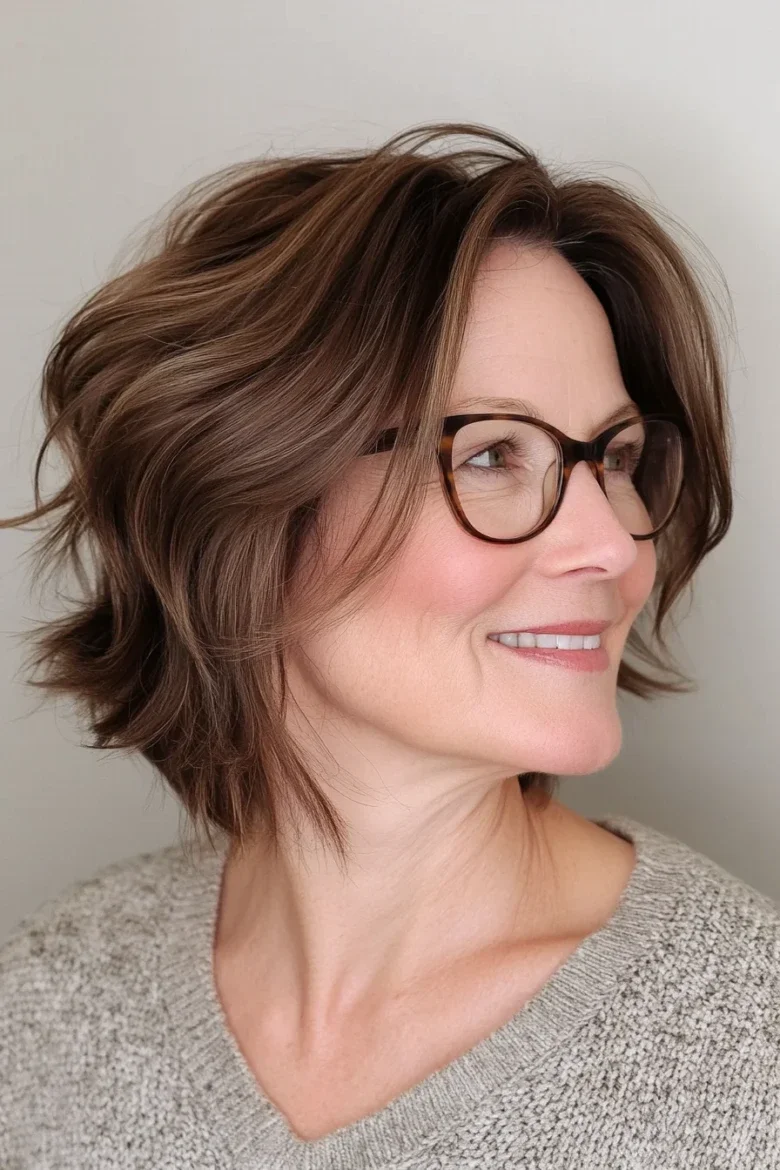
The layered lob sits between the chin and the collarbone, and it is the easiest long-ish cut to live with when you wear glasses. Layers through the mid-lengths stop the hair from hanging in a heavy curtain over the frames, while the extra length still lets you tie it back on busy days. It suits almost every face shape, which is why it appears in salon chairs more than any other cut.
Best for: thick hair that needs weight removed, and wavy hair that needs shape. How to style: rough-dry with a little mousse, then bend the ends with a flat iron for soft movement. The layers do most of the work, so this is a genuinely low-effort style that still looks finished.
Pros and cons: the pros are versatility and easy growing-out; the only real con is that very fine hair can look thinner if the layers are cut too short. What to ask your stylist: long layers that start below the chin, never above it, so nothing falls across the lenses. Quick verdict: if you only try one style from this list, make it this one.
§03 — Pixie Cut
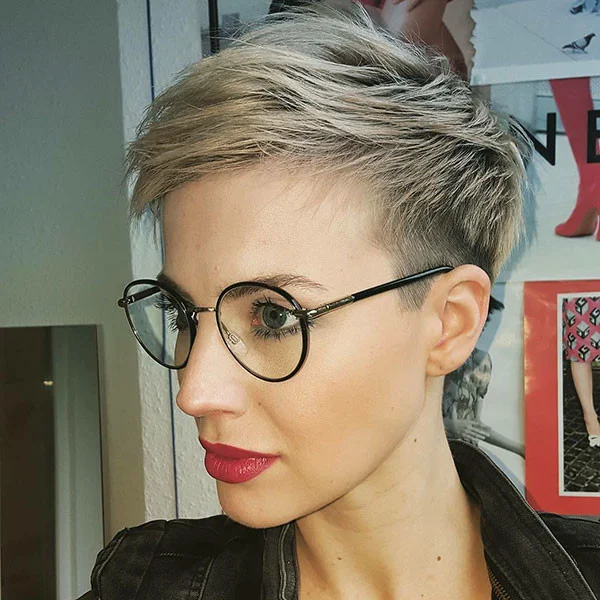
A pixie cut puts your glasses front and centre, and that is exactly its charm. With the hair short at the sides and textured on top, the frames become the main accessory, and the whole look feels confident and modern. It is also the fastest style to get ready in the morning, which matters more than most people admit.
Best for: bold frames, strong cheekbones, and women who like a low-maintenance routine. How to style: work a pea-sized amount of texturising paste through damp hair, push the top forward or to one side, and let it air-dry. No dryer, no round brush, no fuss, and the glasses stay completely clear of hair.
Who should avoid it: anyone who is not ready for a dramatic change, because a pixie takes months to grow out. Maintenance: a tidy-up every four to five weeks. What to ask your stylist: keep a little length on top so you can change the direction of the fringe, and keep the sides neat around the temple arms of your glasses.
§04 — Long Layers with a Centre Part
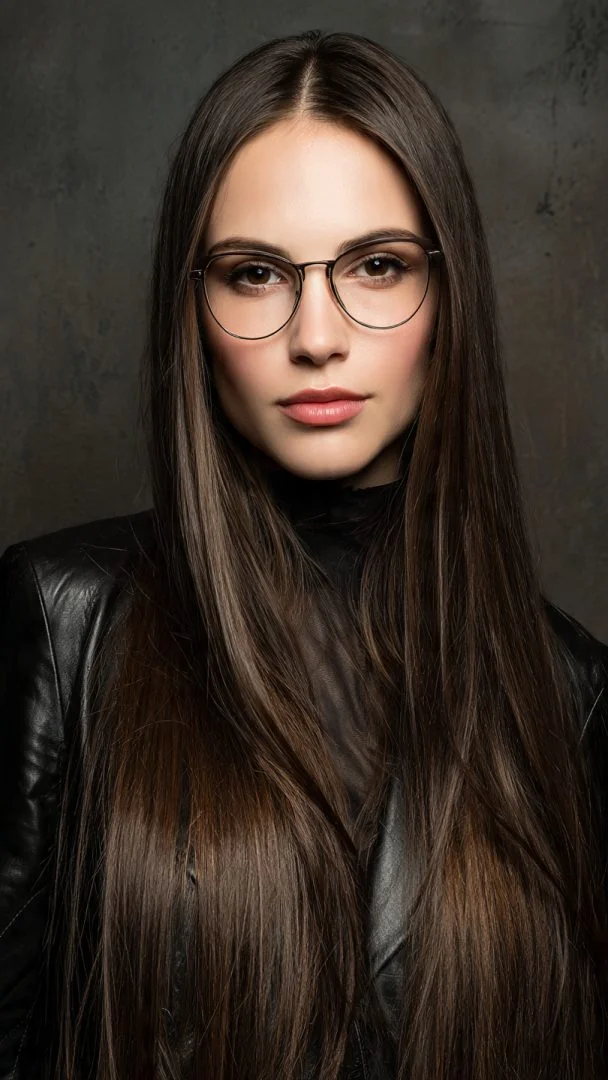
Long layers with a centre part look calm and balanced with glasses, because the hair falls evenly on both sides and the frames sit in the middle of a neat frame of hair. The key detail is where the layers begin: start them at the collarbone or lower, and the front sections will fall beside the lenses instead of across them.
Best for: long, straight or gently wavy hair and oval faces. How to style: blow-dry smooth with a paddle brush, or let it air-dry and add a soft bend to the ends with a large-barrel iron. A centre part also makes it easy to tuck one side behind the ear when you want the frames fully visible.
Common mistake: cutting face-framing layers too short, so they flick across the lenses and smudge them all day. Maintenance: trims every eight to ten weeks and a weekly mask to keep the ends healthy. Quick verdict: timeless, polished and quietly flattering, especially with thin metal frames.
§05 — Curtain Bangs
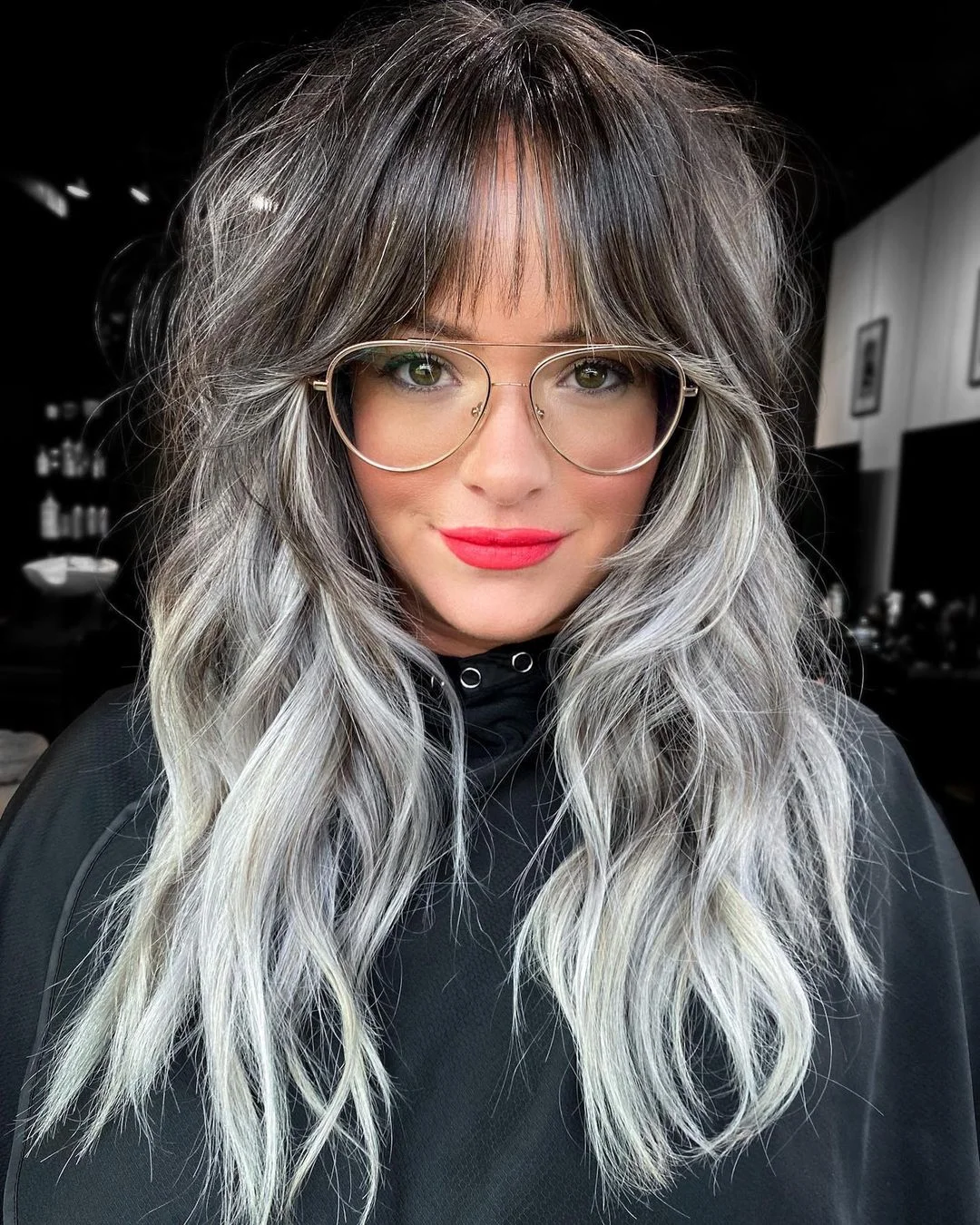
Curtain bangs are the friendliest fringe a glasses wearer can choose. They part in the middle and sweep to each side, so they frame the face and the frames at the same time instead of sitting on top of the lenses. They also grow out gracefully, which means no awkward in-between stage and no emergency trim every fortnight.
Best for: long and medium hair, round and square faces, and anyone nervous about committing to a full fringe. How to style: blow-dry the bangs forward with a round brush, then split them in the middle with your fingers. A minute of work is genuinely enough, and the rest of the hair can be left natural.
What to ask your stylist: bangs that end at the cheekbone, with soft, feathered ends. Pros and cons: the pros are versatility and easy upkeep; the con is that very curly hair will need a quick straighten to keep the curtain shape. Maintenance: a trim every six to eight weeks, or simply let them blend into the layers.
§06 — Soft Waves
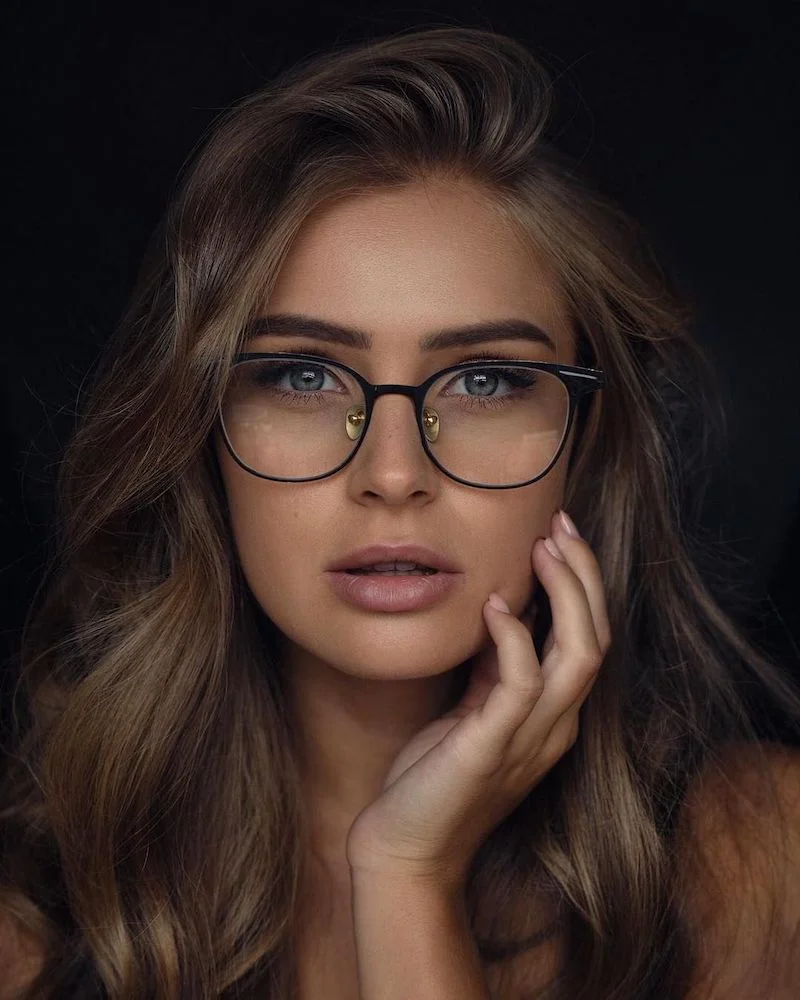
Soft waves are the most forgiving texture to pair with glasses, because the movement in the hair echoes the curves of the frames without competing with them. The waves keep the hair from lying flat against the lenses, and they add width exactly where many face shapes need it. This is a style that looks good slightly undone, which is a gift on busy mornings.
Best for: medium to long hair with a natural wave, and fine frames that need a little softness around them. How to style: wrap wide sections around a large-barrel iron away from the face, then brush through gently for a soft finish. A sea-salt spray on damp hair gives a similar effect with no heat at all.
Common mistake: curling the front sections towards the face, which pushes hair straight onto the lenses. Always curl away from the face at the front. Cost and time: ten minutes with an iron, or zero minutes if your hair waves naturally. Quick verdict: relaxed, romantic and endlessly wearable.
§07 — Sleek Straight Long Hair
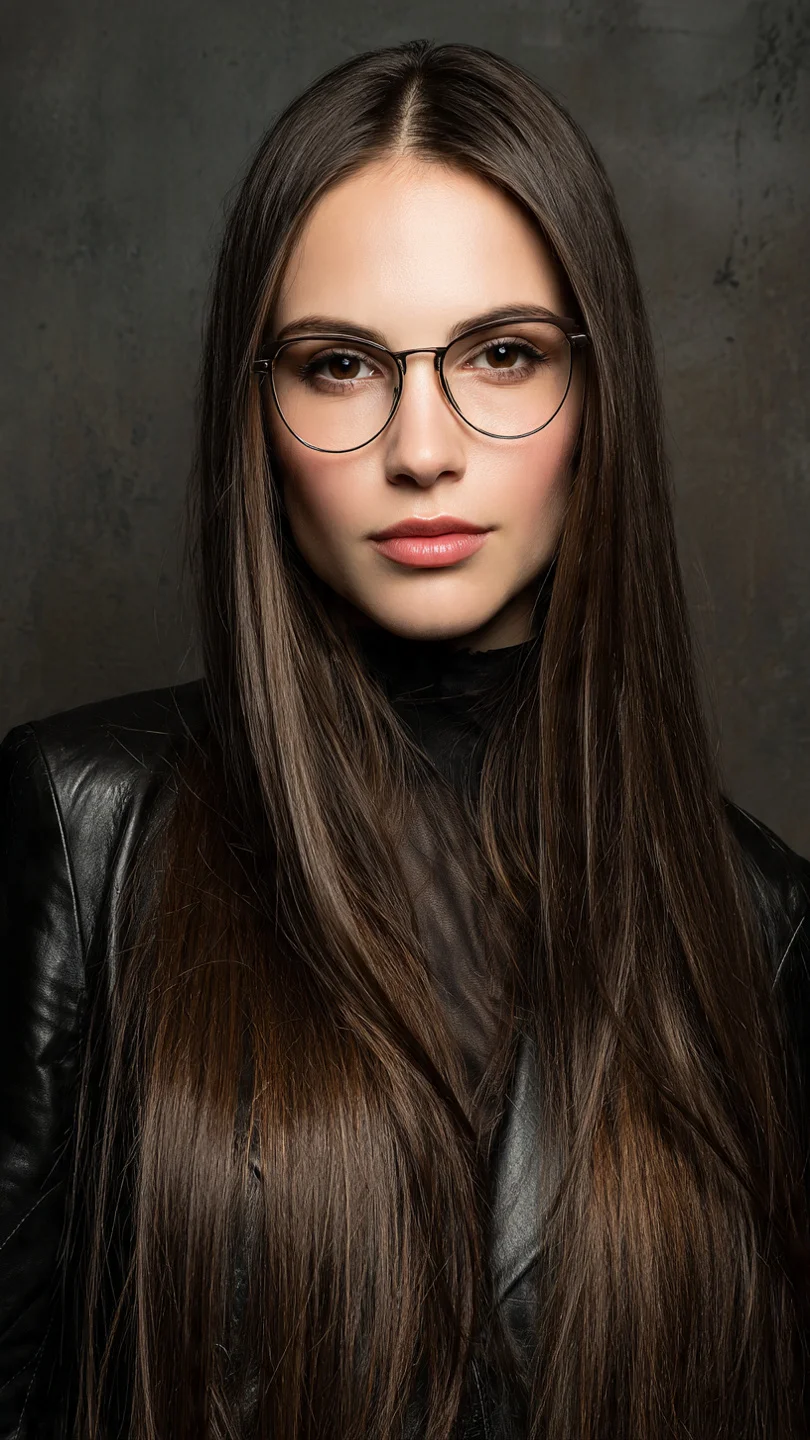
Sleek, straight long hair looks striking with glasses because the clean lines make the frames look intentional, like jewellery rather than an afterthought. The smooth finish reflects light, which draws attention to the eyes, and the simplicity of the style means the glasses can be as bold as you like without the look becoming busy.
Best for: naturally straight hair, strong frames, and formal or work settings. How to style: blow-dry smooth with a paddle brush, then run a flat iron over the lengths in slow passes. A shine spray on the mid-lengths finishes the look, but keep products away from the temples so they never reach the lenses.
Maintenance: regular trims and a heat protectant every time you use the iron. Who should avoid it: anyone with very fine hair that goes flat quickly, since the style depends on smoothness and weight. What to ask your stylist: a blunt or barely layered cut, so the hair falls in one clean line.
§08 — Shoulder-Length Shag

The shoulder-length shag is the cool, lived-in answer to glasses-friendly hair. Choppy layers, a little texture at the crown and soft ends create movement that stops the hair from sitting flat against the frames, and the cut looks even better on the second day, when the layers have had time to settle into their natural shape.
Best for: wavy or thick hair, and women who want a modern cut without a high-maintenance routine. How to style: scrunch a little mousse into damp hair and let it air-dry, or rough-dry with your fingers for extra texture. The messier it looks, the better it works, which is rare for a haircut.
Pros and cons: the pros are volume, texture and very easy growing-out; the con is that the layers need a skilled cut to avoid looking untidy rather than deliberately tousled. What to ask your stylist: layers that start at the cheekbone and lots of texture through the ends. Quick verdict: effortlessly stylish, especially with tortoiseshell frames.
§09 — French Bob
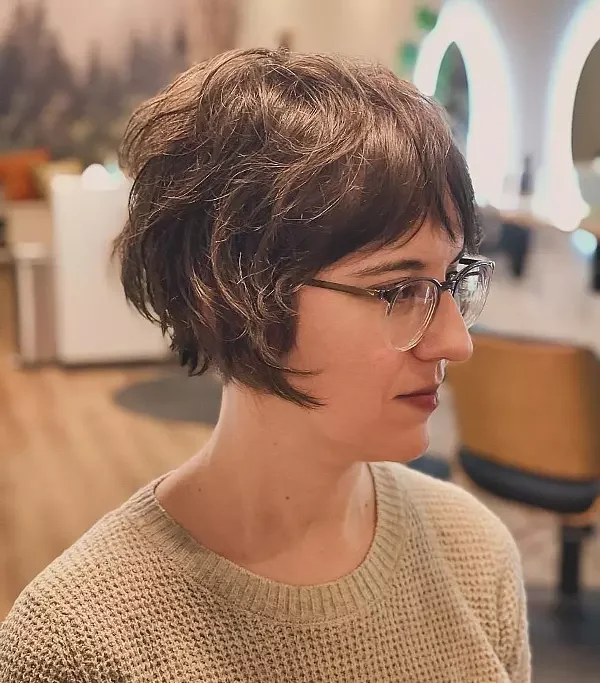
The French bob is short, chic and quietly confident, ending around the jaw with a soft fringe or a side sweep. It shows off the frames completely, which makes it a natural choice for women who love their glasses and want them seen. The cut has a Parisian ease to it that works just as well with jeans as with a tailored jacket.
Best for: fine to medium hair, oval and heart-shaped faces, and round or oval frames. How to style: blow-dry with a small round brush for a gentle under-curl, or let it air-dry for a more relaxed finish. A touch of wax on the ends gives the cut its signature piecey texture.
Maintenance: a trim every five to six weeks to keep the jaw-length shape. Common mistake: cutting the fringe too short, which can make the frames look oversized by comparison. What to ask your stylist: a bob that ends at the jawline, with soft ends rather than a hard blunt line.
§10 — Wispy Bangs
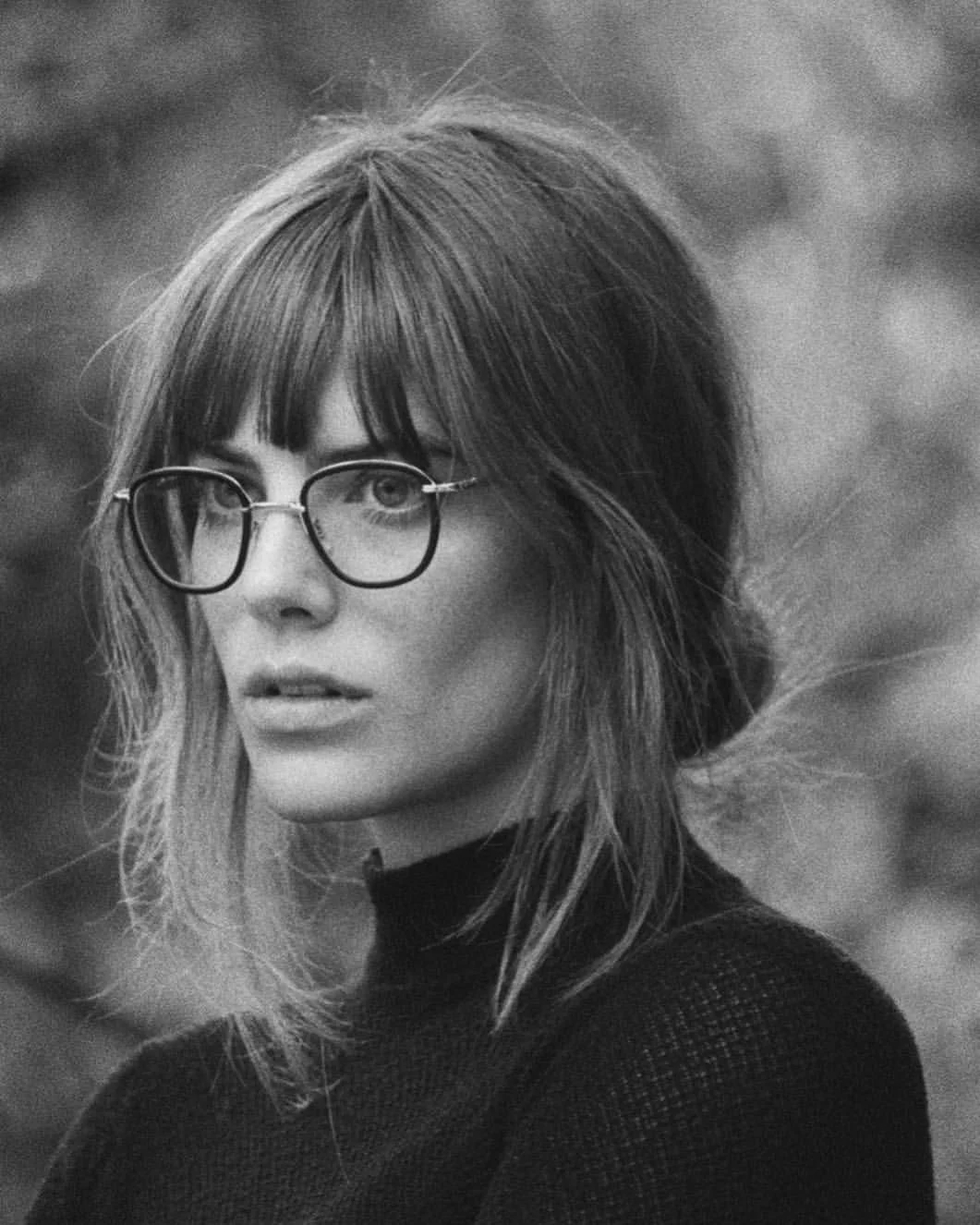
Wispy bangs are the lightest possible fringe, and that lightness is exactly why they work so well with glasses. The fine, see-through strands soften the forehead without covering the frames, and they let the eyes stay visible, which is the whole point of wearing glasses as part of your look rather than in spite of them.
Best for: fine hair, long faces, and anyone who wants bangs without the commitment. How to style: blow-dry the fringe forward with a small brush, or simply finger-comb it into place on damp hair. Because the bangs are light, they rarely need more than thirty seconds of attention.
Pros and cons: the pros are softness and easy growing-out; the con is that they can look sparse on very thick hair. What to ask your stylist: a feathered, piecey fringe that ends at the brow. Quick verdict: the safest first fringe for a glasses wearer, and one of the prettiest.
§11 — Side-Swept Bangs
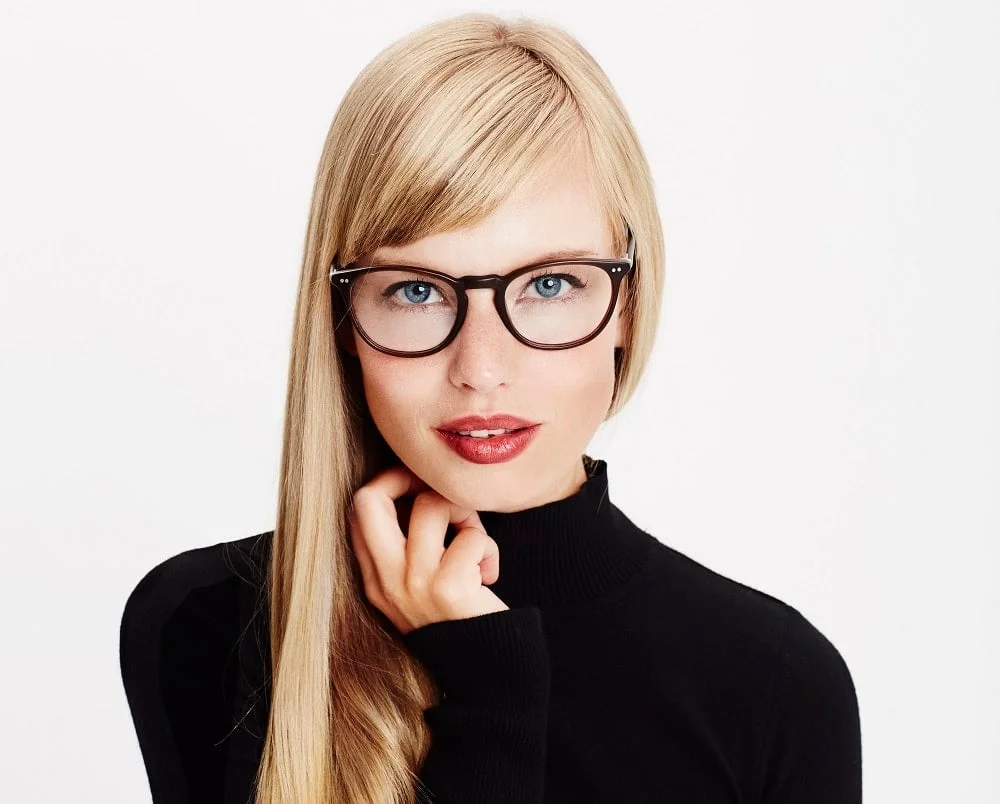
Side-swept bangs solve the biggest problem of fringes and glasses in one move: they move the hair to the side, away from the lenses. The diagonal line across the forehead also adds asymmetry, which flatters square and round faces and makes the frames look like part of a considered, styled look rather than something added on top.
Best for: square and round faces, thick hair, and bold frames that need a little softness nearby. How to style: blow-dry the bangs across the forehead with a round brush, directing them to one side. A light-hold spray keeps them in place without making them stiff, and the style survives a whole day of putting glasses on and off.
Common mistake: cutting the bangs too long, so they fall across the lenses when you look down. Maintenance: a trim every four weeks, since a side-swept fringe loses its line quickly. What to ask your stylist: a fringe that starts at the part and sweeps past the brow on the longer side.
§12 — Low Bun
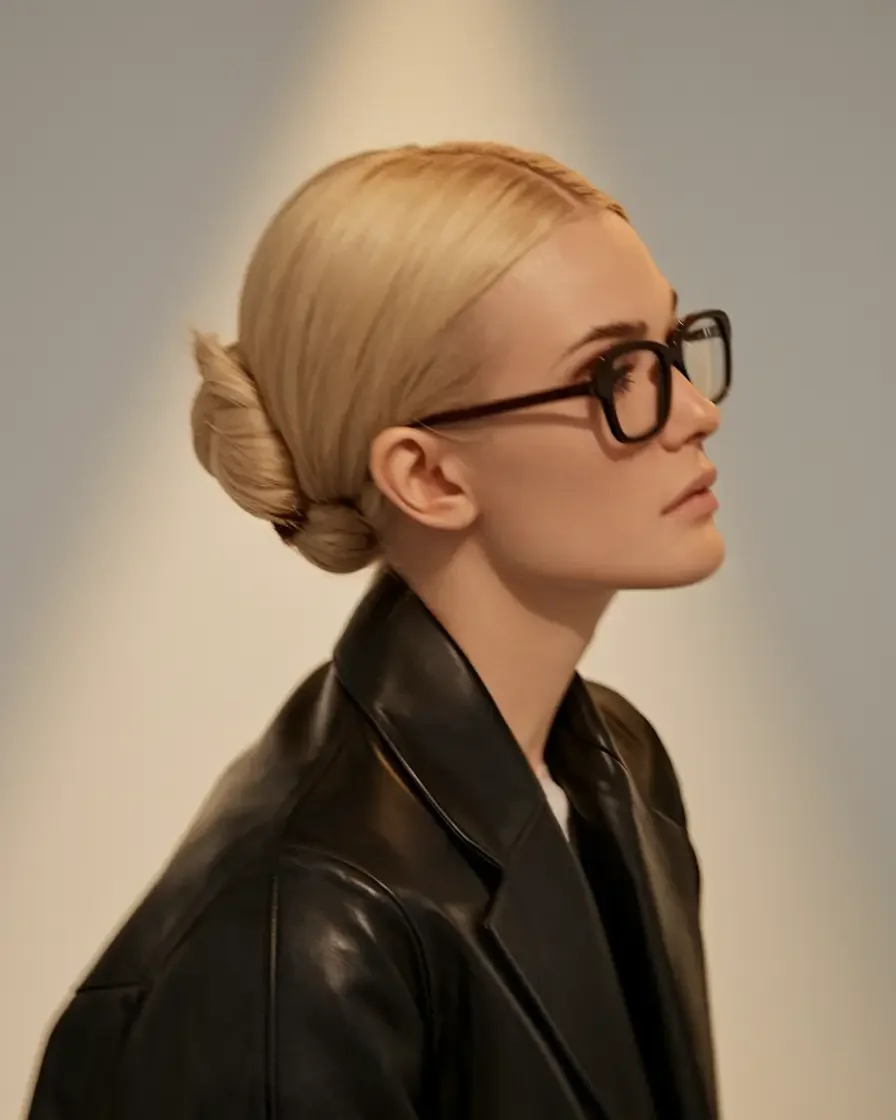
The low bun is the elegant answer to a practical problem: it keeps every strand away from your glasses while still looking polished enough for work, weddings and everything in between. Sitting at the nape, it leaves the frames completely clear and shows off your face, your earrings and your frames all at once.
Best for: medium to long hair, formal occasions, and hot days when loose hair is the last thing you want near your face. How to style: gather the hair low, twist it gently and pin it in place, leaving two soft face-framing pieces out at the front. A little texture spray beforehand stops the bun from slipping.
Pros and cons: the pros are comfort, elegance and zero lens smudging; the con is that very fine hair may need a hair donut or some backcombing for fullness. Maintenance: none beyond your usual wash routine. Quick verdict: the most useful updo a glasses wearer can learn.
§13 — High Ponytail

A high ponytail lifts everything up and away from the frames, giving the face a fresh, energetic look that works for the gym, the office and a night out. The lift at the crown also balances strong frames beautifully, and the ponytail itself can be sleek or wavy depending on the mood.
Best for: long hair, oval faces, and days when you want your glasses to be the star. How to style: brush the hair up high, secure it with a snag-free tie, and wrap a small strand around the base to hide the band. Smooth the front with a little gel or spray, and keep the crown slightly lifted rather than scraped flat.
Common mistake: pulling the ponytail too tight, which can make the temples ache where the glasses sit. Maintenance: no special care, though a silk scrunchie helps prevent breakage. What to ask your stylist: face-framing layers that soften the look when the ponytail is up.
§14 — Messy Bun
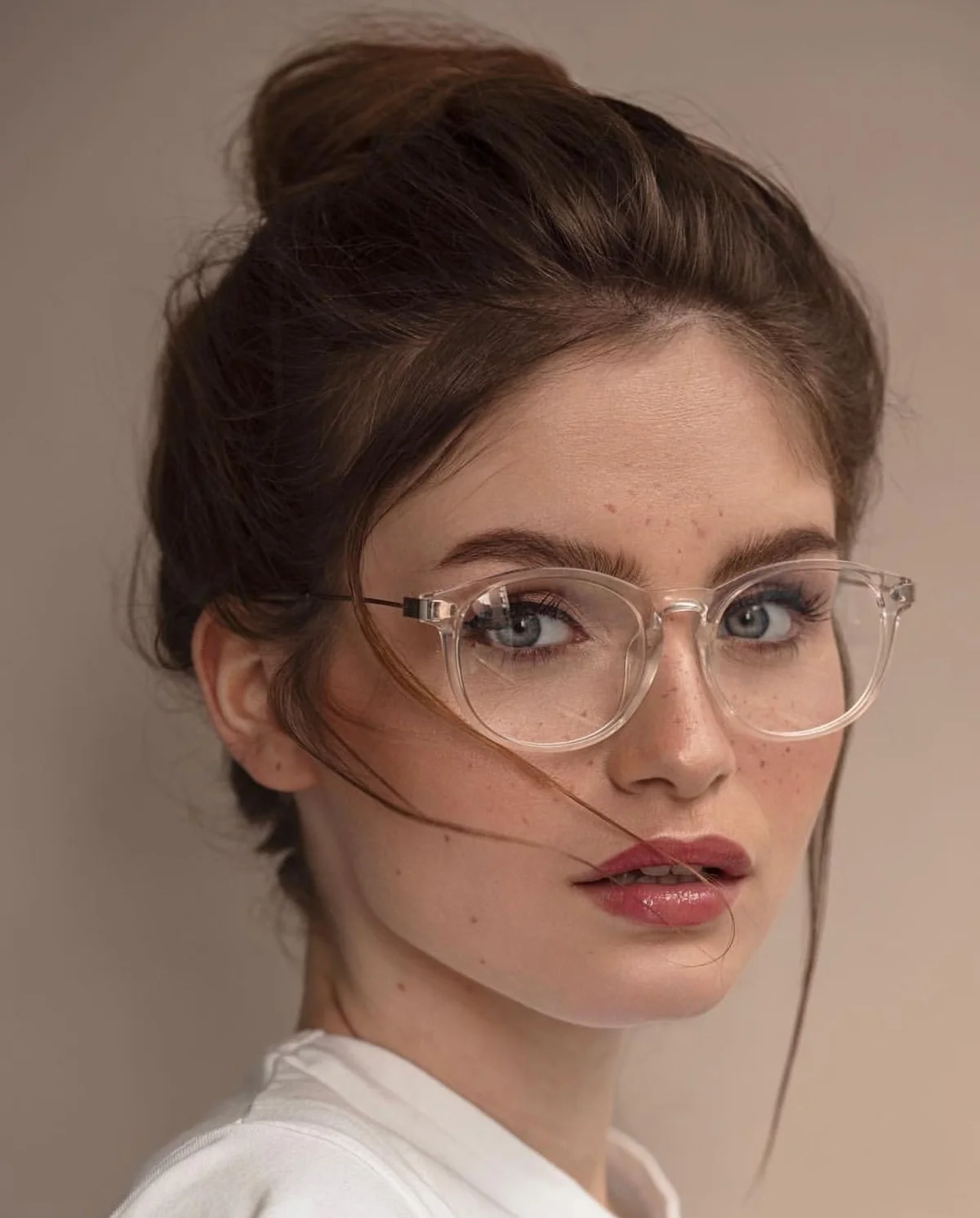
The messy bun is the style every glasses wearer reaches for on a lazy day, and it earns its place here because it genuinely works: the hair is up, the lenses stay clean, and the loose, undone finish looks intentional rather than rushed. It is the rare style that gets better the less perfect you make it.
Best for: second-day hair, weekends, and anyone who wants to look put-together in under two minutes. How to style: gather the hair loosely at the crown or the back, twist it once, pin it, and pull out a few strands around the face. A little dry shampoo at the roots adds grip and volume in seconds.
Pros and cons: the pros are speed and comfort; the con is that it is not the best choice for very formal occasions. Who should avoid it: no one, really, though very short hair will need pins and patience. Quick verdict: fast, flattering and forgiving, and your glasses will thank you.
§15 — Half-Up Half-Down
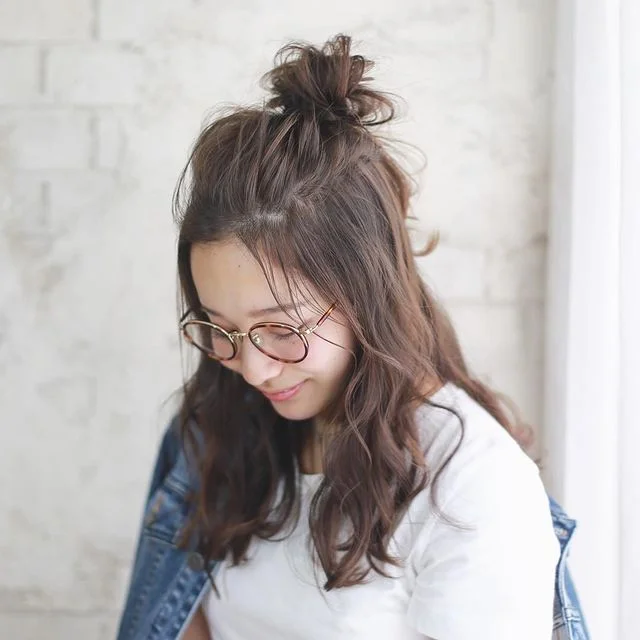
Half-up half-down gives you the best of both worlds: the top section is pulled away from the glasses, while the rest of the hair stays loose and soft around the shoulders. It is one of the most versatile styles in this guide, working for school runs, office days and evenings out with only a small change in how polished you make the top section.
Best for: medium to long hair, and women who like their hair down but hate it falling on their lenses. How to style: take the top third of the hair, twist or braid it lightly, and secure it at the back. Leave the front pieces soft, or tuck one side behind the ear to show off a frame detail.
Common mistake: taking too much hair up, which leaves the style looking like a ponytail with leftovers. Maintenance: none beyond your usual routine. What to ask your stylist: layers that keep the loose section from looking heavy next to the frames.
§16 — Side Braid
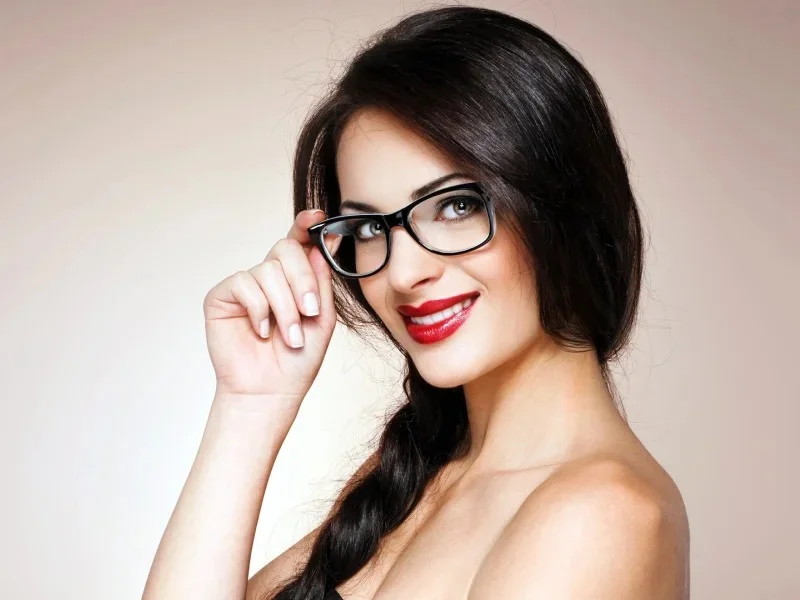
A side braid is a beautiful, practical choice for glasses wearers because it gathers all the hair to one side and keeps it there. The braid sits over one shoulder, far from the lenses, while the face stays open and the frames stay visible. It looks romantic and a little bit bohemian, and it holds up well through a long day.
Best for: long hair, thick hair, and warm weather. How to style: sweep the hair to one side, braid it loosely, and secure it with a small tie. Gently pull a few pieces of the braid wider to make it look fuller, and leave a soft strand free at the front on the opposite side.
Pros and cons: the pros are comfort and staying power; the con is that very layered hair will need pins to stop short pieces escaping. Maintenance: a braid done in the morning usually lasts all day. Quick verdict: charming, comfortable and kind to your lenses.
§17 — Curly Bob
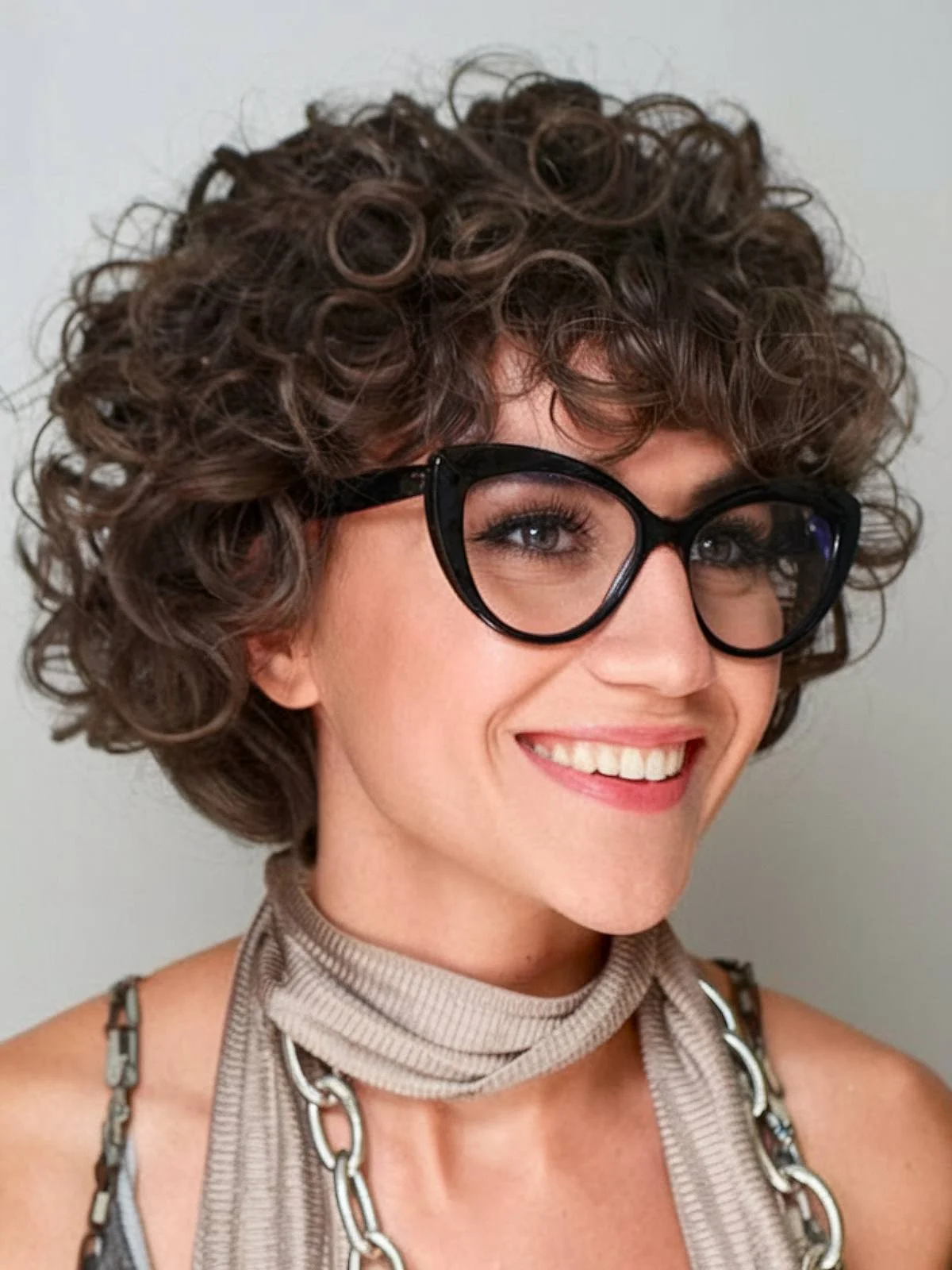
A curly bob is pure joy with glasses: the curls add volume and personality, the short length keeps the hair off the lenses, and the frames sit neatly inside the shape of the cut instead of fighting it. It is a style with real presence, and it suits women who want their hair to be noticed as much as their glasses.
Best for: naturally curly hair, round and oval frames, and anyone who wants volume without length. How to style: apply curl cream to wet hair, scrunch gently, and let it air-dry or diffuse on a low heat. Avoid brushing dry curls, which turns the bob into a halo of frizz.
Maintenance: a trim every six to eight weeks to keep the shape, and a weekly deep-conditioning treatment. Common mistake: cutting the bob too short when dry, since curls spring up several inches. What to ask your stylist: a dry cut, so the length is judged on the curls as they really fall.
§18 — Natural Curls

Natural curls and glasses are a match made in heaven when the shape is right. The volume of the curls balances the frames, the texture adds interest, and the overall look is warm and full of life. The secret is a cut that respects the curl pattern instead of fighting it, with layers that let the curls stack neatly around the face.
Best for: coily and curly hair of all lengths, and women who want to celebrate their natural texture. How to style: moisturise well, define the curls with a cream or gel, and let the hair dry without touching it. A pick at the roots adds lift, and a silk scarf at night keeps the curls fresh for days.
Who should avoid it: no one, but the cut matters more than the styling, so find a stylist who specialises in curly hair. Maintenance: regular trims and plenty of moisture. Quick verdict: bold, beautiful and completely your own.
§19 — Wavy Lob

The wavy lob is the relaxed cousin of the classic bob, with a little more length and a lot more movement. The waves keep the hair from lying flat against the frames, and the collarbone length means the style still feels long enough to play with while staying completely practical with glasses.
Best for: naturally wavy hair, fine hair that needs the illusion of thickness, and anyone who wants a wash-and-go cut. How to style: scrunch in some mousse, let it air-dry, and shake it out. On flat days, a few bends with a curling iron at the mid-lengths bring the shape back to life in five minutes.
Pros and cons: the pros are ease and movement; the con is that the waves can drop out in humidity. What to ask your stylist: soft layers that encourage the wave rather than cutting against it. Maintenance: trims every eight weeks and a light texturising spray.
§20 — Blunt Cut with a Middle Part

A blunt cut with a middle part is the sharpest look in this guide, and glasses make it sharper still. The straight, even ends create a strong geometric shape, and the middle part gives the face perfect symmetry, with the frames sitting right at the centre of the composition. It is a confident, editorial style that somehow also works for everyday life.
Best for: thick, straight hair and strong, bold frames. How to style: blow-dry smooth, then flat-iron the lengths in slow passes for a glass-like finish. The bluntness is the point, so keep the ends healthy and trimmed, and use a shine serum sparingly.
Common mistake: letting the ends go ragged, which ruins the whole effect. Maintenance: a trim every six weeks. Who should avoid it: anyone with very fine hair, which can look thin in a blunt cut, or very curly hair, which will not hold the line without daily heat styling.
§21 — Textured Pixie
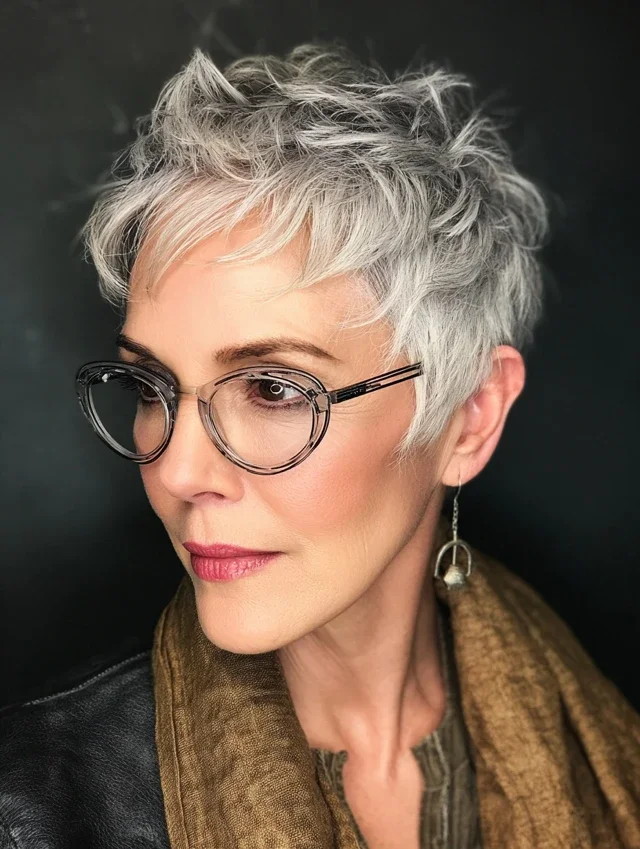
The textured pixie is the pixie cut with extra attitude: choppy layers, piecey ends and plenty of movement on top. It is especially flattering with glasses, because the texture in the hair stops the look from feeling severe, while the short length keeps the frames completely unobstructed. Silver and grey hair look spectacular in this cut.
Best for: women over fifty, fine hair that needs volume, and anyone who loves a bold frame. How to style: rub a little wax between your palms and piece the top into shape. The whole routine takes about two minutes, and the style holds all day.
Pros and cons: the pros are speed, volume and personality; the con is the frequent trims. What to ask your stylist: plenty of texture on top and a clean, tapered nape. Quick verdict: small cut, big impact, and your glasses have never looked better.
§22 — Chin-Length Bob

The chin-length bob is the shortest bob that still feels like a bob, and it is a gift for glasses wearers. The ends sit exactly at the jaw, framing the face without ever reaching the lenses, and the shape works with straight, wavy or gently curly hair. It is neat without being stiff, and it suits almost every frame shape.
Best for: oval, round and heart-shaped faces, and fine to medium hair. How to style: blow-dry with a round brush for a smooth finish, or add a little texture spray for a more casual look. Either way, the cut does the work, and the styling takes less than ten minutes.
Maintenance: a trim every five to six weeks to hold the chin length. Common mistake: adding too many layers, which can make the bob lose its clean shape. What to ask your stylist: a one-length cut with only the lightest layering at the very ends.
§23 — Long Bob with Layers

A long bob with layers is the style for women who want the polish of a bob with the freedom of longer hair. The layers add movement and stop the cut from looking heavy, while the length, just past the shoulders, still allows a ponytail or a low bun. With glasses, the layers also keep the hair from forming a solid wall beside the frames.
Best for: thick hair, wavy hair, and anyone growing out a shorter cut. How to style: blow-dry with a large round brush for volume, or air-dry with a little mousse for a softer finish. A side part adds extra sweep away from the lenses.
Pros and cons: the pros are versatility and easy growing-out; the con is that the layers need a good cut to sit properly. What to ask your stylist: layers that begin below the cheekbone and get longer towards the back. Quick verdict: the grown-up bob that does everything.
§24 — Side Part with Volume
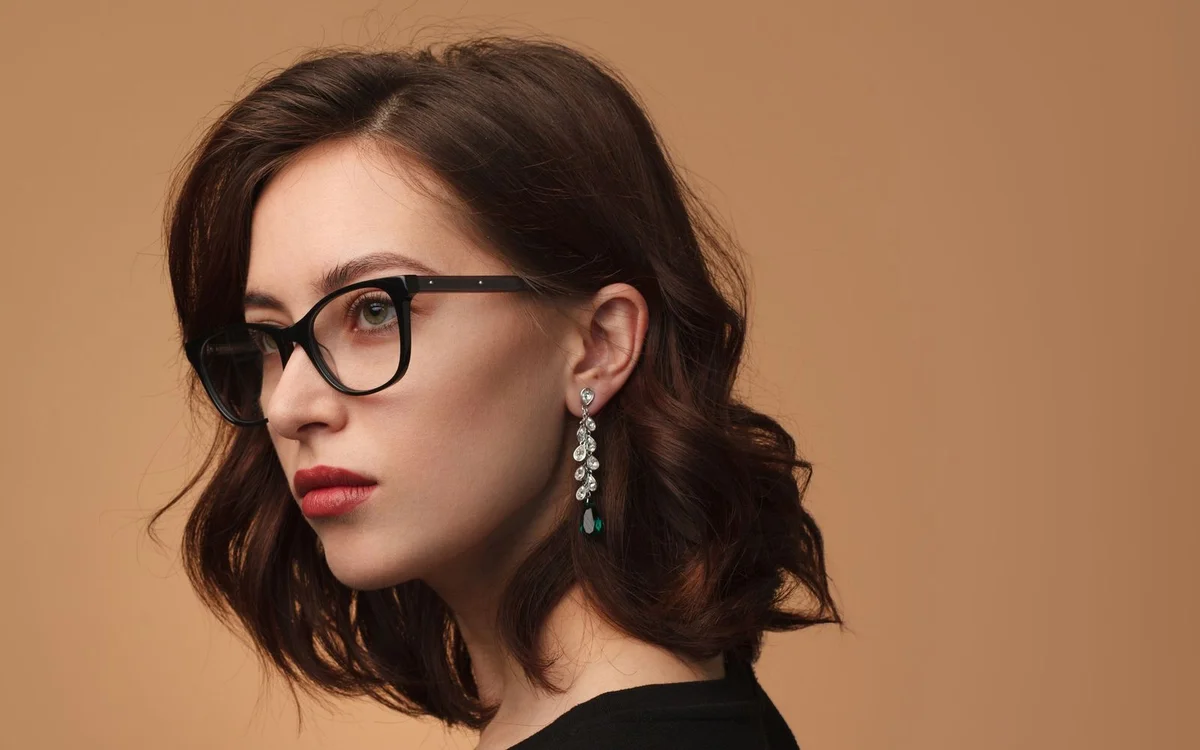
A deep side part with volume is one of the most glamorous ways to wear your hair with glasses. The volume at the crown lifts the whole face, the sweep across the forehead adds drama, and the hair falls away from the lenses on the shorter side, keeping your frames in full view. It is a red-carpet look that works just as well at the office.
Best for: special occasions, fine hair that needs lift, and round faces that benefit from asymmetry. How to style: blow-dry the roots with a round brush, lifting upwards, and set the part while the hair is still warm. A light-hold spray keeps the volume without stiffness.
Common mistake: overloading the roots with product, which weighs the volume down within an hour. Maintenance: no special care beyond your usual routine. What to ask your stylist: long layers that support the volume and a part cut to sit naturally on one side.
§25 — Loose Low Ponytail

The loose low ponytail is the understated hero of this guide. It gathers the hair gently at the nape, keeps it completely clear of the glasses, and looks soft and romantic rather than severe. A few loose strands at the front keep it from looking too strict, and the style suits everything from a school run to a dinner date.
Best for: long hair, busy days, and women who want an easy style that still looks finished. How to style: gather the hair loosely at the nape, secure it with a soft tie, and gently pull out a few face-framing pieces. A light tug at the crown adds a little volume and stops the style from looking flat.
Pros and cons: the pros are comfort and speed; the con is that very slippery hair may need a little texture spray to hold. Maintenance: none. Quick verdict: five seconds to a style that always works with glasses.
§26 — Top Knot
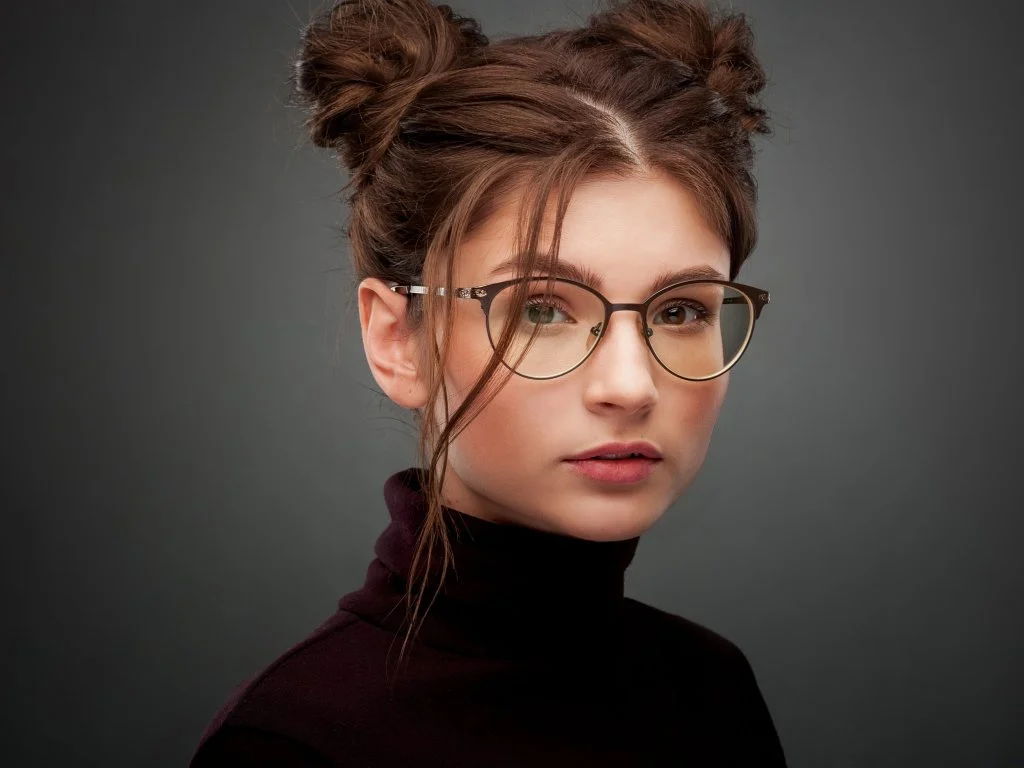
The top knot is the ultimate off-the-face style, and for glasses wearers that is a real advantage. With all the hair piled on top, the frames are completely clear, the face is fully open, and the look is fresh and modern. It works for workouts, workdays and weekends, and it takes about a minute to put together.
Best for: long hair, hot weather, and days when you want your glasses to do the talking. How to style: gather the hair high, twist it into a knot and pin it securely. Leave the front soft with a couple of loose strands, or slick it back for a sharper finish. A little dry shampoo beforehand gives the knot grip.
Common mistake: pulling the knot too tight, which can cause headaches where the glasses sit. Maintenance: none beyond your usual wash routine. Who should avoid it: anyone with very short hair, which will not reach into a knot without a lot of pins.
§27 — Beach Waves

Beach waves are relaxed, sun-kissed and perfectly suited to glasses, because the loose, uneven texture keeps the hair from sitting flat against the lenses. The style has a holiday feeling even on an ordinary Tuesday, and it flatters almost every face shape and frame style, from thin wire rims to chunky acetate.
Best for: medium to long hair, summer days, and anyone who likes a low-effort look. How to style: braid damp hair overnight, or wrap sections around a curling iron in alternating directions and brush through. A sea-salt spray adds the texture that makes the waves look natural rather than styled.
Pros and cons: the pros are ease and a relaxed finish; the con is that the waves can fall flat in very humid weather. What to ask your stylist: long layers that help the waves form naturally. Quick verdict: the easiest pretty style in this whole guide.
§28 — Straight Bob with Blunt Ends
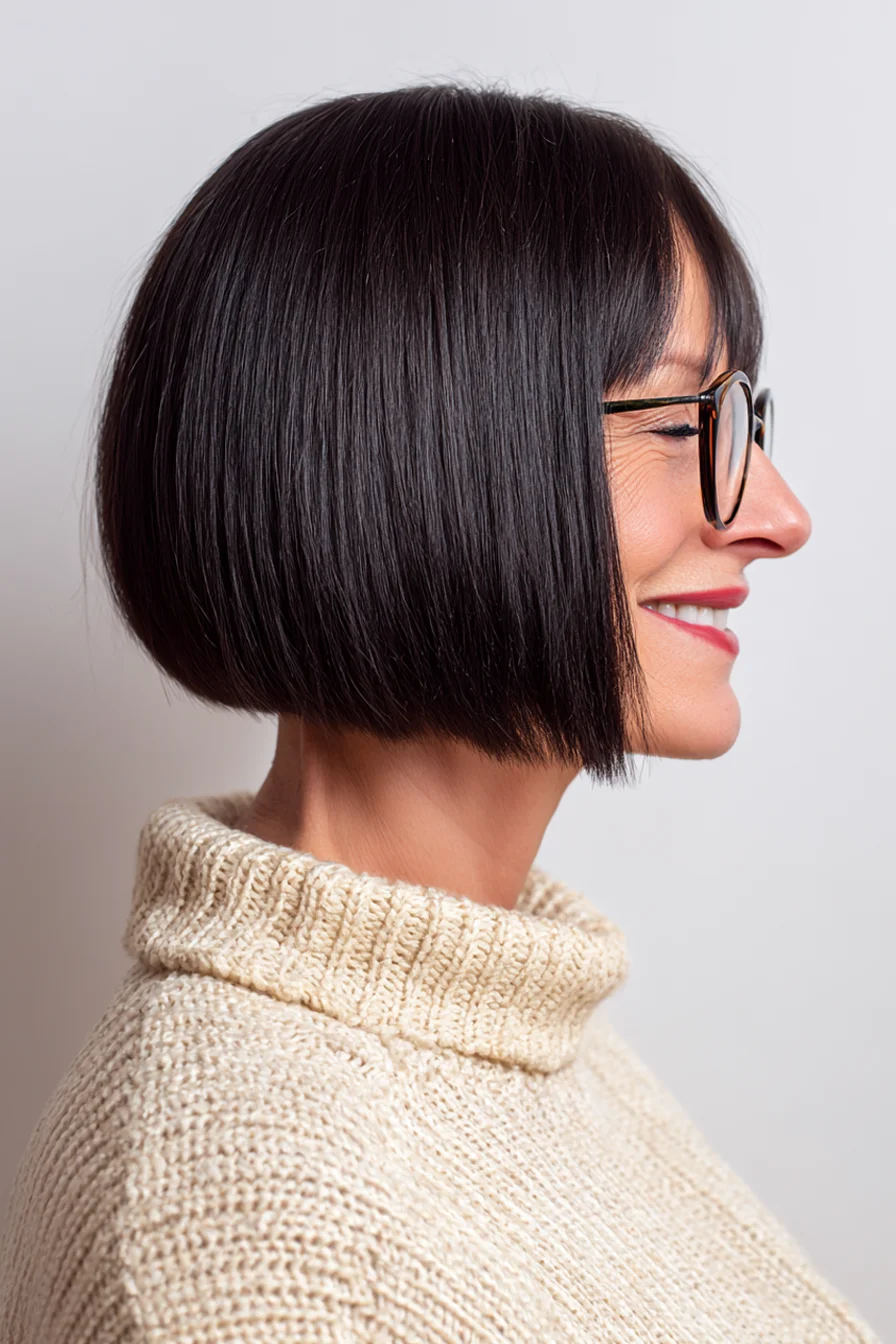
A straight bob with blunt ends is bold, graphic and wonderfully clean with glasses. The sharp line of the cut contrasts beautifully with the shape of the frames, and the profile view is especially striking, with the hair ending in one precise line. It is a style that says you know exactly what you like.
Best for: straight, thick hair and strong frames. How to style: blow-dry straight with a paddle brush and finish with a flat iron for a mirror-smooth result. The blunt ends are the whole point, so keep them trimmed and healthy with regular cuts.
Maintenance: a trim every five to six weeks and a heat protectant whenever you use the iron. Common mistake: adding layers, which softens the blunt line and defeats the purpose of the cut. What to ask your stylist: a true one-length bob with no layering at all.
§29 — Pixie-Bob
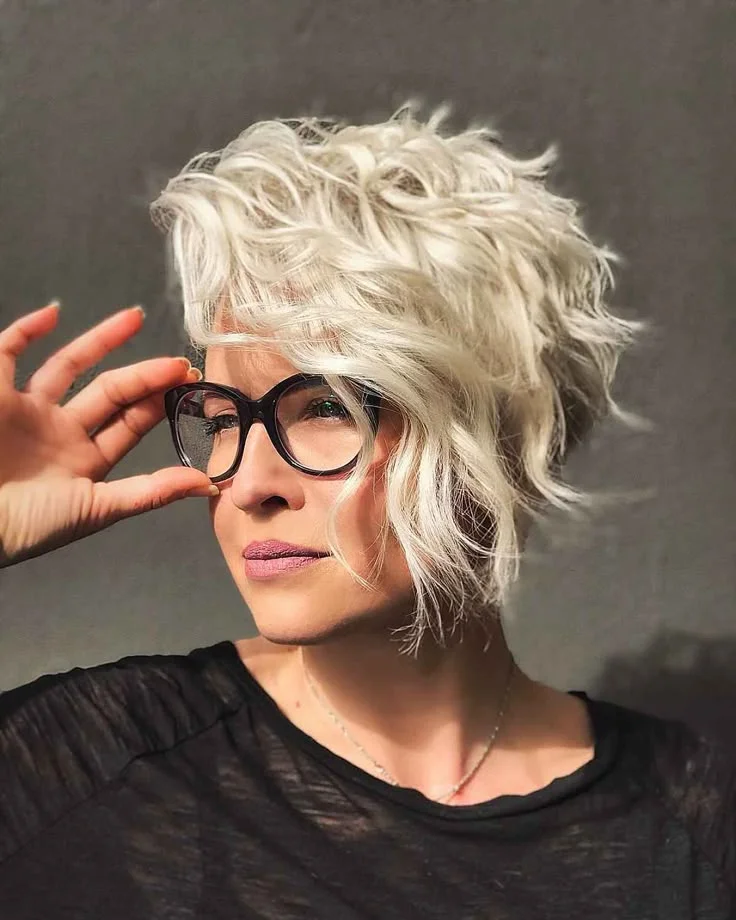
The pixie-bob is the perfect compromise between short and medium hair: longer than a pixie, shorter than a bob, with soft layers that give it movement and shape. It frames the face beautifully, keeps the hair well away from the glasses, and looks modern without trying too hard. It is also one of the easiest cuts to grow out.
Best for: fine to medium hair, oval and heart-shaped faces, and women who want short hair with a little more styling freedom. How to style: blow-dry with a small round brush for volume, or work in a little texturising cream and let it air-dry. Both finishes look good, which is the beauty of the cut.
Pros and cons: the pros are versatility and easy upkeep; the con is that the shape needs a trim every five weeks to stay crisp. What to ask your stylist: a longer top with a tapered nape, so the cut reads as a pixie-bob rather than a short bob. Quick verdict: short hair with options, and glasses love it.
§30 — Soft Curls with a Side Part
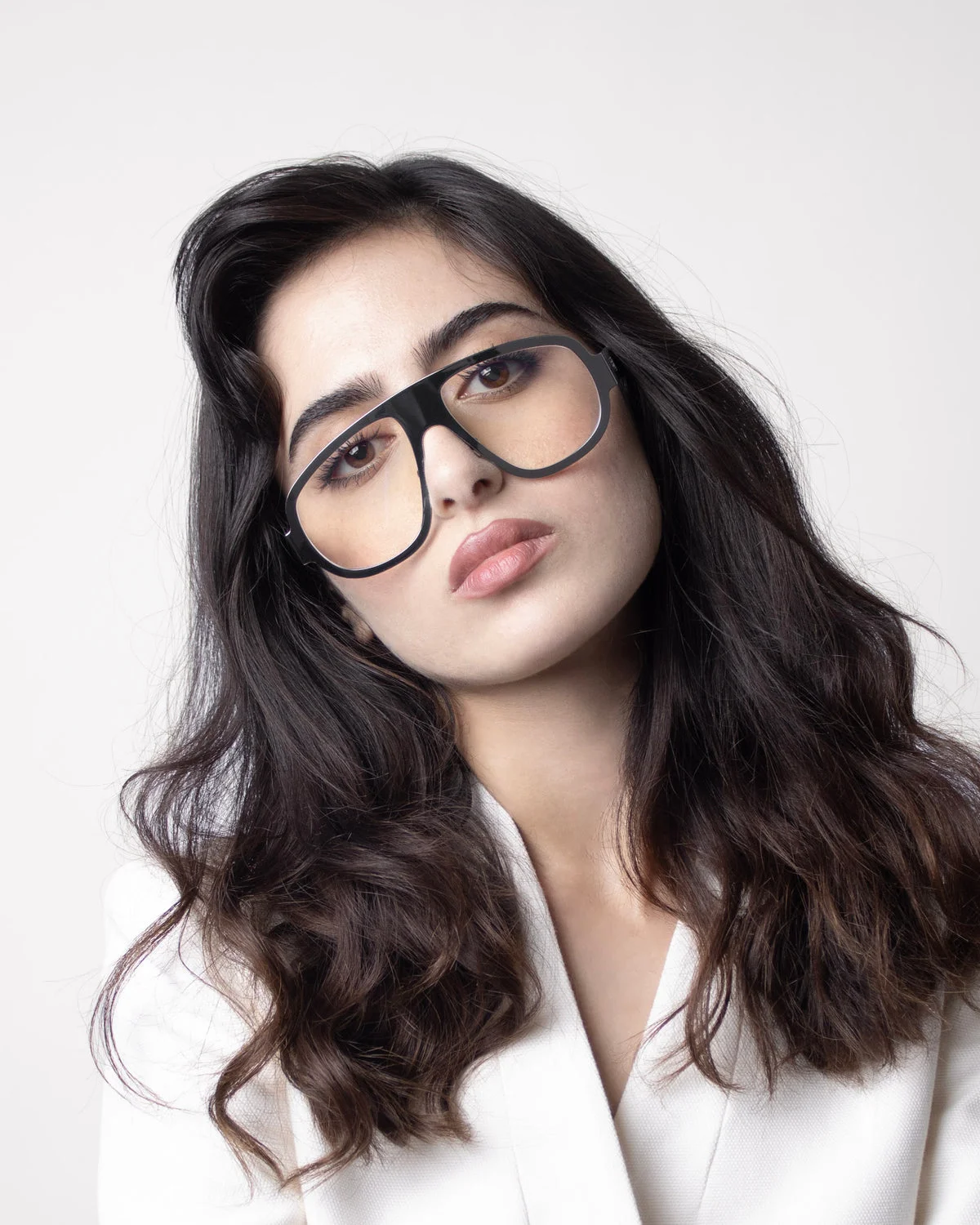
Soft curls with a side part are romantic, flattering and very kind to glasses wearers. The side part sweeps the curls away from the lenses, while the curls themselves add width and softness around the face. It is a style that works for weddings, date nights and ordinary days alike, and it photographs beautifully.
Best for: medium to long hair with a natural curl or wave, and round frames that echo the curl shape. How to style: curl wide sections away from the face with a medium-barrel iron, then brush through gently for softness. A flexible-hold spray keeps the curls in place without making them crunchy.
Common mistake: curling the front sections towards the face, which pushes hair onto the lenses. Maintenance: a weekly mask keeps the curls defined and shiny. What to ask your stylist: long layers that let the curls fall in a soft cascade rather than a heavy block.
§31 — Sleek Low Chignon
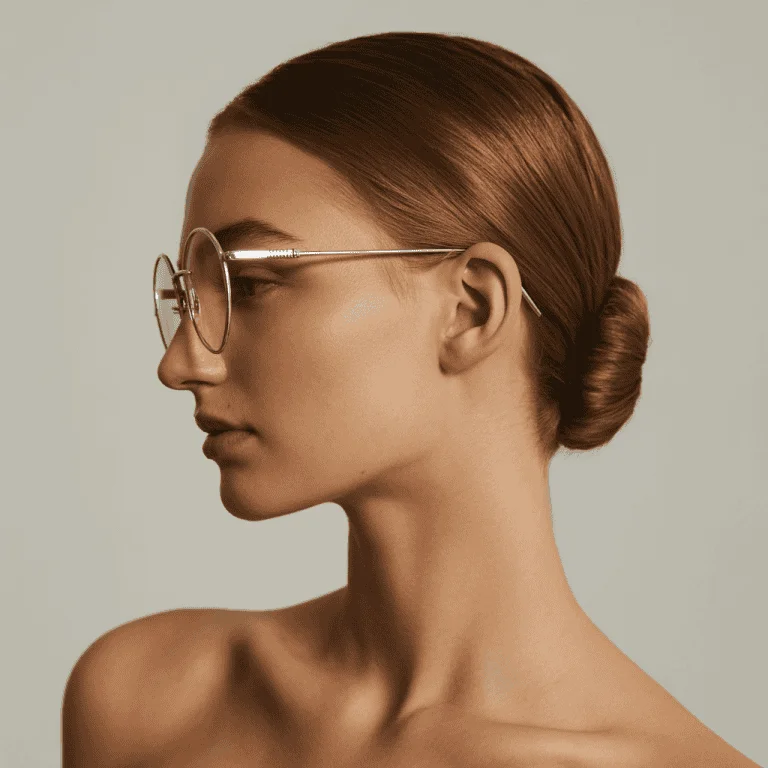
The sleek low chignon is the most elegant style in this guide, and it is made for glasses. The hair is swept smoothly back and coiled at the nape, so the frames sit in full view and the whole look feels refined and deliberate. It is the style to choose for weddings, formal dinners and any occasion when you want to look your absolute best.
Best for: formal occasions, long hair, and women who love a polished finish. How to style: smooth the hair back with a brush and a little gel, twist it into a low coil and pin it firmly. A centre or side part both work, and a single face-framing strand softens the look beautifully.
Pros and cons: the pros are elegance and staying power; the con is that it takes a little practice to get the coil neat. Maintenance: none beyond your usual routine. Quick verdict: timeless, graceful, and the perfect showcase for beautiful frames.
What is the best hairstyle for women with glasses?
The best hairstyle is one that keeps hair clear of the lenses, shows off your frames and suits your face shape. A classic bob with a side part, a layered lob or a pixie cut are the most reliable choices, because they frame the face without hiding the glasses. The right answer depends on your hair texture and how much styling time you want to spend each morning.
Should bangs touch your glasses?
Bangs should end above the top of your frames or just at the brow, never resting directly on the lenses. Curtain bangs and wispy bangs are the safest options, since they part around the frames. Always check the final length while wearing your glasses, because bangs cut without them often sit differently once the frames are on.
Do glasses look better with short or long hair?
Both can look wonderful, and the choice comes down to your face shape and routine. Short hair shows off bold frames and needs almost no styling, while long hair offers more options like ponytails, braids and buns. Medium lengths are the easiest compromise, giving you styling freedom without hair falling across the lenses.
How do I stop my hair from smudging my glasses?
Keep the shortest layers above the top of your frames, tuck the front sections behind your ears, and use a light-hold spray to control flyaways. Avoid heavy oils near the temples, and clean your lenses each evening. A side part also helps, because it sweeps the front hair away from the lenses instead of across them.
What hairstyle suits a round face with glasses?
Long layers, a side part and a bob that ends below the chin all add length and definition to a round face. Angular frames help too, because they contrast with the soft curves of the face. Avoid chin-length cuts with a centre part and heavy, straight-across bangs, which can make a round face look wider.
Can I wear a fringe with thick frames?
Thick frames pair best with a light fringe, such as curtain bangs or wispy bangs, rather than a heavy blunt fringe. The lighter the bangs, the less crowded the area around your eyes feels. If you love a blunt fringe, choose thinner frames to keep the overall balance, and ask your stylist to soften the edges of the cut.
Which hairstyles are easiest to maintain with glasses?
A pixie cut, a messy bun and a loose low ponytail are the easiest styles to maintain, because they need almost no daily styling and keep hair completely away from the lenses. A layered lob is also very forgiving, since it looks good air-dried and grows out gracefully between salon visits.
Do curly hairstyles work with glasses?
Curly hairstyles work beautifully with glasses when the shape is balanced. A curly bob or natural curls add volume that complements the frames, but very wide curls can overwhelm small frames. Keep the curls controlled near the face, choose frames with enough presence to hold their own, and get a dry cut from a stylist who understands curly hair.
How often should I trim a bob if I wear glasses?
A bob needs a trim every five to six weeks to keep its shape, and this matters even more with glasses, because grown-out front pieces are the ones that start brushing the lenses. Shorter cuts like a pixie need a tidy-up every four to five weeks, while longer layered cuts can usually wait eight to ten weeks between trims.
What should I tell my stylist about my glasses?
Tell your stylist that you wear glasses every day, bring the glasses to the appointment, and wear them during the final check. Ask for the hair around the ears to be shaped around the temple arms, and for the front layers to start below the frames. A good stylist will cut the style with your glasses on, not just with them sitting on the counter.
Conclusion — Find the Hairstyle That Lets Your Glasses Shine
The best hairstyles for women with glasses are not about hiding your frames or working around them. They are about choosing a cut that treats your glasses as part of the look, keeping the hair clear of the lenses, balancing the shape of the frames, and letting your face take centre stage. From the classic bob and the textured pixie to soft waves, a low bun and a sleek chignon, there is a style here for every face shape, every hair texture and every kind of frame.
Start with one style that fits your routine, show your stylist the photo, and remember to wear your glasses to the appointment so the cut is shaped around them. Your glasses are already a statement, and with the right hairstyle behind them, the whole look comes together beautifully. Try one of these styles this week, and enjoy seeing your frames, and yourself, in a whole new light.

