

Most couples do not drift apart because of one big fight. They drift apart slowly, in the ordinary weeks when work runs late, the children need everything, the phones never stop, and nobody quite remembers the last time they sat down together and talked about something other than logistics. Learning how to make time for your partner is not about finding a free weekend or booking an expensive holiday — it is about protecting small moments every day, because a relationship is built out of ordinary days, not special occasions.
This guide gives you 36 small daily habits that keep busy couples close, starting with eight practical guides on what making time really means, why it matters more than grand gestures, the signs you have stopped making time, and the traps that quietly steal it. Then come the habits themselves: mornings, meals, walks, evenings, weekends and rituals, plus habits for couples with children, long-distance couples, and couples where one partner works shifts or travels. Finish with direct answers to the questions every busy couple asks, and a short plan for starting this week.
What Making Time for Your Partner Really Means

Making time for your partner does not mean spending every free minute together, and it does not mean giving up your friends, your hobbies or your alone time. It means deliberately choosing each other, in small ways, on ordinary days: a coffee together before the day starts, a walk after dinner, a phone call instead of a text, a question that is not about the shopping list. It is attention, not hours — ten focused minutes beat an hour in the same room while you both stare at different screens. The couples who stay close are rarely the ones with the most free time; they are the ones who treat the time they do have as belonging to each other first.
What it means: choosing each other deliberately, in small daily moments. Why it matters: a relationship runs on attention, and attention is shown in minutes, not in grand gestures. Who it suits: every couple, but especially busy ones who feel like ships passing in the night. How to start: pick one small habit from this guide and do it every day for a week. Common mistake: thinking you need a free weekend to fix a relationship that is starving for ten minutes a day.
Why Small Daily Habits Beat Grand Gestures

A surprise holiday is wonderful, but it cannot carry a relationship for the other fifty-one weeks of the year. Small daily habits work better because they are frequent, reliable and low-pressure: a morning coffee together, a goodnight conversation, a walk after dinner. Each one is a small deposit in the relationship, and the deposits add up into trust and closeness. Grand gestures, by contrast, are rare, expensive and often stressful to plan, and they can even become a way of avoiding the daily work — a big anniversary dinner does not fix a month of silence. The research on relationships agrees: couples who share small, regular moments of connection report more satisfaction than couples who rely on occasional big events.
What it is: the case for frequency over size. Why it works: small habits happen often enough to become the relationship’s normal texture. Best for: busy couples who cannot plan big events but can protect ten minutes. What to avoid: using a grand gesture to apologise for weeks of neglect — it rarely works. Quick verdict: a daily coffee together beats an annual holiday for keeping a couple close.
The Signs You Have Stopped Making Time for Each Other

The signs are usually quiet. You realise you have not asked each other a real question in days — only logistics: who is picking up the children, what is for dinner, did you pay the bill. You eat at different times, or in front of different screens. You go to bed at different times and fall asleep without talking. You know more about your colleagues’ lives than your partner’s week. You feel like flatmates who share a house and a calendar, not partners who share a life. None of these is a crisis on its own, but together they mean the relationship is running on autopilot, and autopilot is how couples wake up one day and realise they have become strangers.
What it is: the quiet symptoms of a relationship running on logistics. Why it matters: these signs appear long before a crisis, when they are still easy to fix. Who it suits: any couple who feels more like flatmates than partners. How to check: ask yourself when you last had a conversation that was not about chores, children or money. Common mistake: waiting for a big problem before acting — the small signs are the time to act.
The Time Thieves: Phones, Work and the Busy Trap

Three things steal most couples’ time, and none of them feels like a choice at the time. Phones are first: the average person checks their phone dozens of times a day, and each check is a small interruption to the person sitting next to them. Work is second: the email that could wait until morning, the meeting that runs over, the habit of bringing the laptop to the sofa. And the busy trap is third: the feeling that being busy proves you are important, and that rest — including time with your partner — is something you have to earn. All three are habits, not facts, and all three can be changed with a small, deliberate rule: phones away at dinner, no laptop on the sofa, and one evening a week that belongs to the relationship.
What it is: the three habits that quietly take your evenings. Why it matters: you cannot make time for your partner while your attention belongs to a screen. Best for: couples who feel busy but cannot say where the time went. How to handle it: one rule each — phones away at meals, no work after a set time, one protected evening a week. Common mistake: blaming the lack of time on your job, when the phone took the evening.
How to Talk About Time Without Starting a Fight

“You never make time for me” starts a fight, because it sounds like an accusation. “I miss you, and I would love us to have dinner together on Friday” starts a conversation, because it is an invitation. The difference is everything. When you raise the subject, talk about what you want rather than what your partner does wrong, pick a calm moment rather than the middle of an argument, and bring one concrete suggestion rather than a general complaint. Ask what your partner would enjoy too — they may be missing you just as much, and they may have ideas of their own. And agree on something small first: a week of morning coffees is easier to say yes to than a whole new lifestyle.
What it is: a way to raise the subject that invites rather than accuses. Why it works: people say yes to invitations and no to accusations. How to do it: say what you miss, suggest one concrete thing, and ask what they would like. What to avoid: bringing it up when you are tired, angry or in the middle of a disagreement. Quick verdict: ask for a coffee, not a confession.
Building a Shared Ritual: The Anchor of a Busy Week

A shared ritual is a small thing you do together, at the same time, every day or every week, that belongs only to the two of you. It might be coffee in bed on a Sunday, a walk after dinner, a takeaway on a Friday, or a phone call on the way home from work. The ritual matters because it is predictable: even in the busiest week, you both know that one moment is coming, and you can look forward to it. Rituals also survive bad weeks better than plans do, because they are small and habitual rather than big and effortful. Pick one ritual, protect it fiercely for a month, and watch how much steadier the week feels.
What it is: a small, repeated moment that belongs only to the two of you. Why it works: predictability creates something to look forward to, even in a hard week. Best for: couples whose weeks are unpredictable and chaotic. How to build it: choose something small, do it at the same time, and protect it for a month. Common mistake: choosing a ritual that is too big or too expensive to sustain.
Making Time When You Have Children

Children change everything about a couple’s time, and pretending otherwise is the first mistake. The time you have together shrinks, it moves later in the evening, and it is constantly interrupted — so the habits have to change too. The most useful shift is to stop waiting for the children to be asleep or away, and to build couple time into the day itself: a coffee together before they wake, a walk with the pushchair, cooking dinner together after they are in bed. Use the time you do get well — twenty focused minutes after bedtime beats an hour of exhausted scrolling — and accept help when it is offered, whether that is grandparents, a babysitter, or a friend. And remember that the children benefit from parents who like each other, so time together is not selfish; it is part of good parenting.
What it is: couple time redesigned for life with children. Why it matters: children need parents who are close, not just parents who are present. Best for: parents of young children, who have the least free time of all. How to do it: build couple time into the day, protect the hour after bedtime, and accept help. Common mistake: waiting for a child-free weekend that never comes.
What to Avoid: The Habits That Push You Apart

Some habits actively push couples apart, even when both partners mean well. Keeping score is first: counting who did more, who tried harder, who sacrificed most — it turns a partnership into a competition. Bringing work to bed is second: the laptop and the late email tell your partner that work outranks them. Living parallel lives is third: separate friends, separate evenings, separate holidays, until you have nothing to talk about. And using the phone as a wall is fourth: scrolling in the same room is not togetherness, it is two people alone in the same place. None of these needs a big confrontation to fix — each one stops the moment one of you names it and suggests something better.
What it is: the four habits that quietly widen the gap. Why it matters: each one is easy to stop, and each one does real damage if it continues. Best for: any couple who feels the distance growing. How to handle it: name one habit, suggest one replacement, and start tonight. Quick verdict: stop keeping score, put the phone down, and come back to the same room.
1. Coffee Together Before the Day Starts

The first ten minutes of the day set the tone for everything that follows, and coffee together is the easiest habit in this guide. Get up ten minutes earlier than you need to, make two cups of coffee or tea, and sit together — no phones, no news, no planning the day. Talk about anything except logistics: a dream, something you are looking forward to, something funny that happened yesterday. It sounds too small to matter, but couples who start the day together report feeling more connected all day, because the day began with each other rather than with a screen or a rush.
Best for: every couple, especially early risers and busy parents. How to do it: ten minutes earlier, two cups, no phones. Cost and time: ten minutes and the price of coffee you already drink. Common mistake: turning it into a planning meeting — keep the logistics for later. Quick verdict: the smallest habit here, and the one to start with.
2. The Walk After Dinner

A walk after dinner is the most reliable couple habit there is, because it combines movement, fresh air and conversation without needing a plan. Walk for fifteen or twenty minutes around the block, leave the phones at home, and let the conversation wander. Walking side by side makes difficult conversations easier, because you are not staring at each other, and it makes easy conversations better, because there is nothing else to do but talk. It also helps digestion and sleep, which is a bonus. In bad weather, walk around the house, or walk to a shop — the point is the walking together, not the route.
Best for: couples who sit all day, and couples who find face-to-face talks hard. How to do it: fifteen minutes after dinner, phones at home. Pros: exercise, conversation and better sleep in one habit. Cons: it needs a small push on tired evenings — agree to go even when you do not feel like it. Quick verdict: the habit most couples say they wish they had started sooner.
3. Cooking Dinner Together

Cooking dinner together turns a chore into couple time, and it works because it gives you something to do with your hands while you talk. Pick a simple recipe, split the jobs — one chops, one stirs — and put some music on. The kitchen is one of the few rooms where phones naturally stay away, because your hands are busy. Cook together two or three nights a week, and try one new recipe a week so it stays interesting rather than routine. Even a simple meal counts: the point is not the food, it is the half-hour you spent side by side making it.
Best for: couples who eat at home most nights. How to do it: one simple recipe, split the jobs, music on. Cost and time: the dinner you were making anyway, plus half an hour together. Common mistake: one person cooking while the other watches a screen — both of you in the kitchen, or it does not count.
4. The Goodnight Conversation

The last ten minutes before sleep are a powerful time to connect, because the day is over and there is nothing left to do but talk. Put the phones on charge outside the bedroom, lie down together, and ask each other one real question: what was the best part of your day, what are you worried about tomorrow, what made you laugh. Keep it gentle — bedtime is not the time for a difficult conversation — and keep it short. Couples who talk before sleep fall asleep feeling closer, and they wake up feeling like a team, because the last thing they did together was listen to each other.
Best for: every couple, especially those who go to bed at the same time. How to do it: phones charging outside the bedroom, one real question each. What to avoid: difficult conversations or complaints at bedtime — save those for the morning. Quick verdict: ten minutes that change how the whole night feels.
5. A Phone Call Instead of a Text

A text says “I am thinking of you”, but a phone call says “I want to hear you”. Once a day, call your partner instead of texting — on the way home from work, on a lunch break, or while you are walking the dog. A two-minute call carries tone, warmth and laughter in a way no message can, and it breaks up a long day with a real human moment. It does not need a reason: “I just wanted to hear your voice” is reason enough. For long-distance couples, this habit matters even more — a daily call is the thread that holds the relationship together across the miles.
Best for: couples apart during the day, and long-distance couples. How to do it: one call a day, two minutes, no agenda. Pros: warmth and tone that a text cannot carry. Cons: it needs a quiet moment — a commute or a walk is ideal. Quick verdict: the cheapest way to make a busy day feel connected.
6. The Weekly Date Night at Home

A date night does not need a restaurant, a babysitter or a new outfit — it needs a time, a table and attention. Once a week, eat dinner at the table instead of the sofa, light a candle, put the phones away, and treat it like a date: dress up a little, cook something you both like, and talk about something other than the week. The ritual matters more than the food. Couples who protect one evening a week like this report feeling more like partners and less like flatmates, because the evening reminds them why they chose each other in the first place.
Best for: couples with children, and couples on a tight budget. How to do it: one evening a week, table, candle, phones away. Cost and time: the price of a normal dinner, two hours. Common mistake: letting the date night become another logistics meeting — no bills, no chores, no planning.
7. The Sunday Morning Ritual

Sunday morning is the one morning most couples have free, and a ritual for it is worth protecting. It might be breakfast in bed, a slow coffee together, a walk to the bakery, or reading the paper side by side — the details do not matter, the repetition does. A Sunday ritual gives the week a soft landing and a gentle start, and it is something to look forward to when the week gets hard. Protect it the way you would protect a meeting: do not let chores, errands or other people take it, and if you miss it one week, bring it back the next without guilt.
Best for: couples with a free Sunday morning. How to do it: pick one slow activity, do it every Sunday, protect it. Pros: a reliable moment of calm in a busy week. Cons: it needs defending from errands and visitors. Quick verdict: the week’s anchor — protect it like a meeting.
8. Eating One Meal a Day Together

Eating together is one of the oldest human rituals, and it still works. Pick one meal a day — breakfast, lunch or dinner — and eat it together, at a table, without screens. It does not have to be a cooked meal: toast together in the morning counts, a sandwich together at lunch counts. The table is a place where conversation happens naturally, because there is nothing else to do but eat and talk. Couples who eat together regularly report feeling more connected, and the meal becomes a daily checkpoint — a moment when you are both in the same place, doing the same thing, at the same time.
Best for: every couple, especially those with opposite schedules. How to do it: one meal, one table, no screens. Cost and time: the meal you were eating anyway. Common mistake: eating together but watching television — the screen takes the conversation.
9. The Commute Call

The commute is dead time for most people, and a call to your partner turns it into couple time. Call on the way home from work, and use the time to decompress together: what happened today, what you are looking forward to, what you need from the evening. By the time you walk through the door, you have already caught up, so the evening starts warm instead of cold. If you drive, use hands-free; if you take the train, find a quiet carriage. The call does not need to be long — ten minutes is enough to change the whole evening.
Best for: couples who commute, especially by car or train. How to do it: a hands-free call on the way home, ten minutes. Pros: the evening starts warm, and the day’s stress is shared. Cons: it needs a signal and a quiet moment — a walk home works too.
10. Working Side by Side in the Same Room

Working from home can either bring a couple together or push them into separate rooms with separate screens. The middle path is to work side by side in the same room for part of the day: two laptops, one table, a shared pot of coffee. You are not talking, but you are together, and the small moments — a shared joke, a question, a stretch break together — add up. Take your breaks at the same time, eat lunch together, and stop work at the same time. It is not the same as a date, but it is far better than two people alone in two rooms.
Best for: couples who both work from home. How to do it: one room, shared breaks, shared lunch, same finish time. Pros: togetherness without losing work time. What to avoid: working in the same room but never speaking — take the breaks together.
11. The Friday Takeaway Night

Friday night is the end of the working week, and a takeaway night is the easiest way to mark it together. Order from a favourite place, eat at the table instead of the sofa, put the phones away, and let the evening be about each other rather than about cooking or cleaning. The ritual works because it is regular — every Friday, the same time, the same table — and because it is easy: nobody has to cook, nobody has to plan, and the only decision is what to order. Try a different place once a month so it stays interesting, and keep the conversation away from work and chores for at least the first half-hour.
Best for: couples who are too tired to cook on a Friday. How to do it: every Friday, table, phones away, one new place a month. Cost and time: the price of a takeaway, two hours. Common mistake: eating in front of the television — the table is what makes it a date.
12. A Hobby You Do Together
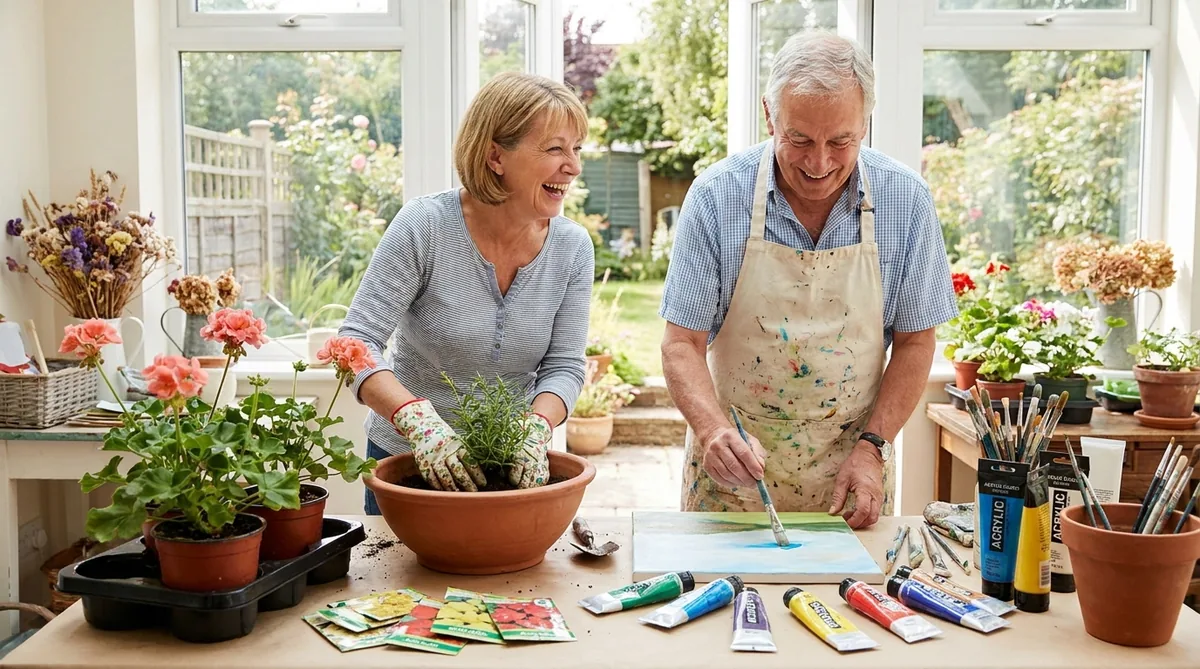
A shared hobby gives a couple something to talk about that is not work, children or chores, and it creates time together without needing to schedule it. It might be cooking, gardening, hiking, a sport, a board game, or learning a language — the activity matters less than the fact that you do it together, regularly, and you both enjoy it. Pick something neither of you is already expert at, so you learn together and laugh at the mistakes. An hour a week is enough to make a difference, and the hobby becomes a shared story that belongs only to the two of you.
Best for: couples who feel they have nothing to talk about except logistics. How to do it: one activity, one hour a week, both beginners if possible. Pros: shared stories, laughter, and a reason to spend time together. Cons: it needs a little effort to start — pick the easiest option first.
13. The Morning Text That Is Not About Logistics

A morning text that says “good morning, I love you” or “thinking of you today” takes five seconds and changes the whole day. It is different from the usual morning messages — “don’t forget the milk”, “what time are you home” — because it carries affection rather than information. Send it every morning, or at least most mornings, and make it specific when you can: mention something you are looking forward to doing together, or something you appreciated yesterday. Small, affectionate messages are the cheapest habit in this guide, and one of the most effective.
Best for: couples apart during the day. How to do it: one affectionate message every morning, specific when possible. Cost and time: five seconds, free. Common mistake: only texting about logistics — the affectionate message is a different habit.
14. Walking the Dog Together

If you have a dog, the daily walk is free couple time that is already built into your day — use it together instead of splitting it. Walk the dog as a pair, morning or evening, and leave the phones at home. The dog sets the pace, the route is familiar, and the conversation flows easily because you are moving side by side. It is also a habit that survives bad weeks, because the dog needs walking whether you feel like it or not. Couples with a dog who walk it together report the walk as one of their favourite times of day, and the dog benefits too.
Best for: couples with a dog. How to do it: one walk a day together, phones at home. Pros: free, daily, and the dog makes it non-negotiable. Cons: it needs both of you to be home at the same time — a weekend walk counts too.
15. The Ten-Minute Check-In After Work

The ten minutes after you both get home are the most important of the evening, because they decide whether the evening is warm or cold. Sit down together, put the bags and the phones down, and spend ten minutes catching up: how was your day, what was hard, what was good. No fixing, no advice unless asked for, just listening. Then move on to dinner, children or chores. Couples who do this say the evening feels completely different — the day’s stress is shared instead of carried alone, and the rest of the evening starts from a place of connection rather than tension.
Best for: couples who both work, especially in stressful jobs. How to do it: ten minutes, sitting down, listening without fixing. What to avoid: jumping straight into chores or complaints — the check-in comes first. Quick verdict: ten minutes that change the whole evening.
16. A Monthly Day Out, Just the Two of You

A monthly day out is the bigger cousin of the weekly date night: one day a month, just the two of you, doing something you both enjoy. It might be a walk in the countryside, a visit to a market, a museum, a long lunch, or simply a day with no plans at all. The day out matters because it is long enough to relax properly — an evening is short, but a day lets you slow down and actually enjoy each other’s company. Plan it a month ahead, put it in the calendar, and protect it the way you would protect a work commitment. If you have children, arrange childcare in advance so the day is genuinely yours.
Best for: couples who can arrange a day a month, with childcare if needed. How to do it: one day a month, planned a month ahead, in the calendar. Cost and time: a day, and whatever the activity costs. Common mistake: planning something too ambitious — a simple day out beats a complicated one.
17. Reading the Same Book or Watching the Same Show

Reading the same book or watching the same show gives a couple something to talk about every day, and it creates a shared experience without needing to leave the house. Pick a book you both want to read, or a show you both want to watch, and agree to read or watch it together — one chapter or one episode at a time, so you stay in step. The conversations that follow are the point: what you thought, what surprised you, what you would have done. It is a small habit, but it fills the evenings with something shared instead of two people watching different screens.
Best for: couples who spend evenings at home. How to do it: one book or show, one chapter or episode at a time, together. Pros: a daily topic of conversation, and shared laughter or tears. Cons: it needs agreement on what to read or watch — take turns choosing.
18. The Bedtime Cup of Tea

A cup of tea before bed is a small, warm ritual that slows the day down and gives a couple ten quiet minutes together. Make two cups, sit together — in the kitchen, on the sofa, or in bed — and talk, or simply sit in comfortable silence. The ritual works because it is sensory and slow: the warmth, the steam, the quiet. It is also a natural way to end screen time, because you cannot hold a phone and a hot cup at the same time. Keep it simple, keep it nightly, and let it be the last shared moment of the day.
Best for: every couple, especially those who struggle to wind down. How to do it: two cups, ten minutes, no screens. Cost and time: ten minutes and the price of tea. Quick verdict: the gentlest habit in this guide.
19. Saying Thank You Every Day

Saying thank you every day sounds too simple to matter, but it is one of the strongest habits in relationship research. Thank your partner for something specific each day — for cooking dinner, for handling a difficult call, for making you laugh, for simply being there. Specific thanks show that you notice, and noticing is a form of attention. Couples who thank each other regularly report feeling more appreciated and more connected, and the habit costs nothing and takes five seconds. Start tonight: thank your partner for one thing, out loud, before you go to sleep.
Best for: every couple, especially those who feel taken for granted. How to do it: one specific thank you a day, out loud. Why it works: noticing is attention, and attention is what keeps a couple close. Common mistake: a vague “thanks for everything” — be specific, and mean it.
20. The Saturday Morning Lie-In Together

A Saturday morning lie-in together is a small luxury that costs nothing and feels like a holiday. Stay in bed a little longer than usual, with no alarm, no phones and no plans, and simply enjoy being together. Talk, doze, read, or just lie there — the point is the unhurried time, which is rare in a busy week. If you have children, take turns with the early morning so each of you gets a lie-in on alternate weeks. The lie-in works because it is the opposite of the rushed weekday morning: slow, warm and entirely yours.
Best for: couples with a free Saturday morning. How to do it: no alarm, no phones, no plans — just time together. Pros: restful, free, and deeply connecting. Cons: it needs children to cooperate, or a turn-taking system.
21. Planning the Week Together on a Sunday

Planning the week together on a Sunday evening takes twenty minutes and saves a week of misunderstandings. Sit down with a calendar, talk through the week ahead — who is where, what needs doing, when you will see each other — and agree on one moment that belongs to the two of you. The planning itself is couple time, because it is a conversation about your shared life, and the plan protects the couple time you agreed on. Couples who plan together argue less during the week, because the logistics are settled and the surprises are fewer.
Best for: busy couples with complicated weeks. How to do it: twenty minutes on Sunday, calendar open, one protected moment agreed. Pros: fewer arguments, and the week’s couple time is protected. What to avoid: turning it into a blame session about last week — plan forward, not backward.
22. A Walk in the Park on the Weekend

A weekend walk in the park is a bigger, slower version of the after-dinner walk, and it is worth protecting. Go for an hour, leave the phones at home, and let the conversation wander the way the path does. Parks are good for talking because there is always something to look at, and the movement keeps the conversation easy. Bring a coffee, sit on a bench halfway, and enjoy the fact that you have nowhere else to be. It is a simple habit, but couples who walk together on weekends say it is one of the things they look forward to most.
Best for: couples with a free weekend hour. How to do it: an hour, phones at home, coffee in hand. Pros: fresh air, exercise and unhurried conversation. Cons: it needs decent weather — a walk in the rain counts too, with the right coats.
23. The Long-Distance Daily Ritual

Long-distance couples need rituals more than anyone, because they cannot rely on being in the same room. The most useful ritual is a daily call or video call at the same time every day — a morning coffee together over video, or a goodnight call before sleep. Add a shared activity: watch the same show and talk about it, play an online game together, or read the same book. And keep the small messages going through the day, so your partner feels present even when they are far away. Distance is hard, but a daily ritual makes it bearable, because it proves that the relationship is still a daily priority.
Best for: long-distance couples. How to do it: a daily call at the same time, plus one shared activity. Pros: a daily thread that holds the relationship together. What to avoid: letting the calls become only logistics — ask about feelings, not just plans.
24. Date Night When One Partner Works Shifts

Shift work makes couple time hard, because the two of you are rarely free at the same time. The answer is to treat the overlap as sacred: find the hours when you are both free, however odd they are, and protect them. A date at 10 in the morning, a breakfast together after a night shift, a walk before the next shift — these count just as much as a Saturday evening. Plan a week ahead, put the overlap in the calendar, and say no to other things during it. Shift-working couples who protect their overlap report feeling closer than couples with normal hours who take their evenings for granted.
Best for: couples where one or both partners work shifts. How to do it: find the overlap, put it in the calendar, protect it. Pros: the time you do get feels precious and intentional. Common mistake: waiting for a normal weekend that never comes — use the odd hours you have.
25. The Anniversary of Small Things

Most couples celebrate the big anniversaries — the wedding, the first date — and forget the small ones. Try celebrating the small things instead: the anniversary of the first coffee together, the day you moved in, the day you adopted the dog, the day you finished a project together. A small celebration — a favourite meal, a walk to the place it happened, a card — takes an hour and reminds you both of the story you share. It is a way of saying that the ordinary days matter, not just the milestones, and it gives you a reason to celebrate more than once a year.
Best for: couples who want more to celebrate. How to do it: pick a small anniversary, mark it with a meal or a walk. Cost and time: an hour, and the price of a meal. Quick verdict: the ordinary days deserve celebrating too.
26. Putting the Phones in a Basket at Dinner

The phone basket is the simplest rule in this guide, and one of the most effective. Keep a small basket by the door, and when you sit down to dinner, both phones go in it. No checking, no scrolling, no “just one message”. Dinner becomes a phone-free zone, and the conversation that follows is noticeably better — longer, warmer, more real. The rule works because it is physical: the phone is not in your pocket, so you cannot reach for it without thinking. Try it for a week, and notice how much more you talk. Most couples who try it never go back.
Best for: every couple, especially those who eat with their phones. How to do it: a basket by the door, phones in it at dinner. Cost and time: free, and dinner tastes better too. Common mistake: making an exception for “just one message” — the exception becomes the rule.
27. The Good Morning Kiss and the Goodbye Kiss

A kiss in the morning and a kiss when you leave the house are tiny habits with an outsized effect. They take two seconds, they cost nothing, and they say “you matter to me” more clearly than any words. Couples who greet and part with affection report feeling more connected through the day, because the day began and the separation began with a moment of warmth. Make it a rule: no leaving the house without a kiss, no going to sleep without one either. It sounds old-fashioned, and that is exactly why it works — it is a small, deliberate act of affection in a world of distractions.
Best for: every couple. How to do it: a kiss when you wake, a kiss when you leave, a kiss before sleep. Cost and time: two seconds, free. Quick verdict: the smallest habit here, and one of the most powerful.
28. A Shared Breakfast on Weekdays

A shared breakfast on weekdays is a practical habit for couples whose evenings are chaotic. Get up fifteen minutes earlier, sit at the table together, and eat breakfast without screens. It does not need to be elaborate — toast and tea count — and it does not need to be long. The point is to start the day together, with a real conversation, before the day pulls you apart. Couples who eat breakfast together say the day feels more like a shared project and less like two separate lives that happen to share a house.
Best for: couples whose evenings are busy or chaotic. How to do it: fifteen minutes earlier, table, no screens. Pros: the day starts together, and the conversation is fresh. Cons: it needs an earlier alarm — worth it for the connection.
29. The Weekly Walk and Talk About Money

Money is the subject most couples avoid, and avoiding it makes it worse. A weekly walk and talk about money — fifteen minutes, once a week, while walking — turns a dreaded subject into a routine one. Talk about the week’s spending, the bills coming up, and one thing you are saving for together. Walking makes the conversation easier, because you are side by side rather than face to face, and the routine makes it normal rather than a crisis. Couples who talk about money regularly argue about it less, because there are fewer surprises.
Best for: couples who avoid talking about money. How to do it: fifteen minutes a week, walking, one topic at a time. Why it works: walking eases difficult conversations, and routine prevents crises. What to avoid: turning it into a blame session — talk about the plan, not the past.
30. Dancing in the Kitchen

Dancing in the kitchen sounds silly, and that is the point. Put some music on while you cook or clean, take your partner’s hand, and dance for one song. It takes three minutes, it makes you both laugh, and it breaks the routine of an ordinary evening with a moment of pure play. Couples who play together stay close, because play is a form of intimacy — it says “I enjoy being with you” without any words at all. It does not matter if you cannot dance. The worse the dancing, the better the laugh.
Best for: every couple, especially those who take life too seriously. How to do it: music on, one song, dance in the kitchen. Cost and time: three minutes, free. Quick verdict: the silliest habit here, and one of the happiest.
31. The Monthly Budget Date

A monthly budget date turns the least romantic subject in a relationship into a shared project. Once a month, sit down together with a coffee or a glass of wine, look at the month’s money, and plan the next month together: what you spent, what you saved, and what you are looking forward to. Keep it kind — the point is to plan together, not to blame each other — and end with something to look forward to, like a meal out or a small treat you have saved for. Couples who plan money together feel more like a team, and the date itself becomes a habit worth keeping.
Best for: couples who share money and want fewer arguments about it. How to do it: once a month, coffee or wine, plan together, end with something nice. Pros: fewer money arguments, and a shared sense of progress. Common mistake: using the date to criticise past spending — plan forward, not backward.
32. A Weekend Away Twice a Year

A weekend away twice a year is the bigger investment in this guide, and it is worth saving for. Two nights, somewhere new or somewhere you love, just the two of you, with no work, no chores and no screens. The weekend away matters because it gives you time to relax properly — a single evening is too short to unwind, but a weekend lets you slow down, talk properly, and remember why you enjoy each other’s company. It does not need to be expensive: a cottage, a friend’s house, or a cheap hotel all work. The point is the time away together, not the destination.
Best for: couples who can arrange two weekends a year. How to do it: two nights, twice a year, planned in advance. Cost and time: a weekend and whatever the stay costs. Common mistake: filling the weekend with sightseeing — leave time to do nothing together.
33. The Apology Ritual

Every couple argues, and how you repair after an argument matters more than the argument itself. Agree on a small apology ritual: when one of you has hurt the other, say so plainly, say what you will do differently, and then do something kind — make a cup of tea, cook a favourite meal, or simply sit together quietly. The ritual works because it is predictable: both of you know how a repair happens, so an argument does not feel like a threat to the relationship. It also stops the silent treatment, which is the most damaging habit in any relationship, because it replaces silence with a clear, kind action.
Best for: every couple, because every couple argues. How to do it: a plain apology, a clear change, and a kind act. Why it works: predictable repair makes arguments safe. What to avoid: the silent treatment, which solves nothing and damages everything.
34. Supporting Each Other’s Solo Time

Making time for your partner does not mean spending all your time together — it also means protecting each other’s time alone. Encourage your partner to see friends, pursue a hobby, or simply have an evening to themselves, and take your own solo time without guilt. Couples who support each other’s independence come back together with more to talk about, more energy, and more appreciation for each other. The balance is the point: time together matters, and time apart matters too, because a relationship between two whole people is stronger than a relationship between two people who have given up everything else.
Best for: every couple, especially those who feel smothered or guilty about solo time. How to do it: protect each other’s friends, hobbies and alone time. Why it works: independence makes togetherness richer. Common mistake: treating solo time as rejection — it is the opposite.
35. The One-Minute Hug

A one-minute hug is longer than it sounds, and it is one of the most powerful habits in this guide. When you greet each other after a day apart, or before you go to sleep, hold the hug for a full minute instead of a quick squeeze. A long hug lowers stress, releases oxytocin, and tells your partner, physically, that you are glad to see them. It takes sixty seconds, it costs nothing, and it changes the feeling of the whole evening. Try it tonight: hug for a minute, and notice how different it feels from a two-second greeting.
Best for: every couple. How to do it: a full minute, when you greet each other or before sleep. Cost and time: sixty seconds, free. Quick verdict: the shortest habit here, and one of the warmest.
36. Starting This Week: Your First Seven Days Together

The best way to start making time for your partner is to start small, this week, with a plan you can actually keep. Day one: coffee together in the morning. Day two: a walk after dinner. Day three: phones in a basket at dinner. Day four: a phone call instead of a text. Day five: the Friday takeaway night. Day six: a walk in the park. Day seven: plan next week together on Sunday. Seven days, seven small habits, none of them longer than twenty minutes. At the end of the week, talk about which ones you liked, keep those, and drop the rest. That is how to make time for your partner: not all at once, but one small habit at a time, until closeness is simply how your weeks work.
Best for: any couple starting from scratch. How to use it: one habit a day for seven days, then keep the ones you liked. Pros: small, specific, and easy to stick to. Cons: it needs both of you to agree to try — ask, do not demand. Quick verdict: seven days from now, you will feel the difference.
How can I make time for my partner when we are both so busy?
Start with ten minutes a day, not a free weekend. Coffee together in the morning, a walk after dinner, or a goodnight conversation are all small habits that fit into a busy life. Pick one habit, do it every day for a week, and add another when the first one sticks. Busy couples who stay close are rarely the ones with the most free time — they are the ones who protect the small moments they do have.
What is the best way to spend quality time with your partner?
The best quality time is focused, regular and simple: a meal together without screens, a walk, a shared hobby, or a weekly date night at home. Ten focused minutes beat an hour in the same room while you both stare at different phones. Choose something you both enjoy, do it at the same time each week, and protect it like a meeting.
How much time should couples spend together each day?
There is no magic number, but most relationship experts suggest at least 15 to 30 minutes of focused, undistracted time together each day, plus a longer stretch once a week. The exact amount matters less than the consistency: a daily ten-minute coffee together does more for a relationship than an occasional weekend away. Find the amount that fits your life, and protect it every day.
How do I make time for my partner when we have children?
Build couple time into the day instead of waiting for the children to be away: coffee before they wake, a walk with the pushchair, and the hour after bedtime protected for the two of you. Accept help from grandparents or a babysitter for a weekly date night, and remember that time together is part of good parenting, not selfishness — children benefit from parents who like each other.
My partner never has time for me. What should I do?
Raise it as an invitation, not an accusation: say what you miss and suggest one concrete thing, like dinner together on Friday, rather than saying “you never make time for me”. Pick a calm moment, ask what your partner would enjoy too, and start with something small. If the pattern continues despite your efforts, consider couples counselling, which can help you both find time and talk about why it is hard.
How can long-distance couples make time for each other?
Long-distance couples need a daily ritual at the same time every day — a morning video coffee or a goodnight call — plus one shared activity, like watching the same show or reading the same book. Keep small messages going through the day, plan visits in advance so there is always one to look forward to, and treat the daily call as non-negotiable, like a meeting.
Is it normal for couples to drift apart when life gets busy?
Drifting apart when life gets busy is very common, and it is not a sign that the relationship is failing — it is a sign that the relationship needs attention. The signs are quiet: eating at different times, talking only about logistics, going to bed at different times. The fix is also quiet: small daily habits, protected time, and a conversation about what you both miss. Most couples can reconnect with a few weeks of deliberate small habits.
What should couples do together every day?
The simplest daily habits are the most effective: eat one meal together, take a walk, have a coffee in the morning, talk for ten minutes before sleep, and say thank you for one specific thing. None of them takes more than twenty minutes, and together they add up to a relationship that feels close and connected, even in a busy week.
How do I stop my phone from ruining time with my partner?
Make a physical rule: phones in a basket at dinner, phones charging outside the bedroom, and no phones during date night. The rule works because it is physical — the phone is not in your pocket, so you cannot reach for it without thinking. Agree the rule together, keep it for a week, and notice how much more you talk. Most couples who try it never go back.
Can a relationship recover if we have not made time for each other in months?
A relationship can recover from months of distance, but it takes deliberate effort from both partners. Start with the smallest habits — coffee together, a walk, a daily call — and be patient: closeness rebuilds slowly, over weeks, not days. Talk honestly about what happened, agree on one protected time each week, and consider couples counselling if the distance feels hard to bridge alone. Many couples come back stronger after a period of drifting apart, because they learn what matters.
Conclusion: Ten Minutes a Day Is Enough to Start
Learning how to make time for your partner is not about finding a free weekend or booking an expensive holiday. It is about ten minutes a day: a coffee in the morning, a walk after dinner, a phone call instead of a text, a conversation before sleep. Small habits, done daily, add up into a relationship that feels close, warm and alive — because a relationship is built out of ordinary days, not special occasions.
Start tonight, with one habit from this guide. Pick the easiest one — the morning coffee, the after-dinner walk, the phones in a basket — and do it every day for a week. Then add another, and another, until closeness is simply how your weeks work. Talk to your partner about what you miss, invite them to choose a habit too, and protect the time you agree on. Seven days from now, you will feel the difference — and so will they.

