

Watching the person you love grieve is one of the hardest things a relationship ever faces. You want to take the pain away, say the perfect thing, and somehow make life feel normal again — and at the same time, you know that none of that is really possible. Learning how to support a partner through grief is not about finding magic words or fixing what cannot be fixed. It is about showing up, again and again, in small, steady ways, and letting your partner know they do not have to carry this alone.
Grief does not arrive in neat stages, and it does not leave on a schedule. One morning your partner may seem almost like themselves, laughing at something on television, and by evening a song, a smell, or an ordinary Tuesday can bring the loss crashing back. That unpredictability is normal, even though it can feel confusing and frightening from the outside. Your job is not to track their progress or hurry them along. Your job is to stay close, stay patient, and keep the door open for whatever they are feeling today.
This guide walks through 34 gentle, practical ways to do exactly that, from the first forty-eight hours after a loss to the second year, when most of the world has moved on and your partner still needs you. You will find words you can borrow when your own fail, mistakes worth avoiding, ways to help with the invisible practical load, and honest guidance on when professional support is the kindest next step. You will also find a section for you, because supporting someone through grief is heavy, and you deserve care too.
You do not need to do everything in this guide, and you certainly do not need to do it perfectly. Pick the ideas that fit your partner, your relationship, and this week. A warm meal, a held hand, a remembered anniversary, a quiet evening on the sofa — these small things add up into something enormous: the felt knowledge that love is still here, even in the middle of loss. Start with the essentials below, then work through the 34 ways at whatever pace feels right.
Grief 101: What Grief Is, and What It Is Not

Grief is the mind and body’s natural response to losing someone who mattered, and it touches everything: sleep, appetite, memory, concentration, mood, and even the immune system. It is not a problem to be solved or an illness to be cured, though it can look a lot like depression from the outside. Grief comes in waves rather than stages, which is why your partner can seem steady at breakfast and undone by lunchtime. Nothing has gone wrong when that happens; that is simply how grief moves.
It also helps to know what grief is not. It is not a sign of weakness, and it is not something your partner can think their way out of with enough effort or positivity. Grief is not linear, so do not expect each month to be easier than the last in a straight line. Some months will be harder, especially around anniversaries, and that does not mean your partner is going backwards. Letting go of the idea of a finish line is one of the kindest things you can do, because it frees you both from measuring progress that was never meant to be measured.
The First Week: A Day-by-Day Survival Guide

The first week after a loss is a blur of phone calls, paperwork, visitors, and shock, and your partner may barely be able to think straight. Your most useful role in these early days is to become their buffer and their backup brain. Answer the door, take messages, keep a list of who called and what they offered, and handle the small decisions — what to eat, who to call back, where the keys are — so your partner does not have to. Decisions that look tiny from the outside can feel enormous to someone in shock.
Keep the practical basics covered without asking for permission at every step. Cook simple food and put it in front of them, keep water nearby, make sure they sleep, and quietly take over laundry, bins, school runs, and pet care. If people ask how they can help, give them a specific job instead of saying everything is fine. A neighbour who walks the dog on Tuesday is worth more than ten people saying to call if you need anything. Protect your partner’s rest fiercely, and say no to visitors on their behalf when they are too tired to do it themselves.
Words That Help: Scripts You Can Borrow

When you do not know what to say, borrow words that are simple, honest, and free of advice. I am so sorry. I am here. I love you. I am not going anywhere. These sentences work because they do not try to explain the loss or silver-line it. They simply name what is true: someone has died, it is awful, and you are staying. Say them slowly, say them more than once, and do not worry about repeating yourself. Repetition is reassuring when everything else feels unstable.
It also helps to name the person who died, out loud, by name. I keep thinking about your mum and her laugh. I miss Dad too. Saying their name tells your partner that the person is not being erased, and it gives your partner permission to talk about them. If you are not sure what to say, saying so is fine as well: I do not know the right words, but I am here and I am listening. Honesty lands far better than a polished sentence that does not sound like you.
The Practical Help Checklist

Grief steals executive function, which is a technical way of saying that ordinary tasks become strangely hard. Your partner may stare at a full fridge and still not know what to eat, or leave bills unopened because opening them feels impossible. Practical help is therefore real help, not second-best help. Cook in batches and freeze portions, keep the house stocked with easy food, water, and snacks, and handle the laundry and the bins without being asked. The goal is to remove friction from every ordinary day.
Use this checklist as a starting point, and adapt it to your household. Food and water, laundry, bins and tidying, school and nursery runs, pet care, pharmacy pick-ups, bills and post, phone calls and messages, funeral paperwork, and lifts to appointments. Take one category and own it completely for a few weeks, instead of doing a little of everything and finishing nothing. If friends offer help, hand them one item from this list with a day attached. Specific jobs get done; vague offers fade away.
Handling Holidays, Milestones, and Hard Dates

The calendar becomes a minefield after a loss. Birthdays, anniversaries, Mother’s Day, Father’s Day, Christmas, Eid, Diwali, and the anniversary of the death itself can all hit hard, sometimes weeks before the date arrives. Anticipation is often worse than the day, because your partner is dreading it and imagining how bad it will feel. Put the important dates in your own calendar, including the ones you might not think of, like the deceased person’s birthday and the date they died. Remembering without being reminded is a powerful act of love.
Ask your partner what they want before the date arrives, and ask again closer to the time, because the answer may change. Some people want a quiet day at home; others want to visit the grave, light a candle, cook the person’s favourite meal, or look through photographs together. Some want the day to pass unmarked. Whatever they choose, go along with it without trying to cheer them up or make the day normal. A simple acknowledgement — I know today is hard, I am thinking of them too — is usually enough.
When to Seek Professional Support

Most grief does not need therapy, and most grieving people heal with time, support, and the slow rebuilding of daily life. But sometimes grief gets stuck, or it tangles with depression, trauma, or anxiety in ways that love alone cannot untangle. The signs worth watching for include grief that feels as raw after many months as it did in the first weeks, an inability to eat, sleep, or get out of bed, heavy use of alcohol or medication to get through the day, and thoughts of harming themselves. If any of these appear, professional help is not a failure; it is the next kind of care.
Raising the idea takes gentleness. Choose a calm moment, not the middle of a crisis, and frame it as support rather than a verdict. I wonder if talking to someone who knows about grief might help, the way talking to me helps but with more tools. Offer to help find a counsellor, book the appointment, drive them there, or sit in the waiting room. Some people prefer a grief support group, where being with others who understand is the point. Others prefer one-to-one counselling, or faith-based support through their community. Let your partner choose the shape of it.
Taking Care of Yourself While You Support Them

You cannot pour from an empty cup, and supporting a grieving partner is one of the most draining roles there is. Many supporters quietly burn out because they believe their own feelings do not count while their partner is suffering more. They do count. You are allowed to be tired, sad, frustrated, and in need of a break, and admitting that does not take anything away from your partner. In fact, looking after yourself is part of looking after them, because a depleted supporter cannot stay patient, kind, and present for long.
Build small, non-negotiable pockets of rest into your week. A walk on your own, a phone call with a friend who understands, a proper night’s sleep, a meal eaten sitting down, twenty minutes with a book. These are not luxuries or betrayals; they are maintenance. Tell your partner plainly and kindly when you need a breather: I am going for a walk to clear my head, I will be back in half an hour, I love you. Short, honest absences are far better than silently resenting the role until you snap.
Long-Term Support: The Second Year and Beyond

Most support arrives in the first few weeks and quietly disappears by the third month, which is exactly when many grieving people start to feel most alone. Long-term support means staying in the picture after everyone else has moved on. Keep calling, keep visiting, keep mentioning the person who died, and keep remembering the hard dates in the second year, when the rest of the world has stopped marking them. The second year is often harder than the first, because the shock has worn off and the permanence of the loss has fully sunk in.
Expect grief to keep changing shape rather than disappearing. Your partner may start a new hobby, laugh more easily, and seem to be doing well, and then be floored by a smell in a supermarket or a date on the calendar. That is not a setback; it is grief doing what grief does. Celebrate the good days without declaring your partner healed, and meet the hard days without panic. The long game is simply this: stay close, stay curious about how they are feeling, and let the relationship grow around the loss instead of pretending it never happened.
1. What Grief Actually Looks Like in a Partner

Grief rarely looks the way films suggest. Your partner may not cry all day or talk about the loss constantly. They may go quiet, sleep too much or too little, forget simple things, lose their appetite, or throw themselves into work and chores as if busyness could keep the pain at bay. Some people become clingy and need constant reassurance, while others pull away and need space. All of these are normal grief responses, and none of them means your partner is coping badly or well. They are simply coping in the way their mind and body know how.
It helps to learn your partner’s particular grief language instead of expecting a standard one. Notice when they go quiet, what triggers tears, whether they want to talk about the person who died or avoid the subject entirely, and how their body carries the stress. A partner who cleans the whole house at midnight is grieving just as much as one who cannot get out of bed. The signs are different, but the pain underneath is the same, and recognising their version of grief is the first step to supporting it well.
2. Why Trying to Fix It Usually Backfires

The urge to fix is a loving one. You see your partner hurting and your brain immediately starts hunting for solutions: a holiday, a new routine, a book, a plan, anything that might make the pain smaller. The trouble is that grief is not a problem with a solution, and treating it like one can leave your partner feeling unheard and alone. When you rush to fix, the hidden message can sound like your pain makes me uncomfortable, please stop feeling it. That is never what you mean, but it is often what lands.
What helps instead is the harder, slower skill of sitting with the pain. That means listening without offering a plan, holding your partner while they cry without trying to stop the tears, and tolerating your own helplessness. It feels like doing nothing, but it is actually the most useful thing you can do. Your partner does not need you to be a project manager for their grief; they need you to be a witness to it. Being willing to feel helpless beside someone is a profound act of love.
3. The First 48 Hours: What Helps Right After the Loss

The first two days after a loss are often the strangest, because shock can make everything feel unreal. Your partner may seem calm and organised, or completely unable to function, and both are normal shock responses. In this window, your main job is to handle the world so your partner can simply breathe. Answer the phone, greet visitors at the door, take notes on who called and what they need, and protect your partner from having to repeat the story twenty times. If you can, become the single point of contact for family and friends.
Keep the basics relentlessly simple. Put water and food within reach, even if your partner says they are not hungry. Small, easy things work best: toast, soup, a banana, a glass of water by the bed. Help them sleep by keeping the house quiet, the lights low, and the phone on silent. If there are children, keep their routine as normal as you can and tell them what has happened in simple, honest words. If there are decisions that cannot wait, such as funeral arrangements, make them together slowly, or ask a trusted family member to help carry them.
4. How to Say I Am Here Without Sounding Hollow

I am here sounds simple, but it can ring hollow if it is said once and never followed up. The phrase only carries weight when your actions keep proving it true. Show up the next day, and the day after that. Text in the morning, sit beside them in the evening, remember the appointment they dread, and call on the day you said you would. Consistency turns three small words into a promise your partner can actually lean on, and that is what makes them comforting rather than empty.
Be specific whenever you can, because specific is believable. Instead of let me know if you need anything, try I am coming over at six with dinner, is that okay? Instead of I am here for you, try I am staying tonight, and I will be here in the morning too. Specific offers remove the burden of asking, which is a burden grieving people often cannot carry. Your partner may still say no, and that is fine; the offer itself tells them you are paying attention and thinking ahead.
5. Listening Without Rushing to Advice

Good listening is the single most useful skill in this whole guide, and it is also the hardest. Real listening means giving your partner your full attention, letting them finish, and resisting the urge to translate their feelings into a plan. It means not saying at least, not comparing their loss to someone else’s, and not telling a story about your own grief before they have finished telling theirs. Your partner is not looking for a solution; they are looking for someone who can bear to hear how bad it feels.
Try listening with your whole body: face them, nod slowly, keep your hands still, and let your face show that you are taking it in. Short responses help more than long ones. That sounds so hard. I had no idea it felt like that. Tell me more about that. And then — the hardest part — stop talking and let the silence do its work. Many grieving people have never been given a truly unhurried listener, and the experience of being heard without being hurried is healing in itself.
6. What to Say When You Have No Words at All

There will be moments when no words feel big enough, and that is completely normal. The death of someone your partner loved is not a situation with a good script, and pretending you have one will sound false. In those moments, honesty is better than eloquence. I do not know what to say. I am so sorry. I am here. Those three short sentences, said slowly and sincerely, are enough. Your partner does not need a speech; they need to know you are not running away from the pain.
When words fail entirely, let your presence and your hands do the talking. Hold them, sit beside them, make tea, straighten the cushions, and stay in the room. Physical closeness without demands is powerful: an arm around the shoulders, a hand held during a phone call, sitting on the same sofa while they stare at the wall. Do not worry that you are doing nothing. To a grieving person, someone who stays without needing to be entertained or reassured is doing a great deal.
7. Phrases That Comfort, and Phrases That Accidentally Hurt

Some sentences help almost every time, and it is worth keeping them close. I am so sorry. I am here. I love you. Take all the time you need. I am thinking of them, and of you. I remember when they did that funny thing. These phrases work because they are honest, they name the loss, and they make no promises about the future. They also leave room for your partner to respond however they need to, including not responding at all.
Other phrases, usually said with the best intentions, can land badly. They are in a better place, everything happens for a reason, at least they lived a long life, you need to stay strong for the kids, and time heals all wounds all minimise the loss or rush your partner past it. Even I know how you feel can sting, because no two losses are the same. If you have said one of these, do not panic or over-apologise; simply notice, adjust, and say something simpler next time. Your partner will remember the overall pattern of your care far more than a single clumsy sentence.
8. The Practical Help Nobody Sees

After a loss, the visible grief gets most of the attention, but the invisible practical load is what exhausts a grieving partner day after day. Laundry piles up, the fridge empties, bins overflow, post goes unopened, prescriptions run out, and school forms sit unsigned. None of this is dramatic, and that is exactly why it gets missed. Your partner may not even notice how far behind they have fallen until the weight of it all crashes down at once. Quietly keeping the household running is one of the most loving things you can do.
The trick is to help without turning your partner into a bystander in their own life. Do the laundry, but do not throw anything away without asking. Cook and freeze meals, but keep their favourite foods in the house too. Answer the phone and take messages, but check before you make decisions on their behalf. The goal is to carry the load, not to take over the life. Ask once a day, in a low-pressure way: What is one thing I can take off your plate today? Then do that one thing properly.
9. Grief Has No Timeline: The Months After the Funeral

The funeral is often the last big event where everyone gathers, and the weeks after it can feel shockingly empty. The flowers die, the visitors stop calling, and the world expects your partner to return to normal, while inside, the grief may only just be beginning. Shock can carry a person through the first month, and the real weight of the loss often arrives in months two and three, when the permanence finally sinks in. This is when your partner needs you most, and when the least help is on offer.
Do not measure your partner’s grief against a calendar. There is no rule that says six weeks, six months, or a year is enough, and comparing them to someone else who bounced back quickly will only make them feel broken. Some people need a year before they feel like themselves; others need two or three, and some carry a quieter grief for the rest of their lives. What matters is the direction over time, not the speed. Are there slightly more good hours in the week than there were last month? That is progress, even if it does not look like it from the outside.
10. Anniversaries, Birthdays, and the Hard Dates

Hard dates have a way of arriving before your partner is ready for them. The deceased person’s birthday, the anniversary of the death, Mother’s Day, Father’s Day, wedding anniversaries, Christmas, and the first holiday without them can all trigger grief weeks in advance. Your partner may become irritable, withdrawn, or tearful without knowing why, and the reason may only become clear when you check the calendar together. This is why keeping those dates in your own diary matters so much: you can be ready before the wave hits, instead of being surprised by it.
Talk about the date a week or two ahead, gently, and ask what your partner would like. Some people want to visit a grave or a favourite place, light a candle, cook the person’s favourite meal, or look through old photographs. Others want to do something completely different, like go for a long walk or spend the day with friends. A few want the day to pass quietly, with no fuss at all. Whatever they choose, honour it without adding your own agenda. Your role is to make the day feel held, not managed.
11. When Your Partner Goes Quiet
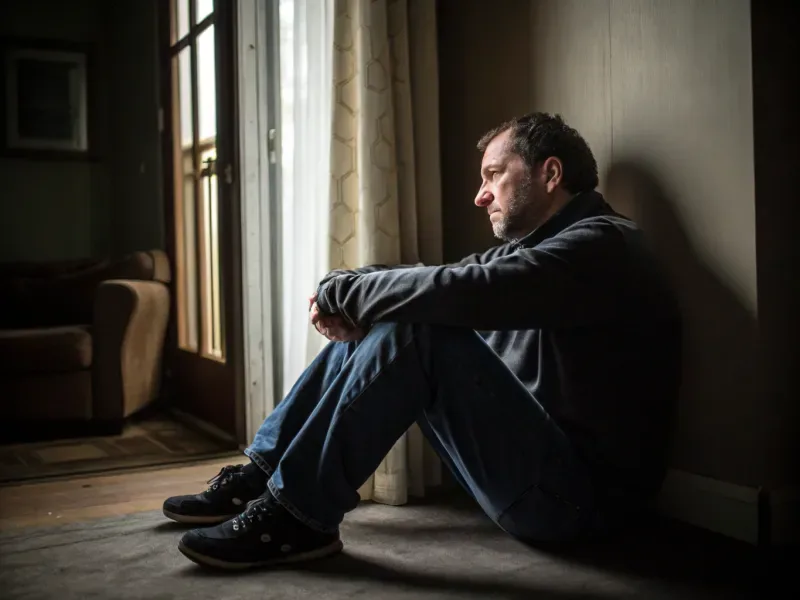
Silence after a loss can feel like rejection, especially when you are trying so hard to help. Your partner may stop talking, stop answering texts, sit staring at nothing, or leave the room when feelings come up. It is easy to read this as anger, or as a sign that you have done something wrong. Usually, it is neither. Quiet is often how a grieving mind protects itself when feelings are too big for words. Your partner is not shutting you out; they are shutting down the noise so they can survive the feeling.
The best response to quiet is gentle, low-pressure presence. Sit nearby, do something ordinary — read, make tea, fold laundry — and let your partner know you are there without demanding a conversation. A short, warm check-in works better than a long interrogation: I am here if you want to talk, and it is fine if you do not. If they do speak, listen without fixing. If they do not, do not take it personally, and do not fill every silence with questions. Silence shared is not the same as silence ignored.
12. When Your Partner Gets Angry

Anger is one of grief’s most misunderstood faces, and it can be frightening when it appears in someone you love. Your partner may snap over small things, pick fights, blame the doctors, blame God, blame themselves, or blame you. They may be furious at the unfairness of it all, at the person who died for leaving, or at a world that carries on as if nothing happened. Anger after a loss is usually not about the thing that triggered it; it is grief with nowhere else to go, and it needs understanding rather than a counter-attack.
When the anger is aimed at you, try to remember that you are the safest person to be angry with, which is why you are getting it. That does not make it pleasant, and it does not mean you should accept cruelty, but it helps to avoid taking every outburst personally. Stay calm, keep your voice low, and name what you see without judging it: You sound really angry, and that makes sense, this is so unfair. If you need to step away, say so kindly — I am going to take ten minutes and come back — and then actually come back.
13. When Grief Looks Like Exhaustion and Forgetfulness

Grief is physically exhausting in a way that surprises most people. Your partner may sleep for ten hours and still wake up tired, forget appointments, lose their keys, burn the dinner, or walk into a room and forget why. This is not carelessness or laziness; it is the brain running on empty while it processes an enormous loss. Grief affects concentration, memory, and decision-making in measurable ways, and the fog can last for months. Knowing this helps you respond with patience instead of frustration.
Lower the bar for daily life while the fog is thick. Write things down together: appointments, shopping lists, the names of people to call back. Put keys, wallet, and phone in the same place every day. Break big tasks into tiny steps, and celebrate the small ones — a shower, a meal, a walk around the block. If your partner forgets something important, resist the urge to say I already told you. Try gently, I think that was on Tuesday, shall we write it down together? Kindness in these moments is remembered long after the forgotten appointment is not.
14. Supporting a Partner Who Lost a Parent

Losing a parent changes a person in a fundamental way, even when the parent was elderly or ill for a long time. Your partner has lost the person who knew them longest, the one who held their childhood, and the one they still turned to for advice. Many people are surprised by how lost they feel, as if an anchor has gone. They may also feel guilty — for not visiting enough, for arguments never resolved, for relief that a long illness is over. All of these feelings can exist at the same time, and all of them are normal.
Expect grief to arrive alongside a mountain of practical work: the funeral, the will, the house, the belongings, the accounts. Your partner may be dealing with siblings, each grieving differently and each with opinions about what should happen. Be the steady one in the background: keep notes, attend meetings, drive to appointments, and help your partner say no when the family pressure becomes too much. When decisions about the house or belongings arise, go slowly. Nothing needs to be cleared in the first month, and rushing can cause regrets that last years.
15. Supporting a Partner Who Lost a Child

The loss of a child is a grief unlike any other, and it can feel impossible to find the right words — because there are none. Your partner may feel that the natural order of the world has broken, and they may carry guilt, anger, and a depth of pain that frightens them. Do not try to make sense of it, and never suggest that time, another child, or staying busy will fix it. What your partner needs is for you to stay, to remember their child by name, and to accept that this grief may shape the rest of their life.
Say the child’s name. It is the single most powerful thing you can do. Many grieving parents say the hardest part is when people stop mentioning their child, as if the child never existed. I think about them often. I remember how they laughed. I am thinking of them today. These sentences cost you nothing and mean everything. Remember birthdays, anniversaries, and milestones, and mark them every year, for as long as your partner needs. The child mattered, and your remembering proves it.
16. Supporting a Partner Who Lost a Sibling

Sibling loss is often called the forgotten grief, because the world focuses on the parents while brothers and sisters are expected to be strong. Your partner may feel invisible in their own loss, told to support their parents while no one asks how they are doing. Losing a sibling means losing a shared childhood, a shared history, and often the only other person who remembers life exactly as it was. That loss deserves to be named and grieved in its own right, not treated as secondary.
Your partner may also be carrying a complicated mix of feelings: guilt for surviving, guilt for old arguments, anger at how it happened, and a strange sense of being the forgotten mourner. Make room for all of it without ranking the pain. Do not compare their loss to their parents’ loss, and do not expect them to be the strong one. Ask directly: How are you doing, really? And then listen to the answer, even if it is messy. Remind them that their grief counts, even when the spotlight is elsewhere.
17. Supporting a Partner Who Lost a Close Friend

The death of a close friend can hit harder than people expect, and your partner may feel they have no right to grieve so deeply for someone who was not family. But a close friend can be a chosen sibling, a witness to your partner’s whole adult life, and the person who knew them before you did. That loss is real, and your partner may feel it as keenly as any family bereavement. Take it seriously, even if others around you do not.
Friend grief often comes with practical complications. Your partner may not be invited to the funeral, or may be given a minor role while family takes centre stage. They may have to grieve while supporting the friend’s partner or parents, with nowhere to put their own feelings. Acknowledge that position: You were so close to them, and I know this is a huge loss for you too. Encourage your partner to honour the friendship in their own way — a letter, a walk to a favourite place, a donation, a gathering of mutual friends.
18. Supporting a Partner After a Sudden Loss

A sudden loss — an accident, a heart attack, a suicide, an unexpected medical event — brings a particular kind of shock that can last for weeks or months. Your partner may replay the last conversation endlessly, search for warning signs, or feel that the world has become unsafe and unpredictable. There was no goodbye, no preparation, and no time to say the things that mattered. That unfinished feeling is one of the hardest parts, and it cannot be fixed by logic or reassurance alone.
In the early days, your partner may be in a state of disbelief, functioning on autopilot while the reality has not fully landed. Do not rush them to accept it. Let them tell the story of what happened as many times as they need to, and listen to the same details without correcting or hurrying them. Repetition is the mind’s way of making something unreal feel real. If the death was traumatic, your partner may also have flashbacks, nightmares, or a fear of similar situations. These are normal trauma responses, and they are worth mentioning to a doctor or counsellor if they persist.
19. Supporting a Partner After a Long Illness

When a loss follows a long illness, grief often begins long before the death. Your partner may have spent months or years caring, hoping, fearing, and slowly letting go, and by the time the person dies, they are already exhausted. This is called anticipatory grief, and it is real grief, even though the person was still alive. Your partner may feel relief that the suffering is over, and then feel guilty for feeling relieved. Both feelings are normal, and neither makes them a bad person.
The end of caregiving brings its own strange emptiness. Your partner’s days were structured around hospital visits, medication, and worry, and suddenly that structure is gone. They may feel lost, purposeless, or even guilty for enjoying a free afternoon. Help them rebuild a routine slowly, without rushing to fill every hour. Small anchors help: a morning walk, a regular meal, a weekly call with a friend. And do not assume that because the death was expected, the grief will be smaller. Expected does not mean easy, and the pain can be just as deep.
20. When Grief and Depression Overlap

Grief and depression share many symptoms — sadness, poor sleep, low appetite, loss of interest — which makes them hard to tell apart. The key difference is movement. Grief comes in waves: your partner can feel terrible in the morning and laugh at something by evening, and the pain is clearly tied to the loss. Depression is flatter and more constant, and it often brings feelings of worthlessness, hopelessness, and a belief that nothing will ever improve. If your partner’s mood has no waves at all, only a long, flat darkness, it is worth paying attention.
Other warning signs include your partner saying they feel worthless or like a burden, withdrawing from everyone including you, neglecting basic self-care for weeks, using alcohol or drugs to get through each day, or talking about death or harming themselves. These are not just grief, and they are not something love alone can fix. If you notice them, raise the subject gently and directly: I have noticed you seem to feel hopeless most of the time, and I am worried about you. Then offer a concrete next step, such as booking a doctor’s appointment together.
21. Encouraging Professional Help Without Pushing

Suggesting therapy to a grieving partner is delicate, because it can sound like you think they are broken or that your support is not enough. Timing and framing matter more than the words themselves. Choose a calm moment, not the middle of an argument or a crisis, and present it as an extra layer of support rather than a judgement. Talking to someone who knows about grief might help in a different way than talking to me — they have tools for this that I do not. That framing honours your role while opening the door to more help.
Make it easy to say yes. Offer to find a grief counsellor, check whether their doctor can refer them, look into support groups, or find out about faith-based or community options. Offer to drive them, wait outside, or go to the first session with them if that is allowed. Some people prefer a group, where the comfort is being with others who truly understand. Others prefer one-to-one sessions, or even online counselling from home. Let your partner choose the shape, and respect their choice even if it is not the one you would have picked.
22. Helping With Sleep, Food, and Daily Routines

Grief disrupts the body’s basic rhythms. Your partner may lie awake for hours, wake at 3 a.m. with racing thoughts, sleep all day, or forget to eat entirely. Appetite often disappears, and food can taste like cardboard. These are normal grief responses, but they also make everything harder, because a tired, hungry body copes worse with emotional pain. Helping with sleep, food, and routine is therefore not a small thing; it is the foundation everything else rests on.
Keep food simple, regular, and within reach. Small meals, snacks, smoothies, soup, toast, and ready meals are all fine — this is not the time for ambitious cooking or nutrition lectures. Eat together when you can, even if your partner only manages a few bites. Keep water by the bed and by the sofa. For sleep, help build a gentle wind-down: dim lights, no news before bed, a warm drink, a short walk in the evening. If your partner wakes in the night, sit with them for a while rather than telling them to go back to sleep. A quiet presence at 3 a.m. is worth more than any advice.
23. Grief and Intimacy: Staying Close When Touch Feels Hard

Grief changes intimacy in ways couples rarely expect. Your partner may want to be held constantly, or may flinch at being touched. They may want closeness and then feel guilty for enjoying it, or feel that desire has disappeared entirely. All of this is normal. Grief affects hormones, energy, sleep, and body image, and it can make the body feel like a stranger. The most important thing is to talk about it gently, without pressure, and to let your partner lead.
Separate affection from expectation. Holding hands, cuddling on the sofa, a hand on the back while cooking, or simply lying close in bed can keep you connected without any pressure for more. Let your partner know that closeness does not have to lead anywhere: I just want to be near you, that is all. If your partner pulls away, do not take it as rejection; they may be protecting themselves from feeling too much, too fast. Ask what feels good right now, and believe the answer, even if it changes day to day.
24. Parenting Together While One Partner Grieves
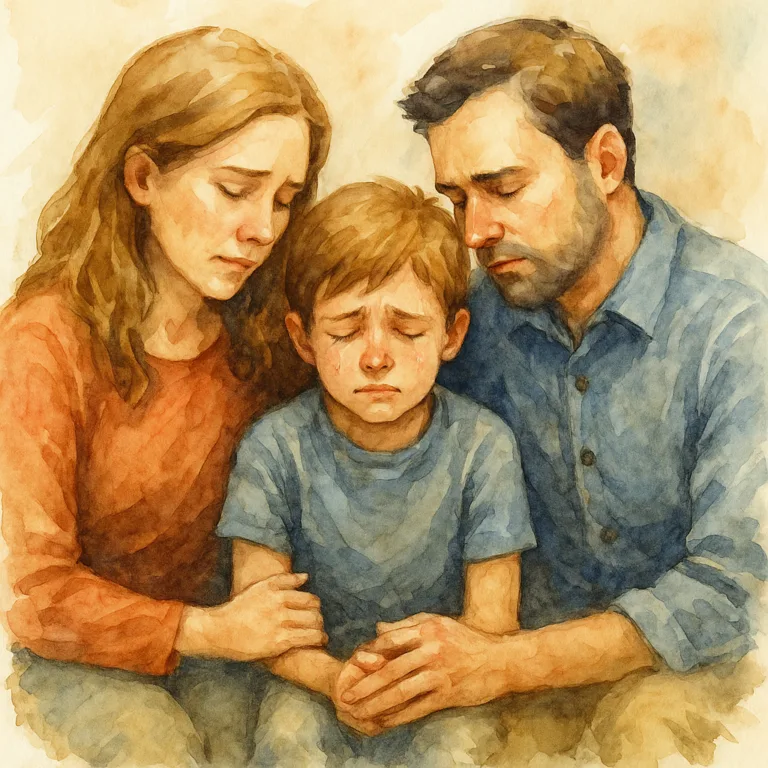
When one parent is grieving, the whole family feels it, and children notice far more than adults often realise. They may become clingy, act out, regress, or go quiet, and they will look to you for cues about whether the world is still safe. Your job in this season is to be the steady parent: keep routines predictable, answer children’s questions honestly and simply, and let them see that sadness is allowed. Children do not need you to hide grief from them; they need to see that grief can be carried and that life continues.
Talk to your children about what happened in words they can understand, and let them ask the same questions many times. It is okay to say, Mummy is very sad because Grandma died, and she needs some extra rest and cuddles right now. Give children small, concrete ways to help, like drawing a picture, choosing a meal, or sitting beside the grieving parent. And protect the grieving parent from feeling guilty about not being fully present. Tell them plainly: the children are okay, I have them, take the time you need.
25. When Friends and Family Say the Wrong Thing

Well-meaning people say hurtful things after a loss, and your partner will hear plenty of them: at least they are not suffering, you are young, you can have another baby, you need to move on, God needed them more. These comments usually come from discomfort, not cruelty, but they can wound deeply, especially when your partner is too exhausted to respond. Your role is partly to be a shield: step in, redirect the conversation, and protect your partner from having to educate people while they grieve.
Prepare a few gentle responses you can use on your partner’s behalf. Thank you for thinking of us, it is still very raw. We appreciate the thought, and we are taking it day by day. Those sentences are polite, firm, and final, and they let your partner off the hook. If someone persists, you can be clearer: I know you mean well, but that is not helpful right now. You can also be the person who tells family in advance what helps and what hurts, so your partner does not have to have the same conversation ten times.
26. Supporting Your Partner From a Distance

Distance makes grief support harder, but it does not make it impossible. If you live apart, travel for work, or are separated by circumstances, your presence has to travel through a screen, a phone line, or a parcel — and it can still land. The key is regularity: a short call every day beats a long call once a month. A morning text, a photo, a voice note, or a quick video call at the same time each day creates a rhythm your partner can rely on when everything else feels uncertain.
Use the tools you have creatively. Order food delivery to their door, send a care parcel with tea, snacks, a soft blanket, and a handwritten note, or arrange for a local friend to drop by. Watch a film together over video call, read the same book, or simply leave a call open while you both do ordinary things. These small shared moments replace the silent company that distance takes away. And when you can visit, plan the trip around your partner’s needs rather than a packed schedule: quiet days, no big outings, and plenty of time to just be together.
27. Rituals and Remembrance: Honouring the Person Who Died

Rituals give grief a shape and a place to go. Lighting a candle, visiting a grave, cooking the person’s favourite meal on their birthday, planting a tree, or looking through photographs together are all ways of saying: you mattered, and you are still part of this family. Your partner may not think to suggest these things, or may feel guilty for wanting them, so offering a ritual is a gift. Would you like to light a candle for them tonight? Shall we cook their favourite dish on Sunday? Small invitations like these open a door your partner may be afraid to open alone.
Let your partner lead the shape of remembrance, and do not worry about doing it perfectly. Some people want a formal memorial; others want a quiet walk to a favourite place. Some keep a photograph on the mantelpiece; others wear a piece of jewellery or keep a voicemail saved on their phone. All of these are valid, and none of them means your partner is stuck. Remembering is not the opposite of moving forward; it is how moving forward happens. A grief that is allowed to remember is a grief that can slowly soften.
28. Money, Paperwork, and Decisions in the Fog

Grief and paperwork arrive together, and it is a cruel combination. Wills, probate, bank accounts, insurance claims, funeral bills, and closing accounts all demand clear thinking at the exact moment clear thinking is hardest. Your partner may stare at a form for an hour without understanding a word of it, or avoid the post entirely because every envelope feels like another blow. This is normal, and it is where your steady, practical help matters most.
Become the organiser without becoming the owner. Make a single list of everything that needs doing, with deadlines, and work through it one item at a time. Keep a folder — physical or digital — for every document, letter, and receipt, and write down the name of every person you speak to and what they said. Offer to sit with your partner while they make calls, or make the calls yourself when that is allowed. If the estate is complicated, suggest a solicitor or a free advice service early, before small problems become expensive ones.
29. Your Own Grief as the Supporting Partner

You may be grieving too, and that is easy to forget when all the attention is on your partner. You lost someone as well — a parent-in-law, a friend, a person who was part of your life — and you are also watching the person you love suffer, which is its own kind of pain. Many supporters push their own grief aside because it feels smaller than their partner’s, but grief is not a competition. Your feelings are real, they deserve space, and ignoring them will not make you a better supporter. It will make you a more exhausted one.
Find somewhere safe to put your feelings that is not your partner. A friend who understands, a sibling, a counsellor, a journal, or a long walk where you can cry without worrying anyone. You need at least one place where you can say the hard things: I am exhausted, I feel helpless, I miss them too, sometimes I wish things would go back to normal. Saying these things out loud does not betray your partner. It keeps you honest, and honesty is what lets you keep showing up with an open heart instead of a clenched one.
30. When You Grieve Differently From Each Other

No two people grieve the same way, and when you are grieving the same loss together, those differences can feel like a chasm. One of you may need to talk constantly while the other needs silence. One may want to keep the person’s room exactly as it was while the other needs it changed. One may cry openly while the other goes quiet and busy. It is easy to read these differences as a lack of love, or as proof that your partner is grieving wrong. Neither is true. Different is not wrong; it is just different.
The way through is curiosity instead of judgement. Ask your partner what they need, and believe them, even when it is the opposite of what you need. I need to talk about them tonight, and I need to sit quietly tomorrow are both valid, and they can both be true in the same week. Agree on small compromises: a time to talk, a time to be quiet, a decision about the room that can be revisited in a month. And avoid keeping score about who is grieving more, or more correctly. Scorekeeping turns a shared loss into a contest nobody wins.
31. The Six-Month Myth and the Second Year

Somewhere in our culture, an idea took hold that grief should be mostly over by six months. It is a myth, and a harmful one, because it makes grieving people feel broken when they are still struggling at month seven, month ten, or month eighteen. In reality, the second year is often harder than the first. The shock has worn off, the support has faded, the firsts are over, and what remains is the plain, permanent fact of absence. Your partner is not going backwards; they are finally feeling the full weight of the loss.
Expect the second year to bring its own waves. The second birthday without them, the second Christmas, the second anniversary of the death — each one can hit harder than the first, because this time there is no shock to cushion it. Your partner may also face new milestones: a promotion the person will never see, a grandchild they will never meet, a house move they would have loved. These moments of absence are real grief, and they deserve to be named. I know today would have meant a lot to them, and I am thinking of them too.
32. Helping Your Partner Return to Work and Normal Life

Returning to work after a loss is a strange, disorienting experience. Your partner may dread it, feel guilty for going back, and find that ordinary tasks — answering emails, sitting in meetings, making small talk — feel impossible. Colleagues may avoid the subject entirely, or ask how they are in a way that demands a cheerful answer. All of this is normal, and all of it is exhausting. Your role is to make the return as gentle as possible, and to be the safe place at the end of each working day.
Help your partner plan the practical side. A phased return, if their employer allows it, is often easier than a sudden full week. Agree on what to tell colleagues — a short, simple sentence is enough: I lost my mum last month, I am back now, and I would rather not talk about it at work. Pack lunch, lay out clothes the night before, and keep the first few evenings free of plans. When they come home, ask a gentle question — How was today, really? — and listen without trying to fix the hard parts.
33. Common Mistakes Even Loving Partners Make
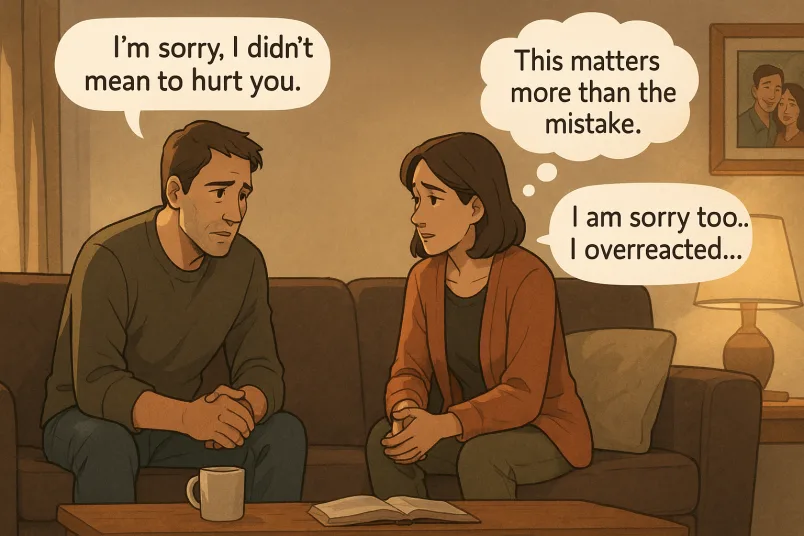
Even the most loving partners make mistakes, and knowing the common ones can save you both a lot of pain. The first is rushing: telling your partner to move on, stay strong, or get back to normal before they are ready. The second is comparing: my aunt lost her husband and she was fine in three months. The third is fixing: turning every feeling into a problem with a solution. The fourth is disappearing: pulling away because you do not know what to say, which leaves your partner feeling abandoned at the worst possible time.
Other mistakes are quieter. Taking over completely, so your partner feels helpless in their own life. Making big decisions about the deceased person’s belongings without asking. Telling other people about your partner’s grief without permission. Forgetting the hard dates after the first year. Or the most common one of all: assuming that because your partner laughed today, they are healed, and stopping the support. A laugh is not a finish line; it is a moment of light in a long tunnel.
34. A Gentle Checklist You Can Return To

When everything feels overwhelming, a short checklist can be a kindness to you both. Return to it on hard days, in hard weeks, and whenever you are not sure what to do next. One, listen without fixing, and let your partner repeat the story as often as they need to. Two, say the person’s name and keep their memory alive. Three, cover the practical basics: food, water, sleep, laundry, and the small tasks that pile up. Four, remember the hard dates, including the second year and beyond.
Five, watch for warning signs — flat hopelessness, not eating or sleeping, heavy drinking, or thoughts of harm — and seek help promptly if they appear. Six, encourage professional support gently, without pushing, and offer to help arrange it. Seven, look after yourself too, with rest, honest conversation, and at least one person you can lean on. Eight, be patient with intimacy, anger, silence, and all the different shapes grief takes. Nine, protect your partner from thoughtless comments and from too many visitors. Ten, keep showing up, long after everyone else has moved on.
How long does grief last after losing a loved one?
Grief does not have a fixed end date, and anyone who gives you one is guessing. For many people, the most intense grief lasts for several months, and it slowly softens over one to two years, but waves of sadness can return for much longer, especially around anniversaries and milestones. What changes is not that the grief disappears, but that it becomes easier to carry. If your partner’s grief feels as raw after many months as it did in the first weeks, or if they cannot eat, sleep, or function, it is worth talking to a doctor or grief counsellor.
What should I say to my partner who is grieving?
Simple, honest words work best: I am so sorry. I am here. I love you. I am not going anywhere. Name the person who died, and say that you are thinking of them too. Avoid phrases that minimise the loss or rush your partner, such as everything happens for a reason or time heals all wounds. If you truly do not know what to say, say so — I do not know the right words, but I am here and I am listening — and then stay, listen, and let your presence do the rest.
Is it normal for my partner to seem fine one day and broken the next?
Feeling fine one day and broken the next is one of the most normal parts of grief. Grief comes in waves, not in a straight line, so your partner can laugh at lunch and cry by dinner, and neither mood is fake. Triggers like a song, a smell, a place, or a date can bring a wave with no warning. The best response is to meet each day as it comes, without expecting yesterday’s mood to predict today’s, and to keep showing up steadily either way.
How can I help my grieving partner if they push me away?
Being pushed away hurts, but it is often your partner’s way of coping, not a rejection of you. Stay nearby without demanding closeness: sit in the same room, leave a cup of tea, send a short text saying you are there when they are ready. Avoid chasing them with questions or taking the distance personally. If the withdrawal lasts for weeks, or your partner stops eating, sleeping, or leaving the house, raise your concern gently and suggest professional support. Patience and a steady presence usually bring them back.
Should I encourage my partner to see a therapist?
Encouraging therapy is kind when it is offered gently and without pressure, especially if grief feels stuck, overwhelming, or tangled with depression or anxiety. Choose a calm moment, frame it as extra support rather than a verdict, and offer practical help with finding a counsellor or booking an appointment. If your partner says no, leave the door open and mention it again lightly later. If you ever worry about their safety, seek help urgently regardless of their refusal.
What should I avoid saying to someone who is grieving?
Avoid anything that minimises the loss or rushes the grief: they are in a better place, at least they lived a long life, you need to be strong, and you should be over it by now all land badly. Avoid comparing losses, giving unsolicited advice, or telling your own grief story before your partner has finished theirs. When in doubt, say less and stay longer. A simple I am so sorry, I am here is almost always better than a clever explanation.
How do I support my partner through grief from far away?
Regular, small contact matters more than grand gestures: a short call or text every day, a voice note, or a video call at the same time each day creates a rhythm your partner can rely on. Send practical help from a distance, such as food delivery or a care parcel, and arrange for a local friend to visit. Mark hard dates in your calendar and call on those days. If you notice worrying signs from afar, ask someone nearby to check in person. Distance is a challenge, not a barrier, when you stay consistent.
Can grief affect our relationship long term?
Grief can strain a relationship, because two people often grieve differently and at different speeds, and intimacy, patience, and daily life all change for a while. Many couples also find that weathering a loss together makes their bond deeper, because they have seen each other at their most vulnerable and stayed. Honest communication, patience with different grieving styles, and outside support such as grief counselling all help. The couples who come through it well are usually the ones who keep choosing each other, again and again.
What if I am grieving too?
Your grief matters just as much as your partner’s, even if the loss was theirs more directly. You are allowed to be sad, tired, and overwhelmed, and hiding those feelings will only exhaust you. Find at least one person you can talk to honestly — a friend, a family member, or a counsellor — and build small pockets of rest into your week. Tell your partner kindly when you need support too. Two people grieving honestly together is stronger than one person pretending to be fine.
When should I worry that grief has become depression?
Worry is warranted when grief stops coming in waves and becomes a flat, constant darkness, especially with feelings of worthlessness or hopelessness, withdrawal from everyone, neglecting basic self-care for weeks, heavy use of alcohol or drugs, or thoughts of harming themselves. Grief is tied to the loss and eases slowly over time; depression feels stuck and hopeless. If you notice these signs, raise them gently and help your partner see a doctor. If they talk about harming themselves, seek help immediately.
Conclusion: How to Support a Partner Through Grief, One Gentle Day at a Time
Learning how to support a partner through grief is not a skill you master once and forget; it is a practice you return to, day after day, in small and ordinary ways. Listen without fixing. Say the person’s name. Cook the meal, answer the phone, remember the birthday, and stay close in the second year when everyone else has moved on. You will get things wrong sometimes, and that is okay. A simple apology and a willingness to try again will carry you further than perfection ever could.
What your partner will remember, years from now, is not any single perfect sentence. It is the pattern: that you stayed, that you listened, that you remembered, and that you kept choosing them through the hardest season of their life. Grief changes people, and it changes relationships, but love that shows up — quietly, patiently, again and again — is the thing that helps a grieving person find their way back to life. Start with one small thing today, and then do it again tomorrow. That is how support works, and that is enough.

