
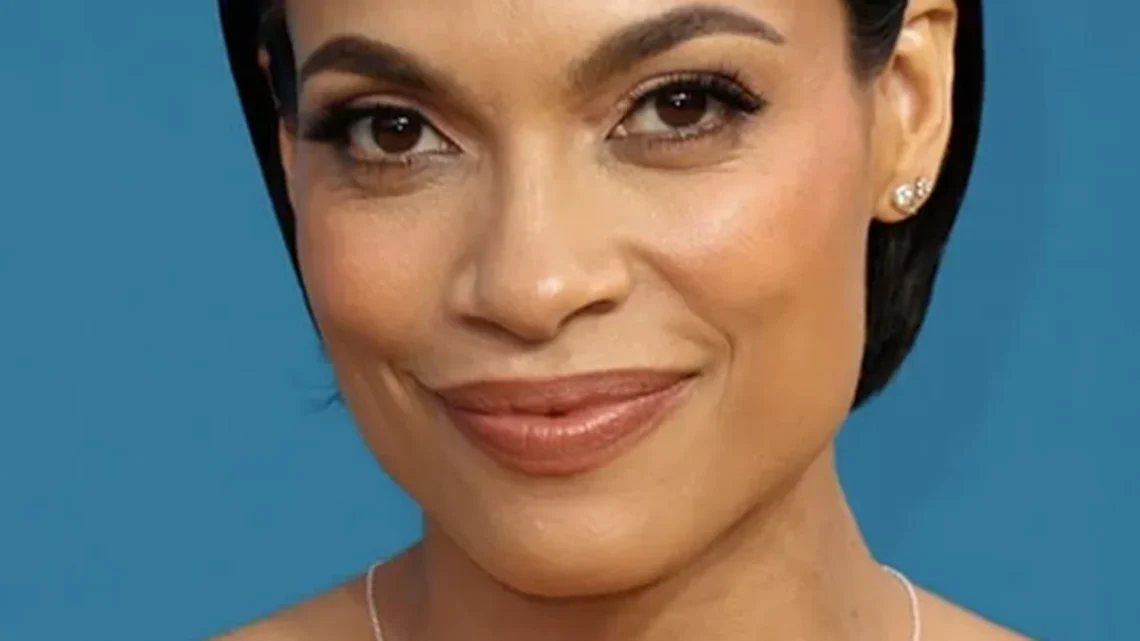
A diamond face shape is one of the most striking face shapes there is: a narrower forehead and jawline, a pointed or tapered chin, and cheekbones that sit wide and high. It photographs beautifully, yet it can be tricky to style, because the wrong cut can make the cheekbones look even wider and the chin look sharper. The good news is that the right cut does the opposite. These hairstyles for a diamond face are chosen to do one simple job: add softness and width where your face is narrow, at the forehead and the jaw, and keep volume away from the widest point of your cheeks. That one principle unlocks almost every flattering look, from long layers and curtain bangs to bobs, pixies and soft updos.
In this guide you will find 31 cuts and styles that work with a diamond face rather than against it, plus the face-shape basics, the bang and parting rules, and the styling tricks that make the difference between a good haircut and a great one. Every style below explains who it suits best, how to style it at home, and exactly what to ask for in the salon chair, so you can walk in confident and walk out with a cut that balances your features instead of fighting them.
What Is a Diamond Face Shape? How to Tell Yours Apart
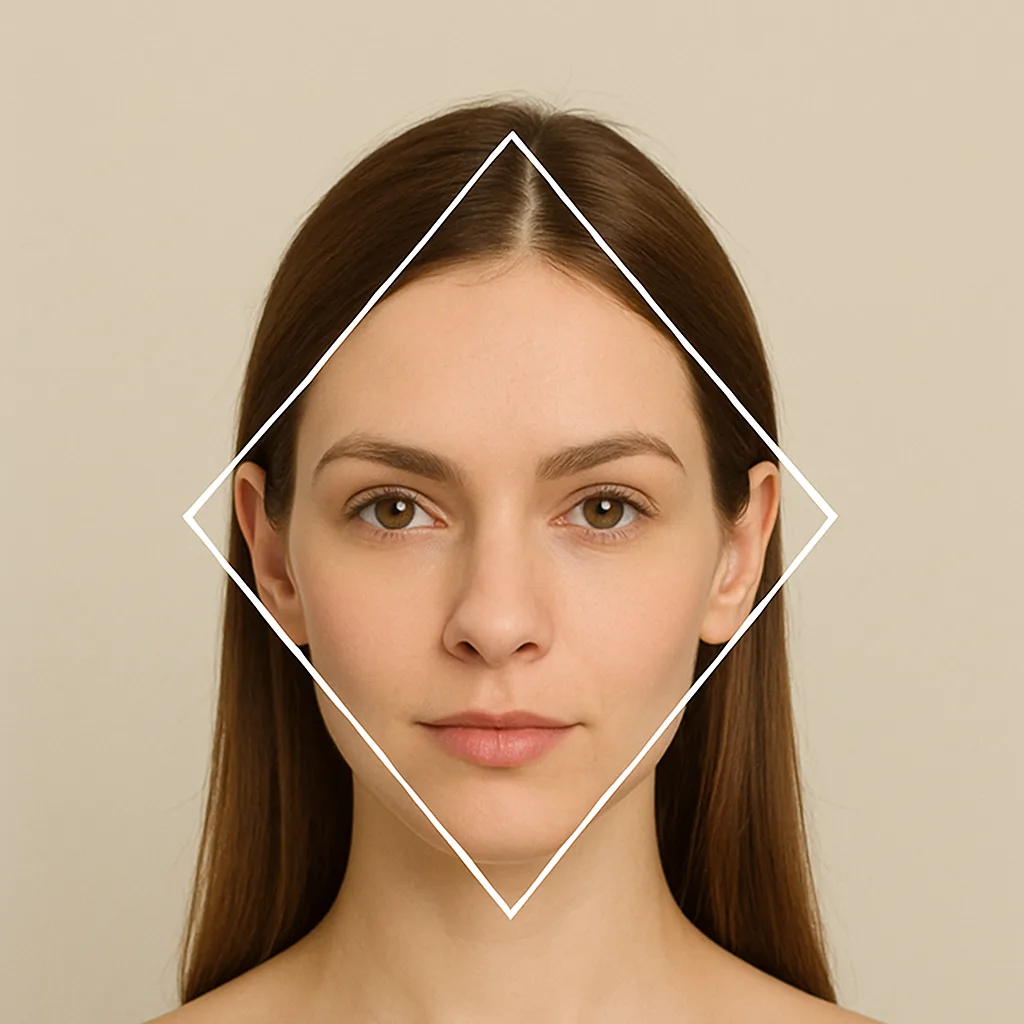
A diamond face shape is defined by its proportions rather than by any single feature. The forehead is narrower than the cheekbones, the cheekbones are the widest part of the face, and the jawline tapers down to a chin that is narrower and often slightly pointed. If you pull your hair right back and look in the mirror, the widest line runs across your cheeks, and the outline narrows both above and below that line.
The easiest way to check is the mirror test. Tie your hair back, stand in even light, and trace the outline of your face with your eyes. If your cheekbones are clearly the widest point, your forehead looks a little narrow by comparison, and your chin comes to a soft point, you very likely have a diamond face. A quick measurement helps too: measure across your cheekbones, across your forehead, and across your jaw. In a diamond face, the cheekbone number wins by a clear margin, while the forehead and jaw numbers are close to each other and noticeably smaller.
Diamond faces are often confused with oval and heart shapes, and the difference matters for your haircut. An oval face is balanced all the way down, with the forehead and jaw roughly the same width. A heart face has a wide forehead and a narrow chin, which is the reverse of the diamond at the top.
Why Diamond Faces Need Width at the Forehead and Jaw
Every face shape has a balance point, and for a diamond face it sits at the cheekbones. Because the cheekbones are already the widest feature, any style that adds width or bulk at that exact level makes the middle of the face look broader and the forehead and chin look smaller by comparison. That is why heavy, blunt volume sitting right at cheek level, or a sharp horizontal line cut across the cheeks, can make a diamond face look harder than it is.
Think of it as evening out a shape. A little fullness at the forehead, from a side-swept fringe, curtain bangs or soft volume at the roots, widens the top of the face. A little fullness at the jaw, from a bob that flips out, layers that kick out at the ends, or waves that sit at chin level, widens the bottom. With both ends gently widened, the cheekbones stop looking like the only wide point and start looking like the elegant centre of a balanced face. The result reads as softer, more symmetrical and more relaxed, even though nothing about your face has changed.
Softness matters as much as width. Diamond faces have naturally defined angles, so hard, geometric lines can emphasise the sharpness of the chin and the cheekbones. Soft layers, feathered ends, waves and textured fringes break those lines up and add movement.
The Best Hair Lengths for a Diamond Face
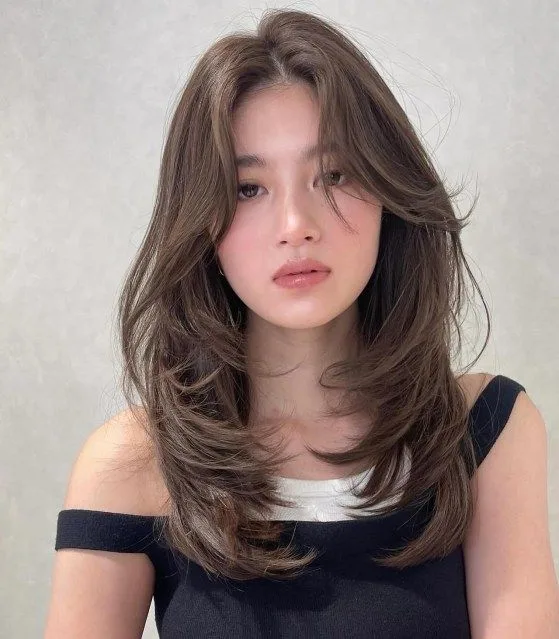
There is no single perfect length for a diamond face, because the right length depends on where the hair ends and how much movement it has. But some lengths make the balancing act easier than others. Shoulder length and just below the shoulder is the sweet spot for most people. At that length, layers can sit at the jaw, ends can flick out to widen the lower face, and the hair still has enough weight to fall softly rather than puffing out at the cheeks.
Long hair works beautifully too, provided the layers are placed with intent. Long hair with no layers at all can drag the face down and emphasise a pointed chin, while long hair with face-framing layers that start at the cheekbones and open outwards softens everything. Ask for the shortest face-framing pieces to start at or just below the chin rather than at the cheekbone, and for the ends to be textured rather than cut in one blunt line. That keeps the length you love while adding the width your jawline needs.
Short hair is the boldest option and, done well, one of the most flattering. A chin-length bob is a natural fit because it ends exactly where you want width, at the jaw. A pixie works when it keeps length and softness on top and sweeps across the forehead, because that fringe adds the width a diamond forehead needs.
Bangs That Work for a Diamond Face (and the Ones to Skip)
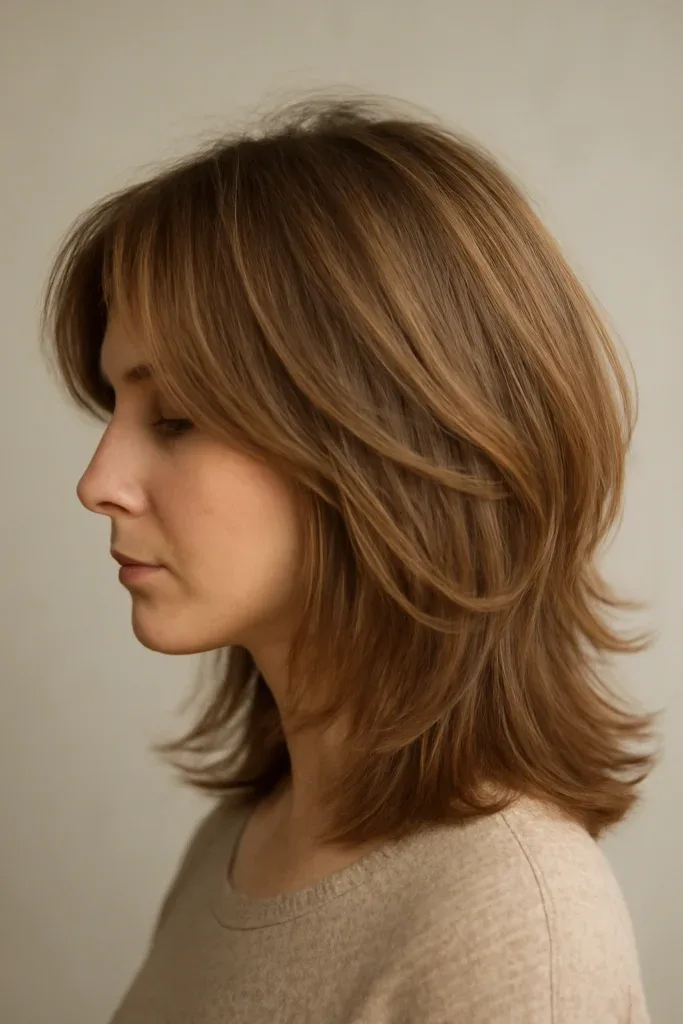
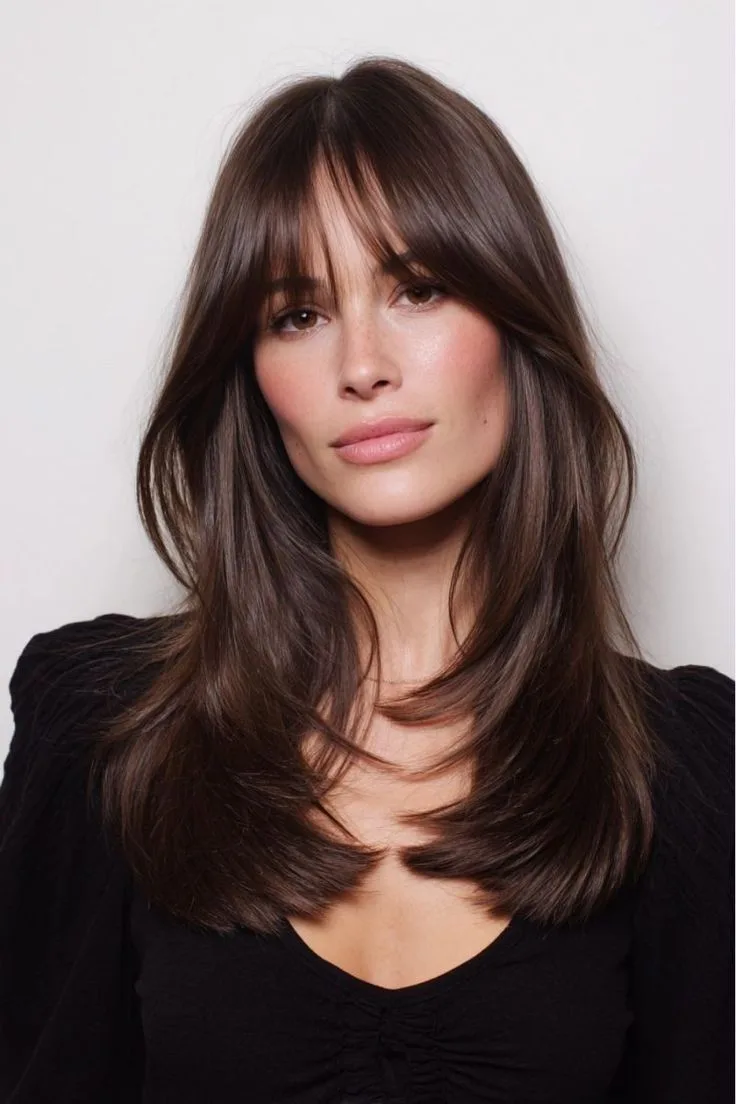
Bangs are one of the most useful tools for a diamond face, because they add width exactly where it is needed, across the forehead. Curtain bangs are the safest and most flattering choice for most people. They part in the middle, sweep to each side, and open up around the cheekbones, which widens the forehead without covering it completely.
Side-swept bangs are the next best option and suit almost every length, from a pixie to long layers. Swept across the forehead, they add diagonal movement that breaks up the symmetry of a diamond face and softens the cheekbones. They also work well if your hair is thick, because the weight of a side sweep sits flatter than a full fringe. Ask your stylist to cut them long enough to tuck behind the ear, so you can wear them swept or pinned back on days when you want your forehead fully visible.
Wispy, textured bangs can work too, especially with medium and long hair. The key word is wispy: a light, feathered fringe adds softness without a heavy horizontal line. Avoid a very thick, blunt, straight-across fringe cut at eyebrow level, because that strong horizontal line sits just above the cheekbones and can make the middle of the face look wider by contrast.
Partings That Flatter a Diamond Face
The parting is a small detail with a surprisingly big effect on a diamond face. A deep side part is the most flattering choice for most people, because it sweeps volume across the forehead, adds width to one side of the top of the face, and creates a diagonal line that softens the cheekbones. It also gives instant root lift without any teasing, which helps if your hair tends to fall flat.
A soft, slightly off-centre part is the gentle middle ground. It keeps the balance of a centre part but avoids the hard symmetry that can make a diamond face look severe. If you like the look of a centre part, shift it half an inch to one side and see how much softer the whole face looks. That tiny change moves the hair so it falls across the forehead at a slight angle, which is enough to widen the top of the face without changing your style at all.
A dead-centre part is the one to be careful with. On a diamond face it can emphasise the symmetry of the shape, draw attention to the narrow forehead, and make the cheekbones look wider by comparison. It is not forbidden, especially with curtain bangs or face-framing layers that soften the sides, but a centre part on very straight, flat hair with no layers is one of the least flattering combinations for this face shape.
Volume Tricks: Where to Add It and Where to Avoid It
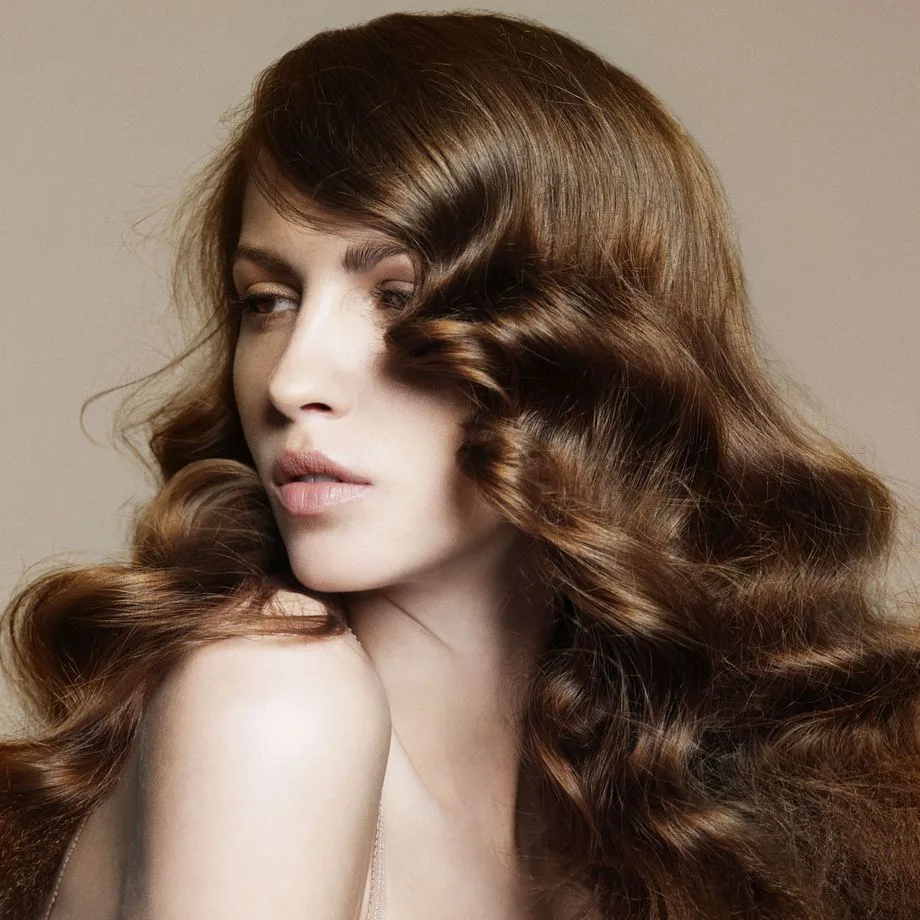
Volume is not the enemy of a diamond face, but its placement is everything. The golden rule is simple: add volume at the forehead and at the jaw, and keep it soft and controlled at the cheekbones.
At the top, a round brush and a little root spray will give you lift without stiffness. Blow-dry the roots upwards and away from the face, and let the lengths fall naturally. If you use hot rollers or a curling iron, place the biggest volume at the crown and let the curls loosen as they reach the cheeks, rather than building tight curls right at the widest point. The aim is height, not width, at the top of the head.
At the bottom, volume is your friend. Ends that flick out, curl under at the jaw, or wave outward at chin level all add width where the face is narrow, which is exactly what balances the cheekbones. A bob with a slight outward flip, long layers that kick out at the ends, or a blowout with the ends turned under all do this job.
Styling Tools and Products That Help a Diamond Face
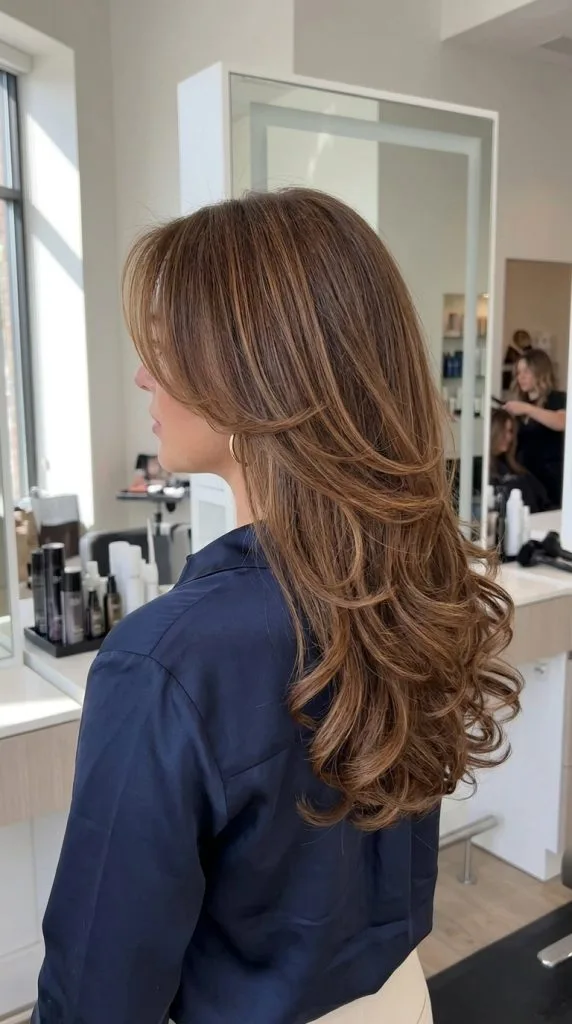
You do not need a drawer full of gadgets to style a diamond face well. Three tools cover almost everything: a round brush for blowouts, a large-barrel curling iron or wand for soft waves, and a flat iron for smoothing the sides and flicking the ends. A round brush is the workhorse, because it lets you lift the roots at the crown and turn the ends under or out at the jaw in a single pass.
A curling wand with a barrel of 32mm or larger is ideal for diamond faces, because it makes loose, wide waves instead of tight curls. Tight curls sitting at cheek level add width exactly where you do not want it, while loose waves that start below the cheekbones add movement and width at the jaw. Wrap the hair away from the face, leave the last inch of the ends straight for a modern finish, and brush the waves out gently with your fingers once they cool. The result should look like soft movement, not a set of separate curls.
Products matter as much as tools. A lightweight root-lifting spray or mousse gives lift at the crown without weighing the lengths down. A smoothing cream or light serum tames the sides at cheek level, which is where frizz and flyaways can add unwanted width. A flexible-hold hairspray keeps soft waves in place without making them stiff, and a texturising spray adds grip and separation to layers and bobs.

Common Mistakes to Avoid and What to Tell Your Stylist
The most common mistake with a diamond face is choosing a cut from a photo without checking where the volume sits. A style can look gorgeous on the model and still be wrong for you if its widest point lands on your cheekbones. Before you book, look at the photo again and ask where the bulk is. If the hair is widest at the ears and flat everywhere else, it will widen your cheeks. If it is full at the crown, soft at the cheeks and full again at the jaw, it will balance you.
The second mistake is going too severe: a very blunt, straight-across fringe, a sharp geometric bob with no texture, or hair scraped tightly back with no soft pieces around the face. All of these emphasise the angles of a diamond face instead of softening them. The fix is rarely to abandon the style, just to soften it.
The third mistake is silence in the salon chair. Your stylist can only work with what you tell them, so bring photos, but also say the words. Try this script: I have a diamond face shape, so my cheekbones are the widest part and my forehead and chin are narrower. I want width at the forehead and the jaw, softness around my cheeks, and no heavy volume sitting at cheek level. Please point-cut the ends so nothing is too blunt, and check how it falls when it is dry.
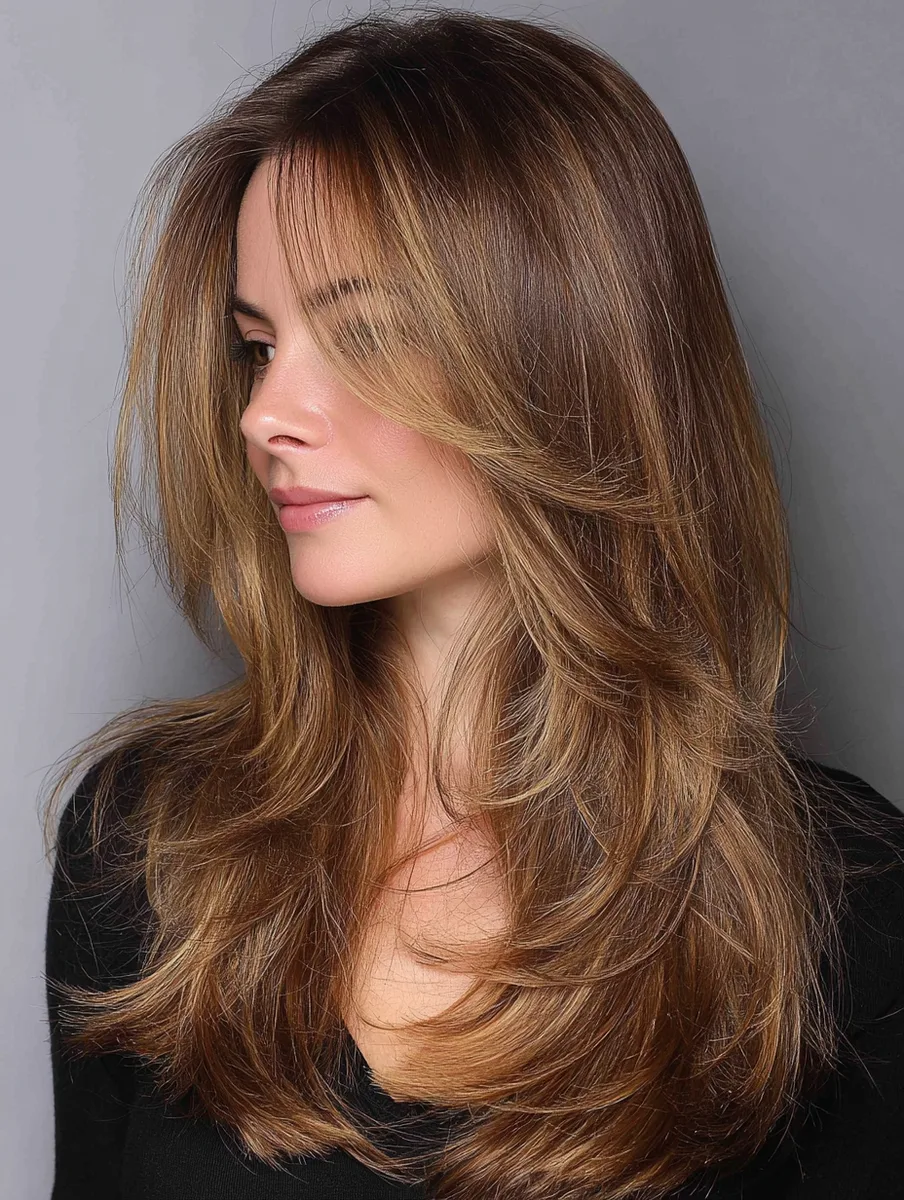
1. Long Layers with Face-Framing Pieces
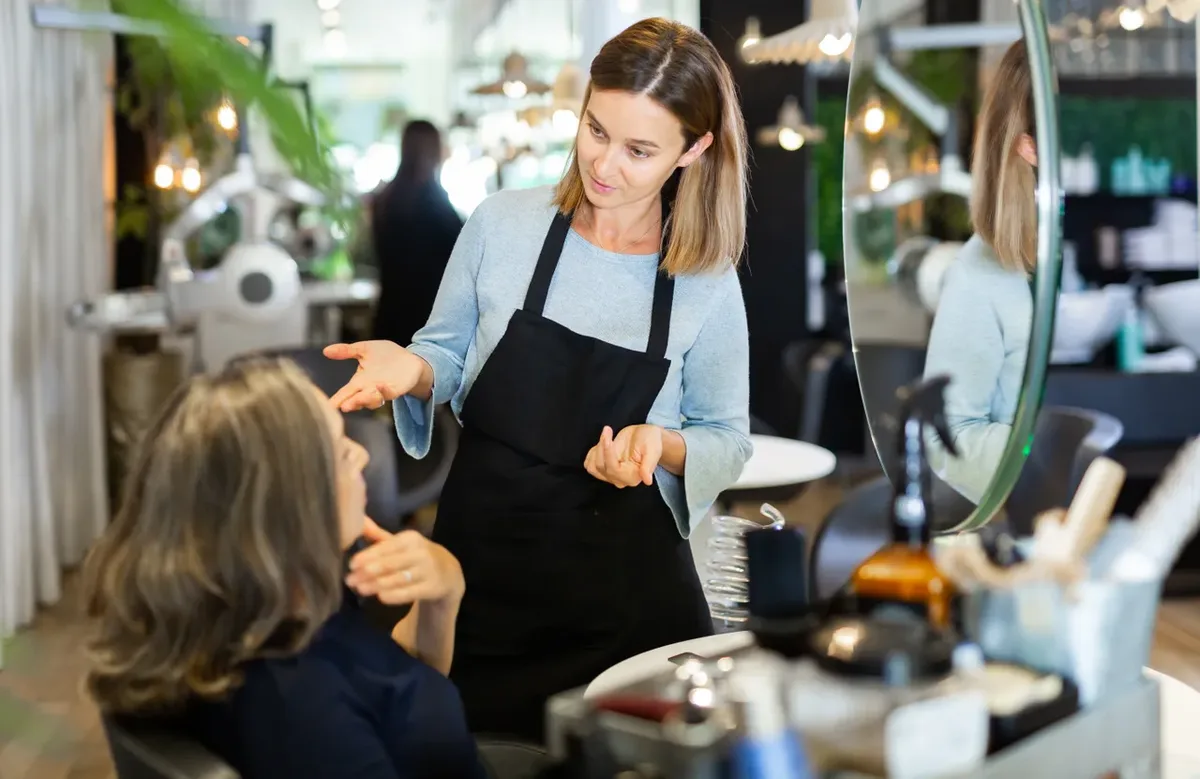
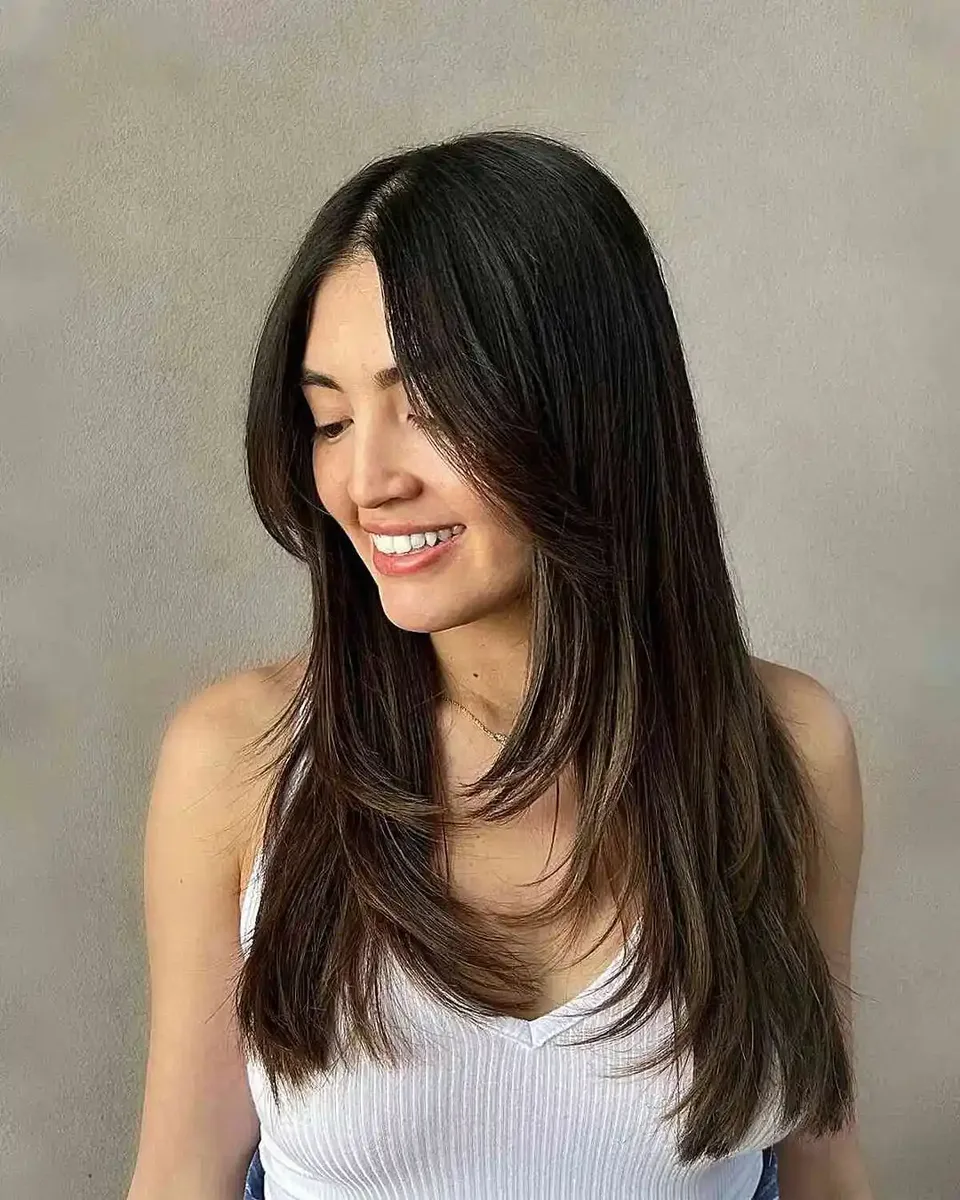
Long layers with face-framing pieces are the easiest win for a diamond face, and the reason they work is pure geometry. The long lengths keep the face from looking short or wide, while the face-framing pieces start at the chin and open outwards, adding soft width exactly where the jaw is narrow.
Best for: anyone who loves long hair and does not want a dramatic chop. It suits straight, wavy and lightly curly hair, and it works on fine hair too, because the layers add movement without removing much weight. It is also the best first step if you are growing out a shorter cut and want a shape that looks intentional at every stage. A shine serum on the ends adds polish, and the layers look just as good air-dried with a little wave spray.
How to style it: blow-dry with a round brush, turning the face-framing pieces away from the face so they flick out at the jaw. A large-barrel curling iron through the mid-lengths adds a soft wave that sits below the cheekbones, and a little texturising spray at the ends keeps the layers separated.
2. Side-Swept Bangs with Soft Waves
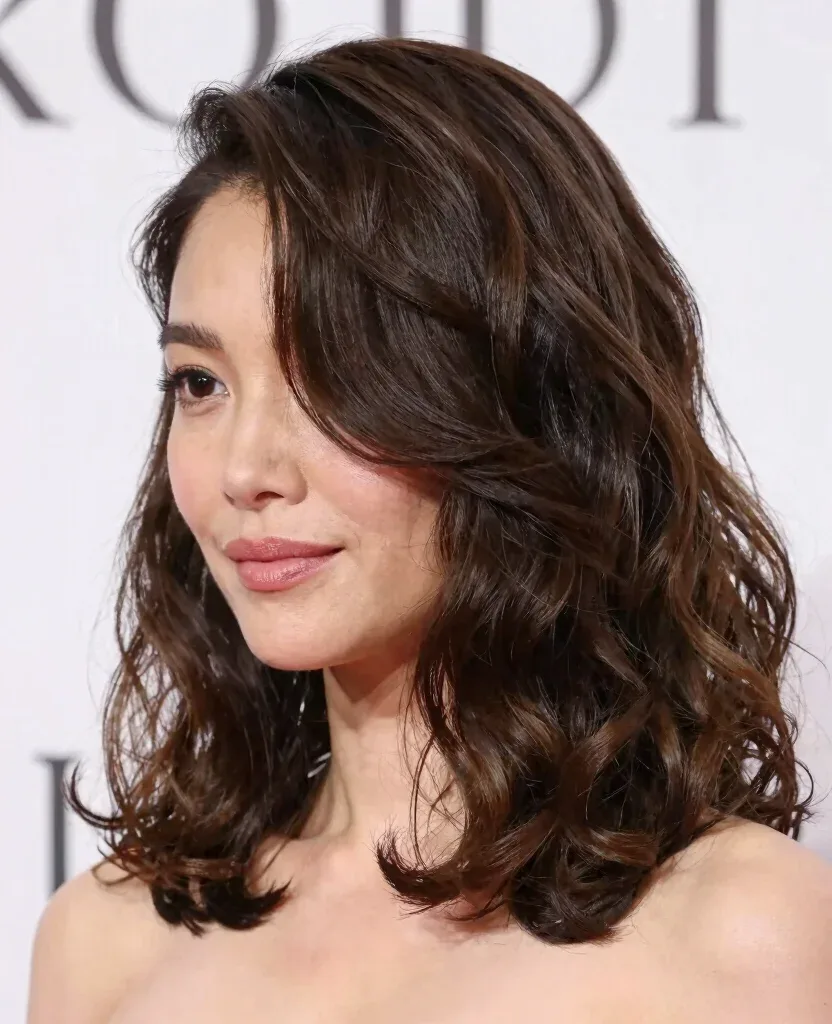
Side-swept bangs with soft waves are a classic for a diamond face because they solve two problems at once. The sweep across the forehead adds diagonal width where the forehead is narrow, and the soft waves through the lengths add gentle fullness at the jaw.
This style suits almost everyone with a diamond face, but it is especially good if your hair is thick or wavy, because the weight of the side sweep keeps the fringe sitting flat and the waves fall naturally into place. It also suits a slightly longer face, because the diagonal line across the forehead shortens the face a little and makes the proportions look more balanced. If your hair is very fine, ask for the bangs to be cut with texture so they do not separate into wisps.
Styling is straightforward. Part your hair deeply on one side while it is damp, then blow-dry the fringe across the forehead with a round brush, directing the roots in the direction you want them to fall. Add loose waves through the lengths with a large-barrel iron, wrapping the hair away from the face, and finish by running your fingers through the waves so they blend into one soft shape.
3. Chin-Length Bob with Volume at the Jaw
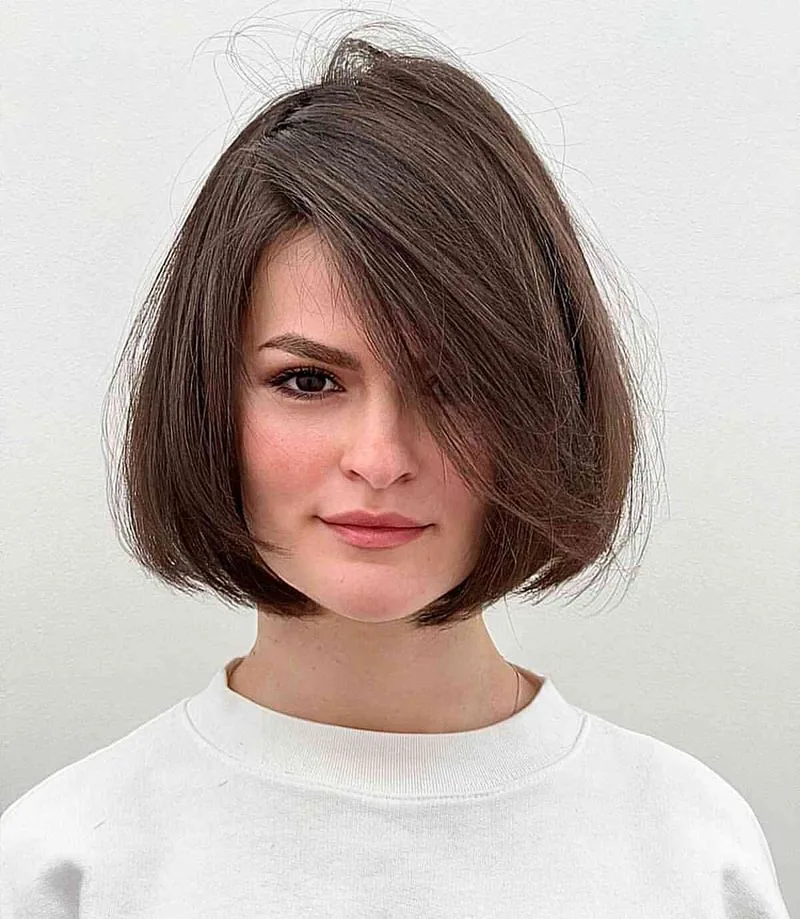
A chin-length bob is one of the most flattering short cuts for a diamond face, because it ends exactly where you want width: at the jaw. The ends of the bob sit at the narrowest part of the lower face and add fullness there, which balances the wide cheekbones above.
The pros are clear. It is quick to style, it shows off the cheekbones without exaggerating them, and it works on straight, wavy and lightly curly hair. It also grows out gracefully into a lob, so you are not locked into constant trims, although a tidy-up every six to eight weeks keeps the jaw-length shape crisp. The cons are worth knowing too: a bob with no texture can look heavy at the cheeks if the ends are cut too bluntly, and very thick hair may need thinning through the mid-lengths so the shape does not balloon outwards.
To style it, blow-dry with a round brush, lifting at the roots and turning the ends slightly under at the jaw. That inward turn is what creates the width at the lower face. For a softer finish, flick the ends out instead, which gives a playful, flipped shape that widens the jaw even more.
4. Curtain Bangs and Long Hair
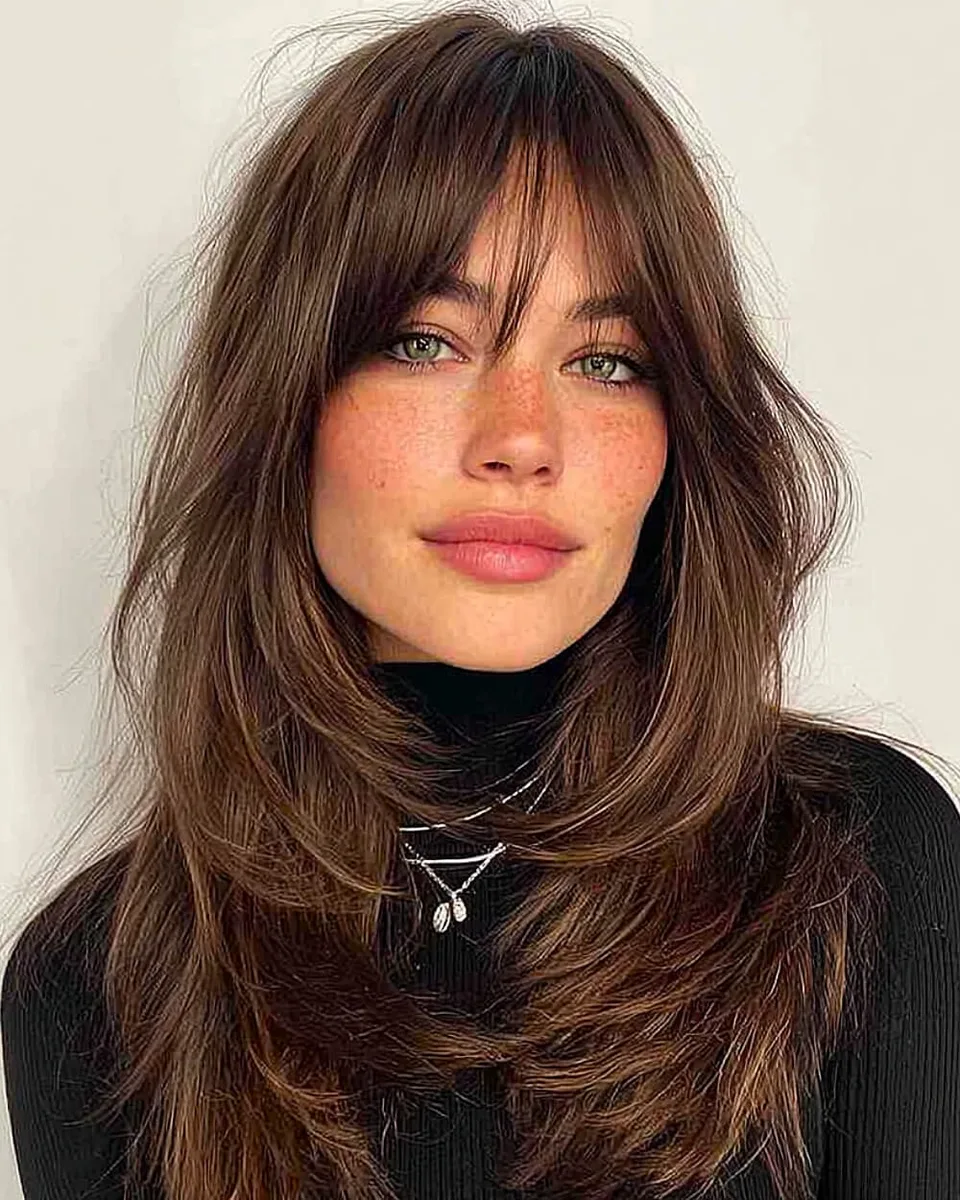
Curtain bangs with long hair are the lowest-risk fringe a diamond face can try, and they might be the most flattering. The bangs part in the middle and sweep to each side, framing the forehead and adding width across the top of the face, while the long lengths keep the overall look soft and feminine.
Best for: anyone who wants a fringe without the commitment. Curtain bangs suit straight and wavy hair best, and they are kind to thick hair because the weight is spread across the forehead. They are also a good choice if you wear your hair up often, because the fringe stays down and frames the face even when the rest is tied back. The style also photographs well, since the sweeping fringe frames the face without hiding it.
The most common mistake is cutting curtain bangs too short. If they end above the cheekbones, they can draw attention to the widest part of the face instead of softening it. Ask for them to start at the cheekbone and taper down to chin length at the sides, so they blend into the rest of your hair.
5. Textured Lob with a Deep Side Part
A textured lob with a deep side part is the cut that stylists reach for when a diamond face needs instant balance. The lob ends at the collarbone, which is low enough to add width below the jaw, and the deep side part sweeps volume across the forehead, widening the top of the face.
Styling it is a ten-minute job. Blow-dry with a round brush, lifting the roots on the heavier side of the part, then add a few loose waves with a large-barrel iron, leaving the ends straight for a modern finish. Scrunch in a little texturising spray and shake the hair out with your fingers. The aim is piecey movement, not polished curls, so do not overwork it. On second-day hair, a spritz of dry shampoo at the roots and a quick tousle is often all it needs.
What to ask your stylist: ask for a lob that ends at the collarbone, cut with texture through the ends, and tell them you wear a deep side part so they can shape the layers around it. Ask for the front pieces to be slightly longer than the back, which keeps the shape swinging forward and framing the jaw.
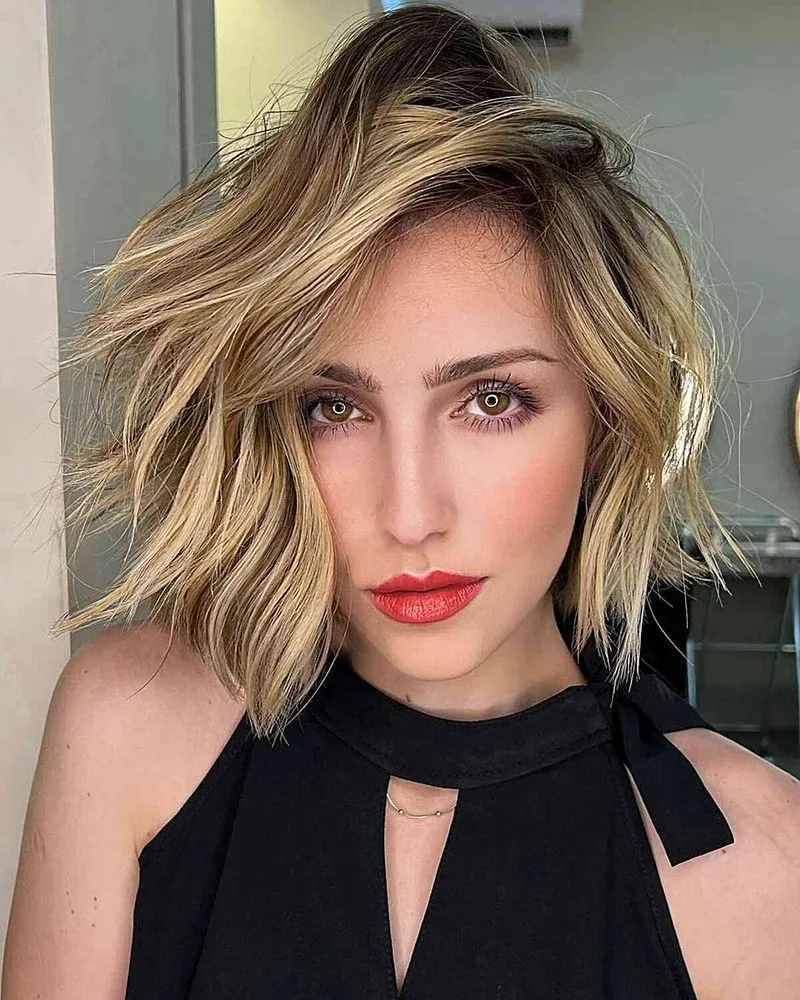
6. Shoulder-Length Shag with Wispy Bangs
A shoulder-length shag with wispy bangs is a relaxed, lived-in cut that suits a diamond face because it puts texture and movement exactly where they help. The choppy layers through the lengths break up the width of the cheekbones, the wispy bangs add soft width across the forehead, and the ends sit at the jaw and collarbone, widening the lower face.
This cut suits wavy and lightly curly hair best, because the natural texture makes the shaggy layers look effortless. It also suits anyone who wants a low-maintenance style, since the choppy finish looks good air-dried and does not need precise styling. Fine hair benefits too, because the layers create the illusion of fullness, although very fine hair may need fewer layers so the ends do not look thin. A sea-salt spray can add extra texture on days when you want the shag to look even more undone.
Who should think twice: if your hair is very thick and prone to expanding, a shag can widen at the ears and cheeks unless the bulk is thinned properly. Tell your stylist if your hair poufs in humidity, and ask them to keep the layers longer around the cheeks.
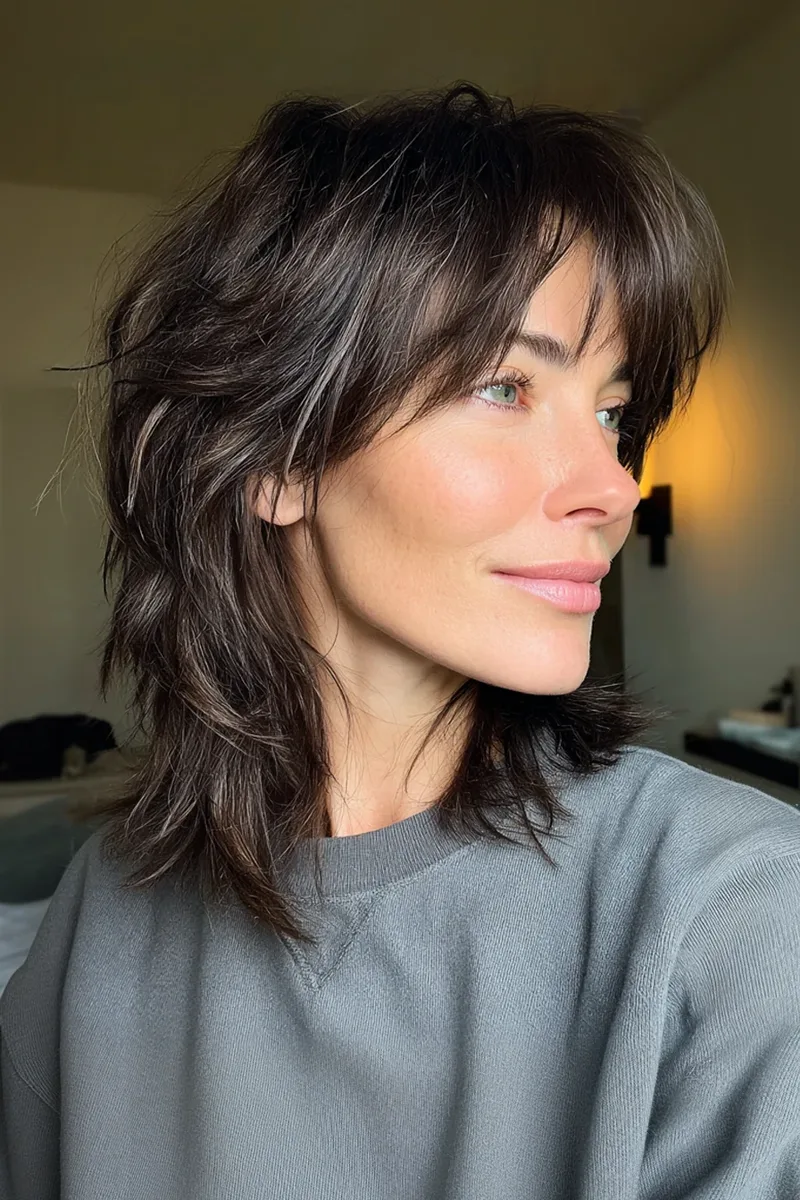
7. Side-Parted Sleek Blowout
A side-parted sleek blowout is the polished option for a diamond face, and it works because the side part does the balancing while the sleek finish keeps everything controlled. The deep part sweeps volume across the forehead, the smooth lengths fall past the cheekbones without adding width there, and the ends can be turned under at the jaw to add the width the lower face needs.
The time and cost are modest. At home, a blowout takes fifteen to twenty minutes with a round brush and a hairdryer, plus a smoothing serum and a light hairspray. In a salon, a blowout is one of the cheapest services you can book, and it lasts two to three days on most hair types if you sleep with it loosely pinned up. The cut itself is simple too: long layers with a deep side part, which means fewer salon visits than a precision bob or pixie.
Styling starts with a heat protectant and a smoothing cream worked through damp hair. Blow-dry the roots up and over to the side of the part, then work down the lengths with a large round brush, turning the brush under at the ends so they curve towards the jaw. A quick pass with a flat iron over the sides at cheek level smooths any flyaways that could add width, and a drop of serum on the ends adds shine without weight.
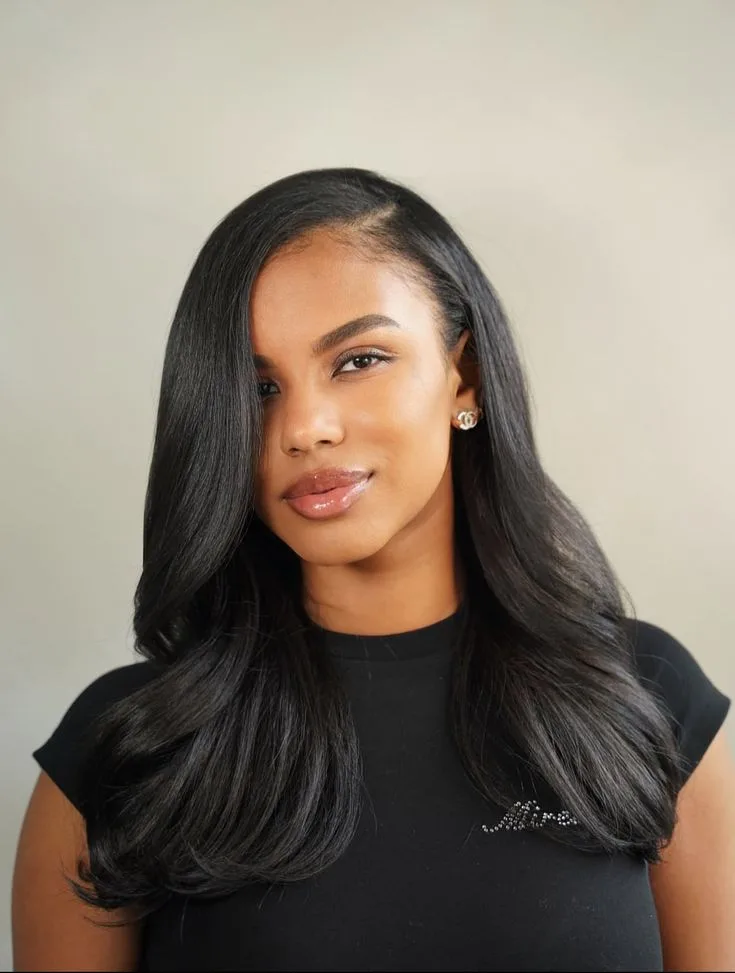
8. Voluminous Curls with Height at the Crown
Voluminous curls with height at the crown are a beautiful choice for a diamond face, provided the volume is placed correctly. Height at the crown lengthens the face and draws the eye upwards, which balances the width of the cheekbones, while the curls through the lengths add softness and movement.
The pros are real: curls add instant glamour, they suit special occasions, and they make fine hair look much fuller. The cons are the effort and the risk of getting the placement wrong. Tight curls that start at the ears and billow out at cheek level will widen the widest part of the face, which is the opposite of what you want. If your hair is naturally curly, ask your stylist to shape the cut so the curls fall longer around the face, and avoid short layers that spring up at the cheeks.
To style it, apply a curl cream to damp hair and diffuse on a low heat, lifting at the roots with your fingers or with clips at the crown. Once dry, use a large-barrel iron on any sections that need more definition, wrapping the hair away from the face and leaving the ends free. Gently separate the curls with your fingers, and pin a small section at the crown for extra height if you want it.
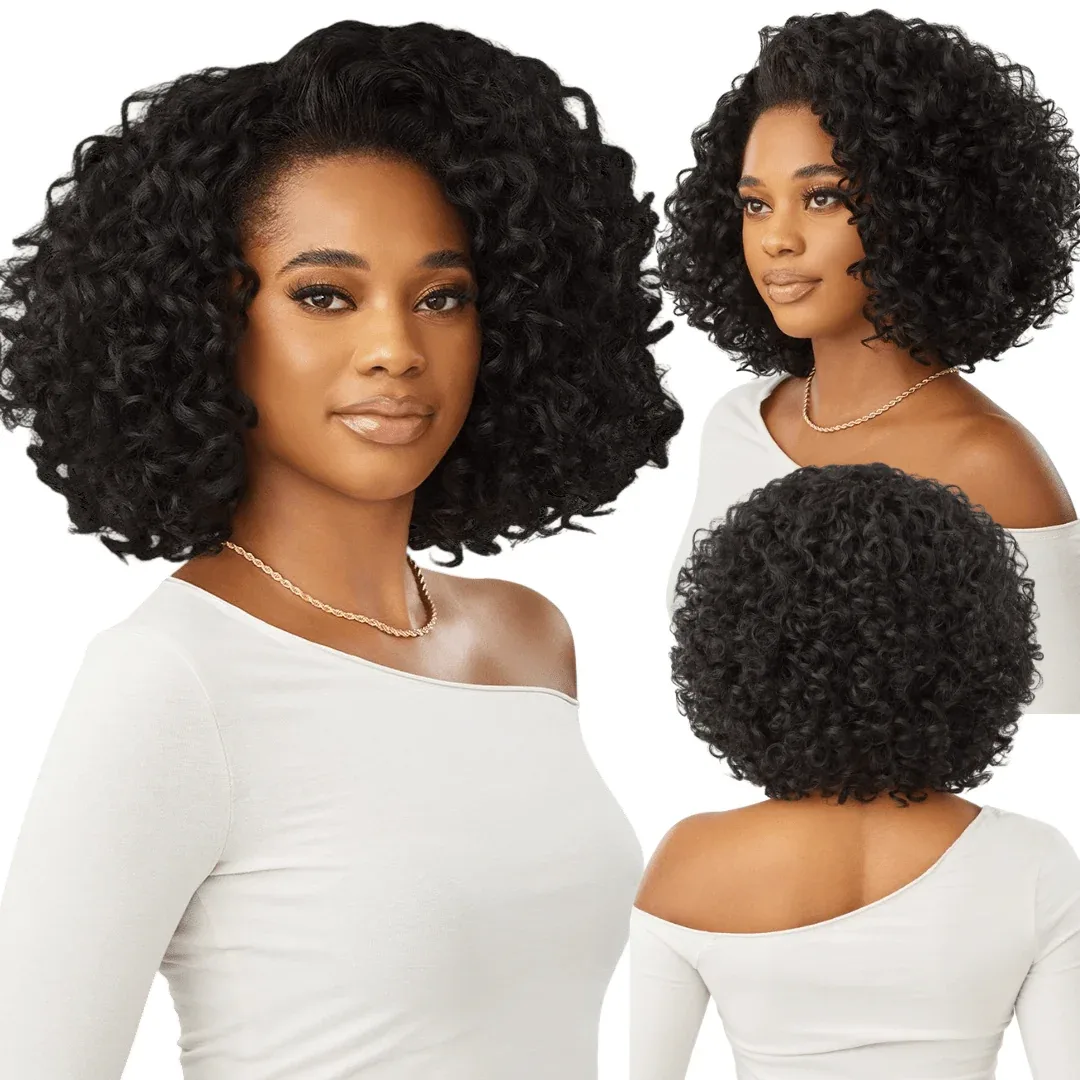
9. Pixie Cut with a Long Side-Swept Fringe
A pixie cut with a long side-swept fringe is the boldest cut on this list, and on a diamond face it can be the most striking. The long fringe sweeps across the forehead and adds the width the top of the face needs, while the short back and sides keep the shape clean and show off the cheekbones and the jawline.
Best for: anyone who wants a short cut with real impact, and anyone with fine hair, because a pixie makes fine hair look thicker. It suits a defined jawline and high cheekbones, and it is a wonderful choice if you are tired of long hair and want a change that feels like a fresh start. It also grows out into a short bob, so you are not trapped if you change your mind.
The upkeep is the honest trade-off. A pixie needs a trim every four to six weeks to keep its shape, and the fringe needs a little styling every morning, usually just a minute with a round brush or your fingers and a dab of styling cream. The upside is that the daily routine is very short, and the cut looks intentional even on days when you do almost nothing to it.
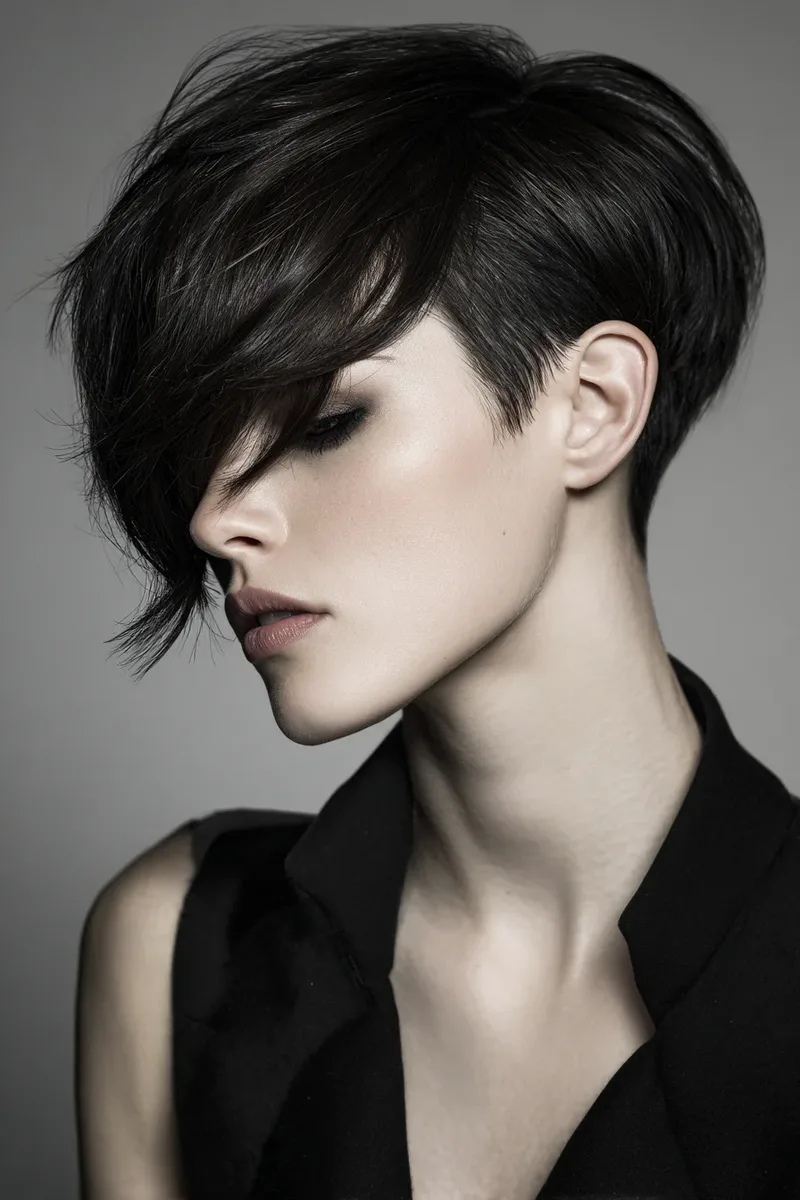
10. Asymmetrical Bob
An asymmetrical bob, longer on one side than the other, is a clever cut for a diamond face because the asymmetry itself does the softening. The longer side draws the eye down towards the jaw, adding length and width to the lower face, while the shorter side keeps the shape light and modern.
Quick verdict: this is a strong choice if you want a bob with personality and you are comfortable with a cut that is deliberately uneven. It suits straight and slightly wavy hair best, because the asymmetry shows most clearly on smooth hair, and it works well on fine to medium hair. It is less suited to very curly hair, where the curl pattern can hide the asymmetry and make the shape look accidental rather than intentional.
Styling is simple. Blow-dry with a round brush, smoothing the longer side forward so it frames the jaw, and tuck the shorter side behind the ear to show off the difference in length. A flat iron can sharpen the ends if you want a sleek finish, or you can add a loose wave to the longer side for softness.
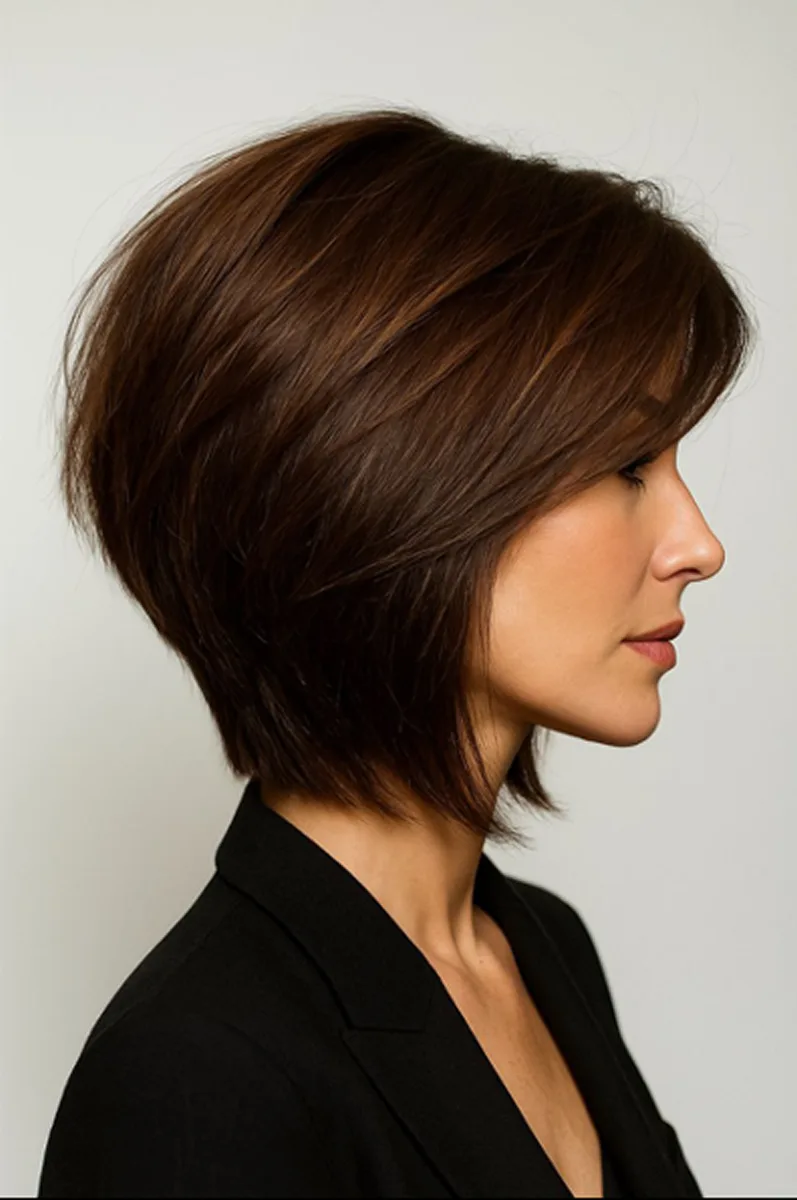
11. Wavy Lob with a Curtain Fringe
A wavy lob with a curtain fringe brings together two of the most flattering elements for a diamond face in a single cut. The curtain fringe widens the forehead and softens the top of the face, the waves add gentle fullness at the jaw, and the lob length keeps the whole shape relaxed and modern.
Best for: wavy and lightly curly hair, where the natural texture does most of the work, and for anyone who wants a fringe that grows out gracefully. It also suits a rounder or shorter diamond face, because the fringe and the waves add length and movement that elongate the face a little. If your hair is very straight, you will need a curling iron to create the waves, but the curtain fringe alone still does plenty of balancing.
How to style it: blow-dry the fringe with a round brush, curving each side away from the face, then wrap random sections around a large-barrel iron, alternating directions for a natural finish. Leave the ends straight, brush the waves out with your fingers, and finish with a texturising spray.
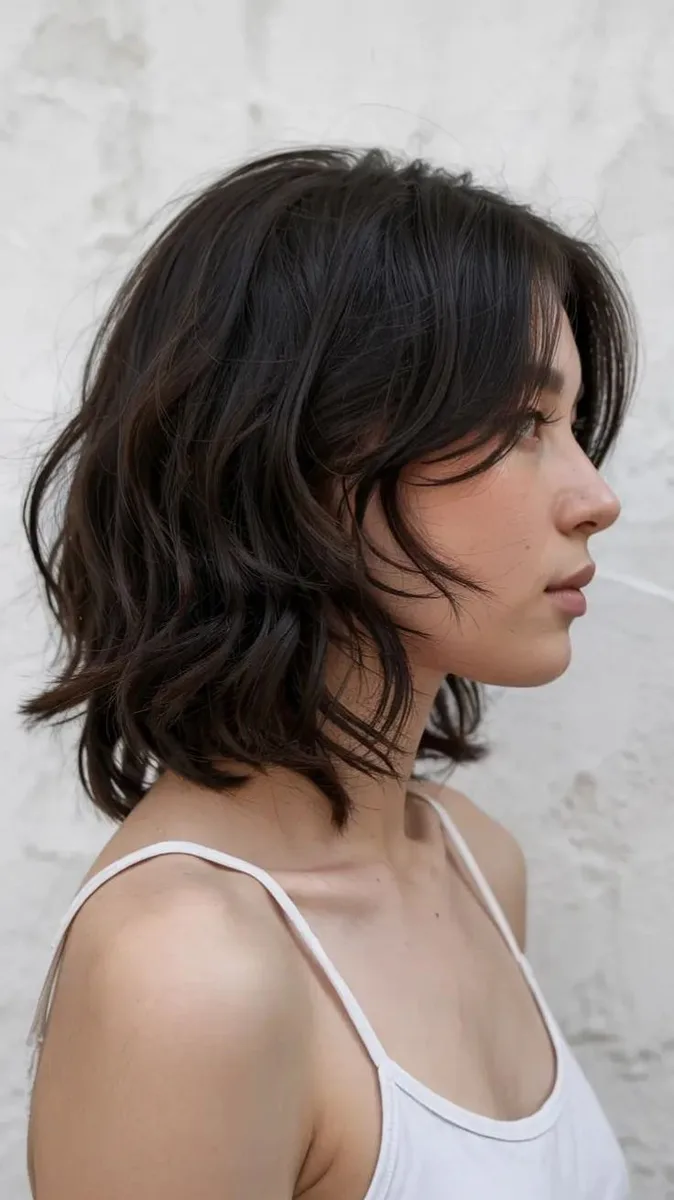
12. Layered Cut with Curtain Bangs for Thick Hair
Thick hair and a diamond face can be a difficult combination, because thick hair naturally expands at the sides and adds width exactly where the cheekbones already are. A layered cut with curtain bangs solves that by removing weight where it causes problems and adding shape where it helps.
The key technique is internal layering and thinning, not just cutting the ends shorter. Ask your stylist to remove weight from underneath the top layers, so the hair sits closer to the head at cheek level instead of pouffing outwards. Long layers that start below the chin keep the movement low, and the curtain bangs give the forehead the width it needs without adding any bulk to the sides. The result is thick hair that looks intentional and shaped rather than simply big.
Styling thick hair takes a little longer, so a good blow-dry matters. Rough-dry the hair until it is about eighty percent dry, then use a round brush to smooth the sides and turn the ends at the jaw. A smoothing cream before you dry will cut the drying time and keep the sides flat, and a flat iron can tidy any sections that still want to expand at the cheeks.
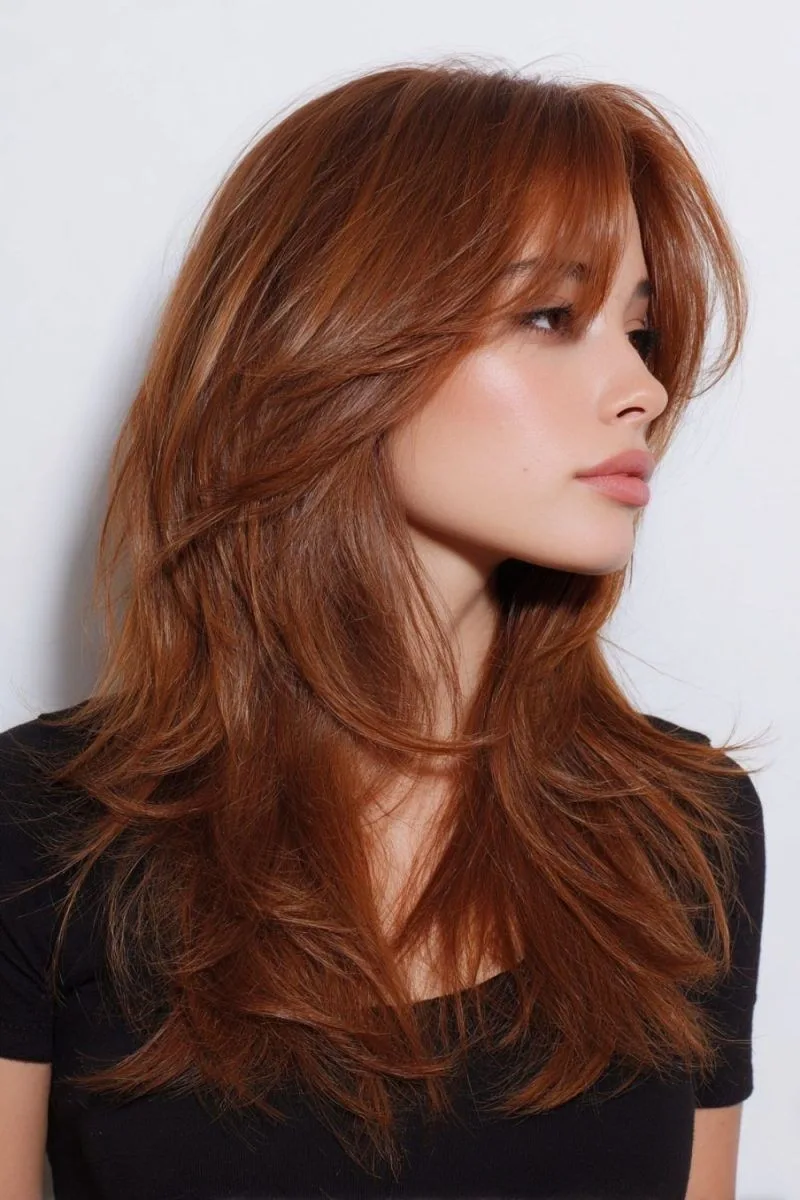
13. Soft French Bob
A soft French bob is the Parisian answer to a diamond face: short, chic and deliberately undone. It ends at the jaw, which adds width where the face is narrow, and it is worn with a soft, piecey fringe or a side sweep that widens the forehead. The texture is the point.
This cut suits anyone who likes a short, low-effort style with a lot of personality. It works best on straight to wavy hair, because the shape relies on the hair falling naturally rather than being forced into curls. It also suits fine hair, since the short length makes the ends look thicker, and it is a good choice if you want to show off earrings or a strong jawline. The French bob is famously forgiving about styling, which is part of its appeal.
To style it, blow-dry with your fingers rather than a brush, lifting at the roots and letting the ends fall where they want to. A little texturising spray or a dab of styling cream pinched through the ends gives it the lived-in finish that makes it look French rather than just short. If you want it neater, a quick pass with a flat iron on the fringe and a slight bend at the ends is all it takes.
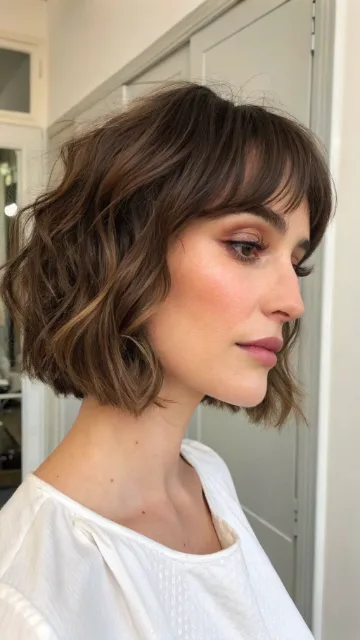
14. Long Hair with Blunt Ends and Face Framing
Long hair with blunt ends and face framing is a strong, polished look for a diamond face, and the combination matters. The blunt ends give the hair weight and a clean finish at the bottom, which adds visual width at the shoulders and below the jaw, while the face-framing layers soften the front and keep the cheekbones from looking too exposed.
Best for: straight and slightly wavy hair, where the blunt ends show clearly and the face-framing layers fall cleanly. It suits anyone who wants to keep their length and still have a cut that looks intentional, and it is a good choice for thick hair, because the blunt ends stop the hair looking wispy. If your hair is very curly, the blunt ends can look heavy, so ask for the ends to be softened instead. Regular trims keep the blunt line sharp, and the face-framing layers keep the look soft rather than severe.
Maintenance is the trade-off. Blunt ends show split ends more clearly than layered ends, so they need a trim every eight weeks and regular conditioning to stay healthy. The face-framing layers need less attention, since they blend into the lengths as they grow.
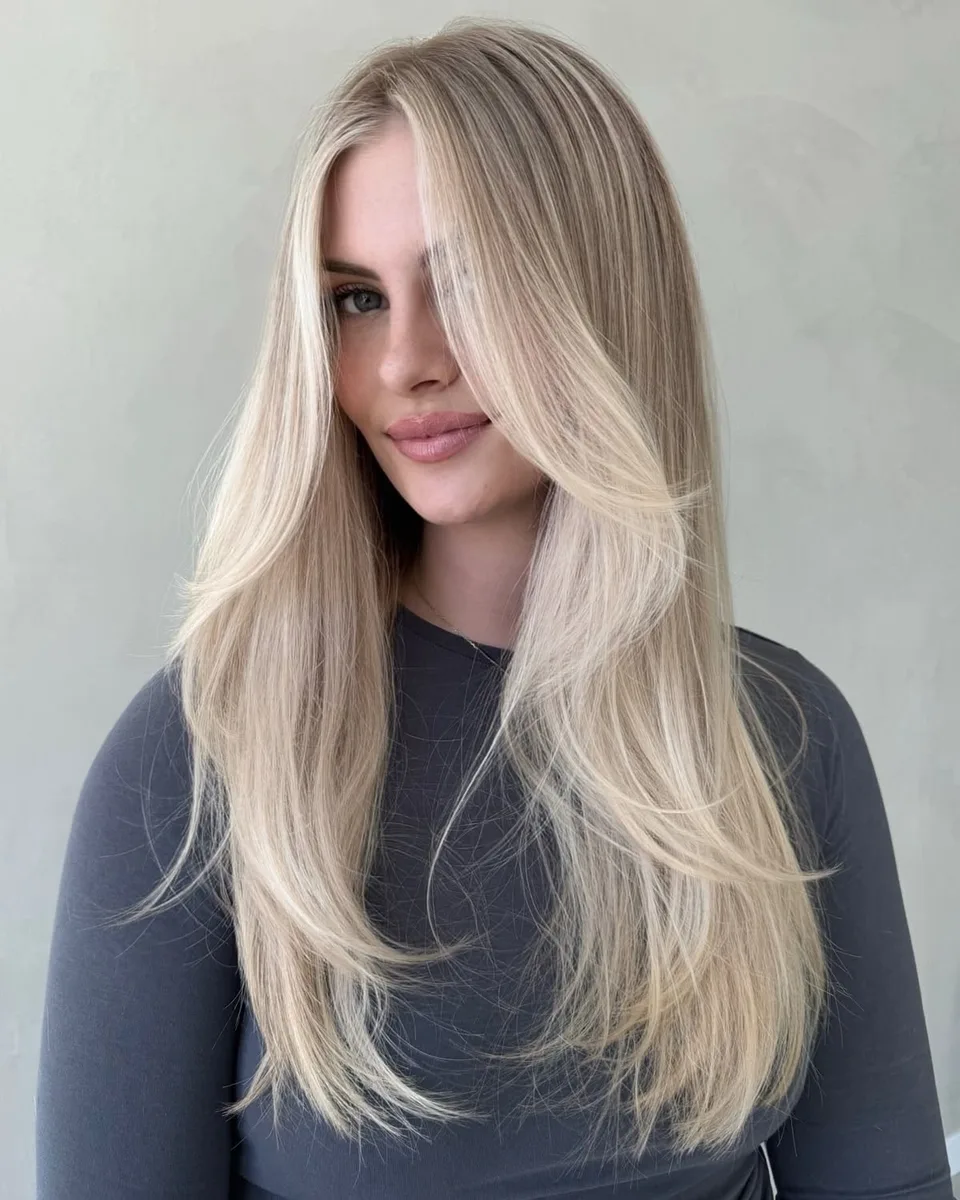
15. Bouncy Blowout with Flipped Ends
A bouncy blowout with flipped ends is pure movement, and for a diamond face that movement lands in exactly the right place. The volume sits at the crown and through the lengths, the ends flip out at the jaw and shoulders, and the face is framed by soft, curving pieces rather than flat hair.
The tools are simple: a hairdryer, a large round brush, and optionally a set of large velcro rollers for extra bounce. Blow-dry the roots upwards for lift, then wrap each section around the round brush and turn it outwards at the ends, so the hair flicks away from the face. Rollers placed at the crown while the hair cools will set the volume, and a quick brush-through once everything is cool blends the sections into one flowing shape. A flexible-hold spray keeps the bounce without stiffness. A silk pillowcase helps the blowout last into the next day without flattening the flipped ends.
This style takes fifteen to twenty minutes at home, and it lasts well. On second-day hair, a spritz of dry shampoo at the roots and a quick re-flip of the ends with a round brush is usually enough to revive it.
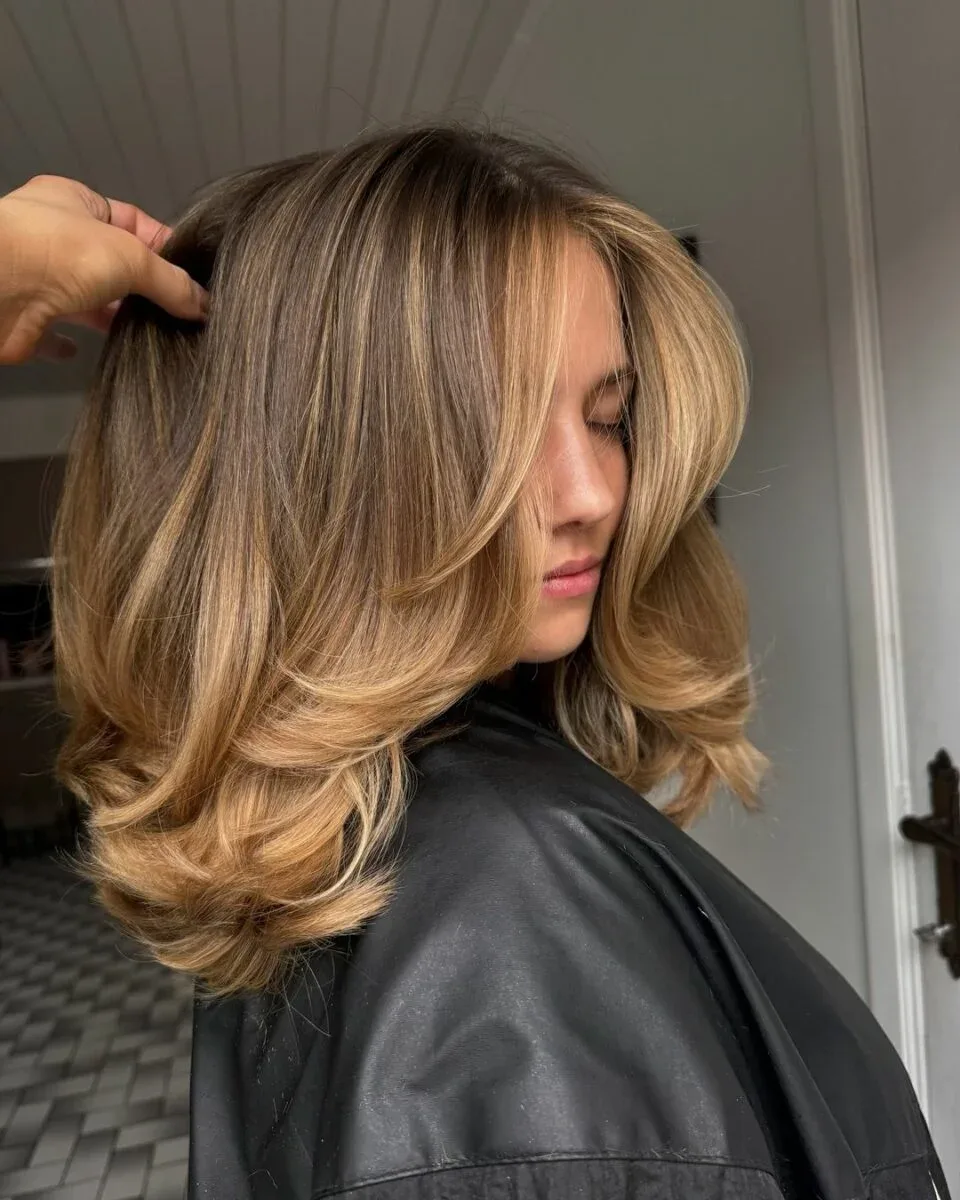
16. Curly Shag
A curly shag is one of the best cuts for naturally curly hair on a diamond face, because it works with the curl pattern instead of fighting it. The shaggy layers remove weight so the curls fall in soft, separated pieces, the shape stays narrow at the cheeks and fuller at the jaw, and a wispy fringe or face-framing curls add width across the forehead.
Curly hair needs a different approach to cutting. Ask for the cut to be done on dry, styled curls, so your stylist can see exactly where each curl lands and how much it springs up. The layers should be long around the face, starting at the chin, because short curly layers around the cheeks will spring up and widen the widest part of the face. A little length on top gives the fringe area the softness it needs without a heavy, straight-across line.
Styling a curly shag is about enhancing what you have. Apply a curl cream or gel to soaking wet hair, scrunch upwards, and diffuse on a low heat until the hair is mostly dry, then let the rest air-dry. Do not brush dry curls, because that creates frizz and width at the cheeks.
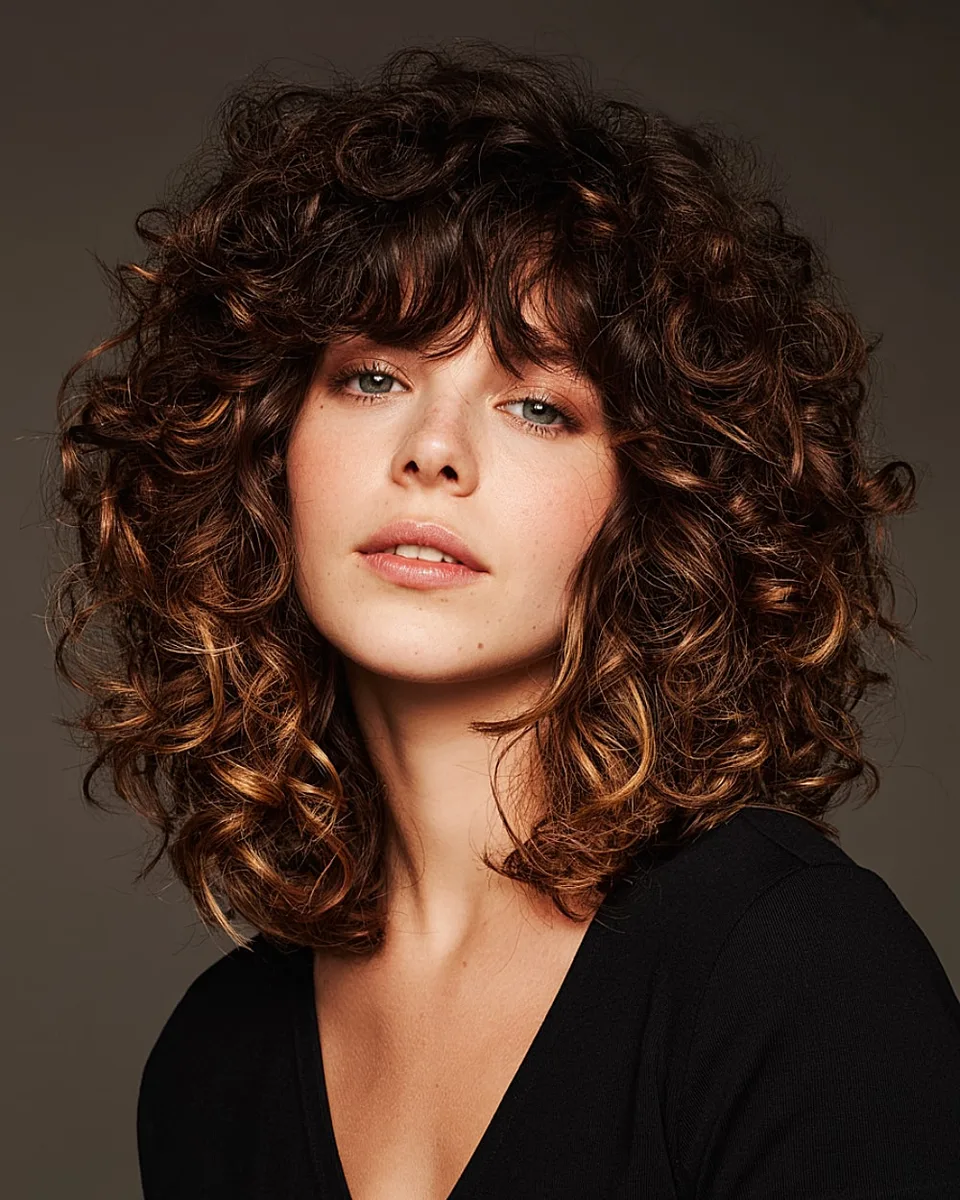
17. Wispy Bangs with Medium-Length Hair
Wispy bangs with medium-length hair are a gentle, low-commitment way to soften a diamond face. The bangs are light and feathered, so they add a soft veil across the forehead without a heavy line, and the medium length sits at the collarbone, where the ends can turn under or flick out to widen the jaw.
The softening effect is the main reason to choose this style. Wispy bangs break up the forehead, the medium length keeps the face from looking long or severe, and the overall finish is relaxed and youthful. It suits straight and wavy hair, and it is especially good if you have fine hair, because the bangs add interest at the front without removing much weight. It also suits anyone who is nervous about a fringe, since wispy bangs are the easiest kind to grow out.
Grow-out is genuinely easy here. Because the bangs are light and textured, they blend into the face-framing layers within a few weeks, and there is no heavy line to grow through. If you decide you love them, a trim every six weeks keeps them at the same length. If you decide you do not, you can sweep them to the side and forget about them.

18. Side-Parted Waves
Side-parted waves are the effortless classic for a diamond face, and they work for the same reason the deep side part works everywhere else. The part sweeps volume across the forehead, the waves add soft fullness at the jaw, and the overall shape is relaxed and natural.
Styling is a five-step routine that takes about fifteen minutes. Start with damp hair and a little mousse or wave spray. Part the hair deeply on one side, then blow-dry with a round brush, lifting at the roots on the heavier side. Wrap sections around a large-barrel iron, alternating the direction of each wave so the finish looks natural rather than uniform. Leave the ends straight, brush the waves out with your fingers, and finish with a flexible-hold spray. A little dry shampoo at the roots on the second day brings the waves back to life in minutes.
This style suits wavy and lightly curly hair best, because the natural texture means you need less heat to get the waves. Straight hair can hold the style too, especially with a wave spray and a little texturising powder at the roots, although you may need to re-curl the front pieces during the day.
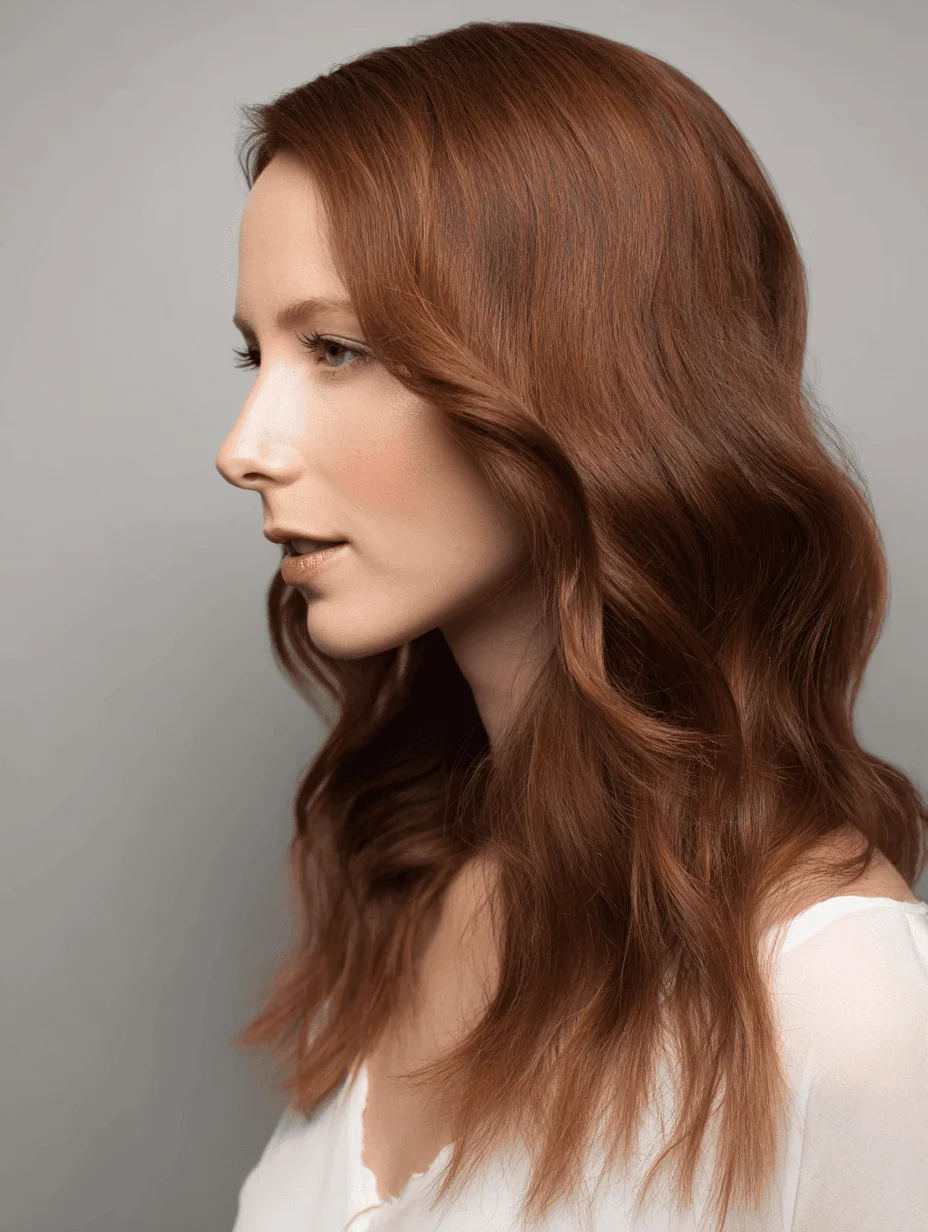
19. Textured Pixie with Volume on Top
A textured pixie with volume on top is the edgier cousin of the long-fringe pixie, and it suits a diamond face because the height on top lengthens the face while the textured sides stay close to the head. The volume at the crown draws the eye upwards and balances the width of the cheekbones, and the piecey texture stops the cut looking severe.
Best for: anyone who wants a short cut with attitude, and anyone with straight or slightly wavy hair that holds texture well. It suits a strong jawline and high cheekbones, and it is a good choice if you like to change your look often, because the top can be swept forward, to the side, or spiked up depending on your mood. It also shows off earrings and necklines beautifully.
Who should avoid it: if your hair is very curly, a textured pixie can be hard to control, because the curls will spring up unpredictably and the shape can widen at the sides. If you prefer a cut you can tie back on busy days, a pixie will not give you that option.
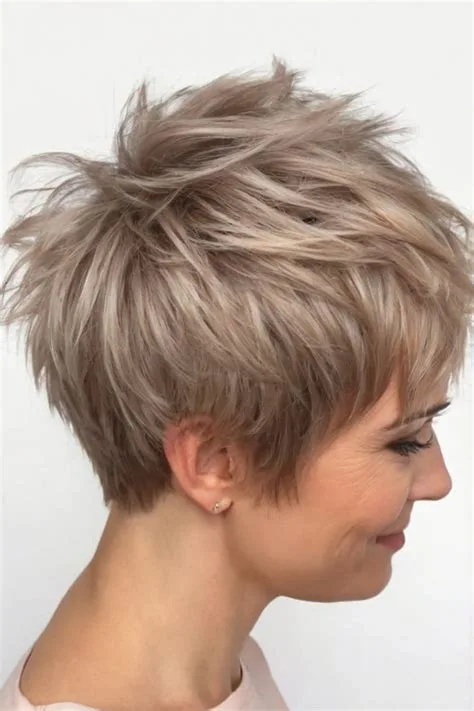
20. Long Layered Cut with Balayage
A long layered cut with balayage is where colour and cut work together to flatter a diamond face. The layers give the shape and movement, while the balayage adds light exactly where you want the eye to go: around the face at the forehead and the jaw.
The colour placement matters as much as the cut. Ask your colourist for face-framing highlights that start at the chin and get lighter towards the ends, with a soft, diffused blend rather than harsh lines. Lighter pieces at the jaw draw the eye down and add the illusion of width where the face is narrow, while keeping the colour darker at the cheeks stops the widest part of the face drawing extra attention. The overall effect should look sun-kissed, not striped.
The cost is the honest part. Balayage is more expensive than a single-process colour, and it needs a gloss or toner every eight to twelve weeks to keep the tone fresh. The upside is that the grow-out is very forgiving, because the colour is painted to blend with your natural roots, so you can go three to four months between full appointments.
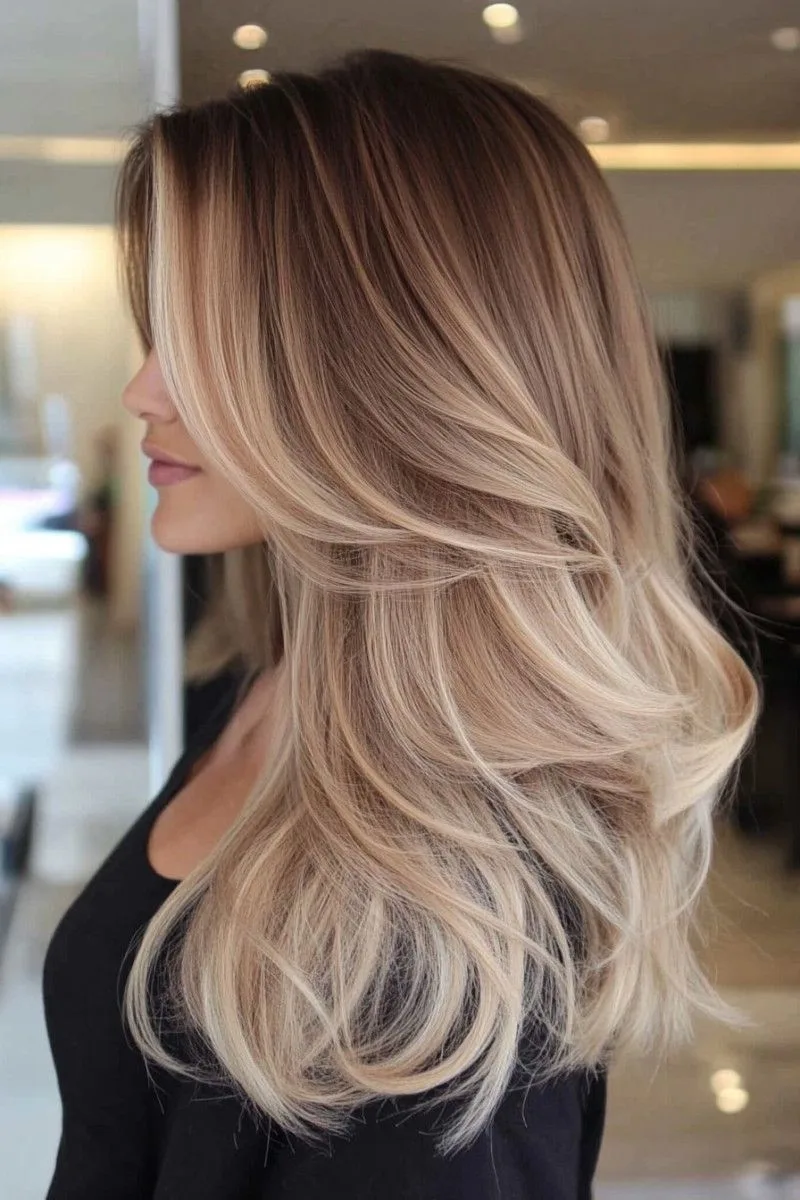
21. Jaw-Length Bob with One Side Tucked
A jaw-length bob with one side tucked behind the ear is a small styling trick that makes a big difference on a diamond face. The tucked side shows off the cheekbone and the jawline, while the full side adds width at the jaw and softness around the face.
The pros are that it is effortless, it works on straight and wavy hair, and it turns a simple bob into a styled look in about ten seconds. The cons are minor: the tucked side can fall forward during the day, and very thick hair may not stay tucked without a bobby pin. A little texturising spray at the roots on the tucked side helps it stay put, and a decorative pin can hold it while adding a little detail.
To style it, blow-dry the bob with a round brush, turning the ends under at the jaw, then tuck one side behind the ear and smooth the hair over the top of the ear so the tuck looks intentional. Leave the other side full and slightly forward, so it frames the jaw and adds the width the face needs.
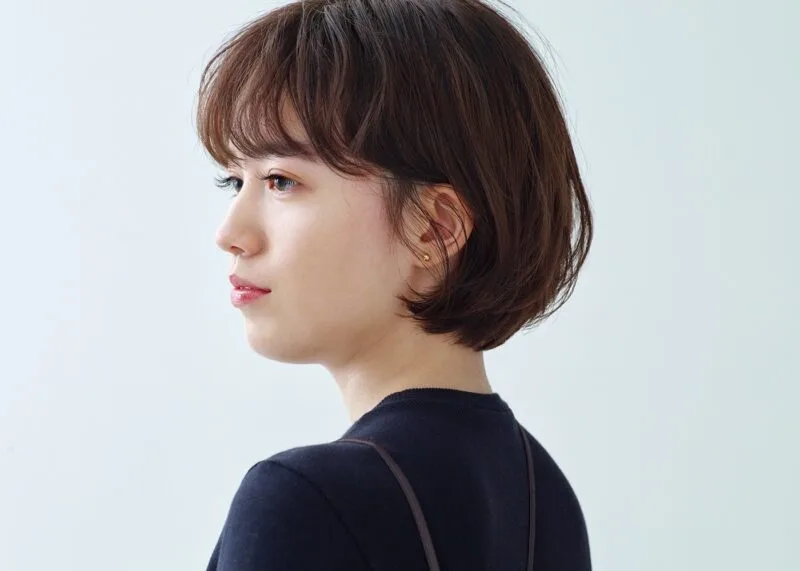
22. Half-Up Hairstyle with Face-Framing Tendrils
A half-up hairstyle with face-framing tendrils is the romantic option for a diamond face, and it works because the tendrils do the softening while the half-up section adds height. Pulling the top half of the hair up gives lift at the crown, which lengthens the face and balances the cheekbones, while the tendrils left out around the face add soft width at the forehead and the jaw.
This style suits weddings, parties and date nights, but it is simple enough for everyday wear too. It works on medium to long hair, straight or wavy, and it is especially good if your hair is thick, because the half-up section removes bulk from the front without losing the length. If your hair is fine, tease the crown section lightly before you pin it, and use a texturising spray so the style holds.
Styling is a five-step routine. Curl the lengths loosely with a large-barrel iron, leaving the ends straight. Gather the top section from temple to temple, twist it gently, and pin it at the crown. Pull out two thin tendrils at the front, curl them softly, and let them frame the face. Loosen the crown section with your fingers for a little extra height, and finish with a flexible-hold spray.
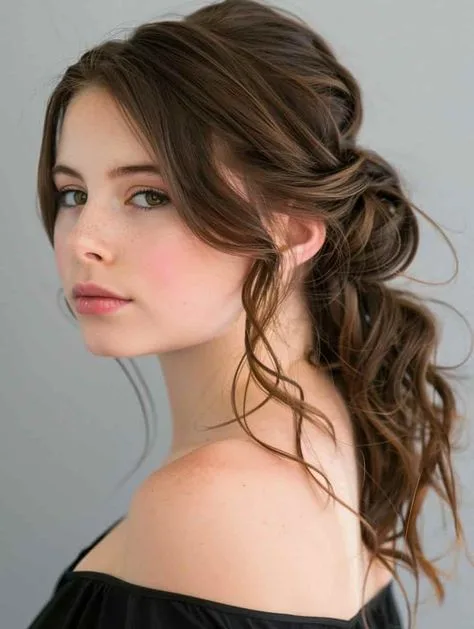
23. Low Loose Bun with Soft Pieces
A low loose bun with soft pieces is the elegant updo for a diamond face, because it keeps the hair low and soft instead of pulling everything up and back. The bun sits at the nape, which adds gentle width at the jaw, while the soft pieces left out around the face widen the forehead and soften the cheekbones.
Best for: medium to long hair, and anyone who wants an updo without the severity of a tight bun. It suits straight and wavy hair, and it is a good choice for weddings and events, because it holds well and photographs softly. It also suits a slightly longer diamond face, because the low placement keeps the face from looking stretched. A few pearl pins or a simple hair comb can dress the bun up for a wedding or a formal evening.
To style it, add loose waves through the lengths first, then gather the hair loosely at the nape and twist it into a bun, pinning as you go. Do not pull it tight. Leave two soft pieces out at the front, curl them gently, and loosen a few strands around the crown for height.
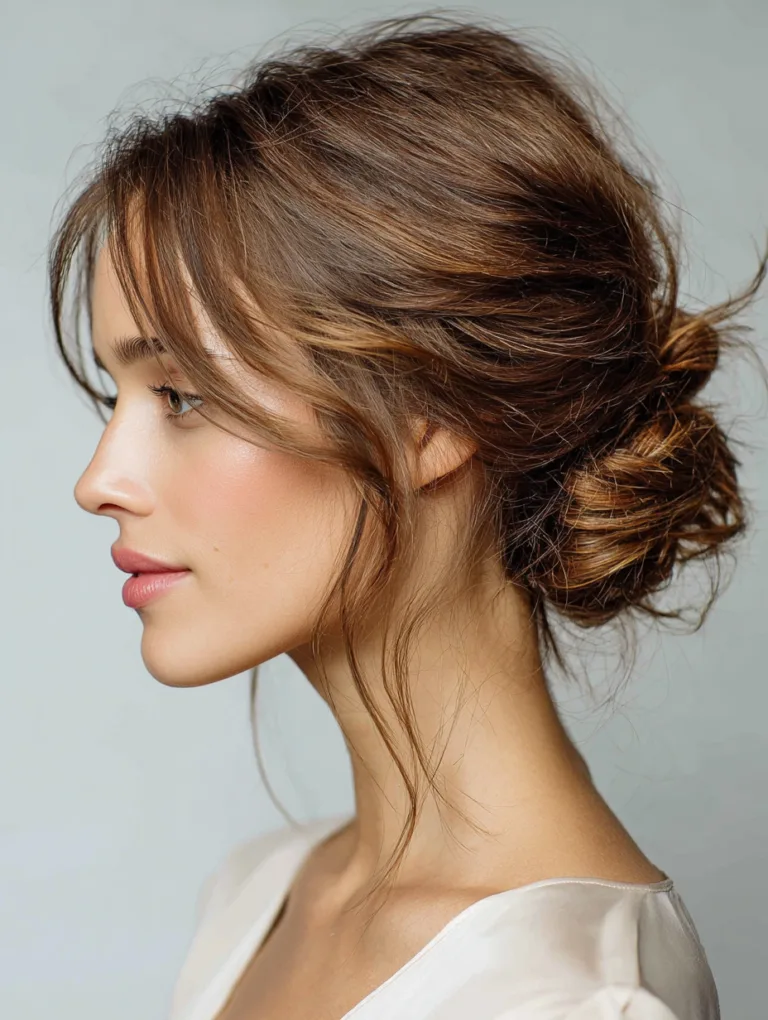
24. High Ponytail with Volume at the Crown
A high ponytail with volume at the crown can work beautifully on a diamond face, as long as the volume and the softness are in the right places. The height at the crown lengthens the face and balances the cheekbones, while soft pieces left out around the face add width at the forehead and keep the style from looking severe.
This style suits anyone with medium to long hair who wants a polished, energetic look, and it is a favourite for workouts, busy days and nights out. It works best on straight to wavy hair, because the ponytail falls cleanly, and it suits thick hair, which holds the height well. If your hair is fine, a little teasing at the crown and a texturising spray will give the ponytail the fullness it needs.
Styling starts with the crown. Tease the roots lightly, smooth the top layer over, and gather the hair high, securing it with a strong elastic. Wrap a small section of hair around the elastic to hide it, and leave two thin pieces out at the front to frame the face.
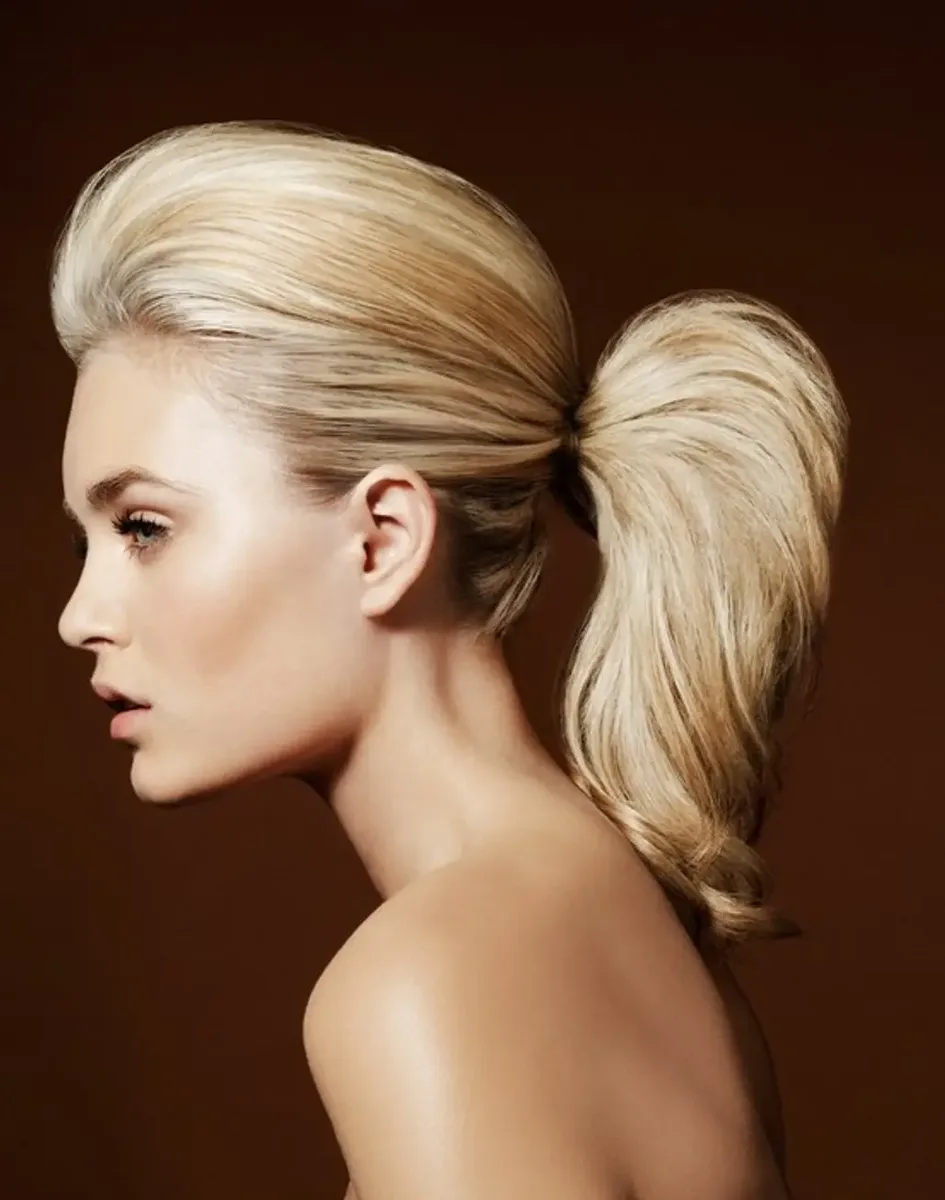
25. Braided Crown with Soft Face-Framing Strands
A braided crown with soft face-framing strands is the dreamiest style on this list, and it flatters a diamond face because the braid itself adds width across the top of the head. The crown braid sits like a headband, widening the forehead area, while the soft strands left out around the face soften the cheekbones and add width at the jaw.
Styling is a step-by-step routine that gets easier with practice. Start with loose waves through the lengths. Part the hair in the middle or slightly off-centre, and take a section from one side, braiding it loosely along the hairline towards the other side. Pin the end underneath, then repeat from the other side if you want a full crown, or leave one side as a single braid. Pull the braid apart gently with your fingers to make it look fuller, and leave soft strands out at the front.
This style suits weddings, festivals and summer days, and it works on medium to long hair with a little natural texture. It is especially good if your hair holds a braid well, and it is a useful style for second-day hair, because the texture helps the braid grip.
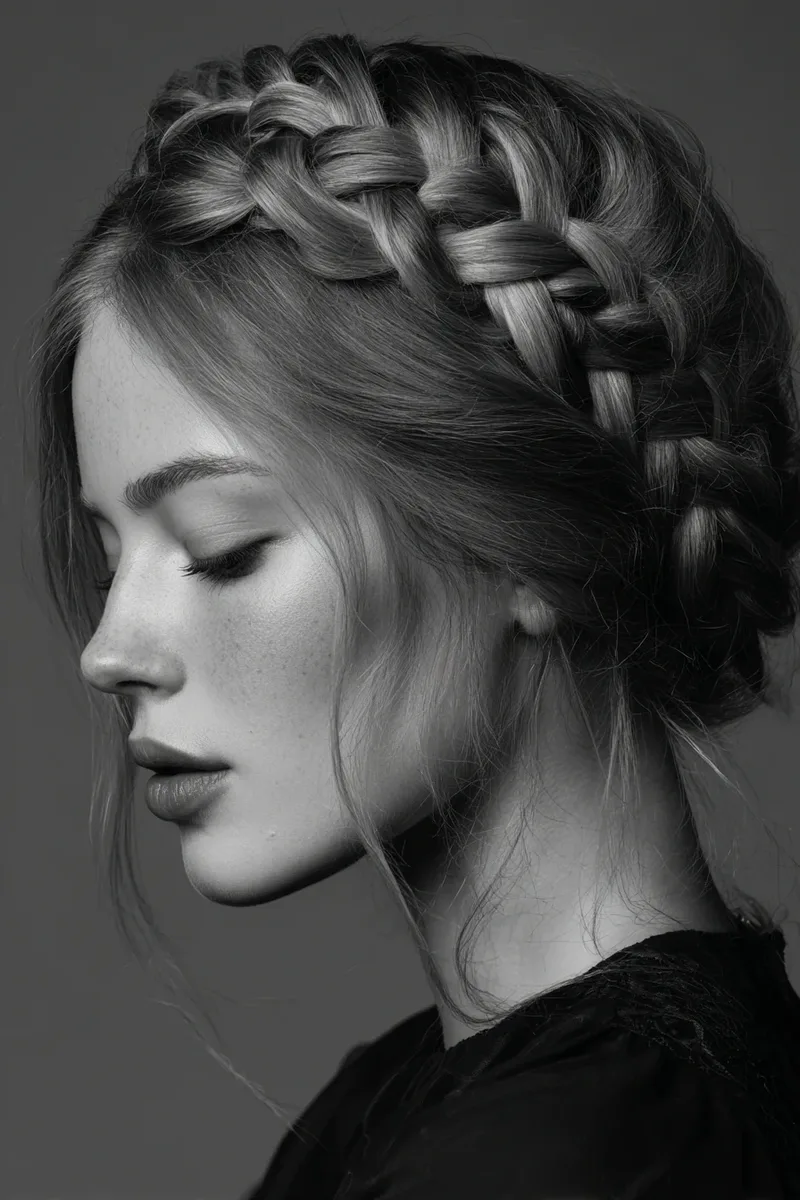
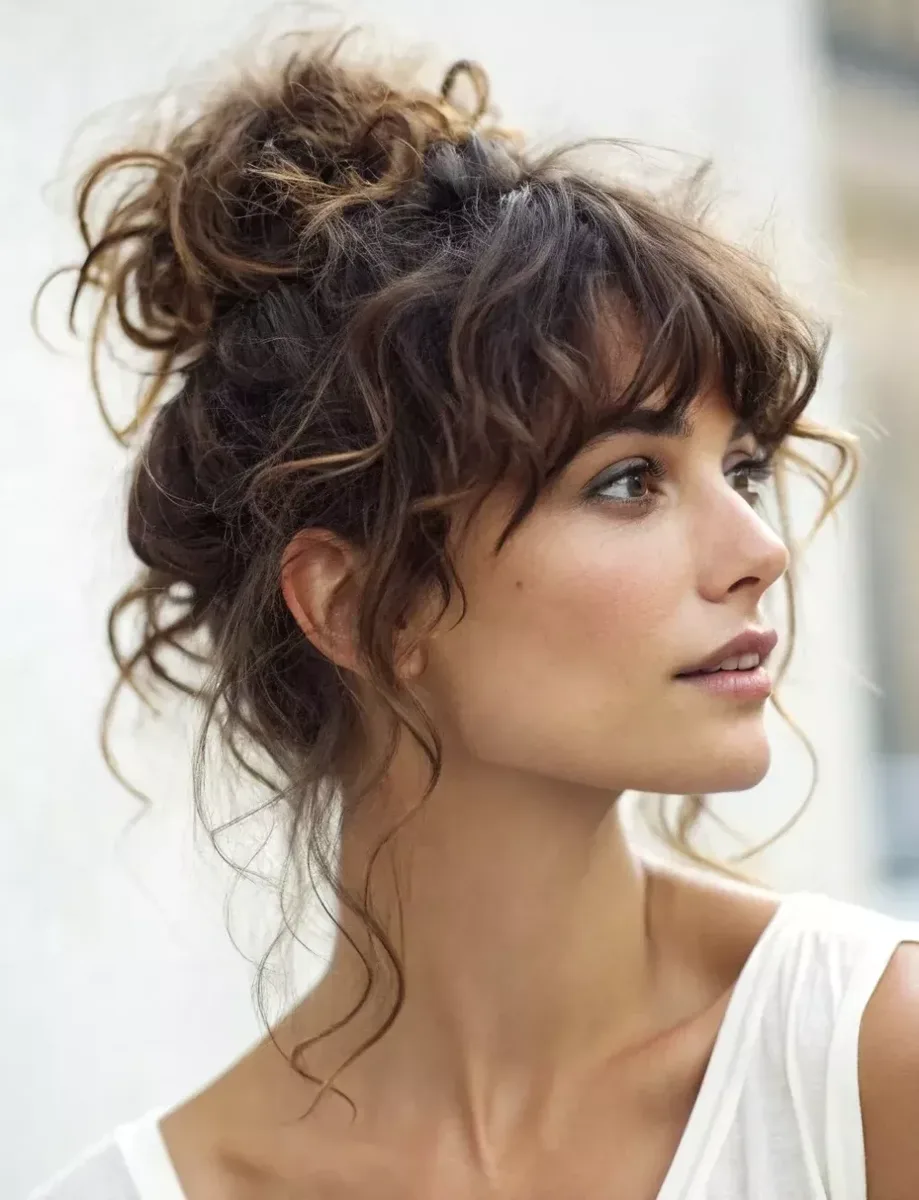
26. Messy Top Knot with Tendrils
A messy top knot with tendrils is the casual, off-duty style that still flatters a diamond face, because the tendrils and the height do the balancing work. The knot sits high on the crown, which lengthens the face, while the tendrils left out around the face add soft width at the forehead and the jaw.
Best for: busy mornings, weekends and second-day hair, when you want your hair up but still want to look styled. It suits medium to long hair, and it works on straight, wavy and curly hair, because the texture of the knot hides any imperfections. It is also a good choice for hot weather, since it keeps the hair off the neck while the tendrils keep the face framed. The style also works well with a headband, which keeps the tendrils in place on windy days.
To style it, gather the hair high, twist it loosely, and wrap it into a knot, pinning as you go. Pull the knot apart a little with your fingers so it looks full rather than tight, and leave two tendrils out at the front. Loosen a few strands at the crown for height, and finish with a texturising spray.
27. Hollywood Waves
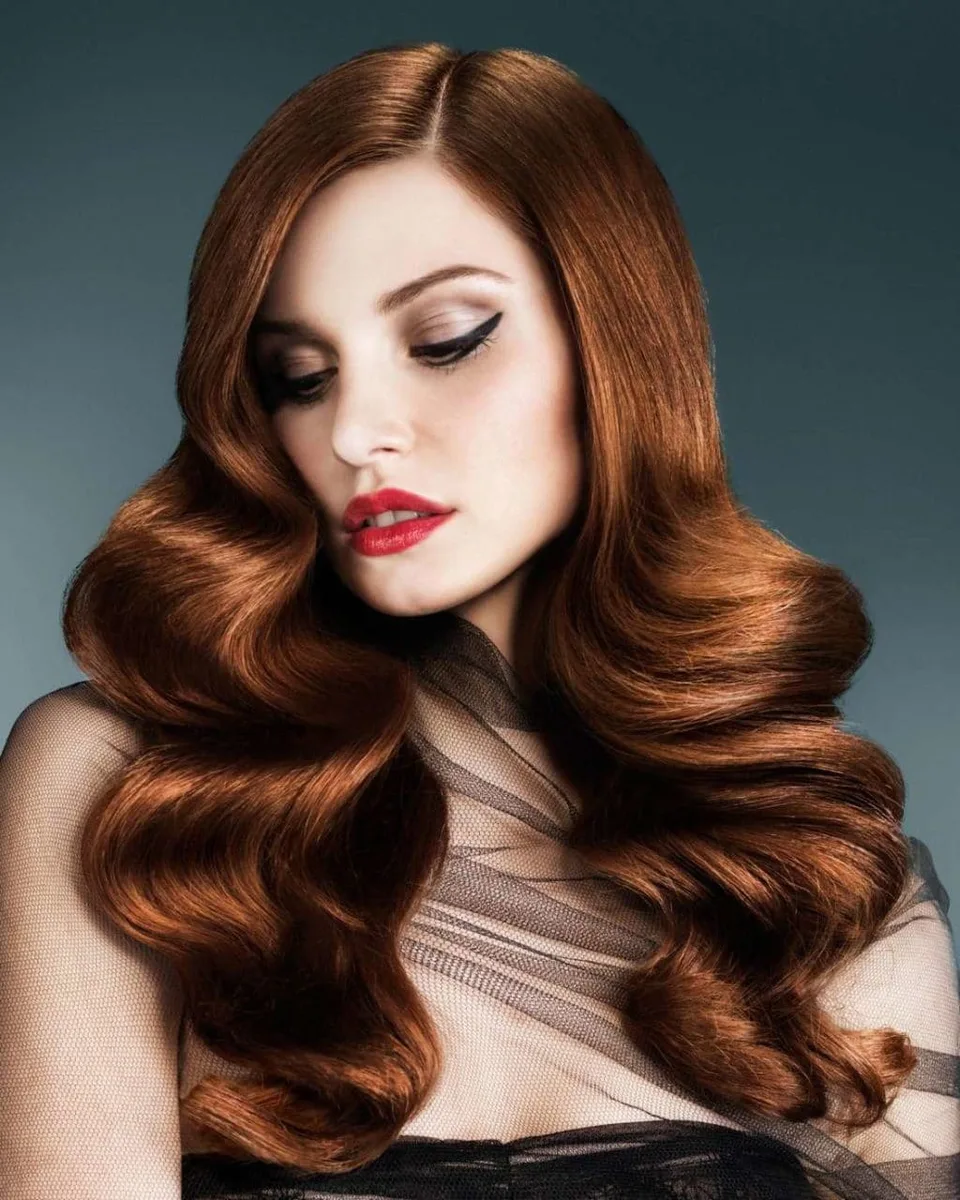
Hollywood waves are old-school glamour, and on a diamond face they work when the waves are placed with care. The deep side part sweeps volume across the forehead, the smooth, sculpted waves fall in one direction, and the fullest part of the wave sits at the jaw and shoulders, adding width where the face is narrow.
The tools and time are part of the commitment. You will need a large-barrel curling iron, sectioning clips, a soft-bristle brush and a strong but flexible hairspray. Curl every section in the same direction, pin each curl to cool, then brush the curls out gently until they merge into one smooth wave. That brushing stage is what turns separate curls into Hollywood waves, so do not skip it. The whole routine takes thirty to forty minutes, which is why this is an occasion style rather than an everyday one. A vintage-inspired lip colour and simple earrings complete the old-Hollywood feel of this style.
Hollywood waves suit medium to long hair best, because the waves need length to fall in that smooth, sculpted shape. They work on straight and wavy hair, and they are a natural choice for weddings, formal events and photoshoots.
28. Feathered Layers
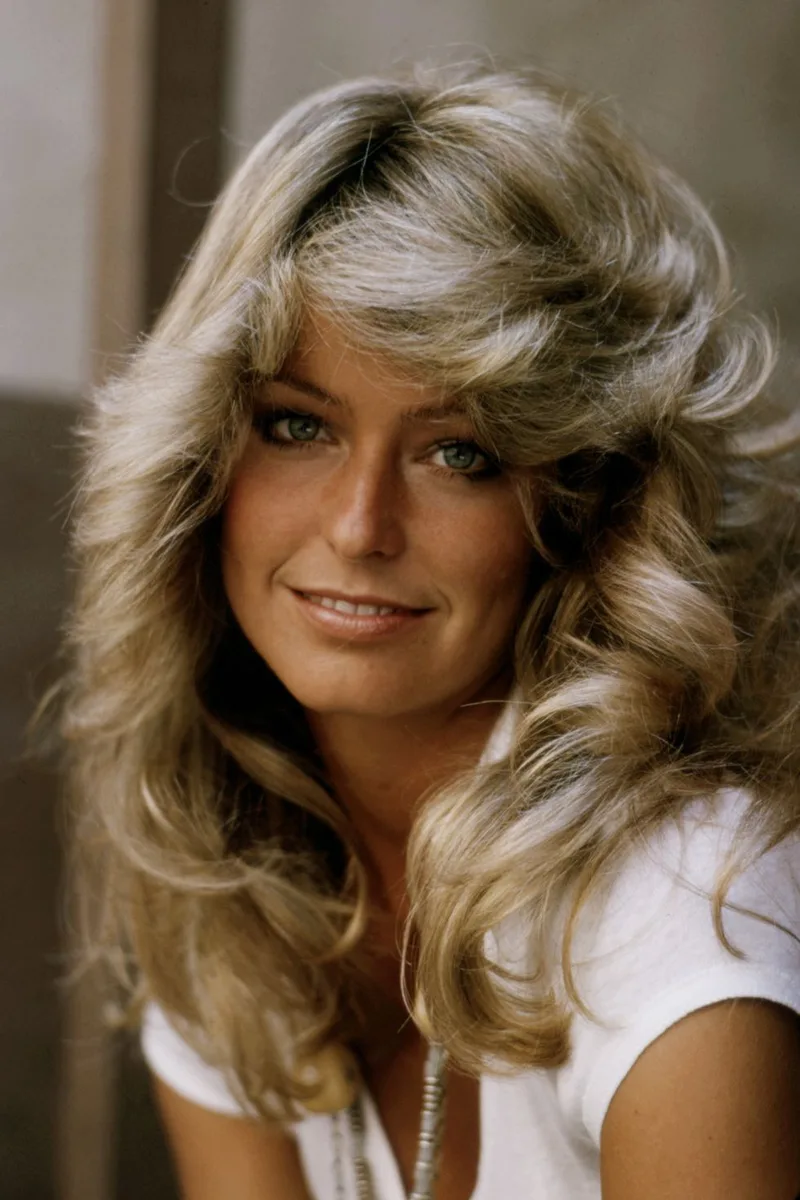
Feathered layers are a retro favourite that deserves its comeback, and they suit a diamond face because the feathering softens every edge. The layers are cut so the ends flick outwards and upwards in soft, feathery pieces, which breaks up the line of the cheekbones and adds movement around the face.
This style suits anyone who loves a seventies-inspired look, and it works on straight to wavy hair with a little natural movement. It is especially good on medium-length hair, where the feathered ends have room to flick and move, and it suits fine to medium hair, because the feathering creates the illusion of fullness. If your hair is very thick, ask for the feathering to be kept light, so the shape does not widen too much at the sides. The feathered finish also grows out gracefully, blending into longer layers over a few months.
Styling is a blow-dry with a round brush, turning the ends outwards as you go. A large round brush gives the softest flick, and a little mousse before you dry adds hold without stiffness. Once dry, pinch the feathered ends with a little texturising spray to separate them, and finish with a light hairspray.
29. Wavy Bob with a Side Part
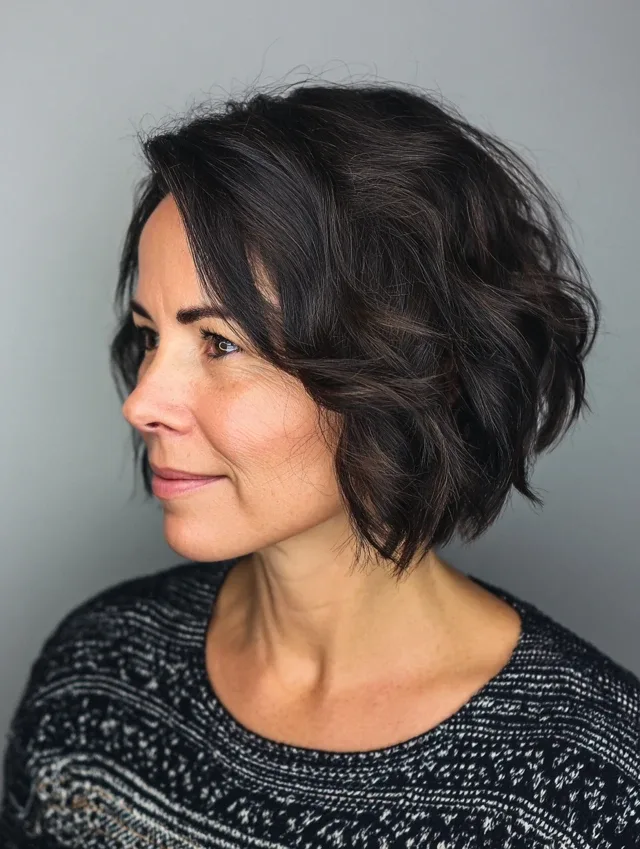
A wavy bob with a side part is the everyday version of the chin-length bob, and it is one of the easiest cuts to live with on a diamond face. The side part sweeps volume across the forehead, the waves add soft fullness at the jaw, and the bob length keeps the shape light and modern.
Best for: wavy and lightly curly hair, where the natural texture makes the waves look effortless, and for anyone who wants a short cut that does not need a flat iron every day. It suits fine hair too, because the waves create fullness, and it is a good choice if you are growing out a shorter cut, since the waves hide uneven growth. It also suits a busy lifestyle, because the style survives a day of work and still looks good in the evening.
To style it, apply a wave spray or mousse to damp hair, scrunch, and either air-dry or diffuse on a low heat. Once dry, wrap a few random sections around a large-barrel iron if you want more definition, and finish by running your fingers through the waves.
30. Long Straight Hair with Long Layers and a Side Sweep
Long straight hair with long layers and a side sweep is the sleek, understated option for a diamond face, and it works because the side sweep does the balancing while the straight lengths keep everything calm. The sweep across the forehead adds width at the top of the face, the long layers add subtle movement through the lengths, and the straight finish keeps the sides from widening at the cheekbones.
Maintenance is mostly about keeping the hair healthy. Long straight hair shows split ends and damage more clearly than textured hair, so regular trims every eight weeks, a weekly conditioning mask, and a heat protectant every time you use a flat iron are essential. The side sweep needs a trim more often if you want it to stay at the same length, but it blends into the layers as it grows, so there is no awkward stage.
To style it, blow-dry with a paddle brush for a smooth finish, then run a flat iron through the lengths if you want them perfectly straight. Sweep the front section across the forehead and pin it lightly if it will not stay, or use a little root spray to hold the sweep in place.
31. Short Crop with a Textured Top
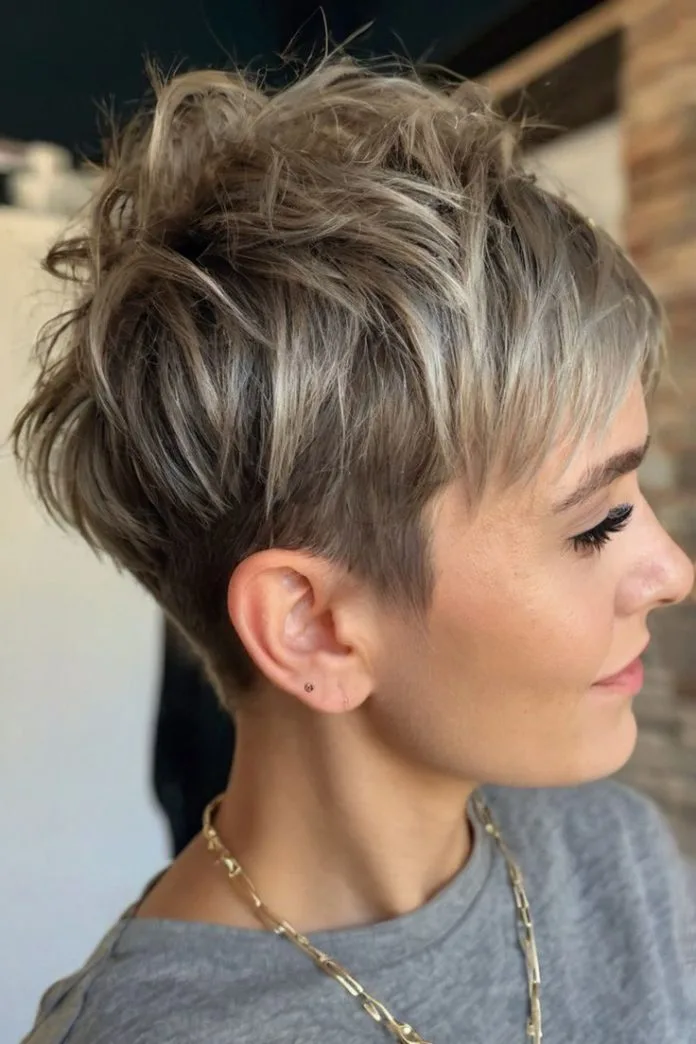
A short crop with a textured top is the final cut on this list and one of the most confident. The crop keeps the sides short and neat, while the textured top adds height and movement that lengthen the face and balance the cheekbones. The texture stops the cut looking severe, and the short length shows off the jawline and the cheekbones in a way that long hair never can. It is a bold, modern choice that suits a diamond face better than most people expect.
Best for: anyone who wants a genuinely short cut with personality, and anyone with straight or slightly wavy hair that holds texture well. It suits a defined jawline, and it is a good choice if you like to change your look, because the textured top can be worn swept forward, to the side, or pushed up. It also suits a busy lifestyle, since the daily styling takes about five minutes.
The upkeep is the trade-off. A short crop needs a trim every four to five weeks to keep its shape, and the top needs a little product every morning, usually a texturising paste or a light pomade worked through with your fingers. The upside is that the morning routine is very short, the cut always looks intentional, and you will use far less shampoo and conditioner than you did with long hair.
What is the best haircut for a diamond face shape?
A chin-length bob, a textured lob with a deep side part, and long layers with face-framing pieces are the three most reliable choices. All three add width at the forehead and the jaw while keeping volume soft at the cheekbones, which is the balance a diamond face needs. If you want one safe answer, choose the textured lob, because it suits most hair types and grows out gracefully.
Should I get bangs with a diamond face?
Curtain bangs and side-swept bangs are excellent for a diamond face, because they add width across the forehead where the face is narrow. Wispy, textured bangs also work well. Avoid a very thick, blunt, straight-across fringe, because the strong horizontal line can make the cheekbones look wider by comparison. Start with longer curtain bangs if you are unsure, since they grow out into face-framing layers.
Is long or short hair better for a diamond face?
Both can work, and the length matters less than where the hair ends and where the volume sits. Long hair flatters a diamond face when the layers start at the chin and the ends are textured. Short hair flatters it when the cut ends at the jaw, like a chin-length bob, or keeps a long fringe, like a pixie with a side sweep. Shoulder length is the easiest middle ground if you cannot decide.
Does a centre part suit a diamond face?
A centre part can work, but it is not the most flattering choice on its own. It emphasises the symmetry of a diamond face and can make the narrow forehead and wide cheekbones more noticeable. A deep side part or a slightly off-centre part is usually more flattering. If you love a centre part, pair it with curtain bangs or face-framing layers to soften the sides.
What hairstyles make cheekbones look less wide?
Styles that add width at the forehead and the jaw make cheekbones look less wide by comparison. Curtain bangs, side-swept fringes, bobs that end at the chin, and waves that sit at jaw level all do this. Avoid heavy volume sitting exactly at cheek level, and avoid hair scraped tightly back with no soft pieces around the face, because both make the cheekbones look wider.
Can I wear my hair slicked back with a diamond face?
A slicked-back style is possible, but it needs softening to flatter a diamond face. A very tight, scraped-back look exposes the narrow forehead and the pointed chin at the same time, which is the least flattering combination for this shape. If you want your hair back, leave two soft pieces out around the face, add a little height at the crown, and keep the finish loose rather than severe.
Are curls good for a diamond face?
Loose curls and soft waves are very good for a diamond face, especially when the fullest part of the curl sits below the cheekbones at the jaw and shoulders. Tight curls that start at the ears and billow out at cheek level can widen the widest part of the face, so keep the curls long and loose around the face. A curly shag or long layers with loose waves are two of the safest curly options.
What should I ask my stylist for with a diamond face?
Tell your stylist you have a diamond face shape, with cheekbones as the widest point and a narrower forehead and chin. Ask for width at the forehead and the jaw, softness around the cheeks, and no heavy volume sitting at cheek level. Ask for point-cut ends, layers that start at the chin, and a dry check of the shape with the parting you actually wear. Bringing a photo of the exact cut helps too.
Do diamond face shapes suit a pixie cut?
A pixie cut suits a diamond face when it keeps length and softness on top. A pixie with a long side-swept fringe works well, because the fringe adds width across the forehead, and a textured pixie with volume on top works too, because the height balances the cheekbones. A very short, flat pixie with no fringe can expose the narrow forehead, so keep some length at the front.
How do I know if I have a diamond face shape?
Tie your hair back and look in a mirror in even light. If your cheekbones are clearly the widest part of your face, your forehead is narrower than your cheekbones, and your jaw tapers to a narrower, slightly pointed chin, you likely have a diamond face. Measuring helps: in a diamond face, the cheekbone measurement is the largest, while the forehead and jaw measurements are smaller and close to each other.
Conclusion: The Right Cut Makes a Diamond Face Shine
These hairstyles for a diamond face all follow the same simple idea: add gentle width at the forehead and the jaw, keep things soft around the cheekbones, and let your best feature shine without letting it dominate the whole face. Whether you choose long layers, a chin-length bob, a textured lob, a pixie with a long fringe, or a soft updo with tendrils, the principle stays the same, and it works at every length and for every hair type. Your cheekbones are not something to hide. They are the centrepiece of a striking face shape, and the right cut frames them the way they deserve.
Start with the style that feels closest to the hair you already have, and change one thing at a time. Try a deep side part for a week before you book a cut, or try curtain bangs before you commit to a fringe. Bring photos to your appointment, use the words in this guide to explain what you want, and ask your stylist to check the shape once it is dry. A good haircut for a diamond face is not about following a trend. It is about balance, softness and a cut that makes you feel like the best version of yourself every time you look in the mirror.

