
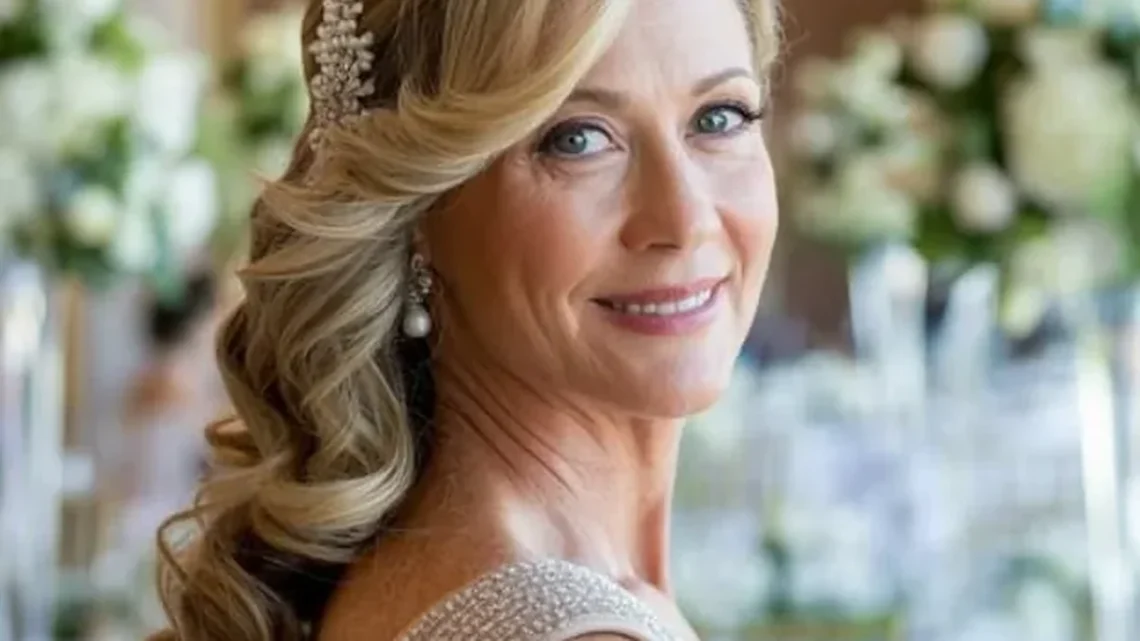
Your daughter is getting married, and somewhere between the seating chart and the florist, one question keeps coming back: what should you do with your hair? As the mother of the bride, you will be in more photographs than almost anyone except the couple themselves — walking down the aisle, greeting guests, dancing, and standing beside your daughter in the portraits she will keep forever. Your hairstyle needs to do a lot at once: look polished from every angle, hold up through happy tears and hours of dancing, suit your dress and the formality of the day, and still look like you, only at your very best.
Here are 39 hairstyles for a mother of the bride, from the classic French twist and the low chignon to soft half-up styles, textured pixies, vintage Hollywood waves and romantic loose curls. Every style notes who it suits best, how long it takes, and what to ask your stylist for at the trial. Eight guides first cover how to choose between an updo and wearing your hair down, how to plan a trial run, which styles work for your hair length and face shape, colour and grey blending, accessories, and a wedding-morning timeline so nothing feels rushed. Whether your hair is short, shoulder-length or long, fine or thick, straight or curly, there is an elegant option here that will photograph beautifully and feel comfortable all day.
How to Choose a Mother of the Bride Hairstyle
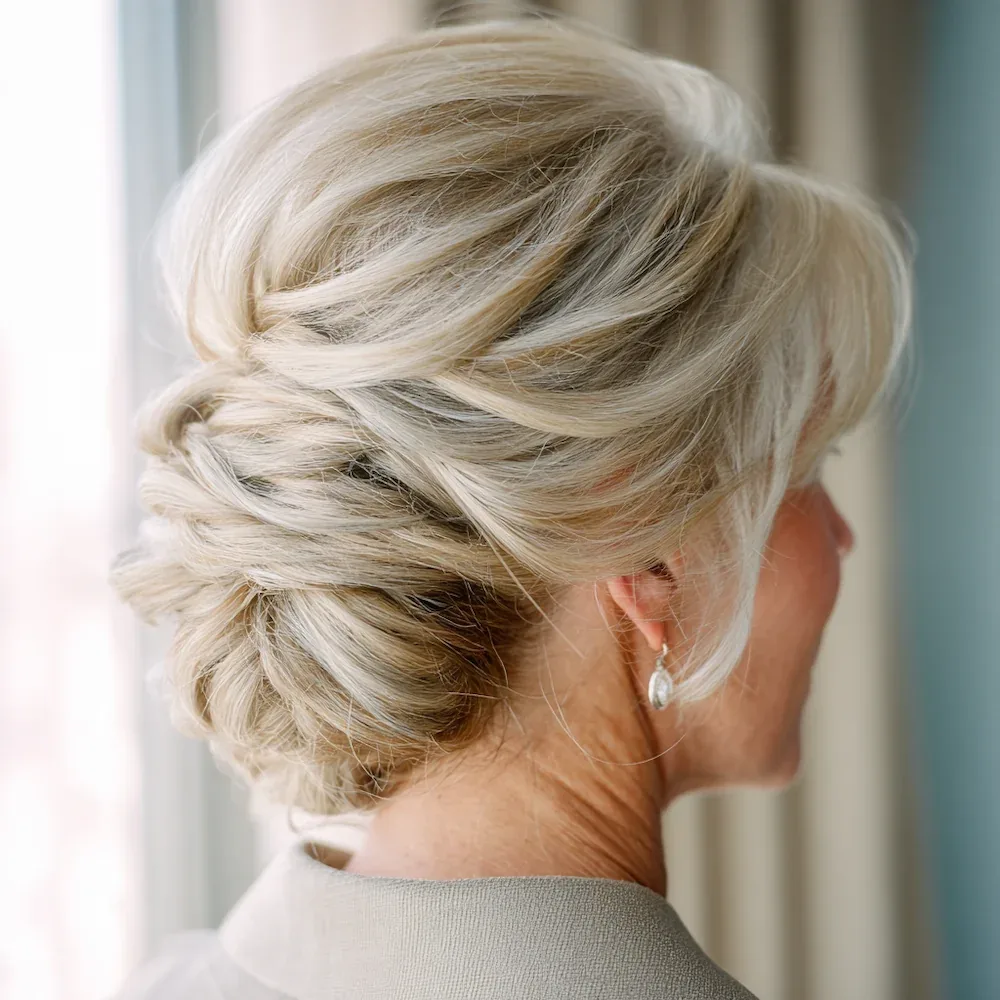
Start with the dress, not the hair. The neckline decides more than anything else: a high neckline or detailed collar pairs beautifully with hair swept up and away, while a strapless or off-the-shoulder dress can carry soft hair down or a half-up style that frames the shoulders. Next, match the formality of the wedding. A black-tie evening celebration calls for a polished updo or a sleek chignon, while a garden or daytime wedding suits softer, looser styles with movement. Your own comfort matters just as much — if you never wear your hair up, a severe updo will feel strange all day, however elegant it looks in the mirror.
Think about the photographs, too. Hairstyles with some height at the crown and soft pieces around the face photograph well from the front and in profile, while very flat styles can disappear in pictures. Bring photos of your dress and a few hairstyles you like to your trial, and wear a top with a similar neckline so you can judge the whole picture. The right choice is the one that makes you feel confident the moment you see it — not the trendiest style, and not the one someone else thinks a mother of the bride should wear.
Updo or Hair Down: Which Suits You Best
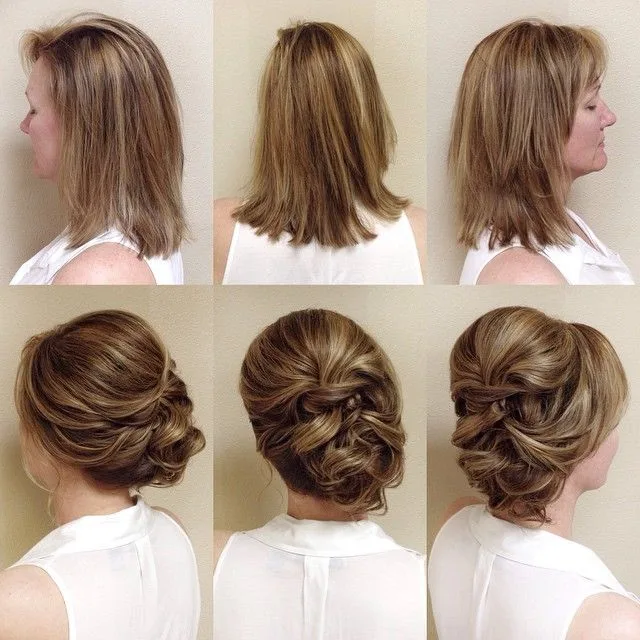
The updo-versus-down debate is really a question about your hair, the weather and the day ahead. Updos win on staying power: a chignon, twist or bun pinned properly will survive hugs, dancing and a long reception without needing attention, and it keeps hair off your neck if the day is warm. They also show off earrings, a necklace and a detailed dress back. The trade-off is that a very tight updo can feel severe, and if your hair is fine, an updo may need padding or extensions to look full enough in photographs.
Wearing your hair down — or half up — feels softer and more natural, and it suits mothers who rarely pin their hair up. Blowouts, soft curls and loose waves photograph beautifully and move well, but they are more vulnerable to humidity, wind and a long day, and they can end up tucked behind your ears by the evening. A good compromise is the half-up style: the front is lifted away from your face, the length still shows, and the pinned section anchors the style. If you cannot decide, ask your stylist to try both at the trial and photograph each from the front, side and back before choosing.
Working With Your Stylist and Planning a Trial Run
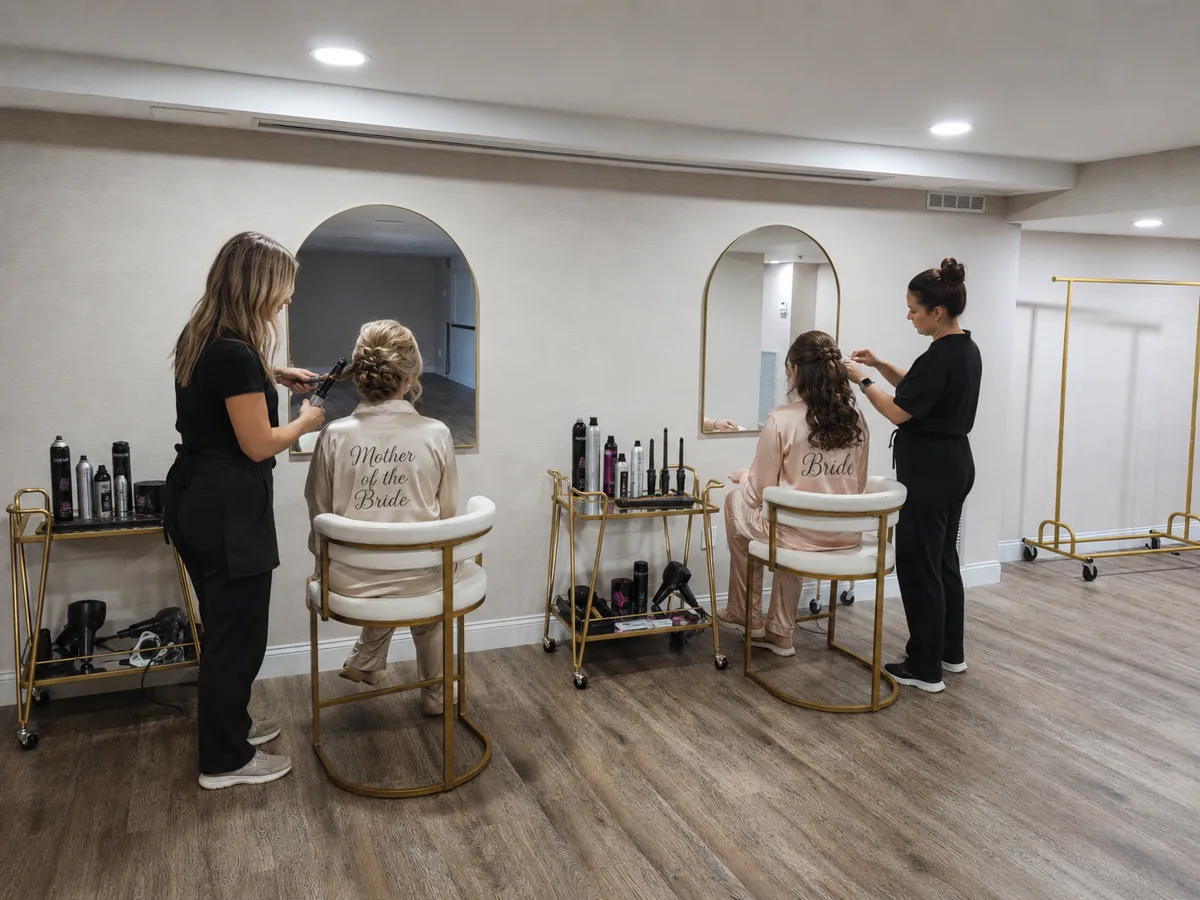
A trial run is the single best investment you can make in your wedding-day hair, and it should happen three to six weeks before the wedding. Book it with the stylist who will be there on the day if you can, and arrive with clean, dry hair, your veil or hair accessory if you plan to wear one, and photos of styles you like — including one or two you do not like, which helps the stylist understand your taste faster. Wear a top with a neckline similar to your dress, and bring your earrings so you can see the full effect together.
At the trial, ask practical questions: how long will this style take on the morning, how many pins will hold it, and what happens if it rains? Take photographs from every angle, including the back, and live with the style for a few hours to see whether it feels comfortable or starts to slip. If the style feels too tight, too heavy or simply not like you, say so — a good stylist would far rather adjust at the trial than discover it on the wedding morning. Book your colour, cut and any conditioning treatments for the week before the wedding, and confirm the morning-of arrival time in writing.
Hairstyles by Hair Length: Short, Medium and Long
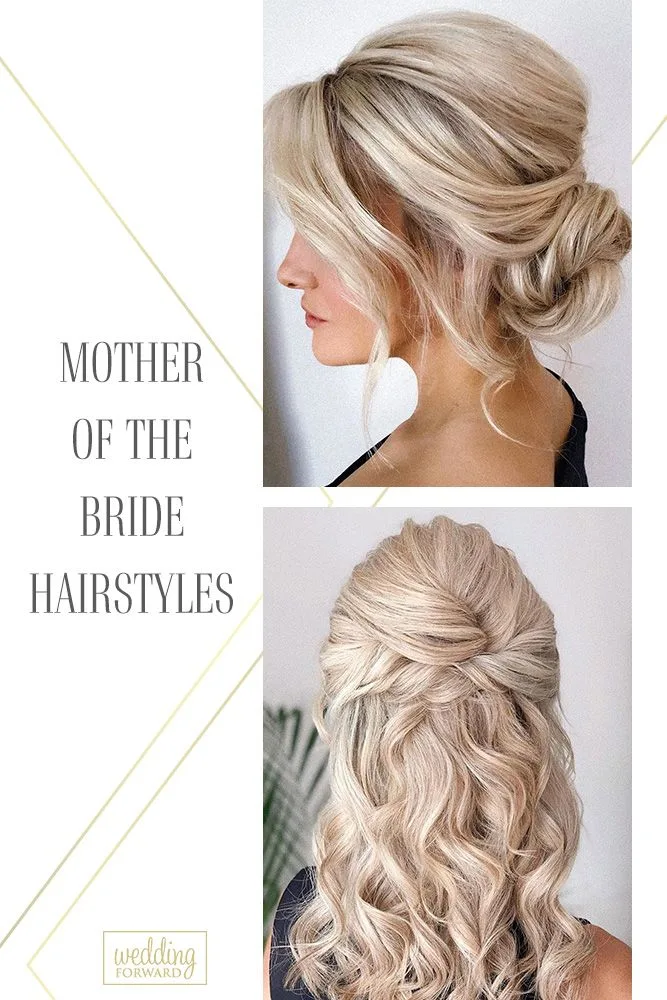
Short hair has more options than most mothers realise. A pixie can be textured and piecey for a modern feel, a bob can be curled, smoothed or swept to one side, and a short crop takes pins, combs and headbands beautifully. The trick with short styles is the finish: a little shine product and a defined shape stop short hair looking unfinished in photographs. If your hair is very short, talk to your stylist about a clip-in piece or a decorative comb that adds interest without a full updo.
Medium-length hair is the most versatile length of all — long enough for a chignon, a low bun or a braided detail, and short enough to hold a curl without dropping out by evening. Long hair opens up the full range: French twists, braided crowns, Gibson tucks and voluminous half-up styles. The one caution with long hair is weight: a heavy style can pull and ache by the evening, so ask your stylist to distribute the pins and consider a half-up style that shares the load. Whatever your length, choose a style that works with what you have rather than fighting it.
Hairstyles by Face Shape
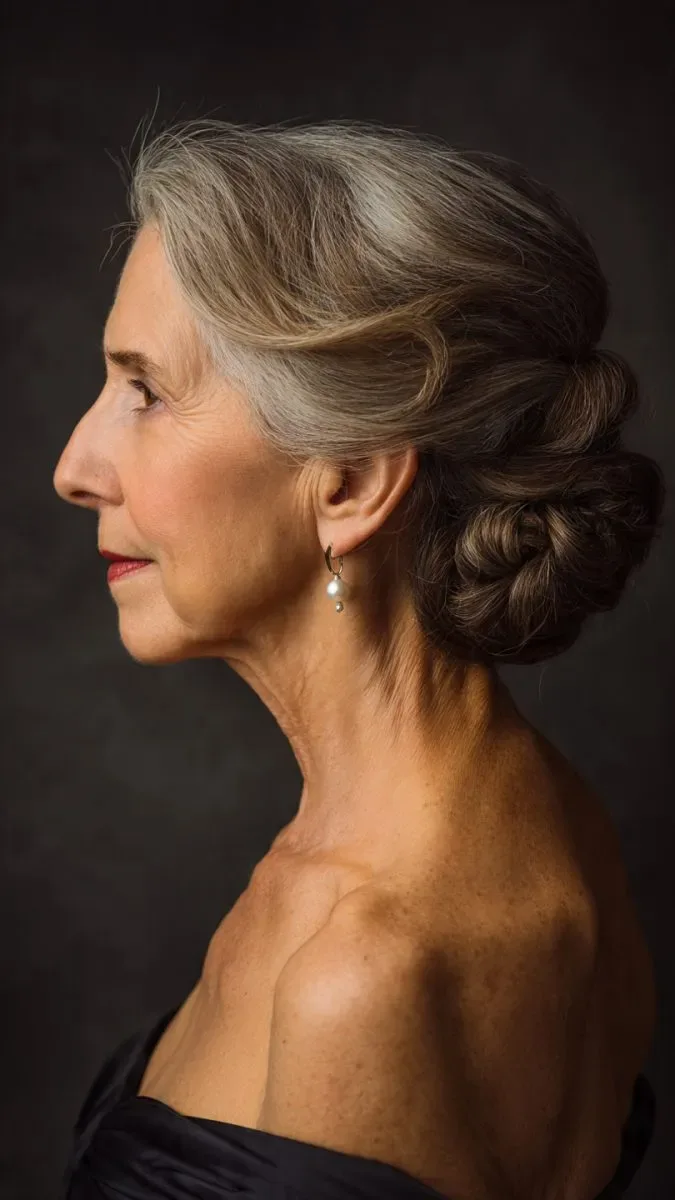
Face shape is a helpful guide, not a set of rules, but a few principles flatter almost everyone. Softness around the face is your friend: face-framing layers, loose tendrils or a side sweep soften strong features and photograph beautifully. If your face is round, height at the crown and a deep side part add length; if it is long, width at the sides — soft curls, a low side bun or gentle volume at the cheeks — brings balance. Square jawlines soften with waves and pieces that fall forward, while heart-shaped faces suit styles with volume at the jawline.
The most important test is the photograph test. At your trial, take a picture from the front and from a three-quarter angle, because that is how most wedding photographs are taken. A style that looks perfect in the mirror can look different on camera, especially if the front is pulled back too tightly. Ask your stylist to leave a little softness at the temples and to check the style from the side as well as the front. The goal is not to reshape your face — it is to frame the face you already have in the most flattering way possible.
Hair Colour, Highlights and Grey Blending
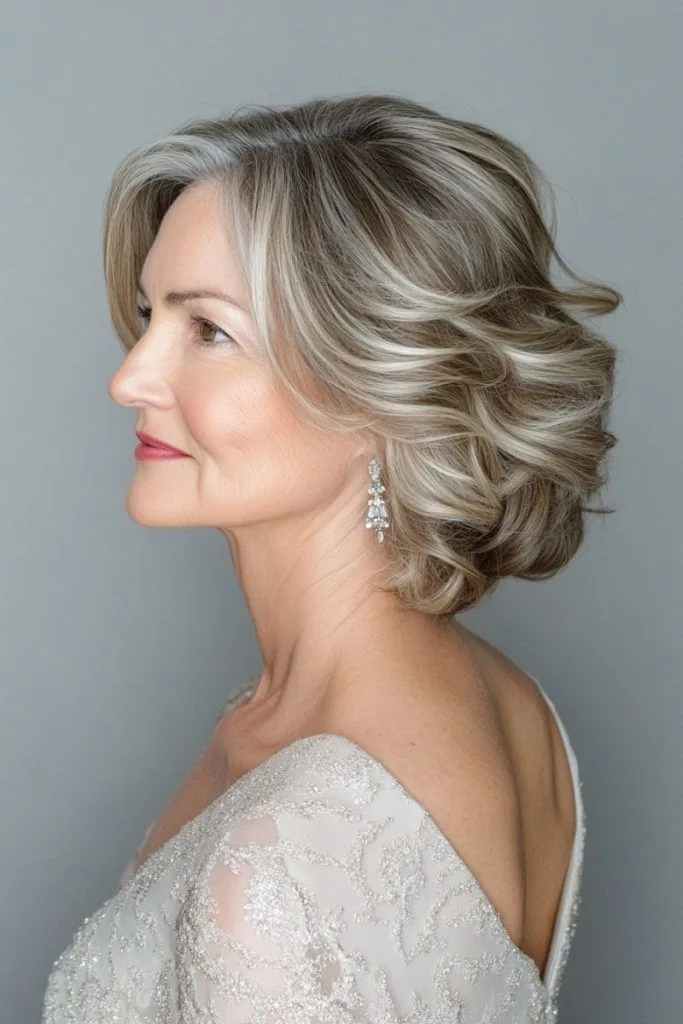
Colour makes a bigger difference in wedding photographs than most people expect, because cameras pick up shine and dimension that the eye glosses over. If you colour your hair, schedule your final appointment five to seven days before the wedding — close enough that roots are invisible, far enough that the colour has settled and any staining on the skin is gone. A gloss or toner in the same appointment adds shine that photographs beautifully, especially in updos where the light catches the twists and folds.
Grey hair can be absolutely stunning for a mother of the bride, and more mothers are choosing to wear it proudly. Silver and grey hair looks best with a little extra care: a purple shampoo in the weeks before the wedding keeps it bright rather than yellow, and a smoothing serum tames flyaways that catch the light. If you are growing out grey, ask your colourist about blending — soft lowlights or a root melt that eases the transition without a harsh line. Whatever you choose, do not try a dramatic new colour for the first time the week of the wedding.
Accessories: Pins, Combs, Fascinators and Veils
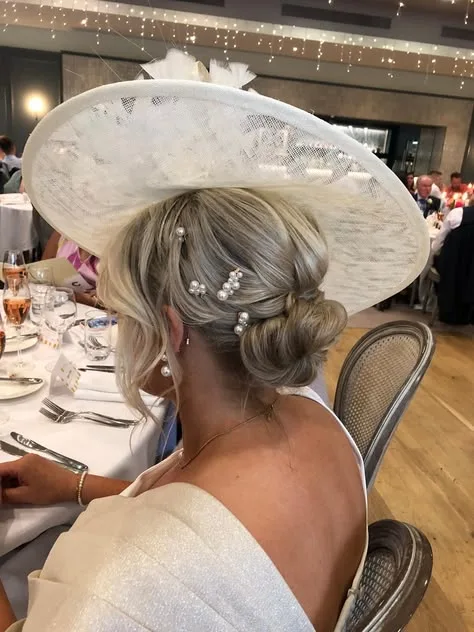
Accessories are the finishing touch that can turn a simple updo into a wedding-day style, but restraint is what keeps them elegant. Pearl pins, a delicate comb or a slim headband add sparkle without competing with the bride. Choose one statement piece rather than several: a crystal comb plus pearl pins plus a fascinator is too much, and the photographs will show it. Match the metal to your jewellery — silver with silver, gold with gold — and try the accessory at your trial so your stylist can place it where it will actually stay.
Fascinators deserve a special note, because they are a classic mother-of-the-bride choice and a common source of trouble. A fascinator should sit comfortably for ten hours, not just for the ceremony, so check that its comb or clip grips securely and does not pull. If your dress is heavily embellished, choose a simpler accessory; if your dress is plain, a bolder fascinator can carry the look. Small fresh flowers tucked into an updo are a lovely alternative and photograph beautifully, but agree them with the florist in advance so they match the bouquets and survive the day.
Your Wedding-Morning Hair Timeline
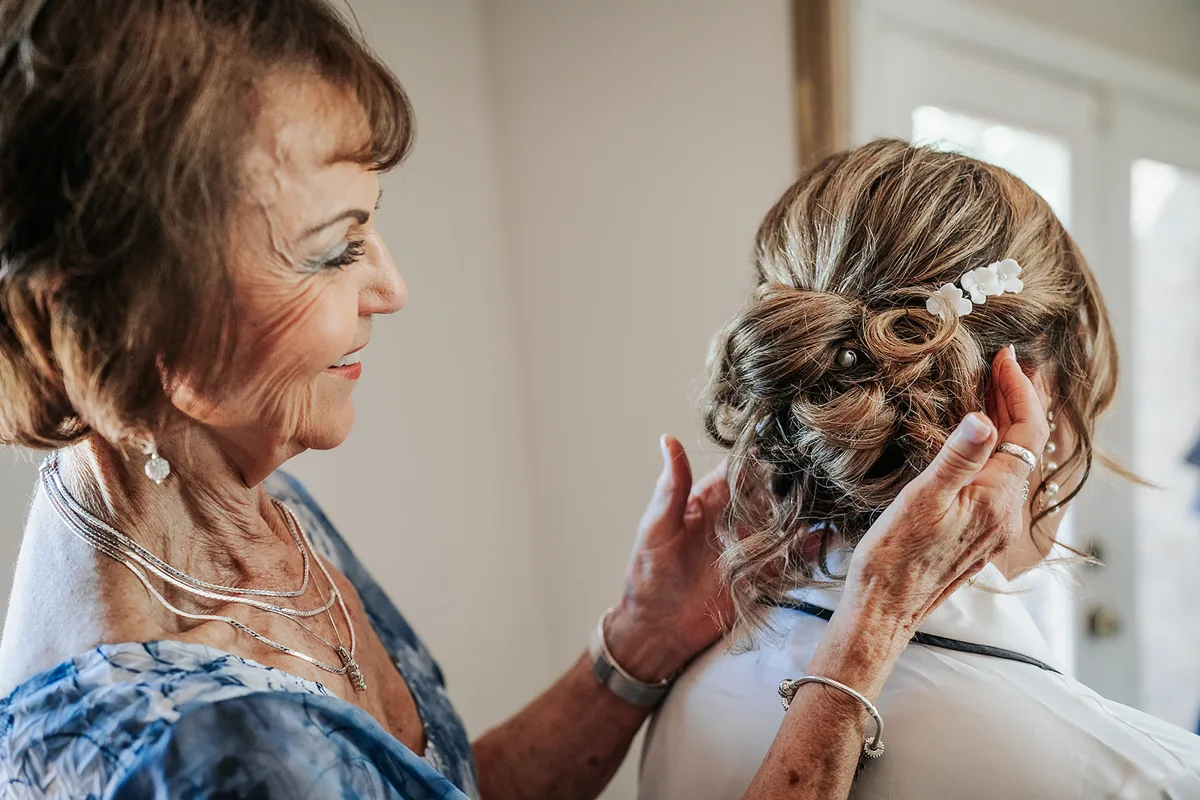
Wedding mornings run on a schedule, and your hair slot is usually earlier than you expect. Plan for your styling to take 45 to 60 minutes for an updo and 30 to 45 minutes for a blowout or half-up style, and arrive with your hair washed the night before and fully dry — freshly washed hair is slippery and harder to pin. Eat something before you sit in the chair, wear a button-front top so you can change into your dress without disturbing your hair, and keep your phone charged for the inevitable photographs of the getting-ready moments.
Build in a buffer of at least 30 minutes between hair finishing and the photographs, because something always runs late and rushing ruins a good style. Bring a small touch-up kit: a few extra pins in your hair colour, a travel hairspray, a comb and blotting papers. Ask your stylist to show you — or a bridesmaid — how to fix the most likely problem, usually a slipping tendril or a loosening pin. Then stop worrying about your hair. A style chosen well and pinned properly will look after itself, and you have a daughter to marry off.
01. Classic French Twist
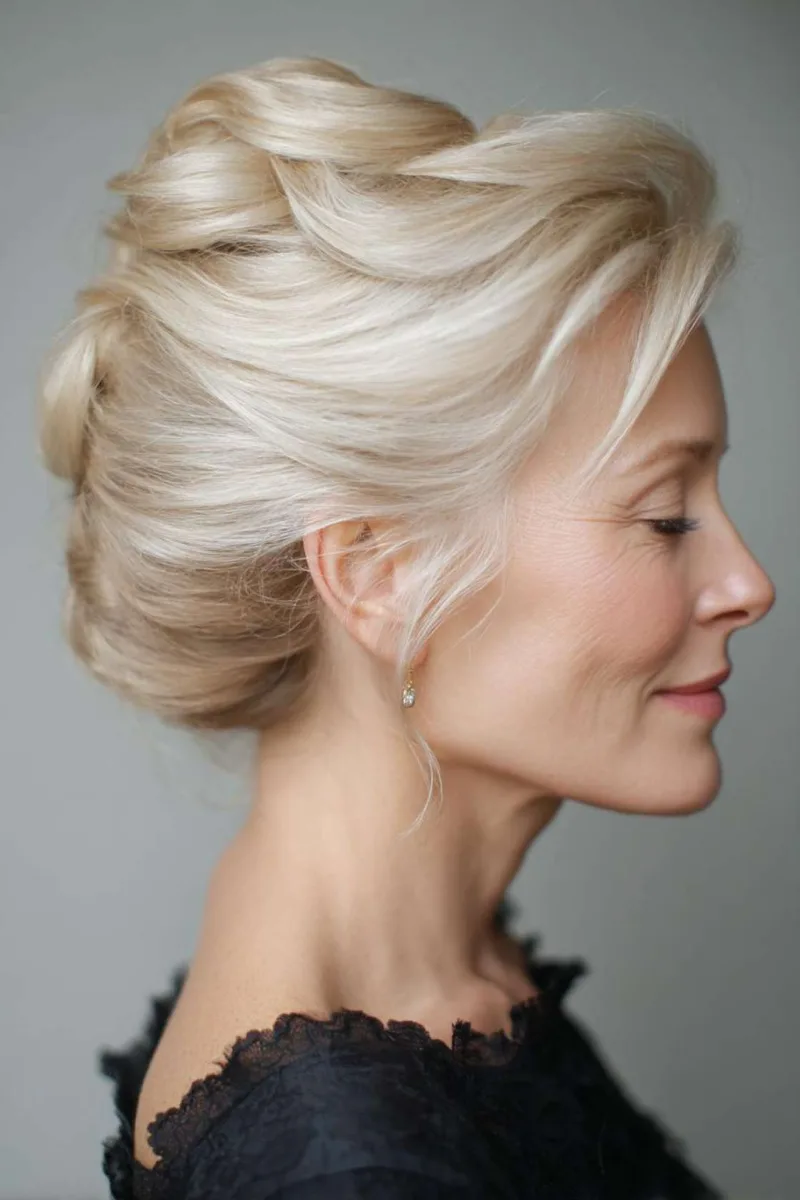
The French twist is the definitive mother-of-the-bride hairstyle for a reason: it is polished, timeless and almost impossible to photograph badly. Hair is swept up and folded into a vertical roll at the back of the head, creating a long, elegant line that lengthens the neck and shows off earrings beautifully. It suits formal and black-tie weddings best, and it pairs perfectly with high necklines, detailed collars and dresses with an embellished back. The style works on medium to long hair, and it holds its shape for hours, which is exactly what a long wedding day demands.
Best for: formal weddings, medium to long hair, and mothers who want a classic, no-risk look. Ask your stylist for a soft, modern twist rather than a scraped-back vintage version — a few loose pieces at the temples keep it from looking severe. The common mistake is pulling the front too tight, which can look harsh in photographs, so check the front view at your trial as carefully as the back. Allow 45 minutes on the morning, and finish with a pearl comb or a single crystal pin for a touch of sparkle.
02. Low Chignon
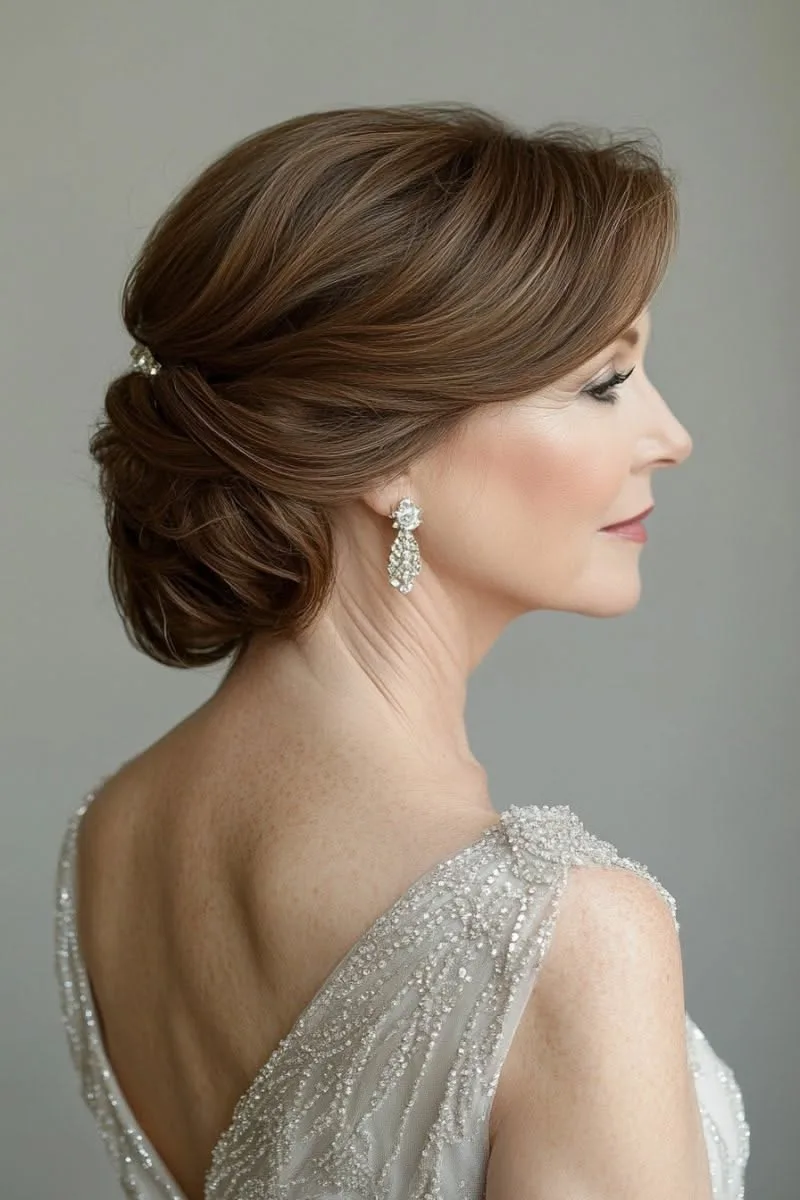
The low chignon sits at the nape of the neck, where it looks effortless and feels comfortable all day. It is softer and more relaxed than a French twist, which makes it a wonderful choice for garden, daytime and semi-formal weddings, though a sleeker version works just as well in the evening. The style flatters almost every face shape because the low placement keeps the focus on your face rather than on the hair itself, and it works beautifully with veils, fascinators and statement earrings, none of which compete with a bun sitting low at the neck.
How to style it: hair is gathered low, twisted and pinned into a soft knot, with the ends tucked or left in a gentle loop. For fine hair, ask your stylist to add a small padding or to backcomb the crown first so the chignon looks full rather than flat. A centre part gives a classic, symmetrical look, while a side part feels softer and more modern. The chignon’s real advantage is comfort — nothing pulls, nothing is heavy, and you can dance, hug and lean in for photographs without thinking about your hair at all.
03. Elegant Low Bun
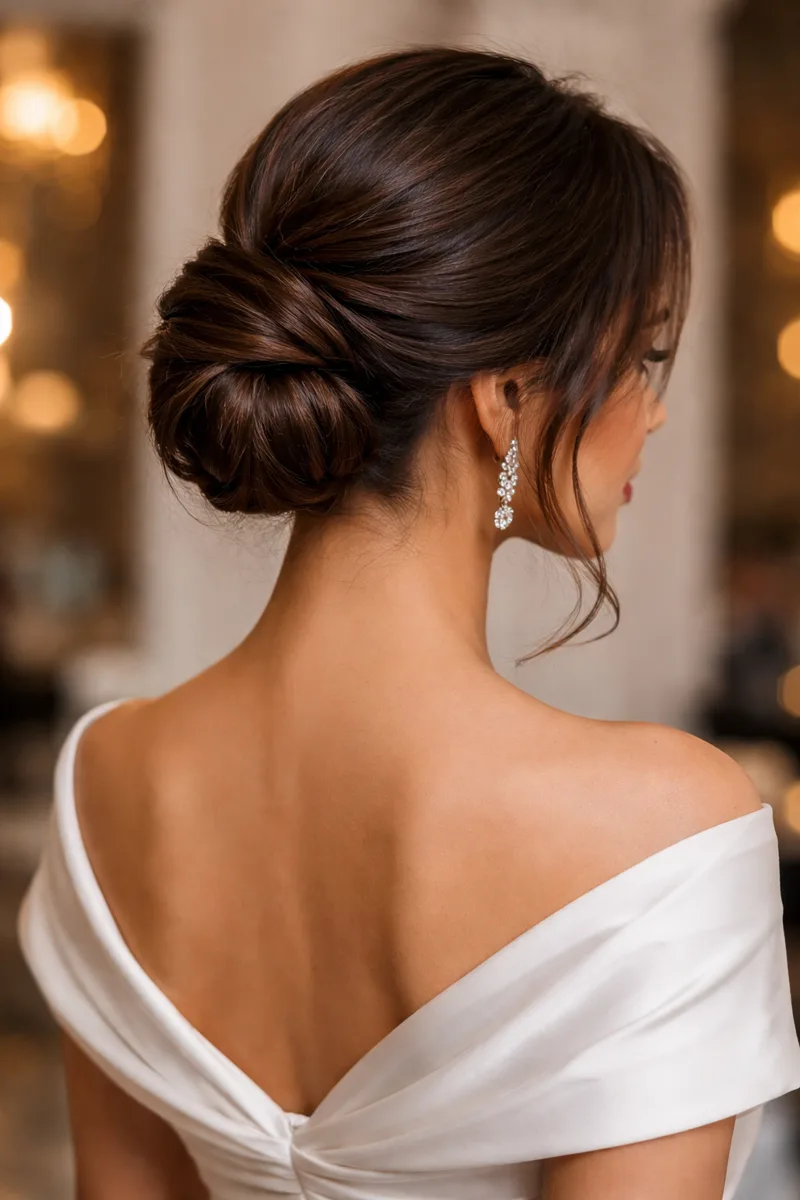
The elegant low bun is the chignon’s slightly more structured cousin — smooth on top, neat at the sides and finished with a perfectly formed bun at the nape. It is the style to choose when you want to look unmistakably polished: a ballroom reception, a church ceremony, an evening wedding with formal dress. Because the hair is controlled and the silhouette is clean, it frames the face beautifully and lets your dress and jewellery do the talking. It also photographs exceptionally well from the back, which matters for those aisle and first-dance shots.
Pros: it lasts all day, suits every hair texture, and works with almost any accessory. Cons: it can feel formal if the wedding is relaxed, and very smooth styles show every flyaway, so a good smoothing serum and a light-hold spray are essential. If your hair is thick, the bun will be naturally full; if it is fine, a doughnut form or a little backcombing gives it shape. Ask your stylist to leave two soft pieces at the front — they stop the style looking severe and make the whole look feel current rather than dated.
04. Soft Half-Up Half-Down
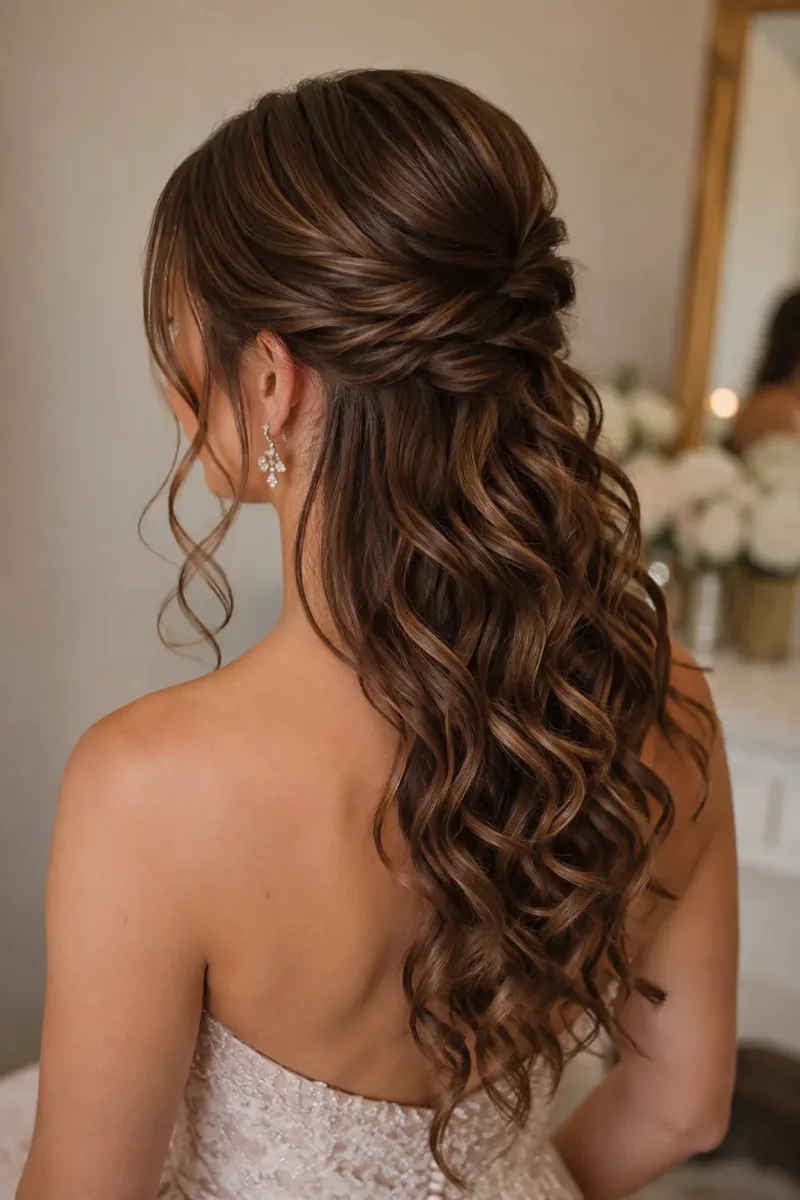
Half-up half-down is the perfect compromise for a mother who loves her length but wants her face clear for the photographs. The top section is lifted and pinned — sometimes twisted, sometimes braided — while the rest falls in soft curls over the shoulders. It feels romantic without being fussy, and it suits garden weddings, outdoor ceremonies and daytime celebrations especially well. The style works on medium to long hair, straight or wavy, and it is one of the most forgiving choices if the weather turns humid, since the pinned section keeps the shape even if the curls relax a little.
Who it suits: mothers with medium to long hair who rarely wear updos, and anyone whose dress has a pretty neckline worth showing off. The key detail is the balance — too much hair pinned up and it looks like a ponytail, too little and the front falls forward. Ask your stylist to curl the lengths with a large-barrel iron and to pin the top section with hidden grips rather than a visible clip. A small pearl comb at the join adds a wedding-day touch without any effort at all.
05. Voluminous Blowout With Soft Curls
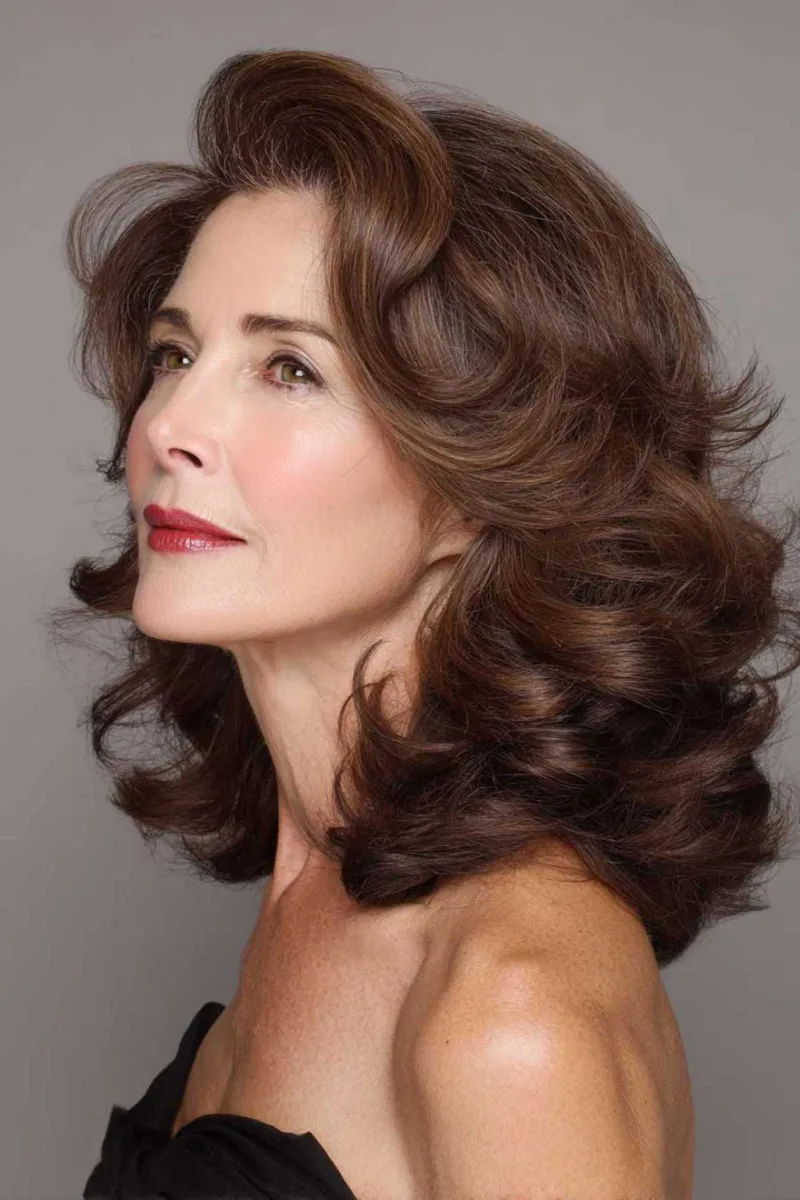
A voluminous blowout is glamour without a single pin. Hair is blow-dried with a round brush for lift at the roots, then finished with large, soft curls that move when you do. It is a wonderful choice for mothers with medium to long hair who want to look polished but natural, and it suits almost any dress style, from a simple sheath to a full-skirted gown. The volume at the crown photographs beautifully and stops hair looking flat in pictures, which is the most common complaint about wearing hair down at a wedding.
Time and cost: expect 45 to 60 minutes in the chair, and book a blowout specialist if your regular stylist is stronger on updos. The main risk is longevity — curls can drop in humidity or after hours of dancing — so ask for a strong-hold mousse at the roots and a flexible hairspray to finish, and carry a small comb for touch-ups. If your hair is fine, hot rollers before the blowout add lasting body. This style is at its best in the first few hours, so schedule it as close to the ceremony as the timetable allows.
06. Sleek Low Ponytail
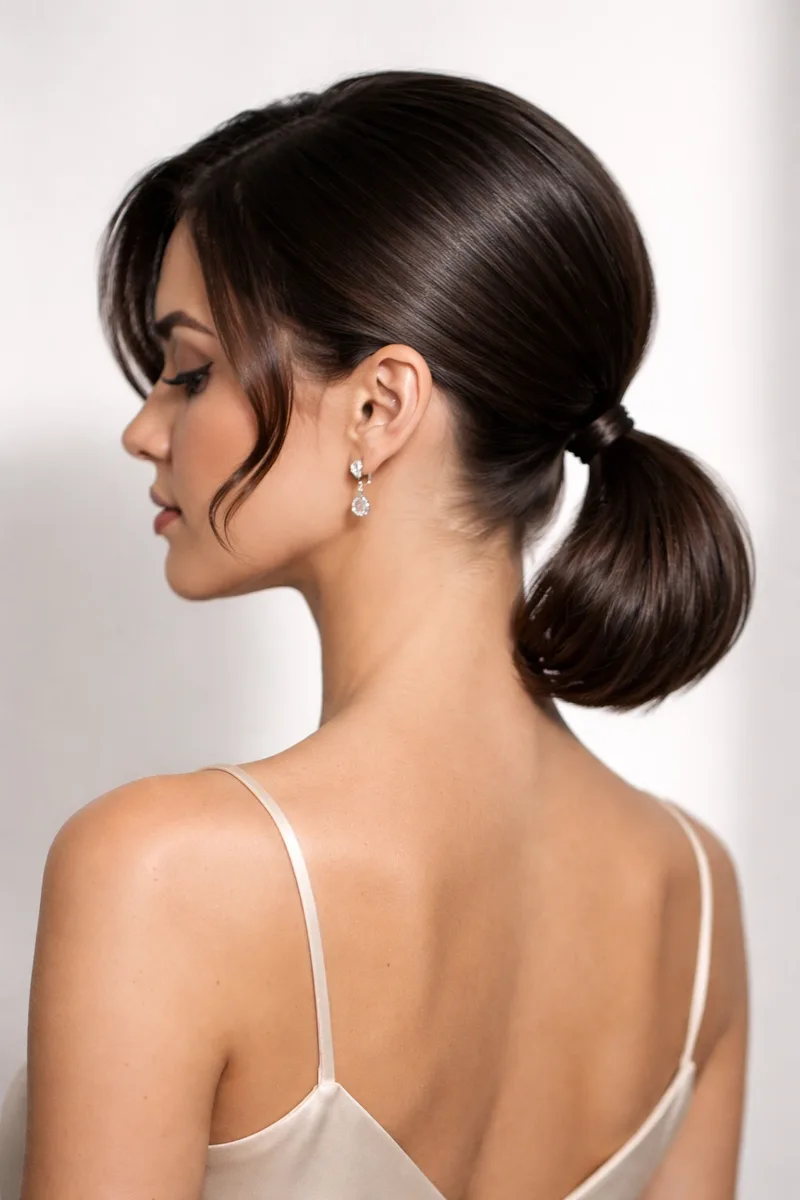
The sleek low ponytail has quietly become one of the most modern mother-of-the-bride looks, and it is easy to see why. Hair is smoothed back — centre or side part — and secured low at the nape, with a strand wrapped around the elastic to hide it completely. The result is clean, confident and youthful without trying too hard, and it suits contemporary weddings, city venues and minimalist dresses perfectly. It also shows off statement earrings and a beautiful neckline, and it stays neat through the entire day.
Maintenance is the thing to plan for: sleek styles show flyaways, so a smoothing serum and a light mist of hairspray are essential, and a silk pillowcase the night before helps. This style suits straight and slightly wavy hair best; very curly hair can be smoothed first, though that adds time. Ask your stylist to keep a little softness at the hairline rather than scraping everything back, and to wrap the base neatly — that wrapped strand is what turns an everyday ponytail into a wedding-day style.
07. Side-Swept Curls
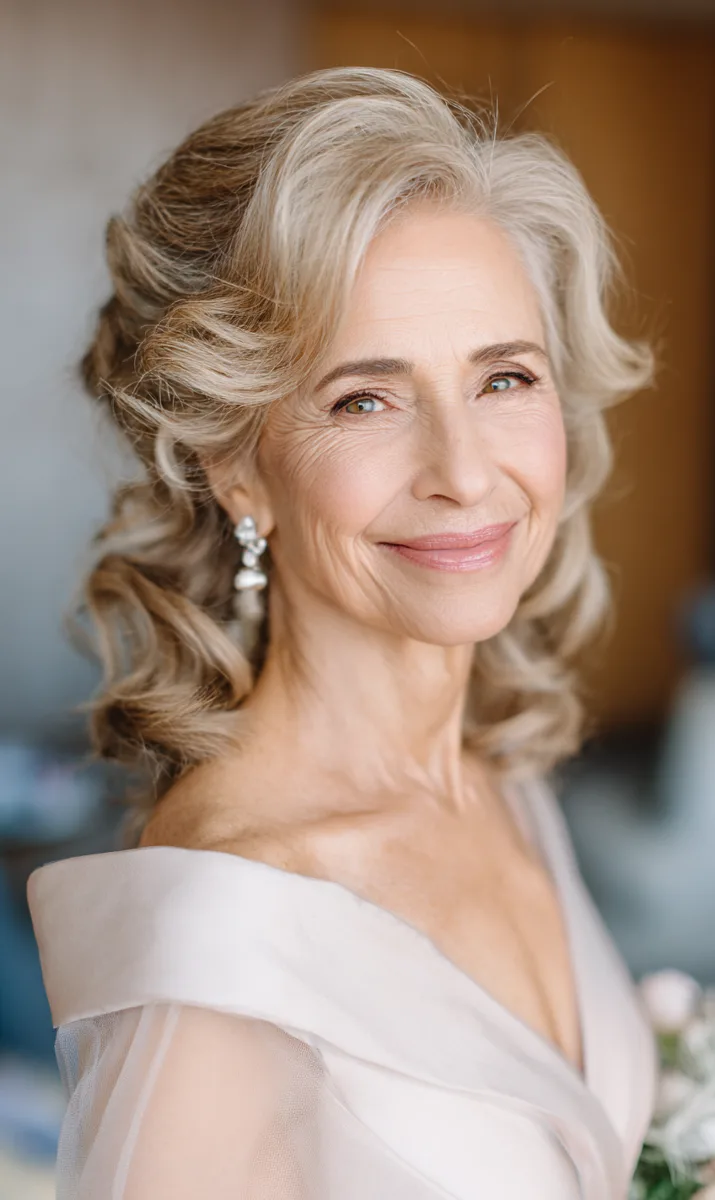
Side-swept curls are pure old-Hollywood romance: hair is curled, brushed into soft waves and swept over one shoulder, leaving the other side of the neck and one earring beautifully exposed. It is a gorgeous choice for an evening wedding, a ballroom reception or any celebration where you want a touch of drama. The asymmetry is flattering on almost everyone — it adds width where a long face needs it and softness where a strong jawline benefits from it — and it photographs wonderfully in profile and in three-quarter shots.
How to style it: curl with a large-barrel iron, brush the curls out into waves, then pin the hair behind one ear with hidden grips and let the rest fall over the opposite shoulder. The style needs medium to long hair and a reasonable amount of volume, so fine hair may need a little backcombing at the crown or a clip-in piece for fullness. The common mistake is making the curls too tight — they should be brushed out and soft, not ringlets. A single statement earring on the exposed side completes the look.
08. Classic Bob With Soft Waves
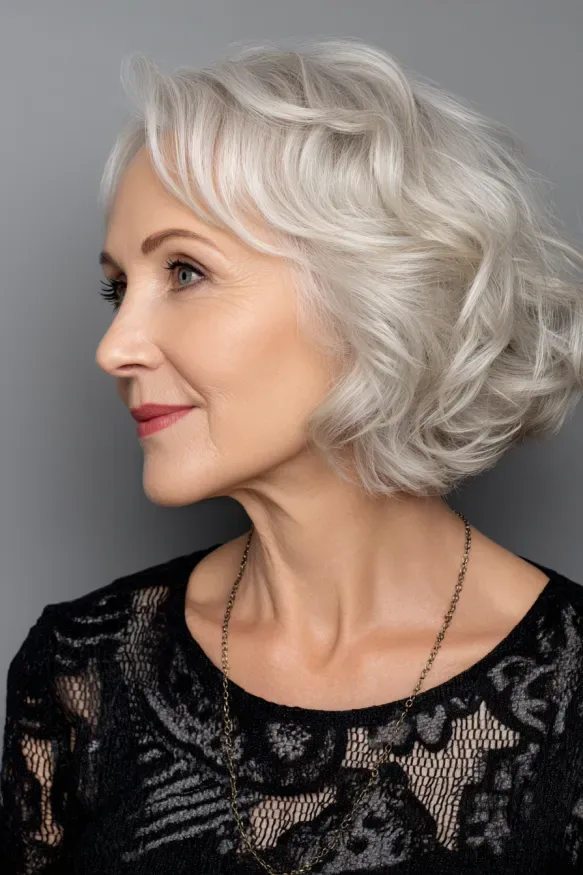
The classic bob never goes out of style, and with soft waves it becomes an ideal mother-of-the-bride look: polished, youthful and completely unfussy. The waves add movement and texture that a straight bob can lack, and they catch the light in photographs in a way that makes the whole style look considered rather than everyday. It suits round and square faces particularly well, because the waves soften the jawline, and it works for daytime and evening weddings alike.
Best for: short to medium hair, mothers who already wear a bob, and anyone who wants a low-maintenance style that still looks special. Ask your stylist for a fresh trim a week before the wedding so the shape is crisp, and for soft waves made with a flat iron or a large curling iron, brushed out for a lived-in finish. A shine spray is the finishing touch — bobs look their best with a healthy gloss. If you want a little extra occasion feel, tuck one side behind the ear and add a pearl pin.
09. Textured Pixie Cut
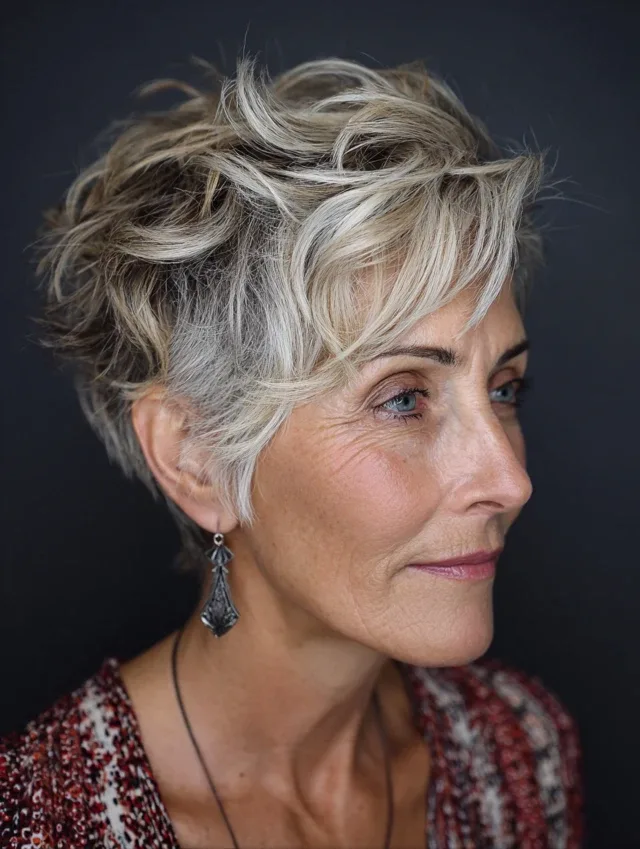
A textured pixie is the boldest choice on this list, and for the right mother it is also the most striking. Short, piecey layers with a little height on top create a modern, confident silhouette that frames the eyes and cheekbones and looks superb in photographs. It is also the most comfortable style you can wear to a wedding: nothing to pin, nothing to slip, nothing to worry about in the wind. Pixies suit oval and heart-shaped faces beautifully, and they pair wonderfully with statement earrings and a bold lip.
Who should avoid it: anyone who has never worn short hair and is tempted to cut it just for the wedding — a pixie is a commitment, not a one-day style. If you already have a pixie, book a shaping cut three to five days before the wedding and ask your stylist to show you the exact products to recreate the texture on the morning: usually a matte paste or a texturising spray, worked through with the fingers. A decorative comb or a slim headband can add a wedding-day touch without fighting the cut.
10. Romantic Updo With Loose Tendrils
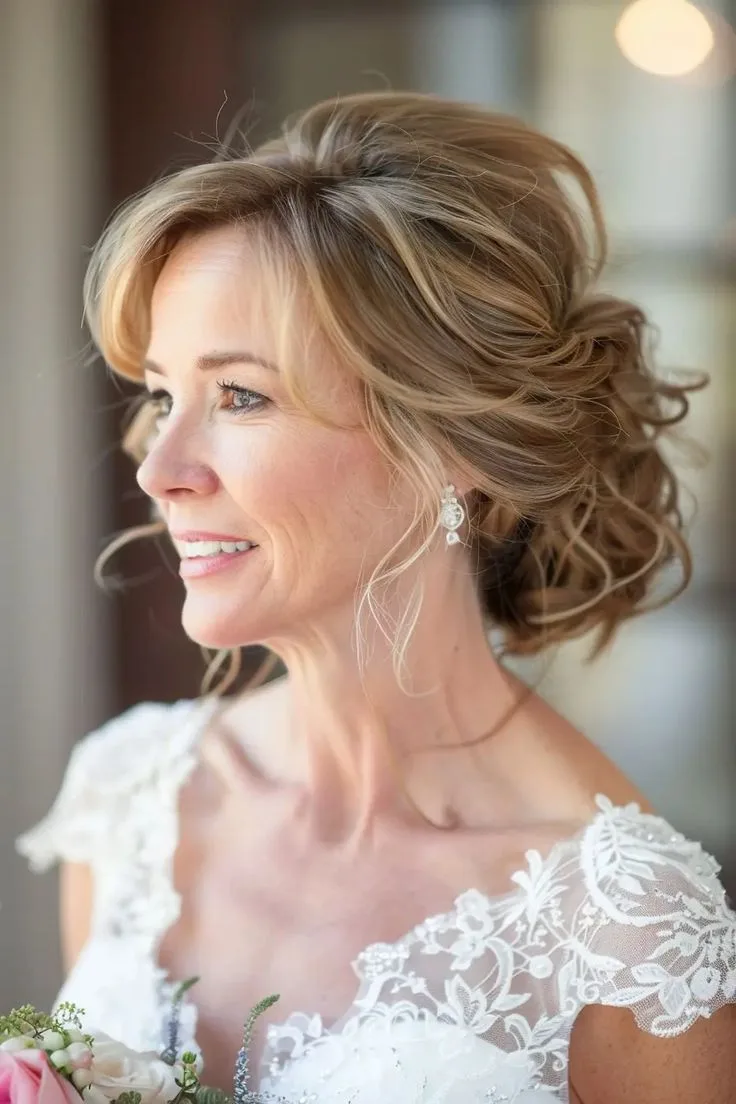
The romantic updo is what most people picture when they think of mother-of-the-bride hair: hair swept up loosely, pinned in soft folds, with a few tendrils left to frame the face. It is softer than a French twist and more polished than a messy bun, which makes it one of the most versatile choices here — it suits garden weddings and grand ballrooms alike, and it flatters every face shape because the tendrils do the softening work for you. Medium to long hair works best, and the style takes well to flowers, pearl pins and delicate combs.
Quick verdict: if you can only try one style at your trial, try this one. It is forgiving on the day — a tendril that slips looks intentional rather than messy — and it holds up well through dancing. Ask your stylist to curl the hair before pinning it, which gives the updo its soft, full texture, and to leave the tendrils long enough to curl gently rather than hanging straight. The one thing to avoid is over-pinning: the style should look as though it might come undone, even though it will not.
11. Braided Crown Updo
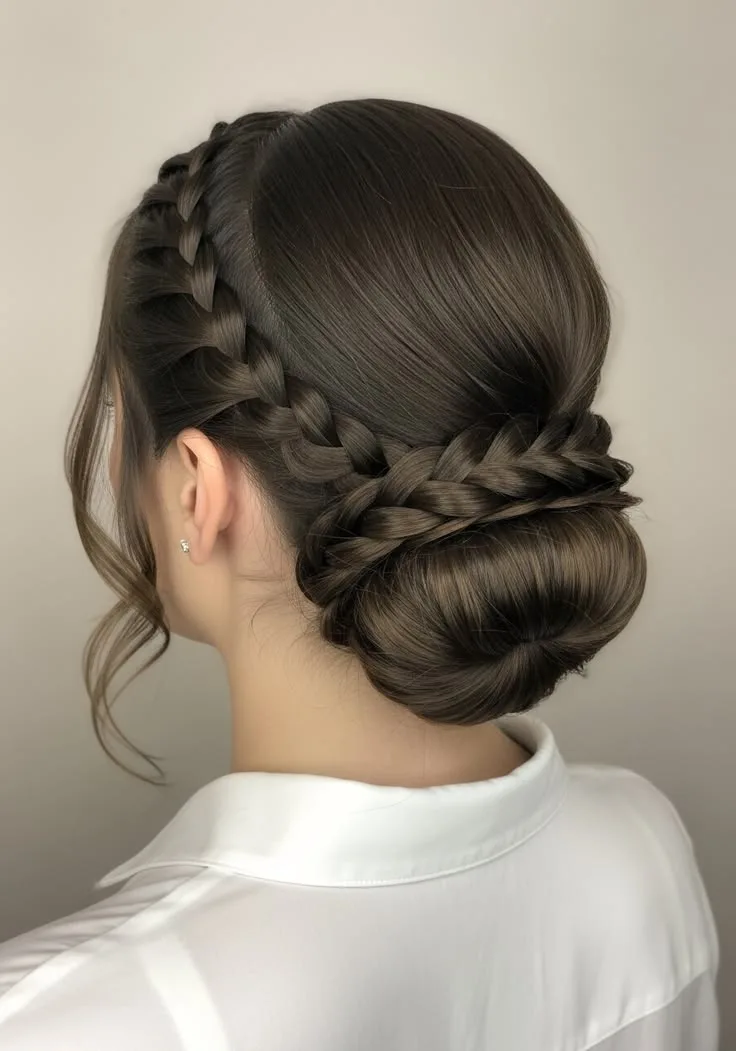
A braided crown wraps a plait around the head like a halo, then pins the remaining hair into a low bun or soft updo beneath it. It is a beautiful choice for an outdoor, garden or bohemian-leaning wedding, and it has a practical advantage that surprises people: the braid acts as an anchor, so the whole style stays put for hours. The look is romantic without being saccharine, and it suits medium to long hair with some natural texture — very straight, slippery hair may need texturising spray first.
Best for: outdoor and daytime weddings, mothers with thick or textured hair, and anyone who wants something a little different from a standard updo. Ask your stylist for a Dutch braid rather than a French one if you want the braid to stand out, and for the crown to sit slightly back from the hairline so it frames rather than dominates your face. Small fresh flowers woven into the braid are lovely, but keep them tiny — a crown of large blooms belongs to the bride.
12. Twisted Low Updo
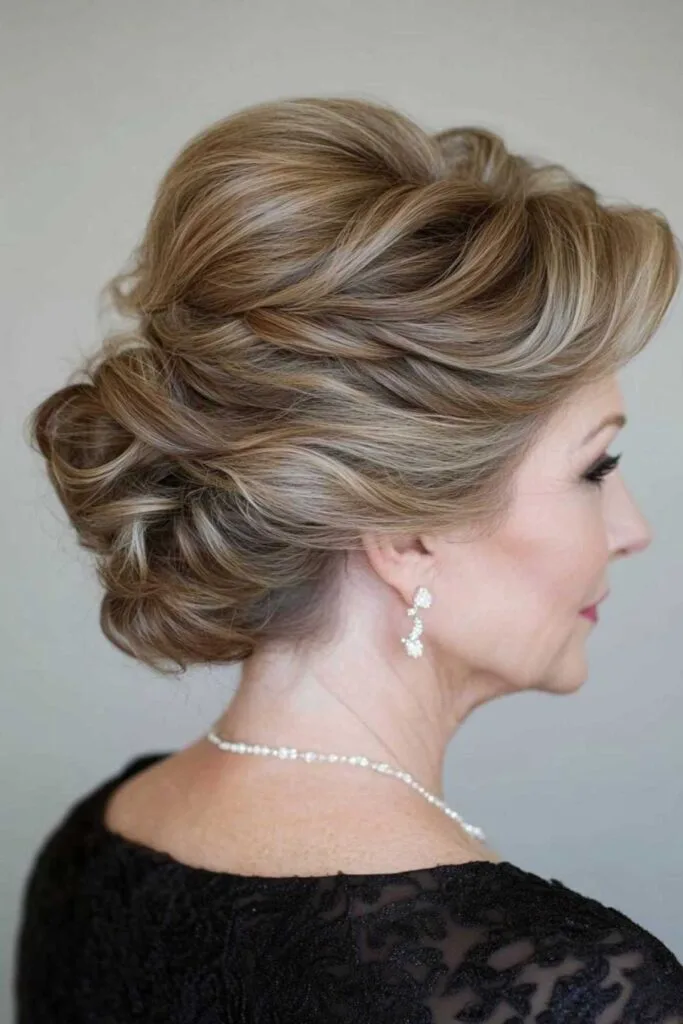
The twisted low updo is the quiet achiever of wedding hair: sections of hair are twisted, crossed and pinned into a soft, textured knot at the nape, creating a style that looks intricate from the back and effortless from the front. It is less formal than a French twist and more structured than a messy bun, which makes it ideal for the many weddings that fall somewhere in between — a hotel reception, a restaurant celebration, a late-afternoon ceremony. It works on medium-length hair upward and flatters fine hair especially well, because the twists create the illusion of fullness.
How to style it: hair is parted softly, twisted in two or three sections and pinned low, with the ends tucked in or fanned into a soft knot. The twists do the visual work, so this style needs less backcombing than a bun and feels lighter on the head. Ask your stylist to keep the twists loose and a little uneven — perfectly symmetrical twists look stiff. A small pearl or crystal pin at the centre of the knot is the only accessory this style needs.
13. Gibson Tuck
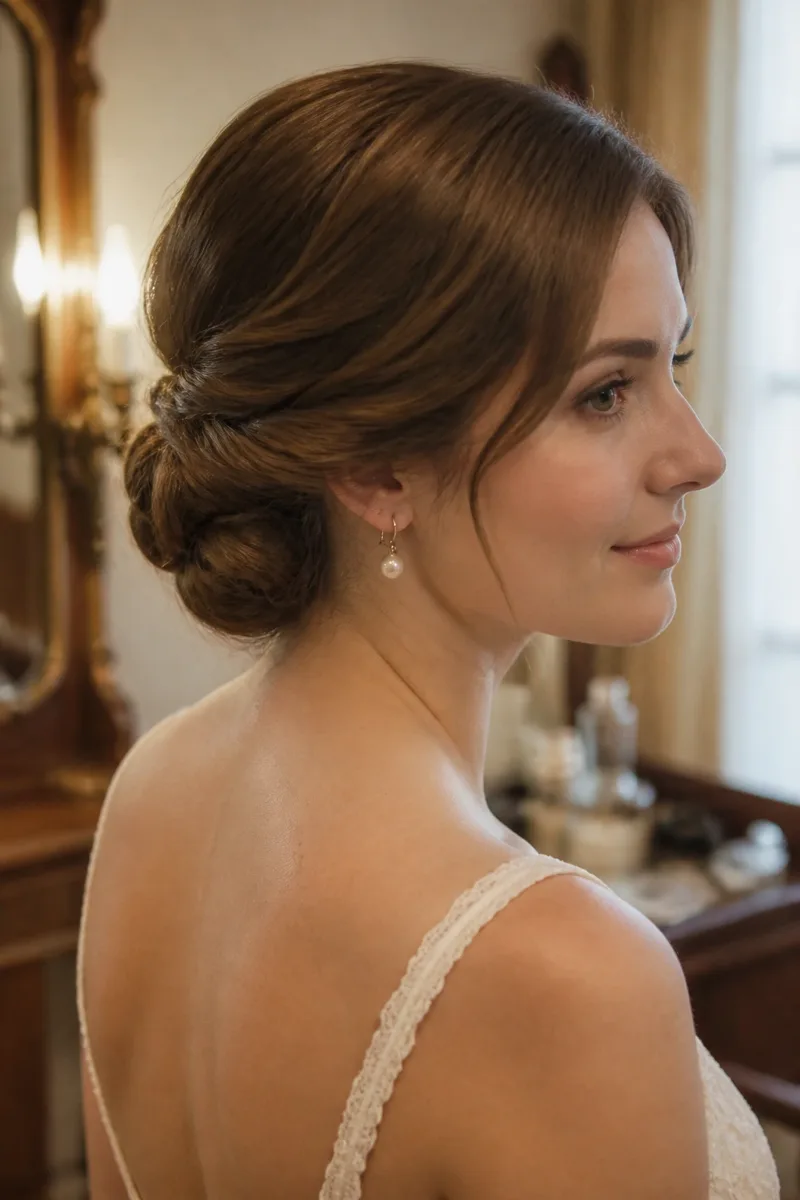
The Gibson tuck is a piece of Edwardian elegance that has never really gone away: hair is gathered into a low roll and tucked into a pocket at the nape, creating a soft, rounded silhouette with a gentle pouf at the crown. It is a wonderful choice for a vintage-themed wedding or for any mother who loves classic style, and it is remarkably comfortable, because the weight of the hair sits low and evenly distributed. The style suits medium to long hair and works beautifully with a centre part and soft volume at the front.
Pros: it is quick for a skilled stylist, it holds well, and it looks expensive without any accessories at all. Cons: it can look dated if the front is too flat, so ask for height at the crown and a little softness around the face. The Gibson tuck pairs beautifully with a decorative comb or a small fascinator worn to one side. If your hair is very thick, the tuck will be naturally full; if it is fine, a little padding inside the roll gives it the right shape. Allow 30 to 40 minutes on the morning.
14. Elegant Beehive
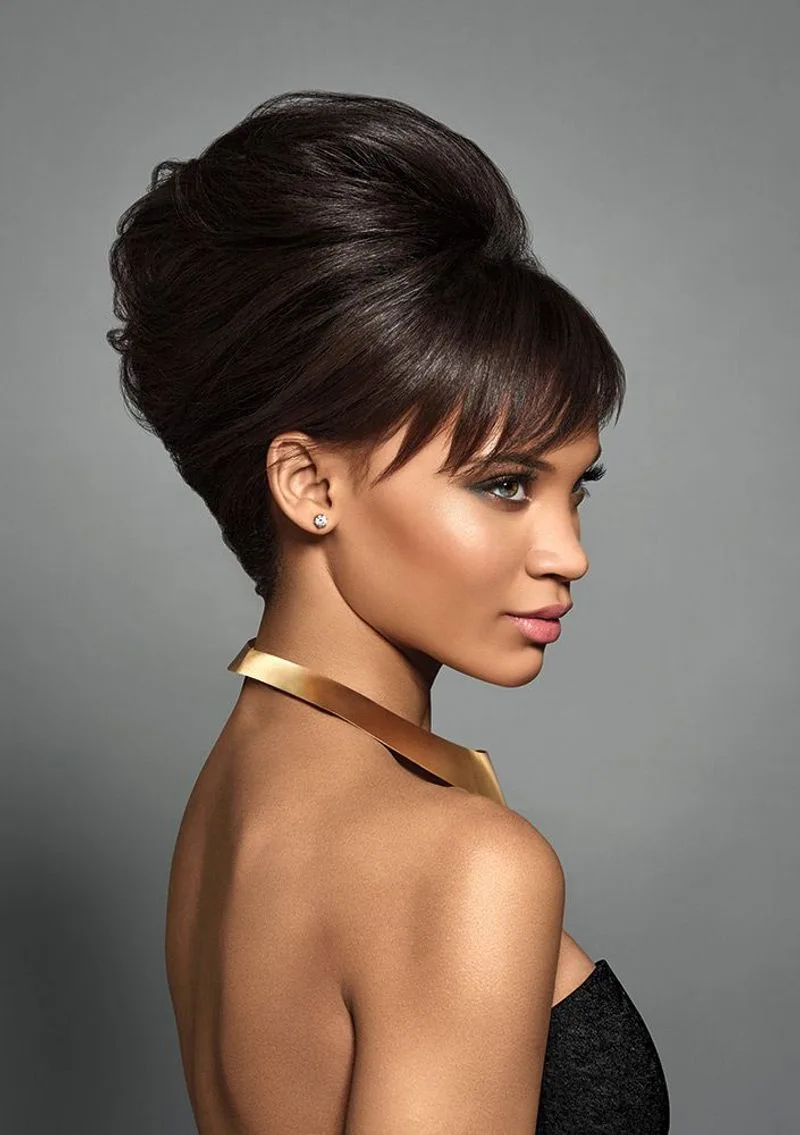
The beehive is the most dramatic silhouette on this list — and, done softly, one of the most glamorous. Hair is backcombed and shaped into a tall, rounded crown, with the lengths smoothed over the top and pinned at the back. It lengthens the face, adds instant height, and creates a striking profile that photographs beautifully, especially with a veil or a fascinator. This is the style for a mother who loves vintage glamour and is not afraid of a bold look at a formal evening wedding.
Who should avoid it: anyone with a very long face, since the extra height can exaggerate length, and anyone who dislikes the feeling of backcombed hair. A modern beehive is softer than the 1960s original — ask your stylist for a half beehive, where the volume is concentrated at the crown and the sides stay smooth. It needs strong-hold hairspray and plenty of pins, so budget a full hour on the morning. Done well, it is unforgettable; done too high, it competes with the bride, so keep the height elegant rather than extreme.
15. Soft Curly Updo
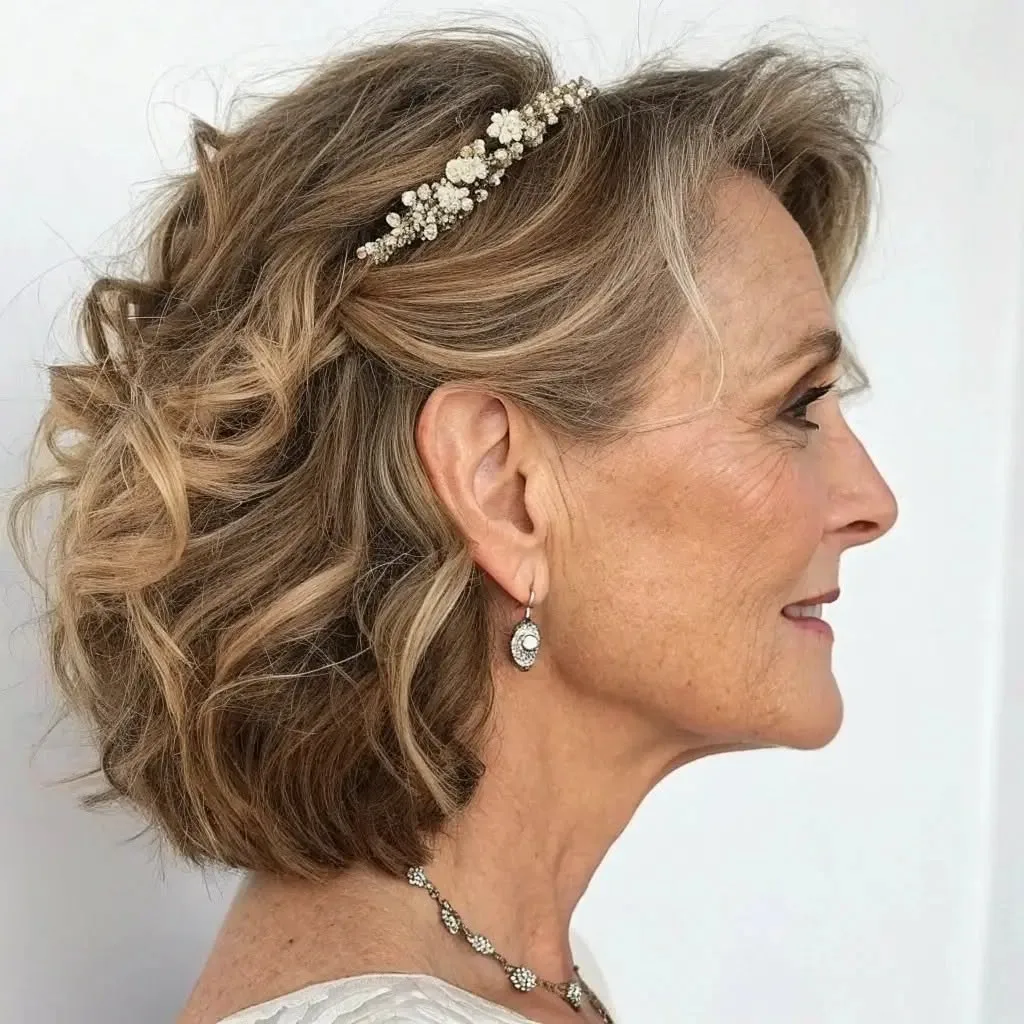
If your hair is naturally curly, a soft curly updo is the style that works with you instead of against you. Curls are gathered and pinned loosely at the crown or nape, keeping their natural texture and bounce rather than being ironed away. The result is full, romantic and completely your own — no two curly updos ever look the same. It suits every formality level, from a garden ceremony to a ballroom reception, and it is one of the best styles for photographs, because the curls catch the light from every angle.
How to style it: curls are defined with a curl cream the night before, then pinned up loosely on the morning with the natural curl pattern left intact. Ask your stylist not to over-brush the curls — brushing creates frizz where you want definition. A light-hold spray and a few well-placed pins are usually enough. The common mistake is trying to make curly hair behave like straight hair; the best curly updos celebrate the texture. If your hair is wavy rather than curly, a curling iron can create the same soft, full effect.
16. Sleek Straight Lob
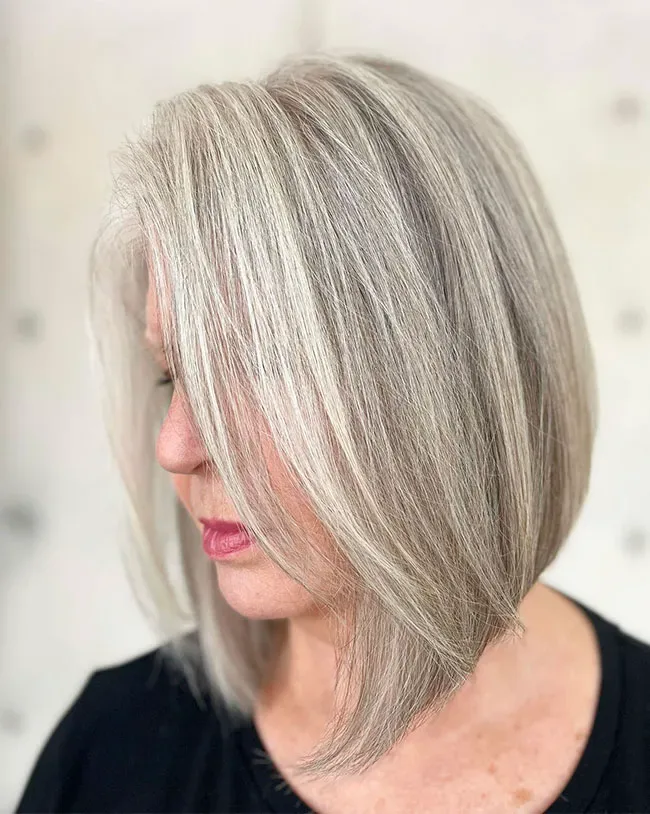
The sleek straight lob — a long bob that falls between the chin and the shoulders — is the most modern, minimal look in this guide. Hair is smoothed to a glossy, swingy finish with a centre or deep side part, and the clean lines make it look deliberate and expensive rather than plain. It suits contemporary weddings, city venues and mothers who favour clean, architectural style over romance. It also flatters round faces, because the length and the straight lines add the illusion of length.
Best for: straight or slightly wavy hair, shoulder-length cuts, and anyone who wants a style that needs almost no maintenance during the day. The secret is the finish: a smoothing serum, a flat iron, and a shine spray are non-negotiable, and the ends must be freshly trimmed so they sit cleanly. Tuck one side behind the ear to show off an earring. If the weather is humid, ask your stylist for an anti-frizz treatment beforehand — sleek styles are the first to show humidity.
17. Vintage Hollywood Waves
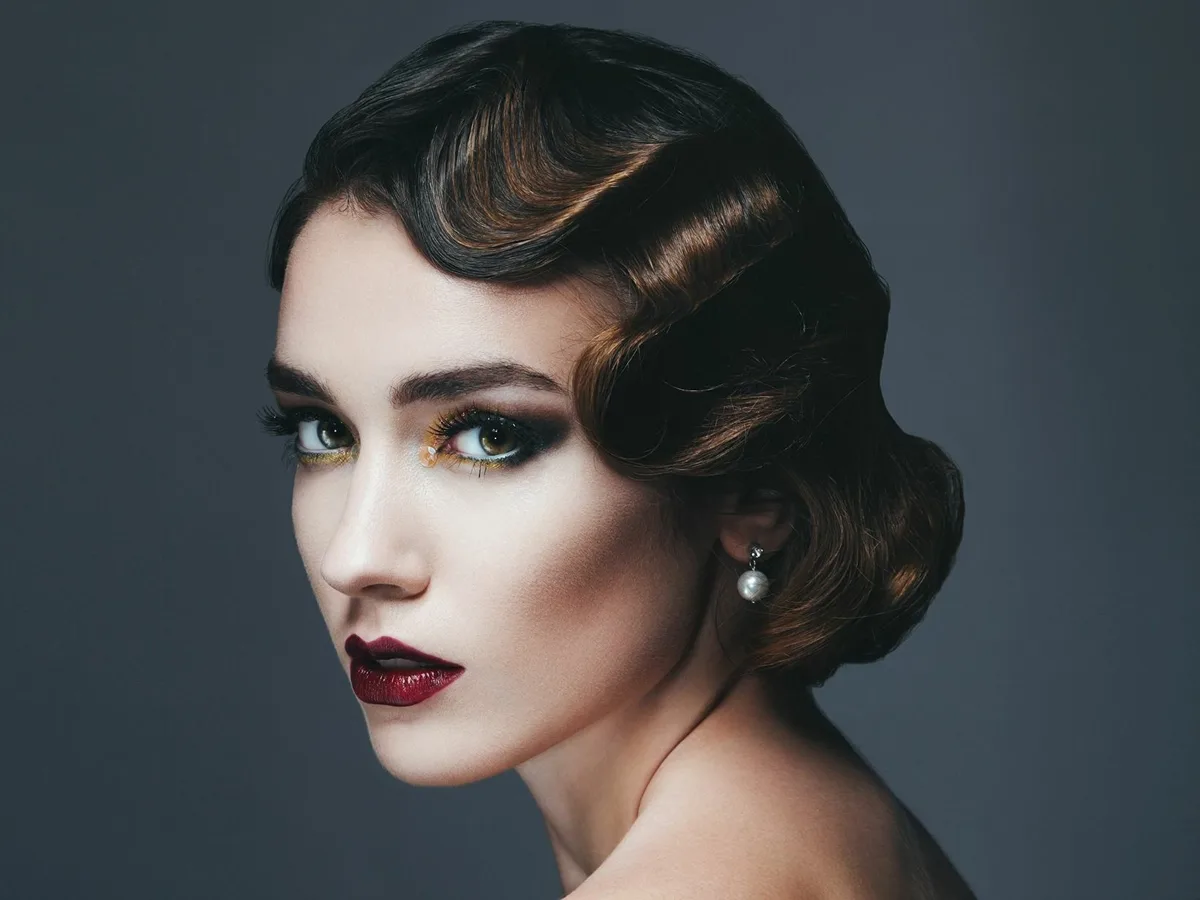
Vintage Hollywood waves are the most glamorous way to wear long hair down: deep, sculpted S-shaped waves that fall over one shoulder, glossy and perfectly defined. It is the style for a black-tie wedding, a grand venue or any celebration where old-school glamour fits the mood. The waves frame the face beautifully, they photograph like a dream, and they make even a simple dress look like a red-carpet moment. Medium to long hair is needed, and the style works best on hair that holds a curl well.
Time and cost: this is one of the longest styles to create, at 60 to 75 minutes, because each wave is set and brushed out by hand. It is worth every minute, but schedule it accordingly and keep it as late in the getting-ready order as possible so the waves are fresh for the ceremony. Ask your stylist to set the waves with pin curls or a large iron and to finish with a shine spray rather than a heavy hairspray, which can make the waves look stiff. A deep side part is essential — it is what gives the style its drama.
18. Messy Low Bun With Face-Framing Pieces
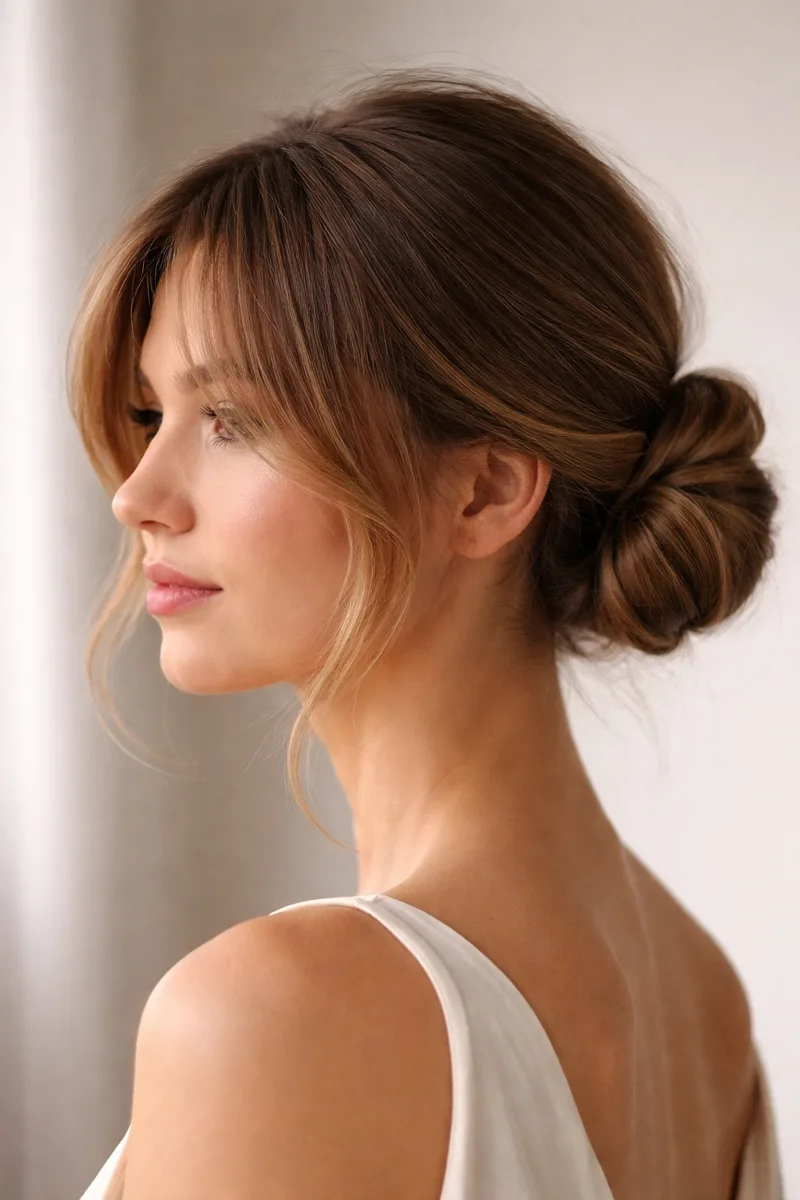
The messy low bun is the style for a mother who wants to look relaxed and approachable rather than formal — and it is much harder to do well than it looks. Hair is gathered loosely at the nape and pinned into a soft, textured bun, with pieces pulled out around the face and at the crown for a lived-in finish. The word messy is misleading: a good messy bun is carefully constructed to look effortless, and it suits garden weddings, rustic venues and daytime celebrations beautifully.
Pros: it is comfortable, it forgives a long day — if a piece slips, it looks intentional — and it suits fine hair, because the texture creates fullness. Cons: it can look unfinished if the stylist is too cautious, so at your trial, be honest about how undone you want it to look. Ask for the bun to sit low and slightly to one side for a modern feel, and for the face-framing pieces to be curled softly rather than left straight. A small floral pin or a pearl comb finishes it without making it formal.
19. Half-Up Twist
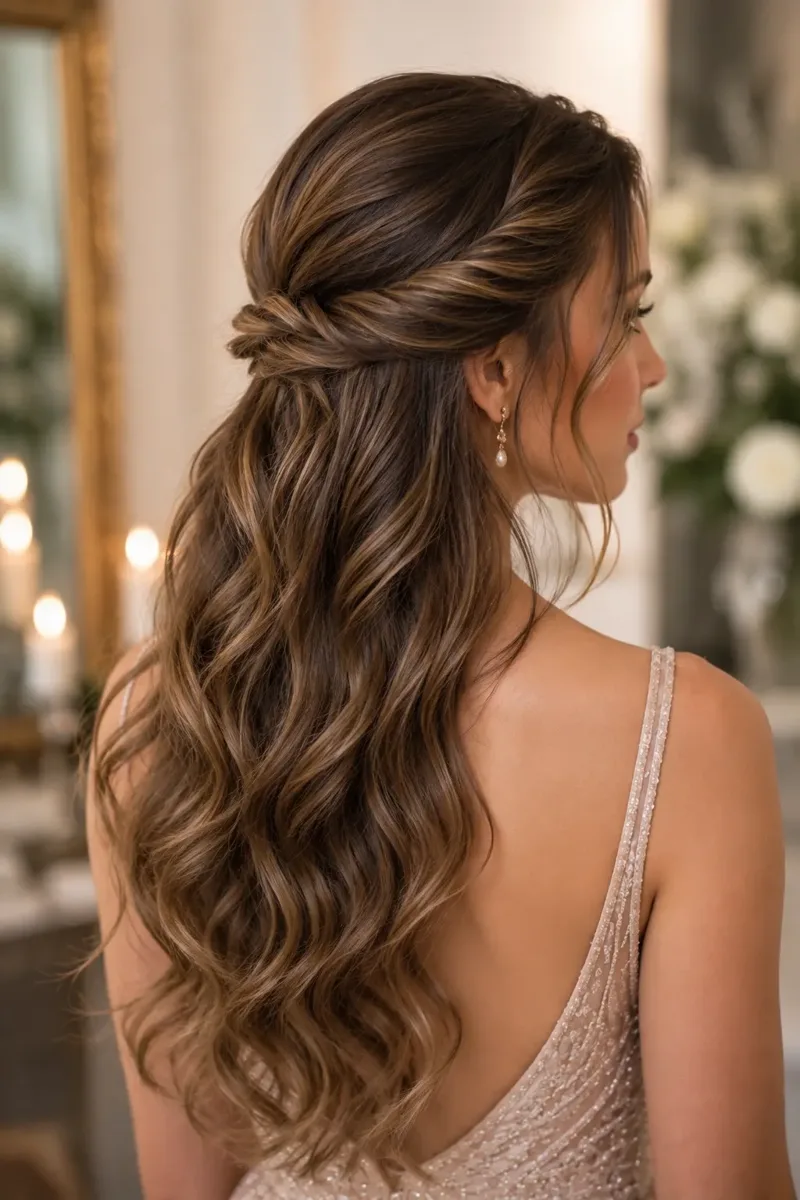
The half-up twist takes the top section of hair, twists it back from each temple and joins the twists at the back of the head, leaving the rest of the hair to fall freely. It is simple, elegant and quietly clever: the twists add interest and structure that a plain half-up style lacks, while the loose lengths keep the look soft. It suits medium to long hair, straight or wavy, and it is a lovely choice for a daytime or garden wedding where a full updo would feel too formal.
Who it suits: mothers with layered hair, since the twists hold the shorter layers back neatly, and anyone who wants their hair mostly down but out of their face. Ask your stylist to curl the loose lengths first, so the twists sit against soft waves rather than straight hair, and to secure the join with a small decorative pin or comb. The style takes only 20 to 30 minutes, which makes it a good option if the morning schedule is tight. It also photographs well from the back — the twists make a pretty detail in those over-the-shoulder shots.
20. Braided Low Bun
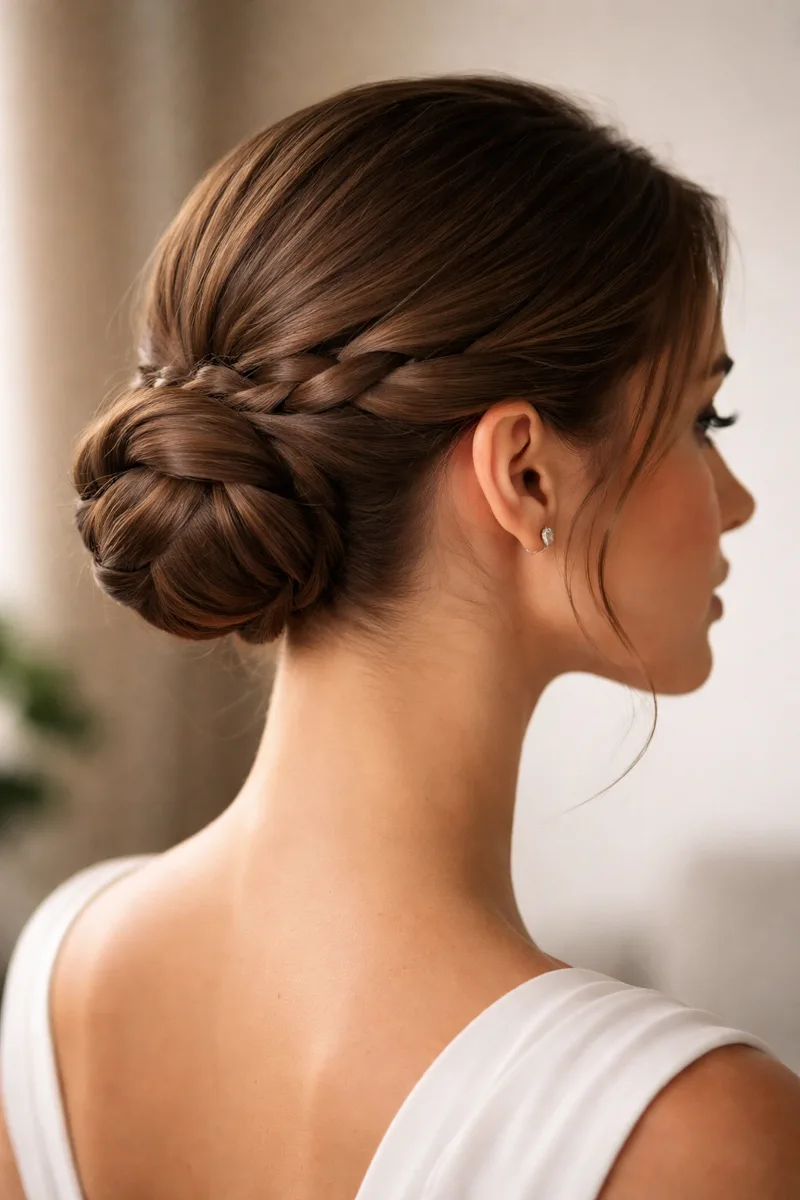
The braided low bun combines two classics: a plait woven into or around a low bun at the nape. The braid might run along the hairline, wrap around the bun itself, or form the bun entirely. Whichever version you choose, the result is a style with texture and detail that a plain bun lacks, and it is one of the most secure styles on this list — the braid anchors everything, so it survives dancing, hugging and a long evening without a single pin slipping. It suits outdoor weddings particularly well, where wind is a factor.
How to style it: a French or Dutch braid is worked from the front or side into a low bun, with the braid loosened slightly for softness. Ask your stylist to keep the braid close to the head at the front so it frames your face, and to leave a couple of soft pieces free at the temples. Thick hair makes the most of this style, but fine hair can work too with a little texturising spray for grip. A single pearl pin where the braid meets the bun is the perfect finishing touch.
21. Curled Bob With Side Part
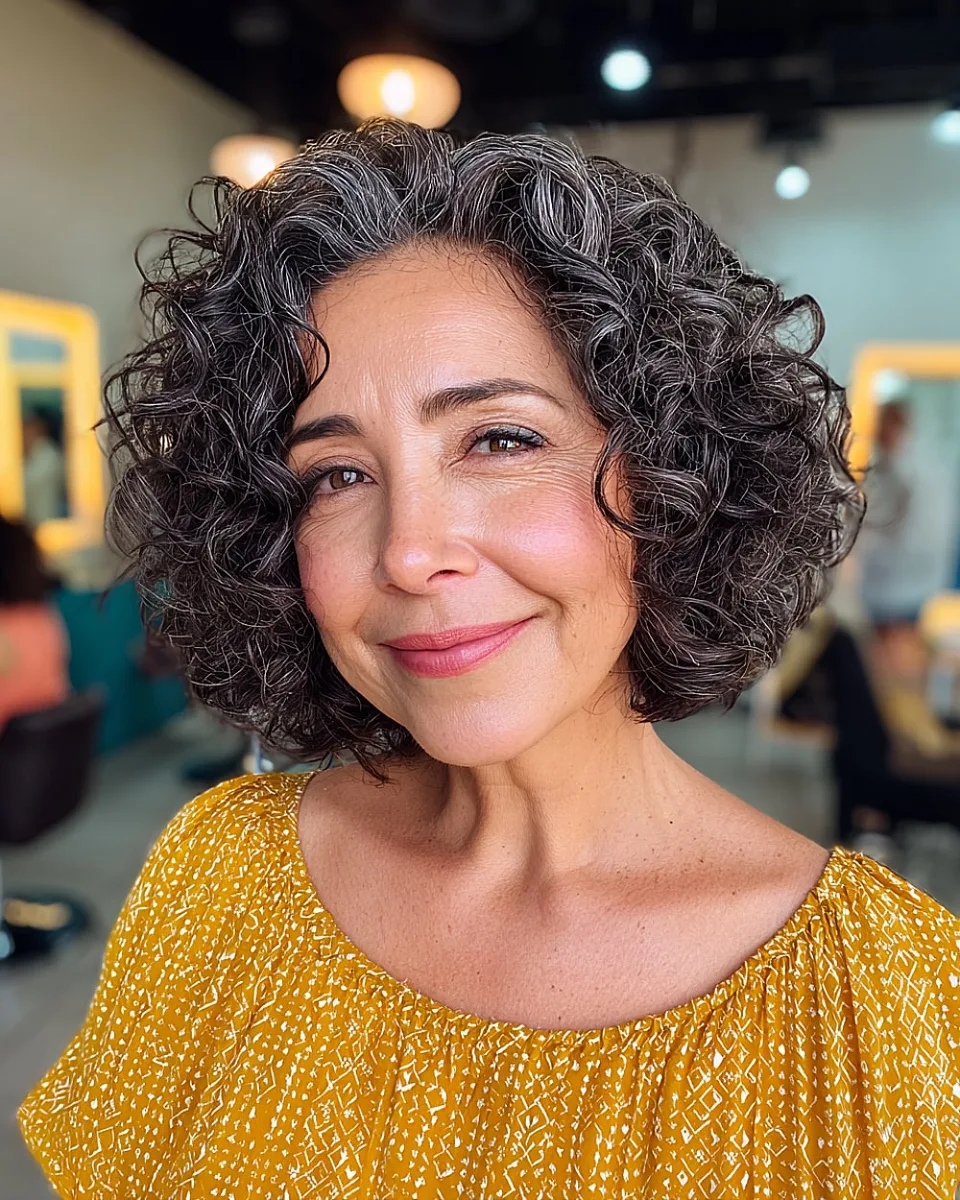
A curled bob with a deep side part is a small change that makes a big difference: the side part adds volume at the crown and sweeps the hair across the forehead in a flattering diagonal, while the curls add movement and softness. It is a wonderful choice for mothers with short to medium hair who want a style that looks special without a single pin. The look suits round and square faces especially well, because the asymmetry breaks up the symmetry of the face, and it works for both daytime and evening weddings.
Best for: bobs and lobs, fine hair that needs volume, and mothers who already wear their hair with a side part. Ask your stylist for curls made with a medium-barrel iron and brushed out softly, and for the part to sit deep — almost above the arch of one eyebrow — which is what creates the volume. A light texturising spray gives the curls hold without stiffness. If you want a little extra polish, smooth the side with less hair behind the ear and add a small comb.
22. High Bun With Volume
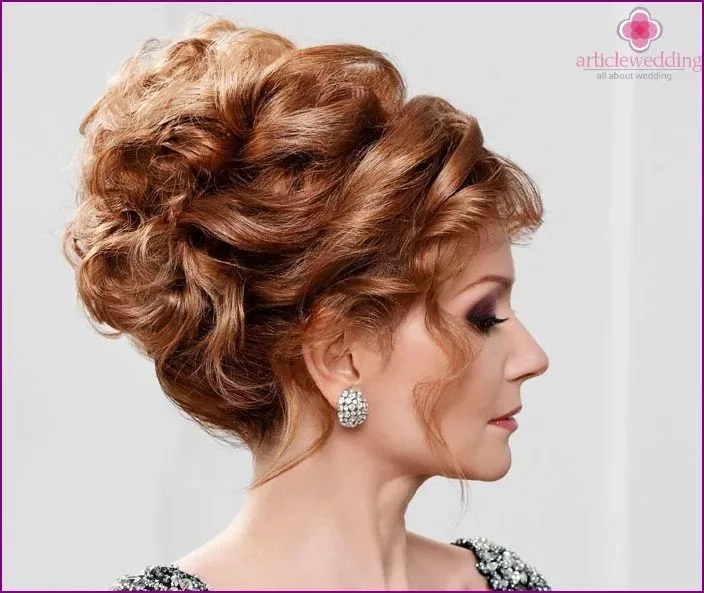
The high bun is the most elongating style in this guide: hair is swept up to the crown and formed into a full, rounded bun, lifting the whole silhouette and making the neck look longer. It is a confident, polished choice for a formal evening wedding, and it pairs beautifully with high necklines and statement earrings, since nothing competes with the jewellery. It also keeps you cool, which matters at a summer wedding, and it stays neat from the first photograph to the last dance.
Pros: it lasts all day, it suits thick hair beautifully, and it photographs well from every angle. Cons: it can feel severe if the front is pulled too tight, and it is not the best choice for a very long face. Ask your stylist to soften the front with a little height at the crown and a few loose pieces, and to build the bun with a padding form if your hair is fine — a high bun needs volume to look intentional. Allow 40 minutes, and check the profile view at your trial: the bun should sit high but not so high that it dominates.
23. Soft Updo With Pearl Pins
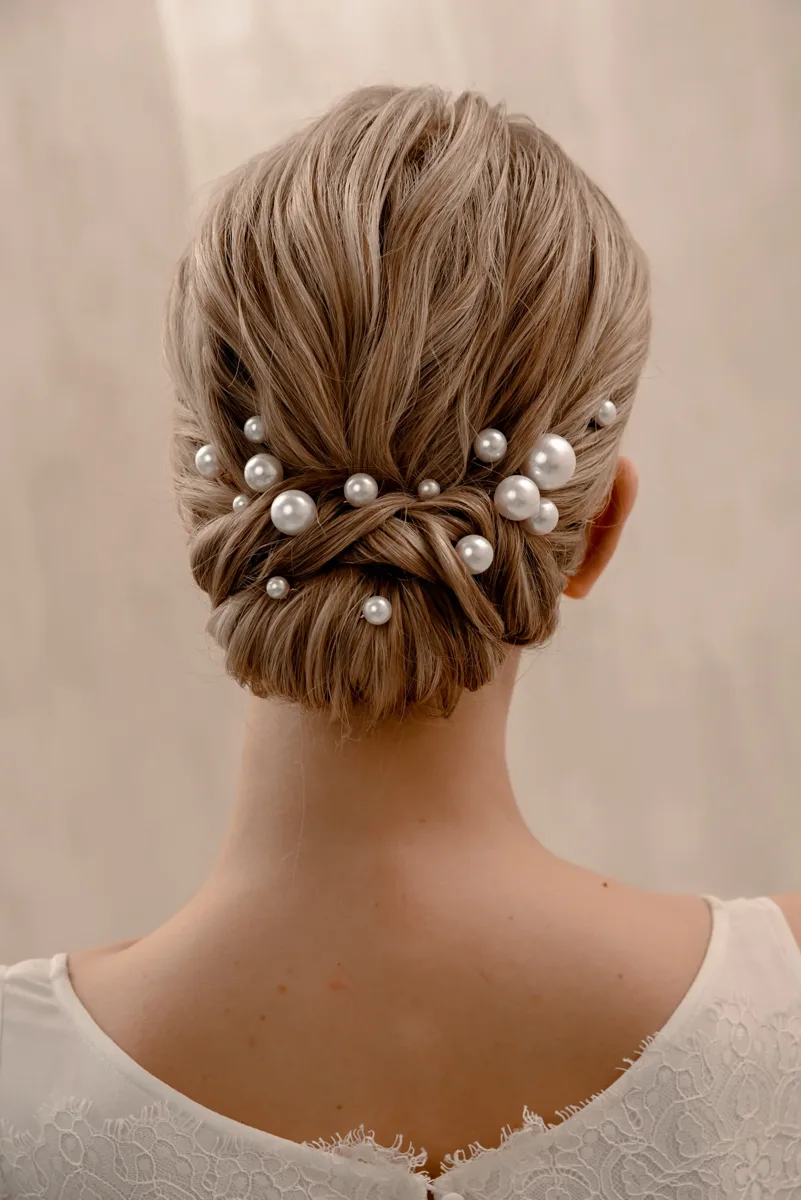
Pearl pins turn a simple soft updo into something unmistakably bridal-adjacent — in the best way. The updo itself is loose and textured, with hair pinned in soft folds at the back, and the pearls are scattered through it like dew: three or four pins, placed asymmetrically, catching the light as you move. It is a romantic choice for a classic or traditional wedding, and it suits medium to long hair in any texture. Pearls also photograph beautifully, adding tiny points of light to the back-of-head shots.
Quick verdict: this is the easiest way to make a simple style feel like a wedding style. Buy the pins before your trial and bring them with you, so your stylist can place them where they will actually hold — pins placed after the style is finished often slide. Ask for the pins to be distributed rather than clustered in one spot, and to match the size of the pearls to your earrings so the look feels coordinated. If your dress has pearl detailing, the pins will tie the whole outfit together.
24. Layered Shoulder-Length Cut With Curls
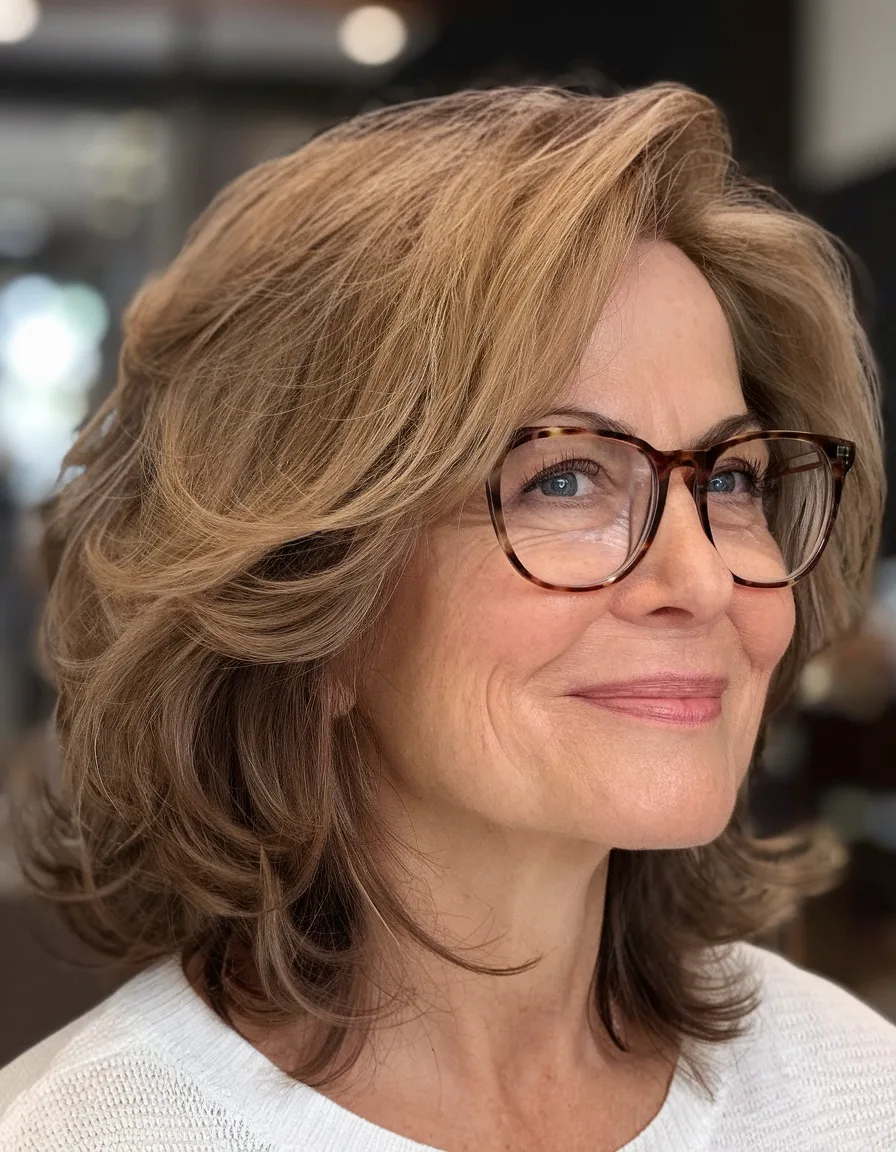
Shoulder-length layered hair with soft curls is the most versatile length-and-style combination a mother of the bride can choose. The layers give the curls shape and movement, the length is long enough to feel feminine and short enough to hold a curl all day, and the style works with a centre part, a side part or a half-up twist. It suits almost every face shape and every wedding style, from a relaxed garden party to a formal dinner, which is why so many stylists recommend it as a safe, beautiful default.
How to style it: layers are cut to sit just at or below the shoulders, then curled with a large-barrel iron and brushed out into soft waves. Ask your stylist for a fresh layered cut a week before the wedding so the shape is clean, and for the curls to start at eye level rather than at the roots, which keeps the volume where it flatters most. A shine serum on the ends stops the layers looking dry in photographs. If you want the style to last into the evening, a light-hold spray and a few hidden pins at the back will anchor it.
25. Classic Roll Updo
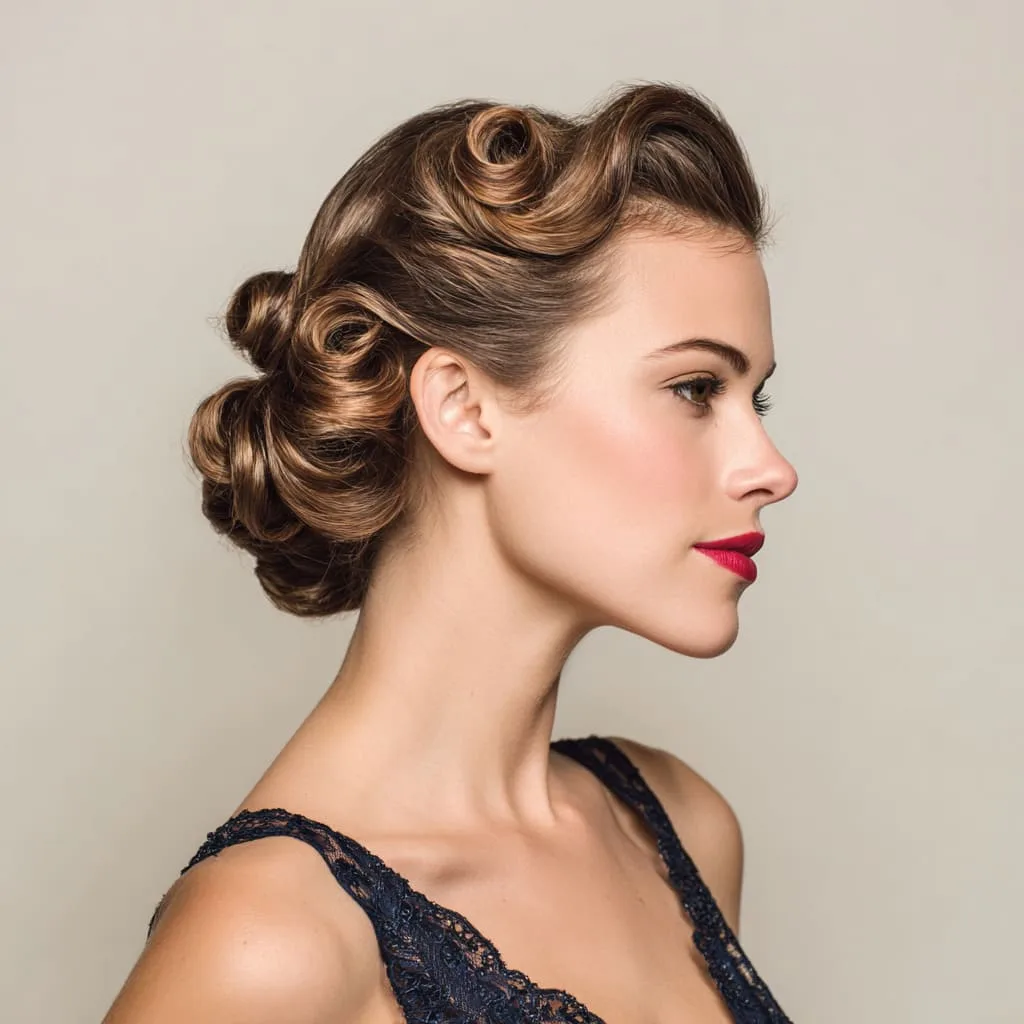
The classic roll is a soft, horizontal roll of hair pinned low across the back of the head — simpler than a French twist, more structured than a bun, and endlessly elegant. It is a wonderful choice for a traditional or vintage-leaning wedding, and it suits mothers who want their hair up but find a twist or a chignon a little too formal. The roll creates a beautiful line across the back that shows in photographs, and it holds a fascinator or a comb perfectly, since the roll gives the accessory something solid to grip.
Best for: medium to long hair, traditional weddings, and mothers who wear their hair up regularly. Ask your stylist to keep the roll soft and a little loose rather than tight and sausage-like, and to add height at the crown so the profile looks balanced. The style takes 30 to 40 minutes and holds well, but very thick hair may need extra pins to keep the roll secure. A single decorative comb placed just above the roll is the classic finishing touch.
26. Side Bun
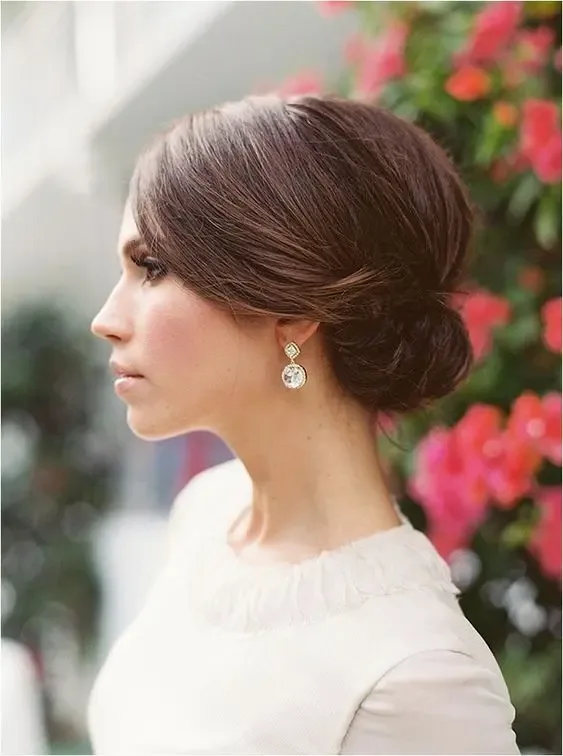
The side bun moves the classic low bun to one side, and that small change makes the whole style feel softer and more romantic. Hair is swept across the nape and pinned into a loose bun just behind one ear, with the opposite side smooth and the front softly parted. It is a lovely choice for a strapless or one-shoulder dress, because the bare side of the neck balances the bun beautifully, and it photographs wonderfully in three-quarter shots — the bun is visible from the front, not hidden at the back.
Who it suits: mothers with medium to long hair, and anyone whose dress has an interesting neckline or shoulder detail worth showing. Ask your stylist which side suits your face better — usually the side opposite your part — and to keep the bun low and loose rather than high and tight. The common mistake is making the bun too small, which can look accidental; it should be full enough to read as a deliberate style. A small cluster of pins or a single flower at the base of the bun completes it.
27. Wavy Medium-Length Hair With Highlights
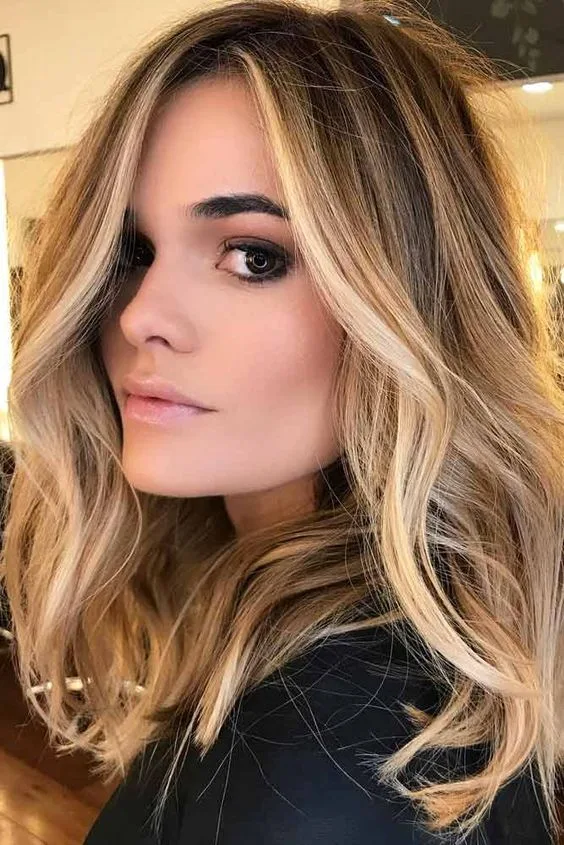
Highlights are a stylist’s secret weapon for wedding hair, and wavy medium-length hair shows them off better than almost any other style. The waves catch the light as they move, revealing the lighter pieces woven through the hair and creating depth that a single flat colour never achieves. It is a natural, sun-kissed look that suits outdoor and daytime weddings especially well, and it flatters every face shape because the waves soften the features without hiding them.
How to style it: if you highlight your hair, book the appointment ten to fourteen days before the wedding so the colour settles and looks natural rather than fresh. Ask for soft, face-framing highlights rather than chunky ones, and for the waves to be made with a large iron and brushed out. The style needs very little else — a shine spray and a light-hold mist are enough. If your hair is naturally wavy, a diffuser and a curl cream will enhance the texture without any heat at all.
28. Elegant Top Knot
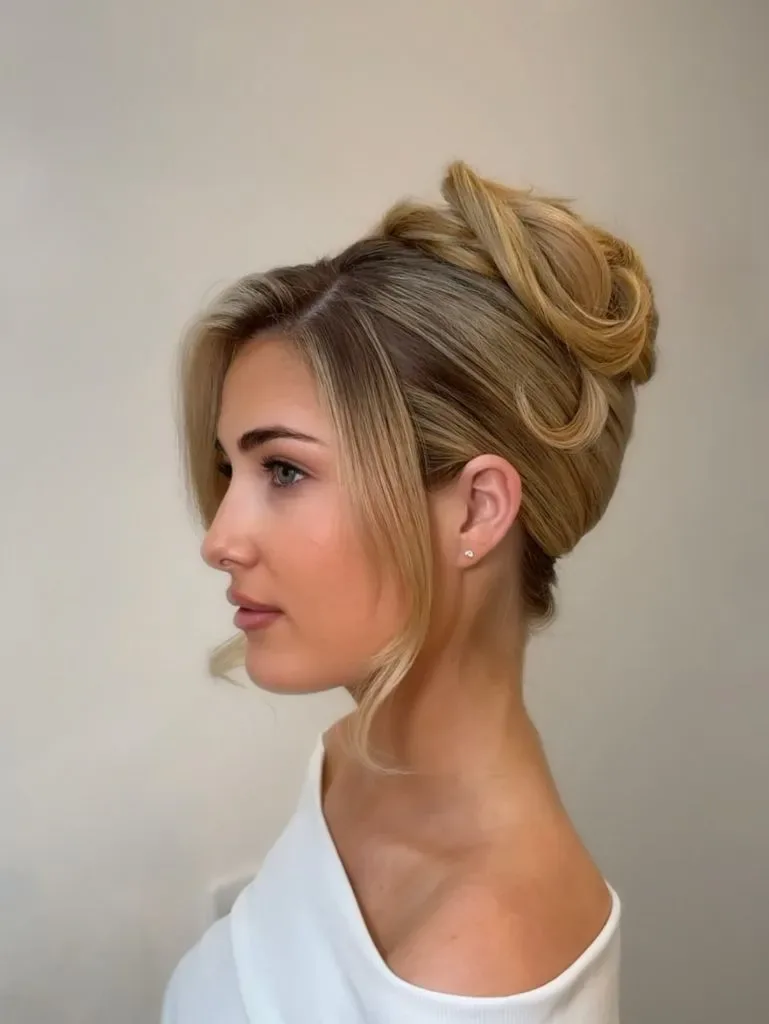
The elegant top knot is the high bun’s sleeker, more modern sister: hair is gathered to the very top of the head and wound into a neat, compact knot, with the front smoothed and the crown kept clean. It is a striking choice for a contemporary wedding, and it suits mothers with strong features and a confident style, because there is nowhere to hide — the face is fully on show. It also works beautifully with a high-necked or embellished dress, since the neck and shoulders are completely clear.
Pros: it is cool in summer, it lasts all day, and it makes a statement. Cons: it is unforgiving — flyaways show, and a top knot that is too tight can give you a headache by the evening. Ask your stylist to keep the front soft with a little height, and to use a padding form if your hair is fine so the knot has real presence. This is a style to trial carefully: it looks wonderful on some faces and severe on others, and only a photograph at the trial will tell you which camp you fall into.
29. Soft Chignon With Braid Detail
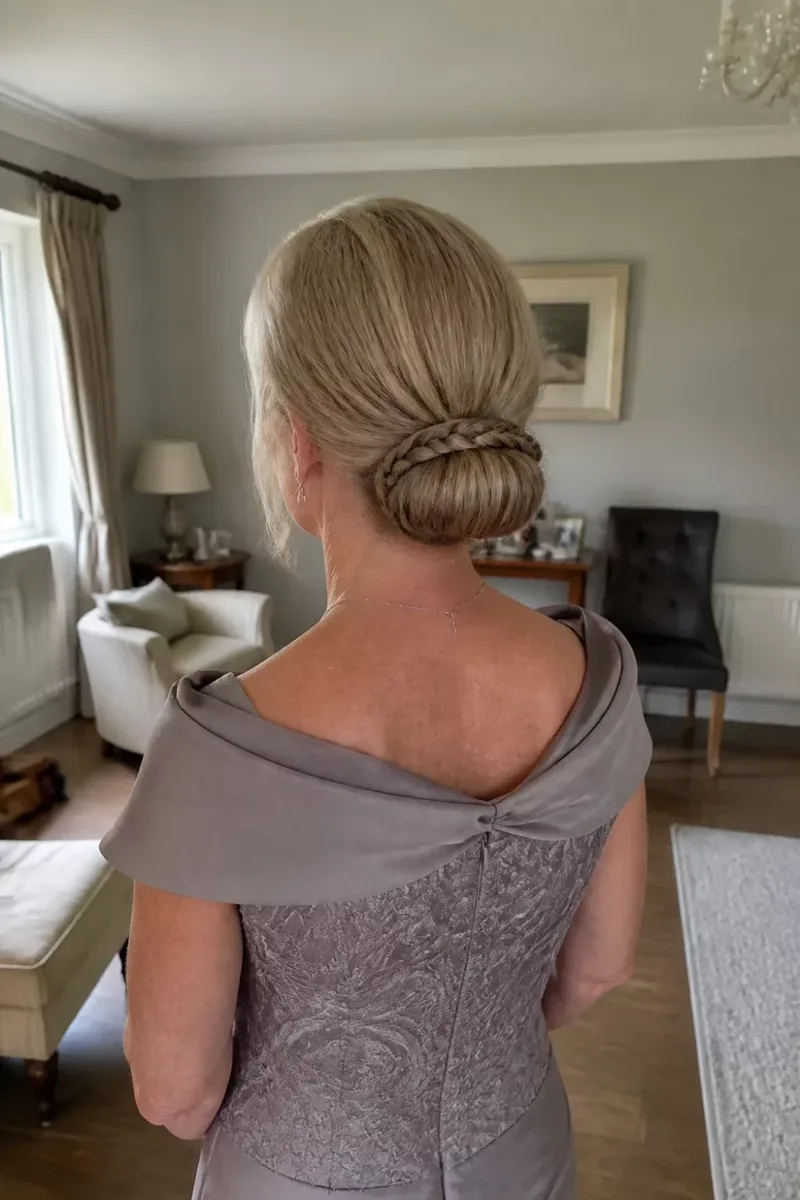
The soft chignon with a braid detail is the low chignon, elevated: a slim braid runs along the hairline or across the crown and disappears into the chignon, adding texture and craftsmanship to an otherwise simple style. It is a beautiful choice for a mother who loves the chignon but wants something a little more special, and it suits traditional and romantic weddings alike. The braid also has a practical benefit — it holds the front section securely, so nothing falls forward during the ceremony.
Best for: medium to long hair, and mothers with some natural texture, since the braid grips better on hair that is not perfectly straight. Ask your stylist for the braid to be loosened slightly after plaiting — a pulled-apart braid looks soft and modern, while a tight braid can look severe. Keep the chignon itself soft and low, and finish with a single pearl pin where the braid meets the knot. The style takes 45 to 50 minutes, and it holds beautifully through a long reception.
30. Short Curly Crop
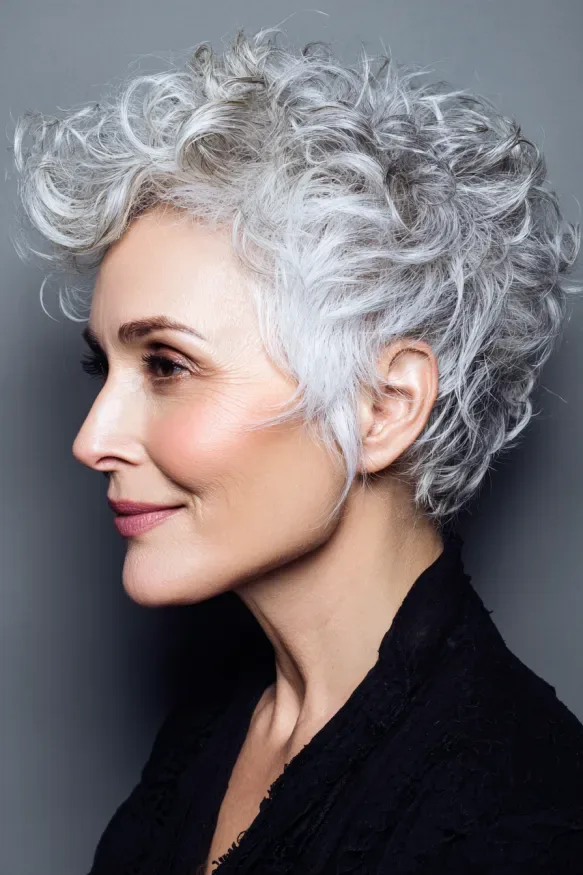
A short curly crop is proof that short hair can be every bit as glamorous as long hair at a wedding. Curls are shaped close to the head with volume on top, creating a style that is full of life and movement and frames the face beautifully. It is a wonderful choice for mothers with naturally curly hair who have no interest in straightening it for the day, and it is the most comfortable style here — nothing to pin, nothing to maintain, and it looks just as good at midnight as it did at noon.
How to style it: curls are defined with a curl cream and diffused or air-dried, then shaped with the fingers rather than a brush. Ask your stylist for a shaping cut a few days before the wedding so the silhouette is clean, and for a little extra height at the crown, which stops the style looking flat in photographs. A shine serum tames frizz without weighing the curls down. If you want a wedding-day touch, a slim headband or a decorative comb worn to one side adds sparkle without fighting the curls.
31. Romantic Loose Waves
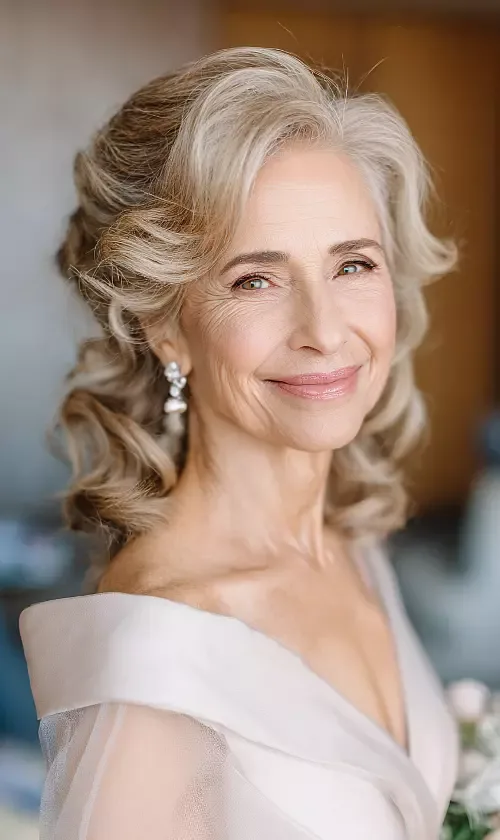
Romantic loose waves are the style for a mother who wants her hair down and her look soft: long, flowing waves that move when she does, with no pins and no structure, just shine and movement. It is a beautiful choice for a beach, garden or destination wedding, and it suits long hair best, though medium hair can carry it too with a little extra curl. The waves soften every face shape and photograph beautifully, especially outdoors, where the light catches the movement.
Who should avoid it: anyone getting married in high humidity or strong wind, where loose waves can quickly become loose frizz. If the forecast is uncertain, ask your stylist for a half-up version as a backup — the top pinned back, the waves still flowing. For the waves themselves, a large-barrel iron and a light-hold spray are the tools, and the curls should be brushed out until they are waves, not ringlets. A centre part feels romantic; a side part feels glamorous. Either way, keep a comb in your clutch for the evening.
32. Polished Low Ponytail With Wrap
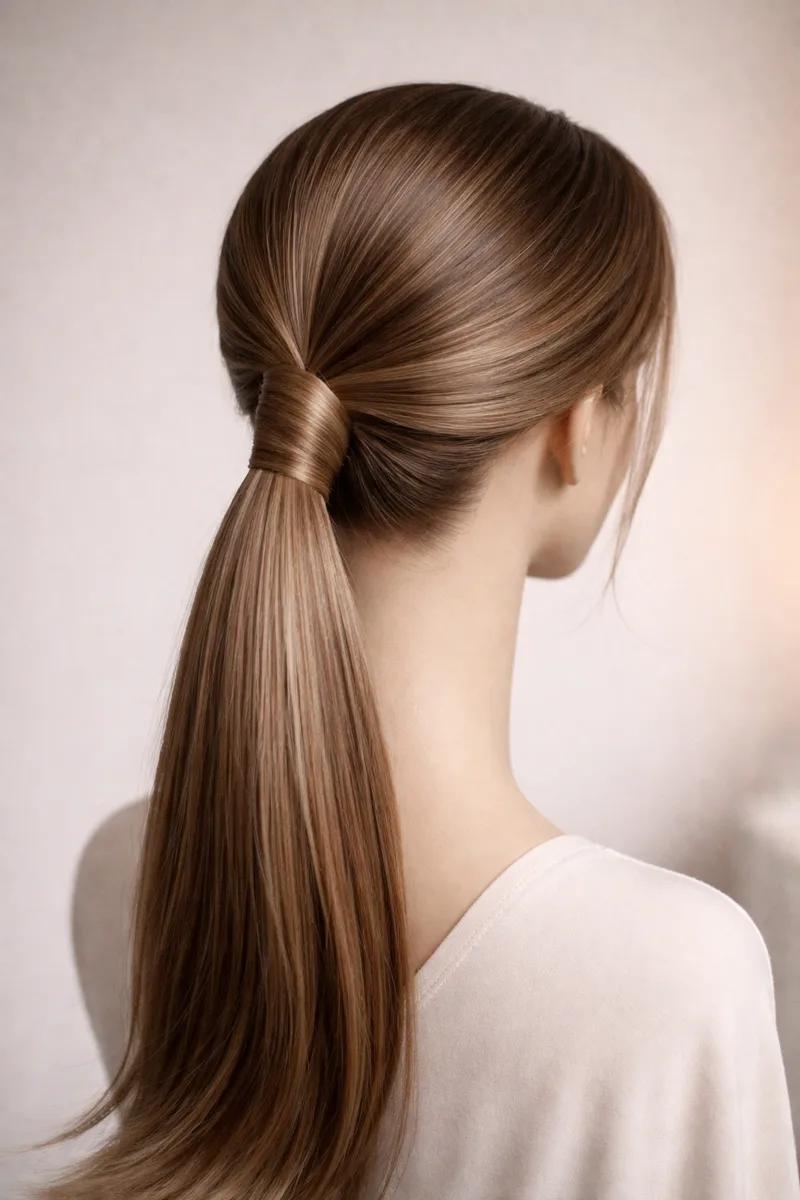
The polished low ponytail with a wrap is the sleek low ponytail, finished properly: a strand of hair is wrapped around the base and pinned underneath, so no elastic is ever visible, and the tail itself is smoothed or softly curled. It is a clean, modern choice for a city or contemporary wedding, and it suits straight and wavy hair alike. The wrap is a small detail, but it is the detail that separates a wedding ponytail from an everyday one, and it shows up clearly in photographs.
Time and cost: this is one of the quickest styles here, at 20 to 30 minutes, which makes it a good choice if the morning is running late. Ask your stylist to keep the front smooth but not scraped back, and to curl the tail softly so it has movement rather than hanging straight. A shine spray is essential — the whole point of this style is the gloss. If your hair is fine, a little backcombing inside the tail gives it fullness without showing.
33. Textured Updo for Thin Hair
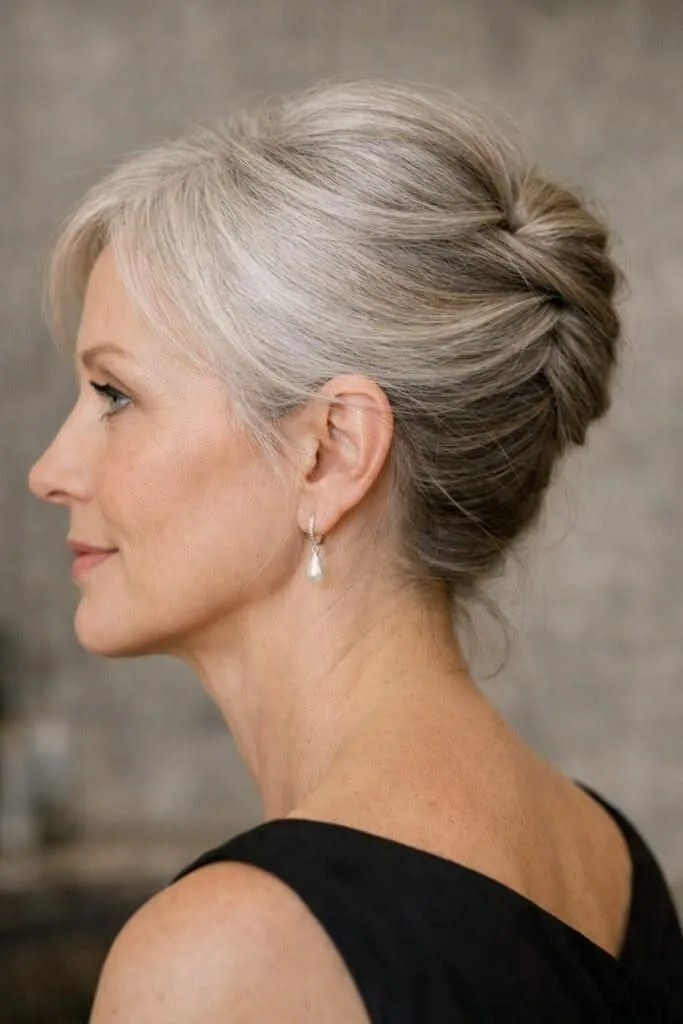
Thin hair is often the hardest to style for a wedding, because updos can look sparse and hair worn down can look flat — but a textured updo is designed to solve exactly that problem. Hair is backcombed, twisted and pinned in overlapping sections, so the texture itself creates the illusion of fullness. No single section carries the look; instead, the layers of twists and folds build volume that is not really there. It is a clever, flattering style, and it suits fine and thinning hair better than any smooth updo.
How to style it: start with a volumising mousse and a rough blow-dry, then backcomb the crown and pin the hair in loose, textured sections rather than one smooth shape. Ask your stylist about a padding form or a clip-in piece for extra fullness — there is no shame in it, and in photographs nobody will ever know. Avoid heavy products, which weigh fine hair down, and avoid a centre part pulled flat, which shows the scalp. A texturising spray at the end gives the style grip and a soft, lived-in finish.
34. Classic French Roll
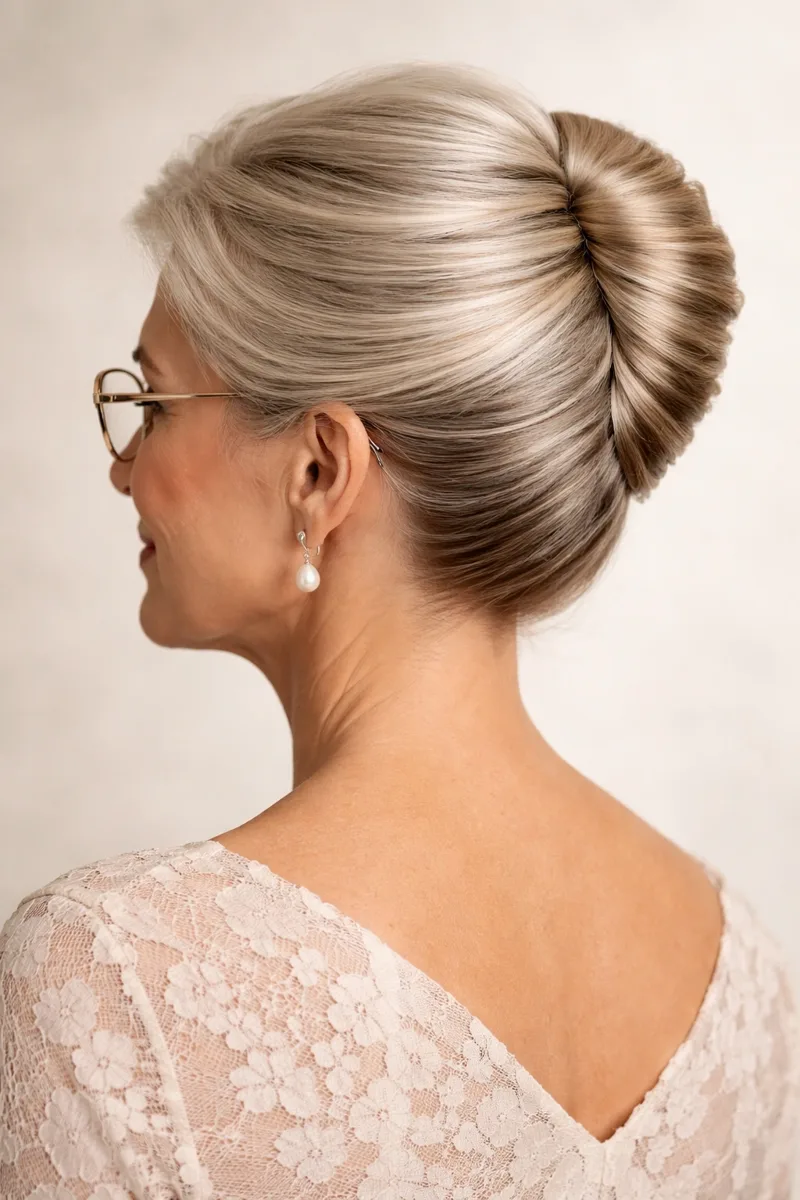
The classic French roll is the French twist’s softer, rounder relative: hair is rolled upward and inward into a plump vertical roll, with the ends tucked in and the front left soft. It is a timeless choice for a traditional wedding, and it suits mothers who want an updo with a little more softness than the twist’s clean lines. The roll creates a beautiful shape from the side and the back, and it holds a comb or fascinator perfectly.
Best for: medium to long hair, traditional and church weddings, and mothers who wear their hair up often. Ask your stylist to keep the roll full and soft rather than tight and narrow, and to add a little height at the front so the profile is balanced. The common mistake is making the roll too small, which can look dated; a generous, soft roll looks modern and elegant. Allow 40 minutes on the morning, and finish with a single decorative comb placed vertically along the roll.
35. Soft Side-Part Updo
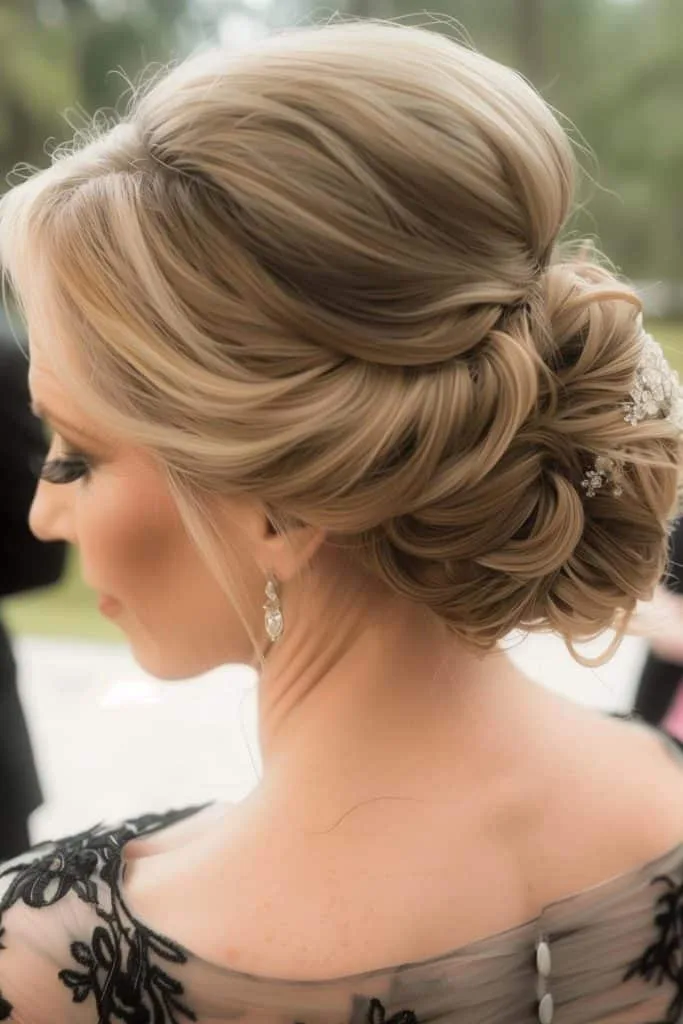
The soft side-part updo is the most forgiving updo in this guide, and that is a compliment. Hair is parted deeply to one side, swept across the forehead in a soft diagonal, and pinned into a loose low updo, with the side part giving the whole style a gentle asymmetry that flatters almost everyone. It suits round faces, because the diagonal line adds length, and it suits mothers who feel a centre part is too severe. It works for daytime and evening weddings alike.
Quick verdict: if you are nervous about updos, start here. The side part softens the look so much that even a fairly structured updo feels relaxed, and the style is easy for your stylist to adjust at the trial — a deeper part for more drama, a shallower one for a softer effect. Ask for the front section to be curled before pinning, so it falls in a soft wave rather than a flat sheet, and for a couple of tendrils to be left free at the temples. A pearl pin on the fuller side finishes it beautifully.
36. Elegant Bun With Floral Pins
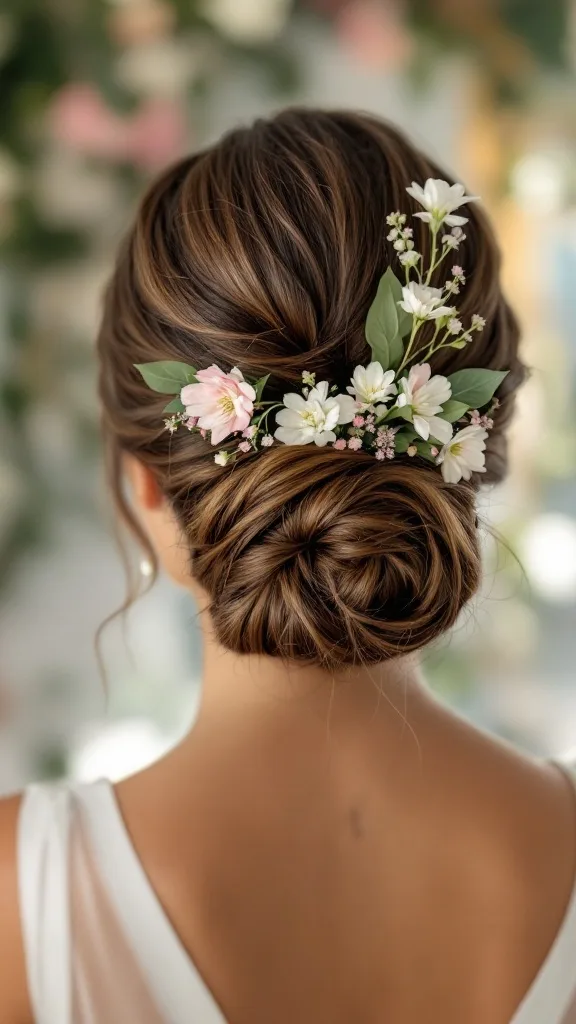
Floral pins are the gentlest way to decorate a bun: small fabric or fresh flowers pinned into a low or side bun, echoing the wedding flowers without copying the bride’s bouquet. The bun itself is soft and low, and the flowers add colour and a garden feel that suits outdoor, spring and summer weddings especially well. It is a romantic choice that still reads as grown-up, provided the flowers are kept small and the pins are placed with restraint.
How to style it: choose pins that match your dress or the wedding flowers, and bring them to the trial so your stylist can test how they sit in the bun. Fresh flowers need to be added on the morning and kept in water until the last moment, so agree this with the florist in advance. Ask for the pins to be clustered on one side of the bun rather than scattered all over it — a cluster looks deliberate, while scattered flowers can look accidental. If your dress is heavily patterned, keep the flowers plain and small.
37. Sleek Bob With Centre Part
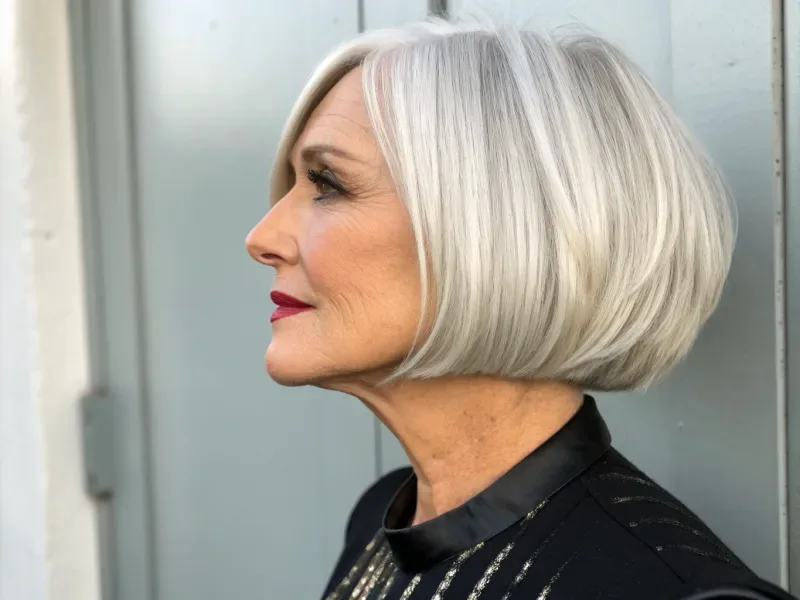
The sleek bob with a centre part is the most symmetrical, most deliberate look in this guide: hair is parted exactly in the middle, smoothed to a glassy finish, and cut to a clean line at the jaw or just below. It is a confident, modern choice that suits oval and heart-shaped faces beautifully, and it pairs wonderfully with a minimalist dress and statement earrings. The symmetry photographs well, and the clean lines make the whole outfit look intentional.
Who should avoid it: anyone with a very round face, since the centre part and the straight lines can emphasise width, and anyone whose hair frizzes easily, since the style depends on a perfectly smooth finish. Ask your stylist for a fresh trim a few days before the wedding and for a smoothing treatment if your hair is prone to frizz. The ends must be sharp — a bob with ragged ends looks unfinished in photographs. A shine spray is the final step, and tucking both sides behind the ears shows off your earrings.
38. Voluminous Curls for Medium Hair
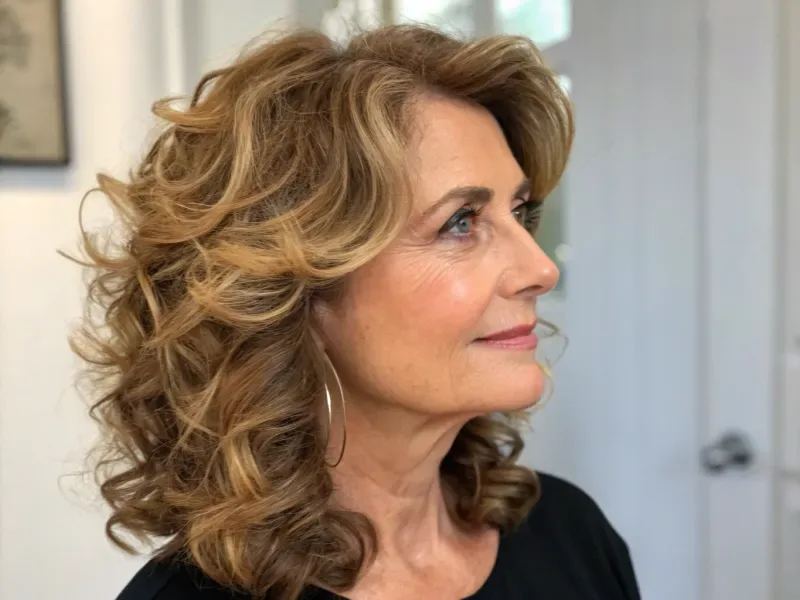
Voluminous curls are the answer for a mother with medium-length hair who wants drama without an updo: hair is curled in large sections, brushed out into full, bouncy waves, and finished with volume at the crown. The result is glamorous and joyful, and it suits evening weddings, ballroom receptions and any celebration where you want to feel like the best version of yourself. Medium hair holds curls well — long enough to curl, short enough not to drop out — which makes this one of the most reliable down styles here.
Pros: it suits almost every face shape, it photographs beautifully, and it needs no pins at all. Cons: it can lose volume in humidity, so ask your stylist for a volumising mousse at the roots and hot rollers before curling, which give the curls real staying power. The curls should be big and soft, not tight ringlets — brush them out thoroughly and finish with a flexible-hold spray. If your hair is fine, a clip-in piece at the back adds fullness that nobody will detect in photographs.
39. Classic Updo With a Headband
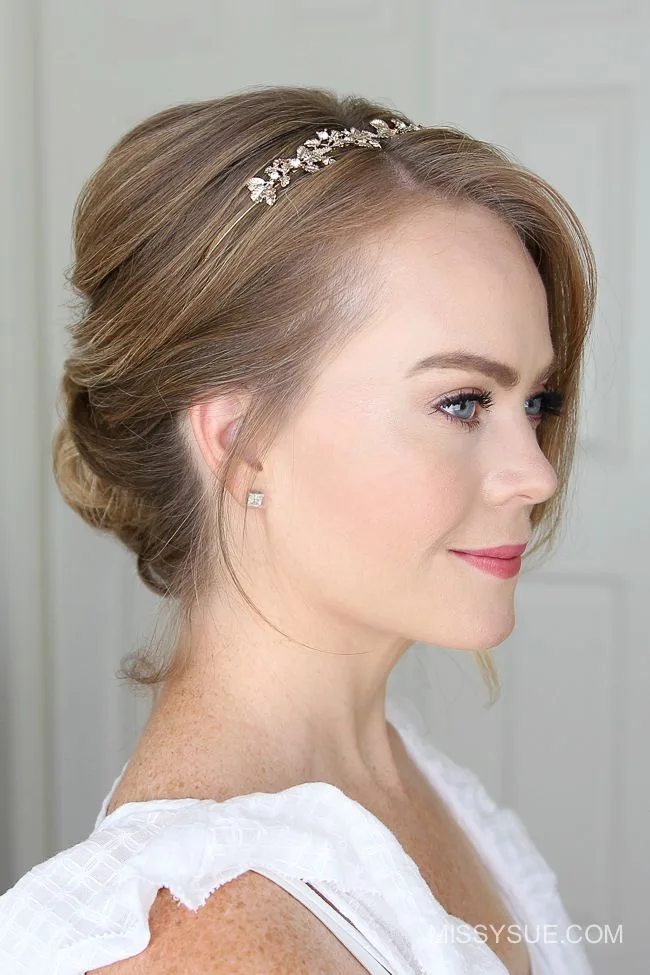
The classic updo with a headband is the final style on this list, and it is a lovely one to end on: a soft, low updo — a chignon, a bun or a gentle twist — finished with a slim, elegant headband that adds sparkle and structure. The headband frames the face, keeps the front section neatly in place all day, and gives the style a finished, occasion-ready feel without a single pin more than necessary. It suits every hair length that can be pinned up, and it works for traditional and modern weddings alike.
Best for: mothers who like the idea of an accessory but find fascinators too much, and anyone whose front section tends to fall forward. Choose a headband that matches your jewellery — pearl, crystal or plain metal — and try it at the trial, because a headband that is too tight will ache by the evening and one that is too loose will slide. Ask your stylist to place it just behind the hairline rather than flat against the forehead, and to pin it discreetly at the sides so it stays put through the dancing.
What hairstyle should a mother of the bride choose?
Choose a style that suits your dress neckline, the wedding’s formality and your hair length — a low chignon or French twist for formal weddings, a soft half-up style or loose waves for relaxed ones. Book a trial, photograph the style from every angle, and pick the one that feels comfortable and looks like you.
Should the mother of the bride wear her hair up or down?
Either works well. Updos last longer, keep you cool and show off jewellery, while hair worn down looks softer and more natural. Half-up styles offer the best of both: the face is clear for photographs and the length still shows.
How far in advance should a mother of the bride book a hair trial?
Book your trial three to six weeks before the wedding, with the stylist who will be there on the day if possible. Bring photos of your dress, your accessory and styles you like, and wear a top with a similar neckline so you can judge the whole look.
What is the most flattering mother of the bride hairstyle for short hair?
A classic bob with soft waves, a textured pixie or a curled bob with a side part are the most flattering short options. All three photograph well, need little maintenance and take pins, combs and headbands beautifully.
Can a mother of the bride wear a fascinator with an updo?
A fascinator pairs beautifully with a low bun, a chignon or a French roll, which give its comb something solid to grip. Try it at your trial, check it feels comfortable for a full day, and choose one accessory only so it does not compete with your dress.
How can a mother of the bride make thin hair look fuller?
Choose a textured updo, which builds volume through twists and folds, and ask your stylist about backcombing, a padding form or a clip-in piece. Volumising mousse, a rough blow-dry and a texturising spray all help, while heavy products should be avoided.
Should the mother of the bride match the bridesmaids’ hairstyles?
No, your hairstyle should be distinct from the bridesmaids’. You are a guest of honour, not part of the bridal party, so choose a style that suits you and your dress rather than copying theirs. A similar level of formality is enough coordination.
What should a mother of the bride do if it rains on the wedding day?
Choose an updo, which survives rain and humidity far better than hair worn down. Keep an umbrella for the journey between venues, carry a travel hairspray and extra pins, and ask your stylist for a strong-hold finish if rain is forecast.
How long does mother of the bride hair take on the wedding morning?
Allow 45 to 60 minutes for an updo, 30 to 45 minutes for a blowout or half-up style, and 60 to 75 minutes for Hollywood waves. Arrive with clean, dry hair washed the night before, and build in a 30-minute buffer before photographs.
Is grey hair suitable for a mother of the bride hairstyle?
Grey and silver hair looks stunning at a wedding, especially in updos and soft waves where the light catches it. Use a purple shampoo in the weeks before to keep it bright, add a smoothing serum for shine, and consider soft lowlights if you are still growing it out.
Conclusion: Choose the Hairstyle That Feels Like You on Your Best Day
The best hairstyles for a mother of the bride are not the trendiest ones, or the ones in the most photographs — they are the ones that let you forget about your hair and enjoy your daughter’s wedding. Whether that is a classic French twist, a soft low chignon, a textured pixie or romantic loose waves, the right style is the one that suits your dress, survives the day and makes you feel confident the moment you catch your reflection. Book the trial, bring the photos, ask the questions, and trust your stylist — and trust yourself. You have spent years getting your daughter to this day. Choose the hairstyle that lets you be fully present for it, and you will look back at the photographs for the rest of your life and love what you see.

