
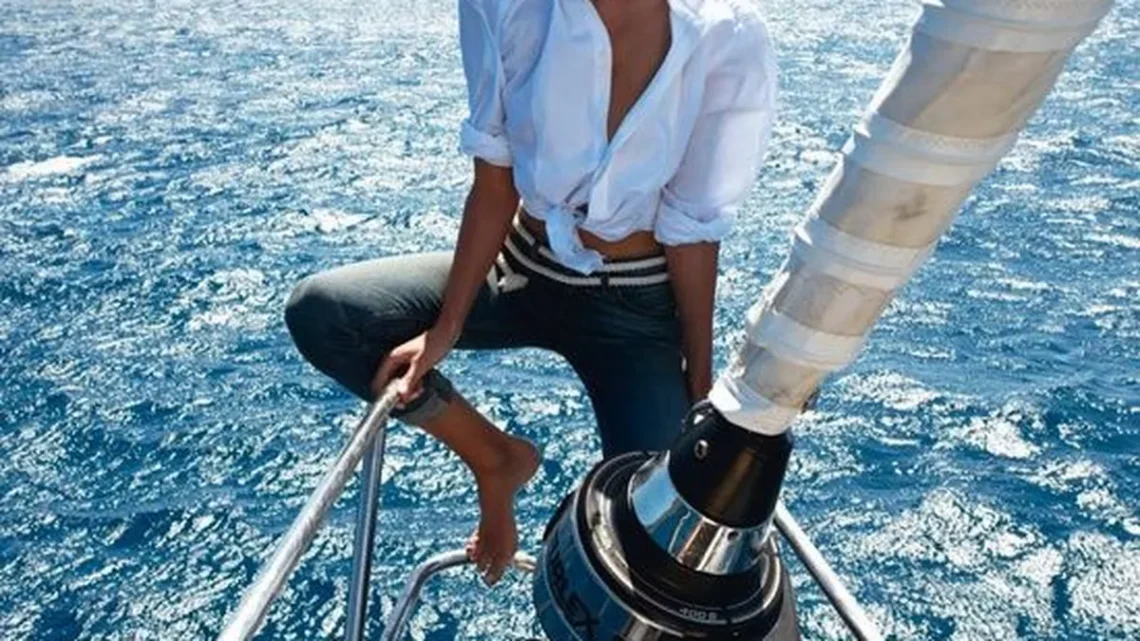
A boat day is the hardest test a hairstyle will ever face. The wind does not stop, the spray finds every loose strand, the sun bakes your part line, and salt water turns soft hair into a tangled knot within an hour. The hairstyles for a boat day that actually work are not the prettiest ones on land — they are the ones that keep your hair out of your face, away from lines and engines, and secure enough that you can swim, sunbathe and lean over the side without thinking about your hair at all.
This guide covers 33 secure, water-friendly looks — braids, buns, wraps, cap-friendly ponytails and protective styles for every hair length and type — plus eight explainers on how wind, spray and salt affect your hair, what to pack, and the mistakes that ruin boat-day hair. Every style here is chosen for one thing above all: it stays put. Pick one, pack a few spare ties and a scarf, and your hair will be the last thing you worry about on the water.
What Makes a Hairstyle Boat-Day Proof?

A boat-day-proof hairstyle has three jobs: it must stay secure in constant wind, it must survive getting wet without turning into a matted mess, and it must keep hair away from your face, your eyes and anything that moves on deck. That rules out most loose styles straight away. The styles that survive are anchored at more than one point — a braid pinned at the nape, a bun secured with pins as well as a tie, a ponytail wrapped and tucked so the ends cannot fly free.
What to look for: a style with no loose front pieces unless they are pinned or braided back, ends that are tucked or tied off, and a shape that sits close to the head so the wind has nothing to grab. Quick verdict: if you can shake your head hard and nothing moves, the style will probably survive the boat. If strands are already escaping on dry land, the wind will finish the job within minutes.
Wind, Spray and Salt: What Your Hair Actually Faces on a Boat
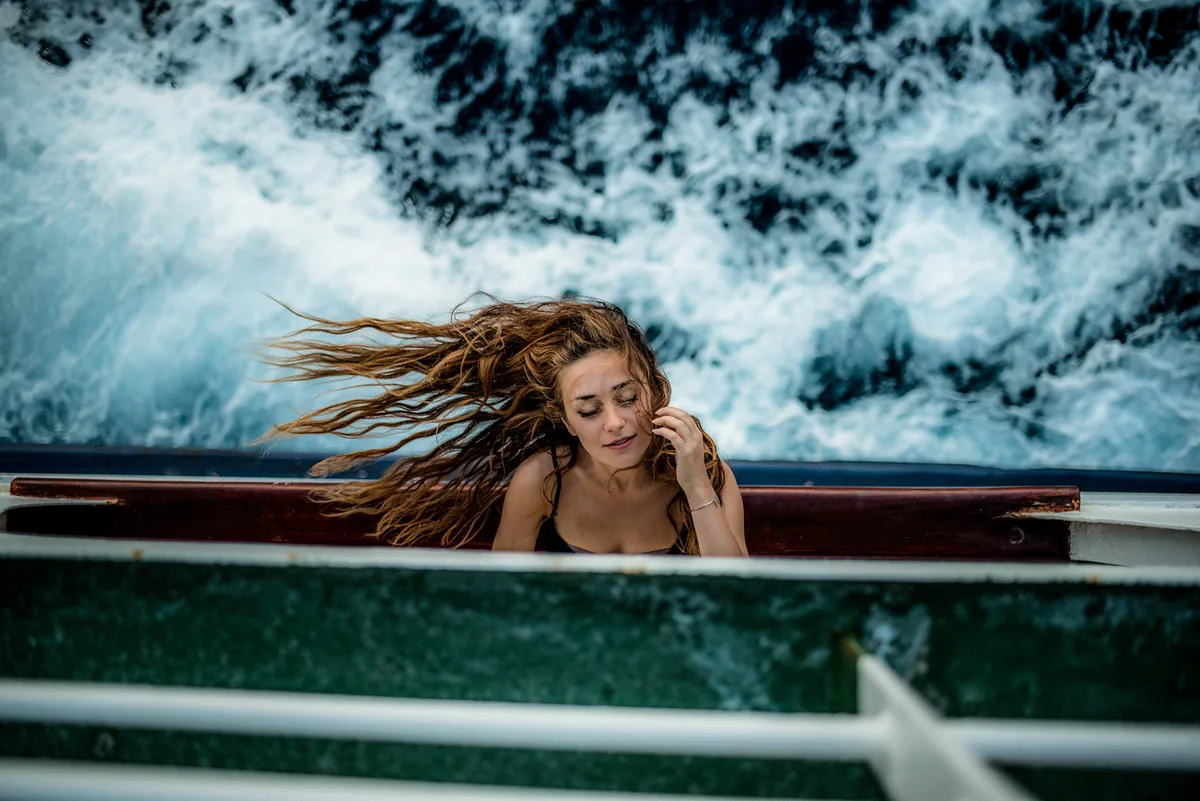
Wind is the first problem and the most constant one. On a moving boat the apparent wind is often far stronger than the breeze on shore, and it blows from one direction for hours, whipping the same section of hair again and again until it knots. Spray is the second problem: fine salt mist settles on the hair all day, even if you never go in the water, and as it dries it leaves salt crystals that rough up the cuticle and make strands stick together.
Why it matters: salt water does not just make hair feel dry — it pulls moisture out of the shaft, swells the cuticle and makes tangles much harder to undo later. What helps: wet your hair with fresh water and add a little leave-in conditioner before you board, so it absorbs clean moisture instead of salt water. Common mistake: leaving hair loose to dry in the wind after a swim. Hair that dries loose in wind and salt is the hardest kind of tangle to comb out, and it is where most boat-day breakage happens.
Best Boat-Day Styles by Hair Length
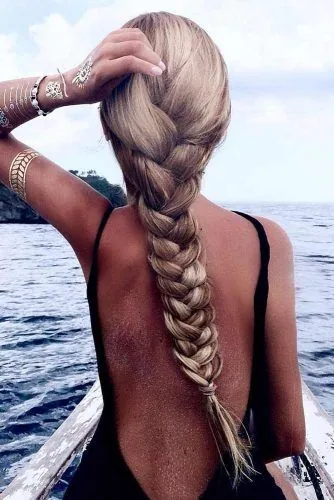
Short hair has the easiest job on a boat, because there is simply less of it for the wind to catch — a pixie with a headband, a bob pinned back with clips, or a slicked-back wet look will all hold with very little effort. Medium hair is the most versatile: it is long enough to braid, bun and twist, but short enough that a low ponytail or a half-up style stays secure without much weight pulling it loose.
Best for: shoulder-length and longer hair should lean on braids and buns, while chin-length and shorter hair should lean on clips, headbands and slicked styles. How to choose: if your hair reaches past your shoulders, pick a style that keeps the ends contained — a braid, a bun or a tucked ponytail — rather than one that leaves the length swinging free. Quick verdict: the longer the hair, the more anchor points you need, and the closer to the head the style should sit.
Best Boat-Day Styles by Hair Type
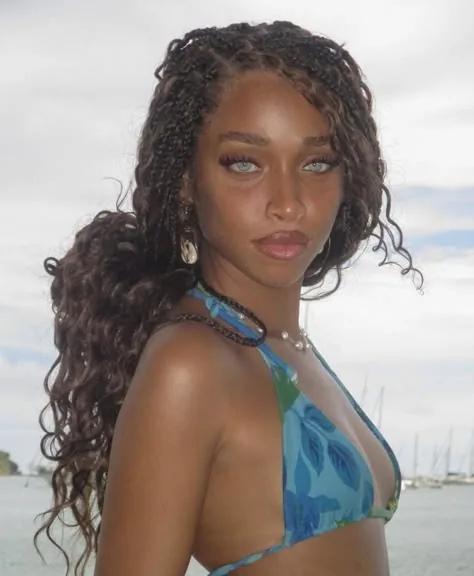
Straight hair slips, so it needs grip — texturising spray, a little dry shampoo at the roots, and elastics with a fabric coating rather than smooth metal-free bands that slide straight out. Wavy hair is the easiest on a boat, because its natural texture holds a braid or a twist without much help, and a little salt spray actually improves it. Curly hair does best gathered up and protected: a pineapple updo, a braided crown or a scarf wrap keeps the curl pattern intact and stops the wind from turning it into one big frizz halo.
What to avoid: fine, straight hair should avoid heavy oils, which weigh it down and make it slip out of pins, while thick hair should avoid a single thin elastic, which will snap or slide. Maintenance note: whatever your type, detangle before you braid or bun. Braiding over tangles locks them in, and salt water will make them worse by the end of the day. Who should avoid what: very fine hair should skip high heavy buns that pull at the roots, and very thick hair should skip styles held by one clip alone.
How to Prep Your Hair Before You Board

Good boat-day hair starts before you leave the house. Wash your hair the night before rather than the morning of the trip, because day-old hair has more grip and holds a braid far better than freshly washed, slippery hair. If you do wash in the morning, skip heavy conditioner on the lengths and use a light leave-in instead, then let your hair dry about eighty percent before you style it — damp hair braids tighter and dries into the shape of the braid, which is exactly what you want on a windy boat.
What to do: wet your hair with fresh water and work in a pea-sized amount of leave-in conditioner or a few drops of hair oil on the ends before you board. Wet hair absorbs less salt water, and the conditioner gives you a barrier. What to avoid: styling products that go stiff or sticky in sun and salt, and any style that depends on a curling iron holding its shape — heat styling does not survive spray. Cost and time: prep takes about ten minutes and costs nothing beyond products you already own.
What to Pack in a Boat-Day Hair Kit

A small waterproof pouch is all you need, and it will save your hair more than once during the day. Pack three or four fabric-covered hair ties, because ties snap and get lost overboard, and a few bobby pins in your hair colour. Add a wide-tooth comb for detangling wet hair without snapping it, a travel bottle of leave-in conditioner, a small bottle of fresh water for rinsing salt out of your part line, and a silk or satin scarf that can turn into a head wrap, a bun cover or an emergency hat.
Best for: anyone spending more than a couple of hours on the water, and essential if you plan to swim. What to skip: leave the straighteners, the curling iron and the full-size products at home — they are useless on a boat and they will get wet. Quick verdict: if your kit fits in a sandwich bag and weighs almost nothing, you have packed right. The whole point is that you can fix your hair in thirty seconds, with one hand, while holding onto the rail with the other.
Common Mistakes That Ruin Boat-Day Hair

The biggest mistake is leaving your hair down. It feels free and it looks great in the marina photos, but by the time the boat is moving you will be chewing on your own hair, pulling it out of your sunglasses, and spending the afternoon picking out wind knots. The second mistake is braiding too loosely — a loose braid unravels in wind and leaves the ends whipping around, which defeats the whole purpose.
Mistakes to avoid: using metal-barrette clips that rust in salt water, tying hair with a rubber band that snaps and tangles, and forgetting to re-secure your style after swimming. What works instead: braid a little tighter than you would on land, pin the front pieces back even if you like them loose, and put sunscreen or a hat over your part. Maintenance note: check your style every time you come back from a swim — wet hair is heavier and pulls looser, so a quick re-pin takes ten seconds and saves an hour of tangles.
The Quick Verdict: A Five-Minute Boat-Day Hair Checklist
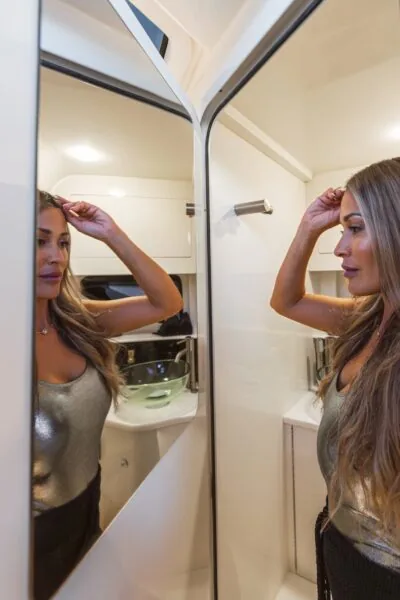
If you have five minutes before the boat leaves, run this checklist. One: is the front of your hair pinned or braided back, with nothing hanging near your eyes? Two: are the ends tucked, tied or coiled, with nothing swinging free? Three: can you shake your head hard without anything coming loose? Four: is your part covered by a hat, a scarf or sunscreen? Five: do you have a spare tie, a few pins and a scarf in your bag?
How to use it: run the checklist at the marina, then run it again after your first swim, because wet hair behaves differently from dry hair. What to do next: if anything fails the shake test, re-do it tighter or switch to a simpler style — a low bun or a single braid will beat a fancy style that keeps coming undone. Quick verdict: the best hairstyle for a boat day is the one you forget about. If you are not thinking about your hair, it is working.
1. The Classic Low Ponytail with a Wrapped Base
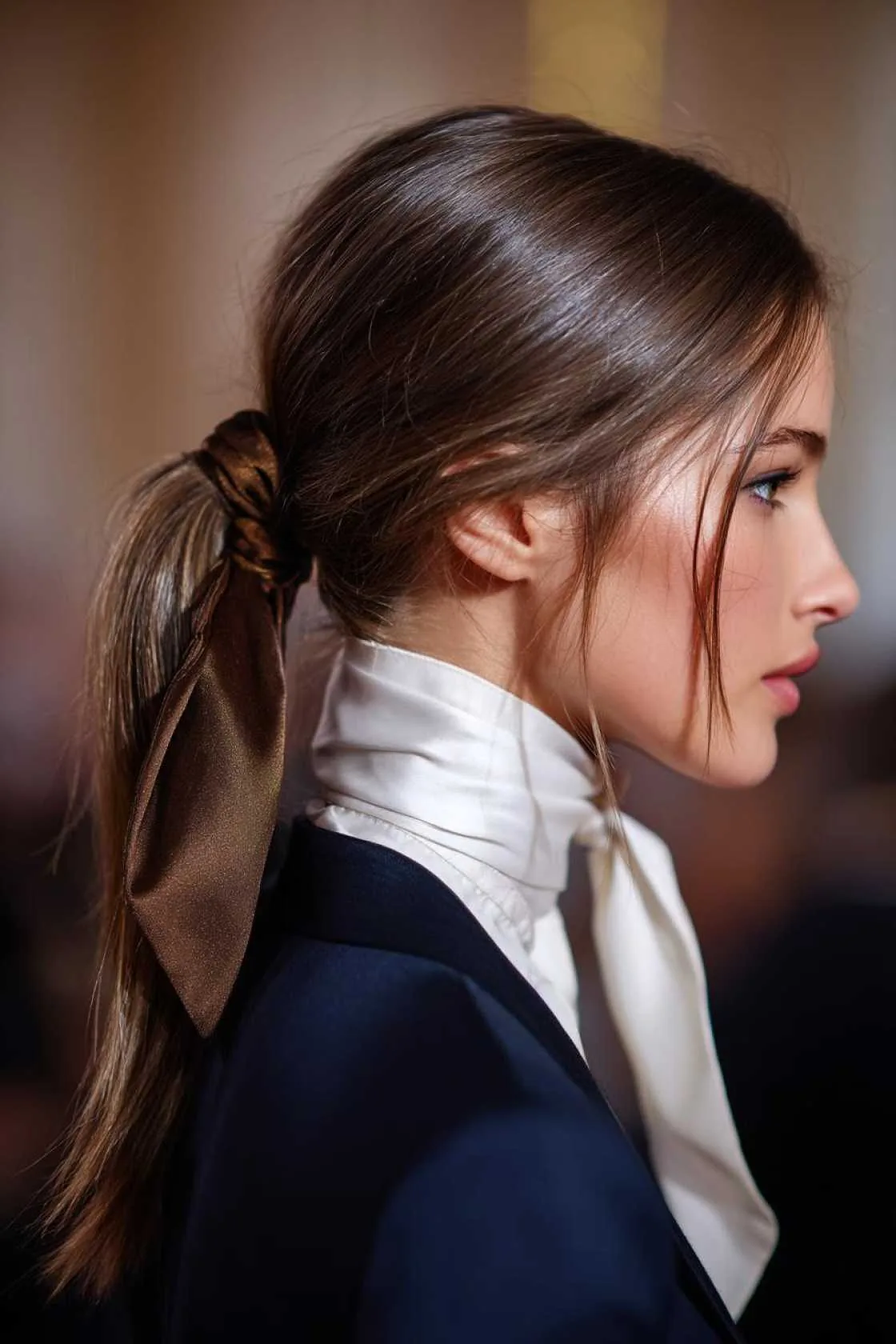
The low ponytail is the simplest of all hairstyles for a boat day, and the wrapped base is what turns it from a gym style into a boat-proof one. Gather your hair at the nape, secure it with a strong fabric tie, then take a thin strand from underneath the ponytail, wrap it around the elastic to hide it, and pin the end underneath with a bobby pin. The wrap does more than look polished — it stops the elastic from sliding and keeps the ponytail sitting low and tight against your head, where the wind cannot lift it.
Best for: medium to long hair, and anyone who wants a style that takes ninety seconds and survives all day. How to style it: brush the hair smooth first, apply a little texturising spray at the roots for grip, and position the ponytail at the nape rather than high on the crown, where the wind catches it. Common mistake: using a thin elastic on thick hair — it will snap or slip within an hour. Use a thick fabric tie, or two ties stacked for insurance.
2. The French Braid That Holds in Wind
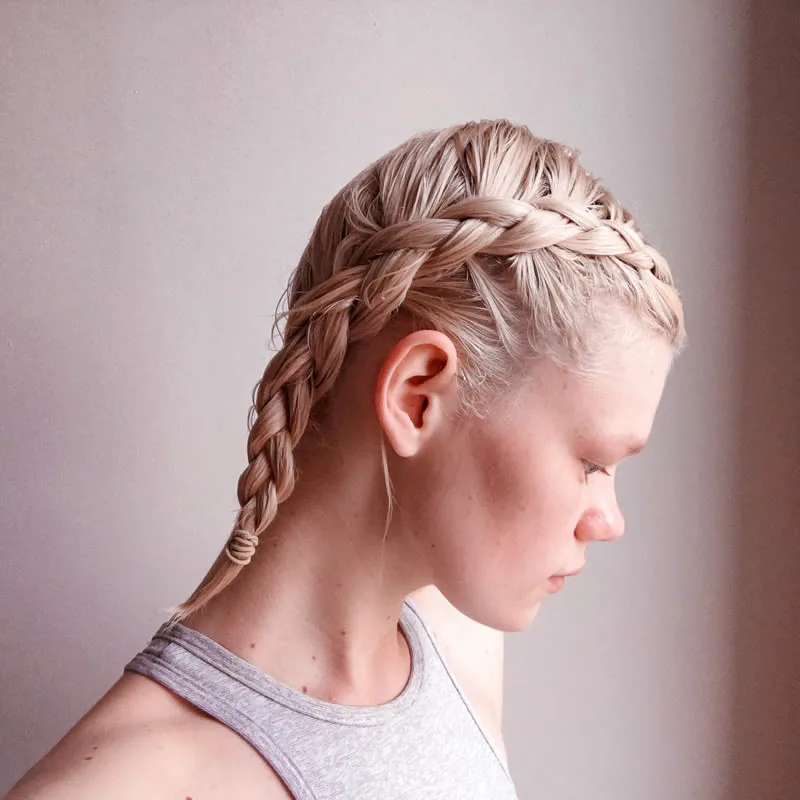
A French braid is the single most reliable of all hairstyles for a boat day, because it anchors the hair to the head at every step instead of hanging from one point. Start at the crown, add small sections as you work down, and keep the braid close to the scalp all the way to the nape, then finish with a regular three-strand braid and tie it off. It also dries beautifully after a swim, holding a soft wave when you take it out later.
Who it suits: everyone with hair long enough to reach the nape, and especially fine or slippery hair that falls out of ponytails. Pros and cons: it takes a little practice and a few minutes to do well, but it is the style most likely to look the same at sunset as it did at the marina. Maintenance: if the ends start to frizz, smooth a drop of oil over the braid and tuck the tail into your collar or under a hat for the ride home.
3. The Dutch Braid Crown
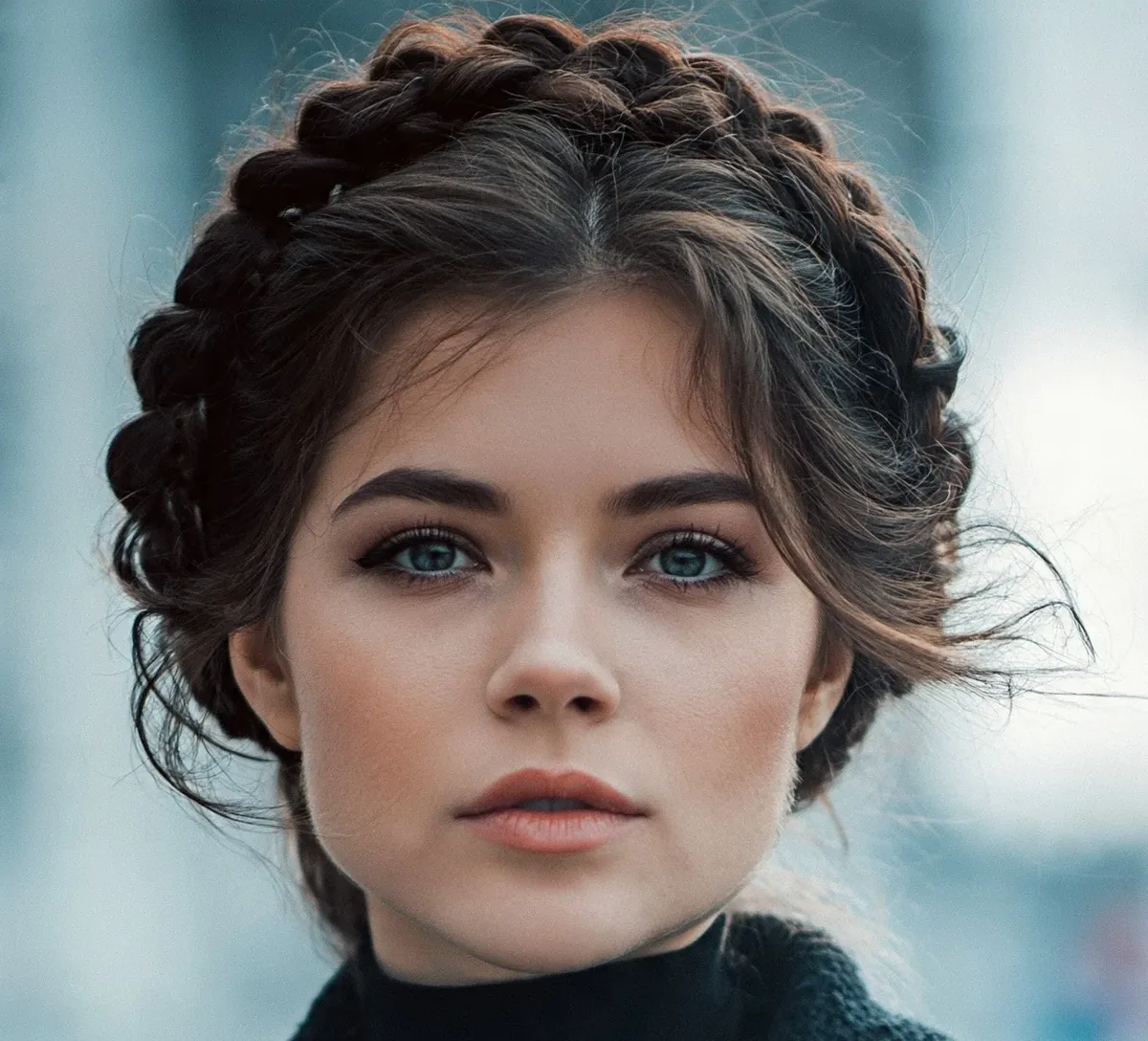
A Dutch braid crown — two braids worked around the head and pinned into a halo — is the most secure style in this whole guide, and the prettiest. Part your hair down the middle, Dutch braid each side from the front hairline to the nape, crossing the strands under instead of over so the braids sit raised on the surface, then cross the two braids at the back, tuck the ends under and pin them flat.
Best for: long days on the water, sailing trips, and anyone who plans to swim more than once. How to style it: braid slightly tighter than usual and use small clear elastics at the ends, then pin the crossover at the nape with two crossed bobby pins. What to avoid: doing this on freshly washed hair — it will slip. Day-old hair, or hair with a little dry shampoo worked through it, holds a Dutch braid far better.
4. The Fishtail Braid

The fishtail braid looks intricate but it is only two sections of hair crossed over each other, again and again, and it holds up to wind better than a regular braid because the weave is tighter and flatter. Pull your hair to one side or straight down the back, split it in two, and take a thin strand from the outside of one section and cross it to the inside of the other, repeating all the way down.
Who it suits: medium to long hair, and anyone who wants a braid that looks done without looking formal. Quick verdict: a fishtail takes longer to braid than a three-strand plait, so do it at home before you board rather than trying to learn it on a moving boat. Maintenance: if it loosens, gently tug the edges outward to fatten it up — a pancaked fishtail hides looseness and looks fuller in photos.
5. The Bubble Ponytail

The bubble ponytail turns a basic ponytail into something that actually works on a boat, because every bubble is its own anchor point. Tie your hair into a ponytail at the nape or mid-head, then add another elastic a few inches down, gently pull the section between the two elastics outward to form a bubble, and repeat down the length. It is playful, it photographs beautifully, and it is far more secure than it looks.
Best for: long hair and anyone who wants a fun style that still survives spray and speed. How to style it: use small clear elastics, keep the bubbles even, and wrap a strand around the top elastic to hide it. Common mistake: pulling the bubbles too hard — gentle tugs are enough, and over-pulling loosens the elastic above. Cost and time: about five minutes, and it only needs elastics you already own.
6. The High Bun with a Twist
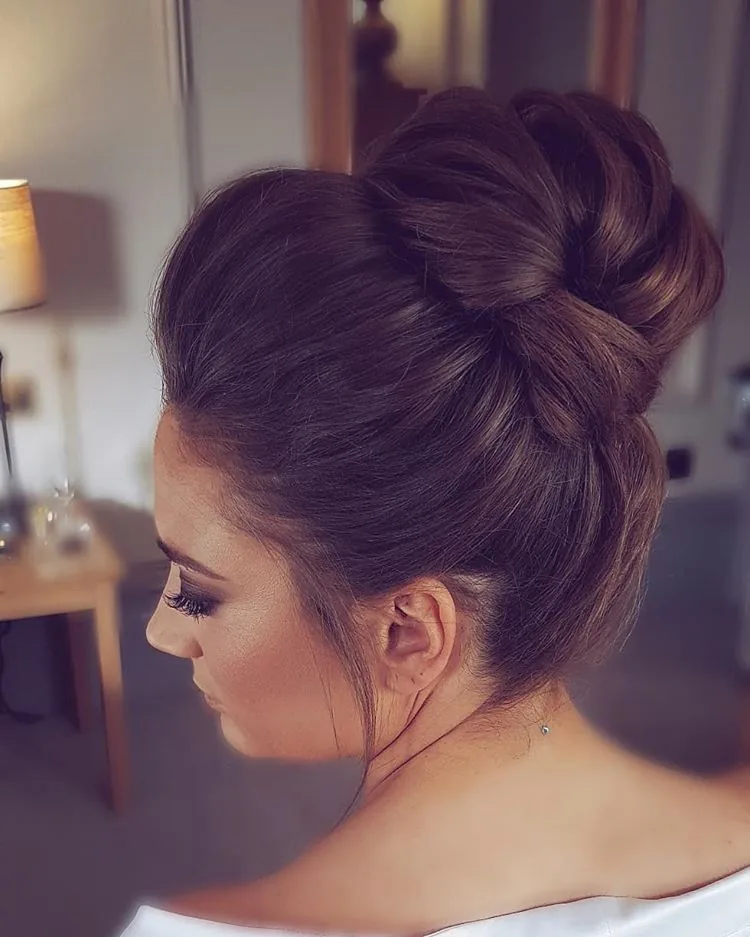
A high bun works on a boat only if it is twisted, not just looped, because a simple looped bun unravels the moment the wind gets under it. Gather your hair high, twist the whole length into a tight rope, then coil the rope around its base and pin it in at least four places with bobby pins, crossing the pins for grip. It is the fastest genuinely secure updo in this guide.
Who it suits: medium to long hair with enough length to coil at least once around the base. Pros and cons: it is quick and cool, but a high bun can pull at the roots if it is too tight, so keep it firm rather than yanked. What to ask a stylist: if your hair is very thick, ask about a bun made from two twisted sections coiled in opposite directions — it distributes the weight and holds far longer than a single twist.
7. The Low Messy Bun

The low messy bun is the boat-day version of the most popular hairstyle in the world, and the trick is making the mess deliberate rather than accidental. Gather your hair at the nape, twist it loosely, coil it into a bun and pin it with bobby pins and a second elastic, leaving a few face-framing pieces out — but pin those pieces back loosely so the wind moves them without pulling them free. It is the best choice if you want to look relaxed rather than styled, and still have your hair under control.
Best for: medium-length hair and anyone who dislikes tight, severe updos. How to style it: use texturising spray before you twist, so the bun has grip, and anchor it with crossed bobby pins rather than a single elastic. Common mistake: making it too loose. A messy bun still needs to pass the shake test — if it wobbles when you turn your head, add two more pins before you board.
8. The Top Knot

The top knot is the most practical hairstyle for a boat day if you plan to swim, because it keeps every strand above the waterline and dries fast. Pull your hair into a high ponytail, twist it into a tight coil, wrap it around the base and pin it firmly, or use a small foam donut for extra structure if your hair is fine. It also keeps your neck and shoulders free for sunscreen, which matters more than most people realise on a long day in reflected sun.
Who it suits: all hair types, and especially swimmers and anyone with very long hair. Quick verdict: if you only learn one boat-day style, learn this one — it takes two minutes, needs no mirror, and can be re-done on deck with one hand. Maintenance: carry a spare elastic and two pins in your pocket. A top knot that starts to sag can be re-twisted and re-pinned in under thirty seconds.
9. Double Dutch Braids (Boxer Braids)
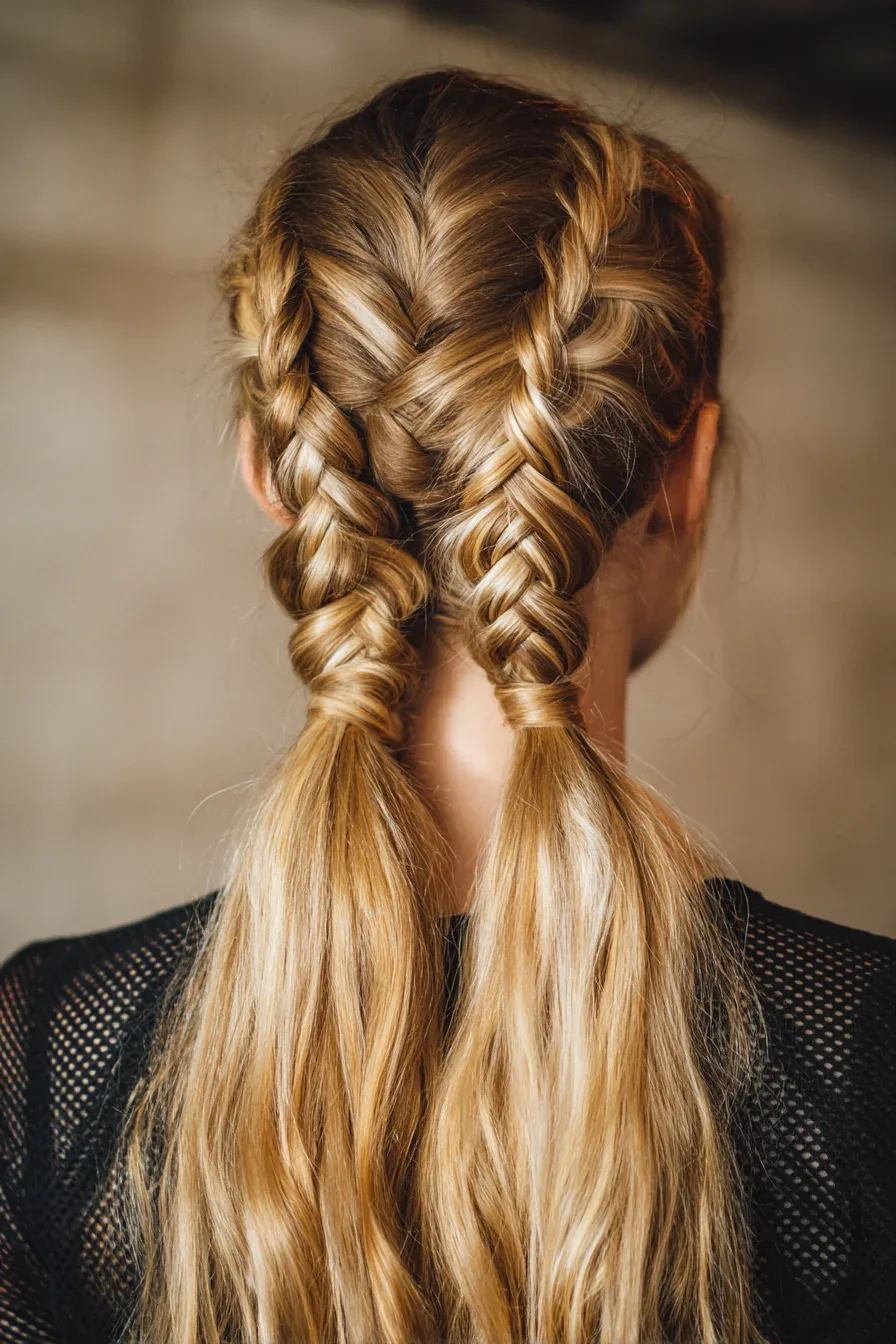
Double Dutch braids, often called boxer braids, are the toughest style in this guide for a full day on the water. Part your hair down the centre, Dutch braid each side from the hairline to the nape, crossing the strands underneath so the braids sit raised and tight against the scalp, then finish each braid and tie it off. They are the style competitive swimmers and sailors reach for first.
Best for: long hair, thick hair, and anyone spending the whole day on the water. How to style it: braid on slightly damp hair for the tightest result, and keep the sections even so both braids sit symmetrically. Who should avoid it: anyone with a very tender scalp or fresh braids done too tightly — comfort matters more than hold, so keep the tension firm but not painful.
10. The Rope Braid Ponytail
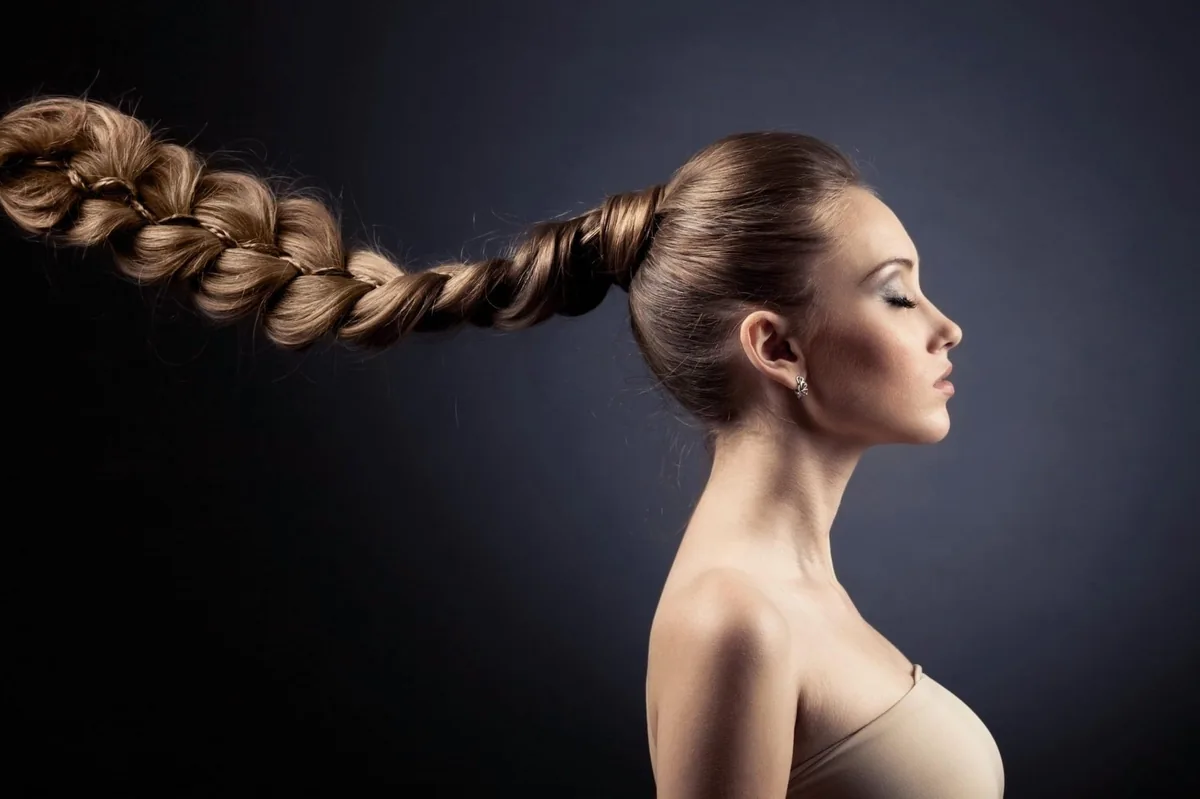
A rope braid ponytail is two twisted sections wound around each other, and it is one of the best hairstyles for a boat day for long hair because it cannot unravel the way a three-strand braid can. Tie your hair into a low ponytail, split it in two, twist each half in the same direction, then wind the two twists around each other in the opposite direction and tie off the end. It also untangles easily at the end of the day, which is more than you can say for most braids after salt water.
Who it suits: long, straight or wavy hair, and anyone who finds French braiding too fiddly. Pros and cons: it takes about three minutes and only needs one elastic, but it works best on hair that is at least shoulder length. Maintenance: if the end starts to unwind, re-twist the last few inches and add a second elastic — the whole fix takes ten seconds and you can do it without a mirror.
11. The Side Braid Over One Shoulder

A side braid is the most flattering of all the boat-day braids, because it keeps the hair visible in photos while keeping it completely under control. Sweep all your hair over one shoulder — the leeward side, away from the wind, if you know which way it is blowing — and braid it loosely down the front, tying it off just above the ends. It is the best choice if you want your hair in the pictures and out of your face at the same time.
Best for: medium to long hair, and anyone who wants a softer, more romantic boat-day look. How to style it: braid it a little looser than a back braid for a relaxed finish, and pull out two tiny face-framing pieces at the front — pinned, not loose. Common mistake: putting the braid on the windward side. Check which way the wind is blowing before you choose your shoulder, or the braid will end up across your face all day.
12. The Braided Headband (Milkmaid Braid)
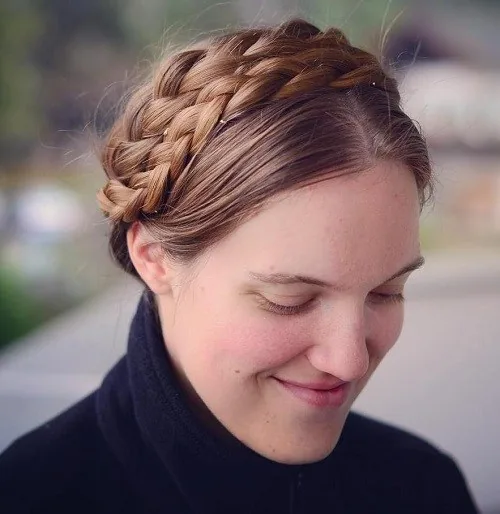
A braided headband solves the worst boat-day problem — hair blowing into your eyes — without needing a hat or a scarf. Take a section of hair from behind one ear, braid it, then bring it across the top of your head like a headband and pin it behind the other ear, tucking the end underneath. The braid holds the front hair back all day, it cannot blow off the way a fabric headband can, and it looks far more polished than a plastic band.
Who it suits: all lengths from chin-length up, and anyone who hates wearing hats. How to style it: braid the section tightly so it holds its shape, and pin it with two crossed bobby pins at each end. Quick verdict: this is the best fix for flyaways and front pieces on a windy boat — if nothing else in your style is working, add a braided headband and the problem mostly disappears.
13. The Half-Up Top Knot
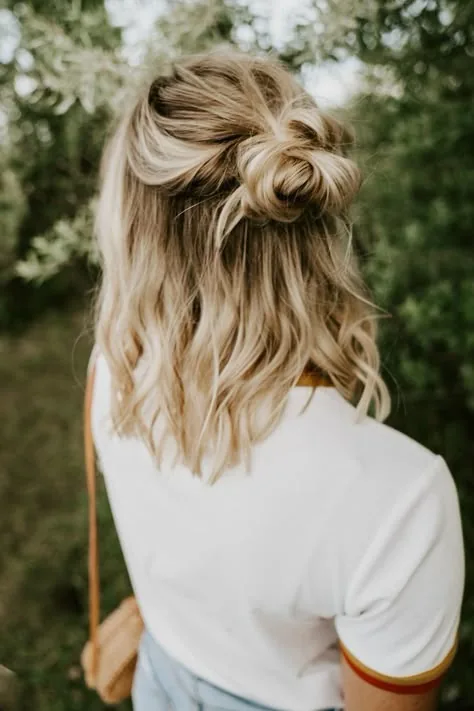
The half-up top knot gives you the best of both worlds on a boat: the front hair is secured out of your face, and the rest of your hair is still down for the photos. Take the top section of your hair from temple to temple, twist it into a small knot on the crown, and pin it firmly — then leave the remaining hair loose, but braid or twist its ends so they cannot tangle in the wind.
Best for: medium to long hair on calmer days, and anyone who refuses to put all their hair up. Pros and cons: it looks lovely, but it is the least windproof style in this guide — on a rough or fast day, the loose length will tangle. What to avoid: wearing this on an open-water speed run. If the boat is going fast, switch to a full braid or bun and save the half-up look for anchor time.
14. The Half-Up French Twist
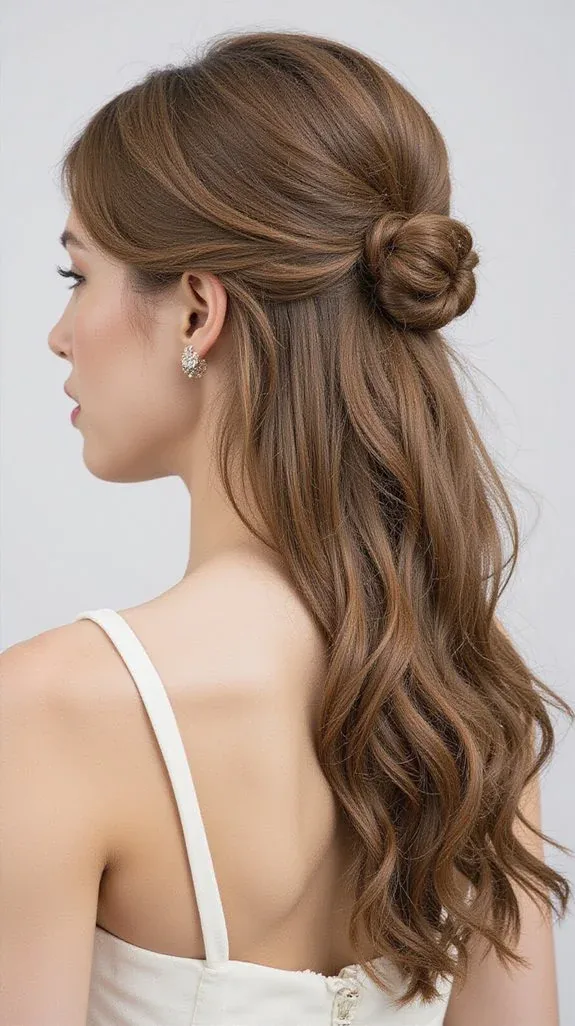
A half-up French twist is the most elegant option in this guide, and it holds better than most half-up styles because the twist itself is an anchor. Gather the top half of your hair, twist it upward into a roll against the back of your head, and pin it in place with bobby pins tucked along the seam, letting the bottom half fall free. It is the style to choose when the boat day ends at a restaurant and you want to look dressed up without re-doing your hair.
Who it suits: medium to long hair, and occasions where the boat day turns into an evening out. How to style it: use a little texturising spray for grip, and pin the twist at the top, middle and bottom so it cannot roll loose. Maintenance: if the loose length starts to tangle in the wind, gather it into a quick low ponytail — the twist on top still looks finished, and the ponytail keeps the ends safe.
15. The Scarf-Wrapped Low Bun
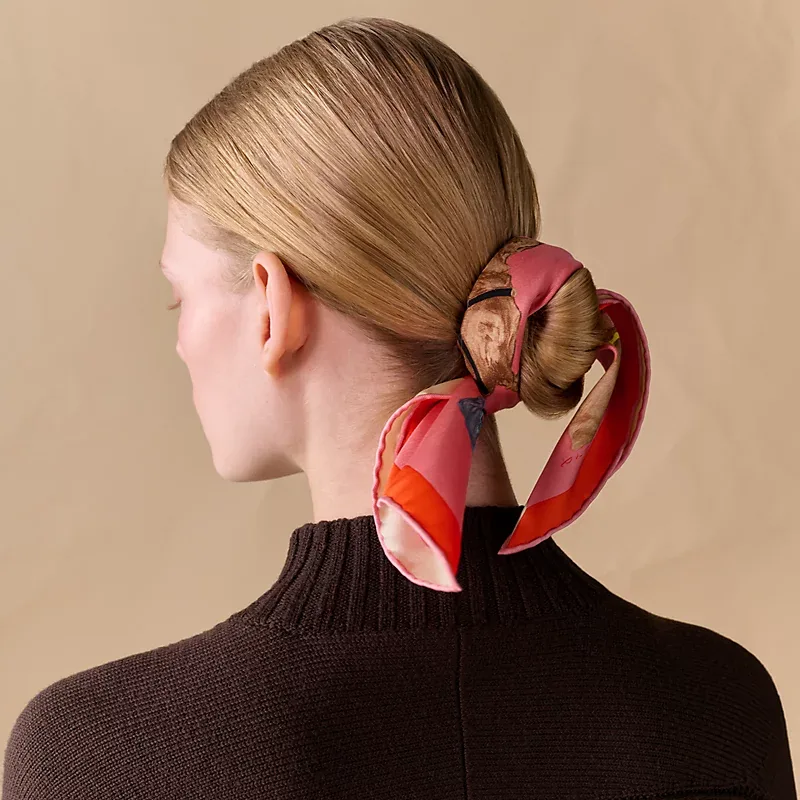
A scarf-wrapped low bun is the most practical pretty style for a boat day, because the scarf does three jobs at once: it holds the bun, it protects your hair from sun and salt, and it cannot blow off the way a hat can. Make a low bun at the nape, then wrap a silk or satin scarf around its base, cross the ends underneath, bring them up and tie them in a small knot or bow on top. Choose a bright colour and it doubles as your sun protection and your outfit’s finishing touch.
Best for: all hair lengths that can form a bun, and anyone with colour-treated hair that needs sun protection. How to style it: use a square scarf folded into a triangle, and tuck the ends in so nothing flaps. Common mistake: using a cotton scarf, which absorbs moisture and creates friction. Silk or satin is worth it — it slides over the hair instead of roughing it up.
16. The Bandana Ponytail
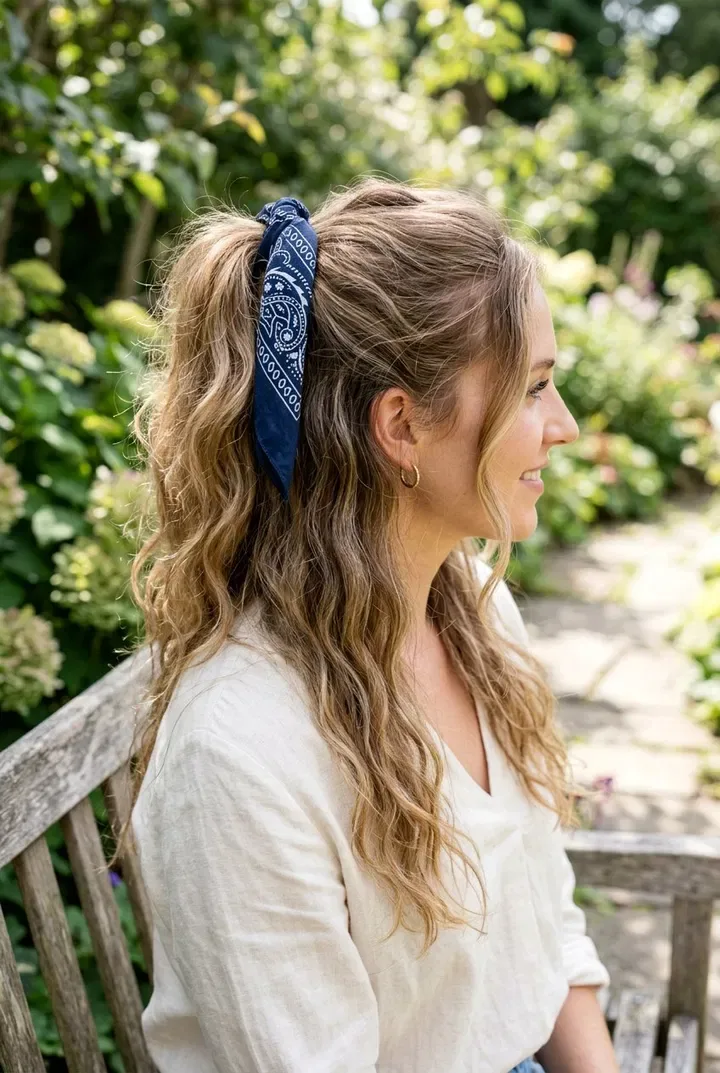
The bandana ponytail is a classic boat look for a reason: it keeps the front hair back, covers the part line from the sun, and adds colour without any real effort. Fold a bandana into a triangle, place the folded edge along your hairline, tie it at the nape underneath your ponytail, and let the point sit over the crown. It is also the easiest style to fix mid-day: retie the bandana and you are done.
Who it suits: all hair lengths and types, and especially anyone who burns easily along the part. Pros and cons: it is fast, cheap and very secure, but a bandana can slip on very smooth hair — anchor it with two bobby pins at the temples. Quick verdict: if you pack only one hair accessory for a boat day, make it a bandana. It works as a head covering, a bun wrap and an emergency hair tie, all in one square of fabric.
17. The Baseball Cap and Low Ponytail
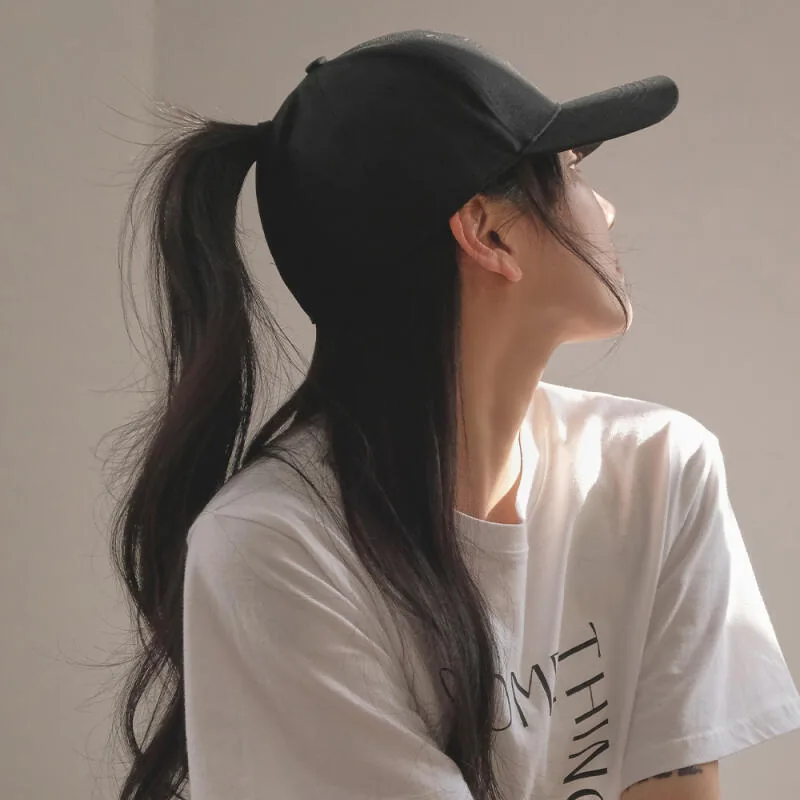
A baseball cap with a low ponytail is the lowest-effort secure style on this list, and on a sunny boat day it is often the smartest one. Pull your hair into a low ponytail through the gap at the back of the cap, or wear the ponytail underneath it, and the cap does the hard work: it shades your face and part line, it holds the front hair flat against the wind, and it stops the top of your head from burning. It is not glamorous, but it is the style most experienced boaters actually wear.
Best for: everyone, and especially first-time boaters who do not want to fuss with their hair. How to style it: choose a cap with an adjustable strap so it fits snugly — a loose cap will fly off, and a cap in the water is gone for good. What to avoid: a high ponytail under a cap, which pushes the cap up and loosens it. Low is the rule: low ponytail, cap pulled down firmly, and a spare tie in your pocket.
18. The Sun Hat and Low Braid
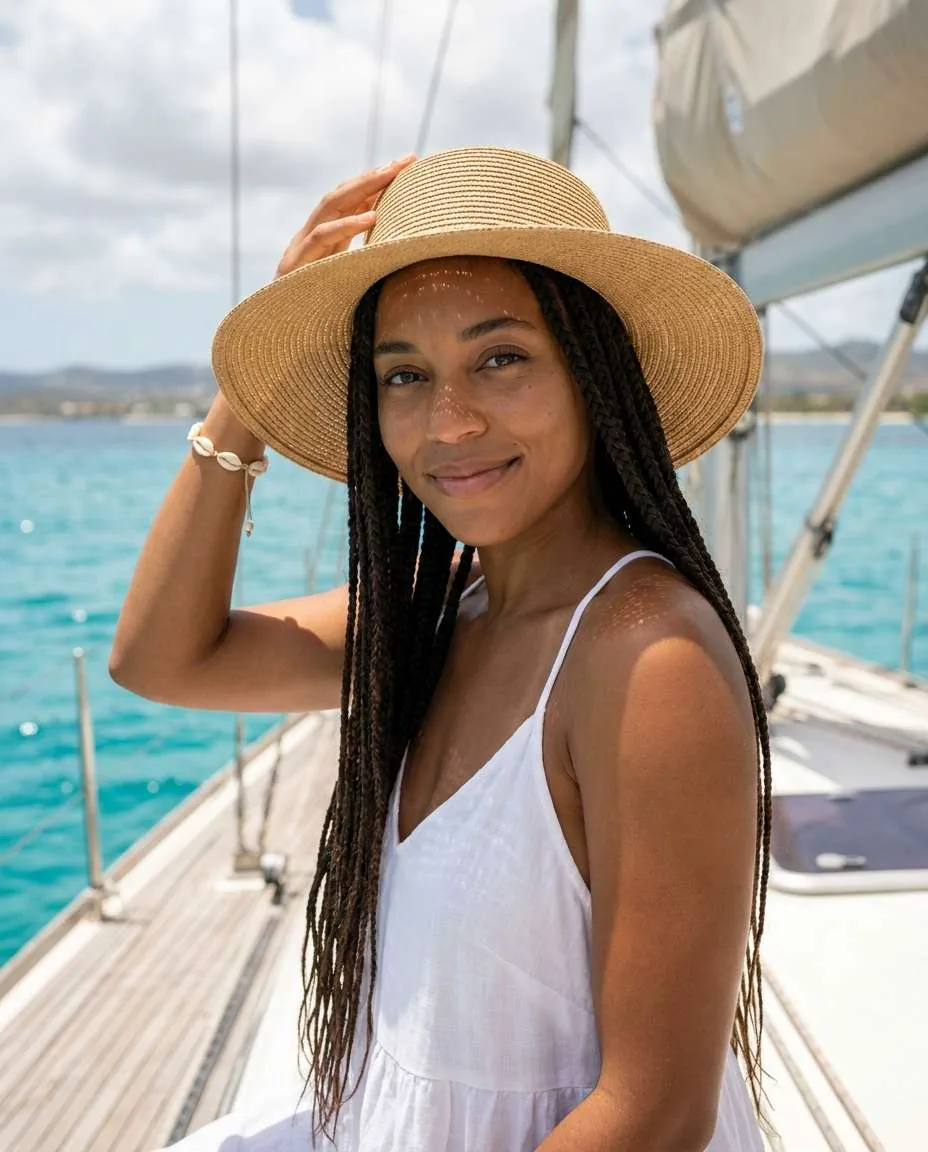
A wide-brim sun hat with a low braid underneath is the most sun-protective combination in this guide, and it works beautifully if the hat fits properly. Braid your hair into a single low braid or two braids, tie them off, then put the hat on and let the braids fall beneath the brim. The hat shades your face, neck and part line from reflected sun off the water, while the braids keep your hair from tangling underneath it.
Who it suits: anyone spending hours in direct sun, and long hair that braids easily. How to style it: use a hat with a chin cord, and braid the hair before the hat goes on so nothing is trapped underneath. Common mistake: wearing a loose, fashionable hat with no strap. On a boat, a hat without a strap is not an accessory — it is a donation to the sea.
19. Space Buns
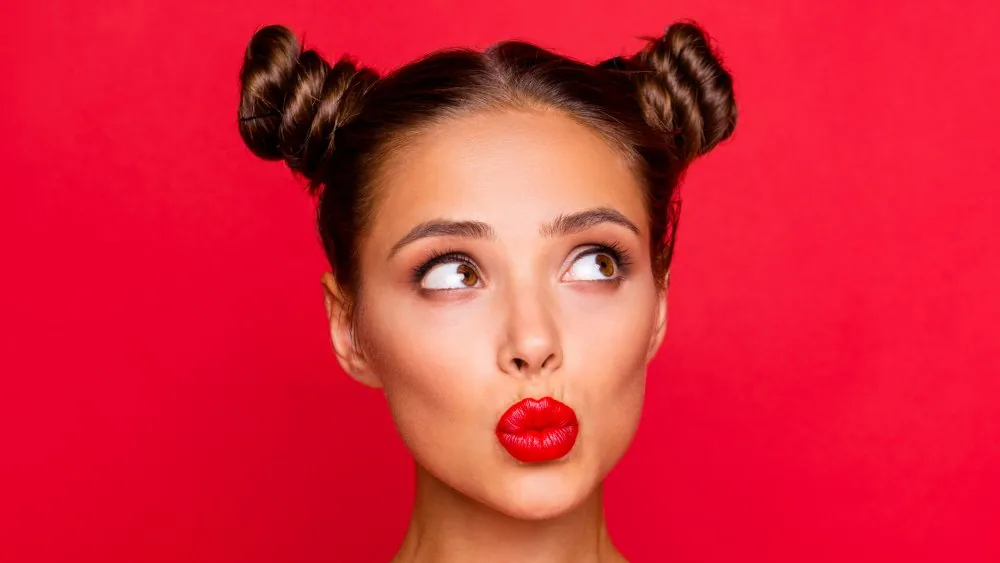
Space buns are two small buns, one on each side of the head, and they are surprisingly practical on a boat because they divide the hair into two short, contained sections that the wind cannot whip around. Part your hair down the middle, gather each side into a high ponytail, twist each one into a bun and pin it firmly. Nothing hangs, nothing swings, and the style is so secure that it survives swimming, speed and spray without a second thought.
Best for: medium to long hair, and anyone who wants a fun style that is genuinely secure. Pros and cons: they are very secure and quick to do, but they can feel tight if you make them too high, so keep them at a comfortable height. Maintenance: if one bun loosens, re-twist and re-pin it — the other side will hold while you fix it, which is the advantage of a style with two anchor points instead of one.
20. The Low Chignon
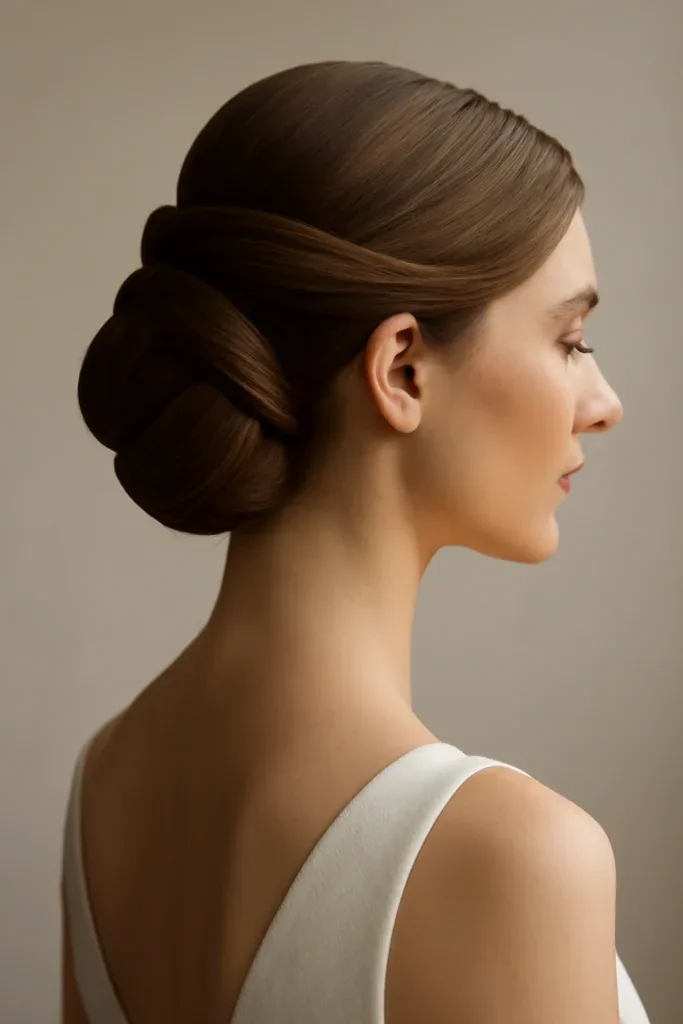
The low chignon is the most polished style in this guide — a smooth, rolled bun at the nape that looks like you spent an hour on it and takes about five minutes. Gather your hair low, twist it upward into a roll, tuck the ends underneath and pin it along the seam with bobby pins, smoothing the top with a little pomade or leave-in conditioner for a sleek finish. It is the right choice for a yacht lunch, a sunset sail or any boat day where you want to look elegant rather than sporty.
Who it suits: medium to long hair, and formal or semi-formal boat occasions. How to style it: work on slightly damp hair for the smoothest finish, and pin the roll at both ends as well as the middle. What to ask a stylist: if your hair is fine and slips out of pins, ask about a chignon built over a small hair donut — the structure holds the shape even when the wind is working against it.
21. The Twisted Low Ponytail (Topsy Tail)
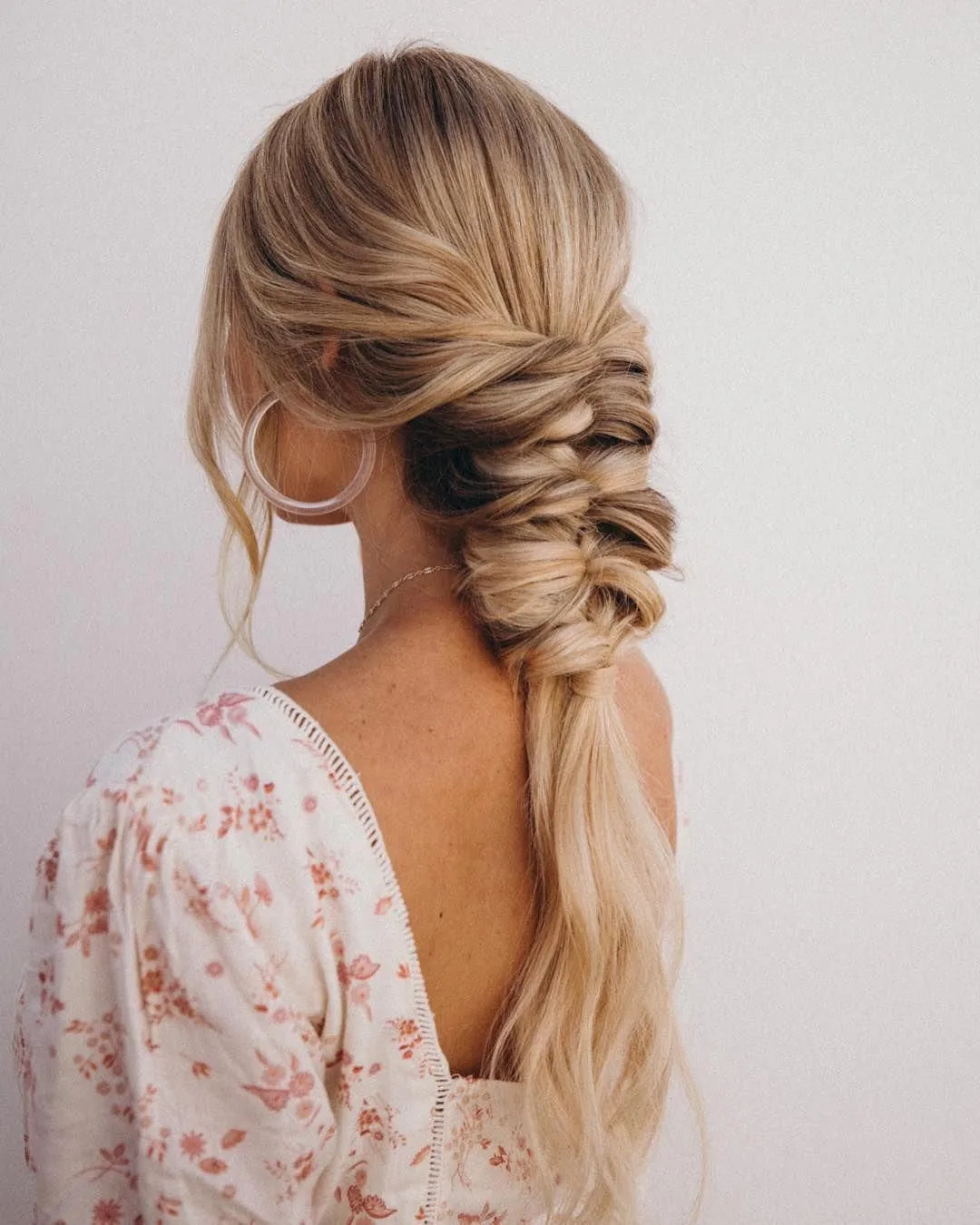
The topsy tail — a ponytail flipped through itself above the elastic — is the easiest upgrade to a plain ponytail, and the twist makes it noticeably more secure on a boat. Tie a low ponytail, make a small gap in the hair just above the elastic, flip the ponytail up and through the gap, and pull it snug. The flip locks the ponytail in place and stops the elastic from sliding down, which is the usual failure point of a low ponytail in wind.
Best for: medium-length hair and anyone who wants a polished look without learning to braid. Quick verdict: this takes about sixty seconds and one elastic, and it holds better than a plain ponytail all day. Common mistake: making the gap too small — you need enough room to pass the ponytail through without yanking. If it feels tight, loosen the section above the elastic first, then flip.
22. The Slicked-Back Wet Look
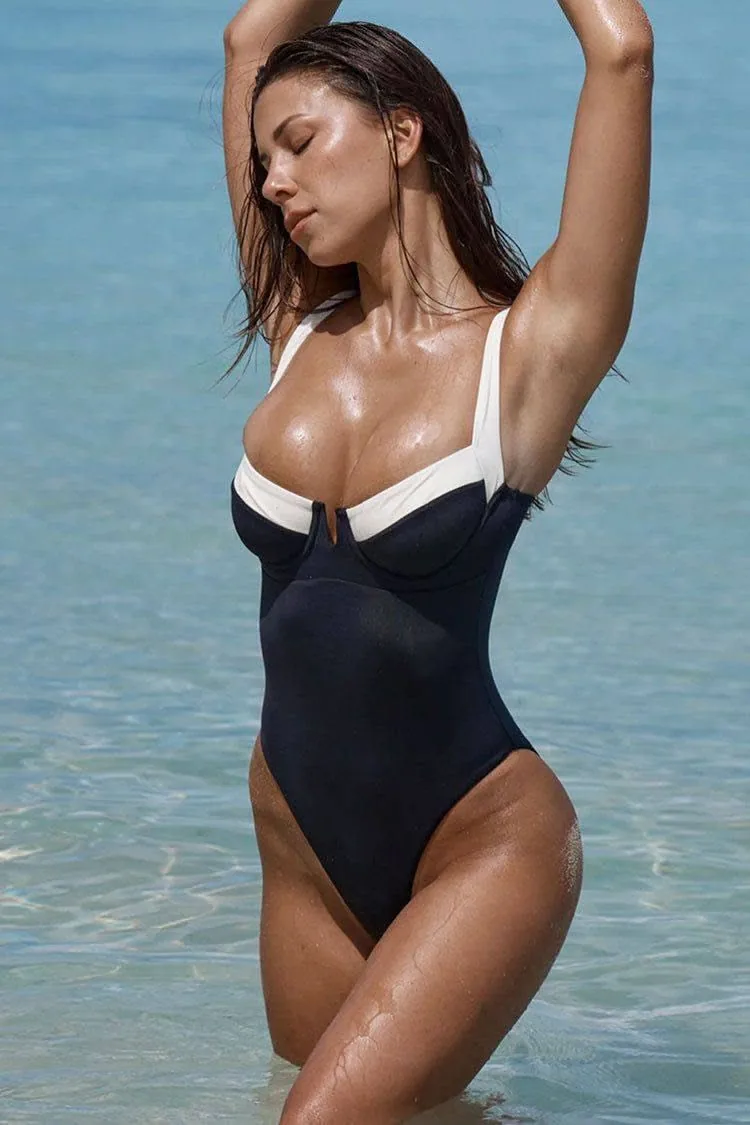
The slicked-back wet look is the only style in this guide that actually gets better when it gets wet, which makes it perfect for a boat day built around swimming. Work a generous amount of leave-in conditioner or styling gel through damp hair, comb it straight back from the forehead, and let it dry in place — the product holds the shape, the water keeps it looking intentional, and the wind cannot move hair that is slicked flat against the head. It suits short and medium hair best, and it looks strikingly good in photos against the water.
Who it suits: short to medium hair, straight or wavy, and confident swimmers. Pros and cons: it is effortless after swimming, but it needs enough product to hold — too little and the front pieces fall forward. What to avoid: using a heavy wax that goes white or flaky in salt water. A clear gel or a leave-in conditioner works better and rinses out easily at the end of the day.
23. Beach Waves with Sea Salt Spray
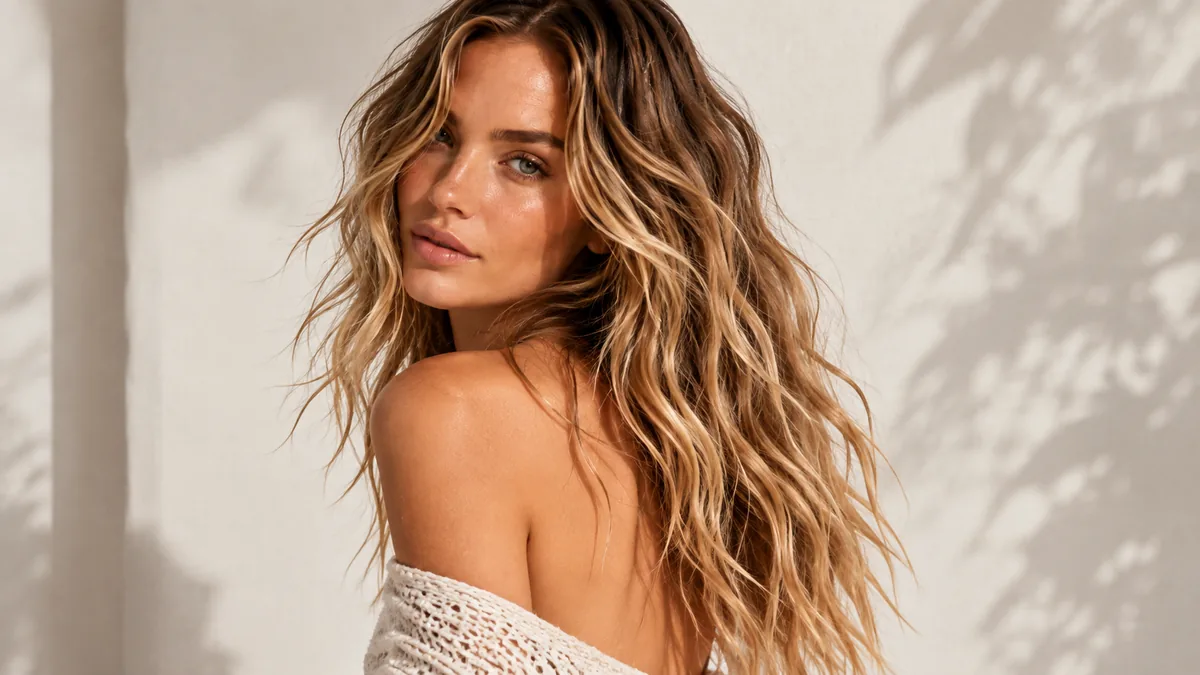
Beach waves are the one loose style that earns a place in this guide, because the boat itself creates them — salt water and wind are the original texturising products. Start with damp hair, work in a little sea salt spray or leave-in conditioner, braid it loosely into two plaits, and let the wind and sun do the rest. When you take the braids out after a swim or at the end of the day, the waves are soft, textured and completely natural-looking. That single difference is what separates a good beach-wave day from an hour of detangling.
Best for: wavy and straight hair on calm days, and anyone who wants to lean into the salt-water texture instead of fighting it. How to style it: braid loosely, not tightly — tight braids give crimps, loose braids give waves. Maintenance: do not brush beach waves out. Finger-comb them, add a drop of oil to the ends, and let them be. Brushing salt-dried hair is how frizz happens.
24. The Pineapple Updo for Curly Hair
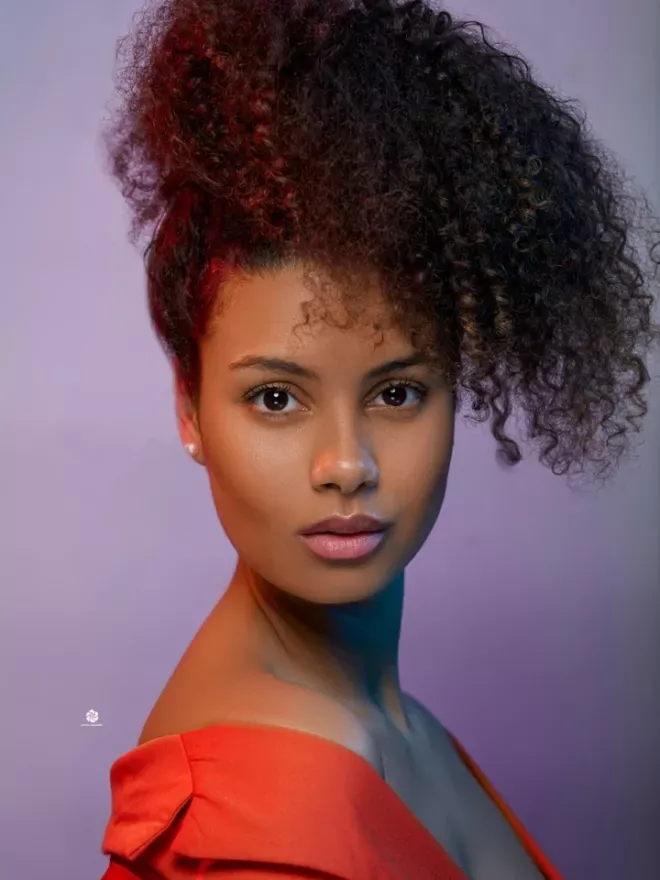
The pineapple is the best boat-day style for curly hair, because it protects the curl pattern instead of fighting it. Gather all your curls into a very high, very loose ponytail right on top of your head — the shape looks like a pineapple, hence the name — and secure it with a satin scrunchie rather than a tight elastic. The curls pile up on top of the head, away from the wind, the spray and the water, and because the ponytail is loose, the curls keep their shape instead of being stretched flat.
Who it suits: curly and coily hair from medium length up. Pros and cons: it is fast, protective and comfortable, but it can feel top-heavy on very thick hair — if so, split it into two smaller pineapples. What to avoid: a tight elastic, which dents the curl pattern and causes breakage. A satin scrunchie or a silk scarf tied loosely around the base protects the curls and holds just as well.
25. The Pixie with a Headband
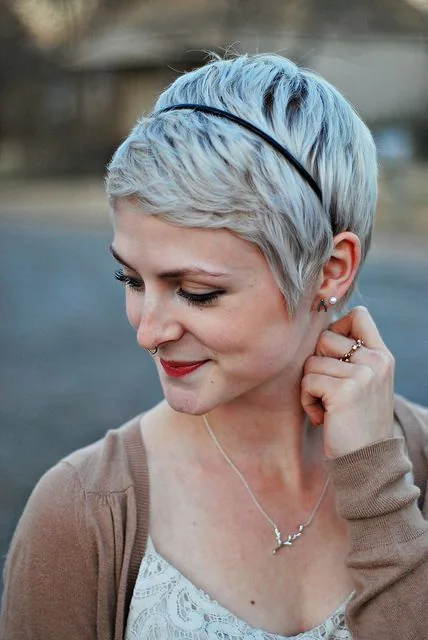
Short hair is the easiest hair to manage on a boat, and a pixie with a headband is the proof. The pixie itself cannot tangle — there simply is not enough length for the wind to knot — and a fabric headband or a thin braided band keeps the front pieces out of your eyes and adds a finished touch. Choose a headband with a little grip, such as velvet on the inside or silicone strips, so it does not slide off in the wind, and keep a spare in your bag.
Best for: pixie cuts and very short hair, and anyone who wants zero maintenance on the water. How to style it: work a little texturising paste through the top for definition, then slide the headband on and push it back slightly. Quick verdict: if you have short hair, you have already won the boat-day hair battle — a headband is the only accessory you need, and everything else in this guide is optional.
26. The Bob with a Side Part and Clips
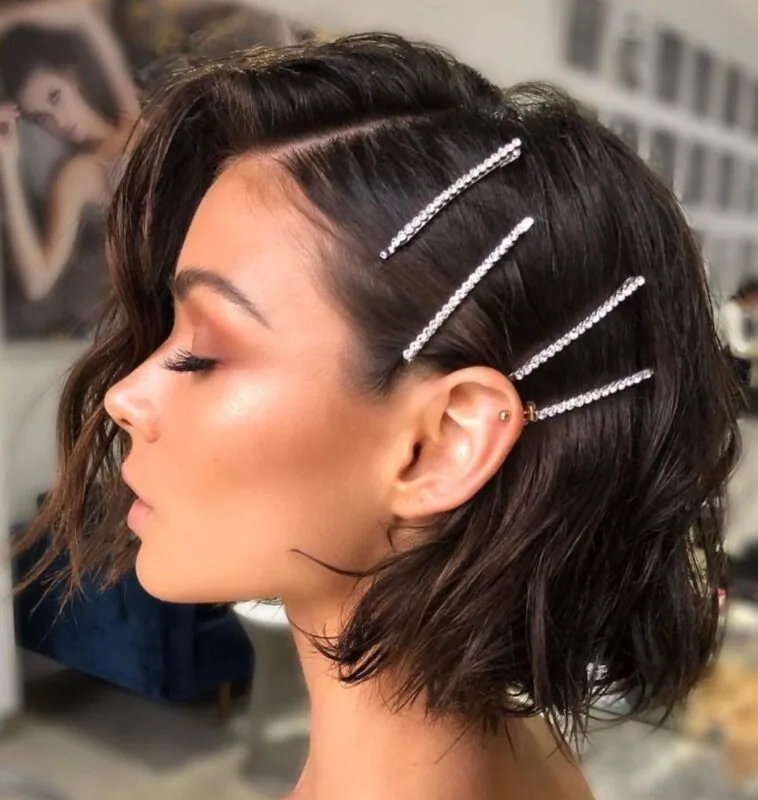
A bob is short enough to behave on a boat, but long enough to blow into your face — and the fix is a deep side part with two flat clips. Part your hair deeply on one side, sweep the heavier side back, and secure it with two flat no-crease clips or bobby pins crossed over each other, leaving the lighter side to frame your face. The clips hold the hair flat against your head where the wind hits hardest, and the side part gives the style a polished shape that looks intentional rather than wind-blown.
Who it suits: chin-length to shoulder-length bobs, straight or wavy. Pros and cons: it is fast and elegant, but it is the least secure style in this guide for rough water — on a fast boat, add a scarf or switch to a slicked-back look. Maintenance: carry two spare clips. Clips are the smallest thing in your bag and the first thing to go overboard, so pack extras.
27. Cornrows and Protective Braids
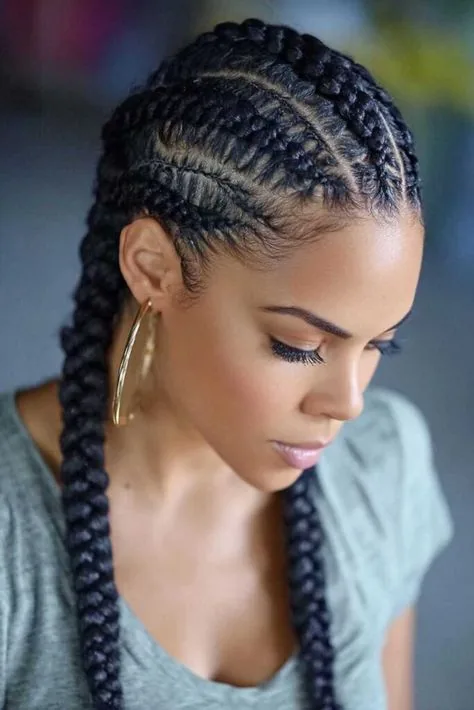
Cornrows are the most durable hairstyle for a boat day, full stop. Braided tight to the scalp in neat rows, they cannot tangle, they cannot blow into your face, they survive swimming and salt water without any attention, and they look just as good at sunset as they did in the morning. Get them done a day or two before the trip so your scalp has time to settle, and keep the tension comfortable — cornrows should feel secure, never painful.
Best for: coily, curly and thick hair, and multi-day boat trips where you want a style that lasts. How to style it: moisturise the scalp lightly before you board, and cover the braids with a silk scarf at night if the trip runs over. Who should avoid it: anyone with a very sensitive scalp or a fresh, tight install — comfort comes first, and a style that hurts is never worth it, however practical it is.
28. Bantu Knots
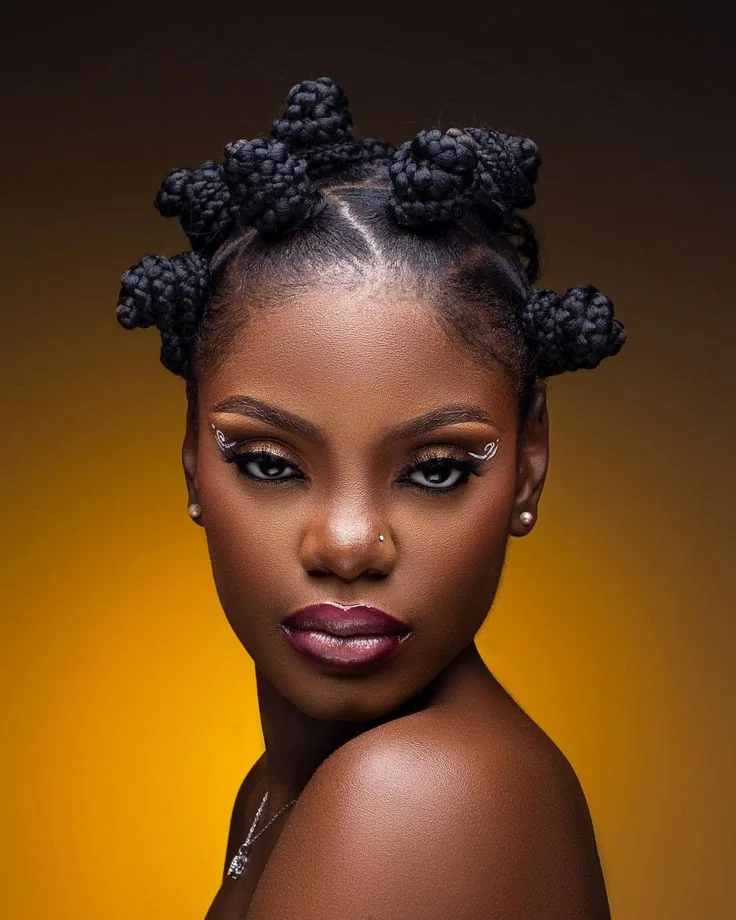
Bantu knots are small coiled buns sectioned across the head, and they are one of the best protective hairstyles for a boat day because every section is its own secure little unit. Part the hair into sections, twist each section into a tight coil, wrap it into a small knot against the scalp and pin or tuck the end in. The knots sit flat and close to the head, so the wind has nothing to grab, and they survive swimming beautifully — and when you take them out at the end of the day, they leave behind perfect, defined curls.
Who it suits: coily and curly hair, and anyone who wants a style that lasts beyond the boat. Pros and cons: they take time to install — allow thirty to forty-five minutes — but they hold for days, not hours. Maintenance: keep the knots small and even, and moisturise the ends before you coil them, so they do not dry out in the sun and salt.
29. The Claw Clip Twist
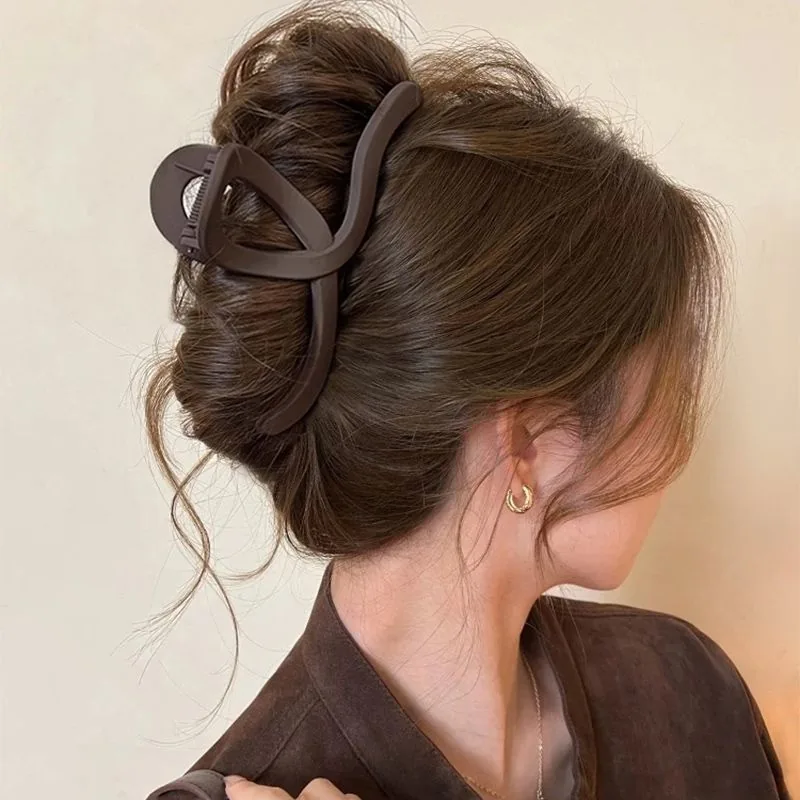
The claw clip twist is the fastest secure style in this guide, and the one most likely to save your hair mid-day when the wind picks up unexpectedly. Gather your hair at the back, twist it upward into a roll, fold the ends over, and clamp a large claw clip over the whole twist. It takes about fifteen seconds, it needs no mirror, and it holds even in strong wind because the clip grips the twist at several points.
Best for: medium to long hair, and as an emergency fix for any loose style. How to style it: use a large, strong clip — small clips will not hold thick hair, and cheap clips snap in the sun. Common mistake: twisting too loosely. The twist needs to be firm enough that the clip is gripping twisted hair, not just holding a loose bundle — a firm twist is the whole secret.
30. The Silk Scarf Head Wrap
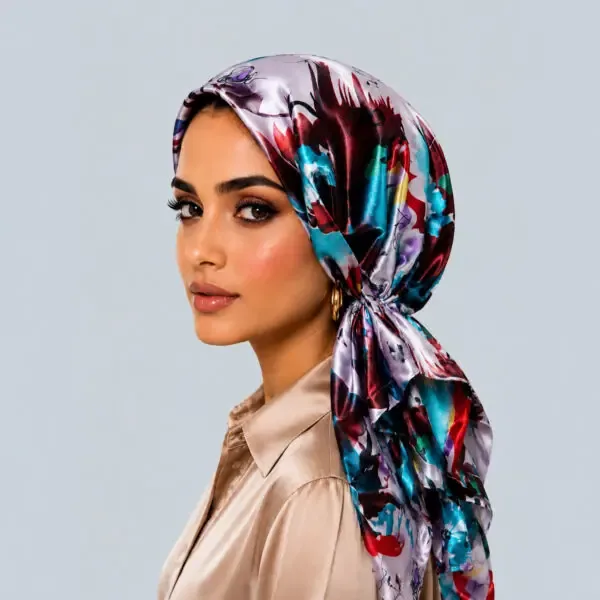
A silk scarf head wrap is the most complete protection in this guide: it covers the whole head, holds every strand in place, shields the hair from sun and salt, and cannot blow off if it is tied properly. Gather your hair into a low bun or a braid, place the centre of a large square scarf at the nape, bring the ends up over the crown, cross them at the front and tie them at the back, tucking in any loose ends. The silk slides over the hair instead of roughing it up, so there is almost no frizz underneath, and the wrap keeps the hair cool and protected all day.
Who it suits: all hair types, and especially colour-treated or fragile hair that needs maximum protection. Pros and cons: it is the best protection available, but it takes a little practice to tie securely — try it at home first. What to avoid: a loose knot. Tie it snugly and tuck the ends in, because a scarf that comes undone in the wind becomes a sail.
31. The Braided Ponytail with a Ribbon
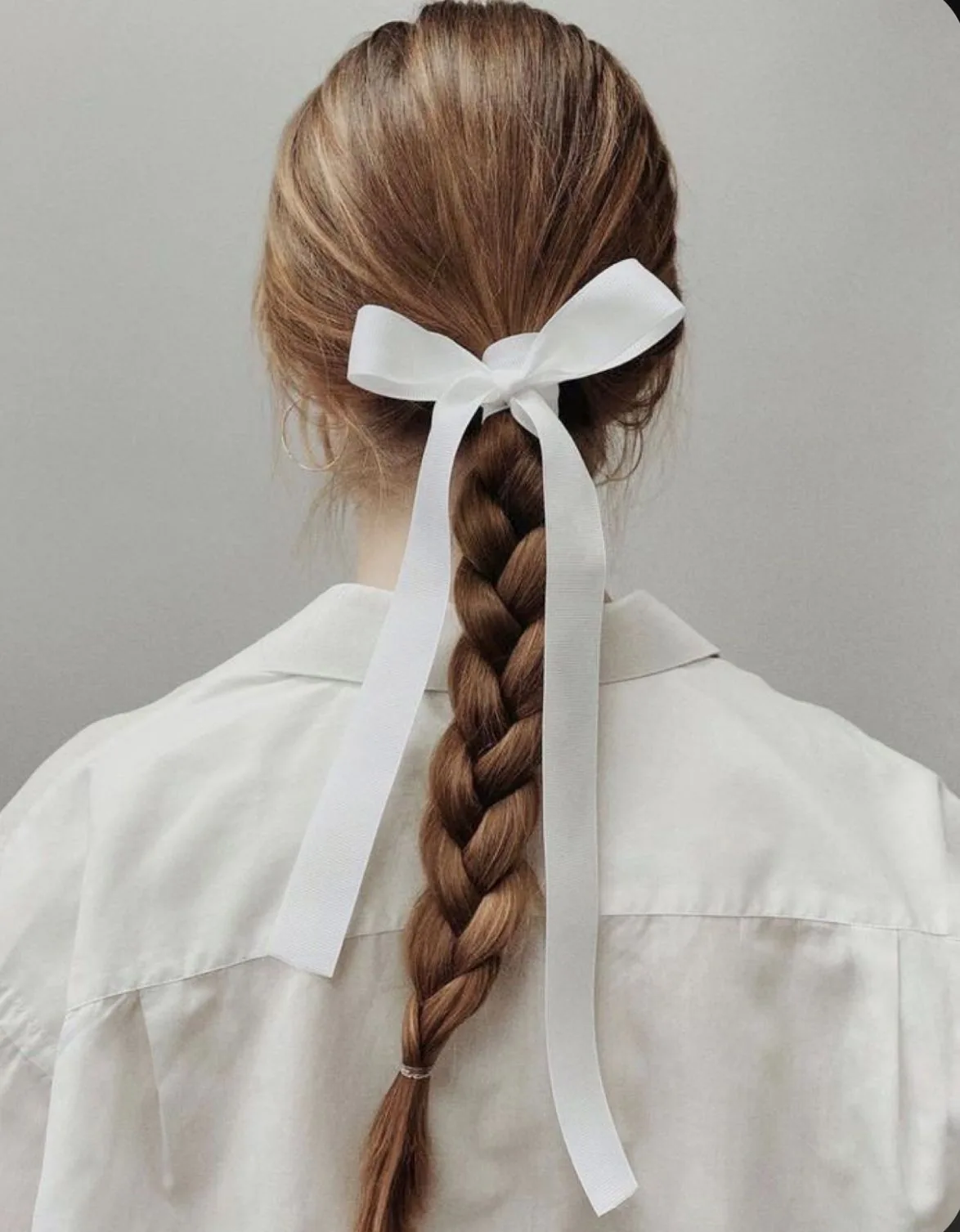
A braided ponytail with a ribbon is a low ponytail that has been braided and tied off with a ribbon instead of an elastic, and the ribbon is not just decoration — it is a second anchor that stops the braid from loosening. Tie a low ponytail, braid it to the ends, then wrap a ribbon around the base of the braid and tie it in a bow, leaving short tails that flutter without tangling. The braid keeps the length contained, the ribbon keeps the braid tight, and the whole style reads as polished and a little bit nautical, which suits a boat day perfectly.
Best for: long hair and anyone who wants a pretty style that is still genuinely secure. How to style it: braid tightly and use a ribbon at least a centimetre wide, so the bow holds its shape. Maintenance: if the ribbon loosens, re-tie it — it takes five seconds and the braid underneath will still be intact, which is the advantage of having two separate fastenings.
32. Low Pigtail Braids

Low pigtail braids are two braids worn low at the nape, and they are the most balanced style in this guide for a long, active day on the water. Part your hair down the middle, braid each side from the nape down, and tie both ends off — the weight is spread evenly across both sides of your head, so nothing pulls, nothing swings, and the wind pushes both braids against your back instead of whipping them around. They are secure enough for swimming, comfortable enough to wear under a life jacket without bunching, and they leave soft waves when you take them out.
Who it suits: medium to long hair, and anyone wearing a life jacket or a backpack. Pros and cons: they are extremely secure and comfortable, but they can read as young — if that bothers you, braid them loosely and pull out a few face-framing pieces for a softer finish. Quick verdict: for pure practicality on a boat, low pigtails are hard to beat. Two braids, two anchors, zero fuss.
33. The Waterfall Braid

The waterfall braid is the prettiest half-up style in this guide, and it earns its place because the braid itself anchors the front hair while the rest falls free in soft, controlled strands. Start a French braid at one temple, but drop the bottom strand each time and pick up a new one, so the dropped strands cascade down like a waterfall while the braid itself travels across the back of the head. The front is secure, the back looks romantic, and the dropped strands are short enough that they cannot tangle badly in the wind.
Best for: medium to long hair on calm days, and occasions where photos matter. Pros and cons: it is beautiful, but it is the least secure braid in this guide — the dropped strands are loose by design. What to avoid: wearing it on a fast or rough day. Save the waterfall braid for anchor time and sheltered water, and switch to a full braid when the boat picks up speed.
What is the best hairstyle for a boat day?
The best hairstyle for a boat day is a French braid, double Dutch braids or a low bun, because all three anchor the hair to the head at several points, keep the ends contained and survive wind, spray and swimming without coming loose. Loose hair, high ponytails and heat-styled waves are the worst choices on a boat — they tangle within minutes in the wind and salt. If you want one style that works for almost everyone, choose a single French braid: it is secure, it dries well after a swim and it leaves soft waves when you take it out.
How do I keep my hair from tangling on a boat?
Keep your hair braided, bunned or wrapped so the wind cannot whip it into knots, and wet it with fresh water plus a little leave-in conditioner before you board so it absorbs clean moisture instead of salt water. After swimming, rinse with fresh water if you can, finger-comb gently from the ends upward, and re-braid or re-bun it before it dries — hair that dries loose in wind and salt is the hardest kind of tangle to undo. Never brush salt-dried hair; use a wide-tooth comb and work from the ends up.
Should I wear my hair up or down on a boat?
Wear it up on a boat. Hair worn down blows into your face, your eyes, your food and your sunscreen, and by the end of the day it will be a wind-knotted tangle that takes an hour to comb out. A low bun, a braid or a twist keeps your hair secure, keeps it out of the way near lines and engines, and keeps you cool. The only exception is a very calm day at anchor, when a half-up style or loose beach waves can work — and even then, keep a claw clip handy for when the wind picks up.
How do I protect my hair from salt water?
Wet your hair with fresh water and apply leave-in conditioner or a little hair oil before you go in the sea, so the hair shaft is already full of clean moisture and absorbs less salt water. After swimming, rinse with fresh water as soon as you can, then apply a little more leave-in conditioner and braid or bun the hair while it is still damp. At the end of the day, wash with a gentle shampoo, use a deep conditioner or hair mask, and let your hair air-dry — that one wash and mask undoes most of a day of salt exposure.
Can I wear a hat on a boat without it blowing off?
A hat will stay on a boat only if it fits snugly and has a chin strap or an adjustable band — a loose straw hat will be overboard within minutes. Baseball caps with an adjustable strap and wide-brim hats with a chin cord both work well, especially worn over a low braid or low ponytail, which anchors the hat further. Avoid tall, stiff or very wide hats that catch the wind like a sail, and tie long hat ribbons down so they do not flap into your face.
What hairstyle is best for swimming off a boat?
Double Dutch braids or a top knot are the best hairstyles for swimming off a boat, because they keep every strand above the waterline or locked tight against the head, and they do not unravel when they get wet. A French braid is a close second. Avoid loose hair, high ponytails and claw-clip styles for swimming — a loose ponytail tangles the moment it hits the water, and a clip can slip out. After your swim, rinse with fresh water, re-pin or re-braid, and let the style dry in place.
How do I stop my scalp from burning on a boat?
Cover your part line, because the sun reflects off the water and burns a part far faster than it burns on land. Wear a hat, a bandana or a scarf over the part, or apply sunscreen directly along the part line and the hairline — a spray sunscreen works best because it does not leave white residue in the hair. Reapply after swimming. A burnt scalp is painful, it peels, and it can cause hair shedding, so this is the one boat-day hair step you should never skip.
What should I pack for my hair on a boat day?
Pack a small waterproof pouch with three or four fabric hair ties, a few bobby pins, a large claw clip, a wide-tooth comb, a travel bottle of leave-in conditioner, a small bottle of fresh water for rinsing, sunscreen for your part line, and a silk scarf or bandana. That kit weighs almost nothing and lets you fix any style in thirty seconds with one hand. Leave straighteners, curling irons and full-size products at home — they are useless on a boat and will get wet.
Will salt water damage my hair?
Salt water does not permanently damage healthy hair in a single day, but it does dry it out, rough up the cuticle and make it tangle and break more easily, especially if the hair is colour-treated, bleached or already dry. The damage comes from repeated exposure without rinsing or conditioning, not from one swim. Protect your hair before you swim, rinse with fresh water afterwards, and use a deep conditioner or mask that evening, and a day on the boat will leave your hair dry but not damaged.
How do I fix my hair after a boat day?
Rinse your hair with fresh water first, then wash with a gentle shampoo and follow with a deep conditioner or hair mask, leaving it on for at least five minutes. Detangle with a wide-tooth comb while the conditioner is in, working from the ends upward — never brush dry, salt-stiff hair. Let it air-dry, add a drop of oil to the ends, and avoid heat styling for a day. If your hair still feels stiff or tangled after one wash, do a second gentle wash and another mask the next day rather than forcing a brush through it.
Conclusion: Pick a Style That Lets You Forget About Your Hair
The best hairstyles for a boat day are not the most beautiful ones on land — they are the ones that stay put in wind, survive spray and salt, keep your hair out of your face and away from anything that moves on deck, and let you enjoy the day without thinking about your hair. A French braid, double Dutch braids, a low bun or a scarf wrap will do that for almost anyone, whatever your hair length or type, and they take only a few minutes to put in before you board.
Prep matters as much as the style itself: wet your hair with fresh water, add a little leave-in conditioner, braid a little tighter than you would on land, cover your part from the sun, and pack a spare tie, a few pins and a scarf. Do that, and your hair will be the last thing you worry about on the water — which is exactly how a boat day should feel.

