

It usually starts small. Your partner comes home quieter than usual, shoulders tight, phone still in hand, dinner going cold while they answer one more email. Or they snap over something tiny — a misplaced set of keys, a question asked at the wrong moment — and then go silent, as if they are angry at themselves for snapping. Nothing dramatic has happened, and yet the whole evening feels different. This is the moment that decides so much in a relationship: not the big crisis, but the ordinary, tired, stressed-out Tuesday.
Learning how to support your partner through stress is less about grand gestures and more about getting the small moments right — listening properly, saying the kind thing instead of the clever thing, and doing one useful thing without being asked. This guide gathers 34 gentle, practical ways to do that, from the first five minutes after a hard day to the slow weeks when stress does not lift. It begins with eight explainers on recognising stress, listening well, the words that help and the ones that hurt, and when to seek help together, then ends with direct answers to the questions people ask most when the person they love is struggling.
How to Tell When Your Partner Is Stressed — Even When They Say They’re Fine
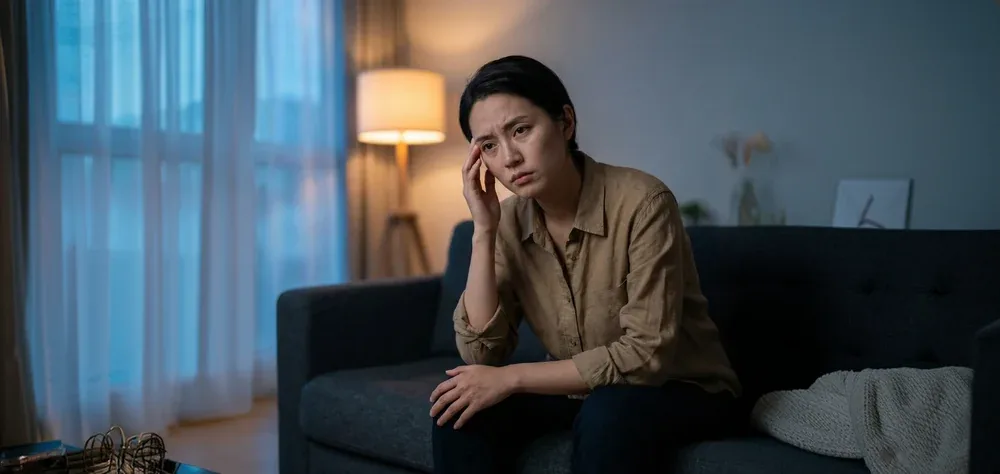
Stress rarely announces itself clearly. Some people go quiet and withdraw, answering in short sentences and staying up late scrolling. Others get irritable over small things, lose their appetite or sleep badly, or suddenly care too much about something trivial — the dishwasher, a bill, a text left unanswered. Your partner may insist they are fine while their body says otherwise: tense shoulders, a jaw that stays clenched, sighs they do not notice, or a laugh that arrives half a second too late. Knowing how to support your partner through stress starts here, with noticing, because you cannot help with what you have not seen.
What it means: stress changes behaviour before it changes words, so watch for shifts from your partner’s normal — quieter, sharper, more tired, more restless — rather than waiting for a confession. Signs and examples: skipping meals, working late without reason, snapping then apologising, forgetting small things, or saying ‘I’m fine’ while avoiding eye contact. What to avoid: treating every bad mood as a problem to solve on the spot; sometimes the kindest first move is simply noticing out loud, gently, and leaving the door open.
Listening vs Fixing: The Difference That Changes Everything

When someone you love is stressed, your first instinct is usually to fix it — to offer a plan, a solution, a better way of handling the boss or the budget. It comes from love, but it often lands as dismissal, because a stressed person usually needs to feel heard before they can think clearly. Listening means letting them finish, even when the story rambles; it means reflecting back what you heard instead of jumping ahead to what they should do. Fixing has its place, but it works best after the listening has done its job.
Why it matters: advice given too early tells your partner their feelings are a problem to be solved rather than something worth hearing, and most people shut down after that. How to handle it: try one simple question — ‘Do you want advice, or do you just want me to listen?’ — and honour the answer. Common mistake: listening only long enough to find the flaw in their thinking; real listening means putting your own solution on hold until they have finished.
Small Daily Gestures That Say ‘I’ve Got You’

Big support is mostly made of small things done consistently. A cup of tea placed silently beside them while they work. Dinner started before they ask. Their favourite blanket on the sofa, the car filled with fuel, the form they have been dreading filled in together. None of these gestures fixes the thing that is stressing them, and that is exactly the point: they say ‘I see you, and I am on your side’ without demanding a conversation your partner may not have the energy for. On the hardest days, a small kindness can land harder than a long talk.
What it means: gestures work because they reduce the load instead of adding to it — no advice, no questions, no need for your partner to perform gratitude. How to handle it: pick one small thing each day that your partner would otherwise have to do, and do it quietly. Quick verdict: if you only have five minutes, spend them on something useful and kind rather than on a speech about staying positive.
Words That Help — and Words That Hurt — When Your Partner Is Stressed

The right words at the right moment can loosen a whole day of tension; the wrong ones can close a conversation for a week. Words that help are simple and specific: ‘That sounds really hard.’ ‘I’m here.’ ‘Tell me more.’ ‘We will figure this out together.’ Words that hurt usually sound reasonable — ‘Just relax’, ‘You’re overthinking it’, ‘Other people have it worse’, ‘I told you so’ — but each one tells your partner their feelings are wrong. The difference is not about being perfect; it is about choosing words that make room for how they feel instead of arguing with it.
Pros and cons: saying ‘I’m here’ costs nothing and opens everything up, while saying ‘calm down’ costs the whole conversation. What to avoid: comparisons, minimising, and turning their stress into a debate about who has it harder. What helps instead: name what you see — ‘You look exhausted’ — and let them correct you; being understood, even imperfectly, is often enough.
Supporting Your Partner Through Work, Money and Health Stress

Stress rarely comes from one place, and the kind of support that helps depends on where it comes from. Work stress often needs a listener at the end of the day and a partner who protects evenings and weekends from the job creeping in. Money stress needs honesty without blame — sitting down together with the numbers, making one small plan, and agreeing what can wait. Health stress, whether theirs or a family member’s, needs patience with appointments, waiting rooms and worry, and a partner who shows up without making the illness the only thing you ever talk about. The thread running through all three is the same: face it together, in small steps, without turning the stress into a second argument.
What it means: different stresses need different support, so ask what this particular week needs rather than offering the same help every time. Signs and examples: work stress shows up as late nights and short temper; money stress as avoidance and tight budgets; health stress as exhaustion and fear of the unknown. How to handle it: pick one concrete next step together — one email, one call, one budget line — because a small step forward beats a big plan that never starts.
When to Give Space — and How to Do It Without Going Cold

Sometimes the most supportive thing you can do is step back. A stressed partner may need an hour alone, a walk, a quiet room, or simply not to be asked how they are for the third time. Space is not rejection, and it is not the silent treatment — it is breathing room. The trick is giving it warmly: say what you are doing and when you will be back. ‘I’ll be in the other room if you need me’ is space with a door left open; walking out mid-argument without a word is something else entirely, and it feels like abandonment.
Why it matters: crowding a stressed person can make them feel managed rather than supported, and a little room often lets them come back to you on their own. How to handle it: agree a simple signal — a closed door, headphones on, a short walk — so space is understood, not guessed at. What to avoid: using space as punishment, or disappearing for hours without a word when your partner is already anxious.
When Stress Becomes Something Bigger: Seeking Help Together

Everyday stress comes and goes, but sometimes it stays — weeks of poor sleep, constant worry, losing interest in things they used to enjoy, or a low mood that does not lift. That is the point where support from a partner, however loving, may not be enough on its own, and suggesting professional help is not a failure of the relationship — it is part of supporting it. The kindest way to raise it is together, not as a diagnosis: ‘I think we could use some extra help with this’ lands very differently from ‘You need therapy.’ Offer to help find someone, go along to the first appointment, and keep showing up while the help takes effect.
What it means: knowing how to support your partner through stress also means knowing the limits of what a partner can do, and not being afraid of those limits. Signs and examples: stress lasting more than a few weeks, panic, hopelessness, or coping through drinking or constant overwork. What to avoid: waiting until a crisis forces the conversation, or making help sound like a punishment for being difficult.
What to Avoid When Your Partner Is Stressed

Supporting a stressed partner is as much about what you do not do as what you do. Do not take their bad mood as a verdict on you, and do not answer a sharp word with a sharper one — it turns one person’s hard day into two people’s fight. Do not fix their feelings, minimise them, or turn the conversation into a competition about whose week was worse. Do not bring up old arguments while they are already overwhelmed, and do not make big relationship decisions in the middle of a stressful week. And do not quietly keep score of all the support you have given; support given with a ledger attached stops feeling like support.
Common mistakes: the unsolicited fix, the minimising joke, the ‘at least’ comparison, and the well-meant lecture delivered at the worst possible moment. What to do instead: pause before you respond, ask what they need, and if you get it wrong, say so plainly — ‘I’m sorry, that came out wrong.’ Quick verdict: when in doubt, be kind first and clever later; kindness rarely needs an apology, cleverness often does.
1. Start by Simply Asking How They Are — and Really Meaning It

Most stressed people are never actually asked how they are — not properly, with eye contact and time to answer. ‘How was your day?’ tossed over a shoulder while checking a phone is not a question; it is background noise. Sit down, put the phone away, and ask it like you want the real answer: ‘How are you, honestly?’ Then wait. The silence after the question matters as much as the question itself, because it tells your partner you are not in a hurry to move on to your own news.
What it means: a real question gives your partner permission to be honest instead of performing ‘fine’. How to handle it: ask once, listen to the answer, and follow up on one detail they mentioned — that follow-up is what proves you heard them. What to avoid: asking while distracted, or asking three times in a row until they snap; once, with attention, is enough.
2. Listen Without Interrupting, Even When You Know the Ending

When your partner tells the same work story for the third time, it is tempting to jump in with the ending or the solution. Resist it. Interruption says ‘I already know this’, and a stressed person hears ‘your feelings are old news’. Let them finish, even if the story wanders, even if you have heard it before. The retelling is not the point — the point is that they need to say it out loud to someone who will not cut them off, and each retelling usually gets a little closer to what is really bothering them.
Why it matters: being interrupted mid-feeling teaches your partner to stop sharing, and silence in a relationship is much harder to repair than a long story. Signs and examples: they trail off, say ‘never mind’, or start a sentence twice — all signs they expect to be cut off. Quick verdict: your patience in the next two minutes is worth more than your advice in the next two hours.
3. Put the Phone Away: The Cheapest Gift You Can Give
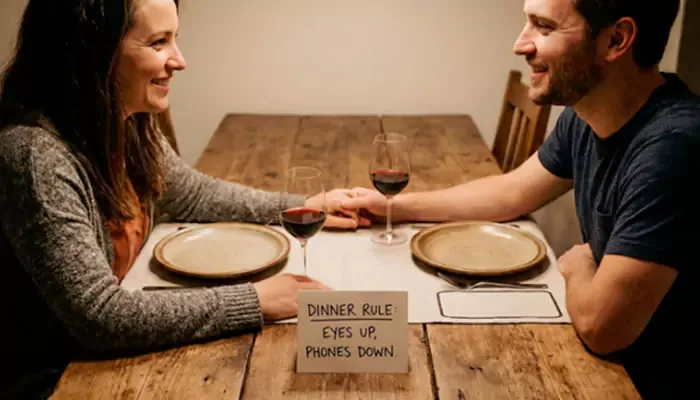
A phone on the table, face up, buzzing through dinner, tells your partner they are competing for your attention — and losing. One of the simplest ways to show support is to make yourself unreachable for twenty minutes: phone in another room, television off, laptop closed. It costs nothing, it takes no effort, and it changes the whole feeling of a conversation. Your partner can tell the difference between half an ear and a whole one, and only the whole one feels like support.
What it means: undivided attention is a form of respect, and a stressed person notices its absence more than anyone. How to handle it: make it a small ritual — phones away at dinner, or for the first half hour after work. Common mistake: putting the phone face down but checking it every few minutes; that is worse than leaving it out, because it pretends to be attention.
4. Name What You Notice: ‘You Seem Exhausted Tonight’
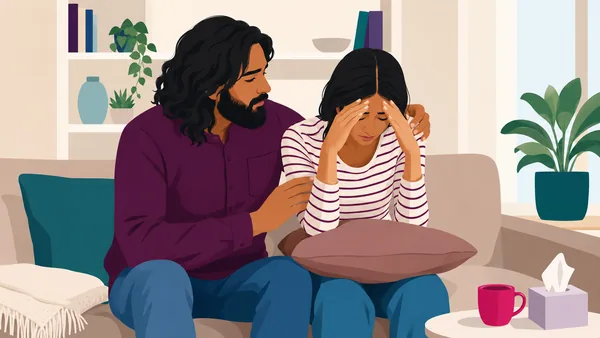
Stressed people often cannot see their own stress clearly — they are too close to it. Naming what you notice, gently and without judgment, can be a relief: ‘You seem exhausted tonight.’ ‘You’ve been quiet since that call.’ ‘Your shoulders have been up around your ears all week.’ You are not diagnosing them; you are holding up a mirror. Most people respond to being seen, even when they are not ready to talk about what they are carrying.
Signs and examples: tight shoulders, short answers, skipped meals, restless sleep, or a laugh that does not reach their eyes. How to handle it: name one thing, softly, then stop — let them pick it up or leave it. What to avoid: a list of everything wrong with them; one observation is an invitation, five is an intervention.
5. Validate Before You Advise: ‘That Sounds Really Hard’

Validation is the sentence most of us skip: ‘That sounds really hard.’ ‘No wonder you’re upset.’ ‘Anyone would feel that way.’ It does not solve anything, and that is why it works — it tells your partner their feelings make sense before anyone tries to change them. Advice that arrives before validation feels like correction; the same advice after validation feels like teamwork. If you only remember one phrase from this whole guide, make it this one, because it opens every conversation that advice alone would close.
What it means: validation says their feelings are reasonable, not that their situation is hopeless. How to handle it: repeat back the feeling, not the facts — ‘That sounds frustrating’ beats ‘So you missed the deadline’. Common mistake: validating with one breath and correcting with the next — ‘I get it, but…’ erases everything before the ‘but’.
6. Ask the One Question: ‘Do You Want Advice, or Just a Listen?’

This single question prevents more arguments than any other sentence in a relationship. Stressed people sometimes want a brainstorming partner; more often they want a witness. Asking which one they need shows respect for their judgment, and it stops you from offering a plan to someone who only wanted to be heard — or from sitting quietly when they actually wanted help. It takes five seconds, it works in almost every situation, and it makes your partner feel like a teammate rather than a project.
Why it matters: guessing wrong about what they need is the most common way good intentions go wrong. How to handle it: ask early, then honour the answer — if they say ‘just listen’, keep the solutions in your pocket. Quick verdict: when you are not sure what they need, ask; when you are sure, ask anyway, because stress changes what people need from one hour to the next.
7. The Two-Minute Check-In That Keeps You Connected

You do not need an hour-long heart-to-heart every day. A two-minute check-in — a proper one, not a texted ‘u ok?’ — can keep a stressed partner from feeling alone all day. It might be a morning coffee together before the day starts, a short call at lunch, or two minutes on the sofa before bed: ‘What was the hardest part of today? What’s tomorrow looking like?’ Short, regular and reliable beats long, rare and dramatic, because stress is usually a slow drip, not a single flood.
What it means: a check-in is a small promise — I will keep asking, even on the busy days. How to handle it: anchor it to something you already do, like the morning coffee or the walk to the car. What to avoid: turning it into an interrogation; two honest minutes are worth more than twenty forced ones.
8. A Hug Before Words: Comfort That Needs No Explanation

Sometimes words arrive too early. When your partner walks in looking defeated, a hug — a real one, arms around them, no patting, no rushing — can say everything before a single sentence. Physical comfort lowers stress in a way talking cannot, at least in the first minute: it slows breathing, loosens shoulders, and tells the nervous system that it is safe to stand down. You do not need to know what happened to offer it. The hug is not a substitute for the conversation; it is the doorway into it.
Why it matters: touch is the fastest reassurance there is, and it works even when your partner cannot yet put their stress into words. Signs and examples: they lean in and stay there, or they go stiff and pull away — both tell you something useful about what they need. What to avoid: hugging and immediately asking ‘What’s wrong?’; give the hug a moment to do its work first.
9. Make the Tea: Small Comforts That Land When Words Don’t

There is a reason ‘I’ll put the kettle on’ is the classic response to bad news. Making your partner a drink, warming up their favourite food, or handing them a blanket is support in its simplest form: it asks nothing of them, it requires no conversation, and it proves you were paying attention to what comforts them. On the worst days, people do not need a speech — they need someone to notice they are cold, tired and hungry, and to do something about it without being asked.
What it means: a small comfort says ‘I know you’ in a way a general pep talk never can. How to handle it: learn their version — tea or coffee, sweet or plain, blanket or hot water bottle — and have it ready without a fuss. Quick verdict: when you do not know what to say, do something small and kind; it is rarely the wrong move.
10. Take One Small Task Off Their Plate Today

Stress is often less about one big problem and more about a hundred small ones piling up: the laundry, the school form, the bill, the appointment, the broken lightbulb. Taking just one of those off your partner’s plate — quietly, without announcing it — can feel like a weight lifting. Do not ask ‘What can I do?’ when they are too overwhelmed to make a list; look around, pick something obvious, and do it. The relief is real, and so is the message: you are not carrying this alone.
Pros and cons: doing a task is fast and concrete, but only if you actually finish it — a half-done chore becomes one more thing to manage. How to handle it: choose the task they have been avoiding longest, and do it properly. Common mistake: asking them to delegate while they are stressed; deciding for yourself is the help.
11. Cook Dinner Without Being Asked

Dinner is the chore that arrives exactly when a stressed person has nothing left to give. Cooking it without being asked — or even ordering their favourite takeaway when the day has been truly awful — removes a whole decision from an overloaded mind. It does not have to be impressive; simple, warm and on the table on time is the point. And when you cook, clean up too, because a sink full of dishes hands the stress straight back the moment the meal is over.
What it means: feeding someone is one of the oldest forms of care, and it lands precisely because it is practical. How to handle it: keep two or three easy meals you can make without thinking, for the days when thinking is the problem. What to avoid: cooking a complicated new recipe that turns the kitchen into a second stressful project.
12. Protect Their Sleep Like It Matters — Because It Does

Stress and bad sleep feed each other in a vicious circle: worry keeps your partner awake, and being awake makes the worry worse. Protecting their sleep is one of the most useful things you can do — keep the bedroom cool and dark, keep late-night work talk out of it, handle the early-morning noise, and let them sleep in when they can. If they are lying awake, do not launch into problem-solving at midnight; a quiet ‘I’m here, try to rest’ is worth more than a plan made at 2 a.m.
Why it matters: one good night’s sleep can change how a whole problem looks in the morning. Signs and examples: tossing and turning, waking at 3 a.m., or falling asleep on the sofa at 8 p.m. What to avoid: scrolling in bed beside them, or treating their exhaustion as laziness; tired is not lazy.
13. Go for a Walk Together: The Conversation That Moves

Some conversations happen better on foot. Walking side by side takes the pressure off eye contact, gives restless energy somewhere to go, and lets silences feel comfortable instead of awkward. A stressed partner who will not talk at the kitchen table will often talk after ten minutes of walking. It does not need to be a hike — around the block, to the park, to the shop and back. The movement itself helps: fresh air and a change of scenery loosen thoughts that feel stuck indoors.
What it means: walking turns a heavy talk into a shared activity, which makes it easier to start and easier to survive. How to handle it: suggest it lightly — ‘Fancy a quick walk?’ — rather than announcing a serious conversation. Quick verdict: if the talk is not happening at home, try it on the move; the pavement has solved more problems than the sofa.
14. Sit With Them in Silence When There Is Nothing to Say

Not every silence needs filling. When your partner is stressed and has no words, sitting beside them — on the sofa, in the car, on the edge of the bed — can be more supportive than any sentence. It says ‘I am not going anywhere’ without demanding a performance of okayness. The trick is being comfortable in the quiet yourself; if you fidget, sigh, or keep glancing at your phone, the silence feels like waiting, not company. Just be there, calmly, for as long as it takes.
What it means: presence is support, even when it is quiet; your partner does not always need you to do something. How to handle it: stay, breathe normally, and let them break the silence when they are ready. Common mistake: filling every pause with questions or reassurance; sometimes the kindest sound is none at all.
15. Remember the Small Details They Mentioned in Passing

Nothing says ‘I was listening’ like remembering a detail your partner mentioned once, in passing, three days ago. The name of the colleague who upset them. The deadline they are dreading. The appointment they are nervous about. Asking about it later — ‘How did the meeting with Sarah go?’ — proves you were not just nodding; you were keeping their worries in mind. For a stressed person, that is no small thing: it means the weight is shared, even when they are the one carrying it.
Why it matters: remembering details turns everyday listening into evidence that they matter to you. How to handle it: when they mention something stressful, make a quiet mental note — or an actual one — and follow up. What to avoid: remembering only the dramatic parts; the small, boring details are the ones that prove you care.
16. Send a Kind Midday Message, Out of the Blue

A short message in the middle of a hard day can change its shape: ‘Thinking of you. You’ve got this.’ ‘Hope the meeting went okay.’ ‘Dinner’s sorted, don’t worry about it.’ It does not need to be long or clever — the point is that it arrives when they least expect it, from someone who knows what their day looks like. For a partner drowning in work, a message like that is a small island of calm. Send it without expecting a reply; the gift is the message, not the response.
What it means: a midday message says you are thinking of them even when you are busy too. How to handle it: time it for the hard part of their day — before the big meeting, after the difficult call. Common mistake: sending a message that adds a task — ‘Don’t forget to…’ — when they needed encouragement, not another item on the list.
17. Help Them Break the Problem Into Smaller Steps

Stress makes problems look enormous and unmovable, because the mind sees the whole mountain at once. Helping your partner break it down — not by solving it for them, but by asking ‘What’s the very first step?’ — can turn a wall into a staircase. One email. One phone call. One page of the report. Write the steps down together if it helps; a list on paper is much smaller than a worry in the head. The goal is not to finish the problem tonight, but to make it feel finishable.
How to handle it: ask what the smallest possible next step is, and offer to do it with them or alongside them. Pros and cons: breaking a problem down brings real relief, but only if you let them set the pace — rushing the steps feels like pressure. What to avoid: taking over the whole problem and handing back a finished plan; they need to feel capable, not rescued.
18. Celebrate the Small Wins They Barely Notice

When someone is stressed, they stop noticing their own progress. The email they finally sent, the difficult conversation they survived, the day they got through without falling apart — all of it invisible to them, all of it worth naming. ‘You handled that really well.’ ‘I’m proud of how you dealt with today.’ It is not empty praise; it is a reminder that they are coping, even when coping does not feel like enough. Small wins, noticed out loud, rebuild the confidence that stress quietly takes away.
What it means: naming a win gives your partner evidence that they are not failing — they are getting through it. Signs and examples: they shrug off good news, or say ‘It was nothing’; that is exactly when the win needs naming. Quick verdict: celebrate the effort, not just the outcome — getting through a hard week is a win, even if the problem is not solved yet.
19. Keep Routines Steady When Everything Else Feels Shaky

Stress loves chaos, and routine is its quiet enemy. Keeping the small rhythms of the week steady — the morning coffee, the Friday takeaway, the Sunday walk, the bedtime that does not slide to midnight — gives a stressed partner something solid to stand on. You do not need to announce it or make a project of it; just keep showing up at the usual times, in the usual ways. When the world feels unpredictable, a predictable home is a form of care all on its own.
Why it matters: routines reduce decisions, and decisions are exactly what an overloaded mind cannot afford. How to handle it: protect one or two anchors in the day, even when the week is busy — the shared meal, the evening walk. What to avoid: letting every routine collapse at once ‘because things are stressful’; that is when your partner needs them most.
20. Don’t Take a Bad Mood Personally — It’s Usually Not About You

The hardest part of supporting a stressed partner is not taking their bad mood personally. A short answer, a slammed cupboard, a sigh when you walk in — it feels like rejection, and the instinct is to defend yourself or withdraw. But most of the time, it is not about you at all; it is about a day that went wrong before you even appeared in it. That does not mean you have to accept being snapped at — you can calmly say ‘I know today was hard, but please don’t take it out on me’ — but it does mean pausing before you make their stress into your injury.
What it means: separating their mood from your worth keeps one person’s hard day from becoming two people’s fight. How to handle it: give them a little grace in the moment, and raise the tone later, when things are calmer. Common mistake: matching their sharpness with your own; two stressed people shouting rarely makes either one feel better.
21. Avoid the ‘Just Relax’ Trap — and What to Say Instead

‘Just relax’ is the most useless sentence in the English language, and every stressed person has heard it a hundred times. It sounds kind, but it tells your partner that their stress is a choice they could simply switch off — and that they are failing at the easiest thing in the world. The same goes for ‘Don’t worry’, ‘It’ll be fine’ and ‘You’re overreacting’. What works instead is honesty: ‘I can see this is really weighing on you.’ ‘That sounds exhausting.’ ‘I’m here, and we’ll get through it.’ None of these fix the problem. All of them make it easier to carry.
Common mistakes: ‘just relax’, ‘calm down’, ‘don’t stress’, ‘other people have it worse’ — each one closes the conversation it pretends to open. What helps instead: describe what you see, validate the feeling, and offer your presence. Quick verdict: if a sentence starts with ‘just’, it is probably not helping; try again with ‘I’ — ‘I can see this is hard for you.’
22. Share the Mental Load, Not Just the Chores

Stress often comes from the invisible work: remembering the appointments, tracking the bills, planning the meals, noticing what the house needs, keeping the family calendar in your head. Splitting the visible chores helps, but sharing the mental load — the remembering and the planning — helps far more. Take full ownership of something: not ‘tell me what to do’, but ‘I’ll handle the school forms this week’ or ‘I’ve booked the car service’. A partner who does not have to keep track of everything can finally put one thing down.
What it means: the mental load is the list that never leaves your partner’s head; taking part of it is real relief. How to handle it: pick one area and own it completely — the planning, the remembering, the follow-up. What to avoid: asking them to manage you doing the task; if they still have to remind you, the load has not moved.
23. Plan Something Small to Look Forward To

When stress stretches ahead with no end in sight, the future can start to look like one long grey corridor. Planning something small to look forward to — a film night on Friday, a favourite meal, a walk somewhere new, a lazy morning with no alarms — puts a light at the end of the tunnel. It does not have to be big or expensive; it has to be real, on the calendar, and soon. Hope is practical, and a small plan is one of the most practical kinds of hope there is.
Why it matters: looking forward to something breaks the feeling that every day will be exactly like this one. How to handle it: pick one small thing, put it in the calendar together, and protect it. Pros and cons: a plan gives energy, but only if it is realistic — promising a holiday you cannot afford adds a new stress, not a relief.
24. Support Their Health Habits Gently — No Lectures

Stress pushes people toward the quick comforts: skipped meals, too much coffee, no exercise, late nights. It is tempting to lecture — to point out the junk food and the missed workouts — but a stressed person already knows, and a lecture just adds guilt to the pile. Gentle support works better: cook a proper meal and eat it together, suggest a walk instead of announcing an exercise regime, keep water and fruit within reach, and go to bed at a decent time yourself. Change the environment, not the person, and let the good habits be the easy option rather than another demand.
What it means: health support is about making the healthy choice the easy one, not the virtuous one. How to handle it: join in — cook together, walk together, sleep at the same time. What to avoid: policing their food, their screen time or their sleep; a partner is not a health inspector, and stress makes everyone defensive.
25. Handle Money Stress as a Team, Not as Opponents

Money stress turns partners into opponents faster than almost anything else: one person’s spending becomes the other’s evidence, and every bill becomes a trial. The way through it is to sit on the same side of the table — literally, if it helps — and look at the numbers together without blame. Agree what is urgent, what can wait, and what small change would help this month. One honest conversation about money, held kindly, can take more pressure off a relationship than a dozen arguments about who spent what.
Why it matters: money stress is usually fear in disguise — fear of not coping — and fear shrinks when it is shared. How to handle it: pick one number to improve together, and celebrate when it moves. What to avoid: secret spending, hidden debts, or using money as a weapon in an argument; financial honesty is part of emotional honesty.
26. Back Them at Work Without Taking Over Their Career

When your partner is stressed about work — a difficult boss, an impossible deadline, a job they are starting to dread — the line between supporting and taking over is thin. You can help them prepare for a hard conversation, practise what they want to say, or simply listen while they rehearse their frustration. What you cannot do is fight their battles for them, email their boss, or decide they should quit on their worst day. Your job is to be the safe place they come home to, and the sounding board that helps them hear their own thinking clearly.
Signs and examples: Sunday-night dread, checking email at midnight, talking about work at every meal. How to handle it: protect the evenings, help them practise the hard conversation, and ask what a good week at work would look like. What to avoid: deciding their career for them in the middle of a bad week; big decisions deserve a calm day.
27. Give Space Without Going Cold: The Warm Distance

Space and coldness look alike from the outside, but they feel completely different. Warm space sounds like ‘Take all the time you need — I’ll be right here.’ Cold space sounds like silence, a closed door, and a phone that never gets answered. If your partner needs room, give it generously — but keep the small signals of care going: a cup of tea left outside the door, a message that says ‘No need to reply, just thinking of you’, dinner kept warm. Distance with warmth says ‘I respect what you need’; distance without it says ‘I’ve given up.’
What it means: the difference between space and withdrawal is whether your partner still feels loved while they are alone. How to handle it: agree how long the space will last — an hour, an evening — so it has an end. Common mistake: giving space and then punishing them for taking it, with a cold shoulder when they come back.
28. Know When to Step In — and When to Step Back

Support is a judgment call, and it changes daily. Step in when your partner is drowning — missing meals, not sleeping, unable to make a decision, or asking for help in the way they ask, which might be silence rather than words. Step back when they are coping, even messily, because taking over a problem they can handle tells them you do not trust them to cope. The best guide is their response: if your help brings relief, you judged it right; if it brings irritation, you stepped in too far or too soon. Adjust, apologise if needed, and try again.
How to handle it: watch for the signs of real overload — exhaustion, withdrawal, tears they cannot explain — and act on those, not on your own anxiety. Pros and cons: stepping in too early feels controlling; stepping in too late feels absent. Quick verdict: when in doubt, offer help and let them accept or refuse it — the offer itself is support.
29. Say Sorry When You Get It Wrong — Quickly and Simply

You will get it wrong sometimes. You will say the wrong thing, offer advice when they wanted a listener, or snap back when you meant to be patient. What matters is what happens next: a quick, simple apology, without excuses. ‘I’m sorry, that came out wrong.’ ‘I should have listened instead of fixing.’ No ‘but’, no explanation of why you were also stressed, no waiting for them to apologise first. A clean apology clears the air in seconds; a defensive one keeps the argument alive for days.
Why it matters: apologising well is part of supporting well — it proves the relationship is more important than being right. How to handle it: name what you did, say sorry, and ask what they need now. What to avoid: the non-apology — ‘I’m sorry you feel that way’ — which blames them for their own feelings.
30. Keep Your Own Cup Full So You Can Keep Showing Up

Supporting a stressed partner is tiring, and you cannot pour from an empty cup forever. If you skip your own sleep, your own friends, your own walks and your own rest, you will eventually resent the very person you are trying to help — and then both of you are running on empty. Looking after yourself is not selfish; it is part of the job. Take the walk, call your friend, sleep properly, and say honestly when you need a break too. Two cared-for people cope far better than one exhausted carer and one guilty partner.
What it means: your wellbeing is not separate from your partner’s — it is the foundation their support stands on. Signs and examples: snapping more easily, dreading their bad days, feeling invisible in your own home. What to avoid: martyrdom — keeping a silent tally of everything you have given up, then presenting the bill.
31. Laugh Together, Lightly — Even on the Hard Days

Laughter is not denial; it is relief. A shared joke, a silly memory, a ridiculous show watched together on the sofa — these small moments of lightness remind a stressed couple that they are still themselves, still a team, still capable of joy. The key word is lightly: never laugh at the thing that is stressing them, and never use humour to dodge a conversation they need to have. But a little shared laughter in the middle of a hard week is not avoidance; it is breathing, and everyone under stress needs to breathe.
Why it matters: laughing together rebuilds the feeling of being on the same side, which stress quietly erodes. How to handle it: keep it gentle and shared — an old story, a private joke, something you both find funny. What to avoid: sarcasm, teasing about the stressful thing, or jokes that land as minimising; if they do not laugh, drop it.
32. Revisit the Conversation Later, When the Dust Has Settled

Some conversations cannot happen while the stress is at its peak — they come out wrong, or they stop halfway, or someone walks away. That does not mean they are over; it means they need a second attempt on a calmer day. ‘Can we come back to what we were talking about yesterday? I think I understand it better now.’ Revisiting shows your partner that you did not forget, that their feelings stayed with you, and that you are willing to try again. It is one of the most underrated skills in a relationship: the patient second conversation.
What it means: a conversation that ends badly is not a failure if you return to it kindly. How to handle it: pick a calm moment, acknowledge what went wrong last time, and start again slowly. Common mistake: pretending the unfinished conversation never happened; it sits between you until someone picks it up.
33. Write It Down When Words Fail Either of You

Some people think clearly in writing and freeze in conversation, especially under stress. A short note — left on the pillow, sent as a message, written in a card — can say what a face-to-face talk cannot: ‘I love you. I know this week is hard. I’m proud of you. I’m here.’ It also gives your partner something to re-read on the worst days, when a spoken sentence has already faded. Writing is not a lesser form of support; for some people, it is the only form that gets through, because it can be received slowly, in private, without having to respond on the spot.
What it means: a written note carries your care without demanding an immediate reaction, which is exactly what a stressed person needs. How to handle it: keep it short, honest and specific — one thing you noticed, one thing you admire, one promise. Quick verdict: if the talk keeps going wrong, try the letter; the page never interrupts.
34. Be Patient When Progress Is Slow — Stress Does Not Lift Overnight

The last thing a stressed partner needs is someone keeping score of their recovery: ‘You seemed better yesterday, why are you upset again?’ Stress does not lift in a straight line; it comes in waves, and a good day does not mean the problem is solved. Patience means accepting the slow pace without making your partner feel like a burden for it. It means celebrating the small improvements and not treating a bad day as a failure. Your steady presence, day after day, is the support — not a deadline for feeling better.
Why it matters: patience tells your partner they are loved as they are, not only when they are coping well. What to avoid: timelines, comparisons with other people, and the phrase ‘You should be over this by now’. Quick verdict: if you can be patient for one more week, be patient for one more week — and then one more; that is what lasting support looks like.
How do I support my partner through stress without being pushy?
Support without being pushy by offering help once, then letting your partner choose whether to take it. Say ‘I’m here if you need anything’ and mean it, then give them room instead of checking in every hour. Pushiness usually comes from our own anxiety — we want the problem fixed so we can stop worrying — so notice when you are pressing for your own comfort rather than theirs, and step back.
What should I say to a stressed partner?
Say something simple and validating, such as ‘That sounds really hard’, ‘I’m here’, or ‘Tell me more’. Name what you see — ‘You look exhausted tonight’ — and ask what they need: ‘Do you want advice, or just a listen?’ The best words are short, specific and honest; they make room for how your partner feels instead of arguing with it or rushing to fix it.
What should I avoid saying to a stressed partner?
Avoid ‘just relax’, ‘calm down’, ‘don’t worry’, ‘you’re overthinking it’ and ‘other people have it worse’. Each of these tells your partner their feelings are wrong or exaggerated, and each one closes the conversation. Also avoid turning their stress into a competition, bringing up old arguments mid-crisis, or making big decisions while they are overwhelmed.
How can I help my partner who won’t talk about their stress?
Help a partner who won’t talk by making it safe to talk later, not by forcing it now. Notice out loud, gently — ‘You seem really weighed down this week’ — then give them space with the door open: ‘I’m here whenever you want to talk.’ Keep showing up with small kindnesses, keep routines steady, and revisit the conversation on a calmer day rather than demanding it in the moment.
How do I support a partner stressed about work?
Support a work-stressed partner by listening at the end of the day without trying to solve their job for them, and by protecting evenings and weekends from work creeping in. Help them practise a difficult conversation, break a big task into one small next step, and keep home a calm place to return to. Avoid deciding their career for them on their worst day, and avoid emailing their boss or fighting battles that are theirs to fight.
How do I support a partner stressed about money?
Support a money-stressed partner by facing the numbers together, without blame. Sit down as a team, agree what is urgent and what can wait, and pick one small change to make this month. Avoid secret spending, hidden debts and using money as a weapon in arguments. Money stress is usually fear in disguise, and fear shrinks when it is shared honestly between two people.
Should I give my partner space when they are stressed?
Give your partner space when they ask for it, or when crowding them is clearly making things worse — but give it warmly, not coldly. Say what you are doing and when you will be back: ‘I’ll be in the other room if you need me.’ Agree a simple signal for space, keep small kindnesses going, and check back in rather than disappearing for hours without a word.
How do I know if my partner’s stress needs professional help?
Stress may need professional help when it lasts more than a few weeks, disrupts sleep and appetite, causes constant worry or hopelessness, or leads to coping through drinking or overwork. If your partner loses interest in things they used to enjoy or talks about feeling hopeless, raise the idea gently and together — ‘I think we could use some extra help with this’ — and offer to help find someone and go along to the first appointment.
How can I support my partner and look after myself too?
Look after yourself by keeping your own sleep, friendships and routines going, and by saying honestly when you need a break. Supporting a stressed partner is tiring, and resentment builds quietly when one person gives everything and restores nothing. Taking a walk, talking to a friend or resting properly is not selfish — it is what keeps you able to show up kindly, day after day.
What is the best way to support a partner through long-term stress?
The best way to support a partner through long-term stress is steady, patient presence: small kindnesses repeated daily, honest conversations revisited when the dust settles, and no deadline on feeling better. Keep routines steady, celebrate small wins, share the mental load, and seek professional help together if the stress does not lift. Long-term support is not one big gesture — it is a hundred small ones, done consistently.
Conclusion: Small Support, Every Day, Is What Lasts
Knowing how to support your partner through stress is not about having the perfect words or the perfect plan. It is about showing up, day after day, in small ways that add up: listening properly, saying the kind thing, making the tea, taking one task off the list, giving space warmly, and being patient when progress is slow. None of these gestures is dramatic on its own. Together, they tell your partner the one thing stress tries to make them forget — that they are not carrying this alone.
Start tonight, with one thing. Ask how they really are, and listen to the answer. Put the phone away, make them a drink, or simply sit beside them for a while. Then do it again tomorrow. The couples who get through stressful seasons are rarely the ones with the cleverest advice; they are the ones who kept choosing each other, in small, ordinary, kind ways, until the hard season passed — and who were still standing together, closer than before, when it did.
