
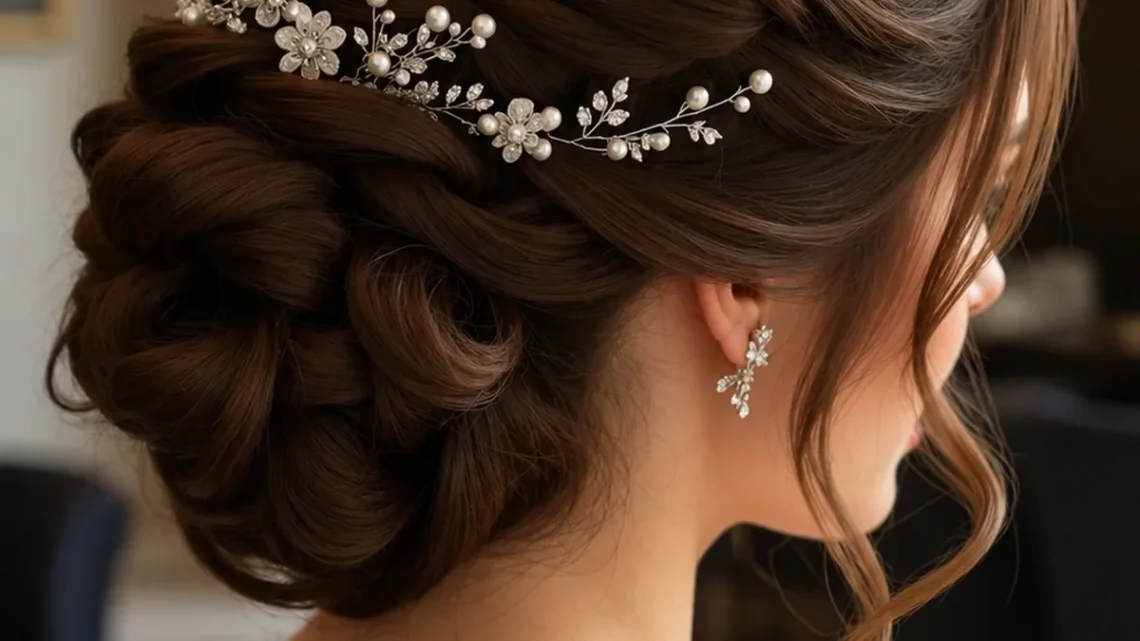
Your wedding hair has a harder job than any other hairstyle you will ever wear: it has to look perfect in the ceremony photographs, survive happy tears and hours of dancing, hold a veil without slipping, and still look good in the last photograph of the night. That is why bridal hairstyles for women are planned so carefully, with a trial run, a timeline and a stylist who knows exactly how the hair will behave from the first look to the last dance. The right bridal style is not just pretty — it is practical, photographed from every angle, and built to last twelve hours or more.
This guide starts with eight practical explainers — choosing a style by face shape, veil-friendly hair, the hair trial, updos versus wearing your hair down, styling by length, weather-proofing, accessories, and the ceremony-to-reception switch — then walks through 38 bridal hairstyles for women, from the classic low chignon and Hollywood waves to braided crowns, textured buns and short-hair bridal looks. Every style notes who it suits, how to style it, what to ask your stylist, and the mistake to avoid, so you can walk into your trial knowing exactly what you want.
How to Choose a Bridal Hairstyle for Your Face Shape
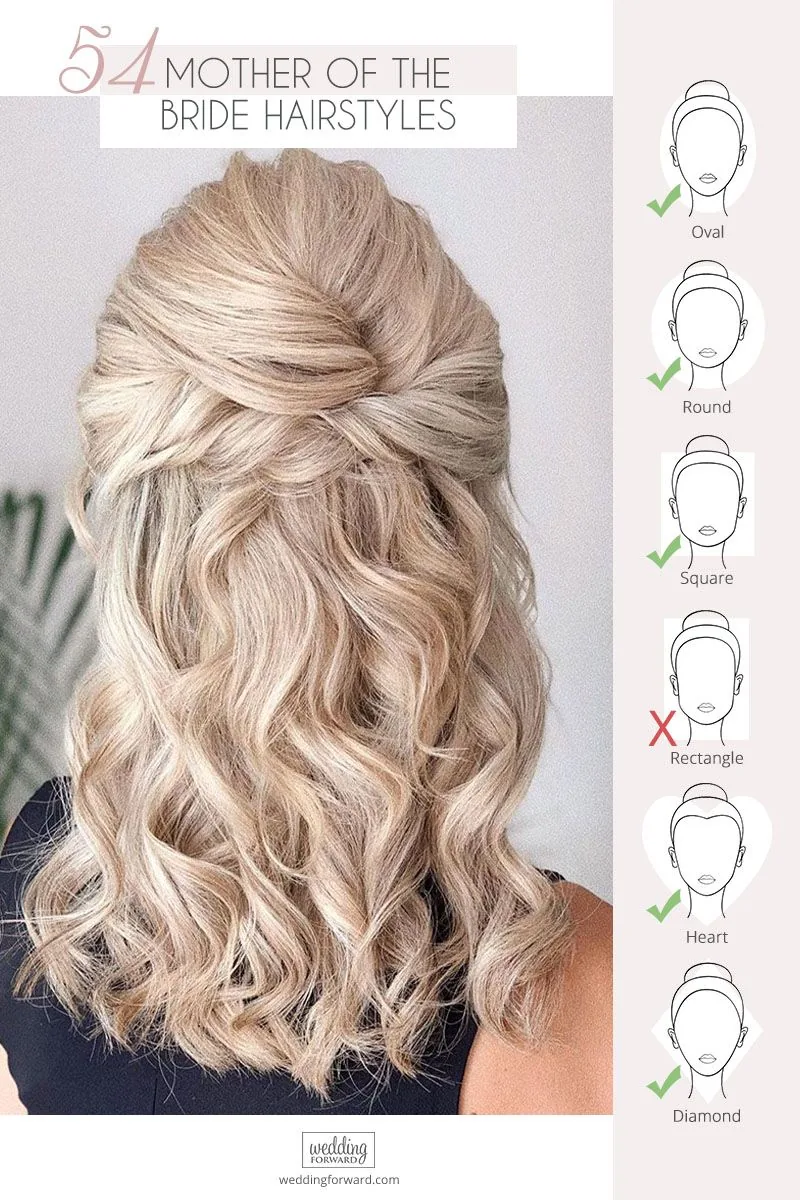
Your face shape decides which bridal hairstyles for women will flatter you most, and it is worth settling before you fall in love with a photograph. Oval faces can wear almost anything, from a high bun to loose waves. Round faces look longer with height at the crown and soft pieces that fall past the jaw, rather than width at the cheeks. Square faces soften with waves and face-framing layers, while heart-shaped faces balance out with volume below the chin. Long faces benefit from a side part, soft waves at cheek level and a fringe or curtain pieces that shorten the forehead.
Best for: every bride — this is the first decision, not an afterthought. How to use it: bring three photographs to your trial that show your face shape from the front, and ask your stylist which ones honestly suit you. Common mistake: choosing a style because it looked beautiful on a model with a completely different face shape and hair texture, then being disappointed on the day. Quick verdict: the most flattering bridal hair is the one that frames your face, not the one with the most likes online.
Veil-Friendly Bridal Hairstyles: What Actually Works
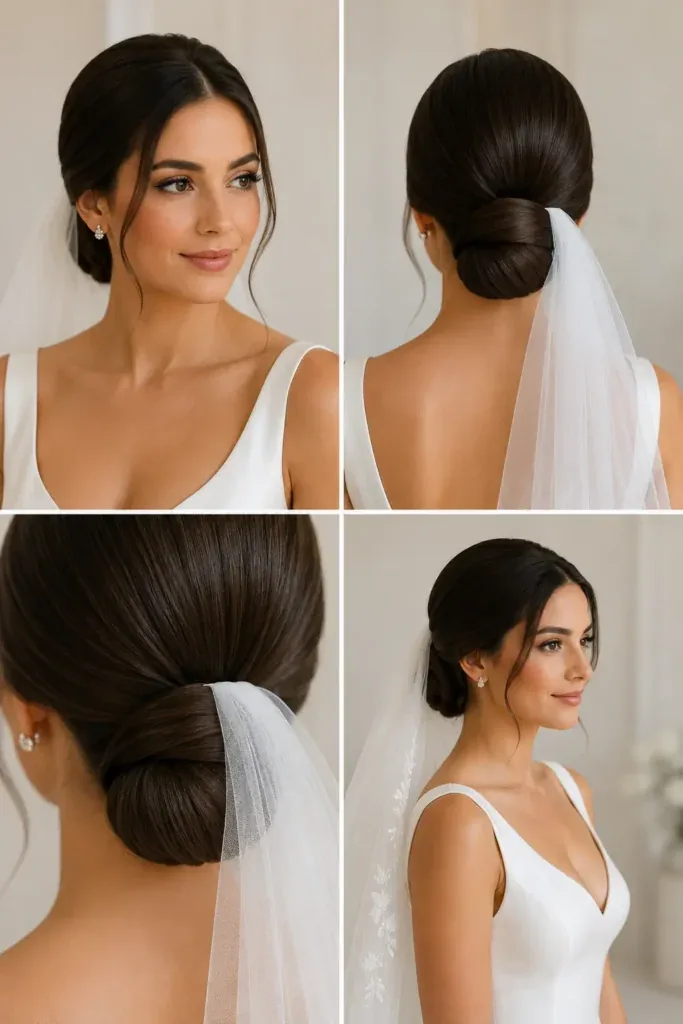
A veil changes everything about a hairstyle, because it needs a secure anchor point and it must not fight the shape of the hair underneath. Low buns and low chignons are the most veil-friendly bridal hairstyles for women, because the veil comb slides in neatly above the bun and the weight of the veil sits low, where it cannot pull the style apart. Half-up styles work well too, with the veil anchored at the twist or the clip. High buns can work with a blusher veil worn underneath, but a long veil pinned on top of a high bun often looks crowded and slips as the day goes on.
What to ask your stylist: bring your actual veil to the trial and ask them to pin it exactly as it will be worn, then shake your head gently to test the hold. Pros: a low anchor point keeps the veil secure for hours and photographs beautifully from behind. Cons: very high or very voluminous styles leave nowhere sensible to pin a veil. Common mistake: doing the trial without the veil and discovering on the morning of the wedding that the style and the veil do not work together.
The Bridal Hair Trial: When to Book It and What to Ask
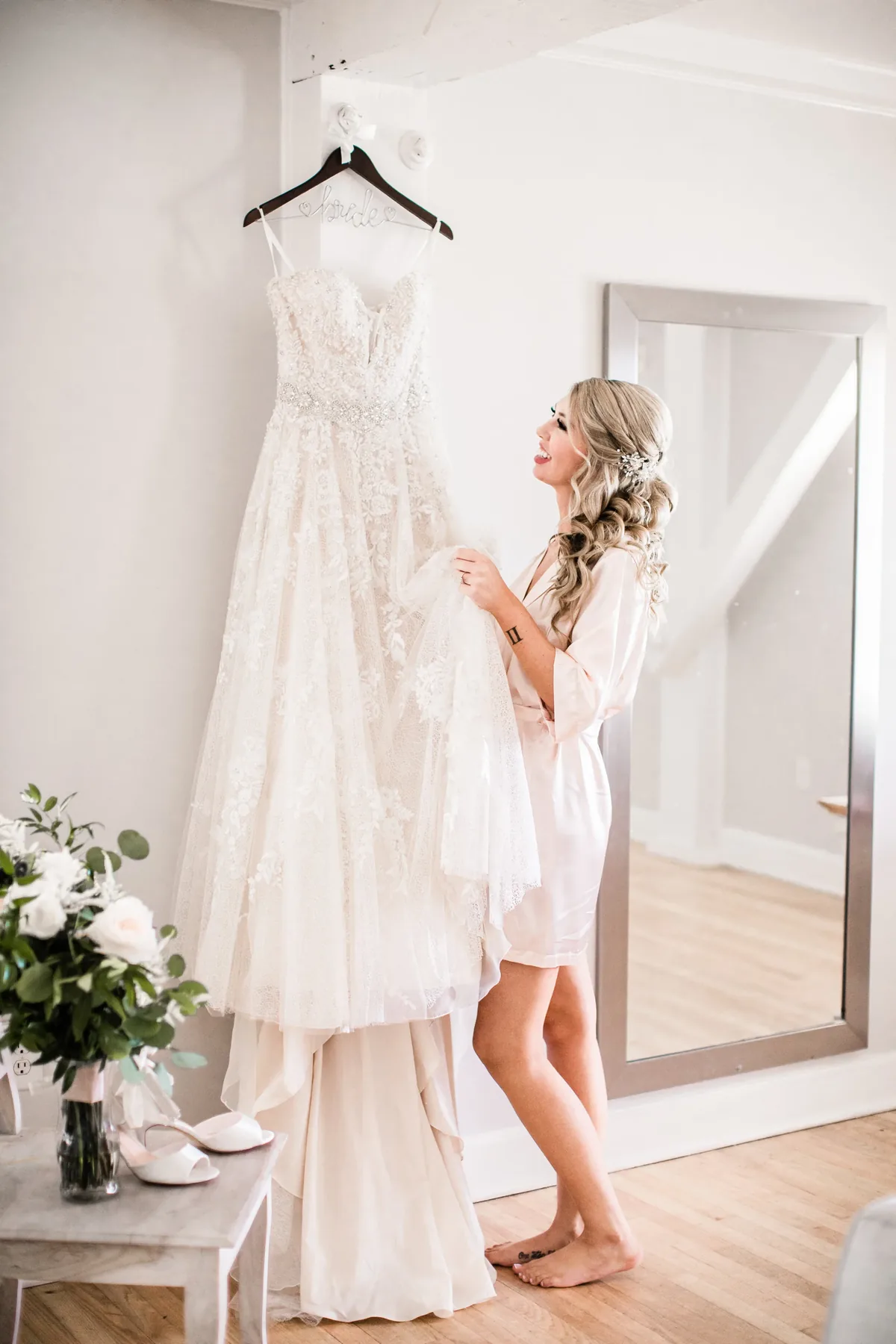
The hair trial is a full rehearsal, usually booked four to eight weeks before the wedding, and it is the single best investment in your wedding-day look. Bring your veil, your headpiece, photographs of the styles you like, and a photograph of your dress, especially the neckline and back, because the hairstyle has to work with the dress, not against it. A good stylist will try the style, photograph it from every angle, time how long it takes, and note exactly which products and pins were used, so the morning of the wedding holds no surprises.
When to book: four to eight weeks before the wedding, after the dress is finalised. What to ask your stylist: how long the style will last, how many pins it needs, whether it needs extensions for fullness, and what to do if it rains. Cost and time: a trial usually takes 60 to 90 minutes and costs roughly half the wedding-day styling price. Quick verdict: never skip the trial — the wedding morning is the worst possible time to discover a style does not suit you.
Updo or Hair Down? How to Decide for Your Wedding
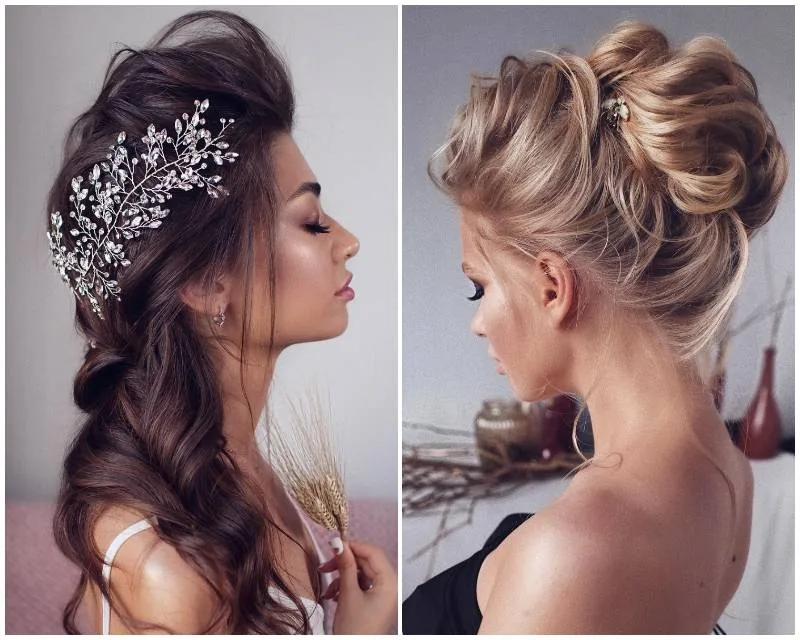
The oldest bridal question is whether to wear your hair up or down, and the honest answer is that both can be beautiful — they just solve different problems. An updo keeps the hair off your neck and shoulders, shows off the dress, photographs beautifully from behind, and lasts all day with far less maintenance. Hair down looks romantic and soft, shows off length and texture, and photographs beautifully from the front, but it is more vulnerable to wind, humidity and hours of dancing. Many brides now choose both: an updo for the ceremony and a looser style for the reception.
Best for: updos suit hot weather, strapless and backless dresses, and brides who dance hard; hair down suits cool venues, high necklines and brides who love their length. What to ask your stylist: ask how the style will look after four hours, not just after four minutes. Pros and cons: updos last longer and need fewer touch-ups, while hair down feels more romantic but needs a touch-up kit and a plan for the evening. Quick verdict: if you cannot decide, a half-up style is the honest compromise.
Bridal Hair by Length: Short, Medium and Long
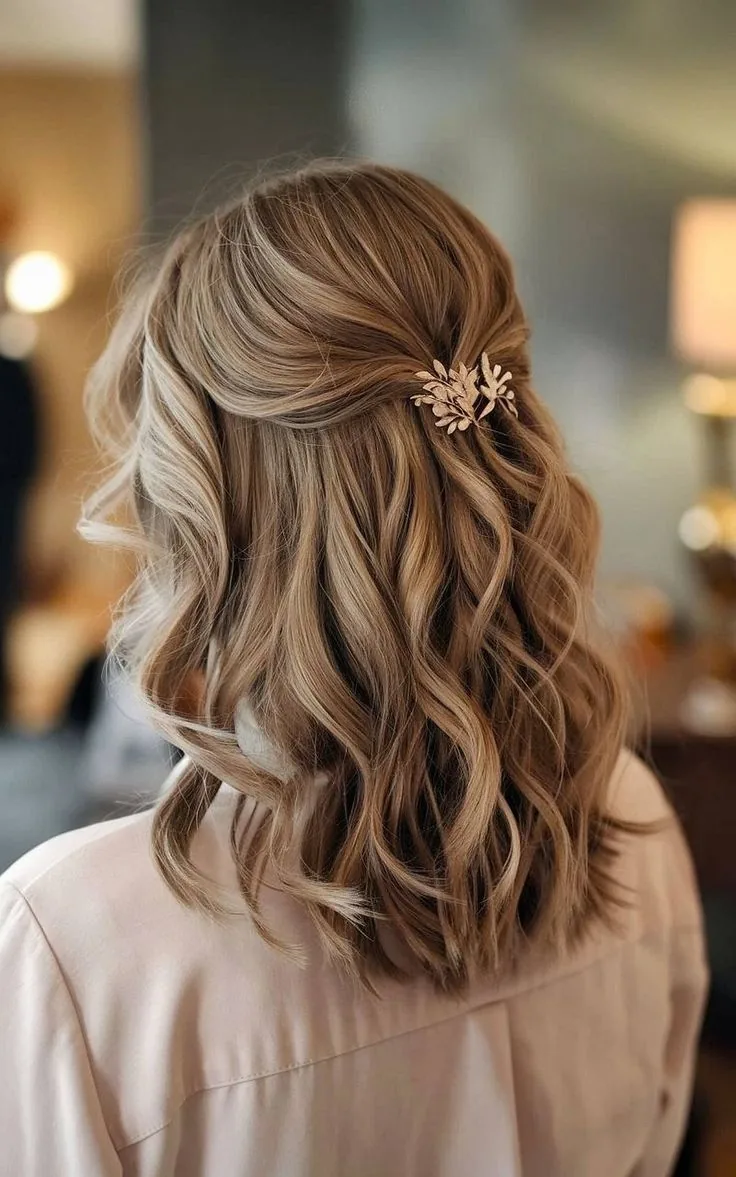
Hair length changes what bridal hairstyles for women are possible, but every length has beautiful options. Short hair — a pixie or a bob — can be styled with soft waves, a deep side part, a sparkling clip or a birdcage veil, and it photographs with wonderful definition. Medium hair is the most versatile bridal length: it holds a low bun, a half-up twist, soft curls or a braided crown without needing extensions. Long hair offers the most drama, from Hollywood waves to a full chignon, but it is also the heaviest, so it needs the most pins and the most planning to last the day.
Who it suits: short hair suits brides who love their cut and want the day to feel like them; medium hair suits almost every bridal style; long hair suits brides who want drama and are willing to pay for the extra time. What to ask your stylist: ask honestly whether your length can hold the style you want, or whether a few clip-in extensions would make it last. Common mistake: forcing a long-hair style onto short hair with a mountain of pins, instead of choosing a style designed for your length. Quick verdict: the best bridal hair works with your length, not against it.
Weather-Proofing Your Bridal Hair: Humidity, Wind and Tears
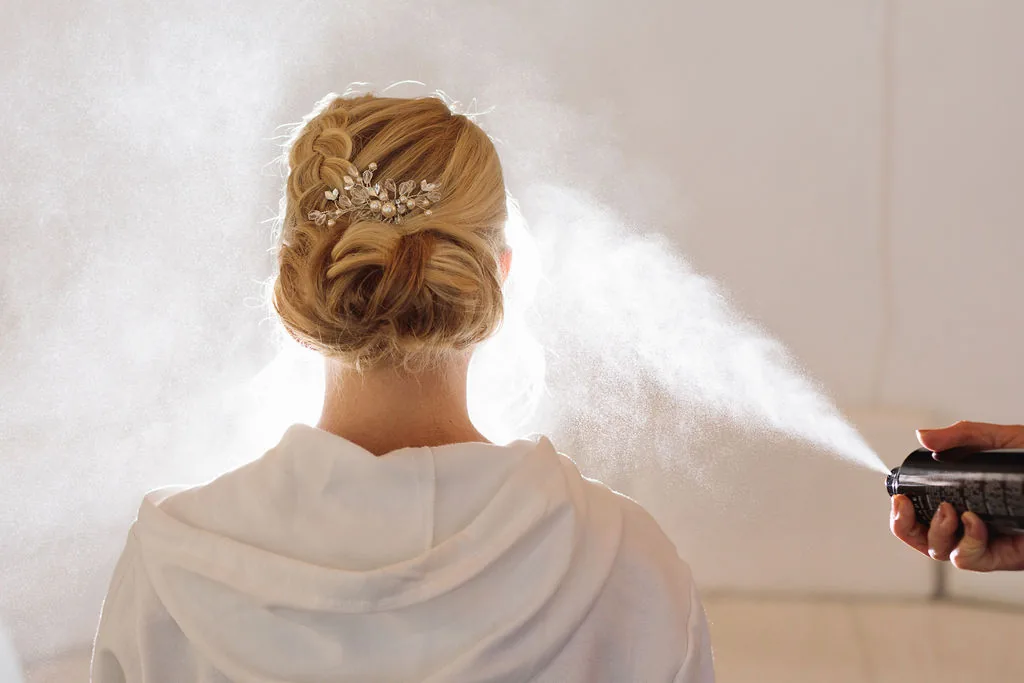
Outdoor ceremonies, summer humidity and a long day of dancing are the three enemies of bridal hair, and a good stylist plans for all of them. Humidity makes curls drop and frizz appear, so the stylist should use a humidity-resistant spray, set curls with pins until they cool completely, and choose a style with some structure rather than relying on loose waves alone. Wind is the reason so many outdoor brides choose an updo or a half-up style: hair that is anchored stays put, while hair worn fully down can spend the ceremony blowing across the face. Tears are the easiest problem — waterproof makeup and a tissue in the bouquet handle them.
How to prepare: tell your stylist the venue, the season and whether the ceremony is indoors or outdoors before the trial. Maintenance: pack a small touch-up kit with bobby pins, a mini hairspray, a comb and blotting paper, and give it to a bridesmaid. Common mistake: choosing a style that only works in still, air-conditioned air, then wearing it to a garden ceremony in July. Quick verdict: a slightly more structured style on the day will still look romantic in photographs — and it will still be there at midnight.
Bridal Hair Accessories: Veils, Tiaras, Pins and Fresh Flowers
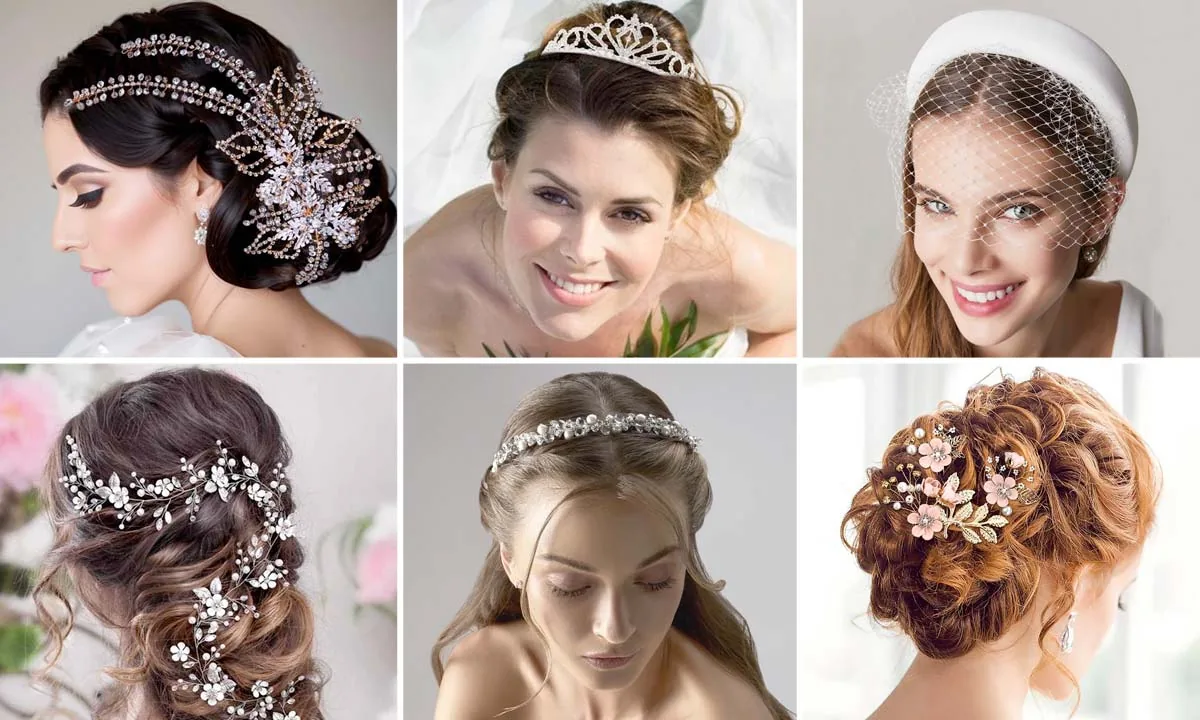
Accessories are what turn a beautiful hairstyle into a bridal hairstyle, and the rule is that one statement piece is enough. A veil is the classic, and it needs a hairstyle with a secure anchor point. A tiara or headband sits best on an updo or a half-up style, where it has hair to grip. Decorative pins and combs work on almost any style and are the easiest way to add sparkle without committing to a tiara. Fresh flowers are romantic and photograph beautifully, but they wilt, so they should be added as late as possible, ideally by the florist on the morning of the wedding, and kept cool until then.
Best for: a veil suits a classic ceremony; a tiara suits a formal ballroom wedding; pins and combs suit every wedding; fresh flowers suit garden and outdoor weddings. What to ask your stylist: ask them to practise placing the accessory at the trial, and to show you how it is secured. Cost and time: accessories range from a few pounds for pins to several hundred for a tiara or a handmade veil. Common mistake: wearing a veil, a tiara and a flower crown at once, so the hair disappears under the accessories.
From Ceremony to Reception: The Second-Look Hair Switch
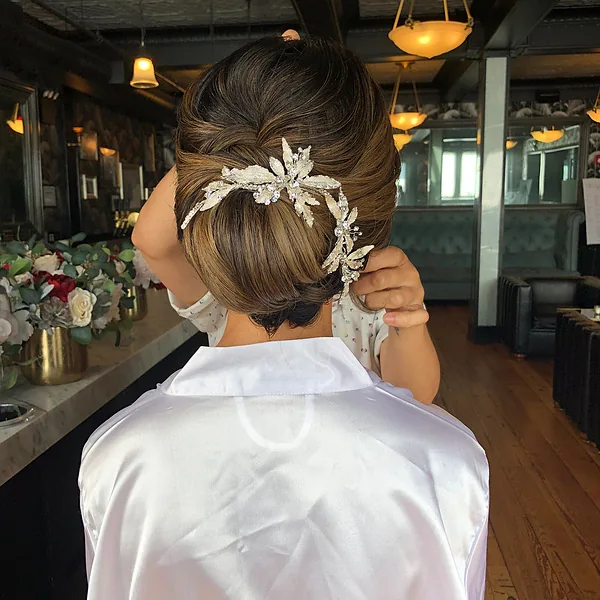
More brides are now planning two hairstyles for one day: a formal style for the ceremony and a looser, party-ready style for the reception. The switch is usually simple — take the veil out, let a few pieces down, remove some pins, add a sparkly clip, or shake a structured updo into soft waves. A good stylist plans the second look during the trial, so the change takes ten minutes, not an hour, and the hair still looks intentional rather than undone. The key is choosing a ceremony style that can be loosened gracefully, rather than one that has to be completely redone.
How to plan it: ask your stylist to show you the second look at the trial, and decide who will help you make the change — a bridesmaid with instructions, or the stylist staying on. Pros: two looks in the photographs, and hair that feels freer for dancing. Cons: it adds ten to fifteen minutes to the schedule, and it only works if the ceremony style is designed to be loosened. Quick verdict: if you want a second look, tell your stylist before the trial, not on the morning of the wedding.
1. The Classic Low Chignon
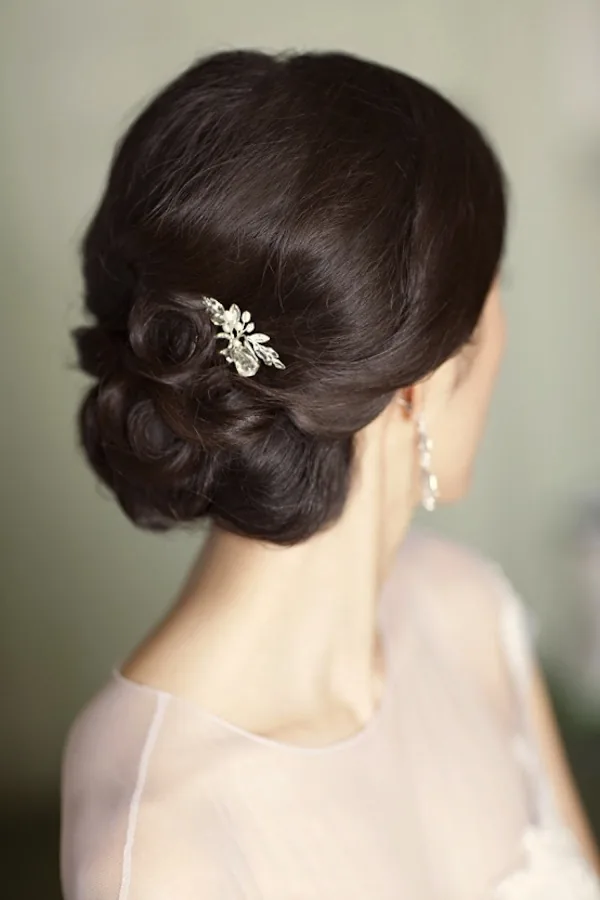
The classic low chignon is the most requested of all bridal hairstyles for women, and it has stayed at the top of the list for a reason: a smooth, low knot at the nape of the neck that looks elegant from every angle, holds a veil perfectly, and never goes out of fashion. It suits strapless dresses, high necklines and backless gowns alike, because it keeps the neck and shoulders clear and lets the dress do the talking. The chignon can be sleek and polished or softened with a few loose face-framing pieces, depending on how formal the wedding is.
Why it helps: the low position anchors a veil securely and keeps the hair comfortable for twelve hours. Who it suits: every face shape and almost every dress style, especially classic and formal weddings. What to ask your stylist: ask whether the knot will be twisted, braided or rolled, and whether a few pieces should be left loose around the face. Maintenance: a handful of pins and a light mist of hairspray are all it needs for the whole day.
2. Romantic Loose Waves
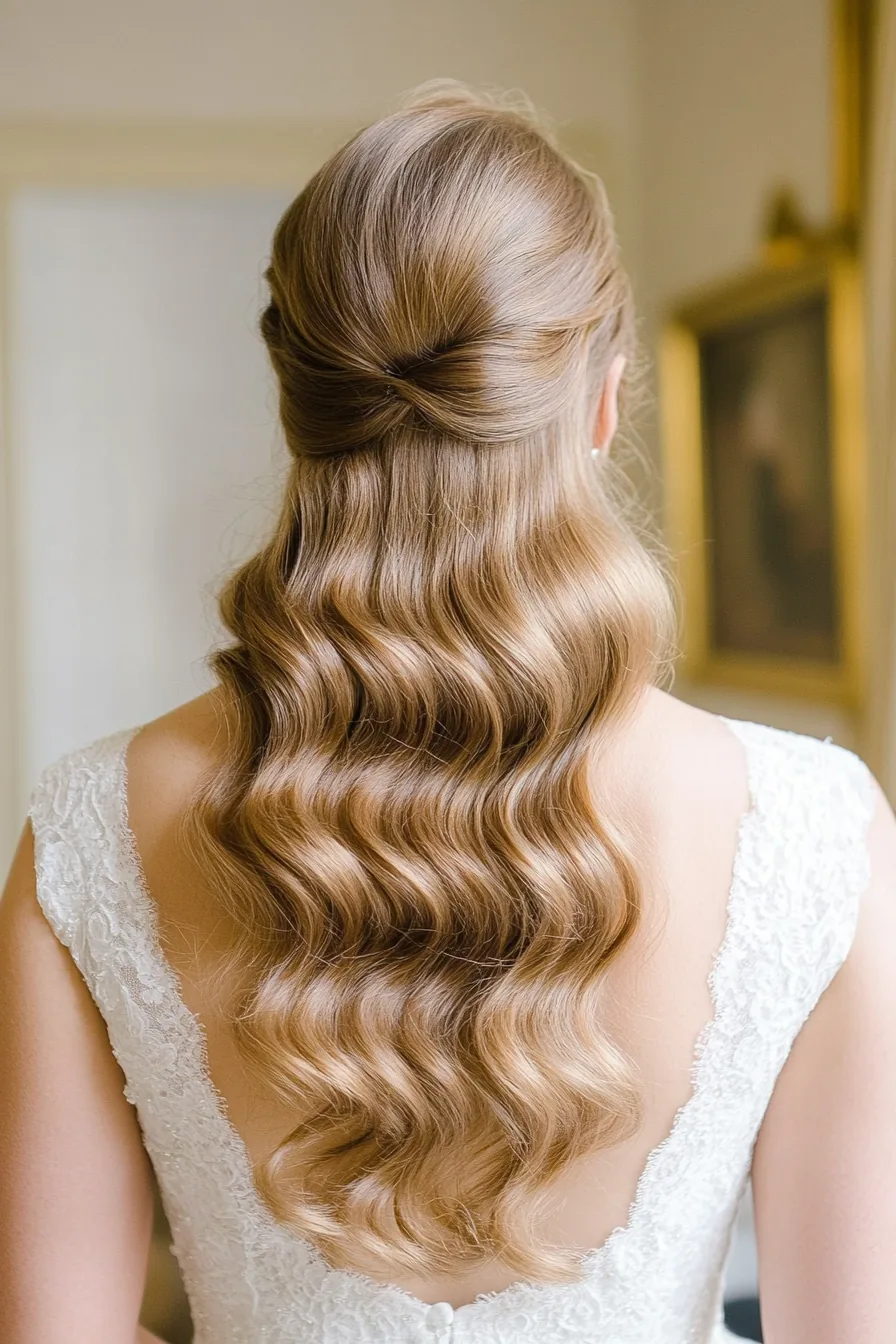
Romantic loose waves are the bridal look for women who want to feel like themselves on their wedding day, only softer and more polished. The hair is curled in large, loose sections and brushed out into gentle waves that fall over the shoulders, with a centre or side part and a few pieces pinned back so the face stays visible. It photographs beautifully, especially in outdoor light, and it suits garden weddings, beach weddings and relaxed ceremonies better than any structured updo.
Best for: medium to long hair with natural texture, and brides who love wearing their hair down. How to style: curl with a large-barrel iron, let each curl cool pinned up, then brush through gently and finish with a flexible-hold spray. Common mistake: curling the hair too tightly, which makes it look like a prom style rather than a bridal one — the waves should be soft, not springy. Who should avoid it: brides getting married in high humidity without a weather-proofing plan, because loose waves drop first.
3. The Elegant High Bun
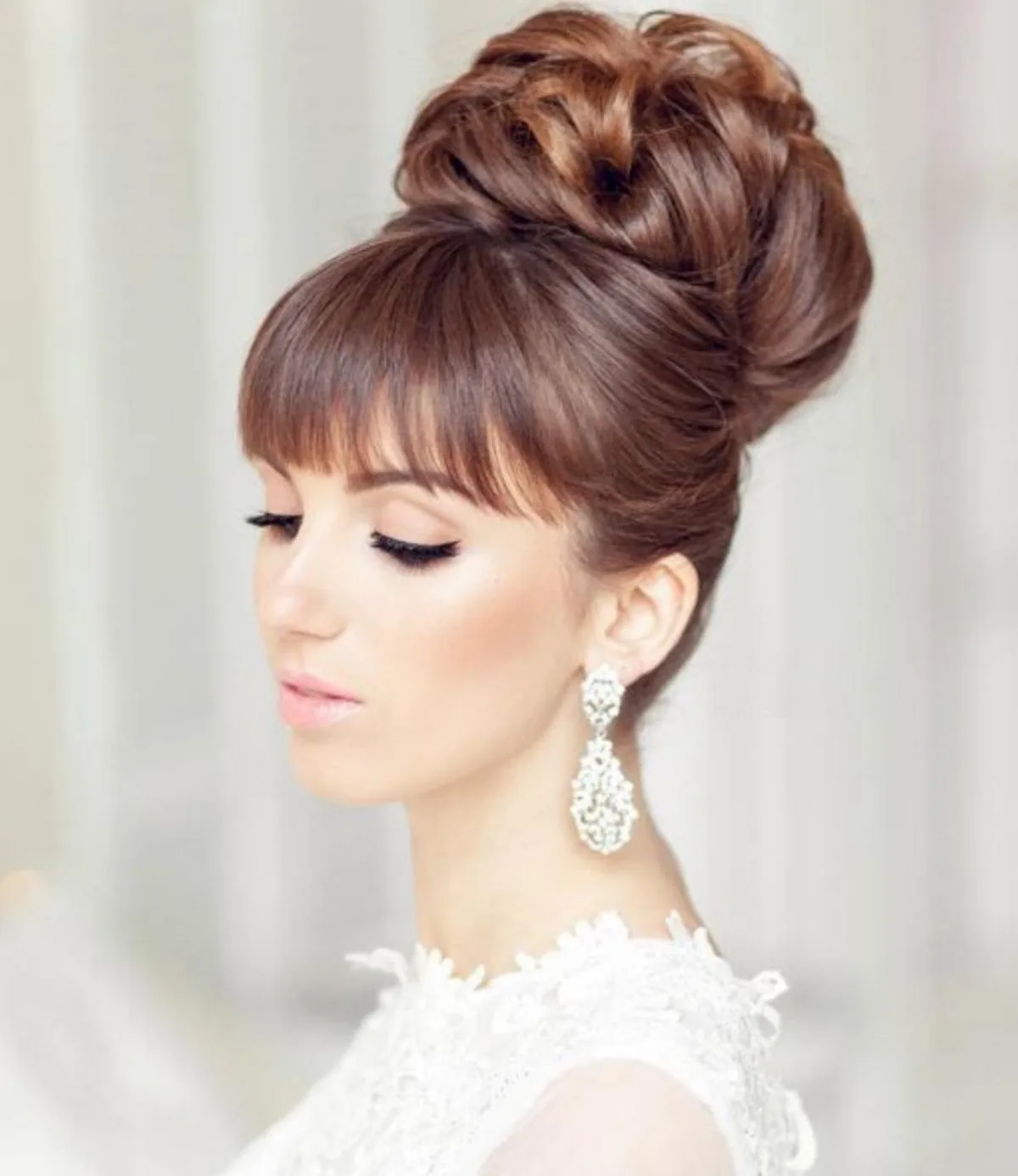
An elegant high bun lifts the whole bridal look: the hair is swept up to the crown, twisted or rolled into a smooth bun, and finished with a shine spray so it catches the light. It lengthens the neck, shows off earrings and a statement necklace, and makes a ballgown or a formal dress look even more regal. A high bun also photographs beautifully from the front and the side, and it is one of the most secure bridal styles for a long day of dancing, because the hair is anchored high and tight.
Why it helps: the height adds drama and keeps the hair completely off the neck in warm weather. Who it suits: oval and heart-shaped faces, long necks, and formal or black-tie weddings. What to ask your stylist: ask how high the bun will sit and whether it needs a hair donut or padding for fullness. Cost and time: about 45 to 60 minutes to style, and it holds its shape for the whole day with very little maintenance.
4. The Sleek Low Bun with a Centre Part
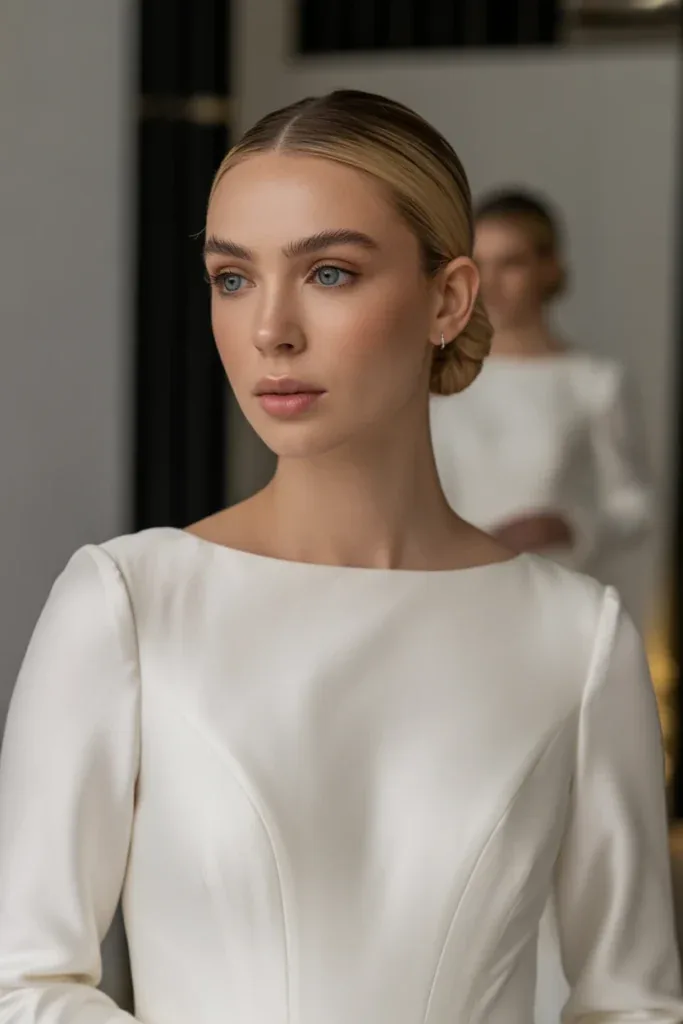
The sleek low bun with a centre part is the minimalist bride’s answer to wedding hair: glossy, smooth, perfectly parted down the middle, and gathered into a neat low bun with not a strand out of place. It is the style that looks most at home with a modern, architectural dress, a slip dress, or a clean-lined gown, and it photographs with a sharp, editorial quality that softer styles cannot match. The secret is preparation — the hair must be blow-dried smooth and finished with a serum, because every imperfection shows on a sleek style.
Best for: straight hair, oval faces, and modern or minimalist weddings. How to style: blow-dry smooth with a paddle brush, add a shine serum, part precisely with a tail comb, and secure the bun low at the nape. Pros: timeless, elegant, and extremely secure. Cons: it shows every flyaway, so it needs a touch-up kit and a calm, dry venue. Quick verdict: the most polished bridal look on this list, and the least forgiving of shortcuts.
5. Soft Half-Up, Half-Down with Curls

The soft half-up, half-down style with curls is the compromise that satisfies almost every bride: the top section is swept back and pinned, so the face is clear and the veil has an anchor, while the rest of the hair falls in soft curls over the shoulders. It gives the romance of wearing your hair down with the practicality of an updo, and it suits almost every dress, from a flowing bohemian gown to a structured ballgown. A small twist or braid in the pinned section adds detail that shows up beautifully in photographs.
Why it helps: it keeps hair out of the face for the ceremony while showing off length and curls. Who it suits: medium to long hair, every face shape, and brides who cannot decide between up and down. What to ask your stylist: ask how much hair will be pinned up and whether the pinned section will be twisted, braided or simply clipped. Maintenance: a few extra pins in the bridesmaid’s clutch handle any curls that drop during the evening.
6. The Textured French Twist
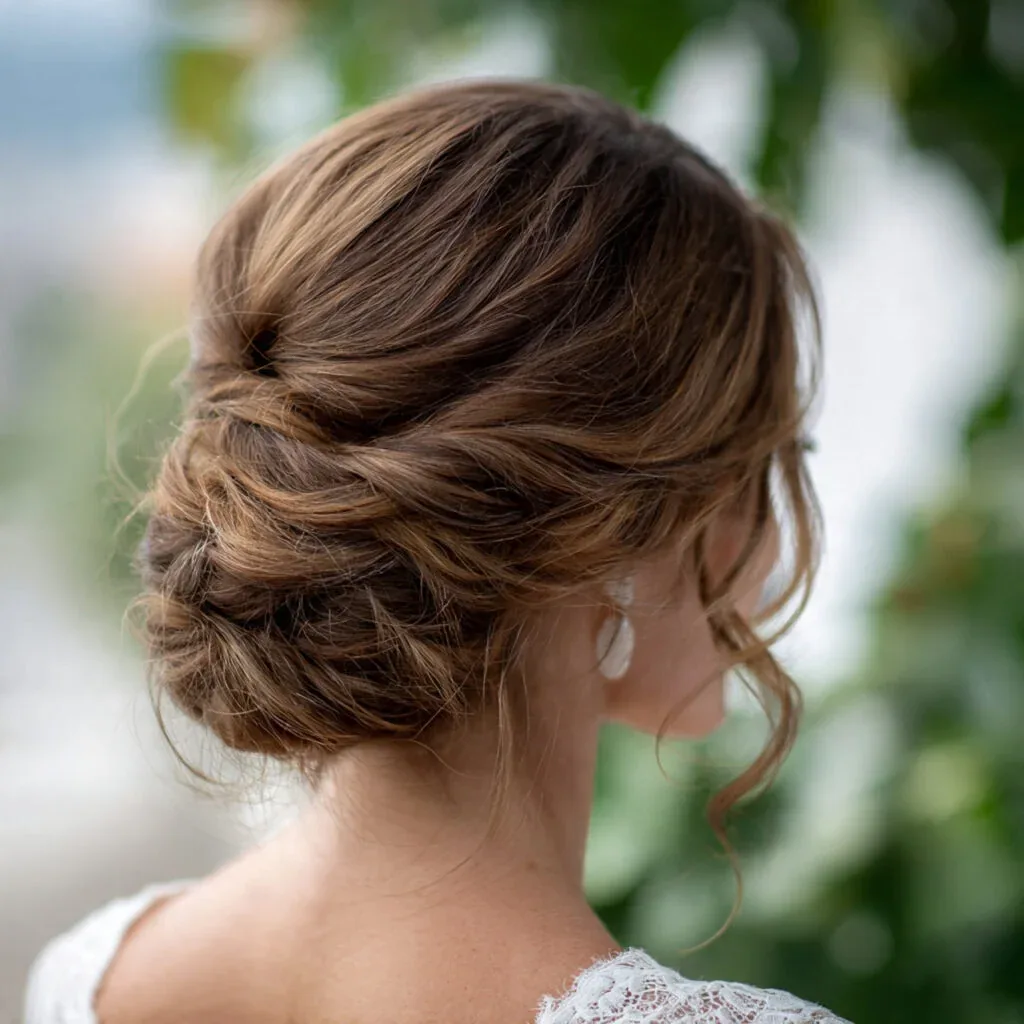
The French twist is a classic bridal updo with a modern update: instead of the perfectly smooth, severe twist of decades past, today’s version is softer, with texture through the lengths, a few loose pieces around the face, and a slightly undone finish. The hair is swept up and folded into a vertical roll at the back of the head, pinned securely, and finished with a decorative comb or pins. It is elegant without being stiff, and it suits formal weddings, older brides, and anyone who wants a timeless look with a contemporary feel.
Best for: medium to long hair, formal weddings, and brides who want a classic updo that does not look dated. How to style: backcomb lightly at the crown for height, sweep the hair up, fold and pin the twist, then pull a few soft pieces loose. Common mistake: making the twist too tight and too smooth, which looks severe in photographs. Quick verdict: the most elegant updo for a bride who wants to look timeless rather than trendy.
7. The Boho Braided Crown
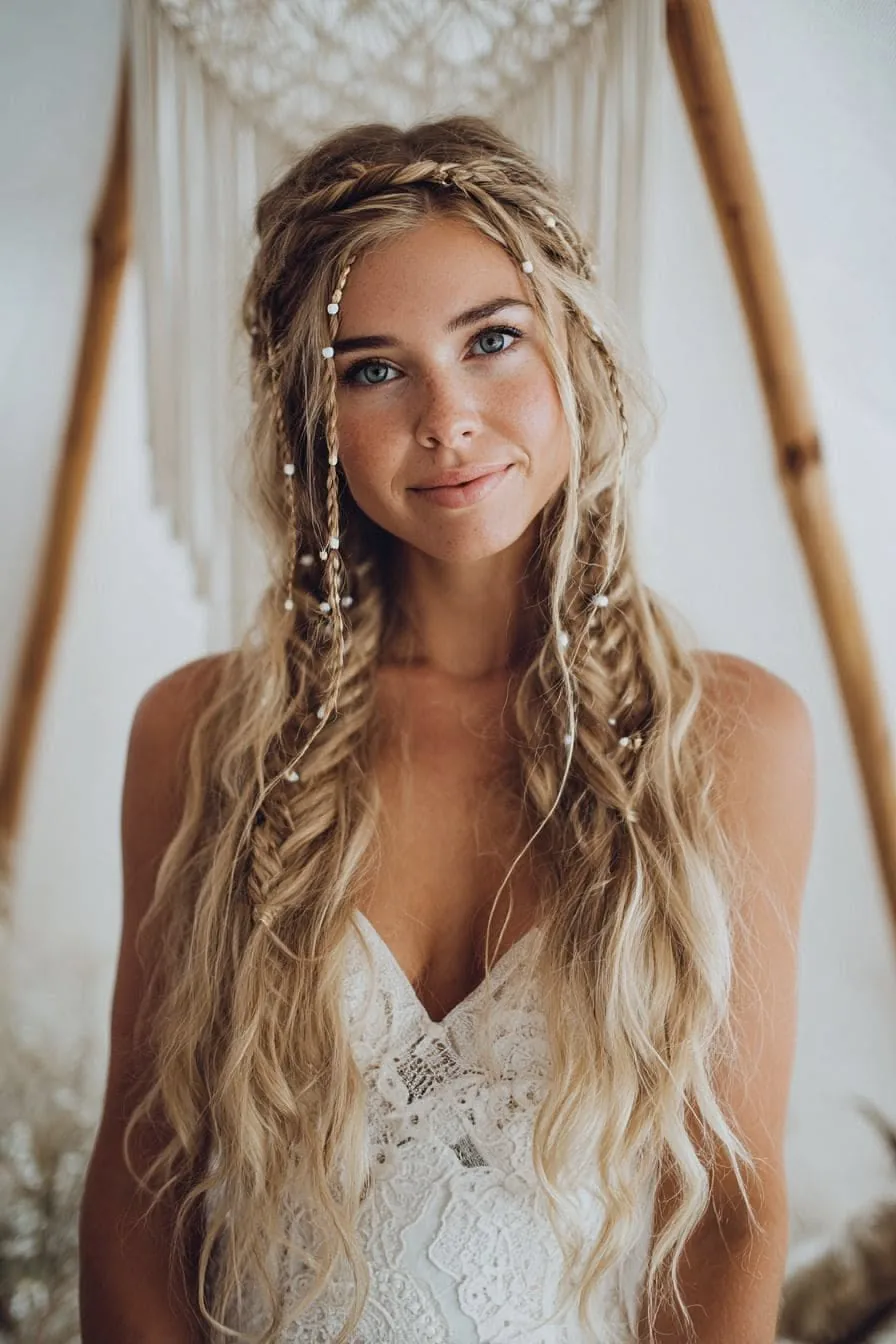
The boho braided crown wraps a braid around the head like a halo, with the rest of the hair falling in loose waves underneath, and it is the defining hairstyle of the bohemian wedding. It suits outdoor ceremonies, garden weddings and festival-style celebrations, and it looks wonderful with fresh flowers tucked into the braid or a flower crown worn on top. The braid itself can be a Dutch braid, a fishtail or a simple three-strand braid pulled loose for softness, and the style works best on hair with some natural texture.
Why it helps: the braid keeps the hair off the face while the waves underneath keep the look soft and romantic. Who it suits: medium to long hair, wavy or textured hair, and relaxed outdoor weddings. What to ask your stylist: ask whether the braid will be a Dutch braid for definition or a pulled-loose braid for softness, and whether flowers will be added before or after the braid is finished. Maintenance: a few pins and a spritz of texturising spray keep the braid from loosening too much by evening.
8. Hollywood Waves
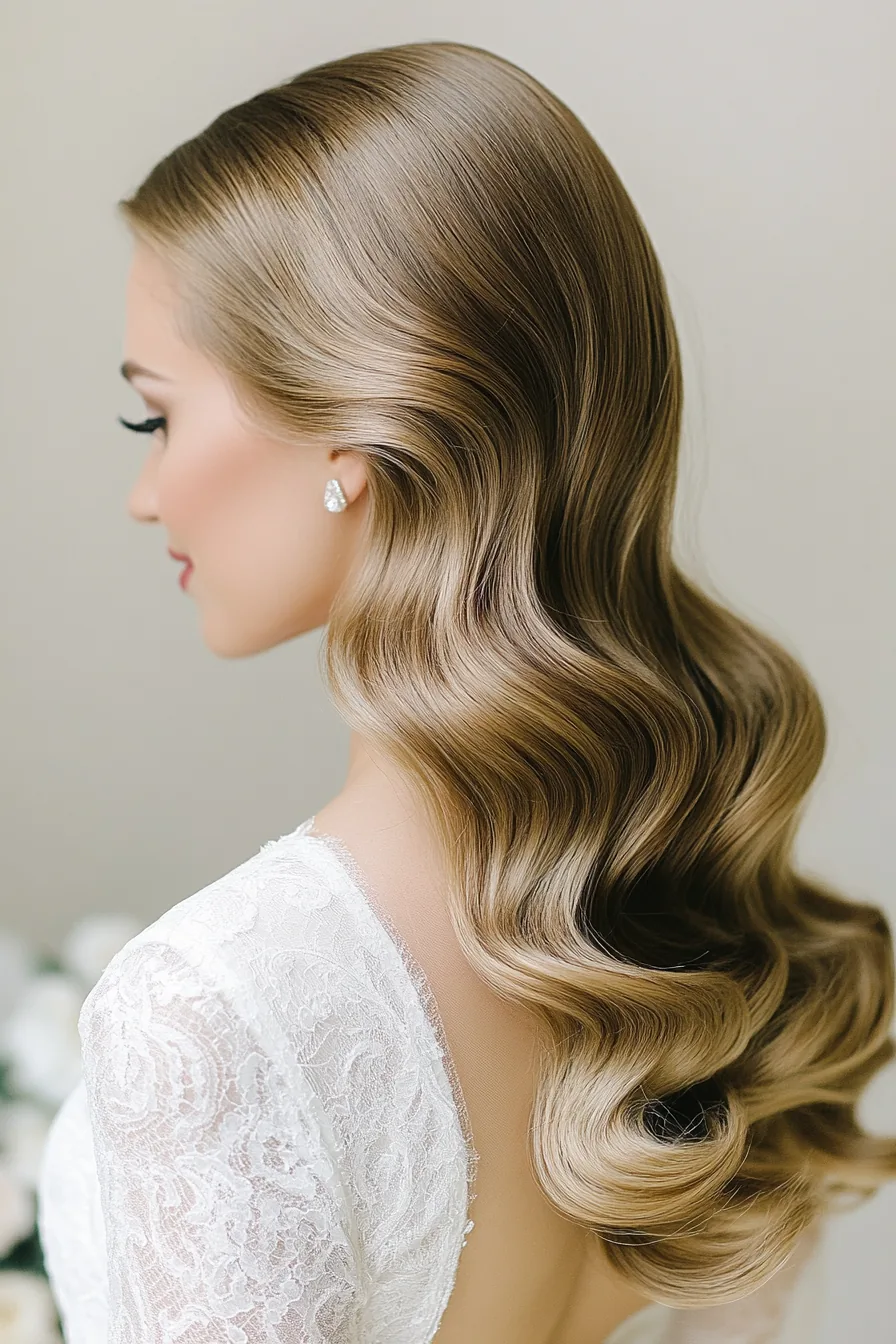
Hollywood waves are the most glamorous of all bridal hairstyles for women: deep, uniform, glossy waves, all falling in the same direction, with a deep side part and a polished, Old Hollywood finish. The style needs long hair, a large-barrel curling iron, and a stylist who sets each wave with clips and lets it cool completely before brushing it out — the cooling is what makes the waves hold their shape for hours. It suits black-tie weddings, evening ceremonies and brides who want to look like a film star in their photographs.
Best for: long, thick hair and formal evening weddings. How to style: curl every section in the same direction, pin each curl to cool, then brush through with a soft bristle brush and finish with a shine spray. Cost and time: 60 to 90 minutes to style, and it is worth every minute. Who should avoid it: very fine hair, which struggles to hold the weight of the waves, and humid outdoor weddings without a weather plan.
9. The Voluminous Curled Updo
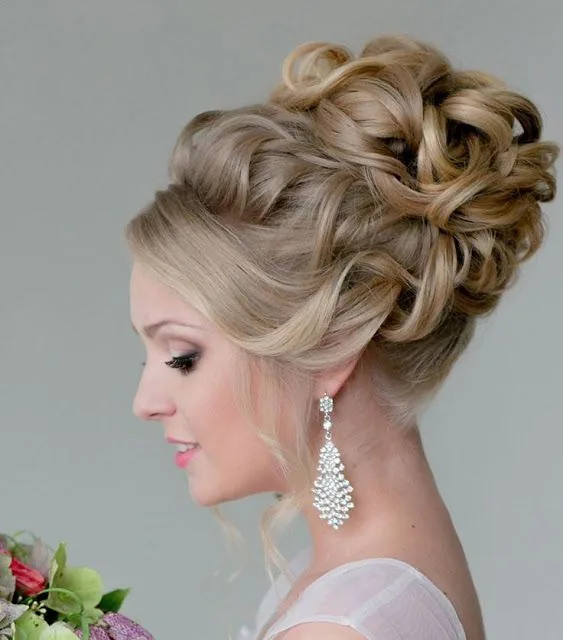
A voluminous curled updo is built from curls: the hair is curled section by section, then pinned up in loose, overlapping curls that create a full, textured shape at the back of the head. It is softer and more romantic than a smooth bun, and it photographs beautifully because the curls catch the light from every angle. The style suits brides with thick hair, because the volume comes naturally, and it works with a veil pinned underneath the curls or a decorative comb placed at the side.
Why it helps: the curls create volume and texture that a smooth updo cannot match. Who it suits: thick, medium to long hair, and romantic or vintage-style weddings. What to ask your stylist: ask whether the curls will be pinned individually or swept into a looser shape, and how the veil will be anchored. Maintenance: a strong-hold hairspray and a few spare pins keep the curls in place through the first dance and beyond.
10. The Side-Swept Low Bun

The side-swept low bun takes the classic low bun and moves it to one side, which changes the whole feeling of the style: it becomes softer, more romantic and more interesting in photographs, especially from the side where the bun sits. The hair is parted deeply on one side, swept across, and gathered into a low bun just behind one ear, with a few loose pieces falling on the opposite side of the face. It suits one-shoulder dresses beautifully, because the bun balances the bare shoulder, and it works with a veil pinned on the opposite side.
Best for: oval and heart-shaped faces, one-shoulder or asymmetric dresses, and brides who want a classic bun with a twist. How to style: part deeply, sweep the hair across with a soft brush, secure the bun low and to one side, and finish with a shine spray. Common mistake: placing the bun too high on the side, which looks like a side ponytail rather than a bridal bun. Quick verdict: the most photogenic variation of the low bun, especially in profile photographs.
11. The Veil-Friendly Low Chignon
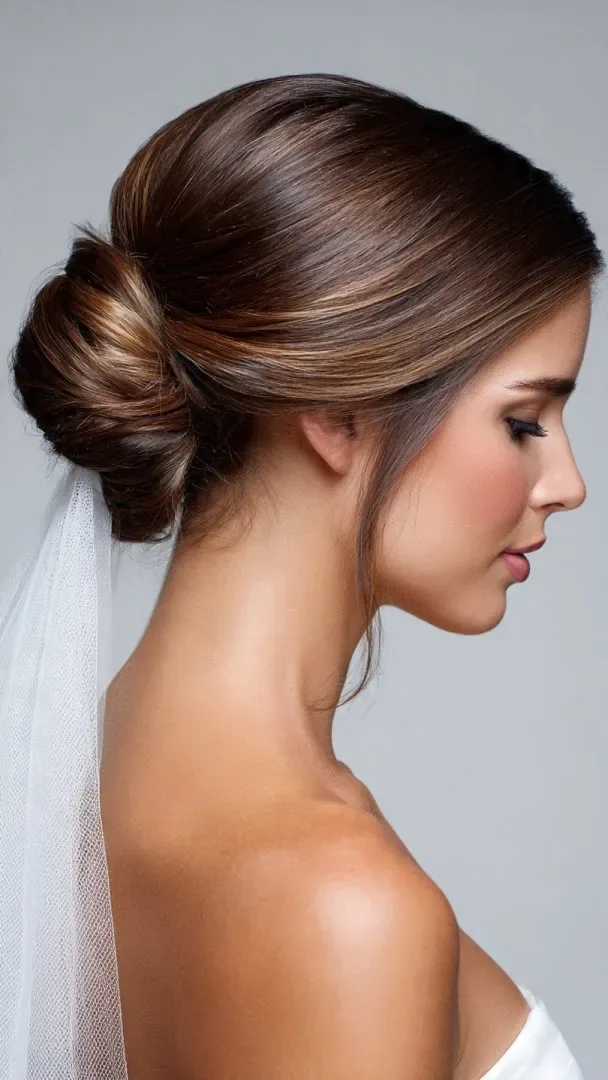
This is the low chignon designed around the veil from the start: the knot sits low and flat at the nape, the hair above it is smooth enough for the veil comb to slide in and grip, and the whole shape is deliberately neat so the veil drapes cleanly over it. It is the style most stylists recommend when the veil is the star of the look — a cathedral veil, a long lace-edged veil, or a blusher that will be lifted over the face. The chignon itself can be twisted, braided or rolled, and a few soft pieces at the front keep it from looking severe.
Why it helps: the veil stays secure for the whole ceremony and photographs beautifully from behind. Who it suits: brides wearing a long or heavy veil, and classic or traditional weddings. What to ask your stylist: bring the veil to the trial and ask them to pin it exactly as it will be worn, then check the hold by moving your head. Maintenance: once the veil comes off for the reception, the chignon still looks finished on its own — just add a sparkly pin.
12. The Messy Textured Bun
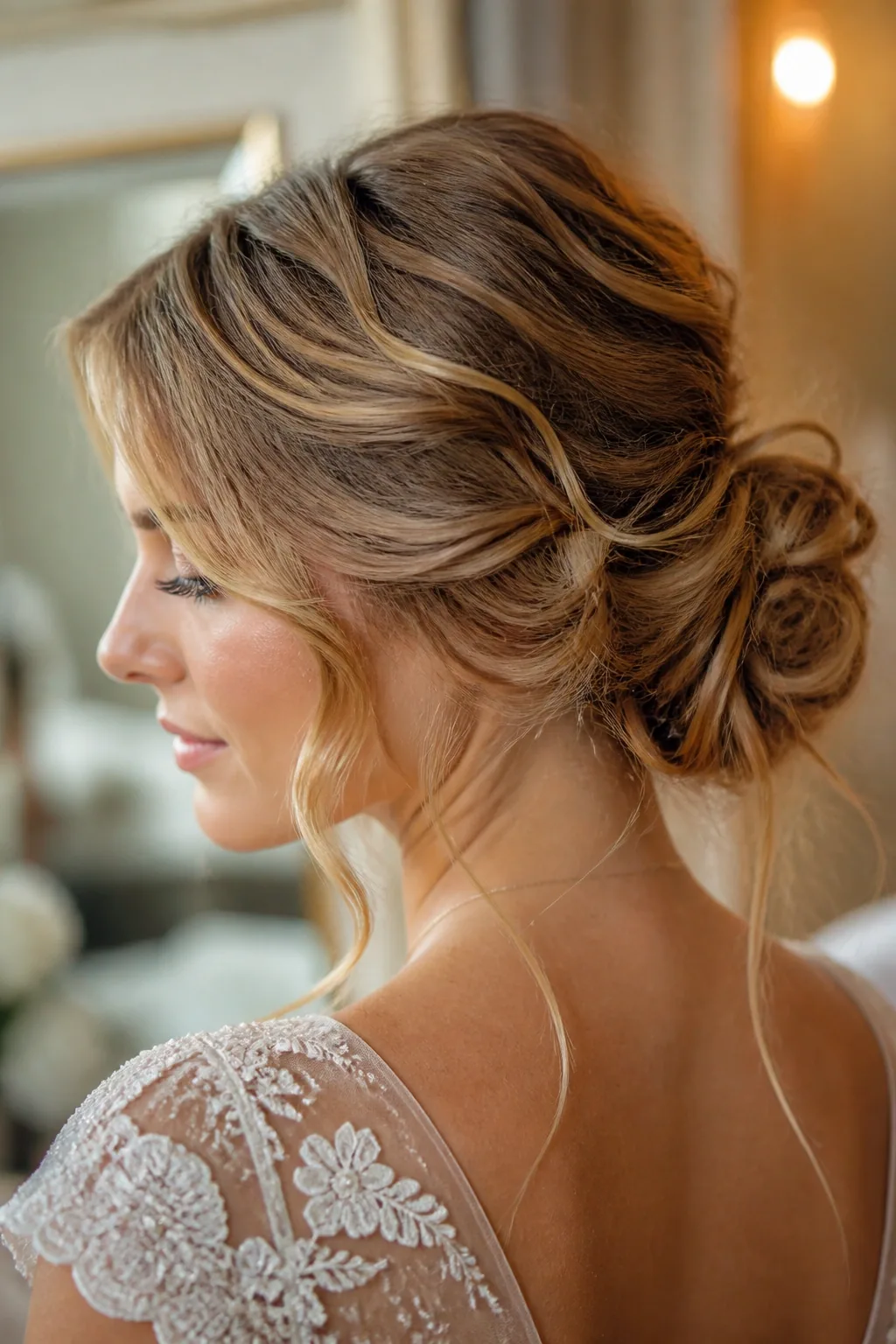
The messy textured bun is the relaxed bride’s updo: the hair is loosely gathered, twisted and pinned with pieces deliberately left out, so the bun looks soft, lived-in and effortless rather than sculpted. It suits bohemian, rustic and garden weddings, and it is far more forgiving than a sleek bun, because a piece that falls loose during the day just adds to the effect. The texture comes from curling the hair first and backcombing lightly, so the bun has volume and dimension instead of looking flat.
Best for: wavy or curly hair, relaxed weddings, and brides who hate feeling overdone. How to style: curl the hair loosely, gather it low or high, twist and pin it loosely, then pull a few pieces free around the face and neck. Pros: comfortable, forgiving, and easy to fix with a single pin. Cons: it can look unfinished in very formal settings, so it is not the right choice for a black-tie wedding. Quick verdict: the most comfortable bridal updo, and the easiest to live with all day.
13. The Classic Ballerina Bun
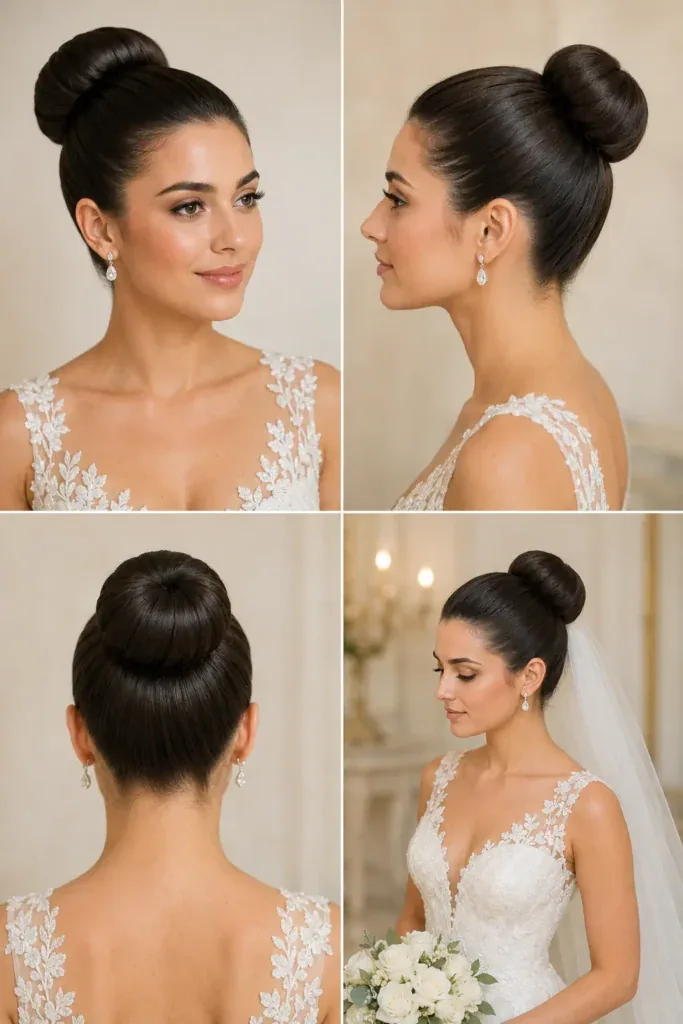
The ballerina bun is the high, smooth, perfectly round bun that dancers have worn for a century, and on a bride it looks clean, elegant and quietly dramatic. The hair is pulled up tight and smooth, wrapped into a neat bun at the crown, and finished so there is not a single flyaway — a look that suits a formal ceremony, a cathedral wedding, or a bride wearing a dramatic dress that needs a simple, strong hairstyle to balance it. It also shows off the face, the neck and the earrings better than almost any other bridal style.
Why it helps: the bun is extremely secure and keeps the hair completely out of the way for twelve hours. Who it suits: oval faces, long necks, and formal weddings. What to ask your stylist: ask whether the bun needs a hair donut for fullness, and whether a few face-framing pieces should be left out to soften the look. Common mistake: pulling the hair so tight that it feels uncomfortable by the afternoon — the bun should be secure, not painful.
14. The Waterfall Braid with Curls
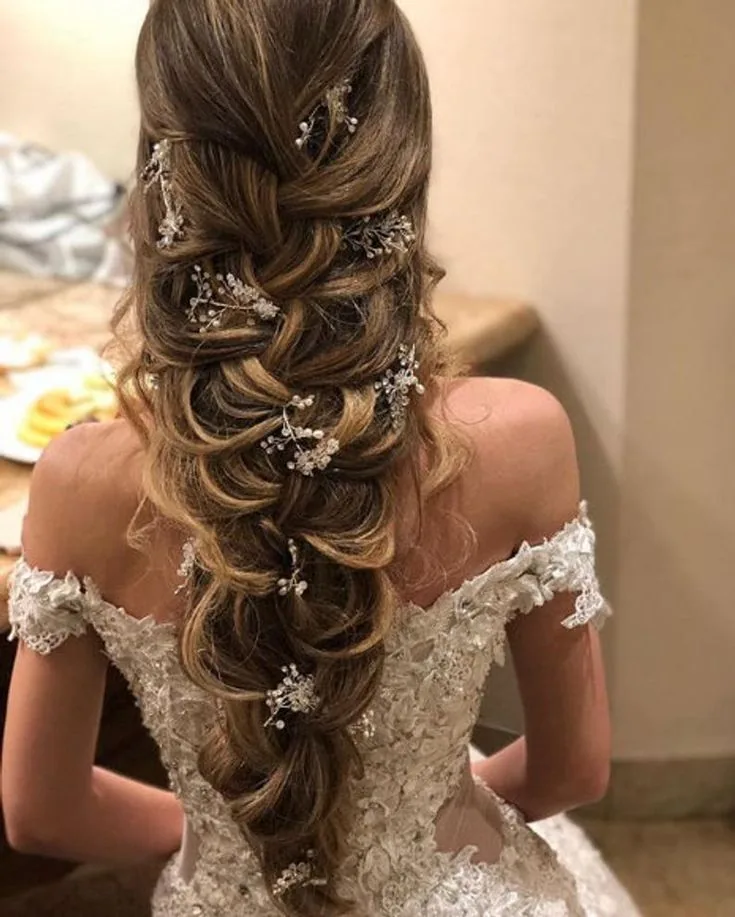
The waterfall braid is one of the prettiest bridal details there is: a braid runs across the back of the head, dropping strands through it like a waterfall, while the rest of the hair falls in soft curls underneath. It looks intricate and romantic, photographs beautifully from behind, and suits garden weddings, outdoor ceremonies and brides who want a braid without committing to a full updo. The braid can be a single waterfall across the back, or two braids meeting in the middle, and it works best on long hair with some natural wave.
Best for: long hair, outdoor weddings, and brides who want a braid detail without an updo. How to style: curl the hair first, then braid the waterfall section loosely and pin it securely, finishing with a light-hold spray. What to ask your stylist: ask them to practise the braid at the trial, because a waterfall braid takes longer than a standard braid. Maintenance: a few pins in the clutch will fix any strands that slip during the evening.
15. Vintage Finger Waves
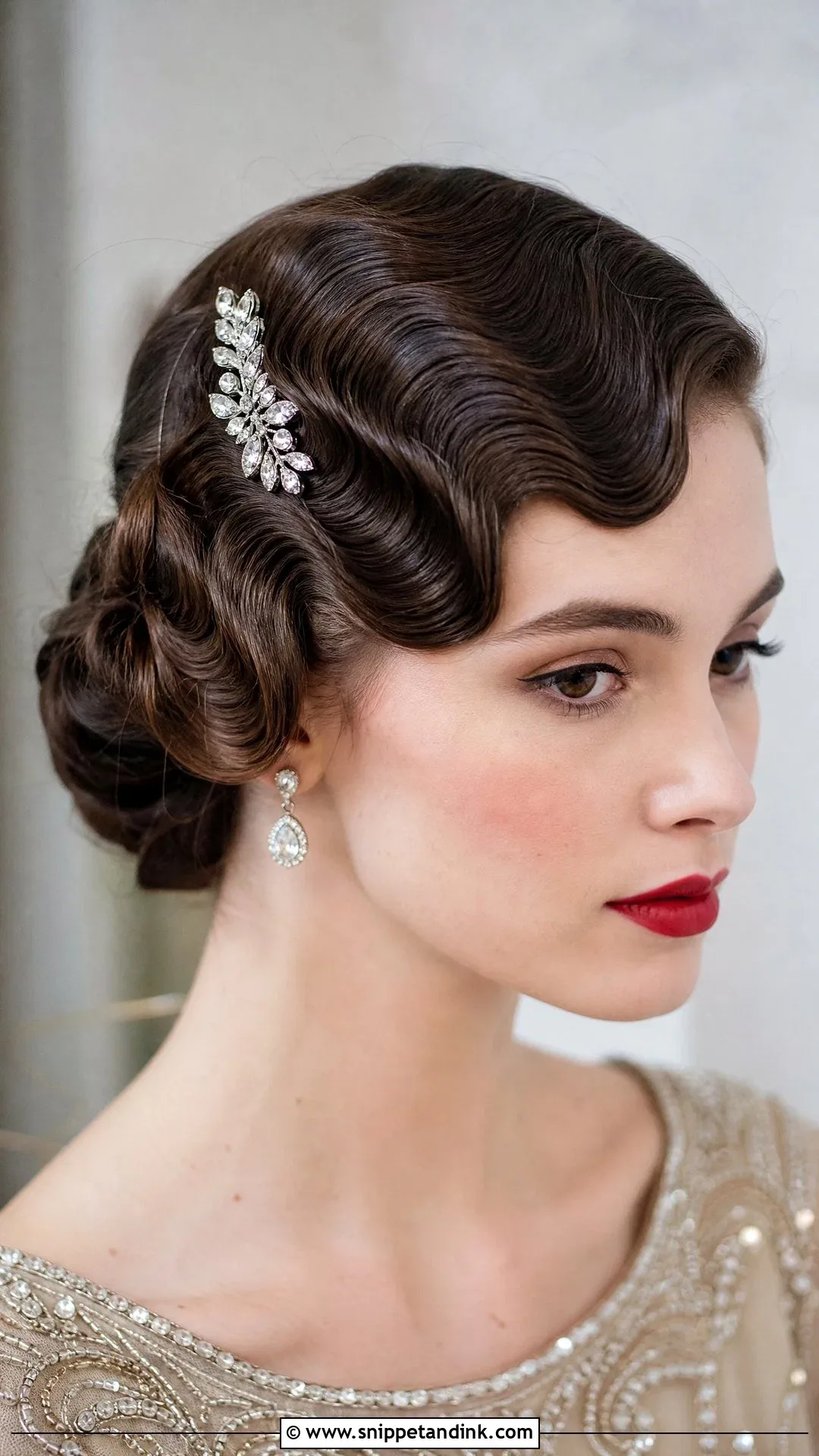
Vintage finger waves bring the glamour of the 1920s and 1930s to a modern wedding: sculpted, glossy S-shaped waves that hug the head, usually worn with a deep side part and a short or shoulder-length cut. The style is created with a comb, setting lotion and clips, and it needs a stylist who knows the technique, because finger waves are a craft, not a quick curl. It suits vintage-themed weddings, art deco venues and brides wearing a vintage-style dress, and it looks extraordinary in black-and-white photographs.
Why it helps: the sculpted waves hold their shape all day and look stunning with a birdcage veil or a headpiece. Who it suits: short to medium hair, and vintage or retro-themed weddings. What to ask your stylist: ask whether they have done finger waves before and to show you photographs of their work. Cost and time: 60 to 90 minutes to set, and it is a specialist skill, so expect to pay more than for a standard blow-dry.
16. The Modern Sleek Bridal Ponytail
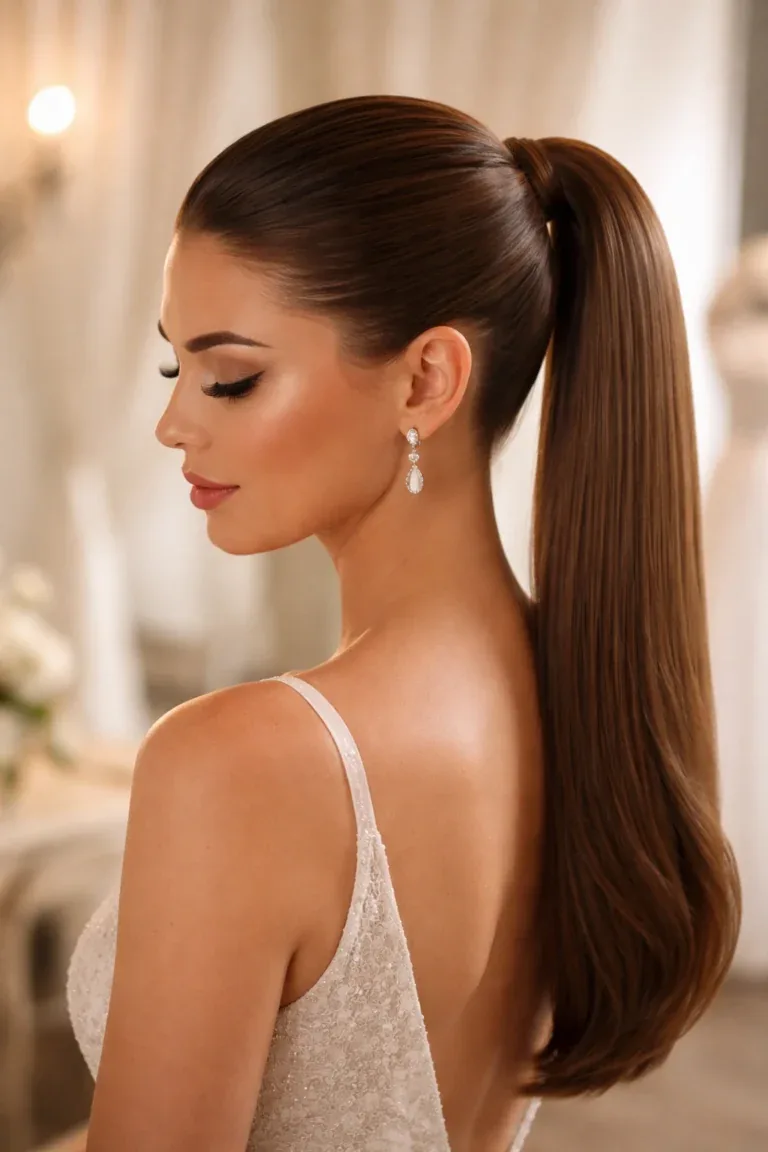
The sleek bridal ponytail is the modern bride’s power move: the hair is pulled back smooth and glossy into a low or mid-height ponytail, often wrapped with a section of hair to hide the band, and finished so it swings when she walks. It suits contemporary dresses, minimalist weddings and brides who want to look polished without a traditional updo, and it photographs with a clean, confident energy. A few face-framing pieces or a deep side part keep it soft, and a veil can be pinned at the base of the ponytail.
Best for: straight or slightly wavy hair, modern weddings, and brides who want a fresh, confident look. How to style: blow-dry smooth, add a shine serum, gather the hair at the nape or mid-head, wrap a strand around the band, and curl the ponytail ends softly. Pros: comfortable, secure, and easy to refresh. Cons: it needs very smooth hair to look bridal rather than everyday, so the preparation matters. Quick verdict: the most modern bridal style on this list.
17. The Floral-Adorned Loose Updo

A loose updo adorned with fresh flowers is the garden wedding look at its best: the hair is swept up loosely, with soft curls and pieces left out, and small fresh flowers — roses, gypsophila, eucalyptus or seasonal blooms — are tucked into the style. The flowers should match the bouquet, and they should be added as late as possible on the morning of the wedding, because fresh flowers wilt in warm hair. The updo itself is deliberately soft, so the flowers look like they belong there rather than being pinned onto a rigid shape.
Why it helps: the flowers add colour and romance without needing a veil or a tiara. Who it suits: garden, outdoor and spring or summer weddings, and brides whose bouquet has small, hardy flowers. What to ask your stylist: ask the florist to provide the flowers with their stems wired, and ask the stylist to practise placing them at the trial. Common mistake: choosing large, heavy flowers that pull the updo apart, or delicate blooms that wilt before the ceremony.
18. The Braided Low Bun

The braided low bun combines two bridal favourites into one style: a braid — a French braid, a Dutch braid or a fishtail — runs along the side or the crown and feeds into a low bun at the nape, giving the classic bun texture and detail that shows up in photographs. It suits brides who find a plain bun too simple but do not want a full braided updo, and it works on medium to long hair with almost any texture. The braid also helps the style last, because the braided section is naturally more secure than loose hair.
Best for: medium to long hair, and brides who want a bun with detail. How to style: braid the side section first, gather the rest of the hair low, twist it into a bun, and pin the braid around the bun. What to ask your stylist: ask which braid suits your hair texture — a Dutch braid shows more definition, a French braid sits flatter. Maintenance: the braid holds well all day, and the bun needs only a couple of spare pins.
19. Glamorous Side-Part Waves
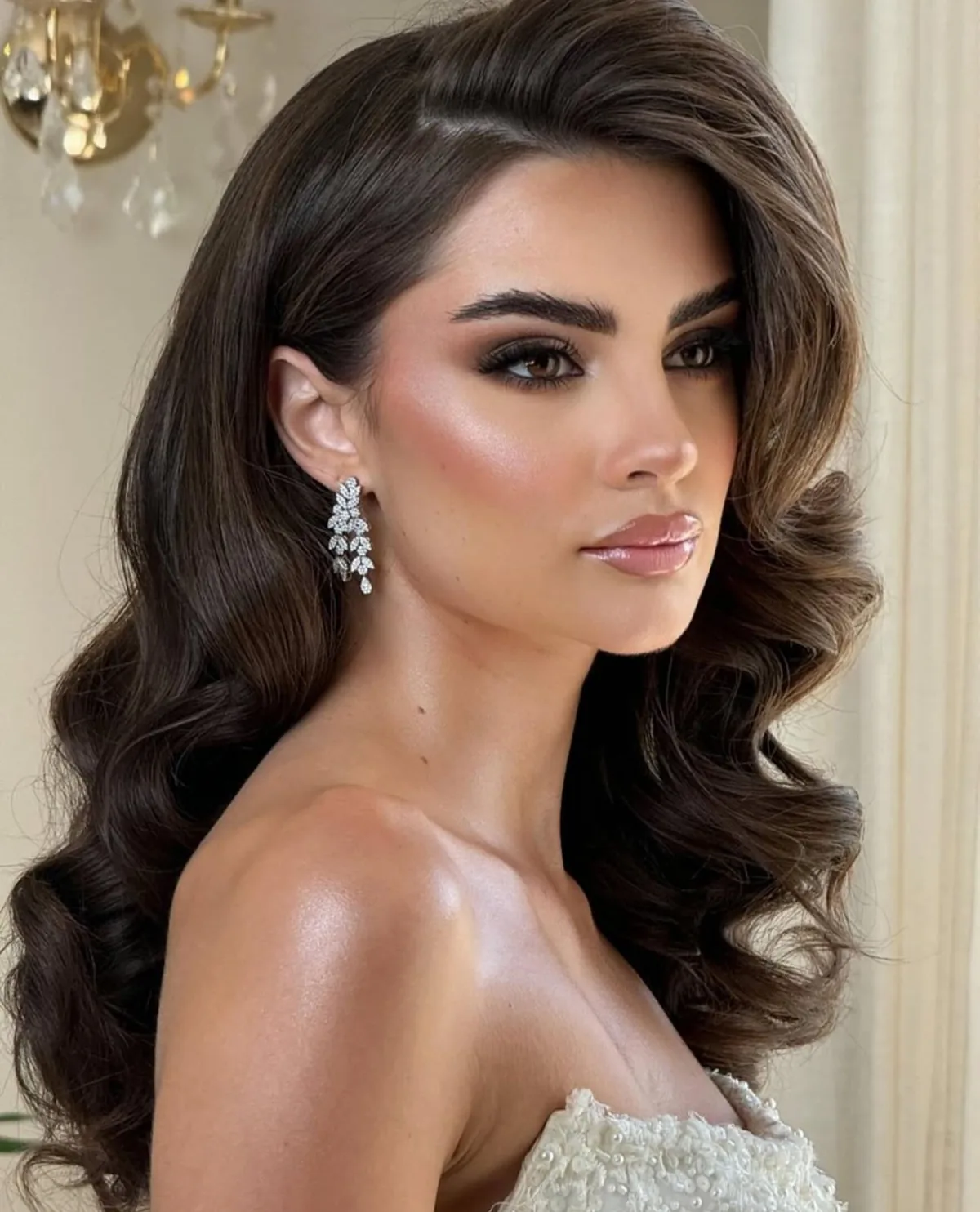
Glamorous side-part waves are Hollywood waves with a deeper part and a more dramatic sweep: the hair is parted low on one side, curled in large sections, and brushed into glossy waves that cascade over one shoulder. The deep part creates height at the crown and a sweep of hair across the forehead that frames one eye, which photographs beautifully and suits brides who want old-school glamour without a full updo. It works best on long, thick hair and needs a strong-hold setting spray to keep the waves in place through the evening.
Why it helps: the deep part adds drama and height, and the waves photograph beautifully in evening light. Who it suits: long, thick hair and formal or evening weddings. How to style: part deeply, curl in large sections in the same direction, pin to cool, then brush into waves and finish with a shine spray. Who should avoid it: fine hair, which struggles to hold the weight of the sweep, and very windy outdoor ceremonies.
20. The Romantic Twisted Updo
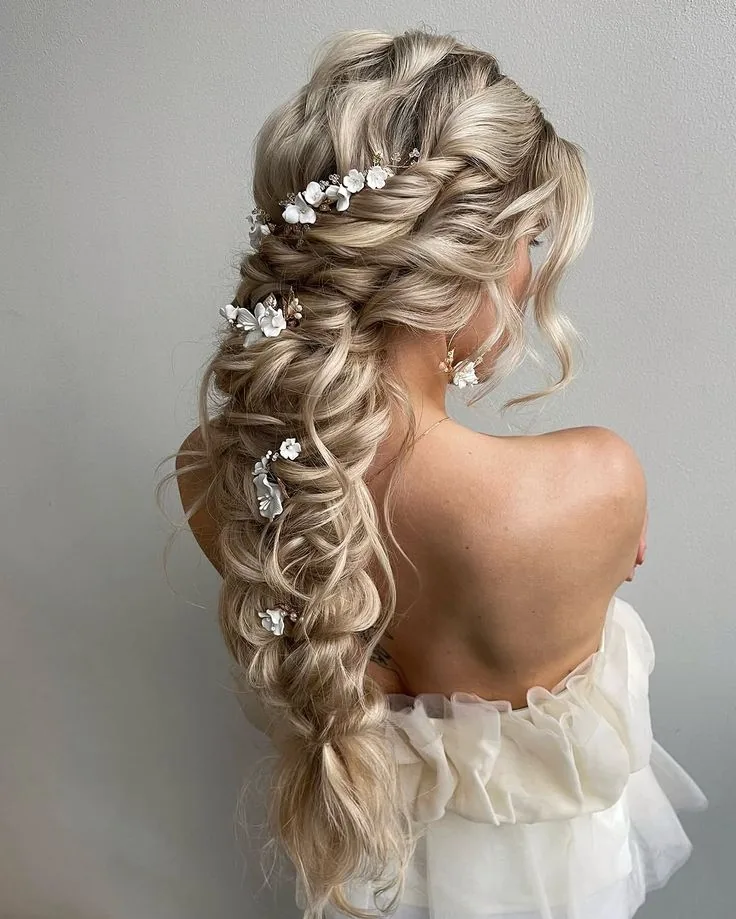
The romantic twisted updo is built from twists rather than braids: sections of hair are twisted, looped and pinned into a soft, textured shape at the back of the head, with curls and loose pieces left out around the face. It looks softer and more organic than a structured bun, and it suits brides who want an updo that feels romantic rather than formal. The twists also give the style natural grip, so it holds well even on fine or slippery hair that usually refuses to stay pinned.
Best for: fine to medium hair that slips out of pins, and romantic or vintage weddings. How to style: curl the hair first, then twist sections loosely and pin them into shape, leaving a few pieces free. Pros: secure on slippery hair, soft in photographs, and easy to loosen for the reception. Cons: it takes longer to build than a simple bun, so allow extra time on the morning. Quick verdict: the best updo for fine hair that will not stay put.
21. The Bridal Bob with Soft Waves
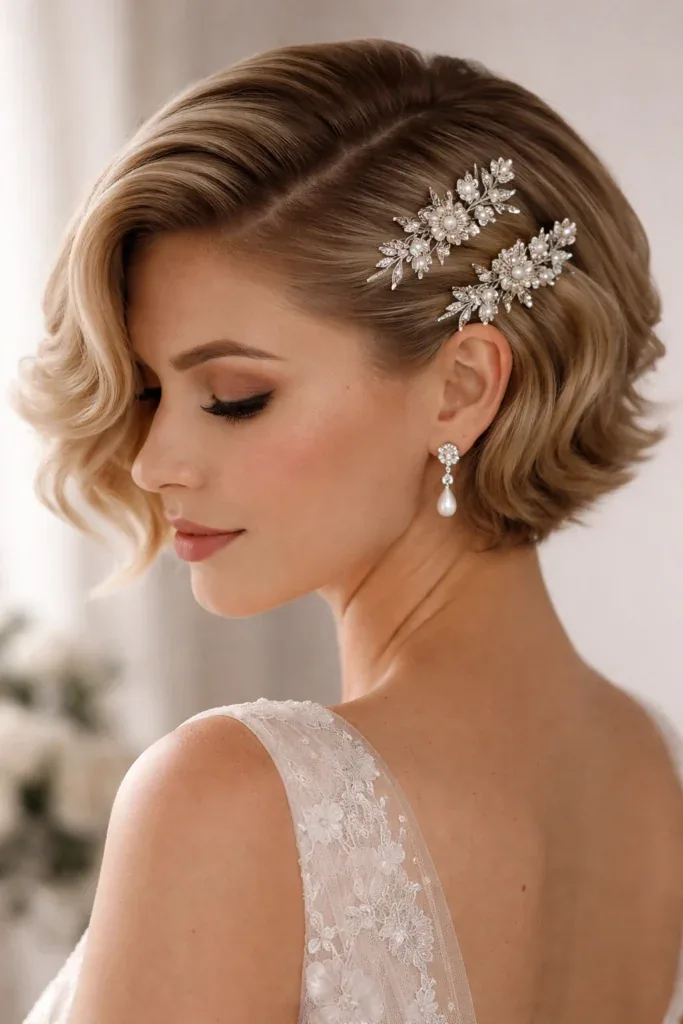
A bob is a wonderful bridal length, and the bridal bob with soft waves proves it: the hair is curled in loose, soft waves, parted deeply on one side, and finished with a shine spray, so the cut looks polished and romantic rather than everyday. A sparkling clip, a small veil or a headband turns the bob into a bridal style, and the short length means the hair holds its shape all day with almost no maintenance. It suits modern weddings, city weddings and brides who love their bob and have no intention of growing it out for the day.
Why it helps: short hair holds a wave well and needs almost no touch-ups. Who it suits: chin-length to shoulder-length hair, and brides who want to look like themselves. What to ask your stylist: ask whether a clip-in piece or a small padding would add volume at the crown, and practise placing the accessory at the trial. Maintenance: a mini hairspray and a comb are the whole touch-up kit.
22. The Chin-Length Bridal Bob
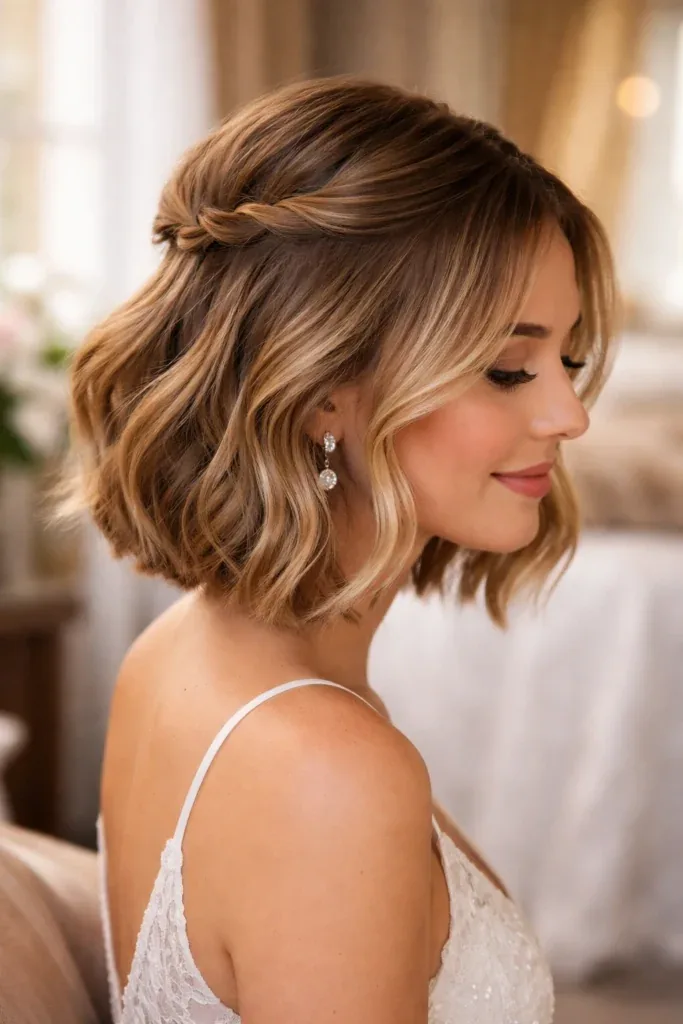
The chin-length bridal bob is short, sharp and elegant: the hair ends at the chin, the ends are curled under or flicked out softly, and a deep side part gives the style its shape. It suits brides with a strong jawline or a long neck, and it pairs beautifully with a statement earring and a high-neckline or strapless dress. A birdcage veil or a beaded headband is the classic accessory, and the style is so low-maintenance that the bride can forget about her hair entirely and enjoy the day.
Best for: straight to wavy short hair, and vintage or modern weddings. How to style: blow-dry with a round brush, curl the ends under, part deeply, and finish with a shine serum. Common mistake: over-curling the bob, which makes it look like a costume rather than a bridal style — the waves should be soft. Quick verdict: the most elegant short bridal style, and the easiest to wear all day.
23. The Shoulder-Length Bridal Blowout
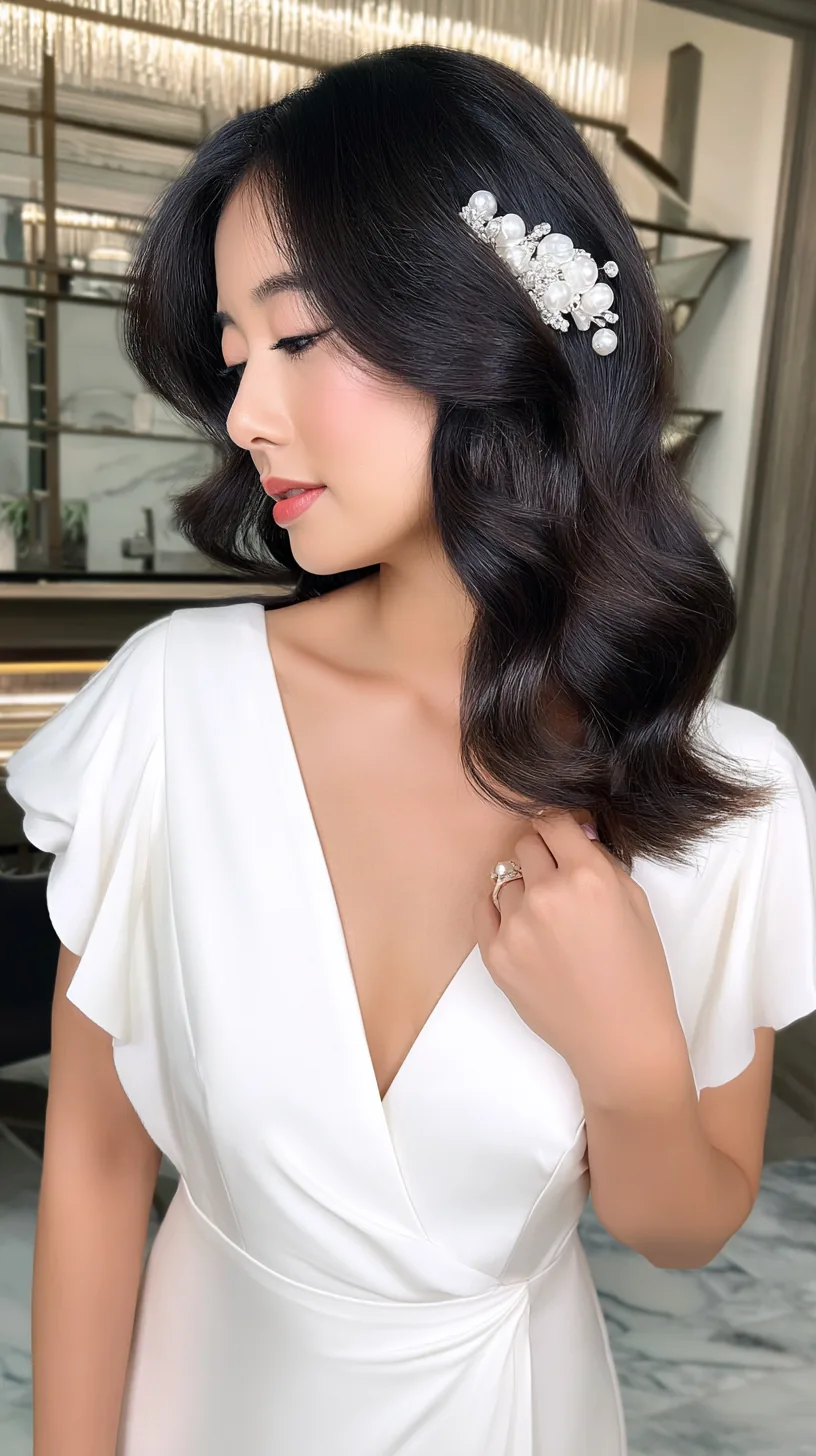
The shoulder-length bridal blowout is the bouncy, polished, salon-fresh look that makes medium hair look its absolute best: the hair is blow-dried with a round brush into soft volume, the ends are flicked under or out, and the whole style has movement and shine. It suits brides who want their hair down but polished, and it works with a veil pinned at the crown or a decorative comb at the side. The blowout is also the easiest bridal style to refresh — a quick brush and a spritz of dry shampoo at the roots revive it in two minutes.
Why it helps: the blowout gives medium hair volume and polish without any pins or braids. Who it suits: shoulder-length hair of any texture, and brides who want a classic, polished look. How to style: blow-dry in sections with a large round brush, rolling the ends under, and finish with a light-hold spray. Maintenance: a small brush and dry shampoo in the clutch handle the whole evening.
24. Long Hair Bridal Layers with Soft Curls
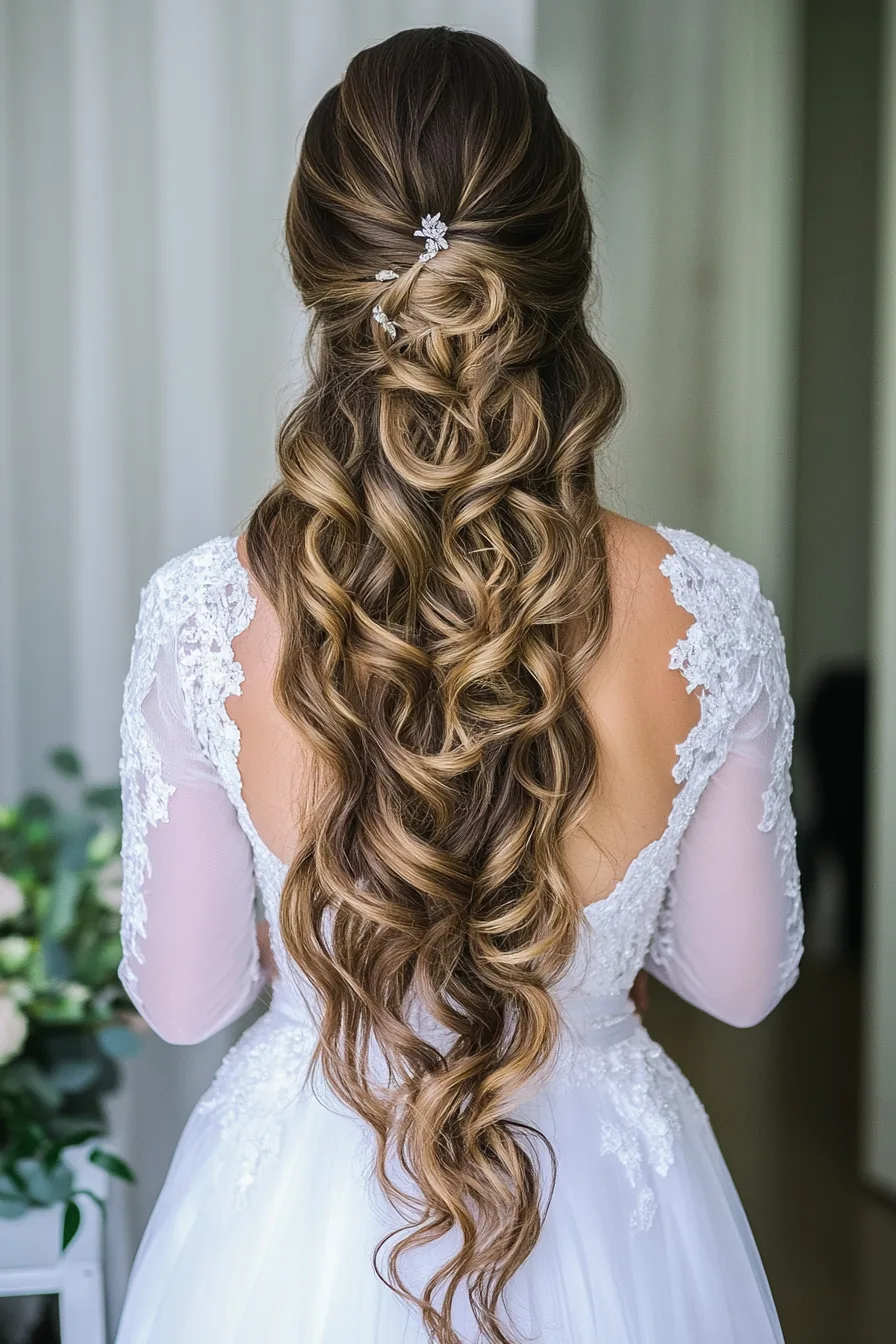
Long hair with soft layers and curls is the classic bridal look for women who have spent years growing their hair: the layers give the curls shape and movement, the curls give the layers something to show off, and the whole style falls down the back in a way that photographs beautifully from behind. The key is to curl in large sections and brush the curls out gently, so the result is waves rather than ringlets, and to pin a small section back at the crown so the face stays clear and the veil has somewhere to sit.
Best for: long, thick hair and brides who want to show off their length. How to style: curl in large sections, let the curls cool, brush through gently, and pin a small crown section back. What to ask your stylist: ask whether the layers need a trim before the wedding, because split ends show on long curled hair. Common mistake: curling the hair too tightly, which shortens the length and looks less bridal.
25. The Curly Bridal Updo
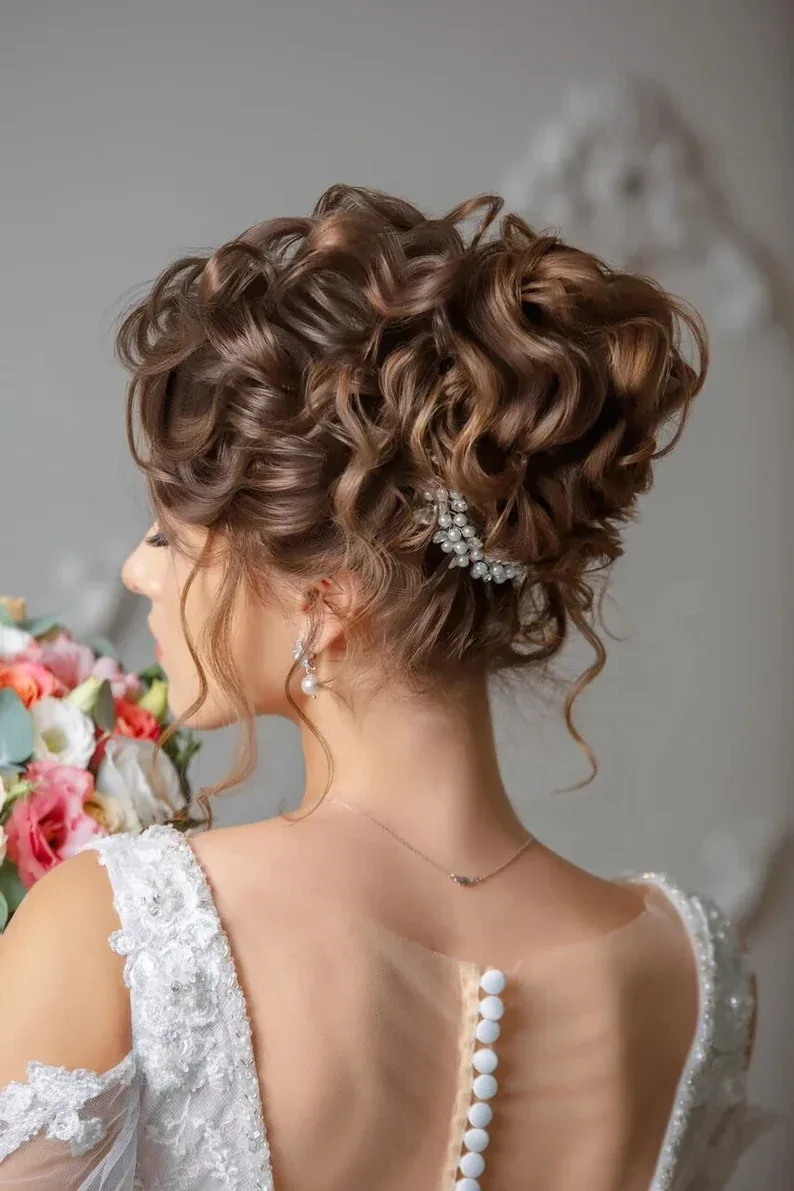
A curly bridal updo works with the curls, not against them: the natural curl pattern is defined with curl cream, then the curls are gathered loosely and pinned into a full, textured updo that shows off the curls instead of hiding them. It is the most flattering bridal style for naturally curly hair, because it uses the texture as the decoration, and it holds well all day, because curls grip pins better than straight hair. A few curls left loose around the face soften the look, and a veil can be pinned underneath the updo.
Why it helps: the curls give the updo natural volume and texture, and the style holds securely. Who it suits: naturally curly and coily hair of any length. What to ask your stylist: ask for a stylist experienced with curly hair, and whether the curls should be cut or shaped before the wedding. Maintenance: a little curl cream on the fingertips revives any curls that drop during the evening.
26. Natural Curls Worn Half-Up
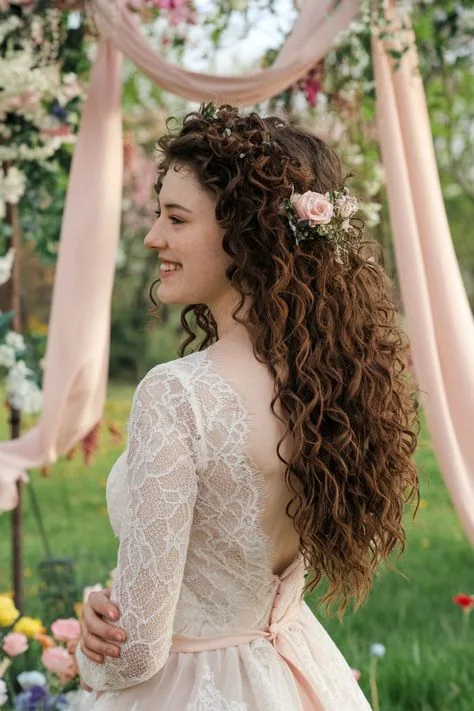
Natural curls worn half-up are the easiest way for a curly-haired bride to look bridal without fighting her texture: the top section is swept back and pinned, the rest of the curls fall freely over the shoulders, and the curl pattern itself is the decoration. The style suits every kind of curly hair, from loose waves to tight coils, and it photographs beautifully because the curls catch the light. A small braid or twist in the pinned section adds detail, and a veil can be anchored at the pin.
Best for: naturally curly hair, and brides who want to wear their curls down. How to style: define the curls with cream on damp hair, let them dry fully, then pin the top section back loosely. Common mistake: brushing curly hair dry before the wedding, which turns defined curls into frizz. Quick verdict: the most natural, most flattering bridal style for curly hair.
27. The Textured Afro Bridal Updo
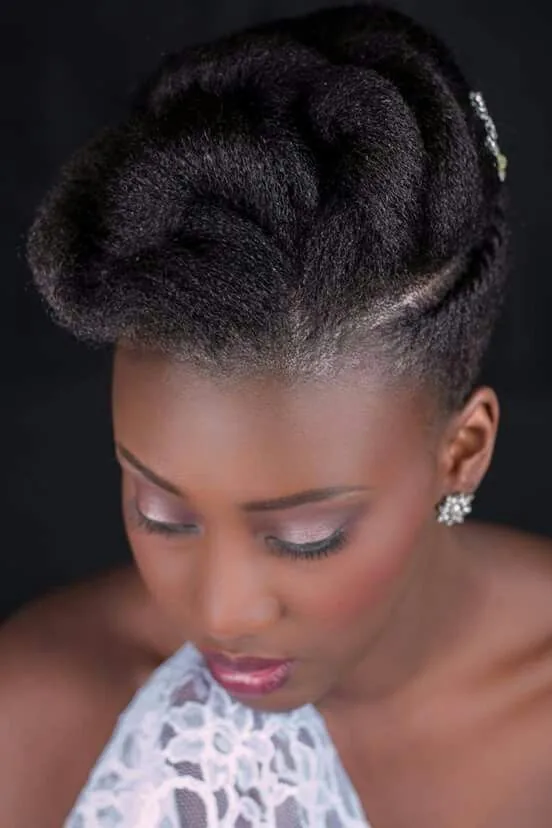
A textured afro bridal updo celebrates natural volume: the hair is shaped into a full, rounded updo, with the texture on full display, and finished with a decorative pin, a headband or fresh flowers. It suits brides with coily or kinky hair who want a style that honours their texture, and it photographs with wonderful dimension because the shape is bold and the texture catches the light. The updo can be high, for drama, or low, for a softer look, and a veil can be pinned underneath or worn as a blusher.
Why it helps: the natural volume is the decoration, so the style needs very little added. Who it suits: coily, kinky and tightly curled hair, and brides who want a bold, celebratory look. What to ask your stylist: ask for a stylist experienced with textured hair, and whether the shape should be built with pinning, twisting or braiding. Maintenance: a silk scarf the night before keeps the shape perfect, and a little oil on the fingertips adds shine on the day.
28. The Fishtail Braid Bridal Style
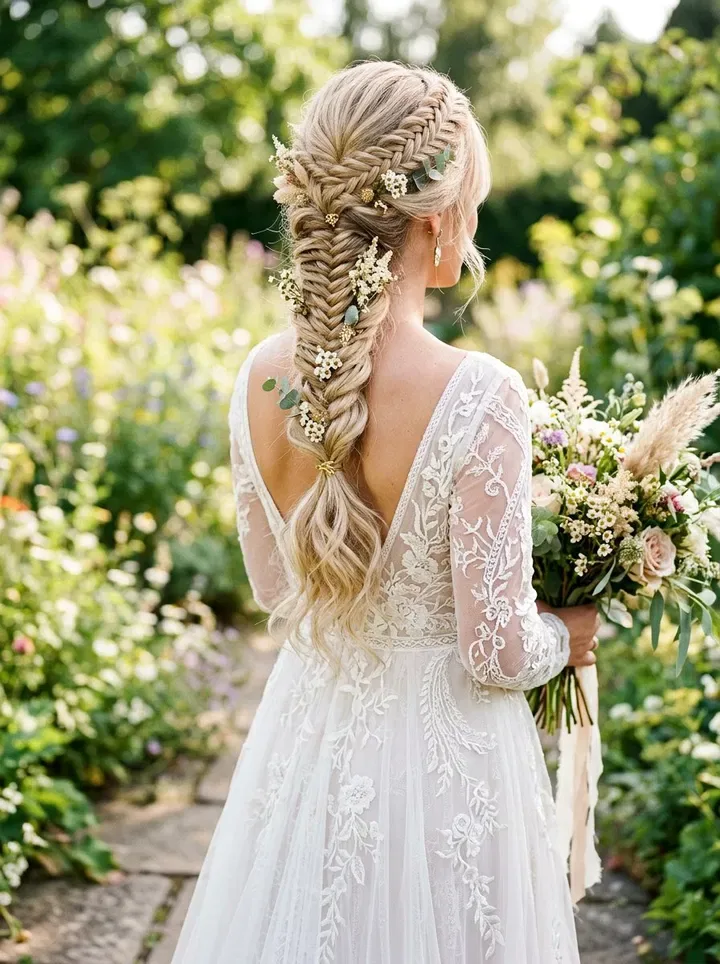
The fishtail braid is the most intricate-looking braid a bride can wear, and it is simpler than it looks: two sections of hair are woven together in small pieces, creating a fine, detailed braid that runs down the back or over one shoulder. Pulled loose, it looks soft and romantic; kept tight, it looks polished and precise. It suits long hair, bohemian weddings and outdoor ceremonies, and it photographs beautifully from behind, especially with a few flowers or pins woven into the braid.
Best for: long hair, bohemian and outdoor weddings, and brides who love braids. How to style: curl the hair first for texture, braid loosely, then pull the edges gently to widen the braid. What to ask your stylist: ask them to practise the fishtail at the trial, because it takes longer than a standard braid. Common mistake: braiding the hair too tightly, which makes the fishtail look stiff instead of soft.
29. The Dutch Braid Crown
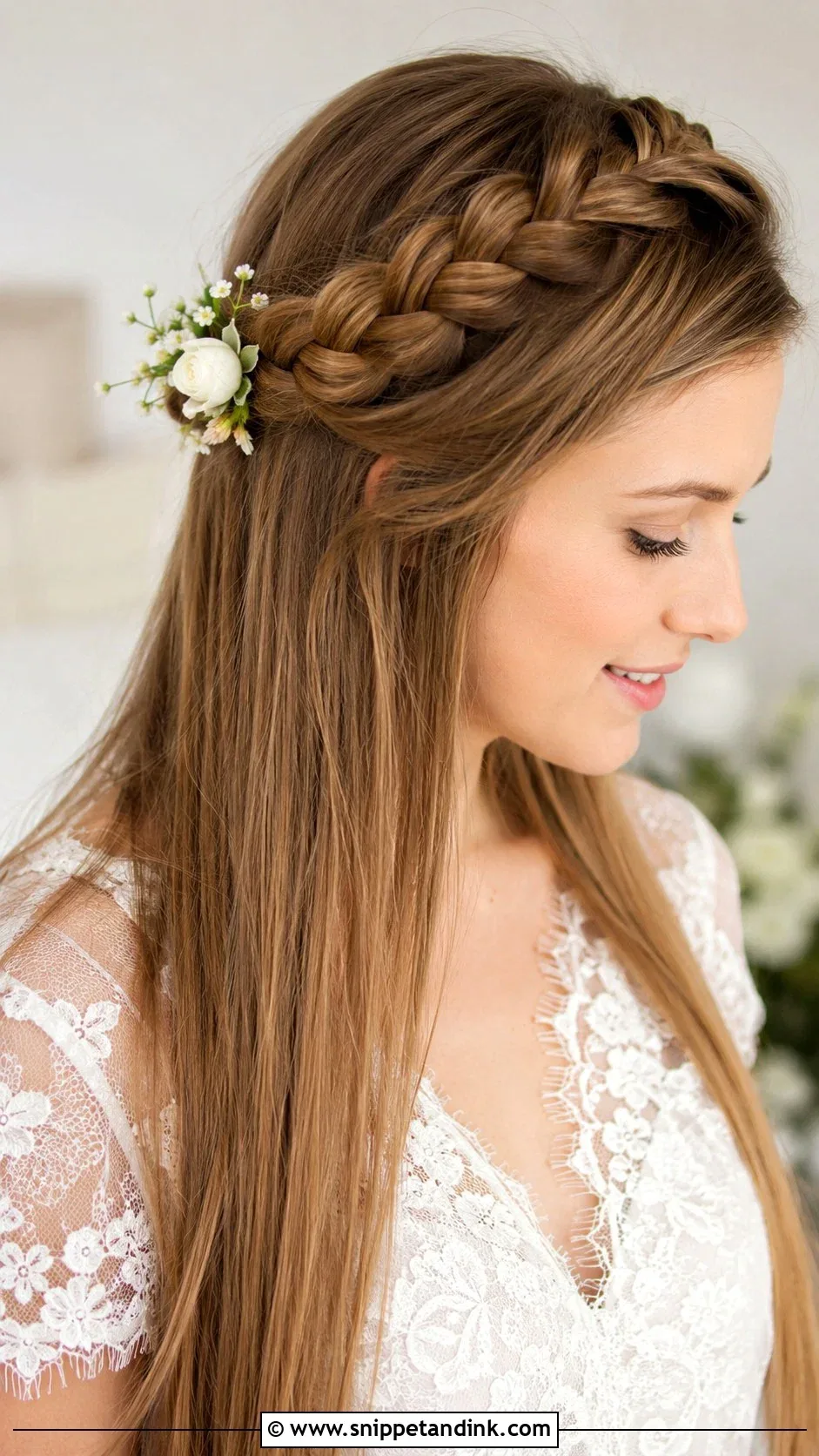
The Dutch braid crown is a braid that sits on top of the hair like a halo, because the braid is woven under rather than over, so it stands proud of the head. It frames the face beautifully, keeps the hair completely off the face, and works with a veil pinned underneath or a flower crown worn on top. It suits brides who want a braided style with real definition, and it is one of the most secure bridal styles, because the braid itself holds the hair in place all day.
Why it helps: the raised braid gives the style definition and keeps it secure for hours. Who it suits: medium to long hair, and brides who want a statement braid. How to style: braid from one ear around to the other, pin the ends underneath, and finish with a light-hold spray. Maintenance: a few pins in the clutch will fix any section that loosens during dancing.
30. The Pearl-Adorned Low Bun
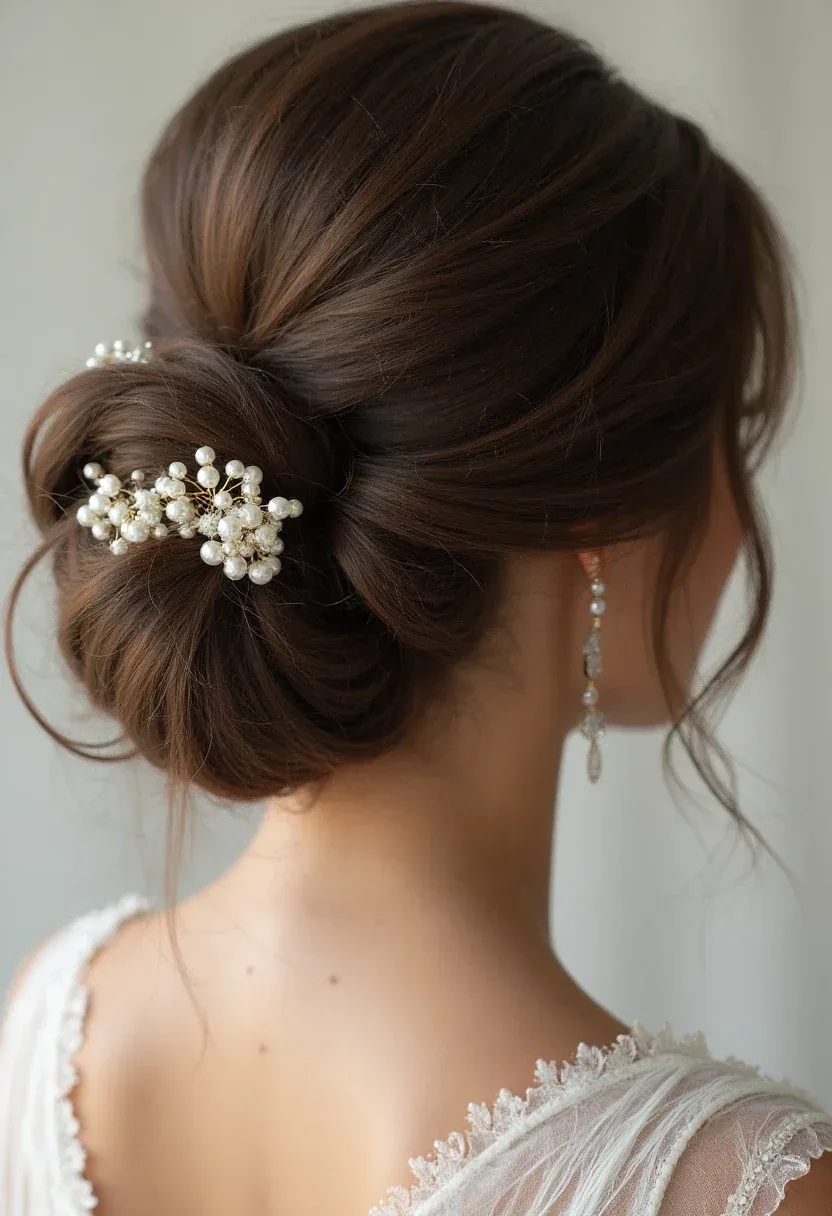
Pearl pins scattered through a low bun are the quiet luxury of bridal hair: the bun itself is classic and simple, and the pearls add a soft, luminous detail that catches the light in photographs without overwhelming the style. The pearls can be clustered on one side, scattered evenly, or arranged in a line along the parting, and they suit classic, elegant and vintage-style weddings. A pearl-adorned bun also pairs beautifully with pearl earrings and a simple dress, because the whole look stays coordinated.
Best for: classic and elegant weddings, and brides who love pearls. How to style: build a smooth low bun first, then place the pearl pins one by one, stepping back to check the balance. Cost and time: pearl pins are inexpensive and the placement takes five minutes. Common mistake: using too many pearls, which turns an elegant detail into a costume — fewer, well placed, is better.
31. The Tiara-Friendly High Updo
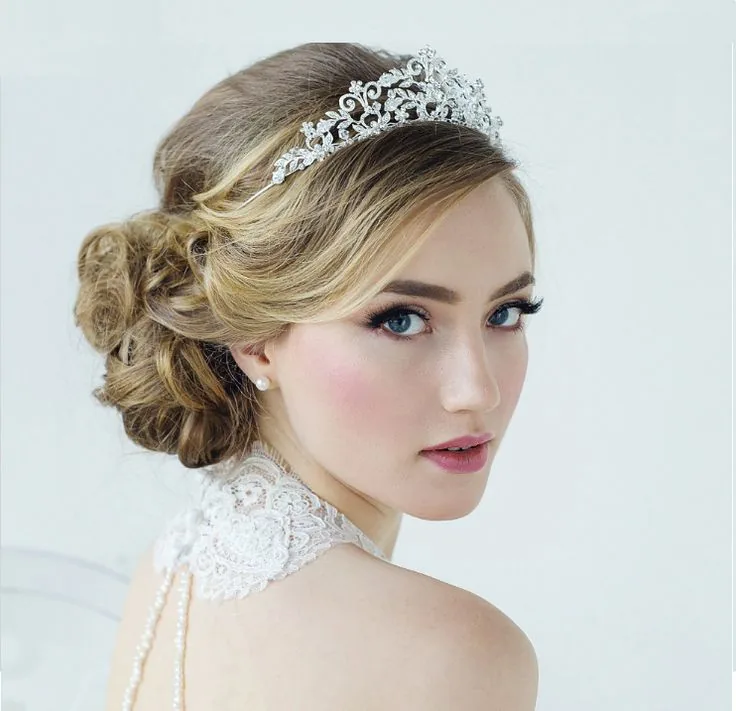
A tiara needs a hairstyle with height and structure to sit on, and the tiara-friendly high updo is built for exactly that: the hair is swept up into a full, structured shape at the crown, and the tiara is placed at the front of the updo, where it has hair to grip and a shape to sit against. It is the princess bridal look, and it suits formal ballroom weddings, cathedral ceremonies and brides wearing a dramatic gown. The updo itself can be smooth or softly curled, as long as it has enough height to support the tiara.
Why it helps: the height and structure give the tiara a secure, flattering home. Who it suits: formal weddings, and brides wearing a tiara or a substantial headpiece. What to ask your stylist: bring the tiara to the trial and ask them to place it exactly as it will be worn, then check it in a mirror from the side. Maintenance: a few extra pins secure the tiara, and it should be checked once before the ceremony.
32. The Minimalist Sleek Bun
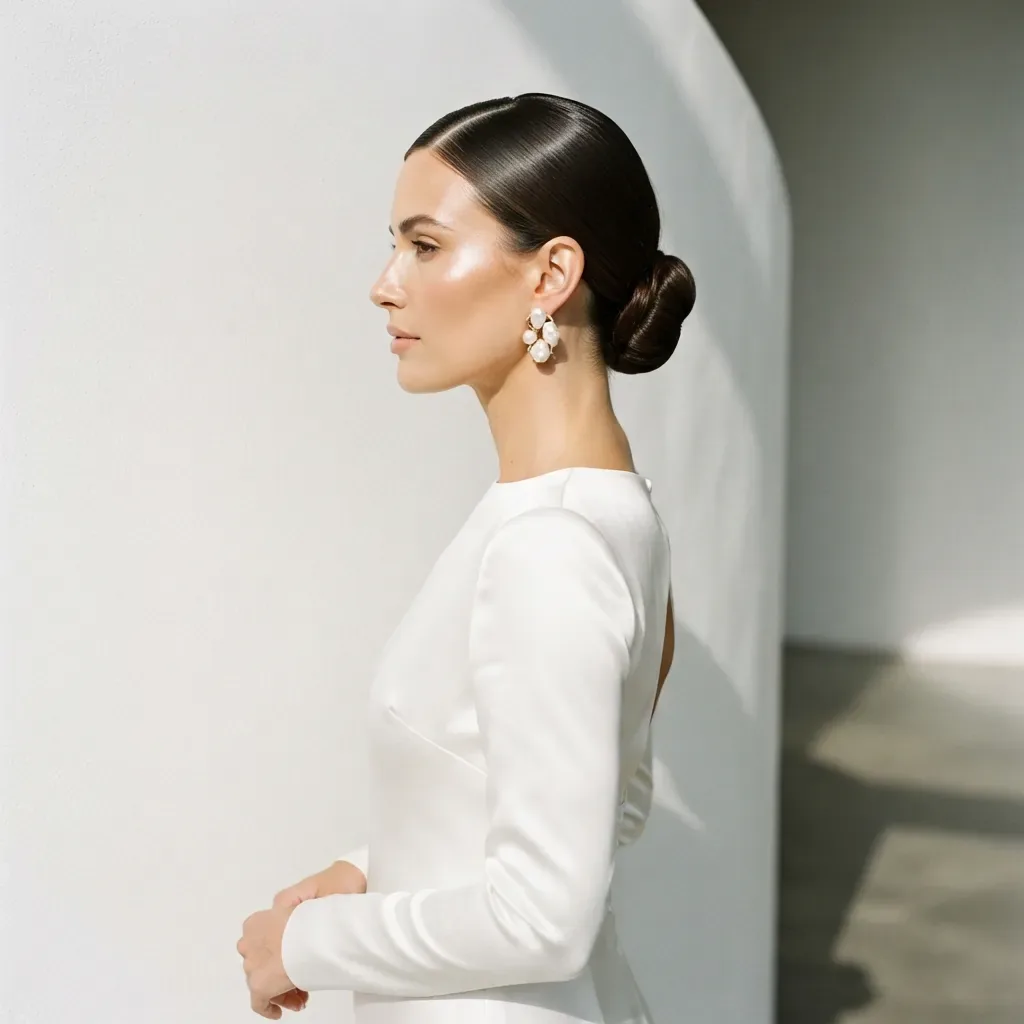
The minimalist sleek bun is bridal hair reduced to its essentials: smooth, glossy hair, a precise parting, and a neat low bun with no decoration at all. It suits a modern dress, a slip dress, a tailored gown, or a city wedding, and it photographs with a clean, editorial quality that busier styles cannot match. The style is only as good as its preparation — the hair must be blow-dried perfectly smooth, the parting must be exact, and the bun must be neat — so it needs a skilled stylist and a calm morning.
Best for: straight hair, modern weddings, and brides who love simplicity. How to style: blow-dry smooth, add a shine serum, part precisely, and secure the bun low and neat. Pros: timeless, elegant, and very secure. Cons: it shows every flyaway, so it needs a touch-up kit. Quick verdict: the simplest bridal style, and the one that demands the most skill to get right.
33. The Romantic Messy Half-Up
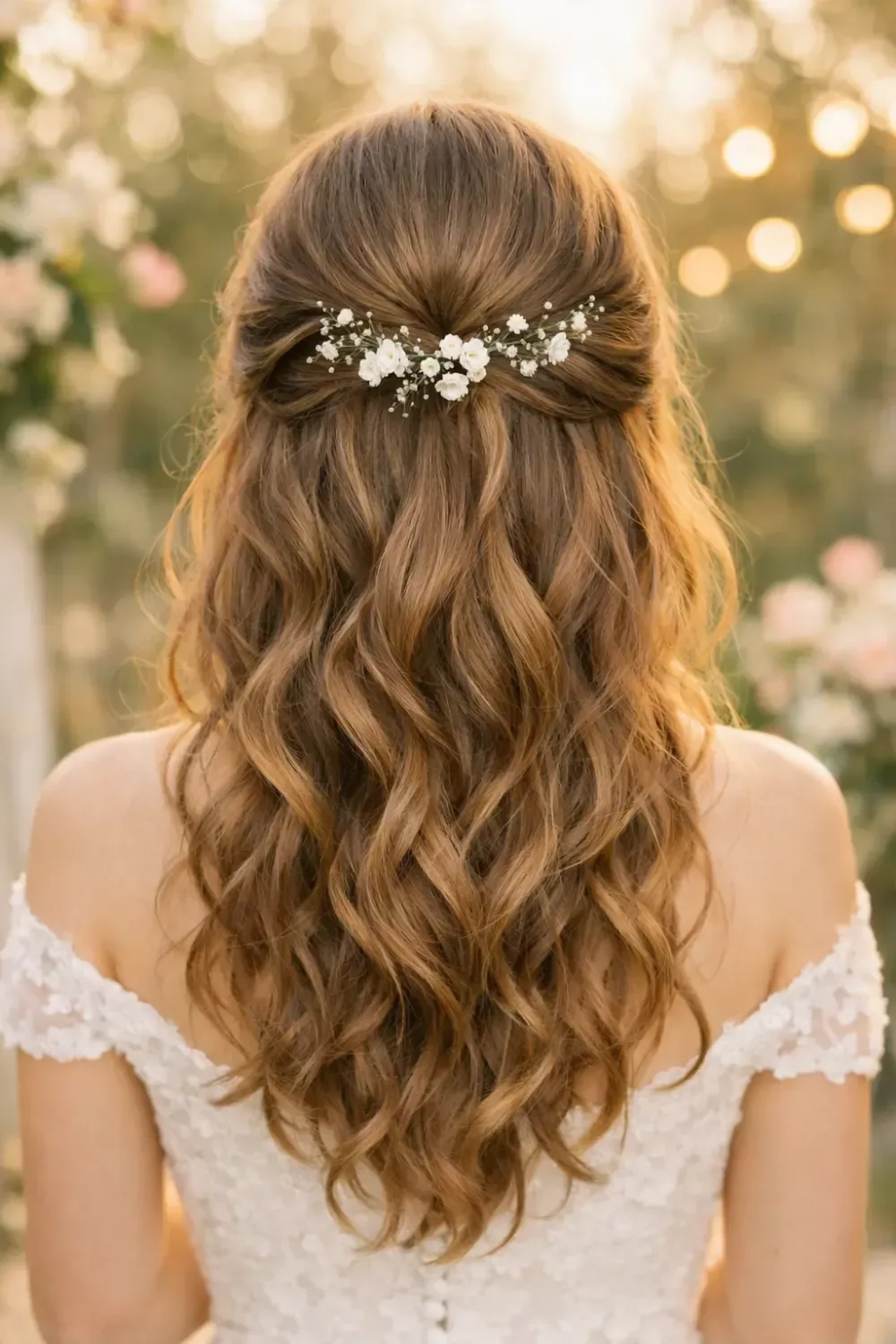
The romantic messy half-up is the half-up style with the structure loosened: the top section is twisted or braided loosely and pinned, the rest of the hair falls in soft, slightly undone waves, and a few pieces are pulled free around the face. It suits bohemian, rustic and garden weddings, and it is the most forgiving half-up style, because a piece that falls loose during the day just adds to the romance. The key is that the messiness is deliberate — the hair is curled and pinned first, then loosened, so the shape is still there underneath.
Why it helps: it combines the romance of hair down with the practicality of hair pinned back. Who it suits: medium to long wavy hair, and relaxed outdoor weddings. How to style: curl loosely, twist the top section and pin it, then pull a few pieces free and finish with a texturising spray. Common mistake: skipping the curling step, which makes the style look genuinely messy rather than romantically messy.
34. Retro Victory Rolls for a Vintage Bride
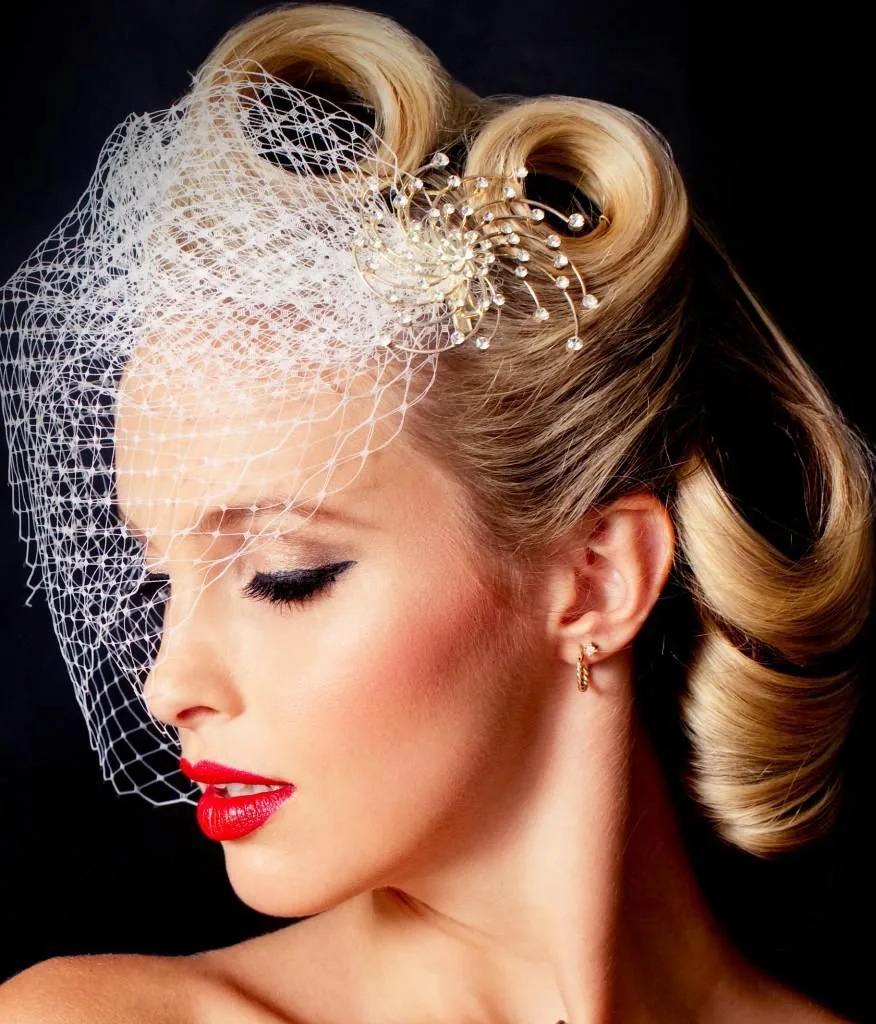
Victory rolls are the boldest vintage bridal style: large, sculpted rolls of hair on either side of the head, usually worn with the rest of the hair in waves or a low bun, and finished with a birdcage veil or a flower. The style comes from the 1940s, and it suits vintage-themed weddings, rockabilly celebrations and brides who want their hair to be a statement. It needs a stylist who knows the technique, because the rolls are built with backcombing, pinning and setting spray, and they have to be symmetrical to look right.
Best for: medium to long hair, and vintage or themed weddings. How to style: backcomb sections, roll them into shape, pin securely, and finish with a strong-hold spray. What to ask your stylist: ask to see photographs of victory rolls they have done before. Cost and time: 60 to 90 minutes, and it is a specialist skill. Quick verdict: the most dramatic vintage bridal look, and the one that photographs most strikingly.
35. Beach Wedding Loose Waves
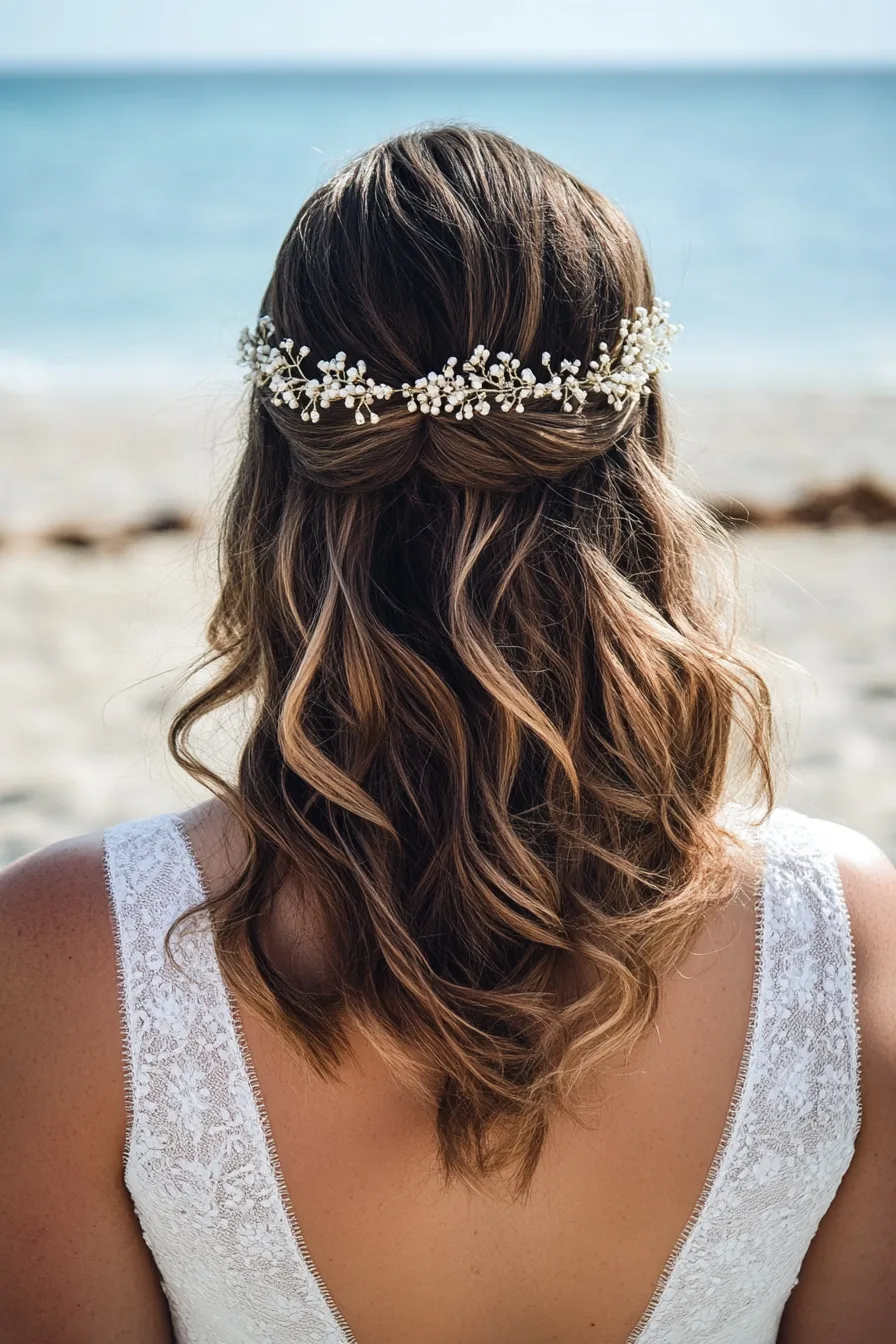
Beach wedding hair should look like the ocean made it: loose, soft waves with a little texture, a centre part, and nothing too structured, because the sea breeze will undo anything too precise within minutes. The style is created with a salt spray and a loose curl, then left to move naturally, and it suits barefoot ceremonies, destination weddings and brides who want to look relaxed rather than formal. A small flower or a delicate hair vine is the only accessory needed, and the veil, if there is one, should be short and light.
Why it helps: the loose waves work with the wind instead of fighting it. Who it suits: medium to long wavy hair, and beach or destination weddings. How to style: apply salt spray to damp hair, curl loosely, and let the waves fall naturally. Common mistake: choosing a structured updo for a beach wedding and spending the day fighting the wind. Quick verdict: the most honest beach bridal style — it looks like the setting, not like a ballroom.
36. The Garden Wedding Floral Braid
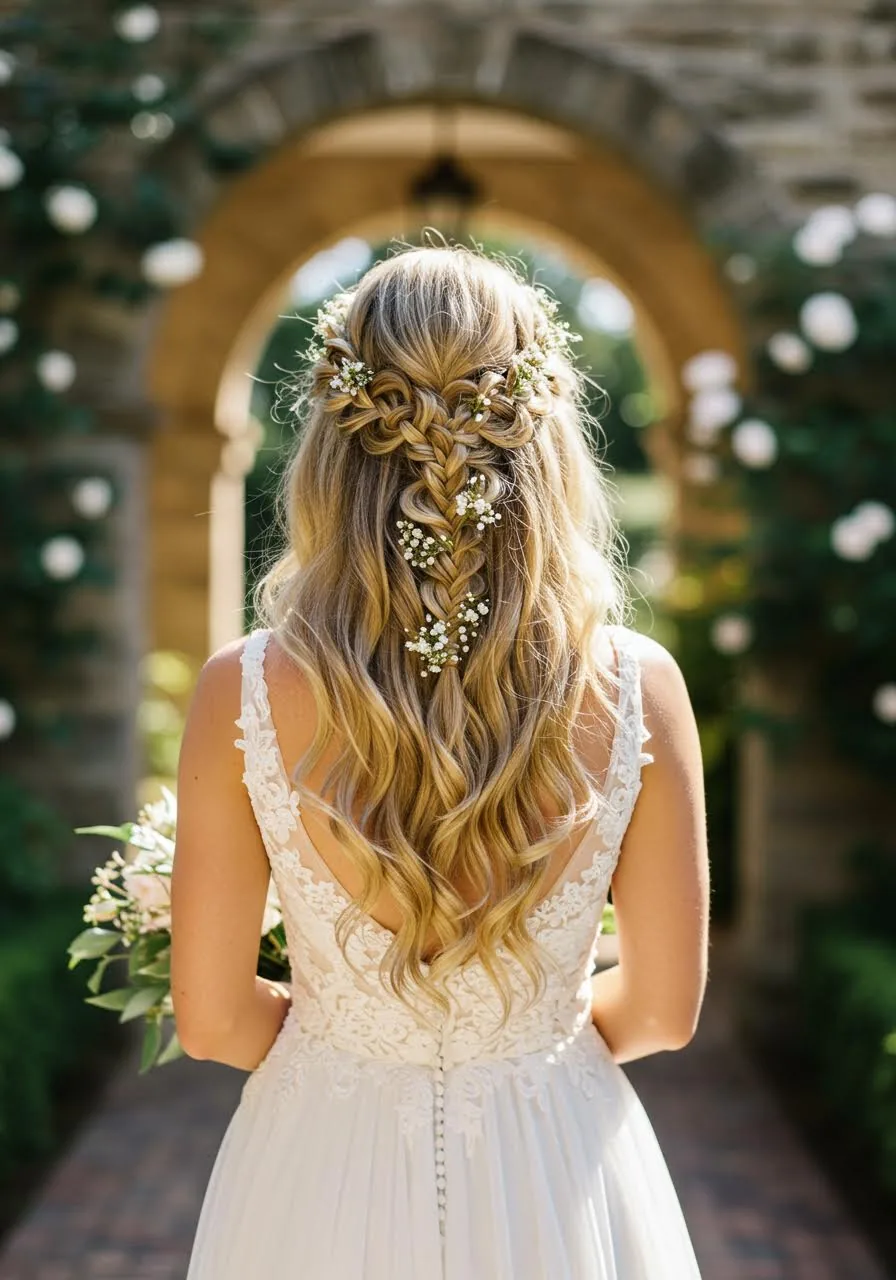
The garden wedding floral braid weaves small fresh flowers into a loose side braid, so the braid itself becomes the decoration: the hair is braided loosely down one side, the edges are pulled out for softness, and tiny blooms — gypsophila, small roses, lavender or seasonal flowers — are tucked into the braid. It suits garden ceremonies, spring weddings and brides whose bouquet has small, hardy flowers, and it photographs beautifully because the braid and the flowers catch the light together.
Best for: long hair, garden and spring weddings, and brides who love flowers. How to style: braid loosely to one side, pull the edges for softness, and add the flowers last, just before the ceremony. What to ask your stylist: ask the florist to wire the flower stems so they can be pinned securely into the braid. Maintenance: a few spare flowers in water, kept cool, let a bridesmaid replace any that wilt.
37. The Reception-Ready Second Look
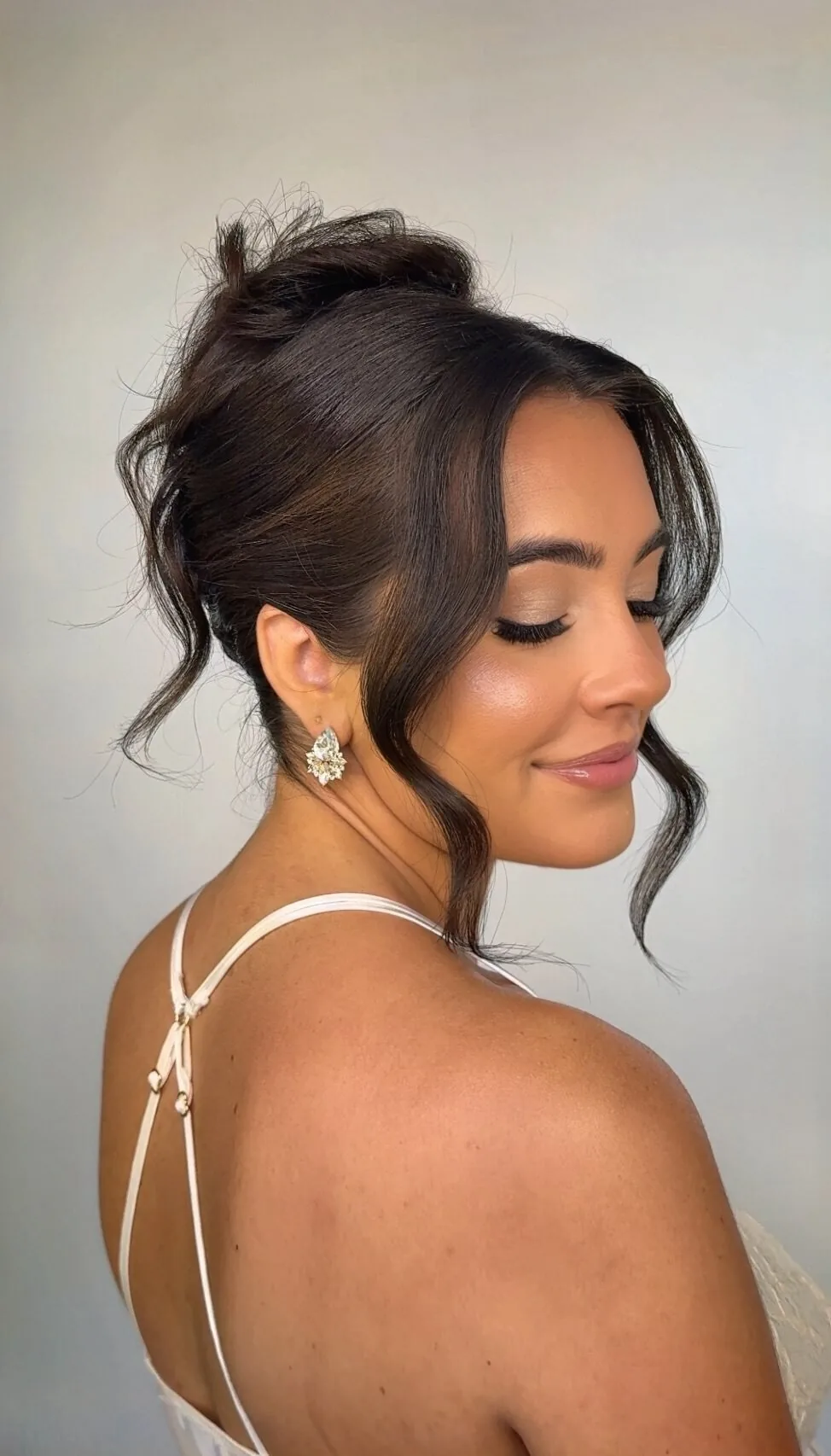
The reception-ready second look is the hair change that turns a ceremony bride into a party bride: the veil comes off, the updo is loosened, and the hair is shaken out into soft waves, or a structured bun is taken down into a loose ponytail with a sparkly clip. The change takes ten minutes and a bridesmaid with instructions, and it works because the ceremony style was planned to be loosened, not because the hair is redone from scratch. It is the best way to get two looks in the photographs without paying for a second styling session.
Why it helps: the hair feels freer for dancing, and the photographs get a second, more relaxed look. Who it suits: every bride who wants to dance, and every ceremony updo that can be loosened. How to plan it: ask your stylist to show you the second look at the trial, and practise the change once. Common mistake: planning a second look for a style that cannot be loosened, like a very tight ballerina bun, and discovering it on the night.
38. The Classic Bridal Pixie with Soft Texture
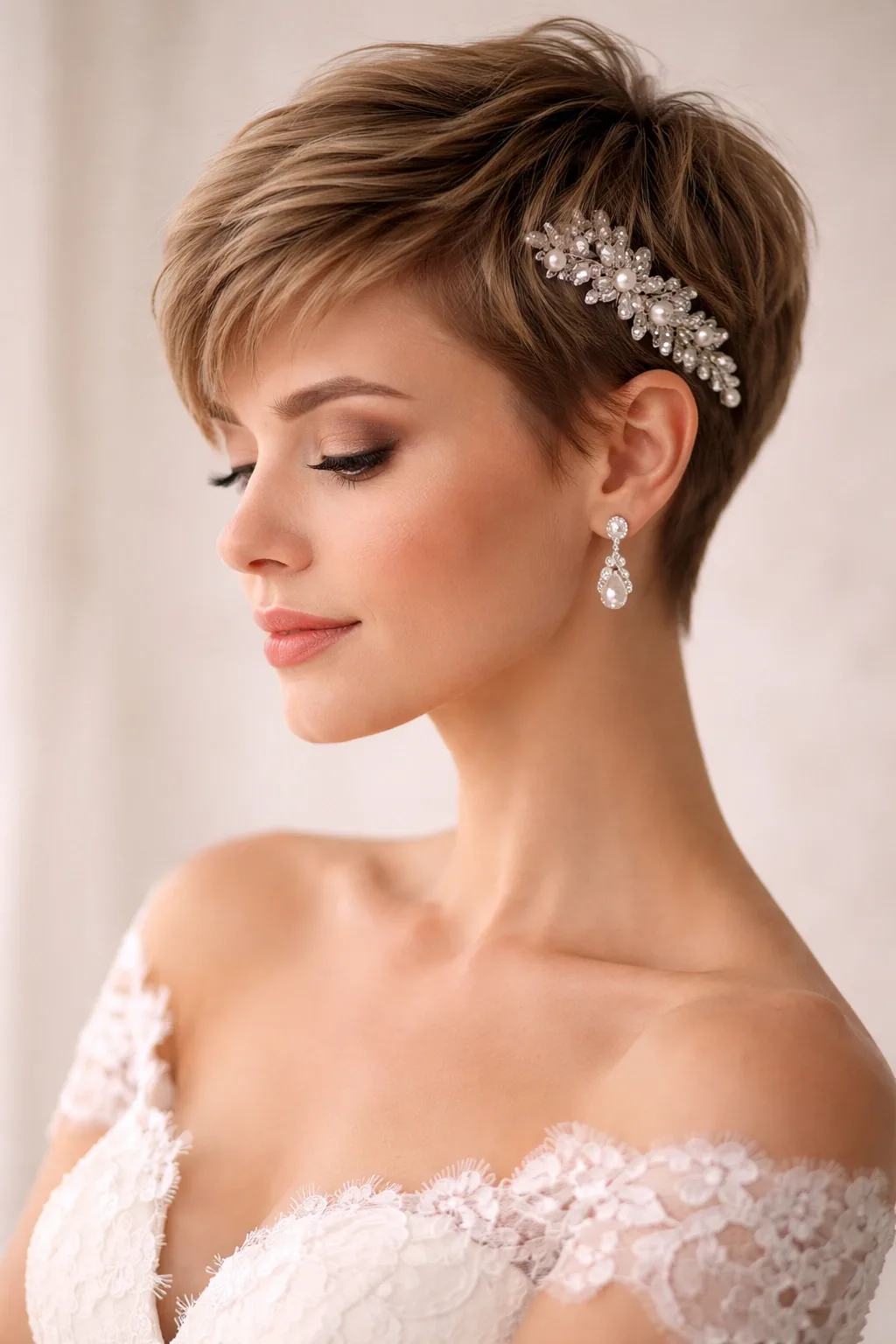
A pixie cut is a beautiful bridal length, and the classic bridal pixie proves it: the hair is textured with a little pomade, swept softly to one side, and finished with a delicate headband, a sparkling clip or a small veil. The short length shows off the face, the neck and the earrings, and it photographs with wonderful definition, because every detail of the cut is visible. It suits confident brides, modern weddings and anyone who loves their pixie and has no interest in growing it out for one day.
Best for: short hair, confident brides, and modern or city weddings. How to style: work a small amount of pomade through the top layers with your fingers, sweep the fringe to one side, and add a single delicate accessory. Pros: the easiest bridal style to wear all day, and the most distinctive in photographs. Cons: it needs a fresh trim a few days before the wedding to look its best. Quick verdict: the boldest short bridal style, and the one that looks most like the bride herself.
Which bridal hairstyle is best with a veil?
A low bun or low chignon is the best bridal hairstyle with a veil, because the veil comb slides in above the bun and the weight of the veil sits low, where it cannot pull the style apart. Half-up styles also work well, with the veil anchored at the twist or clip. High buns can work with a blusher veil worn underneath, but a long veil pinned on top of a high bun often slips. Bring your veil to the trial and have your stylist pin it exactly as it will be worn.
How far in advance should I book a bridal hair trial?
Book your bridal hair trial four to eight weeks before the wedding, after your dress is finalised, so the hairstyle can be planned around the neckline and the back of the dress. The trial usually takes 60 to 90 minutes, and your stylist will photograph the style from every angle, time how long it takes, and note the products used. Never skip the trial — the wedding morning is the worst time to discover a style does not suit you.
How long will my bridal hairstyle last?
A well-planned bridal hairstyle should last twelve hours or more, from the first look to the last dance. Updos last longest, because the hair is pinned and anchored, while loose waves drop first, especially in humidity. Your stylist can make any style last longer by setting curls with pins until they cool, using a strong-hold spray, and choosing a style with structure. Pack a touch-up kit with bobby pins and a mini hairspray for the evening.
Do I need hair extensions for my bridal hairstyle?
Not necessarily, but clip-in extensions can help if your hair is fine, short, or thin and the style you want needs volume or length. A few clip-ins at the crown add fullness to an updo, and longer pieces add length to waves. Ask your stylist honestly at the trial whether extensions would improve the style, and have them colour-matched and cut to blend in. Extensions should be tried at the trial, not added for the first time on the wedding morning.
What bridal hairstyle suits fine hair?
Fine hair suits updos best, because pinning and backcombing create volume that fine hair cannot hold on its own. A twisted updo, a textured bun or a braided low bun all work well, because the twists and braids give fine hair grip. Loose waves on fine hair tend to drop quickly, so if you want your hair down, ask your stylist about clip-in pieces for fullness and a strong-hold setting spray. Avoid very sleek styles, which show how fine the hair is.
Can I wear my hair down for my wedding?
Yes, many brides wear their hair down, and it looks romantic and beautiful, especially in photographs. Loose waves, Hollywood waves and soft curls are the most popular hair-down bridal styles. The trade-off is maintenance: hair down is more vulnerable to wind and humidity, and it needs a touch-up kit and a plan for the evening. If your ceremony is outdoors or in summer, consider a half-up style instead, which keeps the hair out of your face while still showing off the length.
What is the best bridal hairstyle for short hair?
The best bridal hairstyle for short hair is the one that works with your cut: a bob with soft waves and a sparkling clip, a chin-length bob with a deep side part, or a pixie with soft texture and a delicate headband. Short hair holds a wave well and needs almost no maintenance, and a birdcage veil or a beaded headband turns any short cut into a bridal style. Do not try to force a long-hair updo onto short hair — choose a style designed for your length.
How much does bridal hair styling cost?
Bridal hair styling usually costs between $100 and $300 for the wedding day, depending on the stylist, the location and the complexity of the style, with a trial costing roughly half that. Specialist styles like finger waves or victory rolls cost more, because they take longer and need a specialist skill. Ask your stylist for the full price, including the trial, travel and any extensions, before you book, so there are no surprises.
Should I change my hair for the reception?
You do not have to, but many brides do, because a second look feels freer for dancing and gives the photographs a more relaxed style. The simplest change is to take the veil off, loosen the updo, and shake the hair into soft waves, which takes ten minutes and a bridesmaid with instructions. Plan the second look at the trial, and choose a ceremony style that can be loosened gracefully, rather than one that has to be completely redone.
Can I do my own bridal hair?
You can, but most brides are glad they did not. A professional stylist brings experience, an extra pair of hands, and the ability to make a style last twelve hours, which is hard to do on your own hair from behind. If you do style your own hair, practise the exact style at least twice, time yourself, and have a bridesmaid ready to help with the back. A trial run with a stylist is still worth it, even if you plan to do the final style yourself.
Conclusion: Choose the Bridal Hair That Lets You Enjoy the Day
The best bridal hairstyles for women are not the most complicated ones — they are the ones that suit your face, work with your hair length and texture, hold your veil securely, and still look beautiful at the last dance. A low chignon suits a classic ceremony, loose waves suit a garden wedding, a braided crown suits a bohemian celebration, and a sleek bun suits a modern city wedding, but the right choice is always the one that feels like you. Book the trial, bring the veil and the photographs, ask your stylist the honest questions, and choose the style you will still love when you look at the photographs in fifty years. Your wedding hair should be the least of your worries on the day — plan it well, then forget about it and enjoy every minute.

