
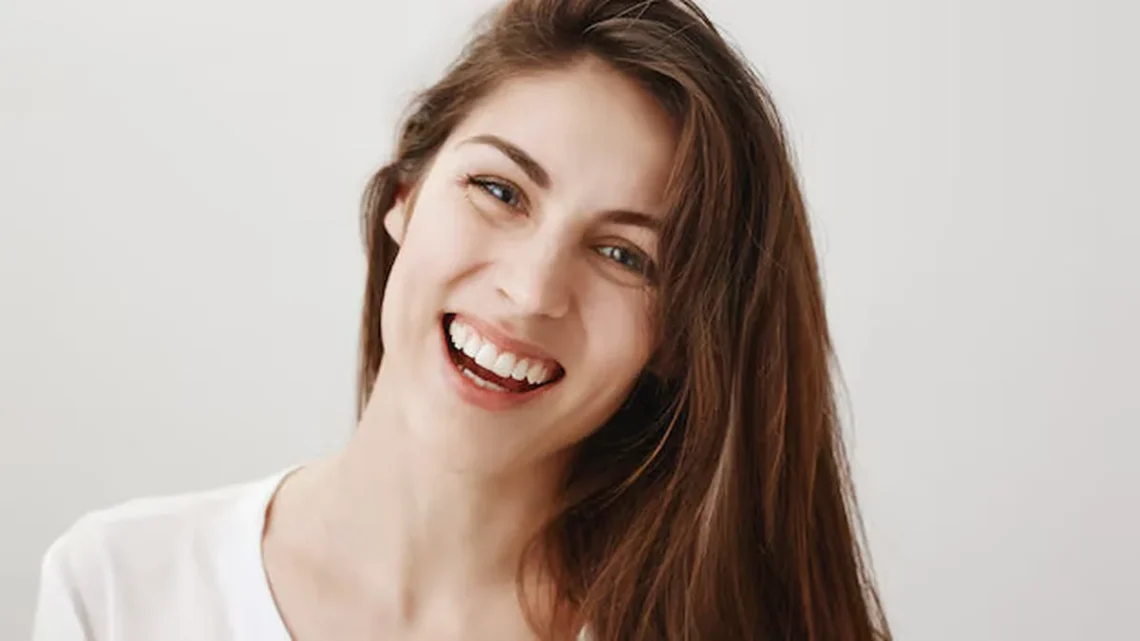
An oval face is often called the most versatile face shape, and for good reason. With balanced proportions, a gently curved jawline, and a forehead that is only slightly wider than the chin, almost every length and style can work — but the most flattering hairstyles for an oval face are the ones that add a little width, movement, or softness exactly where you want it.
The trick is not to fight your natural balance. Long, flat hair can make an oval face look longer than it is, while the right layers, bangs, or waves can highlight your cheekbones and keep the whole look in proportion. That is why this guide covers everything from short pixie cuts to long, layered styles, so you can find a cut that suits your hair texture, your lifestyle, and how much styling time you actually have.
Below, you will find eight short guides first — how to confirm your face shape, which lengths and partings work best, and the mistakes worth avoiding — followed by 37 hairstyles for an oval face, each with honest styling advice and what to ask your stylist for. Whether you want a low-maintenance cut or a full glamorous blowout, there is a style here that will suit you.
How to Tell You Have an Oval Face
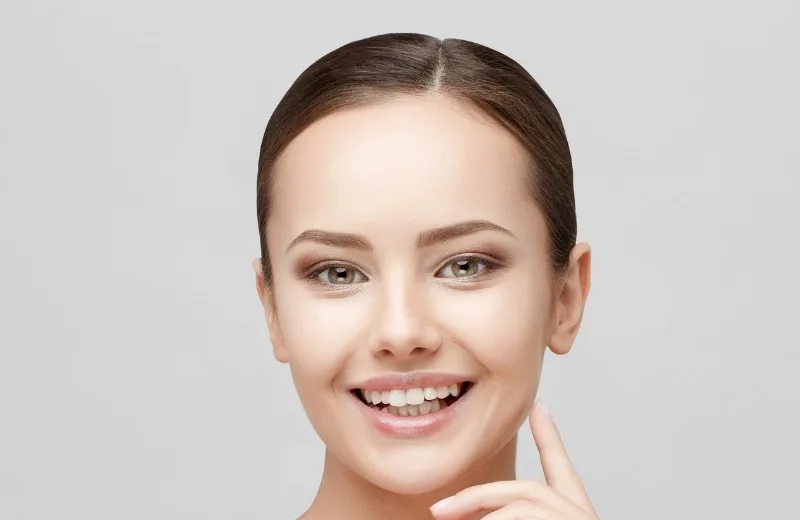
An oval face is longer than it is wide, with a forehead that is a little wider than the jawline and a chin that curves gently rather than coming to a sharp point. Your cheekbones are usually the widest part of your face, and the overall outline is soft and rounded, without strong angles.
To check at home, pull your hair back, stand in front of a mirror, and trace the outline of your face with a washable marker or lipstick on the glass. If the shape looks like an egg standing upright — wider at the cheekbones and narrower at the forehead and chin — you very likely have an oval face. Measuring helps too: the length of your face is usually about one and a half times its width.
The Best Lengths for an Oval Face
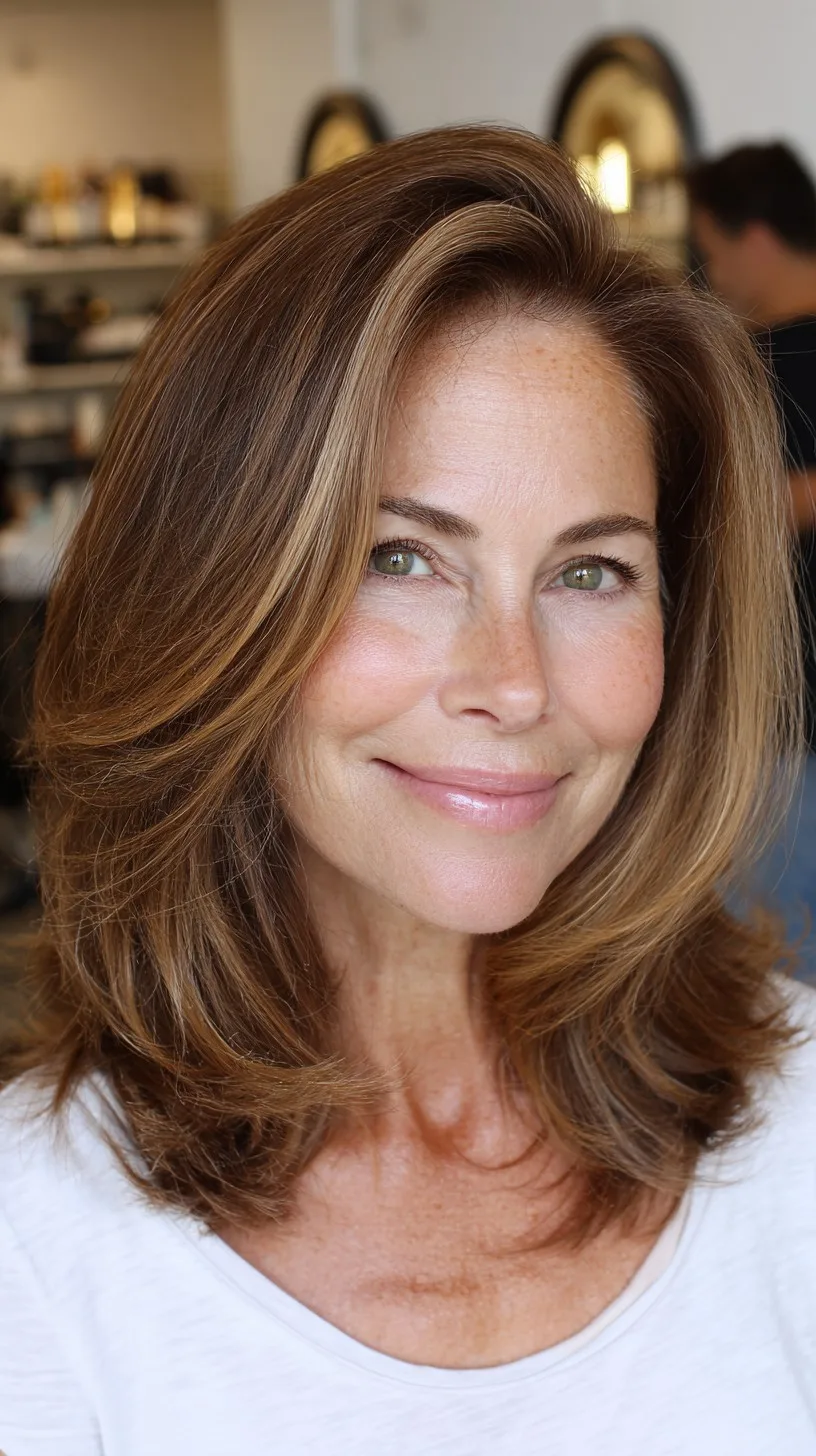
Almost every length works on an oval face, which is why stylists love cutting for this shape. Short cuts such as pixies and bobs show off your bone structure, medium lengths add bounce and movement, and long hair looks elegant as long as it has some layers or waves to stop it dragging your features down.
If you are unsure where to start, a shoulder-length cut is the safest first step. It is long enough to tie back, short enough to style in minutes, and it frames an oval face beautifully with just a few face-framing layers. From there you can go shorter or grow it out, knowing the shape underneath will still suit you.
Bangs That Work Best on an Oval Face
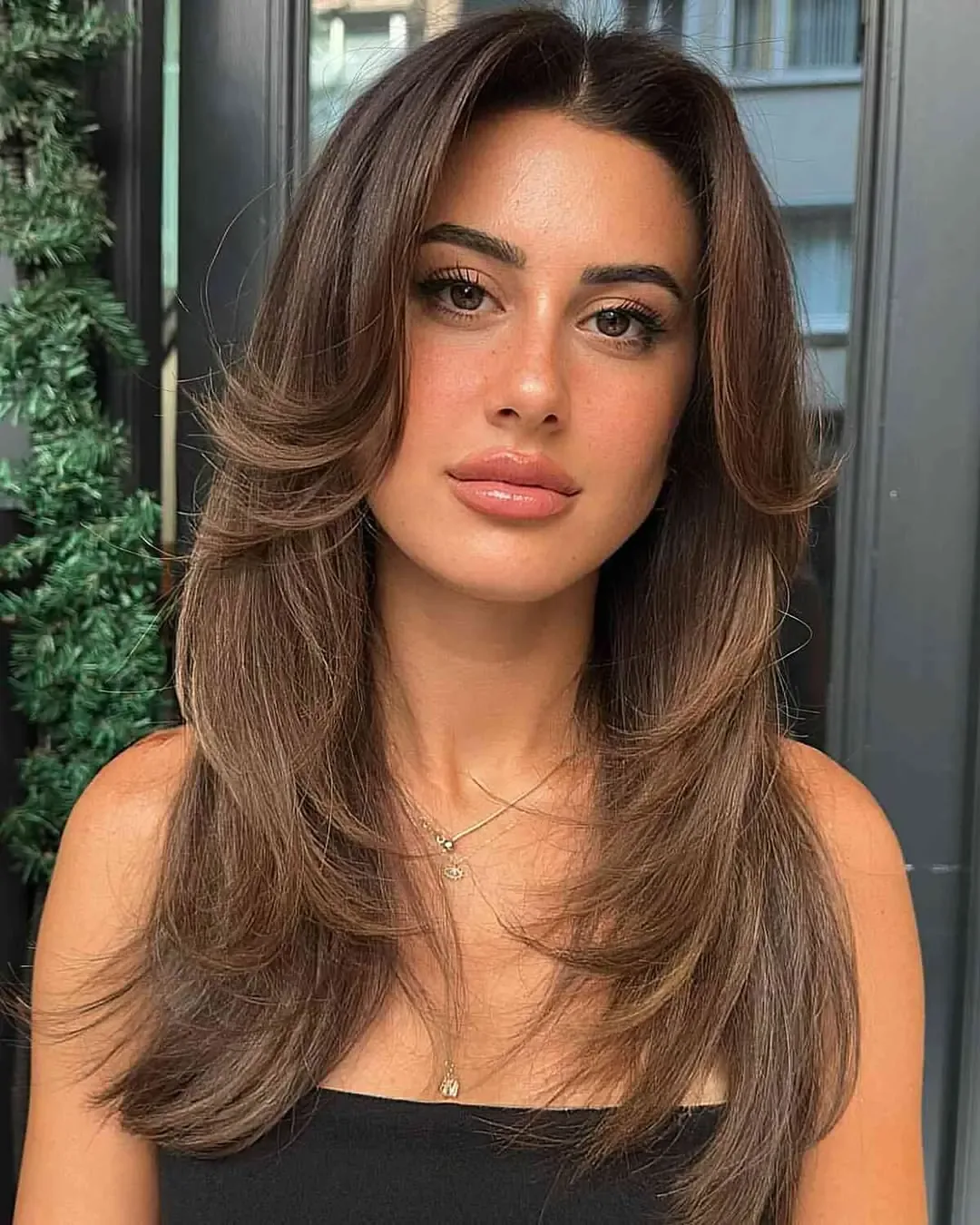
Curtain bangs are the classic choice for an oval face because they open in the middle, draw attention to the eyes and cheekbones, and soften the forehead without hiding it. Wispy bangs and bottleneck bangs work in a similar way, giving you coverage that still feels light and airy.
Blunt, heavy bangs can also work, but they shorten the face visually, so they suit oval faces best when they are kept slightly longer or paired with layers at the sides. If you have never had bangs before, start with a longer curtain style — it grows out gracefully and can be swept to the side on days you do not want to style it.
Partings That Flatter an Oval Face
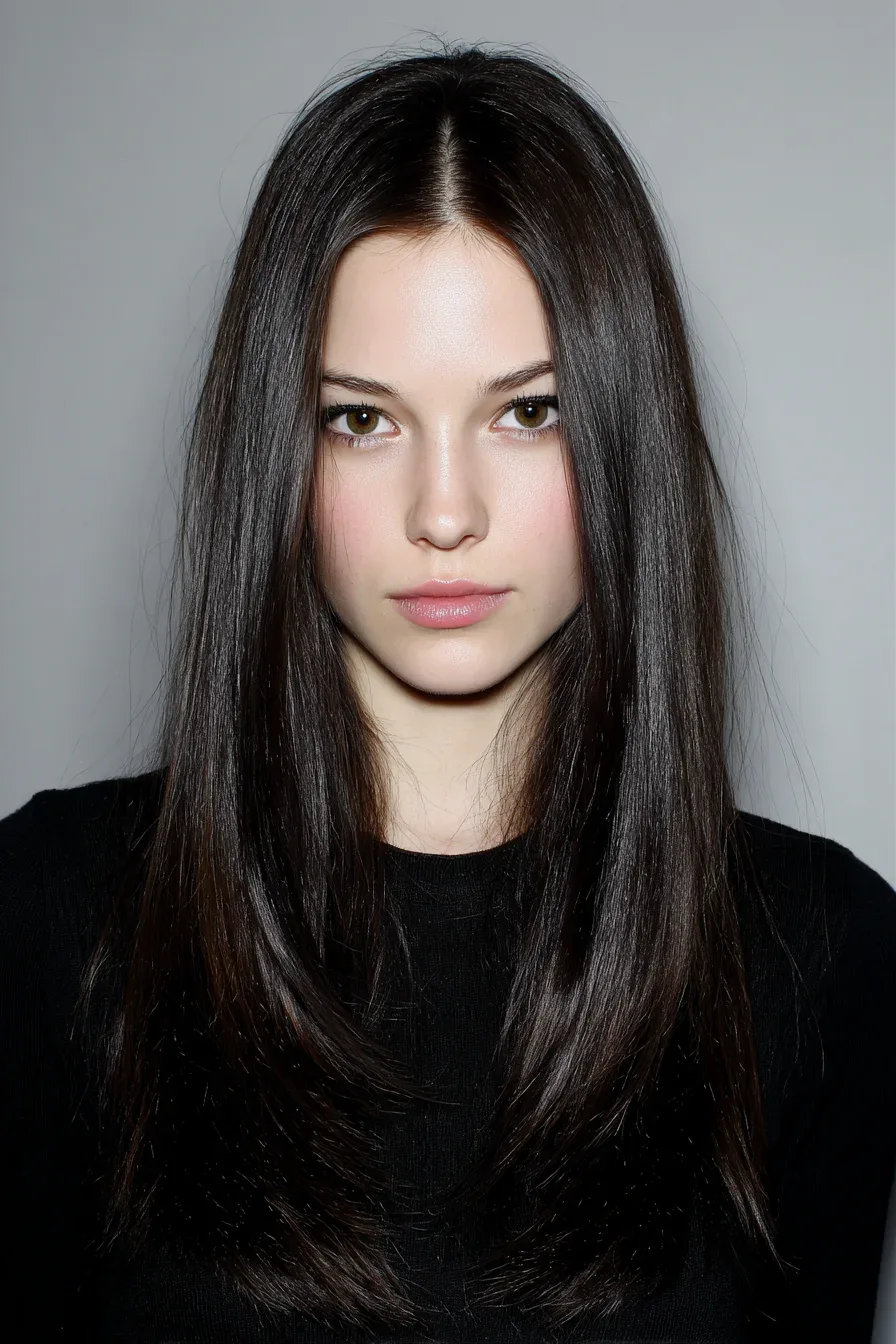
A centre part is the most natural choice for an oval face because your features are already balanced, and a middle part keeps that symmetry. It works especially well with long layers, sleek straight hair, and curtain bangs, where the hair falls evenly on both sides.
A deep side part is the best option when you want drama or volume. It creates a sweeping line across the forehead, adds height at the roots, and gives fine hair the illusion of thickness. Try both in the mirror before your appointment — the right parting can change the whole feel of a cut without a single snip.
Volume and Balance: The Golden Rules
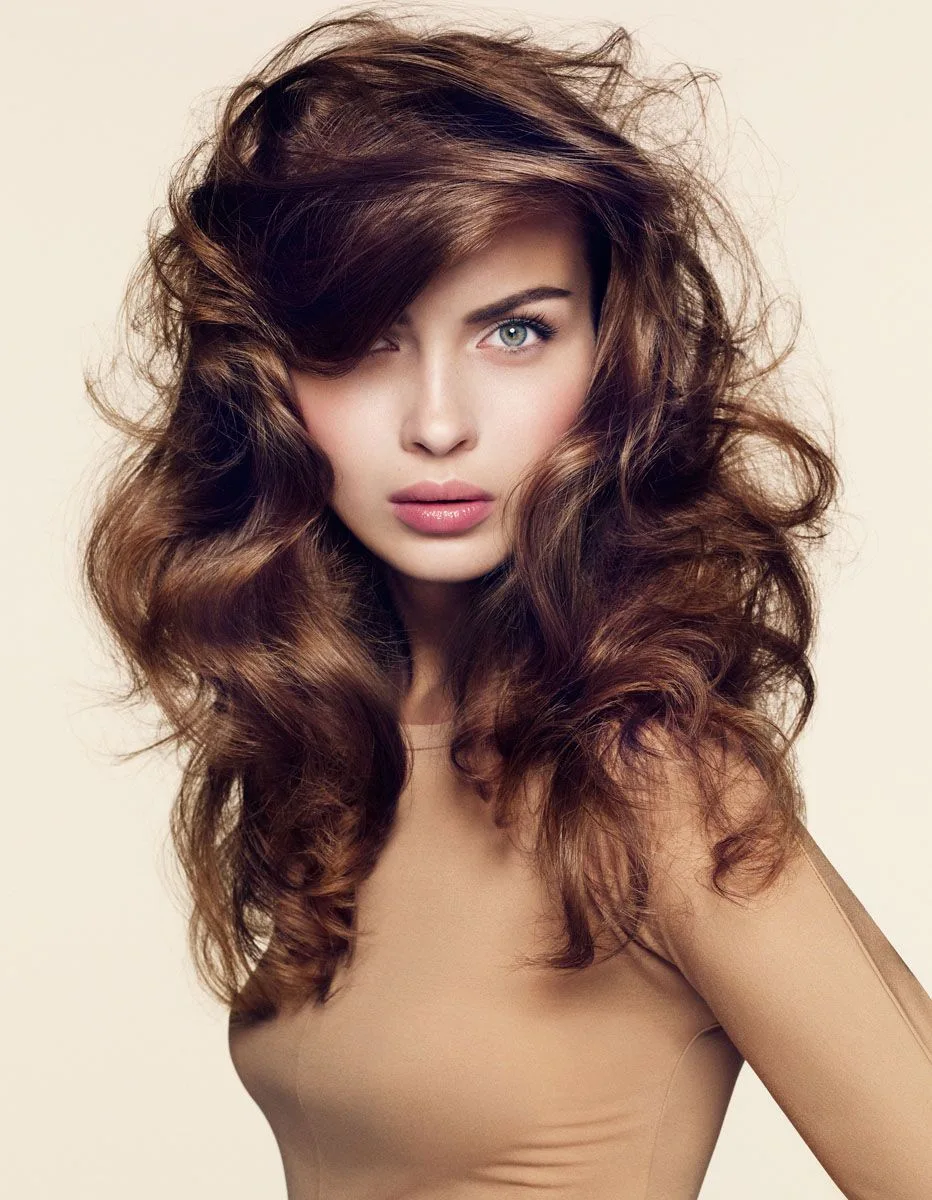
The main rule for oval faces is simple: add width where you want it, and avoid adding length where you do not. Volume at the sides — through waves, curls, or a bouncy blowout — makes the face look wider and more balanced, while volume piled high on top can make it look longer.
That does not mean you should avoid height altogether. A little lift at the crown looks great with a ponytail or an updo, as long as the sides are not pulled too tight and flat. The goal is balance in every direction, not flatness and not a tower of hair.
Styling Mistakes to Avoid
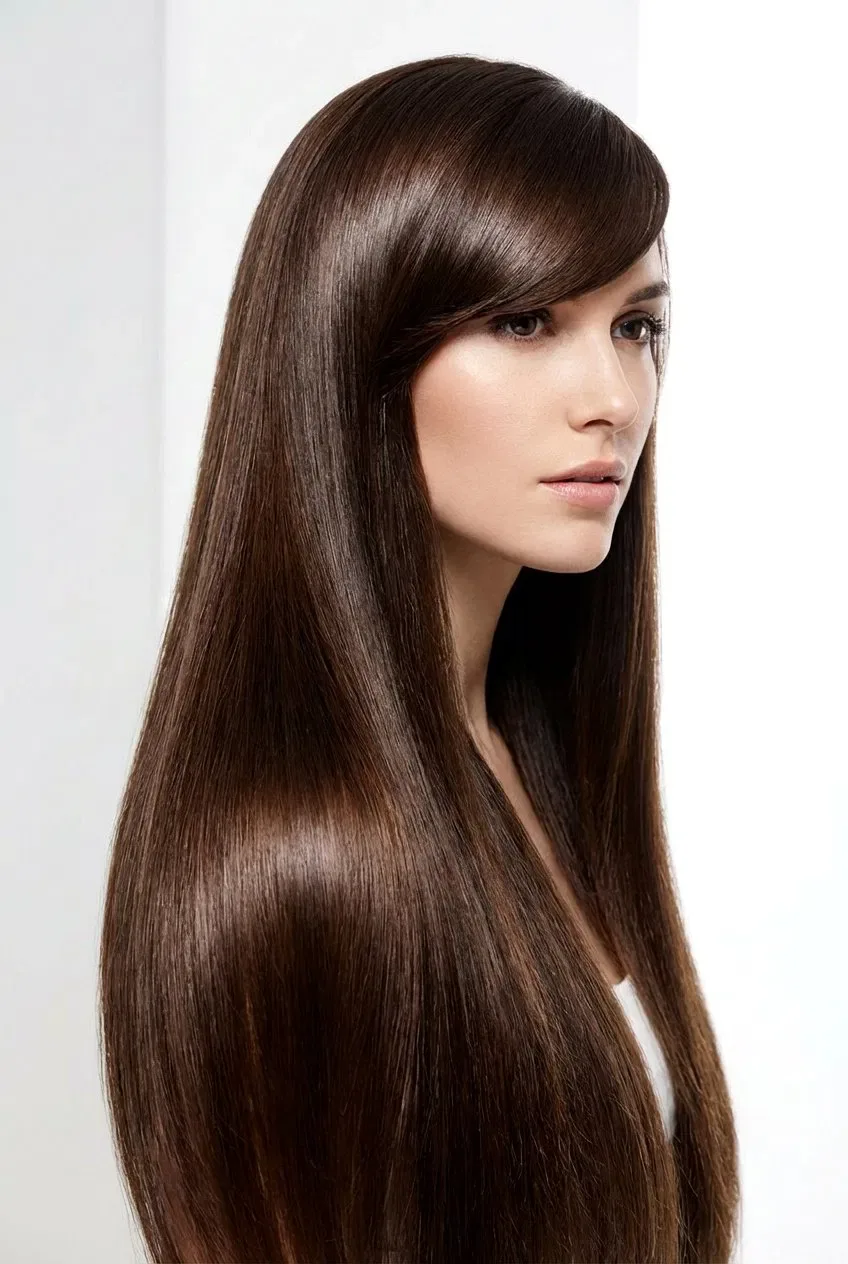
The most common mistake with an oval face is very long, very straight hair with no layers at all. It can pull the eye downward and make the face look longer and narrower than it really is. A few long layers or a soft wave through the ends is usually all it takes to fix it.
The second mistake is pulling hair back too tightly with nothing left out at the front. A severe scraped-back ponytail or bun can expose the full length of the face and feel harsh. Leaving two soft tendrils out, or loosening the hairline slightly, keeps the same style looking much softer and more flattering.
How to Ask Your Stylist for the Cut You Want

Bring two or three photos of the exact cut you want, ideally on someone with a similar hair texture to yours, and be honest about how much time you spend styling your hair each morning. A cut that looks wonderful in the salon but needs forty minutes of blow-drying at home is not the right cut for you.
Use the words in this guide when you talk to your stylist: ask for face-framing layers, a soft or blunt finish, and the length you want to keep at the front. Ask how the cut will grow out, when you should come back for a trim, and what products they used — then you can recreate the look at home without guessing.
Maintenance and Grow-Out Guide
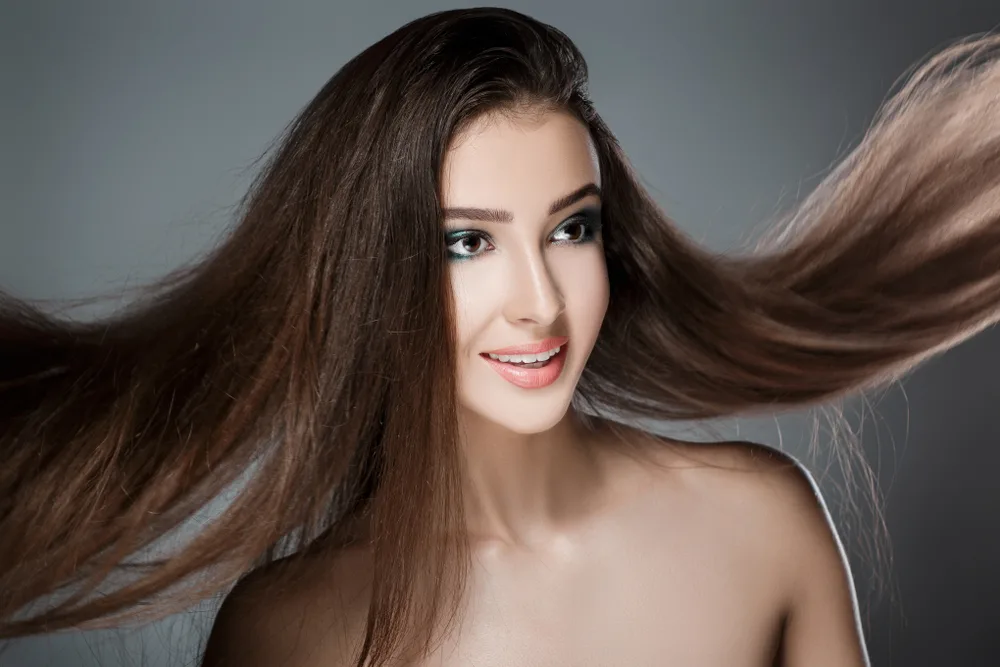
Short cuts such as pixies and bobs need a trim every four to six weeks to keep their shape, while long layered cuts can usually go eight to twelve weeks between appointments. Bangs are the exception — curtain bangs may need a quick trim every three to four weeks, though many salons offer a free fringe trim between cuts.
When you are growing a style out, ask your stylist to thin the shape gradually rather than letting it grow wild. A lob grows into long layers beautifully, and a pixie grows into a short bob with one or two shaping appointments in between. Regular conditioning, heat protection, and a silk pillowcase all help the grow-out phase look intentional rather than accidental.
1. Long Layers with Face-Framing Pieces
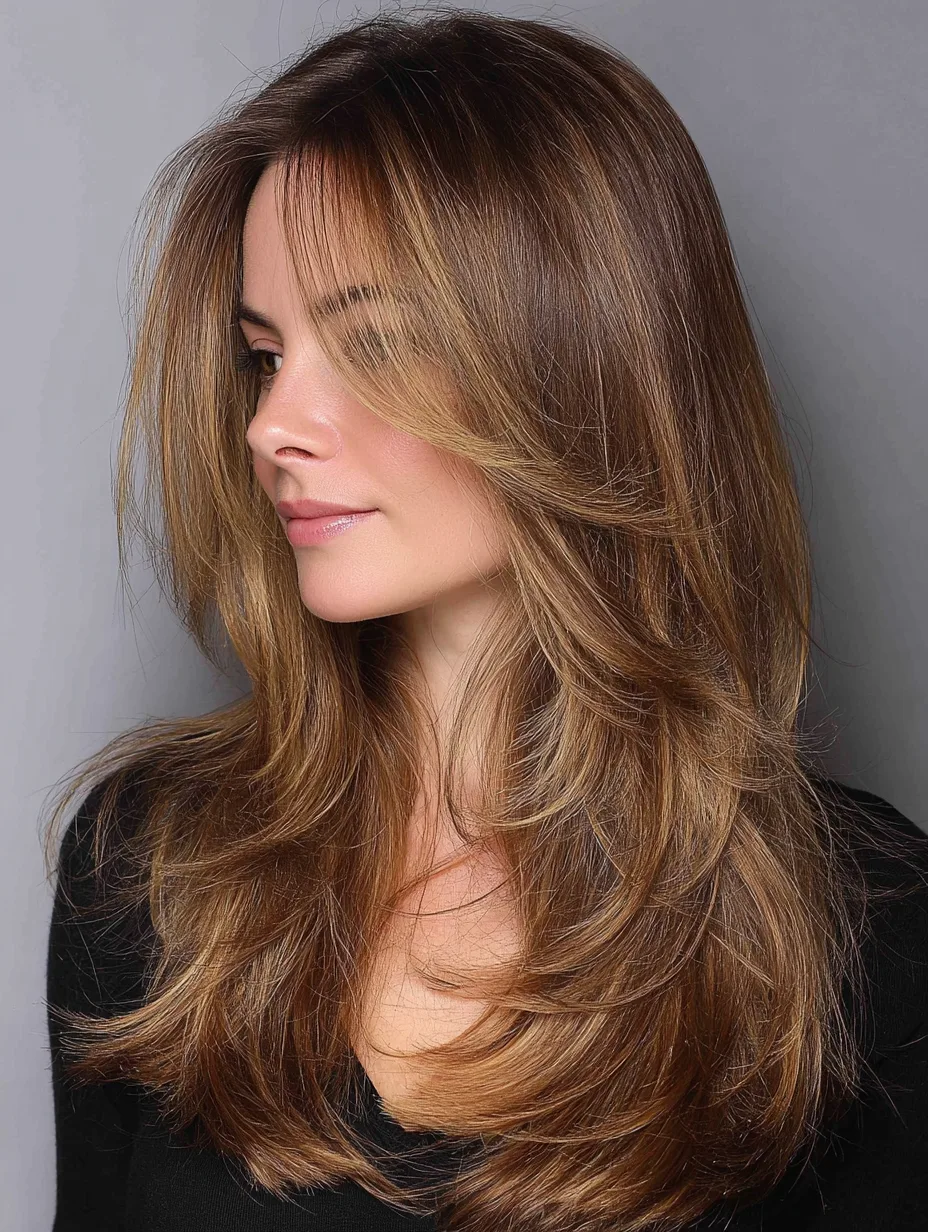
Long layers are the easiest win for an oval face. The layers start around the cheekbones and fall down the length of the hair, which adds movement and width exactly where an oval face benefits from it most. Unlike a one-length cut, which can hang flat and drag the eye downward, long layers keep the hair light and give it a natural swing when you move.
This style suits almost every hair type, from fine to thick, because the layers can be adjusted to your density — more layers for thick hair to remove weight, fewer and longer ones for fine hair to keep it looking full. It also grows out gracefully, so you can stretch the time between appointments without the cut losing its shape.
For the most flattering result, ask your stylist to keep the shortest layers at cheekbone level rather than up near the eyes, and to point-cut the ends so they move instead of sitting in a solid line. At home, a large round brush and a cool shot from the dryer will give the layers their shape, and a light oil on the ends keeps long hair looking healthy between trims.
Best for: Anyone who wants to keep their length but make it look intentional and polished, especially if your hair is straight or slightly wavy.
2. Curtain Bangs
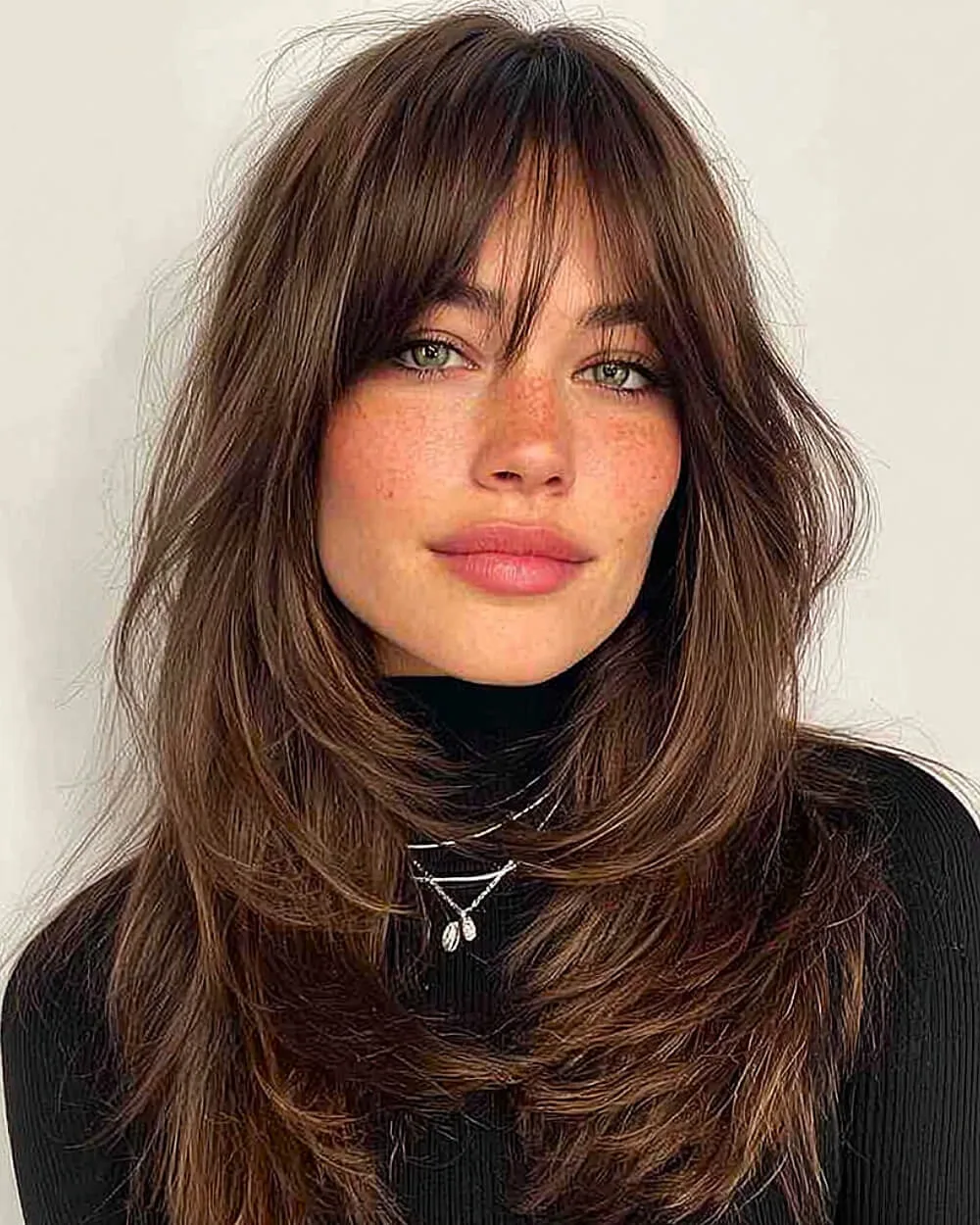
Curtain bangs part in the middle and sweep to each side like a curtain, which is why they are one of the most flattering choices for an oval face. They draw attention to the eyes and cheekbones, soften the forehead, and add a gentle frame that makes the whole face look more balanced.
They are also one of the lowest-commitment bangs you can try. Curtain bangs blend into face-framing layers as they grow, so there is no awkward in-between stage, and on lazy days you can simply tuck them behind your ears. A round brush and a quick blast of heat are all you need to style them in the morning.
When you visit the salon, ask for the bangs to be cut dry or nearly dry, because curtain bangs shrink as they dry and can end up shorter than planned. Keep a small round brush by your dryer, and if they split oddly in the morning, a quick dampen and re-dry usually fixes them in under a minute.
How to style: Blow-dry the bangs forward with a round brush, then sweep each side outward and let them fall naturally — a little texture spray keeps them from going flat by midday.
3. The Blunt Bob
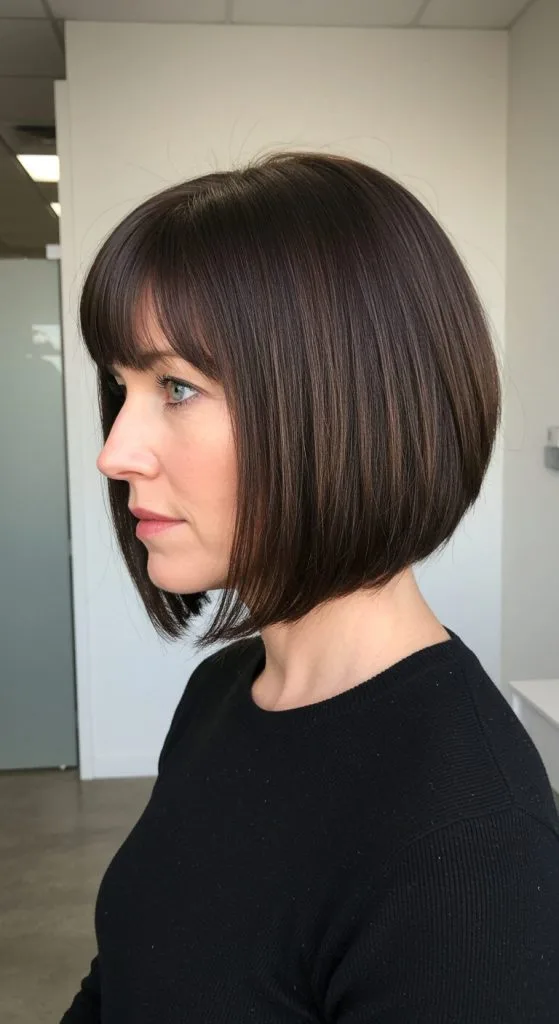
A blunt bob ends in one clean, sharp line, usually at the jaw or just below it, and that strong horizontal edge is what makes it so flattering on an oval face. It adds width at the jawline, balances the length of the face, and gives even fine hair the appearance of thickness and health.
The blunt bob is also a statement cut: it looks deliberate, polished, and modern with almost no styling. A quick pass with a flat iron gives you a sleek finish, while a slight bend at the ends with a straightener makes it look softer and more relaxed. It is a brilliant choice if your hair is straight or only slightly wavy.
Blunt ends show damage quickly, so a bond-building treatment every few weeks and a trim every six weeks will keep the line looking sharp. If your hair is wavy, ask your stylist whether a very subtle undercut at the nape would help the bob sit flat, and finish with a smoothing cream rather than a heavy oil.
What to ask a stylist: Ask for a one-length blunt cut at jaw level with no layers, and decide together whether a centre or side part suits your features best.
4. The Textured Lob
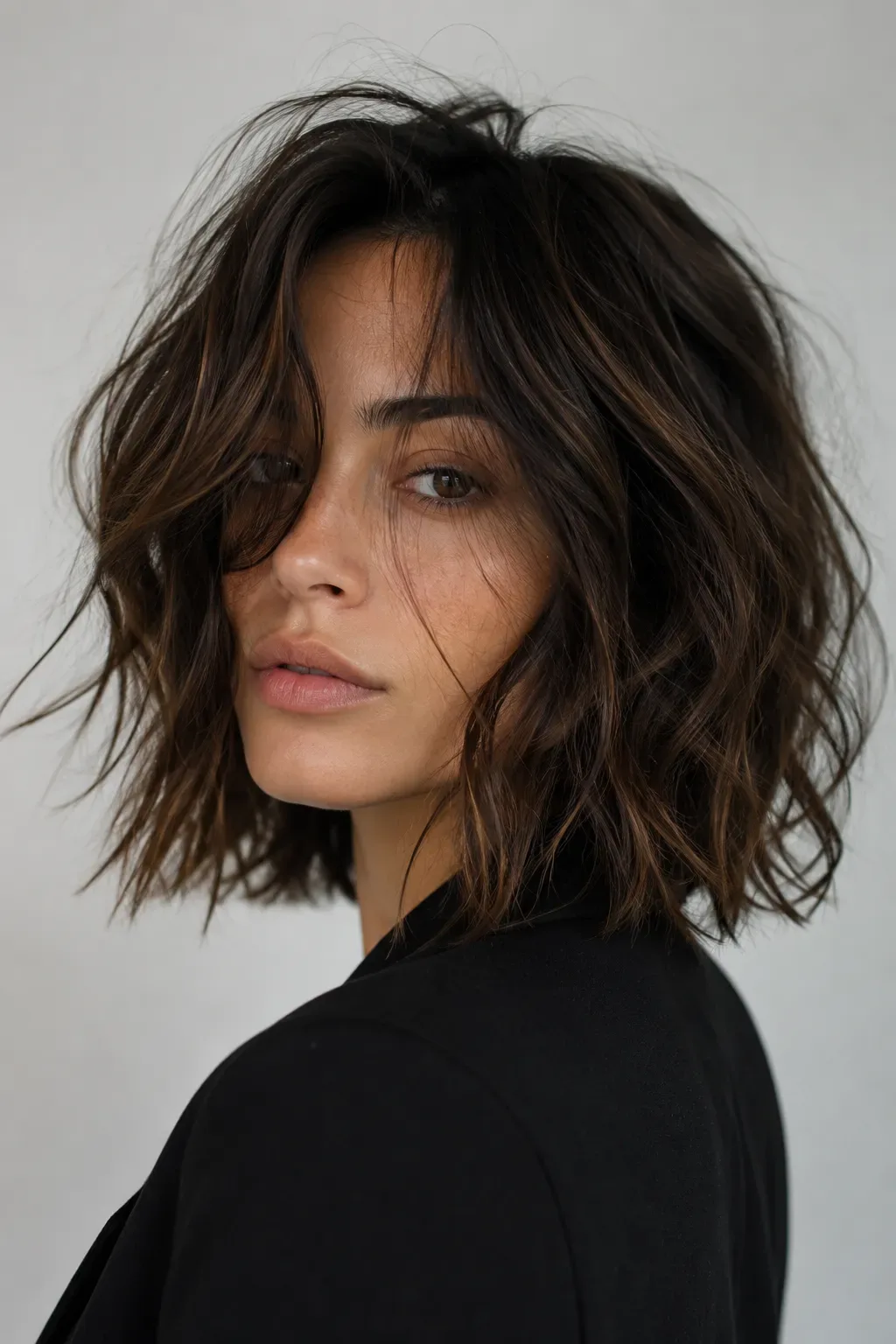
The textured lob — a long bob that sits around the collarbone — is the most versatile medium-length cut for an oval face. Choppy ends and light internal layers give it movement and a lived-in feel, so it never looks stiff or overly done, and the length is perfect for showing off your cheekbones without exposing too much neck.
It works on straight, wavy, and curly hair alike, and it is one of the easiest cuts to style at home. Air-dry it with a little salt spray for a relaxed wave, or blow it out smooth for a polished finish. Either way, the texture does most of the work for you.
A texturising spray is the one product this cut truly needs, because it separates the choppy ends and stops the lob looking too neat. Work it through damp hair and scrunch as it dries, and if the ends start to flip out unevenly, a flat iron bent slightly at the tips will tidy them without removing the texture.
Pros and cons: Pros: easy to style, grows out well, suits most textures. Con: the choppy ends need a trim every six to eight weeks or the shape starts to look ragged.
5. Side-Swept Bangs
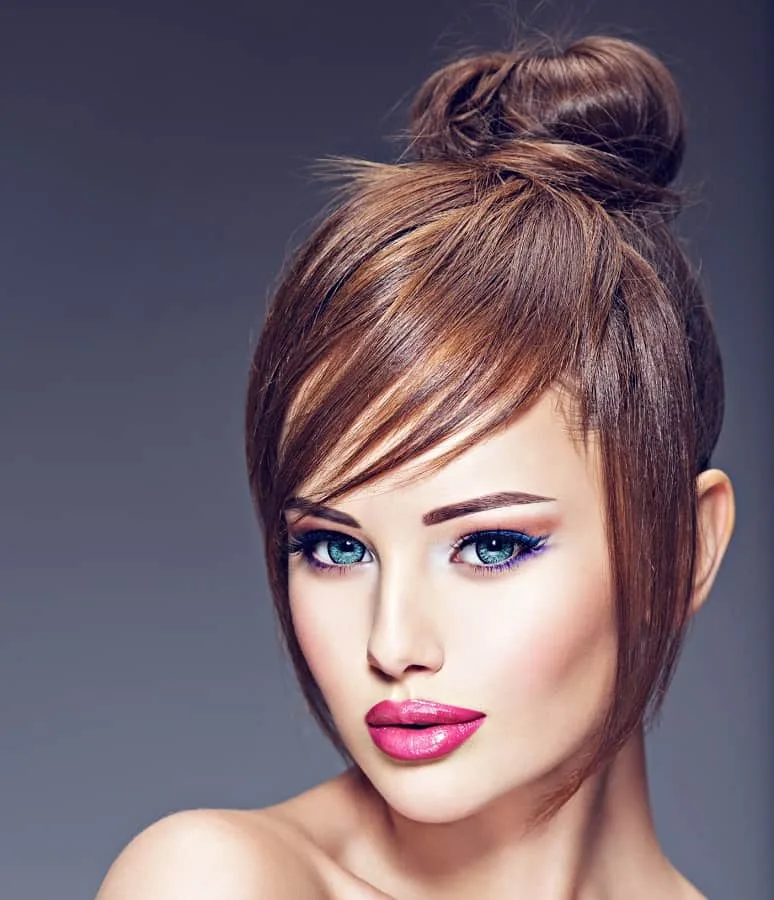
Side-swept bangs fall diagonally across the forehead and instantly add asymmetry to an oval face. That diagonal line breaks up the symmetry of the face in a flattering way, draws the eye toward your cheekbones, and gives a soft, romantic feel to any length of hair.
They are particularly good if you find centre-parted bangs too severe, or if you want bangs without the daily commitment of a blunt fringe. Side-swept bangs grow out into face-framing layers, so you can go months without a fringe trim and still look polished.
Ask your stylist to cut side-swept bangs a little longer than you think you want them, because they are easy to shorten later and almost impossible to lengthen quickly. They pair beautifully with a side part and soft waves, and a bobby pin or a small clip can sweep them fully aside on days when you want your forehead clear.
Best for: Anyone with a high forehead or a long oval face who wants softness across the forehead without a full fringe.
6. Wispy Bangs
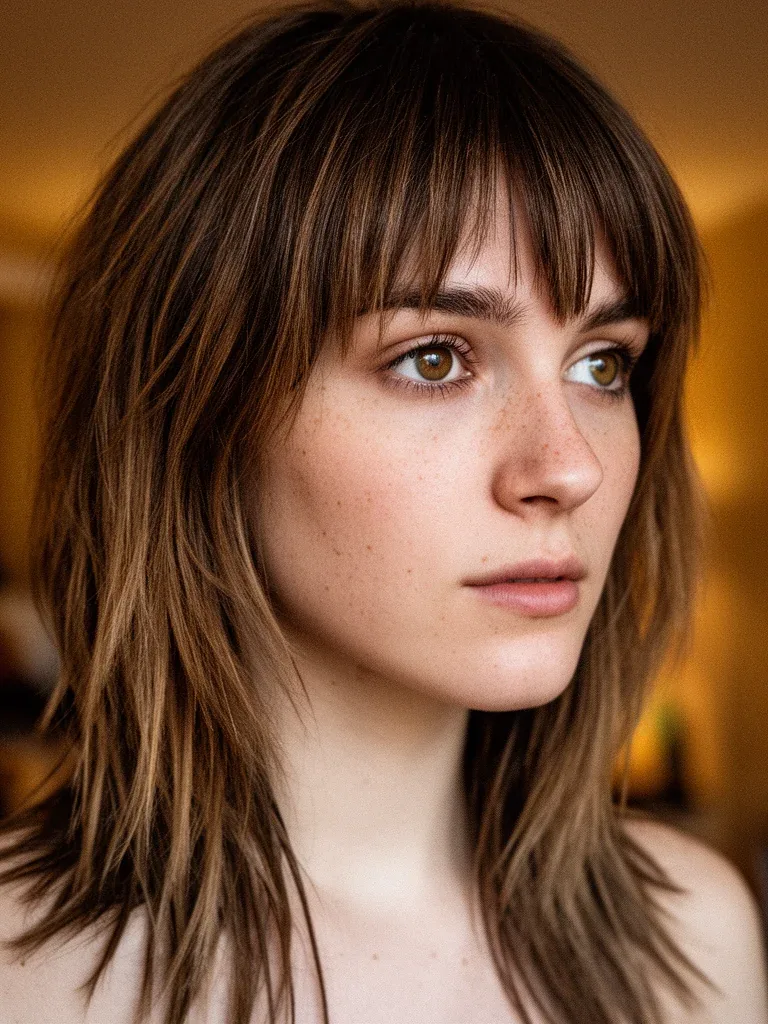
Wispy bangs are light, feathery, and deliberately see-through, which makes them one of the softest ways to frame an oval face. They soften the forehead without hiding it, let your skin show through, and give the whole hairstyle a gentle, youthful feel that heavier bangs cannot match.
They suit fine and medium hair best, because the wispy texture is easy to create with less hair, but they can be adapted for thick hair by thinning the fringe section. Style them with your fingers and a little texturising spray rather than a brush, and they will fall naturally without looking over-styled.
Wispy bangs can look greasy faster than the rest of your hair, so a little dry shampoo at the roots in the morning keeps them fresh without a full wash. If they start to separate into clumps, brush them gently with a fine-tooth comb while they are still slightly damp and let them settle on their own.
How to style: Let them air-dry or give them a ten-second blast with a hairdryer while sweeping them to the side with your fingers — over-styling is the enemy of wispy bangs.
7. Shoulder-Length Waves
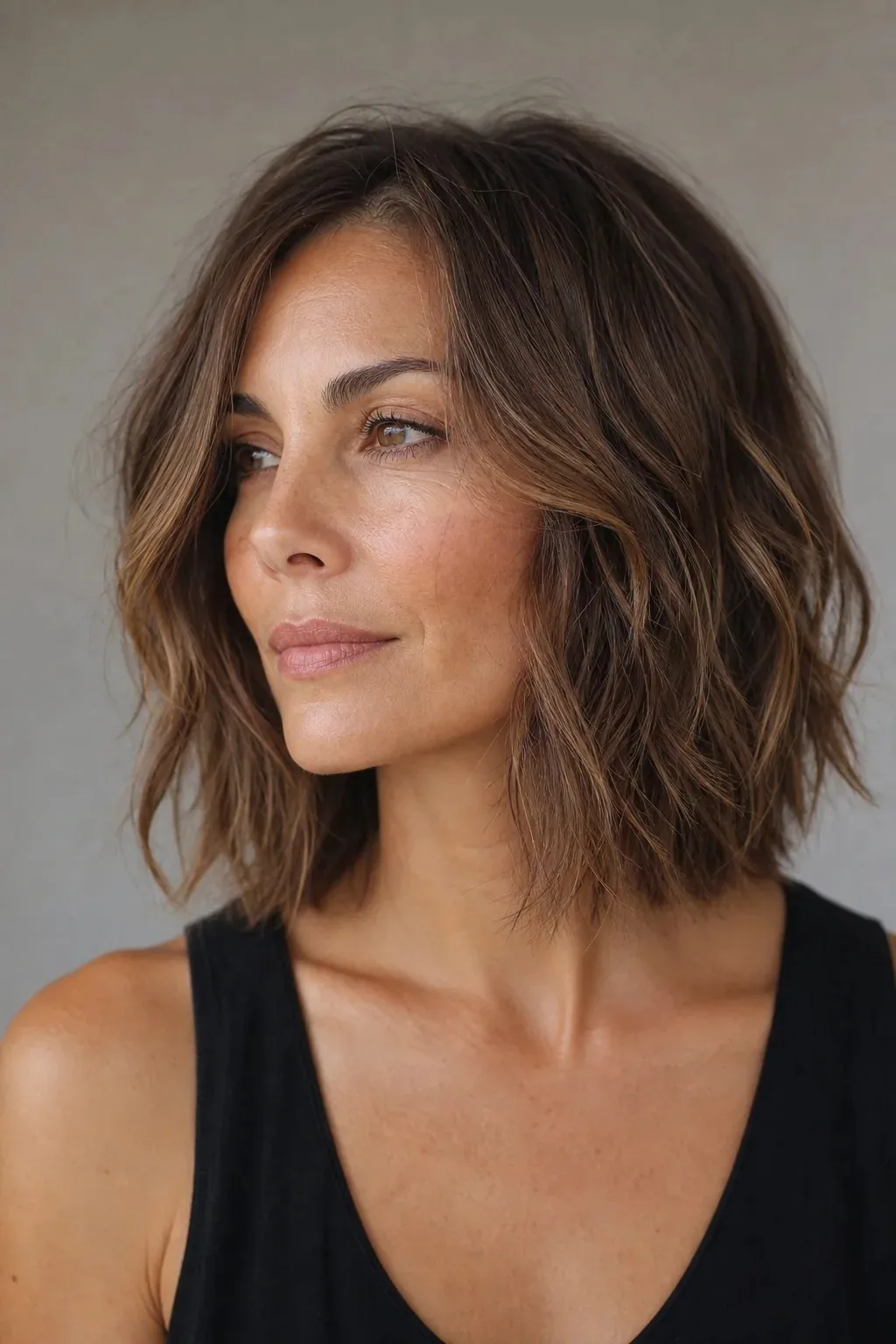
Shoulder-length waves are the sweet spot for an oval face: long enough to feel feminine and versatile, short enough to hold a wave without it dropping out by lunchtime. The waves add width at the sides of the face, which balances the length of an oval face beautifully.
This is also one of the most forgiving cuts you can choose. It looks good air-dried, blow-dried, or curled with an iron, and it is long enough to tie up on busy days but short enough to wash and style in minutes. Add a few layers through the ends and the waves will look even more natural.
A sea-salt spray or a light mousse will help the waves hold, especially if your hair is naturally straight. Scrunch the product through damp hair and let it air-dry for the most natural result, or diffuse on a low heat if you are in a hurry and want a little extra volume at the roots.
Maintenance: A trim every eight weeks keeps the ends healthy, and a sea-salt spray or light mousse is usually the only product you need.
8. Hollywood Waves
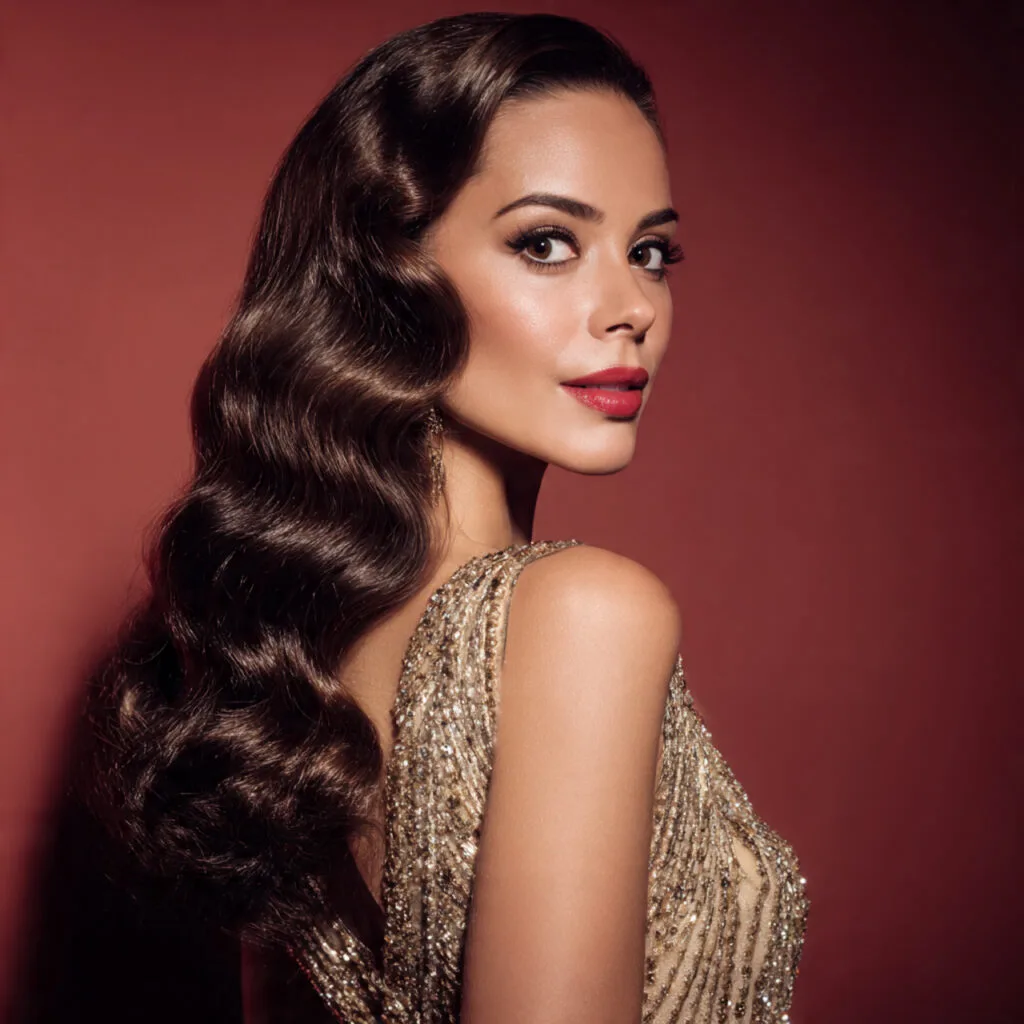
Hollywood waves are big, smooth, glossy waves that all fall in the same direction, and they are pure glamour on an oval face. The uniform, polished waves add width and movement around the face, highlight the cheekbones, and give the whole look a red-carpet finish that suits weddings, parties, and formal events perfectly.
The key to getting them right is sectioning: curl each section in the same direction with a large-barrel iron, brush the curls out gently so they merge into one smooth wave, and set them with a light-hold hairspray. It takes practice, but the result is worth it for a special occasion.
Hollywood waves look best on hair that has been blow-dried smooth first, because frizz breaks up the polished line of the wave. Pin each curl as it cools so it sets properly, and brush through only once with a soft bristle brush, working from the ends upward so the waves merge into one smooth shape.
Cost and time: Expect 30 to 45 minutes of styling at home, or book a salon blowout if you want the waves to last all evening without the effort.
9. Beach Waves
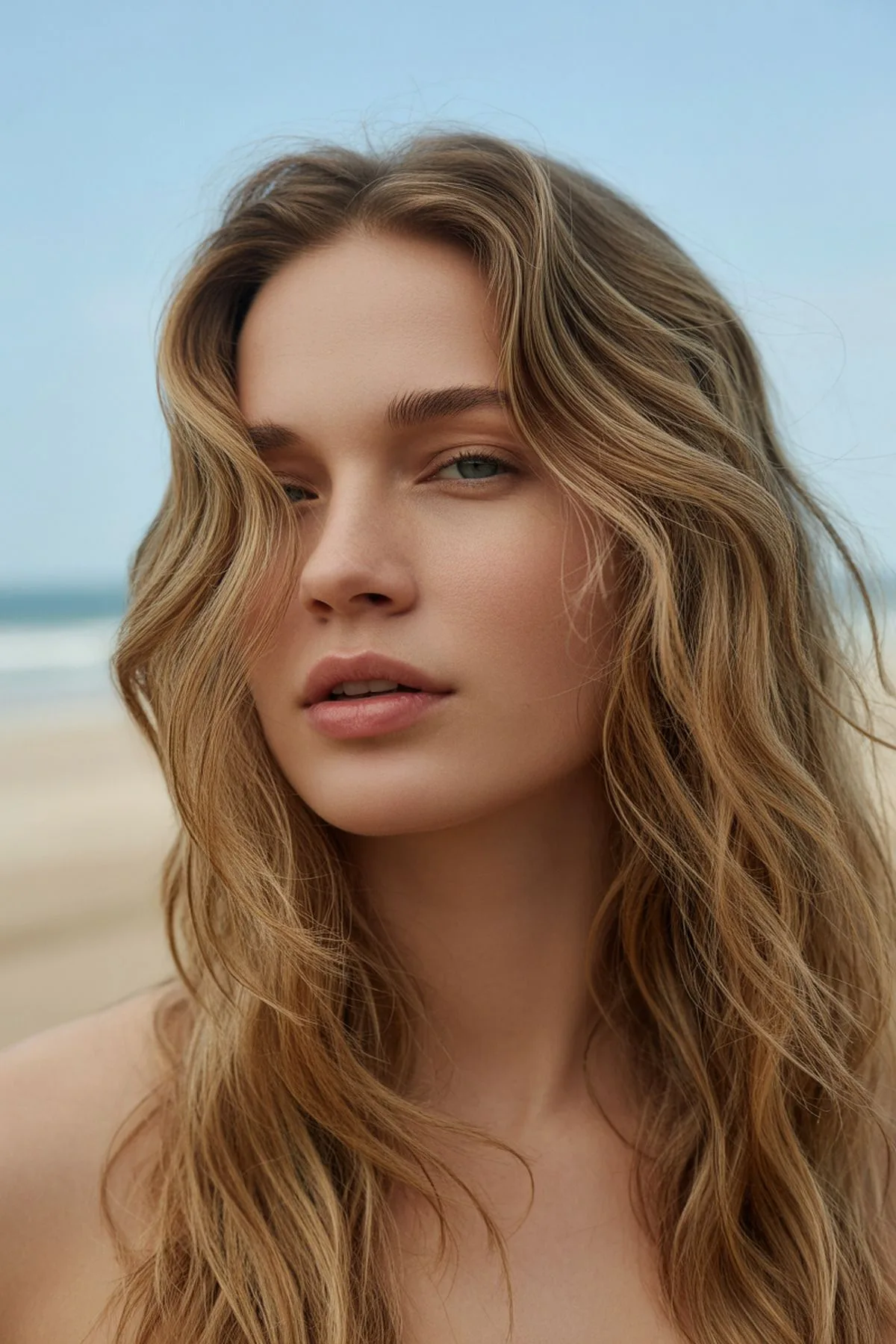
Beach waves are loose, slightly messy waves that look as though you have spent the day by the sea, and they are one of the most relaxed styles for an oval face. The uneven texture adds width and movement, softens the jawline, and gives the hair a casual, effortless feel that works just as well for a school run as for a holiday.
They are best created with a flat iron or a large curling wand, curling alternate sections in opposite directions and then shaking the waves out with your fingers. A salt spray adds grip and texture, especially if your hair is naturally straight and struggles to hold a curl.
Beach waves suit second-day hair particularly well, because the natural texture helps the waves hold. If your hair is freshly washed and very slippery, a little dry shampoo or texture spray at the roots gives the iron something to grip, and the waves will last much longer through the day.
Who should avoid it: Very fine hair can struggle to hold beach waves without product, so use a volumising mousse first or choose a shorter length where the waves last longer.
10. Sleek Straight Hair with a Centre Part
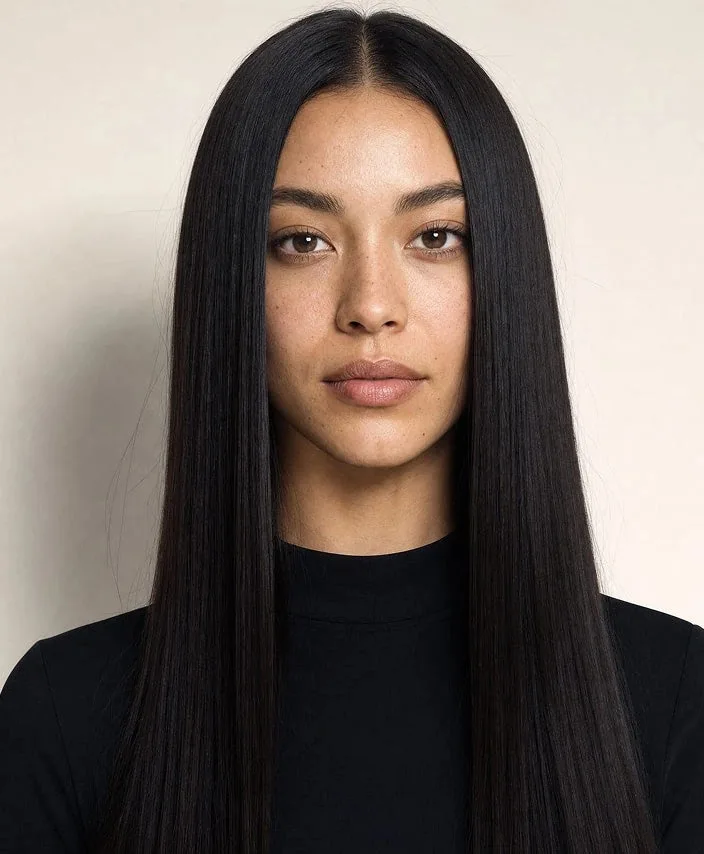
Sleek, straight hair with a centre part is a clean, confident look that suits an oval face because the symmetry of the part mirrors the natural balance of the face. When the hair is glossy and smooth, it frames the features like a picture frame and lets your bone structure do the talking.
The secret is in the finish: a heat protectant, a flat iron passed slowly through small sections, and a drop of shine serum on the ends. Without that polish, straight hair can look flat, so a little root lift or a few long layers underneath will keep the style from dragging your face down.
To keep sleek hair from looking limp, add volume at the crown before you straighten the lengths, using a root-lifting spray or a gentle backcomb that you smooth over. A centre part also looks best when the hair is freshly washed, so plan this style for wash day rather than day three.
Best for: Straight or naturally smooth hair, and anyone who wants a sharp, professional look for work or formal occasions.
11. The Deep Side Part
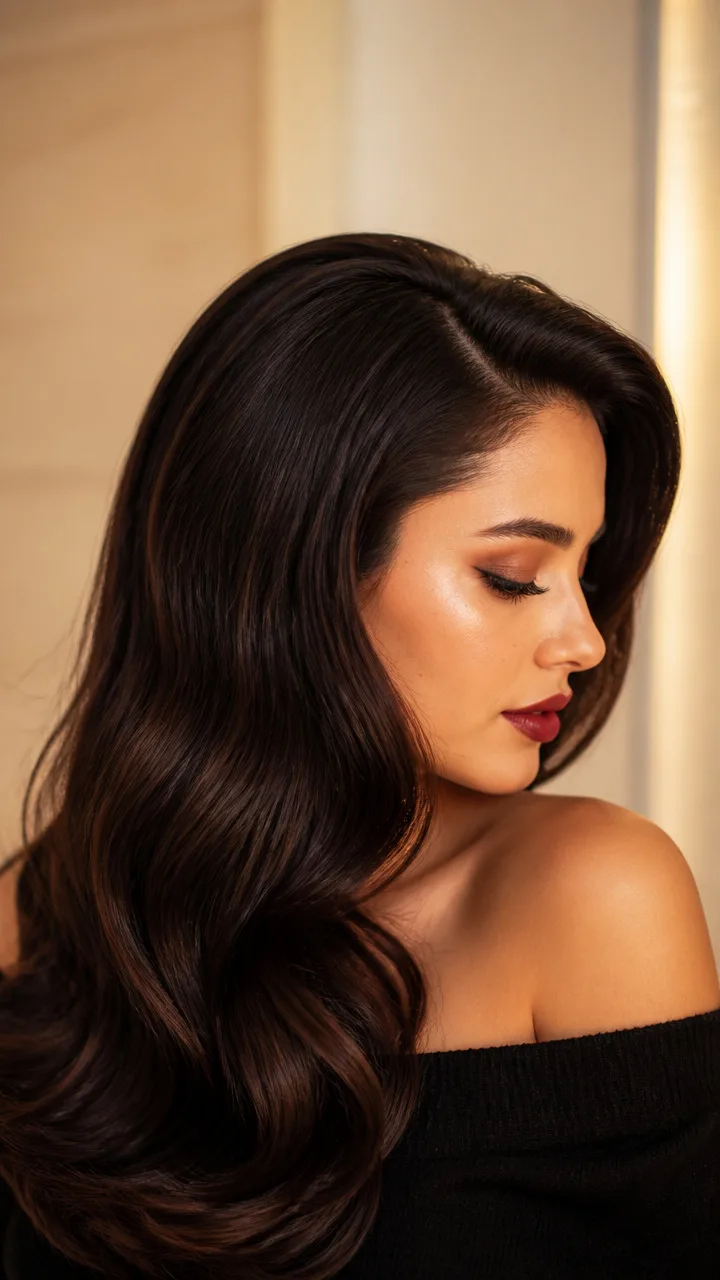
A deep side part flips most of the hair to one side, creating instant volume at the roots and a long, sweeping line across the forehead. On an oval face, that sweep is incredibly flattering — it highlights one cheekbone, adds drama, and gives even a simple cut a red-carpet feel.
It works on almost any length, from a bob to long layers, and it is one of the quickest ways to change your look without cutting anything. If your hair naturally falls to one side, work with that direction rather than fighting it, and use a little root spray to keep the volume in place.
A deep side part can feel unfamiliar at first if you usually part your hair in the middle, so give it a few days before you decide whether you like it. Training the part while your hair is damp, and using a clip to hold it in place for ten minutes, helps it settle into the new direction.
How to style: Part your hair while it is damp, blow-dry the roots in the opposite direction first for lift, then sweep the hair over and set it with a light spray.
12. The Pixie Cut
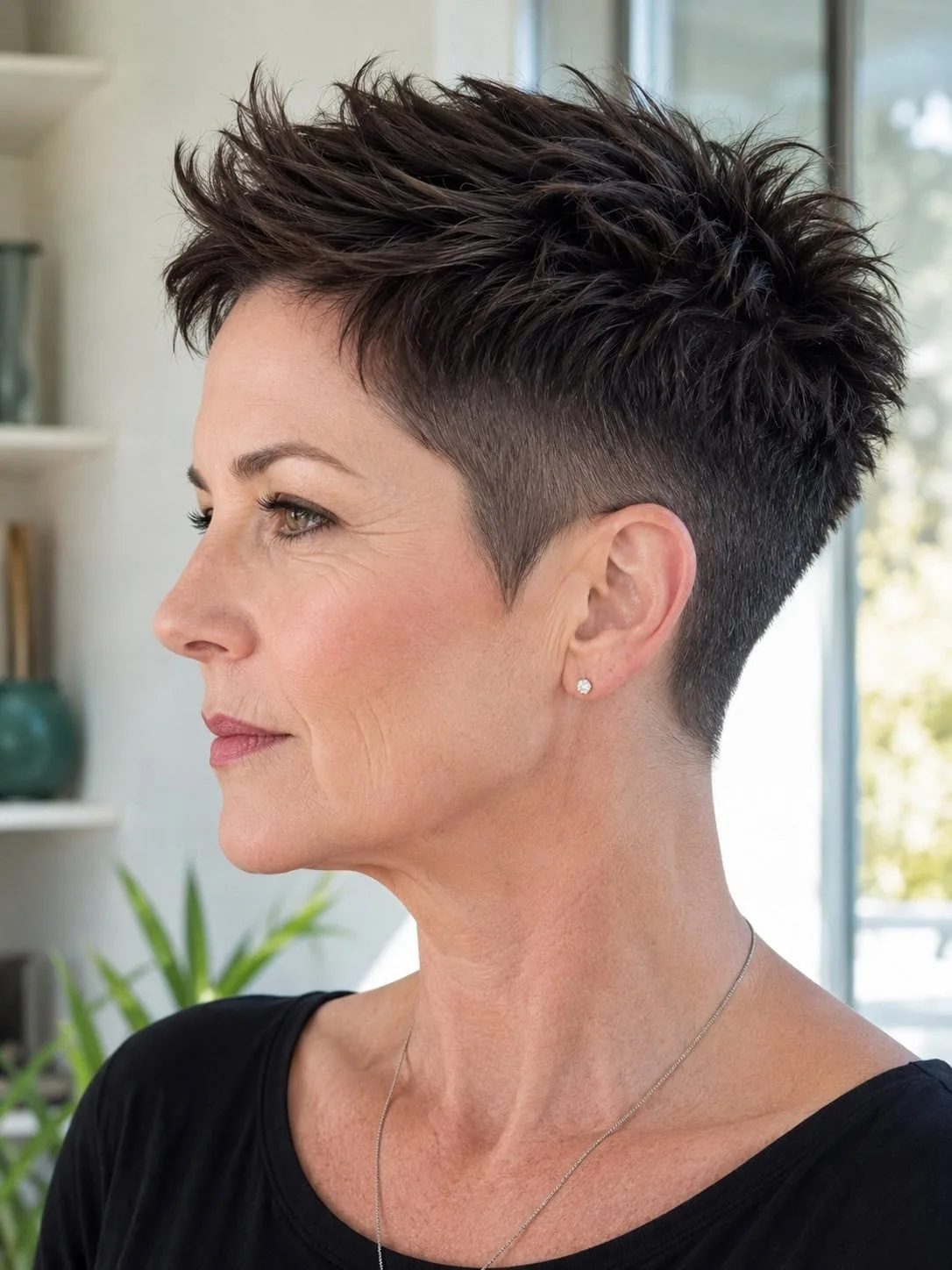
A pixie cut is short, bold, and wonderfully freeing, and an oval face is one of the few shapes that can carry almost any version of it. With the hair cropped close at the back and sides, your eyes, cheekbones, and jawline become the focus, and the whole look feels fresh, modern, and confident.
Pixies are often described as high-maintenance, but that is only partly true: the cut itself needs regular trims, but daily styling takes minutes. A little pomade or wax, a quick tousle with your fingers, and you are done. It is a brilliant choice if you want to stop hiding behind your hair.
A pixie grows out in stages, and the in-between lengths can be awkward, so book a shaping appointment every four to five weeks even if you are planning to grow it longer. In the meantime, a headband, a clip, or a little extra texture on top can carry you through the weeks when the shape feels untidy.
What to ask a stylist: Ask for softness around the ears and neckline rather than a harsh buzzed finish, and discuss how much length to keep on top for styling options.
13. The Textured Pixie
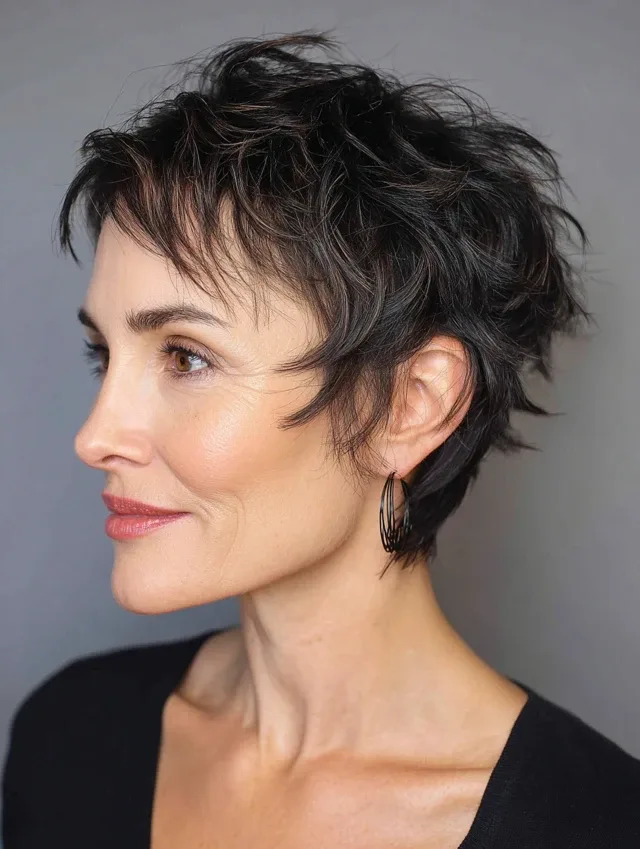
A textured pixie takes the classic short cut and adds choppy layers, piece-y ends, and a tousled finish, which makes it softer and more forgiving than a sleek pixie. The texture adds movement on top and around the face, and it is one of the best short styles for an oval face because it never looks flat or severe.
It also suits a wide range of hair types, including fine hair, which benefits from the choppy layers that create the illusion of thickness. Style it with a small amount of texture paste, working the product through with your fingers rather than a comb, for a deliberately undone finish.
Because a textured pixie relies on the cut itself for its shape, a good stylist matters more than expensive products. Ask for the texture to be cut in with scissors or a razor rather than thinned with shears, which can leave fine hair looking wispy, and keep the styling product light so the pieces stay separate.
Pros and cons: Pros: quick to style, lightweight, shows off your features. Con: it needs a trim every four to five weeks to keep the texture from growing shapeless.
14. The French Bob
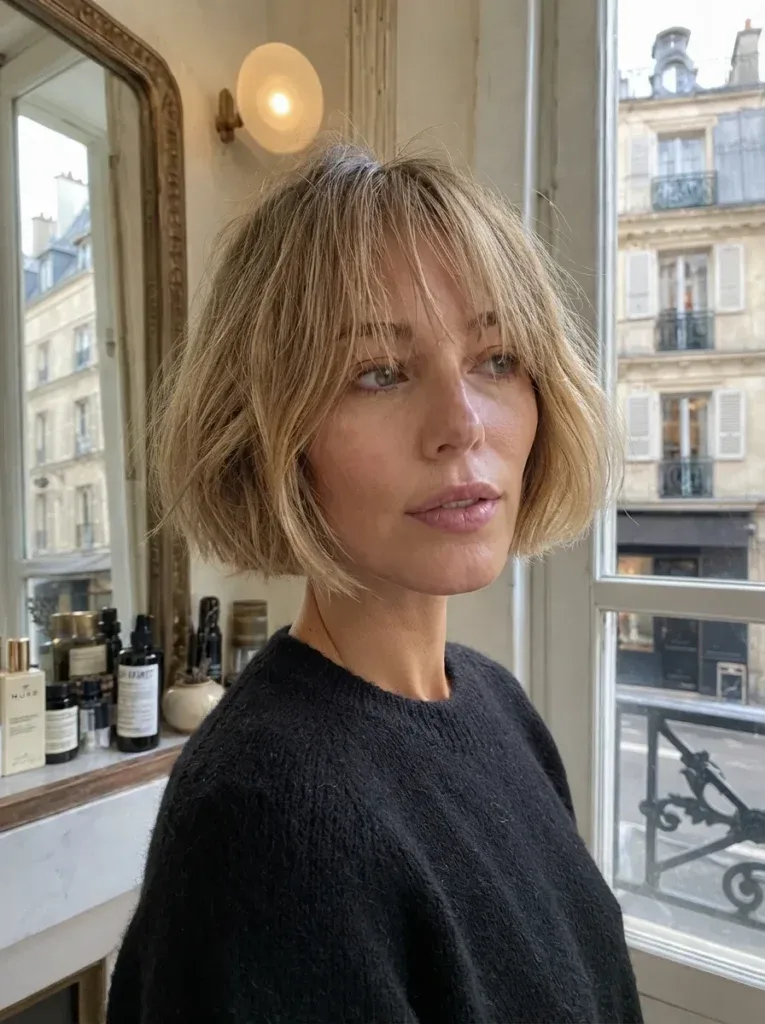
The French bob is a chin-length cut with a slightly curved shape and often a soft fringe, and it has a chic, effortless feel that suits an oval face perfectly. The length sits right at the jawline, which adds width exactly where an oval face benefits from it, while the soft shape keeps it from looking severe.
This is a style that rewards a little imperfection. It looks best when it is not too polished — a natural wave, a slight bend at the ends, and a fringe that falls where it wants to. It is the haircut equivalent of a red lip and a striped top: simple, confident, and timeless.
The French bob looks its best with a little natural texture, so do not over-straighten it. Let it air-dry with a drop of styling cream, and if the fringe falls into your eyes, sweep it to one side rather than pinning it flat, which keeps the relaxed, Parisian feel of the cut.
Best for: Anyone who wants a short cut with Parisian polish, especially if your hair has a natural wave or a slight bend.
15. The A-Line Bob
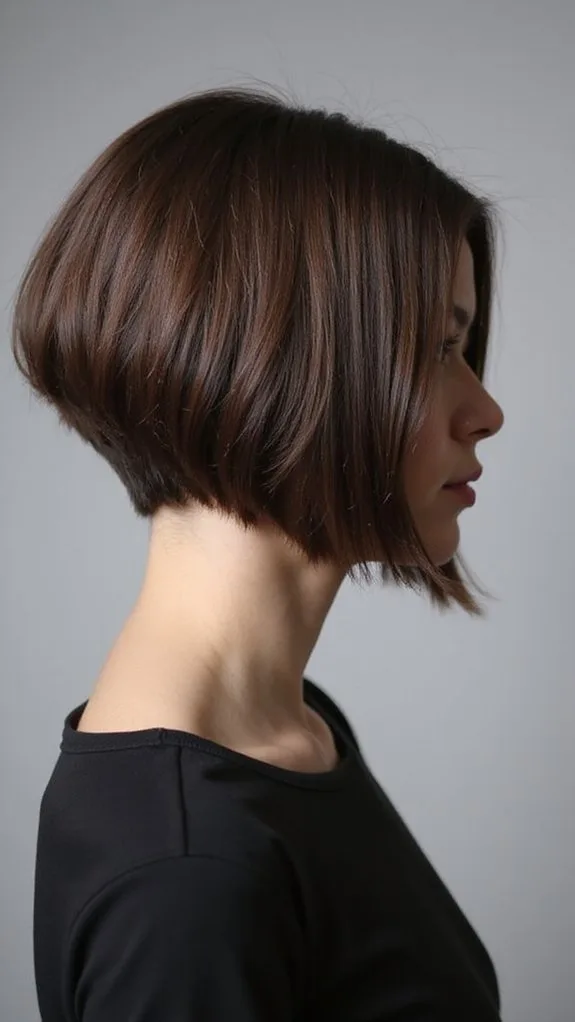
An A-line bob is shorter at the back and gradually longer toward the front, which creates a flattering diagonal line that frames an oval face beautifully. The longer front pieces draw attention to the jawline and cheekbones, while the stacked back gives the cut lift and shape.
It is a particularly good choice if you want a bob but worry that a one-length cut will look too boxy. The angled shape keeps the style feeling modern and intentional, and it works just as well sleek and straight as it does with a soft wave through the ends.
An A-line bob needs regular trims to keep the angle looking deliberate, because as it grows the difference between the back and the front softens and the shape can start to look like an ordinary bob. A trim every five to six weeks is ideal, and a round brush at the back keeps the stacked shape lifted.
How to style: Blow-dry the back with a round brush for lift, then smooth the front pieces with a flat iron so the angled line stays crisp and visible.
16. The Layered Bob
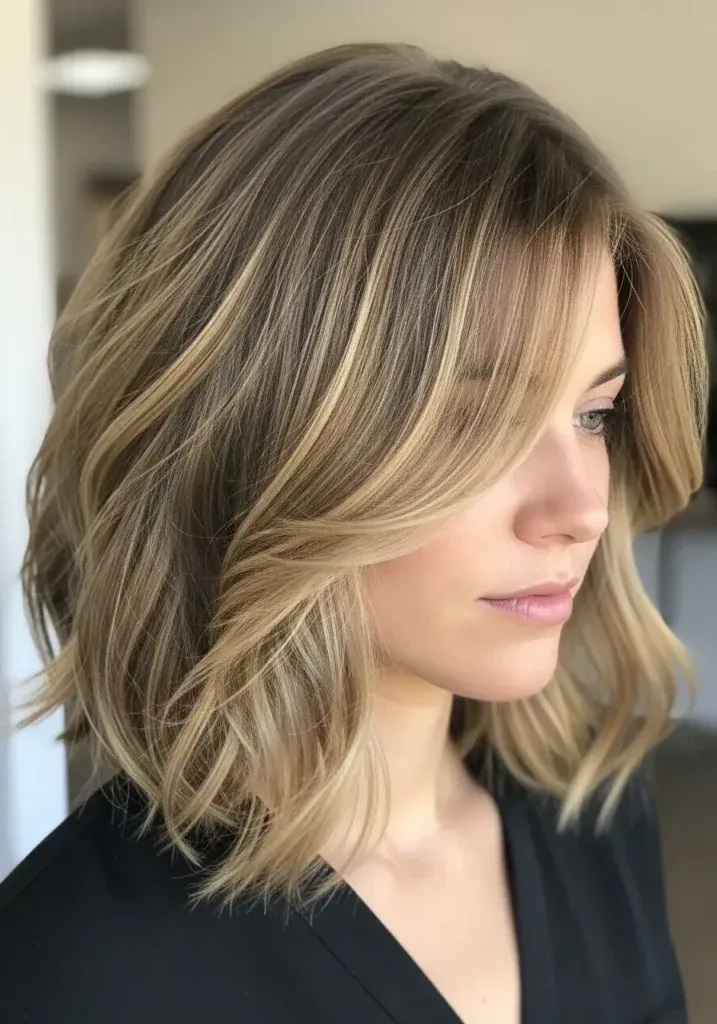
A layered bob adds internal layers to the classic bob shape, which gives it movement, volume, and a softer outline than a blunt cut. On an oval face, those layers stop the bob from looking heavy or helmet-like, and they let the hair move naturally instead of sitting in one solid shape.
It is a great middle ground if you like the idea of a bob but want something more relaxed and easier to grow out. The layers also make it a good choice for thick hair, because they remove weight and stop the bob from puffing out at the sides.
Layered bobs can puff out at the sides if the layers are too short for your hair type, so ask your stylist to keep the layers long and to thin the bulk underneath rather than layering the top. A smoothing cream worked through the mid-lengths will keep the shape sleek without weighing it down.
Maintenance: A trim every six weeks keeps the layers fresh, and a round brush blow-dry is the fastest way to show off the shape.
17. The Shag Cut
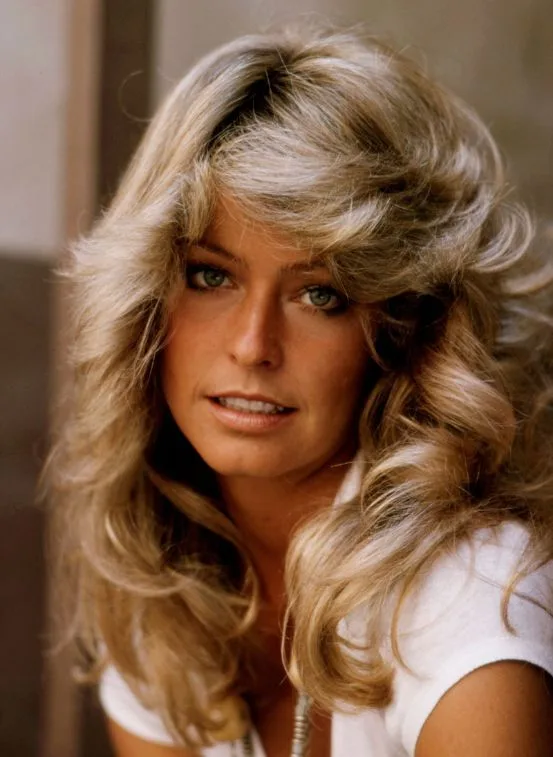
The shag is a layered cut with choppy ends, lots of texture, and usually some kind of fringe, and it is one of the most characterful styles for an oval face. The layers add width and movement around the face, the fringe shortens the forehead slightly, and the whole cut has a relaxed, rock-and-roll energy that suits wavy and curly hair especially well.
A modern shag is softer than the 1970s original, with the layers blended more gently and the fringe worn longer. It is a low-effort style once it is cut well — most of the texture comes from the cut itself, so you can often just add a little salt spray and go.
A shag cut grows out better than most layered styles, because the choppy shape is designed to look slightly undone. That makes it a good choice if you cannot visit the salon often, though a fringe trim every few weeks will keep the shape around your face looking intentional.
Who should avoid it: Very fine, straight hair may not hold the choppy texture well, so ask your stylist whether a softer layered cut would suit you better.
18. The Wolf Cut
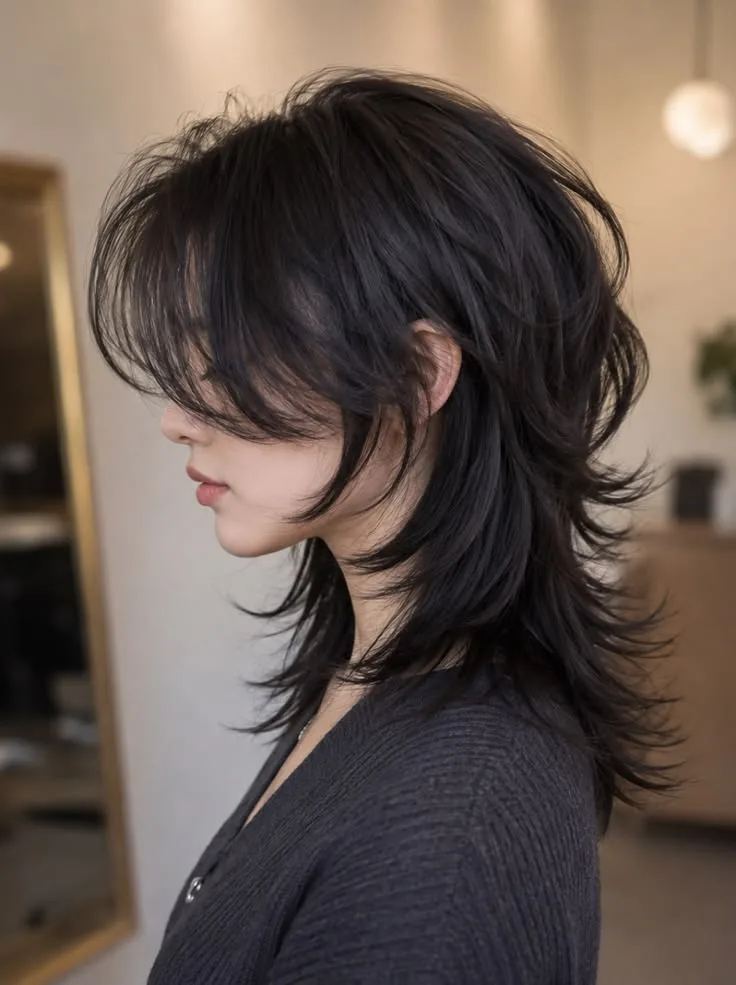
The wolf cut is a bold mix of a shag and a mullet, with short, choppy layers on top and longer length through the back. It sounds dramatic, and it is — but on an oval face the volume on top and the texture around the face can look surprisingly flattering, especially if you like edgy, fashion-forward styles.
It suits thick or wavy hair best, because the cut relies on natural texture to create its shape. If your hair is fine or very straight, you will need more styling effort to keep the layers looking intentional rather than messy, so be honest with yourself about how much time you want to spend on it.
The wolf cut is a commitment, so try a softer shag first if you are unsure whether the edgy shape suits you. If you do go for it, a texturising spray and a diffuser are your best friends, and a regular trim keeps the short top layers from blending into the longer back.
Quick verdict: A fun, statement cut for confident dressers — brilliant if you love texture and volume, but not the easiest grow-out if you change your mind.
19. The Curly Bob
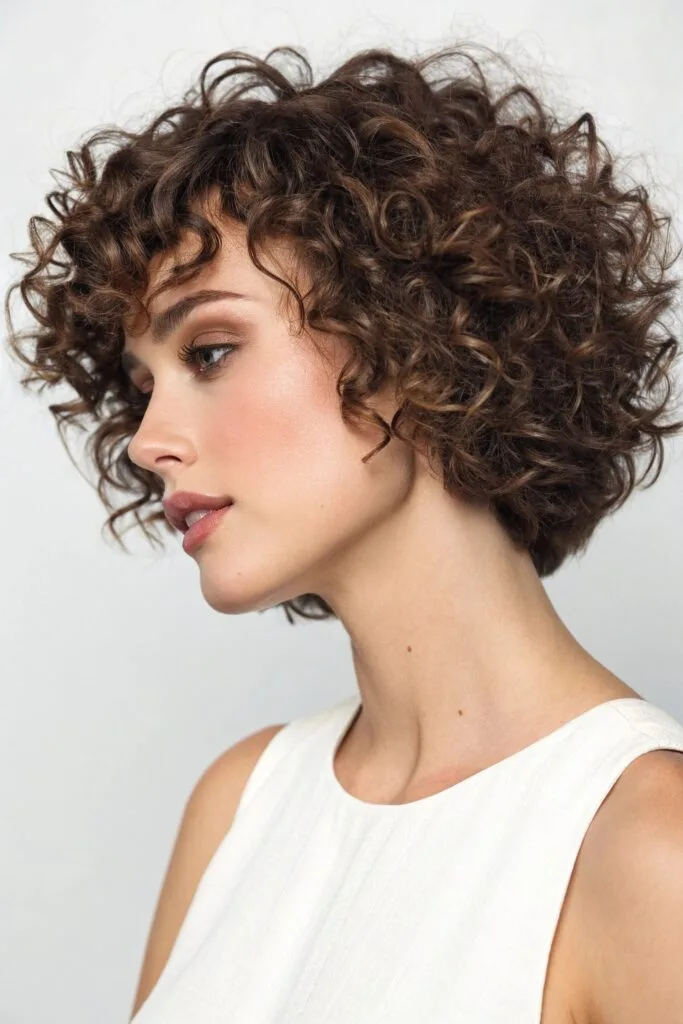
A curly bob lets natural curls sit at chin or jaw length, where they add width and bounce around an oval face. The curls frame the face softly, highlight the cheekbones, and give the whole style a joyful, lively feel that straight bobs simply cannot match.
The key is cutting curly hair dry or in its natural curl pattern, so the length is judged correctly — curls spring up when they dry, and a bob cut too short when wet can end up much shorter than planned. A good curl cut also removes weight from the inside so the shape stays rounded rather than triangular.
Curly bobs need moisture more than anything else, so a leave-in conditioner and a curl cream will keep the curls defined and frizz-free. Avoid brushing curly hair when it is dry, and instead refresh the curls in the morning with a little water and a scrunch of product.
What to ask a stylist: Ask for a dry cut or a curl-by-curl cut, and bring photos of curly bobs on your curl type, not just on straight hair.
20. Long Curly Hair with Layers
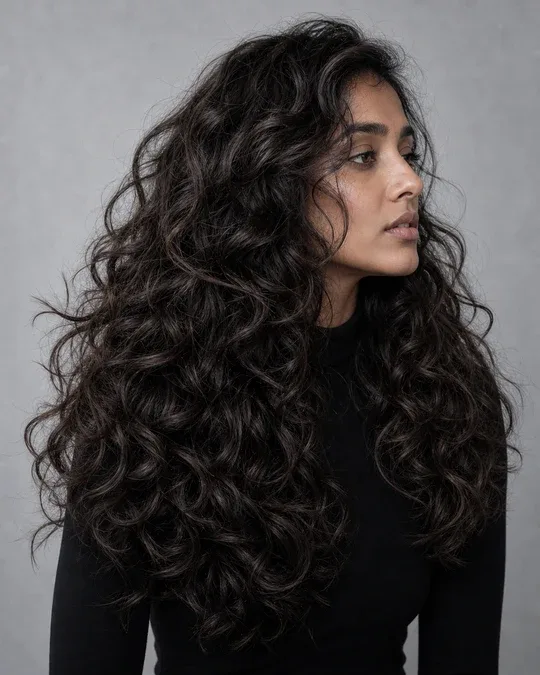
Long curly hair with layers is one of the most beautiful styles for an oval face, because the curls add natural width at the sides and the layers stop the hair from becoming a heavy triangle. The result is a balanced, bouncy shape that frames the face without overwhelming it.
Layers are essential here: without them, long curls can pull flat at the roots and puff out at the ends. With them, each curl has room to form properly and the hair moves freely. A diffuser and a curl cream will help define the curls, and a silk pillowcase reduces frizz overnight.
Long curly hair benefits from a silk or satin pillowcase, which reduces friction and frizz overnight, and from a weekly deep-conditioning mask to keep the ends hydrated. When you detangle, do it with conditioner in the shower and a wide-tooth comb, working from the ends upward.
Best for: Anyone with natural curls or waves who wants to keep their length while giving the curls a proper shape.
21. The Bouncy Blowout
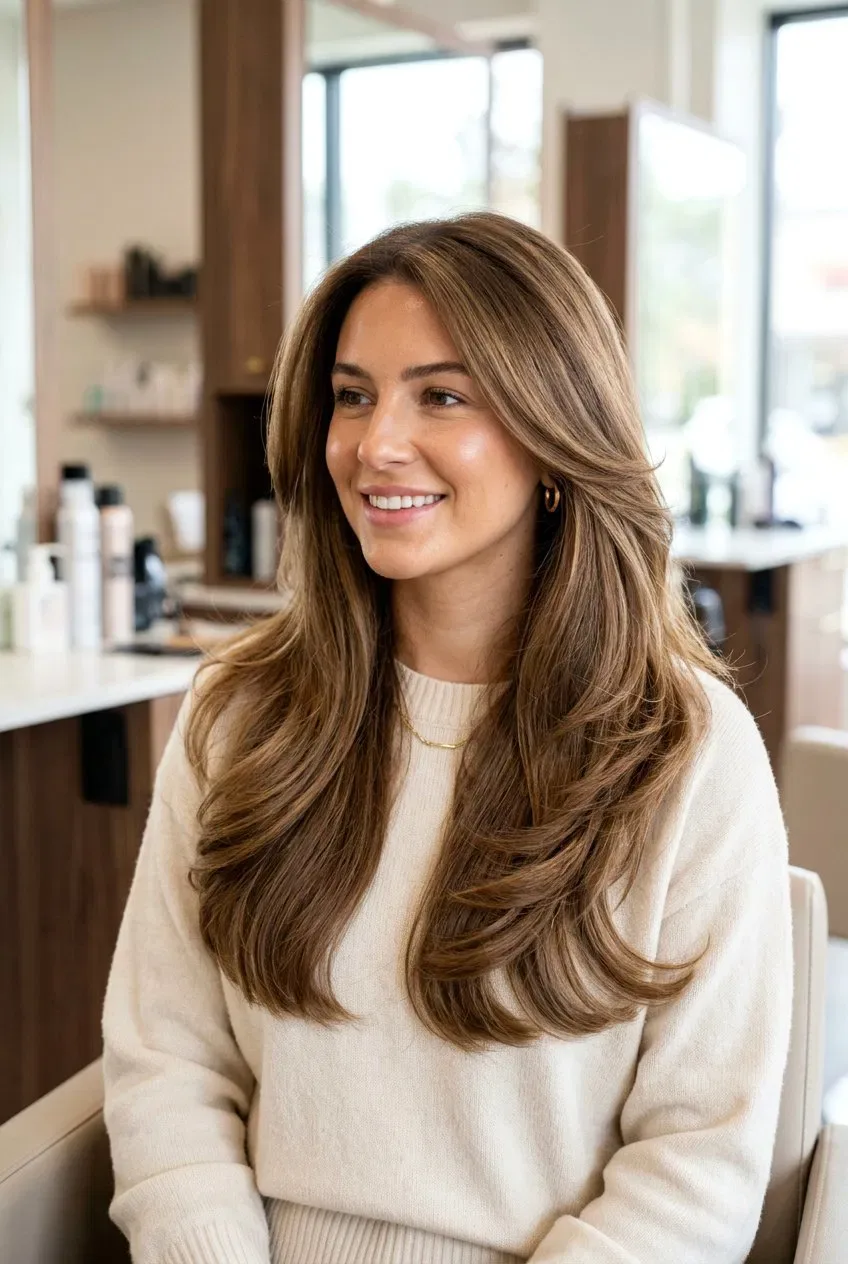
A bouncy blowout is the salon finish everyone recognises: smooth roots, curved ends, and lots of movement. On an oval face, that bounce adds width at the sides and a soft curve around the jawline, which makes the face look balanced and the hair look incredibly healthy.
You can recreate it at home with a round brush and a hairdryer, working in sections and rolling the ends under, or use large rollers while you do your makeup and let them cool before brushing out. The style lasts best on freshly washed hair with a volumising mousse at the roots.
A bouncy blowout lasts longer if you let each section cool before you move on, because the shape sets as the hair cools. Large Velcro rollers can do the same job while you get ready, and a light mist of hairspray once the brush is out will hold the bounce without stiffness.
Cost and time: At home, allow 25 to 35 minutes; in a salon, a blowout is a quick, affordable treat that is ideal before an event.
22. Half-Up, Half-Down
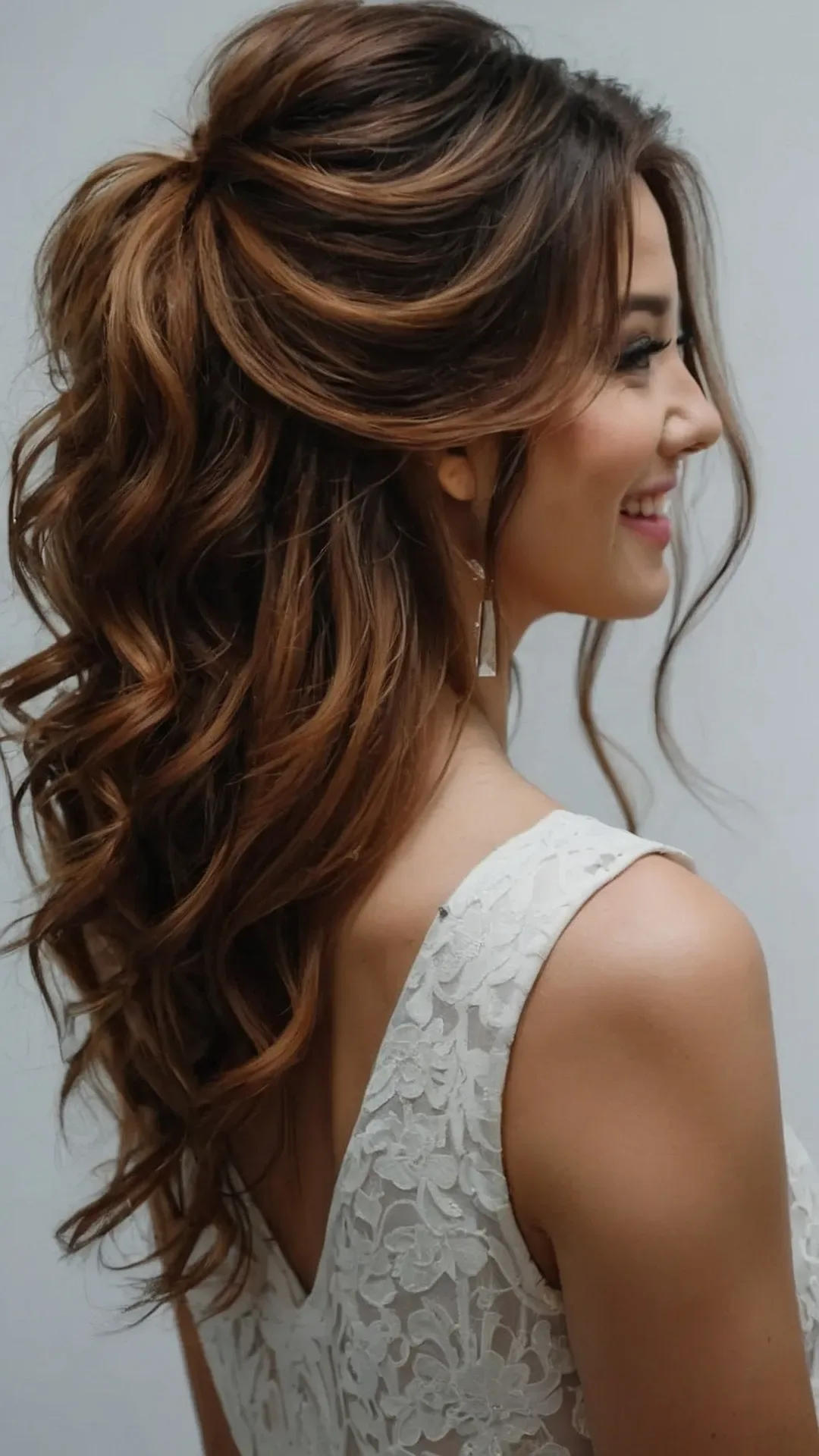
Half-up, half-down is the perfect compromise: the top section is pulled back to show off your face, while the rest of the hair falls loose around your shoulders. On an oval face, it highlights the cheekbones and eyes while keeping the softness of loose hair around the jawline.
It works for almost every occasion, from a casual day out to a wedding guest look, and it suits straight, wavy, and curly hair alike. Add a small twist or braid to the top section, or leave a few tendrils out at the front, and the style instantly looks more polished.
Half-up styles can slip during the day, especially on fine or freshly washed hair, so a little dry shampoo or texture spray at the crown gives the elastic something to grip. A small clear elastic hidden under a wrapped strand of hair looks neater than a bulky band.
How to style: Take the top section from temple to temple, secure it with a small elastic, then gently pull at the crown for volume and loosen the front pieces.
23. The High Ponytail
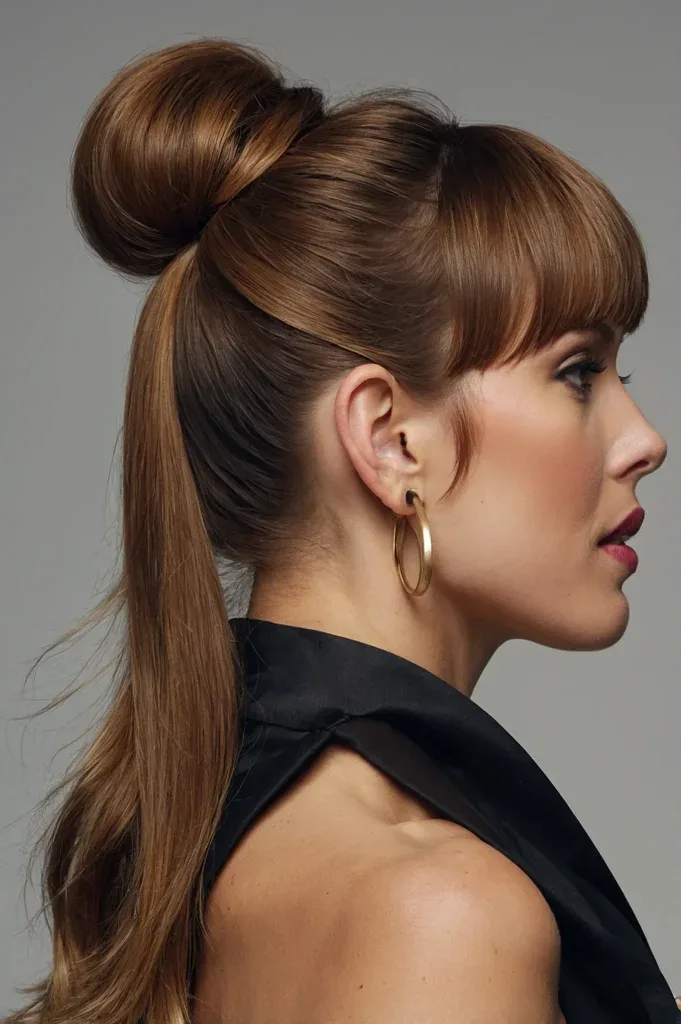
A high ponytail lifts the whole face and gives an instant, energetic feel, and an oval face carries it beautifully because the shape is already balanced. Pulled high at the crown, it shows off your cheekbones and jawline and makes the hair look longer and fuller.
The trick is to keep it from looking too severe. Loosen the hairline slightly, leave two soft pieces out at the front, or add a wave through the ponytail itself. Wrapping a strand of hair around the elastic hides it and makes the whole style look far more polished.
A high ponytail looks best when the hair is smooth at the front and the ponytail itself has texture, so straighten or curl the lengths before you tie it up. Backcomb the crown gently for height, then smooth the top layer over it so the volume looks natural rather than teased.
Mistakes to avoid: Pulling the ponytail too tight can cause breakage and headaches — keep it secure but comfortable, and vary the position day to day.
24. The Low Sleek Ponytail
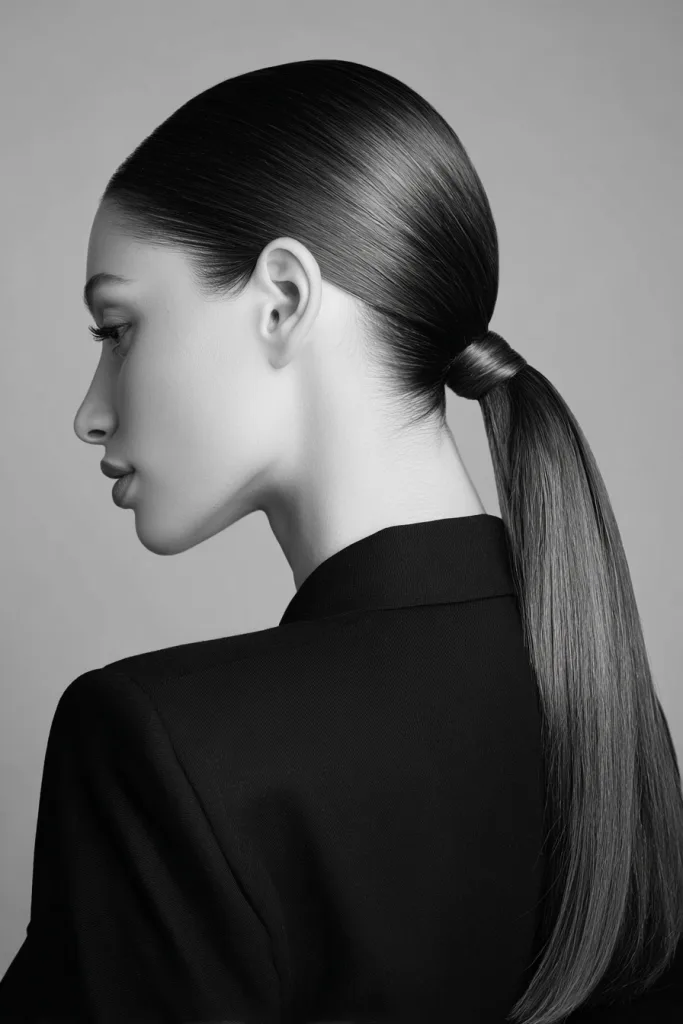
A low, sleek ponytail is the understated, elegant cousin of the high ponytail. Sitting at the nape of the neck with smooth, glossy hair, it suits an oval face perfectly for formal occasions, work, or any moment when you want to look polished without trying too hard.
The finish matters more than the shape: use a smoothing serum, brush the hair back carefully, and secure it low. A centre part gives it a sharp, editorial feel, while a side part softens it. It is also a brilliant second-day style, because slightly lived-in hair holds the sleek finish better than freshly washed hair.
A low sleek ponytail is a good style for showing off earrings or a statement necklace, because the neck and ears are left clear. Keep the parting neat with a fine-tooth comb, and smooth any flyaways with a tiny amount of pomade on your fingertips rather than more hairspray.
Best for: Formal events, office days, and anyone who wants a chic style that takes less than five minutes.
25. The Messy Bun
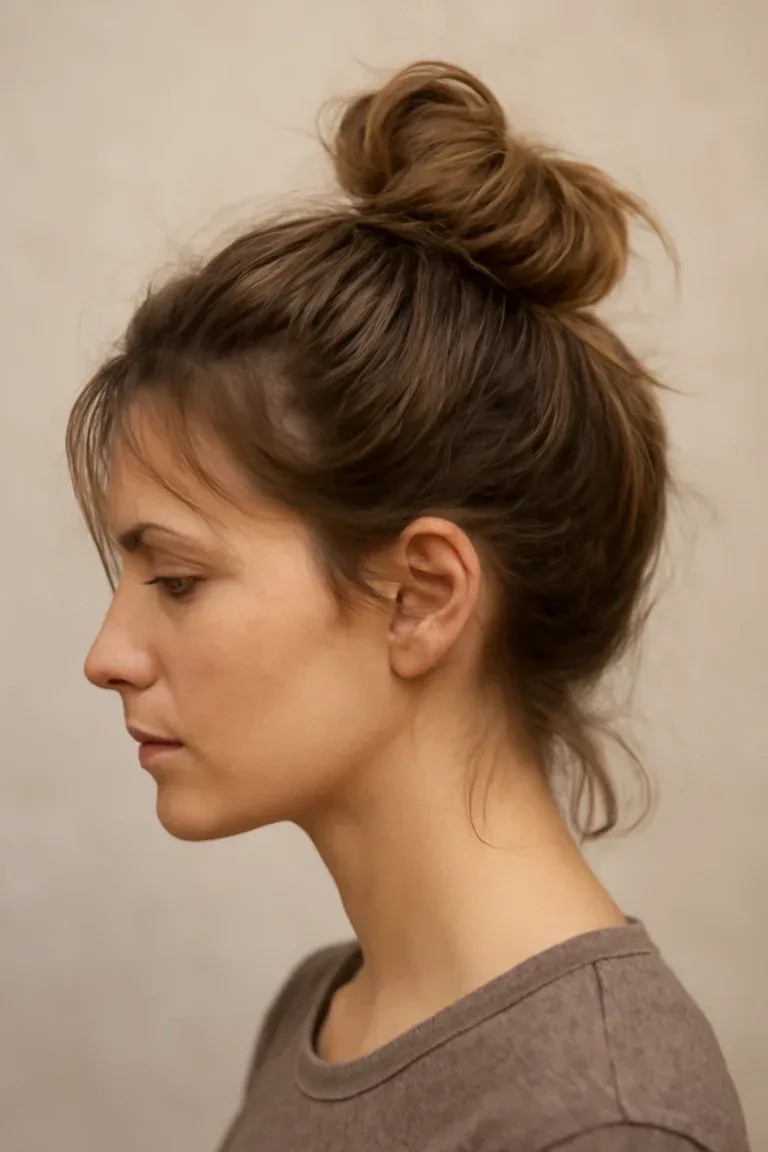
A messy bun is the ultimate low-effort style, and on an oval face it works best when it is genuinely loose rather than scraped back. A soft, undone bun with a few pieces falling around the face looks relaxed and pretty, while a tight, severe bun can make the face look longer.
The easiest way to get it right is to gather the hair loosely, twist it, and pin it without overthinking the shape, then pull a few strands out at the front and around the ears. A little texture spray beforehand gives the bun grip and stops it sliding out.
A messy bun can be dressed up surprisingly easily: add a silk scarf around the base, a decorative pin, or a few face-framing curls and it works for a dinner out as well as a day at home. The key is keeping the bun loose, because a tight bun defeats the whole relaxed point of the style.
How to style: Flip your head upside down, gather the hair loosely, twist and pin — then pull out the front pieces and tug gently at the crown for softness.
26. The Low Chignon
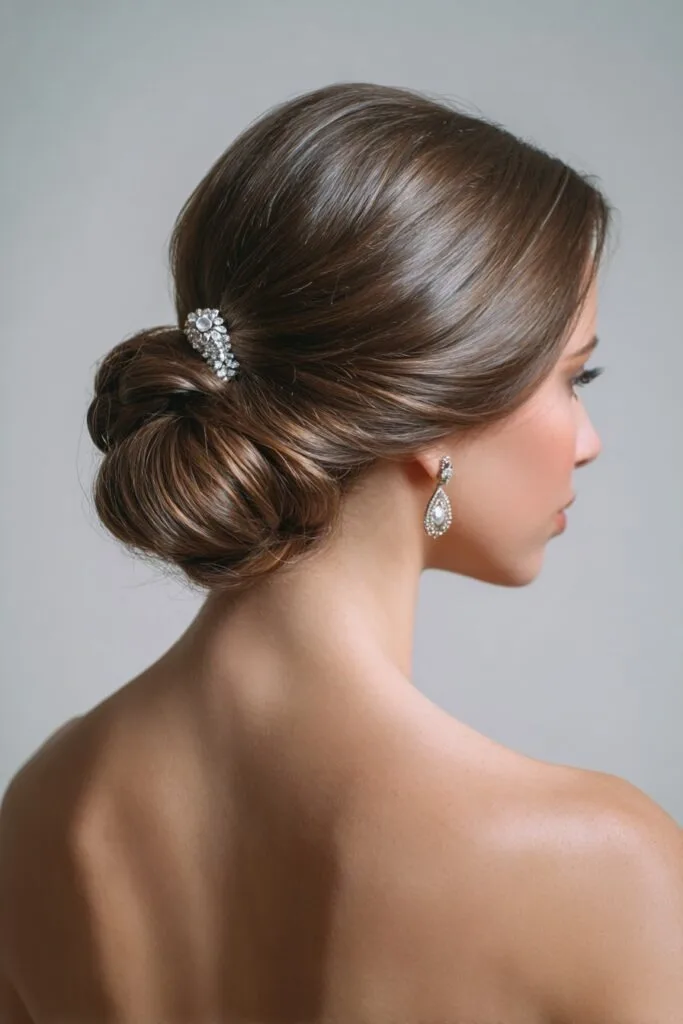
A low chignon is a rolled or twisted bun at the nape of the neck, and it is one of the most elegant updos for an oval face. It shows off the neck and shoulders, keeps the face open, and has a timeless, bridal quality that works for weddings, formal dinners, and special occasions.
It looks best with a little softness at the front — a centre part with two loose tendrils, or a deep side part swept across the forehead. If your hair is fine, a small hair donut or some gentle backcombing at the crown will give the chignon more presence.
A low chignon holds best on hair that is not freshly washed, so plan it for day two or add texture spray first. Pin the twist in place with U-shaped pins rather than bobby pins, crossing them for extra hold, and finish with a flexible-hold spray so the style can move naturally.
Cost and time: A salon chignon is worth booking for a big event, but a simple version at home takes about ten minutes with pins and a light-hold spray.
27. The Braided Crown
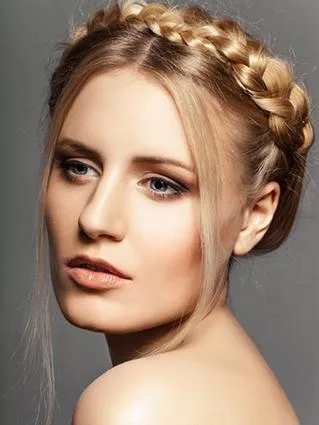
A braided crown wraps a braid around the head like a halo, and it is a romantic, eye-catching style that frames an oval face beautifully. The braid adds interest across the forehead and around the sides, while the rest of the hair can fall loose or be pinned up underneath.
It works best on medium to long hair, and it is a wonderful choice for festivals, weddings, and summer occasions. If your hair is fine, gently pull the braid apart after plaiting it — a technique called pancaking — to make it look fuller and softer.
A braided crown takes practice, so try it first on a relaxed day at home rather than before an important event. Braid each side loosely, pin them across the top, and then gently pull the braid apart to make it look fuller, tucking the ends underneath and securing them with pins.
What to ask a stylist: Ask for a Dutch braid crown if you want the braid to stand out, or a French braid version if you prefer it flatter against the head.
28. Curtain Layers for Thick Hair
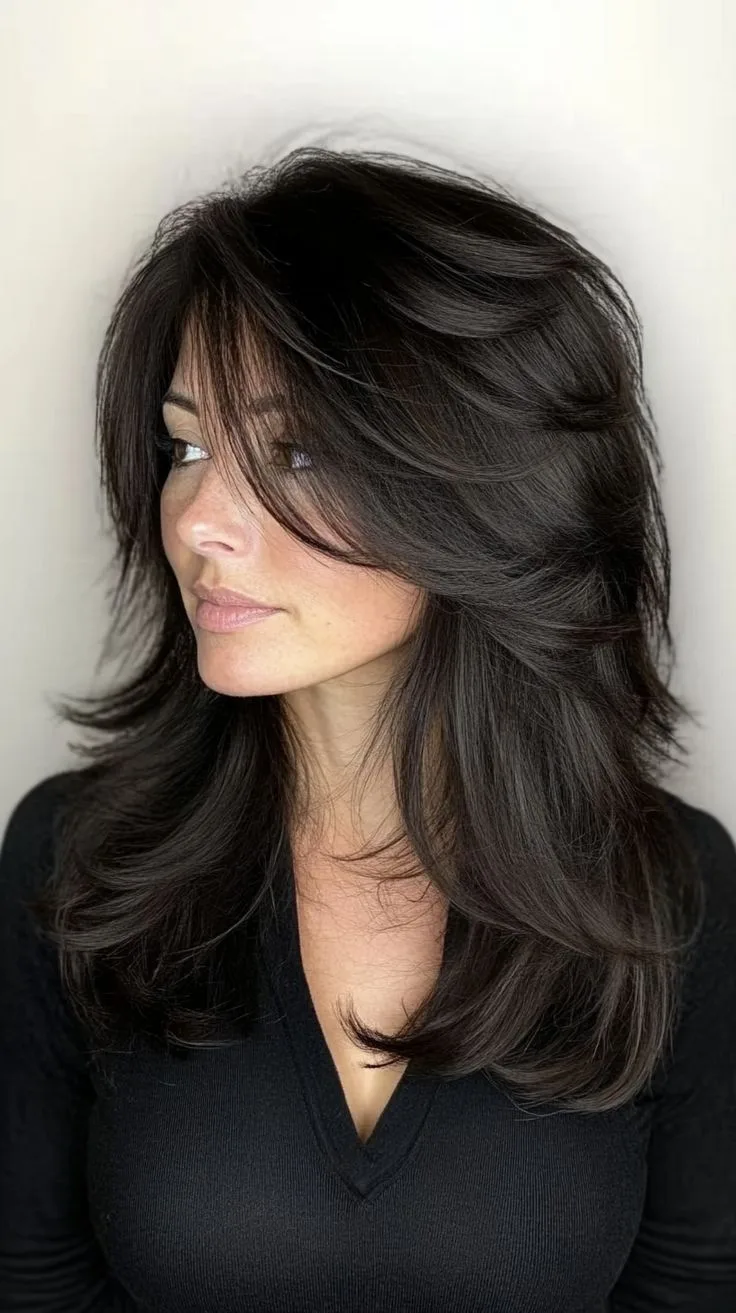
Thick hair can overwhelm an oval face if it is cut all one length, but curtain layers solve that problem beautifully. Long layers that start at the cheekbones and curve away from the face remove weight, add movement, and create a frame that shows off your features instead of hiding them.
The key is internal layering: your stylist thins the hair from the inside so the outside still looks full and healthy, but the bulk is gone. That means less time blow-drying, less frizz, and a cut that holds its shape for weeks.
Thick hair with curtain layers dries faster than one-length thick hair, because the layers let air circulate, but it still benefits from a heat protectant and a smoothing serum. Blow-dry in sections with a large round brush, and the layers will fall into their curved shape with very little effort.
Maintenance: Thick hair with curtain layers usually needs a trim every eight to ten weeks, and a smoothing cream will keep the layers sleek between washes.
29. Feathered Layers
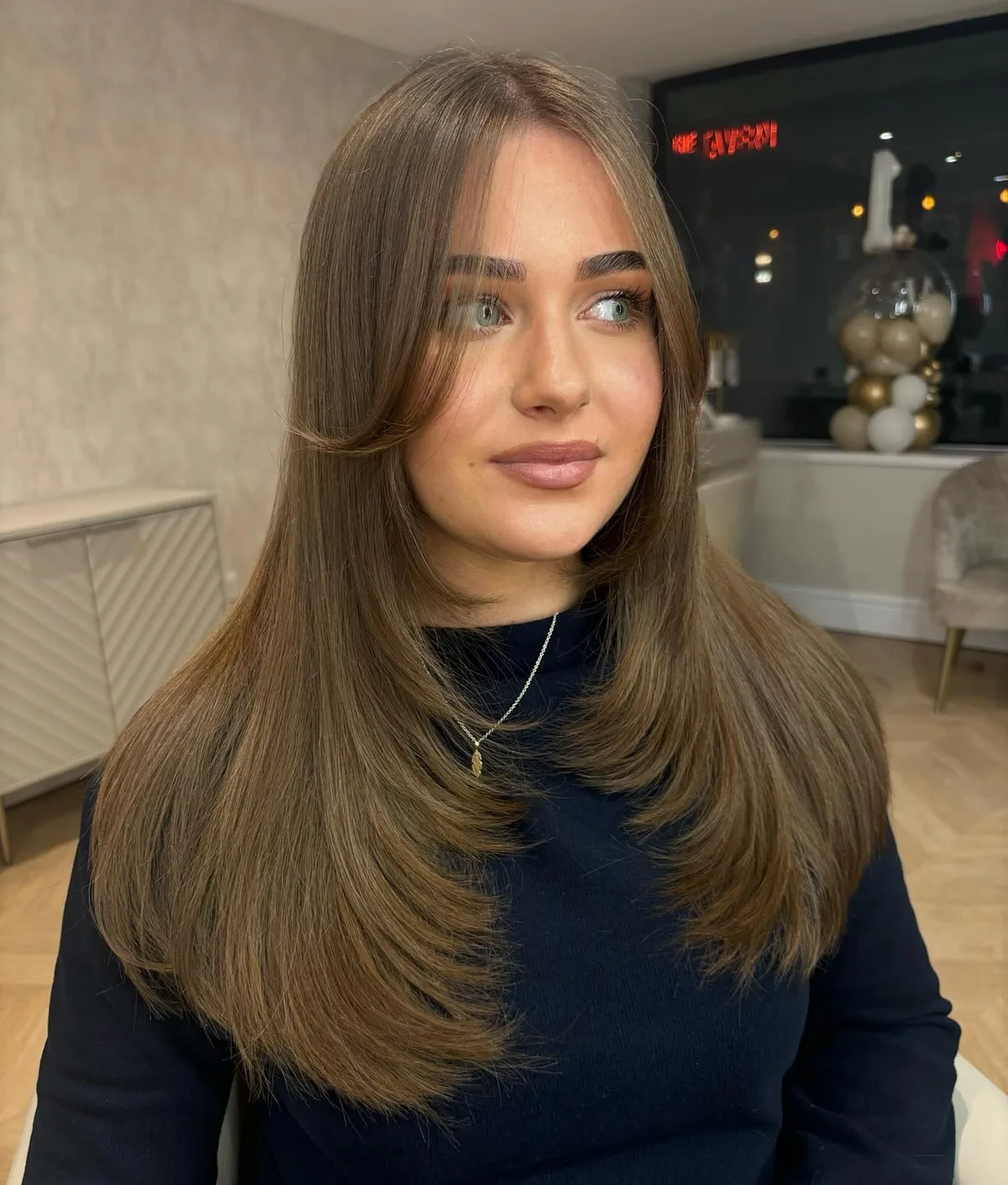
Feathered layers are cut so the ends flick outward or inward in soft, feathery points, and they are a wonderfully flattering choice for an oval face. The feathered texture adds movement around the face, softens the jawline, and gives the hair a light, airy feel that suits both medium and long lengths.
This style has a 1970s and 1990s heritage, but the modern version is softer and more blended, with the feathering concentrated around the face rather than through the whole cut. It works especially well on straight to wavy hair, where the flicked ends show up clearly.
Feathered layers look best when the ends are the star of the show, so a round brush blow-dry that flicks the ends outward will give you the classic feathered shape. If your hair is naturally curly, ask your stylist to adapt the feathering so it works with your curl pattern rather than against it.
Best for: Anyone who loves a soft, retro-inspired look and wants movement without a drastic change in length.
30. The Slicked-Back Look
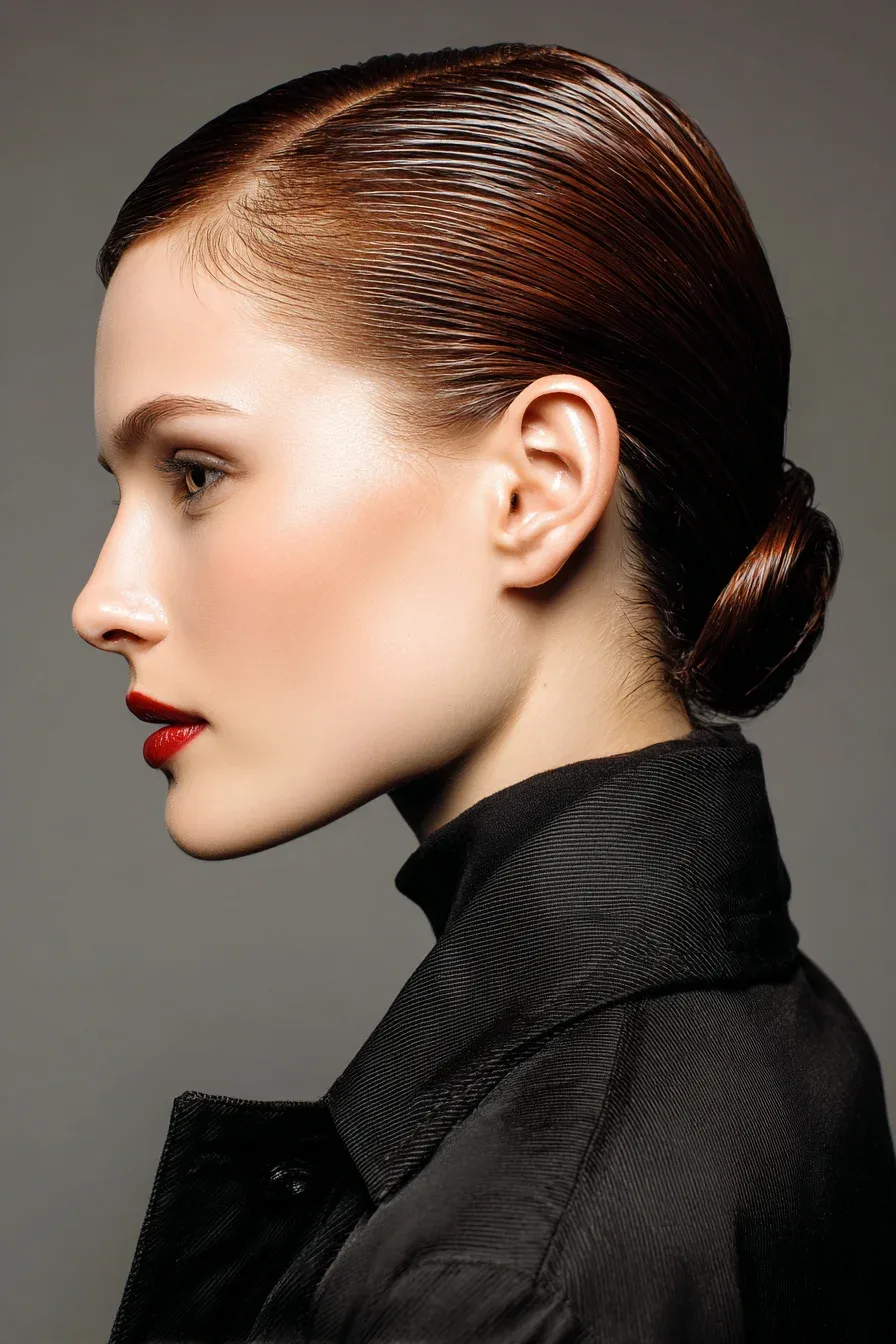
A slicked-back style brushes all the hair away from the face and secures it smoothly, which puts your features completely on display. On an oval face, that openness works — the balanced proportions can carry the severity of the style, and the result looks confident, editorial, and strikingly modern.
It is not an everyday style for most people, but it is perfect for a photoshoot, a fashion event, or an evening out. Use a strong-hold gel or pomade on damp hair, comb it straight back, and let it set. Adding volume at the roots before slicking stops it looking flat against the head.
A slicked-back style needs a product with real hold, and gel works better than spray for most hair types. Apply it to damp hair from front to back, comb it smooth, and let it dry naturally for the sleekest finish, or use a dryer on a low setting if you need it set quickly.
Who should avoid it: If you are self-conscious about your forehead or hairline, a fully slicked-back style may feel too exposing — try a softer version with a little height at the front instead.
31. Voluminous Curls
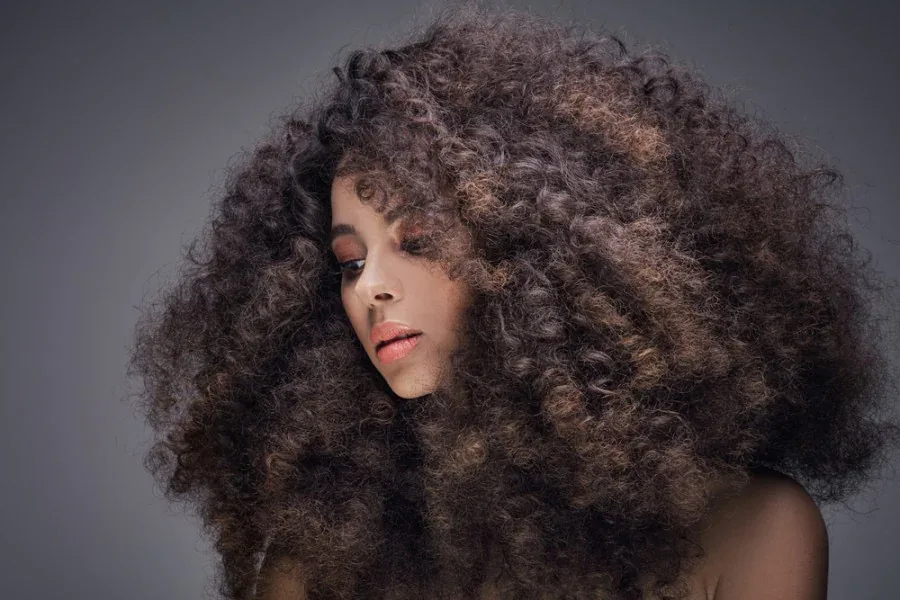
Big, voluminous curls are one of the most joyful styles for an oval face. The curls add width on both sides of the face, which balances its length perfectly, and they give the hair a fullness and energy that makes the whole look feel alive.
To get the volume, curl the hair in sections with a medium-barrel iron, let each curl cool before touching it, then brush through gently and shake the curls out. A volumising mousse at the roots and a light-hold spray will keep the shape without making it crunchy.
Voluminous curls can become frizzy in humidity, so an anti-humidity spray or a smoothing serum on the ends helps the style survive a damp day. If your curls drop quickly, curl smaller sections and let them cool completely in your hand before you brush them out.
How to style: Curl away from the face on the front sections so the curls open up around your features, and finish with a wide-tooth comb rather than a brush for softness.
32. The Asymmetrical Bob
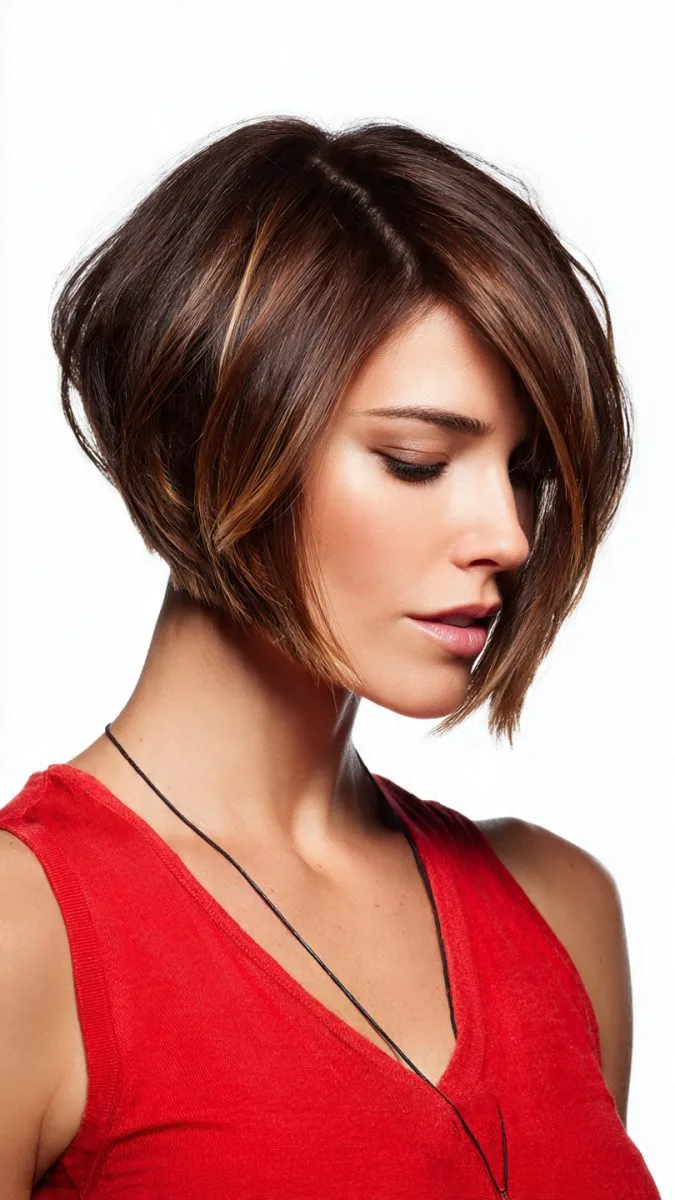
An asymmetrical bob is longer on one side than the other, which creates a bold diagonal line across an oval face. That asymmetry is incredibly flattering — it draws the eye, highlights the cheekbones, and gives a classic bob a modern, fashion-forward edge.
It is a style that needs a confident cut, so choose a stylist who has done it before and bring clear photos of the exact difference in length you want. The asymmetry can be subtle, just an inch or two, or dramatic, with one side at the chin and the other at the shoulder.
An asymmetrical bob looks best when the difference in length is clearly intentional, so be specific with your stylist about how much longer you want the longer side to be. Take a photo from the front and the side, and check the shape from behind as well before you leave the salon.
Quick verdict: A brilliant choice if you want a bob with personality — just remember it needs regular trims to keep the asymmetry looking deliberate.
33. The Chin-Length Bob
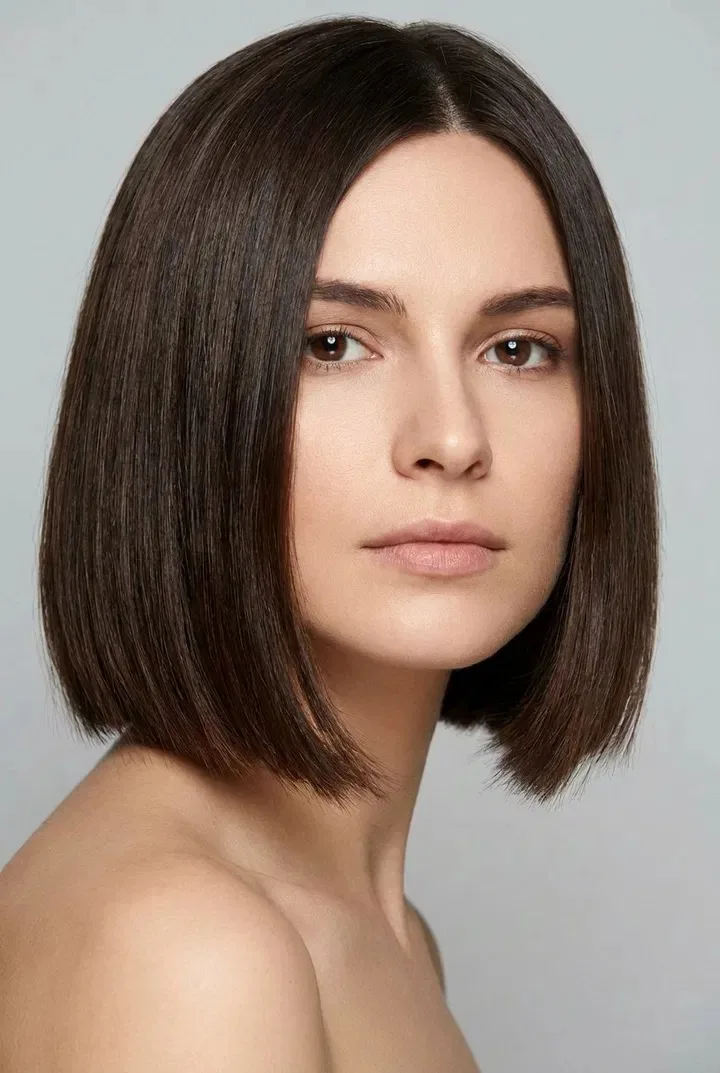
A chin-length bob ends right at the chin and creates a strong horizontal line that adds width to an oval face. It is a clean, classic cut that shows off the jawline and cheekbones, and it looks wonderful both sleek and straight and with a slight wave through the ends.
It is also one of the easiest short styles to grow out, because it passes through a lob stage naturally. If you are nervous about going short, a chin-length bob is a safe first step — it is short enough to feel like a real change, but long enough to tie back on a bad hair day.
A chin-length bob is a good cut for showing off a strong jawline and for wearing statement earrings, because the hair ends right where the jaw sits. Keep the ends blunt and the parting neat, and a quick pass with a straightener in the morning is usually all the styling it needs.
Pros and cons: Pros: classic, easy to style, grows out well. Con: the blunt ends need a trim every five to six weeks to stay sharp.
34. Long Hair with Bottleneck Bangs
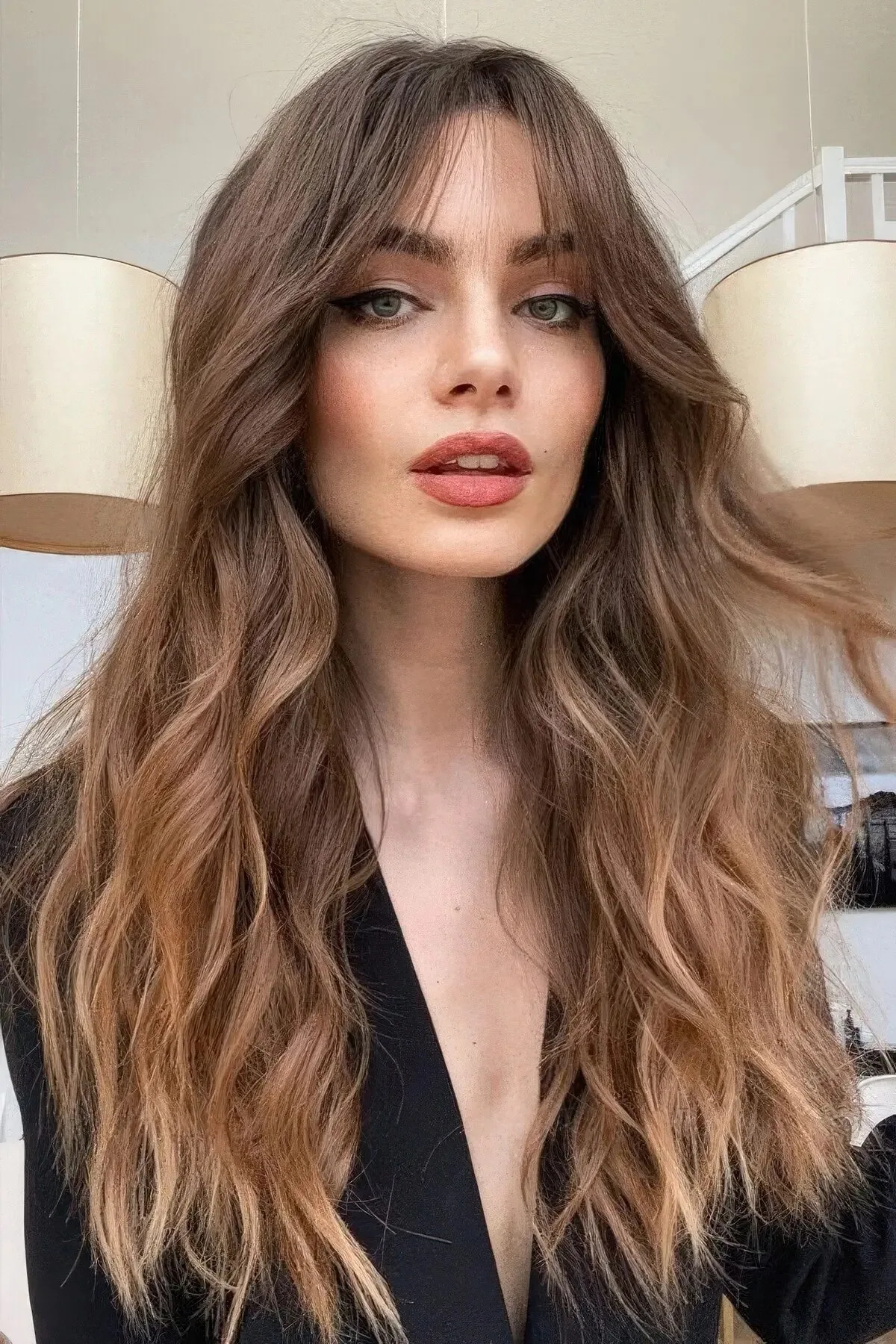
Bottleneck bangs are narrow at the top and wider at the cheekbones, like the neck of a bottle, and they are a beautiful match for long hair on an oval face. They frame the eyes, widen out at the cheekbones, and blend into long layers so seamlessly that the whole cut looks like one flowing shape.
They are a great choice if curtain bangs feel too wide or a blunt fringe feels too heavy. Bottleneck bangs give you the softness of a fringe with the lightness of layers, and they grow out into face-framing pieces without an awkward stage.
Bottleneck bangs need a little more styling than curtain bangs, because the narrow top section can split in the middle if it dries flat. Blow-dry them forward with a small round brush, then let them fall into place, and a tiny amount of texture paste will keep the shape through the day.
Best for: Long hair that needs a focal point around the face, especially if you want bangs without losing length anywhere else.
35. The Wavy Lob with a Side Part
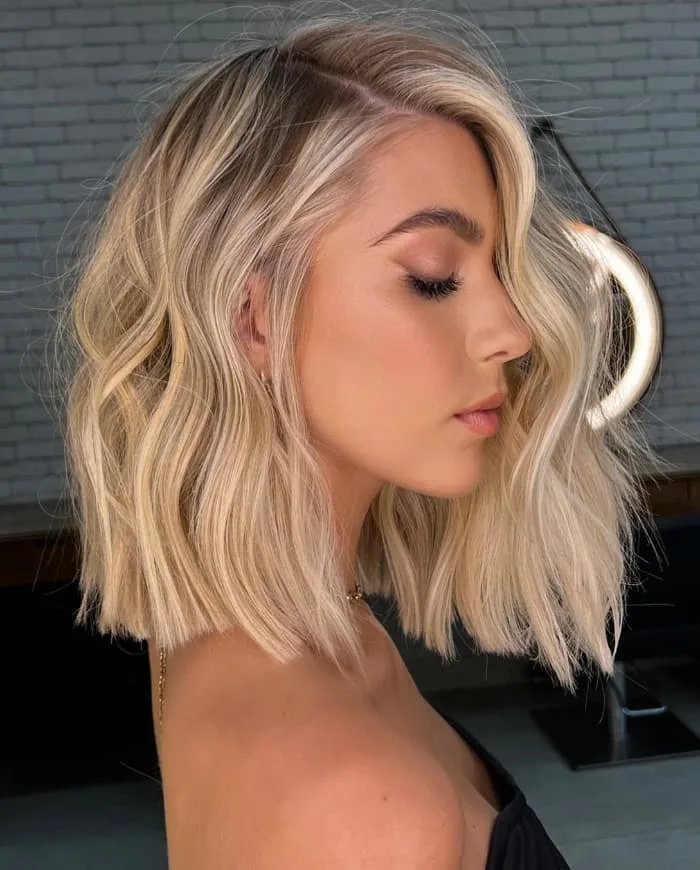
A wavy lob with a side part combines three flattering elements for an oval face: medium length, soft waves, and an off-centre part. The waves add width, the side part adds volume and asymmetry, and the lob length keeps everything light and easy to style.
It is a wonderfully versatile cut that works for the office, a weekend away, or a night out, and it suits most hair textures. If your hair is naturally straight, a large-barrel iron and a little texture spray will create the waves in minutes; if it is naturally wavy, you may only need a diffuser and a scrunch.
A wavy lob with a side part is a good cut for trying out highlights or balayage, because the waves and the off-centre part show off the dimension in the colour. Ask your colourist to place lighter pieces around the face, where they will catch the light and flatter your features.
Maintenance: A trim every seven to eight weeks keeps the ends tidy, and a purple shampoo once a week keeps blonde or highlighted ends from turning brassy.
36. Updo with Face-Framing Tendrils
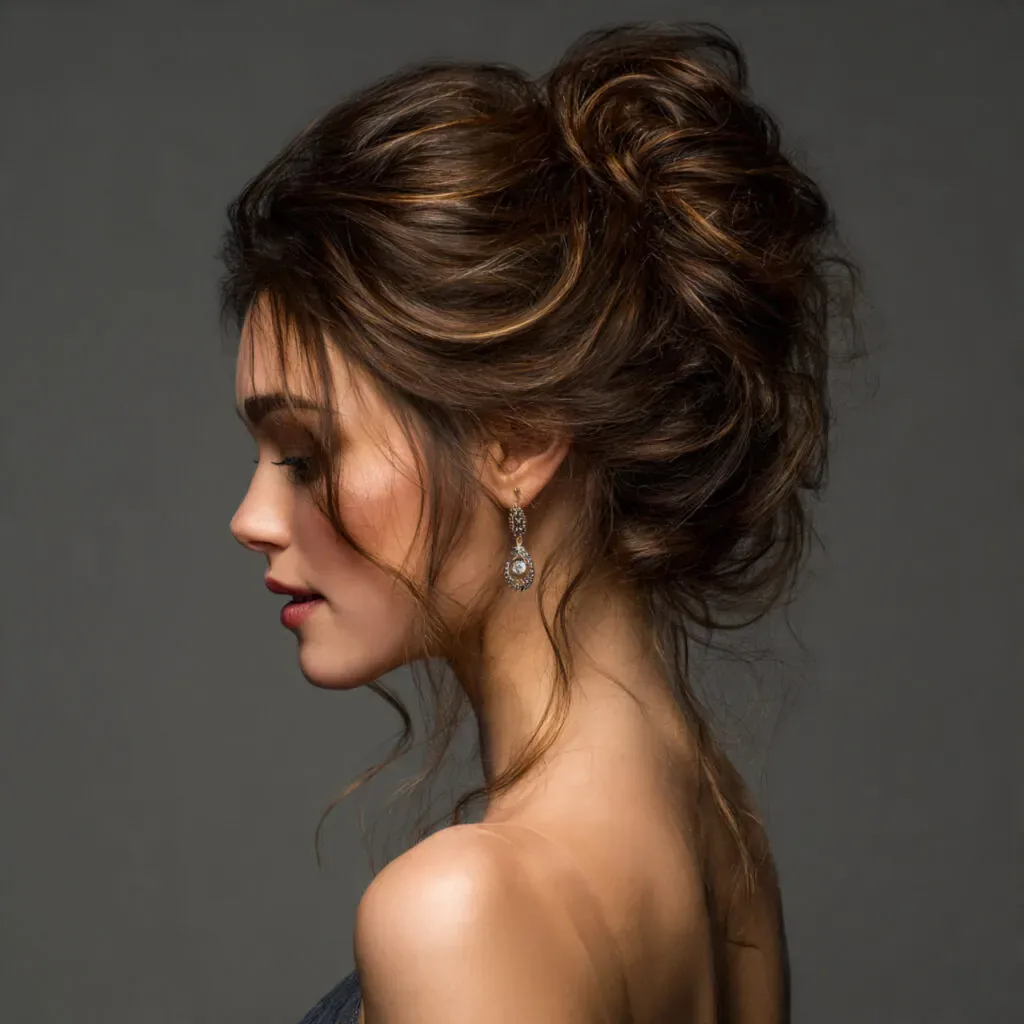
An updo with face-framing tendrils is the softer, more romantic version of a classic updo. The hair is pinned up, but two loose pieces are left out at the front to frame the face, which stops the style looking severe and adds a gentle, feminine finish that suits an oval face perfectly.
It is the ideal choice for weddings, proms, and formal events, and it works on medium to long hair of almost any texture. The tendrils can be curled for a romantic feel or left straight for a cleaner look, and a few pins and a light spray are all you need to keep it in place.
Updos with tendrils photograph beautifully, so this is a good style to choose for a wedding or a formal portrait. Ask your stylist to curl the tendrils with a small iron and to pin the updo loosely, because a soft, romantic finish suits an oval face better than a stiff, severe one.
How to style: Pin the updo first, then pull out the front tendrils, curl them lightly, and let them fall naturally — do not over-pin them or the softness disappears.
37. Soft Waves for Long Hair

Soft waves are the gentlest way to style long hair on an oval face. Unlike tight curls or a poker-straight finish, soft waves add just enough width and movement to balance the face without overwhelming it, and they give long hair a romantic, polished look that works for almost any occasion.
They are also one of the most forgiving styles to create: curl large sections loosely, brush them out, and let them settle. The waves will drop slightly through the day, which only makes them look more natural. A shine spray on the ends finishes the look beautifully.
Soft waves for long hair look best when the waves start at cheekbone level rather than at the roots, because that is where the width is most flattering. Use a large-barrel iron and curl away from your face, then brush through once and finish with a shine spray for a polished, romantic result.
Quick verdict: The safest, prettiest long-hair choice for an oval face — easy to style, easy to grow out, and flattering on almost everyone.
What is the best hairstyle for an oval face?
A layered cut with face-framing pieces is widely considered one of the best choices, because it adds width and movement around the cheekbones without hiding your natural balance. Curtain bangs, a textured lob, and soft waves are also excellent options, and the right choice depends on your hair texture and how much styling time you have.
Do bangs suit an oval face?
Bangs suit an oval face very well, and curtain bangs are usually the most flattering option because they open in the middle and frame the eyes and cheekbones. Wispy bangs and bottleneck bangs are also good choices, while a blunt fringe works best when it is kept slightly longer or paired with layers at the sides.
Is long or short hair better for an oval face?
Both can look wonderful on an oval face, so the choice comes down to your hair type and lifestyle rather than your face shape alone. Long hair needs layers or waves to avoid looking flat and heavy, while short cuts such as pixies and bobs show off your bone structure and are quicker to style each day.
What haircut makes an oval face look less long?
Cuts that add width at the sides make an oval face look less long, so bobs, lobs, waves, and curls are all helpful. Bangs also shorten the face visually, and a side part with volume at the roots can balance the length. Very long, straight, one-length hair tends to have the opposite effect.
Does a centre part suit an oval face?
A centre part suits an oval face very well because the symmetry of the part matches the natural balance of the face. It works best with long layers, curtain bangs, or sleek straight hair, and it is a good starting point if you are unsure which parting to choose.
Can an oval face wear a pixie cut?
An oval face can wear a pixie cut very well, and it is one of the few face shapes that suits almost every version of the style, from sleek and short to textured and tousled. The key is to keep a little softness around the ears and neckline so the cut frames your features rather than exposing them harshly.
What hairstyles should an oval face avoid?
There are very few styles an oval face needs to avoid completely, but very long, flat, one-length hair and severely scraped-back styles can make the face look longer and harsher than it is. Adding layers, waves, or a few loose pieces around the front usually fixes both problems without changing the style itself.
How do I know if my face is oval or round?
An oval face is longer than it is wide, with a gently curved jawline and a chin that is narrower than the cheekbones. A round face is closer to equal in length and width, with fuller cheeks and a rounder jawline. Measuring your face and tracing its outline in a mirror are the quickest ways to tell the difference.
Do layers suit an oval face?
Layers suit an oval face very well, and they are one of the easiest ways to add movement, width, and shape to any length of hair. Long layers suit long hair, internal layers suit bobs and lobs, and face-framing layers around the cheekbones are flattering on almost everyone with this face shape.
How often should I trim a hairstyle for an oval face?
Short cuts such as pixies and bobs usually need a trim every four to six weeks to keep their shape, while medium and long layered cuts can go eight to twelve weeks between appointments. Bangs may need a quick trim every three to four weeks, though many salons offer a free fringe trim between full cuts.
Conclusion
An oval face gives you more choice than almost any other face shape, and the best hairstyles for an oval face are the ones that work with that natural balance rather than against it. Layers, waves, and bangs all add width and movement where they matter most, while bobs, pixies, and lobs show off your cheekbones and keep the whole look in proportion.
Start with the style that fits your hair and your life: a textured lob or shoulder-length waves if you want something easy, curtain bangs if you want a change without losing length, or a pixie or French bob if you are ready for something bold. Take a photo to your stylist, talk honestly about how much time you spend styling your hair, and remember that almost every cut in this guide grows out gracefully — so the only real risk is waiting too long to try the one you love.

