

If your skin has started to feel a little less bouncy, a little duller, or just tired in a way moisturiser alone cannot fix, you are not imagining it. From our mid-twenties onwards, the body makes roughly one percent less collagen every year, and that slow decline shows up as softer jawlines, fine lines that linger after you smile, and skin that takes longer to bounce back. That is exactly why so many people are now asking about collagen serum benefits — and why this one small bottle has earned a permanent place in so many bathroom cabinets.
A collagen serum is a lightweight, concentrated treatment designed to be used after cleansing and before moisturiser. Most formulas combine hydrolysed collagen or collagen peptides with hydrating helpers such as hyaluronic acid, glycerin, and niacinamide, and the better ones add antioxidants like vitamin C. The serum itself does not simply sit on the surface and pretend to be new skin. It hydrates, supports the skin barrier, and creates the kind of plump, smooth canvas on which everything else — makeup, sunscreen, the rest of your routine — simply works better.
This guide walks through 35 real collagen serum benefits, organised by what they actually do for your skin, who they suit, and how to get the most from them. You will also find honest limits: topical collagen molecules are too large to sink deep into the dermis and rebuild collagen from the inside, so the visible change comes mostly from hydration, peptides that signal the skin, and consistent use. Keep your expectations realistic, use the serum daily, and the results below are the ones worth looking for.
Before we start, one practical note. A serum is only as good as the routine around it. Cleanse gently, apply the serum to slightly damp skin, follow with moisturiser, and wear sunscreen in the morning. That simple order protects the work the serum does and stops new damage undoing it overnight. Now, here is the full picture — first the essentials, then all 35 benefits.
What a Collagen Serum Actually Is
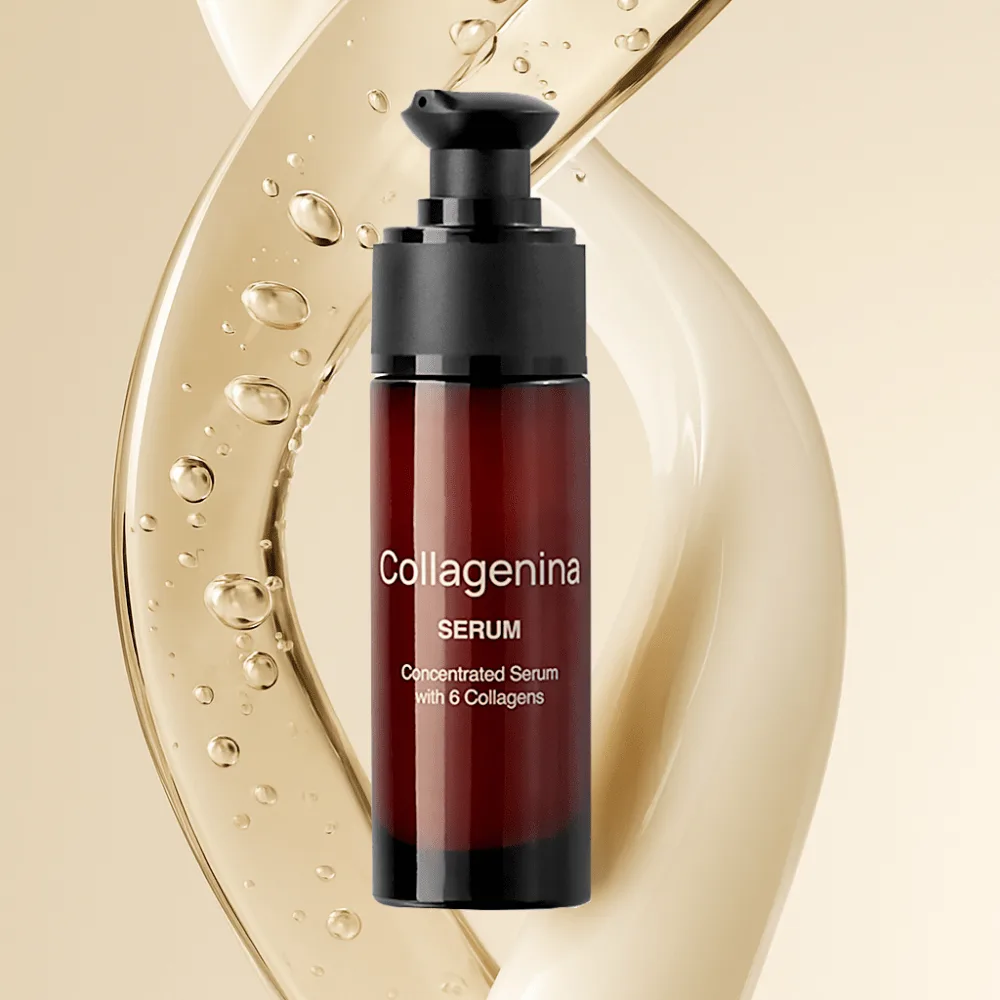
A collagen serum is a water-light treatment built around hydrolysed collagen, collagen peptides, or both. Hydrolysed collagen is collagen broken into smaller fragments, while peptides are short chains of amino acids — the building blocks collagen is made from. Neither is the same as the long, intact collagen fibres in your dermis, and that distinction matters: the serum is not pouring new structural collagen into your skin. Instead, it delivers hydration and signalling ingredients to the upper layers, where they can smooth, plump, and support the barrier.
Most good formulas do not rely on collagen alone. You will usually see hyaluronic acid for water-binding hydration, glycerin to draw moisture in, niacinamide to calm and even tone, and sometimes vitamin C or panthenol. Together they make the serum feel light and fast-absorbing rather than greasy, which is why serums suit almost every skin type, including oily skin. Think of it as a concentrated top-up: cleanser clears the way, serum delivers the active ingredients, moisturiser seals them in.
Quick check: look for “hydrolysed collagen” or “collagen peptides” near the top of the ingredient list, plus at least one humectant such as hyaluronic acid. If collagen appears near the very end after fragrance and dyes, it is mostly a label claim, not a working ingredient.
How Topical Collagen Really Works on Skin
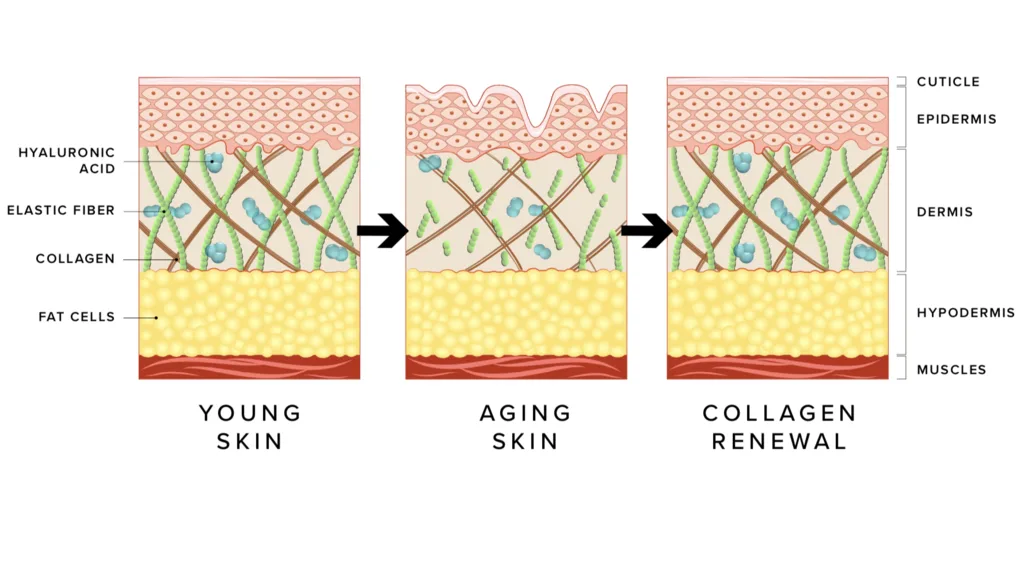
Here is the honest science, in plain language. Collagen is a large protein, and its molecules are too big to pass through the skin barrier into the dermis, where your own collagen lives. So a collagen serum does not directly replace lost collagen fibre by fibre. What it does do is genuinely useful: it forms a light hydrating film on the surface, binds water into the stratum corneum, and reduces the water loss that makes fine lines look deeper than they are.
Peptides are the more interesting part of the story. Some signal peptides are small enough to reach the upper living layers and are thought to nudge skin cells towards repair and renewal, although the evidence is promising rather than conclusive. That is why many dermatologists describe collagen serums as supportive rather than transformative: they improve how skin looks and feels — smoother, plumper, more resilient — while the deeper rebuilding work is better supported by retinoids, vitamin C, sunscreen, and, for some people, professional treatments or oral collagen supplements.
Bottom line: expect visible hydration, softness, and a smoother surface within days to weeks, and gradual firmness over months. Do not expect a serum alone to erase deep wrinkles or lift sagging skin.
Collagen vs. Peptides: What Is the Difference?
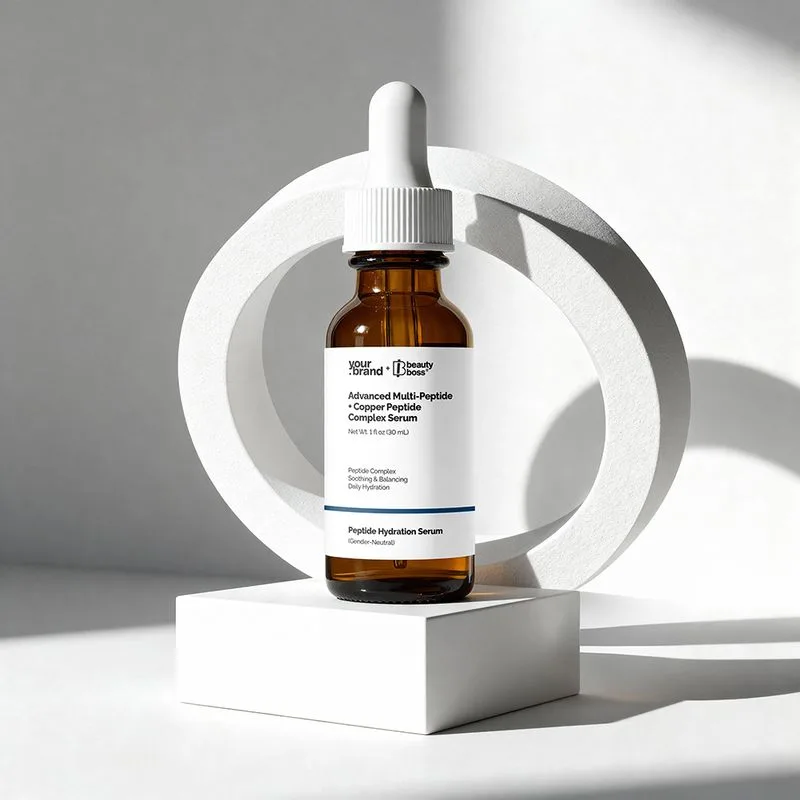
Collagen and peptides are related but not interchangeable, and the label can be confusing. Collagen is the full protein — long, strong, and structural. Peptides are fragments of proteins: short chains of amino acids that act as messengers. When a formula lists “collagen peptides” or “hydrolysed collagen,” it means the collagen has been cut into smaller pieces that are easier for skin to tolerate and, in the case of peptides, small enough to interact with the upper layers.
In practice, a serum labelled “collagen” usually works as a hydrator and surface smoother, while a peptide serum aims a little deeper, encouraging the skin’s own repair processes. The best formulas often combine both: hydrolysed collagen for instant plumping and hydration, plus signal peptides such as Matrixyl (palmitoyl pentapeptide) or copper peptides for longer-term support. Neither is a magic ingredient on its own, and a formula with one hero ingredient but no humectants or barrier support will underperform a balanced one.
Which to pick: if your main complaint is dryness and dullness, a collagen serum with hyaluronic acid is enough. If firmness and fine lines are the priority, choose a formula that lists peptides in the first half of the ingredients.
How to Apply a Collagen Serum the Right Way

Application matters more than most people realise, because a serum is concentrated and a little goes a long way. Start with clean, slightly damp skin — after cleansing, and after toner if you use one. Warm three to four drops between your fingertips, then press, do not rub, the serum over your face, neck, and the tops of your ears. Pressing helps it settle evenly without tugging at delicate skin, and damp skin helps humectants such as hyaluronic acid pull water in rather than pulling it out.
Wait about a minute before the next step so the serum can absorb, then follow with moisturiser to lock it in. In the morning, sunscreen is non-negotiable as the final step. Use the serum twice a day for the best results, morning and night, and keep the amount consistent: more product does not mean faster results, it usually just means pilling under makeup and a sticky finish.
Common mistake: applying serum to completely dry skin, or layering it over a heavy cream. Serums are designed to go on light, damp skin before richer products, not after them.
Pairing Collagen Serum With Vitamin C

Vitamin C and collagen are a natural pair, because vitamin C is a co-factor your body needs to make collagen in the first place. Used together in the morning, they complement each other nicely: vitamin C brightens, evens tone, and defends against the free radicals from sun and pollution, while the collagen serum hydrates and plumps the surface. Many people find this is the combination that finally gives them that lit-from-within glow.
The order is simple: after cleansing, apply vitamin C first if it is a thin, watery serum, then the collagen serum, then moisturiser and sunscreen. If your vitamin C is a thicker cream or a high-strength L-ascorbic acid formula that stings, use it on alternate mornings at first, or switch to a gentler derivative such as ascorbyl glucoside. Tingling that fades in a minute is normal; burning, persistent redness, or flaking means you should space the two products out or lower the vitamin C strength.
Good to know: keep vitamin C away from heat and light, and buy small bottles you will finish within a few months, because oxidised vitamin C loses potency and can irritate.
Pairing Collagen Serum With Retinol at Night
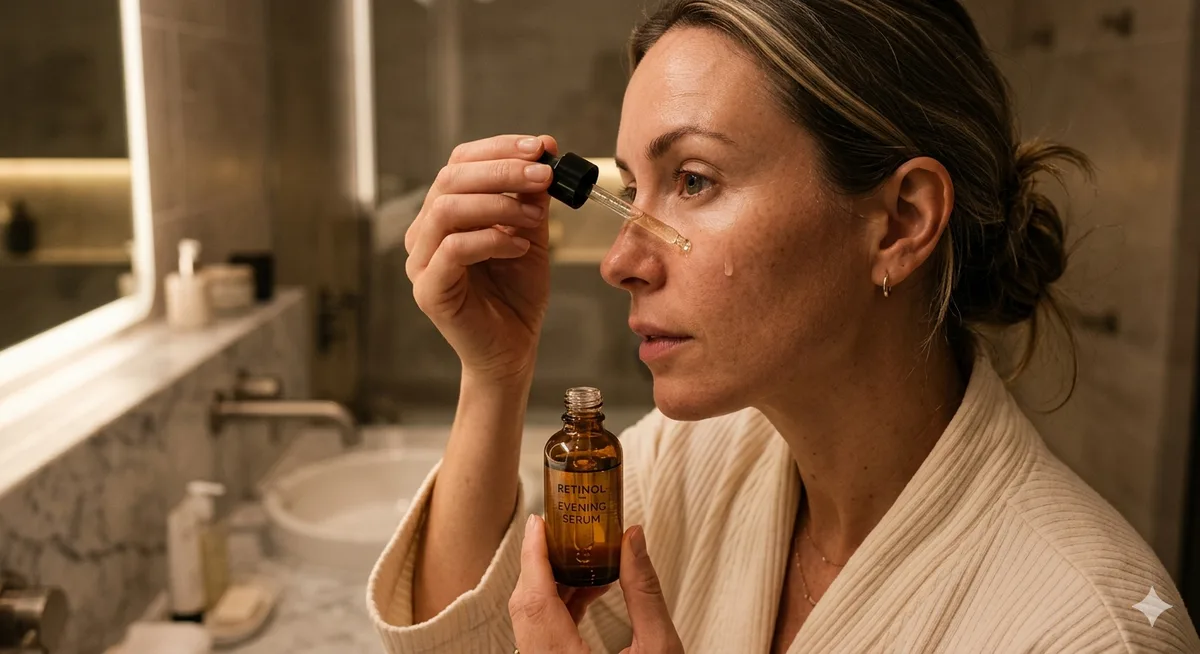
Retinol is the gold-standard ingredient for firmness and fine lines, and it works beautifully alongside a collagen serum — as long as you separate them sensibly. Retinol speeds up cell turnover and encourages new collagen, but it can also dry and irritate skin, especially in the first few weeks. A collagen serum used on the same night, or on rest nights between retinol applications, adds the hydration and barrier support that makes retinol far more tolerable.
A gentle routine looks like this: cleanse, apply retinol to dry skin, wait a few minutes, then press the collagen serum over the top and finish with a rich moisturiser. If your skin is sensitive, try the “sandwich” method instead — collagen serum first, retinol in the middle, moisturiser last — or simply use retinol two or three nights a week and collagen serum every night. Never use retinol in the morning without sunscreen, and skip it entirely if you are pregnant or trying to conceive, unless your doctor says otherwise.
Watch for: peeling, stinging, or redness that lasts more than a few days. That is your cue to cut retinol back to once a week and let the collagen serum and moisturiser repair the barrier first.
Patch Testing Before You Commit
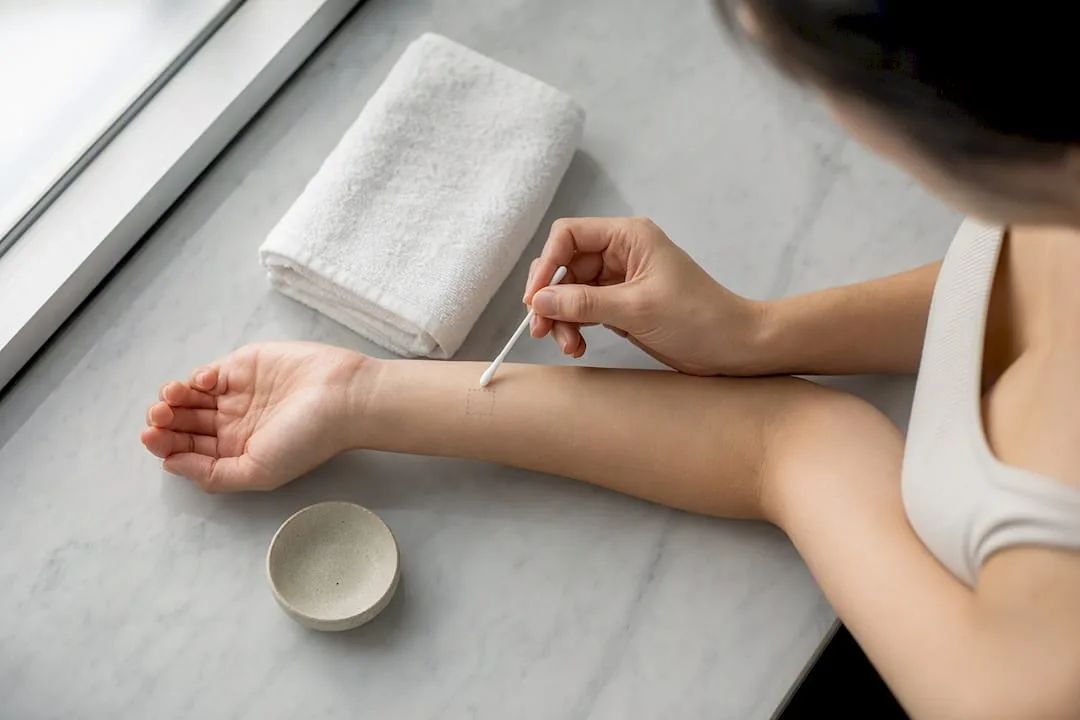
Even the gentlest serum can irritate someone, because skin is personal and formulas contain fragrance, preservatives, and active ingredients that do not suit everyone. A patch test takes two minutes and can save you a week of redness. Apply a small amount of the serum to the inside of your forearm or behind your ear, leave it for 24 hours, and check for itching, redness, bumps, or swelling before you put it on your face.
If the test area stays calm, try the serum on one small area of your face — the jawline is a good spot — for another two or three days before going all over. This slow introduction is especially important if you have sensitive skin, rosacea, eczema, or a history of reactions to fragrance. It also helps you identify the culprit if something does go wrong: if you start three new products on the same day, you will never know which one caused the problem.
Stop and rinse off if you develop swelling, blistering, or a rash that spreads, and see a doctor if it does not settle within a day or two. A mild tingle that fades quickly is usually fine; pain is not.
How to Choose a Collagen Serum Worth Your Money

Not all collagen serums are equal, and price is a poor guide. A good serum lists hydrolysed collagen or peptides in the first half of the ingredients, contains humectants such as hyaluronic acid or glycerin, and keeps fragrance low or absent — especially important for sensitive skin. Look for airless pumps or dark glass dropper bottles, which protect the formula from light and air, and check the expiry date on anything with vitamin C.
Ignore vague promises such as “rebuilds collagen by 90%” — no topical serum can prove that — and be wary of serums that are mostly water, fragrance, and dye with collagen listed near the end. A sensible price for a well-formulated 30 ml serum is usually in the mid-range; very cheap serums often skimp on actives, while very expensive ones often charge for packaging and branding. Read reviews from people with your skin type, not just the five-star ones, and remember that a serum that works for dry skin may be too rich for oily skin.
Shopping shortcut: short ingredient list, peptides or hydrolysed collagen near the top, hyaluronic acid present, fragrance-free if you are sensitive, and a bottle you will actually finish within three months of opening.
1. Firmer, Bouncier Skin Over Time

Firmness is the benefit most people buy a collagen serum for, and it is also the one that needs the most patience. As collagen production slows with age, skin gradually loses the springy support that keeps cheeks lifted and jawlines defined. A collagen serum cannot rebuild that scaffolding overnight, but daily hydration and peptides help the surface feel denser and more resilient, so skin bounces back a little faster when you press it and looks less slack in the mirror.
The change is usually gradual rather than dramatic. Most people notice a subtle difference in how their skin feels — a little tighter, a little more spring — after four to six weeks of twice-daily use, with more visible firmness by eight to twelve weeks. Pairing the serum with vitamin C in the morning and a retinoid at night supports the process from two directions at once, because those ingredients encourage your skin’s own collagen production while the serum keeps the surface hydrated and comfortable.
Quick verdict: expect a gentle, cumulative firming effect, not a face-lift in a bottle. Take a photo in the same light every two weeks so you can see the slow change you might otherwise miss.
2. Softer Fine Lines and Wrinkles

Fine lines are often far more visible than they need to be, because dehydrated skin creases more easily and reflects light unevenly. That is where a collagen serum earns its keep. By flooding the upper layers with moisture and forming a light, plumping film on the surface, it softens the look of fine lines within minutes of application and keeps them looking softer all day. The effect is cosmetic at first, but with consistent use the skin stays better hydrated, which means lines are less likely to deepen.
Deeper wrinkles, the kind that stay visible when your face is completely relaxed, will not disappear with a serum alone. They are shaped by years of sun exposure, repeated facial movement, and the slow loss of collagen and fat beneath the skin. For those, a serum is a supporting player: it improves texture and hydration so that stronger treatments, such as retinoids or professional procedures, can work on a healthier canvas. Used together, the combination looks far better than either step alone.
Best for: early fine lines around the eyes and mouth, dehydration lines on the cheeks, and anyone who wants lines to look softer without heavy makeup.
3. Deep, Lasting Hydration and Plump Skin

Hydration is the most immediate and reliable benefit of a collagen serum, and it is the one almost everyone notices first. Hydrolysed collagen and hyaluronic acid are both humectants, which means they attract and hold water in the skin. Applied to slightly damp skin and sealed in with moisturiser, the serum leaves the surface feeling plump, dewy, and comfortable instead of tight and papery — the feeling many people describe as their skin finally drinking properly.
This matters more than it sounds, because well-hydrated skin does everything better. It looks smoother, reflects light more evenly, tolerates active ingredients such as retinol with less irritation, and heals faster from small knocks and breakouts. If your skin feels tight after cleansing or looks dull by mid-afternoon, a collagen serum is often the missing step, not a richer cream. The serum delivers water where it is needed, while the moisturiser on top stops that water escaping again.
How to use: apply to damp skin, not bone-dry skin, and always follow with moisturiser. On very dry days, layer the serum twice — a thin layer, let it sink in, then a second thin layer.
4. A Brighter Glow for Dull, Tired Skin

Dull skin is rarely a single problem. It is usually a mix of dehydration, slow cell turnover, and a rough surface that scatters light instead of reflecting it. A collagen serum tackles all three gently: hydration plumps the surface, a smoother texture reflects light more evenly, and many formulas add niacinamide or vitamin C to brighten tone over time. The result is not glitter or shine, but that healthy, rested glow that makes people ask if you have been on holiday.
The glow is most noticeable when the serum is used consistently, morning and night, rather than as a one-off before an event. That said, it does make a good last-minute boost too: applied under moisturiser and makeup, it creates a smooth, hydrated base that helps foundation sit better and last longer without settling into lines. Just give it a minute to absorb first, or makeup can pill on top of a still-wet serum.
Quick verdict: if your skin looks grey or tired by lunchtime, dullness is usually dehydration plus a dull surface — exactly what this serum is designed to fix.
5. More Even Tone and Faded Dark Spots

Uneven tone — dark spots from old breakouts, sun spots, and patchy pigmentation — is one of the slowest skin concerns to improve, and a collagen serum alone will not erase it. What it can do is support the process. Many collagen serums contain niacinamide, which helps calm the inflammation that leads to post-inflammatory marks, and vitamin C, which interferes with excess melanin production. Together with steady hydration, they help new marks fade faster and keep skin looking more even overall.
The real hero here is sunscreen, and no serum can replace it. Dark spots darken again within days of unprotected sun exposure, undoing weeks of careful work. So the honest routine is: collagen serum morning and night, vitamin C in the morning if your skin tolerates it, and a broad-spectrum SPF 30 or higher every single day, reapplied if you are outdoors. Expect visible fading of fresh marks in six to eight weeks, and older sun spots to take several months or need professional help.
Best for: fresh post-acne marks, mild sun spots, and anyone whose tone looks patchy rather than deeply pigmented.
6. Pores That Look Smaller and Smoother

Pore size is mostly set by genetics, age, and how much oil your skin produces, so no serum can permanently shrink your pores. What a collagen serum can do is make them look smaller, and that is usually what people actually want. When skin around a pore is dehydrated and slack, the pore looks wider and more obvious. Hydrate and plump that surrounding skin, and the pore edge softens and the opening looks tighter.
Oil control helps too. A lightweight collagen serum hydrates without adding grease, which means skin is less likely to overproduce oil to compensate for dryness — a common trigger for enlarged-looking pores. Over weeks, cleaner-feeling, well-hydrated skin also sheds dead cells more evenly, so pores are less likely to look clogged and dark. For the best result, pair the serum with a gentle cleanser and, once or twice a week, a mild exfoliant such as a low-strength salicylic acid or lactic acid product.
Common mistake: piling on heavy creams to hide pores. Rich products can sit in pores and make them look larger, while a light serum does the opposite.
7. A Firmer-Looking Jawline and Neck

The neck and jawline are often the first places to show slackness, and the last places people remember to treat. Neck skin is thinner, has fewer oil glands, and is constantly moving and creasing, which means it dries out faster and loses firmness sooner than the face. Extending your collagen serum down past the jawline — over the neck and the tops of the ears — is one of the simplest upgrades you can make to a routine, and it costs nothing extra.
Apply the serum to the neck with upward strokes, from the collarbone towards the jaw, and follow with moisturiser and sunscreen in the morning. The neck gets just as much sun as the face, often more, because people forget to protect it. Keep expectations realistic: a serum will improve hydration, texture, and the look of fine crepey lines, but it will not lift significant sagging on its own. For that, dermatologists usually recommend retinoids, professional treatments, or both, with the serum as daily support.
How to use: use the same three to four drops for face and neck together, or add one extra drop for the neck. Never skip sunscreen on the neck.
8. Gentler Care for the Delicate Eye Area

The skin around the eyes is the thinnest on the face, which is why crow’s feet and fine lines show up there first — and why it needs a lighter touch. A collagen serum can be used around the eyes, but the technique matters: use a single drop for both eyes, warm it between your ring fingers, and press it very gently along the orbital bone. Never rub, pull, or apply product right up to the lash line, where it can migrate into the eyes and cause watering or irritation.
Hydration is the main win here. Well-hydrated eye skin looks smoother, concealer creases less, and fine dehydration lines soften noticeably. If your eyes are very sensitive, or you have milia — those tiny white bumps — choose a fragrance-free serum and keep the amount minimal, or use a dedicated eye cream instead and keep the collagen serum to the rest of the face. Either way, sunscreen and sunglasses do more for crow’s feet long-term than any cream, because squinting and UV are the biggest drivers of those lines.
Who should be careful: anyone with watery or easily irritated eyes, or a history of milia. Patch test near the eye area first, and stop if you notice puffiness or stinging.
9. Kind Support for Sensitive Skin

Sensitive skin and active serums do not always mix, but a well-chosen collagen serum is one of the safer options. The formula is usually water-based and lightweight, and collagen itself is not a known irritant. The benefit for sensitive skin is mostly about the barrier: regular hydration strengthens the skin’s protective layer, which means fewer flare-ups from cold wind, hard water, and harsh cleansers, and less of that tight, reactive feeling after washing your face.
Choosing the right formula is everything. Pick a fragrance-free serum with a short ingredient list, and avoid formulas that combine collagen with high-strength acids, strong vitamin C, or drying alcohols. Introduce it slowly — once a day for the first week, then twice daily — and patch test first, even if the label says “for sensitive skin.” If your skin is currently flaring, with active eczema or rosacea, calm it first with a plain moisturiser and talk to a dermatologist before adding anything new.
Best for: reactive, easily flushed skin that needs hydration without fragrance or heavy actives. Avoid if the formula lists fragrance or essential oils near the top.
10. Relief for Dry, Tight, Flaky Skin

Dry skin is not just uncomfortable — it looks older, because fine lines and rough patches stand out more on a dehydrated surface. A collagen serum helps in two ways: humectants such as hyaluronic acid and glycerin pull water into the upper layers, and the light film the serum leaves behind slows the water loss that makes skin feel tight an hour after cleansing. Used twice daily, it can turn that mid-afternoon tightness into a comfortable, supple feeling that lasts.
For very dry skin, the serum alone is not enough, and that is normal. Layer it under a richer moisturiser containing ceramides, squalane, or shea butter, and consider a humidifier in winter if indoor heating dries your skin out. Avoid hot showers and foaming cleansers that strip natural oils, and apply the serum while skin is still slightly damp from washing. Flaking usually improves within a week or two, while deeper dryness takes a month of consistent layering to settle.
Cost and time: one bottle typically lasts six to eight weeks at twice-daily use, and the routine adds less than a minute morning and night.
11. Lightweight Hydration for Oily Skin

Oily skin still needs hydration — in fact, it often needs it more than dry skin does. When oily skin is dehydrated, it compensates by producing even more oil, which leads to shine, clogged pores, and breakouts. A collagen serum is ideal here because it is water-light: it delivers moisture without the heavy oils and butters that can feel greasy or trigger congestion. Skin feels hydrated and balanced, not coated.
The trick is to keep the rest of the routine light too. Use a gentle gel cleanser, the collagen serum, and a light gel moisturiser or a moisturiser with niacinamide, which helps regulate oil over time. Avoid skipping moisturiser altogether, a common mistake that backfires by making skin oilier. If you wear makeup, a hydrated base also helps foundation last longer without sliding off by midday, and blotting papers work better on balanced skin than on skin that is both oily and dehydrated.
Skin-type suitability: excellent for oily and combination skin, provided the formula is oil-free or labelled non-comedogenic. Skip serums with heavy oils such as coconut oil if you are breakout-prone.
12. Balance for Combination Skin

Combination skin is the hardest type to please, because the T-zone is oily while the cheeks are normal or dry, and a single heavy cream rarely suits both. A collagen serum solves this neatly: it is light enough for the oily areas and hydrating enough for the dry ones, so one product can cover the whole face without compromise. That simplicity is a real benefit, because complicated routines are the ones people abandon.
You can still tailor the routine around the serum if you like. Use the serum all over, then add a richer moisturiser only on the cheeks if they feel dry, or a mattifying gel only on the T-zone if it shines by lunchtime. This “zone” approach gives each area what it needs without buying two separate routines. Keep exfoliation gentle — once or twice a week — because over-exfoliating combination skin usually makes the oily areas oilier and the dry areas drier.
Quick verdict: if you have never found one product that suits your whole face, a lightweight collagen serum is the best place to start.
13. Support for Mature Skin in Your 40s, 50s and Beyond

Mature skin has different needs from skin in its twenties. Collagen production has slowed significantly, the barrier is thinner, and skin loses water faster, which is why it can feel dry even in humid weather. A collagen serum fits mature skin well because it addresses the most visible daily complaints — dryness, dullness, and a loss of bounce — without irritation, and it layers comfortably under richer creams and makeup.
That said, a serum alone is rarely enough at this stage, and the best results come from a small, consistent routine rather than a shelf full of products. A gentle cleanser, collagen serum, a moisturiser with ceramides, and daily sunscreen form the foundation; adding vitamin C in the morning and a retinoid at night, introduced slowly, gives the firmness support a serum cannot provide on its own. Many women in their fifties find this simple four-step routine more effective — and far easier to stick to — than a complicated ten-step one.
Pros: gentle, hydrating, layers well, suits daily use. Cons: will not lift sagging skin or erase deep wrinkles alone; needs retinoids or professional treatments for those goals.
14. A Calmer Option for Acne-Prone Skin

Acne-prone skin is often dehydrated underneath the oil, because many acne treatments — benzoyl peroxide, salicylic acid, retinoids — dry the skin out while they clear breakouts. A lightweight, non-comedogenic collagen serum can help restore that missing hydration without clogging pores, and better-hydrated skin tolerates acne treatments with less peeling and redness. That alone makes it worth considering, even though the serum does not treat acne itself.
Choose carefully, because the wrong formula can make things worse. Look for “non-comedogenic” and “oil-free” on the label, avoid heavy oils and pore-clogging ingredients, and skip fragranced serums if your skin is reactive. Use the serum after your acne treatment has absorbed, not before it, so the treatment reaches the skin first. If you are on prescription acne medication, check with your dermatologist before adding any new product, and introduce only one new product at a time so you can tell what is helping and what is not.
Who should avoid it: anyone whose breakouts worsen with any new product should patch test for a full week and stop at the first sign of new congestion.
15. Fading Post-Acne Marks Faster

The red or brown marks left behind after a breakout — post-inflammatory hyperpigmentation — can linger for months after the spot itself has healed, and they are often more upsetting than the breakout. A collagen serum helps here indirectly but genuinely: by keeping skin hydrated and calm, it supports the natural turnover that gradually fades those marks, and formulas with niacinamide help reduce the inflammation that makes marks darker in the first place.
Two habits matter more than the serum itself. First, do not pick or squeeze spots, because trauma to the skin is the main reason marks become dark and long-lasting. Second, wear sunscreen every day, because UV darkens fresh marks quickly and can turn a mark that would have faded in six weeks into one that lasts six months. With those habits in place, most fresh marks fade noticeably within six to eight weeks, while older, deeper marks may need vitamin C, azelaic acid, or a dermatologist’s help.
How long it takes: fresh marks, six to eight weeks; older marks, three to six months. Take photos monthly to track fading you might miss day to day.
16. Repairing the Look of Sun Damage

Sun damage is the single biggest cause of premature ageing — more than time itself. UV breaks down collagen, triggers pigmentation, and roughens skin texture, and the effects accumulate quietly for years before they show. A collagen serum cannot undo sun damage, but it can improve how sun-damaged skin looks and feels: hydration softens rough texture, antioxidants in some formulas help defend against further free-radical damage, and a healthier barrier recovers faster from sun exposure.
The honest order of priorities is prevention first, repair second. Daily broad-spectrum sunscreen is the only step proven to slow further damage, and it matters far more than any serum. After that, vitamin C in the morning and a retinoid at night are the ingredients with the strongest evidence for improving sun-damaged skin over months. Use the collagen serum as the hydrating support that keeps those stronger actives tolerable, and reapply sunscreen every two hours when you are outdoors.
Bottom line: a serum can make sun-damaged skin look healthier, but sunscreen is what stops the damage getting worse.
17. A Stronger, Healthier Skin Barrier

Your skin barrier is the thin, brick-and-mortar layer that keeps moisture in and irritants out. When it is damaged — by over-exfoliation, harsh cleansers, cold weather, or too many actives at once — skin feels tight, stings when you apply products, looks red, and breaks out more easily. A collagen serum supports barrier repair by delivering hydration and, in the better formulas, ingredients such as ceramides, panthenol, and niacinamide that help rebuild that protective layer.
If your barrier is damaged, simplify everything for two to four weeks: a gentle cleanser, the collagen serum, and a plain, fragrance-free moisturiser, and nothing else. No acids, no retinol, no scrubs, no vitamin C until the stinging stops. Most barriers recover noticeably within two weeks of this rest, and the serum makes the recovery more comfortable because it hydrates without stinging. Once skin feels calm again, reintroduce actives one at a time, with at least a week between each new product.
Signs your barrier needs help: stinging when you apply normal products, persistent redness, flaking, and breakouts that appear suddenly after a new product.
18. Calmer, Less Visible Redness

Redness has many causes — rosacea, sensitivity, sun exposure, or simply a reactive barrier — and a collagen serum is not a treatment for any of them. What it can do is reduce the everyday triggers that make redness worse. Dehydrated skin flushes more easily, and a well-hydrated barrier is less reactive to temperature changes, wind, and skincare products. Formulas with niacinamide and panthenol add a calming effect that many people with redness-prone skin notice within a couple of weeks.
Keep the routine gentle and consistent. Use lukewarm water, not hot, avoid foaming cleansers and scrubs, and apply the serum with pressing motions rather than rubbing. If redness is persistent, spreading, or accompanied by bumps, burning, or swelling, see a dermatologist rather than trying product after product — rosacea in particular needs proper diagnosis, and some ingredients that suit normal skin can make it worse. A serum can support calm skin, but it cannot replace medical care.
Best for: mild, occasional redness from dryness or sensitivity. See a doctor for: persistent flushing, visible blood vessels, or painful, swollen redness.
19. A Smoother Base Under Makeup
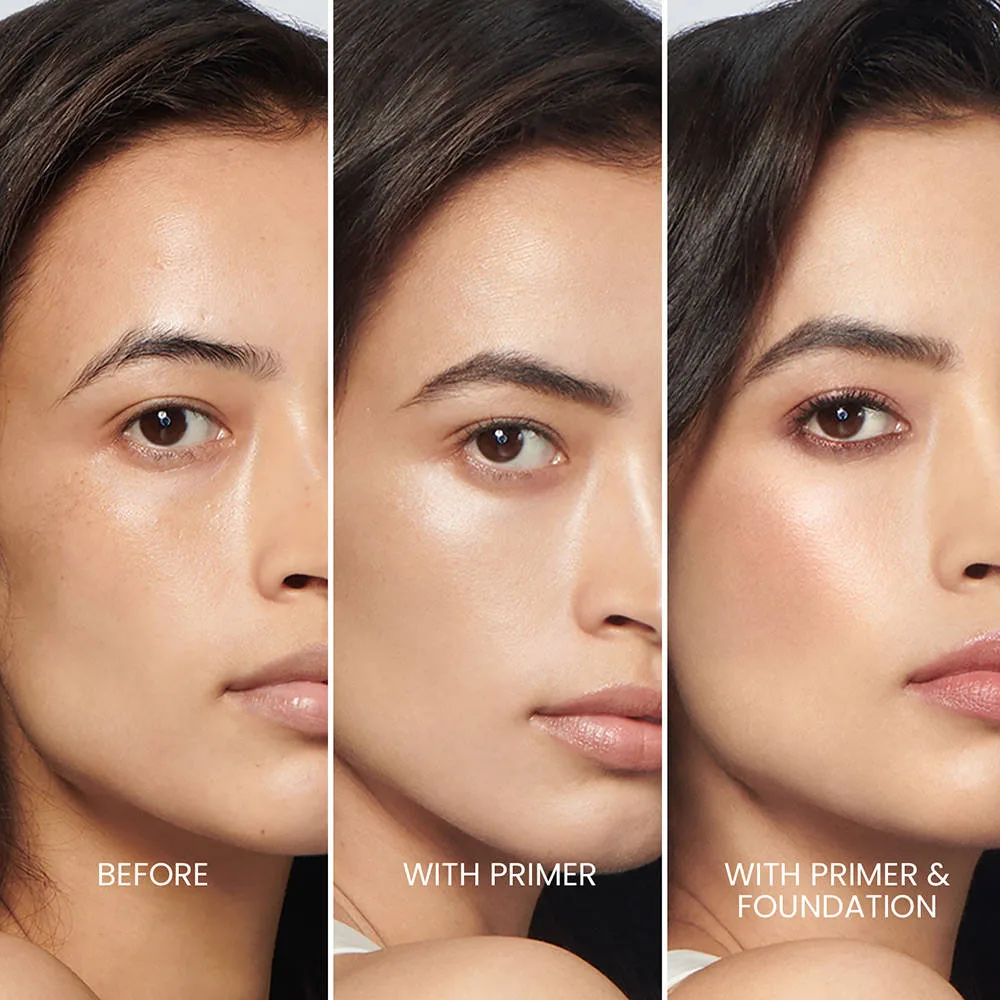
Makeup looks only as good as the skin underneath it, and a collagen serum is one of the best bases you can give it. Hydrated, plump skin means foundation glides on evenly instead of clinging to dry patches, concealer creases less around the eyes, and powder does not settle into fine lines by midday. Many makeup artists use a hydrating serum as a primer step for exactly this reason, especially for mature or dry skin.
The technique is simple but worth getting right. Apply the serum, wait a full minute for it to absorb, then moisturiser, then sunscreen, then makeup. If you rush and apply foundation over a still-wet serum, it can pill or slide off. Use a light hand with the serum on makeup days — two to three drops is plenty — and choose a formula that absorbs fully rather than leaving a tacky film. If your serum pills under foundation, try a different moisturiser on top, or switch to a lighter serum formula.
Quick verdict: the serum will not replace a primer if you need serious oil control or pore-blurring, but for everyday makeup it gives a smoother, more natural finish than primer alone.
20. A Brighter Start to Your Morning Routine

Mornings set the tone for your skin all day, and a collagen serum is an easy win in a morning routine. After cleansing, it rehydrates skin that has lost moisture overnight, plumps fine lines before makeup, and creates a smooth base for moisturiser and sunscreen. The whole step takes under a minute, and the difference is visible: skin looks awake, dewy, and even, rather than flat and tired.
A simple morning routine is all you need: gentle cleanser, vitamin C if you use it, collagen serum, moisturiser, and broad-spectrum sunscreen as the final step. Do not skip the sunscreen — it is the step that protects everything the serum does, and without it, UV damage will undo your progress faster than the serum can build it. If you are short on time, the serum and sunscreen are the two steps worth keeping; everything else can wait until evening. A quick splash of cool water can also wake skin up before you start, if you prefer not to cleanse fully in the morning.
Time needed: under a minute for the serum step, about three minutes for the full morning routine.
21. Overnight Repair While You Sleep

Night is when skin does its repair work. Cell turnover increases, moisture loss rises, and the skin is free from makeup, sun, and pollution for hours — which makes bedtime the best time for a collagen serum to work undisturbed. Applied after cleansing and before a richer night moisturiser, the serum hydrates deeply overnight, so you wake up to skin that feels soft and looks rested rather than tight and creased from the pillow.
The night routine can be slightly richer than the morning one. Cleanse thoroughly to remove sunscreen and makeup, apply any treatment such as retinol first if you use it, then the collagen serum, then a moisturiser with ceramides or squalane to seal everything in. If your skin is very dry, a thin layer of a heavier cream or a sleeping mask on top once or twice a week adds extra comfort. Keep the pillowcase clean — change it twice a week — because a dirty pillowcase can undo a good night routine.
Best for: dry, tired, or mature skin that looks worse in the morning than it did the night before.
22. Getting the Layering Order Right

Layering order is not a mystery, but getting it wrong wastes product. The rule is simple: thinnest to thickest. Watery toners first, then serums, then creams, then oils, then sunscreen in the morning. A collagen serum is usually thin and water-based, so it goes on early — after cleansing and toner, before moisturiser. Applied after a heavy cream, it cannot reach the skin properly and mostly sits on top, doing very little.
When you use more than one serum, apply the treatment serum first — vitamin C in the morning, or a niacinamide serum — and the collagen serum second, because its job is hydration and support rather than targeted treatment. Wait about a minute between layers so each one can absorb, and do not mix serums together in your palm unless the brand says you can; some ingredients, such as vitamin C and certain peptides, can destabilise each other when mixed directly. Keep the routine to three or four layers at most — more layers usually mean pilling, not better results.
Common mistake: applying serum over moisturiser, or layering five serums at once. Thin to thick, one minute between steps, and stop at three layers.
23. Using the Right Amount Every Time

Three to four drops is the right amount of collagen serum for the face and neck, and it is less than most people expect. Serums are concentrated by design, so a pea-sized amount spread thinly covers the whole face. Using more does not make it work faster — it usually just leaves a sticky film, causes pilling under makeup, and empties the bottle in half the time, which doubles your cost for no benefit.
The best way to apply it is to drop the serum onto your fingertips, not directly onto your face, then warm it briefly between your hands and press it over the skin. This spreads the product evenly and stops it pooling in one spot. If your skin still feels tight after three drops, the answer is usually a better moisturiser on top, not more serum. One 30 ml bottle used correctly should last six to eight weeks at twice-daily use; if yours runs out in three weeks, you are almost certainly using too much.
Cost check: at three drops twice a day, a mid-priced serum works out to well under a dollar a day — far cheaper than most people assume.
24. A Realistic Timeline for Visible Results

Knowing what to expect, and when, is the difference between sticking with a serum and giving up too soon. The timeline is fairly consistent: hydration and a plumper, dewier look appear within minutes to days, because humectants work immediately. Softer fine lines and a smoother texture usually show up after two to four weeks of daily use. Firmer-feeling skin and a more even tone take longer — typically eight to twelve weeks — because those changes depend on the skin’s own renewal cycle, which takes about 28 days in younger skin and longer as we age.
Several things can slow results down. Inconsistent use is the biggest one: using a serum three times a week will not give the same result as twice a day. Skipping sunscreen is the second, because new UV damage cancels out the repair work. And using too many new products at once makes it impossible to tell what is working. Give any new serum a full twelve weeks before you judge it, take a photo in the same light every two weeks, and judge by how your skin feels as well as how it looks.
Quick verdict: instant hydration, visible softness in two to four weeks, real firmness in eight to twelve weeks — if you use it daily and wear sunscreen.
25. Why Consistency Beats Expensive Products

Skincare rewards consistency far more than it rewards spending. A mid-priced collagen serum used every morning and night for three months will outperform an expensive serum used sporadically, because skin renewal is a slow, cumulative process. Each application adds a small amount of hydration and support, and those small amounts compound over weeks into visible change. Missed days break that compounding, which is why the best serum is the one you will actually use twice a day.
Making it easy is the secret. Keep the serum where you will see it — next to your toothbrush, not buried in a drawer — and attach it to a habit you never skip, such as brushing your teeth or washing your face. A simple routine you follow daily beats a perfect routine you follow twice a week. If you travel, decant a small amount into a travel bottle rather than skipping the step, and if you run out, reorder before the bottle is empty so there is no gap in the routine.
How to track it: mark each use on a calendar or in a notes app for the first month. Most people are surprised how often they skip a step they thought they never missed.
26. Pairing It With Your Moisturiser

A serum and a moisturiser do different jobs, and they work best as a pair. The serum delivers concentrated active ingredients and water into the upper layers; the moisturiser seals that water in and repairs the barrier with lipids such as ceramides, squalane, or shea butter. Used alone, a serum can actually leave skin feeling drier in a dry climate, because humectants can pull water out of the skin if there is no occlusive layer on top to trap it.
The pairing is easy to get right. After the serum has absorbed for about a minute, apply a moisturiser suited to your skin type — a light gel for oily skin, a richer cream for dry or mature skin. In winter, you may need a heavier moisturiser than in summer, and that is normal; skin’s needs change with the seasons. If your skin feels tight an hour after your routine, the moisturiser is usually the step to upgrade, not the serum.
Pros: better hydration, less water loss, a stronger barrier. Cons: none, as long as the moisturiser suits your skin type — the two steps are designed to work together.
27. Why Sunscreen Is the Serum’s Best Friend

No collagen serum can outwork the sun. UV radiation breaks down collagen faster than any topical product can support it, triggers pigmentation, and roughens texture — and it does so every day, even on cloudy days and through windows. That is why dermatologists call sunscreen the most effective anti-ageing product in existence, and why a collagen serum without sunscreen is like filling a bath with the plug out. The serum helps; the sunscreen protects the help.
Use a broad-spectrum sunscreen of SPF 30 or higher as the last step of your morning routine, after the serum and moisturiser. Apply a full two finger-lengths of product for the face and neck, and reapply every two hours if you are outdoors, sweating, or swimming. If you dislike the feel of sunscreen, try a lightweight gel or fluid formula, or a moisturiser with SPF for days when you are mostly indoors — but remember that a moisturiser with SPF is rarely applied thickly enough to reach its labelled protection.
Bottom line: serum in the morning, sunscreen over it, every day. Skip the sunscreen and you are paying for a serum while letting the sun undo its work.
28. Combining It With Exfoliation
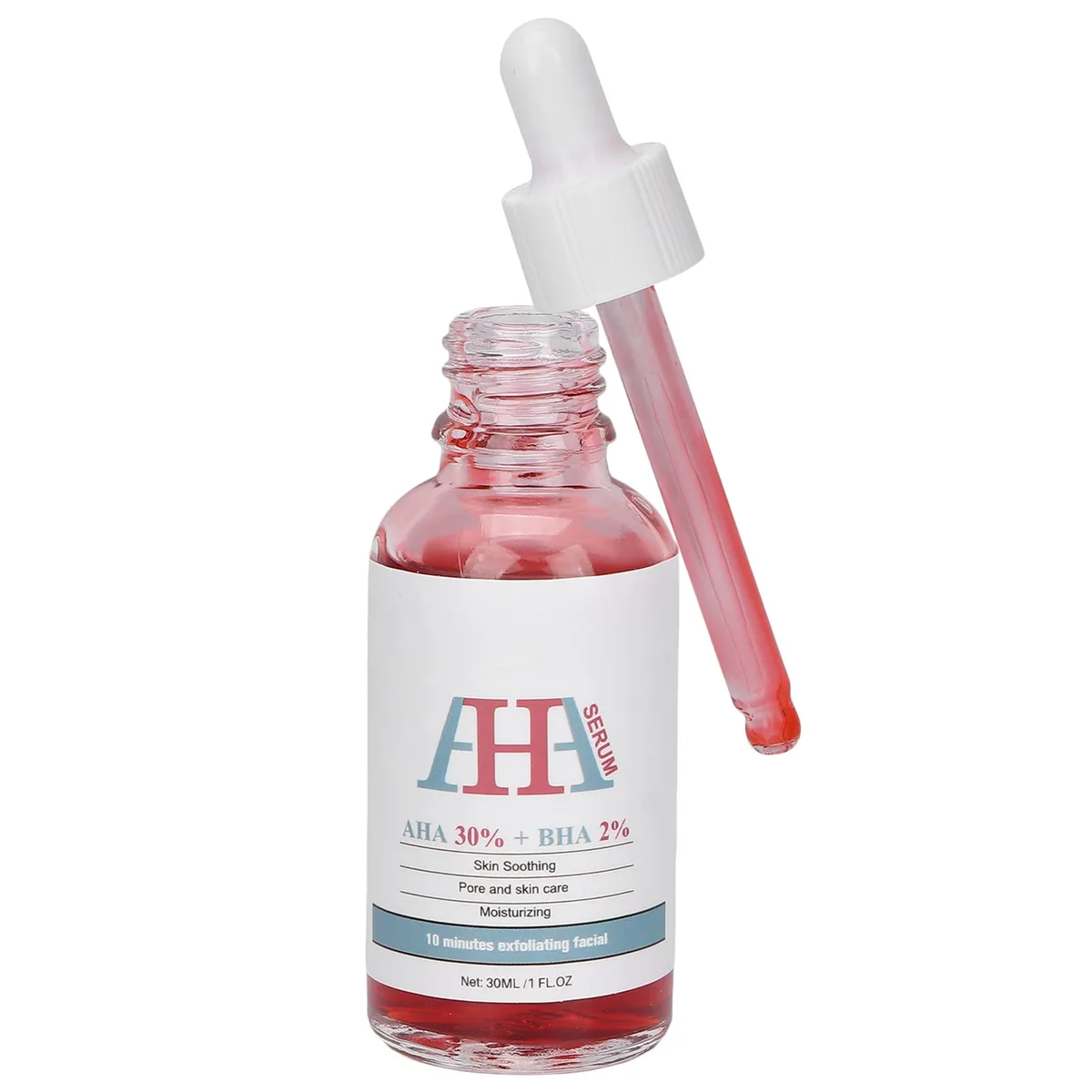
Exfoliation and collagen serum are a strong combination when they are balanced. Gentle exfoliation — with a low-strength AHA such as lactic acid, or BHA such as salicylic acid, once or twice a week — removes the dull, dead cells that sit on the surface and block absorption. With that layer gone, the serum sinks in more evenly, and skin looks brighter and smoother. The serum then steps in to soothe and rehydrate, which is exactly what freshly exfoliated skin needs.
The balance is the key. Exfoliating too often, or using strong acids daily, strips the barrier and leaves skin red, flaky, and reactive — and no serum can fix that while the over-exfoliation continues. A safe pattern is: exfoliate in the evening, one or two nights a week, then apply the collagen serum and a rich moisturiser afterwards, and skip retinol on exfoliation nights. If your skin stings, peels, or looks shiny and thin, cut exfoliation back to once a week and let the serum and moisturiser repair the barrier first.
Common mistake: using a strong acid and retinol on the same night, then wondering why skin is irritated. Space strong actives out, and let the serum do the calming work between them.
29. Hyaluronic Acid: The Hydration Multiplier
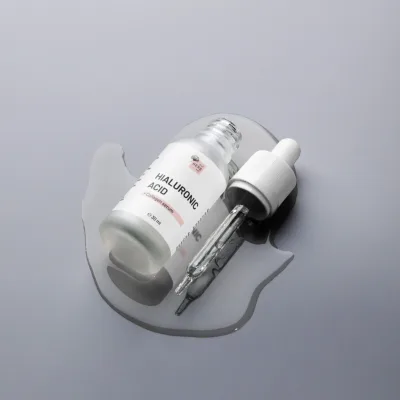
Hyaluronic acid and collagen serum are often found in the same bottle, and for good reason: they do the same job in different ways, and together they hydrate better than either alone. Hyaluronic acid is a sugar molecule that can hold up to a thousand times its weight in water, drawing moisture into the skin and plumping fine lines from within. Collagen adds a light film that helps hold that moisture in place, so the plumping effect lasts longer through the day.
If your serum already contains hyaluronic acid, you do not need a separate one — check the ingredient list first and save your money. If it does not, layering is simple: apply the hyaluronic acid serum to damp skin first, then the collagen serum, then moisturiser. The one rule is to always seal hyaluronic acid in with a moisturiser, because in a dry climate it can pull water out of the skin instead of into it if there is no occlusive layer on top.
Best for: dehydrated skin of any type, winter dryness, and anyone whose fine lines look worse in dry air or air conditioning.
30. Niacinamide: The Calm, Even-Tone Partner
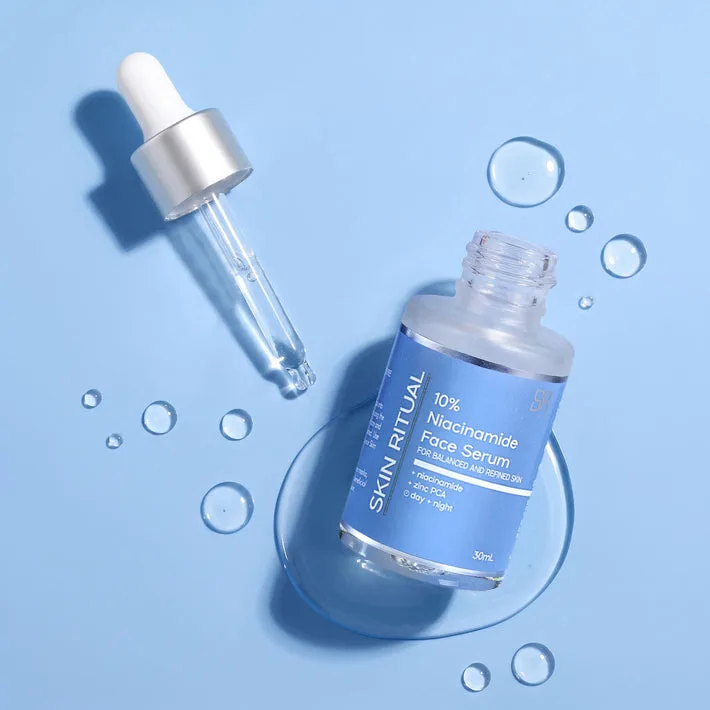
Niacinamide, also known as vitamin B3, is one of the most versatile ingredients in skincare, and it pairs beautifully with a collagen serum. It strengthens the barrier, calms redness, helps regulate oil, and gradually evens out tone — all without the irritation that stronger actives can cause. Many collagen serums already contain niacinamide, which is part of why they suit so many skin types, including sensitive and acne-prone skin.
If you use a separate niacinamide serum, layer it before or after the collagen serum — the order matters very little, because both are water-based and gentle. Start with a 5 percent niacinamide formula if you are new to it, and only move to 10 percent if your skin tolerates it well; higher percentages do not always mean better results, and some people find 10 percent causes flushing or breakouts. Used daily, niacinamide’s tone-evening effect usually becomes visible after eight to twelve weeks, in step with the collagen serum’s own timeline.
Skin-type suitability: excellent for almost everyone, especially oily, combination, sensitive, and redness-prone skin.
31. Peptides: The Signal Boost Behind Firmness
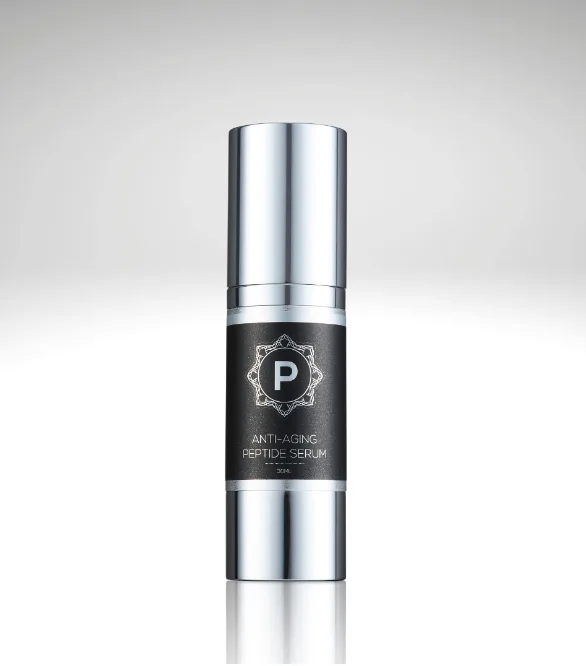
Peptides are the quiet workhorses inside many collagen serums, and they deserve a closer look. These short chains of amino acids act as messengers, telling skin cells to get on with repair and renewal. Signal peptides such as Matrixyl are the best studied, with evidence that they can support collagen production over time, while copper peptides are valued for wound healing and skin repair. They do not work overnight, but over eight to twelve weeks they add a firmness benefit that hydration alone cannot provide.
When you shop, look for peptides named on the ingredient list — palmitoyl pentapeptide, palmitoyl tripeptide, copper tripeptide — rather than a vague “peptide complex” at the very end of the list. A formula that lists peptides in the first half of the ingredients, alongside hydrolysed collagen and hyaluronic acid, is a genuinely multi-tasking serum rather than a simple hydrator. Keep it away from very strong vitamin C in the same step if the brand warns against mixing them; using vitamin C in the morning and peptides at night avoids the issue entirely.
Quick verdict: peptides are the ingredient that turns a good hydrating serum into a genuine firmness serum. Worth paying a little more for, if firmness is your main goal.
32. Vitamin C for Brightening, Done Right
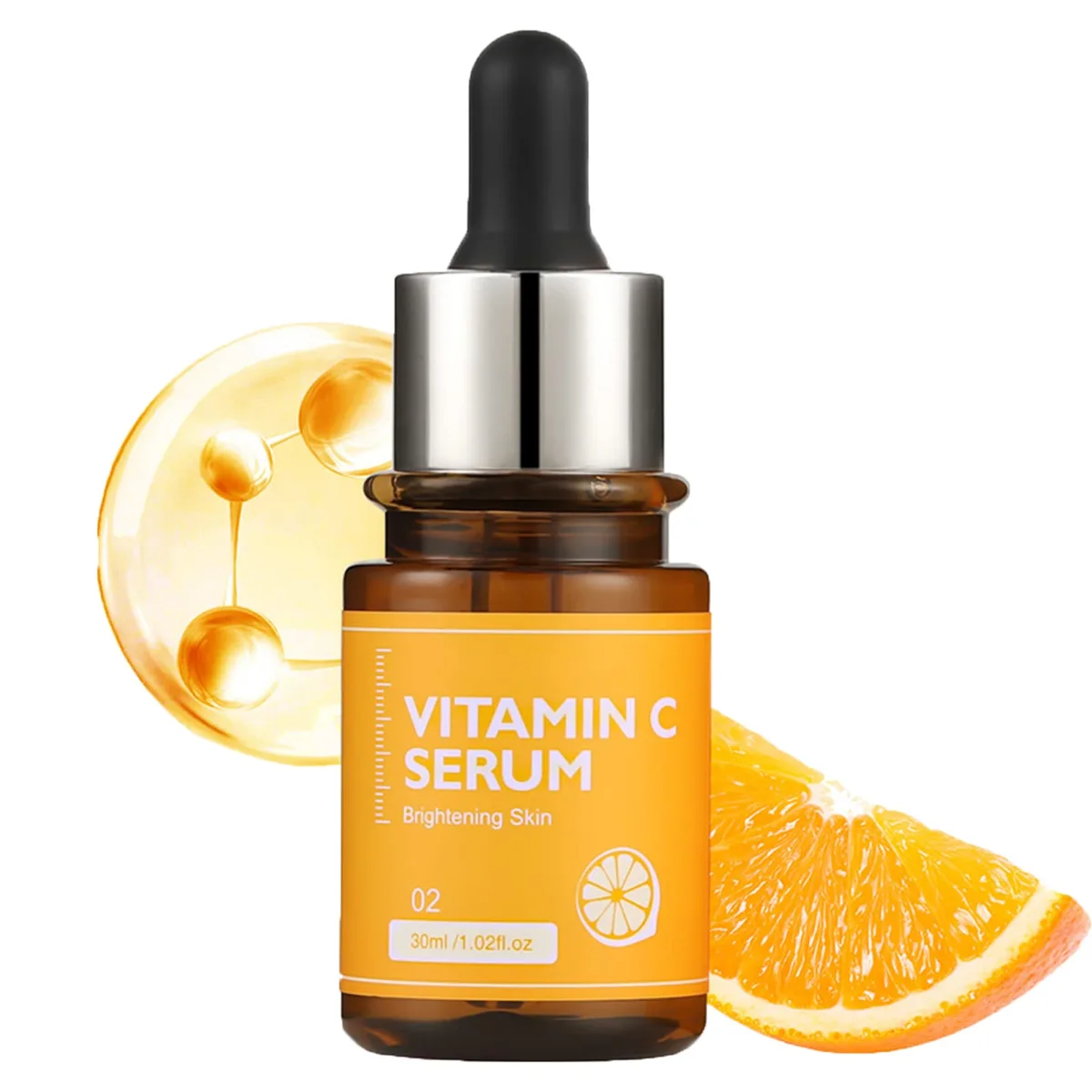
Vitamin C is the brightest partner a collagen serum can have. It is an antioxidant that defends skin against sun and pollution damage, a brightener that fades dark spots and evens tone, and a co-factor the body needs to make collagen — which means it supports the very protein the serum is named after. Used together in the morning, the two give you hydration, glow, and protection in a single short routine.
Getting it right matters, because vitamin C is a fussy ingredient. Pure L-ascorbic acid is the most effective form but also the most irritating and the quickest to oxidise, turning yellow or brown when it goes off. If your skin is sensitive, a gentler derivative such as ascorbyl glucoside or ethyl ascorbic acid is a better choice, even if it works a little more slowly. Apply vitamin C first on clean skin, wait a minute, then the collagen serum, then moisturiser and sunscreen — and replace the bottle if it darkens or smells off.
Cost and time: a good vitamin C serum lasts two to three months; buy small bottles and store them away from heat and light.
33. Retinol on Alternate Nights, Without the Burn

Retinol and collagen serum are a classic pairing, but only if you respect retinol’s strength. Retinol speeds up cell turnover and encourages new collagen, which is exactly what ageing skin needs — but it can also cause dryness, peeling, and redness, especially in the first month. Alternating nights is the simplest way to get the benefits without the burn: retinol two or three nights a week, collagen serum every night, with the serum acting as the hydrating buffer that keeps skin comfortable on retinol nights and repairs it on rest nights.
A gentle starter pattern looks like this: Monday and Thursday, cleanse, apply a pea-sized amount of retinol to dry skin, wait a few minutes, then collagen serum and moisturiser. Every other night, skip the retinol and use the collagen serum with a richer moisturiser. If your skin stays calm for a month, add a third retinol night. Never use retinol in the morning without sunscreen, never use it on broken or sunburned skin, and avoid it entirely during pregnancy unless your doctor advises otherwise.
Who should avoid it: anyone pregnant or trying to conceive, and anyone with active eczema or rosacea should talk to a dermatologist before starting retinol.
34. Common Mistakes That Waste Your Serum

Most collagen serums fail for boring, fixable reasons rather than because the product is bad. The most common mistake is using too much: a thick layer does not absorb better, it pills under makeup and wastes money. The second is applying it to dry skin or over a heavy cream, which stops it reaching the skin properly. The third is inconsistency — using it for a week, forgetting it for a fortnight, then deciding it does not work. Skin renewal takes weeks, and a serum cannot show results it was never given time to produce.
Other mistakes are subtler but just as costly. Storing the serum in a hot, steamy bathroom shortens its life, especially if it contains vitamin C or peptides. Mixing it with a strong acid in the same step can destabilise the formula. And skipping sunscreen lets UV damage undo the serum’s work faster than the serum can build it. Fix those five habits — right amount, damp skin, correct order, daily use, and sunscreen — and most people find the same bottle suddenly works far better.
Quick checklist: three to four drops, damp skin, serum before moisturiser, twice daily, sunscreen every morning, and one new product at a time.
35. When to Skip the Serum and See a Dermatologist

A collagen serum is a cosmetic product, not a medicine, and there are times when it is the wrong tool for the job. If you have persistent, painful, or cystic acne, a rash that will not settle, blistering, swelling, or a mole that has changed shape, colour, or size, no serum will help — those need a dermatologist. The same applies to significant sagging, deep wrinkles, or scarring: a serum can improve how skin looks, but only medical treatments can change its structure in a meaningful way.
There are also times to pause the serum itself. Stop using it and rinse off if you develop swelling, blistering, or a spreading rash, and seek medical advice if it does not settle within a day or two. Pause it before a chemical peel, laser treatment, or microneedling session if your practitioner tells you to, and tell them about every product you use — including serums — so they can plan around it. A dermatologist can also help you build a routine that fits your skin, your budget, and your goals, which is often cheaper in the long run than buying product after product on guesswork.
Bottom line: a serum is for healthy skin that needs hydration and support. Anything painful, persistent, or changing needs a professional, not a new bottle.
Can I use a collagen serum every day?
Daily use is the intended way to use a collagen serum, morning and night, and most formulas are gentle enough for twice-daily application. Start once a day for the first week if your skin is sensitive, then move to twice daily once you know it suits you. Consistency matters more than frequency: twice a day for twelve weeks will show far more than occasional use of a stronger product.
Does a collagen serum really rebuild collagen in the skin?
Topical collagen molecules are too large to reach the dermis, where your own collagen lives, so a serum does not directly rebuild collagen fibre by fibre. What it does is hydrate and plump the surface, support the barrier, and, through peptides, encourage the skin’s own repair processes. For deeper collagen support, vitamin C and retinoids have stronger evidence, and sunscreen prevents further collagen loss.
How long does it take to see results from a collagen serum?
Hydration and a plumper look appear within minutes to days, softer fine lines and smoother texture usually show after two to four weeks, and firmer-feeling skin with a more even tone takes eight to twelve weeks of twice-daily use. Take a photo in the same light every two weeks to track the slow change, and keep wearing sunscreen, because new sun damage can cancel out the progress.
Can I use a collagen serum with vitamin C?
Vitamin C and a collagen serum work well together, especially in the morning. Apply vitamin C first on clean skin, wait about a minute, then press the collagen serum over the top, followed by moisturiser and sunscreen. If your vitamin C stings or causes redness, use it on alternate mornings or switch to a gentler derivative such as ascorbyl glucoside.
Can I use a collagen serum with retinol?
Retinol and a collagen serum pair well when they are used sensibly. Use retinol two or three nights a week and the collagen serum every night, applying the serum after the retinol has absorbed, then moisturiser on top. If your skin is sensitive, use the serum first as a buffer, or use the two on alternate nights. Skip retinol during pregnancy unless your doctor says otherwise.
Is a collagen serum good for oily or acne-prone skin?
Lightweight, oil-free, non-comedogenic collagen serums suit oily and acne-prone skin well, because they hydrate without adding grease or clogging pores. Hydrated skin also tolerates acne treatments better, with less peeling and redness. Avoid heavy oils and fragranced formulas, apply the serum after any acne treatment has absorbed, and patch test for a week if your skin reacts easily to new products.
Is a collagen serum safe for sensitive skin?
Most fragrance-free collagen serums are gentle enough for sensitive skin, because collagen itself is not a known irritant and the formula is usually water-based. Patch test on the inner forearm for 24 hours first, introduce the serum once a day for a week, and choose a short ingredient list without fragrance or essential oils. Stop using it and see a doctor if you develop swelling, blistering, or a spreading rash.
Should I apply a collagen serum before or after moisturiser?
Apply the collagen serum before moisturiser, on clean, slightly damp skin. The rule is thinnest to thickest: toner, then serums, then creams, then sunscreen in the morning. A serum applied after a heavy cream cannot reach the skin properly, so it mostly sits on top and does very little. Wait about a minute between the serum and the moisturiser so the serum can absorb.
What age should I start using a collagen serum?
There is no strict starting age, but most people begin in their late twenties, when the body’s collagen production starts its slow decline of about one percent a year. Younger skin can still benefit from the hydration, especially if it is dry or dull, while mature skin benefits most from the plumping and barrier support. The more useful question is what your skin needs: if it feels dry, dull, or less bouncy, a collagen serum is worth trying at any adult age.
Can a collagen serum replace my moisturiser?
A collagen serum cannot replace a moisturiser, because the two do different jobs. The serum delivers concentrated actives and water into the upper layers, while the moisturiser seals that water in and repairs the barrier with lipids. Without a moisturiser on top, the hydration from a serum can evaporate, especially in dry weather. Use both: serum first, moisturiser second, sunscreen last in the morning.
Conclusion: Is a Collagen Serum Worth It?
After 35 benefits, the honest answer is that a collagen serum is worth it for most people — with realistic expectations. The real collagen serum benefits are hydration, plumper and smoother skin, softer fine lines, a healthier glow, a stronger barrier, and a routine that makes everything else work better. It will not rebuild collagen fibre by fibre, lift sagging skin, or erase deep wrinkles on its own, and anyone who promises that is selling a fantasy, not skincare.
What makes it worth the small daily effort is how quietly it does its job. Three to four drops, morning and night, on damp skin, sealed in with moisturiser and protected by sunscreen, adds up over eight to twelve weeks into skin that looks and feels noticeably better — firmer, calmer, brighter, and more comfortable. Pair it with vitamin C in the morning and a retinoid at night if firmness is your goal, keep the routine simple enough to stick to, and let consistency do the heavy lifting.
Start with a fragrance-free formula that lists hydrolysed collagen or peptides near the top, patch test first, and give it a full twelve weeks before you judge it. If your skin feels plumper, looks glowier, and tolerates the rest of your routine better, you have found a keeper — and that, more than any single claim on the bottle, is what a good collagen serum is for.

