

Cold, dry air is no joke for natural hair. Between freezing wind outside and dry heat inside, your ends can feel crunchy by week two. I’m Hailey, and I’ve tested enough winters to know what actually protects your hair without making you miserable.
A good cold-weather protective style keeps moisture in, manipulation low, and your scalp happy. You don’t need a complicated routine. You need smart prep, a comfortable style, and a night routine you’ll actually keep.
In this post, I’m sharing the protective hairstyles I reach for when the air turns dry. We’ll cover twists, braids, wigs, headwraps, scalp care, and refreshing without starting over.
You’ll also see how to borrow from 2026 hairstyles like old money hair, a quiet luxury bob, or romantic goth hairstyles while keeping your natural hair safe.
Why Cold Weather Is Hard on Natural Hair

Cold air pulls moisture from your hair. Indoor heat does the same. That combo makes strands brittle, rough, and more likely to snap at the ends.
Your scalp can also feel tight, itchy, or flaky. If you ignore it, buildup and dryness make protective styles uncomfortable.
The fix is not to wash more. It’s to seal in moisture, protect your ends, and reduce friction from hats, scarves, and pillows.
- Cold wind equals moisture loss
- Dry heat equals brittle hair
- Hats and scarves equal friction and breakage
This is why protective styles matter in winter. They tuck away your ends and help you leave your hair alone.
Prep Your Hair Before Any Protective Style
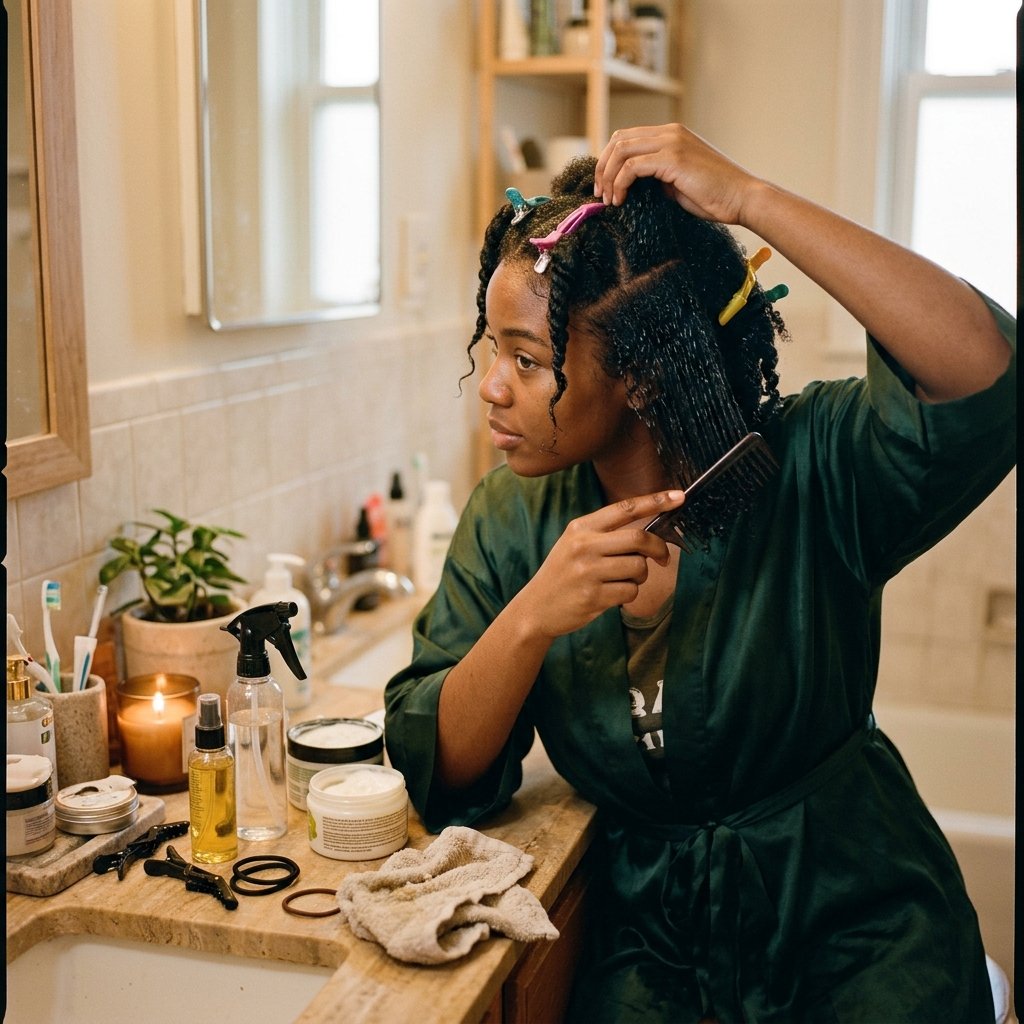
Never install a protective style on dry, tangled hair. That’s how you get breakage before the style even starts.
Start with clean, conditioned hair. Deep condition if your ends feel rough. Then detangle gently from ends to roots with a wide-tooth comb or your fingers.
Next, moisturize and seal. Use a leave-in, then a light oil or butter on your ends. I like to work in small sections so every strand gets love.
- Wash and deep condition
- Detangle gently in sections
- Apply leave-in, then seal with oil
Only style when hair is fully dry or slightly damp, depending on the style.
The Deep Moisture Reset

Before a long-wear style, give your hair a moisture reset. This is your best defense against dry winter air.
Use a deep conditioner with humectants and oils. Put on a plastic cap. Sit under a warm dryer for 15 to 20 minutes, or wrap your hair in a warm towel.
Rinse with cool water to seal the cuticle. Then wrap your hair in a soft microfiber towel. Don’t rub.
- Deep condition weekly before styling
- Use gentle heat for better penetration
- Rinse cool to seal moisture
Your hair will feel softer and style much easier.
Two-Strand Twists: The Cozy Classic

Two-strand twists are my go-to when I want a true protective style. They keep your ends hidden and your hair stretched.
You can do them on damp hair with a butter or cream for hold. Make them small for a longer wear, or chunky for a quick weekend style.
Twists look great on their own. You can also pin them into a faux bob or tuck them under a scarf.
- Low manipulation
- Keeps ends tucked away
- Works for fine to thick hair
Refresh with a little oil on your scalp and ends.
Flat Twists for Busy Weeks

Flat twists are perfect when you need something neat, fast, and protective. They lie close to your head, so hats and wigs sit easily.
Part your hair into sections. Apply a light cream or gel for hold. Twist each section close to the scalp, then continue down the length.
You can wear them as a style on their own, or tuck the ends into a bun. They also make a great base under a wig.
- Great under beanies and wigs
- Keeps hair stretched
- Lasts 1 to 2 weeks with care
Keep your scalp oiled, not greasy.
Chunky Box Braids for Dry Weather
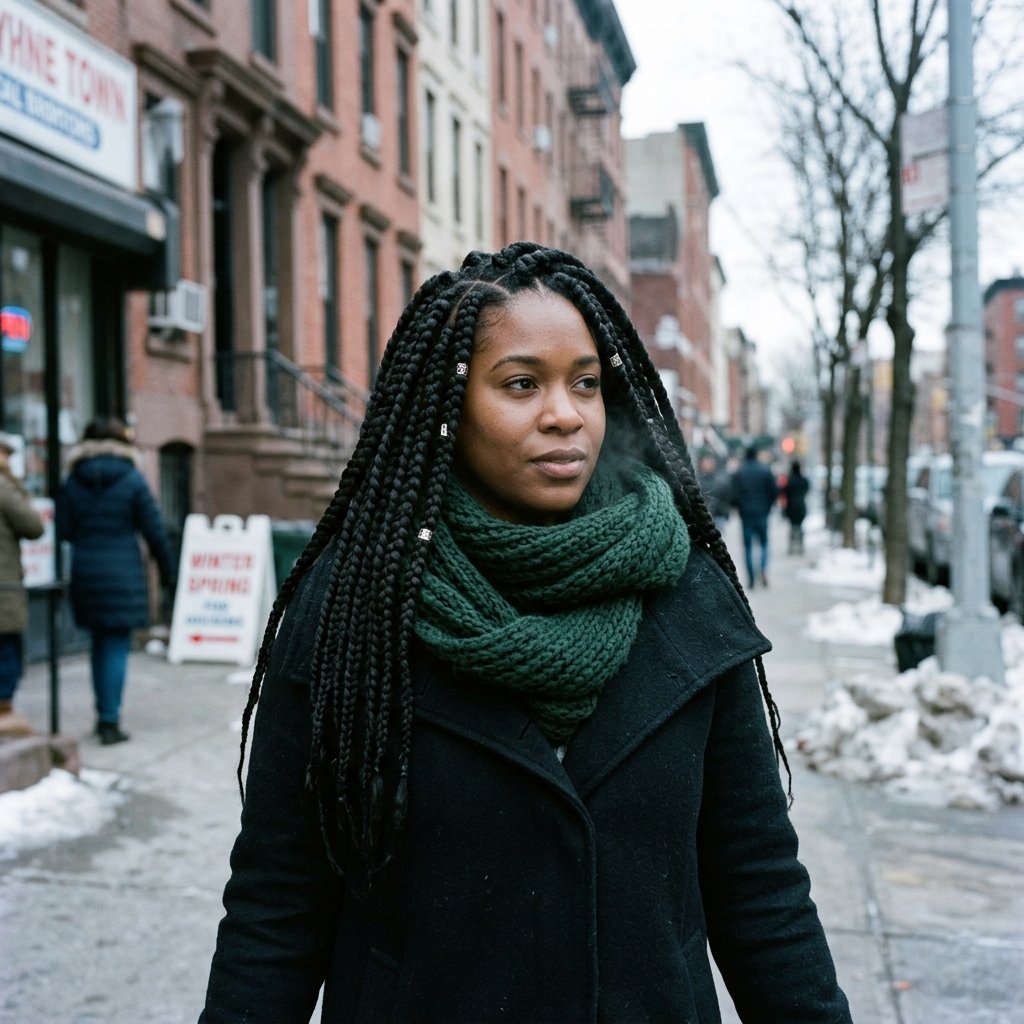
Chunky box braids are a winter favorite because they are quick, light, and gentle. They protect your ends while giving your hair a break.
Ask for braids that are not too tight. Tension can cause bumps, sore scalp, and thinning edges. You want comfort, not a facelift.
Use moisturizing braiding hair or pre-stretched hair. Dip your ends in hot water only if your hair can handle it.
- Choose chunky, not micro
- Keep tension low around edges
- Moisturize scalp weekly
Wrap at night with a satin scarf.
Knotless Braids That Don’t Pull
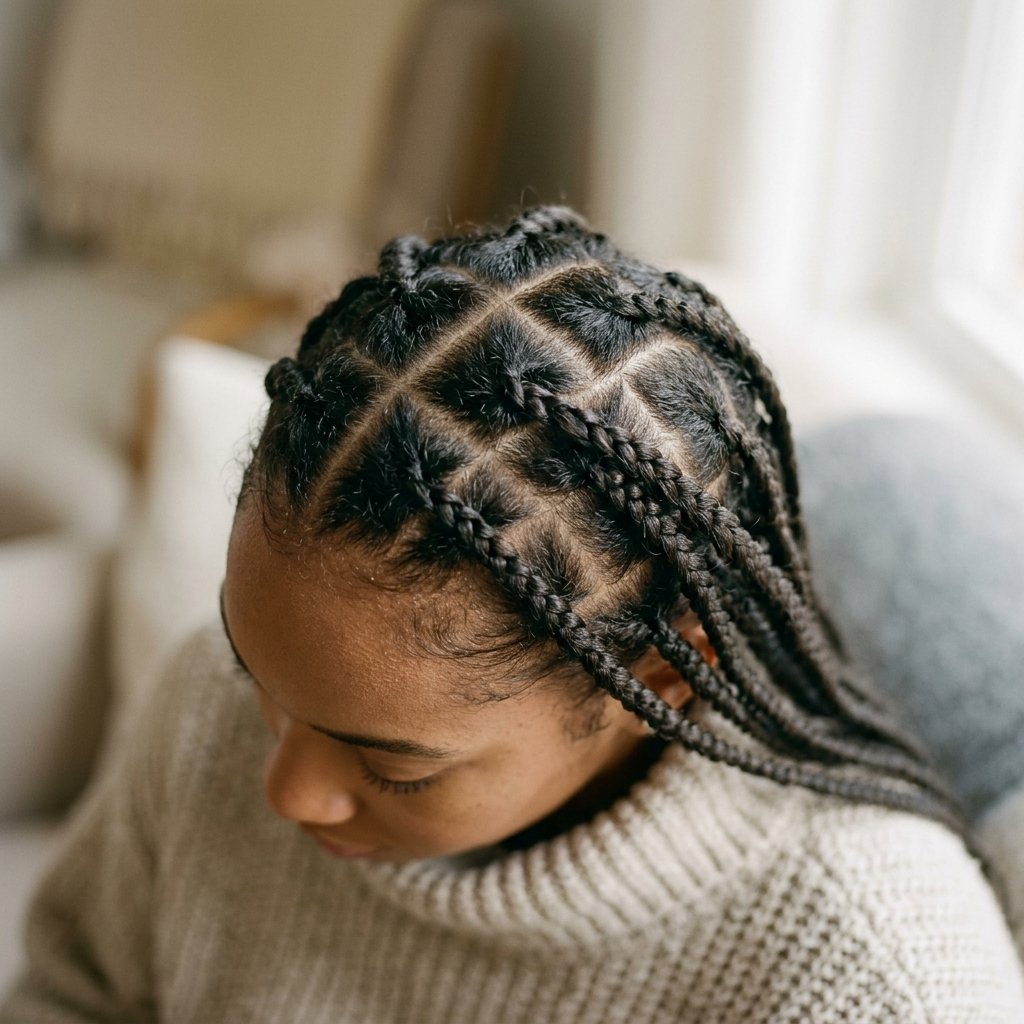
Knotless braids are a great protective option because there is no bulky knot at the root. That means less tension and a more natural fall.
They take longer to install, but they are worth it if your scalp is sensitive. Make sure your braider does not braid too tightly along your hairline.
Moisturize your scalp with a light oil. Spray your braids with a leave-in and water mix, then seal with oil.
- Less tension than traditional box braids
- Looks natural and soft
- Can last 4 to 6 weeks
Don’t leave them in too long.
Cornrows: Classic Cold-Weather Protection
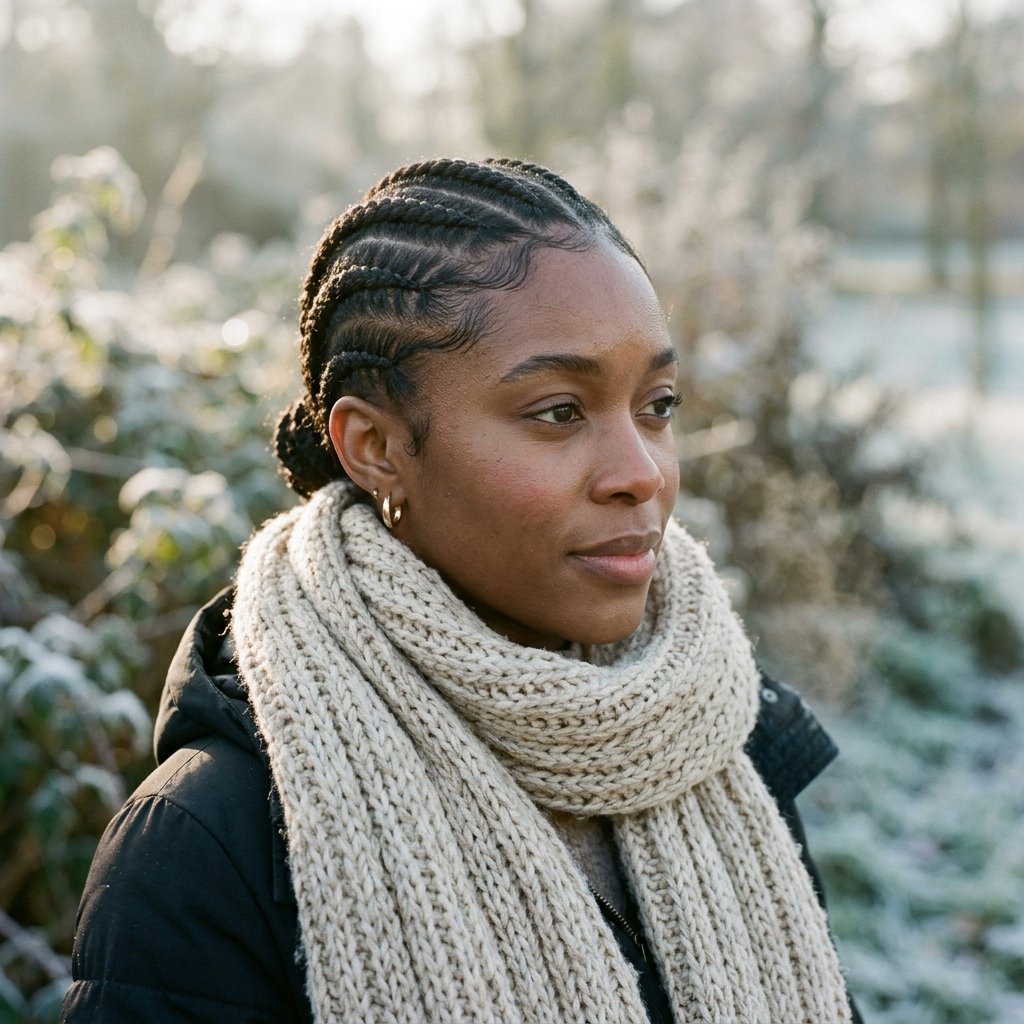
Cornrows are one of the oldest protective styles. They keep your hair flat, tucked, and safe from dry air.
You can do straight-back cornrows, side cornrows, or a braided crown. They work under hats, wigs, and headwraps without bulk.
Keep the braiding tension gentle. If your scalp is pulsing, it’s too tight. A little tension is fine, pain is not.
- Perfect under wigs and beanies
- Protects ends and reduces manipulation
- Can be styled in many patterns
Oil your scalp every few days.
Passion Twists for a Softer Look

Passion twists give you that soft, romantic look while still protecting your natural hair. They are lighter than many braids and have beautiful movement.
You can install them with water wave or French curl braiding hair. Keep the roots loose. Add moisture to your natural hair before you start.
They pair well with romantic goth hairstyles if you choose dark tones and loose, wispy ends. For a softer vibe, use brown or honey blonde.
- Lightweight and gentle
- Looks full and romantic
- Great for 2026 hairstyles
Refresh with a light oil mist.
Faux Locs Without the Heavy Weight

Faux locs can be a beautiful protective style, but heavy installations can stress your scalp. The key is to keep them light.
Choose softer, lighter hair. Ask for a loose root and not too many locs. You want movement, not a helmet.
Moisturize your scalp with a spray or oil. Keep your real hair braided or twisted underneath. Never let your natural hair stay wet for long.
- Use lightweight hair
- Keep roots loose
- Dry scalp thoroughly after washing
Take them down gently after 4 to 6 weeks.
Crochet Styles for a Quick Reset

Crochet styles are a fast way to protect your hair and change your look. Your natural hair is braided down, then hair is crocheted onto the braids.
This can be gentle if the braid base is not too tight. Choose a pattern that matches your desired look: curly, wavy, or straight.
It’s a great option for 2026 hairstyles because you can try a quiet luxury bob or a full curly look without cutting your real hair.
- Quick install
- Low manipulation for your ends
- Easy to switch up
Keep your scalp clean and moisturized.
Wigs and U-Part Wigs as Protective Layers

Wigs are protective when worn correctly. They cover your hair, reduce styling time, and protect your ends from cold air.
U-part wigs let you blend your own leave-out. Just make sure your leave-out is moisturized and protected at night. Flat twists or cornrows underneath are ideal.
Avoid glue or tight caps if your scalp is sensitive. Use a satin cap or wig grip. Take the wig off at night.
- Protects hair from weather
- Low daily manipulation
- Great for old money hair vibes
Give your scalp air breaks.
How to Wear a Quiet Luxury Bob Over Natural Hair

The quiet luxury bob is everywhere for 2026 hairstyles. You can wear it without cutting your natural hair.
Start with flat twists or cornrows. Make them smooth and small. Put on a wig cap, then a quality bob wig with a natural part.
Choose a length between chin and collarbone. Keep the color rich: dark brown, soft black, or warm caramel. Style with a middle part and a slight bend.
- Flat twist your hair first
- Use a satin cap under the wig
- Keep your edges moisturized
It’s old money hair with full protection.
Silky Headwraps and Beanies Without Breakage

Hats and scarves are necessary in winter, but they can rub your hairline raw. The trick is a satin or silk barrier.
Wear a satin-lined beanie, or tie a silk scarf under your hat. This reduces friction and keeps moisture from escaping.
Don’t pull hats too tight. Tight pressure can cause headaches and breakage. Choose loose knits and soft fabrics.
- Line hats with satin or silk
- Avoid rough wool directly on hair
- Keep edges free from tight pressure
Your hairline will thank you.
The Old Money Hair Approach to Winter

Old money hair is not about being fussy. It’s about looking polished, healthy, and effortless. In winter, that means smooth roots and protected ends.
Try flat twists into a low bun. Add a middle part. Tuck your ends under. Finish with a light oil for shine, not greasy buildup.
This look works with a quiet luxury bob wig or your natural texture. The goal is simple: neat, moisturized, and low manipulation.
- Sleek low bun
- Middle part
- Protected ends
It’s classic and cold-weather friendly.
Romantic Goth Hairstyles for Cold Months
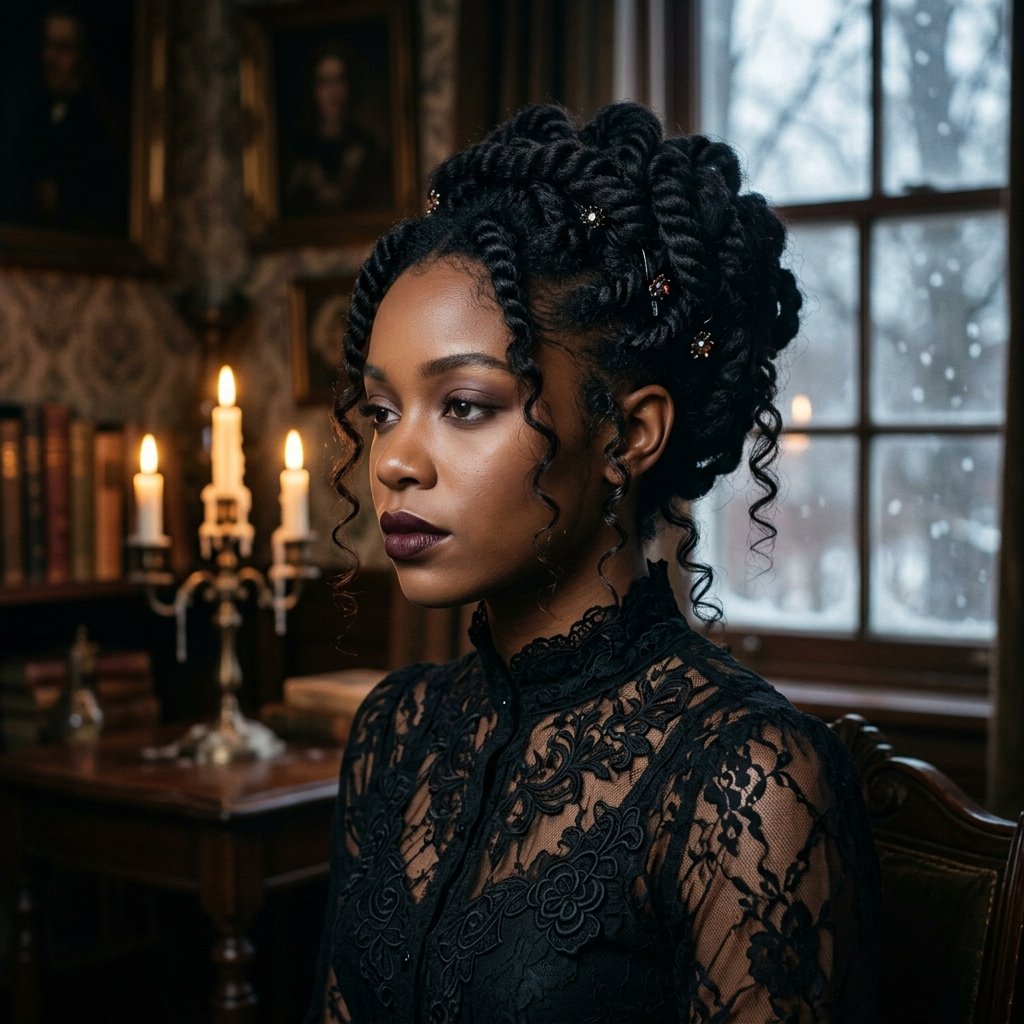
Romantic goth hairstyles can absolutely be protective. Think dark, soft, and moody, but with your ends tucked away.
Try two-strand twists pinned into a low romantic updo. Add a black satin ribbon. Or do flat twists with loose, wispy ends.
Keep the vibe soft, not stiff. Use a little shea butter for shine and a dry oil on your ends. If you wear a wig, choose a dark hime cut or long layered style.
- Twists pinned into an updo
- Black satin ribbons
- Dark, soft texture
Protective and poetic.
Glitchy Glam Hair With Protective Accents

Glitchy glam hair is fun, edgy, and very 2026 hairstyles. You can make it protective by starting with flat twists or cornrows.
Add metallic clips, silver cuffs, or a few colored braids. Keep your natural hair moisturized underneath. The accessories should sit on the style, not pull your scalp.
If you want a bigger look, pair flat twists with a glitchy glam wig. Just protect your hair with a satin cap underneath.
- Flat twists as the base
- Metallic clips and cuffs
- Satin cap under wigs
Playful but still protective.
Asymmetrical Lob and Vampire Haircut on Natural Hair
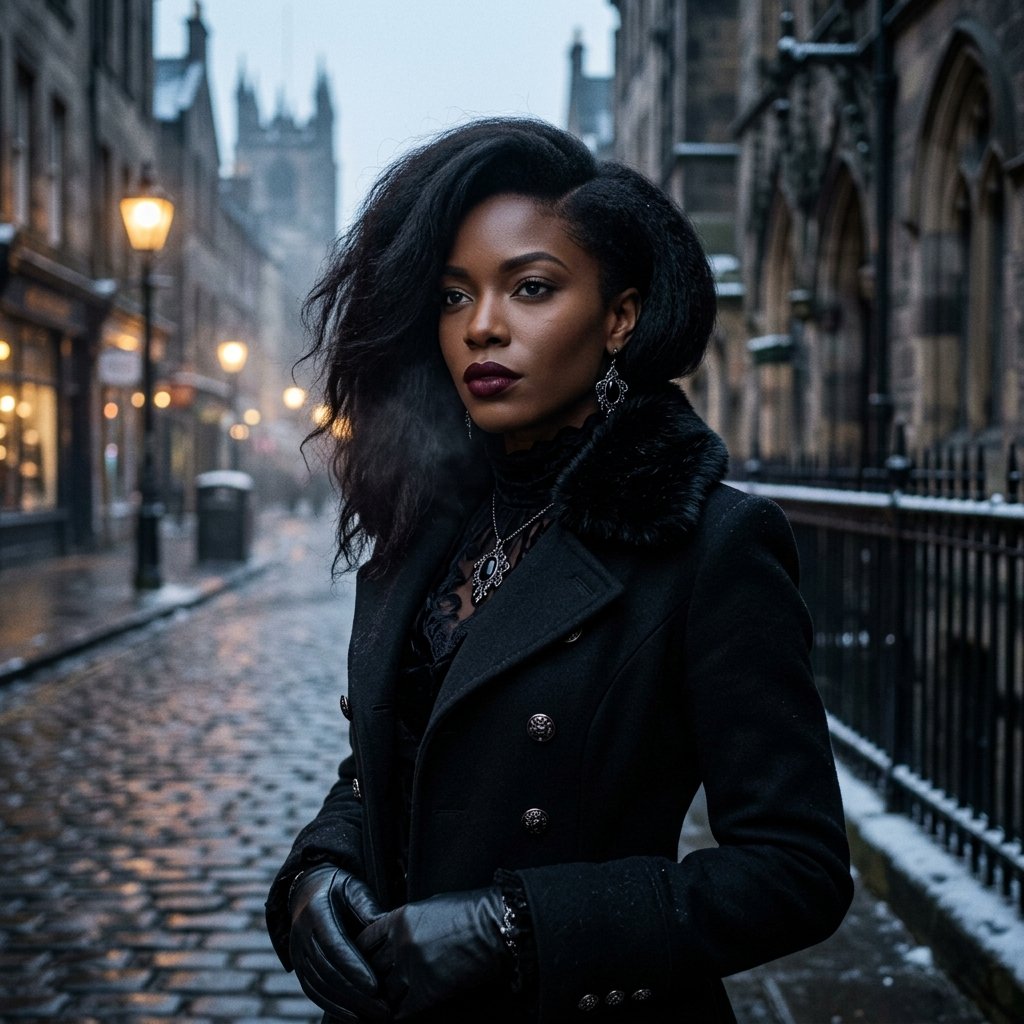
The asymmetrical lob and vampire haircut are trending, but they can be risky for natural hair in dry weather. The key is to protect your ends while wearing the shape.
Try a wig or U-part wig with an asymmetrical lob. Underneath, keep your hair flat-twisted and moisturized. For a vampire haircut vibe, choose a deep side part and sharp angles.
If you cut your real hair, commit to weekly deep conditioning and silk press protection. Avoid daily heat.
- Use wigs to test the shape
- Keep ends moisturized
- Limit heat styling
Trendy without the damage.
Hime Cut on Natural Hair Without Breakage
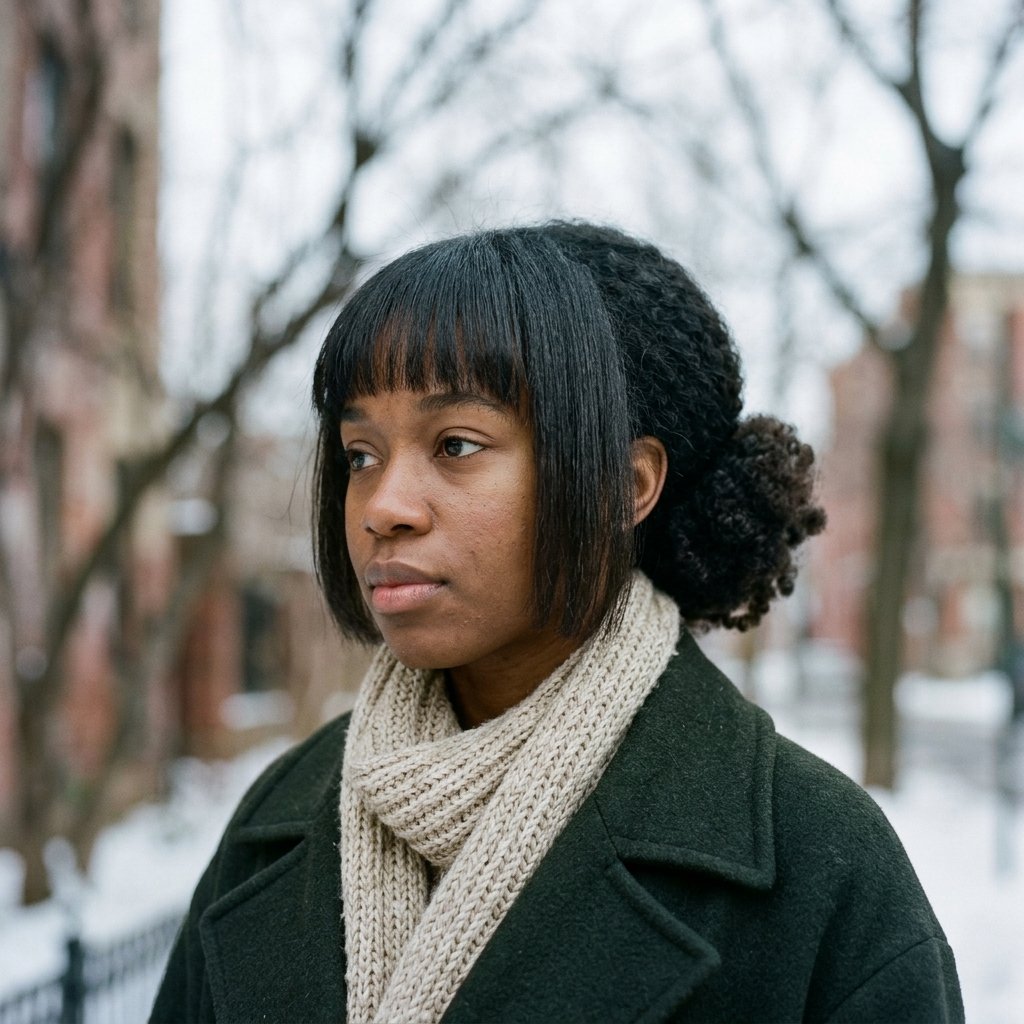
The hime cut is a Japanese style with straight side panels and a blunt fringe. On natural hair, you can wear a hime-cut wig for protection.
Underneath, flat twist your hair and keep it moisturized. If you want the look with your own hair, blow out small sections and wrap them at night.
Remember: direct heat can dry out natural hair. Use a heat protectant and keep it low. A wig is the safer winter move.
- Try a hime cut wig
- Flat twists underneath
- Limit direct heat
Cute, sharp, and protective.
Scalp Care While Protective Styling
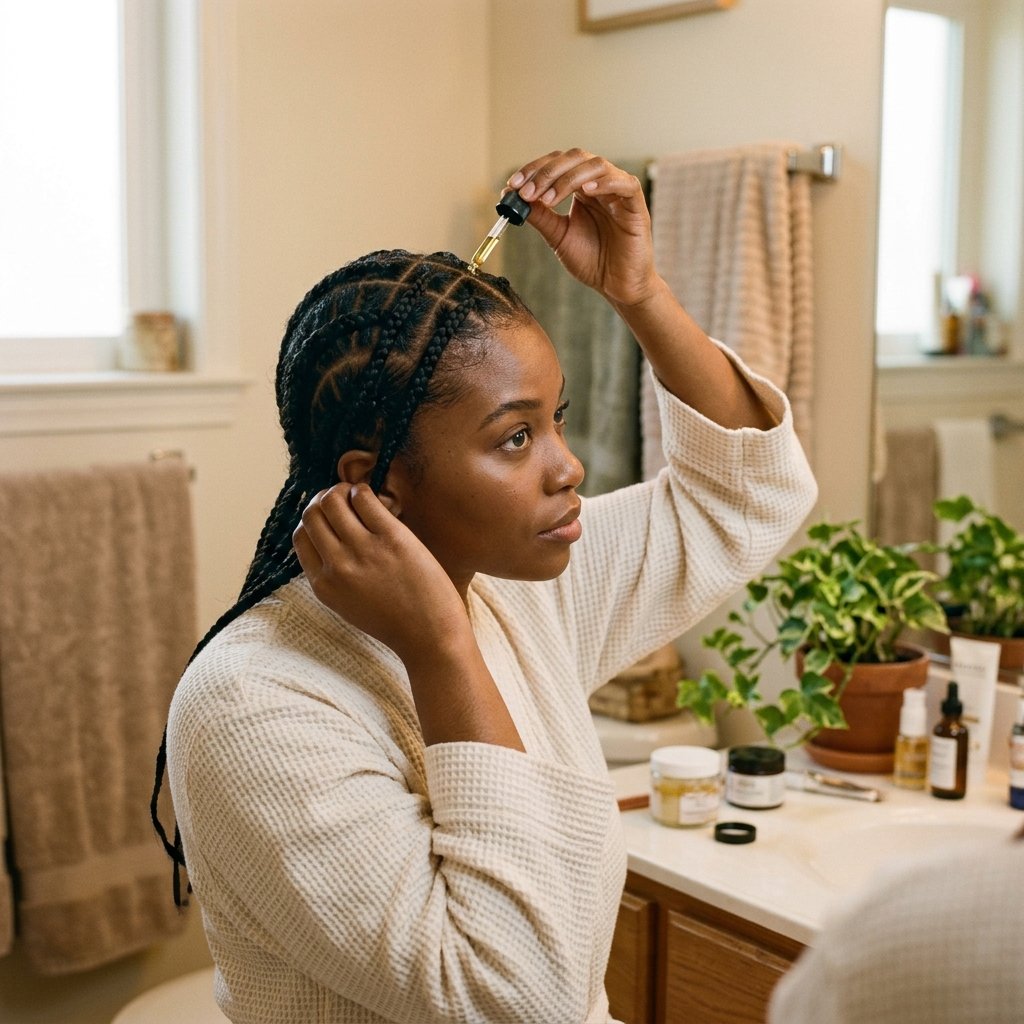
A protective style only works if your scalp stays healthy. Dry, itchy scalp can lead to scratching, flakes, and breakage.
Use a light oil or scalp serum once or twice a week. Part your style gently. Apply with clean fingertips or an applicator bottle.
Don’t scratch with sharp tools. If your scalp is irritated, take the style down. Health first, always.
- Oil scalp weekly
- Use gentle applicators
- Don’t ignore irritation
A happy scalp grows happy hair.
Night Routine That Saves Your Edges

Your night routine is where protective styles survive or fail. The goal is to reduce friction and keep moisture in.
Wrap your hair in a satin scarf or bonnet. If your style is bulky, use a satin pillowcase instead. Pineapple loose twists or braids on top of your head.
Don’t tie too tight. Tight edges at night can thin your hairline over time. Keep the wrap secure but comfortable.
- Satin scarf or bonnet
- Loose pineapple for long styles
- Satin pillowcase as backup
Your edges will stay fuller.
Refresh Dry Protective Styles Without Undoing Them

Protective styles can get dry after a week or two. You don’t need to take them down. You just need to refresh.
Mix water with a little leave-in conditioner in a spray bottle. Lightly mist your roots and ends. Then seal with a light oil.
Don’t saturate braids or twists. Too much water can cause mildew if they don’t dry. Focus on the scalp and your own hair at the parts.
- Mist with water and leave-in
- Seal with light oil
- Don’t soak the style
This buys you another week.
Take Down Without Breakage

Take down can cause more breakage than install if you rush. Go slow. Use your fingers first.
Apply oil to the ends and along the braid or twist. Let it sit for a few minutes. Then gently unravel from the bottom up. Don’t rip through tangles.
Detangle each section with conditioner. Finger detangle first, then use a wide-tooth comb. Follow with a deep condition.
- Oil before take down
- Unravel from the bottom
- Deep condition after
Patience protects your progress.
Mistakes to Avoid in Cold Dry Weather

Some winter hair mistakes are easy to fix. Avoiding them saves you months of recovery.
Don’t install styles too tight. Don’t leave braids in for months. Don’t use heavy products that block moisture. Don’t skip deep conditioning.
Also, don’t go outside with wet hair. Cold air plus wet strands can cause breakage. Dry your hair fully before you leave.
- Too tight styles
- Long wear without washing
- Wet hair in freezing air
- Skipping moisture
Simple changes, big difference.
How Long Should You Keep a Protective Style?

A protective style is not meant to stay forever. Most styles last 2 to 6 weeks. It depends on your hair, scalp, and style.
If your scalp itches, burns, or flakes, take it down sooner. If your edges feel sore, take it down. If the style is slipping, refresh or remove it.
I usually keep braids and twists for 4 weeks. Wigs I wear for a few days at a time. Listen to your hair.
- Twists: 2 to 4 weeks
- Braids: 4 to 6 weeks
- Wigs: take off nightly
Don’t push it.
When to Give Your Hair a Break

After a long protective style, your hair needs a reset. Plan a week or two of loose, low-manipulation styles.
Wear a wash-and-go, a twist-out, or a simple bun. Deep condition. Trim if your ends are rough. Let your scalp breathe.
This break prevents buildup and tension. It also helps you check for thinning edges or dryness. Then you can install your next style with confidence.
- Deep condition
- Trim rough ends
- Wear loose styles
Your hair will bounce back stronger.
Products I Reach For in Winter
I keep my winter routine simple. You don’t need twenty products. You need moisture, sealant, and protection.
Look for a leave-in with glycerin or aloe. Use a light oil like jojoba or grapeseed. For heavier sealing, shea butter or castor oil on ends.
For washing, use a gentle shampoo and a deep conditioner. For nights, a satin scarf or bonnet. That’s it.
- Leave-in conditioner
- Light oil for scalp
- Butter or heavy oil for ends
- Satin scarf or bonnet
Consistency beats expensive products.
A Warm Little Send-Off
Cold and dry weather does not have to mean broken hair. With the right prep, a comfortable protective style, and a simple night routine, your natural hair can thrive all winter.
Remember: moisture is your best friend, tension is not. Choose styles that fit your life, keep your scalp clean and oiled, and give your hair breaks between installs.
You’ve got this. Your hair will thank you in spring.
Save this post to Pinterest so you can find these protective styles when winter hits. And tell me in the comments: what’s your go-to cold-weather protective style? I love hearing from you.

