
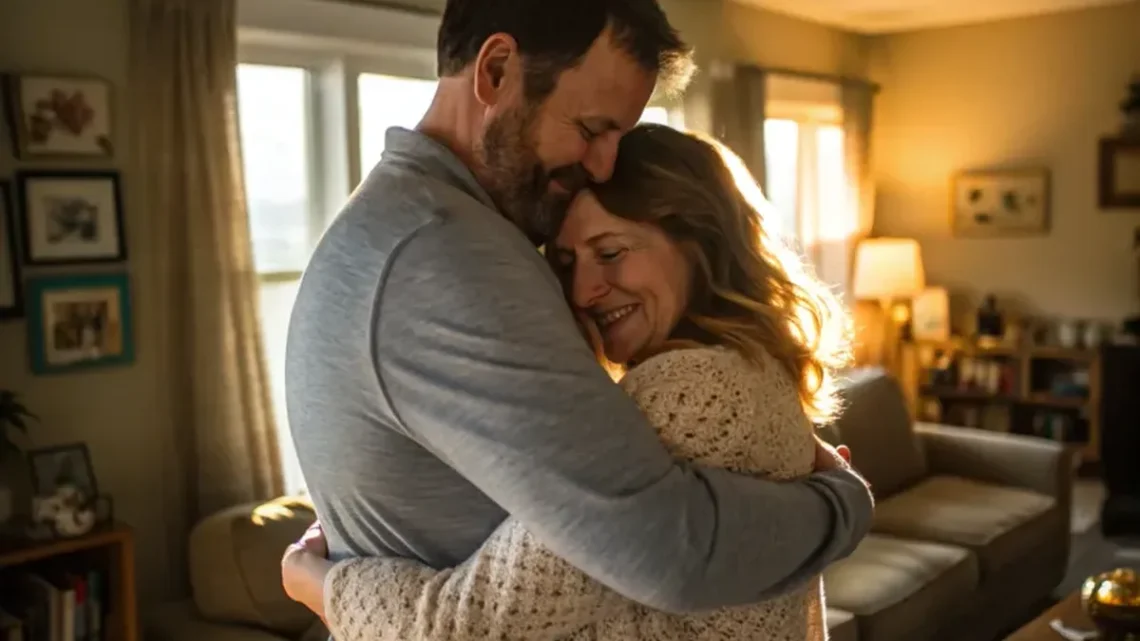
Learning how to support a partner with anxiety can feel overwhelming at first, especially when the person you love is hurting and you are not sure what will help. You may worry about saying the wrong thing, doing too much, or doing too little. The good news is that supporting a partner with anxiety is not about having perfect answers. It is about showing up with patience, listening well, and learning a few gentle habits that make everyday life feel safer for both of you.
Anxiety affects millions of couples, and it touches everything from morning routines to money, holidays, and sleep. It can make small decisions feel enormous and turn a quiet evening into a spiral of what-ifs. But it does not have to define your relationship. With the right approach, couples often find that facing anxiety together brings them closer, not further apart — because it teaches them to communicate honestly, to be patient with each other, and to celebrate small wins.
This guide brings together practical, everyday ways to support your partner — from the words that comfort and the habits that build calm, to the boundaries that protect you both and the moments when extra help is worth seeking. You do not need to use every idea here. Start with one or two that feel natural, try them for a week, and see what helps. Small, steady steps are how real change happens in a relationship.
What Anxiety Feels Like From the Inside
Anxiety is not just worrying a little too much. For the person living with it, it can feel like a radio that never quite turns off — a stream of what-ifs about work, health, money, and the people they love. Their heart may race over a text left unanswered, or their mind may replay a small mistake for hours. From the outside, everything can look fine. Inside, it can feel loud and exhausting.
It helps to remember that anxiety is not a choice, and it is not a character flaw. Your partner is not being difficult on purpose when they double-check the locks, ask the same question twice, or need extra reassurance before a big day. Those habits are often their way of trying to feel safe in a world that feels uncertain. When you see the behaviour as a signal rather than a problem, your response naturally becomes gentler.
You do not need to fully understand what it feels like to be helpful. You only need to believe them when they describe it, and to stay curious instead of dismissive. A simple sentence like ‘Tell me what this feels like for you’ can open a door that advice never will.

Why Steady Support Matters More Than Fixing It
When someone you love is anxious, the urge to fix it is strong. You want to solve the problem, offer the perfect plan, and make the worry go away. But anxiety rarely disappears because someone found the right argument against it. What helps most, again and again, is a steady presence — someone who stays, listens, and does not rush the feeling away.
Steady support looks ordinary from the outside. It is making tea without being asked, sitting nearby while they work through a hard thought, or saying ‘I’m here’ and meaning it. It is not dramatic, and it does not need to be clever. Over time, that reliability becomes something your partner can lean on, even on days when their own thoughts feel unreliable.
There is also a quiet gift in not fixing everything. When you resist the urge to take over, you are telling your partner that you trust them to cope, with you beside them. That trust builds confidence slowly, one small moment at a time, and it keeps the relationship balanced instead of turning one person into the rescuer and the other into the person who always needs rescuing.
If you are unsure whether to step in or step back, ask a simple question: ‘Would you like my help with this, or would you rather I just sit with you?’ The answer tells you exactly what your partner needs in that moment, and it keeps the choice in their hands. Over time, asking first becomes second nature, and your partner learns that your support will never steamroll their independence.

Signs Your Partner Might Be Struggling
Anxiety does not always announce itself. Sometimes it shows up as restlessness, trouble sleeping, or a sudden need to cancel plans. Sometimes it looks like irritability over small things, or like checking a phone again and again. Your partner may become unusually quiet, or unusually busy, filling every minute so there is no space left to worry.
Physical signs matter too. A tight chest, a churning stomach, headaches, or feeling tired despite sleeping can all travel with anxiety. If your partner mentions these often, or if you notice them avoiding things they used to enjoy, it is worth paying gentle attention rather than brushing it aside as a bad week.
The kindest way to raise what you notice is to describe it without judgement. Try ‘I’ve noticed you’ve been sleeping badly this week — how are you feeling about it?’ rather than ‘You’re always anxious.’ The first opens a conversation; the second can feel like an accusation. You are not diagnosing anything. You are simply saying, I see you, and I’m here.

Everyday Ways to Help Without Hovering
Support works best when it is woven into ordinary life, not saved for crises. Small, practical help — cooking dinner on a hard evening, handling a phone call they dread, or simply keeping the house a little calmer — can lower the day’s load without making your partner feel watched or managed.
Ask what actually helps, because the answer changes from day to day. On one day your partner may want company; on another, they may want an hour alone to reset. A quick ‘Would you like help, company, or space right now?’ respects their judgement and stops you guessing. It also keeps you from hovering, which can accidentally add pressure.
Routines help too. A regular walk together, a shared meal without phones, or a short evening wind-down can give anxious days a predictable shape. You do not need a perfect system. A few steady anchors in the day are often enough to make the rest feel more manageable.

Words That Comfort — and Words That Can Sting
The words you choose matter more than you might think. Phrases like ‘I’m here with you’, ‘We’ll get through this together’, and ‘Take your time — there’s no rush’ tell your partner they are safe with you. They do not argue with the worry; they stand beside the person carrying it.
Some well-meant phrases can sting, even when they come from love. ‘Just relax’, ‘You’re overthinking it’, or ‘There’s nothing to worry about’ can make your partner feel unheard, as if their feelings have been dismissed. They may stop sharing, not because the anxiety is gone, but because they have learned it is safer to hide it.
If you catch yourself saying the wrong thing, repair it quickly and kindly. ‘That came out wrong — what I meant was, I’m here’ goes a long way. Nobody gets this right every time. What matters is that your partner knows you are trying, and that your words, on balance, make home feel safer.
It also helps to learn your partner’s favourite phrases — the words that genuinely calm them. Some people love hearing ‘We’ve handled hard things before’, while others prefer a simple ‘I’m not going anywhere’. Ask on a calm day which words help most, and keep those in your pocket for the harder ones.

What to Avoid When Anxiety Spikes
When anxiety spikes, the room can feel charged. Your partner may speak sharply, go quiet, or seem unreasonable about something small. In that moment, the most helpful thing you can do is slow down rather than match their pace. Raising your voice, arguing the facts, or demanding a decision right now usually makes the spiral tighter.
Avoid turning the moment into a lecture about coping. A spike is not the time for a long talk about breathing techniques or a reminder of what the therapist said. It is the time for calm, short sentences and a steady tone. ‘I’m right here. Let’s sit for a minute.’ is often more useful than any explanation.
Also avoid making big decisions in the middle of a spike — cancelling a trip, ending a conversation, or promising something you cannot keep. Wait for the wave to pass, then talk it through together when you are both calmer. The problem will still be there, and you will both be better able to meet it.

Small Daily Habits That Build Calm Together
Calm is not built in one big gesture. It grows from small habits repeated most days. A morning check-in over coffee, a walk after dinner, or ten quiet minutes before bed can become anchors your partner counts on. They do not need to be long or elaborate to work.
Try choosing one or two habits together, rather than imposing a whole new routine. Maybe it is a short walk, a shared playlist while you cook, or a rule that phones go away during dinner. When your partner helps choose the habit, they are far more likely to keep it — and it becomes something you share, not something you manage for them.
Be patient with the pace. Some weeks the habits will hold, and some weeks they will fall apart. That is normal. The point is not perfection; it is returning to the habit gently, without blame, when life gets in the way. That return, again and again, is what builds trust.

When to Seek Extra Help Together
There comes a point where love and good habits, on their own, are not quite enough — and that is nothing to be ashamed of. If anxiety is stopping your partner from working, sleeping, eating well, or enjoying life for weeks at a time, it may be time to seek extra help together, from a doctor, a therapist, or a counsellor.
Raising the idea gently makes all the difference. ‘I think talking to someone could make this lighter for you — would you like me to help find someone?’ feels very different from ‘You need therapy.’ Offer to help with the practical steps, like finding a therapist or going along to a first appointment, if that would help.
Getting help is not a failure of the relationship. It is the relationship working well — two people noticing that something is heavy and deciding to carry it with more support. Many couples find that therapy, whether together or for one partner, brings them closer rather than pushing them apart.

Listen First, Fix Second
Most of us listen with a solution already forming in our heads. When your partner is anxious, try the opposite: listen first, and let the fixing wait. Put your phone down, turn toward them, and let them finish. Sometimes the simple act of being fully heard is the whole help they needed.
You can show you are listening with small signals — a nod, a soft ‘mm-hm’, or repeating back what you heard in your own words. ‘So the meeting tomorrow feels huge because your boss will be there — is that right?’ That kind of reflection tells your partner they have been understood, not just heard.
If a solution is needed, ask before offering one. ‘Would it help if we talked through a plan, or do you just want me to listen right now?’ This one question prevents most of the friction couples feel in these moments, because it respects what your partner actually wants from you.

The Two-Minute Check-In That Changes the Day
A two-minute check-in is one of the simplest habits a couple can build. Each morning, or each evening, ask each other two questions: ‘How are you feeling today?’ and ‘Is there anything I can do to make today easier?’ Two minutes, no phones, no fixing — just a brief moment of honesty.
The power of this habit is in its regularity. Your partner does not have to wait for a crisis to tell you they are struggling, because there is already a daily slot for it. Small worries get shared while they are still small, instead of growing quietly for a week.
Keep it light and consistent. Some days the answer will be ‘I’m fine, just tired.’ Other days it will open a longer conversation. Either way, you have shown up. Over weeks and months, those two minutes become a thread of trust that holds the relationship together on harder days.

Breathing Together Without Making It a Lesson
Breathing exercises help many people with anxiety, but nobody likes being lectured about them mid-worry. The trick is to make breathing something you do together, quietly, rather than something you instruct your partner to do. Sit beside them, slow your own breathing, and let them match your pace naturally.
You might say, ‘Let’s just sit and breathe for a minute together,’ in a calm, ordinary voice. No counting out loud, no explaining the science, no pressure to do it perfectly. If your partner joins in, wonderful. If they do not, that is fine too — your calm presence is already doing some of the work.
Over time, this shared pause can become a familiar signal. Your partner learns that when you suggest a quiet minute, it means you are with them, not correcting them. That shared rhythm — two people breathing slowly side by side — can steady a shaky moment better than any advice.

A Calm Morning Routine for Anxious Days
Mornings can be the hardest part of an anxious day. The mind wakes up already racing, and the rush to get ready only adds fuel. A calm morning routine — even a short one — can change the shape of the whole day for your partner.
Build the routine together, keeping it realistic. It might be ten minutes of quiet coffee before the news, a short walk, or simply getting clothes and bags ready the night before so the morning is not a scramble. The goal is fewer decisions and less hurry, not a perfect wellness schedule.
Protect the routine gently. If one morning falls apart, do not treat it as a failure. Just return to it the next day. A calm morning is a gift you give each other, and like all gifts, it works best when it is offered warmly rather than enforced.

What a Panic Moment Actually Needs
A panic moment can look frightening from the outside — fast breathing, shaking, tears, or a sudden need to leave. Your partner may feel as if something terrible is happening, even when they know, logically, that they are safe. In that moment, they need calm more than they need explanations.
Stay close, speak slowly, and keep your sentences short. ‘I’m here. You’re safe. This will pass.’ Repeat it as needed, in the same steady voice. Offer a glass of water, a hand to hold, or a quiet place to sit. Do not ask complicated questions or demand that they explain what is wrong.
After the moment passes, do not rush into a debrief. Let your partner rest, and talk about it later when they feel steady. What they will remember is not what you said, but that you stayed — calm, kind, and close by.
It can also help to agree on a simple plan for panic moments in advance, on a calm day. Knowing where to sit, what to say, and who to call if it lasts a long time takes the guesswork out of a frightening moment. Your partner may never need the plan, but having one can make you both feel more prepared and less afraid.

Grounding With the Five Senses
Grounding is a simple way to bring a racing mind back to the present moment, and it works best when it feels like a shared activity rather than a technique. The five-senses version is easy: name five things you can see, four you can touch, three you can hear, two you can smell, and one you can taste.
Try it together on a walk or in the garden. Point out the tree, the breeze, the smell of rain, the texture of a stone. Doing it side by side makes it feel like a walk with a purpose, not a therapy exercise. Your partner can join in as much or as little as they like.
Grounding does not cure anxiety, and it does not need to. It simply gives the mind something real to hold onto for a few minutes. That small anchor, offered at the right moment, can be enough to let the worst of a wave pass.

The Reassurance Trap — and a Kinder Alternative
It is natural to reassure someone you love. ‘It will be fine, I promise’ feels like the kindest thing to say. But when reassurance is asked for again and again, it can quietly become a habit that anxiety feeds on — each answer brings relief for a minute, then the worry returns, a little louder.
A kinder alternative is to acknowledge the worry without trying to erase it. ‘I can see this feels really uncertain, and it’s okay to feel unsure’ validates the feeling while leaving room for your partner to sit with it. Over time, tolerating a little uncertainty builds real confidence.
This does not mean never reassuring your partner. It means noticing when reassurance has become a loop, and gently changing the pattern together. Talk about it when you are both calm: ‘I’ve noticed we go round in circles on this one — shall we try a different way?’

Helping With Decisions When Everything Feels Big
Anxiety can make even small decisions feel enormous. Choosing a restaurant, replying to an email, or picking a date for a visit can become a maze of what-ifs. Your partner is not being indecisive on purpose — their mind is weighing every possible outcome at once.
You can help by shrinking the decision. Offer two clear options instead of an open question: ‘Shall we go to the Italian place or cook at home?’ Narrowing the field makes the choice feel possible again. For bigger decisions, break them into small steps and tackle one step at a time.
Also be patient with the time it takes. Rushing a decision rarely helps, and it can add shame to the worry. If you can, say so plainly: ‘There’s no rush — we can decide tomorrow.’ That sentence alone can take the pressure down several notches.

Sleep, Anxiety and the Night-Time Spiral
Night is when anxiety often gets loudest. The day’s distractions fall away, and worries that were manageable at noon can feel enormous at midnight. If your partner lies awake replaying conversations or imagining worst cases, they are not alone — and they are not doing it on purpose.
A gentle wind-down routine can help. Dim the lights an hour before bed, put phones away, and do something calm together — a cup of herbal tea, a few pages of a book, or a short chat about something pleasant. Avoid problem-solving late at night, when everything feels harder than it is.
If your partner is awake and spiralling, a quiet presence helps more than advice. A hand on their back, a soft ‘I’m here, try to rest’, and no pressure to sleep can be enough. If sleepless nights become a regular pattern, it is worth raising with a doctor together.

Food, Caffeine and the Jittery Afternoon
What we eat and drink can quietly feed anxiety. Too much caffeine, skipped meals, or a day running on sugar can leave anyone jittery — and for someone already anxious, that jitter can feel like the start of a spiral. You do not need to police your partner’s diet, but gentle, shared changes can help.
Try simple swaps together: a herbal tea in the afternoon instead of a third coffee, a proper lunch instead of skipping it, or a glass of water before the next cup. Framing it as something you do together keeps it from feeling like a lecture about their habits.
Notice the pattern without making it a rule. If your partner feels calmer on days with less caffeine, they will notice it too. Your role is to make the calmer option easy — a pot of tea ready, a snack in the bag — not to turn food into another source of worry.

Movement as a Shared Reset
Movement is one of the most reliable ways to ease anxiety, and it works even better when it is shared. A walk, a stretch, a dance in the kitchen, or a bike ride together can shift the mood of a whole evening. It does not need to be intense or long to help.
The key is to keep it low-pressure. Invite, do not insist: ‘Shall we take a walk after dinner?’ If your partner says no, accept it kindly and try again another day. Movement offered as a pleasure works; movement offered as a prescription often meets resistance.
Over time, a regular walk or shared activity becomes more than exercise. It becomes a time when conversation flows more easily, when worries get aired naturally, and when the two of you reconnect. Many couples find their best talks happen side by side, on the move.

A Safe Word for Hard Days
A safe word sounds playful, but it can be a genuinely useful tool. Agree on a word or phrase your partner can use when they are struggling and do not have the energy to explain. It might be ‘red day’, ‘stormy’, or something silly that only the two of you understand.
When your partner uses the safe word, you know what it means: be gentle, keep things simple, and do not ask for big decisions today. It saves them from having to find the words when words are the hardest thing, and it saves you from guessing.
Choose the word together on a good day, and agree on what it means in practice. Maybe it means a quiet evening, a takeaway instead of cooking, or simply extra patience. The word itself does not matter — what matters is that it gives your partner a shortcut to being understood.

When Plans Change at the Last Minute
Anxiety and last-minute changes do not mix well. A cancelled plan, a sudden visitor, or a change of venue can feel overwhelming to someone who has spent the day preparing mentally. Your partner may seem upset out of proportion — but for them, the ground has just shifted.
Help by giving as much warning as you can, and by offering a clear new plan. ‘The dinner is moved to Friday — same place, same people, just a different day’ is far easier to hold than an open-ended change. A little extra detail goes a long way.
If your partner needs to cancel, support the decision without guilt. ‘It’s fine, we’ll go another time’ said warmly is worth more than any pep talk. Plans can be remade; trust, once damaged by pressure, is harder to repair.

Social Plans and the Quiet Exit Plan
Parties, weddings, and big family gatherings can be daunting for someone with anxiety. The noise, the small talk, and the feeling of being watched can build up quickly. Having a quiet exit plan agreed in advance can make the difference between going and staying home.
Agree on the plan before you arrive: how long you will stay, a signal for ‘I’d like to go soon’, and a graceful way to leave. Knowing there is a way out makes it much easier to walk in. Your partner is not being rude — they are managing their energy.
At the event, check in quietly. A squeeze of the hand, a short walk outside together, or a few minutes in a quiet corner can recharge them. And if they need to leave early, leave with them, without a fuss. That loyalty is what they will remember.

Money Worries Without the Blame
Money is one of the most common sources of anxiety, and one of the hardest to talk about. When your partner worries about bills, savings, or job security, the worry can sound like criticism or pessimism — but it is usually fear, not blame.
Talk about money as a team, at a calm time, with the numbers in front of you. A simple shared budget, a list of what is coming in and going out, can turn a vague dread into something concrete and manageable. You do not need to solve everything in one sitting.
Avoid turning money talks into blame. ‘We overspent’ is very different from ‘You always overspend.’ Keep the language on the shared side, celebrate small wins like paying off a bill, and remember that the goal is to feel safer together, not to win an argument.

Work Stress Spilling Into Home
Work stress rarely stays at work. It comes home in the form of short tempers, distracted evenings, and a mind that cannot switch off. If your partner’s job is feeding their anxiety, the evenings can start to feel like an extension of the office.
A small ritual can help mark the end of the working day. Changing clothes, a short walk, or ten minutes of quiet before dinner can signal to the mind that work is over. Offer it as a shared habit, not a rule — something you both do, not something you impose.
Listen to the work worries without trying to solve the job. Often your partner just needs to tell someone about a difficult boss or an impossible deadline. Once it is spoken aloud, it loses some of its power. Then, gently, help them leave it at the door for the evening.

The Art of Sitting Beside, Not Across
There is a small, powerful difference between sitting across from someone and sitting beside them. Across can feel like an interview; beside feels like a team. When your partner is anxious, try sitting next to them — on the same side of the table, on the same end of the sofa.
Side by side, you are both facing the same direction, looking at the problem together rather than at each other. Conversations flow more easily, silences feel less awkward, and a hand can rest quietly in theirs without it becoming a big gesture.
It sounds simple because it is simple. But many couples find that this one small change — choosing the seat beside, not opposite — makes hard conversations noticeably easier. Try it on your next walk, your next drive, or your next difficult talk.

Touch That Soothes — Holding Hands and More
Gentle touch can calm an anxious nervous system in a way words sometimes cannot. A hand held, an arm around the shoulders, or a hand resting on the back can say ‘I’m here’ more clearly than any sentence. It is a quiet, physical reassurance.
Pay attention to what your partner finds soothing. Some people love a long hug; others prefer a brief squeeze of the hand or a light touch on the arm. Ask, and watch their response. The right touch is the one they welcome, not the one you assume they want.
Touch also works in small moments — a kiss on the forehead before work, a hand on their knee during a difficult call, or simply sitting close enough that your shoulders touch. These small contacts build a sense of safety that lasts long after the moment has passed.

Text Messages That Land Well
When you are apart, a text can be a small lifeline. A message that lands well is warm, specific, and undemanding: ‘Thinking of you — hope the meeting goes well’ or ‘No rush to reply, just wanted you to know I’m here.’ It says you care, without adding a task.
Avoid texts that demand reassurance or pile on pressure: ‘Why haven’t you replied?’ or a string of worried messages can make an anxious partner feel worse. If you are worried, say so plainly and kindly, once, and give them time to respond.
A good habit is to send one kind message a day, with no reply required. Over time, those messages become a thread your partner can look back on when they are having a hard day — proof, in their own phone, that someone is thinking of them.

What to Do After an Argument Sparked by Anxiety
Arguments sparked by anxiety often leave both people feeling bruised. Your partner may have said something sharp, or withdrawn completely, and you may feel hurt or confused. The repair matters more than the argument itself.
Give the moment space first. A short pause — a walk, a glass of water, a few minutes apart — lets tempers cool. Then come back together and talk about what happened, not who was right. ‘That got heated — can we talk about what was underneath it?’ opens the door gently.
Apologise for your part, even if it feels small. ‘I’m sorry I raised my voice’ costs little and heals a lot. Then, together, look at what triggered the spiral, and what you could both do differently next time. Repair is not a single conversation; it is a habit.
Watch for the pattern, not just the incident. If arguments keep starting the same way — late at night, when one of you is tired, or around the same topic — that pattern is useful information. Naming it together, without blame, lets you both step in earlier next time, before a small worry becomes a big row.

Apologising Without Over-Apologising
Anxiety can make a person apologise for everything — for being worried, for needing help, for taking up space. If your partner says sorry constantly, it is often a sign they are afraid of being too much. Gentle reassurance helps more than accepting every apology.
When you need to apologise yourself, keep it simple and sincere: ‘I’m sorry I snapped — you didn’t deserve that.’ Then stop. Long, repeated apologies can make the other person feel they have to comfort you, which flips the roles.
Help your partner practise a lighter alternative. ‘Thank you for being patient with me’ often works better than ‘Sorry I’m like this.’ It turns a moment of shame into a moment of gratitude — and gratitude is a much kinder place for a relationship to live.

Keeping Your Own Cup Full
Supporting a partner with anxiety is real work, and it can be tiring. If you run yourself empty, you will have nothing left to give — and resentment can creep in quietly. Looking after yourself is not selfish; it is part of looking after the relationship.
Keep your own anchors: a friend you can talk to, a hobby that is yours alone, a walk, a workout, or simply an hour to yourself each week. You do not need to feel guilty for enjoying time apart. A partner who is rested and steady is a far better support than one who is exhausted.
If you feel overwhelmed, say so honestly and kindly. ‘I love supporting you, and I need a little rest today too’ is a fair and loving sentence. Two people looking after each other — including themselves — is what a strong relationship looks like.

Boundaries That Protect Both of You
Boundaries are not walls; they are agreements that keep a relationship healthy. When one partner has anxiety, boundaries matter even more, because without them, support can slowly turn into over-involvement, and love can start to feel like control.
Agree on boundaries together, on a calm day. Maybe it is that you will not cancel your own plans every time your partner is anxious, or that late-night worry talks stop at a certain hour so you can both sleep. Saying these things in advance, kindly, prevents resentment later.
Hold the boundary gently and consistently. ‘I love you, and I’m going to bed now — we’ll talk about this in the morning’ is not rejection. It is care for both of you. A boundary kept with love protects the relationship far better than one abandoned out of guilt.

Celebrating Small Brave Steps
Anxiety makes ordinary things brave. Going to a party, making a phone call, or speaking up in a meeting can be a real achievement for someone who lives with worry. Noticing and celebrating those steps — without making a fuss — can build confidence faster than any pep talk.
Keep the celebration warm and specific: ‘You handled that call really well — I know it wasn’t easy.’ That kind of praise tells your partner you see the effort, not just the outcome. It also shows that you understand how hard it was, which matters more than the praise itself.
Avoid turning celebration into pressure. ‘See, that wasn’t so bad!’ can feel dismissive, as if the fear was silly. Instead, let the win stand on its own. A smile, a hug, or a favourite dinner is often celebration enough.

When Your Partner Pushes You Away
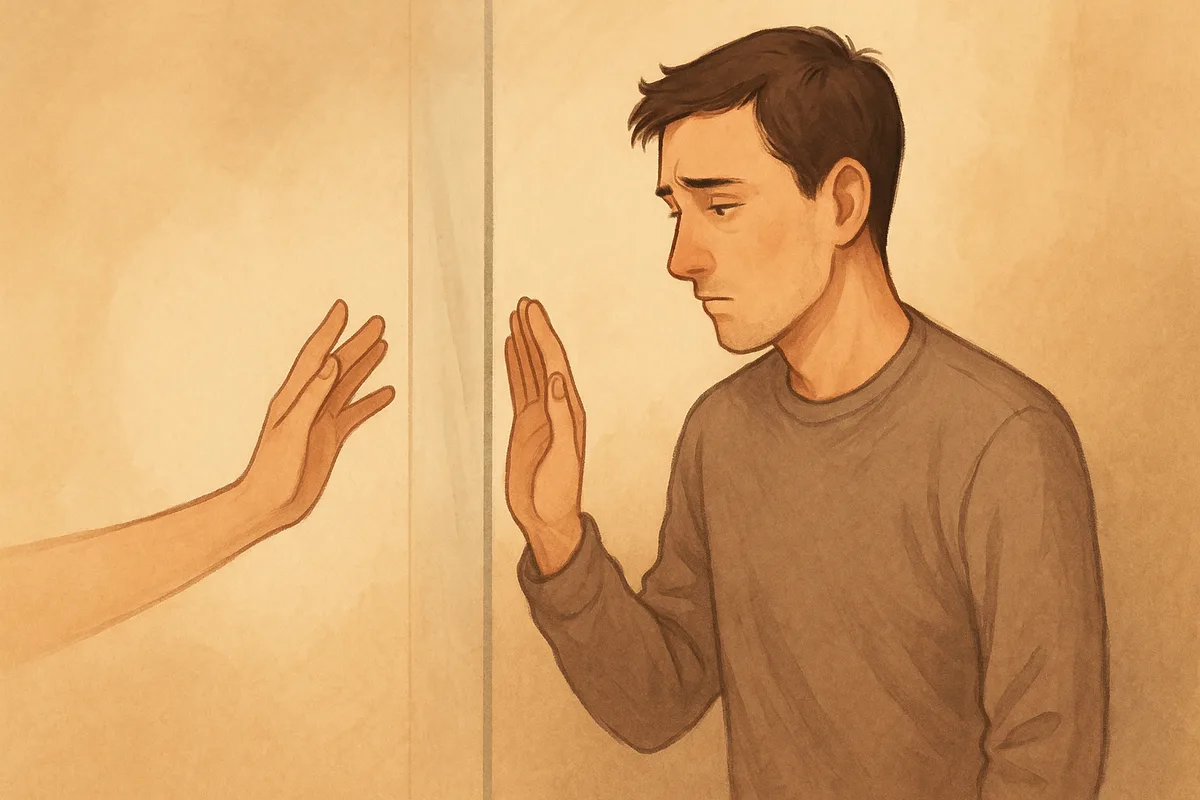
One of the hardest parts of loving someone with anxiety is being pushed away. Your partner may go quiet, cancel plans, or say they want to be alone — and it can feel like rejection. Often, it is the opposite: they are trying to protect you from their mood, or they simply do not have the words.
Do not chase, and do not withdraw completely either. A middle path works best: ‘I’m here when you’re ready — no pressure.’ Leave the door open, check in gently after a while, and keep your own routine steady. Your calm consistency is reassuring, even if they do not say so.
When they come back, welcome them without a lecture. ‘I’m glad you’re here’ is enough. Later, on a good day, you can talk about what helps when they need space — and what hurts. That conversation, held gently, can prevent the same pattern from repeating.
It helps to remember that pushing away is often a sign of overwhelm, not a verdict on the relationship. Your partner may be thinking, ‘I don’t want to be a burden’, rather than ‘I don’t want you here’. Keeping that in mind makes it easier to stay patient — and to keep the door open without taking the distance personally.
Helping Them Name the Worry
Anxiety often feels like a fog — big, vague, and everywhere at once. Helping your partner name the specific worry can shrink it. ‘Is it the meeting, or is it what your boss might say after it?’ A gentle question can turn a fog into a single, nameable thing.
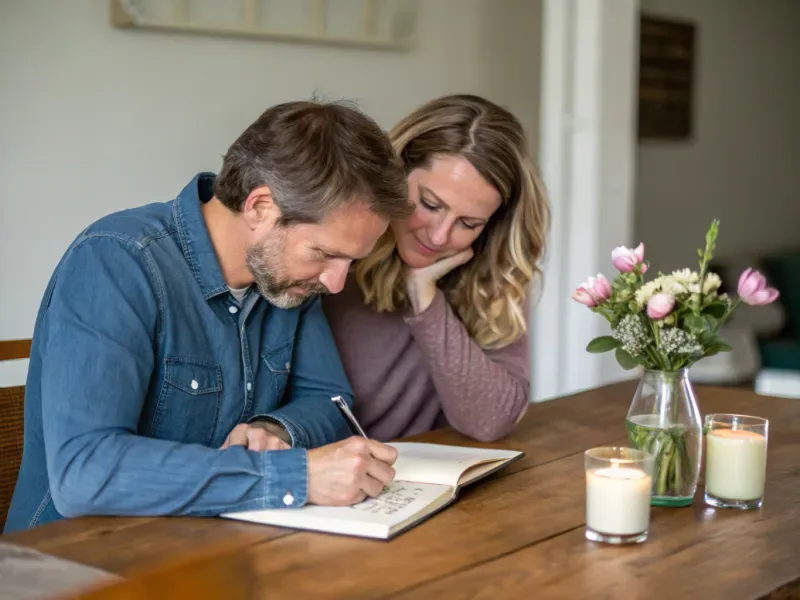
Writing can help too. Suggest jotting the worry down together, on paper or in a notes app. Seeing it written out often reveals that the fear is smaller — or at least more specific — than it felt in the mind. You do not need to solve it; naming it is already a step.
Be careful not to turn naming into interrogation. One or two gentle questions are enough. If your partner does not want to talk about it, respect that, and let the fog pass. The invitation to name it matters more than whether they take it up right now.
The Worry Window — a Timed Daily Slot
A worry window is a simple idea: agree on a short, fixed time each day — say fifteen minutes after dinner — when worries are welcome. Outside that window, worries are noted and saved for later. It sounds odd, but many couples find it genuinely freeing.
During the window, listen properly. Let your partner say what is on their mind, without rushing to fix it. When the time is up, gently close the window: ‘That’s our worry time done — shall we do something nice now?’ The boundary gives the worry a home, instead of letting it wander through the whole day.
Try it for a week before judging it. Some couples love it immediately; others need to adjust the timing. Either way, it teaches an important lesson: worry does not have to run the whole day. It can have its slot, and the rest of the day can belong to you both.

Preparing for Triggers You Can See Coming
Some triggers are predictable — a work deadline, a family visit, a medical appointment, a crowded event. When you can see one coming, a little preparation together can take the edge off. It is not about avoiding life; it is about meeting it with a plan.
Talk it through the day before, not the morning of. ‘Tomorrow’s the big lunch — what would make it easier? Shall we drive together, or meet there?’ Agree on the practical details: how you will get there, how long you will stay, and what you will do if it gets too much.
Afterwards, debrief kindly. ‘You got through that — how did it feel?’ A short, warm review helps your partner learn what worked, so the next trigger feels a little less daunting. Preparation, done together, is one of the kindest forms of support.

Holidays, Family Gatherings and Big Events
Holidays and family gatherings bring their own pressures: travel, unfamiliar routines, relatives with opinions, and days without privacy. For an anxious partner, the festive season can feel more like an endurance test than a celebration. Planning together makes it survivable — and sometimes even enjoyable.
Agree on the essentials in advance: where you will stay, how much time you will spend with family, and when you will get time alone together. Build in breaks — a walk, a quiet coffee, an early night — and protect them without apology.
Present a united front. If a relative says something unhelpful, a gentle ‘We’re handling it, thanks’ from you can shield your partner from having to defend themselves. After the event, give each other a day to recover. Rest is part of the plan, not a failure of it.

When Anxiety Looks Like Anger or Withdrawal
Anxiety does not always look anxious. Sometimes it looks like anger — a sharp reply, a slammed door, a sudden argument over nothing. Sometimes it looks like withdrawal — silence, closed doors, a partner who seems far away. Both can be anxiety wearing a different mask.
When you see anger, try to look underneath it before reacting. ‘You seem really wound up — is something worrying you?’ can defuse a moment that blame would only ignite. It is not excusing bad behaviour; it is understanding it, so you can respond to the cause rather than the symptom.
The same goes for withdrawal. A quiet partner is not always an angry partner. They may be overwhelmed, not distant. Give them a little space, then reach out gently. ‘I’m here when you want to talk’ keeps the bridge open without forcing a crossing.
Over time, you will learn to read your partner’s particular signals — the tight shoulders, the short answers, the sudden busyness. When you can name what you see without judgement, you give them a way back into the conversation. ‘You seem tense — shall we take a break?’ is an invitation, not an accusation, and it often works.

Supporting Therapy Without Becoming the Therapist
If your partner is in therapy, your support can make a real difference — but your role is partner, not therapist. You do not need to analyse their sessions, interpret their homework, or monitor their progress. You need to be the safe, ordinary person they come home to.
Ask how it went, in a general way, and let them share as much or as little as they like. ‘How was today?’ is enough. If they want to practise something from therapy with you, agree to it together, with clear limits, and keep it light.
Respect the privacy of the process. What your partner discusses in therapy is theirs to share. Your steady, non-judgemental presence at home is often the best complement to professional help — and it keeps the relationship balanced, with each of you in your own role.

Keeping Intimacy Gentle on Hard Days
Anxiety can quietly affect intimacy. Your partner may feel too tense, too tired, or too self-conscious to be close, and that can leave both of you feeling distant. The answer is not pressure, but gentleness — and honest conversation about what feels good right now.
Start with closeness that is not demanding: cuddling, holding hands, a slow evening together without expectations. Physical closeness without pressure rebuilds connection, and it often opens the door to more when the time is right.
Talk about it kindly, outside the bedroom, on a calm day. ‘I miss being close to you — what would feel good for you right now?’ That question respects your partner’s experience while keeping your own needs visible. Intimacy, like everything else in this post, grows best when it is shared, not demanded.

A Shared Calm Kit for the Home
A calm kit is a small collection of things that help your partner settle — gathered together in one place, ready for a hard moment. It might include a soft blanket, herbal tea, a favourite playlist, a stress ball, a journal, or a photo that makes them smile. The kit itself is simple; the message behind it is not.
Build the kit together, on a good day. Ask your partner what actually helps them, and gather those things in a basket or a drawer. Knowing the kit is there — and that you made it together — can be comforting in itself, even before it is used.
Use it as a shared ritual. When a hard moment comes, you can say, ‘Shall I make us some tea from the kit?’ That small, practical offer is easier to accept than a big emotional conversation, and it gives you both something gentle to do together.

Talking About the Future Without Pressure
Anxiety lives in the future — in the what-ifs of next month, next year, and beyond. Talking about the future can therefore feel frightening for your partner, even when the plans are happy ones. The trick is to keep future talk light, flexible, and free of deadlines.
Use soft language: ‘One day, maybe we could…’ rather than ‘By next year we must…’. Dreams are easier to hold than deadlines. And keep the plans small at first — a trip, a project, a change to the home — before tackling the bigger life questions.
Revisit the conversation often, in small pieces, rather than in one big talk. A future discussed in gentle instalments feels like a shared adventure, not a test. And remember: the best reassurance about the future is a present that feels safe, steady, and kind.

Growing Together Through the Hard Seasons
Every relationship has hard seasons, and anxiety can make a season feel longer than it is. But couples who come through those seasons together often say the same thing afterwards: it made them stronger, not weaker. The struggle taught them how to listen, how to be patient, and how to love more honestly.
Growth does not mean the anxiety disappears. It means you both get better at carrying it — with humour, with routines, with repair after arguments, and with the quiet knowledge that you have been through hard days before and come out the other side.
So keep going, one day at a time. Celebrate the small wins, forgive the wobbles, and remember why you chose each other. A relationship that can hold anxiety with kindness is a relationship that can hold almost anything. That is something worth growing toward, together.

How can I help my partner with anxiety without making it worse?
Start by listening without rushing to fix anything. Offer a calm presence, ask what they need right now — help, company, or space — and avoid phrases like ‘just relax’. Small, practical help and steady patience usually help far more than advice given in the middle of a worry.
What should I say to my partner when they are anxious?
Short, warm sentences work best: ‘I’m here with you’, ‘Take your time’, and ‘We’ll get through this together’. Avoid arguing with the worry itself. Your partner needs to feel heard and safe first; problem-solving can wait until they feel calmer.
What should I avoid saying to someone with anxiety?
Avoid dismissing the feeling with phrases like ‘You’re overthinking it’, ‘There’s nothing to worry about’, or ‘Just calm down’. Even when well meant, these can make your partner feel unheard. If you say the wrong thing, repair it quickly with a simple, honest apology.
How do I support a partner with anxiety during a panic attack?
Stay close and speak slowly in short sentences, such as ‘I’m here, you’re safe, this will pass’. Offer water, a hand to hold, or a quiet place to sit. Do not ask complicated questions or try to explain what is happening. Wait until they feel steady before talking about it.
Can anxiety affect a relationship?
It can put real strain on a relationship, especially when it leads to cancelled plans, misunderstandings, or arguments. But with open communication, patience, and shared habits, many couples find that facing anxiety together actually brings them closer and builds deeper trust.
How can I look after myself while supporting an anxious partner?
Keep your own anchors — friends, hobbies, rest, and time alone — and do not feel guilty for them. Set gentle boundaries, such as protecting your sleep, and talk honestly when you feel tired. A rested, steady partner supports far better than one who is running on empty.
Should my partner see a therapist for anxiety?
If anxiety is affecting their sleep, work, or daily life for weeks at a time, professional help is worth considering. Raise it gently, offer to help find someone, and go along to a first appointment if that helps. Therapy is a sign the relationship is working well, not failing.
How do I help my partner with anxiety at work?
Listen without trying to solve the job, help them switch off in the evening with a small wind-down ritual, and keep work talk out of late nights. If work stress is constant, help them think about practical steps — like talking to a manager — when they feel calm enough.
What if my partner pushes me away when they are anxious?
Try not to take it personally. They may be protecting you from their mood or struggling to find words. Say ‘I’m here when you’re ready’ and give them a little space, then check in gently. Welcome them back warmly when they return, without a lecture.
How can couples build calm habits together?
Choose one or two small habits together, such as a morning check-in, a walk after dinner, or phones away at meals. Keep them short and realistic, and return to them gently when they slip. Shared habits give anxious days a steady shape and give the couple something calm to do together.
Conclusion: Be There, Gently and Steadily
At its heart, knowing how to support a partner with anxiety comes down to a few simple things: listen before you fix, stay steady when the day feels shaky, and be kind — to your partner and to yourself. You will not get it right every time, and that is perfectly okay. What your partner will remember is not a perfect response, but the fact that you kept showing up, kept listening, and kept trying.
Start small. Pick one idea from this guide — a two-minute check-in, a calmer morning, a kinder phrase — and try it this week. Notice what helps, talk about it together, and build from there. Over time, those small habits add up to something real: a relationship where anxiety is not a secret to hide, but a challenge you face side by side.
And remember, you do not have to carry this alone. If the weight grows heavy, reaching out for extra help — a therapist, a trusted friend, or a support group — is a sign of strength, not failure. You and your partner deserve support too, and asking for it is one of the kindest things you can do for each other.
