
Introduction
Thinning hair used to be a whisper subject. Now it’s front and center in my feed, and honestly, I love that we’re finally talking about it out loud.
Lately, every density shampoo bottle mentions peptides and DHT modulators. It can feel like reading a science paper at 7 a.m. So let’s break it down together, no lab coat required.
Peptides and DHT modulators aren’t magic. They’re tools. Used correctly, they support a fuller scalp so your 2026 hairstyles actually hold their shape instead of falling flat by noon.
Below I’m walking you through what works, what’s just hype, and how to build a simple stack that fits your real routine. Quick read, real answers.
Why Density Shampoos Suddenly Have a Science Label
A few years ago, shampoo just promised shine and smell. Now it promises follicle support, scalp balance, and DHT defense. What changed?
Two things. First, more people started losing density younger and wanted answers at the drugstore, not the clinic. Second, the research caught up enough to name real ingredients on the label.
- Peptides became cheap enough to add in meaningful amounts
- Saw palmetto and ketoconazole got mainstream attention
- Scalp care stopped being a niche step
So the science label isn’t marketing fluff. It’s a shift. Shampoo is slowly becoming a treatment step, not just a cleaning step.
Anti-Thinning Peptides, Explained Without the Jargon

Peptides are short chains of amino acids. Think of them as tiny messengers. When they sit on your scalp, they tell your hair follicles to stay in the growth phase a little longer.
That’s the whole idea. No mystery. Copper peptides and biotinoyl tripeptide-1 are two you’ll see often on the back of the bottle.
- They support the follicle, not the strand itself
- They work best with consistent use, not one wash
- They’re gentle, which matters if your scalp is sensitive
Real talk: peptides won’t regrow a bald patch. But they can help fine, tired hair look thicker over a few months.
What DHT Modulators Actually Do

DHT is a hormone your body makes naturally. For some people, it shrinks hair follicles over time. That’s the root of most pattern thinning.
DHT modulators in shampoo try to block that process at the scalp level. Common ones include saw palmetto, ketoconazole, caffeine, and green tea extract.
- Saw palmetto: plant-based, mild, widely used
- Ketoconazole: an antifungal that also helps density
- Caffeine: boosts circulation and wakes up the follicle
Here’s the catch. Shampoo touches your scalp for two minutes, then rinses away. So expect support, not a cure. It’s one piece of the puzzle.
The Ingredients Worth Knowing by Name
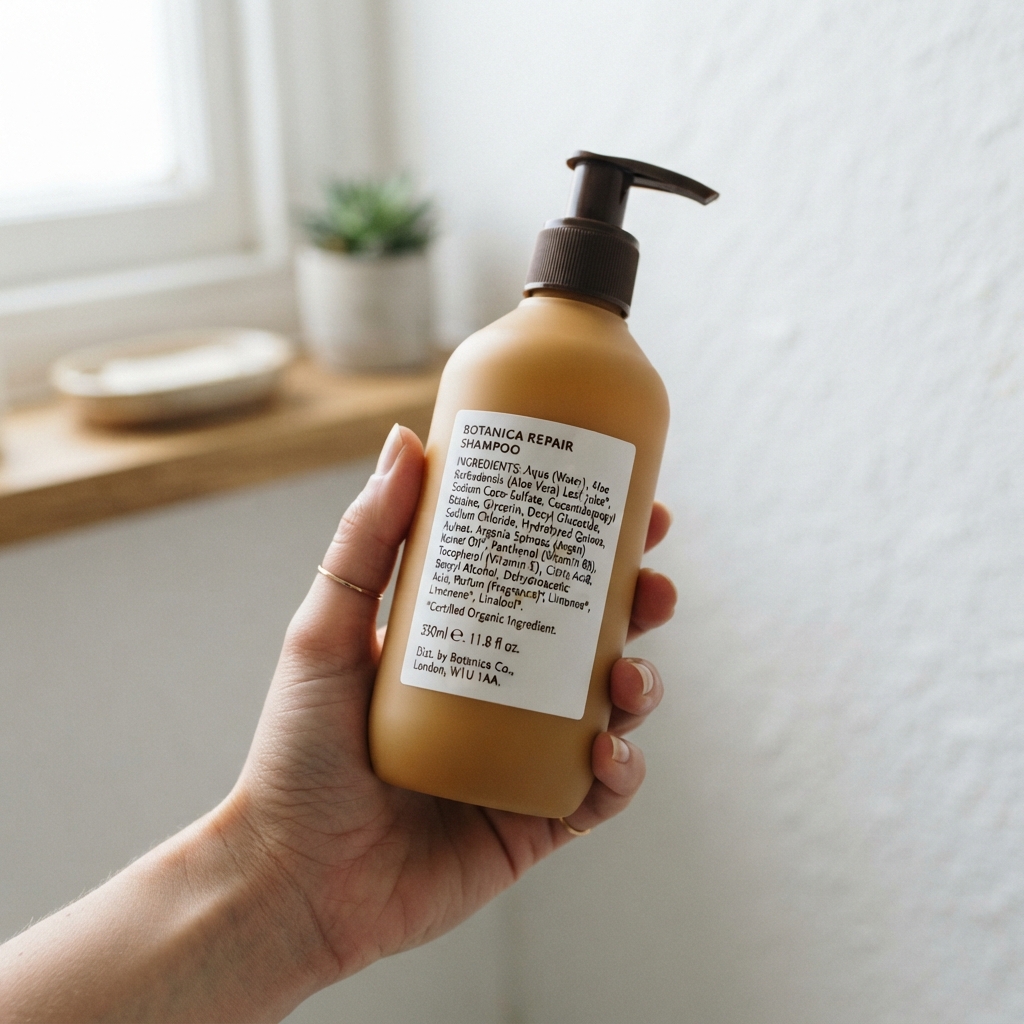
Next time you’re in the aisle, flip the bottle over. These names are worth the read.
- Biotinoyl tripeptide-1 — supports follicle anchoring
- Copper tripeptide-1 — helps scalp repair
- Saw palmetto — natural DHT support
- Ketoconazole — clinical favorite for density
- Niacinamide — calms and balances the scalp
- Caffeine — gentle circulation boost
You don’t need all six. Two or three in one bottle is plenty. More isn’t better, it’s just louder marketing. Look for ingredients high on the list, since that means real amounts.
Peptides vs Minoxidil: Not the Same Job
People ask me this constantly, so let’s settle it. Minoxidil is a drug. It’s proven, it’s strong, and it usually needs to be used forever once you start.
Peptides are cosmetic. They’re gentler, easier to tolerate, and you can stop without a shed. But the payoff is smaller and slower.
- Minoxidil: bigger results, more commitment
- Peptides: softer results, zero drama
- Both: work best with a healthy scalp
Neither is wrong. If you’re early on and just want support, peptides are a lovely start. If thinning is advanced, talk to a doctor about the heavier hitters.
Why 2026 Hairstyles Love a Full Hairline

Look at the 2026 hairstyles showing up everywhere. They all share one thing: density. Volume at the root. Movement that holds. Nothing flat or limp.
You can copy any trend, but if your scalp is thin and your hair collapses by lunch, the look never lands the way it does on the mood board.
- Root volume makes every cut look expensive
- Thickness helps styles last all day
- Healthy scalp means better shine and texture
That’s why density care and trend chasing go hand in hand. It’s not vanity. It’s the foundation under every good hair day.
Density Plus Old Money Hair

Old money hair is quiet, polished, and never tries too hard. Think soft volume, a healthy sheen, and a shape that looks like it just happens.
Here’s the secret nobody says out loud: old money hair requires density. Thin, wispy roots read as tired, not timeless. Fuller hair reads as cared for.
- Brush your scalp daily to boost circulation
- Use a peptide shampoo two to three times a week
- Keep styling minimal and let the shine speak
It’s the easiest way to look put together without a single visible effort. That’s the whole point of the aesthetic.
The Quiet Luxury Bob Needs Volume at the Roots

The quiet luxury bob is everywhere, and it’s stunning. Blunt ends, soft bend, chin to collarbone length. But it’s also brutally honest about density.
When hair is short and sleek, every thin patch shows. That’s why so many people love this cut after a few months of scalp care.
- Ask for a blunt line, not heavy layers
- Keep roots lifted with a light mousse
- Skip heavy oils near the scalp
Pair the cut with a density routine and it looks like a salon blowout, even on a Tuesday. Simple, striking, and very forgiving.
Romantic Goth Hairstyles With Real Body

Romantic goth hairstyles are having a moment, and I’m here for it. Soft waves, dark ribbons, a little undone texture. It’s moody and dreamy at once.
The look depends on body and movement. Flat, thin hair turns romantic into sad real fast. Density is what gives those waves their shape.
- Use a peptide shampoo before styling days
- Add texture spray at mid-lengths, not roots
- Keep ends trimmed so waves stay bouncy
Healthy density makes dark hair look rich instead of limp. That contrast is the entire vibe.
Glitchy Glam Hair and Strong Texture

Glitchy glam hair is the fun one. Sharp sections, high shine, slightly broken edges. It’s editorial, futuristic, and a little strange in the best way.
This style lives on texture and structure. If your hair is thin, those sharp lines blur and it loses the effect entirely.
- Strong roots hold the geometric shapes
- Shine comes from scalp and strand health
- Use a lightweight gel, not a heavy cream
It’s a statement cut, so it rewards hair that can take a little product. Density care is basically your backstage pass.
The Asymmetrical Lob Is a Density Flex

The asymmetrical lob is one of my favorite 2026 hairstyles because it works on almost everyone. Long on one side, shorter on the other, always interesting.
Best part? It’s forgiving. The uneven line hides thin spots and creates the illusion of more hair than you actually have.
- Ask for a deep side part
- Keep the longer side polished and smooth
- Add a soft wave for extra movement
Pair it with a density shampoo and you get a cut that looks fuller than it has any right to. Clever and chic.
The Vampire Haircut: Sleek and Sharp

The vampire haircut is sleek, dark, and a little dangerous. Blunt edges, middle part, sharp cheekbone framing. Think midnight elegance.
Sleek styles are the least forgiving of thinning because there’s nowhere to hide. Every strand shows on a smooth surface.
- Shine is non-negotiable here
- Use a scalp-friendly shampoo to protect density
- Add a tiny amount of gloss serum on ends only
Do the scalp work first, then go sleek. The difference between okay and stunning is all in the density.
Hime Cut and Perimeter Density

The hime cut is that striking Japanese style with blunt side pieces and long straight back hair. It looks like a painting. It also depends entirely on clean edges.
Those side pieces frame your face at cheek length. If the hairline or perimeter is thin, the blunt line looks ragged instead of sharp.
- Keep perimeter hair strong with consistent scalp care
- Trim every six to eight weeks
- Flat iron on low heat only
Density at the hairline is what makes this cut look intentional. Protect it and the style will do the rest.
How to Build a Simple Peptide Stack
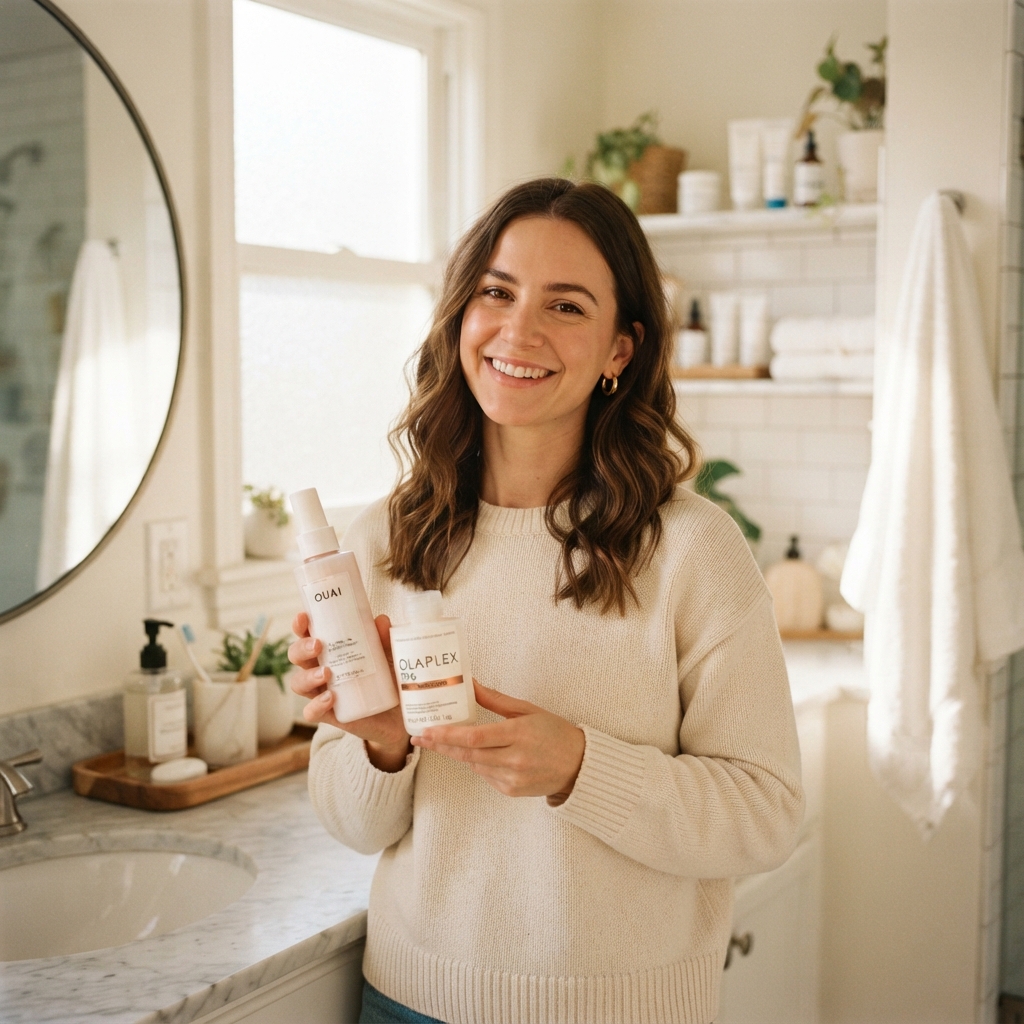
You don’t need ten products. A stack is just a small set of things that work together. Here’s the simple version I’d start with.
- A peptide shampoo, used three times a week
- A DHT-supporting scalp serum, nightly
- A gentle leave-in for ends
That’s it. Three steps. Wash, treat, protect. Everything else is optional.
If you want to add one more thing, make it a scalp massage tool. It costs nothing extra and helps everything absorb better. Keep it boring and consistent.
A Five-Minute Morning Routine

Nobody has an hour. So here’s a routine that actually fits real life.
- Spritz roots with water and a light volume spray
- Blow-dry roots upward for 60 seconds
- Flip your part to the other side
- Add a small amount of gloss to the ends
That’s five minutes and your hair looks twice as full. The part flip alone creates instant lift.
Save the deep treatments for wash day. Mornings are for quick wins, not full rituals.
Wash Day Without Stripping Your Scalp
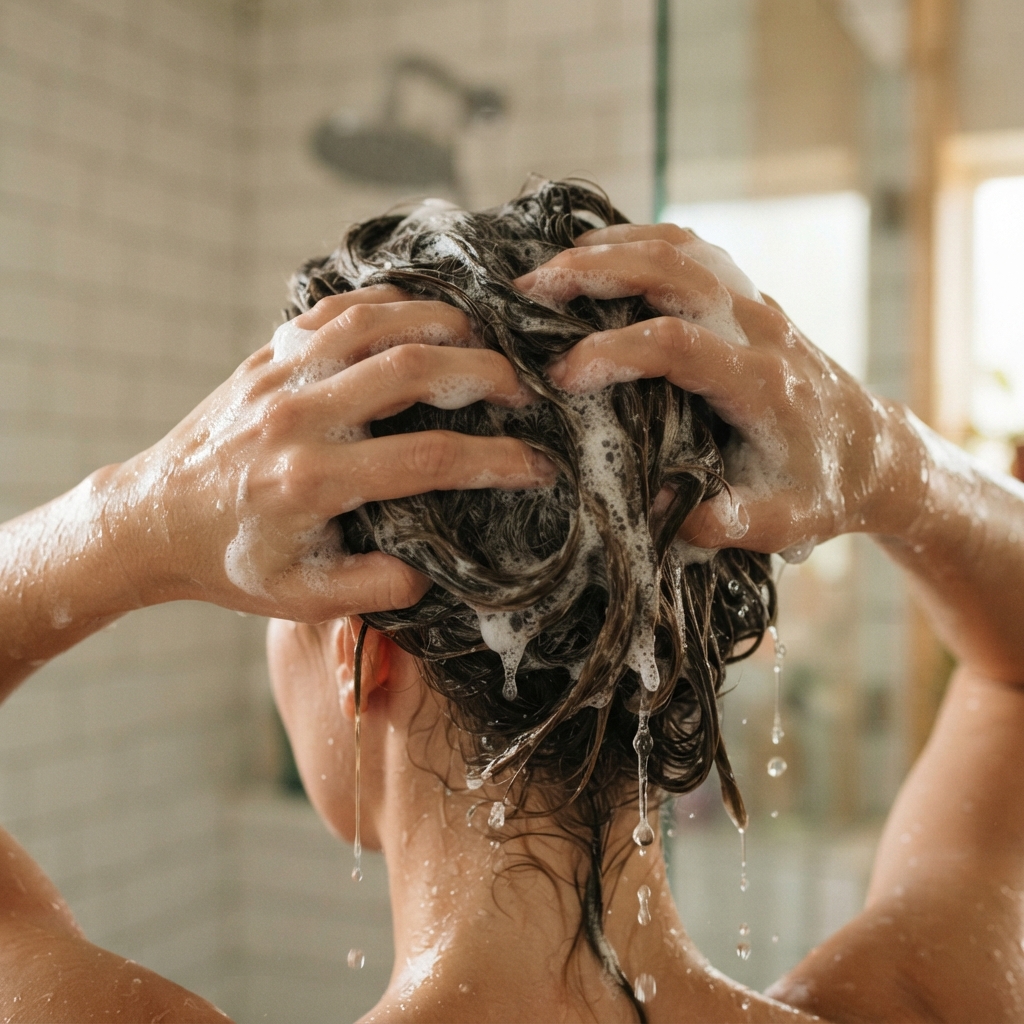
Wash day is where density either gets helped or hurt. Two rules: focus on your scalp, and don’t be rough.
- Shampoo your scalp, not your ends
- Use lukewarm water, never scalding
- Massage with fingertips, not nails
- Leave the shampoo on two minutes before rinsing
That last one matters most. Peptides and DHT modulators need contact time to do anything.
Conditioner goes mid-length to ends only. Keep it off your roots so nothing gets weighed down.
Scalp Health Basics Nobody Mentions
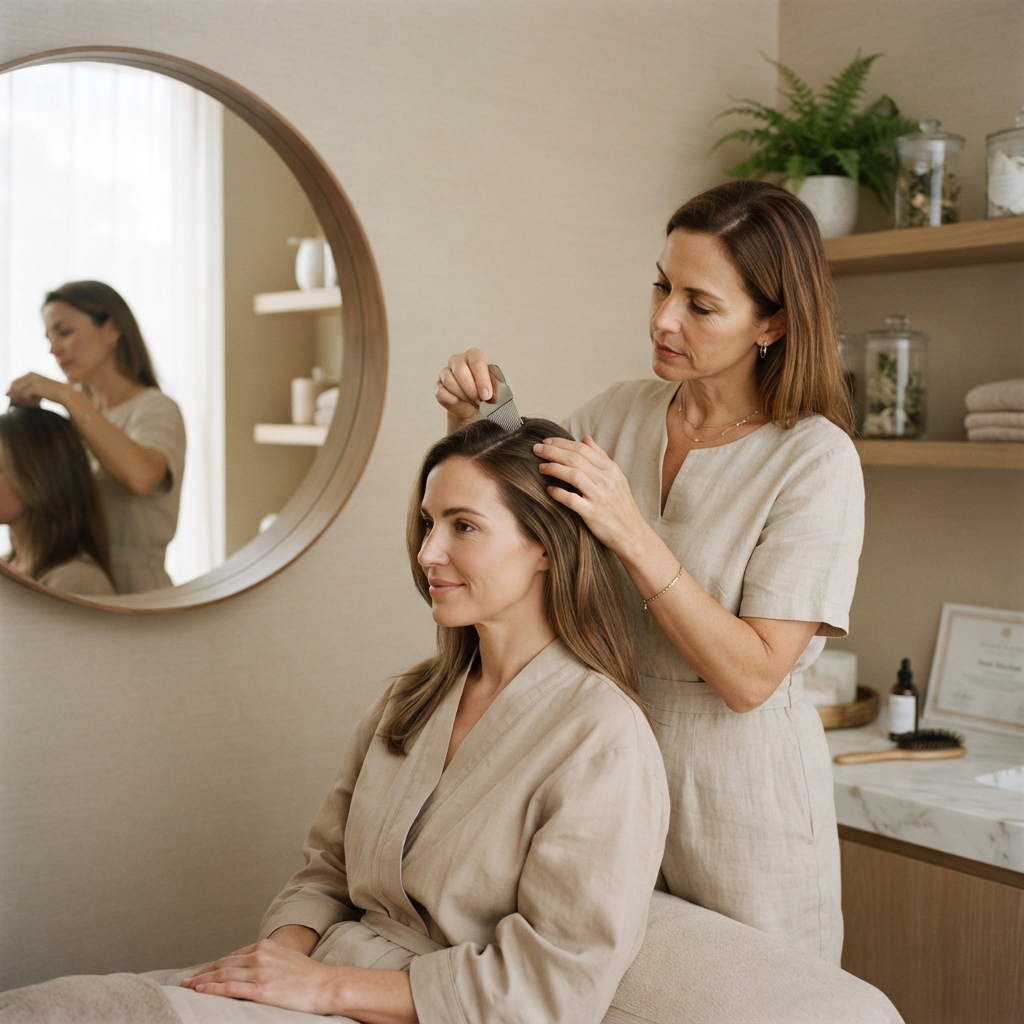
Healthy hair starts with a healthy scalp. It sounds obvious, but most of us ignore it completely.
- Exfoliate once a week to clear buildup
- Never sleep in heavy product
- Change your pillowcase every few days
- Keep your scalp dry, not damp, after workouts
Buildup blocks everything. If your scalp is clogged, your fancy peptide shampoo is basically sitting on a wall.
Clean, calm, balanced scalp. That’s the goal. Everything else builds on it.
What to Skip in Your Shampoo
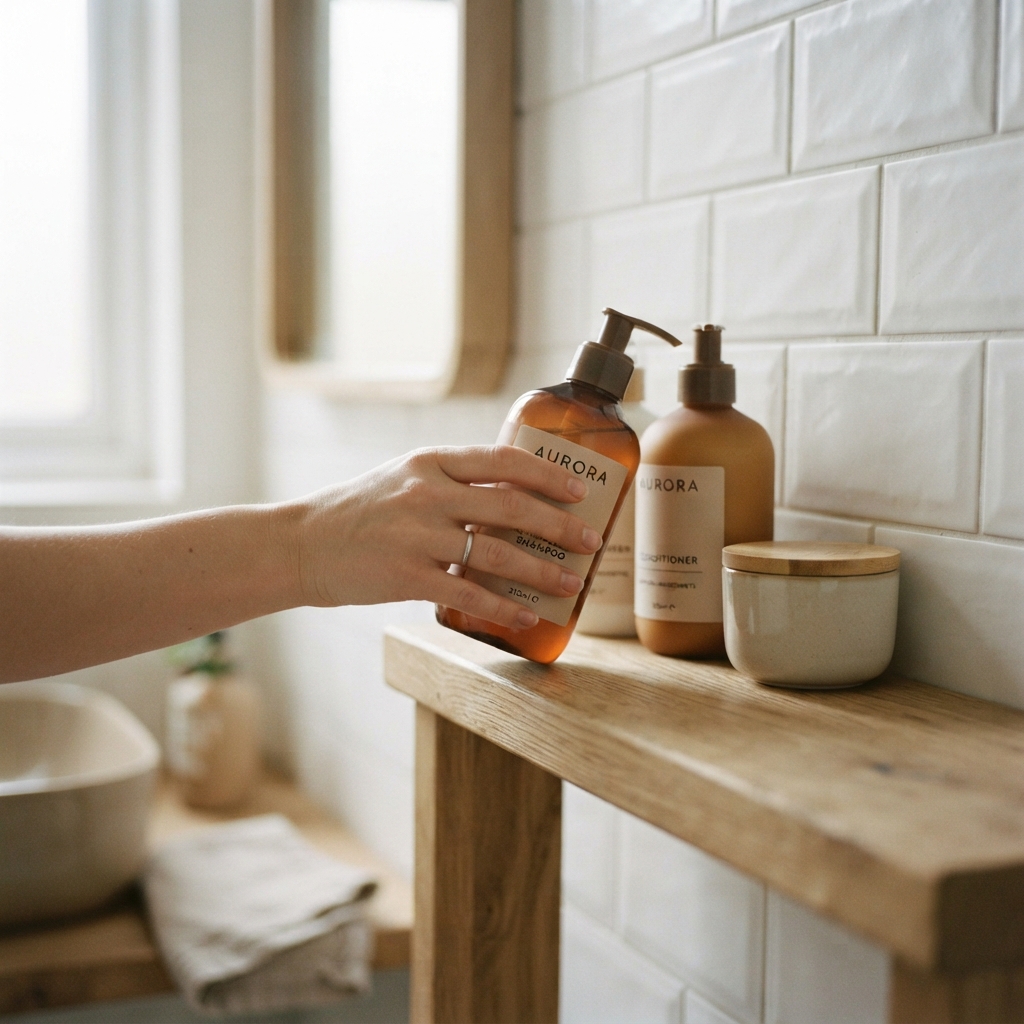
Just as important as what you add is what you avoid. Some ingredients quietly work against you.
- Harsh sulfates in high amounts, if your scalp is sensitive
- Heavy silicones that build up at the root
- Strong fragrances that irritate
- Anything that leaves your scalp itchy or tight
You don’t have to go fully clean or natural. Just listen to your scalp. If it stings or flakes, that bottle isn’t your friend.
Simple formulas usually win. Fewer ingredients, less irritation, better results over time.
How Long Results Actually Take

Here’s the honest timeline, because nobody tells you this part.
- Week 1 to 2: scalp feels cleaner and calmer
- Week 4 to 6: less shedding in the shower
- Month 3: baby hairs along the hairline
- Month 6: visibly thicker, fuller appearance
Hair grows slowly. Around half an inch a month. So nothing dramatic happens overnight, no matter what the ads say.
Take a photo on day one. Same lighting, same angle. It’s the only way to see what’s really changing.
Mistakes That Slow You Down

I’ve made most of these, so learn from me.
- Switching products every two weeks
- Using treatments once and expecting miracles
- Scrubbing your scalp with your nails
- Ignoring diet, stress, and sleep
- Pulling hair tight into the same style daily
Consistency beats intensity every single time. One product used for six months beats six products used for one month.
Also, tension matters. Tight ponytails and slicked-back styles can quietly thin your hairline over years.
Styling Without Sabotage
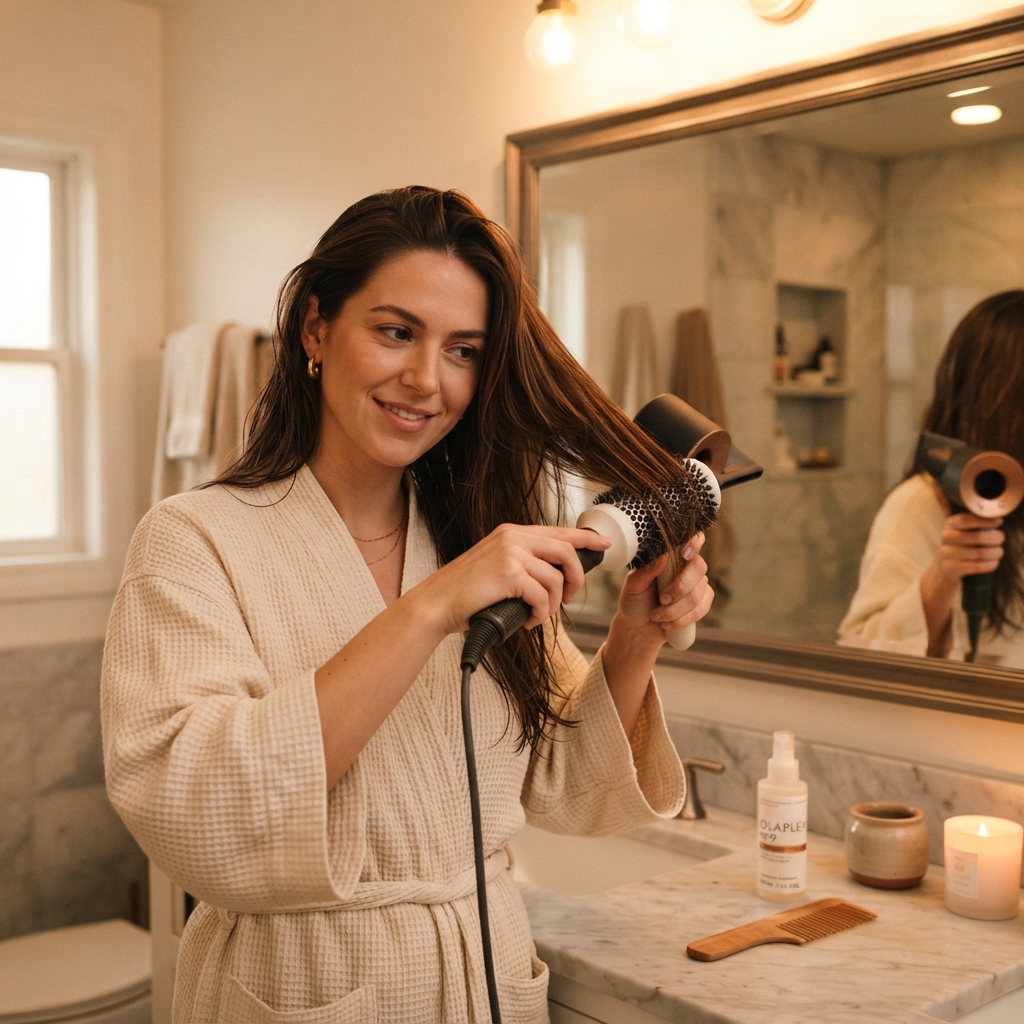
You can still style your hair. You just have to be a little kinder to it.
- Use heat protectant, always
- Keep tools on medium, not max
- Try air-drying once or twice a week
- Loosen tight updos
- Never brush wet hair aggressively
Fine hair is fragile hair. Treat it like silk, not like rope.
And when you can, let trends do the work. The asymmetrical lob and quiet luxury bob both look better with minimal styling anyway.
Budget-Friendly Ways to Start
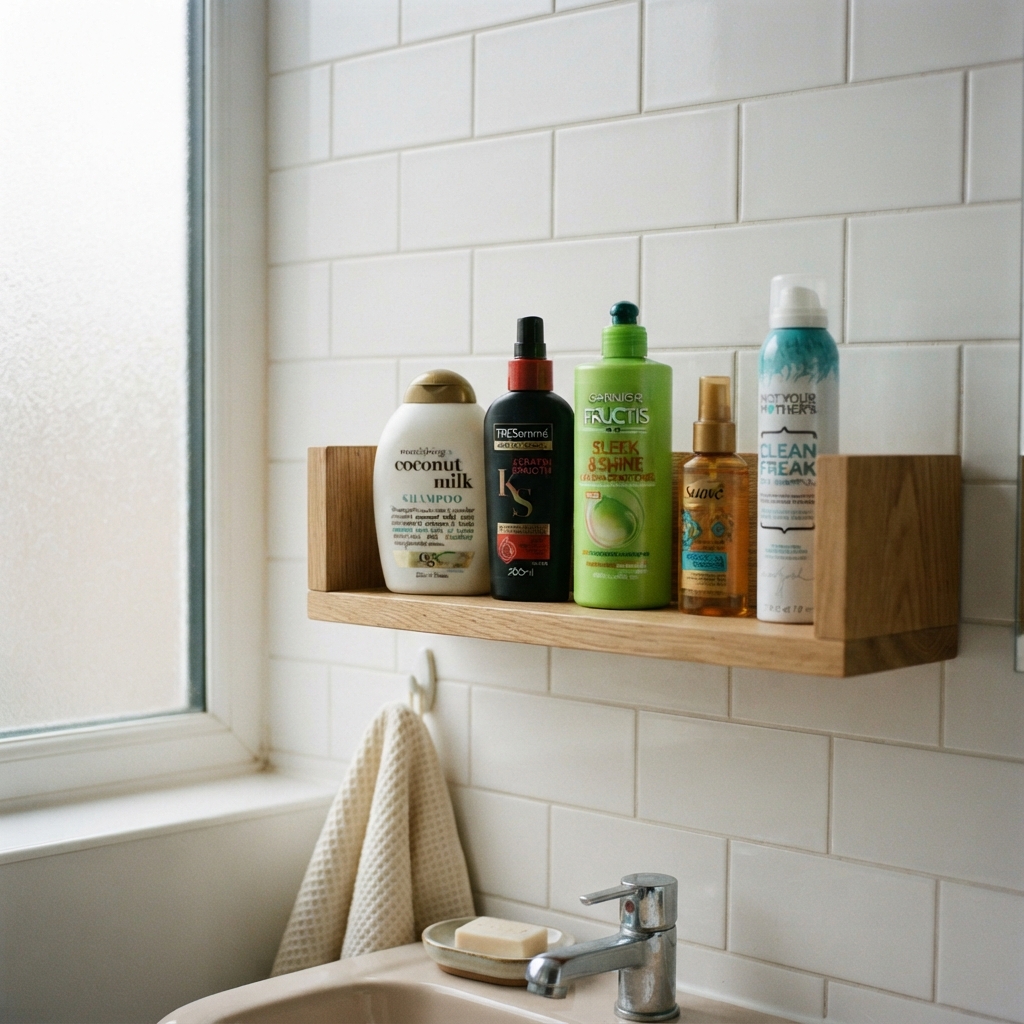
You don’t need a $90 shampoo to start. Promise.
- Look for drugstore options with saw palmetto or caffeine
- Buy one treatment at a time
- Use a scalp massager instead of pricier tools
- Check for sales and travel sizes first
Start with one peptide shampoo and one serum. Give it three months. Then decide if you want to upgrade.
Slow and steady saves money and actually tells you what’s working. Guessing gets expensive.
When to Call a Dermatologist

Sometimes shampoo isn’t the answer, and that’s okay. Knowing when to get help is smart, not dramatic.
- Sudden or patchy hair loss
- Burning, pain, or redness on the scalp
- Heavy shedding for more than three months
- Thinning around the crown with a family history
A dermatologist can check your thyroid, iron, and hormones. Those matter more than any bottle sometimes.
Shampoo supports. It doesn’t diagnose. Don’t wait too long if something feels off.
Make It a Habit, Not a Hobby

The people with great density aren’t doing anything wild. They’re just consistent.
- Same routine, most weeks
- Same three products
- Same two-minute scalp massage
That’s it. Boring, repeatable, effective. The magic is in the repetition, not the product list.
Stack it onto something you already do. Wash your face, then do your scalp serum. Attach new habits to old ones and they stick.
My Honest Take
Anti-thinning peptide stacks and DHT modulators aren’t a scam, and they aren’t a miracle. They’re a solid middle ground for people who want to be proactive early.
If you’re just starting to notice thinning, this is a great place to begin. Gentle, affordable, and easy to keep up with.
And bonus: fuller hair makes every 2026 hairstyle look better. Old money hair, the quiet luxury bob, the hime cut, all of it.
Take one photo today. Start one product this week. Check back in three months. That’s the whole plan.
Save this post to Pinterest so you can find your routine again on wash day.
Now tell me, which density shampoo ingredient are you most curious about? Drop it in the comments and I’ll answer every single one.

