

For millions of people worldwide, hair loss or structural hair disorders are more than a cosmetic concern; they are a source of profound emotional distress and a constant reminder of a genetic condition they feel powerless to change. From androgenetic alopecia to rare, inherited conditions like monilethrix, the search for an effective treatment has often led to temporary solutions, wigs, and a lifetime of management. But what if the root cause—a misspelling in the very DNA instructions for building hair—could be corrected? This is no longer the stuff of science fiction. We are standing at the precipice of a medical revolution where gene therapy is actively working to eliminate hair disorders for good.
This groundbreaking approach moves beyond treating symptoms to address the fundamental genetic errors that cause these conditions. By delivering corrective genetic code directly to the hair follicle cells, scientists are pioneering treatments that could offer not just regrowth, but a permanent cure. This blog post will delve into the incredible science behind this advancement, explore the specific disorders being targeted, and examine what the future holds for this transformative field of medicine.
The Root of the Problem: Understanding Genetic Hair Disorders
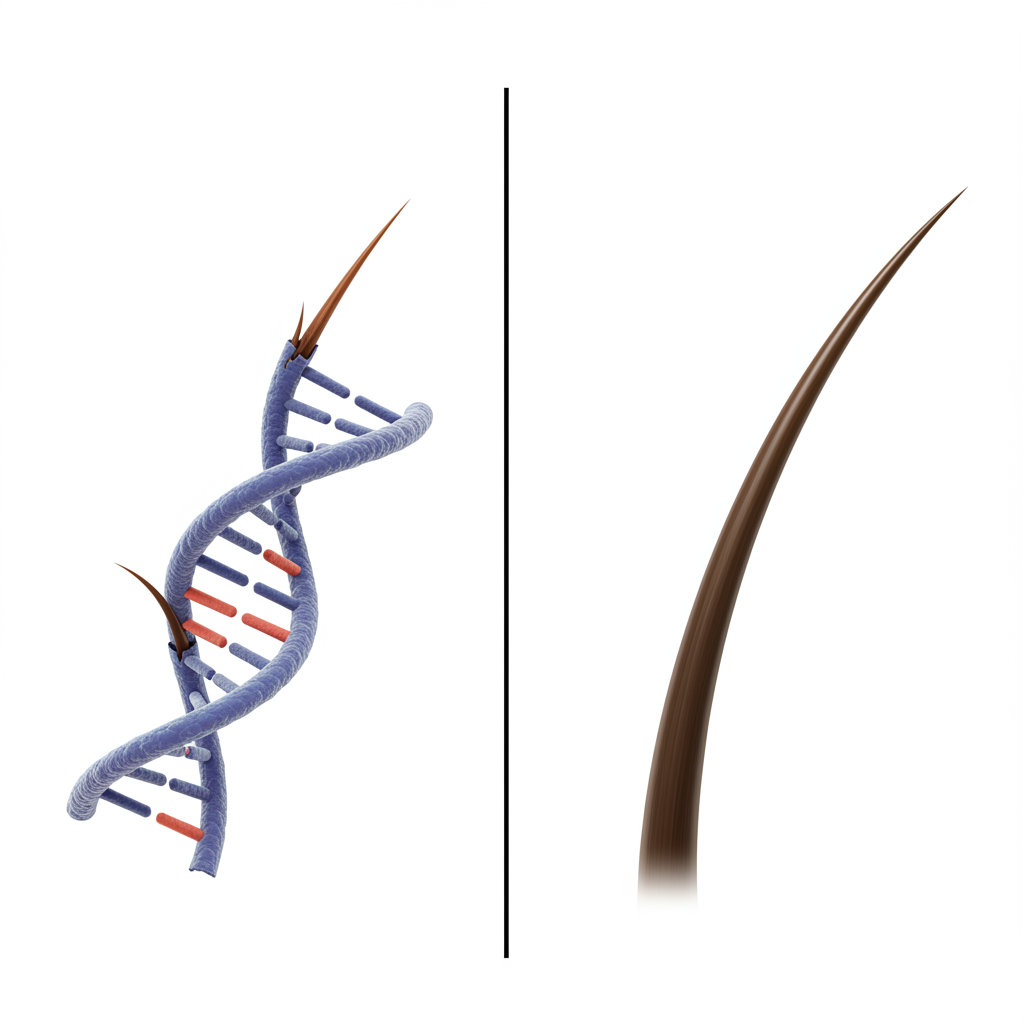
To appreciate how gene therapy works, we must first understand what it’s fixing. Many hair disorders are not caused by external factors like stress or diet alone but are written into our genetic blueprint. These are known as hereditary hair disorders, and they occur due to mutations in specific genes responsible for hair growth, structure, and pigmentation.
For instance, androgenetic alopecia (common male and female pattern baldness) has a strong genetic component, influenced by variations in genes that affect androgen receptors and hair follicle sensitivity. More dramatic are rare monogenic disorders, caused by a mutation in a single gene. These include:
Monilethrix: Caused by mutations in genes like KRT81, KRT83, or KRT86, which are responsible for producing hair keratins. This leads to hair that is beaded and brittle, breaking easily before it can grow long.
Hypotrichosis: A term for a group of conditions characterized by sparse or absent hair growth from birth. Different forms are linked to mutations in genes involved in hair follicle development and cycling.
Alopecia Areata: While an autoimmune condition, it also has significant genetic susceptibility factors that predispose an individual’s immune system to attack hair follicles.
Traditional treatments for these conditions, such as minoxidil, finasteride, or steroid injections, often provide inconsistent results and require lifelong use. They manage the symptom (hair loss) without ever addressing the causative genetic typo. Gene therapy flips this model on its head.
The Science of Correction: How Gene Therapy Works for Hair

Gene therapy is a sophisticated technique that involves introducing, removing, or altering genetic material within a person’s cells to treat or prevent disease. In the context of hair disorders, the goal is to deliver a correct copy of a faulty gene to the cells of the hair follicle.
The process typically involves a few key steps. First, scientists identify the precise genetic mutation causing the disorder. Next, they create a therapeutic transgene—a functional, healthy copy of the gene. The major challenge is delivery: how to get this new genetic material into the right cells. This is where viral vectors come in. Scientists ingeniously use harmless, modified viruses (often adeno-associated viruses or AAVs) as delivery trucks. These viruses are stripped of their ability to cause disease and are instead loaded with the therapeutic gene.
Once the vector carrying the correct gene is introduced to the scalp—often through localized injection or topical application in advanced formulations—it infects the target cells, in this case, the dermal papilla cells or hair follicle stem cells. These cells are the command center for hair growth. The vector releases its genetic cargo into the nucleus of the cell, where it instructs the cell to start producing the functional protein (e.g., healthy keratin) it was previously unable to make. The result is a genetic “software update” that enables the follicle to produce normal, healthy hair.
From Theory to Practice: Breakthroughs and Current Research

The theoretical promise of gene therapy is now being backed by exciting preliminary research and clinical breakthroughs. While widespread human treatments are still in development, the progress in labs around the world is staggering.
One of the most promising areas of research involves CRISPR-Cas9, the famed gene-editing tool. Unlike traditional gene therapy that adds a new gene, CRISPR acts like molecular scissors, allowing scientists to cut out the exact mutated section of DNA and replace it with a correct sequence. Research teams are actively exploring CRISPR to correct keratin mutations in models of monilethrix, with the aim of permanently restoring normal hair shaft structure.
Another fascinating approach focuses on editing the immune response in autoimmune hair loss like alopecia areata. While not correcting a hair gene itself, this involves modifying immune cells to stop them from mistakenly targeting hair follicles, effectively preventing the attack that causes hair loss.
Furthermore, companies and research institutions are developing advanced delivery methods, such as bio-compatible gels or nanoparticle solutions that can be applied topically to deliver genetic payloads to follicles without the need for injections, making future treatments far less invasive.
Beyond Baldness: The Wider Impact on Rare Conditions

While the popular imagination might jump to curing common baldness, the most immediate and profound impact of this technology is on individuals suffering from rare, debilitating genetic hair conditions. For a child born with severe monilethrix or congenital hypotrichosis, the social and psychological challenges can be overwhelming.
Gene therapy offers these individuals something previously unimaginable: a potential one-time, curative treatment. A single course of therapy could, in theory, provide a lifetime of normal hair growth by permanently fixing the genetic error in the stem cells responsible for regenerating the follicle with each growth cycle. This moves their care from a constant battle of management to a definitive solution, drastically improving their quality of life and self-esteem.
This focus on rare disorders also follows the typical trajectory of new medical technologies. Treatments are often pioneered for the most severe and clear-cut genetic conditions, where the risk-benefit ratio justifies early experimentation. The lessons learned, and the delivery systems perfected in these trials, then pave the way for broader applications.
Challenges, Ethics, and the Road Ahead

Despite the immense promise, the path to widely available gene therapy for hair disorders is not without significant hurdles. Safety is the paramount concern. Scientists must ensure that viral vectors do not trigger dangerous immune responses or introduce genetic changes in unintended places in the genome, which could potentially lead to cancer (though modern vectors are designed to minimize this risk).
Delivery efficiency is another challenge. Ensuring that enough follicle stem cells receive the corrective gene to produce a cosmetically significant result is technically difficult. Furthermore, the cost of developing and manufacturing these bespoke genetic treatments is currently extremely high, though it is expected to decrease as the technology matures.
Ethical considerations also come into play, particularly concerning germline editing (making changes that would be heritable). However, most hair disorder therapies in development are for somatic cells (non-reproductive cells), meaning the genetic changes would not be passed on to offspring, which aligns with current ethical standards in medicine.
The road ahead will involve more years of rigorous clinical trials to prove long-term safety and efficacy. However, the pace of advancement is rapid. It is not unreasonable to anticipate that within the next decade, the first gene therapies for specific rare hair disorders could receive regulatory approval.
A Hairy Future: The Long-Term Possibilities

The implications of successfully applying gene therapy to hair follicles extend far beyond treating disorders. The same technology and understanding could revolutionize the cosmetic and hair restoration industries. Imagine a future where personalized genetic treatments are available not just for disease, but for those seeking to enhance their hair’s natural density, change its texture, or prevent the graying process by targeting the genes responsible for melanin production in the follicle.
This future, however, raises its own set of questions about accessibility, cosmetic vs. medical use, and societal pressures. But the core technology represents a fundamental shift from external, chemical-based interventions to internal, biological reprogramming.
The research into hair follicle gene therapy is also providing invaluable insights into stem cell biology, wound healing, and organ regeneration. The hair follicle is a complex, mini-organ, and learning how to genetically manipulate its growth cycle has applications across the entire field of regenerative medicine.
Conclusion: A New Dawn for Treatment
The development of gene therapy for hair disorders is a testament to how far medical science has come. We are transitioning from an era of managing symptoms to an era of curing causes. For those living with the daily reality of a genetic hair condition, this research is a beacon of hope—a promise that their condition may not be a life sentence.
The science is complex and the wait for widely available treatments will require patience, but the progress is undeniable. Gene therapy is moving from a theoretical concept to a tangible solution, poised to eliminate the very foundation of these disorders. The future of hair care is not just on the surface; it is written in the code of life itself, and we are finally learning how to rewrite it for the better.

