

You used to finish each other’s sentences. Now you barely finish a conversation without distraction. Between work deadlines, parenting demands, and the endless to-do lists of adulthood, that electric connection with your partner can fade into the background. This isn’t failure—it’s the natural rhythm of long-term relationships. The good news? Chemistry isn’t lost, just buried beneath layers of routine. Reigniting your spark requires intentionality, not luck. Let’s explore how psychology and small, powerful shifts can help you reconnect.
Why the Spark Fades (And Why That’s Normal)
Neuroscience reveals that the intense “in love” phase lasts 12–18 months—your brain literally floods with dopamine. Long-term love operates differently, trading fireworks for deeper (but less obvious) bonds. Life doesn’t extinguish the spark; it changes the fuel source. Stress hormones like cortisol further dampen connection by narrowing focus to survival tasks, making date nights feel frivolous. Recognize this as a biological response, not a relationship verdict.

The 5-Second Reconnection Trick
Psychologist John Gottman’s research shows that micro-moments of attunement rebuild intimacy faster than grand gestures. Try this: When your partner speaks, pause for five seconds. Make eye contact, then respond. This tiny delay signals, “You have my full attention.” Real-life example: Sarah and Mark practiced this during dinner, realizing they’d been interrupting each other for months. Those five seconds became a bridge back to feeling heard.
Self-reflection: How often do you truly pause before replying to your partner?

Schedule Spontaneity (Yes, Really)
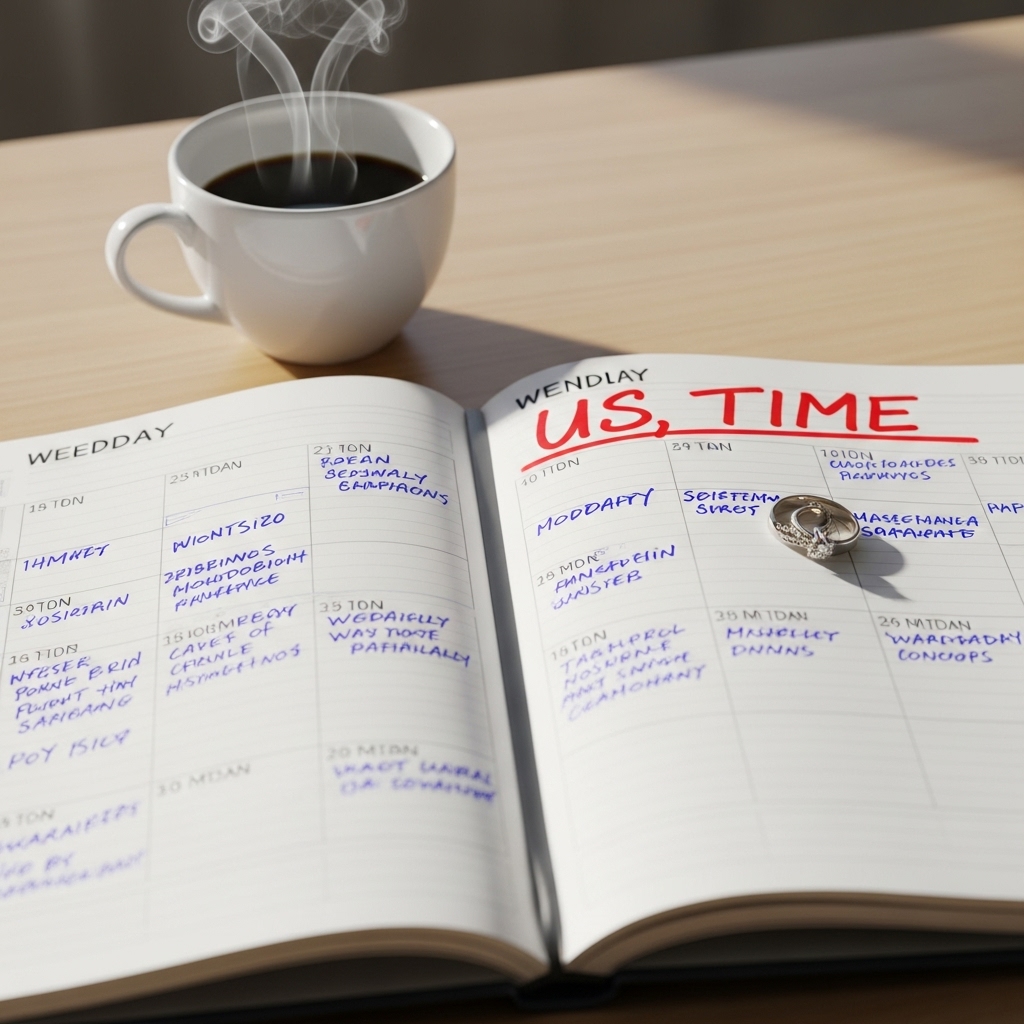
Waiting for “the right moment” guarantees it won’t happen. Block 15-minute “connection appointments” in your calendar for:
1. Appreciation exchanges (“I loved how you handled the kids this morning”),
2. Memory reminiscing (“Remember our terrible camping trip?”), or
3. Future dreaming (“Where should we travel when the kids graduate?”). Structured flexibility trains your brain to prioritize the relationship amid chaos.
The Vulnerability Reset
Emotional barriers often smolder beneath practical stressors. Try this psychologist-approved exercise: Each partner shares one hidden emotion from the past week using this framework: “I felt [emotion] when [situation], because deep down I [core need].” Example: “I felt irrelevant when you discussed vacation plans with your sister first, because I need to feel like your priority.” Vulnerability rewires defensiveness into intimacy.
Self-reflection: What emotion have you avoided expressing to avoid “rocking the boat”?

Novelty: The Brain’s Love Drug
Neurochemicals associated with new experiences (like dopamine and norepinephrine) mimic early-stage romance. Break routine with:
- 20-minute adventures (trying a new dessert spot)
- Role reversal (handling each other’s usual chores)
- Learning together (a YouTube salsa tutorial in your living room)
A UCLA study found couples who did novel activities reported higher relationship satisfaction—no extravagant effort required.

When to Seek Help
If resentment feels heavier than hope, professional guidance can help. Warning signs include:
1. Chronic criticism (“You always…” statements),
2. Emotional withdrawal (stonewalling during conflict), or
3. Avoidance of physical touch beyond function. Therapy isn’t failure—it’s maintenance for your most important connection.
The spark isn’t gone—it’s waiting beneath the laundry piles and grocery lists. By treating your relationship with the same deliberate care as your career or parenting, you don’t just reignite passion; you build a flame that withstands life’s winds. Start small, start today. Your future selves will thank you.

