

For millions of people worldwide, hair loss is more than just a cosmetic concern—it’s a source of deep emotional distress. From receding hairlines to thinning crowns, the struggle to maintain a full head of hair has fueled a multi-billion-dollar industry of treatments, supplements, and hair transplants. But what if the solution to hair loss wasn’t found in a bottle or a surgical procedure, but rather in our very biology?
Groundbreaking new research has identified a specific protein that appears to play a crucial role in hair growth and regeneration. This discovery could potentially lead to treatments that don’t just slow hair loss, but actually reverse it permanently. In this article, we’ll explore this exciting scientific breakthrough and what it could mean for the future of hair restoration.
The Science Behind Hair Loss
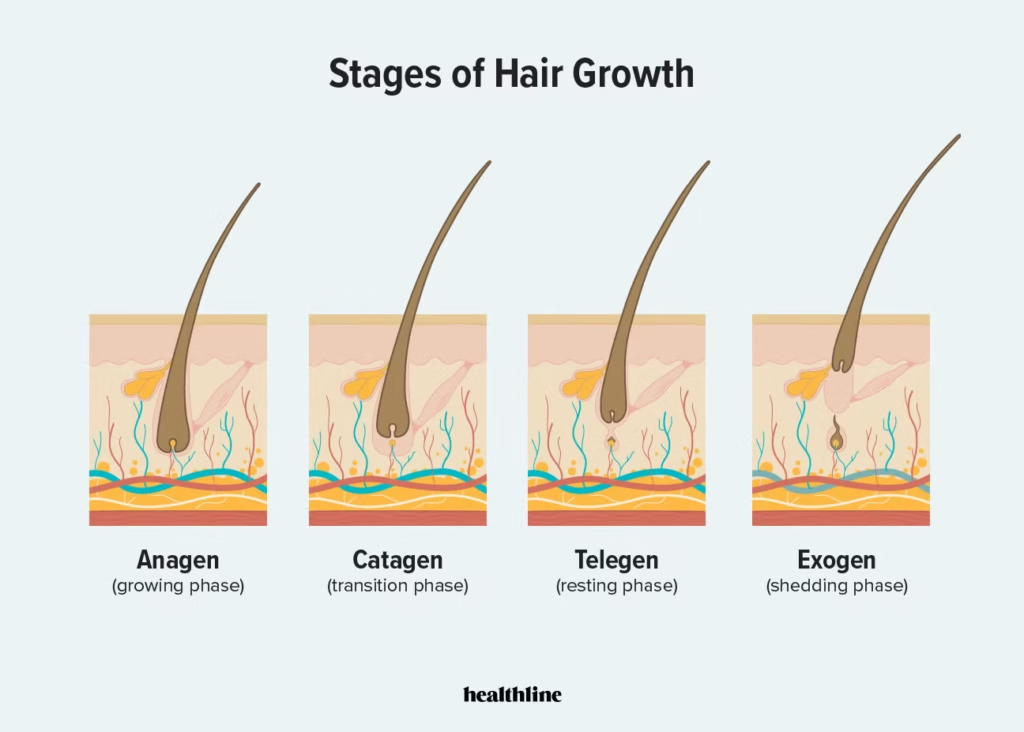
To understand why this protein discovery is so significant, we first need to examine what causes hair loss in the first place. The most common form, androgenetic alopecia (male or female pattern baldness), occurs when hair follicles shrink over time, producing thinner and shorter hairs until they eventually stop growing altogether.
This process is influenced by:
• Genetics – Family history plays a major role in predisposition to hair loss
• Hormones – Particularly dihydrotestosterone (DHT) which attacks hair follicles
• Age – Hair follicles naturally become less productive over time
• Environmental factors – Stress, nutrition, and other external influences
The Revolutionary Protein: SCUBE3
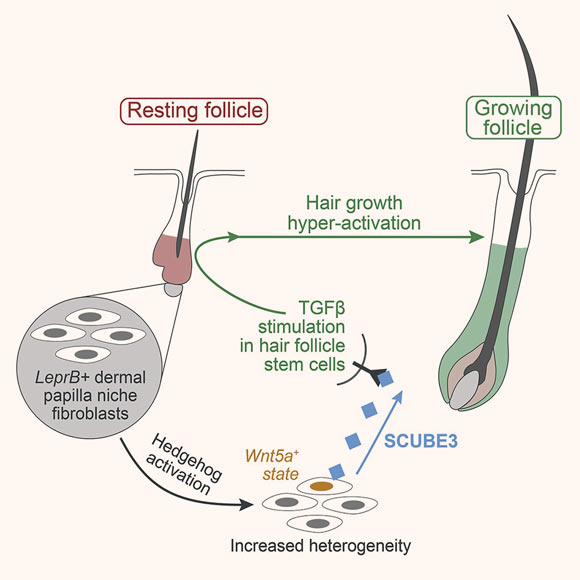
In 2022, researchers at the University of California, Irvine made a startling discovery. They identified a protein called SCUBE3 that acts as a potent activator of hair growth. This protein is naturally produced by dermal papilla cells, the “command center” of hair follicles that controls hair growth.
What makes SCUBE3 so remarkable is its ability to wake up dormant hair follicles. In laboratory tests, when researchers artificially increased SCUBE3 signaling, they observed:
• 300% increase in hair follicle regeneration compared to controls
• Activation of previously dormant follicles that hadn’t produced hair in years
• No observable side effects on surrounding tissue
How SCUBE3 Differs From Current Treatments
Current hair loss treatments like minoxidil (Rogaine) and finasteride (Propecia) have significant limitations. They may slow hair loss but rarely restore full density, require lifelong use, and can have unpleasant side effects. Hair transplants simply redistribute existing hair rather than creating new growth.
SCUBE3 represents a fundamentally different approach by:
1. Targeting the root cause – Rather than blocking DHT or stimulating blood flow, it directly activates the follicle’s growth mechanisms
2. Potentially offering permanent results – Early research suggests it may “reset” follicles to their active state
3. Being naturally occurring – As a protein our bodies already produce, it’s likely to have fewer side effects

What This Means for Future Treatments
While still in the experimental phase, the discovery of SCUBE3’s role in hair growth opens several exciting possibilities for future therapies:
Topical formulations: Scientists are working on ways to deliver SCUBE3 directly to the scalp through creams or serums that could be applied at home.
Gene therapy: Researchers are exploring whether modifying genes to increase natural SCUBE3 production could provide long-term solutions.
Combination therapies: SCUBE3 might be combined with other treatments like platelet-rich plasma (PRP) for enhanced results.
The lead researcher on the UC Irvine study, Dr. Maksim Plikus, estimates that human trials could begin within 3-5 years, with potential treatments reaching the market by the early 2030s.
What You Can Do Now
While we wait for SCUBE3-based treatments to become available, there are evidence-based strategies to maintain your existing hair and potentially improve its health:
• Nutrition: Ensure adequate protein, iron, zinc, and vitamins D and B12
• Stress management: Chronic stress can accelerate hair loss through telogen effluvium
• Gentle hair care: Avoid tight hairstyles and excessive heat/chemical treatments
• Current treatments: Consult a dermatologist about FDA-approved options
Remember that any new treatment should be approached cautiously. When SCUBE3 therapies do become available, they’ll need to go through rigorous clinical testing to prove both effectiveness and safety.

The Bigger Picture: Beyond Cosmetic Benefits
While most people focus on the aesthetic aspects of hair loss, this research has far-reaching implications. The same biological mechanisms that control hair growth also play roles in:
• Wound healing – Understanding follicle regeneration could improve recovery from injuries
• Organ regeneration – Similar proteins might help regenerate other tissues
• Cancer research – Some pathways involved are also relevant to tumor growth
This underscores how research into seemingly niche areas like hair loss can lead to breakthroughs with much broader medical applications.

Conclusion: A Hairy Future
The discovery of SCUBE3’s role in hair growth represents one of the most promising developments in hair loss research in decades. While more studies are needed, the potential for a treatment that can genuinely reverse hair loss rather than just slowing it down is incredibly exciting.
As research progresses, we may be on the cusp of a new era where baldness becomes an optional condition rather than an inevitable fate for millions. For now, the best approach is to stay informed, take good care of your hair and scalp, and watch this space for updates on what could be the most significant advancement in hair restoration since the invention of the hair transplant.
What do you think about this breakthrough? Would you try an SCUBE3-based treatment if it became available? Share your thoughts in the comments below!

