
Are you tired of sacrificing length to get rid of split ends? What if we told you there’s a revolutionary way to repair split ends without cutting them off? For years, we’ve been told the only solution is regular trims, but new hair care breakthroughs are changing the game. In this comprehensive guide, we’ll reveal science-backed methods to seal, repair, and prevent split ends so you can maintain your length while achieving healthy, beautiful hair.
Understanding Split Ends: Why They Happen
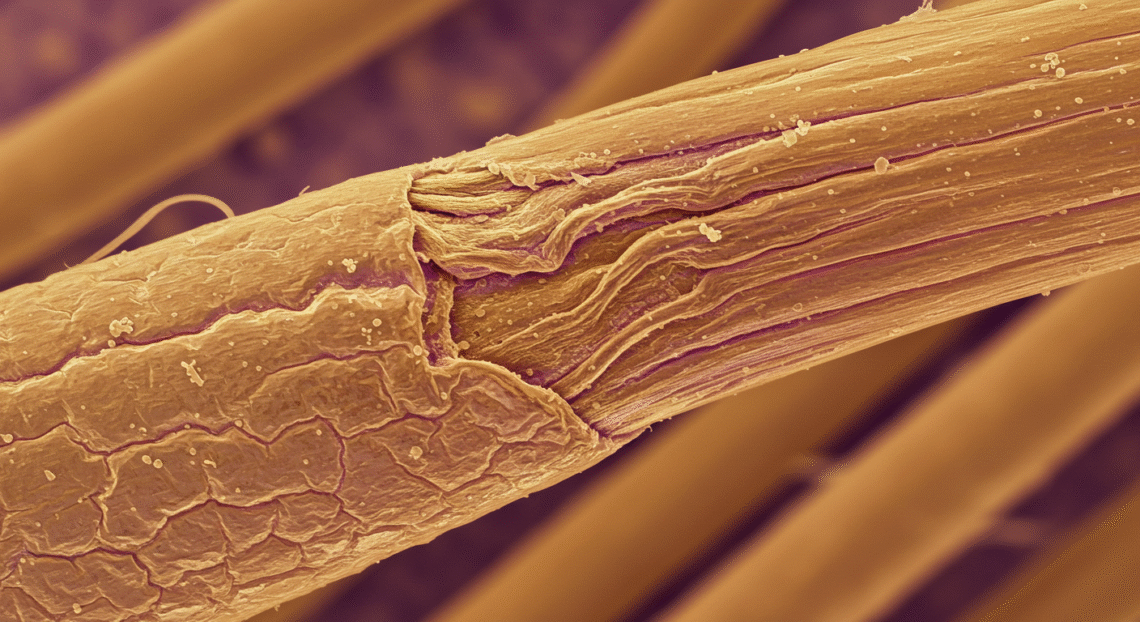
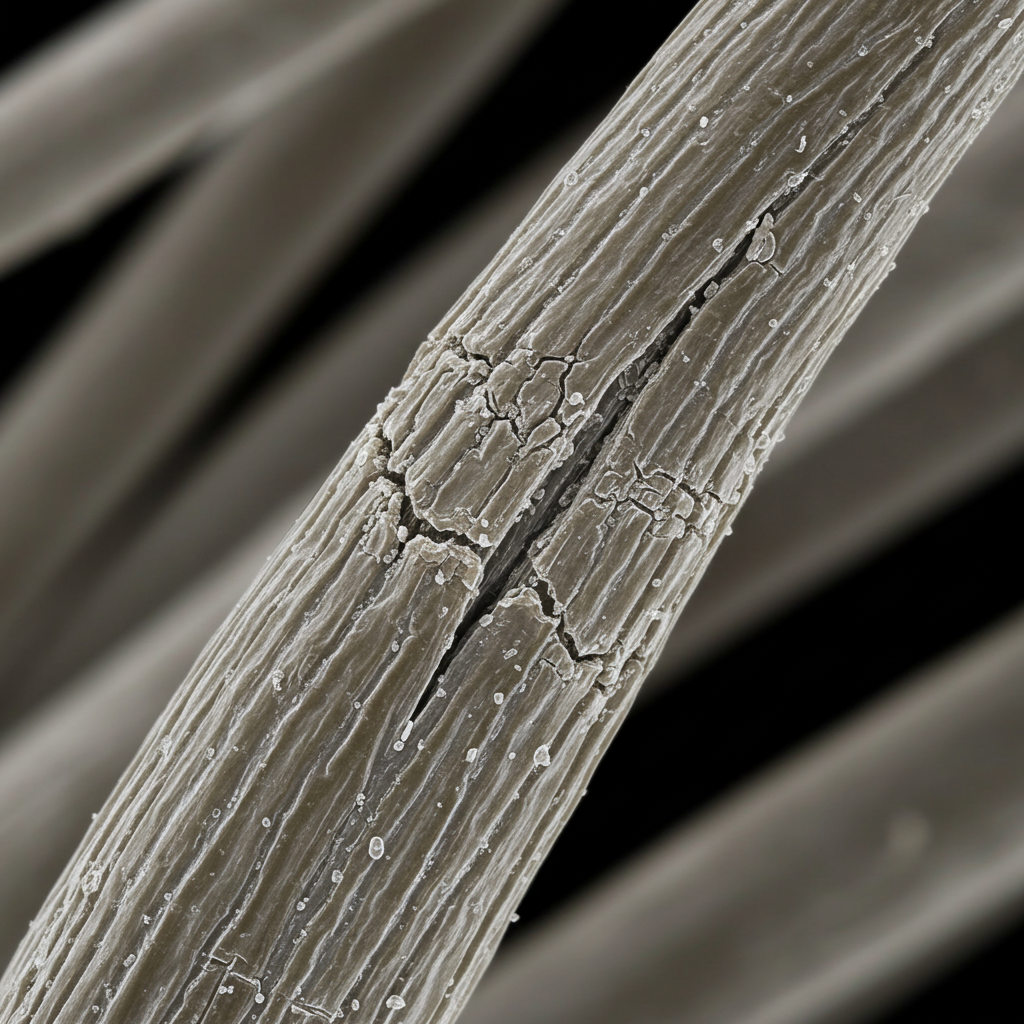
Before we dive into solutions, let’s understand what split ends really are. Split ends (or trichoptilosis) occur when the protective outer layer of your hair (the cuticle) wears away, causing the inner cortex to fray. This damage typically starts at the ends where hair is oldest and most vulnerable.
Common causes include:
• Heat styling tools (flat irons, curling wands, blow dryers)
• Chemical treatments (coloring, perms, relaxers)
• Environmental factors (sun, wind, pollution)
• Mechanical damage (rough brushing, tight hairstyles)
• Nutritional deficiencies (lack of protein, vitamins)
The Revolutionary Approach: Repair Instead of Cut
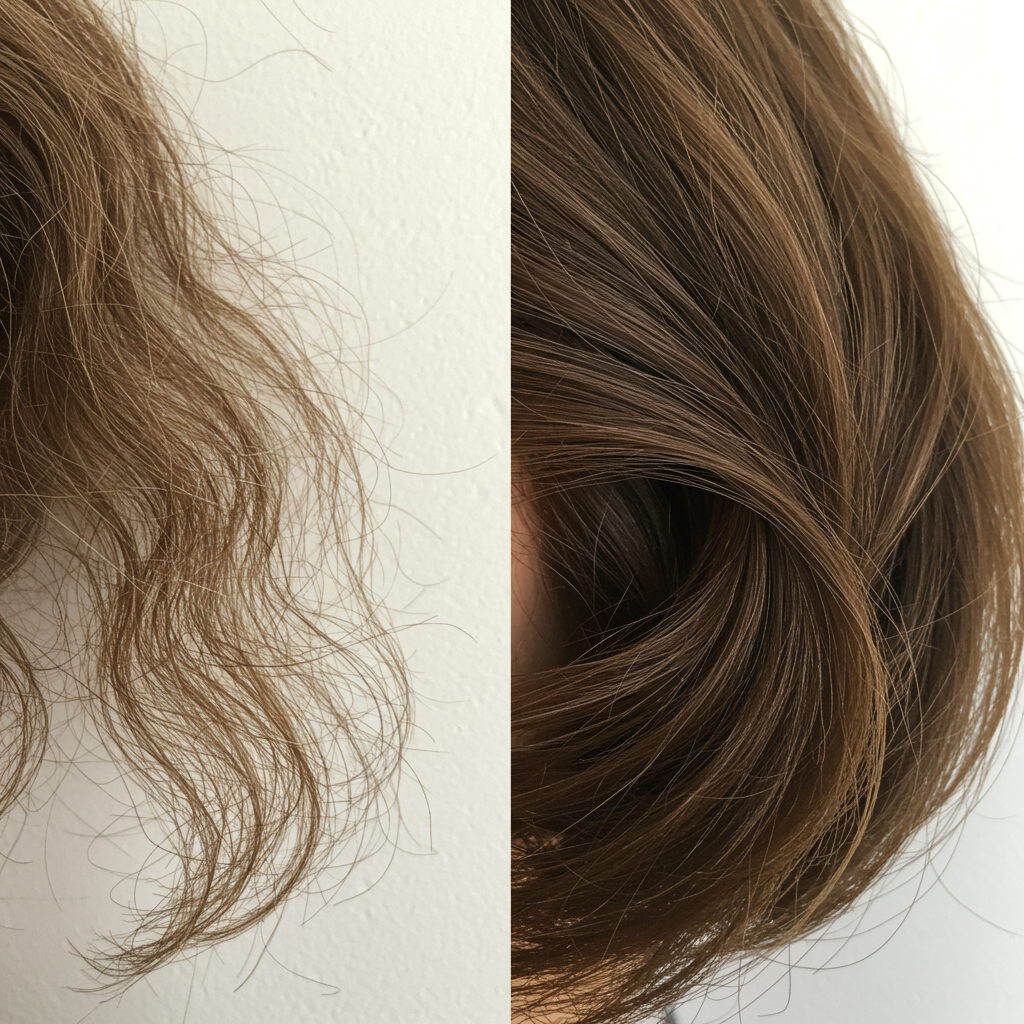
Traditional wisdom says you must cut split ends, but emerging hair science offers alternatives. While severely damaged ends may still need trimming, many cases of early-stage splitting can be effectively treated with these innovative methods:
1. Keratin Fusion Treatments: These salon or at-home treatments use hydrolyzed keratin to fill in gaps in the hair shaft, temporarily sealing split ends and restoring smoothness.
2. Bond-Building Technology: New formulas containing cysteic acid or other bond multipliers can help reconnect broken disulfide bonds in the hair cortex.
3. Ceramide Infusions: Like mortar between bricks, ceramides help “glue” damaged cuticle layers back together for visibly healthier ends.
Step-by-Step: How to Fix Split Ends Without Cutting
Now let’s dive into the practical steps you can take today to start repairing your split ends:
Step 1: Assess Your Damage
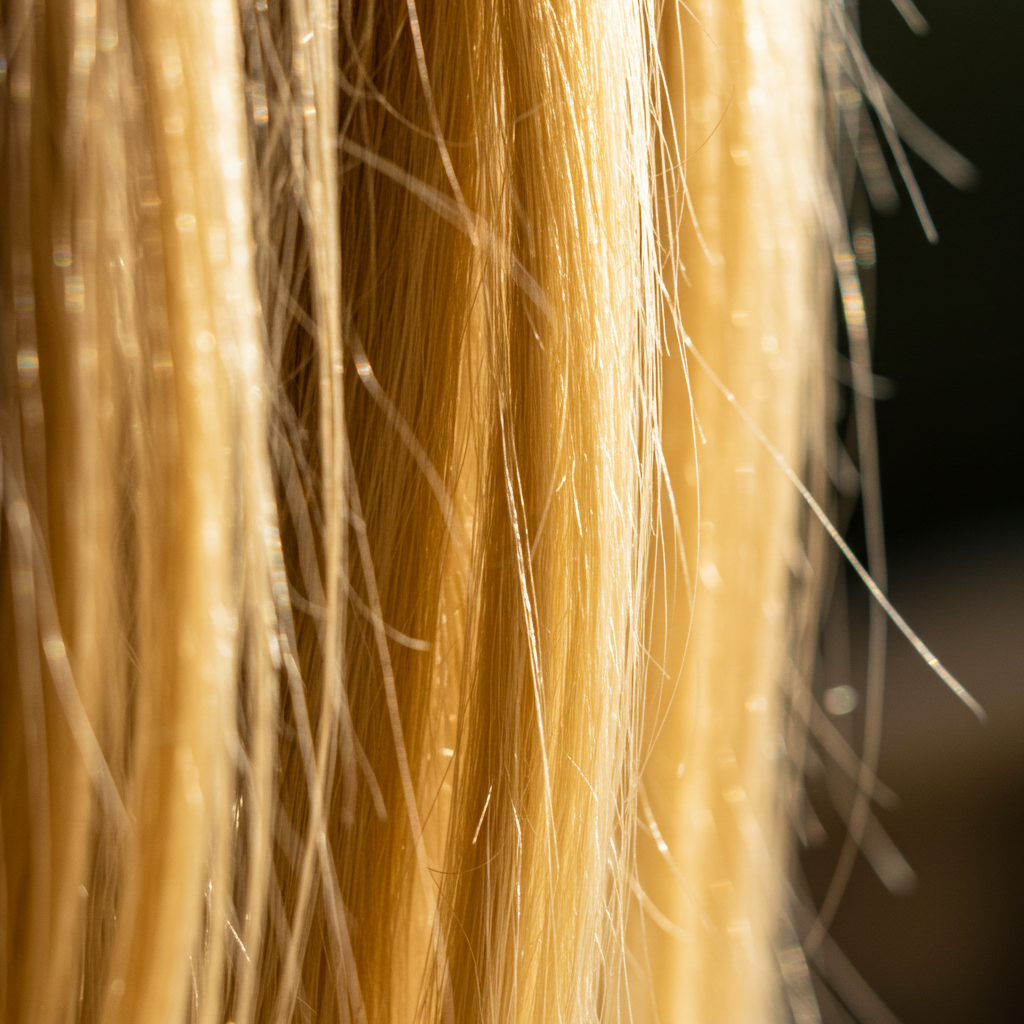
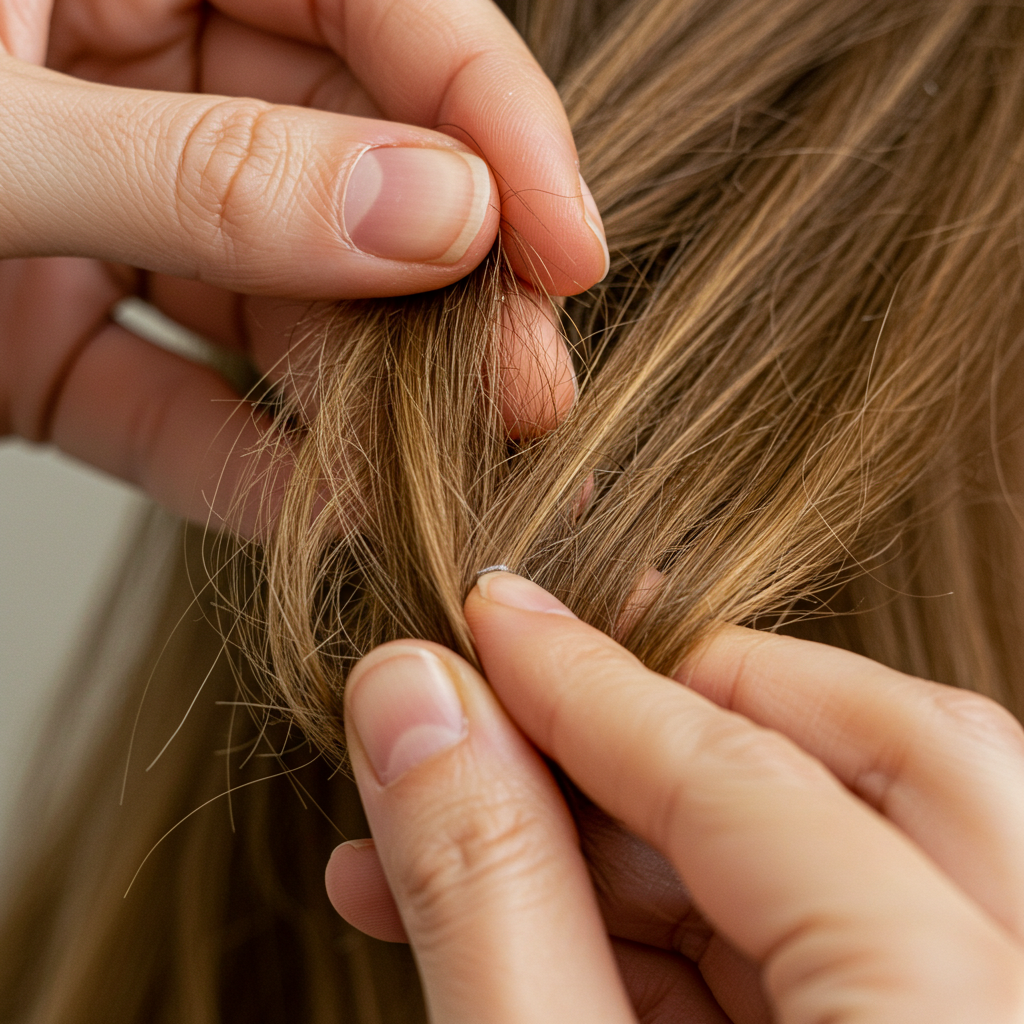
Examine your ends under good lighting. Gently twist small sections – white dots or fraying indicate early splitting. This is the best stage for repair.
Step 2: Cleanse Gently
Switch to a sulfate-free, moisturizing shampoo. Wash hair in cool water to prevent further cuticle damage.
Step 3: Intensive Conditioning
Apply a protein-rich deep conditioner from mid-lengths to ends. Leave on for 15-20 minutes under a warm towel for better penetration.
Step 4: Seal with Serum
While hair is damp, apply a repairing serum containing dimethicone, argan oil, or ceramides to temporarily fuse split ends.
Step 5: Protective Styling
Avoid further damage by keeping ends protected in loose braids or buns when possible.
Top 5 Products That Actually Repair Split Ends
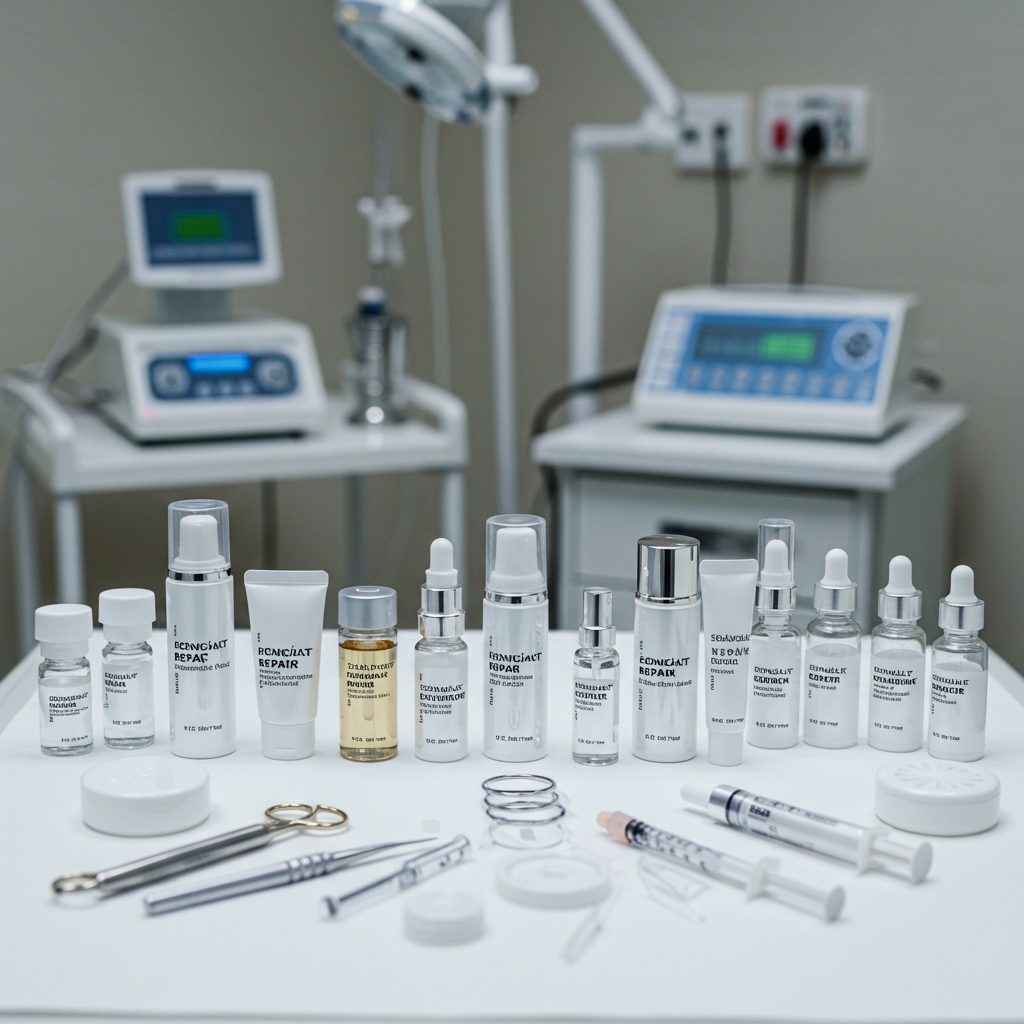
Not all products deliver on their repair promises. These clinically proven options show real results:
1. Olaplex No. 3 Hair Perfector: The gold standard for bond repair that works at molecular level.
2. K18 Leave-In Molecular Repair Mask: Peptide technology that rebuilds hair from inside out.
3. Redken Acidic Bonding Concentrate: Strengthens and seals with citric acid technology.
4. Briogeo Don’t Despair, Repair! Mask: Plant-powered formula with rosehip oil and algae extract.
5. Moroccanoil Treatment: Argan oil-rich formula that smooths and seals split ends instantly.
DIY Natural Remedies for Split End Repair
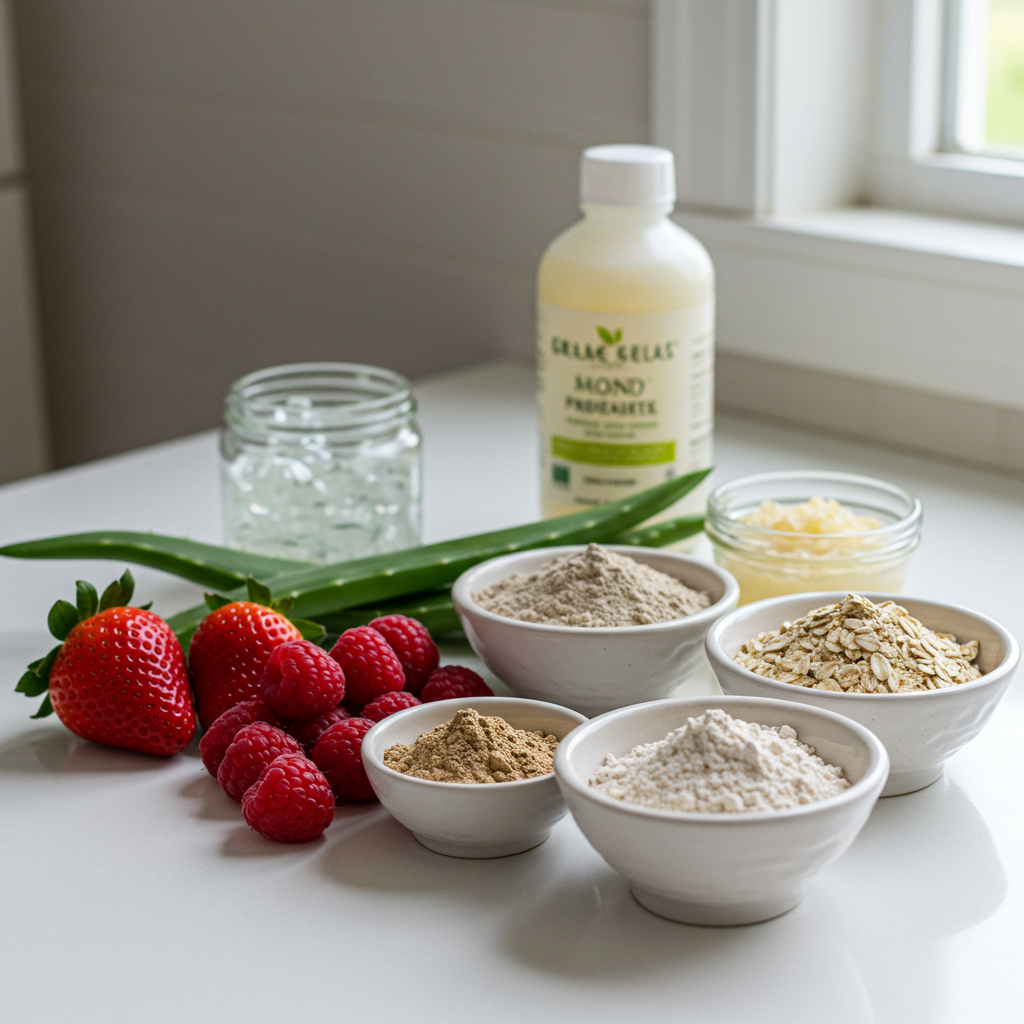
For those preferring natural solutions, these kitchen ingredients can help temporarily improve split ends:
Avocado & Honey Mask:
Mash 1 ripe avocado with 2 tbsp honey and 1 tbsp olive oil. Apply to ends for 30 minutes before rinsing.
Egg & Yogurt Protein Treatment:
Whisk 1 egg with 1/4 cup plain yogurt. Coat ends for 20 minutes to strengthen hair structure.
Coconut Oil Soak:
Warm pure coconut oil and saturate ends overnight. The lauric acid penetrates hair shaft to reduce protein loss.
Note: While these can temporarily improve appearance, they don’t provide permanent repair like professional treatments.
Prevention: How to Stop Split Ends Before They Start
Repair is great, but prevention is better. Implement these habits to minimize future splitting:
• Always use heat protectant before styling (even for low heat)
• Sleep on silk or satin pillowcases to reduce friction
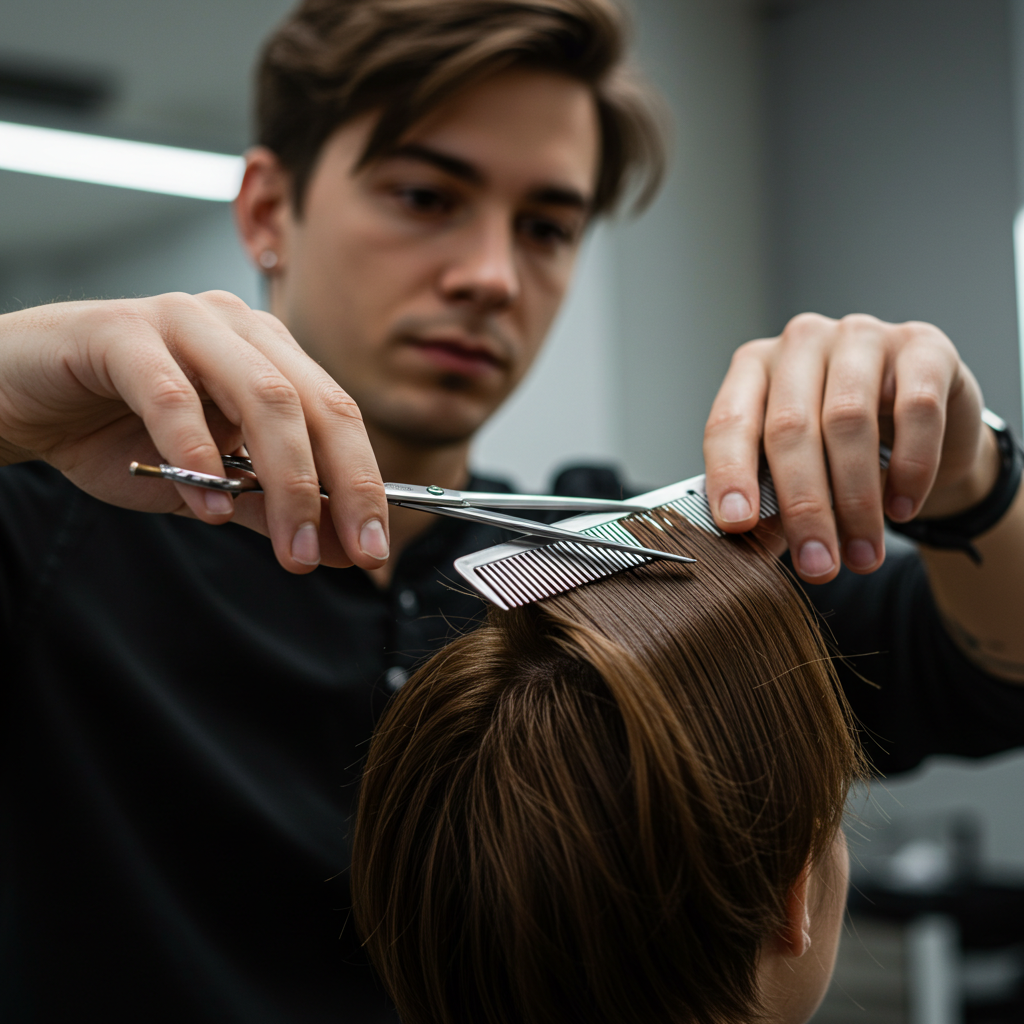
• Get regular micro-trims (1/4″ every 8-12 weeks) to catch splits early
• Brush gently from ends up, using wide-tooth combs on wet hair
• Stay hydrated and eat protein-rich foods for stronger hair growth

When Cutting Is Still Necessary
While these methods can delay trimming and improve hair’s appearance, some cases still require scissors:
• White dotting (severe splitting up the hair shaft)
• Knotting (single strand knots common in curly hair)
• Extreme dryness where ends feel like straw
• Chemical damage causing multiple splits per strand
For these situations, dusting (removing just the damaged ends) is better than waiting until you need major cuts.
Final Thoughts: The Future of Split End Repair
The beauty industry is making exciting advances in hair repair technology. While today’s methods can significantly improve split ends, researchers are developing even more promising solutions:
• Nanotechnology repairs that rebuild hair at cellular level
• Customized protein cocktails tailored to your hair’s specific damage
• Smart haircare devices that detect and treat early splitting
For now, combining professional treatments, gentle care, and targeted products offers the best solution for maintaining length while keeping ends healthy. Remember – beautiful hair starts with healthy ends!

