

For decades, the quest to restore a full head of hair has been a battle fought with limited tools. The gold standard, Follicular Unit Extraction (FUE) and its predecessor Follicular Unit Transplantation (FUT), are essentially a game of redistribution. They move hair from the permanent “donor zone” at the back and sides of the head to the thinning “recipient zone” on top. But what if you don’t have enough donor hair? What if you’re a Norwood scale 6 or 7, or suffer from conditions like alopecia totalis? For millions, traditional transplants are a logistical impossibility.
This fundamental limitation—the finite donor supply—has been the single greatest barrier in hair restoration. But what if we could create new hair, rather than just relocate it? This isn’t science fiction anymore. Enter the dawn of a new era: bioengineered hair. This groundbreaking approach, emerging from the most advanced cell biology and tissue engineering labs, promises to not just change the game, but to create an entirely new one, making donor-limited procedures a thing of the past.

The Inherent Limitations of Traditional Hair Transplants
To understand why bioengineering is such a monumental leap, we must first acknowledge the constraints of current methods. Both FUE and FUT are brilliant surgical techniques, but they operate under a strict principle of conservation. You can only harvest a certain number of grafts before the donor area looks over-harvested and thin. The result is a finite resource that must be meticulously managed.
This creates several significant challenges. For patients with extensive hair loss, achieving adequate coverage is often impossible without looking patchy or unnatural. Scarring, while minimized with modern FUE, is still a concern. The entire process is also inherently invasive, requiring hours of surgery, followed by a recovery period. Most crucially, these procedures do nothing to stop the underlying biological process of hair loss; they simply move hair that is resistant to DHT into areas that are not. The patient’s native hair may continue to thin around the transplanted grafts, requiring further procedures or medication.
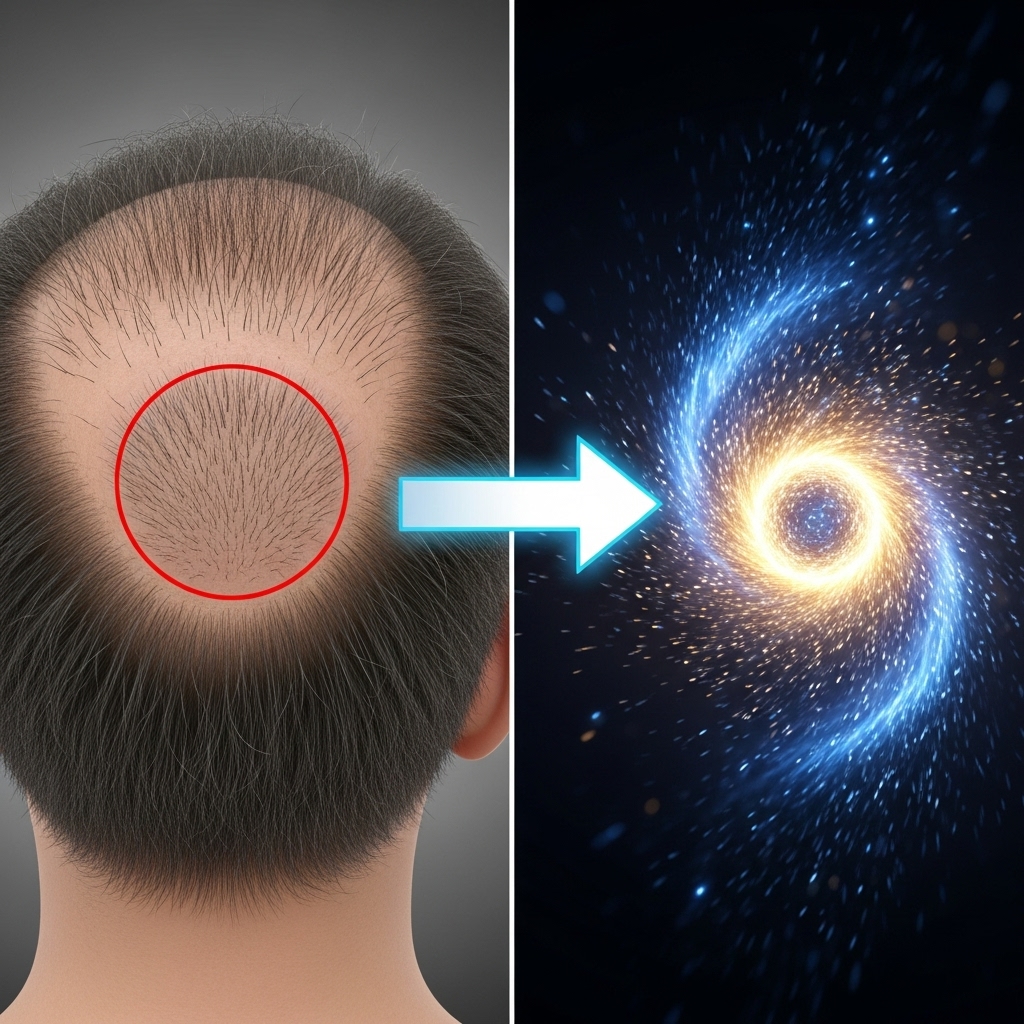
What Exactly Is Bioengineered Hair?
Bioengineered hair, also referred to as hair follicle neogenesis or cell-based therapy, flips the script entirely. Instead of moving existing follicles, the goal is to grow new ones in a laboratory setting. The process typically begins with a tiny biopsy from the patient’s scalp, much smaller than a standard FUE punch. From this sample, scientists isolate two critical types of cells:
- Dermal Papilla (DP) Cells: These are the command center of the hair follicle. They send signals that dictate the hair growth cycle—when to grow, when to rest, and when to shed.
- Epithelial Stem Cells: These are the building blocks. They multiply and differentiate to form the actual structure of the hair shaft and the inner root sheath.
These cells are then multiplied by the millions in a specialized culture medium. Once a sufficient number is produced, they are combined in a specific way that encourages them to self-assemble into primitive, but functional, hair follicles. These newly formed follicles can then be implanted into the patient’s bald scalp.
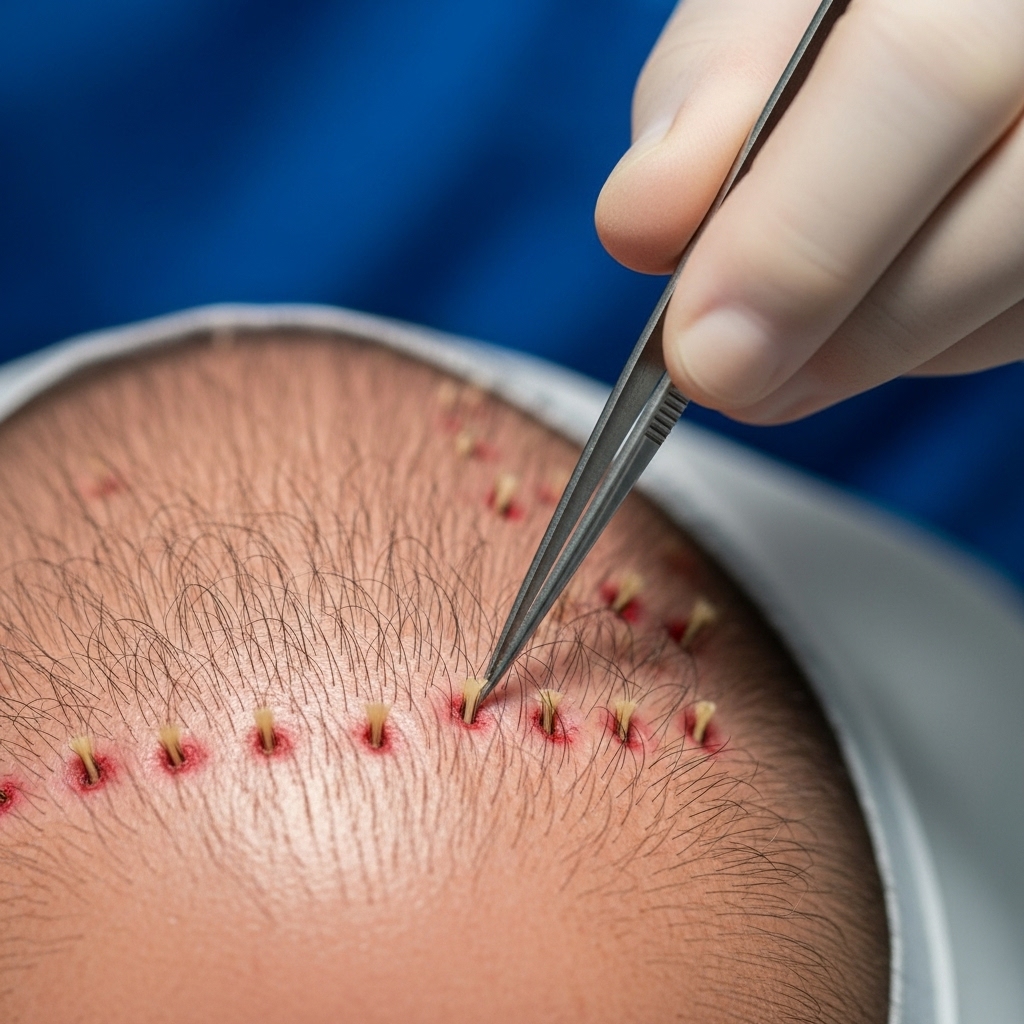
The Revolutionary Advantages of a Lab-Grown Follicle
The benefits of this approach are not just incremental; they are transformative for the entire field of hair restoration.
1. Unlimited Supply: This is the most significant advantage. Since cells can be multiplied almost indefinitely in culture, the potential supply of new hair follicles becomes virtually limitless. This completely solves the donor dominance problem and opens up treatment for patients who were previously deemed unsuitable candidates.
2. Trally Natural Results: Because these are entirely new follicles, they can be designed to match the patient’s exact hair characteristics—curl, color, angle, and texture. Surgeons wouldn’t be limited to the hair type from the back of the head; they could potentially create a hairline with fine, soft hair and use thicker follicles for behind it, mimicking natural growth patterns with unprecedented accuracy.
3. Minimally Invasive Harvesting: The initial harvest requires only a few hundred cells, leaving no visible scar and causing minimal disruption. The implantation process itself is expected to be less invasive than traditional FUE, as it would involve placing micro-grafts rather than extracting them.
4. Autologous Treatment: The cells used are the patient’s own. This eliminates any risk of immune rejection or allergic reaction, and the need for immunosuppressant drugs, making it a very safe long-term solution.

The Current State of the Science: From Lab to Clinic
This all sounds incredible, but is it real? The answer is a resounding yes, though it’s still in the advanced stages of development. Companies like Stemson Therapeutics and dNovo are at the forefront, having already demonstrated success in generating new hair growth on mouse models using human cells. The results are tangible: actual, pigmented hair fibers growing from bioengineered follicles.
The current focus is on scaling up the process reliably and ensuring the newly created follicles are robust, cycle correctly (grow, rest, shed, and regrow), and integrate properly with the host’s scalp tissue, including connecting to nerves and blood vessels. Clinical trials in humans are the next critical step, and while timelines are always cautious in medical science, the first-in-human trials are anticipated within the next few years.

Challenges and Considerations on the Path to Mainstream Use
As with any revolutionary medical technology, there are hurdles to overcome before bioengineered hair becomes a standard offering at clinics. The primary challenge is consistency and efficacy. The process of guiding cells to form perfect, cycling follicles every single time is immensely complex. Researchers must ensure that the bioengineered hair not only grows initially but also maintains its growth cycle permanently.
Regulatory approval from bodies like the FDA will be a rigorous and necessary process to ensure safety and efficacy for widespread public use. Furthermore, the cost of such a sophisticated, cell-based therapy will likely be high initially. However, as the technology matures and processes become more efficient, costs are expected to decrease, making it more accessible. It’s also important to note that this technology is aimed at creating new follicles and may not be a direct solution for those whose hair loss is due to scarring (cicatricial alopecia), where the skin itself cannot support growth.

A Glimpse into the Future: The Next 10 Years of Hair Restoration
The successful implementation of bioengineered hair will fundamentally reshape the industry and patient experience. We could move from a model of “hair redistribution” to one of “hair regeneration.” The consultation process may shift from “how much donor hair do you have?” to “what density and hair type would you prefer?”
Looking further ahead, this technology could be combined with gene editing tools like CRISPR to correct the genetic predisposition to hair loss in the newly created follicles, making them permanently resistant to balding. It could also be used to treat eyebrow loss, beard hair, and even body hair for burn victims seeking restorative surgery.

Conclusion: A Future Full of Hair
The promise of bioengineered hair is nothing short of a paradigm shift. It transitions hair restoration from a finite, mechanical process to an infinite, biological one. While traditional transplants will likely have a place for certain candidates for years to come, the future belongs to regeneration.
The road from the lab to your local clinic is still being paved, but the pace of progress is accelerating. The science is proven; the will is there. For the millions who have felt that a full head of hair was forever out of reach, bioengineering offers a future not defined by loss, but by limitless potential. The future of hair transplants won’t be found in the back of your head, but in the petri dish of a lab, and it’s a future that is growing closer every single day.

