
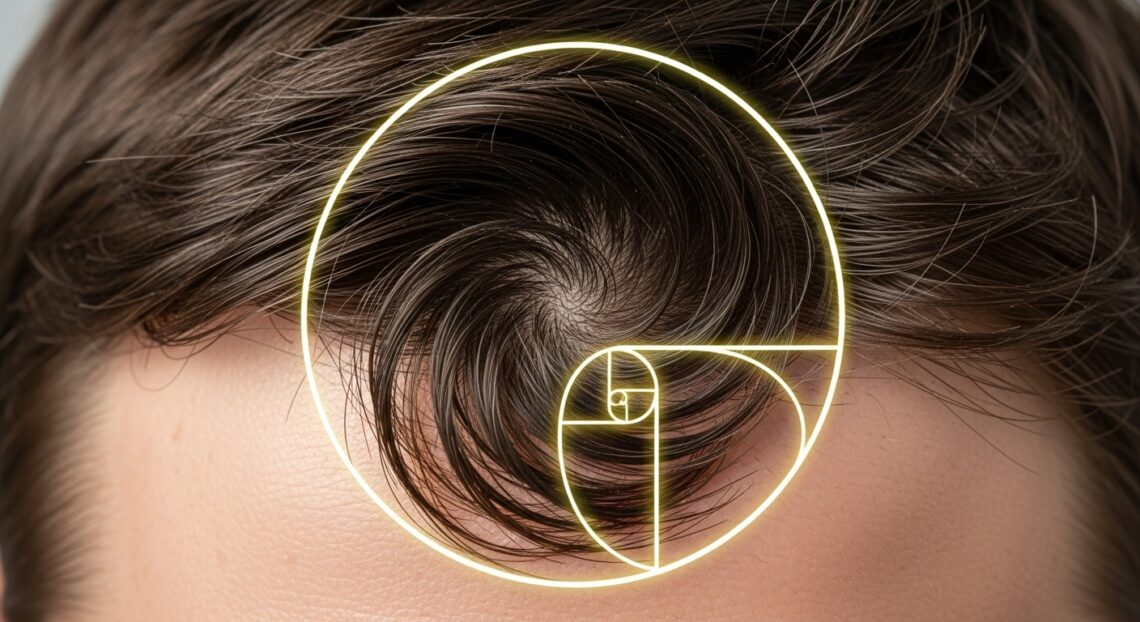
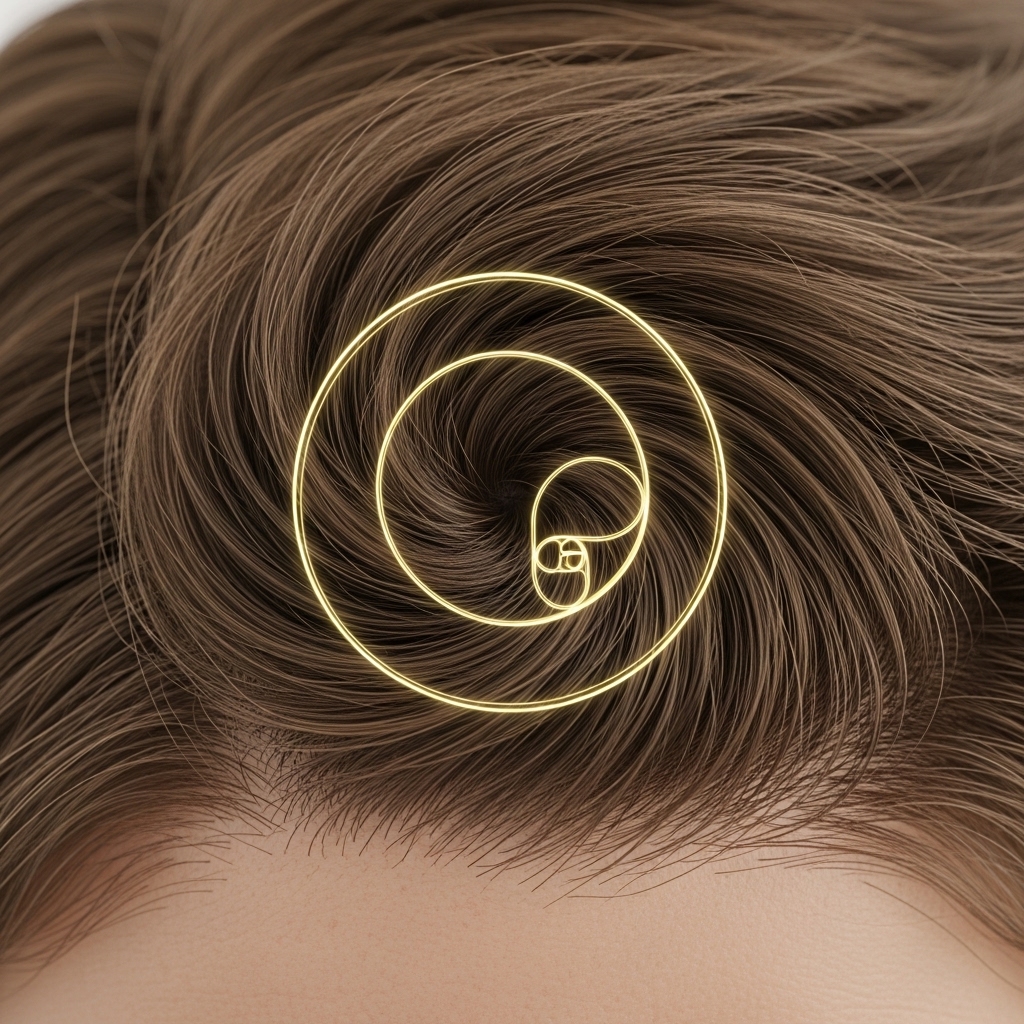
Have you ever noticed the mesmerizing swirls in your hair or the way strands seem to follow a natural pattern? What if we told you that your hair growth isn’t just random—it follows one of nature’s most beautiful mathematical patterns: the Fibonacci sequence? This fascinating connection between biology and mathematics reveals how even our hair obeys the same principles that shape galaxies, sunflowers, and hurricanes.
In this article, we’ll explore how the Fibonacci sequence manifests in hair growth patterns, why this occurs, and what it means for understanding human biology. Whether you’re a math enthusiast, a beauty aficionado, or simply curious about the hidden patterns in nature, this discovery will change how you see your hair forever.
The Fibonacci Sequence: Nature’s Hidden Code
The Fibonacci sequence is a series of numbers where each number is the sum of the two preceding ones: 0, 1, 1, 2, 3, 5, 8, 13, 21, and so on. This simple pattern appears everywhere in nature—from the arrangement of leaves on a stem to the spirals of a pinecone. The ratio between consecutive Fibonacci numbers (approximately 1.618) is known as the Golden Ratio, a proportion considered aesthetically pleasing and naturally efficient.
When applied to growth patterns, the Fibonacci sequence creates spirals that allow for optimal packing and efficient use of space. This is why we see it in flower petals, seashells, and even galaxies. But how does this relate to human hair?
Hair Whorls: The Fibonacci Spiral on Your Scalp
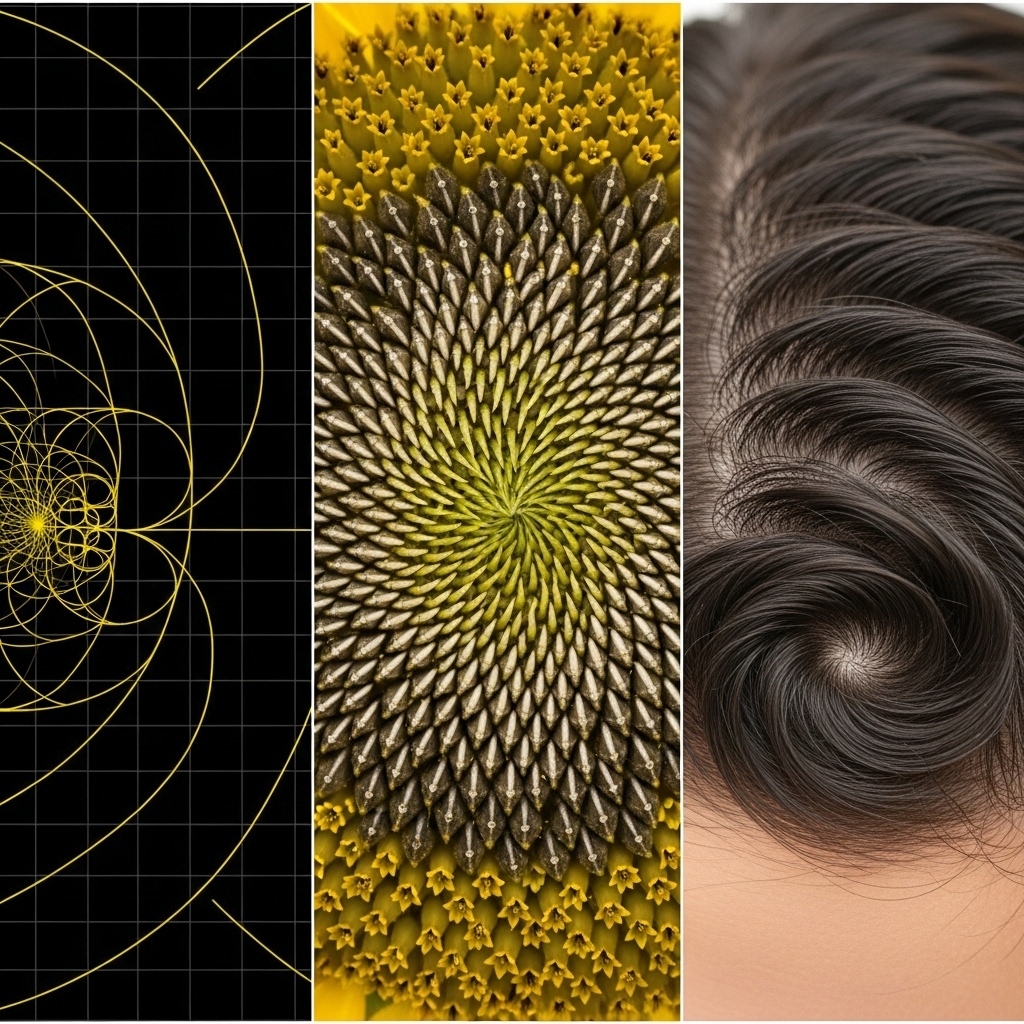
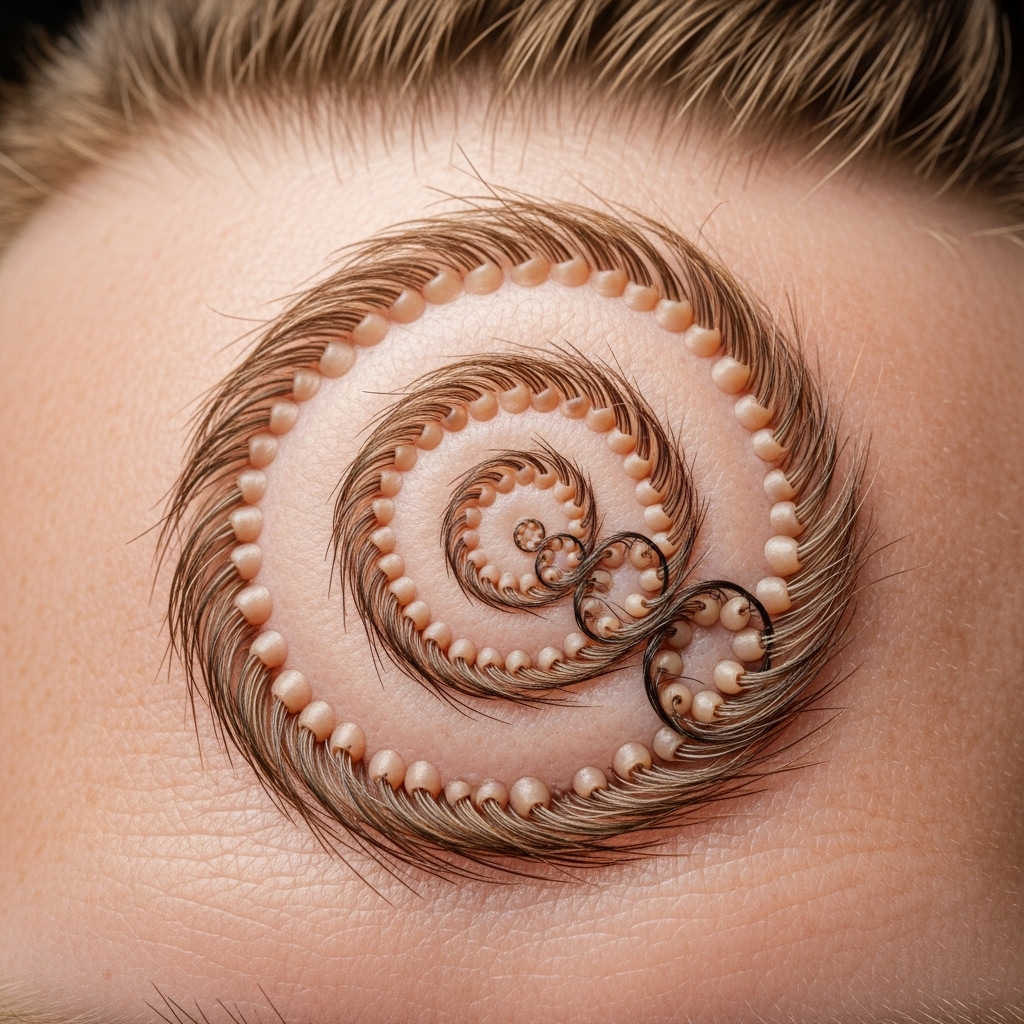
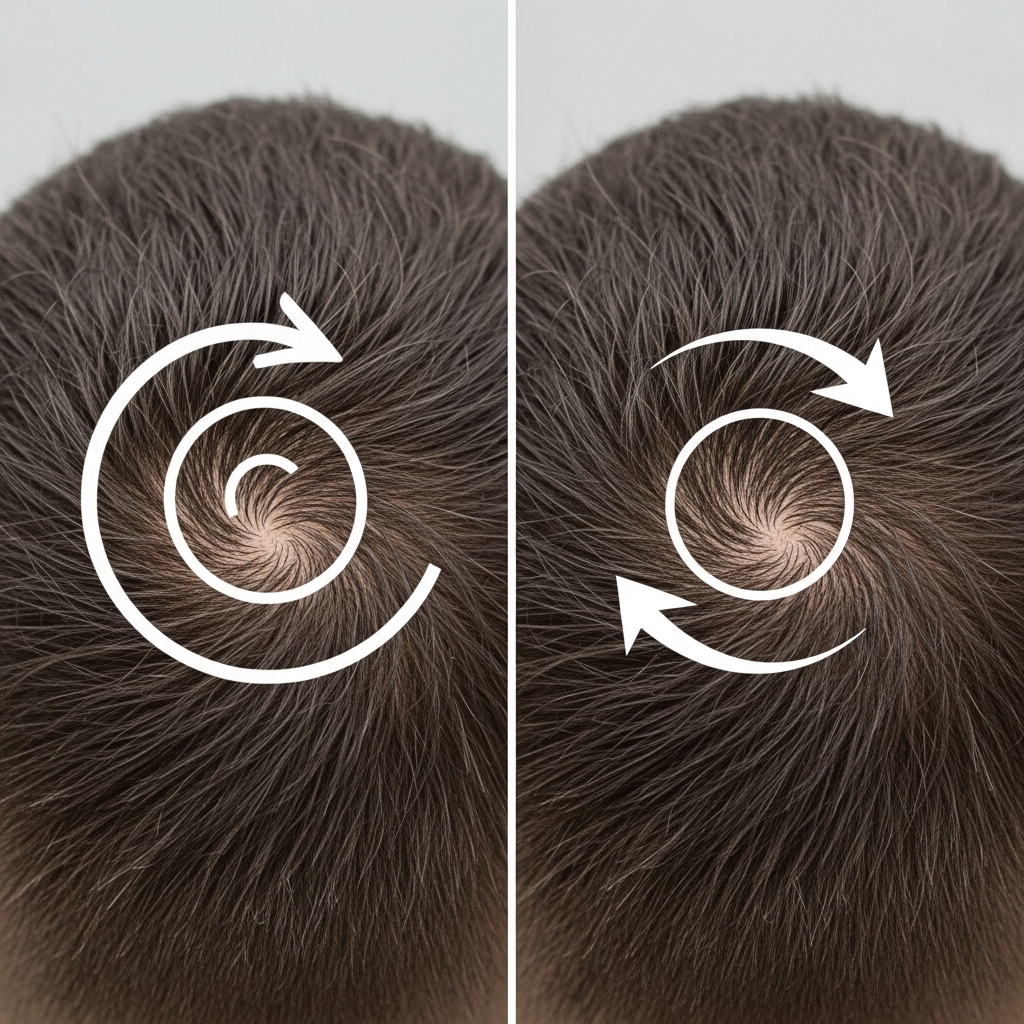
Most people have at least one hair whorl—a circular pattern of hair growth that radiates from a central point. These whorls often appear at the crown of the head and can spiral clockwise or counterclockwise. What’s remarkable is that these spirals frequently follow the Fibonacci sequence in their growth pattern.
Researchers have observed that:
– The number of spirals in a hair whorl often corresponds to Fibonacci numbers (e.g., 5, 8, or 13 distinct strands radiating outward).
– The angle between successive hair strands frequently approximates the Golden Angle (137.5°), which is derived from the Golden Ratio.
– Multiple whorls on the same scalp often arrange themselves according to Fibonacci spacing.
This isn’t just coincidence—it’s a result of how hair follicles organize themselves during embryonic development to maximize coverage and minimize crowding.
The Science Behind Fibonacci Hair Growth
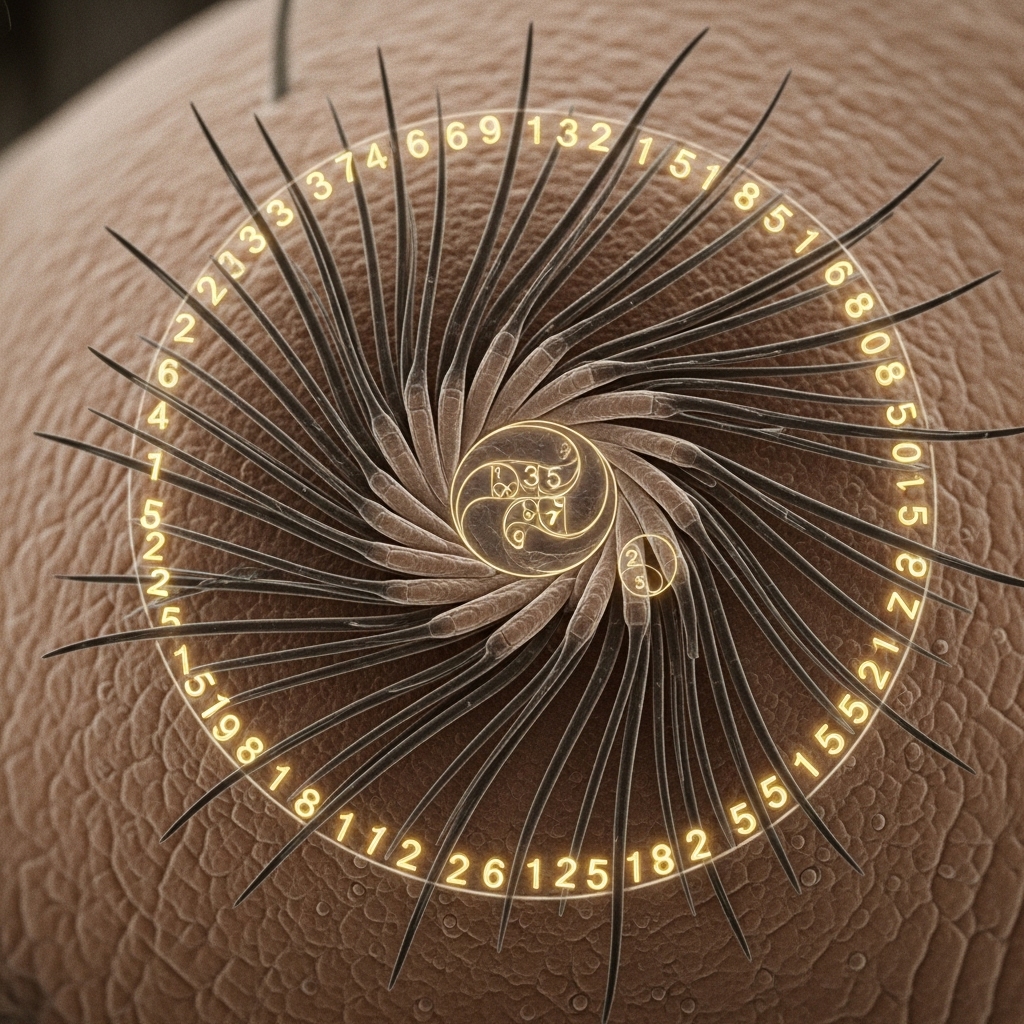
Why would hair follow a mathematical sequence? The answer lies in efficient packing theory. Just like seeds in a sunflower head need to arrange themselves without gaps, hair follicles must cover the scalp evenly while avoiding bald spots or overcrowding. The Fibonacci pattern provides the most efficient solution.
During fetal development, hair follicles emerge in waves across the scalp. Each new follicle tends to appear at an angle approximately 137.5° from the previous one—the Golden Angle. This creates the characteristic spiral patterns we see as whorls. The mathematical precision of this process ensures:
– Optimal coverage: Every part of the scalp receives adequate follicle placement.
– Minimal competition: Hair strands don’t crowd each other as they grow.
– Natural aesthetics: The resulting patterns are visually harmonious.
Interestingly, deviations from this pattern may explain certain hair conditions. For instance, “double crowns” (two distinct whorls) occur when the Fibonacci spacing is interrupted during development.
Fibonacci in Hair Density and Growth Cycles
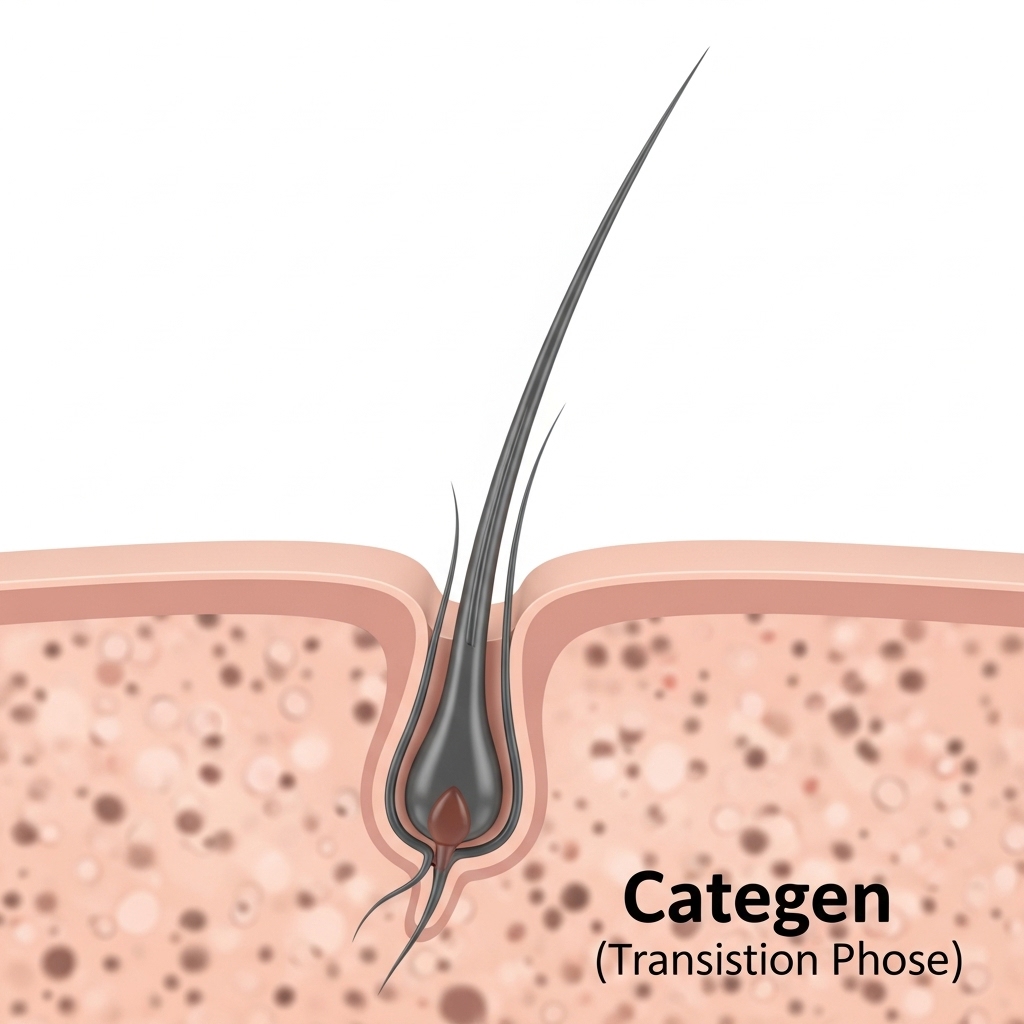
The Fibonacci influence extends beyond just the spatial arrangement of hair. The growth cycles of individual hairs also show mathematical patterns:
– Anagen (growth) phase: Typically lasts years, following a progression that can approximate Fibonacci numbers (e.g., 2, 3, 5 years).
– Catagen (transition) phase: Lasts about 2 weeks—a Fibonacci number.
– Telogen (resting) phase: Often around 3 months before the hair falls out and the cycle restarts.
Even hair density per square centimeter tends to cluster around Fibonacci numbers (e.g., 150, 200, or 350 hairs/cm² in different ethnic groups). This mathematical consistency suggests an underlying biological optimization.
What This Means for Hair Care and Styling
Understanding the Fibonacci patterns in hair growth can actually inform better hair care practices:
1. Cutting techniques: Layers that follow the natural Fibonacci spiral of your whorl will blend more seamlessly.
2. Styling: Brushing or styling in alignment with your hair’s natural mathematical pattern reduces breakage.
3. Product application: Applying treatments in a spiral motion (rather than straight lines) ensures more even coverage.
4. Hair loss treatments: New regenerative therapies are exploring Fibonacci spacing for follicle transplants to mimic natural density.
Some avant-garde stylists even use the Golden Ratio to determine ideal hair lengths and proportions for facial balance.

Exceptions and Variations in Human Hair Patterns
While Fibonacci patterns dominate, not every hair arrangement follows the sequence perfectly. Variations occur due to:
– Genetic factors: Some people inherit atypical whorl patterns.
– Developmental anomalies: Conditions like crown patterning alopecia may represent disrupted Fibonacci organization.
– Environmental influences: In utero positioning can sometimes alter follicle placement.
Interestingly, the direction of your hair whorl (clockwise vs. counterclockwise) may even correlate with handedness—another example of how mathematical patterns permeate our biology.
Beyond Humans: Fibonacci Hair in the Animal Kingdom
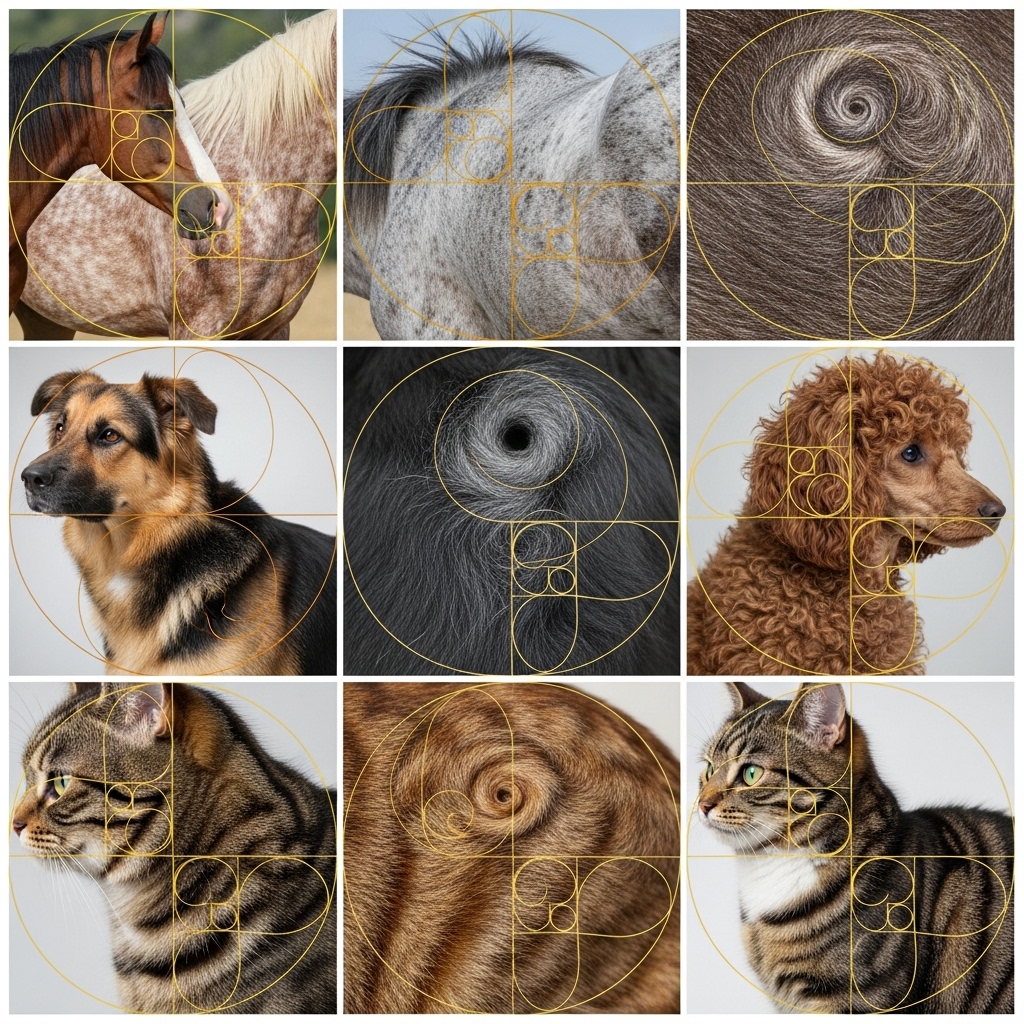
Humans aren’t alone in exhibiting mathematical hair growth. Many mammals show similar patterns:
– Cowlicks in horses: Often arrange in Fibonacci spirals across the body.
– Fur whorls in dogs: Particularly visible in breeds like Boxers or Rhodesian Ridgebacks.
– Feather tracts in birds: Follow Golden Ratio spacing for optimal coverage.
This universal appearance across species suggests the Fibonacci sequence represents a fundamental biological optimization strategy.
Conclusion: Your Hair Is a Mathematical Masterpiece
Next time you brush your hair or notice your crown in the mirror, remember—you’re not just seeing random strands, but a living example of one of nature’s most profound mathematical principles. The Fibonacci sequence in your hair represents millions of years of evolutionary optimization, ensuring perfect coverage, efficient growth, and surprising beauty.
This discovery bridges the gap between mathematics and biology, reminding us that even in our most personal features, we’re connected to the fundamental patterns of the universe. Your hair isn’t just style—it’s science, art, and math growing right from your scalp.

