
7-day weight loss meal plan is one of the most searched health topics online and one of the most misunderstood. The most effective approach is rarely the most extreme. Research from the National Institutes of Health shows that a moderate daily calorie deficit of 500 to 750 calories produces an optimal fat-loss rate of about 1 to 2 pounds per week.
This rate allows fat loss while reducing the risk of muscle loss and metabolic slowdown.
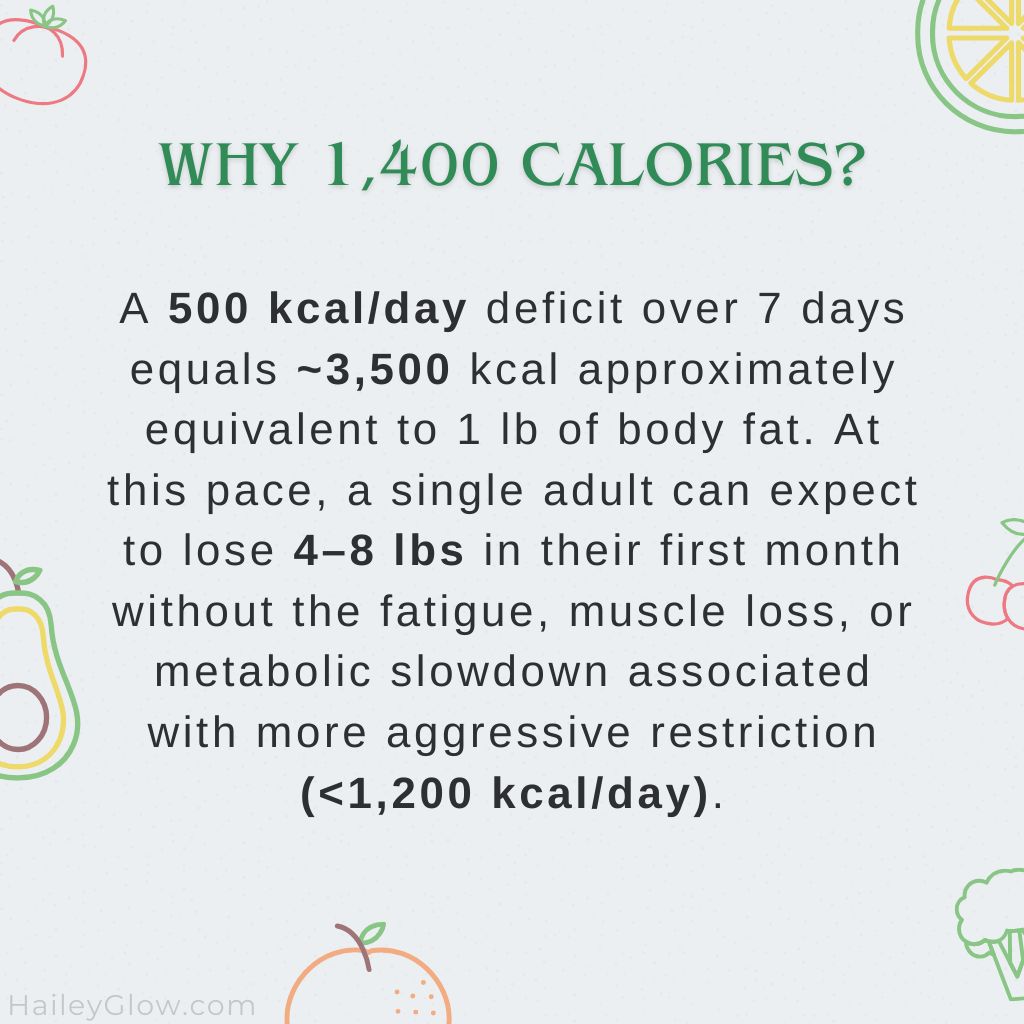
This 7-day weight loss meal plan is designed around that principle. The plan averages about 1,400 calories per day, which creates a sustainable deficit for many single adults whose maintenance calories are around 1,900 per day.
The meals also provide 100g or more of protein daily, which helps:
- Preserve lean muscle
- Improve fullness and appetite control
- Support metabolic rate during fat loss
Who This Meal Plan Is Designed For
This meal plan is calibrated for:
- Single adults shopping and cooking for one person
- People aiming to lose 1 to 2 pounds per week
- Individuals who want high-protein meals instead of restrictive crash diets
- Busy professionals needing meals under 30 minutes
- People who previously struggled with hunger on low-calorie plans
This plan is not a medical prescription. Anyone with metabolic conditions such as diabetes or thyroid disorders should consult a registered dietitian before following a calorie-restricted plan.
The NIH Body Weight Planner can help calculate a personalized calorie target.
The Complete 7-Day Weight Loss Meal Plan Calorie Deficit
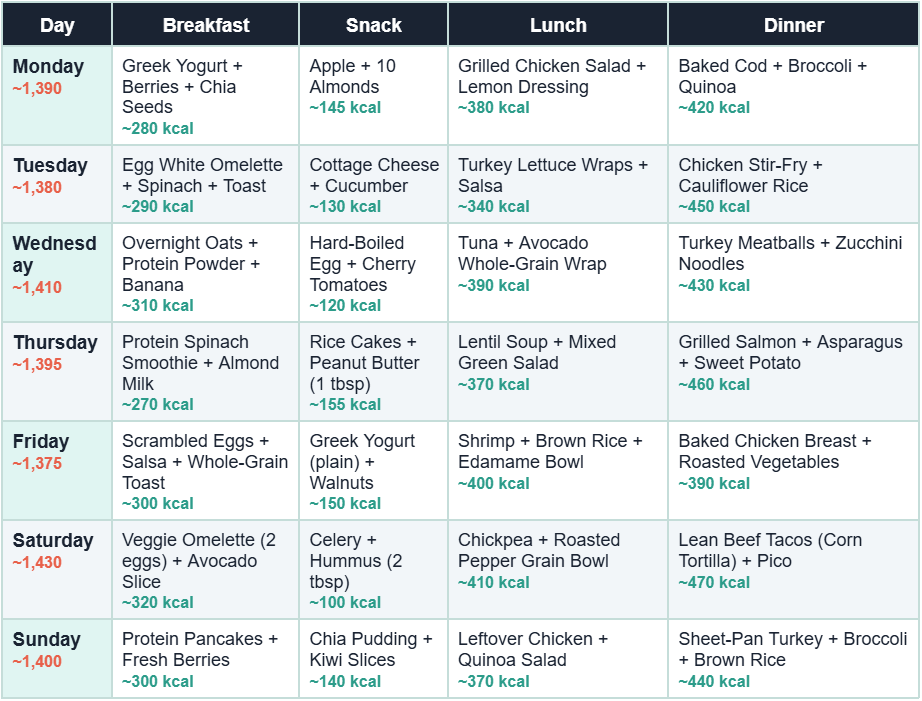
Each day includes:
- Breakfast
- Mid-morning snack
- Lunch
- Dinner
All portions are designed for one adult.
Note: Calorie estimates are based on USDA FoodData Central. Actual values vary depending on brand, cooking method, and portion size.
Understanding Your Calorie Deficit
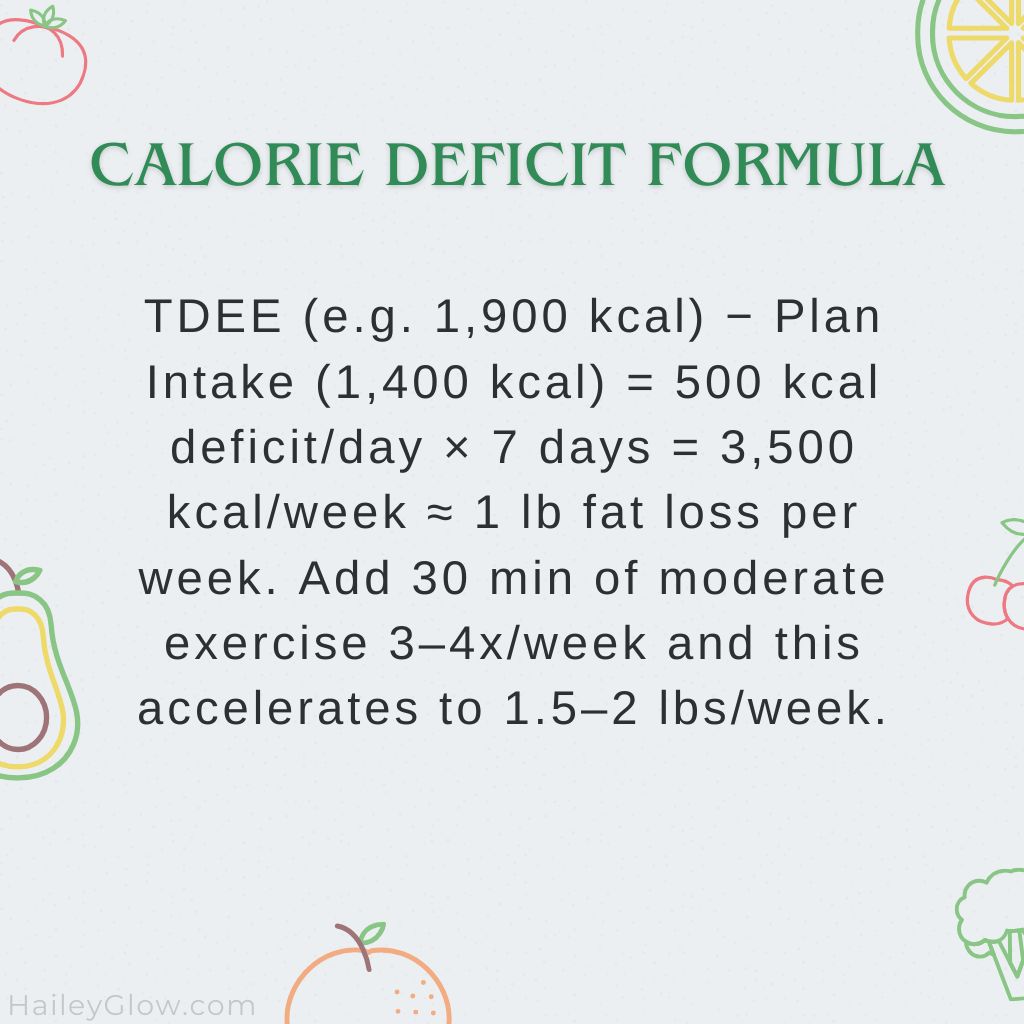
A calorie deficit simply means consuming fewer calories than your body burns daily.
Your total daily energy expenditure (TDEE) includes:
- Basal Metabolic Rate (BMR) – calories burned at rest (about 60–75%)
- Thermic Effect of Food (TEF) – energy used to digest food (about 10%)
- Activity and Exercise – daily movement (about 15–30%)
For many lightly active adults, TDEE ranges between 1,800 and 2,100 calories per day.
This meal plan targets around 1,400 calories per day, creating roughly a 500-calorie deficit. Research shows this level supports steady fat loss while minimizing muscle loss.
Monday: High Protein Launch (~1,390 kcal)

Breakfast: Greek Yogurt, Berries, and Chia Seeds (~280 kcal)
Plain 0% Greek yogurt provides about 17 to 20g of protein per cup. Combined with berries and chia seeds, this breakfast offers:
- High protein
- Antioxidants
- Fiber and omega-3 fats
This combination helps suppress hunger for several hours.
Lunch: Grilled Chicken Salad with Lemon Dressing (~380 kcal)
A large chicken salad with mixed greens, cucumber, and tomatoes is a high-volume meal with low calories.
High-volume foods such as vegetables help reduce daily calorie intake while still feeling satisfying.
Dinner: Baked Cod, Broccoli, and Quinoa (~420 kcal)
Cod is one of the leanest protein sources available. A typical 3-ounce serving provides about 20g of protein with very few calories.
Quinoa adds:
- Complete plant protein
- Fiber
- Essential amino acids
Tuesday Through Thursday: Variety and Meal Prep Efficiency
The midweek meals are designed for variety and easy preparation.
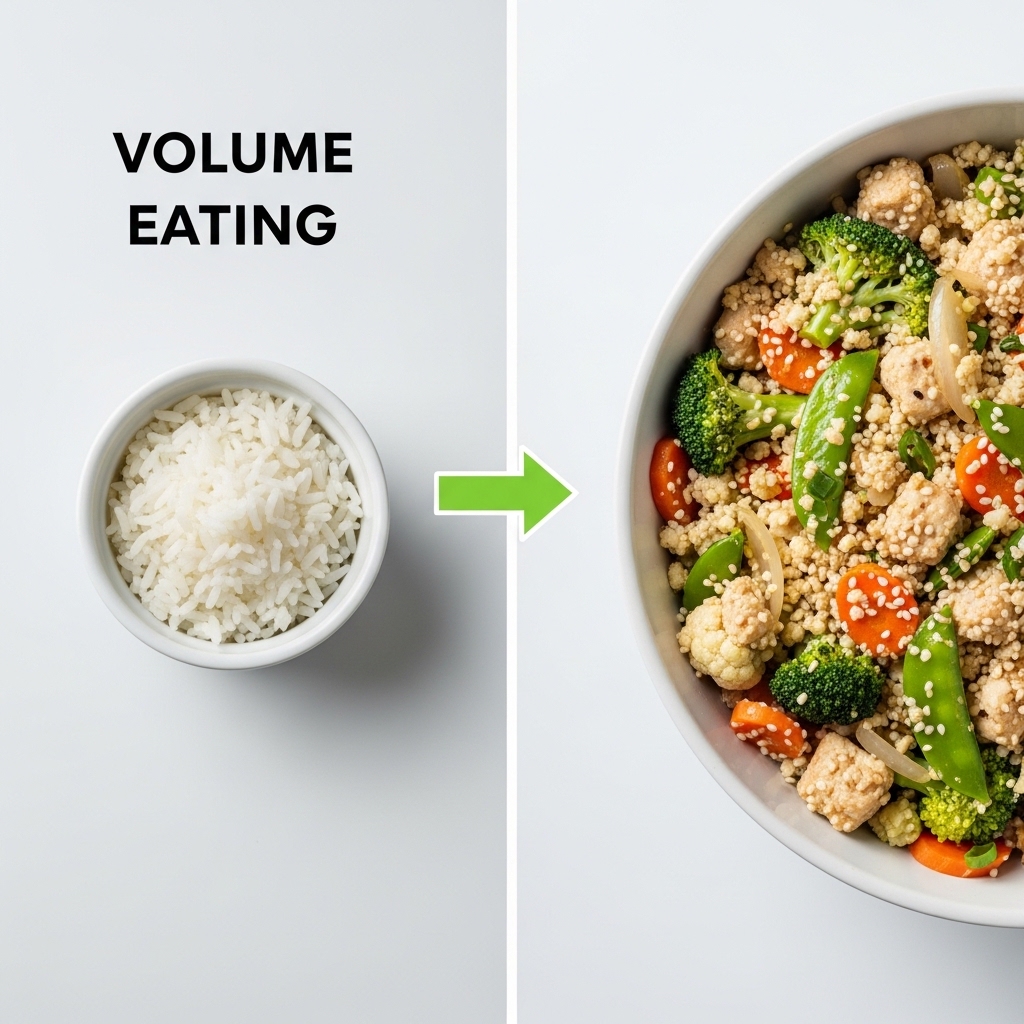
- Tuesday: Cauliflower rice replaces white rice and saves about 150 calories per serving.
- Wednesday: Overnight oats take five minutes to prepare and provide over 20g of protein.
- Thursday: Lentil soup offers one of the highest satiety scores among foods.
Thursday also includes salmon, which provides:
- Omega-3 fatty acids
- Vitamin D
- High-quality protein
Friday Through Sunday: Flexible and Social-Friendly
The final three days allow slightly more flexibility.
Friday: Shrimp, Brown Rice, and Edamame Bowl (~400 kcal)
Shrimp provides about 24g of protein per 3 ounces while remaining extremely low in calories.
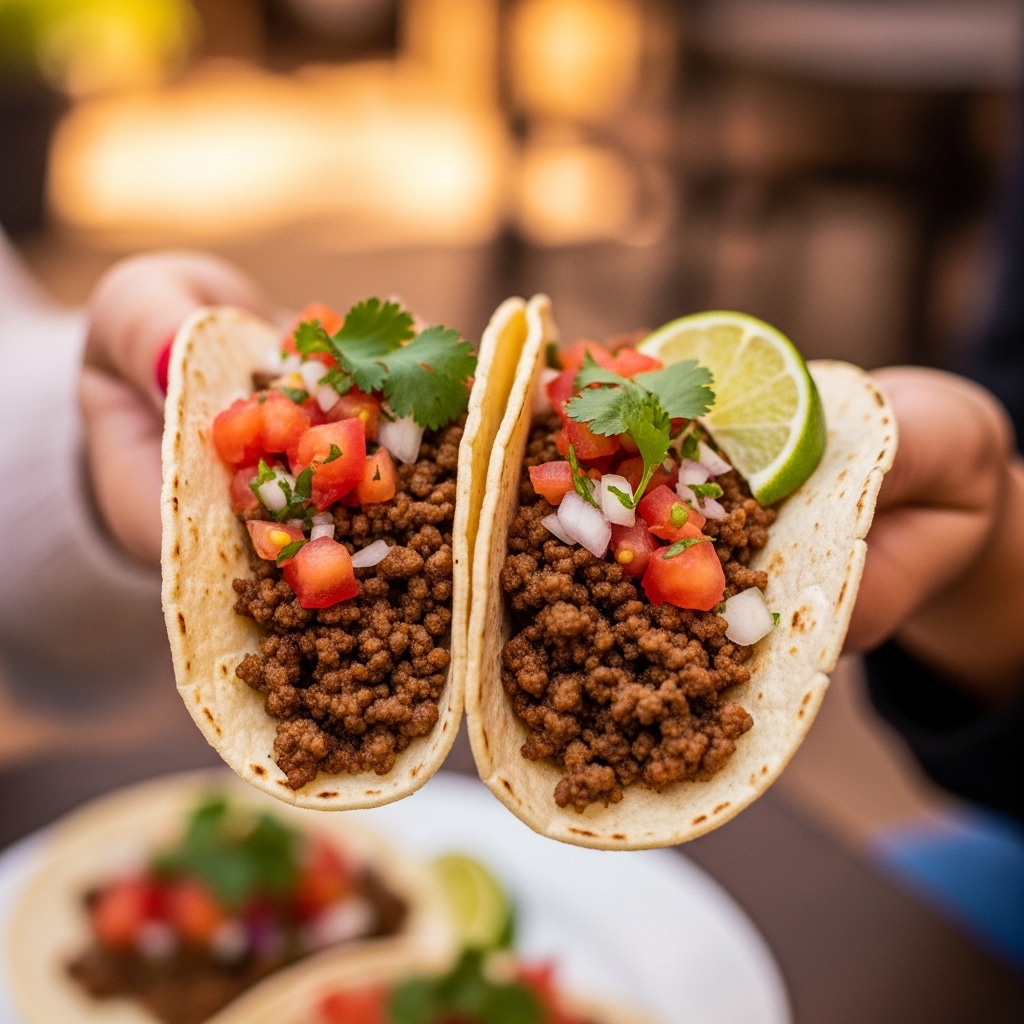
Saturday: Lean Beef Tacos (~470 kcal)
This is intentionally the highest calorie dinner of the week. Planned flexibility helps prevent the mental fatigue that often leads to diet failure.
Using 95% lean beef keeps calories controlled while still delivering high protein.
Sunday: Protein Pancakes and Sheet-Pan Turkey (~300 / ~440 kcal)
Sunday focuses on batch cooking. Preparing turkey and grains in advance creates ready-to-eat meals for the coming week.
Sunday is also the ideal day to:
- Prep overnight oats
- Cook quinoa
- Portion snacks
Full Weekly Nutritional Breakdown
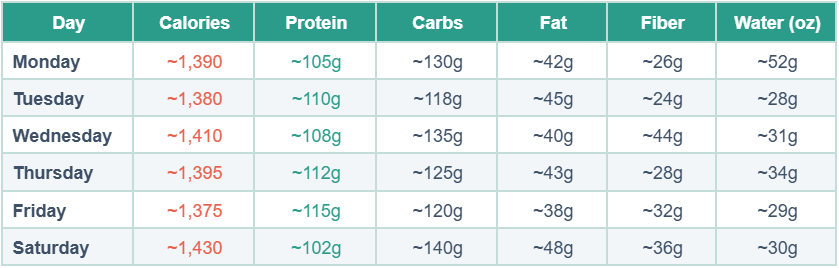
The weekly macronutrient balance roughly follows:
- Protein: ~30% of calories
- Carbohydrates: ~38%
- Fat: ~30%
This balance supports muscle retention during fat loss.
Key Nutrition Highlights
- Average daily protein: ~108g
- Average daily fiber: ~30g
- No day exceeds 1,450 calories
- Omega-3 sources appear multiple times throughout the week
Smart Snacking Strategy
Unplanned snacking is one of the biggest reasons calorie deficits fail.
Studies show that untracked snacks can add 300 to 490 calories per day without people realizing it.
This plan includes snack options with three qualities:
- High protein or fiber
- Low calorie density
- Minimal preparation
Recommended Snack Options
- Apple + 10 almonds (~145 kcal)
- Cottage cheese + cucumber (~130 kcal)
- Hard-boiled egg + cherry tomatoes (~120 kcal)
- Rice cakes + 1 tbsp peanut butter (~155 kcal)
- Celery + hummus (~100 kcal)
Weekly Grocery List and Budget (~$85)
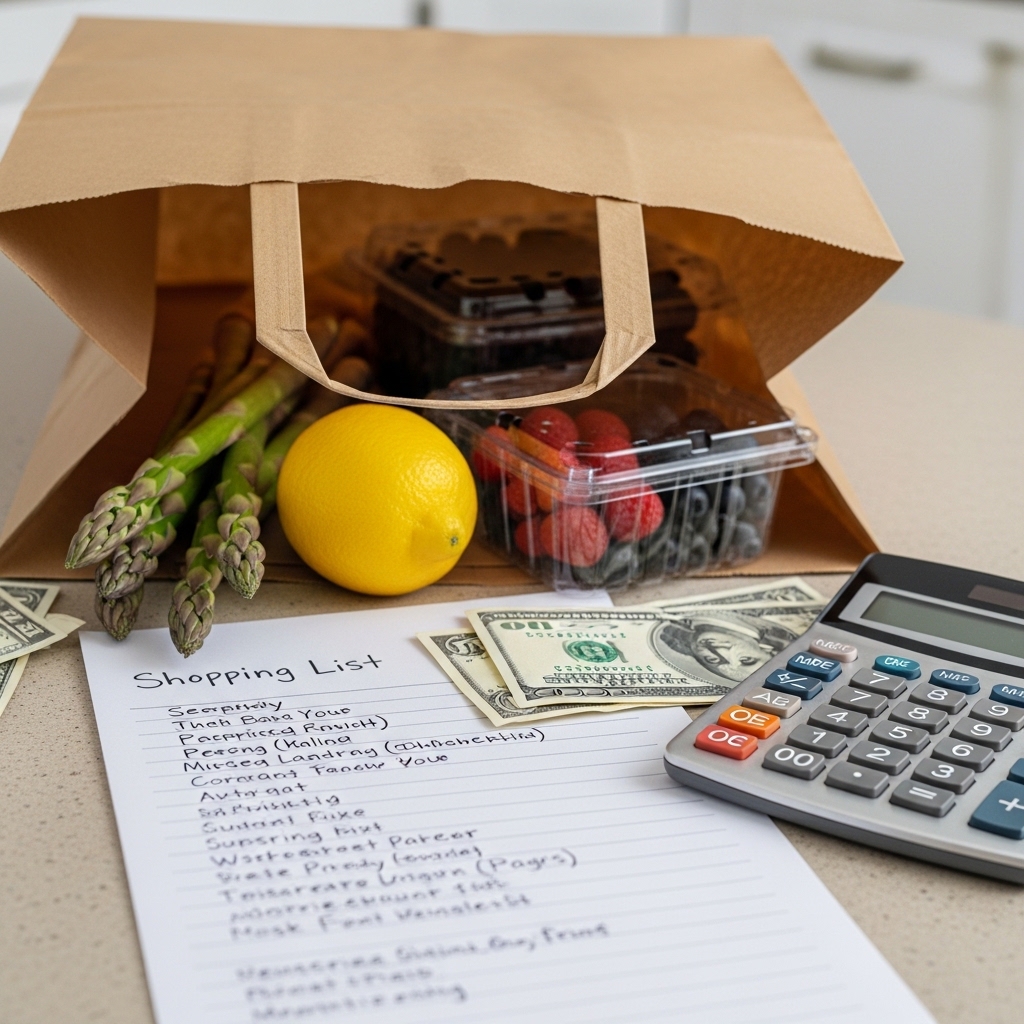
This entire meal plan can typically be completed for $80 to $90 per week by buying proteins in bulk and choosing store-brand staples.
Cost-saving tips:
- Buy frozen vegetables when fresh produce is expensive
- Avoid pre-marinated meats
- Purchase large containers of yogurt and oats
Pantry Staples
- Olive oil spray
- Soy sauce
- Lemon juice
- Dijon mustard
- Garlic powder, cumin, paprika, pepper
The Sunday Meal Prep System
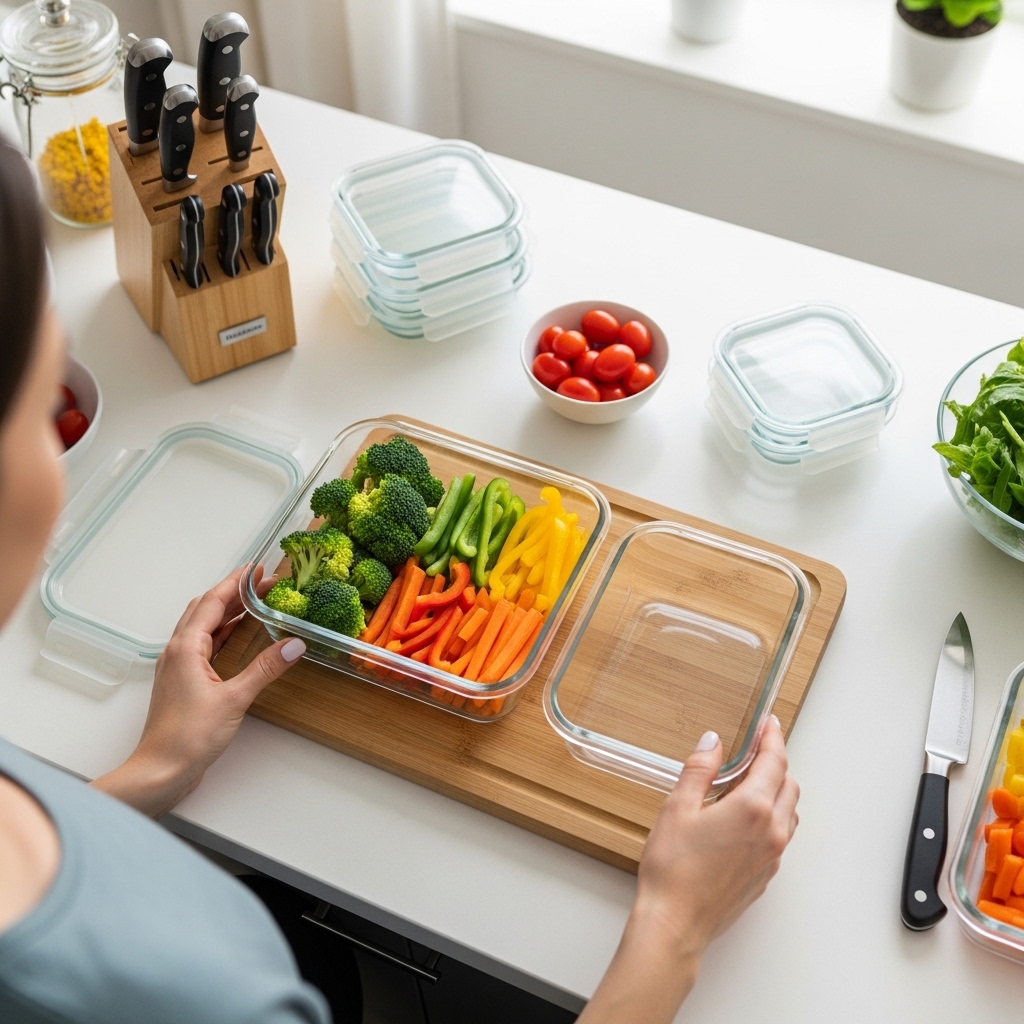
A simple 75-minute meal prep routine can prepare most of the week’s food.
- 0–15 minutes: Cook quinoa and brown rice
- 15–30 minutes: Bake chicken and prepare turkey meatballs
- 30–45 minutes: Prepare overnight oats and boil eggs
- 45–55 minutes: Wash and chop vegetables
- 55–65 minutes: Portion snacks
- 65–75 minutes: Assemble first few lunches
Hydration and Weight Loss
Water is an underrated appetite control tool.
Research shows drinking 500ml of water before meals can reduce calorie intake by about 13%.
Hydration Targets
- Morning: 500ml immediately after waking
- Before meals: 500ml about 30 minutes before eating
- Exercise: 200 to 300ml every 20 minutes
- Daily total: about 2.7 to 3.7 liters
Exercise Pairings for This Meal Plan

Strength Training (3x per week)
Resistance training helps preserve lean muscle during 7-day weight loss meal plan.
Walking (Daily)
A 30-minute brisk walk can burn 150 to 200 calories without significantly increasing hunger.
What to Avoid
- Excessive high-intensity cardio
- Very long endurance sessions while calories are low
How to Avoid a Weight Loss Plateau

- Recalculate calorie needs every 10 pounds lost
- Add occasional maintenance-calorie days
- Increase daily movement
- Improve sleep quality
Low-Calorie Food Swaps
High Impact Swaps
- Cauliflower rice instead of white rice
- Zucchini noodles instead of pasta
- Egg whites instead of whole eggs
- Sparkling water instead of soda
- Mustard instead of mayonnaise
Zero-Calorie Flavor Boosters
- Hot sauce
- Salsa
- Fresh herbs
- Lemon or lime juice
- Vinegar
Common 7-day Weight Loss Meal Plan Mistakes

- Underestimating cooking oil
- Ignoring liquid calories
- Skipping breakfast and overeating later
- Eating too few calories too quickly
- Relying on willpower instead of planning
- Cutting all carbohydrates
- Treating weekends as unrestricted eating days
Frequently Asked Questions
How much weight can I lose in 7 days?
Most people lose 1 to 2 pounds of actual fat per week with a 500-calorie deficit.
Will I feel hungry on 1,400 calories?
High protein and fiber intake significantly reduces hunger. Appetite often stabilizes after the first week.
Can I drink coffee or tea?
Yes. Black coffee and unsweetened tea contain almost no calories.
Is 1,400 calories enough for men?
Some men may require more calories. Many will benefit from increasing intake to 1,600 to 2,000 depending on activity level.
What if I go off-plan?
Simply continue with the next meal. One meal will not undo a week of progress.
Final Thoughts

The most effective 7-day weight loss meal plan strategy is not the most extreme one. It is the one you can sustain for months.
This 7-day weight loss meal plan provides:
- High protein to protect muscle
- Controlled calories for fat loss
- Simple meals for real life
- An affordable grocery budget
Use the week as feedback. Track hunger, energy, sleep, and progress. Adjust portions if needed.
The most important step is simply starting.
Explore more at Food & Recipes

