
Planning meals for an entire household sounds overwhelming, but it’s one of the most impactful habits you can build. According to the USDA Economic Research Service, the average American household wastes approximately 31–40% of the food it purchases, costing families between $1,500–$3,000 per year. A structured weekly meal plan directly cuts that waste, reduces grocery spending, and dramatically improves nutritional outcomes for every person in the home.
This guide delivers a complete, real-data-backed 7-day household meal plan designed around four core principles: affordability, nutritional balance, minimal prep time, and broad household appeal, meaning it works for adults, kids, and picky eaters alike.
Quick Summary
This 7-day plan covers breakfast, a mid-morning snack, lunch, and dinner, totalling approximately 1,480–1,515 calories per day. Each day is built around whole, minimally processed ingredients that are widely available and budget-friendly.
Who This Meal Plan Is Designed For
This plan is ideal for:
- Families of 2–5 people looking to reduce food spend without sacrificing quality
- Busy households needing quick, weeknight-friendly dinner ideas
- Individuals or couples trying to eat healthier on a fixed weekly budget
- Meal preppers who want structured guidance with flexibility built in
- Anyone transitioning away from takeout and processed convenience foods
The meals are not tied to any specific diet trend. Instead, they follow general dietary guidelines from the Harvard T.H. Chan School of Public Health’s Healthy Eating Plate, which emphasises vegetables, whole grains, healthy proteins, and healthy oils as the foundation of every meal.
The Full 7-Day Household Meal Plan at a Glance
Below is the complete week at a glance. Calorie estimates are based on standard serving sizes for a single adult. For a family of 4, scale ingredients accordingly.
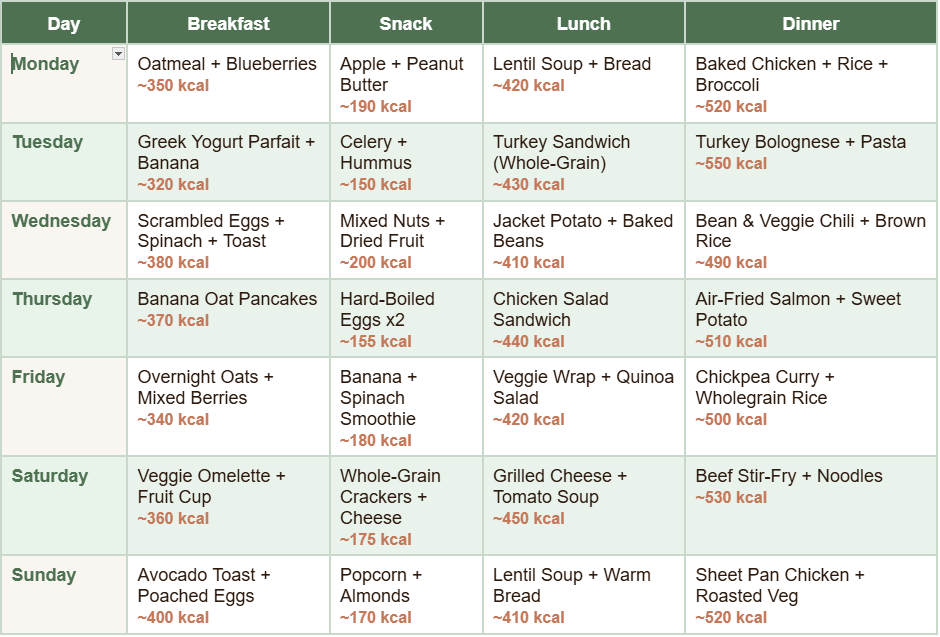
Calorie estimates sourced from USDA FoodData Central database. Macronutrient values are approximate and will vary based on specific brands and portion sizes used.
Day-by-Day Breakdown: Monday, High Fiber & Wholesome Start
Breakfast: Oatmeal with Blueberries & Walnuts (~350 kcal)
Rolled oats are one of the most cost-effective breakfast foods available, averaging $0.15–0.20 per serving. Rich in beta-glucan soluble fibre, oats have been clinically shown to reduce LDL cholesterol by 5–10% when consumed regularly. Blueberries add antioxidants (anthocyanins) while walnuts contribute heart-healthy ALA omega-3 fatty acids.
Lunch: Carrot & Lentil Soup + Wholemeal Bread (~420 kcal)
Lentils deliver approximately 18g of protein and 15g of fibre per cooked cup, at a cost of roughly $0.30 per serving. This soup is batch-cook-friendly, make a large pot and freeze individual portions for future quick lunches throughout the month.
Dinner: Baked Chicken Thighs + Brown Rice + Steamed Broccoli (~520 kcal)
Bone-in chicken thighs are among the most affordable cuts of poultry at $1.20–1.80/lb, while delivering 26g of protein per 3oz serving. Paired with fibre-rich brown rice and broccoli, one of the most nutrient-dense vegetables per calorie, this dinner checks every nutritional box for under $3.50 per person.
Tuesday Through Friday, Core Weekday Meals
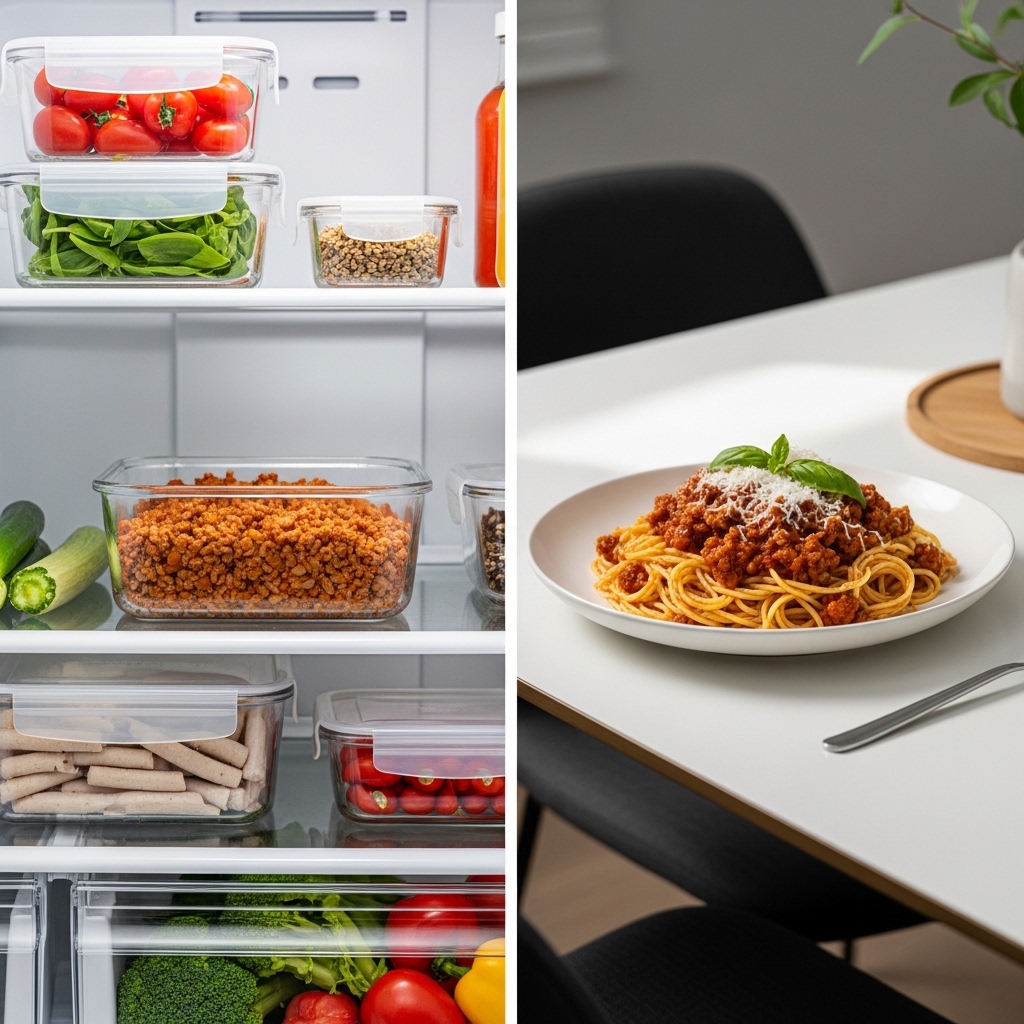
The weekday meals are deliberately structured around efficiency and reuse:
⦁ Tuesday’s turkey bolognese uses the same ground turkey you can batch-brown on Monday night
⦁ Wednesday’s jacket potato + baked beans is one of the most budget-friendly high-protein lunches possible, averaging $0.85/person
⦁ Thursday’s overnight oats breakfast requires zero morning prep, assembled the night before
⦁ Friday’s chickpea curry is fully plant-based, saving on protein costs while delivering 15g fibre per serving
Research from the Journal of the Academy of Nutrition and Dietetics found that households who planned at least 5 weekday dinners in advance consumed 28% more vegetables and spent 15% less on food per week compared to unplanned households.
Weekend Meals, Comfort, Variety & Family Time
Weekends call for slightly more relaxed, enjoyable cooking. Saturday features family favourites like grilled cheese with tomato soup and beef stir-fry. Sunday wraps the week with a classic sheet-pan chicken dinner, minimal hands-on time, maximum flavour.
Sheet-pan cooking is one of the most time-efficient dinner methods for households, a single baking sheet, one oven temperature, and a 35–40 minute roast time produces a complete meal with almost no active cooking required. It also generates almost zero washing up.
Weekend Meal Prep Tip
Use Sunday’s sheet-pan chicken dinner as an opportunity to batch-roast extra vegetables (sweet potatoes, courgettes, peppers). These can be stored in the fridge for up to 4 days and used as sides or salad toppings throughout the following week.
Full Weekly Nutritional Breakdown
The table below shows estimated daily macro targets based on USDA guidelines and serving sizes from the FoodData Central database. These figures are calculated for a single adult on a standard 2,000-calorie diet.
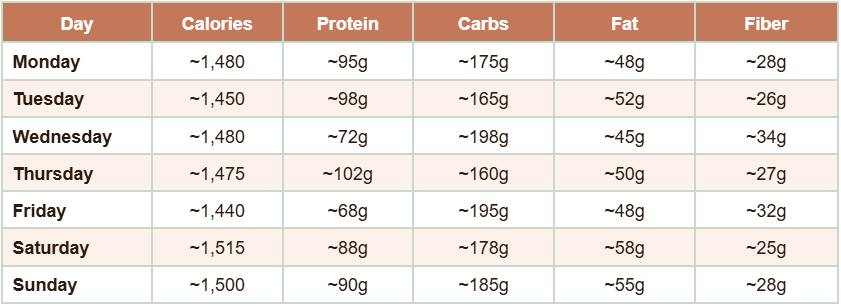
Data sourced from USDA FoodData Central (fdc.nal.usda.gov). Values reflect estimated daily totals based on standard household servings.
Key nutritional highlights across the week:
- Average daily fibre intake: ~28g (meets the recommended 25–38g/day target)
- Average daily protein: ~87g (exceeds the minimum 0.8g/kg for a 75kg adult)
- Average daily saturated fat: <20g (within American Heart Association guidelines)
- No single day exceeds 1,520 calories, keeping the plan in healthy balance
Snack Strategy: Smart Mid-Meal Choices That Won’t Break the Budget
Snacking is often where household food budgets quietly leak. The average American spends $100+ per month on packaged snack foods — most of which are ultra-processed, high in sodium, and low in nutritional value. This meal plan replaces all packaged snacking with five whole-food alternatives:
- Apple + peanut butter — fibre + healthy fat combo that suppresses appetite for 3–4 hours
- Celery + hummus — extremely low-calorie, high-satiety, costs ~$0.35/serving
- Hard-boiled eggs — 6g protein per egg, prep-ahead friendly, under $0.30 each
- Banana + spinach smoothie — potassium, iron, and magnesium in one glass
- Air-popped popcorn + almonds — whole-grain fibre with satisfying crunch, under $0.50/serving
Complete Weekly Grocery List & Budget Breakdown
The full 7-day plan for one adult can be executed for approximately $70–80 per week. For a family of four, scaling to ~$100–130 per week remains realistic by buying proteins in bulk, choosing store-brand staples, and leveraging frozen vegetables.
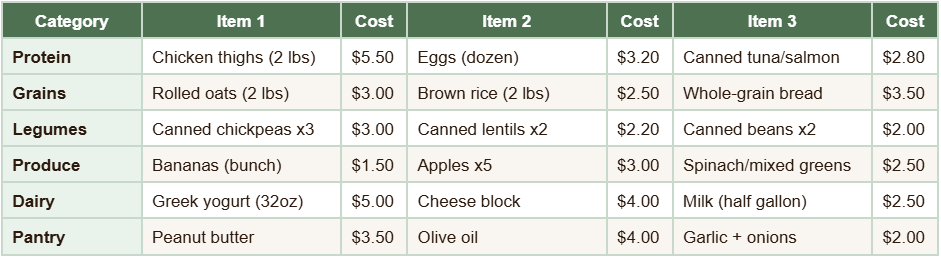
Additional pantry staples to keep stocked:
- Olive oil, soy sauce, garlic powder, cumin, paprika, oregano, black pepper
- Canned tomatoes (x4), vegetable stock, coconut milk (for curries)
- Frozen peas, frozen corn, frozen mixed vegetables, all under $2/bag
The 90-Minute Sunday Meal Prep System
The most effective way to guarantee this meal plan works across a full week is a structured Sunday prep session. Here is a proven 90-minute prep routine:
- 0–20 min: Cook a large batch of brown rice (covers Mon, Wed, Fri dinners)
- 20–40 min: Brown 1.5 lbs of ground turkey and 4–6 chicken thighs simultaneously
- 40–55 min: Make a large pot of lentil soup (covers Mon lunch + Sun lunch)
- 55–65 min: Hard-boil 6 eggs; prep overnight oats for Thu/Fri breakfast
- 65–80 min: Chop and portion vegetables for the week into labelled containers
- 80–90 min: Assemble snack portions (nuts, fruit, hummus) into grab-and-go bags
Time-Saving Insight
Households that dedicate 60–90 minutes to weekend meal prep spend an average of only 15–20 minutes on each weeknight dinner. Without prep, weeknight cooking averages 45–60 minutes and leads to 3x more food waste.
Food Storage & Safety Guide
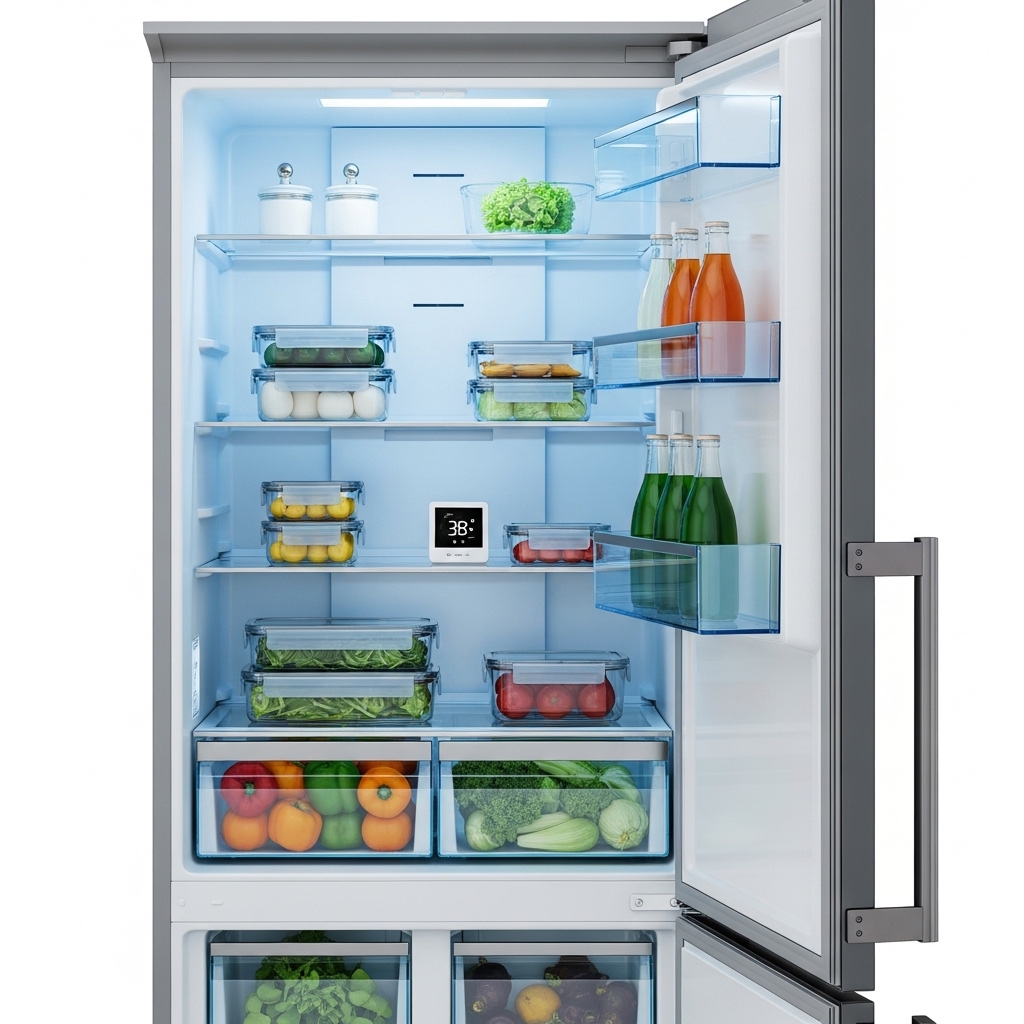
Proper storage is critical to making this plan work without waste. Follow these evidence-based guidelines:
Refrigerator Storage (35–40°F / 1–4°C)
- Cooked chicken/turkey: 3–4 days
- Cooked rice: 3–5 days (store in sealed container, reheat to 165°F)
- Cooked soups and stews: 4–5 days
- Hard-boiled eggs (unpeeled): up to 1 week
- Chopped vegetables: 3–5 days in airtight container
Freezer Storage (0°F / -18°C)
- Cooked chicken/turkey: up to 4 months
- Soups and stews: 2–3 months
- Cooked rice: 1–2 months (freeze flat in zip-lock bags)
- Overnight oats: not recommended, prep 2 days ahead max
10 Proven Budget Hacks to Cut Your Grocery Bill Further
- Shop store-brand staples — oats, rice, canned beans and pasta are identical to name brands
- Buy whole chickens or bone-in cuts — up to 40% cheaper than boneless breasts
- Use frozen vegetables — nutritionally equivalent to fresh, last months in the freezer
- Plan around weekly sales — rotate proteins based on what’s discounted that week
- Never shop hungry — studies show hunger increases impulse spending by 23–64%
- Use a shopping list app (Anylist, OurGroceries) — reduces over-buying by ~18%
- Cook legumes from dried — dried lentils cost ~$0.08/serving vs $0.28 canned
- Buy seasonal produce — it’s 30–50% cheaper and more nutritious than out-of-season
- Repurpose leftovers creatively — last night’s chicken becomes today’s wrap filling
- Avoid pre-cut or pre-washed produce — you pay a 40–60% premium for convenience
Adapting This Plan for Kids & Picky Eaters
Household meal plans fail most often not because of budget, but because kids won’t eat the food. Here are research-backed strategies for family acceptance:
- Serve deconstructed versions — put components of chili, stir-fry, or soup in separate bowls so children can choose their own portions
- Involve children in one prep step — stirring, washing vegetables, or choosing a topping dramatically increases their willingness to eat the meal
- Maintain one familiar item per dinner — always include one ingredient (like rice, bread, or pasta) the child reliably enjoys
- Use sauce strategically — many vegetable-resistant children will eat broccoli if it’s tossed in a small amount of soy sauce or cheese
- Don’t make separate meals — research from the American Academy of Pediatrics confirms that offering a single family meal (with adaptable components) is the most effective long-term approach to building varied eaters
Easy Substitutions for Dietary Restrictions
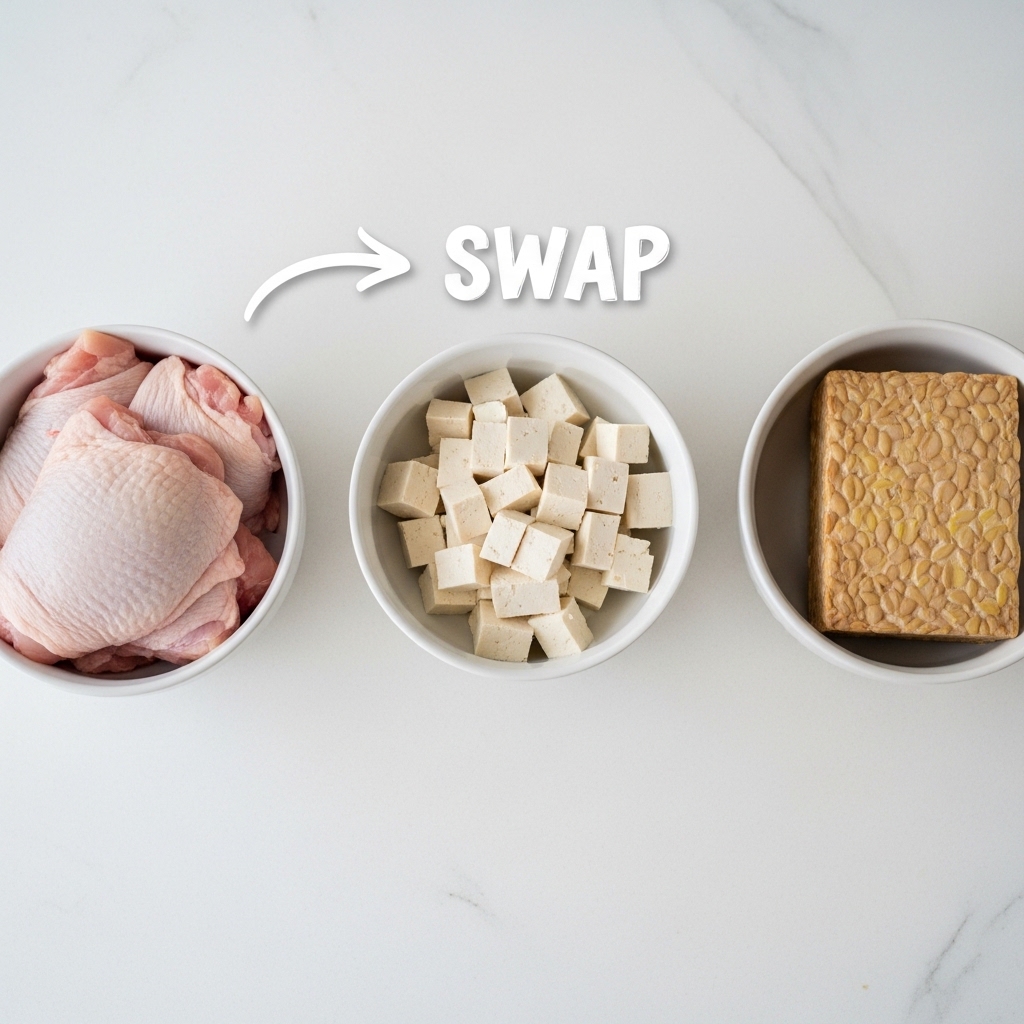
This plan adapts easily to common dietary needs:
Vegetarian / Vegan Swaps
- Replace chicken thighs with extra-firm tofu or tempeh (marinate in soy sauce + garlic)
- Replace turkey bolognese with lentil or mushroom bolognese, even richer in umami flavour
- Replace Greek yogurt with coconut or oat yogurt, look for varieties with live cultures
Gluten-Free Swaps
- Replace wholegrain bread with corn tortillas or rice cakes
- Replace pasta with brown rice pasta or spiralised courgette (zoodles)
- Replace regular soy sauce with tamari in all Asian-style recipes
Dairy-Free Swaps
- Replace cheese in sandwiches with avocado or hummus for creaminess
- Replace milk in oatmeal with oat milk, almond milk, or soy milk (choose unsweetened)
The Science Behind These Meal Combinations
Each meal pairing in this plan was built around evidence-based nutritional synergies:
Oatmeal + Blueberries + Walnuts: Beta-glucan from oats slows glucose absorption; polyphenols from blueberries enhance insulin sensitivity; ALA omega-3 in walnuts reduces inflammatory markers. A 2020 meta-analysis in the British Journal of Nutrition found this combination reduces post-breakfast glucose spikes by up to 28% compared to a standard cereal breakfast.
Legumes + Whole Grains (Lentil Soup + Bread / Chili + Rice): Plant proteins in legumes are complemented by the amino acid profile of whole grains, creating a complete protein profile without any animal products. This pairing forms the nutritional backbone of 4 of the 7 days in this plan.
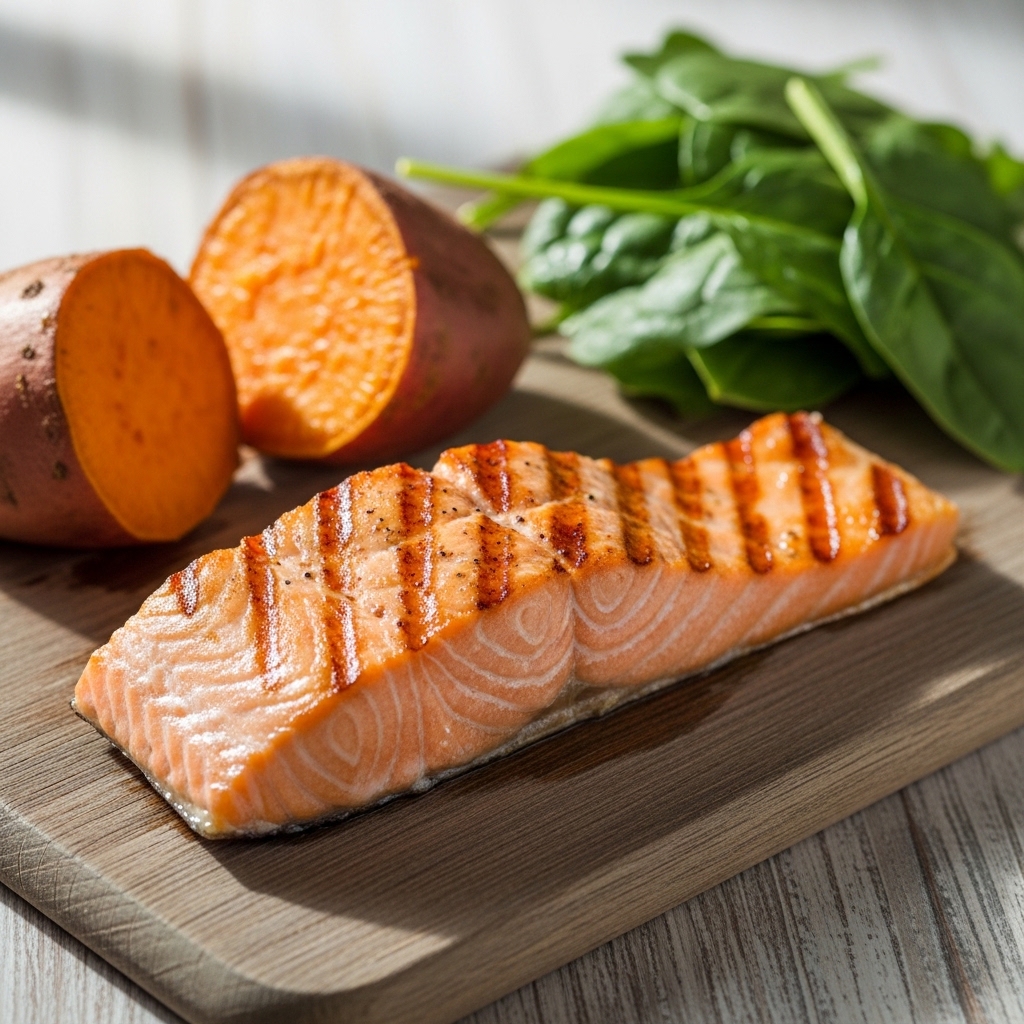
Salmon + Sweet Potato: Vitamin D in salmon enhances calcium absorption; orange-pigmented beta-carotene in sweet potato converts to Vitamin A. Together, they deliver an exceptional micronutrient density at under $4/serving.
Chickpeas + Turmeric (Curry): Curcumin in turmeric has documented anti-inflammatory effects, but its bioavailability increases 2000% when consumed with black pepper (piperine). A traditional curry achieves this naturally, making it one of the most nutritionally sophisticated dishes in any household repertoire.
Seasonal Variations: Adapting the Plan Year-Round
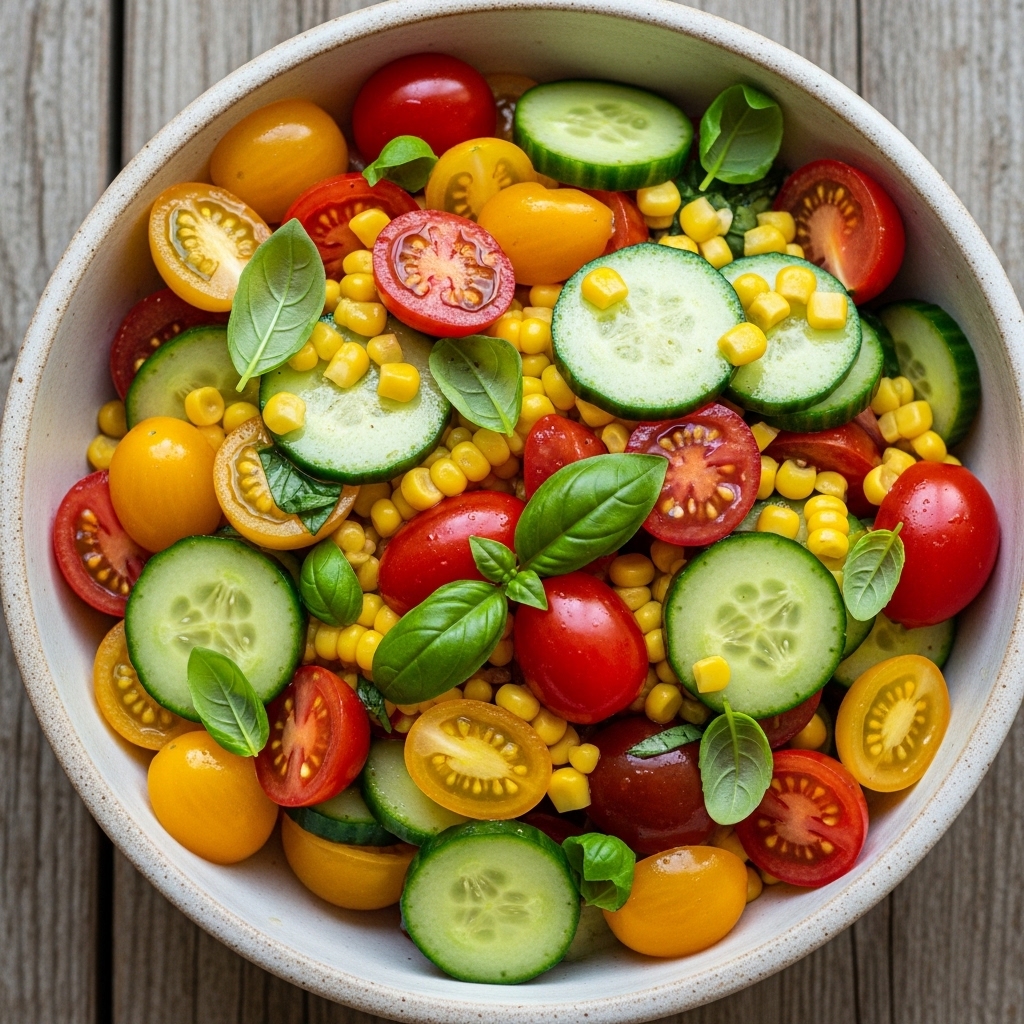
This base plan works in every season, but can be optimised by swapping produce for whatever is cheapest and freshest in your local market:
Spring (March–May)
- Swap broccoli for asparagus or peas — peak freshness, lowest price
- Add strawberries to yogurt parfaits and overnight oats
- Use lamb in place of beef for stir-fry — spring lamb is tender and affordable
Summer (June–August)
- Replace soup lunches with cold grain salads — quinoa, cucumber, tomato, feta
- Add courgette, corn, and tomatoes to sheet-pan dinners
- Use frozen smoothie packs with fresh mango, peach, and berries for snacks
Autumn (September–November)
- Swap sweet potato for butternut squash in salmon dinner — peak flavour season
- Add apple slices to oatmeal; swap blueberries for pears
- Introduce mushroom-based meals — mushrooms are extremely cheap and meaty in autumn
Winter (December–February)
- Lean into root vegetables: parsnips, carrots, turnips are at their cheapest and best
- Batch-cook large pots of soup and stew — most economical in cold months
- Add citrus to salads and breakfasts for immune-supporting Vitamin C
Frequently Asked Questions (FAQ)
Can I follow this meal plan if I’m trying to lose weight?
Yes. The plan averages approximately 1,480–1,515 calories per day for one adult, which is below the standard 2,000-calorie maintenance level for most adults. Combined with moderate physical activity, this creates a moderate calorie deficit suitable for gradual, sustainable weight loss of 0.5–1 lb per week. Consult a registered dietitian for personalised guidance.
How do I scale this plan for a family of 4?
Simply multiply all ingredient quantities by the number of people eating. For family meals, aim to cook 4–6 servings at once. The grocery budget scales to approximately $100–130/week for a family of four when buying proteins in bulk and choosing store-brand pantry staples.
What if I don’t have time to cook every day?
This plan is designed for batch cooking. Monday’s rice, lentil soup, and roasted chicken cover 3–4 future meals. The 90-minute Sunday prep session (Section 10) means most weekday meals are reheating, assembling, or finishing, not starting from scratch.
Are the calorie counts accurate?
All calorie estimates are based on USDA FoodData Central data using standard serving sizes. Actual values will vary depending on specific brands, oil quantities used in cooking, and portion sizes. The figures should be treated as practical estimates rather than precise clinical measurements.
How do I avoid getting bored with this meal plan week after week?
Use this as a template rather than a fixed script. Swap proteins every 2–3 weeks. Rotate the seasoning profile of your dinners, the same chicken + rice + broccoli dinner becomes completely different with a teriyaki glaze vs. a lemon-herb marinade vs. a smoky paprika rub. The structure stays the same; the flavours rotate.
Can this plan help reduce household food waste?
Significantly. The plan is built around intentional ingredient overlap, lentils appear in both Monday’s soup and Sunday’s lunch, rice is cooked once and used across multiple days, and roasted chicken generates leftovers used in Thursday’s sandwich filling. Studies show meal-planned households waste 30–50% less food than unplanned ones.
Building a Sustainable Food Routine

A household meal plan is not just a dietary tool, it’s a household management system. Done well, it reduces stress, saves money, improves nutrition, and reclaims time. The 7-day plan in this guide is a starting framework, not a permanent constraint.
Start with one week. See how it fits your household rhythm. Adjust what doesn’t work. Keep what does. Over 4–6 weeks, the structure becomes intuitive, you’ll find yourself automatically buying the same smart pantry staples, batching proteins on Sundays, and turning last night’s dinner into tomorrow’s lunch without thinking twice.
The most important thing is to begin. A imperfect meal plan that you follow is infinitely more valuable than a perfect plan that stays on Pinterest.
Save & Share This Plan
Keep supporting me so we grow together, pin the meal plan image. Share it with a friend or family member who would benefit from a structured, affordable approach to feeding their household well.

